

Social Engineering Attacks: A Survey
Open accessThe DOI matches its Crossref record; 65 of the 71 references it cites were found in a registry or an index; 16 of the 79 sources its claims cite were checked for support.
Abstract
The advancements in digital communication technology have made communication between humans more accessible and instant. However, personal and sensitive information may be available online through social networks and online services that lack the security measures to protect this information. Communication systems are vulnerable and can easily be penetrated by malicious users through social engineering attacks. These attacks aim at tricking individuals or enterprises into accomplishing actions that benefit attackers or providing them with sensitive data such as social security number, health records, and passwords. Social engineering is one of the biggest challenges facing network security because it exploits the natural human tendency to trust. This paper provides an in-depth survey about the social engineering attacks, their classifications, detection strategies, and prevention procedures.
Overview
CoChat Summary
TL;DR
This survey reviews social engineering attacks, their classifications, detection, prevention, and mitigation techniques, arguing they exploit human trust and cannot be stopped by technology alone. It concludes that AI-based defenses and combined countermeasures are most effective, while training and cybersecurity education are needed.
Key findings
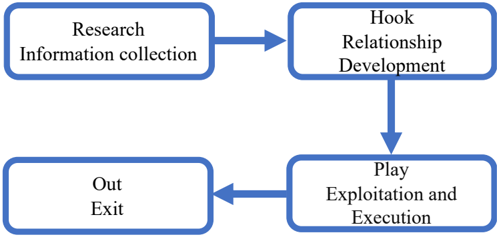
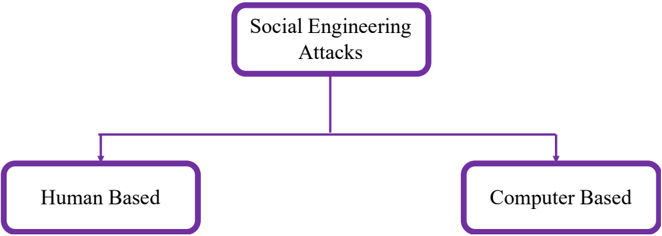
- Social engineering attacks share a common four-phase pattern: collect information about the target, develop a relationship, exploit the information and execute the attack, and exit without traces. They are classified as human-based or computer-based, and as social, technical, or physical-based; the paper also proposes direct and indirect categories.
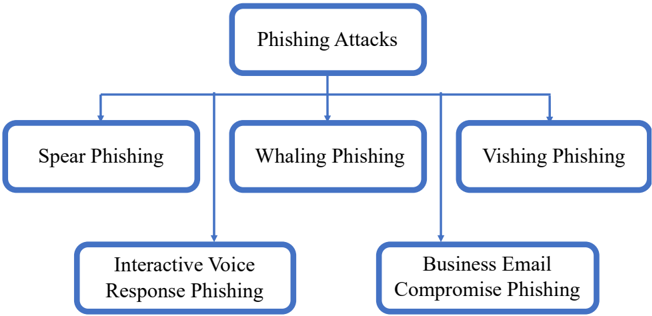
- Phishing is described as the most common social engineering attack and is divided into five categories: spear phishing, whaling phishing, vishing phishing, interactive voice response phishing, and business email compromise phishing. Ransomware is described as involving six stages: malware creation, deployment, installation, command and control, destruction, and extortion.
- Reported impacts include an estimated US social engineering attack cost of $121.22 billion; the Equifax breach exposing personal information of 145.5 million American consumers; over $80 million stolen from Central Bank using a remote access trojan; more than $2.3 billion lost by companies to FBI-reported CEO fraud and email scams; 84% of cyber-attacks conducted by social engineers; and about $1 billion in ransomware losses in 2016.
- In comparing countermeasures, the paper concludes that artificial intelligence-based defense mechanisms are the most effective techniques to reduce social engineering risk, and that combining two or more defense techniques can ensure better protection.
Methods
- The paper is an in-depth survey/overview of social engineering attacks, existing detection methods, prevention procedures, and mitigation techniques; it does not collect primary data or conduct an empirical experiment.
- It synthesizes prior literature and classifications, describes attack types, and compares human-based versus computer-based countermeasures and computer-based mitigation techniques in Tables 1 and 2.
- It discusses challenges and future directions, including training employees and K-12 students and investing in cybersecurity education.
Limitations
- Stated in the paper: existing detection methods have fundamental limitations, countermeasures are inefficient against the ever-growing number of social engineering attacks, human-based techniques are limited by subjective human decisions, and technology-based techniques can be limited because technological vulnerabilities may be exploited.
- Stated in the paper: human-based mitigation depends on relative and subjective human judgment, while technology-based mitigation can be mimicked, complex, expensive, or limited by human unawareness and ignored alerts.
- Evident from the text: as a survey, it does not report a systematic review protocol, primary data, or empirical validation; its comparative conclusions about effectiveness rely on qualitative synthesis of cited works rather than original testing.
Model-written summary. Check it against the paper before relying on it.
Integrity signals
Registry
Cites
Statistics
Figures

Verification
Claims the paper makes
11 Valid · 10 Not valid · 61 Not checked · 35 Own results and interpretations
The cited sources support only part of this claim — read each source’s verdict below.
In the paper
“The common pattern involves four phases: (1) collect information about the target; (2) develop relationship with the target; (3) exploit the available information and execute the attack; and (4) exit with no traces [12].”
§ Social Engineering Attacks: A Survey > 2. Social Engineering Attacks
What the sources say
- Partly supportedcites [12] 12. Mouton, F.; Leenen, L.; Venter, H. Social engineering attack examples, templates and scenarios. Comput. Secur. 2016, 59, 186-209. [CrossRef] sourceExperimental — accuracy not yet measured
Section 2, “Defining Social Engineering Attacks” (page unavailable), describes a commonly known four-phase model involving research, rapport, exploitation of trust, and use of information. But it does not give “exit with no traces” as the fourth phase; the paper’s own six-phase framework ends with debriefing, in which the attacker reassures the target and checks whether the goal was met. (LLM, conf=0.88)
plain- Asserted: passes — The authors put it forward as true.
- Checkable: passes — It can be checked against evidence.
- Load-bearing: unclear — It is unclear whether the paper’s conclusions depend on it.
- Based: passes — The paper gives a reason why it holds.
- Partly supported
The cited sources that could be checked couldn’t confirm or dispute this claim.
In the paper
“Currently, social engineering attacks are the biggest threats facing cybersecurity [4][5][6][7][8][9].”
§ Social Engineering Attacks: A Survey > 2. Social Engineering Attacks
What the sources say
- Not matchedcites [4] 4. Arana, M. How much does a cyberattack cost companies? Open Data Security 2017, 1-4.
We searched by its title and found no matching paper.
- Could not verifycites [5] 5. Chargo, M. You've been hacked: How to better incentivize corporations to protect consumers' data. Trans. Tenn. J. Bus. Law 2018, 20, 115-143. doi:10.70658/4486-1457.1452Experimental — accuracy not yet measured
The Introduction discusses breaches involving weak or stolen passwords, and the Target section describes access through a third-party vendor. Neither passage identifies social engineering attacks as the biggest cybersecurity threat. Searches for social engineering, phishing, and related threats found no passage in our copy making that comparison. (LLM, conf=0.72)
- Not checked — no full text of the sourcecites [6] 6. Libicki, M. Could the issue of DPRK hacking benefit from benign neglect? Georg. J. Int. Aff. 2018, 19, 83-89. [CrossRef] source
plain- Asserted: passes — The authors put it forward as true.
- Checkable: passes — It can be checked against evidence.
- Load-bearing: unclear — It is unclear whether the paper’s conclusions depend on it.
- Based: passes — The paper gives a reason why it holds.
- Not matched
The cited sources support only part of this claim — read each source’s verdict below.
In the paper
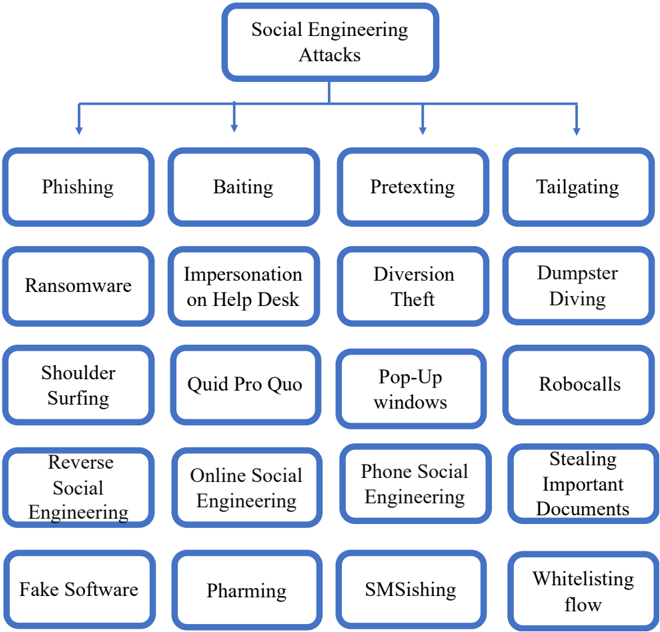
“They can also be fake alerts stating that the computer storage is full and that it needs to be scanned and cleaned to save more space [35].”
§ Social Engineering Attacks: A Survey > 2.2.8. Pop-Up Windows
What the sources say
- Partly supportedcites [35] 35. Ivaturi, K.; Janczewski, L. A taxonomy for social engineering attacks. In Proceedings of the International Conference on Information Resources Management, Centre for Information Technology, Organizations, and People, Ontario, Canada, 18-20 June 2011; pp. 1-12.Experimental — accuracy not yet measured
The “Popups” section describes fake alerts that prompt users to take action, supporting the general point. Its example warns of a virus and urges an antivirus download; it does not describe a full-storage alert or scanning and cleaning to free space. No page number is available in our copy. (LLM, conf=0.87)
plain- Asserted: passes — The authors put it forward as true.
- Checkable: passes — It can be checked against evidence.
- Load-bearing: unclear — It is unclear whether the paper’s conclusions depend on it.
- Based: passes — The paper gives a reason why it holds.
- Partly supported
The cited sources support only part of this claim — read each source’s verdict below.
In the paper
“For attacks related to emails or link clicks, software vendors become more aware of the social engineering treats by building strong products with security measures [54].”
§ Social Engineering Attacks: A Survey > 4. Mitigation Techniques
What the sources say
- Partly supportedcites [54] 54. Ali, B.; Awad, A. Cyber and physical security vulnerability assessment for IoT-based smart homes. Sensors 2018, 18, 817. [CrossRef] sourceExperimental — accuracy not yet measured
The Discussion recommends that device manufacturers and application programmers provide devices with stronger security capabilities and applications with secure interfaces. The Results discuss social engineering, but our copy does not connect that recommendation to email or link-click attacks, or say that building secure products makes vendors more aware of social engineering threats. (LLM, conf=0.86)
plainstates a cause- Asserted: passes — The authors put it forward as true.
- Checkable: passes — It can be checked against evidence.
- Load-bearing: unclear — It is unclear whether the paper’s conclusions depend on it.
- Based: passes — The paper gives a reason why it holds.
- Partly supported
None of the sources cited for this claim have been checked yet.
In the paper
“Phishing attacks are the most common attacks conducted by social engineers [19,20].”
§ Social Engineering Attacks: A Survey > 2.2.1. Phishing Attacks
What the sources say
- Not checked — no full text of the sourcecites [19] 19. Gupta, S.; Singhal, A.; Kapoor, A. A literature survey on social engineering attacks: Phishing attack. In Proceedings of the International Conference on Computing, Communication, and Automation, Noida, India, 29-30 April 2016; pp. 537-540. [CrossRef] source
- Not matchedcites [20] 20. Yeboah-Boateng, E.O.; Amanor, P.M. Phishing, SMiShing & Vishing: An assessment of threats against mobile devices. J. Emerg. Trends Comput. Inf. Sci. 2014, 5, 297-307.
We searched by its title and found no matching paper.
- Asserted: passes — The authors put it forward as true.
- Checkable: passes — It can be checked against evidence.
- Load-bearing: unclear — It is unclear whether the paper’s conclusions depend on it.
- Based: passes — The paper gives a reason why it holds.
17 more claims
Create a free account to see all 117 claims and to verify the 2 references still open.
- Probably not a substantial claim. 89
- It may state two separate claims as one. 26
Claims other papers make about this one
Each is checked against this paper’s own text: does it say what the citing paper says it does?
The source backs part of the claim, not all of it — or backs it for a different population, condition or comparison.
In the citing paper
“With the Big Data advent, attackers use the vast amount of collected data for businesses purposes, selling it in bulk as goods within black markets (Salahdine and Kaabouch 2019).”
From Deepfakes: current and future trends (2024) · cites this paper as Salahdine and Kaabouch 2019
Experimental — accuracy not yet measuredThe cited source says what the claim attributes to it.
In the citing paper
“These attacks use psychological tricks and dishonest tactics with the goal of obtaining sensitive data, such as passwords, private information, incriminating evidence, and bank card numbers, among others, by deceiving people or businesses into taking actions that are advantageous to the attackers.”
From Deepfakes: current and future trends (2024) · cites this paper as Salahdine and Kaabouch 2019
The cited source says what the claim attributes to it.
In the citing paper
“Social engineering attacks can be used by hostile persons to access communication networks (Salahdine and Kaabouch 2019).”
From Deepfakes: current and future trends (2024) · cites this paper as Salahdine and Kaabouch 2019
Self-check
Percentages, sums and reported differences re-computed from the paper’s own numbers.
Each contradiction between two passages listed here was confirmed by an independent check.
Rated minor: it would not touch a result — a value no result rests on, a p-value that stays on the same side of the significance level, or a conflict that is clerical, resolved elsewhere in the paper, or outside its own findings.
In the paper
§ Social Engineering Attacks: A Survey > 4. Mitigation Techniques
“In [60], the authors focused on mobile ransomware by proposing a new detection technique called HelDroid.”
§ Social Engineering Attacks: A Survey > References
“62. Andronio, N.; Zanero, S.; Maggi, F. Heldroid: Dissecting and detecting mobile ransomware.”
Rated minor: it would not touch a result — a value no result rests on, a p-value that stays on the same side of the significance level, or a conflict that is clerical, resolved elsewhere in the paper, or outside its own findings.
In the paper
§ Social Engineering Attacks: A Survey > 3. Prevention Techniques
“The authors compared the performance of six machine learning algorithms for detecting phishing attacks in terms of speed, reliability, and accuracy: support vector machine, biased support vector machine, artificial neural networks, scaled conjugate gradient, and self-organizing map.”
§ Social Engineering Attacks: A Survey > 3. Prevention Techniques
“support vector machine, biased support vector machine, artificial neural networks, scaled conjugate gradient, and self-organizing map.”
Rated minor: it would not touch a result — a value no result rests on, a p-value that stays on the same side of the significance level, or a conflict that is clerical, resolved elsewhere in the paper, or outside its own findings.
In the paper
§ Social Engineering Attacks: A Survey > 3. Prevention Techniques
“In [51], a social engineering awareness program (SEAP) was developed for schools aiming at increasing students' awareness by providing significant education and training in early age.”
§ Social Engineering Attacks: A Survey > References
“51. Algarni, A.; Xu, Y.; Chan, T. Measuring source credibility of social engineering attackers on Facebook. In Proceedings of the IEEE Hawaii International Conference on System Sciences, Koloa, HI, USA, 5-8 January 2016; pp. 3686-3695. [CrossRef]”
Rated minor: it would not touch a result — a value no result rests on, a p-value that stays on the same side of the significance level, or a conflict that is clerical, resolved elsewhere in the paper, or outside its own findings.
In the paper
§ Social Engineering Attacks: A Survey > 3. Prevention Techniques
“In [34], the authors proposed a new approach called TabShots to distinguish between legitimate pages from malicious pages.”
§ Social Engineering Attacks: A Survey > References
“33. De Ryck, P.; Nikiforakis, N.; Desmet, L.; Joosen, W. Tabshots: Client-side detection of tabnabbing attacks.”
Rated minor: it would not touch a result — a value no result rests on, a p-value that stays on the same side of the significance level, or a conflict that is clerical, resolved elsewhere in the paper, or outside its own findings.
In the paper
§ Social Engineering Attacks: A Survey > 3. Prevention Techniques
“The authors compared the performance of six machine learning algorithms for detecting phishing attacks in terms of speed, reliability, and accuracy:”
§ Social Engineering Attacks: A Survey > 3. Prevention Techniques
“support vector machine, biased support vector machine, artificial neural networks, scaled conjugate gradient, and self-organizing map.”
1 more finding
Create a free account to see every finding of this check.
Citations
Cites
Advanced social engineering attacks
Krombholz, K., Hobel, H., Huber, M., & Weippl, E. (2015) · Journal of Information Security and Applications · doi:10.1016/j.jisa.2014.09.005 · Cited by 575 · cited 2×
“Diversion Theft attacks: consist of misdirecting a transport company to deliver a courier or package to the desired location.”
BackgroundCutting the Gordian Knot: A Look Under the Hood of Ransomware Attacks
Kharraz, A., Robertson, W., Balzarotti, D., Bilge, L., & Kirda, E. (2015) · Lecture Notes in Computer Science · doi:10.1007/978-3-319-20550-2_1 · Cited by 458 · cited 2×
“Getting back the files after the victim’s payment is not guaranteed [30,31].”
BackgroundCryptoLock (and Drop It): Stopping Ransomware Attacks on User Data
Scaife, N., Carter, H., Traynor, P., & Butler, K. R. B. (2016) · 2016 IEEE 36th International Conference on Distributed Computing Systems (ICDCS) · doi:10.1109/icdcs.2016.46 · Cited by 437 · cited 1×
“In [64], the authors proposed an early warning detection system called CryptoDrop that is able to alert the employee in case of suspicious activity on the user data.”
BackgroundSecurity and privacy challenges in smart cities
Braun, T., Fung, B. C. M., Iqbal, F., & Shah, B. (2018) · Sustainable Cities and Society · doi:10.1016/j.scs.2018.02.039 · Cited by 352 · cited 1×
“26”
Cyber and Physical Security Vulnerability Assessment for IoT-Based Smart Homes
Ali, B., & Awad, A. (2018) · Sensors · doi:10.3390/s18030817 · Cited by 344 · cited 1×
“Thus, there are numerous jobs in this cyber-security field that are not filled because of the lack of graduates.”
BackgroundMalicious PDF detection using metadata and structural features
Smutz, C., & Stavrou, A. (2012) · Proceedings of the 28th Annual Computer Security Applications Conference · doi:10.1145/2420950.2420987 · Cited by 271 · cited 1×
“In [45], the authors proposed a detection technique based on machine learning algorithms.”
MethodHelDroid: Dissecting and Detecting Mobile Ransomware
Andronio, N., Zanero, S., & Maggi, F. (2015) · Lecture Notes in Computer Science · doi:10.1007/978-3-319-26362-5_18 · Cited by 246 · cited 1×
“In [62], the authors proposed a neuro-fuzzy-based technique to mitigate phishing attacks in real time and protect online transactions.”
BackgroundRansomware attacks: detection, prevention and cure
Brewer, R. (2016) · Network Security · doi:10.1016/s1353-4858(16)30086-1 · Cited by 214 · cited 1×
“In [65], the authors proposed several steps to follow to mitigate and handle ransomware attacks.”
BackgroundA literature survey on social engineering attacks: Phishing attack
Gupta, S., Singhal, A., & Kapoor, A. (2016) · 2016 International Conference on Computing, Communication and Automation (ICCCA) · doi:10.1109/ccaa.2016.7813778 · Cited by 208 · cited 2×
“Phishing attacks are the most common attacks conducted by social engineers [19,20].”
BackgroundA Taxonomy of Attacks and a Survey of Defence Mechanisms for Semantic Social Engineering Attacks
Heartfield, R., & Loukas, G. (2016) · ACM Computing Surveys · doi:10.1145/2835375 · Cited by 202
Research works printed but not linked: 5
- 16. Patil, P.; Devale, P. A literature survey of phishing attack technique. Int. J. Adv. Res. Comput. Commun. Eng. 2016, 5, 198-200.
- 23. Hofbauer, S.; Beckers, K.; Quirchmayr, G. Defense Methods against VoIP and Video Hacking Attacks in Enterprise Networks. In Proceedings of the 10th International Conference on e-Business, Bangkok, Thailand, 23-24 November 2015; pp. 1-10.
- 40. Foozy, C.F.M.; Ahmad, R.; Abdollah, M.F.; Yusof, R.; Mas'ud, M.Z. Generic taxonomy of social engineering attack and defence mechanism for handheld computer study. In Proceedings of the Malaysian Technical Universities International Conference on Engineering and Technology, Batu Pahat, Malaysia, 13-15 November 2011; pp. 1-6.
- 59. Zulkurnain, A.U.; Hamidy, A.K.B.; Husain, A.B.; Chizari, H. Social engineering attack mitigation. Int. J. Math. Comput. Sci. 2015, 1, 188-198.
- 66. Kharaz, A.; Arshad, S.; Mulliner, C.; Robertson, W.; Kirda, E. A large-scale, automated approach to detecting ransomware. In Proceedings of the 25th USENIX Security Symposium, Austin, TX, USA, 10-12 August 2016; pp. 757-772.
Cited by
Al-Adwan, A. S., Li, N., Al-Adwan, A., Abbasi, G. A., Albelbisi, N. A., & Habibi, A. (2023) · Education and Information Technologies · doi:10.1007/s10639-023-11816-3 · Cited by 637
“Given that social engineering attacks currently make up the bulk of cyber-attacks experienced online (Salahdine & Kaabouch, 2019), it is anticipated that such attacks in the metaverse are expected to become considerably easier and more powerful, and hence more common (Di Pietro et al., 2021).”
BackgroundMetaverse: Security and Privacy Issues
Di Pietro, R., & Cresci, S. (2021) · 2021 Third IEEE International Conference on Trust, Privacy and Security in Intelligent Systems and Applications (TPS-ISA) · doi:10.1109/tpsisa52974.2021.00032 · Cited by 295
“Indeed, social engineering attacks already account for the largest share of cyber-attacks suffered online [11], as also measured during the COVID-19 pandemic.”
BackgroundSecurity and Privacy in Metaverse: A Comprehensive Survey
Huang, Y., Li, Y. J., & Cai, Z. (2023) · Big Data Mining and Analytics · doi:10.26599/bdma.2022.9020047 · Cited by 282
A review on social spam detection: Challenges, open issues, and future directions
Rao, S., Verma, A. K., & Bhatia, T. (2021) · Expert Systems with Applications · doi:10.1016/j.eswa.2021.115742 · Cited by 213
Al-Adwan, A. S., Jafar, R. M. S., & Sitar-Tăut, D.-A. (2024) · Asia Pacific Management Review · doi:10.1016/j.apmrv.2024.09.004 · Cited by 168
An intelligent cyber security phishing detection system using deep learning techniques
Mughaid, A. S., AlZu’bi, S. M. F., Hnaif, A. A., Taamneh, S., Alnajjar, A., & Elsoud, E. A. (2022) · Cluster Computing · doi:10.1007/s10586-022-03604-4 · Cited by 211
“Phishing is one of the semantic attack types [10].”
BackgroundDeepfakes: current and future trends
Gambín, Á. F., Yazidi, A., Vasilakos, A., Haugerud, H., & Djenouri, Y. (2024) · Artificial Intelligence Review · doi:10.1007/s10462-023-10679-x · Cited by 145
“Social engineering attacks can be used by hostile persons to access communication networks (Salahdine and Kaabouch 2019).”
A systematic review of current cybersecurity training methods
Prümmer, J., van Steen, T., & van den Berg, B. (2023) · Computers & Security · doi:10.1016/j.cose.2023.103585 · Cited by 255
Social Engineering Attacks Prevention: A Systematic Literature Review
Syafitri, W., Shukur, Z., Mokhtar, U. A., Sulaiman, R., & Ibrahim, M. A. (2022) · IEEE Access · doi:10.1109/access.2022.3162594 · Cited by 212
“An example is when someone is using a laptop or computer to access a confidential information system, where someone behind it is not interested in the system[24].”
BackgroundMethodInfluentialAchaal, B., Adda, M., Berger, M., Ibrahim, H., & Awde, A. (2024) · Cybersecurity · doi:10.1186/s42400-023-00200-w · Cited by 173
“In addition, companies and customers are targeted and affected by social engineering attacks (Salahdine and Kaabouch 2019).”
BackgroundA Novel Jamming Attacks Detection Approach Based on Machine Learning for Wireless Communication
Arjoune, Y., Salahdine, F., Islam, M. S., Ghribi, E., & Kaabouch, N. (2020) · International Conference on Information Networking · doi:10.1109/icoin48656.2020.9016462 · Cited by 127
“Thus, it is important to explore the cybersecurity implications of 5G systems [8, 9].”
BackgroundSelf-citationA Systematic Literature Review of Information Security in Chatbots
Yang, J., Chen, Y.-L., Por, L. Y., & Ku, C. S. (2023) · Applied Sciences · doi:10.3390/app13116355 · Cited by 108
Human Cognition Through the Lens of Social Engineering Cyberattacks
Montañez, R., Golob, E., & Xu, S. (2020) · Frontiers in Psychology · doi:10.3389/fpsyg.2020.01755 · Cited by 106
Mijwil, M. M., Salem, I. E., & Ismaeel, M. M. (2023) · Iraqi Journal for Computer Science and Mathematics · doi:10.52866/ijcsm.2023.01.01.008 · Cited by 156
Reinforcement Learning for feedback-enabled cyber resilience
Huang, Y., Huang, L., & Zhu, Q. (2022) · Annual Reviews in Control · doi:10.1016/j.arcontrol.2022.01.001 · Cited by 140
“Social engineering [92] is a common attack vector that targets human vulnerabilities such as fear to express anger, lack of assertiveness to say no, and the desire to please others.”
BackgroundAbdi, N., Albaseer, A. M., & Abdallah, M. M. (2024) · IEEE Internet of Things Journal · doi:10.1109/jiot.2024.3354045 · Cited by 124
“Common methods include pretexting, phishing, and tailgating attacks [105].”
MethodBehavioral analysis of cybercrime: Paving the way for effective policing strategies
Sarkar, G., & Shukla, S. K. (2023) · Journal of Economic Criminology · doi:10.1016/j.jeconc.2023.100034 · Cited by 153
Security in Next Generation Mobile Payment Systems: A Comprehensive Survey
Ahmed, W., Rasool, A., Javed, A. R., Kumar, N., Gadekallu, T. R., Jalil, Z., & Kryvinska, N. (2021) · IEEE Access · doi:10.1109/access.2021.3105450 · Cited by 107
“on the mobile money app server for deducting some amount fromwallets of mobile money agents and users for deposition into the attacker’s account without letting these users or agents discover the transaction [69].”
Social Engineering Attacks During the COVID-19 Pandemic
Venkatesha, S., Reddy, K., & Chandavarkar, B. R. (2021) · SN Computer Science · doi:10.1007/s42979-020-00443-1 · Cited by 115
“SN Computer Science target; (3) Exploit the relation and formulate an attack; (4) Exit without leaving behind traces [5].”
BackgroundSecurity in 5G and beyond recent advances and future challenges
Salahdine, F., Han, T., & Zhang, N. (2022) · Security and Privacy · doi:10.1002/spy2.271 · Cited by 114
Self-citationIoT-Enabled Social Relationships Meet Artificial Social Intelligence
Dhelim, S., Ning, H., Farha, F., Chen, L., Atzori, L., & Daneshmand, M. (2021) · IEEE Internet of Things Journal · doi:10.1109/jiot.2021.3081556 · Cited by 115
“In case of a network intrusion or data leaking, these social properties and social context data can be used to launch a socially engineered attack on the SIoT network [43].”
BackgroundAldakheel, E. A., Zakariah, M., Gashgari, G. A., Almarshad, F. A., & Alzahrani, A. I. A. (2023) · Sensors · doi:10.3390/s23094403 · Cited by 139
“For example, RNN [30], Feed Forward Neural Network (FFNN) [31], Ensemble Neural Network (ENN) [32], and Artificial Neural Network (ANN) [33] are critical NN models for email detection and phishing websites [34].”
BackgroundAlomari, M. A., Al-Andoli, M. N., Ghaleb, M., Thabit, R., Alkawsi, G. A., Alsayaydeh, J. A. J., & Gaid, A. S. A. (2025) · Energies · doi:10.3390/en18010141 · Cited by 119
Overview of Social Engineering Attacks on Social Networks
Chetioui, K., Bah, B., Alami, A. O., & Bahnasse, A. (2022) · Procedia Computer Science · doi:10.1016/j.procs.2021.12.302 · Cited by 83
Ranking Security of IoT-Based Smart Home Consumer Devices
Allifah, N. M., & Zualkernan, I. A. (2022) · IEEE Access · doi:10.1109/access.2022.3148140 · Cited by 98
“Various types of social engineering attacks can also be used to penetrate the network security of smart homes [96].”
BackgroundSalahdine, F., & Kaabouch, N. (2020) · Physical Communication · doi:10.1016/j.phycom.2020.101001 · Cited by 74
Self-citationSurvey and Taxonomy of Adversarial Reconnaissance Techniques
Roy, S., Sharmin, N., Acosta, J. C., Kiekintveld, C. D., & Lászka, Á. (2022) · ACM Computing Surveys · doi:10.1145/3538704 · Cited by 105
“Several papers have presented taxonomies of different social engineering (SE) attacks [23, 50, 72, 78, 133].”
BackgroundInfluentialCyber Threats Classifications and Countermeasures in Banking and Financial Sector
Darem, A. A., Alhashmi, A. A., Alkhaldi, T. M., Alashjaee, A. M., Alanazi, S. M., & Ebad, S. A. (2023) · IEEE Access · doi:10.1109/access.2023.3327016 · Cited by 125
“Many literatures classified cyber threats in the banking sector into many groups [22] like malware, phishing, distributed denial of service (DDoS), and insider threats.”
BackgroundPhishing Attacks Detection A Machine Learning-Based Approach
Salahdine, F., Mrabet, Z. E., & Kaabouch, N. (2021) · IEEE Annual Ubiquitous Computing, Electronics & Mobile Communication Conference (UEMCON) · doi:10.1109/uemcon53757.2021.9666627 · Cited by 69
“Thus, the attackers opt for using social engineering strategies to compromise email accounts by manipulating human intelligence to obtain critical and confidential information [1].”
BackgroundSelf-citationCyber-Security of Smart Grids: Attacks, Detection, Countermeasure Techniques, and Future Directions
Khoei, T. T., Slimane, H. O., & Kaabouch, N. (2022) · Communications and Network · doi:10.4236/cn.2022.144009 · Cited by 113
Self-citationSalman, M., Ikram, M., & Kâafar, M. A. (2024) · IEEE Access · doi:10.1109/access.2024.3364671 · Cited by 104
“Evasion Techniques Against ML-Based SMS Spam Detection: Spammers may use obfuscation or perturbation methods (e.g., [27]) to evade detection in Smish [28] or Punycode [29] spam SMS texts and embedded URLs.”
MethodHayes, D. R., Cappa, F., & Le‐Khac, N. (2020) · Digital Business · doi:10.1016/j.digbus.2020.100001 · Cited by 82
“…sensitive data to cyber criminals (Abraham & Chengalur-Smith, 2010; Aldawood & Skinner, 2019; Hayes & Cappa, 2018; Krombholz, Hobel, Huber, & Weippl, 2015; Mouton, Leenen, & Venter, 2016; Salahdine & Kaabouch, 2019), lead to data ex fi ltration or even be associated with malicious code (malware).”
BackgroundKrishna, B., Krishnan, S., & Sebastian, M. P. (2022) · Information Systems Frontiers · doi:10.1007/s10796-022-10280-7 · Cited by 104
“This is important because social engineering attacks are more common in digital transactions involving money and confidential information (Salahdine & Kaabouch, 2019).”
Cyber reconnaissance techniques
Mazurczyk, W., & Caviglione, L. (2021) · Communications of the ACM · doi:10.1145/3418293 · Cited by 71
Mobile Security: Threats and Best Practices
Weichbroth, P., & Łysik, Ł. (2020) · Mobile Information Systems · doi:10.1155/2020/8828078 · Cited by 105
“Humans are more likely to trust other humans compared to computers or technology; therefore, they are the weakest link in the security chain [82]. aforementioned is the reason why it is so important to educate users about what precautions they can take in order to protect their sensitive data.”
BackgroundAghmadi, A., Hussein, H. M., Polara, K. H., & Mohammed, O. A. (2023) · Inventions · doi:10.3390/inventions8040084 · Cited by 71
Security Vulnerabilities in LPWANs—An Attack Vector Analysis for the IoT Ecosystem
Torres, N., Pinto, P., & Lopes, S. I. (2021) · Applied Sciences · doi:10.3390/app11073176 · Cited by 71
“- Social Engineering: This attack aims to manipulate individuals to divulge confidential and sensitive data [66] about the network or the devices.”
BackgroundTusher, E. H., Ismail, M. A., Rahman, M. A., Alenezi, A. H., & Uddin, M. (2024) · IEEE Access · doi:10.1109/access.2024.3467996 · Cited by 72
“For the purpose of exploiting organizations and compromising their systems, attackers utilize a variety of strategies, such as social engineering, hacking email accounts, and the fabrication of bogus emails [4].”
BackgroundNawshin, F., Gad, R., Ünal, D., Al-Ali, A. K., & Suganthan, P. N. (2024) · Computers & Electrical Engineering · doi:10.1016/j.compeleceng.2024.109233 · Cited by 68
Integrating machine learning for sustaining cybersecurity in digital banks
Asmar, M., & Tuqan, A. (2024) · Heliyon · doi:10.1016/j.heliyon.2024.e37571 · Cited by 99
“Social engineering attacks use psychological manipulation to deceive people into divulging private information or carrying out unauthorized actions [89].”
BackgroundPhysical and digital worlds: implications and opportunities of the metaverse
Felice, F. D., Luca, C. D., di Chiara, S., & Petrillo, A. (2023) · Procedia Computer Science · doi:10.1016/j.procs.2022.12.374 · Cited by 63
When LoRa Meets EMR: Electromagnetic Covert Channels Can Be Super Resilient
Shen, C., Liu, T., Huang, J., & Tan, R. (2021) · IEEE Symposium on Security and Privacy (S&P) · doi:10.1109/sp40001.2021.00031 · Cited by 51
“This can be done by social engineering, file sharing, or bundling a legitimate software [40].”
BackgroundKalhoro, S., Rehman, M., Ponnusamy, V., & Shaikh, F. B. (2021) · IEEE Access · doi:10.1109/access.2021.3097144 · Cited by 60
“The other is software-based, in which attacks are carried out using devices such as computers or cell phones to obtain targeted information [85].”
Yathiraju, N., Jakka, G., Parisa, S. K., & Oni, O. (2022) · Advances in information security, privacy, and ethics book series · doi:10.4018/978-1-7998-8693-8.ch007 · Cited by 52
Bačanin, N., Zivkovic, M. Z., Antonijević, M., Venkatachalam, K., Lee, J., Nam, Y., Marjanovic, M., Strumberger, I., & Abouhawwash, M. (2023) · Complex & Intelligent Systems · doi:10.1007/s40747-023-01118-z · Cited by 55
“Other well know and applied methods for obtaining sensitive information include using spoofing techniques to create fake websites or emails that mimic legitimate ones, or sending malicious software (malware) that can infect a user’s computer and give the attacker unlimited access [8, 9].”
BackgroundE-mail-Based Phishing Attack Taxonomy
Rastenis, J., Ramanauskaitė, S., Janulevičius, J., Čenys, A., Slotkienė, A., & Pakrijauskas, K. (2020) · Applied Sciences · doi:10.3390/app10072363 · Cited by 48
“A phishing attack is a social engineering attack aimed at fraudulently acquiring private and confidential information from intended targets [2].”
BackgroundTowards Secured Service Provisioning for the Internet of Healthcare Things
Farhin, F., Kaiser, M. S., & Mahmud, M. (2020) · IEEE International Conference on Application of Information and Communication Technologies (AICT) · doi:10.1109/aict50176.2020.9368580 · Cited by 49
“SocialEngg P, F, A Psychological manipulation trick for users to initiate security mistakes or disclosing sensitive information Backup; Awareness; Tamper proofing; Multifactor authentication [43] [44]”
BackgroundUnderstanding Phishing Email Processing and Perceived Trustworthiness Through Eye Tracking
McAlaney, J., & Hills, P. J. (2020) · Frontiers in Psychology · doi:10.3389/fpsyg.2020.01756 · Cited by 57
“This type of attack has been described as the single biggest threat to cybersecurity (Salahdine and Kaabouch, 2019).”
BackgroundISHO: improved spotted hyena optimization algorithm for phishing website detection
Sabahno, M., & Safara, F. (2021) · Multimedia Tools and Applications · doi:10.1007/s11042-021-10678-6 · Cited by 43
Security of Cryptocurrencies: A View on the State-of-the-Art Research and Current Developments
Weichbroth, P., Wereszko, K., Anacka, H., & Kowal, J. (2023) · Sensors · doi:10.3390/s23063155 · Cited by 61
“For example, an attacker calls an employee and asks them to confirm their username and password for security reasons [182,190].”
BackgroundCognition in Social Engineering Empirical Research: A Systematic Literature Review
Burda, P., Allodi, L., & Zannone, N. (2024) · ACM Transactions on Computer-Human Interaction · doi:10.1145/3635149 · Cited by 56
A critical review of emerging cybersecurity threats in financial technologies
Umoga, U. J., Sodiya, E. O., Amoo, O. O., & Atadoga, A. (2024) · International Journal of Science and Research Archive · doi:10.30574/ijsra.2024.11.1.0284 · Cited by 76
“Human-based attacks are sophisticated and hard to detect, making their mitigation necessary (Salahdine & Kaabouch, 2019).”
BackgroundBirthriya, S. K., Ahlawat, P., & Jain, A. K. (2024) · Journal of Applied Security Research · doi:10.1080/19361610.2024.2372986 · Cited by 61
“This tactic preys on the user’s fear and urgency to rectify the supposed problem, bypassing rational judgment and leading to the inadvertent disclosure of sensitive information or the installation of harmful software (Sahoo & Gupta, 2019; Salahdine & Kaabouch, 2019).”
InfluentialCrypto-Ransomware: A Revision of the State of the Art, Advances and Challenges
Gómez-Hernández, J. A., Teodoro, P. G., Magán‐Carrión, R., & Rodríguez-Gómez, R. A. (2023) · Electronics · doi:10.3390/electronics12214494 · Cited by 45
Zaoui, M., Belfaik, Y., Sadqi, Y., Maleh, Y., & Ouazzane, K. (2024) · IEEE Access · doi:10.1109/access.2024.3403197 · Cited by 50
“Cybercriminals choose social engineering techniques when there is no way to infiltrate a system with no technical vulnerabilities [19].”
BackgroundMethodInfluentialJoint State Estimation Under Attack of Discrete Event Systems
Zhang, Q., Seatzu, C., Li, Z., & Giua, A. (2021) · IEEE Access · doi:10.1109/access.2021.3135870 · Cited by 36
“and communications technology (ICT) communities such as automatic control [1], [2], computer science and engineering [3], [4], and telecommunications [5].”
BackgroundAn Advanced Taxonomy for Social Engineering Attacks
Aldawood, H., & Skinner, G. (2020) · International Journal of Computer Applications · doi:10.5120/ijca2020919744 · Cited by 44
“Thus a combination of both is used in an effective socio-technical attack [1, 3].”
BackgroundInfluentialSystematic Review on Social Engineering: Hacking by Manipulating Humans
Bhusal, C. S. (2021) · Journal of Information Security · doi:10.4236/jis.2021.121005 · Cited by 47
Internet-Based Social Engineering Psychology, Attacks, and Defenses: A Survey
Longtchi, T. T., Rodriguez, R. M., Al-Shawaf, L., Atyabi, A., & Xu, S. (2024) · Proceedings of the IEEE · doi:10.1109/jproc.2024.3379855 · Cited by 70
Sheikhi, S., & Kostakos, P. (2024) · Computers & Security · doi:10.1016/j.cose.2024.103885 · Cited by 30
Biometric recognition through gait analysis
Álvarez-Aparicio, C., Guerrero‐Higueras, Á. M., González-Santamarta, M. Á., Campazas, A., Olivera, V. M., & Fernández, C. (2022) · Scientific Reports · doi:10.1038/s41598-022-18806-4 · Cited by 29
“On access control to critical infrastructures, cyber-criminals have many techniques to gain access to facilities either remotely, by obtaining credentials, exploiting vulnerabilities in some of the systems, or physically, by breaching access to the facilities 3,4 .”
BackgroundLe, T. D., Dinh, T. L., & Uwizeyemungu, S. (2024) · Technology in Society · doi:10.1016/j.techsoc.2024.102470 · Cited by 47
An innovative GPT-based open-source intelligence using historical cyber incident reports
Sufi, F. K. (2024) · Natural Language Processing Journal · doi:10.1016/j.nlp.2024.100074 · Cited by 39
A lightweight machine learning based security framework for detecting phishing attacks
Kumar, Y., & Subba, B. (2021) · International Conference on Communication Systems & Networks (COMSNETS) · doi:10.1109/comsnets51098.2021.9352828 · Cited by 27
“Phishing is a form of an online fraud attack, wherein the attackers lure unsuspecting victims into divulging their private information using various fraudulent social engineering techniques [1, 2].”
BackgroundMeasuring Awareness of Social Engineering in the Educational Sector in the Kingdom of Saudi Arabia
Alsulami, M. H., Alharbi, F. D., Almutairi, H., Almutairi, B. S., Alotaibi, M. M., Alanzi, M. E., Alotaibi, K. G., & Alharthi, S. S. (2021) · Information · doi:10.3390/info12050208 · Cited by 42
“It is considered a challenge for security chains, and attacks are increasing sharply [2].”
BackgroundSocial Engineering Attacks: Recent Advances and Challenges
Mashtalyar, N., Ntaganzwa, U. N., Santos, T., Hakak, S., & Ray, S. (2021) · Lecture notes in computer science · doi:10.1007/978-3-030-77392-2_27 · Cited by 51
Huseynov, F., & Özdenizci, B. (2022) · Information Development · doi:10.1177/02666669221116336 · Cited by 37
Al-Sherideh, A. S., Maabreh, K. S., Maabreh, M., Al-Mousa, M. R., & Asassfeh, M. (2023) · International Journal of Advanced Computer Science and Applications · doi:10.14569/ijacsa.2023.0140516 · Cited by 31
“Education infrastructure is more critical when compared to other systems because, for example, universities are designed as open spaces for research and information, making them vulnerable to cyber-attacks even by using simple methods like email attachments [3][13].”
A Survey of Virtual Private LAN Services (VPLS): Past, Present and Future
Gaur, K., Kalla, A., Grover, J., Borhani, M., Gurtov, A., & Liyanage, M. (2021) · Computer Networks · doi:10.1016/j.comnet.2021.108245 · Cited by 35
Social Engineering: The Looming Threat
Mattera, M., & Chowdhury, M. M. (2021) · IEEE International Conference on Electro Information Technology · doi:10.1109/eit51626.2021.9491884 · Cited by 25
Banking Information Resource Cybersecurity System Modeling
Shulha, O., Yanenkova, I., Kuzub, M., Muda, I., & Nazarenko, V. (2022) · Journal of Open Innovation Technology Market and Complexity · doi:10.3390/joitmc8020080 · Cited by 44
Does Awareness of Social Engineering Make Employees More Secure?
Aldawood, H., Alashoor, T., & Skinner, G. (2020) · International Journal of Computer Applications · doi:10.5120/ijca2020919891 · Cited by 34
“In all attack vectors, attackers use social engineering in order to manipulate people, infect information systems, steal credentials and transfer data [2].”
BackgroundSocial Engineering Attacks A Reconnaissance Synthesis Analysis
Arabia-Obedoza, M. R., Rodriguez, G., Johnston, A., Salahdine, F., & Kaabouch, N. (2020) · IEEE Annual Ubiquitous Computing, Electronics & Mobile Communication Conference (UEMCON) · doi:10.1109/uemcon51285.2020.9298100 · Cited by 40
“…into revealing sensitive information (e.g., a password) or obtaining unauthorized access, committing fraud by associating with the individual to gain confidence and trust or it could be a process such as downloading and executing files that appear to be benign but are actually malicious [2][3].”
BackgroundSelf-citationThe Effect of SMiShing Attack on Security of Demand Response Programs
Soykan, E. Ü., & Bağrıyanık, M. (2020) · Energies · doi:10.3390/en13174542 · Cited by 25
“We show the e ff ects of DDRS attacks on the LV grid which is the first evaluation of this kind.”
BackgroundSocial Engineering Incidents and Preventions
Kamruzzaman, A., Thakur, K., Ismat, S., Ali, M. L., Huang, K., & Thakur, H. N. (2023) · IEEE Annual Computing and Communication Workshop and Conference (CCWC) · doi:10.1109/ccwc57344.2023.10099202 · Cited by 37
“A real-life example of pretexting is private investigators using Facebook, Twitter, Yellow Pages, and any digital records to track a person down [8-10].”
BackgroundMethodInfluentialRathod, T., Jadav, N. K., Tanwar, S., Alabdulatif, A., Garg, D., & Singh, A. P. (2024) · Information Processing & Management · doi:10.1016/j.ipm.2024.103928 · Cited by 42
Toward a Unified Understanding of Cyber Resilience: Concepts, Strategies, and Future Directions
Verma, P., Newe, T., O’Mahony, G. D., Brennan, D., & O’Shea, D. (2025) · IEEE Access · doi:10.1109/access.2025.3551887 · Cited by 43
“Additionally, addressing human factors such as susceptibility to social engineering attacks [15], [16] and the critical importance of cybersecurity awareness and training [17] is essential.”
Impact of Social Engineering Attacks: A Literature Review
Fuertes, W., Arévalo, D., Castro, J. D., Ron, M., Estrada, C. A., Andrade, R., Peña, F. Ó. F., & Benavides-Astudillo, E. (2021) · Smart innovation, systems and technologies · doi:10.1007/978-981-16-4884-7_3 · Cited by 37
Impact and Vulnerability Analysis of IEC61850 in Smartgrids Using Multiple HIL Real-Time Testbeds
Hemmati, M., Palahalli, H., Gajani, G. S., et al. (2022) · IEEE Access · doi:10.1109/access.2022.3209698 · Cited by 23
“In these types of situations the attacker may have the possibil-452 ity to access the network easily through social engineering methods [25], [26].”
BackgroundA URL-Based Social Semantic Attacks Detection With Character-Aware Language Model
Almousa, M., & Anwar, M. M. (2023) · IEEE Access · doi:10.1109/access.2023.3241121 · Cited by 35
“Social engineering is threatening the security of all computer networks despite the robustness of their cryptographic methods, intrusion detection systems, firewalls, or anti-virus software systems [45].”
BackgroundRecent Advancements in Machine Learning for Cybercrime Prediction
Elluri, L., Mandalapu, V., Vyas, P., & Roy, N. (2023) · Journal of Computer Information Systems · doi:10.1080/08874417.2023.2270457 · Cited by 27
“…AND (“Document Title:” “predic*” OR “Document Title:” “detec*” OR “Document Title:” “recogni*” OR “Document Title:” “machine learning” OR “Document Title:” “deep learning” OR “Document Title:” “transfer learning” OR “Document Title:” “nlp” OR “Document Title:” “natural language processing”))”
Theory and practice in secure software development lifecycle: A comprehensive survey
Otieno, M., Odera, D., & Ounza, J. E. (2023) · World Journal of Advanced Research and Reviews · doi:10.30574/wjarr.2023.18.3.0944 · Cited by 40
“Social engineering attacks Software security risks also include social engineering attacks, where attackers manipulate individuals to gain unauthorized access or divulge sensitive information [134].”
BackgroundΠαπαθανασίου, Α., Liontos, G., Liagkou, V., & Glavas, E. (2023) · Journal of Cybersecurity and Privacy · doi:10.3390/jcp3030029 · Cited by 23
“Phishing attacks can be classified into six categories according to [16,22]: • Spear Phishing: These attacks require collecting information about the victim using available data online (OSINT).”
A STUDY OF SMART CAMPUS ENVIRONMENT AND ITS SECURITY ATTACKS
Ikrissi, G., & Mazri, T. (2020) · The international archives of the photogrammetry, remote sensing and spatial information sciences/International archives of the photogrammetry, remote sensing and spatial information sciences · doi:10.5194/isprs-archives-xliv-4-w3-2020-255-2020 · Cited by 26
Implementing Data Exfiltration Defense in Situ: A Survey of Countermeasures and Human Involvement
Chung, M.-H., Yang, Y., Wang, L., Cento, G., Jerath, K., Raman, A., Lie, D., & Chignell, M. (2023) · ACM Computing Surveys · doi:10.1145/3582077 · Cited by 33
“The cybersecurity domain urgently needs more investment in training people in order to enhance their social-engineering attack awareness [164].”
BackgroundA Critical Evaluation of A Recent Cybersecurity Attack on iTunes Software Updater
Aljaidi, M., Alsarhan, A., Samara, G., AL-Khassawneh, Y. A., Al-Gumaei, Y. A., Aljawawdeh, H., & Alqammaz, A. (2022) · International Engineering Conference on Electrical, Energy, and Artificial Intelligence (EICEEAI) · doi:10.1109/eiceeai56378.2022.10050464 · Cited by 33
“[17] In [18], the Social Engineer Toolkit (SET) has been proposed to target different types of attacks against organizations or individuals in penetration test.”
BackgroundSocial Engineering Attack concepts, frameworks, and Awareness: A Systematic Literature Review
Hweidi, R. F. A., & Eleyan, D. (2023) · International Journal of Computing and Digital Systems · doi:10.12785/ijcds/130155 · Cited by 26
Navigating cybersecurity training: A comprehensive review
Qawasmeh, S. A.-D., AlQahtani, A. A. S., & Khan, M. K. (2025) · Computers & Electrical Engineering · doi:10.1016/j.compeleceng.2025.110097 · Cited by 43
Social engineering attacks and defenses in the physical world vs. cyberspace: A contrast study
Rodriguez, R. M., Atyabi, A., & Xu, S. (2022) · Elsevier eBooks · doi:10.1016/b978-0-323-90570-1.00012-7 · Cited by 24
Al-Nuaimi, M. N. (2022) · Global Knowledge, Memory and Communication · doi:10.1108/gkmc-12-2021-0209 · Cited by 39
Tsinganos, N., Mavridis, I. K., & Gritzalis, D. A. (2022) · IEEE Access · doi:10.1109/access.2022.3213681 · Cited by 26
“Nevertheless, owing to the complexity of this phenomenon, several taxonomies of social engineering attacks have been proposed [32], [33], [34], [35], [36], [37].”
BackgroundDigital persona portrayal: Identifying pluridentity vulnerabilities in digital life
Olivero, M. Á., Bertolino, A., Mayo, F. J. D., Escalona, M. J., & Matteucci, I. (2020) · Journal of Information Security and Applications · doi:10.1016/j.jisa.2020.102492 · Cited by 25
Attacks on Resource-Constrained IoT Devices and Security Solutions
Sharma, R. S., & Sharma, N. (2022) · International Journal of Software Science and Computational Intelligence · doi:10.4018/ijssci.310943 · Cited by 24
Foundational Challenges in Assuring Alignment and Safety of Large Language Models
Anwar, U., Saparov, A., Rando, J., Paleka, D., Turpin, M., Hase, P., Lubana, E. S., Jenner, E., Casper, S., Sourbut, O., et al. (2024) · arXiv · doi:10.48550/arxiv.2404.09932 · Cited by 19
Analysis of Social Engineering Awareness Among Students and Lecturers
Abdulla, R. M., Faraj, H. A., Abdullah, C. O., Amin, A. H., & Rashid, T. A. (2023) · IEEE Access · doi:10.1109/access.2023.3311708 · Cited by 42
SOCIAL ENGINEERING AS AN EVOLUTIONARY THREAT TO INFORMATION SECURITY IN HEALTHCARE ORGANIZATIONS
Patel, N. (2020) · Jurnal Administrasi Kesehatan Indonesia · doi:10.20473/jaki.v8i1.2020.56-64 · Cited by 22
The internet of modular robotic things: Issues, limitations, challenges, & solutions
Yaacoub, J.-P. A., Noura, H., & Piranda, B. (2023) · Internet of Things · doi:10.1016/j.iot.2023.100886 · Cited by 28
Social Engineering Attack Detection Using Machine Learning: Text Phishing Attack
Alsufyani, A. A., & Alzahrani, S. M. (2021) · Indian Journal of Computer Science and Engineering · doi:10.21817/indjcse/2021/v12i3/211203298 · Cited by 29
Is It Possible to Change the Cyber Security Behaviours of Employees? Barriers and Promoters
Ergen, A., Ünal, A. N., & SAYGILI, M. S. (2021) · Academic Journal of Interdisciplinary Studies · doi:10.36941/ajis-2021-0111 · Cited by 23
“In 2016, Cyence company stated that the United States was the most targeted country by social engineering attacks and the estimated cost of these attacks in the US was US$ 121.22 billion (Salahdine & Kaabouch, 2019:1).”
BackgroundInfluentialHow Frauds in Times of Crisis Target People
Taodang, D., & Gundur, R. V. (2022) · Victims & Offenders · doi:10.1080/15564886.2022.2043968 · Cited by 24
“Frauds pursuing large-value payouts are often designed around specific events; are targeted to specific, high-value victims; and often involve sensitive or generally secret information, in an attempt to persuade a victim to act (Salahdine & Kaabouch, 2019).”
Background
Metadata
- Authors
- Salahdine, F., & Kaabouch, N.
- Affiliations
- University of North Dakota (US)
- Corresponding author
- Salahdine, Fatima
- ORCID
- Salahdine, Fatima
- Venue
- Future Internet
- Publisher
- MDPI AG
- Published
- 2019-04-02
- Volume
- 11
- Issue
- 4
- Pages
- 89
- ISSN
- 1999-5903 (ISSN-L)
- OpenAlex
- W2933127114
- Cited by
- 509
- References
- 71
- Citations by year
- 2026: 48 · 2025: 69 · 2024: 98 · 2023: 110 · 2022: 69 · 2021: 68 · 2020: 41 · 2019: 4
- FWCI
- 27.70
- Type
- journal article
- Language
- en
- Open access
- gold
- doi.org
- Licence
- Locations
- Future Internet (publishedVersion, cc-by)
- RePEc: Research Papers in Economics (submittedVersion)
- DOAJ (DOAJ: Directory of Open Access Journals) (submittedVersion, cc-by-sa)
- Topics
- Physical Sciences › Computer Science › Software › Advanced Malware Detection Techniques
- Physical Sciences › Computer Science › Information Systems › User Authentication and Security Systems
- Physical Sciences › Computer Science › Information Systems › Information and Cyber Security
- Keywords
- social engineering attacks, human factors in security, sensitive information disclosure, password theft, social networks, attack classification, attack detection, attack prevention
About these checks
Registry, retraction, Cites and statistics results are computed, not judged, with one exception: a printed reference that no index lists is read once by a model before it counts as a citation error. Claims are extracted by a model and kept only when their quote appears verbatim in the text; each cited source is then checked, with a model’s help, for whether it says what the claim relies on. Those verdicts can be wrong — read the claim’s quote and the cited source before relying on one.
The claim verdicts this report counts are experimental: their accuracy is not yet measured.
A language model drew the claims from the paper on 2026-09-28, under version 3 of the claim definition (prompt extract-v3).
A second model labelled each claim on 2026-09-28 (model jev-1.13-20260917, definition revision gold-guideline-v0.2).
Cited sources are checked with a language model’s help (gpt-6-sol).
Statistics and arithmetic are recomputed, not judged.
Confidence bands are shown only for fields calibrated on our annotated test set. None is calibrated yet, so no band is shown.
What counts as a claim ›How we measure confidence ›How we check this ›
Are you an author, or do you see a problem with this page? Request a review
Data sources
Bibliographic data: Semantic Scholar, OpenAlex, Crossref.
Contains information from the Semantic Scholar Academic Graph Datasets, made available under the ODC Attribution License (ODC-BY 1.0).
Semantic Scholar’s data is described in: Kinney, R., et al. (2023). The Semantic Scholar Open Data Platform. arXiv:2301.10140.
