

Social Engineering Attacks: A Survey
Open accessThe DOI matches its Crossref record; 65 of the 71 references it cites were found in a registry or an index; 16 of the 79 sources its claims cite were checked for support.
Abstract
The advancements in digital communication technology have made communication between humans more accessible and instant. However, personal and sensitive information may be available online through social networks and online services that lack the security measures to protect this information. Communication systems are vulnerable and can easily be penetrated by malicious users through social engineering attacks. These attacks aim at tricking individuals or enterprises into accomplishing actions that benefit attackers or providing them with sensitive data such as social security number, health records, and passwords. Social engineering is one of the biggest challenges facing network security because it exploits the natural human tendency to trust. This paper provides an in-depth survey about the social engineering attacks, their classifications, detection strategies, and prevention procedures.
Overview
CoChat Summary
TL;DR
This survey reviews social engineering attacks, their classifications, detection, prevention, and mitigation techniques, arguing they exploit human trust and cannot be stopped by technology alone. It concludes that AI-based defenses and combined countermeasures are most effective, while training and cybersecurity education are needed.
Key findings
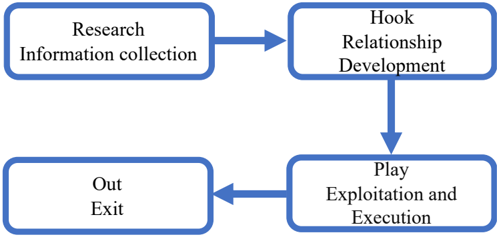
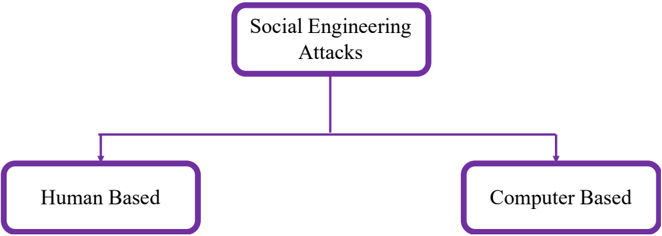
- Social engineering attacks share a common four-phase pattern: collect information about the target, develop a relationship, exploit the information and execute the attack, and exit without traces. They are classified as human-based or computer-based, and as social, technical, or physical-based; the paper also proposes direct and indirect categories.
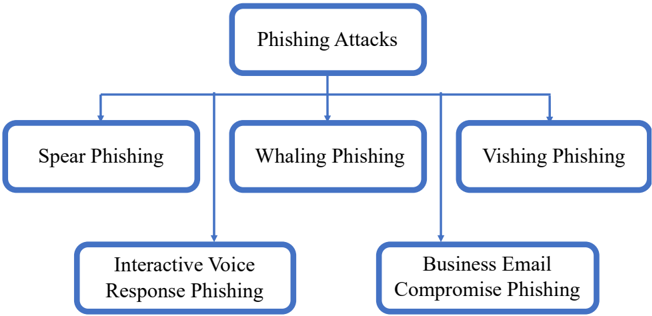
- Phishing is described as the most common social engineering attack and is divided into five categories: spear phishing, whaling phishing, vishing phishing, interactive voice response phishing, and business email compromise phishing. Ransomware is described as involving six stages: malware creation, deployment, installation, command and control, destruction, and extortion.
- Reported impacts include an estimated US social engineering attack cost of $121.22 billion; the Equifax breach exposing personal information of 145.5 million American consumers; over $80 million stolen from Central Bank using a remote access trojan; more than $2.3 billion lost by companies to FBI-reported CEO fraud and email scams; 84% of cyber-attacks conducted by social engineers; and about $1 billion in ransomware losses in 2016.
- In comparing countermeasures, the paper concludes that artificial intelligence-based defense mechanisms are the most effective techniques to reduce social engineering risk, and that combining two or more defense techniques can ensure better protection.
Methods
- The paper is an in-depth survey/overview of social engineering attacks, existing detection methods, prevention procedures, and mitigation techniques; it does not collect primary data or conduct an empirical experiment.
- It synthesizes prior literature and classifications, describes attack types, and compares human-based versus computer-based countermeasures and computer-based mitigation techniques in Tables 1 and 2.
- It discusses challenges and future directions, including training employees and K-12 students and investing in cybersecurity education.
Limitations
- Stated in the paper: existing detection methods have fundamental limitations, countermeasures are inefficient against the ever-growing number of social engineering attacks, human-based techniques are limited by subjective human decisions, and technology-based techniques can be limited because technological vulnerabilities may be exploited.
- Stated in the paper: human-based mitigation depends on relative and subjective human judgment, while technology-based mitigation can be mimicked, complex, expensive, or limited by human unawareness and ignored alerts.
- Evident from the text: as a survey, it does not report a systematic review protocol, primary data, or empirical validation; its comparative conclusions about effectiveness rely on qualitative synthesis of cited works rather than original testing.
Model-written summary. Check it against the paper before relying on it.
Integrity signals
Registry
Cites
Statistics
Figures

Verification
Claims the paper makes
11 Valid · 10 Not valid · 61 Not checked · 35 Own results and interpretations
The cited sources support only part of this claim — read each source’s verdict below.
In the paper
“The common pattern involves four phases: (1) collect information about the target; (2) develop relationship with the target; (3) exploit the available information and execute the attack; and (4) exit with no traces [12].”
§ Social Engineering Attacks: A Survey > 2. Social Engineering Attacks
What the sources say
- Partly supportedcites [12] 12. Mouton, F.; Leenen, L.; Venter, H. Social engineering attack examples, templates and scenarios. Comput. Secur. 2016, 59, 186-209. [CrossRef] sourceExperimental — accuracy not yet measured
Section 2, “Defining Social Engineering Attacks” (page unavailable), describes a commonly known four-phase model involving research, rapport, exploitation of trust, and use of information. But it does not give “exit with no traces” as the fourth phase; the paper’s own six-phase framework ends with debriefing, in which the attacker reassures the target and checks whether the goal was met. (LLM, conf=0.88)
plain- Asserted: passes — The authors put it forward as true.
- Checkable: passes — It can be checked against evidence.
- Load-bearing: unclear — It is unclear whether the paper’s conclusions depend on it.
- Based: passes — The paper gives a reason why it holds.
- Partly supported
The cited sources that could be checked couldn’t confirm or dispute this claim.
In the paper
“Currently, social engineering attacks are the biggest threats facing cybersecurity [4][5][6][7][8][9].”
§ Social Engineering Attacks: A Survey > 2. Social Engineering Attacks
What the sources say
- Not matchedcites [4] 4. Arana, M. How much does a cyberattack cost companies? Open Data Security 2017, 1-4.
We searched by its title and found no matching paper.
- Could not verifycites [5] 5. Chargo, M. You've been hacked: How to better incentivize corporations to protect consumers' data. Trans. Tenn. J. Bus. Law 2018, 20, 115-143. doi:10.70658/4486-1457.1452Experimental — accuracy not yet measured
The Introduction discusses breaches involving weak or stolen passwords, and the Target section describes access through a third-party vendor. Neither passage identifies social engineering attacks as the biggest cybersecurity threat. Searches for social engineering, phishing, and related threats found no passage in our copy making that comparison. (LLM, conf=0.72)
- Not checked — no full text of the sourcecites [6] 6. Libicki, M. Could the issue of DPRK hacking benefit from benign neglect? Georg. J. Int. Aff. 2018, 19, 83-89. [CrossRef] source
plain- Asserted: passes — The authors put it forward as true.
- Checkable: passes — It can be checked against evidence.
- Load-bearing: unclear — It is unclear whether the paper’s conclusions depend on it.
- Based: passes — The paper gives a reason why it holds.
- Not matched
The cited sources support only part of this claim — read each source’s verdict below.
In the paper
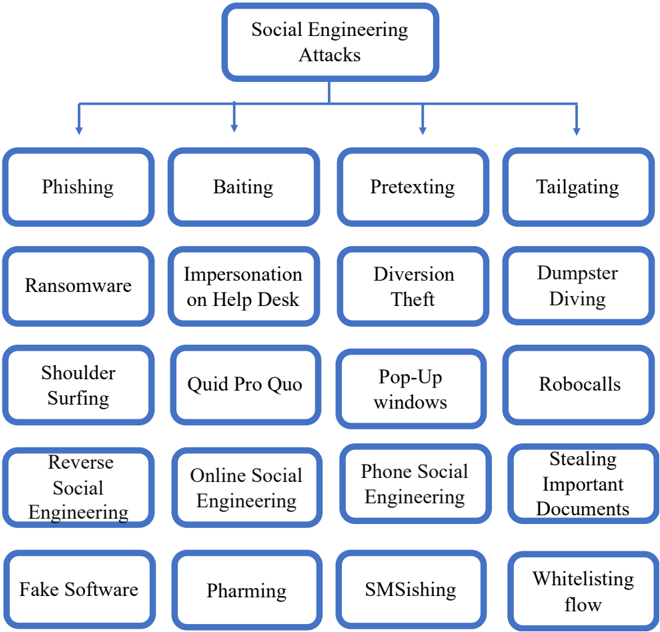
“They can also be fake alerts stating that the computer storage is full and that it needs to be scanned and cleaned to save more space [35].”
§ Social Engineering Attacks: A Survey > 2.2.8. Pop-Up Windows
What the sources say
- Partly supportedcites [35] 35. Ivaturi, K.; Janczewski, L. A taxonomy for social engineering attacks. In Proceedings of the International Conference on Information Resources Management, Centre for Information Technology, Organizations, and People, Ontario, Canada, 18-20 June 2011; pp. 1-12.Experimental — accuracy not yet measured
The “Popups” section describes fake alerts that prompt users to take action, supporting the general point. Its example warns of a virus and urges an antivirus download; it does not describe a full-storage alert or scanning and cleaning to free space. No page number is available in our copy. (LLM, conf=0.87)
plain- Asserted: passes — The authors put it forward as true.
- Checkable: passes — It can be checked against evidence.
- Load-bearing: unclear — It is unclear whether the paper’s conclusions depend on it.
- Based: passes — The paper gives a reason why it holds.
- Partly supported
The cited sources support only part of this claim — read each source’s verdict below.
In the paper
“For attacks related to emails or link clicks, software vendors become more aware of the social engineering treats by building strong products with security measures [54].”
§ Social Engineering Attacks: A Survey > 4. Mitigation Techniques
What the sources say
- Partly supportedcites [54] 54. Ali, B.; Awad, A. Cyber and physical security vulnerability assessment for IoT-based smart homes. Sensors 2018, 18, 817. [CrossRef] sourceExperimental — accuracy not yet measured
The Discussion recommends that device manufacturers and application programmers provide devices with stronger security capabilities and applications with secure interfaces. The Results discuss social engineering, but our copy does not connect that recommendation to email or link-click attacks, or say that building secure products makes vendors more aware of social engineering threats. (LLM, conf=0.86)
plainstates a cause- Asserted: passes — The authors put it forward as true.
- Checkable: passes — It can be checked against evidence.
- Load-bearing: unclear — It is unclear whether the paper’s conclusions depend on it.
- Based: passes — The paper gives a reason why it holds.
- Partly supported
None of the sources cited for this claim have been checked yet.
In the paper
“Phishing attacks are the most common attacks conducted by social engineers [19,20].”
§ Social Engineering Attacks: A Survey > 2.2.1. Phishing Attacks
What the sources say
- Not checked — no full text of the sourcecites [19] 19. Gupta, S.; Singhal, A.; Kapoor, A. A literature survey on social engineering attacks: Phishing attack. In Proceedings of the International Conference on Computing, Communication, and Automation, Noida, India, 29-30 April 2016; pp. 537-540. [CrossRef] source
- Not matchedcites [20] 20. Yeboah-Boateng, E.O.; Amanor, P.M. Phishing, SMiShing & Vishing: An assessment of threats against mobile devices. J. Emerg. Trends Comput. Inf. Sci. 2014, 5, 297-307.
We searched by its title and found no matching paper.
- Asserted: passes — The authors put it forward as true.
- Checkable: passes — It can be checked against evidence.
- Load-bearing: unclear — It is unclear whether the paper’s conclusions depend on it.
- Based: passes — The paper gives a reason why it holds.
17 more claims
Create a free account to see all 117 claims and to verify the 2 references still open.
- Probably not a substantial claim. 89
- It may state two separate claims as one. 26
Claims other papers make about this one
Each is checked against this paper’s own text: does it say what the citing paper says it does?
The source backs part of the claim, not all of it — or backs it for a different population, condition or comparison.
In the citing paper
“With the Big Data advent, attackers use the vast amount of collected data for businesses purposes, selling it in bulk as goods within black markets (Salahdine and Kaabouch 2019).”
From Deepfakes: current and future trends (2024) · cites this paper as Salahdine and Kaabouch 2019
Experimental — accuracy not yet measuredThe cited source says what the claim attributes to it.
In the citing paper
“These attacks use psychological tricks and dishonest tactics with the goal of obtaining sensitive data, such as passwords, private information, incriminating evidence, and bank card numbers, among others, by deceiving people or businesses into taking actions that are advantageous to the attackers.”
From Deepfakes: current and future trends (2024) · cites this paper as Salahdine and Kaabouch 2019
The cited source says what the claim attributes to it.
In the citing paper
“Social engineering attacks can be used by hostile persons to access communication networks (Salahdine and Kaabouch 2019).”
From Deepfakes: current and future trends (2024) · cites this paper as Salahdine and Kaabouch 2019
Self-check
Percentages, sums and reported differences re-computed from the paper’s own numbers.
Each contradiction between two passages listed here was confirmed by an independent check.
Rated minor: it would not touch a result — a value no result rests on, a p-value that stays on the same side of the significance level, or a conflict that is clerical, resolved elsewhere in the paper, or outside its own findings.
In the paper
§ Social Engineering Attacks: A Survey > 4. Mitigation Techniques
“In [60], the authors focused on mobile ransomware by proposing a new detection technique called HelDroid.”
§ Social Engineering Attacks: A Survey > References
“62. Andronio, N.; Zanero, S.; Maggi, F. Heldroid: Dissecting and detecting mobile ransomware.”
Rated minor: it would not touch a result — a value no result rests on, a p-value that stays on the same side of the significance level, or a conflict that is clerical, resolved elsewhere in the paper, or outside its own findings.
In the paper
§ Social Engineering Attacks: A Survey > 3. Prevention Techniques
“The authors compared the performance of six machine learning algorithms for detecting phishing attacks in terms of speed, reliability, and accuracy: support vector machine, biased support vector machine, artificial neural networks, scaled conjugate gradient, and self-organizing map.”
§ Social Engineering Attacks: A Survey > 3. Prevention Techniques
“support vector machine, biased support vector machine, artificial neural networks, scaled conjugate gradient, and self-organizing map.”
Rated minor: it would not touch a result — a value no result rests on, a p-value that stays on the same side of the significance level, or a conflict that is clerical, resolved elsewhere in the paper, or outside its own findings.
In the paper
§ Social Engineering Attacks: A Survey > 3. Prevention Techniques
“In [51], a social engineering awareness program (SEAP) was developed for schools aiming at increasing students' awareness by providing significant education and training in early age.”
§ Social Engineering Attacks: A Survey > References
“51. Algarni, A.; Xu, Y.; Chan, T. Measuring source credibility of social engineering attackers on Facebook. In Proceedings of the IEEE Hawaii International Conference on System Sciences, Koloa, HI, USA, 5-8 January 2016; pp. 3686-3695. [CrossRef]”
Rated minor: it would not touch a result — a value no result rests on, a p-value that stays on the same side of the significance level, or a conflict that is clerical, resolved elsewhere in the paper, or outside its own findings.
In the paper
§ Social Engineering Attacks: A Survey > 3. Prevention Techniques
“In [34], the authors proposed a new approach called TabShots to distinguish between legitimate pages from malicious pages.”
§ Social Engineering Attacks: A Survey > References
“33. De Ryck, P.; Nikiforakis, N.; Desmet, L.; Joosen, W. Tabshots: Client-side detection of tabnabbing attacks.”
Rated minor: it would not touch a result — a value no result rests on, a p-value that stays on the same side of the significance level, or a conflict that is clerical, resolved elsewhere in the paper, or outside its own findings.
In the paper
§ Social Engineering Attacks: A Survey > 3. Prevention Techniques
“The authors compared the performance of six machine learning algorithms for detecting phishing attacks in terms of speed, reliability, and accuracy:”
§ Social Engineering Attacks: A Survey > 3. Prevention Techniques
“support vector machine, biased support vector machine, artificial neural networks, scaled conjugate gradient, and self-organizing map.”
1 more finding
Create a free account to see every finding of this check.
Citations
Cites
Advanced social engineering attacks
Krombholz, K., Hobel, H., Huber, M., & Weippl, E. (2015) · Journal of Information Security and Applications · doi:10.1016/j.jisa.2014.09.005 · Cited by 575 · cited 2×
“Diversion Theft attacks: consist of misdirecting a transport company to deliver a courier or package to the desired location.”
BackgroundCutting the Gordian Knot: A Look Under the Hood of Ransomware Attacks
Kharraz, A., Robertson, W., Balzarotti, D., Bilge, L., & Kirda, E. (2015) · Lecture Notes in Computer Science · doi:10.1007/978-3-319-20550-2_1 · Cited by 458 · cited 2×
“Getting back the files after the victim’s payment is not guaranteed [30,31].”
BackgroundCryptoLock (and Drop It): Stopping Ransomware Attacks on User Data
Scaife, N., Carter, H., Traynor, P., & Butler, K. R. B. (2016) · 2016 IEEE 36th International Conference on Distributed Computing Systems (ICDCS) · doi:10.1109/icdcs.2016.46 · Cited by 437 · cited 1×
“In [64], the authors proposed an early warning detection system called CryptoDrop that is able to alert the employee in case of suspicious activity on the user data.”
BackgroundSecurity and privacy challenges in smart cities
Braun, T., Fung, B. C. M., Iqbal, F., & Shah, B. (2018) · Sustainable Cities and Society · doi:10.1016/j.scs.2018.02.039 · Cited by 352 · cited 1×
“26”
Cyber and Physical Security Vulnerability Assessment for IoT-Based Smart Homes
Ali, B., & Awad, A. (2018) · Sensors · doi:10.3390/s18030817 · Cited by 344 · cited 1×
“Thus, there are numerous jobs in this cyber-security field that are not filled because of the lack of graduates.”
BackgroundMalicious PDF detection using metadata and structural features
Smutz, C., & Stavrou, A. (2012) · Proceedings of the 28th Annual Computer Security Applications Conference · doi:10.1145/2420950.2420987 · Cited by 271 · cited 1×
“In [45], the authors proposed a detection technique based on machine learning algorithms.”
MethodHelDroid: Dissecting and Detecting Mobile Ransomware
Andronio, N., Zanero, S., & Maggi, F. (2015) · Lecture Notes in Computer Science · doi:10.1007/978-3-319-26362-5_18 · Cited by 246 · cited 1×
“In [62], the authors proposed a neuro-fuzzy-based technique to mitigate phishing attacks in real time and protect online transactions.”
BackgroundRansomware attacks: detection, prevention and cure
Brewer, R. (2016) · Network Security · doi:10.1016/s1353-4858(16)30086-1 · Cited by 214 · cited 1×
“In [65], the authors proposed several steps to follow to mitigate and handle ransomware attacks.”
BackgroundA literature survey on social engineering attacks: Phishing attack
Gupta, S., Singhal, A., & Kapoor, A. (2016) · 2016 International Conference on Computing, Communication and Automation (ICCCA) · doi:10.1109/ccaa.2016.7813778 · Cited by 208 · cited 2×
“Phishing attacks are the most common attacks conducted by social engineers [19,20].”
BackgroundA Taxonomy of Attacks and a Survey of Defence Mechanisms for Semantic Social Engineering Attacks
Heartfield, R., & Loukas, G. (2016) · ACM Computing Surveys · doi:10.1145/2835375 · Cited by 202
Research works printed but not linked: 5
- 16. Patil, P.; Devale, P. A literature survey of phishing attack technique. Int. J. Adv. Res. Comput. Commun. Eng. 2016, 5, 198-200.
- 23. Hofbauer, S.; Beckers, K.; Quirchmayr, G. Defense Methods against VoIP and Video Hacking Attacks in Enterprise Networks. In Proceedings of the 10th International Conference on e-Business, Bangkok, Thailand, 23-24 November 2015; pp. 1-10.
- 40. Foozy, C.F.M.; Ahmad, R.; Abdollah, M.F.; Yusof, R.; Mas'ud, M.Z. Generic taxonomy of social engineering attack and defence mechanism for handheld computer study. In Proceedings of the Malaysian Technical Universities International Conference on Engineering and Technology, Batu Pahat, Malaysia, 13-15 November 2011; pp. 1-6.
- 59. Zulkurnain, A.U.; Hamidy, A.K.B.; Husain, A.B.; Chizari, H. Social engineering attack mitigation. Int. J. Math. Comput. Sci. 2015, 1, 188-198.
- 66. Kharaz, A.; Arshad, S.; Mulliner, C.; Robertson, W.; Kirda, E. A large-scale, automated approach to detecting ransomware. In Proceedings of the 25th USENIX Security Symposium, Austin, TX, USA, 10-12 August 2016; pp. 757-772.
Cited by
Items 401–500 of 506
Modeling of Advanced Threat Actors: Characterization, Categorization and Detection
Villalón-Huerta, A. (2023) · RiuNet (Universitat Politècnica de València) · doi:10.4995/thesis/10251/193855 · Cited by 2
Social Media Account Hacking Using Kali Linux-Based Tool BeEF
Le, C., Nassiri, R., Jebessa, E., et al. (2023) · Lecture notes in networks and systems · doi:10.1007/978-981-99-1726-6_55
Development of Social Engineering Skills during Master’s Degree Training in Specialty “Social Work”
Kostiuchkov, S. (2023) · International Scientific Journal of Universities and Leadership · doi:10.31874/2520-6702-2023-15-83-93
Shelupanova, P. A., Сергеевич, Р. В., Osipenko, A. V., et al. (2023) · IEEE International Conference of Young Professionals in Electron Devices and Materials (EDM) · doi:10.1109/edm58354.2023.10225248
“In the following source, in order to detect attacks using phone calls, it is proposed to check the source of calls using a list of recorded contacts [5].”
BackgroundA Comprehensive Study Of Metaverse Privacy And Security
Jacob, A. O., Biju, A., Sibichen, B. R., Varghese, C. R., & Varghese, A. R. (2023) · International Journal of Engineering Technology and Management Sciences · doi:10.46647/ijetms.2023.v07i04.059 · Cited by 1
Early Detection of Security Holes in the Network
Ambika, N. (2023) · Advances in information security, privacy, and ethics book series · doi:10.4018/978-1-6684-8218-6.ch004
Syafitri, N., & Agustin, G. (2023) · KINERJA · doi:10.24002/kinerja.v27i2.6685
“Frequent social engineering modes are happening in the banking sector: internet banking fraud and online transactions, bank contact centers, and SMS fraud (Ratulangi et al., 2021).”
BackgroundSocial Engineering as a Driving Force for Innovation in CybersecurityPreprint
Dabke, V., Gadgil, G., & Dabke, Y. (2023) · doi:10.36227/techrxiv.24226411
Social Engineering as a Driving Force for Innovation in CybersecurityPreprint
Dabke, V., Dabke, Y., Gadgil, G., & Gadgil, G. (2023) · doi:10.36227/techrxiv.24226411.v2
İnsan Kaynakları Yönetiminde Yeni Paradigma: İKY 4.0
Tekin, İ. Ç., & Erdoğan, P. (2023) · Özgür Yayınları eBooks · doi:10.58830/ozgur.pub137.c1384
Web Kazıma Yöntemlerini Kullanarak Sosyal Medya ve Web Verilerinin Dijital Pazarlama Analizi
Akbulut, M. (2023) · Özgür Yayınları eBooks · doi:10.58830/ozgur.pub137.c1382
Paralel Hizmet Sağlayıcı ve Tek Kuyruklu Sistemlerin Bulanık Kontrolü
Aka, S. (2023) · Özgür Yayınları eBooks · doi:10.58830/ozgur.pub137.c1383
Smith-Creasey, M. (2023) · SpringerBriefs in computer science · doi:10.1007/978-3-031-49071-2_2
Meza, J., Palma, E. A. C., Zambrano, D. M. Z., Zambrano-Romero, W. D., & Zambrano, D. (2024) · AIP conference proceedings · doi:10.1063/5.0188636 · Cited by 1
Minicursos do XXIII Simpósio Brasileiro de Segurança da Informação e de Sistemas Computacionais
Vieira, A. B., Silva, E. F., de Medeiros, D. S. V., Araujo, R. S. D. S., Paiva, T., Ponciano, V., Moreira, E., Oliveira, R., Rufino, V., Melo, C., et al. (2023) · doi:10.5753/sbc.13567.7
Introdução à Engenharia Social: da Psicologia Cognitiva aos Ataques Automatizados
Nobre, J. C., da Silva, P., de Azambuja, A. J. G., Ariza, M., Granville, L. Z., & Reppold, C. T. (2023) · doi:10.5753/sbc.13567.7.3
Embedding Privacy First Human Centric in User Experience for Mobile Applications.
Phokela, K. K., Singi, K., & Kaulgud, V. (2024) · Innovations in Software Engineering Conference (ISEC) · doi:10.1145/3641399.3641414 · Cited by 2
METHODS IN MACHINE LEARNING FOR IDENTIFYING AND PREVENTING ENGINEERING ATTACK
(2024) · International Research Journal of Modernization in Engineering Technology and Science · doi:10.56726/irjmets53175
Detecting Masquerading Traitors from Process Visualization of Computer Usage
Macák, M., Ošlejšek, R., & Bühnová, B. (2023) · IEEE International Conference on Trust, Security and Privacy in Computing and Communications (TrustCom) · doi:10.1109/trustcom60117.2023.00263
“Using many techniques, such as social engineering, they can obtain the access and rights of their co-workers and perform actions in the system from their device or account [4].”
MethodMatusitz, J., & Dacas, J. (2024) · Signals and communication technology · doi:10.1007/978-3-031-63485-7_8
REVIEW ON SOCIAL ENGINEERING ATTACKS AND DEFENSE MECHANISMS
Kushwaha, A., Singh, P., & Waoo, A. A. (2024) · ShodhKosh Journal of Visual and Performing Arts · doi:10.29121/shodhkosh.v5.i5.2024.1887 · Cited by 2
Clickbait Chronicles: Unmasking the Student Exploitation Scheme Through Social Engineering Analysis
Blancaflor, E., Diaz, S. S., Gaddi, C. L., Sarmiento, R. L. G., & Sison, A. G. T. (2024) · International Conference on Electrical, Computer and Energy Technologies (ICECET) · doi:10.1109/icecet61485.2024.10698139 · Cited by 1
“The concept of social engineering has emerged as a significant security concern, posing risks to various aspects of infrastructure, users, data, and activities inside the realm of cyberspace [1].”
BackgroundComparing Different Machine Learning Techniques for Detecting Phishing Websites
Pathak, A., Pandey, P., & Raheja, V. (2024) · BENTHAM SCIENCE PUBLISHERS eBooks · doi:10.2174/9789815256864124010012
La SMP Wagner comme outil informationnel : entre Kill Chain, 6D et démultiplication des crises
Dugoin-Clément, C. (2024) · Revue Défense Nationale · doi:10.3917/rdna.873.0023
Analysis of Social Engineering Security Challenges and Its Emerging Technologies
Vidyasri, P., & Suresh Kumar, S. (2024) · Communications in computer and information science · doi:10.1007/978-3-031-75957-4_18
Kävrestad, J., Fernow, R., Lööf, D., & Birath, M. (2024) · IFIP advances in information and communication technology · doi:10.1007/978-3-031-72559-3_22 · Cited by 1
Exploring Social Engineering Attacks Involving Insights From Case Studies
Kakarla, S., Kakarla, G., Samreen, S., et al. (2024) · Advances in information security, privacy, and ethics book series · doi:10.4018/979-8-3693-6665-3.ch002
Beni, R. M., Mbale, L., Muhau, J.-A., & Ilunga, G. W. K. (2024) · Lecture notes in networks and systems · doi:10.1007/978-3-031-74443-3_27
Blockchain for security and privacy in the smart sensor network
Koca, M. (2025) · Elsevier eBooks · doi:10.1016/b978-0-443-36370-2.00006-2
Make Seeds Expire in TOTP Authentication
Noda, K., & Kaji, Y. (2024) · International Symposium on Information Theory and its Applications · doi:10.23919/isita60732.2024.10858255
“…for his / her convenience, but forget about that and leave some devices unattended; In setting up of a smartphone app for TOTP, the two-dimensional code of the seed is shoulder-hacked [6]; Somebody operates unlocked smartphone and use the backup function of the app to retrieve the seed, and so on.”
Business Email Compromise: A Systematic Review of Understanding, Detection, and ChallengesPreprint
Almutairi, A., Kang, B., & Hashimy, N. A. (2025) · SSRN Electronic Journal · doi:10.2139/ssrn.5126155
Social Engineering in the Era of AI: Unmasking the Changing Face of Cyber Threats
Chawki, M. (2025) · Studies in computational intelligence · doi:10.1007/978-3-031-80557-8_1 · Cited by 4
Legal and Ethical Issues in the Interaction of AI and Metaverse: Complexities and Challenges
Ojha, N. K., & Vaish, A. (2025) · Advances in computational intelligence and robotics book series · doi:10.4018/979-8-3373-3384-7.ch006 · Cited by 1
Artificial intelligence in energy
Abdi, N., Albaseer, A. M., & Abdallah, M. M. (2025) · Elsevier eBooks · doi:10.1016/b978-0-44-313219-3.00080-0
Anbiyaa, F. (2025) · Cerdika Jurnal Ilmiah Indonesia · doi:10.59141/cerdika.v5i3.2563
MAIA: Methodology for Assessing the Impacts of Threats to Information Systems
Neto, A., & Duarte-Figueiredo, F. (2025) · doi:10.5753/sbsi.2025.246384
Active Social Engineering Defense Using Large Language Models
Stoll, F., Pottkamp, B., & Morgenstern, H. (2025) · Lecture notes in computer science · doi:10.1007/978-3-031-93724-8_20
Japinye, A. O., Ukeagu, D. O., & Ejianya, E. C. (2025) · European Journal of Computer Science and Information Technology · doi:10.37745/ejcsit.2013/vol13n33115 · Cited by 1
Human Factor and Behavioral Computing
Wang, C. (2025) · Springer eBooks · doi:10.1007/978-981-96-5194-8_4
The Art of Deception Through Social Engineering
Kumar, H. (2025) · Journal of Emerging Technologies and Innovative Research · doi:10.56975/jetir.v12i6.564565
Analysis of Information Security Awareness Against Social Engineering Attacks
Arifin, F. F., Hatta, P., & Wihidayat, E. S. (2024) · Journal of Informatics and Vocational Education · doi:10.20961/joive.v7i2.2403
Attacks on Polish Bank Customers During the Pandemic: Cyberscams and the Role of Security Alerts
Kaczmarczyk, W. (2025) · Finanse i Prawo Finansowe · doi:10.18778/2391-6478.2.46.02
Social Engineering Defence Mechanism and Cybersecurity in India
Damle, M., Pathak, P., Damle, M., & Yadav, V. (2025) · Lecture notes in networks and systems · doi:10.1007/978-981-96-2015-9_9
Augmented Framework for Enhanced Phishing Detection and Prevention
Al-basmi, A. A., Amran, G. A., AL-Bakhrani, A. A., et al. (2024) · doi:10.1109/csdgais64098.2024.11064828
Exploring Organizational Resilience Towards AI-Driven Cyber Threats: A Systematic Literature Review
Ndlovu, M. P., & Tsibolane, P. (2025) · IST-Africa Conference (IST-Africa) · doi:10.23919/ist-africa67297.2025.11060472
“This is because “humans are more likely to trust other humans than computers or technology, making them the weakest link in the security chain” [48].”
Phishing Attacks in the United States Healthcare Industry: A Phenomenological Study (Preprint)
Raoof, M. M. (2024) · JMIR Formative Research · doi:10.2196/67988
Preetika, Sonia, S., & Chauhan, P. (2025) · International Conference on Computing for Sustainable Global Development · doi:10.23919/indiacom66777.2025.11115735
“Social engineering, email account hacking, and creating fake emails are just a few of the tactics used by attackers to target companies and compromise their systems [5],[6], [7].”
Automated Cyberattacks and Social Engineering
Aggarwal, G., Pandey, A. K., & Singal, S. M. (2025) · BENTHAM SCIENCE PUBLISHERS eBooks · doi:10.2174/9798898810030125040010
Sharma, A., Gupta, A. K., Sharma, S., et al. (2025) · BENTHAM SCIENCE PUBLISHERS eBooks · doi:10.2174/9798898810030125040004
Social engineering tactics and alleviating techniques: A comprehensive analysis
Singh, A., Sharma, A., Kumar, P., Sayeed, M. A., & Ansar, S. A. (2025) · AIP conference proceedings · doi:10.1063/5.0296232
Insider Threats and Social Engineering in Healthcare
Olasehan, O. A. (2025) · IGI Global eBooks · doi:10.4018/979-8-3373-4918-3.ch002
The Phishing Epidemic: Threats, Techniques, and Countermeasures
Agarwarkar, S., Dodiya, K. R., & Kumar, K. (2025) · Advances in computational intelligence and robotics book series · doi:10.4018/979-8-3373-2252-0.ch010
Arévalo, D., Valarezo, D., Fuertes, W., Cazares, M. F., Andrade, R., & Macas, M. (2025) · De Gruyter eBooks · doi:10.1515/9783111436548-017
Multi-Client Scenario-Based Reverse Shell Attack Simulation
Malkawi, M., Akrami, Y., Kechaou, S., & Alhajj, R. (2025) · International Symposium on Multidisciplinary Studies and Innovative Technologies (ISMSIT) · doi:10.1109/ismsit67332.2025.11267797 · Cited by 2
“Salahdine and Kaabouch [15] categorize these attack vectors, stressing the importance of user awareness.”
Maheshwari, R., & Gujar, M. (2025) · IEEE International Conference on Advances in Computing Research on Science Engineering and Technology (ACROSET) · doi:10.1109/acroset66531.2025.11280758
“In this step, the adversary prepares the background for the potential attack by exploring potential victims, gathering information about the victims and choosing the most appropriate mode of attack [6].”
Ajala, T. B. (2025) · International Journal of Latest Technology in Engineering Management & Applied Science · doi:10.51583/ijltemas.2025.1411000044
Data Privacy and Security in Education
Akgün, F., & Leymun, Ş. O. (2025) · Advances in computational intelligence and robotics book series · doi:10.4018/979-8-3373-8857-1.ch007
Selvamani, K., Kanimozhi, S., Muthusundar, S. K., et al. (2026) · Lecture notes in networks and systems · doi:10.1007/978-3-032-13006-8_17
Boosting the Cybersecurity Resilience of Human and Environmental Rights Defenders in Africa
Ngalim, B. (2025) · Springer eBooks · doi:10.1007/978-3-032-03261-4_28
Wangsa, K., Karim, S., & Sandu, N. (2026) · Lecture notes in networks and systems · doi:10.1007/978-3-032-11515-7_15
Illusion of Presence: Physical Deception and Direct Manipulation in Social Engineering
Khan, J. R., Qureshi, S. M., Siddiqui, F. A., & Ali, S. A. (2025) · Journal of Information assurance and security · doi:10.2478/ias-2025-0008
“This offer usually aims to install the malware in victims’ computers or steal their credentials or personal information [19].”
InfluentialCyberShield: A Proposed Model for Building Cyber Resilience in Secondary Education
Tinam-isan, M. A. C., Naga, J. F., Lua, H. H., et al. (2025) · doi:10.1109/cyberscitech68397.2025.00083
“Social engineering attacks take advantage of human trust and vulnerabilities which pose a significant challenge to network security [28].”
Dunmade, A. O., Onuoha, U. D., & Tella, A. (2024) · De Gruyter eBooks · doi:10.1515/9783111176987-011
OVERVIEW OF SCIENTIFIC WORKS ON SOCIAL ENGINEERING
Kyuner, A. P., & Chechulin, A. A. (2025) · Scientific and analytical journal «Vestnik Saint-Petersburg university of State fire service of EMERCOM of Russia» · doi:10.61260/2218-130x-2025-4-94-106
Navigating AI-Enhanced Social Engineering: Strategies for Countering Modern Threats
Singh, J. (2025) · International Conference on Software, Systems and Information Technology (SSITCON) · doi:10.1109/ssitcon66133.2025.11342253
“This is done using audio, which can be sourced from places like YouTube, a company website, or by calling the person the attacker wants to mimic the voice of and recording the conversation.”
InfluentialSelective Disclosure in Transit : SSI and Key Derivation-Based Privacy Protection for Logistics
Liu, J., Liang, Z., & Lyu, Q. (2025) · International Conference on Cyber-Physical Social Intelligence (ICCSI) · doi:10.1109/cpsi66656.2025.11343932
“Such leaks are frequently exploited in identity theft, phishing attacks, and other forms of social engineering[2-5].”
A Systematic Literature Review on Biometric Authentication in Mobile Banking
Ali, H. N., & Aldabbagh, S. S. M. (2026) · F1000Research · doi:10.12688/f1000research.173855.1 · Cited by 2
Human Risks and Cognition-Inspired Adaptive Cyber Deception
Yang, Y.-T., Ge, Y., & Zhu, Q. (2025) · Advances in information security · doi:10.1007/978-3-031-93867-2_8 · Cited by 3
Resilience to Cyber Threats: Strategies to Counter Cyber Threats in Small States
Juozapavičius, A. (2026) · Springer eBooks · doi:10.1007/978-3-032-10146-4_14
Chien, B.-H. C., Lin, Y.-S., & Chen, C. (2026) · IEEE International Conference on Knowledge Innovation and Invention (ICKII) · doi:10.3390/engproc2025120062
Ribeiro, A. D. R. L., & Silva, J. M. C. (2026) · Lecture notes in networks and systems · doi:10.1007/978-3-032-12876-8_12
Examples of Calculating Indirect Costs of a Hack
Carlson, A. H., Williams, B., Mikkilineni, S. R., et al. (2026) · IEEE Annual Computing and Communication Workshop and Conference (CCWC) · doi:10.1109/ccwc67433.2026.11393851
Faria, T. G., Lima, M. R., Dias, E. S., & Falcão, A. C. (2025) · Congresso Latino-Americano de Software Livre e Tecnologias Abertas (Latinoware) · doi:10.5753/latinoware.2025.14855
Kimura, Y., Anzai, E., Saiwaki, N., & Shiomi, M. (2026) · ACM/IEEE International Conference on Human-Robot Interaction (HRI) · doi:10.1145/3776734.3794380
Sabo, K. E., Sarno, D. M., & Black, J. (2026) · Applied Ergonomics · doi:10.1016/j.apergo.2026.104771
Engineering Trust: Anatomy of a Social Engineering Breach
Patil, J. B., Sarika, S., Misra, D. D., Anitha, E. B., Myilvahanan, J. K., & Keerthana, N. V. (2026) · IGI Global eBooks · doi:10.4018/979-8-2600-0747-1.ch007
The emergence of trust under conditions of distrust
Fehlhaber, A. L. (2026) · Scientific Reports · doi:10.1038/s41598-026-36825-3
Jung, J., & Kim, M. (2026) · International World Wide Web Conference (WWW) · doi:10.1145/3774904.3792596
“On online platforms, the widespread dissemination of hate speech and illegal content often involves deliberate text obfuscation, where users intentionally modify linguistic forms to bypass automated moderation systems [3, 13, 37].”
Zhuang, M., Martin, F., Wang, W., & Byker, E. J. (2026) · Technology Knowledge and Learning · doi:10.1007/s10758-026-09975-6
Cybercrime in the Digital Finance Ecosystem: Typologies, Terminology, and Economic Cost
Balcı, N. (2026) · Emerald Group Publishing Limited eBooks · doi:10.1108/978-1-83708-170-720261019 · Cited by 1
Verification of the Methods of Digital Monitoring of Information Space Based on Coding Theory Tools
Shaltykova, D. B., Bakirov, A. S., Grishina, A. V., Kostsova, M. V., Vitulyova, Y. S., & Сулейменов, И. (2026) · Computers · doi:10.3390/computers15040260 · Cited by 1
Liu, J., Shirvani, M. S., Hong, H., Kim, I.-J., & Yoon, D. (2026) · Proceedings of the ACM on Human-Computer Interaction · doi:10.1145/3788072 · Cited by 3
“Some participants like T13 brought up how the clones can become a tool for manipulation and social engineering [75] by “understanding the psyche of the target”.”
Neumannová, A., & Bernroider, E. W. N. (2026) · Journal of Cybersecurity · doi:10.1093/cybsec/tyag017
Ethics, Governance, Risks, Compliance, and Sovereignty of AI for Cybersecurity
Ramachandran, M. (2026) · Texts in computer science · doi:10.1007/978-3-032-17367-6_16
Sambasivam, S., & Afriyie, B. S. (2023) · Information Systems Education Journal · doi:10.62273/kcye2049 · Cited by 1
Towards the Future of Data Protection and Privacy Enhancement - A Research Review
Albakoor, M., & Mubarak, H. (2026) · Smart innovation, systems and technologies · doi:10.1007/978-3-032-21164-4_25
From Awareness to Action: Exploring Human Factors in Cybersecurity within Jordan
Momani, M., & Altamimi, A. (2026) · International Conference on Information and Communication Systems (ICICS) · doi:10.1145/3812734.3813438
“Based on the interaction level between the attacker and the victim, attacks can be classified into direct and indirect; direct attacks involve personal interaction, while indirect attacks are typically carried out remotely [2].”
Öğretmenlerin Bilgi Güvenliği Farkındalığının Bireysel ve Mesleki Değişkenler Bağlamında Analizi
Bilici, S. (2026) · Eğitim ve Yeni Yaklaşımlar Dergisi · doi:10.52974/jena.1866617
Junger, M., Olber, P., Płocki, R., Luyten, H., Koning, L., Muniz, C. N., Bullée, J.-W., Wang, V., Botha, R., Howell, C. J., et al. (2026) · Computers & Security · doi:10.1016/j.cose.2026.105050 · Cited by 1
Mitigating Phishing Attacks Through Multi-layer Edge Task Offloading For Cyber-Physical Systems
呂, 芳., Liu, F., & Meng, W. (2026) · Lecture notes of the Institute for Computer Sciences, Social Informatics and Telecommunications Engineering · doi:10.1007/978-3-032-22503-0_12
Bharti, R. (2026) · SSRN Electronic Journal · doi:10.2139/ssrn.7079432
Evolutionary graph structure learning for adversarial defense in GNNs
Pan, H., Guo, J., Cheng, L., Gao, R., & Sui, X. (2026) · International Journal of Machine Learning and Cybernetics · doi:10.1007/s13042-026-03230-1
“…on the classification problem of graph adversarial attacks shows that the entire graph adversarial attack can be summarized according to the five categories: adversarial sample attacks [ 20], malware attacks [21], network attacks [22], social engineering attacks [23] and physical attacks [24].”
Correlation-Weighted Logistic Risk Model for Explainable Phishing Detection
Berlibek, D., Shaikhanova, A. K., & Medetbek, A. (2026) · IEEE International Conference on Smart Information Systems and Technologies (SIST) · doi:10.1109/sist61674.2026.11596498
“This supports prior research [16, 17], which emphasizes that social engineering attacks exploit multiple contextual signals rather than isolated technical indicators.”
Cybersecurity Threats to Digital Financial Inclusion in Africa: Can Ethical AI Bridge the Trust Gap?
Osuma, G., & Faboya, O. (2026) · Springer eBooks · doi:10.1007/978-3-032-01214-2_16
مهندسی اجتماعی و آسیبپذیری رفتاری کارکنان: تحلیل تهدیدات و استراتژیهای مقابله در محیطهای اداری
حیدری, س. ا. (2026) · Algorithm Scientific Research Journal · doi:10.61438/asrj.v1i1.327
Scarpin, R. P., Salles, F. M., Araujo, G. A., et al. (2026) · doi:10.5753/wei.2026.21823
Filio-Aguilar, P. D., Mil‐Martínez, R., & López-García, L. (2026) · Journal of Cybersecurity and Privacy · doi:10.3390/jcp6040134 · Cited by 2
Blockchain and zero-knowledge proof for security and privacy preservation in student sensor networks
Nyangaresi, V. O., AlRababah, A. A., Najim, A. H., Abduljabbar, Z. A., & Shariq, M. (2026) · Elsevier eBooks · doi:10.1016/b978-0-443-41632-3.00030-8
Berlibek, D., Shaikhanova, A. K., & Medetbek, A. (2026) · International Conference on Cybersecurity, Digital Forensics, and AI Applications (ICCSDFAI) · doi:10.1109/iccsdfai70505.2026.11647936 · Cited by 1
“Traditional technical defenses such as firewalls, intrusion detection systems, and anti-phishing filters operate on artifact-based detection and provide no mechanism for assessing which employees are most susceptible to attack before an incident occurs [2, 3].”
Metadata
- Authors
- Salahdine, F., & Kaabouch, N.
- Affiliations
- University of North Dakota (US)
- Corresponding author
- Salahdine, Fatima
- ORCID
- Salahdine, Fatima
- Venue
- Future Internet
- Publisher
- MDPI AG
- Published
- 2019-04-02
- Volume
- 11
- Issue
- 4
- Pages
- 89
- ISSN
- 1999-5903 (ISSN-L)
- OpenAlex
- W2933127114
- Cited by
- 509
- References
- 71
- Citations by year
- 2026: 48 · 2025: 69 · 2024: 98 · 2023: 110 · 2022: 69 · 2021: 68 · 2020: 41 · 2019: 4
- FWCI
- 27.70
- Type
- journal article
- Language
- en
- Open access
- gold
- doi.org
- Licence
- Locations
- Future Internet (publishedVersion, cc-by)
- RePEc: Research Papers in Economics (submittedVersion)
- DOAJ (DOAJ: Directory of Open Access Journals) (submittedVersion, cc-by-sa)
- Topics
- Physical Sciences › Computer Science › Software › Advanced Malware Detection Techniques
- Physical Sciences › Computer Science › Information Systems › User Authentication and Security Systems
- Physical Sciences › Computer Science › Information Systems › Information and Cyber Security
- Keywords
- social engineering attacks, human factors in security, sensitive information disclosure, password theft, social networks, attack classification, attack detection, attack prevention
About these checks
Registry, retraction, Cites and statistics results are computed, not judged, with one exception: a printed reference that no index lists is read once by a model before it counts as a citation error. Claims are extracted by a model and kept only when their quote appears verbatim in the text; each cited source is then checked, with a model’s help, for whether it says what the claim relies on. Those verdicts can be wrong — read the claim’s quote and the cited source before relying on one.
The claim verdicts this report counts are experimental: their accuracy is not yet measured.
A language model drew the claims from the paper on 2026-09-28, under version 3 of the claim definition (prompt extract-v3).
A second model labelled each claim on 2026-09-28 (model jev-1.13-20260917, definition revision gold-guideline-v0.2).
Cited sources are checked with a language model’s help (gpt-6-sol).
Statistics and arithmetic are recomputed, not judged.
Confidence bands are shown only for fields calibrated on our annotated test set. None is calibrated yet, so no band is shown.
What counts as a claim ›How we measure confidence ›How we check this ›
Are you an author, or do you see a problem with this page? Request a review
Data sources
Bibliographic data: Semantic Scholar, OpenAlex, Crossref.
Contains information from the Semantic Scholar Academic Graph Datasets, made available under the ODC Attribution License (ODC-BY 1.0).
Semantic Scholar’s data is described in: Kinney, R., et al. (2023). The Semantic Scholar Open Data Platform. arXiv:2301.10140.
