

Social Engineering Attacks: A Survey
Open accessThe DOI matches its Crossref record; 65 of the 71 references it cites were found in a registry or an index; 16 of the 79 sources its claims cite were checked for support.
Abstract
The advancements in digital communication technology have made communication between humans more accessible and instant. However, personal and sensitive information may be available online through social networks and online services that lack the security measures to protect this information. Communication systems are vulnerable and can easily be penetrated by malicious users through social engineering attacks. These attacks aim at tricking individuals or enterprises into accomplishing actions that benefit attackers or providing them with sensitive data such as social security number, health records, and passwords. Social engineering is one of the biggest challenges facing network security because it exploits the natural human tendency to trust. This paper provides an in-depth survey about the social engineering attacks, their classifications, detection strategies, and prevention procedures.
Overview
CoChat Summary
TL;DR
This survey reviews social engineering attacks, their classifications, detection, prevention, and mitigation techniques, arguing they exploit human trust and cannot be stopped by technology alone. It concludes that AI-based defenses and combined countermeasures are most effective, while training and cybersecurity education are needed.
Key findings
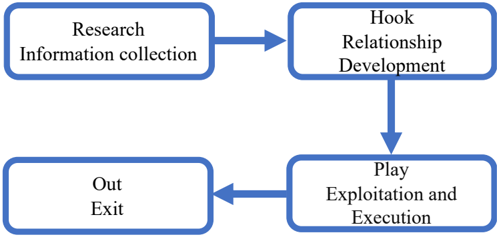
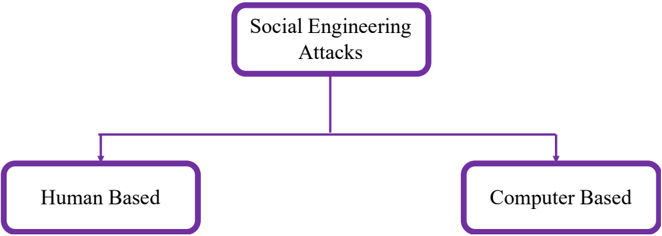
- Social engineering attacks share a common four-phase pattern: collect information about the target, develop a relationship, exploit the information and execute the attack, and exit without traces. They are classified as human-based or computer-based, and as social, technical, or physical-based; the paper also proposes direct and indirect categories.
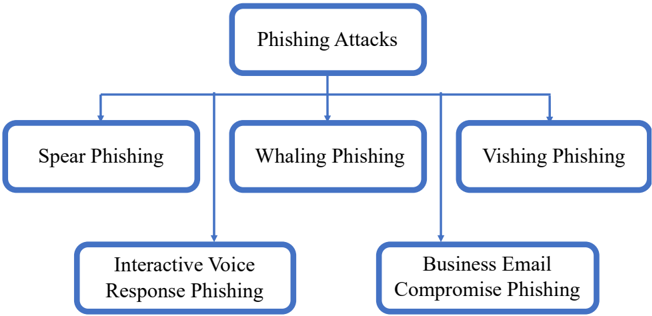
- Phishing is described as the most common social engineering attack and is divided into five categories: spear phishing, whaling phishing, vishing phishing, interactive voice response phishing, and business email compromise phishing. Ransomware is described as involving six stages: malware creation, deployment, installation, command and control, destruction, and extortion.
- Reported impacts include an estimated US social engineering attack cost of $121.22 billion; the Equifax breach exposing personal information of 145.5 million American consumers; over $80 million stolen from Central Bank using a remote access trojan; more than $2.3 billion lost by companies to FBI-reported CEO fraud and email scams; 84% of cyber-attacks conducted by social engineers; and about $1 billion in ransomware losses in 2016.
- In comparing countermeasures, the paper concludes that artificial intelligence-based defense mechanisms are the most effective techniques to reduce social engineering risk, and that combining two or more defense techniques can ensure better protection.
Methods
- The paper is an in-depth survey/overview of social engineering attacks, existing detection methods, prevention procedures, and mitigation techniques; it does not collect primary data or conduct an empirical experiment.
- It synthesizes prior literature and classifications, describes attack types, and compares human-based versus computer-based countermeasures and computer-based mitigation techniques in Tables 1 and 2.
- It discusses challenges and future directions, including training employees and K-12 students and investing in cybersecurity education.
Limitations
- Stated in the paper: existing detection methods have fundamental limitations, countermeasures are inefficient against the ever-growing number of social engineering attacks, human-based techniques are limited by subjective human decisions, and technology-based techniques can be limited because technological vulnerabilities may be exploited.
- Stated in the paper: human-based mitigation depends on relative and subjective human judgment, while technology-based mitigation can be mimicked, complex, expensive, or limited by human unawareness and ignored alerts.
- Evident from the text: as a survey, it does not report a systematic review protocol, primary data, or empirical validation; its comparative conclusions about effectiveness rely on qualitative synthesis of cited works rather than original testing.
Model-written summary. Check it against the paper before relying on it.
Integrity signals
Registry
Cites
Statistics
Figures

Verification
Claims the paper makes
11 Valid · 10 Not valid · 61 Not checked · 35 Own results and interpretations
The cited sources support only part of this claim — read each source’s verdict below.
In the paper
“The common pattern involves four phases: (1) collect information about the target; (2) develop relationship with the target; (3) exploit the available information and execute the attack; and (4) exit with no traces [12].”
§ Social Engineering Attacks: A Survey > 2. Social Engineering Attacks
What the sources say
- Partly supportedcites [12] 12. Mouton, F.; Leenen, L.; Venter, H. Social engineering attack examples, templates and scenarios. Comput. Secur. 2016, 59, 186-209. [CrossRef] sourceExperimental — accuracy not yet measured
Section 2, “Defining Social Engineering Attacks” (page unavailable), describes a commonly known four-phase model involving research, rapport, exploitation of trust, and use of information. But it does not give “exit with no traces” as the fourth phase; the paper’s own six-phase framework ends with debriefing, in which the attacker reassures the target and checks whether the goal was met. (LLM, conf=0.88)
plain- Asserted: passes — The authors put it forward as true.
- Checkable: passes — It can be checked against evidence.
- Load-bearing: unclear — It is unclear whether the paper’s conclusions depend on it.
- Based: passes — The paper gives a reason why it holds.
- Partly supported
The cited sources that could be checked couldn’t confirm or dispute this claim.
In the paper
“Currently, social engineering attacks are the biggest threats facing cybersecurity [4][5][6][7][8][9].”
§ Social Engineering Attacks: A Survey > 2. Social Engineering Attacks
What the sources say
- Not matchedcites [4] 4. Arana, M. How much does a cyberattack cost companies? Open Data Security 2017, 1-4.
We searched by its title and found no matching paper.
- Could not verifycites [5] 5. Chargo, M. You've been hacked: How to better incentivize corporations to protect consumers' data. Trans. Tenn. J. Bus. Law 2018, 20, 115-143. doi:10.70658/4486-1457.1452Experimental — accuracy not yet measured
The Introduction discusses breaches involving weak or stolen passwords, and the Target section describes access through a third-party vendor. Neither passage identifies social engineering attacks as the biggest cybersecurity threat. Searches for social engineering, phishing, and related threats found no passage in our copy making that comparison. (LLM, conf=0.72)
- Not checked — no full text of the sourcecites [6] 6. Libicki, M. Could the issue of DPRK hacking benefit from benign neglect? Georg. J. Int. Aff. 2018, 19, 83-89. [CrossRef] source
plain- Asserted: passes — The authors put it forward as true.
- Checkable: passes — It can be checked against evidence.
- Load-bearing: unclear — It is unclear whether the paper’s conclusions depend on it.
- Based: passes — The paper gives a reason why it holds.
- Not matched
The cited sources support only part of this claim — read each source’s verdict below.
In the paper
“They can also be fake alerts stating that the computer storage is full and that it needs to be scanned and cleaned to save more space [35].”
§ Social Engineering Attacks: A Survey > 2.2.8. Pop-Up Windows
What the sources say
- Partly supportedcites [35] 35. Ivaturi, K.; Janczewski, L. A taxonomy for social engineering attacks. In Proceedings of the International Conference on Information Resources Management, Centre for Information Technology, Organizations, and People, Ontario, Canada, 18-20 June 2011; pp. 1-12.Experimental — accuracy not yet measured
The “Popups” section describes fake alerts that prompt users to take action, supporting the general point. Its example warns of a virus and urges an antivirus download; it does not describe a full-storage alert or scanning and cleaning to free space. No page number is available in our copy. (LLM, conf=0.87)
plain- Asserted: passes — The authors put it forward as true.
- Checkable: passes — It can be checked against evidence.
- Load-bearing: unclear — It is unclear whether the paper’s conclusions depend on it.
- Based: passes — The paper gives a reason why it holds.
- Partly supported
The cited sources support only part of this claim — read each source’s verdict below.
In the paper
“For attacks related to emails or link clicks, software vendors become more aware of the social engineering treats by building strong products with security measures [54].”
§ Social Engineering Attacks: A Survey > 4. Mitigation Techniques
What the sources say
- Partly supportedcites [54] 54. Ali, B.; Awad, A. Cyber and physical security vulnerability assessment for IoT-based smart homes. Sensors 2018, 18, 817. [CrossRef] sourceExperimental — accuracy not yet measured
The Discussion recommends that device manufacturers and application programmers provide devices with stronger security capabilities and applications with secure interfaces. The Results discuss social engineering, but our copy does not connect that recommendation to email or link-click attacks, or say that building secure products makes vendors more aware of social engineering threats. (LLM, conf=0.86)
plainstates a cause- Asserted: passes — The authors put it forward as true.
- Checkable: passes — It can be checked against evidence.
- Load-bearing: unclear — It is unclear whether the paper’s conclusions depend on it.
- Based: passes — The paper gives a reason why it holds.
- Partly supported
None of the sources cited for this claim have been checked yet.
In the paper
“Phishing attacks are the most common attacks conducted by social engineers [19,20].”
§ Social Engineering Attacks: A Survey > 2.2.1. Phishing Attacks
What the sources say
- Not checked — no full text of the sourcecites [19] 19. Gupta, S.; Singhal, A.; Kapoor, A. A literature survey on social engineering attacks: Phishing attack. In Proceedings of the International Conference on Computing, Communication, and Automation, Noida, India, 29-30 April 2016; pp. 537-540. [CrossRef] source
- Not matchedcites [20] 20. Yeboah-Boateng, E.O.; Amanor, P.M. Phishing, SMiShing & Vishing: An assessment of threats against mobile devices. J. Emerg. Trends Comput. Inf. Sci. 2014, 5, 297-307.
We searched by its title and found no matching paper.
- Asserted: passes — The authors put it forward as true.
- Checkable: passes — It can be checked against evidence.
- Load-bearing: unclear — It is unclear whether the paper’s conclusions depend on it.
- Based: passes — The paper gives a reason why it holds.
17 more claims
Create a free account to see all 117 claims and to verify the 2 references still open.
- Probably not a substantial claim. 89
- It may state two separate claims as one. 26
Claims other papers make about this one
Each is checked against this paper’s own text: does it say what the citing paper says it does?
The source backs part of the claim, not all of it — or backs it for a different population, condition or comparison.
In the citing paper
“With the Big Data advent, attackers use the vast amount of collected data for businesses purposes, selling it in bulk as goods within black markets (Salahdine and Kaabouch 2019).”
From Deepfakes: current and future trends (2024) · cites this paper as Salahdine and Kaabouch 2019
Experimental — accuracy not yet measuredThe cited source says what the claim attributes to it.
In the citing paper
“These attacks use psychological tricks and dishonest tactics with the goal of obtaining sensitive data, such as passwords, private information, incriminating evidence, and bank card numbers, among others, by deceiving people or businesses into taking actions that are advantageous to the attackers.”
From Deepfakes: current and future trends (2024) · cites this paper as Salahdine and Kaabouch 2019
The cited source says what the claim attributes to it.
In the citing paper
“Social engineering attacks can be used by hostile persons to access communication networks (Salahdine and Kaabouch 2019).”
From Deepfakes: current and future trends (2024) · cites this paper as Salahdine and Kaabouch 2019
Self-check
Percentages, sums and reported differences re-computed from the paper’s own numbers.
Each contradiction between two passages listed here was confirmed by an independent check.
Rated minor: it would not touch a result — a value no result rests on, a p-value that stays on the same side of the significance level, or a conflict that is clerical, resolved elsewhere in the paper, or outside its own findings.
In the paper
§ Social Engineering Attacks: A Survey > 4. Mitigation Techniques
“In [60], the authors focused on mobile ransomware by proposing a new detection technique called HelDroid.”
§ Social Engineering Attacks: A Survey > References
“62. Andronio, N.; Zanero, S.; Maggi, F. Heldroid: Dissecting and detecting mobile ransomware.”
Rated minor: it would not touch a result — a value no result rests on, a p-value that stays on the same side of the significance level, or a conflict that is clerical, resolved elsewhere in the paper, or outside its own findings.
In the paper
§ Social Engineering Attacks: A Survey > 3. Prevention Techniques
“The authors compared the performance of six machine learning algorithms for detecting phishing attacks in terms of speed, reliability, and accuracy: support vector machine, biased support vector machine, artificial neural networks, scaled conjugate gradient, and self-organizing map.”
§ Social Engineering Attacks: A Survey > 3. Prevention Techniques
“support vector machine, biased support vector machine, artificial neural networks, scaled conjugate gradient, and self-organizing map.”
Rated minor: it would not touch a result — a value no result rests on, a p-value that stays on the same side of the significance level, or a conflict that is clerical, resolved elsewhere in the paper, or outside its own findings.
In the paper
§ Social Engineering Attacks: A Survey > 3. Prevention Techniques
“In [51], a social engineering awareness program (SEAP) was developed for schools aiming at increasing students' awareness by providing significant education and training in early age.”
§ Social Engineering Attacks: A Survey > References
“51. Algarni, A.; Xu, Y.; Chan, T. Measuring source credibility of social engineering attackers on Facebook. In Proceedings of the IEEE Hawaii International Conference on System Sciences, Koloa, HI, USA, 5-8 January 2016; pp. 3686-3695. [CrossRef]”
Rated minor: it would not touch a result — a value no result rests on, a p-value that stays on the same side of the significance level, or a conflict that is clerical, resolved elsewhere in the paper, or outside its own findings.
In the paper
§ Social Engineering Attacks: A Survey > 3. Prevention Techniques
“In [34], the authors proposed a new approach called TabShots to distinguish between legitimate pages from malicious pages.”
§ Social Engineering Attacks: A Survey > References
“33. De Ryck, P.; Nikiforakis, N.; Desmet, L.; Joosen, W. Tabshots: Client-side detection of tabnabbing attacks.”
Rated minor: it would not touch a result — a value no result rests on, a p-value that stays on the same side of the significance level, or a conflict that is clerical, resolved elsewhere in the paper, or outside its own findings.
In the paper
§ Social Engineering Attacks: A Survey > 3. Prevention Techniques
“The authors compared the performance of six machine learning algorithms for detecting phishing attacks in terms of speed, reliability, and accuracy:”
§ Social Engineering Attacks: A Survey > 3. Prevention Techniques
“support vector machine, biased support vector machine, artificial neural networks, scaled conjugate gradient, and self-organizing map.”
1 more finding
Create a free account to see every finding of this check.
Citations
Cites
Advanced social engineering attacks
Krombholz, K., Hobel, H., Huber, M., & Weippl, E. (2015) · Journal of Information Security and Applications · doi:10.1016/j.jisa.2014.09.005 · Cited by 575 · cited 2×
“Diversion Theft attacks: consist of misdirecting a transport company to deliver a courier or package to the desired location.”
BackgroundCutting the Gordian Knot: A Look Under the Hood of Ransomware Attacks
Kharraz, A., Robertson, W., Balzarotti, D., Bilge, L., & Kirda, E. (2015) · Lecture Notes in Computer Science · doi:10.1007/978-3-319-20550-2_1 · Cited by 458 · cited 2×
“Getting back the files after the victim’s payment is not guaranteed [30,31].”
BackgroundCryptoLock (and Drop It): Stopping Ransomware Attacks on User Data
Scaife, N., Carter, H., Traynor, P., & Butler, K. R. B. (2016) · 2016 IEEE 36th International Conference on Distributed Computing Systems (ICDCS) · doi:10.1109/icdcs.2016.46 · Cited by 437 · cited 1×
“In [64], the authors proposed an early warning detection system called CryptoDrop that is able to alert the employee in case of suspicious activity on the user data.”
BackgroundSecurity and privacy challenges in smart cities
Braun, T., Fung, B. C. M., Iqbal, F., & Shah, B. (2018) · Sustainable Cities and Society · doi:10.1016/j.scs.2018.02.039 · Cited by 352 · cited 1×
“26”
Cyber and Physical Security Vulnerability Assessment for IoT-Based Smart Homes
Ali, B., & Awad, A. (2018) · Sensors · doi:10.3390/s18030817 · Cited by 344 · cited 1×
“Thus, there are numerous jobs in this cyber-security field that are not filled because of the lack of graduates.”
BackgroundMalicious PDF detection using metadata and structural features
Smutz, C., & Stavrou, A. (2012) · Proceedings of the 28th Annual Computer Security Applications Conference · doi:10.1145/2420950.2420987 · Cited by 271 · cited 1×
“In [45], the authors proposed a detection technique based on machine learning algorithms.”
MethodHelDroid: Dissecting and Detecting Mobile Ransomware
Andronio, N., Zanero, S., & Maggi, F. (2015) · Lecture Notes in Computer Science · doi:10.1007/978-3-319-26362-5_18 · Cited by 246 · cited 1×
“In [62], the authors proposed a neuro-fuzzy-based technique to mitigate phishing attacks in real time and protect online transactions.”
BackgroundRansomware attacks: detection, prevention and cure
Brewer, R. (2016) · Network Security · doi:10.1016/s1353-4858(16)30086-1 · Cited by 214 · cited 1×
“In [65], the authors proposed several steps to follow to mitigate and handle ransomware attacks.”
BackgroundA literature survey on social engineering attacks: Phishing attack
Gupta, S., Singhal, A., & Kapoor, A. (2016) · 2016 International Conference on Computing, Communication and Automation (ICCCA) · doi:10.1109/ccaa.2016.7813778 · Cited by 208 · cited 2×
“Phishing attacks are the most common attacks conducted by social engineers [19,20].”
BackgroundA Taxonomy of Attacks and a Survey of Defence Mechanisms for Semantic Social Engineering Attacks
Heartfield, R., & Loukas, G. (2016) · ACM Computing Surveys · doi:10.1145/2835375 · Cited by 202
Research works printed but not linked: 5
- 16. Patil, P.; Devale, P. A literature survey of phishing attack technique. Int. J. Adv. Res. Comput. Commun. Eng. 2016, 5, 198-200.
- 23. Hofbauer, S.; Beckers, K.; Quirchmayr, G. Defense Methods against VoIP and Video Hacking Attacks in Enterprise Networks. In Proceedings of the 10th International Conference on e-Business, Bangkok, Thailand, 23-24 November 2015; pp. 1-10.
- 40. Foozy, C.F.M.; Ahmad, R.; Abdollah, M.F.; Yusof, R.; Mas'ud, M.Z. Generic taxonomy of social engineering attack and defence mechanism for handheld computer study. In Proceedings of the Malaysian Technical Universities International Conference on Engineering and Technology, Batu Pahat, Malaysia, 13-15 November 2011; pp. 1-6.
- 59. Zulkurnain, A.U.; Hamidy, A.K.B.; Husain, A.B.; Chizari, H. Social engineering attack mitigation. Int. J. Math. Comput. Sci. 2015, 1, 188-198.
- 66. Kharaz, A.; Arshad, S.; Mulliner, C.; Robertson, W.; Kirda, E. A large-scale, automated approach to detecting ransomware. In Proceedings of the 25th USENIX Security Symposium, Austin, TX, USA, 10-12 August 2016; pp. 757-772.
Cited by
Items 101–200 of 506
Govindarajan, U. H., Singh, D. K., & Gohel, H. (2023) · Computers & Security · doi:10.1016/j.cose.2023.103404 · Cited by 20
Cybersecurity serious games development: A systematic review
Ng, C. Y., & Hasan, M. K. (2024) · Computers & Security · doi:10.1016/j.cose.2024.104307 · Cited by 34
Cybersecurity Analytics for the Enterprise Environment: A Systematic Literature Review
Le, T. D., Dinh, T. L., & Uwizeyemungu, S. (2025) · Electronics · doi:10.3390/electronics14112252 · Cited by 47
A Survey on User Authentication Factors
AlQahtani, A. A. S., El-Awadi, Z., & Min, M. (2021) · IEEE Annual Information Technology, Electronics and Mobile Communication Conference (IEMCON) · doi:10.1109/iemcon53756.2021.9623159 · Cited by 16
IT/OT Convergence in Industry 4.0 : Risks and Analisy of the Problems
Santos, S., Costa, P., & Rocha, A. (2023) · Iberian Conference on Information Systems and Technologies (CISTI) · doi:10.23919/cisti58278.2023.10211415 · Cited by 21
“One method used, for example, is the theft of credentials obtained by installing a keylogger using social engineering [20] to gain unauthorized access to”
MethodTrust Factors of Social Engineering Attacks on Social Networking Services
Kano, Y., & Nakajima, T. (2021) · IEEE Global Conference on Life Sciences and Technologies (LifeTech) · doi:10.1109/lifetech52111.2021.9391929 · Cited by 21
“Regarding SE countermeasures, Fatima et al. state that there are two approaches: human approaches, such as educating potential victims; and technological approaches such as using sensors and filtering [8].”
BackgroundTsinganos, N., & Mavridis, I. K. (2021) · Applied Sciences · doi:10.3390/app112210871 · Cited by 16
A Taxonomy for Social Engineering Attacks via Personal Devices
Aldawood, H., & Skinner, G. (2019) · International Journal of Computer Applications · doi:10.5120/ijca2019919411 · Cited by 22
Data-Tracking in Blockchain Utilizing Hash Chain: A Study of Structured and Adaptive Process
Kim, S., & Kim, D. (2024) · Symmetry · doi:10.3390/sym16010062 · Cited by 20
The roles of phishing knowledge, cue utilization, and decision styles in phishing email detection
Sturman, D., Bell, E. A., Auton, J. C., Breakey, G. R., & Wiggins, M. W. (2024) · Applied Ergonomics · doi:10.1016/j.apergo.2024.104309 · Cited by 25
Cletus, A., Opoku, A. A., & Weyori, B. A. (2024) · Journal of Advances in Information Technology · doi:10.12720/jait.15.5.649-671 · Cited by 17
Security Enhancement Against Insiders in Cyber-Manufacturing Systems
Song, J., & Moon, Y. B. (2020) · Procedia Manufacturing · doi:10.1016/j.promfg.2020.05.124 · Cited by 16
Grigaliūnas, Š., Toldinas, J., Venčkauskas, A., Morkevičius, N., & Damaševičius, R. (2020) · IEEE Intelligent Systems · doi:10.1109/mis.2020.3020008 · Cited by 19
Theoretical Background of Cryptography
Al-Amri, R. M., Hamood, D. N., & Farhan, A. K. (2023) · Mesopotamian Journal of CyberSecurity · doi:10.58496/mjcs/2023/002 · Cited by 14
Security and Trust in the 6G Era: Risks and Mitigations
Tripi, G., Iacobelli, A., Rinieri, L., & Prandini, M. (2024) · Electronics · doi:10.3390/electronics13112162 · Cited by 20
An Educational Escape Room Game to Develop Cybersecurity Skills
Spatafora, A., Wagemann, M., Sandoval, C., et al. (2024) · Computers · doi:10.3390/computers13080205 · Cited by 14
Alasmari, S. M., Sakly, H., Kraïem, N., & Algarni, A. D. (2025) · Discover Internet of Things · doi:10.1007/s43926-025-00202-9 · Cited by 26
A Gradient-Based Wind Power Forecasting Attack Method Considering Point and Direction Selection
Jiao, R., Han, Z., Liu, X., Zhou, C., & Du, M. (2023) · IEEE Transactions on Smart Grid · doi:10.1109/tsg.2023.3325390 · Cited by 19
“…digital signature verification on the data, attackers can use phishing or social engineering attacks to trick the maintenance engineer into providing a private key, generate a digital signature with the private key, and then apply it to the tampered data to make it look like legitimate data [48].”
BackgroundTsinganos, N., Fouliras, P., Mavridis, I. K., & Gritzalis, D. A. (2024) · IEEE Access · doi:10.1109/access.2024.3359030 · Cited by 16
“Contemporary practices of attackers have been studied thoroughly [4], [5], [7], [8] and numerous solutions have been suggested within the academic domain as well as within the public sector [9], [10].”
BackgroundFDN-SA: Fuzzy deep neural-stacked autoencoder-based phishing attack detection in social engineering
Vidyasri, P., & Suresh Kumar, S. (2024) · Computers & Security · doi:10.1016/j.cose.2024.104188 · Cited by 20
Cybersecurity Guide for SMEs: Protecting Small and Medium-Sized Enterprises in the Digital Era
Παπαθανασίου, Α., Liontos, G., Katsouras, A., Liagkou, V., & Glavas, E. (2024) · Journal of Information Security · doi:10.4236/jis.2025.161001 · Cited by 40
Nothing to Hide? On the Security and Privacy Threats Beyond Open Data
Pastor-Galindo, J., Mármol, F. G., & Pérez, G. M. (2021) · IEEE Internet Computing · doi:10.1109/mic.2021.3088335 · Cited by 17
Toward Effective Evaluation of Cyber Defense: Threat Based Adversary Emulation Approach
Ajmal, A. B., Khan, S., Alam, M., Mehbodniya, A., Webber, J. L., & Waheed, A. (2023) · IEEE Access · doi:10.1109/access.2023.3272629 · Cited by 22
Self-paced cybersecurity awareness training educating retail employees to identify phishing attacks
Mungo, J. (2023) · Journal of Cyber Security Technology · doi:10.1080/23742917.2023.2244210 · Cited by 12
“The impact of phishing attacks on the United States economy has exceeded $121 billion annually [8].”
BackgroundSingh, V., & Kaushik, V. D. (2023) · Advances in digital crime, forensics, and cyber terrorism book series · doi:10.4018/978-1-6684-8422-7.ch003 · Cited by 12
Al‐Sawwa, J., Almseidin, M., Alkasassbeh, M. S., et al. (2024) · Cluster Computing · doi:10.1007/s10586-024-04272-2 · Cited by 12
“Recent reports of social engineering attacks have mentioned that most online thefts are performed using social engineering methods [2].”
A comprehensive survey on social engineering-based attacks on social networks
Naz, A., Sarwar, M., Kaleem, M., Mushtaq, M. A., & Rashid, S. (2024) · International Journal of ADVANCED AND APPLIED SCIENCES · doi:10.21833/ijaas.2024.04.016 · Cited by 12
AI-Driven Vishing Attacks: A Practical Approach
Toapanta, F., Rivadeneira, B., Tipantuña, C. J., & Guamán, D. S. (2024) · Jornadas de Ingeniería Eléctrica y Electrónica (JIEE) · doi:10.3390/engproc2024077015 · Cited by 25
Riasat, I., Shah, M. H., & Gonul, M. S. (2025) · Computers · doi:10.3390/computers14040129 · Cited by 14
Dissecting Social Engineering Attacks Through the Lenses of Cognition
Burda, P., Allodi, L., & Zannone, N. (2021) · IEEE European Symposium on Security and Privacy Workshops (EuroS&PW) · doi:10.1109/eurospw54576.2021.00024 · Cited by 16
Review OSINT tool for social engineering
Nobili, M. (2023) · Frontiers in Big Data · doi:10.3389/fdata.2023.1169636 · Cited by 11
“There are different types of social engineering attacks that can be classified, taking into account various aspects (Salahdine and Kaabouch, 2019).”
BackgroundImpact Analysis and Attack Simulation on Quishing (a QC Code Phishing) using QRLJacker
Blancaflor, E., Calida, M. B., CHAN, M., YSICO, N. L., & AN, K. G. B. S. (2024) · International Conference on Electrical, Computer and Energy Technologies (ICECET) · doi:10.1109/icecet61485.2024.10698628 · Cited by 15
“It exploits human error and the tendency of people to be trusting towards others[9].”
BackgroundML-based intrusion detection system for precise APT cyber-clustering
Lee, J.-S., Fan, Y.-Y., Cheng, C.-H., Chew, C.-J., & Kuo, C. (2024) · Computers & Security · doi:10.1016/j.cose.2024.104209 · Cited by 14
Астахова, Л. В., & Medvedev, I. A. (2021) · Scientific and Technical Information Processing · doi:10.3103/s0147688221010020 · Cited by 11
“The most common subject of research is the classification of attacks using social engineering methods in the field of infor-16 mation security [5, 6]; a multidimensional classification was presented in [7].”
BackgroundA Taxonomy for Threat Actors’ Delivery Techniques
Villalón-Huerta, A., Ripoll, I., & Marco-Gisbert, H. (2022) · Applied Sciences · doi:10.3390/app12083929 · Cited by 15
“These works present different taxonomies for social engineering attacks; in [53] we can find a summary of them, and a survey is presented in [54], where Fatima Salahdine et al.”
BackgroundComprehensive Assessment of Reverse Social Engineering to Understand Social Engineering Attacks
Bishnoi, A., Garv, Bishnoi, S., & Gupta, N. (2023) · International Conference on Smart Systems and Inventive Technology (ICSSIT) · doi:10.1109/icssit55814.2023.10061054 · Cited by 16
“Kaabouch & 2019 [5] Social engineering attacks: A survey Reviewed social engineering in four main areas: assaults, categorization, detecting techniques, and preventative methods.”
BackgroundShopping in the Metaverse: Decoding Consumer Intentions
Abdeljaber, O., Al‐Adwan, A. S., Yaseen, H., Falahat, M., Abdullah, A., & Fauzi, M. A. (2025) · The International Information & Library Review · doi:10.1080/10572317.2025.2594293 · Cited by 22
“Salahdine and Kaabouch (2019) observe that social engineering already comprises most of the existing cyber-attacks.”
Catch Me if You Can : "Delaying" as a Social Engineering Technique in the Post-Attack Phase
Alizadeh, F., Stevens, G., Jakobi, T., & Krüger, J. (2023) · Proceedings of the ACM on Human-Computer Interaction · doi:10.1145/3579465 · Cited by 13
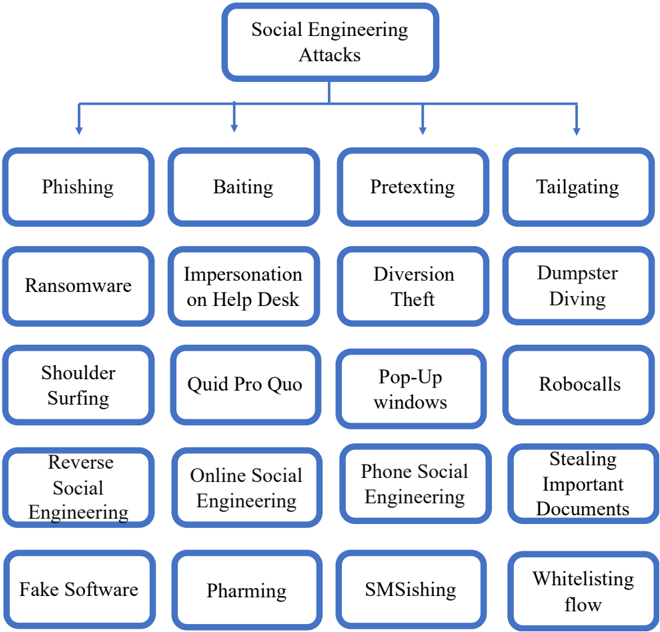
“There is an endless list of SE attacks, including phishing, vishing, Nigerian scam, eBay fraud, impersonation, online SE, pretexting, shoulder surfing, dumpster diving, diversion theft, online fraud, fake shops, baiting, quid pro quo, tailgating, pyramid scheme models, and so on [3, 8, 41, 49, 65, 66, 72, 73, 80].”
BackgroundDefending against social engineering attacks: A security pattern‐based analysis framework
Li, T., Song, C., & Pang, Q. (2023) · IET Information Security · doi:10.1049/ise2.12125 · Cited by 15
Decentralized Multimedia Data Sharing in IoV: A Learning-Based Equilibrium of Supply and Demand
Fan, J., Xu, M., Guo, J., Shar, L. K., Kang, J., Niyato, D. T., & Lam, K. (2023) · IEEE Transactions on Vehicular Technology · doi:10.1109/tvt.2023.3322270 · Cited by 10
“Neglect-ing to secure multimedia data transfer in IoV networks may accidentally create a point of easy entry for social engineering attacks, in which attackers can psychologically manipulate a target into acting on their behalf [8], [9].”
BackgroundDeveloping remote patient monitoring infrastructure using commercially available cloud platforms
Cao, M., Ramezani, R., Katakwar, V. K., Zhang, W., Boda, D., Wani, M., & Naeim, A. (2024) · Frontiers in Digital Health · doi:10.3389/fdgth.2024.1399461 · Cited by 20
A Deep Learning Framework for Enhanced Detection of Polymorphic Ransomware
Gazzan, M., Alobaywi, B., Almutairi, M. M., & Sheldon, F. T. (2025) · Future Internet · doi:10.3390/fi17070311 · Cited by 21
An Effective Blockchain-Based Defense Model for Organizations against Vishing Attacks
Fakieh, A., & Akremi, A. (2022) · Applied Sciences · doi:10.3390/app122413020 · Cited by 17
Growing Threats Of Cyber Security: Protecting Yourself In A Digital World
Gracy, M., Jeyavadhanam, B. R., Babu, P. K., Karthick, S. H., & Chandru, R. (2023) · International Conference on Networking and Communications (ICNWC) · doi:10.1109/icnwc57852.2023.10127398 · Cited by 16
“[23] 2) Social engineering: Social engineering attacks [24] involve tricking individuals into divulging sensitive information or performing specific actions.”
BackgroundPhishing Attacks in Social Engineering: A Review
Adu‐Manu, K. S., Ahiable, R. K., Appati, J. K., & Mensah, E. E. (2022) · Journal of Cyber Security · doi:10.32604/jcs.2023.041095 · Cited by 36
Redefining the Approach to Cybersecurity
Corradini, I. (2020) · Studies in systems, decision and control · doi:10.1007/978-3-030-43999-6_3 · Cited by 18
“However,socialengineeringisnotjustaphishingemail;wecandistinguishseveral forms of attacks which may combine different aspects (Salahdine and Kaabouch 2019; Krombholz et al. 2015), i.e. human, physical, social and technical.”
BackgroundKey Factors Influencing the Rise of Current Ransomware Attacks on Industrial Control Systems
Gazzan, M., Alqahtani, A., & Sheldon, F. T. (2021) · IEEE Annual Computing and Communication Workshop and Conference (CCWC) · doi:10.1109/ccwc51732.2021.9376179 · Cited by 10
“Additionally, the awareness about social engineering tools and strategies to infiltrate to victim’s data has an influential effect on the protection against ransomware attacks [54].”
BackgroundRisk Assessments of Social Engineering Attacks and Set Controls in an Online Education Environment
Blancaflor, E., Banzon, C. V. H., Jackson, C. J. J., Jamena, J. N. D., Miraflores, J. M., & Samala, L. K. G. (2021) · International Conference on Modern Educational Technology (ICMET) · doi:10.1145/3468978.3468990 · Cited by 11
“[7] An experiment performed through phishing mail was sent to the organizational workers as a way of presenting empirical proof of how many employees had resorted to social engineering.”
BackgroundMethodCyber Trends in Industrial Control Systems
Trifonov, R. I., Tsochev, G., Manolov, S., Yoshinov, R., & Pavlova, G. (2021) · International Conference on Circuits, Systems, Communications and Computers (CSCC) · doi:10.1109/cscc53858.2021.00015 · Cited by 10
An Exploration of Attack Patterns and Protection Approaches Using Penetration Testing
Barik, K., Konar, K., Banerjee, A., et al. (2022) · Lecture notes on data engineering and communications technologies · doi:10.1007/978-981-16-7610-9_36 · Cited by 10
Human Cognition through the Lens of Social Engineering CyberattacksPreprint
Rodriguez, R. M., Golob, E. J., & Xu, S. (2020) · arXiv (Cornell University) · doi:10.48550/arxiv.2007.04932 · Cited by 10
Countering anti-forensic tactics in cybercrime investigations – a systematic literature review
Surakanti, S., Goundar, S., & Dwight, J. (2025) · International Journal of Information Security · doi:10.1007/s10207-025-01131-y · Cited by 11
“Social engineering, defined as the art of deceiving individuals or organizations into divulging sensitive information or performing actions beneficial to attackers, has garnered sig - nificant attention [ 67, 68 ].”
Al-Hawamleh, A. M. (2023) · International Journal of Computing and Digital Systems · doi:10.12785/ijcds/1301114 · Cited by 9
“One of the most common ways that people communicate these days is via the use of email [11].”
BackgroundDeepfakes in Social Engineering Attacks
Dsouza, D. S., Hajjar, A. E., & Jahankhani, H. (2024) · Space Law and Policy · doi:10.1007/978-3-031-64045-2_8 · Cited by 14
A Comprehensive Overview and Future Prospectives of Networked Microgrids for Emerging Power Systems
Mutluri, R. B., & Saxena, D. (2024) · Smart Grids and Sustainable Energy · doi:10.1007/s40866-024-00218-0 · Cited by 16
“Itisstandard practice to apply filtering-based techniques like threshold-based and bloom filtering; bloom filters have been shown to be useful in detecting flooding assaults on SCADA systems and signalling protocols [263, 264].”
Chat-Oriented Social Engineering Attack Detection Using Attention-based Bi-LSTM and CNN
Lan, Y. (2021) · 2021 2nd International Conference on Computing and Data Science (CDS) · doi:10.1109/cds52072.2021.00089 · Cited by 10
Znanstveno-raziskovalni trendi na področju digitalne preobrazbe
Rajkovič, U., & Баггиа, А. (2021) · University of Maribor, University Press eBooks · doi:10.18690/978-961-286-509-2 · Cited by 25
Li, Y., Wang, Y., Xiong, X., Zhang, J., & Yao, Q. (2022) · Applied Sciences · doi:10.3390/app12126186 · Cited by 9
The Role of Social Engineering in Cybersecurity and Its Impact
Almutairi, B. S., & Alghamdi, A. (2022) · Journal of Information Security · doi:10.4236/jis.2022.134020 · Cited by 22
Fan, J., Shar, L. K., Guo, J., Yang, W., Niyato, D. T., & Lam, K. (2022) · Lecture notes in computer science · doi:10.1007/978-3-031-23020-2_16 · Cited by 10
“Negligence on the security of infotainment data communication in IoV networks can unintentionally open an easy access point for social engineering attacks, where attackers can influence a person psychologically to act in the interest of the attacker [23].”
BackgroundThe status of information security systems in banking sector from social engineering perspective
Hammour, R. A., Gharaibeh, Y. A., Qasaimeh, M., & Al‐Qassas, R. S. (2019) · International Conference on Data Science, E-Learning and Information Systems (DATA) · doi:10.1145/3368691.3368705 · Cited by 11
A Game Theoretical Model for Anticipating Email Spear-Phishing Strategies
Tchakounté, F., Nyassi, V. S., Danga, D. E. H., Udagepola, K. P., & Atemkeng, M. (2018) · ICST Transactions on Scalable Information Systems · doi:10.4108/eai.26-5-2020.166354 · Cited by 14
“) initiating social engineering activities to the potential victim whereas the victim is the phisher’s target or an intermediary to the phisher’s target[5].”
BackgroundA Study on the Digital Forensic Investigation Method of Clever Malware in IoT Devices
Kim, D., Pan, Y. F., & Park, J. H. (2020) · IEEE Access · doi:10.1109/access.2020.3043939 · Cited by 14
“Several studies have been conducted to analyze and classify various phishing techniques that can occur on mobile devices [7]–[10], including those carried out to analyze and classify attacks on social engineering techniques [11].”
BackgroundThe Insider Threat: Reasons, Effects and Mitigation Techniques
Tsiostas, D., Kittes, G., Chouliaras, N., et al. (2020) · Panhellenic Conference on Informatics · doi:10.1145/3437120.3437336 · Cited by 9
“[19].”
Guedea-Noriega, H. H., & García‐Sánchez, F. (2022) · Applied Sciences · doi:10.3390/app12168116 · Cited by 12
“However, the current limitations imposed by the strict privacy policies that apply to companies such as Facebook, Twitter, and Instagram in terms of data exposure, prevent the access to sensitive users’ information and increase the security caused by the social engineering attacks [50].”
BackgroundDesigning of User Authentication Based on Multi-factor Authentication on Wireless Networks
Rusdan, M. (2020) · Journal of Advanced Research in Dynamical and Control Systems · doi:10.5373/jardcs/v12i1/20201030 · Cited by 9
Papatsaroucha, D., Nikoloudakis, Y., Kefaloukos, I., Pallis, E., & Markakis, E. (2021) · arXiv (Cornell University) · doi:10.48550/arxiv.2106.09986 · Cited by 31
“, aiming to retrieve sensitive information from the victim via deception [102,107] • Shoulder surfing, where the victim is being watched while entering sensitive information [107] • Ransomware, where sensitive data have been encrypted by the attacker and the victim is blackmailed under the threat of data leakage.”
BackgroundInfluentialKuo, C., & Tsang, S. (2023) · Deviant Behavior · doi:10.1080/01639625.2023.2244115 · Cited by 11
“Scammers often use psychological manipulation, such as in the case of romance scams, to build trust and request money from vulnerable victims (Salahdine and Kaabouch 2019).”
BackgroundCYBERSECURITY AWARENESS IN HIGHER EDUCATION: A COMPARATIVE ANALYSIS OF FACULTY AND STAFF
(2023) · Issues in Information Systems · doi:10.48009/1_iis_2023_114 · Cited by 17
“…forward to combat the ever-growing number of attacks but as these solutions mature and cyber security awareness programs for employees develop a need to educate K-12 students at an early age will become more necessary to minimize the number of victims in the future (Salahdine & Kaabouch, 2019) .”
Styoutomo, Y. A., & Ruldeviyani, Y. (2023) · CommIT (Communication and Information Technology) Journal · doi:10.21512/commit.v17i2.8272 · Cited by 8
“A wide range of threats must be covered by an ISA measurement system to reveal the weaknesses of personnel in all areas [19].”
BackgroundNon-Technical Cyber-Attacks and International Cybersecurity: The Case of Social Engineering
Akyeşilmen, N., & Alhosban, A. (2024) · Gaziantep University Journal of Social Sciences · doi:10.21547/jss.1346291 · Cited by 8
Defending Against Vishing Attacks: A Comprehensive Review for Prevention and Mitigation Techniques
Ashfaq, S., Chandre, P. R., Pathan, S., et al. (2024) · Lecture notes in networks and systems · doi:10.1007/978-981-99-9811-1_33 · Cited by 8
Alhejaili, M. O. M. (2024) · Journal of Governance and Regulation · doi:10.22495/jgrv13i2siart4 · Cited by 12
“Proactive cybersecurity is thus imperative for sustainable digital economic growth (Salahdine & Kaabouch, 2019).”
BackgroundUnderstanding Responses to Phishing in Saudi Arabia via the Theory of Planned Behaviour
Alyahya, A. A., & Weir, G. R. S. (2021) · National Computing Colleges Conference (NCCC) · doi:10.1109/nccc49330.2021.9428823 · Cited by 10
“Based on the entity involved, such exploits can be differentiated into two types, direct and indirect [15].”
BackgroundMatyokurehwa, K., Rudhumbu, N., Gombiro, C., & Chipfumbu, C. T. (2022) · Security and Privacy · doi:10.1002/spy2.237 · Cited by 19
Phishing as a Cyber Security Threat
Madleňák, M., & Kampová, K. (2022) · International Conference on Emerging eLearning Technologies and Applications (ICETA) · doi:10.1109/iceta57911.2022.9974817 · Cited by 8
“If a phishing attack is not identified, a cyber security incident may occur, the consequences of which may be limited in scope to the victim of the attack, but also to the entire organization [4][5].”
BackgroundInfluentialDetecting malicious reviews and users affecting social reviewing systems: A survey
Esposito, C., Moscato, V., & Sperlí, G. (2023) · Computers & Security · doi:10.1016/j.cose.2023.103407 · Cited by 9
A multi-layered security model to counter social engineering attacks: a learning-based approach
Edwards, L., Iqbal, M. Z., & Hassan, M. (2024) · International Cybersecurity Law Review · doi:10.1365/s43439-024-00119-z · Cited by 16
“There have been multiple studies that have found that even with very developed and secured technologies, the human behaviour in computing poses a threat to the confidentiality and integrity of an organisation [11–14].”
Security Analysis of Smart Home Systems Applying Attack Graph
Ibrahim, M. D. C., & Nabulsi, I. (2021) · World Conference on Smart Trends in Systems, Security and Sustainability (WorldS4) · doi:10.1109/worlds451998.2021.9514050 · Cited by 8
Systematic Review on Social Engineering: Hacking by Manipulating HumansPreprint
Bhusal, C. S. (2020) · SSRN Electronic Journal · doi:10.2139/ssrn.3720955 · Cited by 11
“Such attacks are considered the most dangerous and successful attacks [13].”
A Survey on Mobile Digital Forensic: Taxonomy, Tools, and Challenges
Patel, B., & Mann, P. S. (2024) · Security and Privacy · doi:10.1002/spy2.470 · Cited by 22
“Mobile device security can often be preserved by spotting [43, 44].”
Monetization could corrupt algorithmic explanations
Greene, T., Goethals, S., Martens, D., & Shmueli, G. (2025) · AI & Society · doi:10.1007/s00146-025-02352-4 · Cited by 8
A Systematic Review of Voluntary Cybersecurity Standards and Frameworks
Reuben-Owoh, B., & Haig, E. (2025) · International Journal of Information Security · doi:10.1007/s10207-025-01121-0 · Cited by 7
“– Social engineering attacks: Cyber criminals use this kind of attack to manipulate individuals and organisations into revealing sensitive, confidential and valuable information such as debit/credit card information [85].”
Alghenaim, M. F., Bakar, N. A. A., Yusoff, R. C. M., Hassan, N. H., & Sallehudin, H. (2021) · International Congress of Advanced Technology and Engineering (ICOTEN) · doi:10.1109/icoten52080.2021.9493434 · Cited by 14
Wulandari, N., Adnan, M. S., & Wicaksono, C. B. (2022) · Human Behavior and Emerging Technologies · doi:10.1155/2022/5738969 · Cited by 7
“The basic classification of SECA consists of humanbased attacks and technology-based attacks [11, 23].”
BackgroundInfluentialÜretken Yapay Zekânın İşletmelerde Kullanımı: Fırsatlar ve Tehditler
Yastıoğlu, S. (2023) · Özgür Yayınları eBooks · doi:10.58830/ozgur.pub137.c1391 · Cited by 11
Modelling and analysis of social engineering threats using the attack tree and the Markov model
Aijaz, M., & Nazir, M. (2023) · International Journal of Information Technology · doi:10.1007/s41870-023-01540-z · Cited by 16
“Much research is available in social engineering, including detection mechanisms [8], prevention [9], security and awareness [10], attack method classification [11], and frameworks [12].”
Verma, S., Ayala-Rivera, V., & Portillo‐Dominguez, A. O. (2023) · International Conference in Software Engineering Research and Innovation (CONISOFT) · doi:10.1109/conisoft58849.2023.00029 · Cited by 7
“At present, most of the available tools and research to detect phishing are mainly concentrated towards email and SMS, while their detection in messages remains mainly neglected [3].”
BackgroundImproving Email Security Through Machine Learning-Based Phishing Attack Detection
Almalkawi, I. T., Al-Hammouri, M. F., Mallouh, M. A., et al. (2024) · doi:10.1109/ijcc64742.2024.10847270 · Cited by 7
“Social engineering is a deceptive technique employed by attackers to manipulate individuals into disclosing confidential information or performing actions that may compromise their security [10].”
A Literature Survey and Analysis on Social Engineering Defense Mechanisms and Infosec Policies
Alharthi, D. N., & Regan, A. (2021) · International Journal of Network Security & Its Applications · doi:10.5121/ijnsa.2021.13204 · Cited by 12
“Social engineering attacks challenge the security of all networks regardless of the robustness of their firewalls, cryptography methods, intrusion detection systems, and anti-virus software systems [40].”
BackgroundThe U.S. Cyber Threat Landscape
Alhajjar, E., & Lee, K. (2022) · European Conference on Cyber Warfare and Security · doi:10.34190/eccws.21.1.197 · Cited by 10
“In the exit phase, the attacker quits without leaving any proof (Salahdine and Kaabouch 2019).”
BackgroundCletus, A., Weyory, B., & Opoku, A. (2022) · International Journal of Advanced Computer Science and Applications · doi:10.14569/ijacsa.2022.0130572 · Cited by 7
“[7] describe, SE as gaining access to systems, buildings, data by exploiting humans using psychology instead of using technical procedures to break in.”
BackgroundEmployee Information Security Awareness in the Power Generation Sector of PT ABC
Fadlika, R., Ruldeviyani, Y., Butarbutar, Z. T., et al. (2023) · International Journal of Advanced Computer Science and Applications · doi:10.14569/ijacsa.2023.0140465 · Cited by 7
“Cyber attacks such as malware, botnets, targeted attacks, malicious websites/domains, and ransomware attacking the company can result in significant financial losses [3][4].”
BackgroundSocial engineering in metaverse environment
Deng, M., Zhai, H., & Yang, K. (2023) · IEEE International Conference on Cyber Security and Cloud Computing / IEEE International Conference on Edge Computing and Scalable Cloud (CSCloud/EdgeCom) · doi:10.1109/cscloud-edgecom58631.2023.00034 · Cited by 13
“As a result, with the metaverse, social engineering attacks will become more profitable and effective [10].”
BackgroundFerreira, P., Caldeira, F., Martins, P., et al. (2023) · Lecture notes in networks and systems · doi:10.1007/978-3-031-33261-6_32 · Cited by 7
Organizational information security threats: Status and challenges
Akello, B. O. (2024) · World Journal of Advanced Engineering Technology and Sciences · doi:10.30574/wjaets.2024.11.1.0152 · Cited by 15
Cybersecurity Governance on Social Engineering Awareness
Ponnusamy, V., Selvam, L. M. P., & Rafique, K. (2019) · Advances in electronic government, digital divide, and regional development book series · doi:10.4018/978-1-7998-1851-9.ch011 · Cited by 10
The Current Phishing Techniques – Perspective of the Nigerian Environment
Mangut, P. N., & Datukun, K. A. (2021) · World Journal of Innovative Research · doi:10.31871/wjir.10.1.9 · Cited by 14
“Malwares are used to compromise organisations network where scammers execute insidious attack on the network [16].”
Preventing malicious communication using virtualization
Kiperberg, M. (2021) · Journal of Information Security and Applications · doi:10.1016/j.jisa.2021.102871 · Cited by 7
Understanding the Landscape of Online Deception
Hage, H., Aïmeur, E., & Guedidi, A. (2020) · Advances in Media, Entertainment, and the Arts · doi:10.4018/978-1-7998-2543-2.ch014 · Cited by 7
Metadata
- Authors
- Salahdine, F., & Kaabouch, N.
- Affiliations
- University of North Dakota (US)
- Corresponding author
- Salahdine, Fatima
- ORCID
- Salahdine, Fatima
- Venue
- Future Internet
- Publisher
- MDPI AG
- Published
- 2019-04-02
- Volume
- 11
- Issue
- 4
- Pages
- 89
- ISSN
- 1999-5903 (ISSN-L)
- OpenAlex
- W2933127114
- Cited by
- 509
- References
- 71
- Citations by year
- 2026: 48 · 2025: 69 · 2024: 98 · 2023: 110 · 2022: 69 · 2021: 68 · 2020: 41 · 2019: 4
- FWCI
- 27.70
- Type
- journal article
- Language
- en
- Open access
- gold
- doi.org
- Licence
- Locations
- Future Internet (publishedVersion, cc-by)
- RePEc: Research Papers in Economics (submittedVersion)
- DOAJ (DOAJ: Directory of Open Access Journals) (submittedVersion, cc-by-sa)
- Topics
- Physical Sciences › Computer Science › Software › Advanced Malware Detection Techniques
- Physical Sciences › Computer Science › Information Systems › User Authentication and Security Systems
- Physical Sciences › Computer Science › Information Systems › Information and Cyber Security
- Keywords
- social engineering attacks, human factors in security, sensitive information disclosure, password theft, social networks, attack classification, attack detection, attack prevention
About these checks
Registry, retraction, Cites and statistics results are computed, not judged, with one exception: a printed reference that no index lists is read once by a model before it counts as a citation error. Claims are extracted by a model and kept only when their quote appears verbatim in the text; each cited source is then checked, with a model’s help, for whether it says what the claim relies on. Those verdicts can be wrong — read the claim’s quote and the cited source before relying on one.
The claim verdicts this report counts are experimental: their accuracy is not yet measured.
A language model drew the claims from the paper on 2026-09-28, under version 3 of the claim definition (prompt extract-v3).
A second model labelled each claim on 2026-09-28 (model jev-1.13-20260917, definition revision gold-guideline-v0.2).
Cited sources are checked with a language model’s help (gpt-6-sol).
Statistics and arithmetic are recomputed, not judged.
Confidence bands are shown only for fields calibrated on our annotated test set. None is calibrated yet, so no band is shown.
What counts as a claim ›How we measure confidence ›How we check this ›
Are you an author, or do you see a problem with this page? Request a review
Data sources
Bibliographic data: Semantic Scholar, OpenAlex, Crossref.
Contains information from the Semantic Scholar Academic Graph Datasets, made available under the ODC Attribution License (ODC-BY 1.0).
Semantic Scholar’s data is described in: Kinney, R., et al. (2023). The Semantic Scholar Open Data Platform. arXiv:2301.10140.
