

Social Engineering Attacks: A Survey
Open accessThe DOI matches its Crossref record; 65 of the 71 references it cites were found in a registry or an index; 16 of the 79 sources its claims cite were checked for support.
Abstract
The advancements in digital communication technology have made communication between humans more accessible and instant. However, personal and sensitive information may be available online through social networks and online services that lack the security measures to protect this information. Communication systems are vulnerable and can easily be penetrated by malicious users through social engineering attacks. These attacks aim at tricking individuals or enterprises into accomplishing actions that benefit attackers or providing them with sensitive data such as social security number, health records, and passwords. Social engineering is one of the biggest challenges facing network security because it exploits the natural human tendency to trust. This paper provides an in-depth survey about the social engineering attacks, their classifications, detection strategies, and prevention procedures.
Overview
CoChat Summary
TL;DR
This survey reviews social engineering attacks, their classifications, detection, prevention, and mitigation techniques, arguing they exploit human trust and cannot be stopped by technology alone. It concludes that AI-based defenses and combined countermeasures are most effective, while training and cybersecurity education are needed.
Key findings
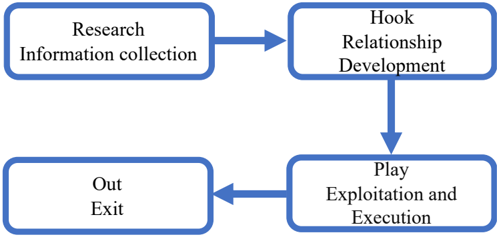
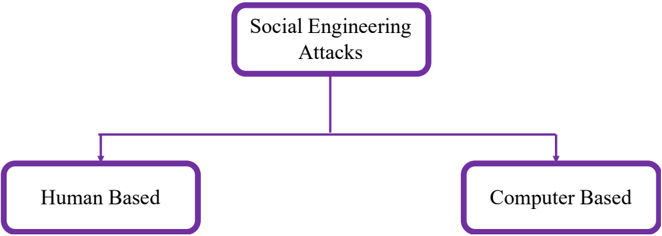
- Social engineering attacks share a common four-phase pattern: collect information about the target, develop a relationship, exploit the information and execute the attack, and exit without traces. They are classified as human-based or computer-based, and as social, technical, or physical-based; the paper also proposes direct and indirect categories.
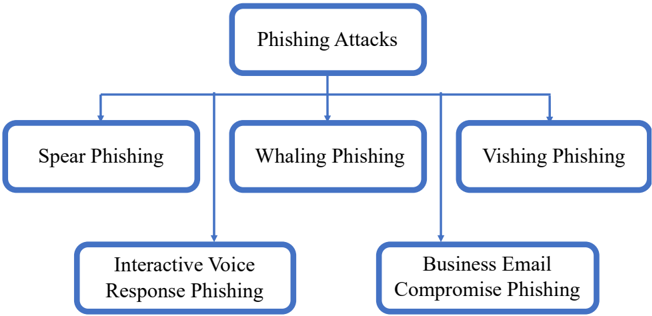
- Phishing is described as the most common social engineering attack and is divided into five categories: spear phishing, whaling phishing, vishing phishing, interactive voice response phishing, and business email compromise phishing. Ransomware is described as involving six stages: malware creation, deployment, installation, command and control, destruction, and extortion.
- Reported impacts include an estimated US social engineering attack cost of $121.22 billion; the Equifax breach exposing personal information of 145.5 million American consumers; over $80 million stolen from Central Bank using a remote access trojan; more than $2.3 billion lost by companies to FBI-reported CEO fraud and email scams; 84% of cyber-attacks conducted by social engineers; and about $1 billion in ransomware losses in 2016.
- In comparing countermeasures, the paper concludes that artificial intelligence-based defense mechanisms are the most effective techniques to reduce social engineering risk, and that combining two or more defense techniques can ensure better protection.
Methods
- The paper is an in-depth survey/overview of social engineering attacks, existing detection methods, prevention procedures, and mitigation techniques; it does not collect primary data or conduct an empirical experiment.
- It synthesizes prior literature and classifications, describes attack types, and compares human-based versus computer-based countermeasures and computer-based mitigation techniques in Tables 1 and 2.
- It discusses challenges and future directions, including training employees and K-12 students and investing in cybersecurity education.
Limitations
- Stated in the paper: existing detection methods have fundamental limitations, countermeasures are inefficient against the ever-growing number of social engineering attacks, human-based techniques are limited by subjective human decisions, and technology-based techniques can be limited because technological vulnerabilities may be exploited.
- Stated in the paper: human-based mitigation depends on relative and subjective human judgment, while technology-based mitigation can be mimicked, complex, expensive, or limited by human unawareness and ignored alerts.
- Evident from the text: as a survey, it does not report a systematic review protocol, primary data, or empirical validation; its comparative conclusions about effectiveness rely on qualitative synthesis of cited works rather than original testing.
Model-written summary. Check it against the paper before relying on it.
Integrity signals
Registry
Cites
Statistics
Figures

Verification
Claims the paper makes
11 Valid · 10 Not valid · 61 Not checked · 35 Own results and interpretations
The cited sources support only part of this claim — read each source’s verdict below.
In the paper
“The common pattern involves four phases: (1) collect information about the target; (2) develop relationship with the target; (3) exploit the available information and execute the attack; and (4) exit with no traces [12].”
§ Social Engineering Attacks: A Survey > 2. Social Engineering Attacks
What the sources say
- Partly supportedcites [12] 12. Mouton, F.; Leenen, L.; Venter, H. Social engineering attack examples, templates and scenarios. Comput. Secur. 2016, 59, 186-209. [CrossRef] sourceExperimental — accuracy not yet measured
Section 2, “Defining Social Engineering Attacks” (page unavailable), describes a commonly known four-phase model involving research, rapport, exploitation of trust, and use of information. But it does not give “exit with no traces” as the fourth phase; the paper’s own six-phase framework ends with debriefing, in which the attacker reassures the target and checks whether the goal was met. (LLM, conf=0.88)
plain- Asserted: passes — The authors put it forward as true.
- Checkable: passes — It can be checked against evidence.
- Load-bearing: unclear — It is unclear whether the paper’s conclusions depend on it.
- Based: passes — The paper gives a reason why it holds.
- Partly supported
The cited sources that could be checked couldn’t confirm or dispute this claim.
In the paper
“Currently, social engineering attacks are the biggest threats facing cybersecurity [4][5][6][7][8][9].”
§ Social Engineering Attacks: A Survey > 2. Social Engineering Attacks
What the sources say
- Not matchedcites [4] 4. Arana, M. How much does a cyberattack cost companies? Open Data Security 2017, 1-4.
We searched by its title and found no matching paper.
- Could not verifycites [5] 5. Chargo, M. You've been hacked: How to better incentivize corporations to protect consumers' data. Trans. Tenn. J. Bus. Law 2018, 20, 115-143. doi:10.70658/4486-1457.1452Experimental — accuracy not yet measured
The Introduction discusses breaches involving weak or stolen passwords, and the Target section describes access through a third-party vendor. Neither passage identifies social engineering attacks as the biggest cybersecurity threat. Searches for social engineering, phishing, and related threats found no passage in our copy making that comparison. (LLM, conf=0.72)
- Not checked — no full text of the sourcecites [6] 6. Libicki, M. Could the issue of DPRK hacking benefit from benign neglect? Georg. J. Int. Aff. 2018, 19, 83-89. [CrossRef] source
plain- Asserted: passes — The authors put it forward as true.
- Checkable: passes — It can be checked against evidence.
- Load-bearing: unclear — It is unclear whether the paper’s conclusions depend on it.
- Based: passes — The paper gives a reason why it holds.
- Not matched
The cited sources support only part of this claim — read each source’s verdict below.
In the paper
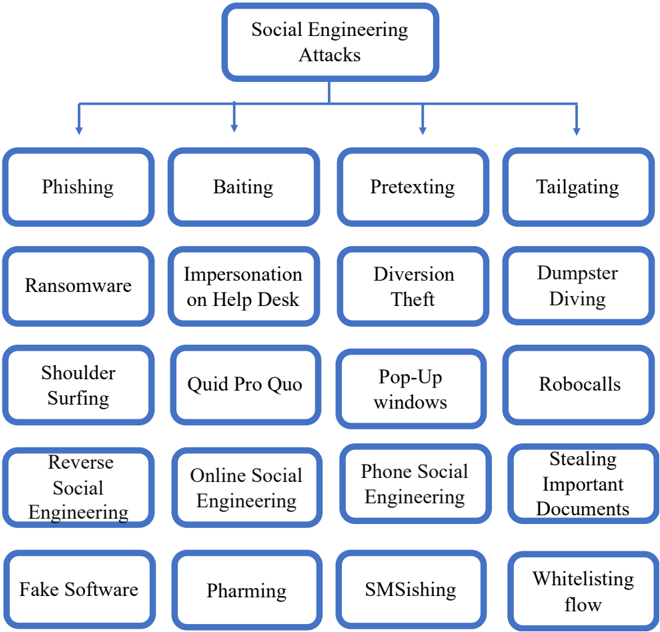
“They can also be fake alerts stating that the computer storage is full and that it needs to be scanned and cleaned to save more space [35].”
§ Social Engineering Attacks: A Survey > 2.2.8. Pop-Up Windows
What the sources say
- Partly supportedcites [35] 35. Ivaturi, K.; Janczewski, L. A taxonomy for social engineering attacks. In Proceedings of the International Conference on Information Resources Management, Centre for Information Technology, Organizations, and People, Ontario, Canada, 18-20 June 2011; pp. 1-12.Experimental — accuracy not yet measured
The “Popups” section describes fake alerts that prompt users to take action, supporting the general point. Its example warns of a virus and urges an antivirus download; it does not describe a full-storage alert or scanning and cleaning to free space. No page number is available in our copy. (LLM, conf=0.87)
plain- Asserted: passes — The authors put it forward as true.
- Checkable: passes — It can be checked against evidence.
- Load-bearing: unclear — It is unclear whether the paper’s conclusions depend on it.
- Based: passes — The paper gives a reason why it holds.
- Partly supported
The cited sources support only part of this claim — read each source’s verdict below.
In the paper
“For attacks related to emails or link clicks, software vendors become more aware of the social engineering treats by building strong products with security measures [54].”
§ Social Engineering Attacks: A Survey > 4. Mitigation Techniques
What the sources say
- Partly supportedcites [54] 54. Ali, B.; Awad, A. Cyber and physical security vulnerability assessment for IoT-based smart homes. Sensors 2018, 18, 817. [CrossRef] sourceExperimental — accuracy not yet measured
The Discussion recommends that device manufacturers and application programmers provide devices with stronger security capabilities and applications with secure interfaces. The Results discuss social engineering, but our copy does not connect that recommendation to email or link-click attacks, or say that building secure products makes vendors more aware of social engineering threats. (LLM, conf=0.86)
plainstates a cause- Asserted: passes — The authors put it forward as true.
- Checkable: passes — It can be checked against evidence.
- Load-bearing: unclear — It is unclear whether the paper’s conclusions depend on it.
- Based: passes — The paper gives a reason why it holds.
- Partly supported
None of the sources cited for this claim have been checked yet.
In the paper
“Phishing attacks are the most common attacks conducted by social engineers [19,20].”
§ Social Engineering Attacks: A Survey > 2.2.1. Phishing Attacks
What the sources say
- Not checked — no full text of the sourcecites [19] 19. Gupta, S.; Singhal, A.; Kapoor, A. A literature survey on social engineering attacks: Phishing attack. In Proceedings of the International Conference on Computing, Communication, and Automation, Noida, India, 29-30 April 2016; pp. 537-540. [CrossRef] source
- Not matchedcites [20] 20. Yeboah-Boateng, E.O.; Amanor, P.M. Phishing, SMiShing & Vishing: An assessment of threats against mobile devices. J. Emerg. Trends Comput. Inf. Sci. 2014, 5, 297-307.
We searched by its title and found no matching paper.
- Asserted: passes — The authors put it forward as true.
- Checkable: passes — It can be checked against evidence.
- Load-bearing: unclear — It is unclear whether the paper’s conclusions depend on it.
- Based: passes — The paper gives a reason why it holds.
17 more claims
Create a free account to see all 117 claims and to verify the 2 references still open.
- Probably not a substantial claim. 89
- It may state two separate claims as one. 26
Claims other papers make about this one
Each is checked against this paper’s own text: does it say what the citing paper says it does?
The source backs part of the claim, not all of it — or backs it for a different population, condition or comparison.
In the citing paper
“With the Big Data advent, attackers use the vast amount of collected data for businesses purposes, selling it in bulk as goods within black markets (Salahdine and Kaabouch 2019).”
From Deepfakes: current and future trends (2024) · cites this paper as Salahdine and Kaabouch 2019
Experimental — accuracy not yet measuredThe cited source says what the claim attributes to it.
In the citing paper
“These attacks use psychological tricks and dishonest tactics with the goal of obtaining sensitive data, such as passwords, private information, incriminating evidence, and bank card numbers, among others, by deceiving people or businesses into taking actions that are advantageous to the attackers.”
From Deepfakes: current and future trends (2024) · cites this paper as Salahdine and Kaabouch 2019
The cited source says what the claim attributes to it.
In the citing paper
“Social engineering attacks can be used by hostile persons to access communication networks (Salahdine and Kaabouch 2019).”
From Deepfakes: current and future trends (2024) · cites this paper as Salahdine and Kaabouch 2019
Self-check
Percentages, sums and reported differences re-computed from the paper’s own numbers.
Each contradiction between two passages listed here was confirmed by an independent check.
Rated minor: it would not touch a result — a value no result rests on, a p-value that stays on the same side of the significance level, or a conflict that is clerical, resolved elsewhere in the paper, or outside its own findings.
In the paper
§ Social Engineering Attacks: A Survey > 4. Mitigation Techniques
“In [60], the authors focused on mobile ransomware by proposing a new detection technique called HelDroid.”
§ Social Engineering Attacks: A Survey > References
“62. Andronio, N.; Zanero, S.; Maggi, F. Heldroid: Dissecting and detecting mobile ransomware.”
Rated minor: it would not touch a result — a value no result rests on, a p-value that stays on the same side of the significance level, or a conflict that is clerical, resolved elsewhere in the paper, or outside its own findings.
In the paper
§ Social Engineering Attacks: A Survey > 3. Prevention Techniques
“The authors compared the performance of six machine learning algorithms for detecting phishing attacks in terms of speed, reliability, and accuracy: support vector machine, biased support vector machine, artificial neural networks, scaled conjugate gradient, and self-organizing map.”
§ Social Engineering Attacks: A Survey > 3. Prevention Techniques
“support vector machine, biased support vector machine, artificial neural networks, scaled conjugate gradient, and self-organizing map.”
Rated minor: it would not touch a result — a value no result rests on, a p-value that stays on the same side of the significance level, or a conflict that is clerical, resolved elsewhere in the paper, or outside its own findings.
In the paper
§ Social Engineering Attacks: A Survey > 3. Prevention Techniques
“In [51], a social engineering awareness program (SEAP) was developed for schools aiming at increasing students' awareness by providing significant education and training in early age.”
§ Social Engineering Attacks: A Survey > References
“51. Algarni, A.; Xu, Y.; Chan, T. Measuring source credibility of social engineering attackers on Facebook. In Proceedings of the IEEE Hawaii International Conference on System Sciences, Koloa, HI, USA, 5-8 January 2016; pp. 3686-3695. [CrossRef]”
Rated minor: it would not touch a result — a value no result rests on, a p-value that stays on the same side of the significance level, or a conflict that is clerical, resolved elsewhere in the paper, or outside its own findings.
In the paper
§ Social Engineering Attacks: A Survey > 3. Prevention Techniques
“In [34], the authors proposed a new approach called TabShots to distinguish between legitimate pages from malicious pages.”
§ Social Engineering Attacks: A Survey > References
“33. De Ryck, P.; Nikiforakis, N.; Desmet, L.; Joosen, W. Tabshots: Client-side detection of tabnabbing attacks.”
Rated minor: it would not touch a result — a value no result rests on, a p-value that stays on the same side of the significance level, or a conflict that is clerical, resolved elsewhere in the paper, or outside its own findings.
In the paper
§ Social Engineering Attacks: A Survey > 3. Prevention Techniques
“The authors compared the performance of six machine learning algorithms for detecting phishing attacks in terms of speed, reliability, and accuracy:”
§ Social Engineering Attacks: A Survey > 3. Prevention Techniques
“support vector machine, biased support vector machine, artificial neural networks, scaled conjugate gradient, and self-organizing map.”
1 more finding
Create a free account to see every finding of this check.
Citations
Cites
Advanced social engineering attacks
Krombholz, K., Hobel, H., Huber, M., & Weippl, E. (2015) · Journal of Information Security and Applications · doi:10.1016/j.jisa.2014.09.005 · Cited by 575 · cited 2×
“Diversion Theft attacks: consist of misdirecting a transport company to deliver a courier or package to the desired location.”
BackgroundCutting the Gordian Knot: A Look Under the Hood of Ransomware Attacks
Kharraz, A., Robertson, W., Balzarotti, D., Bilge, L., & Kirda, E. (2015) · Lecture Notes in Computer Science · doi:10.1007/978-3-319-20550-2_1 · Cited by 458 · cited 2×
“Getting back the files after the victim’s payment is not guaranteed [30,31].”
BackgroundCryptoLock (and Drop It): Stopping Ransomware Attacks on User Data
Scaife, N., Carter, H., Traynor, P., & Butler, K. R. B. (2016) · 2016 IEEE 36th International Conference on Distributed Computing Systems (ICDCS) · doi:10.1109/icdcs.2016.46 · Cited by 437 · cited 1×
“In [64], the authors proposed an early warning detection system called CryptoDrop that is able to alert the employee in case of suspicious activity on the user data.”
BackgroundSecurity and privacy challenges in smart cities
Braun, T., Fung, B. C. M., Iqbal, F., & Shah, B. (2018) · Sustainable Cities and Society · doi:10.1016/j.scs.2018.02.039 · Cited by 352 · cited 1×
“26”
Cyber and Physical Security Vulnerability Assessment for IoT-Based Smart Homes
Ali, B., & Awad, A. (2018) · Sensors · doi:10.3390/s18030817 · Cited by 344 · cited 1×
“Thus, there are numerous jobs in this cyber-security field that are not filled because of the lack of graduates.”
BackgroundMalicious PDF detection using metadata and structural features
Smutz, C., & Stavrou, A. (2012) · Proceedings of the 28th Annual Computer Security Applications Conference · doi:10.1145/2420950.2420987 · Cited by 271 · cited 1×
“In [45], the authors proposed a detection technique based on machine learning algorithms.”
MethodHelDroid: Dissecting and Detecting Mobile Ransomware
Andronio, N., Zanero, S., & Maggi, F. (2015) · Lecture Notes in Computer Science · doi:10.1007/978-3-319-26362-5_18 · Cited by 246 · cited 1×
“In [62], the authors proposed a neuro-fuzzy-based technique to mitigate phishing attacks in real time and protect online transactions.”
BackgroundRansomware attacks: detection, prevention and cure
Brewer, R. (2016) · Network Security · doi:10.1016/s1353-4858(16)30086-1 · Cited by 214 · cited 1×
“In [65], the authors proposed several steps to follow to mitigate and handle ransomware attacks.”
BackgroundA literature survey on social engineering attacks: Phishing attack
Gupta, S., Singhal, A., & Kapoor, A. (2016) · 2016 International Conference on Computing, Communication and Automation (ICCCA) · doi:10.1109/ccaa.2016.7813778 · Cited by 208 · cited 2×
“Phishing attacks are the most common attacks conducted by social engineers [19,20].”
BackgroundA Taxonomy of Attacks and a Survey of Defence Mechanisms for Semantic Social Engineering Attacks
Heartfield, R., & Loukas, G. (2016) · ACM Computing Surveys · doi:10.1145/2835375 · Cited by 202
Research works printed but not linked: 5
- 16. Patil, P.; Devale, P. A literature survey of phishing attack technique. Int. J. Adv. Res. Comput. Commun. Eng. 2016, 5, 198-200.
- 23. Hofbauer, S.; Beckers, K.; Quirchmayr, G. Defense Methods against VoIP and Video Hacking Attacks in Enterprise Networks. In Proceedings of the 10th International Conference on e-Business, Bangkok, Thailand, 23-24 November 2015; pp. 1-10.
- 40. Foozy, C.F.M.; Ahmad, R.; Abdollah, M.F.; Yusof, R.; Mas'ud, M.Z. Generic taxonomy of social engineering attack and defence mechanism for handheld computer study. In Proceedings of the Malaysian Technical Universities International Conference on Engineering and Technology, Batu Pahat, Malaysia, 13-15 November 2011; pp. 1-6.
- 59. Zulkurnain, A.U.; Hamidy, A.K.B.; Husain, A.B.; Chizari, H. Social engineering attack mitigation. Int. J. Math. Comput. Sci. 2015, 1, 188-198.
- 66. Kharaz, A.; Arshad, S.; Mulliner, C.; Robertson, W.; Kirda, E. A large-scale, automated approach to detecting ransomware. In Proceedings of the 25th USENIX Security Symposium, Austin, TX, USA, 10-12 August 2016; pp. 757-772.
Cited by
Items 201–300 of 506
Bardin, J. S. (2024) · Elsevier eBooks · doi:10.1016/b978-0-443-13223-0.00087-4 · Cited by 23
Cyber-enabled imposter scams against older adults in the United States
Shapiro, L. R. (2025) · Security Journal · doi:10.1057/s41284-025-00483-3 · Cited by 12
“Imposter scams can be conceptualized as having four stages aimed at manipulating older adult targets (Salahdine and Kaabouch 2019).”
Lopes, A., Mamede, H. S., Reis, L., & dos Santos, A. M. P. (2024) · Emerging Science Journal · doi:10.28991/esj-2024-08-02-025 · Cited by 15
Consumer digital trust: The main trends and research directions
Ребязина, В., & Олегович, Т. Э. (2022) · Russian Management Journal · doi:10.21638/spbu18.2021.403 · Cited by 9
Towards secure smart campus: security requirements, attacks and counter measures
Srhir, A., Mazri, T., & Benbrahim, M. (2023) · Indonesian Journal of Electrical Engineering and Computer Science · doi:10.11591/ijeecs.v32.i2.pp900-914 · Cited by 13
Social Engineering in Social Network: A Systematic Literature Review
Abubaker, A. A., Eleyan, D., Eleyan, A., Bejaoui, T., Katuk, N., & Al-Khalidi, M. (2023) · International Symposium on Networks, Computers and Communications (ISNCC) · doi:10.1109/isncc58260.2023.10323826 · Cited by 8
“Users are assured that there are no viruses or Trojans on the computer or storage media to prevent people from hesitating when they en-counter files that are typically opened, where user files are stuffed with malware, Trojan horses, or viruses [5].”
BackgroundMethodInfluentialEnhancing Website Fraud Detection: A ChatGPT-Based Approach to Phishing Detection
Schesny, M., Lutz, N., Jägle, T., et al. (2024) · IEEE Annual Computers, Software, and Applications Conference (COMPSAC) · doi:10.1109/compsac61105.2024.00205 · Cited by 6
“This human component is often exploited by attackers as a vulnerability, for example, through social engineering [1], which describes the manipulation of people in order to fraudulently gain access to information [2].”
BackgroundOnline Social Networks Misuse, Cyber Crimes, and Counter Mechanisms
Rao, S., Verma, A. K., & Bhatia, T. (2020) · Advances in social networking and online communities book series · doi:10.4018/978-1-7998-4718-2.ch010 · Cited by 7
Alma'ariz, S., Hadiprakoso, R. B., Girinoto, & Qomariasih, N. (2022) · IEEE Information Technology International Seminar (ITIS) · doi:10.1109/itis57155.2022.10009041 · Cited by 10
“Several studies in the past have sought to raise cyber security awareness using gamified learning media [15, 16, 17].”
BackgroundGL-Tree: A Hierarchical Tree Structure for Efficient Retrieval of Massive Geographic Locations
Liu, B., Zhang, C., & Xin, Y. (2023) · Sensors · doi:10.3390/s23042245 · Cited by 6
“This includes data leakage, social engineering attacks [1], jamming attacks [2], software virus security, cryptojacking attacks [3], wireless channel security, physical device violations, and user location privacy leakage.”
BackgroundSimulation Games Platform for Unintentional Perpetrator Attack Vector Identification
Macák, M., Kružíková, A., Daubner, L., & Bühnová, B. (2020) · doi:10.1145/3387940.3391475 · Cited by 7
“This might be an attempt of the social engineering type of attack [19].”
BackgroundResultInfluentialJun, D. T. J., Rafsanjani, A. S., Aslam, S., & Behjati, M. (2025) · Digital Threats Research and Practice · doi:10.1145/3767320 · Cited by 10
“Finally, physical social engineering attacks rely on gathering people's information through direct, real-world actions [6].”
InfluentialUnveiling deception: a socio-economic analysis of smishing attacks on mobile money transaction users
Zimba, A., Phiri, K. O., Kashale, C., et al. (2025) · Humanities and Social Sciences Communications · doi:10.1057/s41599-025-06141-8 · Cited by 5
“Smishing attacks leverage techniques such as pretexting, authority, and urgency to deceive users and elicit compliance (Salahdine and Kaabouch 2019).”
Numada, K., Nozaki, S., Takaiwa, T., Ohki, T., & Nishigaki, M. (2024) · Lecture notes on data engineering and communications technologies · doi:10.1007/978-3-031-53555-0_15 · Cited by 5
CONSUMER SECURITY AND PRIVACY IN THE METAVERSE: A BIBLIOMETRIC ANALYSIS
ÖZDEMİR, K., Çelebi, Ö. F., & Nacar, R. (2024) · Dokuz Eylül Üniversitesi İşletme Fakültesi Dergisi · doi:10.24889/ifede.1445367 · Cited by 7
Huseynov, E. (2024) · Elsevier eBooks · doi:10.1016/b978-0-443-13223-0.00060-6 · Cited by 5
Karadsheh, L., Alryalat, H., Alqatawna, J., Alhawari, S. F., & Jarrah, M. A. A. (2021) · International Journal of Digital Crime and Forensics · doi:10.4018/ijdcf.286762 · Cited by 11
“A recent survey shows that attacks based on tricking victims into performing an action to the benefit of the attacker or sharing sensitive information are one of the most severe threats in cyberspace (Salahdine and Kaabouch, 2019).”
BackgroundTaxonomy of Social Engineering Attacks: A Survey of Trends and Future Directions
Maraj, A., & Butler, W. (2022) · International Conference on Cyber Warfare and Security · doi:10.34190/iccws.17.1.40 · Cited by 5
AN EFFECTIVE AND EFFICIENT FEATURES VECTORS FOR RANSOMWARE DETECTION VIA MACHINE LEARNING TECHNIQUE
Khalil, N. A., & Khammas, B. M. (2022) · Iraqi Journal of Information & Communications Technology · doi:10.31987/ijict.5.3.205 · Cited by 8
“Because of the loss of business, clients, data, and productivity, affected businesses may be harmed for years as a result of the ransomware assault [6].”
BackgroundSocial Engineering and Data Privacy
Hussain, M., Siddiqui, S., & Islam, N. (2023) · Advances in information security, privacy, and ethics book series · doi:10.4018/978-1-6684-6581-3.ch010 · Cited by 5
Deployment of physical access control (PAC) devices in university settings in Ghana
Botchway, E. A., Agyekum, K., Pittri, H., & Lamina, A. (2023) · Frontiers in Engineering and Built Environment · doi:10.1108/febe-01-2023-0006 · Cited by 9
Security in Digital Marketing: Challenges and Opportunities
Rosário, A. T. (2023) · Advances in marketing, customer relationship management, and e-services book series · doi:10.4018/978-1-6684-8958-1.ch010 · Cited by 5
Mihretu, A. M., Mdumuka, J., Shetto, M. C., Rice, O. P., Iradukunda, P., Chamisso, T. T., Mwangi, V., & Byiringiro, Y. (2023) · IEEE AFRICON · doi:10.1109/africon55910.2023.10293606 · Cited by 5
“SEAs are the biggest threats facing cybersecurity as they are easy to carry out, prey on human psychology, and can be detected but not stopped as technical safeguards are usually ineffective [8]-[11].”
BackgroundA Corporate Employee as a Subject of Corporate Information Security Management
Астахова, Л. В. (2020) · Scientific and Technical Information Processing · doi:10.3103/s0147688220020069 · Cited by 5
“; some examples of indirect attacks are phishing, counterfeit software, popup windows, ransomware, SMSishing, online social engineering, and reverse social engineering [22].”
BackgroundPassword Attack Analysis Over Honeypot Using Machine Learning Password Attack Analysis
TAŞÇI, H., Gönen, S., BARIŞKAN, M. A., et al. (2021) · Turkish Journal of Mathematics and Computer Science · doi:10.47000/tjmcs.971141 · Cited by 5
Social Engineering Attacks in E-Government System: Detection and Prevention
Ahmed, M. M. (2022) · International Journal of Applied Engineering and Management Letters · doi:10.47992/ijaeml.2581.7000.0123 · Cited by 6
Content Disarm and Reconstruction of PDF Files
Dubin, R. (2023) · IEEE Access · doi:10.1109/access.2023.3267717 · Cited by 5
“Common attack vectors include social engineering attacks [20], credential theft [21], vulnerability exploits [22], and insufficient protection against insider threats [23].”
BackgroundAutomated Social Engineering Attacks using ChatBots on Professional Social Networks
Ariza, M., de Azambuja, A. J. G., Nobre, J. C., & Granville, L. Z. (2023) · doi:10.5753/wgrs.2023.747 · Cited by 7
A CONTRADISTINCTION STUDY OF PHYSICAL VS. CYBERSPACE SOCIAL ENGINEERING ATTACKS AND DEFENSEPreprint
Sobur, A., Hossain, A., Islam, K. N., & Kabir, M. H. (2024) · SSRN Electronic Journal · doi:10.2139/ssrn.4878111 · Cited by 5
Singh, R. K., Soni, P., & Aseres, A. K. (2025) · doi:10.1002/9781394268917.ch12 · Cited by 5
Abbasi, A. R. (2025) · Energy Conversion and Management X · doi:10.1016/j.ecmx.2025.101419 · Cited by 13
AI-driven financial fraud: key risks and legal protections for financial institutions
Shpachuk, V., Markova, O., & Adamyk, B. (2026) · Journal of Banking Regulation · doi:10.1057/s41261-025-00304-y · Cited by 4
“AI involvement may be difficult to prove definitively: in the absence of specialised tools and standardised reporting, AI-generated text or visual content can be indistinguishable from human-generated content, and attribution often depends on contextual indicators and investigative expertise [6].”
A Systematic Review of Social Engineering Attacks & Techniques: The Past, Present, and Future
Femi-Oyewole, F., Osamor, V. C., & Okunbor, D. I. (2024) · International Conference on Science, Engineering and Business for Driving Sustainable Development Goals (SEB4SDG) · doi:10.1109/seb4sdg60871.2024.10629836 · Cited by 10
“Recent studies have shown that people are at the core of the infection chain in the most significant majority of cyber-attacks [10] .”
BackgroundАстахова, Л. В., & Medvedev, I. A. (2020) · Ural Symposium on Biomedical Engineering, Radioelectronics and Information Technology (USBEREIT) · doi:10.1109/usbereit48449.2020.9117746 · Cited by 4
“A multidimensional classification is presented in [7].”
Financial Fraud Detection on Social Networks Based on a Data Mining Approach
Bozhenko, V., Mynenko, S. V., & Shtefan, A. (2022) · Financial Markets Institutions and Risks · doi:10.21272/fmir.6(4).119-124.2022 · Cited by 4
“of researching financial frauds in the Internet.”
MethodInfluentialAttacks on Social Media Networks and Prevention Measures
Pal, P., Ghosh, S., & Kar, N. (2023) · International Conference for Advancement in Technology (ICONAT) · doi:10.1109/iconat57137.2023.10080106 · Cited by 6
“…of an attacker posing as a trustworthy person in an electronic conversation in an effort to gain sensitive data such as passwords, usernames, credit card numbers, and occasionally money[ engage with coworkers and clients through Social Media sites like Facebook, Twitter, and LinkedIn[13][17].”
BackgroundAn End-to-End Analysis of Covid-Themed Scams in the Wild
Ousat, B., Tofighi, M. A., & Kharraz, A. (2023) · ACM Asia Conference on Computer and Communications Security (ASIA CCS) · doi:10.1145/3579856.3582831 · Cited by 7
“There is a large body of work studying deception in deception on the web ecosystem [7, 12, 32, 47, 48].”
BackgroundTin, T. T., Cheah, K. M., Khiew, J. X., Lee, Y. C., Chaw, J. K., & Teoh, C. K. (2024) · International Journal of Innovative Research and Scientific Studies · doi:10.53894/ijirss.v7i1.2544 · Cited by 6
“These collections of data can be sold on a huge scale in today's market [40].”
Human and Cognitive Factors involved in Phishing Detection. A Literature Review
Arévalo, D., Valarezo, D., Fuertes, W., Cazares, M. F., Andrade, R., & Macas, M. (2023) · Congress in Computer Science, Computer Engineering, and Applied Computing (CSCE) · doi:10.1109/csce60160.2023.00105 · Cited by 14
The Trajectory of Romance Scams in the U.S
Herrera, L., & Hastings, J. (2024) · International Symposium on Digital Forensics and Security (ISDFS) · doi:10.1109/isdfs60797.2024.10527224 · Cited by 6
Assortment of Social Engineering Attacks in the New Digital Era
Manoharan, G., & Dudhagara, C. R. (2024) · Advances in information security, privacy, and ethics book series · doi:10.4018/979-8-3693-6665-3.ch016 · Cited by 4
Social Engineering Infosec Policies (SE-IPS)
Alharthi, D. N., & Regan, A. (2021) · doi:10.5121/csit.2021.110104 · Cited by 6
Consumer Use of E-Banking in Iraq: Security Breaches and Offered Solution
Abdulla, Q. Z., & Al-Hassani, M. D. (2022) · Iraqi Journal of Science · doi:10.24996/ijs.2022.63.8.40 · Cited by 8
“The growth of Big Data has made it easier for criminals to profit from stolen data [23].”
BackgroundSikandar, H. S., Sikander, U., Anjum, A., & Khan, M. A. (2022) · IEEE International Conference on Smart Communities: Improving Quality of Life using AI, Robotics and IoT (HONET) · doi:10.1109/honet56683.2022.10018981 · Cited by 8
Security Awareness Strategy for Phishing Email Scams: A Case Study One of a Company in Singapore
Febriyani, W., Fathia, D., Widjajarto, A., & Lubis, M. (2023) · JOIV International Journal on Informatics Visualization · doi:10.30630/joiv.7.3.2081 · Cited by 12
An Empirical Analysis of Incorrect Account Remediation in the Case of Broken Authentication
Lee, J., Choi, H.-K., Yoon, J. H., & Kim, S. (2023) · IEEE Access · doi:10.1109/access.2023.3343411 · Cited by 8
“Exploiting broken authentication, the attack typically takes advantage of unat-tended credentials and login sessions through phishing [12], server exploitations [13], social engineering [14], device relocations [15], and other techniques.”
BackgroundHabits Attribution and Digital Evidence Object Models Based Tool for Cybercrime Investigation
Grigaliūnas, Š., & Toldinas, J. (2020) · Baltic Journal of Modern Computing · doi:10.22364/bjmc.2020.8.2.05 · Cited by 4
“…and Akkaya, 2019), cloud and fog end devices (Nagar et al., 2017), (Venčkauskas et al., 2018), smartphones (Odusami et al., 2018), social networks (Umair et al., 2017), (Salahdine and Kaabouch, 2019), etc., is growing unhinged, making the communication systems and private data of users vulnerable.”
BackgroundA study of security awareness in Dhaka city using a portable WiFi pentesting device
Hossain, I., Hasan, M. M., Hasan, S. F., & Karim, M. R. (2019) · doi:10.1109/iciet48527.2019.9290589 · Cited by 9
“A recent study of 2019 provides social engineering attacks, classifications, detection and prevention strategies through an in depth survey [14].”
BackgroundA Description Logic Ontology for Email Phishing
Tchakounté, F., Molengar, D., & Ngossaha, J. M. (n.d.) · DergiPark (Istanbul University) · Cited by 4
Türkiye’de Dijital Okuryazarlık Üzerine Yapılmış Lisansüstü Tezlerin İncelenmesi
Açıkgöz, M. N., & KILINÇ, E. (2023) · Özgür Yayınları eBooks · doi:10.58830/ozgur.pub137.c1390 · Cited by 5
Deepfake-as-a-Service: The Next Challenge for Enterprise Cybersecurity
Suleiman, N. A. (2025) · Journal of Technology and Systems · doi:10.47941/jts.2752 · Cited by 4
“The infamous case of a UK-based energy firm defrauded of $243,000 using AI-generated audio mimicking the CEO’s voice is frequently cited as a cautionary tale (Salahdine & Kaabouch, 2019).”
Malloy, T., Bernardy, L., Bachyr, O. E., Philippy, F., Samhi, J., Klein, J., & Bissyandé, T. F. (2025) · Electronics · doi:10.3390/electronics14193872 · Cited by 4
Improving online anti-phishing training using cognitive large language models
Malloy, T., Fang, F., & González, C. (2025) · Computers in Human Behavior · doi:10.1016/j.chb.2025.108760 · Cited by 9
Abbasi, A. R., & Mohammadi, M. (2026) · Results in Engineering · doi:10.1016/j.rineng.2026.109893 · Cited by 6
Shahapurkar, A., Patil, R., & Tangod, K. K. (2024) · Indonesian Journal of Electrical Engineering and Computer Science · doi:10.11591/ijeecs.v33.i2.pp981-989 · Cited by 3
“The fraudster may gather information about the victim through various means, such as social engineering [8] or hacking [9].”
BackgroundCaught Off Guard: When Experts Fall for Quishing, Is Awareness Enough?
Ryś, M., Ślusarek, A., & Zieliński, K. (2024) · Security and Privacy · doi:10.1002/spy2.486 · Cited by 4
Synthetic Social Engineering Scenario Generation Using LLMs for Awareness-Based Attack Resilience
Webb, J., Abri, F., & Akther, S. (2025) · IEEE Access · doi:10.1109/access.2025.3614550 · Cited by 3
“Spear phishing attacks are highly targeted towards a specific and often high-value individual or company [2], [3], [4], [5].”
InfluentialManikanthan, S. V., & Padmapriya, T. (2021) · International Conference on Computing, Communication and Control System (I3CAC) · doi:10.4108/eai.7-6-2021.2308599 · Cited by 3
“As a result, it's crucial to understand the cyber security effects of 5Mobile communications [8,9].”
BackgroundNew Textual Authentication Method to Resistant Shoulder-Surfing Attack
Abass, I. A. M., Hussein, L. F., Kallel, T., et al. (2022) · International Journal of Advanced Computer Science and Applications · doi:10.14569/ijacsa.2022.0130161 · Cited by 3
Social Engineering Cybercrime Evidence Analysis Using Formal Concept Analysis
Senkyire, I. B., & Kester, Q.-A. (2021) · doi:10.1109/icsiot55070.2021.00014 · Cited by 3
Metaverse: Sanal Dünyadan Gerçek Gizlilik ve Güvenlik Problemlerine
MANDAL, T., SAĞIR, A. B., ÖZTÜRK, M. N. A., UYSAL, M. Y., KÜLEKCİ, M., & BÜYÜKAKINCI, B. Y. (2022) · İstanbul Sabahattin Zaim Üniversitesi Fen Bilimleri Enstitüsü Dergisi · doi:10.47769/izufbed.1130284 · Cited by 11
Insecurity to Consumer Data Protection in The eHealth Sector
Santoso, E., & Andriana, A. (2023) · Jurnal Penelitian Hukum De Jure · doi:10.30641/dejure.2023.v23.115-130 · Cited by 7
Capability Maturity Models for Targeted Cyber Security Training
Chockalingam, S., Nystad, E., & Esnoul, C. (2023) · Lecture notes in computer science · doi:10.1007/978-3-031-35822-7_37 · Cited by 4
Assessing the Landscape of Mobile Data Vulnerabilities: A Comprehensive Review
Patil, H., & Sharma, K. (2023) · International Conference on Computational Intelligence and Sustainable Engineering Solutions (CISES) · doi:10.1109/cises58720.2023.10183390 · Cited by 4
“Social engineering attacks, on the other hand, take advantage of human emotions such as fear, curiosity, or urgency to dupe users into disclosing sensitive information or engaging in actions that jeopardise their security [26].”
BackgroundLanz, Z. (2022) · International Journal of Cybersecurity Intelligence and Cybercrime · doi:10.52306/fwoz7041 · Cited by 20
Raising Cyber Security Awareness to Reduce Social Engineering Through Social Media in Indonesia
Reuben, N., Irawan, R., Jovann, R. N., Achmad, S., Adeta, F., & Nadia (2023) · International Conference on Electronic and Electrical Engineering and Intelligent System (ICE3IS) · doi:10.1109/ice3is59323.2023.10335454 · Cited by 8
“This is caused by humans more likely to trust other humans compared to computers or technologies [13].”
BackgroundPrakash, R., Nayar, G. R., & Thomas, T. (2023) · IEEE International Conference on Recent Advances in Systems Science and Engineering (RASSE) · doi:10.1109/rasse60029.2023.10363519 · Cited by 10
“Social engineering attacks are another category of flaw that can affect fields like finance and healthcare [72].”
BackgroundBehavioral Computing for Human Factor Security and Safety in Traffic and Transportation
Wang, C. (2025) · Springer eBooks · doi:10.1007/978-981-96-5194-8_11 · Cited by 3
Does Ubuntu Influence Social Engineering Susceptibility?
Mokobane, N. B., & Botha, R. A. (2020) · IFIP advances in information and communication technology · doi:10.1007/978-3-030-57404-8_8 · Cited by 4
“Phys-ical-based attacks are physical actions performed by the attacker to collect information about the target [29].”
Social Engineering Attacks on Facebook – A Case Study
Pallivalappil, A. S., Jagadeesha, S. N., & Krishna Prasad, K. (2021) · International Journal of Case Studies in Business IT and Education · doi:10.47992/ijcsbe.2581.6942.0135 · Cited by 5
“At the moment, social engineering attacks are the most significant threat to cybersecurity [23], they can be detected but not prevented.”
BackgroundBuja, A. G., Katan, M., Nasrijal, N. M. H., et al. (2021) · IEEE International Conference on Recent Advances and Innovations in Engineering (ICRAIE) · doi:10.1109/icraie52900.2021.9703957 · Cited by 3
“Other than that, another technique of scamming is by social engineering that is done by obtaining confidential information by taking advantage of an individual’s weaknesses through persuasion or temptation techniques [26].”
BackgroundSocial Engineering Attacks: A Clearer Perspective
Adu-Gyimah, S., Asante, G., & Boansi, O. K. (2022) · International Journal of Computer Applications · doi:10.5120/ijca2022922057 · Cited by 5
A STUDY ON THREATS TO MOBILE-LEARNING
Pinnamaneni, N., Muvva, S. C., & Dodda, S. (2021) · EPRA International Journal of Research & Development (IJRD) · doi:10.36713/epra7696 · Cited by 5
“Any additional data in the computer memory or SD card, such as records, images or videos, may also be affected [4] (mobile attack threat paper).”
BackgroundIdentification of Unintentional Perpetrator Attack Vectors using Simulation Game: A Case Study
Macák, M., Bojnak, S., & Bühnová, B. (2021) · Annals of Computer Science and Information Systems · doi:10.15439/2021f85 · Cited by 6
A Review on Security and Privacy Issues in IoT Devices
Kurda, R., Haje, U. A., Abdulla, M. H., & Khalid, Z. M. (2022) · Academic Journal of Nawroz University · doi:10.25007/ajnu.v10n4a1245 · Cited by 5
“In order to accomplish its objectives the intruder receives confidential information [44].”
BackgroundBlancaflor, E., Billo, H. K. S., Saunar, B. Y. P., Dignadice, J. M. P., & Domondon, P. T. (2023) · International Conference on Information and Computer Technologies (ICICT) · doi:10.1109/icict58900.2023.00043 · Cited by 3
“The two categories of social engineering attacks are computer-based and human-based [6].”
BackgroundInfluentialFirdausi, A., & Hakim, G. P. N. (2020) · Journal of Robotics and Control (JRC) · doi:10.18196/jrc.24101 · Cited by 4
Giovanini, L., Oliveira, D. S., Sanchez, H. A., & Shands, D. (2021) · arXiv (Cornell University) · doi:10.48550/arxiv.2106.16067 · Cited by 13
“[6] indicate that they have a common pattern and involve similar stages.”
BackgroundRecent trends in Social Engineering Scams and Case study of Gift Card ScamPreprint
Chaganti, R., Bhushan, B., Nayyar, A., & Azrour, M. (2021) · arXiv (Cornell University) · doi:10.48550/arxiv.2110.06487 · Cited by 15
Gao, P. (2024) · Journal of Information Systems Engineering & Management · doi:10.55267/iadt.07.14675 · Cited by 6
Tokenization as a pathway to anonymity in central bank digital currencies
Stroukal, D., & Peterka, P. (2025) · Research in International Business and Finance · doi:10.1016/j.ribaf.2025.102769 · Cited by 2
Guaña–Moya, J., Villacís, S., & Miniguano, L. (2025) · Data & Metadata · doi:10.56294/dm2025930 · Cited by 3
Phishing 2.0: Human Ability to Detect AI-Generated Content
Madleňák, M., & Hubočan, S. (2026) · Transportation research procedia · doi:10.1016/j.trpro.2025.12.051 · Cited by 2
Daoud, E., Garcia‐Blas, J., Alawadi, S., & Carretero, J. (2026) · Progress in Artificial Intelligence · doi:10.1007/s13748-026-00448-6 · Cited by 9
Aldawood, H., & Skinner, G. (2020) · International Journal of Computer Applications · doi:10.5120/ijca2020919793 · Cited by 3
“These traditional methods typically included onsite training and awareness camps, screensavers, posters, manual reminders or in some cases, online e-learning courses [9].”
MethodModeling Malicious Behaviors and Fake News Dissemination on Social Networks
Yoshikawa, K., Ichino, M., & Yoshiura, H. (2021) · Lecture notes in computer science · doi:10.1007/978-3-030-85447-8_53 · Cited by 2
Internet of Things Security Requirements, Threats, Attacks, and Countermeasures
Abdel‐Basset, M., Moustafa, N., Hawash, H., & Ding, W. (2021) · Studies in computational intelligence · doi:10.1007/978-3-030-89025-4_3 · Cited by 3
Awareness of the Concept of Social Engineering in Jeddah
Alotaibi, M., Hamdoon, R., Alsaggaf, R., Mubarki, H., Aboulola, O. I., & Khayyat, M. M. (2022) · South Asian Research Journal of Engineering and Technology · doi:10.36346/sarjet.2022.v04i01.003 · Cited by 2
“…attacks and criminal activities The term social engineering refers to the psychological manipulation of people with the purpose of obtaining sensitive information used to cause security breaches (Kumar, A et al ., 2015), (Adam, M et al ., 2011), (Workman, M, 2007), (Salahdine, F et al ., 2019).”
BackgroundAspects of Social Engineering and Its Modalities to Countercharge and Prevent It
Greavu-Şerban, V., & CONSTANTIN, F. (2022) · Informatica Economica · doi:10.24818/issn14531305/26.3.2022.01 · Cited by 5
Hussain, A., Ahmad, S. F., Tanveer, M., et al. (2022) · International Journal of Innovations in Science and Technology · doi:10.33411/ijist/2022040320 · Cited by 2
Retracted: Phishing Attack Detection Using Convolutional Neural Networks
Sreedhar, P. S. S., Velpula, S., Parise, R., et al. (2023) · International Conference on Advanced Computing and Communication Systems (ICACCS) · doi:10.1109/icaccs57279.2023.10113077 · Cited by 2
“Although machine learning (ML) may be used to spot telltale signs of a phishing website's Uniform Resource Locator (URL), this method isn't without its limitations, such as the requirement for regular tweaks to the URL features, in addition to expert operation and expensive maintenance costs [9].”
MethodRetractedTürkiye’de Gümrük İşlemlerinde Dijitalleşme Üzerine Bir İnceleme
Seymen, T., & Sözüer, A. (2023) · Özgür Yayınları eBooks · doi:10.58830/ozgur.pub137.c1386 · Cited by 2
Dijital Dönüşümde Güncel Yaklaşımlar: Türkiye ve Dünya Örnekleri
Başar, R. (2023) · Özgür Yayınları eBooks · doi:10.58830/ozgur.pub137.c1388 · Cited by 9
Social Engineering Attacks Detection Approach
Lysenko, S., Vorobiov, V., Bokhonko, O., Gaj, P., Савенко, О., & Wołoszyn, J. (2023) · International Conference on Dependable Systems, Services and Technologies (DESSERT) · doi:10.1109/dessert61349.2023.10416499 · Cited by 2
“…from social engineering attacks are the financial losses, data breaches, identity theft compromised systems, reputational damage, operational disruption, legal and regulatory consequences, psychological and emotional impact, spread of malware and ransomware, social and societal impact etc [1, 2].”
BackgroundKhlobystova, A. O. (2022) · Computer Tools in Education · doi:10.32603/2071-2340-2021-3-17-28 · Cited by 1
Privacy of Information and Data: Policies, Threats, and Solutions
Kavak, A. (2024) · Advances in information quality and management · doi:10.4018/979-8-3693-0472-3.ch009 · Cited by 4
Reactualising the problem of social engineering and digital security
Kolinko, M., Petryshyn, H., & Chumak, H. V. (2024) · Skhid · doi:10.21847/2411-3093.2024.611 · Cited by 2
Vulnerability of Students of Masaryk University to Two Different Types of Phishing
Dubovecka, K. (2024) · Applied Cybersecurity & Internet Governance · doi:10.60097/acig/190268 · Cited by 6
Defense in Depth Strategy from Phising Attacks in Using Instagram
Nasution, M. R., Lubis, M., Saedudin, R. R., & Widjajarto, A. (2024) · International Conference on Data Science and Its Applications (ICoDSA) · doi:10.1109/icodsa62899.2024.10651679 · Cited by 4
“Phishing is a very common attack on social engineering [11].”
BackgroundUnderstanding the Human Factors in the Psychology of Cyber Threats
Saleem, M., Kumar, R., Chawla, C., & Singh, M. (2024) · Advances in human and social aspects of technology book series · doi:10.4018/979-8-3693-9235-5.ch003 · Cited by 5
Metadata
- Authors
- Salahdine, F., & Kaabouch, N.
- Affiliations
- University of North Dakota (US)
- Corresponding author
- Salahdine, Fatima
- ORCID
- Salahdine, Fatima
- Venue
- Future Internet
- Publisher
- MDPI AG
- Published
- 2019-04-02
- Volume
- 11
- Issue
- 4
- Pages
- 89
- ISSN
- 1999-5903 (ISSN-L)
- OpenAlex
- W2933127114
- Cited by
- 509
- References
- 71
- Citations by year
- 2026: 48 · 2025: 69 · 2024: 98 · 2023: 110 · 2022: 69 · 2021: 68 · 2020: 41 · 2019: 4
- FWCI
- 27.70
- Type
- journal article
- Language
- en
- Open access
- gold
- doi.org
- Licence
- Locations
- Future Internet (publishedVersion, cc-by)
- RePEc: Research Papers in Economics (submittedVersion)
- DOAJ (DOAJ: Directory of Open Access Journals) (submittedVersion, cc-by-sa)
- Topics
- Physical Sciences › Computer Science › Software › Advanced Malware Detection Techniques
- Physical Sciences › Computer Science › Information Systems › User Authentication and Security Systems
- Physical Sciences › Computer Science › Information Systems › Information and Cyber Security
- Keywords
- social engineering attacks, human factors in security, sensitive information disclosure, password theft, social networks, attack classification, attack detection, attack prevention
About these checks
Registry, retraction, Cites and statistics results are computed, not judged, with one exception: a printed reference that no index lists is read once by a model before it counts as a citation error. Claims are extracted by a model and kept only when their quote appears verbatim in the text; each cited source is then checked, with a model’s help, for whether it says what the claim relies on. Those verdicts can be wrong — read the claim’s quote and the cited source before relying on one.
The claim verdicts this report counts are experimental: their accuracy is not yet measured.
A language model drew the claims from the paper on 2026-09-28, under version 3 of the claim definition (prompt extract-v3).
A second model labelled each claim on 2026-09-28 (model jev-1.13-20260917, definition revision gold-guideline-v0.2).
Cited sources are checked with a language model’s help (gpt-6-sol).
Statistics and arithmetic are recomputed, not judged.
Confidence bands are shown only for fields calibrated on our annotated test set. None is calibrated yet, so no band is shown.
What counts as a claim ›How we measure confidence ›How we check this ›
Are you an author, or do you see a problem with this page? Request a review
Data sources
Bibliographic data: Semantic Scholar, OpenAlex, Crossref.
Contains information from the Semantic Scholar Academic Graph Datasets, made available under the ODC Attribution License (ODC-BY 1.0).
Semantic Scholar’s data is described in: Kinney, R., et al. (2023). The Semantic Scholar Open Data Platform. arXiv:2301.10140.
