

The Application of Single-Cell Ingredients in Aquaculture Feeds—A Review
Open accessThe DOI matches its Crossref record; 229 of the 230 references it cites were found in a registry or an index.
Abstract
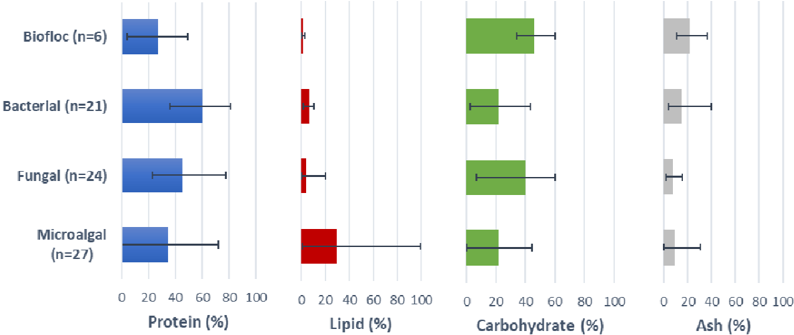
Single-cell ingredients (SCI) are a relatively broad class of materials that encompasses bacterial, fungal (yeast), microalgal-derived products or the combination of all three microbial groups into microbial bioflocs and aggregates. In this review we focus on those dried and processed single-cell organisms used as potential ingredients for aqua-feeds where the microorganisms are considered non-viable and are used primarily to provide protein, lipids or specific nutritional components. Among the SCI, there is a generalised dichotomy in terms of their use as either single-cell protein (SCP) resources or single-cell oil (SCO) resources, with SCO products being those oleaginous products containing 200 g/kg or more of lipids, whereas those products considered as SCP resources tend to contain more than 300 g/kg of protein (on a dry basis). Both SCP and SCO are now widely being used as protein/amino acid sources, omega-3 sources and sources of bioactive molecules in the diets of several species, with the current range of both these ingredient groups being considerable and growing. However, the different array of products becoming available in the market, how they are produced and processed has also resulted in different nutritional qualities in those products. In assessing this variation among the products and the application of the various types of SCI, we have taken the approach of evaluating their use against a set of standardised evaluation criteria based around key nutritional response parameters and how these criteria have been applied against salmonids, shrimp, tilapia and marine fish species.
Overview
The claims and statistics of this paper haven’t been checked yet.
Free: it reads the open-access text and checks the first 5 claims that cite a source we can check. Create a free account to check every claim.
Integrity signals
Registry
Cites
Statistics
Figures
Verification
Claims the paper makes
The claims and statistics of this paper haven’t been checked yet.
Free: it reads the open-access text and checks the first 5 claims that cite a source we can check. Create a free account to check every claim.
Claims other papers make about this one
Each is checked against this paper’s own text: does it say what the citing paper says it does?
The source backs part of the claim, not all of it — or backs it for a different population, condition or comparison.
In the citing paper
“In recent decades, some current investigations have reported the feasibility of sustainable microalgae production, both whole-cell and processed form used as feed ingredients formulating industrially compounded aquafeeds for salmonids, shrimp, tilapia, and many other marine species [9,19,20].”
From Overview and Challenges of Large-Scale Cultivation of Photosynthetic Microalgae and Cyanobacteria (2023) · cites this paper as [9]
Experimental — accuracy not yet measuredThe cited source says what the claim attributes to it.
In the citing paper
“In this regard, microalgae are mainly used for their nutritional value [8], and the current potential utility of these ingredients is considerable and growing [9].”
From Overview and Challenges of Large-Scale Cultivation of Photosynthetic Microalgae and Cyanobacteria (2023) · cites this paper as [9]
Self-check
Percentages, sums and reported differences re-computed from the paper’s own numbers.
The self-check needs the paper’s full text.
Citations
Cites
Carbon/nitrogen ratio as a control element in aquaculture systems
Avnimelech, Y. (1999) · Aquaculture · doi:10.1016/s0044-8486(99)00085-x · Cited by 1,301 · cited 2×
“Although the characteristics of these SCI are highly diverse depending on the various production parameters employed, most such studies have focused on protein production utilising in situ nitrogenous inputs with added carbon inputs to fuel the microbial productivity [66,72,73].”
BackgroundFish oil replacement in finfish nutrition
Turchini, G. M., Torstensen, B. E., & Ng, W. (2009) · Reviews in Aquaculture · doi:10.1111/j.1753-5131.2008.01001.x · Cited by 1,241 · cited 1×
“They are also important sources of long-chain omega-3 PUFA, and accordingly are being eagerly sought as a much-needed alternatives to fishoil use in aquaculture feeds [120].”
BackgroundCommercial potential for Haematococcus microalgae as a natural source of astaxanthin
Lorenz, R. T., & Cysewski, G. R. (2000) · Trends in Biotechnology · doi:10.1016/s0167-7799(00)01433-5 · Cited by 1,189 · cited 1×
“For example, there are varieties of microalgae, such as Haematococcus pluvialis (NaturRoseTM) that have been developed and are being used as natural sources of the carotenoid astaxanthin [92,93].”
BackgroundShah, M. M. R., Liang, Y., Cheng, J. J., & Daroch, M. (2016) · Frontiers in Plant Science · doi:10.3389/fpls.2016.00531 · Cited by 931
Biofloc technology in aquaculture: Beneficial effects and future challenges
Crab, R., Defoirdt, T., Bossier, P., & Verstraete, W. (2012) · Aquaculture · doi:10.1016/j.aquaculture.2012.04.046 · Cited by 903 · cited 2×
“Although the characteristics of these SCI are highly diverse depending on the various production parameters employed, most such studies have focused on protein production utilising in situ nitrogenous inputs with added carbon inputs to fuel the microbial productivity [66,72,73].”
BackgroundGLENCROSS, B. D., BOOTH, M., & ALLAN, G. L. (2007) · Aquaculture Nutrition · doi:10.1111/j.1365-2095.2007.00450.x · Cited by 808
Self-citationAzim, M. E., & Little, D. C. (2008) · Aquaculture · doi:10.1016/j.aquaculture.2008.06.036 · Cited by 795 · cited 2×
“Azim and Little [208] demonstrated that Nile tilapia (O. niloticus) production was enhanced if the fish were cultured in situ with a microbial biofloc.”
BackgroundFeeding with microbial flocs by tilapia in minimal discharge bio-flocs technology ponds
Avnimelech, Y. (2007) · Aquaculture · doi:10.1016/j.aquaculture.2006.11.025 · Cited by 688
Anupama, & Ravindra, P. (2000) · Biotechnology Advances · doi:10.1016/s0734-9750(00)00045-8 · Cited by 632
Hoseinifar, S. H., Sun, Y.-Z., Wang, A., & Zhou, Z. (2018) · Frontiers in Microbiology · doi:10.3389/fmicb.2018.02429 · Cited by 601 · cited 1×
“We focused on studies that used yeast as a protein source above 10 g/kg in the diet, although there are several reviews that focus on the use of yeast and fungal polysaccharides (beta-glucans and MOS) as a probiotics and immunostimulant for shrimp [161,162].”
Method
Research works printed but not linked: 3
- 7. Cohen, Z.; Ratledge, C. (Eds.) Single Cell Oils: Microbial and Algal Oils , 2nd ed.; AOCS Press: Urbana, IL, USA, 2010; p. 516.
- 19. Glencross, B.D.; Booth, M.; Allan, G.L. A feed is only as good as its ingredients-A review of ingredient evaluation for aquaculture feeds. Aquac. Nutr. 2007 , 13 , 17-34. [CrossRef] · DOI · Paper page
- 16. 1993 , 5 , 71-83. [CrossRef]
Cited by
Overview and Challenges of Large-Scale Cultivation of Photosynthetic Microalgae and Cyanobacteria
Novoveská, L., Nielsen, S. L., Eroldoğan, O. T., Haznedaroglu, B. Z., Rinkevich, B., Fazi, S., Robbens, J., Vasquez, M., & Einarsson, H. (2023) · Marine Drugs · doi:10.3390/md21080445 · Cited by 368
“In this regard, microalgae are mainly used for their nutritional value [8], and the current potential utility of these ingredients is considerable and growing [9].”
BackgroundAlternative Proteins for Fish Diets: Implications beyond Growth
Aragão, C., Gonçalves, A. T., Costas, B., Azeredo, R., Xavier, M. J., & Engrola, S. (2022) · Animals · doi:10.3390/ani12091211 · Cited by 224
Future feed resources in sustainable salmonid production: A review
Albrektsen, S., Kortet, R., Skov, P. V., Ytteborg, E., Gitlesen, S., Kleinegris, D., Mydland, L., Hansen, J. Ø., Lock, E., Mørkøre, T., et al. (2022) · Reviews in Aquaculture · doi:10.1111/raq.12673 · Cited by 195
Towards achieving circularity and sustainability in feeds for farmed blue foods
Colombo, S. M., Roy, K., Mraz, J., Wan, A. H. L., Davies, S. J., Tibbetts, S. M., Øverland, M., Francis, D. S., Rocker, M. M., Gasco, L., et al. (2023) · Reviews in Aquaculture · doi:10.1111/raq.12766 · Cited by 170
Alternative protein sources in aquafeed: Current scenario and future perspectives
Serra, V., Pastorelli, G., Tedesco, D., Turin, L., & Guerrini, A. (2024) · Veterinary and Animal Science · doi:10.1016/j.vas.2024.100381 · Cited by 168
“Hun-dreds of yeast species exist while only a few are used in aquafeeds, such as Saccharomyces cerevisiae, Candida utilis, Kluyveromyces marxianus, Phaffia rhodozyma , and Wickerhamomyces anomalus , which act as sources of proteins, lipids, pigments and enzymes (Glencross et al., 2020).”
BackgroundBiofloc: A sustainable dietary supplement, nutritional value and functional properties
Khanjani, M. H., Mozanzadeh, M. T., Sharifinia, M., & Emerenciano, M. G. C. (2022) · Aquaculture · doi:10.1016/j.aquaculture.2022.738757 · Cited by 162
Li, Y., Bruni, L., Jaramillo-Torres, A., Gajardo, K., Kortner, T. M., & Krogdahl, Å. (2021) · Animal Microbiome · doi:10.1186/s42523-020-00071-3 · Cited by 147
del Valle, J. C., Bonadero, M. C., & Fernández-Giménez, A. V. (2023) · Aquaculture · doi:10.1016/j.aquaculture.2023.739342 · Cited by 133
Glencross, B. D., Ling, X., Gatlin, D. M., Kaushik, S., Øverland, M., Newton, R., & Valente, L. M. P. (2024) · Reviews in Fisheries Science & Aquaculture · doi:10.1080/23308249.2024.2315049 · Cited by 122
“Key food safety concerns include those related to the real or perceived threats of food safety concerns (Glencross et al. 2020a; Regueiro et al. 2022).”
BackgroundInfluentialSelf-citationHarvesting the benefits of nutritional research to address global challenges in the 21st century
Glencross, B. D., Fracalossi, D. M., Hua, K., Izquierdo, M., Mai, K., Øverland, M., Robb, D., Roubach, R., Schrama, J. W., Small, B. C., et al. (2023) · Journal of the World Aquaculture Society · doi:10.1111/jwas.12948 · Cited by 113
Self-citationSarker, P. K. (2023) · Microorganisms · doi:10.3390/microorganisms11020439 · Cited by 108
Mohammadi, G., Hafezieh, M., Karimi, A. A., Azra, M. N., Doan, H. V., Tapingkae, W., Abdelrahman, H. A., & Dawood, M. A. O. (2021) · Fish & Shellfish Immunology · doi:10.1016/j.fsi.2021.11.028 · Cited by 103
Life cycle assessment of fish oil substitute produced by microalgae using food waste
Bartek, L., Strid, I., Henryson, K., Junne, S., Rasi, S., & Eriksson, M. (2021) · Sustainable Production and Consumption · doi:10.1016/j.spc.2021.04.033 · Cited by 78
Martínez, J. B. G., Pearce, J. M., Throup, J., Cates, J., Lackner, M. K., & Denkenberger, D. (2022) · Frontiers in Bioengineering and Biotechnology · doi:10.3389/fbioe.2022.906704 · Cited by 99
“To date, there are no publicly available studies of bacterial SCP bioavailability in humans, but recent studies in fi sh point to bacterial SCP having high digestibility (Glencross et al., 2020; Rajesh et al., 2022).”
BackgroundFrom the sea to aquafeed: A perspective overview
Eroldoğan, O. T., Glencross, B. D., Novoveská, L., Gaudêncio, S. P., Rinkevich, B., Varese, G. C., Carvalho, M. F., Taşdemir, D., Šafařík, I., Nielsen, S. L., et al. (2022) · Reviews in Aquaculture · doi:10.1111/raq.12740 · Cited by 99
“7,29,30”
BackgroundSelf-citationWaste-to-nutrition: a review of current and emerging conversion pathways
Javourez, U., O’Donohue, M. J., & Hamelin, L. (2021) · Biotechnology Advances · doi:10.1016/j.biotechadv.2021.107857 · Cited by 96
Single-Cell Proteins Obtained by Circular Economy Intended as a Feed Ingredient in Aquaculture
Pereira, A. G., Fraga‐Corral, M., Garcia‐Oliveira, P., Otero, P., Soria-López, A., Cassani, L., Cao, H., Xiao, J., Prieto, M. A., & Simal‐Gándara, J. (2022) · Foods · doi:10.3390/foods11182831 · Cited by 94
“Furthermore, many SCP formulations have shown positive effects on immunological, microbiome, and inflammatory responses in different species (Atlantic salmon, gilthead seabream, and rainbow trout, among others) [151].”
BackgroundThe future of protein sources in livestock feeds: implications for sustainability and food safety
Pexas, G., Doherty, B., & Kyriazakis, I. (2023) · Frontiers in Sustainable Food Systems · doi:10.3389/fsufs.2023.1188467 · Cited by 98
Rasool, K., Hussain, S., Shahzad, A., Miran, W., Mahmoud, K. A., Ali, N., & AlMomani, F. A. (2023) · Reviews in Environmental Science and Bio/Technology · doi:10.1007/s11157-023-09651-6 · Cited by 83
García Martínez, J. B., Egbejimba, J., Throup, J., Matassa, S., Pearce, J. M., & Denkenberger, D. C. (2021) · Sustainable Production and Consumption · doi:10.1016/j.spc.2020.08.011 · Cited by 64
Single-cell protein production from purple non-sulphur bacteria-based wastewater treatment
Wada, O. Z., Vincent, A. S., & Mackey, H. R. (2022) · Reviews in Environmental Science and Bio/Technology · doi:10.1007/s11157-022-09635-y · Cited by 69
Agboola, J. O., Lapeña, D., Øverland, M., Arntzen, M. Ø., Mydland, L. T., & Hansen, J. Ø. (2021) · Aquaculture · doi:10.1016/j.aquaculture.2021.737312 · Cited by 65
Use of yeasts in aquaculture nutrition and immunostimulation: A review
Mahdy, M. A., Jamal, M. T., Al-Harb, M., Al‐Mur, B. A., & Haque, M. F. (2022) · Journal of Applied Biology & Biotechnology · doi:10.7324/jabb.2022.100507 · Cited by 64
Gokulakrishnan, M., Kumar, R., Ferosekhan, S., Siddaiah, G. M., Nanda, S., Pillai, B. R., & Swain, S. K. (2022) · Aquaculture · doi:10.1016/j.aquaculture.2022.739161 · Cited by 59
C1 gas protein: A potential protein substitute for advancing aquaculture sustainability
Wang, J., Chen, L., Xu, J., Ma, S., Liang, X., Wei, Z., Li, D., & Xue, M. (2022) · Reviews in Aquaculture · doi:10.1111/raq.12707 · Cited by 59
Gas to Protein: Microbial Single Cell Protein is an Alternative to Fishmeal in AquaculturePreprint
Woolley, L. D., Chaklader, M. R., Pilmer, L. W., Stephens, F., Wingate, C. D., Salini, M., & Partridge, G. J. (2022) · SSRN Electronic Journal · doi:10.2139/ssrn.4200085 · Cited by 58
Consistent changes in the intestinal microbiota of Atlantic salmon fed insect meal diets
Li, Y., Gajardo, K., Jaramillo-Torres, A., Kortner, T. M., & Krogdahl, Å. (2022) · Animal Microbiome · doi:10.1186/s42523-021-00159-4 · Cited by 53
Single-cell proteins as alternative sources of proteins and nutrients
Alves, S. J. F., Pires, E. B. E., Alexandre, M. A. D. S., Santos, C. C. A. D. A., Martin, J. G. P., Campelo, P. H., Martins, E., & Eller, M. R. (2025) · Food Research International · doi:10.1016/j.foodres.2025.116631 · Cited by 52
Replacing fish meal and fish oil in industrial fish feeds
Oliva‐Teles, A., Enes, P., Couto, A., & Perés, H. (2022) · Elsevier eBooks · doi:10.1016/b978-0-12-821598-2.00011-4 · Cited by 54
In Vitro Assessment of Yeasts Strains with Probiotic Attributes for Aquaculture Use
DIGUTA, C. F., Mihai, C., Toma, R. C., Cimpeanu, C. L., & Matei, F. (2022) · Foods · doi:10.3390/foods12010124 · Cited by 53
“Moreover, yeasts have been proposed as an alternative for replacing fish meal, being considered a complex protein source in aquafeeds [39,40].”
BackgroundRashid, N., Onwusogh, U. C., & Mackey, H. R. (2022) · Biomass Conversion and Biorefinery · doi:10.1007/s13399-022-03273-8 · Cited by 52
“Larger scale, longer duration feed testing is required to fully demonstrate the value or risks associated with this source of SCP, including a comprehensive evaluation of the SCP quality by the various aspects that comprise a good feed [111, 112].”
Creating value from purple phototrophic bacteria via single-cell protein production
Hülsen, T., Barnes, A. C., Batstone, D. J., & Capson‐Tojo, G. (2022) · Current Opinion in Biotechnology · doi:10.1016/j.copbio.2022.102726 · Cited by 51
Hu, X., Vandamme, P. A. R., & Boon, N. (2021) · Chemical Engineering Journal · doi:10.1016/j.cej.2021.132535 · Cited by 51
Hooft, J. M., Montero, R., Lange, B. M., Blihovde, V. F., Purushothaman, K., Press, C. M., Mensah, D. D., Agboola, J. O., Javed, S., Mydland, L. T., et al. (2024) · Aquaculture · doi:10.1016/j.aquaculture.2024.740905 · Cited by 48
Fidio, N. D., Minonne, F., Antonetti, C., & Galletti, A. M. R. (2021) · Catalysts · doi:10.3390/catal11111291 · Cited by 48
Khanjani, M. H., Ghaedi, G., & Sharifinia, M. (2021) · Aquaculture Research · doi:10.1111/are.15712 · Cited by 46
Agboola, J. O., Schiavone, M., Øverland, M., Lange, B. M., Lagos, L. X., Arntzen, M. Ø., Lapeña, D., Eijsink, V. G. H., Horn, S. J., Mydland, L. T., et al. (2021) · Scientific Reports · doi:10.1038/s41598-021-83764-2 · Cited by 45
Rajesh, M., Kamalam, B. S., Sharma, P. K., Verma, V. C., Pandey, A., Dubey, M. K., Ciji, A., Akhtar, M. S., Pandey, N., Sarma, D., et al. (2022) · Aquaculture Research · doi:10.1111/are.15735 · Cited by 45
Agboola, J. O., Chikwati, E., Hansen, J. Ø., Kortner, T. M., Mydland, L. T., Krogdahl, Å., Djordjevic, B., Schrama, J. W., & Øverland, M. (2022) · Aquaculture · doi:10.1016/j.aquaculture.2022.738214 · Cited by 45
Self-citationZoli, M., Rossi, L., Bibbiani, C., & Bacenetti, J. (2023) · Aquaculture · doi:10.1016/j.aquaculture.2023.739580 · Cited by 42
Iheanacho, S. C., Hornburg, S. C., Schulz, C., & Kaiser, F. (2025) · Reviews in Aquaculture · doi:10.1111/raq.13009 · Cited by 42
Elesho, F. E., Kröckel, S., Sutter, D. A. H., Nuraini, R., Chen, I. J., Verreth, J. A. J., & Schrama, J. W. (2021) · Aquaculture · doi:10.1016/j.aquaculture.2021.737108 · Cited by 41
Self-citationJintasataporn, O., Chumkam, S., Triwutanon, S., LeBlanc, A., & Sawanboonchun, J. (2021) · Frontiers in Marine Science · doi:10.3389/fmars.2021.764042 · Cited by 41
Solé-Jiménez, P., Naya-Català, F., Piazzon, M. C., Estensoro, I., Calduch-Giner, J. À., Sitjà‐Bobadilla, A., Mullem, D. V., & Pérez‐Sánchez, J. (2021) · Frontiers in Marine Science · doi:10.3389/fmars.2021.705041 · Cited by 39
Optimization of Yeast Cultivation Factors for Improved SCP Production
Raita, S., Kušnere, Z., Spalviņš, K., & Blumberga, D. (2022) · Environmental and Climate Technologies · doi:10.2478/rtuect-2022-0064 · Cited by 39
Agboola, J. O., Rocha, S. D. C., Mensah, D. D., Hansen, J. Ø., Øyås, O., Lapeña, D., Mydland, L. T., Arntzen, M. Ø., Horn, S. J., & Øverland, M. (2023) · Animal Microbiome · doi:10.1186/s42523-023-00242-y · Cited by 37
Ruiz, A., Sanahuja, I., Thorringer, N. W., Lynegaard, J. C., Ntokou, E., Furones, D., & Gisbert, E. (2023) · Aquaculture · doi:10.1016/j.aquaculture.2023.739861 · Cited by 37
“…of the references to colour in this figure legend, the reader is referred to the web version of this article.) hydrolysates, nucleotides, nucleic acids among others) in the tested BSCP might also be responsible for these results (Glencross et al., 2020; Hossain et al., 2020; Sharif et al., 2021).”
BackgroundResultPilmer, L. W., Woolley, L. D., Lymbery, A. J., Salini, M., & Partridge, G. J. (2022) · Aquaculture Research · doi:10.1111/are.15986 · Cited by 36
Panteli, N., Kousoulaki, K., Antonopoulou, E., Carter, C. G., Nengas, I., Henry, M. A., Karapanagiotidis, I. Τ., & Mente, E. (2024) · Reviews in Aquaculture · doi:10.1111/raq.12969 · Cited by 36
Liu, Y., Ma, S., Lv, W., Shi, H., Qiu, G., Chang, H., Lu, S., Wang, D., Wang, C., Han, S., et al. (2022) · Frontiers in Immunology · doi:10.3389/fimmu.2022.1079677 · Cited by 36
Cellular Solutions: Evaluating Single-Cell Proteins as Sustainable Feed Alternatives in Aquaculture
Chamodi, K. K. D., Vu, N. T., Domingos, J. A., & Loh, J. (2025) · Biology · doi:10.3390/biology14070764 · Cited by 35
“These criteria facilitate informed decision making regarding the suitability of SCP ingredients for aquaculture [24].”
InfluentialCornet, V., Khuyen, T. D., Mandiki, S. N. M., Betoulle, S., Bossier, P., Reyes‐López, F. E., Tort, L., & Kestemont, P. (2021) · Frontiers in Immunology · doi:10.3389/fimmu.2021.693613 · Cited by 35
Liu, Y., Chang, H., Lv, W., Ma, S., Qiu, G., Lu, S., Han, S., Wang, C., Han, D., Zhang, Y., et al. (2022) · Aquaculture · doi:10.1016/j.aquaculture.2022.738715 · Cited by 34
Sezgin, A., & Aydın, B. (2021) · Aquaculture Research · doi:10.1111/are.15481 · Cited by 33
Glencross, B. D., Muñoz‐Lopez, P., Matthew, C., MacKenzie, S. A., Powell, A., Longshaw, M., & LeBlanc, A. (2022) · Aquaculture · doi:10.1016/j.aquaculture.2022.739137 · Cited by 32
Self-citationNew alternative sources of omega-3 fish oil
Venegas‐Calerón, M., & Napier, J. A. (2023) · Advances in food and nutrition research · doi:10.1016/bs.afnr.2023.01.001 · Cited by 32
Vasilaki, A., Mente, E., Fountoulaki, E., Henry, M. A., Nikoloudaki, C., Berillis, P., Kousoulaki, K., & Nengas, I. (2023) · Frontiers in Physiology · doi:10.3389/fphys.2023.1199497 · Cited by 32
“SCPs are indeed rich in proteins but they also contain DNA, RNA, mannan-oligosaccharides (MOS), and polysaccharides such as β-glucans, chitin, and nucleotides that may act as prebiotics and/ or have immunostimulating activities in many fish species (Hoseinifar et al., 2015; Glencross et al., 2020).”
BackgroundRajput, S. D., Pandey, N., & Keshavkant, S. (2024) · Environmental Science and Pollution Research · doi:10.1007/s11356-024-33004-7 · Cited by 32
Marchi, A., Bonaldo, A., Scicchitano, D., Candela, M., Marco, A. D., Falciglia, S., Mazzoni, M., Lattanzio, G., Clavenzani, P., Dondi, F., et al. (2022) · Aquaculture · doi:10.1016/j.aquaculture.2022.739132 · Cited by 30
Carvalho, M., Lima, B. T. M., Xu, H., Geraert, P., Kaushik, S., Montero, D., & Izquierdo, M. (2022) · Aquaculture · doi:10.1016/j.aquaculture.2022.738354 · Cited by 30
Felix, N., Manikandan, K., Uma, A., & Kaushik, S. (2022) · Animal Feed Science and Technology · doi:10.1016/j.anifeedsci.2022.115549 · Cited by 29
Huang, Z., Gao, J., Peng, C., Song, J., Xie, Z., Jia, J., Li, H., Zhao, S., Liang, Y., & Gong, B. (2023) · Microorganisms · doi:10.3390/microorganisms11041002 · Cited by 29
“vulgaris also contains highquality protein and lipids, and has been used at higher inclusions (10–20%) in the diet to replace fishmeal [11].”
BackgroundFanizza, C., Trocino, A., Stejskal, V., Prokešová, M., Zare, M., Tran, H. Q., Brambilla, F., Xiccato, G., & Bordignon, F. (2022) · Aquaculture Reports · doi:10.1016/j.aqrep.2022.101435 · Cited by 27
The Potential of Vegetal Biomass for Biomolecules Production
Antunes, F. A. F., Rocha, T. M., Philippini, R. R., Martiniano, S. E., Prado, C. A., Mier-Alba, E., Hernández-Pérez, A. F., Jofre, F. M., Abdeshahian, P., Ribeaux, D. R., et al. (2021) · Elsevier eBooks · doi:10.1016/b978-0-12-819727-1.00053-4 · Cited by 26
Agboola, J. O., Mensah, D. D., Hansen, J. Ø., Lapeña, D., Mydland, L. T., Arntzen, M. Ø., Horn, S. J., Øyås, O., Press, C. M., & Øverland, M. (2022) · International Journal of Molecular Sciences · doi:10.3390/ijms23031675 · Cited by 26
Assessing the value of single-cell ingredients in aquafeeds
Carter, C. G., & Codabaccus, B. M. (2022) · Current Opinion in Biotechnology · doi:10.1016/j.copbio.2022.102734 · Cited by 26
Castilla‐Gavilán, M., Guerra-García, J. M., Hachero‐Cruzado, I., & Herrera, M. (2024) · Journal of Marine Science and Engineering · doi:10.3390/jmse12071192 · Cited by 26
Nederlof, M. A. J., Kaushik, S., & Schrama, J. W. (2023) · Aquaculture Reports · doi:10.1016/j.aqrep.2023.101830 · Cited by 26
Self-citationApplication status and development prospect of fermented ingredients in aquaculture
Li, B., Boukhennou, A., Shao, J., Liang, M., Du, Y., & Chen, J. (2025) · Aquaculture Reports · doi:10.1016/j.aqrep.2025.102842 · Cited by 24
Purushothaman, K., Crawford, A. D., Rocha, S. D. C., Göksu, A. B., Lange, B. M., Mydland, L. T., Vij, S., Lin, Q., Øverland, M., & Press, C. M. (2024) · Heliyon · doi:10.1016/j.heliyon.2024.e26547 · Cited by 24
Factors Affecting Yeast Digestibility and Immunostimulation in Aquatic Animals
Sultana, S., Biró, J., Kucska, B., & Hancz, C. (2024) · Animals · doi:10.3390/ani14192851 · Cited by 23
Feed Sources for Sustainable Aquaculture: Black Soldier Fly Larvae (BSFL)
Dîrvariu, L., Barbacariu, C.-A., Burducea, M., & Simeanu, D. (2025) · Fishes · doi:10.3390/fishes10090464 · Cited by 22
Bertini, A., Natale, S., Gisbert, E., Andree, K. B., Concu, D., Dondi, F., Cesare, A. D., Indio, V., Gatta, P. P., Bonaldo, A., et al. (2023) · Frontiers in Marine Science · doi:10.3389/fmars.2023.1172505 · Cited by 20
“…digestibility and palatability of bacterial SCP is considered good; however, variable performances may appear between the tested bacteria genus (Glencross et al., 2020; Bratosin et al., 2021), the application of post-production cell lysis processes (e.g. autolysis or hydrolysis) (Schøyen et…”
BackgroundInfluentialCarvalho, M., Ginés, R., Martín, I. E., Zamorano, M. J., Acosta, F., Fontanillas, R., Torrecillas, S., & Montero, D. (2023) · Aquaculture · doi:10.1016/j.aquaculture.2023.740034 · Cited by 20
Sarker, P. K., Kapuscinski, A. R. D., Fitzgerald, D., Greenwood, C., Nocera, P., O’Shelski, K., Lee, B., Mkulama, A., Andrade, S., Gwynne, D., et al. (2023) · Algal Research · doi:10.1016/j.algal.2023.103295 · Cited by 20
Teixeira, C. M., & Silva, P. M. (2023) · International Journal of Food Science & Technology · doi:10.1111/ijfs.16841 · Cited by 20
“Glencross et al ., 2020).”
A Review of the Latest Advances in Aquaculture Nutrition Research
Ai, C., Leng, X., Luo, Z., Zhou, Z., & Ai, Q. (2025) · Journal of Nutrition · doi:10.1016/j.tjnut.2025.08.009 · Cited by 19
Situmorang, M. L., Nurwidayanti, P., & Suantika, G. (2021) · Aquatic Living Resources · doi:10.1051/alr/2021009 · Cited by 19
“The cyanobacteria Spirulina sp. can be used to complement K. alvarezii, as it contains 60–70% protein and the essential amino acids present are around 47% of total protein weight that are important in shrimp diets (Glencross et al., 2020; Ibrahem et al., 2013).”
BackgroundMethodInfluentialPilmer, L. W., Woolley, L. D., Lymbery, A. J., Dam, C. T. M., Elizur, A., Foysal, M. J., & Partridge, G. J. (2025) · Journal of Animal Science and Biotechnology/Journal of animal science and biotechnology · doi:10.1186/s40104-024-01146-w · Cited by 19
“Methanotrophic bacteria utilize methane as a carbon and energy source and ammonia as a nitrogen source [19].”
Fernandes, A. M., Calduch-Giner, J. À., Pereira, G. D. V., Gonçalves, A. T., Dias, J. P., Johansen, J., Silva, T. S., Naya-Català, F., Piazzon, M. C., Sitjà‐Bobadilla, A., et al. (2024) · Animals · doi:10.3390/ani14152166 · Cited by 18
“Like insect proteins, SCPs are becoming a highly promising dietary protein with encouraging results in main cultured farmed fish [32–34], including gilthead sea bream, in which the use of SCP as an FM replacer supported efficient growth and showed anti-inflammatory actions, linked to the reshaping…”
BackgroundBridging the protein gap with single-cell protein use in aquafeeds
Buttle, L., Noorman, H. J., Engel, C. A. R., & Santigosa, E. (2024) · Frontiers in Marine Science · doi:10.3389/fmars.2024.1384083 · Cited by 18
Salze, G. P., & Tibbetts, S. M. (2021) · Aquaculture Research · doi:10.1111/are.15526 · Cited by 18
Ringel, M., Paper, M., Willing, M., Schneider, M., Melcher, F., Stellner, N. I., & Brück, T. (2025) · Microorganisms · doi:10.3390/microorganisms13091988 · Cited by 17
“Generally, oleaginous microorganisms are capable of accumulating more than 20% of their dry cell weight (DCW) in lipids in the form of triacylglycerides (TAGs), which are typically referred to as single-cell oils [21–26].”
Valorization of Macroalgae through Fermentation for Aquafeed Production: A Review
ANG, C. Y., Yong, A. S. K., Azad, S. A., Lim, L., Zuldin, W. H., & Lal, M. T. M. (2021) · Fermentation · doi:10.3390/fermentation7040304 · Cited by 18
Omar, S. S., Anwar, A. Y., hassaan, M. S., El‐Haroun, E., & Davies, S. J. (2022) · Aquaculture Reports · doi:10.1016/j.aqrep.2022.101101 · Cited by 17
SUSTAINABLE ALTERNATIVE FEED FOR AQUACULTURE: STATE OF THE ART AND FUTURE PERSPECTIVE
Terengganu, U. M., SHAHIN, S., Okomoda, V. T., Terengganu, U. M., Ma, H., Ikhwanuddin, M., & Terengganu, U. M. (2023) · PLANETARY SUSTAINABILITY · doi:10.46754/ps.2023.07.005 · Cited by 18
Terova, G., Moroni, F., Antonini, M., Bertacchi, S., Pesciaroli, C., Branduardi, P., Labra, M., Porro, D., Ceccotti, C., & Rimoldi, S. (2021) · Frontiers in Marine Science · doi:10.3389/fmars.2021.715078 · Cited by 17
Moroni, F., Carvalho, M., Rosa, A. R. D., Torrecillas, S., Fontanillas, R., Haffray, P., Allal, F., Bajek, A., Chiofalo, B., Terova, G., et al. (2024) · Aquaculture Reports · doi:10.1016/j.aqrep.2024.102021 · Cited by 16
Cantillo, J., & Deshpande, P. C. (2024) · Aquaculture Reports · doi:10.1016/j.aqrep.2024.102601 · Cited by 15
Rombenso, A., Duong, M. H., Hines, B. M., Mã, T., & Simon, C. J. (2020) · Aquaculture · doi:10.1016/j.aquaculture.2020.735959 · Cited by 15
Şahin, T., Yılmaz, S., Gürkan, M., & Ergün, S. (2021) · Aquaculture Research · doi:10.1111/are.15324 · Cited by 14
Caderno, A., Oliva, M., Barranco, I., Astola, A., Fuentes, J., Alarcón, F. J., Mancera, J. M., & Martos-Sitcha, J. A. (2025) · Aquaculture · doi:10.1016/j.aquaculture.2025.742873 · Cited by 13
Feed Ingredients for Sustainable Aquaculture
McLean, E. (2023) · Elsevier eBooks · doi:10.1016/b978-0-12-823960-5.00085-8 · Cited by 13
Zhang, L., Zhang, P., Tan, P., Xu, D., Wang, L., Ding, Z., & Shao, Q. (2024) · Frontiers in Marine Science · doi:10.3389/fmars.2024.1370371 · Cited by 13
Schafberg, M., Loest, K., Müller-Belecke, A., & Rohn, S. (2021) · Foods · doi:10.3390/foods10081799 · Cited by 13
“In addition, a wide variety of microorganisms, especially single-cell organisms, are used in the present aquaculture and their cultivation has been optimized accordingly over the last decades [27,46,47].”
BackgroundZhang, H., Zhang, W., Zhang, W., Yin, M., Jiao, L., Ming, T., Jia, X., Gouife, M., Xu, J., & Kong, F. (2025) · Foods · doi:10.3390/foods14173066 · Cited by 13
“Microbial proteins provide high-quality protein and essential nutrients with functional benefits, typically containing 5% fat [20].”
Aquaculture nutrition in Australia: challenges and trends
Truong, H. H., Hines, B. M., Rombenso, A., & Simon, C. J. (2023) · Animal Production Science · doi:10.1071/an23078 · Cited by 12
Legodi, L. M., & Moganedi, K. L. M. (2023) · Annals of Microbiology · doi:10.1186/s13213-023-01725-8 · Cited by 12
“Both SCO and SCP have biotechnological applications in food and animal feed diets as sources of amino acids, omega-3-lipids and bioactive molecules (Glencross et al. 2020).”
BackgroundFilamentous fungi as animal and fish feed ingredients
Karimi, S., Ferreira, J. A., & Taherzadeh, M. J. (2023) · Elsevier eBooks · doi:10.1016/b978-0-323-91872-5.00002-8 · Cited by 11
Syropoulou, E., Prakash, S., Smeenge, D., Sipkema, D., Schrama, J. W., & Kokou, F. (2025) · Aquaculture · doi:10.1016/j.aquaculture.2025.742182 · Cited by 11
Self-citation
Metadata
- Authors
- Glencross, B. D., Huyben, D., & Schrama, J. W.
- Affiliations
- University of Stirling (GB)
- Wageningen University & Research (NL)
- Corresponding author
- Glencross, Brett D.
- Venue
- Fishes
- Publisher
- MDPI AG
- Published
- 2020-07-16
- Volume
- 5
- Issue
- 3
- Pages
- 22
- ISSN
- 2410-3888 (ISSN-L)
- OpenAlex
- W3043009614
- Cited by
- 203
- References
- 230
- Citations by year
- 2026: 29 · 2025: 45 · 2024: 31 · 2023: 31 · 2022: 36 · 2021: 28 · 2020: 3
- FWCI
- 17.68
- Type
- journal article
- Language
- en
- Open access
- gold
- doi.org
- Licence
- Locations
- Fishes (publishedVersion, cc-by)
- Socio-Environmental Systems Modeling (acceptedVersion, cc-by)
- DOAJ (DOAJ: Directory of Open Access Journals) (submittedVersion, cc-by-sa)
- Stirling Online Research Repository (University of Stirling) (submittedVersion, cc-by)
- Data Archiving and Networked Services (DANS) (submittedVersion, cc-by)
- Topics
- Life Sciences › Agricultural and Biological Sciences › Aquatic Science › Aquaculture Nutrition and Growth
- Life Sciences › Immunology and Microbiology › Immunology › Aquaculture disease management and microbiota
- Physical Sciences › Energy › Renewable Energy, Sustainability and the Environment › Algal biology and biofuel production
- Keywords
- aquaculture feed, microbial protein, single cell oil, oleaginous microorganisms, yeast, microalgae, omega-3 fatty acids, bioactive compounds, amino acid sources, salmonids, shrimp, tilapia, marine fish, feed quality
About these checks
Registry, retraction, Cites and statistics results are computed, not judged, with one exception: a printed reference that no index lists is read once by a model before it counts as a citation error. Claims are extracted by a model and kept only when their quote appears verbatim in the text; each cited source is then checked, with a model’s help, for whether it says what the claim relies on. Those verdicts can be wrong — read the claim’s quote and the cited source before relying on one.
Statistics and arithmetic are recomputed, not judged.
Confidence bands are shown only for fields calibrated on our annotated test set. None is calibrated yet, so no band is shown.
What counts as a claim ›How we measure confidence ›How we check this ›
Are you an author, or do you see a problem with this page? Request a review
Data sources
Bibliographic data: Semantic Scholar, OpenAlex, Crossref.
Contains information from the Semantic Scholar Academic Graph Datasets, made available under the ODC Attribution License (ODC-BY 1.0).
Semantic Scholar’s data is described in: Kinney, R., et al. (2023). The Semantic Scholar Open Data Platform. arXiv:2301.10140.
