

The Application of Single-Cell Ingredients in Aquaculture Feeds—A Review
Open accessThe DOI matches its Crossref record; 229 of the 230 references it cites were found in a registry or an index.
Abstract
Single-cell ingredients (SCI) are a relatively broad class of materials that encompasses bacterial, fungal (yeast), microalgal-derived products or the combination of all three microbial groups into microbial bioflocs and aggregates. In this review we focus on those dried and processed single-cell organisms used as potential ingredients for aqua-feeds where the microorganisms are considered non-viable and are used primarily to provide protein, lipids or specific nutritional components. Among the SCI, there is a generalised dichotomy in terms of their use as either single-cell protein (SCP) resources or single-cell oil (SCO) resources, with SCO products being those oleaginous products containing 200 g/kg or more of lipids, whereas those products considered as SCP resources tend to contain more than 300 g/kg of protein (on a dry basis). Both SCP and SCO are now widely being used as protein/amino acid sources, omega-3 sources and sources of bioactive molecules in the diets of several species, with the current range of both these ingredient groups being considerable and growing. However, the different array of products becoming available in the market, how they are produced and processed has also resulted in different nutritional qualities in those products. In assessing this variation among the products and the application of the various types of SCI, we have taken the approach of evaluating their use against a set of standardised evaluation criteria based around key nutritional response parameters and how these criteria have been applied against salmonids, shrimp, tilapia and marine fish species.
Overview
The claims and statistics of this paper haven’t been checked yet.
Free: it reads the open-access text and checks the first 5 claims that cite a source we can check. Create a free account to check every claim.
Integrity signals
Registry
Cites
Statistics
Figures
Verification
Claims the paper makes
The claims and statistics of this paper haven’t been checked yet.
Free: it reads the open-access text and checks the first 5 claims that cite a source we can check. Create a free account to check every claim.
Claims other papers make about this one
Each is checked against this paper’s own text: does it say what the citing paper says it does?
The source backs part of the claim, not all of it — or backs it for a different population, condition or comparison.
In the citing paper
“In recent decades, some current investigations have reported the feasibility of sustainable microalgae production, both whole-cell and processed form used as feed ingredients formulating industrially compounded aquafeeds for salmonids, shrimp, tilapia, and many other marine species [9,19,20].”
From Overview and Challenges of Large-Scale Cultivation of Photosynthetic Microalgae and Cyanobacteria (2023) · cites this paper as [9]
Experimental — accuracy not yet measuredThe cited source says what the claim attributes to it.
In the citing paper
“In this regard, microalgae are mainly used for their nutritional value [8], and the current potential utility of these ingredients is considerable and growing [9].”
From Overview and Challenges of Large-Scale Cultivation of Photosynthetic Microalgae and Cyanobacteria (2023) · cites this paper as [9]
Self-check
Percentages, sums and reported differences re-computed from the paper’s own numbers.
The self-check needs the paper’s full text.
Citations
Cites
Carbon/nitrogen ratio as a control element in aquaculture systems
Avnimelech, Y. (1999) · Aquaculture · doi:10.1016/s0044-8486(99)00085-x · Cited by 1,301 · cited 2×
“Although the characteristics of these SCI are highly diverse depending on the various production parameters employed, most such studies have focused on protein production utilising in situ nitrogenous inputs with added carbon inputs to fuel the microbial productivity [66,72,73].”
BackgroundFish oil replacement in finfish nutrition
Turchini, G. M., Torstensen, B. E., & Ng, W. (2009) · Reviews in Aquaculture · doi:10.1111/j.1753-5131.2008.01001.x · Cited by 1,241 · cited 1×
“They are also important sources of long-chain omega-3 PUFA, and accordingly are being eagerly sought as a much-needed alternatives to fishoil use in aquaculture feeds [120].”
BackgroundCommercial potential for Haematococcus microalgae as a natural source of astaxanthin
Lorenz, R. T., & Cysewski, G. R. (2000) · Trends in Biotechnology · doi:10.1016/s0167-7799(00)01433-5 · Cited by 1,189 · cited 1×
“For example, there are varieties of microalgae, such as Haematococcus pluvialis (NaturRoseTM) that have been developed and are being used as natural sources of the carotenoid astaxanthin [92,93].”
BackgroundShah, M. M. R., Liang, Y., Cheng, J. J., & Daroch, M. (2016) · Frontiers in Plant Science · doi:10.3389/fpls.2016.00531 · Cited by 931
Biofloc technology in aquaculture: Beneficial effects and future challenges
Crab, R., Defoirdt, T., Bossier, P., & Verstraete, W. (2012) · Aquaculture · doi:10.1016/j.aquaculture.2012.04.046 · Cited by 903 · cited 2×
“Although the characteristics of these SCI are highly diverse depending on the various production parameters employed, most such studies have focused on protein production utilising in situ nitrogenous inputs with added carbon inputs to fuel the microbial productivity [66,72,73].”
BackgroundGLENCROSS, B. D., BOOTH, M., & ALLAN, G. L. (2007) · Aquaculture Nutrition · doi:10.1111/j.1365-2095.2007.00450.x · Cited by 808
Self-citationAzim, M. E., & Little, D. C. (2008) · Aquaculture · doi:10.1016/j.aquaculture.2008.06.036 · Cited by 795 · cited 2×
“Azim and Little [208] demonstrated that Nile tilapia (O. niloticus) production was enhanced if the fish were cultured in situ with a microbial biofloc.”
BackgroundFeeding with microbial flocs by tilapia in minimal discharge bio-flocs technology ponds
Avnimelech, Y. (2007) · Aquaculture · doi:10.1016/j.aquaculture.2006.11.025 · Cited by 688
Anupama, & Ravindra, P. (2000) · Biotechnology Advances · doi:10.1016/s0734-9750(00)00045-8 · Cited by 632
Hoseinifar, S. H., Sun, Y.-Z., Wang, A., & Zhou, Z. (2018) · Frontiers in Microbiology · doi:10.3389/fmicb.2018.02429 · Cited by 601 · cited 1×
“We focused on studies that used yeast as a protein source above 10 g/kg in the diet, although there are several reviews that focus on the use of yeast and fungal polysaccharides (beta-glucans and MOS) as a probiotics and immunostimulant for shrimp [161,162].”
Method
Research works printed but not linked: 3
- 7. Cohen, Z.; Ratledge, C. (Eds.) Single Cell Oils: Microbial and Algal Oils , 2nd ed.; AOCS Press: Urbana, IL, USA, 2010; p. 516.
- 19. Glencross, B.D.; Booth, M.; Allan, G.L. A feed is only as good as its ingredients-A review of ingredient evaluation for aquaculture feeds. Aquac. Nutr. 2007 , 13 , 17-34. [CrossRef] · DOI · Paper page
- 16. 1993 , 5 , 71-83. [CrossRef]
Cited by
Items 101–200 of 233
Methane Single Cell Protein: securing protein supply during global food catastrophesPreprint
Martínez, J. B. G., Pearce, J. M., Cates, J., & Denkenberger, D. (2020) · OSF Preprints (OSF Preprints) · doi:10.31219/osf.io/94mkg · Cited by 11
Fungal Protein from Non-Food Bioresources in Diets for Rainbow Trout (Oncorhynchus mykiss)
Gaudhaman, A., Karimi, S., Lundh, T., Øverland, M., Taherzadeh, M. J., Langeland, M., Baruah, K., & Vidaković, A. (2025) · Fishes · doi:10.3390/fishes10040149 · Cited by 10
“The digestibility of proteins can be negatively affected by cell walls present in fungi [12,58,59].”
Longshaw, M., Quest, B. W., Miller, W., Oba, P. M., Swanson, O. R., Swanson, K. S., & Miller, K. (2025) · Animals · doi:10.3390/ani15131975 · Cited by 10
“Some of these are well-known (e.g., n-3 LC-PUFA, nucleotides, or peptidoglycans), while others are less known [63].”
Sathishkumar, G., Felix, N., Ranjan, A. K., Uma, A., & Rajalakshmi, K. (2025) · Probiotics and Antimicrobial Proteins · doi:10.1007/s12602-025-10598-z · Cited by 9
The Quest for Functional Ingredients for Sustainable Aquaculture Feeds in Sub‐Saharan Africa
Irabor, A. E., Yossa, R., Fatan, N. A., Owen, M. A. G., Norouzitallab, P., Baruah, K., & Dimitroglou, A. (2026) · Aquaculture Nutrition · doi:10.1155/anu/9937988 · Cited by 9
“They not only enhance growth performance and overall fi sh health but also improve fl esh composition and meat quality, which are important attributes for consumer acceptance and market competitiveness (Figure 4) [29, 32, 73, 131 – 137].”
Impact of physiochemical properties of protein ingredients on pellet quality and microstructure
Ge, C., Xue, M., Hooft, J. M., Øverland, M., Liang, X., Wang, J., Meng, P., Qin, Y., & Wang, H. (2023) · Aquaculture Reports · doi:10.1016/j.aqrep.2023.101632 · Cited by 9
Global market for the long-chain omega-3 fatty acids EPA and DHA and their regulation
Auchterlonie, N. A., & Bescoby, G. H. (2021) · Elsevier eBooks · doi:10.1016/b978-0-12-821391-9.00014-4 · Cited by 9
Sustainable Aquafeeds: Using Aquafarmer Preference to Inform a Multi-criteria Decision Analysis
Ghamkhar, R., & Hicks, A. (2021) · ACS Agricultural Science & Technology · doi:10.1021/acsagscitech.1c00053 · Cited by 9
Roques, S., Deborde, C., Cassy, S., Médale, F., Dupont‐Nivet, M., Lefèvre, F., Bugeon, J., Labbé, L., Marchand, Y., Moing, A., et al. (2023) · Scientific Reports · doi:10.1038/s41598-023-46809-2 · Cited by 8
Yin, F., Huang, J., Zhan, C.-T., Sun, X., Zheng, W.-L., Luo, X., Zhang, Y., Yin, L.-F., & Fu, Y. (2024) · Fermentation · doi:10.3390/fermentation10020081 · Cited by 8
Evrendilek, G. A. (2024) · Food Nutrition Chemistry · doi:10.18686/fnc287 · Cited by 8
“The replacement of fishmeal and fish oil with plant-based feed ingredients has been associated with a decline in omega-3 content, particularly DHA, and an increase in omega-6 fatty acids in farmed seafood [22,26,31].”
InfluentialRoques, S., Deborde, C., Skiba, S., Cala, O., Marchand, Y., Moing, A., & Fauconneau, B. (2022) · Aquaculture · doi:10.1016/j.aquaculture.2022.738033 · Cited by 8
Tampou, A., Andreopoulou, S., Vasilaki, A., Nengas, I., Berillis, P., Gisbert, E., Karapanagiotidis, I. Τ., Antonopoulou, E., & Mente, E. (2024) · Aquaculture Reports · doi:10.1016/j.aqrep.2024.102105 · Cited by 8
Brunel, M., Burkina, V., Sampels, S., Dahlberg, A.-K., Passoth, V., & Picková, J. (2024) · Acta Agriculturae Scandinavica Section A – Animal Science · doi:10.1080/09064702.2024.2322145 · Cited by 7
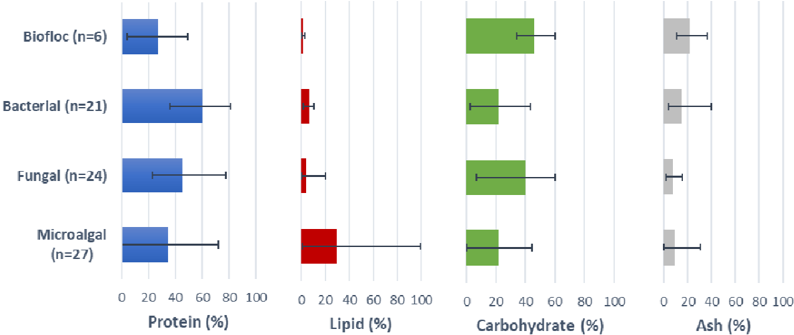
“Macronutrient composition of R. toruloides is variable as it depends on its growing conditions (carbon and nitrogen availability) with approximately 40% of lipids, 20% carbohydrates and 15-25% proteins (Shen et al., 2017; Glencross et al., 2020).”
Hossain, M. M. M., Akter, S., Dey, B. K., Alahmadi, T. A., Ansari, M. J., Rahman, N., Rojoni, S. A., Rubayea, U., Bristy, S. A., Hossain, B., et al. (2024) · Comparative Immunology Reports · doi:10.1016/j.cirep.2024.200164 · Cited by 7
“Nonetheless, diet palatability must be considered when evaluating the quality or potential of supplements [58].”
BackgroundPopescu, E.-R., Einbu, A., Israelsen, L., Eriksen, G. K., Hardy, N., Ingebrigtsen, R. A., & Pettersen, T. (2025) · Algal Research · doi:10.1016/j.algal.2025.104173 · Cited by 7
Lund, I., Gómez‐Requeni, P., Holm, J., & Thorringer, N. W. (2025) · Aquaculture Reports · doi:10.1016/j.aqrep.2025.103042 · Cited by 7
Moroni, F., Naya-Català, F., Terova, G., Domingo-Bretón, R., Calduch-Giner, J. À., & Pérez‐Sánchez, J. (2025) · Animals · doi:10.3390/ani15192885 · Cited by 7
“In agreement with this, numerous studies have analyzed how FM and FO replacers affect the distribution of intestinal taxa in various farmed fish, including salmonids, shrimp, tilapia, and other freshwater and marine organisms [70,71].”
Pexas, G., Kyriazakis, I., & Doherty, B. (2023) · doi:10.46756/sci.fsa.gzi586 · Cited by 7
Chen, K., Yamamoto, F. Y., de Cruz, C. R., & Gatlin, D. M. (2023) · North American Journal of Aquaculture · doi:10.1002/naaq.10313 · Cited by 6
Busti, S., Mammi, L. M. E., Bonaldo, A., Ciulli, S., Volpe, E., Errani, F., Brambilla, F., Ekmay, R. D., Scicchitano, D., Candela, M., et al. (2025) · Aquaculture · doi:10.1016/j.aquaculture.2025.742410 · Cited by 6
González-Hernández, M., Portolés, T., Mokh, S., Sancho, J. V., Calduch-Giner, J. À., Nácher‐Mestre, J., Pérez‐Sánchez, J., & Ibáñez, M. (2025) · Microchemical Journal · doi:10.1016/j.microc.2025.113854 · Cited by 6
Gisbert, E., Ruiz, A., Torrecillas, S., Cruz‐Quintana, Y., Bertomeu, E., Saromines, C. J., Melenchón, F., Ntokou, E., Pascual, I., Reinoso, S., et al. (2025) · Aquaculture Reports · doi:10.1016/j.aqrep.2025.103094 · Cited by 6
Alternative Protein Sources in Tilapia Feeds: Perspectives from Africa
Maulu, S., Odu‐Onikosi, S. G., Abarra, S. T., Momoh, T., Joshua, F., & Rawling, M. D. (2024) · Sustainability Sciences in Asia and Africa · doi:10.1007/978-981-97-4279-0_3 · Cited by 7
Gustatory system and implications for feeding in fish
Morais, S., & Kasumyan, A. O. (2025) · Elsevier eBooks · doi:10.1016/b978-0-323-90873-3.00012-9 · Cited by 5
Enhanced amino acid biosynthesis in Phaffia rhodozyma via herbicide-induced selection
Raita, S., Kuzmika, I., Mika, T., Geiba, Z., & Spalviņš, K. (2024) · Journal of Industrial Microbiology & Biotechnology · doi:10.1093/jimb/kuaf011 · Cited by 5
“Aquacultur e feed gener all y contains a combination of se v er al protein sources to maintain the r equir ed amino acid balance for the target animal, and adding pure amino acids can also be used if necessary (Glencross et al., 2020 ).”
Dietary yeast improves zebrafish immunity and survival against Aeromonas infection
Purushothaman, K., Rocha, S. D. C., Kaul, D., Göksu, A. B., Lange, B. M., Crawford, A. D., Mydland, L. T., Sørum, H. R., Lin, Q., Vij, S., et al. (2025) · Fish & Shellfish Immunology · doi:10.1016/j.fsi.2025.110678 · Cited by 5
Utilization of live feeds in fish larviculture: A review
Teye-Gaga, C., Molnár, P. I., Mohammed, E. A. H., & Bársony, P. (2025) · Acta Agraria Debreceniensis · doi:10.34101/actaagrar/2/15985 · Cited by 5
Aydın, B., Eroldoğan, O. T., Yilmaz, E., Hasan, M. T., Citarasu, T., Akhan, S., Ergün, S., Wei, L. S., Kari, Z. A., Shimada, Y., et al. (2026) · Reviews in Aquaculture · doi:10.1111/raq.70127 · Cited by 5
Ma, K., Deng, L., Wu, Y., Gao, Y., Fan, J., & Wu, H. (2024) · Marine Drugs · doi:10.3390/md22120555 · Cited by 5
“As is well known, omega-3 polyunsaturated fatty acids (PUFAs) are important for the health of aquatic animals [7].”
DHA- and EPA-rich oil from microalgae
Lupette, J. (2023) · Elsevier eBooks · doi:10.1016/b978-0-323-99196-4.00035-8 · Cited by 5
Verma, A. K., Dheeran, P., Krishnani, K. K., & Murugesan, K. (2025) · Annals of Animal Science · doi:10.2478/aoas-2025-0066 · Cited by 4
“Aquafeeds commonly utilize oil and single-cell protein derived from bacterial, microalgal, or yeast biomass, which can also be sourced from discarded materials from other industries (Glencross et al., 2020; Pereira et al., 2022).”
Huaynate, A. I. O., Gallegos, M. A. C., Ramos, L. F., & Soto, A. R. (2022) · World Journal of Microbiology and Biotechnology · doi:10.1007/s11274-022-03275-8 · Cited by 4
The importance of gut microbes for nutrition and health
Piazzon, M. C., Ghosh, K., Ringø, E., & Kokou, F. (2025) · Elsevier eBooks · doi:10.1016/b978-0-443-21556-8.00013-2 · Cited by 4
Impact of krill products on the growth, health, and fillet quality of farmed non-salmonid fish
Kaur, K., & Torrecillas, S. (2025) · Aquaculture · doi:10.1016/j.aquaculture.2025.742723 · Cited by 5
Tibbetts, S. M., Piercey, M. J., Patelakis, S. J. J., & Stratton, B. O. (2024) · Aquaculture · doi:10.1016/j.aquaculture.2024.741874 · Cited by 4
Lackner, M. K., Drew, D., Bychkova, V., & Mustakhimov, I. I. (2022) · IntechOpen eBooks · doi:10.5772/intechopen.104643 · Cited by 5
Sustainability Activities in a Hard-to-Abate Industry—A Real-Life Example
Whitaker, R. D., Burri, L., Skogrand, P., Røkke, T., Ananiev, V., & Grafsrønningen, S. (2024) · Sustainability · doi:10.3390/su16135532 · Cited by 4
Benini, E., Marchi, A., Dondi, F., Ferrari, M. G., Vasilaki, P., Scicchitano, D., Palladino, G., Candela, M., Gatta, P. P., Bonaldo, A., et al. (2025) · Aquaculture Nutrition · doi:10.1155/anu/6697713 · Cited by 3
Akpoilih, B. U. (2023) · Sustainability Sciences in Asia and Africa · doi:10.1007/978-981-19-7451-9_9 · Cited by 3
Salini, M., Wang, W.-F., Mock, T. S., Siddik, M. A. B., Jago, M. K., Bews, K. L. F., & Francis, D. S. (2025) · Aquaculture Nutrition · doi:10.1155/anu/7291857 · Cited by 3
“Recent research on the use of SCP has attracted considerable attention in the literature due to their favorable chemical composition (e.g., high protein concentration), scaled-up production facilities, formulation fl exibility, and sustainability credentials [9, 10].”
Effects of stocking densities on tilapia seed production under high salinity biofloc system
Nur, A., Suryati, S., Soetanti, E., Suwoyo, D., Purnomo, S. J., & Soleh, M. (2023) · IOP Conference Series Earth and Environmental Science · doi:10.1088/1755-1315/1221/1/012027 · Cited by 3
“nitrogenous waste recycling and maintaining water quality by various bacterial species [22],[23], while carbonaceous material to fuel bacteria productivity within the system [24].”
BackgroundGonzález‐Félix, M. L., Félix-Berumen, R. D., & Pérez-Velázquez, M. (2024) · Archives of Biological Sciences · doi:10.2298/abs240403013g · Cited by 2
Microplastic Contamination in Aquaculture: Sources, Ecological Effects, and Future Solutions
Majeed, S., & Tabassum, I. (2025) · Springer eBooks · doi:10.1007/978-3-031-94480-2_14 · Cited by 2
Boucher, R. L., Chung, W., Lee, C. S., Wu, C., Tan, L. S. E., Ng, J. K. L., Neo, B. W. R., & Ng, T. H. (2025) · Aquaculture Reports · doi:10.1016/j.aqrep.2025.103063 · Cited by 2
Single cell protein cultivation using lignocellulosic wastes
Ojha, A., Panda, J., Singh, R., Bhunia, B., Bandyopadhyay, T. K., & Nath, P. C. (2025) · Elsevier eBooks · doi:10.1016/b978-0-443-21604-6.00008-5 · Cited by 2
Single-cell protein in the animals feed industry: advances and future prospects
Wang, L., Dangdang, W. A. N. G., Lu, J., Yao, J., Wu, X., & Cao, Y. (2025) · Chinese Science Bulletin (Chinese Version) · doi:10.1360/csb-2025-5190 · Cited by 2
Cao, S. (2025) · Acta universitatis agriculturae Sueciae · doi:10.54612/a.6jl5jv1vb3 · Cited by 2
Emam, M., Yeo, J., Colombo, S. M., Guerra, N. I., Eslamloo, K., Caballero‐Solares, A., Rise, M. L., & Parrish, C. C. (2026) · Biochimica et Biophysica Acta (BBA) - Molecular and Cell Biology of Lipids · doi:10.1016/j.bbalip.2026.159723 · Cited by 2
PENGUNAAN TEPUNG BIOFLOK SEBAGAI BAHAN BAKU PAKAN UNTUK IKAN NILA (Oreochromis niloticus)
Nurfajrin, Abidin, Z., & Asri, Y. (2026) · Journal of Fish Nutrition · doi:10.29303/jfn.v6i1.9584 · Cited by 2
“Namun demikian konsentrasi penggunaan bioflok sebagai bahan baku pakan ikan dapat berbeda-beda tergantung pada spesiesnya (Glencross et al., 2020).”
Chaudhary, R., Sharma, C., Dhillon, N., Rajput, V. S., Kumar, V., & Kumar, V. (2026) · Journal of Advanced Microbiology · doi:10.5530/jam.5.1.5 · Cited by 2
Protein from microscopic sources—a realistic scalable solution?
Matassa, S., Papirio, S., Esposito, G., & Pirozzi, F. (2023) · Elsevier eBooks · doi:10.1016/b978-0-323-91739-1.00010-6 · Cited by 2
Bertini, A., Marchi, A., Benini, E., Navarro-Guillén, C., González, M. J., Medina, I., Yúfera, M., Pousis, C., Ventriglia, G., Nys, C., et al. (2024) · Aquaculture Reports · doi:10.1016/j.aqrep.2024.102070 · Cited by 2
Chemistry and sources of lipids
Francis, D. S., Jago, M. K., Salini, M., Turchini, G. M., & Mock, T. S. (2025) · Elsevier eBooks · doi:10.1016/b978-0-323-90873-3.00010-5 · Cited by 2
Peterson, B. C., Ekmay, R. D., Sealey, W. M., & Burr, G. (2025) · Aquaculture Fish and Fisheries · doi:10.1002/aff2.70088 · Cited by 2
Santillan, E., Loo, P. L., Yasumaru, F., Xu, H., Vethathirri, R. S., Zhou, Y., Chan, D. P. S., & Wuertz, S. (2025) · bioRxiv (Cold Spring Harbor Laboratory) · doi:10.64898/2025.12.11.693825 · Cited by 2
“Single-cell proteins (SCP), which include microbial biomass from bacteria, yeast, fungi, and algae, have been widely investigated as alternative protein sources (Glencross, Huyben, and Schrama, 2020; Jones et al. , 2020).”
Binalshikh-Abubkr, T., & Hanafiah, M. M. (2021) · IOP Conference Series Earth and Environmental Science · doi:10.1088/1755-1315/880/1/012018 · Cited by 1
“Recently, the use of several microbial biomasses as sources of protein has garnered more attention from researchers [5-9].”
BackgroundForster, I. P., & Glencross, B. D. (2025) · Elsevier eBooks · doi:10.1016/b978-0-443-21556-8.00002-8 · Cited by 1
Self-citationHassan, M., Aslam, A., Ibrahim, M., Ullah, Z., & Bhat, S. N. (2025) · Indus journal of bioscience research. · doi:10.70749/ijbr.v3i2.696 · Cited by 1
Hachana, S., Abdallah, B. B., Rabeh, I., Harrath, A. H., Juárez-Facio, A. T., Cheraief, I., Joubert, O., & Cafsi, M. E. (2025) · Chemistry Africa · doi:10.1007/s42250-025-01439-1 · Cited by 1
Sustainable Animal Husbandry and Reduced Greenhouse Gas Emissions Through Single-Cell Protein
Gado, H., Elghandour, M. M. M. Y., & Salem, A. Z. M. (2025) · Springer eBooks · doi:10.1007/978-3-031-84483-6_211 · Cited by 1
Tibbetts, S. M., Dumas, A., To, V. P. T. H., Tankovski, I., Chimsung, N., Patelakis, S. J. J., Colombo, S. M., Boates, T., Armenta, R. E., & Stratton, B. O. (2025) · Aquaculture · doi:10.1016/j.aquaculture.2025.743262 · Cited by 1
Pilmer, L. W., Partridge, G. J., Woods, C. S., Foysal, M. J., Chaklader, M. R., Lymbery, A. J., & Woolley, L. D. (2025) · Aquaculture · doi:10.1016/j.aquaculture.2025.743371 · Cited by 1
McLean, E., Gatlin, D. M., III, & Barrows, F. T. (2025) · AIMS Animal Science · doi:10.3934/aas.2025006 · Cited by 1
Persistent low PHB accumulation during pilot-scale gas fermentation in Cupriavidus necator
Schwendenwein, D., Novak, K., Reisinger, C., Hochenauer, C., & Heidinger, P. (2026) · Journal of Biotechnology · doi:10.1016/j.jbiotec.2026.02.008 · Cited by 1
Moroni, F., Rimoldi, S., Bruno, A., Agostinetto, G., Kalemi, V., Mezzasalma, V., & Terova, G. (2026) · Fishes · doi:10.3390/fishes11030152 · Cited by 1
Mugwanya, M., Kimera, F., & Sewilam, H. (2026) · Aquaculture Nutrition · doi:10.1155/anu/4548847 · Cited by 1
Linh, N. V., Khang, L. T. P., Wisetkaew, S., Nghia, P. D. T., Sangsawad, P., Chatchaiphan, S., Dinh‐Hung, N., Permpoonpattana, P., & Seel‐audom, M. (2026) · Animal Feed Science and Technology · doi:10.1016/j.anifeedsci.2026.116909 · Cited by 1
Palcevska, J., Valtere, M., Kušnere, Z., Vamža, I., Vītoliņš, V., Veidenbergs, I., Sosars, V., & Blumberga, D. (2026) · Process Biochemistry · doi:10.1016/j.procbio.2026.06.010 · Cited by 1
Serrano, E., Simpfendörfer, R., Uribe, J. C., Medina, A., Castro, K. Y. O., Morales, R., & Davies, S. J. (2021) · Latin American Journal of Aquatic Research · doi:10.3856/vol49-issue5-fulltext-2664 · Cited by 1
Naya-Català, F., Wiggers, G. A., Piazzon de Haro, M. C., López-Martínez, M. I., Estensoro, I., Calduch-Giner, J. À., Martínez-Cuesta, M. C., Requena, T., Sitjà‐Bobadilla, A., Miguel, M., et al. (2022) · Frontiers research topics · doi:10.3389/978-2-88974-715-3 · Cited by 1
Anderson, D. M., White, M. B., Collins, S. A., & Patterson, R. (2024) · Canadian Journal of Animal Science · doi:10.1139/cjas-2023-0130 · Cited by 1
EXTRUSIÓN Y CALIDAD FÍSICA EN FORMULACIONES DE ALIMENTO PARA ENGORDE DE CAMARONES: UNA REVISIÓN
Hernández Barrios, E. F., Arrieta, A. R. A., & Cahuama, S. J. C. (2024) · Dialnet (Universidad de la Rioja) · doi:10.15665/rp.v22i2.3267 · Cited by 1
Boucher, R. L., Wu, C., Chung, W., Sapri, T. A. B., Koon, M., Tan, L. S. E., Lin, J. N. K., & Lee, C. S. (2024) · SSRN Electronic Journal · doi:10.2139/ssrn.4827127 · Cited by 1
Boucher, R. L., Wu, C., Chung, W., Sapri, T. A. B., Koon, M., Tan, L. S. E., Ng, J. K. L., & Lee, C. S. (2024) · Research Square · doi:10.21203/rs.3.rs-4811184/v1 · Cited by 1
Design of sustainable aquafeed for freshwater and marine Recirculating Aquaculture Systems
Fanizza, C. (2025) · RiuNet (Universitat Politècnica de València) · doi:10.4995/thesis/10251/221523 · Cited by 1
Marchi, A. (2024) · AMS Dottorato Institutional Doctoral Theses Repository (University of Bologna) · doi:10.48676/unibo/amsdottorato/11242 · Cited by 1
Conti, F. (2025) · Università Politecnica delle Marche (Università Politecnica delle Marche) · Cited by 1
Metabolites in fish and humans as a response to different food ingredients : a metabolomics approach
Brunel, M. (2023) · Acta universitatis agriculturae Sueciae · doi:10.54612/a.524khafcck
Recycling of yeast multifunctional autolysates and extracts in the food industry
Kuntsova, M., Meledina, T., & Геннадьевна, Д. С. (2024) · E3S Web of Conferences · doi:10.1051/e3sconf/202453101033
The effect of chlorella vulgaris extract on Edwardsiella tarda infection in carp fish
(2024) · Egyptian Journal of Animal Health · doi:10.21608/ejah.2024.363438
A mucor circinelloides-based integrated biorefinery
Zininga, J. T. (2024) · DUT Open Scholar (Durban University of Technology) · doi:10.51415/10321/5650
Sustainable Animal Husbandry and Reduced Greenhouse Gas Emissions Through Single-Cell Protein
Gado, H., Elghandour, M. M. M. Y., & Salem, A. Z. M. (2025) · Springer eBooks · doi:10.1007/978-1-4614-6431-0_211-1
Single-cell protein as an alternative protein source in feed for juvenile sea cucumber
Zhang, J., Chen, N., Sha, Y., Fu, S., Li, C. L., Xu, Q., Gao, F., & Wang, H. (2025) · Aquaculture Reports · doi:10.1016/j.aqrep.2025.102795
Krill Meal Boosts Growth and Survival in Atlantic Salmon Smolts After Seawater Transfer
Kaur, K., Knudsen, D. L., Keitel‐Gröner, F., Lagos, L. X., Burri, L., & Berge, K. (2025) · Turkish Journal of Fisheries and Aquatic Sciences · doi:10.4194/trjfas27771
“For instance, protein and lipid levels in plant feedstuffs are highly variable, depending on processing, and not all carbohydrates (e.g., lignin and cellulose) are of nutritional value to fish (Glencross et al., 2020).”
al., A. E. (2025) · Egyptian Journal of Aquatic Biology and Fisheries · doi:10.21608/ejabf.2025.451468
Wang, X., Zhou, Z., Mi, R., Dong, Y., Ye, B., Wang, X., Zhao, Z., Liu, D., Yang, B., & Li, S. (2025) · SSRN Electronic Journal · doi:10.2139/ssrn.5719646
Agboola, J. O., Rocha, S. D. C., Mensah, D. D., Hansen, J., Øyås, O., Lapeña, D., Mydland, L. T., Arntzen, M. Ø., Horn, S. J., & Øverland, M. (2024) · Figshare · doi:10.6084/m9.figshare.26580308
Zenkovich, P., Litvinenko, A., Zenkovich, R., Litvinenko, L., & Korentovich, M. A. (2024) · Springer Link (Chiba Institute of Technology) · doi:10.1051/bioconf/202411801011/pdf
Improvement of the Yeast Protein Content in a Continuous Hemicellulose Hydrolysate Fermentation
Keijzers, J. (2024) · reposiTUm (TU Wien) · doi:10.34726/hss.2024.121963
Li, Y., Bruni, L., Jaramillo-Torres, A., Gajardo, K., Kortner, T. M., & Krogdahl, Å. (2021) · Figshare · doi:10.6084/m9.figshare.13545373
Agboola, J. O., Rocha, S. D. C., Mensah, D. D., Hansen, J. Ø., Øyås, O., Lapeña, D., Mydland, L. T., Arntzen, M. Ø., Horn, S. J., & Øverland, M. (2024) · Figshare · doi:10.6084/m9.figshare.26580305
Melenchón, F. (2023) · Dipòsit Digital de Documents de la UAB (Universitat Autònoma de Barcelona)
Hervas Romero, J. (2024) · Acceda (Universidad de Las Palmas de Gran Canaria)
ЗЕЛЕНЧЕНКОВА, А. А., & Mamonova, A. S. (2025) · Problemy biologii produktivnyh životnyh · doi:10.25687/1996-6733.prodanimbiol.2025.4.123-131
Mahavadiya, D., Joshi, N. H., Rathod, V., & Sapra, D. (2026) · International Journal of Advanced Biochemistry Research · doi:10.33545/26174693.2026.v10.i1q.7295
WHY AQUACULTURE MUST REDUCE ITS DEPENDENCE ON FISHMEAL
Esmaeily, A., Wei, H. C., Chang, J.-J., & Tabatabaei, M. (2026) · PLANETARY SUSTAINABILITY · doi:10.46754/ps.2026.01.003
“Driven by the need to decouple feed production from finite marine resources, SCPs offer high protein content (typically 30% to 70% on a dry matter basis), balanced essential amino acid profiles, and scalable production independent of arable land (Glencross et al. , 2020).”
Metadata
- Authors
- Glencross, B. D., Huyben, D., & Schrama, J. W.
- Affiliations
- University of Stirling (GB)
- Wageningen University & Research (NL)
- Corresponding author
- Glencross, Brett D.
- Venue
- Fishes
- Publisher
- MDPI AG
- Published
- 2020-07-16
- Volume
- 5
- Issue
- 3
- Pages
- 22
- ISSN
- 2410-3888 (ISSN-L)
- OpenAlex
- W3043009614
- Cited by
- 203
- References
- 230
- Citations by year
- 2026: 29 · 2025: 45 · 2024: 31 · 2023: 31 · 2022: 36 · 2021: 28 · 2020: 3
- FWCI
- 17.68
- Type
- journal article
- Language
- en
- Open access
- gold
- doi.org
- Licence
- Locations
- Fishes (publishedVersion, cc-by)
- Socio-Environmental Systems Modeling (acceptedVersion, cc-by)
- DOAJ (DOAJ: Directory of Open Access Journals) (submittedVersion, cc-by-sa)
- Stirling Online Research Repository (University of Stirling) (submittedVersion, cc-by)
- Data Archiving and Networked Services (DANS) (submittedVersion, cc-by)
- Topics
- Life Sciences › Agricultural and Biological Sciences › Aquatic Science › Aquaculture Nutrition and Growth
- Life Sciences › Immunology and Microbiology › Immunology › Aquaculture disease management and microbiota
- Physical Sciences › Energy › Renewable Energy, Sustainability and the Environment › Algal biology and biofuel production
- Keywords
- aquaculture feed, microbial protein, single cell oil, oleaginous microorganisms, yeast, microalgae, omega-3 fatty acids, bioactive compounds, amino acid sources, salmonids, shrimp, tilapia, marine fish, feed quality
About these checks
Registry, retraction, Cites and statistics results are computed, not judged, with one exception: a printed reference that no index lists is read once by a model before it counts as a citation error. Claims are extracted by a model and kept only when their quote appears verbatim in the text; each cited source is then checked, with a model’s help, for whether it says what the claim relies on. Those verdicts can be wrong — read the claim’s quote and the cited source before relying on one.
Statistics and arithmetic are recomputed, not judged.
Confidence bands are shown only for fields calibrated on our annotated test set. None is calibrated yet, so no band is shown.
What counts as a claim ›How we measure confidence ›How we check this ›
Are you an author, or do you see a problem with this page? Request a review
Data sources
Bibliographic data: Semantic Scholar, OpenAlex, Crossref.
Contains information from the Semantic Scholar Academic Graph Datasets, made available under the ODC Attribution License (ODC-BY 1.0).
Semantic Scholar’s data is described in: Kinney, R., et al. (2023). The Semantic Scholar Open Data Platform. arXiv:2301.10140.
