

Plant Proteins for Future Foods: A Roadmap
Open accessThe DOI matches its Crossref record; 267 of the 269 references it cites were found in a registry or an index.
Abstract
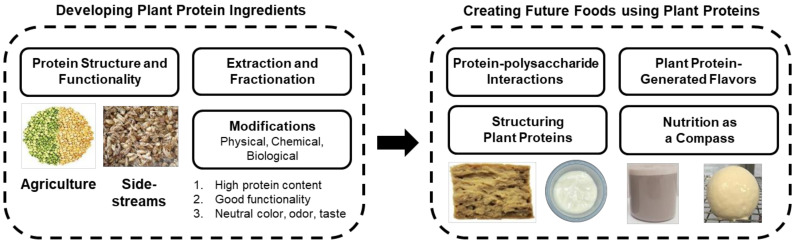
Protein calories consumed by people all over the world approximate 15–20% of their energy intake. This makes protein a major nutritional imperative. Today, we are facing an unprecedented challenge to produce and distribute adequate protein to feed over nine billion people by 2050, in an environmentally sustainable and affordable way. Plant-based proteins present a promising solution to our nutritional needs due to their long history of crop use and cultivation, lower cost of production, and easy access in many parts of the world. However, plant proteins have comparatively poor functionality, defined as poor solubility, foaming, emulsifying, and gelling properties, limiting their use in food products. Relative to animal proteins, including dairy products, plant protein technology is still in its infancy. To bridge this gap, advances in plant protein ingredient development and the knowledge to construct plant-based foods are sorely needed. This review focuses on some salient features in the science and technology of plant proteins, providing the current state of the art and highlighting new research directions. It focuses on how manipulating plant protein structures during protein extraction, fractionation, and modification can considerably enhance protein functionality. To create novel plant-based foods, important considerations such as protein–polysaccharide interactions, the inclusion of plant protein-generated flavors, and some novel techniques to structure plant proteins are discussed. Finally, the attention to nutrition as a compass to navigate the plant protein roadmap is also considered.
Overview
The claims and statistics of this paper haven’t been checked yet.
Free: it reads the open-access text and checks the first 5 claims that cite a source we can check. Create a free account to check every claim.
Integrity signals
Registry
Cites
Statistics
Figures
Verification
Claims the paper makes
The claims and statistics of this paper haven’t been checked yet.
Free: it reads the open-access text and checks the first 5 claims that cite a source we can check. Create a free account to check every claim.
Claims other papers make about this one
Each is checked against this paper’s own text: does it say what the citing paper says it does?
The source backs part of the claim, not all of it — or backs it for a different population, condition or comparison.
In the citing paper
“The review highlights that native pea protein structure dictates both its limitations and the engineering strategies needed to overcome them, progressing from isolation technologies through modification approaches to advanced food applications, with emphasis on structure-guided engineering approaches and biorefinery perspectives [2,6,8].”
From Pea Protein Isolates: From Extraction to Functionality. (2025) · cites this paper as [8]
Experimental — accuracy not yet measuredThe source backs part of the claim, not all of it — or backs it for a different population, condition or comparison.
In the citing paper
“Off-flavor attributes, notably characteristic pea-like bitterness, can detract from consumer acceptance and limit broader utilization in sensory-sensitive food products [2,8].”
From Pea Protein Isolates: From Extraction to Functionality. (2025) · cites this paper as [8]
Experimental — accuracy not yet measured
Self-check
Percentages, sums and reported differences re-computed from the paper’s own numbers.
The self-check needs the paper’s full text.
Citations
Cites
Items 201–267 of 267
Functional properties of mildly fractionated soy protein as influenced by the processing pH
Peng, Y., Kersten, N., Kyriakopoulou, K., & van der Goot, A. J. (2019) · Journal of Food Engineering · doi:10.1016/j.jfoodeng.2019.109875 · Cited by 65 · cited 1×
“Some other new ideas involve using fermentation to assist protein extraction [68] or redesigning the wet fractionation process to be milder [69].”
BackgroundOptimization and in vitro stability of legumin nanoparticles obtained by a coacervation method
Irache, J. M. (1995) · International Journal of Pharmaceutics · doi:10.1016/0378-5173(95)04103-6 · Cited by 64 · cited 1×
“The cysteine-rich legumin is, however, useful for nanoparticle development for drug delivery applications [82].”
BackgroundYang, Y., Cui, S. W., Gong, J., Miller, S. S., Wang, Q., & Hua, Y. (2015) · Food Research International · doi:10.1016/j.foodres.2015.01.006 · Cited by 64
Wee, M. S. M., Yusoff, R., Lin, L., & Xu, Y. Y. (2016) · Food Structure · doi:10.1016/j.foostr.2016.08.001 · Cited by 64
Mession, J.-L., Assifaoui, A., Lafarge, C., Saurel, R., & Cayot, P. (2012) · Food Hydrocolloids · doi:10.1016/j.foodhyd.2011.12.022 · Cited by 63 · cited 1×
“In addition to solubility, polysaccharides also improve the viscosity [178,179], foaming [174,180–182], emulsifying [183–191] and gelling [94,192–197] properties of plant proteins.”
BackgroundHow pea fractions with different protein composition and purity can substitute WPI in heat-set gels
Kornet, R., Penris, S., Venema, P., van der Goot, A. J., Meinders, M. B. J., & van der Linden, E. (2021) · Food Hydrocolloids · doi:10.1016/j.foodhyd.2021.106891 · Cited by 62 · cited 1×
“For example, it was discovered that pea albumins form stronger heat-set gels than pea globulins [80].”
BackgroundSuryawan, A., Orellana, R. A., Fiorotto, M. L., & Davis, T. A. (2010) · Journal of Animal Science · doi:10.2527/jas.2010-3400 · Cited by 61 · cited 1×
“, low content of leucine which increases protein synthesis while inhibiting protein breakdown [264].”
BackgroundPreparation of Bean Curds from Protein Fractions of Six Legumes
Cai, R., Klamczynska, B., & Baik, B. (2001) · Journal of Agricultural and Food Chemistry · doi:10.1021/jf0013398 · Cited by 61
Chen, L., Chen, J., Yu, L., Wu, K., & Zhao, M. (2017) · Food Hydrocolloids · doi:10.1016/j.foodhyd.2017.11.002 · Cited by 58 · cited 1×
“Peanut and pea protein isolates were also modified with extrusion as pre-treatment, followed by proteolysis using papain [110,111].”
MethodThermal processing methods differentially affect the protein quality of Chickpea (Cicer arietinum)
Nosworthy, M. G., Medina, G., Franczyk, A. J., Neufeld, J., Appah, P., Utioh, A., Frohlich, P., Tar'an, B., & House, J. D. (2020) · Food Science & Nutrition · doi:10.1002/fsn3.1597 · Cited by 57 · cited 1×
“reported that extruded chickpea flour had the highest amino acid scores, in vivo digestibility and protein digestibility-corrected amino acid score (PDCAAS) when compared to cooked and baked chickpea flour [107].”
BackgroundReduction of the allergenic protein in soybean meal by enzymatic hydrolysis
Wang, Z., Le-jing, L., Yuan, D., Zhao, X., Cui, S., Hu, J., & Wang, J. (2013) · Food and Agricultural Immunology · doi:10.1080/09540105.2013.782268 · Cited by 56 · cited 2×
“, α’, α and β-subunits of β-conglycinin) were greatly reduced upon hydrolysis using Alcalase® rather than Trypsin [160].”
Alfaro-Diaz, A., Urías-Silvas, J. E., Loarca-Piña, G., Gaytan-Martínez, M., Prado-Ramirez, R., & Mojica, L. (2021) · LWT · doi:10.1016/j.lwt.2020.110296 · Cited by 56 · cited 1×
“Dehulled black beans were processed through extrusion before being extracted and concentrated by ultrafiltration, followed by spray-drying [109].”
MethodGong, M., Mohan, A., Gibson, A., & Udenigwe, C. C. (2014) · Biotechnology Reports · doi:10.1016/j.btre.2014.12.003 · Cited by 56 · cited 1×
“Plastein was identified to be a vehicle for the debittering of protein hydrolysates in foods, but upscaling was faced with many challenges, mainly with yield and production costs [167].”
BackgroundNaderi, B., Keramat, J., Nasirpour, A., & Aminifar, M. (2020) · International Journal of Food Properties · doi:10.1080/10942912.2020.1825484 · Cited by 54
Li, Y., Zhang, Z., Ren, W., Wang, Y., Mintah, B. K., Dabbour, M., Hou, Y., He, R., Cheng, Y., & Ma, H. (2021) · Journal of Agricultural and Food Chemistry · doi:10.1021/acs.jafc.1c02422 · Cited by 54 · cited 1×
“Most importantly, ultrasound can inhibit the formation of lysinoalanine during pH shifting [149].”
BackgroundEmulsifying characteristics of commercial canola protein–hydrocolloid systems
Uruakpa, F. O., & Arntfield, S. D. (2005) · Food Research International · doi:10.1016/j.foodres.2005.01.004 · Cited by 53
Yin, B., Zhang, R., & Yao, P. (2015) · Molecules · doi:10.3390/molecules20035165 · Cited by 52
In-situ pH measurement of selected liquid foods under high pressure
Samaranayake, C. P., & Sastry, S. K. (2012) · Innovative Food Science & Emerging Technologies · doi:10.1016/j.ifset.2012.09.006 · Cited by 51 · cited 1×
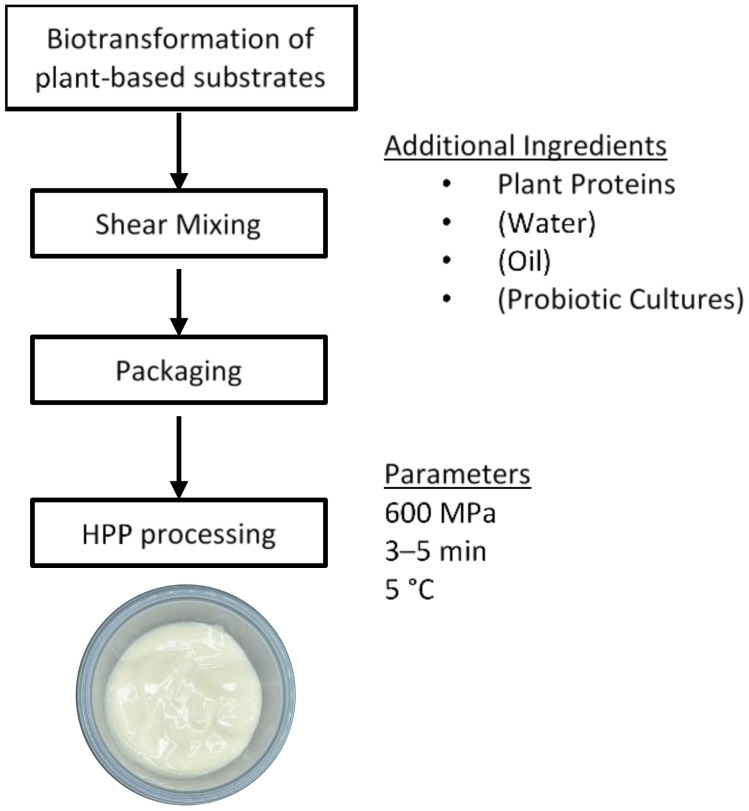
“For example, high-pressure processing was found to reduce the in situ pH values of liquid foods during processing [60].”
BackgroundKerler, J., Winkel, C., Davídek, T., & Blank, I. (2010) · Wiley eBooks · doi:10.1002/9781444317770.ch3 · Cited by 51 · cited 1×
“, cysteine) with reducing sugars, where pentoses such as ribose or xylose are preferably used [246].”
BackgroundCharacterization of Flaxseed Gum/Rice Bran Protein Complex Coacervates
Hasanvand, E., & Rafe, A. (2018) · Food Biophysics · doi:10.1007/s11483-018-9544-5 · Cited by 51
Schlegel, K., Sontheimer, K., Eisner, P., & Schweiggert‐Weisz, U. (2019) · Food Science & Nutrition · doi:10.1002/fsn3.1286 · Cited by 50 · cited 1×
“reported that lupin protein hydrolysates showed a significant increase in foaming activity, as compared to the native sample [156].”
BackgroundLotfy, S. N., Saad, R., El-Massrey, K. F., & Fadel, H. H. M. (2021) · LWT · doi:10.1016/j.lwt.2021.111328 · Cited by 49 · cited 1×
“There have been published reports using several plant proteins to generate meaty flavors such as pea protein [248], quinoa protein [249], flaxseed protein [250], soybean protein [251,252], etc.”
BackgroundFunctional properties of acetylated glutenin and gliadin at varying pH values
Majzoobi, M., Abedi, E., Farahnaky, A., & Aminlari, M. (2012) · Food Chemistry · doi:10.1016/j.foodchem.2012.01.117 · Cited by 48 · cited 1×
“Glutelins and prolamins have low water solubility at neutral pH [28].”
BackgroundEvaluation of pea protein–polysaccharide matrices for encapsulation of acid-sensitive bacteria
Varankovich, N. V., Khan, N. H., Nickerson, M. T., Kalmokoff, M. L., & Korber, D. R. (2015) · Food Research International · doi:10.1016/j.foodres.2015.01.028 · Cited by 47
Ducel, V., Saulnier, P., Richard, J., & Boury, F. (2004) · Colloids and Surfaces B Biointerfaces · doi:10.1016/j.colsurfb.2004.10.031 · Cited by 45 · cited 1×
“For example, globulins are spherical and highly charged compared to the more extended and charge-diffused gliadins; these differences can affect the interactions and phase separation with various polysaccharides [202].”
BackgroundChiang, J. H., Hardacre, A. K., & Parker, M. E. (2020) · Journal of Food Science · doi:10.1111/1750-3841.14960 · Cited by 44 · cited 1×
“, Maillard-reacted beef bone hydrolysate, MRP) with soy protein and wheat gluten to form extruded meat alternatives [226].”
BackgroundSelf-citationMuneer, F., Johansson, E., Hedenqvist, M. S., Plivelic, T. S., & Kuktaite, R. (2018) · International Journal of Molecular Sciences · doi:10.3390/ijms20010058 · Cited by 44 · cited 1×
“Changing the pH of wheat gluten to basic levels using NaOH resulted in changes in their molecular and secondary structure, as well as improved extensibility and tensile properties of the resultant films [143].”
BackgroundImprovements in the Flavour of Soy Cheese
Ahmad, N., Li, L. I., Yang, X., Zheng-xiang, N., & Randhawa, M. A. (2008) · DOAJ (DOAJ: Directory of Open Access Journals) · Cited by 43
The plastein reaction revisited: Evidence for a purely aggregation reaction mechanism
ANDREWS, A., & Alichanidis, E. (1990) · Food Chemistry · doi:10.1016/0308-8146(90)90015-v · Cited by 43
Albe-Slabi, S., Mathé, C., Basselin, M., Fournier, F., Aymes, A., Bianeis, M., Galet, O., & Kapel, R. (2019) · Food Hydrocolloids · doi:10.1016/j.foodhyd.2019.105335 · Cited by 42 · cited 1×
“Some authors even suggest to selectively extract the albumin fraction (under acidic conditions) to obtain a functional protein isolate while using the residual proteins for feed [70].”
BackgroundStevenson, D. E., Ofman, D. J., Morgan, K. R., & Stanley, R. A. (1998) · Enzyme and Microbial Technology · doi:10.1016/s0141-0229(97)00135-x · Cited by 40
Sim, S. Y. J., & Moraru, C. I. (2020) · Journal of Food Process Engineering · doi:10.1111/jfpe.13352 · Cited by 38 · cited 1×
“protein–starch mixtures led to a mixed protein–starch gel network [198,199], whereas highpressure processing resulted in starch granules remaining intact and ungelatinized, acting as a filler in the pressure-induced protein gel matrix [196].”
BackgroundSelf-citationBeaubier, S., Albe-Slabi, S., Aymes, A., Bianeis, M., Galet, O., & Kapel, R. (2021) · Foods · doi:10.3390/foods10030664 · Cited by 34 · cited 1×
“reported a higher emulsifying capacity of sunflower protein hydrolysates at 8% DH than 6% DH using Alcalase®; however, no significant difference was observed for the emulsifying stability, foaming capacity and stability [154].”
Cai, Y., Huang, L., Tao, X., Su, J., Chen, B., Zhou, F., Zhao, M., Zhao, Q., & der Meeren, P. V. (2020) · Food Hydrocolloids · doi:10.1016/j.foodhyd.2020.106529 · Cited by 33 · cited 1×
“In addition to solubility, polysaccharides also improve the viscosity [178,179], foaming [174,180–182], emulsifying [183–191] and gelling [94,192–197] properties of plant proteins.”
BackgroundZhao, J., & Xiong, Y. L. (2014) · LWT · doi:10.1016/j.lwt.2014.12.022 · Cited by 31 · cited 1×
“Zhao and Xiong reported that soy protein hydrolysate at 5% DH improved the emulsion oxidative stability, due to its strong radical scavenging activity [161].”
BackgroundCo, E. D., & Marangoni, A. G. (2018) · Elsevier eBooks · doi:10.1016/b978-0-12-814270-7.00001-0 · Cited by 31
Tan, S., Peh, E. W. Y., Lau, E., Marangoni, A. G., & Henry, C. J. (2017) · Journal of Nutrition · doi:10.3945/jn.116.246728 · Cited by 30
Self-citationCHAPTER 1. Food Protein Structures, Functionality and Product Development
Nwachukwu, I. D., & Aluko, R. E. (2021) · Food chemistry, function and analysis · doi:10.1039/9781839163425-00001 · Cited by 30
Molecular dynamics study of glucocorticoid receptor‐DNA binding
Bishop, T. C., & Schulten, K. J. (1996) · Proteins Structure Function and Bioinformatics · doi:10.1002/(sici)1097-0134(199601)24:1<115::aid-prot8>3.0.co;2-j · Cited by 29
Quek, R. Y. C., Peh, E. W. Y., & Henry, C. J. (2020) · Foods · doi:10.3390/foods9040455 · Cited by 28
Self-citationGonzález‐Coloma, A., Martín, L., Mainar, A. M., Urieta, J. S., Fraga, B. M., Rodríguez-Vallejo, V., & Diaz, C. E. (2012) · Phytochemistry Reviews · doi:10.1007/s11101-012-9267-z · Cited by 28 · cited 1×
“A potential example is supercritical antisolvent fractionation [72].”
BackgroundGelling Behavior of Plant Proteins and Polysaccharides in Food Systems
Uruakpa, F. O. (2012) · Journal of Food Science and Engineering · doi:10.17265/2159-5828/2012.05.001 · Cited by 27
Chung, D. D. L. (2016) · Elsevier eBooks · doi:10.1016/b978-0-12-804459-9.00006-3 · Cited by 27
Dong, D., & Hua, Y. (2017) · Food Hydrocolloids · doi:10.1016/j.foodhyd.2017.08.014 · Cited by 26
Dynamic High Pressure Effects on Biopolymers: Polysaccharides and Proteins
Porto, B. C., Tribst, A. A. L., & Cristianini, N. (2018) · Elsevier eBooks · doi:10.1016/b978-0-12-811449-0.00010-4 · Cited by 23 · cited 1×
“mentioned that the maximum pressure of HPH at which the smallest particles can be obtained depends on the type of protein and solvent used [98].”
BackgroundBusu, N. M., & Amonsou, E. O. (2018) · Food Hydrocolloids · doi:10.1016/j.foodhyd.2018.08.044 · Cited by 23
Udenigwe, C. C., Wu, S., Drummond, K., & Gong, M. (2013) · Journal of Agricultural and Food Chemistry · doi:10.1021/jf403405r · Cited by 22
Research on the effect of papain co-extrusion on pea protein and enzymolysis antioxidant peptides
Zhou, Q., Liu, N., & Feng, C. (2017) · Journal of Food Processing and Preservation · doi:10.1111/jfpp.13301 · Cited by 21 · cited 1×
“Peanut and pea protein isolates were also modified with extrusion as pre-treatment, followed by proteolysis using papain [110,111].”
MethodTan, S., Peh, E. W. Y., Siow, P. C., Marangoni, A. G., & Henry, C. J. (2017) · Food & Function · doi:10.1039/c7fo01194f · Cited by 20
Self-citationStone, A. K., Teymurova, A., Dang, Q., Abeysekara, S., Karalash, A., & Nickerson, M. T. (2014) · European Food Research and Technology · doi:10.1007/s00217-014-2159-2 · Cited by 19 · cited 1×
“, reducing solubility and foaming capacity due to the formation of insoluble electrostatic complexes [201]).”
BackgroundMicroparticles formed by heating potato protein—polysaccharide electrostatic complexes
Stounbjerg, L., Andreasen, B., & Ipsen, R. (2019) · Journal of Food Engineering · doi:10.1016/j.jfoodeng.2019.05.041 · Cited by 16 · cited 1×
“In addition to advancing basic knowledge, polysaccharides could help overcome some functional shortcomings of plant proteins, with the potential to replace animal proteins [171,172].”
BackgroundMeat Flavor Generation from Cysteine and Sugars
ROOS, K. B. D. (1992) · ACS symposium series · doi:10.1021/bk-1992-0490.ch016 · Cited by 16 · cited 1×
“The dicarbonyl compounds formed during the Maillard reaction catalyze the Strecker degradation of cysteine to generate mercaptoacetaldehyde, acetaldehyde and hydrogen sulfide as the primary degradation products [247].”
BackgroundFadel, H. H. M., Samad, A., Kobeasy, M. I., Mageed, M. A. A. E., & Lotfy, S. N. (2015) · International Journal of Food Processing Technology · doi:10.15379/2408-9826.2015.02.01.3 · Cited by 14 · cited 2×
“[251] reported the identification of 2-methyl-3-furanthiol, an odorant compound characterized with a meaty, sweet and sulfurous aroma in the MRPs [244].”
BackgroundProtein quality evaluation. Joint FAO/WHO.
(1991) · PubMed · Cited by 14
Contractile Mechanisms in Skeletal Muscle
Feher, J. (2012) · Elsevier eBooks · doi:10.1016/b978-0-12-382163-8.00028-1 · Cited by 13
Chickpea, mungbean, cowpea and peanuts as substitutes for soybean curds
Mohamed, S., Johan, Z., & Bakar, J. (1989) · International Journal of Food Science & Technology · doi:10.1111/j.1365-2621.1989.tb00658.x · Cited by 13
Dawa, Q., Hua, Y., Chamba, M. V. M., Masamba, K. G., & Zhang, C. (2013) · Journal of Food Research · doi:10.5539/jfr.v3n1p87 · Cited by 12
Sterilization in Biotechnology
Berovič, M. (2011) · Elsevier eBooks · doi:10.1016/b978-0-08-088504-9.00093-3 · Cited by 12
Arif, M., & Pauls, K. P. (2018) · Springer eBooks · doi:10.1007/978-1-4939-8616-3_8 · Cited by 10 · cited 1×
“Proteins are macromolecules comprising linear polymers of amino acid residues joined by peptide bonds which have various structural, functional and nutritional properties that are useful for the food industry in food formulations [11].”
BackgroundDePalma, K., Smith, B. M., & McDonald, A. G. (2021) · Food Science & Nutrition · doi:10.1002/fsn3.2091 · Cited by 10
Song, Y., Ruiqi, Q., Shaoming, Y., Jianghe, L., & Wang, R. (2018) · Grain & Oil Science and Technology · doi:10.3724/sp.j.1447.gost.2018.18017 · Cited by 10 · cited 1×
“Further studies demonstrate a positive impact of glycation on the foaming properties of gluten–fructose conjugates [134] and fava bean protein–maltodextrin conjugates [135].”
BackgroundGhauri, A., Ghauri, I., Elhissi, A. M. A., & Ahmed, W. (2020) · Elsevier eBooks · doi:10.1016/b978-0-12-819712-7.00014-0 · Cited by 10 · cited 1×
“send shock waves into the surrounding area [114,116].”
BackgroundTHE ENZYMATIC SYNTHESIS OF PROTEIN. II
Borsook, H., & Wasteneys, H. (1925) · Journal of Biological Chemistry · doi:10.1016/s0021-9258(18)85046-3 · Cited by 9
A Plastein with an Extremely High Amount of Glutamic Acid
Yamashita, M., Arai, S., Kokubo, S., Aso, K., & Fujimaki, M. (1974) · Agricultural and Biological Chemistry · doi:10.1080/00021369.1974.10861323 · Cited by 8
(2018) · Springer eBooks · doi:10.1007/978-1-4939-8616-3 · Cited by 7
The Role of Ethylcellulose Oleogel in Human Health and Its Potential Applications
Tan, S., Peh, E. W. Y., Siow, P. C., & Henry, C. J. (2018) · Elsevier eBooks · doi:10.1016/b978-0-12-814270-7.00017-4 · Cited by 5
Self-citationBergmann (2001) · doi:10.1002/1521-3803(20010601)45:3
Research works printed but not linked: 3
- Tornberg E. Andersson K. Andersson A. Josell A. The texture of comminuted meat products Food Aust. 2000 52 519 524
- Flory P.J. Principles of Polymer Chemistry Cornell University Press Ithaca, NY, USA 1953
- Rossen J.L. Miller R.C. Food extrusion Food Technol. 1973 27 46 53
Cited by
The Current Situation of Pea Protein and Its Application in the Food Industry
Shanthakumar, P., Klepacka, J., Bains, A., Chawla, P., Dhull, S. B., & Najda, A. (2022) · Molecules · doi:10.3390/molecules27165354 · Cited by 381
“This process is also used as a pre-treatment for other protein modification methods such as hydrolysis and glycation by making the amino acids folded in the inner layer of the proteins [94].”
MethodDeep Eutectic Solvent as Green Solvent in Extraction of Biological Macromolecules: A Review
Ling, J. K. U., & Hadinoto, K. (2022) · International Journal of Molecular Sciences · doi:10.3390/ijms23063381 · Cited by 337
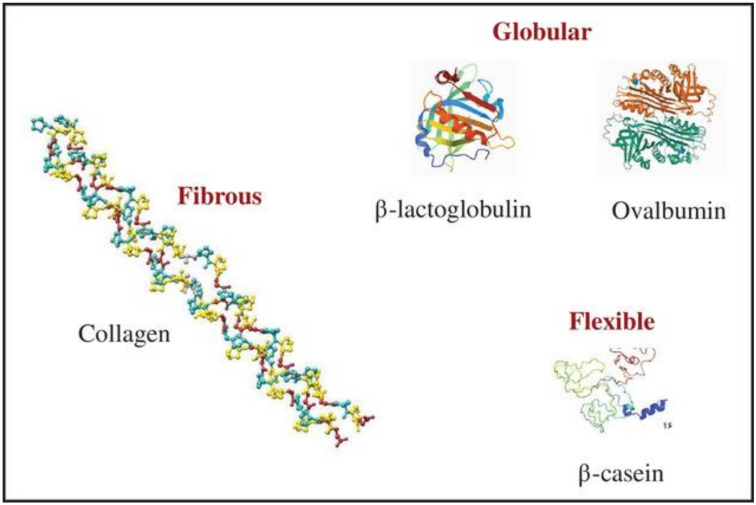
“Proteins can be classified as globular (albumin), fibrous (collagen and keratin), or flexible (casein), depending on their structure and sequence on the polymer chain [86].”
BackgroundFermentation of plant‐based dairy alternatives by lactic acid bacteria
Harper, A. R., Dobson, R. C. J., Morris, V. K., & Moggré, G. (2022) · Microbial Biotechnology · doi:10.1111/1751-7915.14008 · Cited by 240
“This is due to the disulphide bonds, hydrophobic effects, electrostatic forces, hydrogen bonding and van der Waals forces present (Sim et al., 2021).”
BackgroundInfluentialCurrent challenges of alternative proteins as future foods
Malila, Y., Owolabi, I. O., Chotanaphuti, T., Sakdibhornssup, N., Elliott, C. T., Visessanguan, W., Karoonuthaisiri, N., & Petchkongkaew, A. (2024) · npj Science of Food · doi:10.1038/s41538-024-00291-w · Cited by 210
“Most plant proteins are globular and stored as preserved nutrients in storage organs (e.g., seeds and tubes) 35 , hence why protein extraction is required (Fig.”
BackgroundHassoun, A., Cropotova, J., Trif, M., Alexandru Vasile, R. U. S. U., Bobiş, O., Nayik, G. A., Jagdale, Y. D., Saeed, F., Afzaal, M., Mostashari, P., et al. (2022) · Frontiers in Nutrition · doi:10.3389/fnut.2022.972154 · Cited by 175
Metadata
- Authors
- Sim, S. Y. J., SRV, A., Chiang, J. H., & Henry, C. J.
- Affiliations
- Agency for Science, Technology and Research (SG)
- Clinical Nutrition Research Centre (CNRC), Singapore Institute of Food and Biotechnology Innovation (SIFBI), Agency for Science, Technology and Research (A*STAR), Singapore 117599, Singapore
- Corresponding author
- Sim, Shaun Yong Jie
- Venue
- Foods
- Publisher
- MDPI AG
- Published
- 2021-08-23
- Volume
- 10
- Issue
- 8
- Pages
- 1967
- ISSN
- 2304-8158 (ISSN-L)
- PMC
- PMC8391319
- OpenAlex
- W3193926126
- Semantic Scholar
- 0bc64bbf0df91f9d920b8b8074c1734bc7bbbe63
- Cited by
- 352
- References
- 269
- Citations by year
- 2026: 57 · 2025: 100 · 2024: 92 · 2023: 60 · 2022: 40 · 2021: 3
- FWCI
- 4.43
- Type
- journal article
- Language
- en
- Open access
- gold
- doi.org
- Licence
- Locations
- Foods (publishedVersion, cc-by)
- PubMed Central (publishedVersion, cc-by)
- PubMed (publishedVersion)
- National University of Singapore (submittedVersion, cc-by)
- DOAJ (DOAJ: Directory of Open Access Journals) (submittedVersion, cc-by-sa)
- Funders
- Agency for Science, Technology and Research (W20W2D0006, H17/01/a0/A11)
- Topics
- Life Sciences › Agricultural and Biological Sciences › Food Science › Proteins in Food Systems
- Life Sciences › Agricultural and Biological Sciences › Food Science › Food Nutrient Composition and Product Development
- Life Sciences › Agricultural and Biological Sciences › Food Science › Protein Hydrolysis and Bioactive Peptides
- Keywords
- plant proteins, plant-based foods, protein functional properties, protein solubility, foaming and emulsifying properties, gelling properties, protein extraction, protein fractionation, protein modification, protein-polysaccharide interactions, global food security, sustainable food production
About these checks
Registry, retraction, Cites and statistics results are computed, not judged, with one exception: a printed reference that no index lists is read once by a model before it counts as a citation error. Claims are extracted by a model and kept only when their quote appears verbatim in the text; each cited source is then checked, with a model’s help, for whether it says what the claim relies on. Those verdicts can be wrong — read the claim’s quote and the cited source before relying on one.
Statistics and arithmetic are recomputed, not judged.
Confidence bands are shown only for fields calibrated on our annotated test set. None is calibrated yet, so no band is shown.
What counts as a claim ›How we measure confidence ›How we check this ›
Are you an author, or do you see a problem with this page? Request a review
Data sources
Bibliographic data: Semantic Scholar, OpenAlex, Crossref.
Contains information from the Semantic Scholar Academic Graph Datasets, made available under the ODC Attribution License (ODC-BY 1.0).
Semantic Scholar’s data is described in: Kinney, R., et al. (2023). The Semantic Scholar Open Data Platform. arXiv:2301.10140.
