

Challenges for Upcycled Foods: Definition, Inclusion in the Food Waste Management Hierarchy and Public Acceptability
Open accessThe DOI matches its Crossref record; 73 of the 76 references it cites were found in a registry or an index, and 1 are not checked yet; 32 of the 108 sources its claims cite were checked for support.
Abstract
Upcycled foods contain unmarketable ingredients (e.g., damaged food produce, by-products and scraps from food preparation) that otherwise would not be directed for human consumption. Upcycled food is a new food category and thus faces several challenges, such as definition development, inclusion in the food waste management hierarchy and public acceptability. This review provides an overview of these three challenges. The upcycled food definitions have been developed for research, food manufacturers, and multi-stakeholders use. Thus, there is a need for a consumer-friendly definition for the general public. A simplified definition is proposed to introduce these foods as environmentally friendly foods containing safe ingredients that otherwise would not have gone to human consumption such as damaged food produce, by-products and scraps from food preparation. Moreover, an updated version of the food waste management hierarchy has been proposed by including the production of upcycled foods as a separate waste management action that is less preferable than redistribution but more favourable than producing animal feed. Furthermore, consumer sociodemographic characteristics and beliefs, as well as food quality cues and attributes, were identified as crucial factors for the public acceptability of these foods. Future research should address these challenges to facilitate the introduction of upcycled foods.
Verified 2026-11-25 · 1 reference not checked yet
Overview
CoChat Summary
TL;DR
This narrative review examines three challenges for upcycled foods: defining them for consumers, positioning their production in the food waste management hierarchy, and understanding public acceptability. It proposes a simplified consumer-facing definition, places upcycled food production below redistribution and above animal feed, and identifies consumer and food-quality factors affecting acceptance.
Key findings
- Upcycled food definitions exist for research, manufacturers, and multi-stakeholders, but the authors argue a consumer-friendly definition is needed; they propose “environmentally friendly foods containing safe ingredients that otherwise would not have gone to human consumption such as damaged food produce, by-products and scraps from food preparation.”
- The review proposes adding upcycled food production as a separate food waste management action, less preferable than redistribution but more favourable than producing animal feed.
- Upcycled certification requirements are reported as: certified upcycled ingredients must contain at least 95% by weight diverted materials; certified upcycled food products must contain at least 10% upcycled ingredients by weight, with products below 10% certified as having minimal upcycled ingredient content.
- Public acceptability is linked to sociodemographic characteristics and beliefs, plus food quality cues and attributes; the paper notes inconsistent findings for sociodemographic factors and that most acceptability studies used hypothetical upcycled foods rather than actual products.
Methods
- Narrative literature review covering upcycled food definitions, food waste management hierarchies, and public acceptability factors.
- The review synthesizes prior definitions and hierarchies, including research, manufacturer, multi-stakeholder, and certification perspectives, and discusses consumer studies on upcycled or valorised foods.
- No systematic search strategy, database list, inclusion criteria, or formal meta-analysis is stated in the paper.
Limitations
- The paper states that most upcycled food acceptability studies were based on hypothetical products and focused on selected factors, limiting generalisability.
- The paper states that findings for sociodemographic factors are inconsistent across studies and should be interpreted with caution.
- The paper states that the healthfulness of upcycled foods has not been thoroughly investigated; the text also makes evident that no systematic review protocol is reported, so coverage and reproducibility are unclear.
Model-written summary. Check it against the paper before relying on it.
Integrity signals
Registry
Cites
Statistics
Figures
Verification
Claims the paper makes
24 Valid · 1 Not valid · 45 Not checked · 42 Own results and interpretations
The sources with a verdict support this claim; the rest weren’t checked yet, have no full text we could read, or their verdicts aren’t rated yet.
In the paper
“It is worth mentioning that upcycled foods were only produced in a few of the reviewed studies [8,9,56,57,58], and most public acceptability studies were based on hypothetical upcycled foods where people expressed their opinion based on the product descriptions and pictures.”
§ Challenges for Upcycled Foods: Definition, Inclusion in the Food Waste Management Hierarchy and Public Acceptability > 4. Public Acceptability of Upcycled Food
What the sources say
- Supportedcites [8] Grasso S. Omoarukhe E. Wen X. Papoutsis K. Methven L. The Use of Upcycled Defatted Sunflower Seed Flour as a Functional Ingredient in Biscuits Foods 2019 8 305 10.3390/foods8080305 31374886 PMC6722723 source
The citation follows the clause identifying studies that produced upcycled foods. The Materials and Methods (Section 2.7) describe panellists tasting actual biscuits, and the Conclusions (Section 4) describe biscuits made with upcycled defatted sunflower seed flour. This paper therefore supports its role as an example of a production study; the subsequent generalization about most acceptability studies is not attributed to this individual source. (LLM, conf=0.90)
- Supportedcites [9] Alongi M. Melchior S. Anese M. Reducing the glycemic index of short dough biscuits by using apple pomace as a functional ingredient LWT 2019 100 300 305 10.1016/j.lwt.2018.10.068 source
The citation is attached to the statement that this was among the reviewed studies that produced upcycled foods, not to the subsequent generalization about hypothetical products. Section 2.3, “Short dough biscuits preparation,” reports that the researchers prepared and baked biscuits containing 10% or 20% apple pomace. (LLM, conf=0.91)
- Could not verifycites [56] Hellwig C. Gmoser R. Lundin M. Taherzadeh M.J. Rousta K. Fungi Burger from Stale Bread? A Case Study on Perceptions of a Novel Protein-Rich Food Product Made from an Edible Fungus Foods 2020 9 1112 10.3390/foods9081112 PMC7466323 32823542 sourceExperimental — accuracy not yet measured
The paper discusses food-loss estimates and, in its discussion of food-waste recycling and byproduct use, mentions food products made from byproducts. Our copy does not discuss studies of public acceptance of upcycled foods, or whether participants judged hypothetical products from descriptions and pictures. Searches for those terms found no relevant passage. (LLM, conf=0.77)
- Not checked — no full text of the sourcecites [57] de Toledo N.M.V. Nunes L.P. da Silva P.P.M. Spoto M.H.F. Canniatti-Brazaca S.G. Influence of pineapple, apple and melon by-products on cookies: Physicochemical and sensory aspects Int. J. Food Sci. Technol. 2017 52 1185 1192 10.1111/ijfs.13383 source
- Not checked yetcites [58] Stelick A. Sogari G. Rodolfi M. Dando R. Paciulli M. Impact of sustainability and nutritional messaging on Italian consumers’ purchase intent of cereal bars made with brewery spent grains J. Food Sci. 2021 86 531 539 10.1111/1750-3841.15601 33462803 source
plain- Asserted: passes — The authors put it forward as true.
- Checkable: passes — It can be checked against evidence.
- Load-bearing: unclear — It is unclear whether the paper’s conclusions depend on it.
- Based: passes — The paper gives a reason why it holds.
- Supported
The sources with a verdict support this claim; the rest weren’t checked yet, have no full text we could read, or their verdicts aren’t rated yet.
In the paper
“These studies revealed that the sensory characteristics of upcycled foods are conditional and depend on the product formulation and the proportion of upcycled ingredients [8,9,56,57].”
§ Challenges for Upcycled Foods: Definition, Inclusion in the Food Waste Management Hierarchy and Public Acceptability > 4. Public Acceptability of Upcycled Food > 4.2. Upcycled Food Quality Cues and Attributes
What the sources say
- Supportedcites [8] Grasso S. Omoarukhe E. Wen X. Papoutsis K. Methven L. The Use of Upcycled Defatted Sunflower Seed Flour as a Functional Ingredient in Biscuits Foods 2019 8 305 10.3390/foods8080305 31374886 PMC6722723 source
The Results and Discussion (§3.4; page not supplied) report that sensory changes in biscuits were more noticeable at 36% upcycled flour than at 18%. The Conclusions (§4) also propose testing other inclusion levels and reformulating with additional ingredients to optimize the recipe, supporting the claim that sensory characteristics depend on proportion and formulation. (LLM, conf=0.88)
- Supportedcites [9] Alongi M. Melchior S. Anese M. Reducing the glycemic index of short dough biscuits by using apple pomace as a functional ingredient LWT 2019 100 300 305 10.1016/j.lwt.2018.10.068 source
In Results and discussion (§3, p. 179), the paper compares biscuits made with 10% and 20% apple pomace. It reports that some sensory descriptors were unchanged, while fruit flavor was more intense at 20% but not 10%, supporting the claim that sensory effects depend on formulation and ingredient proportion. (LLM, conf=0.88)
- Could not verifycites [56] Hellwig C. Gmoser R. Lundin M. Taherzadeh M.J. Rousta K. Fungi Burger from Stale Bread? A Case Study on Perceptions of a Novel Protein-Rich Food Product Made from an Edible Fungus Foods 2020 9 1112 10.3390/foods9081112 PMC7466323 32823542 sourceExperimental — accuracy not yet measured
The “Food Waste Recycling and Byproduct Use” passage discusses making other products from food byproducts, but not their sensory characteristics. Searches for sensory qualities, formulation, and ingredient proportions found no passage addressing the claim. (LLM, conf=0.75)
- Not checked — no full text of the sourcecites [57] de Toledo N.M.V. Nunes L.P. da Silva P.P.M. Spoto M.H.F. Canniatti-Brazaca S.G. Influence of pineapple, apple and melon by-products on cookies: Physicochemical and sensory aspects Int. J. Food Sci. Technol. 2017 52 1185 1192 10.1111/ijfs.13383 source
plainstates a possible cause- Asserted: passes — The authors put it forward as true.
- Checkable: passes — It can be checked against evidence.
- Load-bearing: passes — The paper’s conclusions depend on it.
- Based: passes — The paper gives a reason why it holds.
- Supported
The cited sources support only part of this claim — read each source’s verdict below.
In the paper
“However, the presence of quality attributes such as nutritional value, healthfulness, and environmental benefits can increase the acceptability of these foods [82,85].”
§ Challenges for Upcycled Foods: Definition, Inclusion in the Food Waste Management Hierarchy and Public Acceptability > 4. Public Acceptability of Upcycled Food > 4.2. Upcycled Food Quality Cues and Attributes
What the sources say
- Partly supportedcites [82] Asioli D. Grasso S. Do consumers value food products containing upcycled ingredients? The effect of nutritional and environmental information Food Qual. Prefer. 2021 91 104194 10.1016/j.foodqual.2021.104194 sourceExperimental — accuracy not yet measured
The Discussion and Conclusions (p. 11) says that communicating nutritional or environmental benefits can increase consumers’ acceptance of upcycled foods, based on willingness to pay for hypothetical upcycled biscuits. The paper does not separately establish that healthfulness increases acceptance. (LLM, conf=0.83)
- Not checked — no full text of the sourcecites [85] Coderoni S. Perito M.A. Approaches for reducing wastes in the agricultural sector. An analysis of Millennials’ willingness to buy food with upcycled ingredients Waste Manag. 2021 126 283 290 10.1016/j.wasman.2021.03.018 33784572 source
plainstates a possible cause- Asserted: passes — The authors put it forward as true.
- Checkable: passes — It can be checked against evidence.
- Load-bearing: passes — The paper’s conclusions depend on it.
- Based: passes — The paper gives a reason why it holds.
- Partly supported
The cited sources that could be checked couldn’t confirm or dispute this claim.
In the paper
“Consumer attention to the food labels, certification, list of ingredients and country of origin affects upcycled food acceptance [60,75].”
§ Challenges for Upcycled Foods: Definition, Inclusion in the Food Waste Management Hierarchy and Public Acceptability > 4. Public Acceptability of Upcycled Food > 4.2. Upcycled Food Quality Cues and Attributes
What the sources say
- Not checked — no full text of the sourcecites [60] Coderoni S. Perito M.A. Sustainable consumption in the circular economy. An analysis of consumers’ purchase intentions for waste-to-value food J. Clean. Prod. 2020 252 119870 10.1016/j.jclepro.2019.119870 source
- Could not verifycites [75] Goodman-Smith F. Bhatt S. Moore R. Mirosa M. Ye H. Deutsch J. Suri R. Retail Potential for Upcycled Foods: Evidence from New Zealand Sustainability 2021 13 2624 10.3390/su13052624 sourceExperimental — accuracy not yet measured
Section 3 (Discussion) mentions packaging and labelling as part of a student product-development assignment, but does not examine whether consumers attend to labels. Section 1.3 discusses sensory qualities and food acceptance; our copy does not address whether labels, certification, ingredient lists, or country of origin affect acceptance of upcycled food (searched: those terms and consumer acceptability). (LLM, conf=0.76)
plainstates a cause- Asserted: passes — The authors put it forward as true.
- Checkable: passes — It can be checked against evidence.
- Load-bearing: passes — The paper’s conclusions depend on it.
- Based: passes — The paper gives a reason why it holds.
The cited sources support only part of this claim — read each source’s verdict below.
In the paper
“Consumers prefer upcycled foods over conventional products when communication emphasizes high protein content (nutritional benefit) and a low carbon footprint (environmental benefit) [82].”
§ Challenges for Upcycled Foods: Definition, Inclusion in the Food Waste Management Hierarchy and Public Acceptability > 4. Public Acceptability of Upcycled Food > 4.2. Upcycled Food Quality Cues and Attributes
What the sources say
- Partly supportedcites [82] Asioli D. Grasso S. Do consumers value food products containing upcycled ingredients? The effect of nutritional and environmental information Food Qual. Prefer. 2021 91 104194 10.1016/j.foodqual.2021.104194 sourceExperimental — accuracy not yet measured
Section 3.1 (p. 7) reports that upcycled sunflower flour was preferred over conventional wheat flour when nutritional and/or environmental information was provided. The study tested messages about higher protein content and a lower carbon footprint (p. 5), but its finding concerns UK consumers’ preferences for hypothetical biscuits, not upcycled foods generally. (LLM, conf=0.86)
plainstates a cause- Asserted: passes — The authors put it forward as true.
- Checkable: passes — It can be checked against evidence.
- Load-bearing: unclear — It is unclear whether the paper’s conclusions depend on it.
- Based: passes — The paper gives a reason why it holds.
- Partly supported
48 more claims · 10 with their cited sources checked
Create a free account to see all 112 claims and to verify the 20 references still open.
- It may state two separate claims as one. 28
- Probably not a substantial claim. 40
Citations
Cites
The theory of planned behavior
Ajzen, I. (1991) · Organizational Behavior and Human Decision Processes · doi:10.1016/0749-5978(91)90020-t · Cited by 134,657
A domain‐specific risk‐attitude scale: measuring risk perceptions and risk behaviors
Weber, E. U., Blais, A., & Betz, N. E. (2002) · Journal of Behavioral Decision Making · doi:10.1002/bdm.414 · Cited by 2,936
The food waste hierarchy as a framework for the management of food surplus and food waste
Papargyropoulou, E., Lozano, R., K. Steinberger, J., Wright, N., & Ujang, Z. B. (2014) · Journal of Cleaner Production · doi:10.1016/j.jclepro.2014.04.020 · Cited by 1,711 · cited 6×
“The food surplus is suitable for human consumption, and when it becomes inedible, it turns into waste [36].”
BackgroundInfluentialLife Cycle Assessment: Theory and Practice
(2018) · doi:10.1007/978-3-319-56475-3 · Cited by 1,073
The Health Benefits of Dietary Fibre
Barber, T. M., Kabisch, S., Pfeiffer, A. F. H., & Weickert, M. O. (2020) · Nutrients · doi:10.3390/nu12103209 · Cited by 892 · cited 1×
“Dietary fibre is associated with cardiovascular and gastrointestinal health [87].”
BackgroundGlycemic index: overview of implications in health and disease,,,
Jenkins, D. J., Kendall, C. W., Augustin, L. S., Franceschi, S., Hamidi, M., Marchie, A., Jenkins, A. L., & Axelsen, M. (2002) · The American Journal of Clinical Nutrition · doi:10.1093/ajcn/76.1.266s · Cited by 827
Quantification of Consumer Attitudes to Health and Hedonic Characteristics of Foods
ROININEN, K., LÄHTEENMÄKI, L., & TUORILA, H. (1999) · Appetite · doi:10.1006/appe.1999.0232 · Cited by 790 · cited 1×
“Taste is one of the major predictors of consumer attitudes towards a food [84].”
BackgroundRauber, F., Da Costa Louzada, M. L., Steele, E., Millett, C., Monteiro, C. A., & Levy, R. B. (2018) · Nutrients · doi:10.3390/nu10050587 · Cited by 628 · cited 1×
“It is worth mentioning that some processed foods, in particular highly processed foods, are high in fat, sugar and salt and are thus considered unhealthy [98].”
BackgroundGender differences in health information behaviour: a Finnish population-based survey
Ek, S. (2015) · Health Promotion International · doi:10.1093/heapro/dat063 · Cited by 559
Estimating and Addressing America's Food Losses
Kantor, L. S., Lipton, K., Manchester, A., Oliveira, V., Kantor, L. S., Lipton, K., Manchester, A., & Oliveira, V. (1997) · Unknown · doi:10.22004/ag.econ.234453 · Cited by 491
Research works printed but not linked: 2
- Sung K. A Review on Upcycling: Current Body of Literature, Knowledge Gaps and a Way Forward World Academy of Science, Engineering and Technology Venice, Italy 2015
- Oladepo O.W. Ilori M.O. Taiwo K.A. Assessment of the waste generation and management practices in Nigerian food industry: Towards a policy for sustainable approaches Am. J. Sci. Ind. Res. 2014 6 12 22
Cited by
Nyhan, L., Sahin, A. W., Schmitz, H. H., Siegel, J. B., & Arendt, E. K. (2023) · Journal of Agricultural and Food Chemistry · doi:10.1021/acs.jafc.3c02489 · Cited by 153
Consumer attitudes to upcycled foods in US and China
Grasso, S., Fu, R., Goodman-Smith, F., Lalor, F., & Crofton, E. C. (2023) · Journal of Cleaner Production · doi:10.1016/j.jclepro.2023.135919 · Cited by 107
The high-value and sustainable utilization of grape pomace: A review
Wang, C., You, Y., Huang, W., & Zhan, J. (2024) · Food Chemistry: X · doi:10.1016/j.fochx.2024.101845 · Cited by 85
“’ Considering its popularity, it is also referred to as ‘value-added surplus products ’ or ‘waste-to-value foods ’ (Moshtaghian et al., 2021).”
BackgroundLigarda-Samanez, C. A., Huamán-Carrión, M. L., Ponce, W. C. C., la Cruz, G. D., Huamaní, D. F. C., Moscoso, D. J. C., García-Espinoza, A. J., León, R. S., Durán, Y. A., Muñoz-Saenz, J. C., et al. (2025) · Foods · doi:10.3390/foods14111950 · Cited by 110
“In this context, several substances must hold the Generally Recognized as Safe (GRAS) status in the United States or equivalent approvals in other jurisdictions, ensuring their safe incorporation into functional food systems [7,28,40].”
InfluentialA scoping review of the literature examining consumer acceptance of upcycled foods
Lu, P., Parrella, J. A., Xu, Z., & Kogut, A. (2024) · Food Quality and Preference · doi:10.1016/j.foodqual.2023.105098 · Cited by 99
Upcycling of food waste and food loss-A sustainable approach in the food sector
Rakesh, B., & Mahendran, R. (2024) · Trends in Food Science & Technology · doi:10.1016/j.tifs.2023.104274 · Cited by 69
Upcycled foods: A nudge toward nutrition
Thorsen, M., Skeaff, S. A., Goodman-Smith, F., Thong, B., Bremer, P. J., & Mirosa, M. (2022) · Frontiers in Nutrition · doi:10.3389/fnut.2022.1071829 · Cited by 88
“Redirecting edible, unmarketable produce for human consumption has the lowest environmental impact (29).”
BackgroundBekavac, N., Krog, K., Stanić, A., Šamec, D., Šalić, A., Benković, M., Jurina, T., Kljusurić, J. G., Valinger, D., & Tušek, A. J. (2025) · Antioxidants · doi:10.3390/antiox14060714 · Cited by 87
“…processing of fruits, vegetables, grains, and other agricultural raw materials, such as peels, skins, seeds, stems, and leaves, is usually considered inedible [244], but the nutritional value of these by-products demonstrate that industry has an opportunity to rethink the use of food waste [245].”
From Waste to Plate: Exploring the Impact of Food Waste Valorisation on Achieving Zero Hunger
Tchonkouang, R. D., Onyeaka, H. N., & Miri, T. (2023) · Sustainability · doi:10.3390/su151310571 · Cited by 81
Circularity of food systems: a review and research agenda
Bernardi, P. D., Bertello, A., & Forliano, C. (2022) · British Food Journal · doi:10.1108/bfj-05-2021-0576 · Cited by 66
Shawky, E. M., Gibbons, S., & Selim, D. A. (2025) · Bioresource Technology · doi:10.1016/j.biortech.2025.132640 · Cited by 59
Cela, N., Giorgione, V., Fassio, F., & Torri, L. (2023) · Food Research International · doi:10.1016/j.foodres.2023.113765 · Cited by 56
Upcycled food: How does it support the three pillars of sustainability?
Thorsen, M., Mirosa, M., Skeaff, S. A., Goodman-Smith, F., & Bremer, P. J. (2023) · Trends in Food Science & Technology · doi:10.1016/j.tifs.2023.104269 · Cited by 64
Protein recovery from brewery solid wastes
Rodríguez, L. M., Camina, J. L., Borroni, V., & Pérez, E. E. (2022) · Food Chemistry · doi:10.1016/j.foodchem.2022.134810 · Cited by 49
Moshtaghian, H., Bolton, K., & Rousta, K. (2023) · British Food Journal · doi:10.1108/bfj-09-2022-0757 · Cited by 59
Self-citationAddressing the safety of new food sources and production systems
Tan, Y. Q., Ong, H. C., Yong, A. M. H., Fattori, V., & Mukherjee, K. (2024) · Comprehensive Reviews in Food Science and Food Safety · doi:10.1111/1541-4337.13341 · Cited by 62
“Due to the diversity and recent adoption of food processing side streams, there are data gaps in how their utilization as nutrient substrates impacts the safety of the microbial protein products (Moshtaghian et al., 2021).”
Patel, A., Desai, S. S., Mariam, I., Enman, J., Rova, U., Christakopoulos, P., & Μάτσακας, Λ. (2024) · Chemical Engineering Journal · doi:10.1016/j.cej.2024.152990 · Cited by 40
From plate to palate: Sustainable solutions for upcycling food waste in restaurants and catering
Kanwal, N., Zhang, M., Zeb, M., Batool, U., Khan, I. R., & Rui, L. (2024) · Trends in Food Science & Technology · doi:10.1016/j.tifs.2024.104687 · Cited by 49
Upcycling fruit waste into microalgae biotechnology: Perspective views and way forward
Lee, A., Lan, J. C., Jambrak, A. R., Chang, J., Lim, J. W., & Khoo, K. S. (2024) · Food Chemistry Molecular Sciences · doi:10.1016/j.fochms.2024.100203 · Cited by 65
“…traceability concerns associated with the manufacturing and sale of upcycled food products, and the adoption of upcycled food products is often limited by consumer acceptance since upcycled foods contain ingredients that would not otherwise be used for human consumption (Moshtaghian et al., 2021).”
BackgroundSwaraj, A. N., Moses, J. A., & Manickam, L. (2025) · Sustainable Food Technology · doi:10.1039/d4fb00254g · Cited by 43
Innovative Approaches to Recycling, Upcycling, and Downcycling for Sustainable Waste Management
Ogwu, M. C., & Kosoe, E. A. (2025) · CleanMat. · doi:10.1002/clem.70013 · Cited by 57
“By integrating upcycling into broader waste management strategies and sustainability goals, policy can significantly influence public perception and foster a committed cultural shift toward waste reduction practices that benefit both individuals and the environment [74, 79].”
From food waste to functional component: Cashew apple pomace
van Walraven, N., & Stark, A. H. (2023) · Critical Reviews in Food Science and Nutrition · doi:10.1080/10408398.2023.2180616 · Cited by 33
“Thirty percent of this happens at the production stage, with fruit and vegetables having the highest losses (Moshtaghian, Bolton, and Rousta 2021).”
Valerón, N. R., Mak, T., Jahn, L. J., Arboleya, J. C., & Sörensen, P. M. (2023) · Foods · doi:10.3390/foods12234297 · Cited by 32
“These flavours can be further accentuated in plant-based upcycled products [55], preventing wider acceptance and changes in dietary habits towards more planetary friendly food options [8].”
BackgroundKader, S., Spalevıć, V., & Dudić, B. (2022) · Environment Development and Sustainability · doi:10.1007/s10668-022-02837-y · Cited by 35
“Most global countries are encountering increasing environmental concerns regarding food waste management (Demetriou, 2022; Moshtaghian et al., 2021; Raab, Tolotti, & Wagner, 2021; Xiao & Siu, 2018).”
Sharma, C., & Deutsch, J. M. (2023) · Current Opinion in Biotechnology · doi:10.1016/j.copbio.2023.102920 · Cited by 26
Looveren, N. V., Verbaet, L., Frooninckx, L., Miert, S. V., Campenhout, L. V., Borght, M. V. D., & Vandeweyer, D. (2023) · Waste Management · doi:10.1016/j.wasman.2023.04.018 · Cited by 39
Kristia, K., Kovács, S., & Erdey, L. (2023) · Cleaner and Responsible Consumption · doi:10.1016/j.clrc.2023.100152 · Cited by 52
An Upcycling Approach from Fruit Processing By-Products: Flour for Use in Food Products
Benvenutti, L., Moura, F. M., Zanghelini, G., Barrera, C., Seguí, L., & Zielinski, A. A. F. (2025) · Foods · doi:10.3390/foods14020153 · Cited by 34
“One way to improve the sustainability of food production chains is upcycling, which is the combination of the terms “up” and “recycling” [7].”
Scheibenzuber, S., Pucci, E., Presenti, O., Serafini, G., Nobili, C., Zoani, C., Duță, D. E., Mihai, A. L., Criveanu-Stamatie, G. D., Belc, N., et al. (2025) · Frontiers in Nutrition · doi:10.3389/fnut.2025.1509833 · Cited by 35
The green revolution of food waste upcycling to produce polyhydroxyalkanoates
Bhatia, S. K., Patel, A. K., & Yang, Y. (2024) · Trends in biotechnology · doi:10.1016/j.tibtech.2024.03.002 · Cited by 30
Sustainable Isolation of Bioactive Compounds and Proteins from Plant-Based Food (and Byproducts)
Khan, Z. S., Amir, S., Cvetnić, T. S., Tušek, A. J., Benković, M., Jurina, T., Valinger, D., & Kljusurić, J. G. (2023) · Plants · doi:10.3390/plants12162904 · Cited by 31
“Consumers are increasingly becoming responsible segments in preserving the environment and are turning to food and products that have a smaller CO2 footprint [7], which includes a greater representation of foods of plant origin from regional cultivation, but also those produced with the use of reused components, or up…”
BackgroundMoshtaghian, H., Bolton, K., & Rousta, K. (2023) · International Journal of Food Science & Technology · doi:10.1111/ijfs.16588 · Cited by 36
Self-citationConsumer Behaviour Regarding Food Waste in Romania, Rural versus Urban
Chereji, A.-I., Chiurciu, I.-A., Popa, A. R., Chereji, I., & Iorga, A. M. (2023) · Agronomy · doi:10.3390/agronomy13020571 · Cited by 36
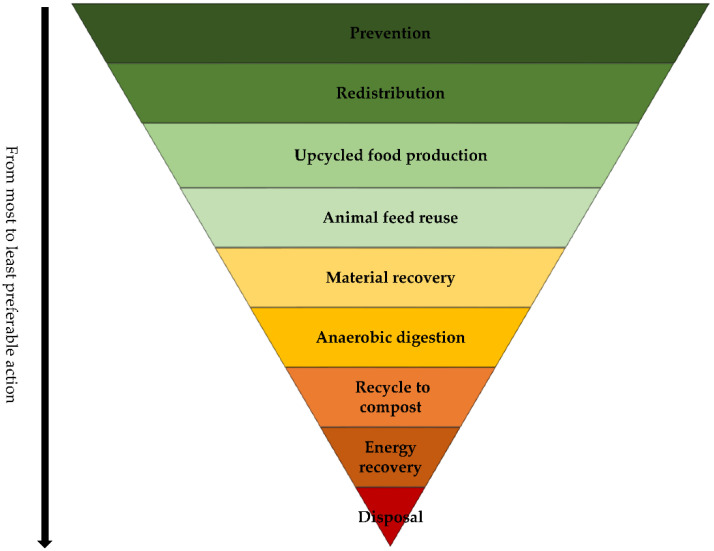
“Depending on the most preferable solutions when it comes to the protection and sustainability of the environment, the pyramid shown in Figure 3 exemplifies the activities that can be undertaken regarding how to treat food that has arrived and is included in the area of food waste [32,33].”
InfluentialTsai, W., & Tsai, C. (2024) · Trends in Food Science & Technology · doi:10.1016/j.tifs.2024.104424 · Cited by 22
Upcycling technologies for food waste management: safety, limitations, and current trends
Isaac-Bamgboye, F. J., Onyeaka, H., Isaac-Bamgboye, I. T., Chukwugozie, D. C., & Afolayan, M. (2025) · Green Chemistry Letters and Reviews · doi:10.1080/17518253.2025.2533894 · Cited by 86
“However, despite the several benefits of food waste upcycling in reducing food waste and limiting the environmental impact of inadequate waste disposal, it has continued to face many challenges (24).”
InfluentialPhytochemicals in plant food waste: Innovative insight and implications
Usman, I., Sana, S., Afzaal, M., Imran, A., Jaffar, H. M., Sukhera, S., Munir, M., Asghar, A., & Urugo, M. M. (2025) · Journal of Agriculture and Food Research · doi:10.1016/j.jafr.2025.101779 · Cited by 30
Novel Perspective of Medicinal Mushroom Cultivations: A Review Case for ‘Magic’ Mushrooms
Sommano, S. R., Suksathan, R., Sombat, T., Seehanam, P., Sirilun, S., Ruksiriwanich, W., Wangtueai, S., & Leksawasdi, N. (2022) · Agronomy · doi:10.3390/agronomy12123185 · Cited by 20
Retailing Strategies of Imperfect Produce and the Battle Against Food Waste
Kazaz, B., Xu, F., & Yu, H. (2025) · Manufacturing & Service Operations Management · doi:10.1287/msom.2023.0167 · Cited by 24
From Brew to Table: Unleashing the potential of spent grains protein
Ahuja, V., Chauhan, S., Yang, Y., Bhatia, S. K., & Kumar, V. (2024) · Journal of Cereal Science · doi:10.1016/j.jcs.2024.103896 · Cited by 18
“In 2020, Upcycled Food Association defined upcycled food as “ materials that otherwise would not have gone to human consumption, are procured and produced using verifiable supply chains, and have a positive impact on the environment ” (Moshtaghian et al., 2021, 2024).”
Jain, S., & Gualandris, J. (2023) · Journal of Industrial Ecology · doi:10.1111/jiec.13373 · Cited by 22
“Finally, food recovery hierarchies prioritize upcycling over animal feeding, anaerobic digestion, composting, and landfilling (European Commission, 2020; Moshtaghian et al., 2021).”
BackgroundChiaraluce, G., Bentivoglio, D., Conte, A. D., Lucas, M. R., & Finco, A. (2024) · Cleaner and Responsible Consumption · doi:10.1016/j.clrc.2024.100198 · Cited by 19
Zaman, Q. U., Rossetto, L., & Cei, L. (2026) · Foods · doi:10.3390/foods15020364 · Cited by 24
Ye, H. (2023) · Journal of Sustainable Marketing · doi:10.51300/jsm-2023-104 · Cited by 27
Ma, S., Zheng, X. J., Lu, P., & Xu, Z. (2024) · Future Foods · doi:10.1016/j.fufo.2024.100483 · Cited by 22
Application of Oyster Mushroom Cultivation Residue as an Upcycled Ingredient for Developing Bread
Moshtaghian, H., Parchami, M., Rousta, K., & Lennartsson, P. R. (2022) · Applied Sciences · doi:10.3390/app122111067 · Cited by 20
Self-citationKrzywonos, M., Difonzo, G., & Pasqualone, A. (2025) · Future Foods · doi:10.1016/j.fufo.2025.100547 · Cited by 21
Jeon, J., Shin, H., Jeong, E., & Zhang, X. (2024) · Journal of Retailing and Consumer Services · doi:10.1016/j.jretconser.2024.103901 · Cited by 18
Fostering sustainable food consumption: a theoretical framework for upcycled foods
Zhang, X., Chao, C., & Chen, H. (2025) · Frontiers in Psychology · doi:10.3389/fpsyg.2025.1682850 · Cited by 13
What does it take to close the loop? Lessons from a successful citrus waste valorisation business
Rao, M., Bilić, L., Bast, A., & de Boer, A. (2024) · British Food Journal · doi:10.1108/bfj-08-2023-0700 · Cited by 18
“These include improving food security, transporting the surplus or by-products over shorter distances, and often, contributing to the production of healthier and low environmental impact food products (Moshtaghian et al. , 2021; Zhang et al. , 2021).”
BackgroundSilva, S. P., Ferreira‐Santos, P., Lopes, G. R., Reis, S. F., González, A., Nobre, C., de Freitas, V. A. P., Coimbra, M. A., & Coelho, E. (2024) · Carbohydrate Polymer Technologies and Applications · doi:10.1016/j.carpta.2024.100508 · Cited by 11
Current Perceptions of Sustainable Diets in Ireland and the Outlook of Circular Eating Practices
Fox, S., Noci, F., Kenny, O., & Dermiki, M. (2023) · Foods · doi:10.3390/foods12214003 · Cited by 13
Htoo, N. Y. M., Pumas, C., Srinuanpan, S., Kee, P. E., Lan, J. C., Lim, J. W., Upadhyay, S. K., & Khoo, K. S. (2024) · BioEnergy Research · doi:10.1007/s12155-024-10777-w · Cited by 11
“Ultimately, the acceptability of upcycled foods in terms of quality, taste, and other attributes may vary based on the raw materials used in their production [109].”
Hellwig, C., Bolton, K., Häggblom‐Kronlöf, G., & Rousta, K. (2022) · Sustainability · doi:10.3390/su15010317 · Cited by 8
Self-citationUpcycling of seafood side streams for circularity
Rajan, A., Tiwari, B. K., & Radhakrishnan, M. (2024) · Advances in food and nutrition research · doi:10.1016/bs.afnr.2023.11.002 · Cited by 12
Sayın, B., & Kaban, G. (2024) · Foods · doi:10.3390/foods13142245 · Cited by 13
“Food waste management hierarchies from most preferable action to least preferable action due top to bo tt om [19]. bottom [19].”
BackgroundKim, J. Y., Hwang, I. G., Kim, M. J., Choe, J., Im, P., Kim, M. K., & Choi, A. (2024) · Journal of the Korean Society of Food Science and Nutrition · doi:10.3746/jkfn.2024.53.7.734 · Cited by 8
A Comprehensive Review of Fish Protein Hydrolysates Targeting Pet Food Formulations
Ribeiro, T. B., Maia, M. R. G., Fonseca, A. J. M., Marques, B., Caleja, C., Rosa, A., Martins, R., de Almeida, A. M., Mota, M. J., Aires, T., et al. (2024) · Food Reviews International · doi:10.1080/87559129.2024.2430660 · Cited by 15
“[164,165] “Upcycled ingredients” have been gaining popularity among pet food and treat brand manufacturers.”
Deepak, C. N., & Behura, A. K. (2025) · Thermal Science and Engineering Progress · doi:10.1016/j.tsep.2025.103707 · Cited by 17
Zheng, D., Wei, B., Waris, I., & Bhutto, M. Y. (2025) · British Food Journal · doi:10.1108/bfj-04-2025-0436 · Cited by 11
Exploring the 5Rs Holistic Model for Zero Food Waste in Saudi Arabian Food Service Outlets
Sobaih, A. E. E., & Elnasr, A. E. A. (2023) · Recycling · doi:10.3390/recycling8060091 · Cited by 9
“It has a set of steps or levels to guide actions and decisions aimed at minimizing and mitigating the environmental, economic, and social impacts of food waste [28].”
BackgroundUpcycling: a systematic review and research agenda
Wijekoon, A., Ranaweera, A., & Martin, B. A. S. (2025) · Journal of Management History · doi:10.1108/jmh-08-2024-0123 · Cited by 12
Velásquez-Jiménez, D., Luzardo‐Ocampo, I., Gaytán‐Martínez, M., & Campos-Vega, R. (2023) · Food Bioscience · doi:10.1016/j.fbio.2023.103199 · Cited by 9
A Perspective of Upcycled Food by Norwegian Consumers: The Meaning Without the Word
Garcia-Valencia, M., Myhrer, K. S., Altintzoglou, T., & Gaarder, M. Ø. (2025) · Journal of International Food & Agribusiness Marketing · doi:10.1080/08974438.2025.2475480 · Cited by 10
“This aligns with the consumer’s perception of upcycled food containing low-value ingredients that are processed to gain economic value (Moshtaghian et al., 2021) and the food industry saving money by using lower-value inputs (Nitzko & Spiller, 2019).”
Kim, W.-R., Thiruvengadam, M., & Kim, S. (2025) · Food Chemistry · doi:10.1016/j.foodchem.2025.143897 · Cited by 7
From Scraps to Sweets: Perceptions of Food Healthfulness and the Acceptance of Upcycled Foods
Ou, K., Jiang, L., & Waller, D. S. (2025) · Business Strategy and the Environment · doi:10.1002/bse.70180 · Cited by 6
Hagman, L. (2023) · Frontiers in Food Science and Technology · doi:10.3389/frfst.2023.1073663 · Cited by 8
“Based on the responses from the case studies, a hierarchy within food sidestreams can be constructed (Figure 5), which is more specific in the re-use, recycle, and recovery steps in the food waste hierarchy compared to earlier examples (Papargyropoulou et al., 2014; Moshtaghian et al., 2021).”
BackgroundResultChu, K., DeGeorge, D., Diehn, D., Galatz, A., Garza, J., McGowan, L. M., Drake, M. A., Amin, S., & Lammert, A. (2025) · Foods · doi:10.3390/foods14203508 · Cited by 10
“The following questions were self-beliefs on consuming upcycled foods, with descriptors from Aschemann-Witzel et al. [44] and Moshtaghian et al. [45].”
Sharma, M., Lim, L., & Kaur, G. (2025) · New Biotechnology · doi:10.1016/j.nbt.2025.12.006 · Cited by 8
Thanigaivel, S., Kamalesh, R., Kadirvel, V., Yaashikaa, P. R., Saravanan, A., & Vickram, A. S. (2026) · Waste Disposal & Sustainable Energy · doi:10.1007/s42768-026-00287-0 · Cited by 5
“The market barriers that limit the profitability and adaptability of upcycled food products include regulatory hurdles, consumer acceptance, the reliability of raw materials, and competitive pricing [102].”
Stajić, S. B., Skwarek, P., Ðurđević, S., Karwowska, M., Pisinov, B., Tomasevic, I. B., & Kurčubić, V. (2024) · Processes · doi:10.3390/pr12071330 · Cited by 8
From carotene-rich waste-to-food: Extraction, food applications, challenges and opportunities
Tomaş, M., Kamiloğlu, S., Nemli, E., Özdal, T., Haque, S., Apak, R., & Çapanoğlu, E. (2024) · Trends in Food Science & Technology · doi:10.1016/j.tifs.2024.104756 · Cited by 8
Huang, M. Y., Dugan, E. M., & Tako, E. (2025) · Journal of Functional Foods · doi:10.1016/j.jff.2025.106840 · Cited by 10
Understanding the dynamics of dining out food waste: exploring the price effect and heterogeneities
Yuan, M. Z., Bai, J., & Cheng, S. (2024) · Applied Economics · doi:10.1080/00036846.2024.2339183 · Cited by 5
“Notable examples include Italy’s passage of the Anti-Food Waste Law in 2016, South Korea’s implementation of the ‘Half Bowl Rice’ action and food waste tax, and the upcycled food widely developed in the U.S (Lee 2023; Moshtaghian, Bolton, and Rousta 2021; Yan 2020).”
Lin, C. J., Lu, M.-Y., & Ko, W. (2025) · Journal of Hospitality Leisure Sport & Tourism Education · doi:10.1016/j.jhlste.2025.100551 · Cited by 10
Afari-Agyapong, M. E., Jun, K., Jang, M.-H., & Yoon, B. (2025) · Food Quality and Preference · doi:10.1016/j.foodqual.2025.105770 · Cited by 5
Valorization of Food Processing By-Products: A Sustainable Approach for a Circular Bioeconomy
Gonal, B. N., Ravikumar, S. K., Pattanad, V. B., Patil, R. L., & Arakera, S. B. (2026) · Food Ethics · doi:10.1007/s41055-026-00208-1 · Cited by 4
“Emphasizing these foods’ nutritional benefits, environmental advantages, and enticing flavor and texture can help change attitudes and persuade buyers to accept them as creative and ethical options (Moshtaghian et al. 2021 ).”
Food Quality and Safety: Advances in Analytical Methods and Applications
Sorbo, A., Zoani, C., & Passeri, D. (2023) · Separations · doi:10.3390/separations10050315 · Cited by 7
Ko, Y.-H., Lu, M.-Y., & Ko, W. (2024) · Journal of Hospitality & Tourism Education · doi:10.1080/10963758.2024.2390106 · Cited by 4
“Moshtaghian et al. (2021) believed that food waste is a global problem that leads to negative environmental impacts, food insecurity and economic losses, and that managing food waste will bring food security, economic and environmental benefits to the world.”
Chung, W. H., Zhong, L., Takechi, R., Coorey, R., & Howieson, J. (2024) · LWT · doi:10.1016/j.lwt.2024.116658 · Cited by 5
Food upcycling focusing on private households: the potential of food upcycling in rural areas
Schulte, H., Stelloh, T. D., Schleyerbach, U., & Bornkessel, S. (2025) · Frontiers in Sustainable Food Systems · doi:10.3389/fsufs.2025.1662557 · Cited by 3
“For a better understanding at consumer level, Moshtaghian et al. (2021) have created a simplified definition of upcycled food in addition to the definition of researchers.”
InfluentialMidwestern specialty crop impacts on the environment and health: a scoping review
Balis, L. E., Shaw, E., Uy, W. F., Nelson, K., Isack, M., Flournoy, L., Vest, D., Deelo, J., & Yaroch, A. L. (2024) · Agriculture & Food Security · doi:10.1186/s40066-024-00490-4 · Cited by 6
“For example, organizations such as Upcycled Foods and Imperfect Foods work with producers across the country to develop processes to divert potential food waste (e.g., spent grains) into new products, which becomes an added distribution channel for growers to gain additional income [80–82].”
BackgroundDistinct drivers of consumption: how objective and subjective SES shape mindful consumer behavior
Jin, D. (2025) · Journal of Hospitality and Tourism Insights · doi:10.1108/jhti-10-2024-1064 · Cited by 3
Panwar, A., Kumar, S., Kumar, V., Dhiman, A., & Thakur, P. (2025) · Circular Economy and Sustainability · doi:10.1007/s43615-025-00704-2 · Cited by 5
“…factors like the safety of upcycled food i.e., they should comply with the food safety protocol such as HACCP (Hazard Analysis Critical Control Point) etc., acceptability of upcycled food and certification of the LCA (life cycle assessment) of the upcycle food by the certification agencies [ 13].”
Valerón, N. R. (2024) · Food Science and Nutrition Cases · doi:10.1079/fsncases.2024.0006 · Cited by 3
Huh, Y., Xu, Y., & Jeong, E. (2025) · British Food Journal · doi:10.1108/bfj-04-2025-0446 · Cited by 6
Pagnani, T., Spada, E., Brun, F., & Mancuso, T. (2025) · Food Quality and Preference · doi:10.1016/j.foodqual.2025.105757 · Cited by 4
Smart packaging for food traceability and supply chain management
Balbinot-Alfaro, E., da Rocha, M., Alfaro, A. D. T., Romani, V. P., Oliveira, A. K. G., Silva, T., & Düsman, E. (2025) · Elsevier eBooks · doi:10.1016/b978-0-443-24724-8.00005-3 · Cited by 3
Intention of Italians to buy upcycled food: application of the Health Belief Model
Castellini, G., Savarese, M., & Graffigna, G. (2025) · British Food Journal · doi:10.1108/bfj-04-2025-0450 · Cited by 3
Lu, P., Xu, F., Waldeck, J., Weber, K., & Zhou, H. (2026) · Cleaner and Responsible Consumption · doi:10.1016/j.clrc.2026.100407 · Cited by 2
Green food processing: food quality and safety, sustainability and food waste management
Helen, S. W., Deepa, S., & Adeyeye, S. A. O. (2026) · Nutrition & Food Science · doi:10.1108/nfs-08-2025-0288 · Cited by 6
Baiano, A. (2026) · Foods · doi:10.3390/foods15142577 · Cited by 7
“Moshtaghian et al. [190] reported that upcycled foods face challenges related to definition, inclusion in the food waste hierarchy, and public acceptability.”
Fox, S., Gourari, L. E., & Dermiki, M. (2025) · Irish Journal of Agricultural and Food Research · doi:10.15212/ijafr-2023-0118 · Cited by 3
“Traceability is a common concern among consumers and companies and a major challenge in the use of upcycled ingredients (Moshtaghian et al. , 2021; Fox et al. , 2023a,b).”
InfluentialUpcycling of Sunflower and Sesame Press Cakes as Functional Ingredients in Cookies
Jasińska‐Kuligowska, I., Kuligowski, M., Wyszyński, M., & Kidoń, M. (2025) · Sustainability · doi:10.3390/su17157056 · Cited by 3
Park, G.-C., Lee, I., Yun, J., Hwang, J. S., & Kim, D. (2024) · Nutrition Research · doi:10.1016/j.nutres.2024.06.002 · Cited by 1
Giordano, F. S., Reynolds, A., Burgess, C. M., Foley, L., & Frías, J. M. (2024) · Current Research in Food Science · doi:10.1016/j.crfs.2024.100881 · Cited by 3
Foodtech as Part of the Circular Economy
Csordás, A. (2024) · Foresight-Russia · doi:10.17323/2500-2597.2024.2.58.68 · Cited by 2
“Challenges for upcycled food (Moshtaghian et al., 2021) Strive to define the meaning of upcycled food, its position within food waste management strategies, and its consumers.”
A Frugal Path Forward: Developing a Conceptual Framework for Sustainable Food Behaviours
Iorfa, S. K., Jack, L., Stafford, L. D., & Bowyer, C. J. (2026) · Business Strategy and the Environment · doi:10.1002/bse.70668 · Cited by 2
Bairaktari, A., & Thomsen, M. (2026) · Cleaner Food Systems · doi:10.1016/j.clfs.2026.100034 · Cited by 2
Valorization of Brewer’s Spent Grain via Its Incorporation into Bakery Products
Papadimitriou, A. B., Betsa, D., Pavlopoulos, C., Παπαδοπούλου, Κ., Dermesonlouoglou, E. K., Giannakourou, M. C., & Lyberatos, G. (2026) · Waste and Biomass Valorization · doi:10.1007/s12649-026-03641-9 · Cited by 1
Ferraz, L. R. D. M., Uchôa, K. R., Capistrano, F. L. D., et al. (2026) · Waste and Biomass Valorization · doi:10.1007/s12649-026-03656-2 · Cited by 1
Metadata
- Authors
- Moshtaghian, H., Bolton, K., & Rousta, K.
- Affiliations
- University of Borås (SE)
- Corresponding author
- Moshtaghian, Hanieh
- Venue
- Foods
- Publisher
- MDPI AG
- Published
- 2021-11-20
- Volume
- 10
- Issue
- 11
- Pages
- 2874
- ISSN
- 2304-8158 (ISSN-L)
- PMC
- PMC8621107
- OpenAlex
- W3216622723
- Semantic Scholar
- e2062c4219e20a659159d639018e7ff2790de894
- Cited by
- 150
- References
- 76
- Citations by year
- 2026: 37 · 2025: 46 · 2024: 38 · 2023: 22 · 2022: 7
- FWCI
- 1.52
- Type
- journal article
- Language
- en
- Open access
- gold
- doi.org
- Licence
- Locations
- Foods (publishedVersion, cc-by)
- PubMed Central (publishedVersion, cc-by)
- PubMed (publishedVersion)
- DOAJ (DOAJ: Directory of Open Access Journals) (submittedVersion, cc-by-sa)
- Topics
- Life Sciences › Agricultural and Biological Sciences › Food Science › Food Waste Reduction and Sustainability
- Physical Sciences › Environmental Science › Ecology › Agriculture Sustainability and Environmental Impact
- Physical Sciences › Environmental Science › Waste Management and Disposal › Waste Management and Recycling
- Keywords
- upcycled food, public acceptance, food by-products, food scraps, consumer perception, food safety, animal feed
About these checks
Registry, retraction, Cites and statistics results are computed, not judged, with one exception: a printed reference that no index lists is read once by a model before it counts as a citation error. Claims are extracted by a model and kept only when their quote appears verbatim in the text; each cited source is then checked, with a model’s help, for whether it says what the claim relies on. Those verdicts can be wrong — read the claim’s quote and the cited source before relying on one.
The claim verdicts this report counts are experimental: their accuracy is not yet measured.
A language model drew the claims from the paper on 2026-10-10, under version 3 of the claim definition (model deepseek-v4.1-flash, prompt extract-v3).
A second model labelled each claim on 2026-10-10 (model jev-1.13-20260917, definition revision gold-guideline-v0.2).
Cited sources are checked with a language model’s help (gpt-6-sol).
Statistics and arithmetic are recomputed, not judged.
Confidence bands are shown only for fields calibrated on our annotated test set. None is calibrated yet, so no band is shown.
What counts as a claim ›How we measure confidence ›How we check this ›
Are you an author, or do you see a problem with this page? Request a review
Data sources
Bibliographic data: Semantic Scholar, OpenAlex, Crossref.
Contains information from the Semantic Scholar Academic Graph Datasets, made available under the ODC Attribution License (ODC-BY 1.0).
Semantic Scholar’s data is described in: Kinney, R., et al. (2023). The Semantic Scholar Open Data Platform. arXiv:2301.10140.
