

The Interplay of Dietary Fibers and Intestinal Microbiota Affects Type 2 Diabetes by Generating Short-Chain Fatty Acids
Open accessThe DOI matches its Crossref record; 188 of the 188 references it cites were found in a registry or an index.
Abstract
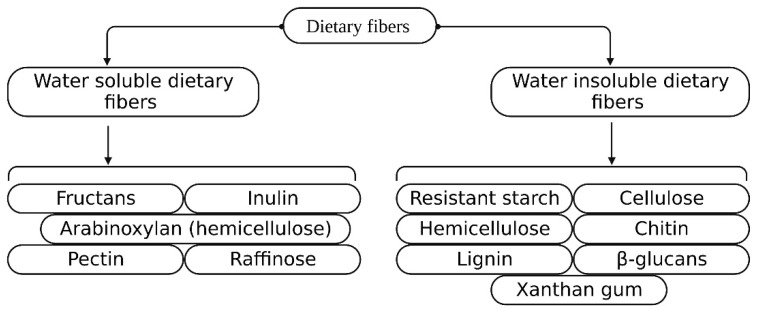
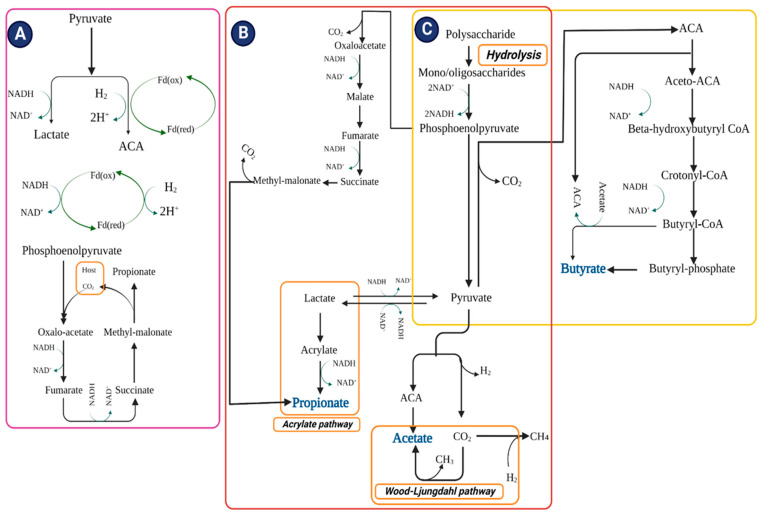
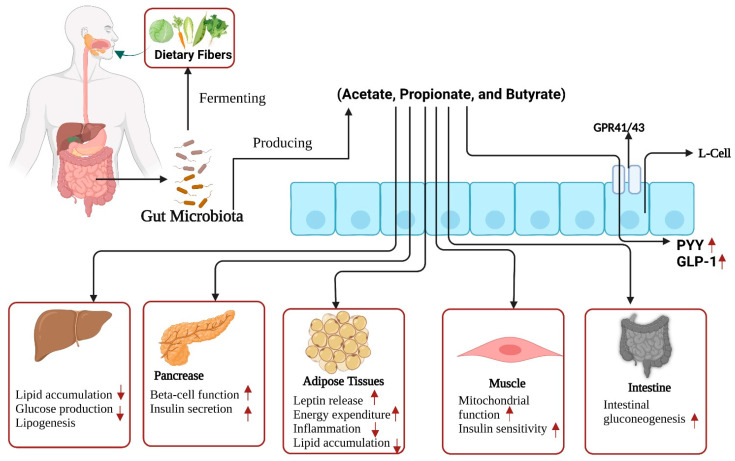
Foods contain dietary fibers which can be classified into soluble and insoluble forms. The nutritional composition of fast foods is considered unhealthy because it negatively affects the production of short-chain fatty acids (SCFAs). Dietary fiber is resistant to digestive enzymes in the gut, which modulates the anaerobic intestinal microbiota (AIM) and fabricates SCFAs. Acetate, butyrate, and propionate are dominant in the gut and are generated via Wood–Ljungdahl and acrylate pathways. In pancreatic dysfunction, the release of insulin/glucagon is impaired, leading to hyperglycemia. SCFAs enhance insulin sensitivity or secretion, beta-cell function, leptin release, mitochondrial function, and intestinal gluconeogenesis in human organs, which positively affects type 2 diabetes (T2D). Research models have shown that SCFAs either enhance the release of peptide YY (PYY) and glucagon-like peptide-1 (GLP-1) from L-cells (entero-endocrine), or promotes the release of leptin hormone in adipose tissues through G-protein receptors GPR-41 and GPR-43. Dietary fiber is a component that influences the production of SCFAs by AIM, which may have beneficial effects on T2D. This review focuses on the effectiveness of dietary fiber in producing SCFAs in the colon by the AIM as well as the health-promoting effects on T2D.
Overview
The claims and statistics of this paper haven’t been checked yet.
Free: it reads the open-access text and checks the first 5 claims that cite a source we can check. Create a free account to check every claim.
Integrity signals
Registry
Cites
Statistics
Figures
Verification
Claims the paper makes
The claims and statistics of this paper haven’t been checked yet.
Free: it reads the open-access text and checks the first 5 claims that cite a source we can check. Create a free account to check every claim.
Claims other papers make about this one
Each is checked against this paper’s own text: does it say what the citing paper says it does?
The check wasn’t confident either way, so it gives no verdict — never disputed.
In the citing paper
“Additionally, dietary fiber supplementation is a key strategy in managing GI symptoms and may help both diarrhea and constipation associated with GLP-1RAs [245,246]”
From Nutritional Approaches to Enhance GLP-1 Analogue Therapy in Obesity: A Narrative Review (2025) · cites this paper as [245]
Experimental — accuracy not yet measured
Self-check
Percentages, sums and reported differences re-computed from the paper’s own numbers.
The self-check needs the paper’s full text.
Citations
Cites
Human gut microbes associated with obesity
Ley, R. E., Turnbaugh, P. J., Klein, S., & Gordon, J. I. (2006) · Nature · doi:10.1038/4441022a · Cited by 8,785 · cited 1×
“For example, previous studies employing animal models showed that modulating GM had salutary effects on obesity, insulin sensitivity, and type 2 diabetes (T2D) [2,3].”
ResultFrom Dietary Fiber to Host Physiology: Short-Chain Fatty Acids as Key Bacterial Metabolites
Koh, A., De Vadder, F., Kovatcheva-Datchary, P., & Bäckhed, F. (2016) · Cell · doi:10.1016/j.cell.2016.05.041 · Cited by 7,070 · cited 5×
“05 Pyruvate Streptococcus, Bifidobacterium, prevotella, species, Blautia hydrogentrophica, and Akkermansia muciniphilia Inhibits Escherichia coli O157:H7 infections Participates in cholesterol synthesis [29]”
BackgroundInfluentialA metagenome-wide association study of gut microbiota in type 2 diabetes
Qin, J., Li, Y., Cai, Z., Li, S., Zhu, J., Zhang, F., Liang, S., Zhang, W., Guan, Y., Shen, D., et al. (2012) · Nature · doi:10.1038/nature11450 · Cited by 6,762 · cited 1×
“SS3/4, Roseburia inulinivorans, Roseburia intestinalis, Faecalibacterium prausnitzii, and Eubacterium rectale, produce butyrate, which has a protective role in T2D, even though these species are decreased in diabetes [106].”
Backgroundden Besten, G., van Eunen, K., Groen, A. K., Venema, K., Reijngoud, D.-J., & Bakker, B. M. (2013) · Journal of Lipid Research · doi:10.1194/jlr.r036012 · Cited by 5,048
(1992) · PubMed · Cited by 3,809
Formation of short chain fatty acids by the gut microbiota and their impact on human metabolism
Morrison, D. J., & Preston, T. (2016) · Gut Microbes · doi:10.1080/19490976.2015.1134082 · Cited by 3,781 · cited 2×
“Cross-feeding GM metabolizes lactate into acetate, propionate, and butyrate in the gut fermentation process, in which propionate and butyrate are produced in limited quantities owing to selected GM, while acetate is a regular product in the gut [94].”
BackgroundGut microbiota composition correlates with diet and health in the elderly
Claesson, M. J., Jeffery, I. B., Conde, S., Power, S. E., O’Connor, E. M., Cusack, S., Harris, H. M. B., Coakley, M., Lakshminarayanan, B., O’Sullivan, O., et al. (2012) · Nature · doi:10.1038/nature11319 · Cited by 3,314 · cited 3×
“Dietary fiber directly influences the production of SCFAs in the human gut (lumen) [11,31].”
BackgroundGut metagenome in European women with normal, impaired and diabetic glucose control
Karlsson, F. H., Tremaroli, V., Nookaew, I., Bergström, G., Behre, C. J., Fagerberg, B., Nielsen, J., & Bäckhed, F. (2013) · Nature · doi:10.1038/nature12198 · Cited by 3,115 · cited 2×
“According to previous studies, individuals with T2D have lower proportions of microbiota species producing butyrate [99,100].”
BackgroundMethodTopping, D. L., & Clifton, P. M. (2001) · Physiological Reviews · doi:10.1152/physrev.2001.81.3.1031 · Cited by 3,091 · cited 2×
“Acetate, propionate, and butyrate are dominant SCFAs in the gut [77].”
BackgroundEnvironment dominates over host genetics in shaping human gut microbiota
Rothschild, D., Weissbrod, O., Barkan, E., Kurilshikov, A., Korem, T., Zeevi, D., Costea, P. I., Godneva, A., Kalka, I. N., Bar, N., et al. (2018) · Nature · doi:10.1038/nature25973 · Cited by 2,859 · cited 1×
“Genetics plays a major role in elucidating the gut microbial composition, and several potential strategies have been employed to induce positive changes in gut microbial communities via fermentative activity [5].”
Background
Research works printed but not linked: 1
- Harvey R.A. Ferrier D.R. Biochemistry Lippincott Williams & Wilkins Philadelphia, PA, USA 2011
Cited by
Items 101–119 of 119
Wang, R. (2026) · Journal of medicine and health science. · doi:10.62517/jmhs.202605217
Microbiota and lipid mediators: from molecular crosstalk to therapeutic opportunities
Gökcen, B. B., Atabılen, B., Güneş, B. D., Dazıroğlu, M. E. Ç., Özer, Ş. D., Biten, A. A., Pagano, E., Nanì, M. F., Romano, B., Ağagündüz, D., et al. (2026) · Frontiers in Pharmacology · doi:10.3389/fphar.2026.1836931
“It has been reported that propionate can increase insulin release triggered by glucose, protect β -cell mass by reducing trans-differentiation in α -cells, prevent apoptosis, and help proliferation (Mazhar et al., 2023).”
Wang, B., Yang, Y., Ho, Y. M., Lin, H., Yuan, J., Long, K., Cheng, K. K. Y., & Li, X. (2026) · Nature Communications · doi:10.1038/s41467-026-76075-5
Wirutkar, S. H., Panesar, P. S., & Thakur, A. (2026) · Food and Bioproducts Processing · doi:10.1016/j.fbp.2026.08.002
Chen, X., Amin, K., Liu, P., Yu, X., Fu, H., & Li, M. (2026) · Foods · doi:10.3390/foods15162826
“It has been found that DF plays an active role in the prevention and treatment of diabetes, and a high-fiber diet can significantly improve insulin sensitivity, reduce insulin resistance, and slow down the rate of blood glucose increase [63].”
Development of functional low glycemic index flakes using white sweet potatoes and precooked peas
Mustikaningrum, F., Dewi, A., Zahrani, F., Kusuma, R. J., Wicaksana, A. A., Dayanti, A. R., Bestari, S. A., & Wang, W. (2026) · Brazilian journal of food technology/Brazilian Journal of Food Technology · doi:10.1590/1981-6723.1572025
Nicese, M. N., Koudijs, A., Lalai, R. A., Avramut, M. C., Derks, R. J. E., Sánchez‐López, E., Giera, M. A., Pronk, A. C. M., Kovynev, A., Kooijman, S., et al. (2026) · Diabetes Obesity and Metabolism · doi:10.1111/dom.71245
“These metabolites are typically linked to beneficial effects such as the promotion of intestinal integrity and the regulation of immune responses [15–19].”
Sun, L., Yang, J., Liu, L., Guo, Q., & Sun, Z. (2026) · Journal of Endocrinological Investigation · doi:10.1007/s40618-026-03022-y
Alkhatib, S. N. (2026) · International Journal of Molecular Sciences · doi:10.3390/ijms27177851
“In the present work, no direct SCFA assay, metabolomic characterization, flux analysis, transcriptomic measurement, proteomic measurement, or enzyme-activity assay was performed [9,45,50].”
Cheng, Y., Zhao, H., Li, L., Chen, Y., & Lin, H. (2026) · Frontiers in Microbiology · doi:10.3389/fmicb.2026.1934029
Qiu, Z., Zhang, H., Ma, M.-Q., Pan, B., & Cao, C. (2026) · Metabolites · doi:10.3390/metabo16090660
“The main genera involved in bile acid metabolism include Clostridium , Eubacterium , and Bacteroides [60].”
Ademosun, A. O. (2026) · Exploration of Foods and Foodomics · doi:10.37349/eff.2026.1010190
Wei, P., Wang, Z., Luo, Q., Zhang, Y., Meng, X., & Wang, J. (2026) · Antonie van Leeuwenhoek · doi:10.1007/s10482-026-02424-5
“In addition, these fatty acids significantly impact physiological processes such as energy metabolism, immune regulation, and inflammatory responses(Carretta et al. 2021; Mazhar et al. 2023).”
Dündar, C. (2026) · Healthcare · doi:10.3390/healthcare14193145
“Physiological mechanisms supporting a protective buffering role are most strongly documented for soluble fiber, particularly regarding its impact on postprandial glucose and lipid metabolism through short-chain fatty acid production and altered gut transit [23,24].”
Araújo, R. G., Ortiz‐Cruz, G., NUPO, S. S., Cordero, Y., Cortes-Hernandez, L., & Teniente, S. L. (2026) · Nutrients · doi:10.3390/nu18193206
“…enhance the release of peptide YY (PYY) and glucagon-like peptide-1 (GLP-1) from L (enteroendocrine) cells and also promote the release of the hormone leptin in adipose tissue through the G protein receptors GPR-41 and GPR-43, which positively impacts the treatment or improvement of T2D [92,93].”
Yin, Z., Zhang, Y., Sun, Z., Yang, Y., Ouédraogo, S. Y., Golubnitschaja, O., Grech, G., & Zhan, X. (2026) · Advances in predictive, preventive and personalised medicine · doi:10.1007/978-3-032-32838-0_2
Mechanisms of Hepatic Insulin Resistance and Its Contribution to the Pathogenesis of Type 2 Diabetes
Onyango, A. N. (2026) · Comprehensive physiology · doi:10.1002/cph4.70285
Joshi, S., Bhati, D., Dobhal, A., Kaur, R., Moger, R., & Kumar, S. (2026) · Exploration of Foods and Foodomics · doi:10.37349/eff.2026.1010193
Teles, I. D. D. S., Mota, J. V. P., Junior, S. D. P., Cardoso, S. B., & Torres, V. G. S. (2026) · Revista Multidisciplinar do Nordeste Mineiro · doi:10.66104/j8nkfb40
Metadata
- Authors
- Mazhar, M., Zhu, Y., & Qin, L.
- Affiliations
- Guizhou University (CN)
- Corresponding author
- Qin, Likang
- Venue
- Foods
- Publisher
- MDPI AG
- Published
- 2023-02-28
- Volume
- 12
- Issue
- 5
- Pages
- 1023
- ISSN
- 2304-8158 (ISSN-L)
- PMC
- PMC10001013
- OpenAlex
- W4322628892
- Semantic Scholar
- df08be3453a6b734258bf7a7c3e6f4109ce4585e
- Cited by
- 119
- References
- 188
- Citations by year
- 2026: 40 · 2025: 43 · 2024: 28 · 2023: 7
- FWCI
- 3.12
- Type
- journal article
- Language
- en
- Open access
- gold
- doi.org
- Licence
- Locations
- Foods (publishedVersion, cc-by)
- PubMed Central (publishedVersion, cc-by)
- PubMed (publishedVersion)
- DOAJ (DOAJ: Directory of Open Access Journals) (submittedVersion, cc-by-sa)
- Funders
- Guizhou Science and Technology Program ([2018] 5254, [2018] 5781, [2022] 4033, [2022] Zhongdian 007, [2021] yiban175, [2019]1071, [2020] 1Y171, Qian Cai Nong [2018]81, [2017] 106)
- Establishment of Guizhou Modern Agriculture Industry Technical System (Characteristic Coarse Cereals) ([2018] 5254, [2018] 5781, [2022] 4033, [2022] Zhongdian 007, [2021] yiban175, [2019]1071, [2020] 1Y171, Qian Cai Nong [2018]81, [2017] 106)
- Key Agricultural Technology Extension Project of Guizhou Province ([2018] 5254, [2018] 5781, [2022] 4033, [2022] Zhongdian 007, [2021] yiban175, [2019]1071, [2020] 1Y171, Qian Cai Nong [2018]81, [2017] 106)
- Topics
- Life Sciences › Biochemistry, Genetics and Molecular Biology › Molecular Biology › Gut microbiota and health
- Health Sciences › Nursing › Nutrition and Dietetics › Food composition and properties
- Health Sciences › Nursing › Nutrition and Dietetics › Microbial Metabolites in Food Biotechnology
- Keywords
- dietary fiber, gut microbiota, short-chain fatty acids, type 2 diabetes, butyrate, acetate, propionate, Wood-Ljungdahl pathway, insulin sensitivity, beta-cell function, leptin, GPR41, GPR43, glucagon-like peptide-1, peptide YY, gastrointestinal endocrine cells, intestinal gluconeogenesis, hyperglycemia, fast food
About these checks
Registry, retraction, Cites and statistics results are computed, not judged, with one exception: a printed reference that no index lists is read once by a model before it counts as a citation error. Claims are extracted by a model and kept only when their quote appears verbatim in the text; each cited source is then checked, with a model’s help, for whether it says what the claim relies on. Those verdicts can be wrong — read the claim’s quote and the cited source before relying on one.
Statistics and arithmetic are recomputed, not judged.
Confidence bands are shown only for fields calibrated on our annotated test set. None is calibrated yet, so no band is shown.
What counts as a claim ›How we measure confidence ›How we check this ›
Are you an author, or do you see a problem with this page? Request a review
Data sources
Bibliographic data: Semantic Scholar, OpenAlex, Crossref.
Contains information from the Semantic Scholar Academic Graph Datasets, made available under the ODC Attribution License (ODC-BY 1.0).
Semantic Scholar’s data is described in: Kinney, R., et al. (2023). The Semantic Scholar Open Data Platform. arXiv:2301.10140.
