

The Effect of L-Theanine Incorporated in a Functional Food Product (Mango Sorbet) on Physiological Responses in Healthy Males: A Pilot Randomised Controlled Trial
Open accessThe DOI matches its Crossref record; 45 of the 46 references it cites were found in a registry or an index; 5 of the 33 sources its claims cite were checked for support.
Abstract
Consumption of L-Theanine (L-THE) has been associated with a sensation of relaxation, as well as a reduction of stress. However, these physiological responses have yet to be elucidated in humans where L-THE is compared alongside food or as a functional ingredient within the food matrix. The aim of this study was to determine the physiological responses of a single intake of a potential functional food product (mango sorbet) containing L-THE (ms-L-THE; 200 mgw/w) in comparison to a flavour and colour-matched placebo (ms). Eighteen healthy male participants were recruited in this randomised, double-blind, placebo-controlled trial. The participants were required to consume ms-L-THE or placebo and their blood pressure (BP) (systolic and diastolic), heart rate (HR), and heart rate variability (HRV) were monitored continuously over 90 minutes. Eleven males (age 27.7 ± 10.8 years) completed the study. Changes in area under the curve for systolic and diastolic blood pressure and HRV over the 90 minute observation period indicated no differences between the three conditions (all p > 0.05) or within individual groups (all p > 0.05). The values for heart rate were also not different in the placebo group (p = 0.996) and treatment group (p = 0.066), while there was a difference seen at the baseline (p = 0.003). Based on the findings of this study, L-THE incorporated in a food matrix (mango sorbet) demonstrated no reduction in BP or HR and showed no significant parasympathetic interaction as determined by HRV high-frequency band and low-frequency/high-frequency ratio. Further studies should be focussed towards the comparison of pure L-THE and incorporation within the food matrix to warrant recommendations of L-THE alongside food consumption.
Overview
CoChat Summary
TL;DR
In a pilot randomised, double-blind, placebo-controlled crossover trial, 200 mg L-theanine incorporated into mango sorbet did not significantly alter blood pressure, heart rate, or heart-rate variability in healthy males over 90 minutes compared with placebo or baseline. The authors conclude that L-theanine in this food matrix showed no acute physiological stress-reducing effects in the absence of an external stressor.
Key findings
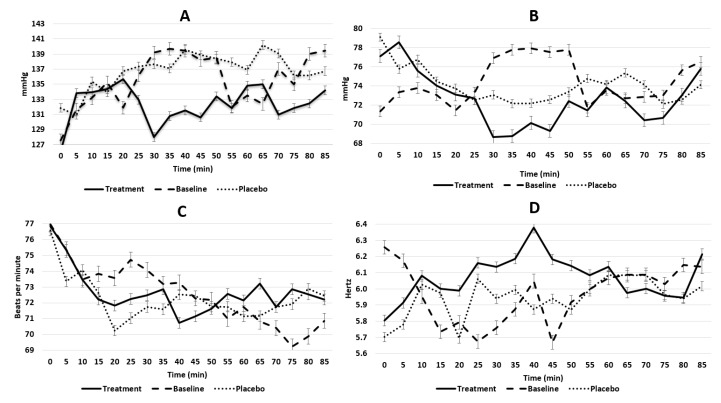
- Among 11 healthy males who completed the study, ms-L-THE (200 mg L-theanine in 100 g mango sorbet) produced no significant between-condition differences in area under the curve for systolic BP (p = 0.839) or diastolic BP (p = 0.922) over 90 minutes.
- HRV measures showed no significant between-group time effects for high-frequency HRV (p = 0.974) or LF/HF ratio (p = 0.704), indicating no significant parasympathetic interaction.
- Heart rate showed no significant between-group AUC difference (p = 0.996); within-group analysis showed a baseline difference (p = 0.003), while ms-L-THE (p = 0.066) and placebo ms (p = 0.060) were not significant at α = 0.05.
- The systolic/diastolic ratio showed significant within-group differences for ms-L-THE (p = 0.003) and ms (p = 0.003), but not baseline (p = 0.761), suggesting a postprandial response to both sorbets.
Methods
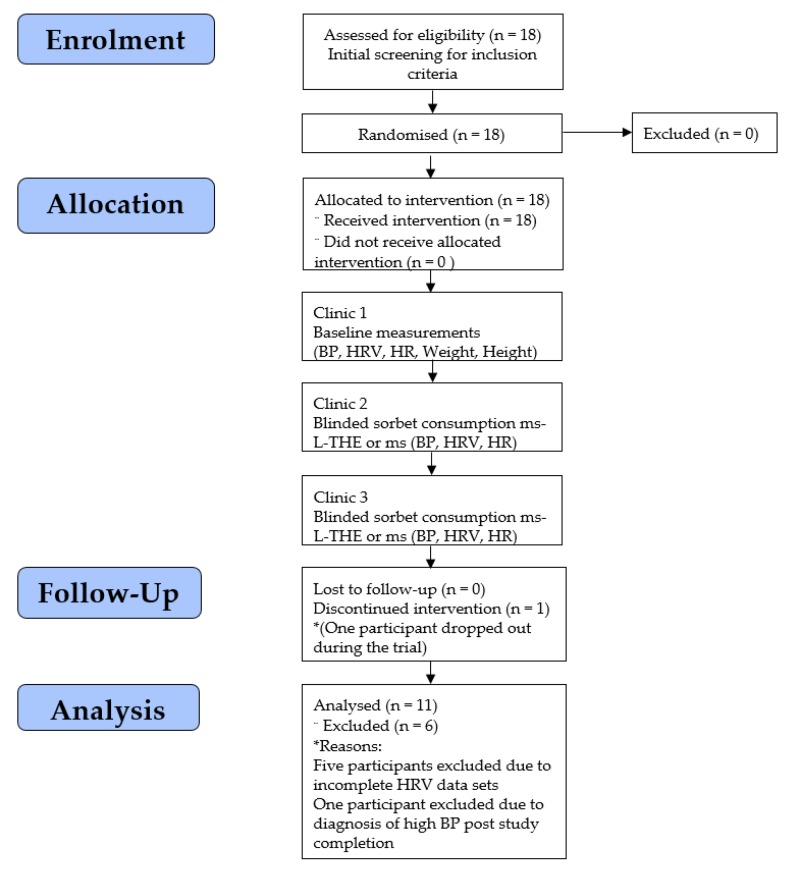
- Randomised, double-blind, placebo-controlled crossover pilot trial with four clinic visits; 18 healthy males aged 18–65 were recruited, and 11 participants (age 27.7 ± 10.8 years, weight 90.6 ± 16.8 kg) were analysed after exclusions.
- Participants consumed 100 g mango sorbet containing 200 mg L-theanine (Suntheanine™) or a flavour- and colour-matched placebo, with a 48 h washout between treatment clinics; they fasted overnight and avoided alcohol for 24 h and caffeine for 12 h before visits.
- Continuous blood pressure, heart rate, and HRV were recorded over 90 minutes, averaged into 5-minute intervals; total AUC was analysed using Kruskal–Wallis ANOVA for between-group comparisons and Friedman’s two-way ANOVA by ranks for within-group comparisons, with α = 0.05.
Limitations
- The paper states the study was a pilot with a small sample size, and participant exclusions reduced analysable data; future studies should include more participants and those with pre-existing conditions such as anxiety or high blood pressure.
- The authors note the male-only population limits generalisability, no blood plasma L-theanine concentrations were measured, no mental stressor was used to raise BP/HR, and the 200 mg dose was lower than doses used in some animal studies.
- The paper also states that L-theanine may have bound to the food matrix (whey protein concentrate, sucrose, or mango pulp), and that pure L-theanine versus food-matrix L-theanine needs direct comparison; the text makes evident that the analysed sample was only 11 participants and no a priori power calculation is reported.
Model-written summary. Check it against the paper before relying on it.
Integrity signals
Registry
Cites
Statistics
Figures
Verification
Claims the paper makes
4 Valid · 1 Not valid · 22 Not checked · 42 Own results and interpretations
The cited sources support only part of this claim — read each source’s verdict below.
In the paper
“Pharmacokinetic clinical data [35] that involved the ingestion of pure L-THE (25−200 mg) suggest peaks in physiological and blood plasma effects occur between 32 and 50 min post oral ingestion (in a fasted state) [29].”
§ The Effect of L-Theanine Incorporated in a Functional Food Product (Mango Sorbet) on Physiological Responses in Healthy Males: A Pilot Randomised Controlled Trial > 4. Discussion
What the sources say
- Not checked yetcites [35] Van der Pijl P.C. Chen L. Mulder T.P. Human disposition of L-theanine in tea or aqueous solution J. Funct. Foods 2010 2 239 244 10.1016/j.jff.2010.08.001 source
- Partly supportedcites [29] Scheid L. Ellinger S. Alteheld B. Herholz H. Ellinger J. Henn T. Helfrich H.P. Stehle P. Kinetics of L-theanine uptake and metabolism in healthy participants are comparable after ingestion of L-theanine via capsules and green tea J. Nutr. 2012 142 2091 2096 10.3945/jn.112.166371 23096008 sourceExperimental — accuracy not yet measured
Scheid et al. (2012) do supply fasted-state pure-L-theanine pharmacokinetics in the claimed range and at the claimed upper times: the Study design (Participants, p. n/a) states 12 healthy participants ingested a bolus of 100 mg L-theanine (pure Suntheanine capsules) or green tea 'after a 12-h overnight fast', with 3 participants additionally receiving 50 and 200 mg capsules, and the Abstract reports 'The maximum plasma concentration of L-theanine occurred 0.8 h after intake of 100 mg L-theanine via capsules ... and tea' (~48 min, i.e. inside 32-50 min), with individual lag times of 10-24 min (Table 2 footnote, Discussion). Two elements attributed here are not this paper's own data: the 25 mg dose appears only as a credited finding of another work ('van der Pijl et al. (13) observed an increase of L-theanine in the plasma of healthy men after an intake of 25, 50, and 200 mg L-theanine', Introduction), and Scheid et al. measured no physiological outcomes - only L-theanine, ethylamine, glutamic acid and ethylamine in plasma, erythrocytes and urine - so 'peaks in physiological ... effects' is not supported by this source (the EEG/anxiety effects in their Introduction are cited to refs 6,7,11,12). (LLM, conf=0.75)
hedgedstates a cause- Asserted: passes — The authors put it forward as true.
- Checkable: passes — It can be checked against evidence.
- Load-bearing: unclear — It is unclear whether the paper’s conclusions depend on it.
- Based: passes — The paper gives a reason why it holds.
The cited sources support only part of this claim — read each source’s verdict below.
In the paper
“Human studies in which consumption of pure L-THE was provided in capsule form, indicate the most physiologically relevant doses of L-THE range from 0.05−0.4 g, equivalent to a consumption of 2−15 cups of green tea [6,29,30].”
§ The Effect of L-Theanine Incorporated in a Functional Food Product (Mango Sorbet) on Physiological Responses in Healthy Males: A Pilot Randomised Controlled Trial > 1. Introduction
What the sources say
- Partly supportedcites [6] Williams J. Kellett J. Roach P.D. McKune A. Mellor D. Thomas J. Naumovski N. L-Theanine as a Functional Food Additive: Its Role in Disease Prevention and Health Promotion Beverages 2016 2 13 10.3390/beverages2020013 sourceExperimental — accuracy not yet measured
Our copy of Williams et al. (2016) does compile the doses of pure L-THE used in human trials and they span the claimed 0.05–0.4 g: the summary table ('Impact on', human L-THE studies) lists 50–200 mg for α-wave production, 200 mg for relaxation, 250 mg in schizophrenia and 400 mg for sleep quality in ADHD, and Section 6 (Pharmacokinetic Properties) cites capsule/oral doses of 100 mg (Scheid) and 25–100 mg (van der Pijl). However, the paper never characterises these as 'the most physiologically relevant doses', and nothing in our copy makes the equivalence to '2–15 cups of green tea' — searches for cups of green tea, theanine per cup and brewed-tea L-THE content returned only analytical/composition sections with no such conversion. That green-tea-equivalence half of the claim is not supported by this source. (LLM, conf=0.70)
- Partly supportedcites [29] Scheid L. Ellinger S. Alteheld B. Herholz H. Ellinger J. Henn T. Helfrich H.P. Stehle P. Kinetics of L-theanine uptake and metabolism in healthy participants are comparable after ingestion of L-theanine via capsules and green tea J. Nutr. 2012 142 2091 2096 10.3945/jn.112.166371 23096008 sourceExperimental — accuracy not yet measured
Our copy's Introduction does report human dosing of isolated (capsule/supplement-form) L-theanine spanning 50-200 mg and 200-400 mg, i.e. the 0.05-0.4 g span the claim gives, but it credits those effects to other works (refs 11, 7, 12 - the last in schizophrenia patients) rather than deriving a dose range itself, and it nowhere labels the whole span 'the most physiologically relevant doses': the Discussion applies 'physiological' only to the single 100 mg dose. The cup equivalence is also not stated as 2-15 cups anywhere; the paper only says 100 mg can be ingested by ~4 cups of green tea (Discussion) and that a 250 mL serving provides ~40 mg L-theanine (Introduction), which would give a different bracket. So the numeric dose span is in this source, while the 'most physiologically relevant' characterization and the 2-15 cup conversion are not supported by it. (LLM, conf=0.72)
- Not checked yetcites [30] Williams J. Sergi D. McKune A.J. Georgousopoulou E.N. Mellor D.D. Naumovski N. The beneficial health effects of green tea amino acid l-theanine in animal models: Promises and prospects for human trials Phytother. Res. 2019 33 571 583 10.1002/ptr.6277 30632212 source
hedged- Asserted: passes — The authors put it forward as true.
- Checkable: passes — It can be checked against evidence.
- Load-bearing: passes — The paper’s conclusions depend on it.
- Based: passes — The paper gives a reason why it holds.
- Partly supported
A result the paper reports from its own data — it cites no other source for it, so there is none to check. The quote shows it is in the paper.
In the paper
“The observed results for the ms-L-THE did not produce any significant physiological changes for the parameters of systolic and diastolic BP across the entire 90 minute testing period in comparison to the ms or baseline measurements.”
§ The Effect of L-Theanine Incorporated in a Functional Food Product (Mango Sorbet) on Physiological Responses in Healthy Males: A Pilot Randomised Controlled Trial > 4. Discussion
plain- Asserted: passes — The authors put it forward as true.
- Checkable: passes — It can be checked against evidence.
- Load-bearing: passes — The paper’s conclusions depend on it.
- Based: passes — The paper gives a reason why it holds.
A result the paper reports from its own data — it cites no other source for it, so there is none to check. The quote shows it is in the paper.
In the paper
“Between-group AUC analysis showed no significant differences during the entire 90 minutes between either of the conditions (median; 1325, 25th; 1222, 75th; 1385, p = 0.996).”
§ The Effect of L-Theanine Incorporated in a Functional Food Product (Mango Sorbet) on Physiological Responses in Healthy Males: A Pilot Randomised Controlled Trial > 3. Results > 3.3. Heart Rate
plain- Asserted: passes — The authors put it forward as true.
- Checkable: passes — It can be checked against evidence.
- Load-bearing: passes — The paper’s conclusions depend on it.
- Based: passes — The paper gives a reason why it holds.
A result the paper reports from its own data — it cites no other source for it, so there is none to check. The quote shows it is in the paper.
In the paper
“For diastolic BP, between-group AUC analysis showed no significant differences during the entirety of the 90 minutes (Figure 2B) amongst either of the conditions (median; 1323 mmHg, 25th; 1157 mmHg, 75th; 1462 mmHg, p = 0.922).”
§ The Effect of L-Theanine Incorporated in a Functional Food Product (Mango Sorbet) on Physiological Responses in Healthy Males: A Pilot Randomised Controlled Trial > 3. Results > 3.1. Systolic and Diastolic Blood Pressure
plain- Asserted: passes — The authors put it forward as true.
- Checkable: passes — It can be checked against evidence.
- Load-bearing: unclear — It is unclear whether the paper’s conclusions depend on it.
- Based: passes — The paper gives a reason why it holds.
30 more claims
Create a free account to see all 69 claims and to verify the 28 references still open.
- Probably not a substantial claim. 26
- It may state two separate claims as one. 14
Claims other papers make about this one
Each is checked against this paper’s own text: does it say what the citing paper says it does?
The cited source says what the claim attributes to it.
In the citing paper
“This study, together with the study of Montopoli et al. [45], have featured no cognitive tasks or stimulus were performed on the participants”
From How does the tea L-theanine buffer stress and anxiety (2022) · cites this paper as [46]
In the citing paper
“The similar anti-anxiolytic was not observed in another study using the mango sorbet as the food matrix.”
From How does the tea L-theanine buffer stress and anxiety (2022) · cites this paper as [46]
In the citing paper
“Whereas no reductions were observed in heart rate, blood pressure, and no significant parasympathetic interactions were obtained by measuring HRV high-frequency band and low-frequency/highfrequency ratio as well [46].”
From How does the tea L-theanine buffer stress and anxiety (2022) · cites this paper as [46]
Self-check
Percentages, sums and reported differences re-computed from the paper’s own numbers.
Each contradiction between two passages listed here was confirmed by an independent check.
Rated minor: it would not touch a result — a value no result rests on, a p-value that stays on the same side of the significance level, or a conflict that is clerical, resolved elsewhere in the paper, or outside its own findings.
In the paper
§ The Effect of L-Theanine Incorporated in a Functional Food Product (Mango Sorbet) on Physiological Responses in Healthy Males: A Pilot Randomised Controlled Trial > Abstract
“The values for heart rate were also not different in the placebo group (p = 0.996) and treatment group (p = 0.066)”
§ The Effect of L-Theanine Incorporated in a Functional Food Product (Mango Sorbet) on Physiological Responses in Healthy Males: A Pilot Randomised Controlled Trial > 3. Results > 3.3. Heart Rate
“No significant differences were observed in the ms group (p = 0.060).”
Rated minor: it would not touch a result — a value no result rests on, a p-value that stays on the same side of the significance level, or a conflict that is clerical, resolved elsewhere in the paper, or outside its own findings.
In the paper
§ The Effect of L-Theanine Incorporated in a Functional Food Product (Mango Sorbet) on Physiological Responses in Healthy Males: A Pilot Randomised Controlled Trial > 3. Results > 3.3. Heart Rate
“within-group analysis showed significant differences within the baseline group (p = 0.003) as well as within the ms-L-THE group (p = 0.066)”
§ The Effect of L-Theanine Incorporated in a Functional Food Product (Mango Sorbet) on Physiological Responses in Healthy Males: A Pilot Randomised Controlled Trial > 2. Methods and Materials > 2.5. Statistical Analysis
“Level of significance was set at α = 0.05.”
Rated minor: it would not touch a result — a value no result rests on, a p-value that stays on the same side of the significance level, or a conflict that is clerical, resolved elsewhere in the paper, or outside its own findings.
In the paper
§ The Effect of L-Theanine Incorporated in a Functional Food Product (Mango Sorbet) on Physiological Responses in Healthy Males: A Pilot Randomised Controlled Trial > 3. Results > 3.4. Sympathetic Activity
“75th; 16.3”
§ The Effect of L-Theanine Incorporated in a Functional Food Product (Mango Sorbet) on Physiological Responses in Healthy Males: A Pilot Randomised Controlled Trial > 3. Results > 3.4. Sympathetic Activity
“median; 50.9, 25th; 35.3”
Citations
Cites
Heart rate variability: origins, methods, and interpretive caveats
BERNTSON, G. G., THOMAS BIGGER, J., ECKBERG, D. L., GROSSMAN, P., KAUFMANN, P. G., MALIK, M., NAGARAJA, H. N., PORGES, S. W., SAUL, J. P., STONE, P. H., et al. (1997) · Psychophysiology · doi:10.1111/j.1469-8986.1997.tb02140.x · Cited by 3,962 · cited 3×
“The high frequency (HF) component of HRV ranges from 0.15-0.4 Hz, and is based on respiratory sinus arrhythmia and mediated predominantly by PNS activity, whereas low frequency (LF) ranges between 0.04-0.15 Hz, is mediated by both PNS and SNS [21].”
BackgroundInfluentialStress and Heart Rate Variability: A Meta-Analysis and Review of the Literature
Kim, H.-G., Cheon, E.-J., Bai, D.-S., Lee, Y. H., & Koo, B.-H. (2018) · Psychiatry Investigation · doi:10.30773/pi.2017.08.17 · Cited by 2,308 · cited 1×
“Furthermore, the state of being stressed affects HRV domains such as HF, LF and LF/HF ratios, which are used to understand the activity of the PNS and further as an index of autonomic balance [22].”
BackgroundThe stressed hippocampus, synaptic plasticity and lost memories
Kim, J. J., & Diamond, D. M. (2002) · Nature Reviews Neuroscience · doi:10.1038/nrn849 · Cited by 1,543
Russell, G., & Lightman, S. (2019) · Nature Reviews Endocrinology · doi:10.1038/s41574-019-0228-0 · Cited by 1,032
Psychobiological allostasis: resistance, resilience and vulnerability
Karatsoreos, I. N., & McEwen, B. S. (2011) · Trends in Cognitive Sciences · doi:10.1016/j.tics.2011.10.005 · Cited by 458 · cited 1×
“It is proposed that the ‘healthier’ the ANS, the better an individual will be able to exhibit high allostatic resilience [23].”
BackgroundL-Theanine—a unique amino acid of green tea and its relaxation effect in humans
Juneja, L. (1999) · Trends in Food Science & Technology · doi:10.1016/s0924-2244(99)00044-8 · Cited by 363 · cited 1×
“Blood pressure is a physiological biomarker that is highly dependant on catecholaminergic neurons [19].”
Backgroundl-theanine reduces psychological and physiological stress responses
Kimura, K., Ozeki, M., Juneja, L. R., & Ohira, H. (2007) · Biological Psychology · doi:10.1016/j.biopsycho.2006.06.006 · Cited by 349 · cited 4×
“Based on this, it is safe to say that our study is the first to identify that L-THE does not have any effect on HR when consumed within a functional food product and in the absence of environmental stressors; however, from the literature, 200 mg of pure L-THE may acutely lower HR in response to stressful situations wh…”
BackgroundInfluentialYoung, H. A., & Benton, D. (2018) · Behavioural Pharmacology · doi:10.1097/fbp.0000000000000383 · Cited by 249 · cited 1×
“As such, HRV changes are reported to be a potential marker of the relationship between food consumption and disease [24].”
BackgroundRelation of High Heart Rate Variability to Healthy Longevity
Zulfiqar, U., Jurivich, D. A., Gao, W., & Singer, D. H. (2010) · The American Journal of Cardiology · doi:10.1016/j.amjcard.2009.12.022 · Cited by 239 · cited 1×
“diet, which consists highly of fish and omega-3 fatty acid consumption, fresh produce, [25] as well as healthy weight maintenance [26] all contribute to the potential increase in HRV.”
BackgroundYokogoshi, H., Kobayashi, M., Mochizuki, M., & Terashima, T. (1998) · Neurochemical Research · doi:10.1023/a:1022490806093 · Cited by 229 · cited 2×
“Further, L-THE consumed orally as a component of mango sorbet (200 mg) is a lower dose compared to the pharmacodynamic rat studies by Yokogoshi et al. [45] as well as Yokogoshi and Kobayashi [46], which were both similar in design (1500 mg/day and 2000 mg/kg of L-THE administered intraperitoneally).”
BackgroundL‐Theanine: properties, synthesis and isolation from tea
Vuong, Q. V., Bowyer, M. C., & Roach, P. D. (2011) · Journal of the Science of Food and Agriculture · doi:10.1002/jsfa.4373 · Cited by 218
Forsyth, C., Kouvari, M., D’Cunha, N. M., Georgousopoulou, E. N., Panagiotakos, D. B., Mellor, D. D., Kellett, J., & Naumovski, N. (2018) · Rheumatology International · doi:10.1007/s00296-017-3912-1 · Cited by 195 · cited 1×
“diet, which consists highly of fish and omega-3 fatty acid consumption, fresh produce, [25] as well as healthy weight maintenance [26] all contribute to the potential increase in HRV.”
BackgroundSelf-citationYokogoshi, H., Kato, Y., Sagesaka, Y. M., Takihara-Matsuura, T., Kakuda, T., & Takeuchi, N. (1995) · Bioscience, Biotechnology, and Biochemistry · doi:10.1271/bbb.59.615 · Cited by 192 · cited 1×
“[45] as well as Yokogoshi and Kobayashi [46], which were both similar in design (1500 mg/day and 2000 mg/kg of L-THE administered intraperitoneally).”
BackgroundOnakpoya, I., Spencer, E., Heneghan, C., & Thompson, M. (2014) · Nutrition, Metabolism and Cardiovascular Diseases · doi:10.1016/j.numecd.2014.01.016 · Cited by 190 · cited 1×
“Traditionally, consumption of tea is associated with relaxation [3], beneficial health outcomes [4], and an increase in longevity, which is proposed to be due to a number of different bioactive constituents [5,6].”
BackgroundTea and cardiovascular disease
Deka, A., & Vita, J. A. (2011) · Pharmacological Research · doi:10.1016/j.phrs.2011.03.009 · Cited by 184 · cited 1×
“In addition, the consumption of L-THE is associated with antihypertensive [12,13], anti-inflammatory properties [8] as well as improvements in cognitive functioning in healthy adults [14] and when consumed in combination with caffeine [10].”
BackgroundRogers, P. J., Smith, J. E., Heatherley, S. V., & Pleydell-Pearce, C. W. (2007) · Psychopharmacology · doi:10.1007/s00213-007-0938-1 · Cited by 183 · cited 2×
“raise BP and may in future benefit from an external stimulus to observe the BP effects of L-THE within the food matrix [37].”
BackgroundHidese, S., Ogawa, S., Ota, M., Ishida, I., Yasukawa, Z., Ozeki, M., & Kunugi, H. (2019) · Nutrients · doi:10.3390/nu11102362 · Cited by 170 · cited 2×
“In addition, the consumption of L-THE is associated with antihypertensive [12,13], anti-inflammatory properties [8] as well as improvements in cognitive functioning in healthy adults [14] and when consumed in combination with caffeine [10].”
BackgroundHPA axis function and diurnal cortisol in post-traumatic stress disorder: A systematic review
Speer, K. E., Semple, S., Naumovski, N., D'Cunha, N. M., & McKune, A. J. (2019) · Neurobiology of Stress · doi:10.1016/j.ynstr.2019.100180 · Cited by 161 · cited 3×
“The high frequency (HF) component of HRV ranges from 0.15-0.4 Hz, and is based on respiratory sinus arrhythmia and mediated predominantly by PNS activity, whereas low frequency (LF) ranges between 0.04-0.15 Hz, is mediated by both PNS and SNS [21].”
BackgroundSelf-citationKAKUDA, T., NOZAWA, A., SUGIMOTO, A., & NIINO, H. (2002) · Bioscience, Biotechnology, and Biochemistry · doi:10.1271/bbb.66.2683 · Cited by 131
Williams, J. L., Everett, J. M., D’Cunha, N. M., Sergi, D., Georgousopoulou, E. N., Keegan, R. J., McKune, A. J., Mellor, D. D., Anstice, N., & Naumovski, N. (2020) · Plant Foods for Human Nutrition · doi:10.1007/s11130-019-00771-5 · Cited by 123 · cited 2×
“The consumption of L-THE is associated with a sensation of relaxation, and is proposed to elicit acute stress-reducing effects [3] as well as providing the characteristic ‘umami’ flavour [6].”
BackgroundSelf-citationYoto, A., Motoki, M., Murao, S., & Yokogoshi, H. (2012) · Journal of Physiological Anthropology · doi:10.1186/1880-6805-31-28 · Cited by 110 · cited 2×
“In addition, the consumption of L-THE is associated with antihypertensive [12,13], anti-inflammatory properties [8] as well as improvements in cognitive functioning in healthy adults [14] and when consumed in combination with caffeine [10].”
BackgroundGiesbrecht, T., Rycroft, J. A., Rowson, M. J., & De Bruin, E. A. (2010) · Nutritional Neuroscience · doi:10.1179/147683010x12611460764840 · Cited by 108 · cited 2×
“However, this study was limited by reference of only two-time points [36].”
BackgroundNaumovski, N., Blades, B., & Roach, P. (2015) · Antioxidants · doi:10.3390/antiox4020373 · Cited by 108 · cited 4×
“Following previously conducted research using similar design and products [11], inclusion criteria included healthy male participants aged 18−65 years old.”
BackgroundMethodSelf-citationGottsäter, A., Ahlgren, Å. R., Taimour, S., & Sundkvist, G. (2006) · Clinical Autonomic Research · doi:10.1007/s10286-006-0345-4 · Cited by 105 · cited 1×
“On the other hand, reduced HRV is associated with an increased risk for a range of diseases including but not limited to cardiovascular disease [27] and diabetes [28].”
BackgroundDodd, F. L., Kennedy, D. O., Riby, L. M., & Haskell-Ramsay, C. F. (2015) · Psychopharmacology · doi:10.1007/s00213-015-3895-0 · Cited by 102 · cited 3×
“These effects are linked to its many bioactive constituents, including polyphenols [10], particularly catechins [11], and γ-glutamylethylamide, commonly referred to as L-Theanine (L-THE), which is the most abundant and unique non-proteinogenic amino acid in green tea.”
BackgroundPotter, J. F., Heseltine, D., Hartley, G., Matthews, J., Macdonald, I. A., & James, O. F. W. (1989) · Clinical Science · doi:10.1042/cs0770265 · Cited by 90 · cited 1×
“Similar to other studies where external factors such as stress or caffeine are used to raise BP, our intervention was designed to cause fluctuations in BP, HR, and HRV due to the carbohydrate response attributed to sorbet consumption [34].”
ResultWhite, D., De Klerk, S., Woods, W., Gondalia, S., Noonan, C., & Scholey, A. (2016) · Nutrients · doi:10.3390/nu8010053 · Cited by 85
Kakuda, T., Hinoi, E., Abe, A., Nozawa, A., Ogura, M., & Yoneda, Y. (2008) · Journal of Neuroscience Research · doi:10.1002/jnr.21637 · Cited by 76 · cited 1×
“[44] study were not assessed in the present study.”
BackgroundWilliams, J., Sergi, D., McKune, A. J., Georgousopoulou, E. N., Mellor, D. D., & Naumovski, N. (2019) · Phytotherapy Research · doi:10.1002/ptr.6277 · Cited by 73
Self-citationUnno, K., Tanida, N., Ishii, N., Yamamoto, H., Iguchi, K., Hoshino, M., Takeda, A., Ozawa, H., Ohkubo, T., Juneja, L. R., et al. (2013) · Pharmacology Biochemistry and Behavior · doi:10.1016/j.pbb.2013.09.004 · Cited by 72 · cited 1×
“This, in turn, inhibits extracellular glutamine uptake by neurons, and its conversion to glutamate via glutaminase enzyme [41].”
BackgroundHeart rate variability in physically active individuals: reliability and gender characteristics.
Sookan, T., & McKune, A. J. (2012) · PubMed · doi:10.5830/cvja-2011.108 · Cited by 72
Self-citationScheid, L., Ellinger, S., Alteheld, B., Herholz, H., Ellinger, J., Henn, T., Helfrich, H.-P., & Stehle, P. (2012) · The Journal of Nutrition · doi:10.3945/jn.112.166371 · Cited by 71 · cited 5×
“Further, as blood plasma concentrations were not studied in our trial, we can only speculate that the observed physiological trends in the current study are in line with the mentioned pharmacokinetic studies [29,35].”
BackgroundMethodResultInfluentialUse of the dexamethasone suppression test in depression.
Carroll, B. J. (1982) · PubMed · Cited by 71
Human disposition of L-theanine in tea or aqueous solution
van der Pijl, P. C., Chen, L., & Mulder, T. P. J. (2010) · Journal of Functional Foods · doi:10.1016/j.jff.2010.08.001 · Cited by 66
Heart rate variability and arterial oxygen saturation response during extreme normobaric hypoxia
Botek, M., Krejčí, J., Smet, S. D., Gába, A., & McKune, A. J. (2015) · Autonomic Neuroscience · doi:10.1016/j.autneu.2015.04.001 · Cited by 54 · cited 3×
“The high frequency (HF) component of HRV ranges from 0.15-0.4 Hz, and is based on respiratory sinus arrhythmia and mediated predominantly by PNS activity, whereas low frequency (LF) ranges between 0.04-0.15 Hz, is mediated by both PNS and SNS [21].”
BackgroundSelf-citationl-Theanine as a Functional Food Additive: Its Role in Disease Prevention and Health Promotion
Williams, J., Kellett, J., Roach, P., McKune, A., Mellor, D., Thomas, J., & Naumovski, N. (2016) · Beverages · doi:10.3390/beverages2020013 · Cited by 52
Self-citationWing, L. M. H., Reid, C. M., Ryan, P., Beilin, L. J., Brown, M. A., Jennings, G. L. R., Johnston, C. I., McNeil, J. J., Marley, J. E., Morgan, T. O., et al. (1997) · Clinical and Experimental Hypertension · doi:10.3109/10641969709083186 · Cited by 49 · cited 1×
“Participants’ blood pressure was determined following the guidelines for the 2nd Australian National Blood Pressure study [32].”
MethodUnno, K., Sumiyoshi, A., Konishi, T., Hayashi, M., Taguchi, K., Muguruma, Y., Inoue, K., Iguchi, K., Nonaka, H., Kawashima, R., et al. (2020) · Nutrients · doi:10.3390/nu12010174 · Cited by 39 · cited 2×
“Although this is reported to occur based on common neuroprotective outcomes related to stress [42,43], this mechanism of action and the outcomes specific to glutamate biomarkers assessed in the Kakuda et al.”
BackgroundNaumovski, N., Foscolou, A., D’Cunha, N. M., Tyrovolas, S., Chrysohoou, C., Sidossis, L. S., Rallidis, L., Matalas, A.-L., Polychronopoulos, E., Pitsavos, C., et al. (2019) · Molecules · doi:10.3390/molecules24101862 · Cited by 35 · cited 2×
“Prior to its consumption, tea leaves undergo processing and based on the type of processing, predominantly leads to seven different types of tea; ‘green’ (unfermented), ‘yellow’, ‘white’, ‘oolong’ (partially fermented), ‘black’ (completely fermented), ‘aged pu-erh’ (drastically fermented and aged), and ‘ripened pu-erh…”
BackgroundSelf-citationSalivary cortisol and α‐amylase responses to repeated bouts of downhill running
Mckune, A. J., Bach, C. W., Semple, S. J., & Dyer, B. J. (2014) · American Journal of Human Biology · doi:10.1002/ajhb.22605 · Cited by 22 · cited 1×
“Furthermore, reductions in salivary cortisol post L-THE consumption indicate the putative involvement of L-THE in hypothalamic-pituitary-adrenal (HPA) axis responses have also been reported [15,16].”
BackgroundSelf-citationEstimated daily intake of phenolics and antioxidants from green tea consumption in the Korean diet
Lee, B. H., Nam, T. G., Park, N. Y., Chun, O. K., Koo, S. I., & Kim, D. (2016) · International Journal of Food Sciences and Nutrition · doi:10.3109/09637486.2016.1153612 · Cited by 18 · cited 1×
“Traditionally, consumption of tea is associated with relaxation [3], beneficial health outcomes [4], and an increase in longevity, which is proposed to be due to a number of different bioactive constituents [5,6].”
BackgroundSelective upregulation by theanine of Slc38a1 expression in neural stem cell for brain wellness
Yoneda, Y., Kawada, K., & Kuramoto, N. (2020) · Molecules · doi:10.3390/molecules25020347 · Cited by 13 · cited 2×
“The recent review by Yoneda et al [42] proposes a possible novel in vitro neurogenic role of L-THE for brain wellness via increase in neurogenesis.”
BackgroundThe Acute Electrocortical and Blood Pressure Effects of Chocolate
Montopoli, M., Stevens, L. C., Smith, C., Montopoli, G., Passino, S., Brown, S., Camou, L., Carson, K., Maaske, S., Knights, K., et al. (2015) · NeuroRegulation · doi:10.15540/nr.2.1.3 · Cited by 13
Yoshioka, K., & Terasaki, J. (1994) · Diabetes Research and Clinical Practice · doi:10.1016/0168-8227(94)90080-9 · Cited by 6 · cited 1×
“On the other hand, reduced HRV is associated with an increased risk for a range of diseases including but not limited to cardiovascular disease [27] and diabetes [28].”
BackgroundSergi, D., Williams, L. M., Thomas, J., Mellor, D. D., & Naumovski, N. (2017) · Journal of Nutrition & Intermediary Metabolism · doi:10.1016/j.jnim.2017.04.216 · Cited by 3 · cited 2×
“Derived from the leaves of the Camellia sinensis species, green tea is consumed due to its favourable taste and also for its reported therapeutic properties such as cardiovascular benefits, increased relaxation effects and strong, anti-inflammatory [8] and antioxidant effects [6,7,9].”
BackgroundSelf-citation
Research works printed but not linked: 1
- National Center for Biotechnology Information, United States National Library of Medicine L-Theanine Available online: http://pubchem.ncbi.nlm.nih.gov/compound/L-Theanine#section=Top (accessed on 18 November 2015)
Cited by
Li, M.-Y., Liu, H.-Y., Wu, D.-T., Kenaan, A., Geng, F., Li, H.-B., Gunaratne, A., Li, H., & Gan, R.-Y. (2022) · Frontiers in Nutrition · doi:10.3389/fnut.2022.853846 · Cited by 128
Theanine metabolism and transport in tea plants ( Camellia sinensis L.): advances and perspectives
Lin, S., Chen, Z., Chen, T., Deng, W., Wan, X., & Zhang, Z. (2022) · Critical Reviews in Biotechnology · doi:10.1080/07388551.2022.2036692 · Cited by 127
How does the tea L-theanine buffer stress and anxiety
Wang, L., Brennan, M., Li, S., Zhao, H., Lange, K. W., & Brennan, C. (2022) · Food Science and Human Wellness · doi:10.1016/j.fshw.2021.12.004 · Cited by 80
Mushroom Nutrition as Preventative Healthcare in Sub-Saharan Africa
Fernandes, T. H., Garrine, C. M. L. P., Ferrão, J., Bell, V., & Varzakas, T. H. (2021) · Applied Sciences · doi:10.3390/app11094221 · Cited by 60
“However, mushrooms, as well as dietary biomass supplements, not extracts, as food containing L-theanine do not need any approval, becoming a functional food secondary component of medical treatment [205].”
BackgroundUnno, K., Sumiyoshi, A., Konishi, T., Hayashi, M., Taguchi, K., Muguruma, Y., Inoue, K., Iguchi, K., Nonaka, H., Kawashima, R., et al. (2020) · Nutrients · doi:10.3390/nu12010174 · Cited by 39
Metadata
- Authors
- Williams, J., McKune, A. J., Georgousopoulou, E. N., Kellett, J., D’Cunha, N. M., Sergi, D., Mellor, D., & Naumovski, N.
- Affiliations
- University of Canberra (AU)
- Australian National University (AU)
- Faculty of Health, University of Canberra, Canberra, ACT 2601, Australia
- Commonwealth Scientific and Industrial Research Organisation (AU)
- Aston University (GB)
- Corresponding author
- Naumovski, Nenad
- ORCID
- Venue
- Foods
- Publisher
- MDPI AG
- Published
- 2020-03-23
- Volume
- 9
- Issue
- 3
- Pages
- 371
- ISSN
- 2304-8158 (ISSN-L)
- PMC
- PMC7142516
- OpenAlex
- W3012747521
- Cited by
- 19
- References
- 46
- Citations by year
- 2026: 2 · 2025: 1 · 2024: 4 · 2023: 1 · 2022: 5 · 2021: 4 · 2020: 2
- FWCI
- 1.85
- Type
- journal article
- Language
- en
- Open access
- gold
- dx.doi.org
- Licence
- Locations
- Foods (publishedVersion, cc-by)
- PubMed Central (publishedVersion, cc-by)
- PubMed (publishedVersion)
- Aston Publications Explorer (Aston University) (acceptedVersion)
- ResearchOnline@ND (The University of Notre Dame) (submittedVersion)
- DOAJ (DOAJ: Directory of Open Access Journals) (submittedVersion, cc-by-sa)
- Institutional Research Information System University of Ferrara (University of Ferrara) (submittedVersion, other-oa)
- Funders
- University of Canberra (Faculty of Health Seed Funding 2016)
- Topics
- Health Sciences › Medicine › Cardiology and Cardiovascular Medicine › Heart Rate Variability and Autonomic Control
- Life Sciences › Agricultural and Biological Sciences › Plant Science › GABA and Rice Research
- Health Sciences › Medicine › Cardiology and Cardiovascular Medicine › Blood Pressure and Hypertension Studies
- Keywords
- theanine, functional foods, blood pressure, heart rate, heart rate variability, parasympathetic activity, relaxation, stress reduction, food matrix, healthy men
About these checks
Registry, retraction, Cites and statistics results are computed, not judged, with one exception: a printed reference that no index lists is read once by a model before it counts as a citation error. Claims are extracted by a model and kept only when their quote appears verbatim in the text; each cited source is then checked, with a model’s help, for whether it says what the claim relies on. Those verdicts can be wrong — read the claim’s quote and the cited source before relying on one.
The claim verdicts this report counts are experimental: their accuracy is not yet measured.
A language model drew the claims from the paper on 2026-10-05, under version 3 of the claim definition (model deepseek-v4.1-flash, prompt extract-v3).
A second model labelled each claim on 2026-10-05 (model jev-1.13-20260917, definition revision gold-guideline-v0.2).
Cited sources are checked with a language model’s help (qwen3.8-omni-flash).
Statistics and arithmetic are recomputed, not judged.
Confidence bands are shown only for fields calibrated on our annotated test set. None is calibrated yet, so no band is shown.
What counts as a claim ›How we measure confidence ›How we check this ›
Are you an author, or do you see a problem with this page? Request a review
Data sources
Bibliographic data: Semantic Scholar, OpenAlex, Crossref.
Contains information from the Semantic Scholar Academic Graph Datasets, made available under the ODC Attribution License (ODC-BY 1.0).
Semantic Scholar’s data is described in: Kinney, R., et al. (2023). The Semantic Scholar Open Data Platform. arXiv:2301.10140.
