

Social Media Fact-Checking: The Effects of News Literacy and News Trust on the Intent to Verify Health-Related Information
Open accessThe DOI matches its Crossref record; 96 of the 98 references it cites were found in a registry or an index, and 2 are not checked yet.
Abstract
The recent health crisis and the rapid development of Artificial Intelligence have caused misinformation on social media to flourish by becoming more sophisticated and challenging to detect. This calls upon fact-checking and questions users’ competencies and attitudes when assessing social media news. Our study provides a model of how fact-checking intent is explained by news literacy and news trust to examine how users behave in the misinformation-prone social media environment. Structural equation modeling was used to examine survey data gathered from social media users. The findings revealed that users’ intent to fact-check information in social media news is explained by (1) news literacy, such as the awareness of various techniques used by creators to depict situations about COVID-19; (2) news trust, in terms of the conviction that the news contains all the essential facts; and (3) intent, such as an aim to check information in multiple pieces of news. The presented findings may aid policymakers and practitioners in developing efficient communication strategies for addressing users less prone to fact-checking. Our contribution offers a new understanding of news literacy as a sufficient tool for combating misinformation, which actively equips users with knowledge and an attitude for social media news fact-checking.
Overview
The claims and statistics of this paper haven’t been checked yet.
Free: it reads the open-access text and checks the first 5 claims that cite a source we can check. Create a free account to check every claim.
Integrity signals
Registry
Cites
Statistics
Figures
Verification
Claims the paper makes
The claims and statistics of this paper haven’t been checked yet.
Free: it reads the open-access text and checks the first 5 claims that cite a source we can check. Create a free account to check every claim.
Claims other papers make about this one
Each is checked against this paper’s own text: does it say what the citing paper says it does?
The source backs part of the claim, not all of it — or backs it for a different population, condition or comparison.
In the citing paper
“the straightforward verification methods employed by students, such as discussions with friends and cross-referencing with mainstream news sources, echo the findings of recent studies that emphasize the role of social validation and external verification in combatting misinformation (Chia et al., 2022;Kožuh & Čakš, 2023).”
From Exploring fake news awareness and trust in the age of social media among university student TikTok users (2024) · cites this paper as Kožuh & Čakš, 2023
Experimental — accuracy not yet measuredThe check wasn’t confident either way, so it gives no verdict — never disputed.
In the citing paper
“This differentiates university students, particularly those in health and scientific programmes, from segments of the general public where mistrust in science has been more widely documente (62–65).”
From Health misinformation, digital health literacy, and attitudes toward science among university students: an exploratory cross-sectional survey (2026) · cites this paper as [62]
Experimental — accuracy not yet measured
Self-check
Percentages, sums and reported differences re-computed from the paper’s own numbers.
The self-check needs the paper’s full text.
Citations
Cites
Podsakoff, P. M., MacKenzie, S. B., Lee, J.-Y., & Podsakoff, N. P. (2003) · Journal of Applied Psychology · doi:10.1037/0021-9010.88.5.879 · Cited by 82,194
The spread of true and false news online
Vosoughi, S., Roy, D., & Aral, S. (2018) · Science · doi:10.1126/science.aap9559 · Cited by 8,847 · cited 3×
“This may have resulted in their news trust, but, concurrently, a particular level of cautiousness was still evident [97].”
BackgroundResultMental health problems and social media exposure during COVID-19 outbreak
Gao, J., Zheng, P., Jia, Y., Chen, H., Mao, Y., Chen, S., Wang, Y., Fu, H., & Dai, J. (2020) · PLoS ONE · doi:10.1371/journal.pone.0231924 · Cited by 2,830 · cited 1×
“Another opportunity is to spread the research across other social media platforms, as was the case in previous studies [2,6,54], and the range of crisis topics is up to researchers themselves.”
BackgroundMental Health Problems and Social Media Exposure During COVID-19 Outbreak
Gao, J., Zheng, P., Jia, Y., Chen, H., Mao, Y., Chen, S., Wang, Y., Fu, H., & Dai, J. (2020) · SSRN Electronic Journal · doi:10.2139/ssrn.3541120 · Cited by 2,830
2019-nCoV epidemic: Address mental health care to empower society
Bao, Y., Sun, Y., Meng, S., Shi, J., & Lu, L. (2020) · The Lancet · doi:10.1016/s0140-6736(20)30309-3 · Cited by 2,038 · cited 1×
“This was the case during the recent COVID-19 pandemic [1–6] and the last Ebola outbreak [7].”
BackgroundThe psychological drivers of misinformation belief and its resistance to correction
Ecker, U. K. H., Lewandowsky, S., Cook, J., Schmid, P., Fazio, L. K., Brashier, N., Kendeou, P., Vraga, E. K., & Amazeen, M. A. (2022) · Nature Reviews Psychology · doi:10.1038/s44159-021-00006-y · Cited by 1,372
Pennycook, G., & Rand, D. G. (2021) · Trends in Cognitive Sciences · doi:10.1016/j.tics.2021.02.007 · Cited by 1,360 · cited 4×
“Knowing it to be false, a communicator promotes it as true [8,26] to create an unstable environment [22].”
BackgroundInfluentialArt and the science of generative AI
Epstein, Z., Hertzmann, A., the Investigators of Human Creativity, Akten, M., Farid, H., Fjeld, J., Frank, M. R., Groh, M., Herman, L., Leach, N., et al. (2023) · Science · doi:10.1126/science.adh4451 · Cited by 788 · cited 1×
“Machine and Deep Learning have become ready-made tools, available to individuals in the comfort of their homes [11] through AI-powered chatbots [12] (p. 2), enhanced features, and deep fake tools, as advertised on social media [13] (p. 2).”
BackgroundGuess, A. M., Lerner, M., Lyons, B., Montgomery, J. M., Nyhan, B., Reifler, J., & Sircar, N. (2020) · Proceedings of the National Academy of Sciences · doi:10.1073/pnas.1920498117 · Cited by 773 · cited 1×
“However, there are discrepancies when it comes to utilizing one’s knowledge and skills related to news production in everyday life [63], especially on social media, where low (digital) literacy leads to lower misinformation detection [50,51,53].”
BackgroundJones-Jang, S. M., Mortensen, T., & Liu, J. (2021) · American Behavioral Scientist · doi:10.1177/0002764219869406 · Cited by 685 · cited 1×
“It recognizes information literacy [49], digital literacy [50–52], social media literacy [53], and news literacy [54] as some of the primary measures for tackling misinformation [36,54–58].”
BackgroundBode, L., & Vraga, E. K. (2015) · Journal of Communication · doi:10.1111/jcom.12166 · Cited by 663 · cited 1×
“Accordingly, social media have become a misinformation-prone environment [14–16] with favorable conditions for misinformation to flourish due to the lack of gatekeeping and regulations [17,18].”
BackgroundTypes, sources, and claims of Covid-19 misinformation
Brennen, J. S., Simon, F., Howard, P., & Nielsen, R. (2023) · Reuters Institute for the Study of Journalism · doi:10.60625/risj-awvq-sr55 · Cited by 663
Clayton, K., Blair, S., Busam, J. A., Forstner, S., Glance, J., Green, G., Kawata, A., Kovvuri, A., Martin, J., Morgan, E., et al. (2020) · Political Behavior · doi:10.1007/s11109-019-09533-0 · Cited by 658 · cited 2×
“…therefore, findings with potentially broader use, as we concluded that news literacy affects news trust, and both finally explain fact-checking intent, offering an attempt at a holistic assessment of the value of news literacy in combating misinformation, as called for in previous research [4,40,44].”
BackgroundTurcotte, J., York, C., Irving, J., Scholl, R. M., & Pingree, R. J. (2015) · Journal of Computer-Mediated Communication · doi:10.1111/jcc4.12127 · Cited by 616 · cited 2×
“Besides following established media outlets, they have a network of friends where they find “opinion leaders” who shape their news trust significantly [65].”
BackgroundTrust in News Media: Development and Validation of a Multidimensional Scale
Kohring, M., & Matthes, J. (2007) · Communication Research · doi:10.1177/0093650206298071 · Cited by 588 · cited 4×
“News trust is an individual’s perception and evaluation of news media [89].”
BackgroundMethodInfluentialPRISM: A Planned Risk Information Seeking Model
Kahlor, L. (2010) · Health Communication · doi:10.1080/10410231003775172 · Cited by 531
Fake news and ideological polarization: Filter bubbles and selective exposure on social media
Spohr, D. (2017) · Business Information Review · doi:10.1177/0266382117722446 · Cited by 530
Kahne, J., & Bowyer, B. (2017) · American Educational Research Journal · doi:10.3102/0002831216679817 · Cited by 467 · cited 3×
“This may further indicate that cautiousness results in some level of critical thinking and skepticism, which play a role in the intention to accept, reject, or share misinformation [58,99].”
BackgroundInternet Research : Ethical Guidelines 3.0
Franzke, A. S., Bechmann, A., Zimmer, M. T., & Ess, C. (2019) · Universitätsbibliographie, Universität Duisburg-Essen · Cited by 440
Fact-checking as risk communication: the multi-layered risk of misinformation in times of COVID-19
Krause, N. M., Freiling, I., Beets, B., & Brossard, D. (2020) · Journal of Risk Research · doi:10.1080/13669877.2020.1756385 · Cited by 421 · cited 6×
“However, more than fact-checking was needed in the comprehensive tackling of mis-information related to COVID-19 [8,79].”
BackgroundInfluentialBridgman, A., Merkley, E., Loewen, P. J., Owen, T., Ruths, D., Teichmann, L., & Zhilin, O. (2020) · Harvard Kennedy School Misinformation Review · doi:10.37016/mr-2020-028 · Cited by 419
Theory of Media Literacy: A Cognitive Approach
Potter, W. (2004) · Sage eBooks · doi:10.4135/9781483328881 · Cited by 406 · cited 1×
“The term news literacy has a variety of similar definitions and interpretations, and they can all recognize news and analyze and evaluate information critically [85].”
BackgroundBuilding trust while influencing online COVID-19 content in the social media world
Limaye, R. J., Sauer, M., Ali, J., Bernstein, J., Wahl, B., Barnhill, A., & Labrique, A. (2020) · The Lancet Digital Health · doi:10.1016/s2589-7500(20)30084-4 · Cited by 357 · cited 1×
“On the one hand, users in an individual’s network can be qualified to provide accurate information; on the other hand, they can produce, share, or validate false information [92].”
BackgroundCOVID-19 Misinformation Online and Health Literacy: A Brief Overview
Bin Naeem, S., & Kamel Boulos, M. N. (2021) · International Journal of Environmental Research and Public Health · doi:10.3390/ijerph18158091 · Cited by 293
Jaiswal, J., LoSchiavo, C., & Perlman, D. C. (2020) · AIDS and Behavior · doi:10.1007/s10461-020-02925-y · Cited by 276 · cited 1×
“Namely, misinformation is false information that does not necessarily intend to mislead [25,26], and it is usually spread by a communicator who does not know that the information is false [24] or is willing to share such information, even if (s)he cannot verify its accuracy [22].”
BackgroundThe effects of subtle misinformation in news headlines.
Ecker, U. K. H., Lewandowsky, S., Chang, E. P., & Pillai, R. (2014) · Journal of Experimental Psychology: Applied · doi:10.1037/xap0000028 · Cited by 271
News media literacy and conspiracy theory endorsement
Craft, S., Ashley, S., & Maksl, A. (2017) · Communication and the Public · doi:10.1177/2057047317725539 · Cited by 233 · cited 1×
“This may further indicate that cautiousness results in some level of critical thinking and skepticism, which play a role in the intention to accept, reject, or share misinformation [58,99].”
BackgroundKarasneh, R., Al-Azzam, S., Muflih, S., Soudah, O., Hawamdeh, S., & Khader, Y. (2021) · Research in Social and Administrative Pharmacy · doi:10.1016/j.sapharm.2020.04.027 · Cited by 228 · cited 1×
“With social media becoming the prime source of information during the pandemic [67–69], the influence associated with journalistic professionals and, consequently, the trust in the credibility of their work changed significantly.”
BackgroundFreiling, I., Krause, N. M., Scheufele, D. A., & Brossard, D. (2023) · New Media & Society · doi:10.1177/14614448211011451 · Cited by 228 · cited 6×
“Though not necessarily ill-intentioned, other users may still perceive it as malicious and build false beliefs based on the provided material [26].”
BackgroundInfluentialDeveloping a News Media Literacy Scale
Ashley, S., Maksl, A., & Craft, S. (2013) · Journalism & Mass Communication Educator · doi:10.1177/1077695812469802 · Cited by 227 · cited 2×
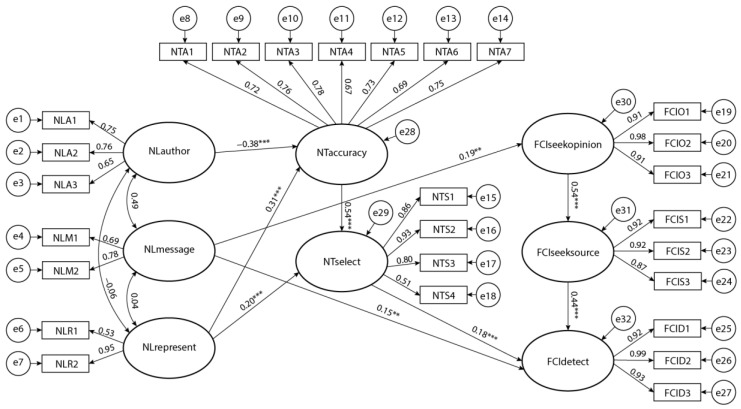
“News literacy was measured using three subdimensions: (1) authors and audiences (NLauthor), (2) messages and meanings (NLmessage), and (3) representation and reality (NLrepresent) [104].”
MethodHameleers, M. (2022) · Information, Communication & Society · doi:10.1080/1369118x.2020.1764603 · Cited by 223 · cited 4×
“Several authors have recognized the need to investigate (news) literacy concerning the spread of misinformation [36,54–57].”
BackgroundInfluentialCOVIDLies: Detecting COVID-19 Misinformation on Social Media
Hossain, T., Logan IV, R. L., Ugarte, A., Matsubara, Y., Young, S., & Singh, S. (2020) · Proceedings of the 1st Workshop on NLP for COVID-19 (Part 2) at EMNLP 2020 · doi:10.18653/v1/2020.nlpcovid19-2.11 · Cited by 208 · cited 1×
“Accordingly, social media have become a misinformation-prone environment [14–16] with favorable conditions for misinformation to flourish due to the lack of gatekeeping and regulations [17,18].”
BackgroundDesigning and Testing News Literacy Messages for Social Media
Tully, M., Vraga, E. K., & Bode, L. (2020) · Mass Communication and Society · doi:10.1080/15205436.2019.1604970 · Cited by 195 · cited 2×
“Prior research [63,110] suggested that even those with a high level of news literacy may not apply their knowledge to differentiate between low-and high-quality information.”
BackgroundMethodNguyen, A., & Catalan-Matamoros, D. (2020) · Media and Communication · doi:10.17645/mac.v8i2.3352 · Cited by 183 · cited 1×
“This refers to recognizing scientific facts and perspectives in combating sensation-alist bias and the verification of content [71], which has been described as the starting point of the efforts combating false online health and science information [72,73].”
BackgroundOrhan, A. (2023) · Smart Learning Environments · doi:10.1186/s40561-023-00248-8 · Cited by 183 · cited 2×
“Thirdly, similar to existing research about user fact-checking behavior [43,52], we found that the more users were aware that the news creators used various techniques to depict COVID-19, the more they intended to check other users’ opinions [54] of these news creators and use online tools for…”
BackgroundMethodTactics of news literacy: How young people access, evaluate, and engage with news on social media
Swart, J. (2023) · New Media & Society · doi:10.1177/14614448211011447 · Cited by 163 · cited 8×
“Prior research [63,110] suggested that even those with a high level of news literacy may not apply their knowledge to differentiate between low-and high-quality information.”
BackgroundMethodInfluentialInformation disorder, fake news and the future of democracy
Monsees, L. (2021) · Globalizations · doi:10.1080/14747731.2021.1927470 · Cited by 152 · cited 1×
“Researching the impact of existing media literacy skills on tackling misinformation was crucial in the context of health crises [54] and beyond [56,88].”
BackgroundNews media literacy, perceptions of bias, and interpretation of news
Tully, M., Vraga, E. K., & Smithson, A.-B. (2018) · Journalism · doi:10.1177/1464884918805262 · Cited by 146 · cited 2×
“A previous study [46] revealed that even those with a high level of news literacy might not apply their knowledge to differentiate between high-and low-quality information.”
BackgroundWei, L., Gong, J., Xu, J., Abidin, N. E. Z., & Apuke, O. D. (2022) · Telematics and Informatics · doi:10.1016/j.tele.2022.101910 · Cited by 145 · cited 2×
“However, there are discrepancies when it comes to utilizing one’s knowledge and skills related to news production in everyday life [63], especially on social media, where low (digital) literacy leads to lower misinformation detection [50,51,53].”
BackgroundKoch, T. K., Frischlich, L., & Lermer, E. (2023) · Journal of Applied Social Psychology · doi:10.1111/jasp.12959 · Cited by 140 · cited 2×
“This refers to recognizing scientific facts and perspectives in combating sensation-alist bias and the verification of content [71], which has been described as the starting point of the efforts combating false online health and science information [72,73].”
BackgroundChowdhury, N. A., Khalid, A., & Turin, T. C. (2021) · Journal of Public Health · doi:10.1007/s10389-021-01565-3 · Cited by 132 · cited 1×
“Accordingly, social media have become a misinformation-prone environment [14–16] with favorable conditions for misinformation to flourish due to the lack of gatekeeping and regulations [17,18].”
BackgroundAmazeen, M. A., & Bucy, E. P. (2019) · Journal of Broadcasting & Electronic Media · doi:10.1080/08838151.2019.1653101 · Cited by 128 · cited 1×
“Namely, our study stresses that users’ awareness of the quality of both the author and the message is essential for users to develop trust in news content, check information, and retrieve accurate information supported by previous findings [55–58].”
BackgroundMetzger, M. J., Flanagin, A. J., Markov, A., Grossman, R., & Bulger, M. (2015) · Journal of Children and Media · doi:10.1080/17482798.2015.1056817 · Cited by 119 · cited 1×
“This indicates differences in understanding media messages and can lead to the misjudgment of information, which is why they suggest literacy as the solution for not recognizing misinformation [96].”
BackgroundKarlsen, R., & Aalberg, T. (2023) · Digital Journalism · doi:10.1080/21670811.2021.1945938 · Cited by 119 · cited 2×
“This network also affects the perception of the credibility of the information they receive, as does the social media platform through which they receive it [90].”
BackgroundBridgman, A., Merkley, E. D., Loewen, P. J., et al. (2020) · doi:10.31219/osf.io/6tcdn · Cited by 113 · cited 1×
“Social media exposure was linked with misperceptions about COVID-19, and the reverse was true for news media [93,94].”
BackgroundTrust or Bust?: Questioning the Relationship Between Media Trust and News Attention
Williams, A. E. (2012) · Journal of Broadcasting & Electronic Media · doi:10.1080/08838151.2011.651186 · Cited by 107 · cited 3×
“If we understand critical thinking as the attitude toward the content [66], i.e., news trust, examining its role, with news literacy on one side and fact-checking intent on the other side, is meaningful.”
BackgroundVraga, E., Tully, M., & Bode, L. (2022) · New Media & Society · doi:10.1177/1461444821998691 · Cited by 100 · cited 9×
“More social media users were found to spread misinformation unwittingly on social media than those who shared it knowingly [54].”
BackgroundInfluential#COVID-19: Forms and drivers of social media users’ engagement behavior toward a global crisis
Azer, J., Blasco‐Arcas, L., & Harrigan, P. (2021) · Journal of Business Research · doi:10.1016/j.jbusres.2021.06.030 · Cited by 96
Chan, M. (2022) · New Media & Society · doi:10.1177/14614448221127675 · Cited by 89
Fact-Checking the Crisis: COVID-19, Infodemics, and the Platformization of Truth
Cotter, K., DeCook, J. R., & Kanthawala, S. (2022) · Social Media + Society · doi:10.1177/20563051211069048 · Cited by 88 · cited 1×
“On the contrary, Twitter was initially less communicative about misinformation debunking in their official stance but changed course in 2021 with the Birdwatch community-based model of fact-checking [76].”
BackgroundFactors Affecting Vaccine Attitudes Influenced by the COVID-19 Pandemic
Altman, J. D., Miner, D. S., Lee, A. A., Asay, A. E., Nielson, B. U., Rose, A. M., Hinton, K., & Poole, B. D. (2023) · Vaccines · doi:10.3390/vaccines11030516 · Cited by 82 · cited 1×
“These conditions have also influenced the sharing of misinformation about COVID-19 [23] due to low digital health literacy and scarce general medical knowledge in the background of vaccination and disease spreading [29–31].”
BackgroundFake News and the Third-Person Effect: They are More Influenced than Me and You
Ștefăniță, O., Corbu, N., & Buturoiu, R. (2018) · Journal of Media Research · doi:10.24193/jmr.32.1 · Cited by 81 · cited 4×
“…and news trust can be a foundation for researchers who focus their studies on examining misinformation on social media and even those who create courses, guidelines, and news-literacy-based educational frameworks for users since the effectiveness of educational efforts was under question [83].”
BackgroundMethodInfluentialVelichety, S., & Shrivastava, U. (2022) · International Journal of Information Management · doi:10.1016/j.ijinfomgt.2022.102474 · Cited by 73 · cited 1×
“These conditions have also influenced the sharing of misinformation about COVID-19 [23] due to low digital health literacy and scarce general medical knowledge in the background of vaccination and disease spreading [29–31].”
BackgroundThe Negative Impact of Social Media during COVID-19 Pandemic
Lelisho, M. E., Pandey, D., Alemu, B. D., Pandey, B. K., & Tareke, S. A. (2022) · Trends in Psychology · doi:10.1007/s43076-022-00192-5 · Cited by 72 · cited 1×
“…therefore, findings with potentially broader use, as we concluded that news literacy affects news trust, and both finally explain fact-checking intent, offering an attempt at a holistic assessment of the value of news literacy in combating misinformation, as called for in previous research [4,40,44].”
BackgroundNevertheless, partisanship persisted: fake news warnings help briefly, but bias returns with time
Grady, R. H., Ditto, P. H., & Loftus, E. F. (2021) · Cognitive Research: Principles and Implications · doi:10.1186/s41235-021-00315-z · Cited by 68 · cited 2×
“Warnings may have a meaningful immediate impact but may not maintain this effect in the long term, as the misinformation and correct information become more and more dissociated over time [45].”
BackgroundNews consumption and risk perception of Covid-19 in Spain
Mora, A., & López, I. M. (2021) · Comunicar · doi:10.3916/c66-2021-06 · Cited by 67 · cited 1×
“Namely, another previous study [111] substantiated the positive relationship between news exposure and risk perception.”
ResultApuke, O. D., Omar, B., & Tunca, E. A. (2022) · Child & Youth Services · doi:10.1080/0145935x.2021.2024758 · Cited by 65 · cited 3×
“However, there are discrepancies when it comes to utilizing one’s knowledge and skills related to news production in everyday life [63], especially on social media, where low (digital) literacy leads to lower misinformation detection [50,51,53].”
BackgroundLee, J., Choi, J., & Britt, R. K. (2021) · Health Communication · doi:10.1080/10410236.2021.1996920 · Cited by 64 · cited 2×
“Social media exposure was linked with misperceptions about COVID-19, and the reverse was true for news media [93,94].”
BackgroundOmar, B., Apuke, O. D., & Nor, Z. M. (2023) · Current Psychology · doi:10.1007/s12144-023-04343-4 · Cited by 56 · cited 1×
“Accord-ingly, users can self-assess the reliability of information, share high-quality information regarding COVID-19 [36,54,60,61], and make well-informed decisions based on media literacy knowledge supported by (AI) tools for fact-checking [62].”
BackgroundMeta-reflexivity for resilience against disinformation
Golob, T., Makarovič, M., & Rek, M. (2021) · Comunicar · doi:10.3916/c66-2021-09 · Cited by 55
Social media and COVID-19 misinformation: how ignorant Facebook users are?
Al-Zaman, M. S. (2021) · Heliyon · doi:10.1016/j.heliyon.2021.e07144 · Cited by 49 · cited 1×
“With social media becoming the prime source of information during the pandemic [67–69], the influence associated with journalistic professionals and, consequently, the trust in the credibility of their work changed significantly.”
BackgroundWeikmann, T., & Lecheler, S. (2024) · Digital Journalism · doi:10.1080/21670811.2023.2194665 · Cited by 49 · cited 1×
“In addition, Arti-ficial Intelligence (AI) has also recently been playing a noticeable role in the production and dissemination of misinformation [10].”
BackgroundAhn, J., & Kahlor, L. A. (2019) · Health Communication · doi:10.1080/10410236.2019.1626535 · Cited by 46 · cited 3×
“The measuring instrument proposed in the current study relied on existing research [81–83, 89, 104 To ensure the face validity of the measuring instrument, the initial item pool was reviewed by an expert panel consisting of five expert researchers in the field of Media Communication.”
BackgroundMethodLee, S., Gil de Zúñiga, H., & Munger, K. (2023) · Human Communication Research · doi:10.1093/hcr/hqad019 · Cited by 43 · cited 3×
“It is plausible that some other factors exist, such as the perception of the risk [109] of acquiring COVID-19.”
BackgroundInfluentialKožuh, I., Hintermair, M., & Debevc, M. (2016) · Computers in Human Behavior · doi:10.1016/j.chb.2016.08.035 · Cited by 42 · cited 2×
“Due to convergent validity issues, we dropped the items with factor loadings lower than 0.5 [105]: four items in the variable ‘NLmessage’ as well as one item in the variables ‘NLauthor’, ‘NLrepresent’, and ‘NTaccuracy’.”
BackgroundMethodInfluentialSelf-citationDialogic Content Analysis of Misinformation about COVID- 19 on Social Media in Pakistan
Rafi, M. S. (2020) · Linguistics and Literature Review · doi:10.32350/llr.v6i2.960 · Cited by 42
Rodríguez-Pérez, C., & Canel, M. J. (2023) · Media and Communication · doi:10.17645/mac.v11i2.6317 · Cited by 41 · cited 2×
“One of the reasons may be that news literacy may cause a higher level of cautiousness towards news on social media [54,97,98].”
BackgroundWagner, A., & Reifegerste, D. (2021) · Health Communication · doi:10.1080/10410236.2021.1989786 · Cited by 40 · cited 1×
“The individual users with large online followings that were the most vocal about the disease and its handling transformed into opinion leaders who could shape the perception of their followers and influence their news trust [70].”
BackgroundKožuh, I., & Čakš, P. (2021) · International Journal of Environmental Research and Public Health · doi:10.3390/ijerph182412986 · Cited by 39 · cited 4×
“Taking this phenomenon in terms of prior knowledge, if news includes false beliefs it increases the level of trust, even though the news is untrustworthy [47].”
BackgroundInfluentialSelf-citationKnudsen, E., Nordø, Å. D., & Iversen, M. H. (2023) · Political Communication · doi:10.1080/10584609.2023.2168322 · Cited by 38 · cited 2×
“This is in line with prior research [64], which revealed that news trust grew significantly during the recent international health crisis of COVID-19.”
BackgroundResultGu, J., He, R., Wu, X., Tao, J., Ye, W., & Wu, C. (2022) · Frontiers in Public Health · doi:10.3389/fpubh.2022.843787 · Cited by 35 · cited 1×
“As the spread of public health misinformation could result in significant harm to (mental) health [3,19,20] or even life [21], combating misinformation should be one of the top concerns in media content today.”
BackgroundMotivation and perception of Hong Kong university students about social media news
Kong, Q., Ku, K. Y. L., Deng, L., & Au, A. C. Y. (2021) · Comunicar · doi:10.3916/c67-2021-03 · Cited by 33 · cited 1×
“This finding is congruent with previous studies, where it was found that high-news-literacy students were shown to be more inclined to seek out news for socializing than their low-news-literacy counterparts [113].”
ResultKruijt, J., Meppelink, C. S., & Vandeberg, L. (2022) · European Journal of Health Communication · doi:10.47368/ejhc.2022.203 · Cited by 31 · cited 2×
“Thirdly, similar to existing research about user fact-checking behavior [43,52], we found that the more users were aware that the news creators used various techniques to depict COVID-19, the more they intended to check other users’ opinions [54] of these news creators and use online tools for…”
BackgroundMethodPatwary, M. M., Bardhan, M., Browning, M. H. E. M., Disha, A. S., Haque, M. Z., Billah, S. M., Kabir, M. P., Hossain, M. R., Alam, M. A., Shuvo, F. K., et al. (2021) · Healthcare · doi:10.3390/healthcare10010024 · Cited by 30 · cited 1×
“All of them were Facebook users [47], which led to us examining relevant social media platforms, as Facebook identified around 90 million pieces of content that circulated false information about COVID-19 in only two months in 2020 [102].”
BackgroundWu, G., Deng, X., & Liu, B. (2021) · Cities · doi:10.1016/j.cities.2021.103490 · Cited by 28 · cited 1×
“Namely, existing research [84] revealed a correlation between users’ positive attitudes towards fact-checking and their intent to examine information critically before sharing it further due to an acknowledgement that they may spread false information to other users, leading to false narratives and…”
BackgroundNahidh, M., Al-Khawaja, N. F. K., Jasim, H. M., Cervino, G., Cicciù, M., & Minervini, G. (2023) · Dentistry Journal · doi:10.3390/dj11020048 · Cited by 27
How do we raise media bias awareness effectively? Effects of visualizations to communicate bias
Spinde, T., Jeggle, C., Haupt, M., Gaissmaier, W., & Giese, H. (2022) · PLoS ONE · doi:10.1371/journal.pone.0266204 · Cited by 25 · cited 2×
“…therefore, findings with potentially broader use, as we concluded that news literacy affects news trust, and both finally explain fact-checking intent, offering an attempt at a holistic assessment of the value of news literacy in combating misinformation, as called for in previous research [4,40,44].”
BackgroundSocial Media Literacy in Crisis Context: Fake News Consumption during COVID-19 LockdownPreprint
Ouédraogo, N. (2020) · SSRN Electronic Journal · doi:10.2139/ssrn.3601466 · Cited by 24 · cited 1×
“…news on social media, it depends mainly on how they perceive their practical, intellectual, and emotional abilities to tackle the news, in the way of creating the content, assessing the technicalities of the platform that offers the information, and detecting misleading information [15,63,87].”
BackgroundȘtefăniță, O., & Ivan, L. (2018) · Journal of Media Research · doi:10.24193/jmr.31.1 · Cited by 23
Abonizio, H., Barbon, A. P. A. D. C., Rodrigues, R., Santos, M. C. D. S., Martínez‐Vizcaíno, V., Mesas, A. E., & Barbon, S. (2023) · International Journal of Medical Informatics · doi:10.1016/j.ijmedinf.2023.105134 · Cited by 22 · cited 1×
“Accord-ingly, users can self-assess the reliability of information, share high-quality information regarding COVID-19 [36,54,60,61], and make well-informed decisions based on media literacy knowledge supported by (AI) tools for fact-checking [62].”
BackgroundWu, Y. (2023) · Psychology Research and Behavior Management · doi:10.2147/prbm.s404911 · Cited by 21 · cited 2×
“As the spread of public health misinformation could result in significant harm to (mental) health [3,19,20] or even life [21], combating misinformation should be one of the top concerns in media content today.”
BackgroundLi, T., Wang, X., Yu, Y., Yu, G., & Tong, X. (2023) · Systems · doi:10.3390/systems11010045 · Cited by 20 · cited 1×
“Misinformation about COVID-19 has been challenging to define due to its multi-layered nature, different perceptions among various subgroups of the population [28], and ongoing new scientific findings replacing existing ones [26].”
BackgroundSource alerts can reduce the harms of foreign disinformation
Arnold, J. R., Reckendorf, A., & Wintersieck, A. (2021) · Harvard Kennedy School Misinformation Review · doi:10.37016/mr-2020-68 · Cited by 19
Exploring the Effect of Misinformation on Infectious Disease Transmission
Mumtaz, N., Green, C., & Duggan, J. (2022) · Systems · doi:10.3390/systems10020050 · Cited by 19 · cited 1×
“As the spread of public health misinformation could result in significant harm to (mental) health [3,19,20] or even life [21], combating misinformation should be one of the top concerns in media content today.”
BackgroundAl-Aghbari, A. A., Hassan, O. E. H., Iang, M. D., Jahn, A., Horstick, O., & Dureab, F. A. (2023) · Healthcare · doi:10.3390/healthcare11070952 · Cited by 17 · cited 2×
“These conditions have also influenced the sharing of misinformation about COVID-19 [23] due to low digital health literacy and scarce general medical knowledge in the background of vaccination and disease spreading [29–31].”
BackgroundPandemic and the media: How risk information seeking influences media trust and emotions
Guo, W., & Bai, Q. (2022) · Computers in Human Behavior · doi:10.1016/j.chb.2022.107522 · Cited by 16
Oeldorf-Hirsch, A., Schmierbach, M., Appelman, A., & Boyle, M. (2023) · American Behavioral Scientist · doi:10.1177/00027642231174335 · Cited by 15
Strategies for the Minimisation of Misinformation Spread Through the Local Media Environment
Fišer, S. Ž., & Čakš, P. (2023) · Journalism Practice · doi:10.1080/17512786.2023.2183235 · Cited by 14 · cited 1×
“Misinformation during COVID-19 increased the need for information verification awareness for content providers and audiences [116].”
BackgroundSelf-citationEffects of social media empowerment on COVID-19 preventive behaviors in China
Lu, J., Wang, X., Fei, L., Chen, G., & Feng, Y. (2023) · Information Technology and People · doi:10.1108/itp-05-2022-0412 · Cited by 13
COVID-19: Misinformation Can Kill.
Aghagoli, G., Siff, E. J., Tillman, A. C., & Feller, E. R. (2020) · PubMed · Cited by 12
User Perceptions of AI-Based Comment Filtering Technology
Oh, Y. W., & Park, C. H. (2023) · American Behavioral Scientist · doi:10.1177/00027642231174331 · Cited by 11 · cited 1×
“Machine and Deep Learning have become ready-made tools, available to individuals in the comfort of their homes [11] through AI-powered chatbots [12] (p. 2), enhanced features, and deep fake tools, as advertised on social media [13] (p. 2).”
BackgroundEvaluating the elevation of authoritative health content online during the COVID-19 pandemic
Walsh, M., Baker, S. A., & Wade, M. (2022) · Online Information Review · doi:10.1108/oir-12-2021-0655 · Cited by 10 · cited 1×
“Thus, major tech companies introduced warnings about false information, automated fact-checking, and tools for users to tag false news manually [36–38].”
BackgroundAn ‘Infodemic’ in the Pandemic: Human Rights and Covid-19 Misinformation
Abrusci, E., Dubberley, S., & McGregor, L. (2020) · Brunel University Research Archive (BURA) (Brunel University London) · doi:10.5526/xgeg-xs42_036 · Cited by 8 · cited 4×
“Several authors have recognized the need to investigate (news) literacy concerning the spread of misinformation [36,54–57].”
BackgroundInfluentialCombatting Fake News: A Global Priority Post COVID-19
Gutiérrez, E. C., & Marín, C. (2023) · Societies · doi:10.3390/soc13070160 · Cited by 7 · cited 1×
“This refers to recognizing scientific facts and perspectives in combating sensation-alist bias and the verification of content [71], which has been described as the starting point of the efforts combating false online health and science information [72,73].”
BackgroundAshley, S. (2019) · Wiley eBooks · doi:10.1002/9781118841570.iejs0045 · Cited by 7 · cited 2×
“News literacy, according to Ashley [86], represents a variety of abilities and the expertise needed to traverse the complex media landscape successfully [86].”
BackgroundGuo, S., Lin, T., Akhtar, N., & Du, J. (2022) · Healthcare · doi:10.3390/healthcare11010121 · Cited by 6 · cited 2×
“Another opportunity is to spread the research across other social media platforms, as was the case in previous studies [2,6,54], and the range of crisis topics is up to researchers themselves.”
BackgroundZhang, X., Pan, Y., Wang, Y., Xu, C., & Sun, Y. (2023) · Systems · doi:10.3390/systems11060290 · Cited by 2 · cited 1×
“Individuals have been surpassing media outlets to become critical players in information diffusion [9].”
Background(2017)
Research works printed but not linked: 5
- Dash B. Sharma P. Are ChatGPT and deepfake algorithms endangering the cybersecurity industry? A review Int. J. Eng. Appl. Sci. 2023 10
- European Commission A multi-dimensional approach to disinformation TNS Political Soc. Eur. Comm. 2018 2 10.2759/0156 · doi:10.2759/0156
- Mansell R. Ang P.H. The International Encyclopedia of Digital Communication and Society Wiley-Blackwell Hoboken, NJ, USA 2015
- DeVellis R.F. Scale Development: Theory and Applications Sage Publications Los Angeles, CA, USA London, UK New Delhi, India Singapore Washington, DC, USA Melbourne, Australia 2016 Volume 26
- Hair J.F. Black W.C. Babin B.J. Anderson R.E. Tatham R.L. Multivariate Data Analysis Prentice Hall Hoboken, NJ, USA 2010
Cited by
Lan, D. H., & Tung, T. M. (2024) · Cogent Social Sciences · doi:10.1080/23311886.2024.2302216 · Cited by 134
“…findings of recent studies that emphasize the role of social validation and external verification in combatting misin-formation (Chia et al., 2022; Kožuh & Čakš, 2023). these practices highlight the adaptive strategies users employ in the absence of formal education, emphasizing the importance of…”
How Entrepreneurs Perceive Technology in the Digital Era: From Aversion to Adoption
Sánchez, J. G. N. (2025) · Ceniiac · doi:10.64923/ceniiac.e0002 · Cited by 28
Chung, D., Zhang, Y., Wang, J., & Meng, Y. (2025) · Healthcare · doi:10.3390/healthcare13111354 · Cited by 3
“Third, although growing research presents mixed findings on the association between false health information exposure and fact-checking intent in Western contexts [23,24], empirical evidence remains limited for oral health misinformation in collectivist societies like China.”
Burcă-Voicu, M. I., Cramarenco, R. E., & Dabija, D. (2025) · Oeconomia Copernicana · doi:10.24136/oc.3386 · Cited by 10
“There are different degrees of freedom vs. restriction, with a dominant focus either on educating the consumer to recognize fake news in general (Kožuh & Čakš, 2023) or on companies adapting to the legal framework (Gupta et al. , 2022).”
Medical Journalism: Need of the Hour in the Digital Age
Singhania, M. A., Dattani, J. P., & Aggarwal, P. (2025) · Journal of Health and Allied Sciences NU · doi:10.25259/jhasnu_44_2025 · Cited by 2
Metadata
- Authors
- Kožuh, I., & Čakš, P.
- Affiliations
- University of Maribor (SI)
- Corresponding author
- Kožuh, Ines
- Venue
- Healthcare
- Publisher
- MDPI AG
- Published
- 2023-10-22
- Volume
- 11
- Issue
- 20
- Pages
- 2796
- ISSN
- 2227-9032 (ISSN-L)
- PMC
- PMC10606871
- OpenAlex
- W4387859887
- Semantic Scholar
- 585b4fef5019abcde4f7fbed0bda8148ae7889d0
- Cited by
- 21
- References
- 93
- Citations by year
- 2026: 9 · 2025: 9 · 2024: 3
- FWCI
- 9.02
- Type
- journal article
- Language
- en
- Open access
- gold
- doi.org
- Licence
- Locations
- Healthcare (publishedVersion, cc-by)
- PubMed Central (publishedVersion, cc-by)
- PubMed (publishedVersion)
- University of Maribor digital library (University of Maribor) (submittedVersion, cc-by)
- Topics
- Social Sciences › Sociology and Political Science › Misinformation and Its Impacts
- Health Sciences › Health Professions › General Health Professions › Health Literacy and Information Accessibility
- Social Sciences › Communication › Communication and COVID-19 Impact
- Keywords
- fact-checking, news literacy, news trust, health misinformation, social media, COVID-19 pandemic, misinformation detection, user behavior
About these checks
Registry, retraction, Cites and statistics results are computed, not judged, with one exception: a printed reference that no index lists is read once by a model before it counts as a citation error. Claims are extracted by a model and kept only when their quote appears verbatim in the text; each cited source is then checked, with a model’s help, for whether it says what the claim relies on. Those verdicts can be wrong — read the claim’s quote and the cited source before relying on one.
Statistics and arithmetic are recomputed, not judged.
Confidence bands are shown only for fields calibrated on our annotated test set. None is calibrated yet, so no band is shown.
What counts as a claim ›How we measure confidence ›How we check this ›
Are you an author, or do you see a problem with this page? Request a review
Data sources
Bibliographic data: Semantic Scholar, OpenAlex, Crossref.
Contains information from the Semantic Scholar Academic Graph Datasets, made available under the ODC Attribution License (ODC-BY 1.0).
Semantic Scholar’s data is described in: Kinney, R., et al. (2023). The Semantic Scholar Open Data Platform. arXiv:2301.10140.
