

Fear of Missing Out as a Predictor of Problematic Social Media Use and Phubbing Behavior among Flemish Adolescents
Open accessThe DOI matches its Crossref record; 58 of the 58 references it cites were found in a registry or an index.
Abstract
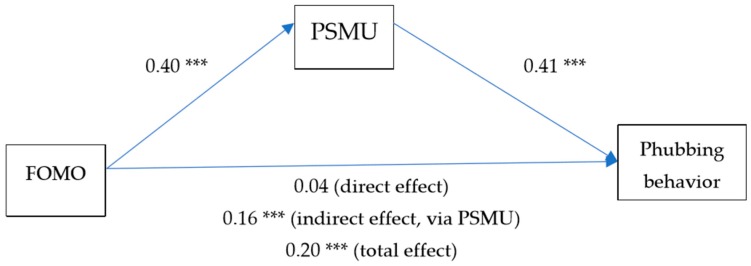
Fear-of-missing-out (FOMO) refers to feelings of anxiety that arise from the realization that you may be missing out on rewarding experiences that others are having. FOMO can be identified as an intra-personal trait that drives people to stay up to date of what other people are doing, among others on social media platforms. Drawing from the findings of a large-scale survey study among 2663 Flemish teenagers, this study explores the relationships between FOMO, social media use, problematic social media use (PSMU) and phubbing behavior. In line with our expectations, FOMO was a positive predictor of both how frequently teenagers use several social media platforms and of how many platforms they actively use. FOMO was a stronger predictor of the use of social media platforms that are more private (e.g., Facebook, Snapchat) than platforms that are more public in nature (e.g., Twitter, Youtube). FOMO predicted phubbing behavior both directly and indirectly via its relationship with PSMU. These findings support extant research that points towards FOMO as a factor explaining teenagers’ social media use.
Overview
The claims and statistics of this paper haven’t been checked yet.
Free: it reads the open-access text and checks the first 5 claims that cite a source we can check. Create a free account to check every claim.
Integrity signals
Registry
Cites
Statistics
Figures
Verification
Claims the paper makes
The claims and statistics of this paper haven’t been checked yet.
Free: it reads the open-access text and checks the first 5 claims that cite a source we can check. Create a free account to check every claim.
Claims other papers make about this one
Each is checked against this paper’s own text: does it say what the citing paper says it does?
In the citing paper
“For example, social network addiction is positively related to FOMO (Franchina et al., 2018; Gezgin, 2018), and this relation is mediated by feelings of envy (Yin et al., 2019).”
From Centennials, FOMO, and loneliness: an investigation of the impact of social networking and messaging/voip apps usage during the initial stage of the coronavirus pandemic (2021) · cites this paper as Franchina et al., 2018
Self-check
Percentages, sums and reported differences re-computed from the paper’s own numbers.
The self-check needs the paper’s full text.
Citations
Cites
The theory of planned behavior
Ajzen, I. (1991) · Organizational Behavior and Human Decision Processes · doi:10.1016/0749-5978(91)90020-t · Cited by 90,587
Intrinsic Motivation and Self-Determination in Human Behavior
Deci, E. L., & Ryan, R. M. (1985) · doi:10.1007/978-1-4899-2271-7 · Cited by 26,772 · cited 1×
“[8], FOMO originates from psychological deficits in people’s competence and relatedness needs [9].”
BackgroundThe need to belong: Desire for interpersonal attachments as a fundamental human motivation.
Baumeister, R. F., & Leary, M. R. (1995) · Psychological Bulletin · doi:10.1037//0033-2909.117.3.497 · Cited by 23,245 · cited 1×
“This desire, which is grounded in people’s need to belong, is an innate and fundamental motivation which humans have [14].”
BackgroundUsers of the world, unite! The challenges and opportunities of Social Media
Kaplan, A. M., & Haenlein, M. (2010) · Business Horizons · doi:10.1016/j.bushor.2009.09.003 · Cited by 17,875 · cited 4×
“0, and that allow the creation and exchange of User Generated Content” [15,16], offer a place where users can keep in touch with their social circles.”
BackgroundMethodInfluentialSocial network sites: definition, history, and scholarship
boyd, D. M., & Ellison, N. B. (2007) · Journal of Computer-Mediated Communication · doi:10.1111/j.1083-6101.2007.00393.x · Cited by 16,251
Making sense of cronbach’s alpha.
Tavakol, M., & Dennick, R. (2011) · International Journal of Medical Education · doi:10.5116/ijme.4dfb.8dfd · Cited by 15,126
Possessions and the Extended Self
Belk, R. W. (1988) · Journal of Consumer Research · doi:10.1086/209154 · Cited by 9,064 · cited 2×
“In addition to the personal mind and physical body, the Self can be thought to include people, places, physical possessions, as well as affiliation groups to which a person feels attached [19].”
BackgroundTests for comparing elements of a correlation matrix
Steiger, J. H. (1980) · Psychological Bulletin · doi:10.1037/0033-2909.87.2.245 · Cited by 4,621 · cited 2×
“Next, we calculated the Pearson correlation coefficients, which form the input for the Steiger’s Z-test.”
MethodKim, H.-Y. (2013) · Restorative Dentistry & Endodontics · doi:10.5395/rde.2013.38.1.52 · Cited by 4,035 · cited 2×
“Advised critical values for skewness, respectively kurtosis in large samples are 2, respectively 7 [56].”
BackgroundMethodMotivational, emotional, and behavioral correlates of fear of missing out
Przybylski, A. K., Murayama, K., DeHaan, C. R., & Gladwell, V. (2013) · Computers in Human Behavior · doi:10.1016/j.chb.2013.02.014 · Cited by 3,932 · cited 3×
“FOMO refers to the “pervasive apprehension that others might be having rewarding experiences from which one is absent” [8].”
BackgroundMethod
Research works printed but not linked: 6
- Katz E. Blumler J.G. The Uses of Mass Communications: Current Perspectives on Gratifications Research Sage Publications Beverly Hills, CA, USA 1974
- Griffiths M.D. Kuss D.J. Adolescent Social Media Addiction (revised) Educ. Health 2017 35 49 52
- Meerkerk G. Pwned by the Internet Explorative research into the causes and consequences of compulsive internet use Ph.D. Thesis Erasmus University Rotterdam, The Netherlands 2007
- Allen I.E. Seaman C.A. Likert scales and data analyses Qual. Prog. 2007 40 64 65
- Hayes A.F. Introduction to Mediation, Moderation, and Conditional Process. Analysis Guilford Press New York, NY, USA 2013
- Beck A.T. Cognitive therapy of depression: New perspectives Treatment of Depression: Old Controversies and New Approaches Clayton P.J. Barrett J.E. Raven Press New York, NY, USA 1983 265 290
Cited by
Items 101–200 of 411
Çelik, F., Köseoğlu, M. A., & Elhai, J. D. (2022) · International Journal of Human-Computer Interaction · doi:10.1080/10447318.2022.2097783 · Cited by 25
“Accordingly, several research papers have found a positive relationship between FoMO and phubbing behavior (e.g., Chotpitayasunondh & Douglas, 2016; Franchina et al., 2018; Tandon et al., 2022).”
BackgroundBinder, A., Stević, A., Matthes, J., & Thomas, M. F. (2024) · New Media & Society · doi:10.1177/14614448241270542 · Cited by 25
“…(. . . )” (Przybylski et al., 2013: 1841) Whether individuals experience FOMO depends on many sociodemographic variables (e.g. age; Appel et al., 2019; Casale and Fioravanti, 2020), personality traits (e.g. Blackwell et al., 2017), or also the type of platforms used (e.g. Franchina et al., 2018).”
Li, Y.-X., Zhang, Y., Yang, R., Lian, S.-L., Yan, L., & Zhu, X.-M. (2021) · International Journal of Mental Health and Addiction · doi:10.1007/s11469-021-00696-8 · Cited by 34
“” They will constantly focus on their phones because they are afraid of missing something and thus ignore people or things around them, leading to the occurrence of phubbing (Franchina et al., 2018).”
BackgroundFear of Missing Out (FoMO) and its relation with Depression and Anxiety among University Students
Ibrahim, S. A. S., Dahlan, A., Pauzi, N. W. M., & Vetrayan, J. (2022) · Environment-Behaviour Proceedings Journal · doi:10.21834/ebpj.v7i20.3358 · Cited by 35
“A previous study suggests that individuals who experience FoMO may attempt to reduce the anxious feeling by checking up on other people through social media (van Rooij et al., 2018).”
BackgroundSocial media ills and evolutionary mismatches: a conceptual framework
Lim, A. J., & Tan, E. (2024) · Evolutionary Psychological Science · doi:10.1007/s40806-024-00398-z · Cited by 18
“FOMO represents the cognitive bias related to one’s perceived social resources and is a key driver of the severity of problematic use (Dempsey et al., 2019; Elhai et al., 2020; Franchina et al., 2018).”
Fear of Missing Out and Problematic Social Media Use: A Research Among University Students in Turkey
KIRIK, A. M., Çetinkaya, A., & Gündüz, U. (2021) · AJIT-e Academic Journal of Information Technology · doi:10.5824/ajite.2021.04.001.x · Cited by 31
“PSMU, is defined as an unhealthy excessive form of social media use, which is characterized by a lack of control over the behavior and continued behavior despite adverse life consequences (Franchina et al., 2018; Fang et al., 2020).”
BackgroundCross-lagged analysis of problematic social media use and phubbing among college students
Lv, S., & Wang, H. (2023) · BMC Psychology · doi:10.1186/s40359-023-01062-0 · Cited by 18
“[29] and contains 7 items, with the sample question "I find it difficult not to use social media".”
BackgroundDadiotis, A., & Ρούσσος, Π. (2023) · Journal of Technology in Behavioral Science · doi:10.1007/s41347-023-00340-3 · Cited by 28
“Concerning the breadth of SNS usage, it has been suggested that different media may satisfy different needs (Franchina et al., 2018).”
InfluentialLeu, J., Tay, Z., van Dam, R. M., Müller‐Riemenschneider, F., Lean, M. E. J., Nikolaou, C. K., & Rebello, S. A. (2022) · Public Health Nutrition · doi:10.1017/s1368980022000398 · Cited by 23
“However, the high frequency of use also suggests that there is an underlying ‘fear of missing out’ on trends and events(33).”
BackgroundArgan, M. T., Koçak, F., Gürbüz, B., Argan, M., & Dinç, H. (2024) · World Leisure Journal · doi:10.1080/16078055.2023.2244452 · Cited by 17
“High FoMO individuals desire continual social interaction and awareness of what others are doing (Franchina et al., 2018).”
BackgroundCoco, G. L., Salerno, L., Giordano, C., Blasi, M. D., & Rodgers, R. F. (2020) · Current Psychology · doi:10.1007/s12144-020-00847-5 · Cited by 21
López, M. C. L. D. A., Catalina-García, B., & Ruiz, Y. P. (2022) · Communication & Society · doi:10.15581/003.35.2.1-17 · Cited by 28
van Essen, C. M., & Van Ouytsel, J. (2023) · Telematics and Informatics Reports · doi:10.1016/j.teler.2023.100087 · Cited by 14
Wang, H. (2024) · Psychology Research and Behavior Management · doi:10.2147/prbm.s452603 · Cited by 25
Santoro, G., Costanzo, A., Franceschini, C., Lenzo, V., Musetti, A., & Schimmenti, A. (2024) · International Journal of Environmental Research and Public Health · doi:10.3390/ijerph21030255 · Cited by 27
“…the role of PSMU in coping with psychological and interpersonal difficulties, also showing that PSMU is associated with several psychological vulnerabilities, such as emotion dysregulation [17–19], alexithymia [20,21], fear of missing out [22–24], low self-esteem [25–27], and loneliness [28,29].”
BackgroundLiu, N., Zhu, S., Zhang, W., Sun, Y., & Zhang, X. (2024) · Frontiers in Public Health · doi:10.3389/fpubh.2024.1374522 · Cited by 25
“Previous researches also demonstrated that individuals who experienced fear of missing out may attempt to reduce their anxiety by keeping on checking information about others through social media (19, 20).”
BackgroundThe Smart Use of Smartphones in Pediatrics
Solecki, S. (2020) · Journal of Pediatric Nursing · doi:10.1016/j.pedn.2020.06.001 · Cited by 15
Tufan, C., Köksal, K., & Griffiths, M. D. (2025) · International Journal of Mental Health and Addiction · doi:10.1007/s11469-025-01477-3 · Cited by 33
“This behavior can lead to ‘phubbing’, where individuals neglect their social surroundings for their smart-phones, weakening relationships (Fang et al., 2020; Franchina et al., 2018).”
InfluentialAlwuqaysi, B. (2025) · Social Sciences & Humanities Open · doi:10.1016/j.ssaho.2025.101793 · Cited by 27
Zhan, Y., Luo, L., & Hu, X. (2025) · BMC Psychology · doi:10.1186/s40359-025-03675-z · Cited by 31
“Problematic social media use (PSMU) is defined as a behavioral pattern marked by diminished control over social media engagement, leading to excessive and prolonged use that results in adverse physiological and psychological outcomes [3].”
Packer, J., & Flack, M. (2023) · International Journal of Mental Health and Addiction · doi:10.1007/s11469-023-01094-y · Cited by 20
“In addition, FOMO has been found to directly and independently associated with PSMU (Fioravanti et al., 2021; Franchina et al., 2018).”
Sensation seeking and social network addiction among college students: a moderated mediation model
Meng, Y., Li, M., & He, J. (2023) · Current Psychology · doi:10.1007/s12144-023-05189-6 · Cited by 15
“In addition to sensation seeking, previous studies have also pointed out that factors such as parenting style, and fear of missing out were important variables that influenced social network addiction (Franchina et al., 2018; Xian Li, 2013).”
Duradoni, M., Raimondi, T., Buttà, F., & Guazzini, A. (2023) · Human Behavior and Emerging Technologies · doi:10.1155/2023/6653652 · Cited by 26
Ji, C., Li, K., & He, Q. (2024) · Current Psychology · doi:10.1007/s12144-024-05753-8 · Cited by 19
“It is worth noting that access to social media apps is an essential way to satisfy these needs (Franchina et al., 2018 ), as the dynamic nature of these apps offer users a constant perception of value.”
Maftei, A., & Merlici, I.-A. (2022) · Current Psychology · doi:10.1007/s12144-022-02938-x · Cited by 22
“On the one hand, some studies reported significant gender differences, girls being more likely to use social media platforms and having a higher number of social media accounts (Franchina et al., 2018).”
Siongers, J., & Spruyt, B. (2023) · Child Indicators Research · doi:10.1007/s12187-023-10080-8 · Cited by 22
Ashrafi, D. M., & Akhter, M. (2024) · Journal of Modelling in Management · doi:10.1108/jm2-12-2023-0294 · Cited by 26
Oral, M., & Karakurt, N. (2025) · International Journal of Human-Computer Interaction · doi:10.1080/10447318.2024.2445098 · Cited by 19
“Younger individuals, particularly adolescents, are more susceptible to this cycle due to their hightened engagement with social media for peer validation and identity formation (Franchina et al., 2018; Nur-A Yazdani et al., 2022).”
Akıncı, H., & Durmuş, A. (2024) · Psychology, Health & Medicine · doi:10.1080/13548506.2024.2447008 · Cited by 15
“…establishes a link between FoMO and smartphone addiction, a critical gap remains in understanding how this relationship impacts overall happiness, particularly through the mediating roles of belongingness and FoMO (Abel et al., 2016; Franchina et al., 2018; Hayran & Anik, 2021; Sun et al., 2022).”
AYDOĞDU, F., & YAŞAR, S. (2022) · Pamukkale University Journal of Education · doi:10.9779/pauefd.1042303 · Cited by 17
Paul, J., Manchanda, P., Arora, N., & Aggarwal, A. (2023) · Journal of Research in Interactive Marketing · doi:10.1108/jrim-06-2023-0177 · Cited by 22
PERANAN FEAR OF MISSING OUT TERHADAP PROBLEMATIC SOCIAL MEDIA USE
Risdyanti, K. S., Faradiba, A. T., & Syihab, A. (2019) · Jurnal Muara Ilmu Sosial Humaniora dan Seni · doi:10.24912/jmishumsen.v3i1.3527 · Cited by 36
Qutishat, M. (2020) · Oman Medical Journal · doi:10.5001/omj.2020.116 · Cited by 16
Díaz, J. E. M., & Espinosa, L. A. M. (2020) · Revista Educación en Ingeniería · doi:10.26507/rei.v15n29.1037 · Cited by 13
“…presencia del uso patológico del Internet (PIU por sus siglas en inglés) y al miedo a perderse de algo (FOMO, Fear of Missing Out ); el primero asociado al uso excesivo y compulsivo [25,26] de internet, y el segundo relacionado con un problema de ansiedad propiciado por sentimiento de desconexión.”
BackgroundWhat Does “Being Informed” Mean? Assessing Social Media Users’ Self-Concepts of Informedness
Kümpel, A. S., Anter, L., & Unkel, J. (2022) · Media and Communication · doi:10.17645/mac.v10i3.5310 · Cited by 16
Akungu, O. A., Chien, K.-P., & Chen, S. (2021) · Current Psychology · doi:10.1007/s12144-021-01709-4 · Cited by 15
TEKNOLOJİYLE BAĞLANTILI YENİ DAVRANIŞSAL BOZUKLUKLAR / RECENT BEHAVIORAL DISORDERS DUE TO TECHNOLOGY
Kalip, K., & Çöl, M. (2020) · Eskişehir Türk Dünyası Uygulama ve Araştırma Merkezi Halk Sağlığı Dergisi · doi:10.35232/estudamhsd.712134 · Cited by 25
Influencing factors of social media addiction: a systematic review
Liang, M., Duan, Q., Liu, J., Wang, X., & Zheng, H. (2023) · Aslib Journal of Information Management · doi:10.1108/ajim-10-2022-0476 · Cited by 18
Predictors of social networking service addiction
Jo, H., & Baek, E.-M. (2023) · Scientific Reports · doi:10.1038/s41598-023-43796-2 · Cited by 19
“The conceptual foundation of our study is rooted in the dual factor model of SNS Use, which emphasizes the regulatory function of both positive and negative affects in SNS engagement 23 .”
MethodEffect of fear of missing out on learning burnout in medical students: a moderated mediation
Ye, X., Li, Y., Liu, Y., Zheng, Q., Lin, Z., Zeng, Y., Lin, Z., Zhu, T., Chen, X., Chen, L., et al. (2023) · Frontiers in Psychiatry · doi:10.3389/fpsyt.2023.1289906 · Cited by 28
Mustafa, M., Asad, A. M., Hassan, S., Haider, U., Durrani, Z., & Krombholz, K. (2023) · ACM SIGSAC Conference on Computer and Communications Security (CCS) · doi:10.1145/3576915.3623087 · Cited by 14
“FoMO is the Fear of Missing Out or a pervasive feeling of missing out on rewarding experiences that others are having [19, 69].”
BackgroundExploring the dimensionality of Fear of Missing Out: Associations with related constructs
Groenestein, E., Willemsen, L. M., van Koningsbruggen, G. M., & Kerkhof, P. (2024) · Cyberpsychology Journal of Psychosocial Research on Cyberspace · doi:10.5817/cp2024-1-4 · Cited by 25
Işık, C. M., & Öztürk, M. (2024) · Chronobiology International · doi:10.1080/07420528.2024.2416986 · Cited by 15
“In addition to studies reporting that FoMO levels are higher in females than in males (Beyens et al. 2016; Franchina et al. 2018; Stead and Bibby 2017), there are also contrary studies reporting that FoMO levels in young people are higher in males (Przybylski et al. 2013).”
Yuan, X., Dou, K., & Li, Y. (2024) · Stress and Health · doi:10.1002/smi.3505 · Cited by 14
Unveiling the Myth: How Streamer Attractiveness Drives Impulse Buying in Live Streaming
Li, K., Ji, C., Prentice, C., Sthapit, E., & He, Q. (2025) · Services Marketing Quarterly · doi:10.1080/15332969.2025.2478732 · Cited by 34
“…and education literature, has gained traction in recent years, notably within studies exploring problematic smartphone usage (Elhai et al., 2016), Social Networking Service (SNS) addiction (Yin et al., 2021), and adverse social media usage, including phubbing behavior (Franchina et al., 2018).”
Teba-Fernández, E. M. (2021) · Vivat Academia · doi:10.15178/va.2021.154.e1378 · Cited by 16
“…alcanza diversos grados, dependiendo de su edad y grado de madurez, pero hay investigación abundante y reciente (Echeburúa y de Corral, 2010; Franchina et al, 2018; Overton, 2019; Terán Prieto, 2019; Torres Serrano, 2020) que demuestra puede causar serias disfunciones psicológicas,…”
BackgroundGeneral Practice Clinic, U. C. C. H. I. B., Citko, A., Owsieniuk, I., & School Complex No. 1 named after Marshal of Józef Klemens Piłsudski, B. P. (2020) · Pediatria i Medycyna Rodzinna · doi:10.15557/pimr.2020.0012 · Cited by 12
GELİŞEN DÜNYADA NOMOFOBİ ve SOSYOTELİST OLMA- SOSYOTELİZME MARUZ KALMANIN ETKİLERİ
AYKAÇ, S., & YILDIRIM, Ş. (2021) · Abant İzzet Baysal Üniversitesi Eğitim Fakültesi Dergisi · doi:10.17240/aibuefd.2021.21.60703-780598 · Cited by 17
Validation of the Perceived Phubbing Scale to the Argentine Context
Etchezahar, E. D., Durao, M., Genol, M. Á. A., & Muller, M. (2023) · Behavioral Sciences · doi:10.3390/bs13020192 · Cited by 19
“In this way, FoMO could be an indicator of the need for attention that David and Roberts place as an immediate consequence to perceived phubbing and the feelings of social exclusion it provokes, as well as the increased intensity of social media use that stems from this [16,28,39].”
BackgroundResultWang, M., Lou, J., Xie, X., Zhao, G., & Zhu, H. (2024) · Frontiers in Public Health · doi:10.3389/fpubh.2024.1194940 · Cited by 14
Fear of Missing Out dan Korean Wave : Implikasinya pada Keputusan Pembelian Kosmetik asal Korea
Syafaah, N., & Santoso, I. H. (2022) · INOBIS Jurnal Inovasi Bisnis dan Manajemen Indonesia · doi:10.31842/jurnalinobis.v5i3.239 · Cited by 11
“Hasil riset ini mengafirmasi beberapa riset terdahulu yang telah membuktikan bahwa fear of missing out memberikan efek yang signifikan terhadap niat beli seorang individu atas suatu produk (Santoso et al., 2021; Alt, 2015; dan Franchina et al., 2018).”
BackgroundSalinas, A. C., Bautista, P., Íñiguez‐Berrozpe, T., & Saso, C. E. (2022) · Revista Complutense de Educación · doi:10.5209/rced.76360 · Cited by 23
Joshi, M. (2023) · Kybernetes · doi:10.1108/k-03-2023-0456 · Cited by 16
Wagiri, F., Wijaya, D. C., & Sitindjak, R. H. I. (2024) · Architecture · doi:10.3390/architecture4040050 · Cited by 16
Yankouskaya, A., Ali, R., Alshakhsi, S. A. A., Delvecchio, E., Manesis, N., Mazzeschi, C., Turan, S. G., & Panourgia, C. (2025) · New Directions for Child and Adolescent Development · doi:10.1155/cad/4336597 · Cited by 16
Cell Phone Addiction in Adolescents: A Narrative Review
Field, T. M. (2020) · Open Access Journal of Addiction and Psychology · doi:10.33552/oajap.2020.03.000568 · Cited by 12
“Fear of missing out (FOMO) and phubbing: Fear of missing out (FOMO) has been defined as anxiety about missing rewarding experiences [54].”
BackgroundGarcia, M. A., Lerma, M., Perez, M. A. G., Medina, K. S., Rodríguez-Crespo, A., & Cooper, T. V. (2023) · Current Psychology · doi:10.1007/s12144-023-04767-y · Cited by 24
“Previous studies of phubbing have also used these guidelines to assess normality of data (e.g., Franchina et al., 2018).”
Intervention group logotherapy and performance measures for reducing phubbing in Generation Z
Fatchurahman, M., Setiawan, M. A., & Karyanti, K. (2023) · Estudos de Psicologia (Campinas) · doi:10.1590/1982-0275202340e200244 · Cited by 13
Fu, W., Li, R., & Liang, Y. (2023) · Behavioral Sciences · doi:10.3390/bs13060497 · Cited by 18
“found that individuals experiencing a high level of FoMO may encounter problematic social network use [114] and suffer as a result.”
BackgroundFear of Missing Out (FoMO) in Analysis of Cognitive Behavior Therapy (CBT)
Afdilah, I. H., Hidayah, N. E. F., & Lasan, B. B. (2020) · doi:10.2991/assehr.k.201204.040 · Cited by 10
“more likely to know the activities of other people through social media [16], (2) Research links FoMO with indicators of mobile addiction [18], (3) Research states that people who have FoMO disorders have a low psychological well-being, see things from one perspective, have a low relationship realization that can caus…”
BackgroundMoura, D. F., Moura, H. D. S., Filgueiras, G. D. M. R., Freire, S. E. D. A., Negreiros, F., & de Medeiros, E. D. (2021) · Psicología Conocimiento y Sociedad · doi:10.26864/pcs.v11.n3.7 · Cited by 81
Patil, P., Pawar, A. M., Wahjuningrum, D. A., Luke, A. M., Reda, R., & Testarelli, L. (2023) · Journal of Multidisciplinary Healthcare · doi:10.2147/jmdh.s430973 · Cited by 16
“21 These contrasting findings between the study by Gonzales et al, 20 and the present study highlight the multifaceted nature of social media use among dental professionals.”
Using data mining to discover new patterns of social media and smartphone use and emotional states
Al‐Saggaf, Y., Rahman, A., & Wiil, U. K. (2024) · Social Network Analysis and Mining · doi:10.1007/s13278-024-01243-8 · Cited by 14
“Several studies have revealed that fear of missing out (FOMO), boredom, and loneliness predict phubbing, which is the act of looking at the smartphone while one is talking to another in person (Al-Saggaf et al. 2019; Franchina et al. 2018; Yaseen et al. 2021b).”
Chen, X., Ning, Y., Flett, G. L., Liao, X.-L., Gamble, J. H., Li, L., Jiang, X.-Y., Chen, I., Griffiths, M. D., Lin, P.-J., et al. (2025) · BMC Psychology · doi:10.1186/s40359-025-02500-x · Cited by 16
Fear of Missing Out in an Online Context and Dysfunctional Risks in Adolescents
Ortega-Barón, J., González‐Cabrera, J. M., Díaz‐López, A., Escortell, R., González, M. J. A., & Machimbarrena, J. M. (2025) · Human Behavior and Emerging Technologies · doi:10.1155/hbe2/4374492 · Cited by 12
What colour are you? Smartphone addiction traffic lights and user profiles
Gutiérrez, S. S. M., & Jiménez, N. (2021) · European Journal of Management and Business Economics · doi:10.1108/ejmbe-02-2021-0069 · Cited by 10
FoMO, Adicción a Facebook y Soledad como Determinantes del Phubbing en Universitarios Limeños
Correa-Rojas, J., Muchotrigo, M. P. G., & Malvaceda-Espinoza, E. (2022) · Psykhe (Santiago) · doi:10.7764/psykhe.2020.22579 · Cited by 23
“…percibe ausente (Varchetta et al., 2020); phubbing , que consiste en la conducta de ignorar o desairar a otros por preferir utilizar el smartphone (Franchina et al., 2018; Rodríguez Puentes & Fernández Parra, 2014), y está relacionado positivamente con el trastorno de estrés postraumático…”
BackgroundChu, X., Chen, Y., Litifu, A., Yang, Z., Xie, X., Wei, X., & Lei, L. (2023) · Psychology in the Schools · doi:10.1002/pits.23067 · Cited by 14
Bakır, V., & Dilmaç, B. (2023) · Research on Education and Psychology · doi:10.54535/rep.1331114 · Cited by 16
“…social media use, is a strong predictor of phubbing, and emotional support from social media plays a mediating role in the relationship between phubbing and fear of missing out (Al-Saggaf and O’Donnell, 2019; Blanca and Bendayan, 2018; Fang, Wang, Wen and Zhou, 2020; Franchina et al., 2018).”
BackgroundMaftei, A. (2022) · Current Psychology · doi:10.1007/s12144-022-03839-9 · Cited by 13
Effect of Phubbing on Students’ Performance
Baranova, T. A., Kobicheva, A. M., & Tokareva, E. (2022) · Lecture notes in networks and systems · doi:10.1007/978-3-031-11051-1_87 · Cited by 12
FOMO effect: social media and online traders
Ivantchev, B., & Ivantcheva, M. (2024) · Journal of Management and Financial Sciences · doi:10.33119/jmfs.2023.48.4 · Cited by 16
Social Media Use: Association with Digital Stress and Anxiety and Depression Symptoms in Youth
Dorčić, T. M., Smojver‐Ažić, S., & Bradić, S. (2024) · Psihologijske teme · doi:10.31820/pt.33.1.7 · Cited by 15
Pengaruh Self-Esteem Terhadap Fear Of Missing Out (Fomo) pada Generasi Z Pengguna Media Sosial
Fitri, H., Hariyono, D. S., & Arpandy, G. A. (2024) · Jurnal Psikologi · doi:10.47134/pjp.v1i4.2823 · Cited by 138
Kim, Y., Dhammasaccakarn, W., Laeheem, K., & Rinthaisong, I. (2024) · Acta Psychologica · doi:10.1016/j.actpsy.2024.104570 · Cited by 13
Lutz, S., & Büttner, C. M. (2025) · Media Psychology · doi:10.1080/15213269.2025.2459292 · Cited by 12
“Across several studies (e.g., Beyens et al., 2016; Blackwell et al., 2017; Dhir et al., 2018; Fabris et al., 2020; Franchina et al., 2018; Reer et al., 2019), this trait has been associated with excessive social media engagement.”
Akeren, İ., Koçak, L., ÖZGÖL, M., & Demir, M. (2025) · International Journal of Human-Computer Interaction · doi:10.1080/10447318.2025.2505781 · Cited by 9
“The idea of controlling other people increases the use of social media because it provides temporary relief from anxiety (Franchina et al., 2018).”
Investigating phubbing behaviors among university students: a latent profile analysis study
Faruk Caner, Y. A. M., Demir, Y., & Manap, A. (2025) · BMC Psychology · doi:10.1186/s40359-025-03212-y · Cited by 12
“Research has reported that factors such as fear of missing out (FOMO) [20, 61], smartphone addiction [61], bore-dom [69] and social anxiety [10, 62], predict phubbing behavior.”
Digital Fears Experienced by Young People in the Age of Technoscience
Абрамова, С. Б., Antonova, N. L., Campa, R., & Popova, N. G. (2022) · Changing Societies & Personalities · doi:10.15826/csp.2022.6.1.163 · Cited by 15
“Franchina et al., 2018), fear of being microchipped (Chipizatsiia, 2020; Kirziuk, 2021), fear of total social control (Keshet, 2020; Mason et al., 2014).”
BackgroundHudecek, M. F. C., Lemster, S., Fischer, P. A., Cecil, J., Frey, D., Gaube, S., & Lermer, E. (2023) · PLoS ONE · doi:10.1371/journal.pone.0284984 · Cited by 12
“Thus, this study adds to a broad spectrum of findings identifying connections between FOMO and problematic or even addictive smartphone, social media and internet use [19, 24].”
BackgroundOrak, C., & Sarıtepeci, M. (2023) · Current Psychology · doi:10.1007/s12144-023-04741-8 · Cited by 10
“…accounts can cause students to think more about social media, become more curious about what is happening on social media, derive less pleasure from their lives when they are away from social media, and feel emotionally empty (Blackwell et al., 2017; Dhir et al., 2018; Franchina et al., 2018).”
Sexting, fear of missing out (FOMO), and problematic social network use among adolescents
Tomczyk, Ł., & Szotkowski, R. (2023) · Human Technology · doi:10.14254/1795-6889.2023.19-2.8 · Cited by 11
“The category of PUI encompasses many different types of challenges related to the uncontrolled use of smartphones and social networks, and the redundant and uncontrolled consumption of information (FOMO) (Arrivillaga et al., 2022; Franchina et al., 2018).”
BackgroundGençlerde Sosyal Medya Bağımlılığına Yönelik Manevi Danışmanlık Müessesi
ARICI, H. Y. (2024) · Diyanet İlmi Dergi · doi:10.61304/did.1399078 · Cited by 8
Vicario, Á. P., & Roncero, C. Í. (2019) · Revista de Psiquiatría Infanto-Juvenil · doi:10.31766/repsij.v36n3a2 · Cited by 13
“Además, en el estudio de asociación entre variables hemos encontrado significancia estadística para la diferencia de las medias de FoMO en los grupos con y sin riesgo, Esto apunta en el mismo sentido que las investigaciones de Gil et al, (34) y de Shek et al, (31) en las que FoMO es un aspecto fundamental en la conduc…”
BackgroundProblematic mobile phone use. Review of literature
Demkow, M., & Jakubczyk, A. (2019) · Alcoholism and Drug Addiction · doi:10.5114/ain.2019.91003 · Cited by 9
Pengaruh FOMO terhadap Problematic Social Media Use pada Dewasa Awal Pengguna TikTok di Kota Bandung
Darusman, F. A., & Sumaryanti, I. U. (2022) · Bandung Conference Series Psychology Science · doi:10.29313/bcsps.v2i1.1034 · Cited by 14
SOSYOTELİZM: FARKLI BAĞLAMLARDA BİR DEĞERLENDİRME
Sayıner, B., & Akbağ, M. (2023) · Akademik Hassasiyetler · doi:10.58884/akademik-hassasiyetler.1224292 · Cited by 14
Zhang, Y., Tan, D., Jiang, B., & Ting-ting, L. (2023) · BMC Psychology · doi:10.1186/s40359-023-01326-9 · Cited by 13
“As tools for observing the external world, smartphones make it significantly easy for individuals to understand external changes so as to regulate the experienced mood [16].”
BackgroundSchuster, K., Lindermayer, T., van Putten, L., Clark, J., & Diefenbach, S. (2023) · Psychology · doi:10.4236/psych.2023.146049 · Cited by 8
“We feel the urge for constant networking and are afraid of missing out (e.g., Yam & İlhan, 2020; Franchina et al., 2018).”
Sun, J., & Miller, C. H. (2023) · Human Behavior and Emerging Technologies · doi:10.1155/2023/8810293 · Cited by 11
Mohammed, A. A. A., Osman, M. M., Ali, M. M. M., Adam, M. O., Mustafa, M. E. E., Babikir, A., Abdulsamad, A. M. I., Abo, M. E., Yasein, Y. A. M., Abdelgader, M. S. S., et al. (2023) · BMC Psychology · doi:10.1186/s40359-023-01403-z · Cited by 7
He, B., Tan, Z., Lai, K., Qiu, B., & Wang, S. (2024) · Frontiers in Psychology · doi:10.3389/fpsyg.2024.1382440 · Cited by 10
Linking fear of missing out and psychological well-being: a multi-country study
Srivastava, S., Rishi, B., & Belwal, R. (2024) · Journal of Consumer Marketing · doi:10.1108/jcm-02-2023-5837 · Cited by 14
Soraci, P., Bevan, N., Pisanti, R., Servidio, R. C., Liberati, C., & Griffiths, M. D. (2025) · International Journal of Mental Health and Addiction · doi:10.1007/s11469-024-01438-2 · Cited by 10
“…that use of these services can be associated with poorer outcomes, such as social isolation, occupational or academic underachievement, psychological and physical distress, and social withdrawal (e.g., Franchina et al., 2018; Kuss & Griffiths, 2017; Servidio et al., 2024; Soraci et al., 2023).”
Hasan, A., Habib, S., Khan, M. A., & Hamadneh, N. N. (2023) · International Journal of Information and Communication Technology Education · doi:10.4018/ijicte.322792 · Cited by 16
Üzer, A., Uran, C., Yılmaz, E., Şahin, Ş. N., Ersin, M. K., Yılmaz, R. H., & Çıkla, A. (2024) · Chronobiology International · doi:10.1080/07420528.2024.2320226 · Cited by 9
“FOMO and nomophobia, the fear of missing out and being without a mobile phone, respectively, can lead to impulsive social media use (Franchina et al. 2018; Rodríguez-García et al. 2020).”
BackgroundImpact of Attachment Styles on Relationship Satisfaction: Mediating Role of Phubbing Behavior
Shams, M. (2019) · IBT Journal of Business Studies · doi:10.46745/ilma.jbs.2019.15.01.13 · Cited by 13
Adolescents' perceptions of using likes, comments, and other reactions—A qualitative investigation
Rides, G., Pote, H. L., & Watling, D. (2024) · British Journal of Developmental Psychology · doi:10.1111/bjdp.12537 · Cited by 16
“Compulsive checking of social media accounts may lead to adolescents experiencing fear of missing out (FoMO) or nomophobia (fear of having no mobile phone), which may link to problematic or excessive social media use (Franchina et al., 2018; Throuvala et al., 2019).”
Ariefdjohan, M. W., Reid, D., & Fritsch, S. L. (2024) · Pediatric Clinics of North America · doi:10.1016/j.pcl.2024.09.006 · Cited by 11
Fear of Missing Out Scale – A Nationwide Representative CAWI Survey in Poland
Jupowicz-Ginalska, A., Kisilowska, M., Baran, T., Wysocki, A., & Jasiewicz, J. (2021) · Central European Journal of Communication · doi:10.51480/1899-5101.13.3(27).1 · Cited by 14
“…FOMO scale extended to 18 questions (Alt, 2015; Alt, 2017) or modified in other ways (adapted, shortened, etc.) – in 7 projects (Yin et al., 2015; Aarestad & Eide, 2017; James et al., 2017; Salim et al., 2017; Bailey et al., 2018; Dhir et al., 2018; Franchina et al., 2018; Scalzo & Martinez, 2018).”
Background
Metadata
- Authors
- Franchina, V., Vanden Abeele, M., Van Rooij, A. J., Lo Coco, G., & De Marez, L.
- Affiliations
- University of Palermo (IT)
- Tilburg School of Humanities and Digital Sciences, Tilburg University, 5037AB Tilburg, The Netherlands
- imec-mict-UGent, Department of Communication Sciences, Ghent University, 9000 Ghent, Belgium
- Department of Psychology and Educational Sciences, University of Palermo, 90133 Palermo, Italy
- Corresponding author
- Franchina, Vittoria
- Venue
- International Journal of Environmental Research and Public Health
- Publisher
- MDPI AG
- Published
- 2018-10-22
- Volume
- 15
- Issue
- 10
- Pages
- 2319
- ISSN
- 1660-4601 (ISSN-L)
- PMC
- PMC6211134
- OpenAlex
- W2800571625
- Cited by
- 411
- References
- 58
- Citations by year
- 2026: 51 · 2025: 60 · 2024: 64 · 2023: 77 · 2022: 61 · 2021: 45 · 2020: 40 · 2019: 13
- FWCI
- 55.63
- Type
- journal article
- Language
- en
- Open access
- gold
- dx.doi.org
- Licence
- Locations
- International Journal of Environmental Research and Public Health (publishedVersion, cc-by)
- Europe PMC (PubMed Central) (publishedVersion, other-oa)
- PubMed Central (publishedVersion, cc-by)
- Research portal (Tilburg University) (publishedVersion, other-oa)
- PubMed (publishedVersion)
- Research portal (Tilburg University) (submittedVersion, cc-by)
- Data Archiving and Networked Services (DANS) (submittedVersion, other-oa)
- Ghent University Academic Bibliography (Ghent University) (submittedVersion, cc-by)
- DOAJ (DOAJ: Directory of Open Access Journals) (submittedVersion, cc-by-sa)
- Nova Science Publishers (Nova Science Publishers, Inc.) (submittedVersion, other-oa)
- Topics
- Social Sciences › Sociology and Political Science › Impact of Technology on Adolescents
- Social Sciences › Communication › Digital Media and Philosophy
- Social Sciences › Education › Child Development and Digital Technology
- Keywords
- fear of missing out, social media addiction, phubbing, adolescents, social media use, social networking sites, Facebook, Snapchat, Twitter, YouTube
- MeSH terms
- Cell Phone Use, Adolescent, Adolescent Behavior, Anxiety, Cross-Sectional Studies, Fear, Female, Humans, Male, Surveys and Questionnaires, Behavior, Addictive, Social Participation, Social Media
About these checks
Registry, retraction, Cites and statistics results are computed, not judged, with one exception: a printed reference that no index lists is read once by a model before it counts as a citation error. Claims are extracted by a model and kept only when their quote appears verbatim in the text; each cited source is then checked, with a model’s help, for whether it says what the claim relies on. Those verdicts can be wrong — read the claim’s quote and the cited source before relying on one.
Statistics and arithmetic are recomputed, not judged.
Confidence bands are shown only for fields calibrated on our annotated test set. None is calibrated yet, so no band is shown.
What counts as a claim ›How we measure confidence ›How we check this ›
Are you an author, or do you see a problem with this page? Request a review
Data sources
Bibliographic data: Semantic Scholar, OpenAlex, Crossref.
Contains information from the Semantic Scholar Academic Graph Datasets, made available under the ODC Attribution License (ODC-BY 1.0).
Semantic Scholar’s data is described in: Kinney, R., et al. (2023). The Semantic Scholar Open Data Platform. arXiv:2301.10140.
