

The DOI matches its Crossref record; 133 of the 136 references it cites were found in a registry or an index.
The Global Prevalence of Anxiety Among Medical Students: A Meta-Analysis
Open accessAbstract
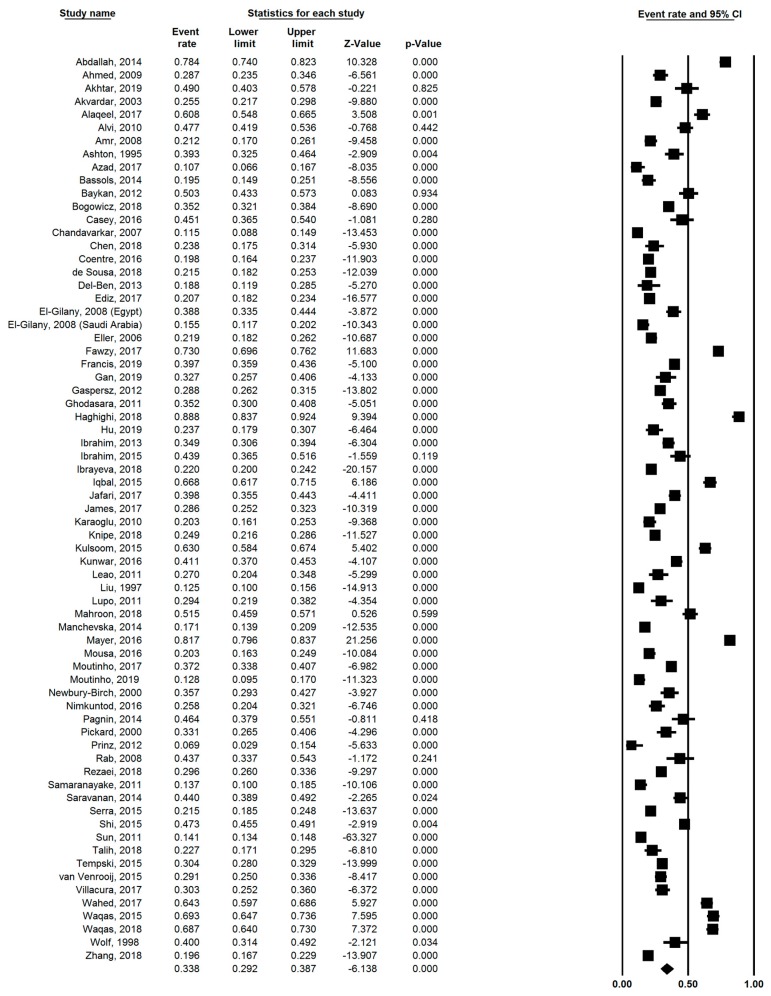
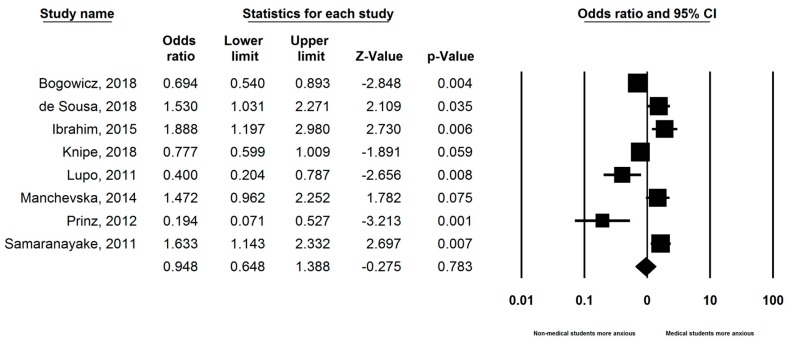
Anxiety, although as common and arguably as debilitating as depression, has garnered less attention, and is often undetected and undertreated in the general population. Similarly, anxiety among medical students warrants greater attention due to its significant implications. We aimed to study the global prevalence of anxiety among medical students and the associated factors predisposing medical students to anxiety. In February 2019, we carried out a systematic search for cross-sectional studies that examined the prevalence of anxiety among medical students. We computed the aggregate prevalence and pooled odds ratio (OR) using the random-effects model and used meta-regression analyses to explore the sources of heterogeneity. We pooled and analyzed data from sixty-nine studies comprising 40,348 medical students. The global prevalence rate of anxiety among medical students was 33.8% (95% Confidence Interval: 29.2–38.7%). Anxiety was most prevalent among medical students from the Middle East and Asia. Subgroup analyses by gender and year of study found no statistically significant differences in the prevalence of anxiety. About one in three medical students globally have anxiety—a prevalence rate which is substantially higher than the general population. Administrators and leaders of medical schools should take the lead in destigmatizing mental illnesses and promoting help-seeking behaviors when students are stressed and anxious. Further research is needed to identify risk factors of anxiety unique to medical students.
Overview
The claims and statistics of this paper haven’t been checked yet.
Run the check — free, no account needed. It reads the open-access text and checks the sources it cites.
Integrity signals
Registry
Cites
Statistics
Figures
Verification
Claims the paper makes
The claims and statistics of this paper haven’t been checked yet.
Run the check — free, no account needed. It reads the open-access text and checks the sources it cites.
Claims other papers make about this one
Each is checked against this paper’s own text: does it say what the citing paper says it does?
The cited source says what the claim attributes to it.
In the citing paper
“a meta-analysis revealed that approximately 1 in 3 medical students worldwide experiences anxiety, a rate significantly exceeding that of the general population [5].”
Self-check
Percentages, sums and reported differences re-computed from the paper’s own numbers.
The self-check needs the paper’s full text.
Citations
Cites
Preferred Reporting Items for Systematic Reviews and Meta-Analyses: the PRISMA statement
Moher, D., Liberati, A., Tetzlaff, J., Altman, D. G., & for the PRISMA Group (2009) · BMJ · doi:10.1136/bmj.b2535 · Cited by 83,823
Preferred Reporting Items for Systematic Reviews and Meta-Analyses: The PRISMA Statement
Moher, D., Liberati, A., Tetzlaff, J., Altman, D. G., & The PRISMA Group (2009) · PLoS Medicine · doi:10.1371/journal.pmed.1000097 · Cited by 64,042 · cited 1×
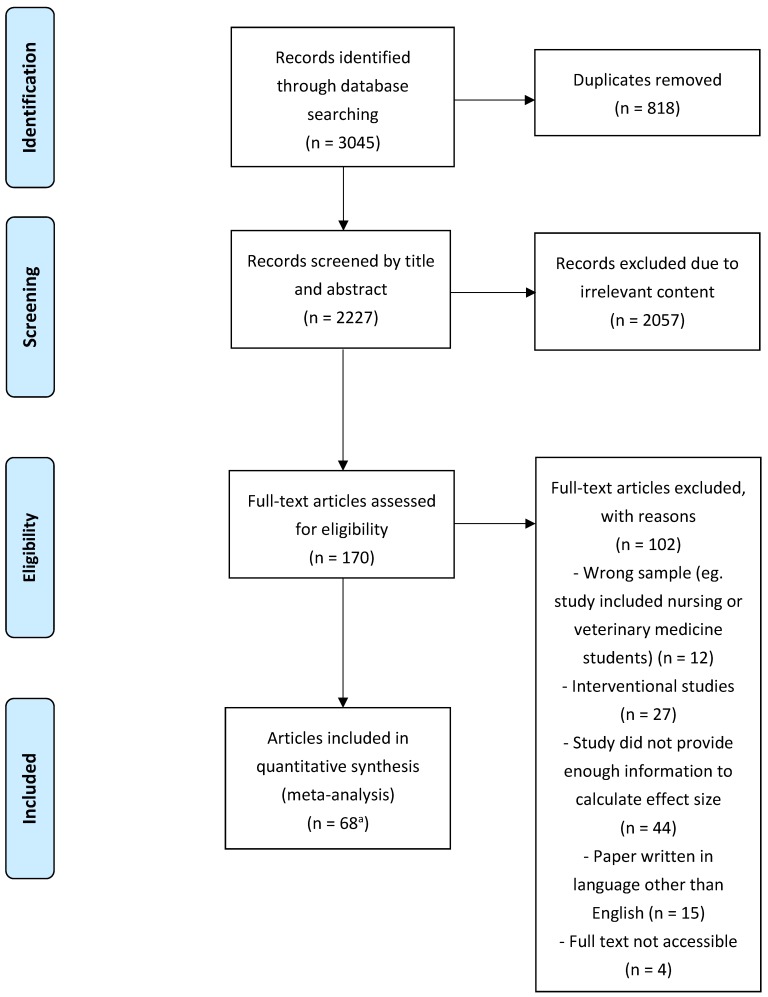
“The selection process, based on the Preferred Reporting Items for Systematic Reviews and Meta-Analyses (PRISMA) guidelines [18], is detailed in Figure 1.”
Bias in meta-analysis detected by a simple, graphical test
Egger, M., Smith, G. D., Schneider, M., & Minder, C. (1997) · BMJ · doi:10.1136/bmj.315.7109.629 · Cited by 56,722 · cited 1×
“We evaluated publication bias using the Egger’s regression method [22].”
MethodThe Hospital Anxiety and Depression Scale
Zigmond, A. S., & Snaith, R. P. (1983) · Acta Psychiatrica Scandinavica · doi:10.1111/j.1600-0447.1983.tb09716.x · Cited by 47,139 · cited 4×
“As a comparison, the prevalence of anxiety among the general population was found to be 3% as screened by the DASS-21 [96], 8.2% as screened by the GAD-7 [97], not more than 10% as screened by the BAI-21 [98] and not more than 25% as screened by the HADS-A [99].”
MethodInfluentialA Brief Measure for Assessing Generalized Anxiety Disorder: The GAD-7
Spitzer, R. L., Kroenke, K., Williams, J. B. W., & Löwe, B. (2006) · Archives of Internal Medicine · doi:10.1001/archinte.166.10.1092 · Cited by 31,765 · cited 4×
“As a comparison, the prevalence of anxiety among the general population was found to be 3% as screened by the DASS-21 [96], 8.2% as screened by the GAD-7 [97], not more than 10% as screened by the BAI-21 [98] and not more than 25% as screened by the HADS-A [99].”
MethodInfluentialWang, G., Ma, R., Qiao, G., Wada, K., Aizawa, Y., & Satoh, T. (2015) · Integrative Medicine International · doi:10.1159/000368408 · Cited by 18,762
An inventory for measuring clinical anxiety: Psychometric properties.
Beck, A. T., Epstein, N., Brown, G., & Steer, R. A. (1988) · Journal of Consulting and Clinical Psychology · doi:10.1037/0022-006x.56.6.893 · Cited by 14,407 · cited 4×
“As a comparison, the prevalence of anxiety among the general population was found to be 3% as screened by the DASS-21 [96], 8.2% as screened by the GAD-7 [97], not more than 10% as screened by the BAI-21 [98] and not more than 25% as screened by the HADS-A [99].”
MethodInfluentialDepression and quality of life in older persons: A review
Sivertsen, H., Bjørkløf, G. H., Engedal, K., Selbæk, G., & Helvik, A.-S. (2015) · Dementia and Geriatric Cognitive Disorders · doi:10.1159/000437299 · Cited by 14,152
Henry, J. D., & Crawford, J. R. (2005) · British Journal of Clinical Psychology · doi:10.1348/014466505x29657 · Cited by 5,801 · cited 4×
“As a comparison, the prevalence of anxiety among the general population was found to be 3% as screened by the DASS-21 [96], 8.2% as screened by the GAD-7 [97], not more than 10% as screened by the BAI-21 [98] and not more than 25% as screened by the HADS-A [99].”
MethodInfluentialAnxiety and cognitive performance: Attentional control theory
Eysenck, M. W., Derakshan, N., Santos, R., & Calvo, M. G. (2007) · Emotion · doi:10.1037/1528-3542.7.2.336 · Cited by 5,289 · cited 1×
“Anxiety can also impair goal-directed attention and concentration [9], working memory [10], and perceptual-motor function [11], all of which are important domains which enable medical students and physicians to provide safe and efficacious medical care to patients.”
BackgroundAnxiety disorders in primary care: prevalence, impairment, comorbidity, and detection
Kroenke, K., Spitzer, R. L., Williams, J. B. W., Monahan, P. O., & Löwe, B. (2007) · Annals of Internal Medicine · doi:10.7326/0003-4819-146-5-200703060-00004 · Cited by 4,741 · cited 1×
“Anxiety, although as common and arguably as debilitating as depression [5], has garnered less attention and is often undetected and undertreated [6] in the general population.”
BackgroundFixed-and random-effects models in meta-analysis.
Hedges, L. V., & Vevea, J. L. (1998) · Psychological Methods · doi:10.1037/1082-989x.3.4.486 · Cited by 2,977 · cited 1×
“We used the random-effects model due to the expected heterogeneity across the studies and also because it considers subject-specific effects [20,21].”
MethodDyrbye, L. N., Thomas, M. R., & Shanafelt, T. D. (2006) · Academic Medicine · doi:10.1097/00001888-200604000-00009 · Cited by 2,909 · cited 5×
“Medical schools around the world aim to train and produce competent and empathetic physicians to help the sick, advance medical knowledge, and promote public health [1].”
BackgroundInfluentialDepression Anxiety Stress Scales
Lovibond, S. H., & Lovibond, P. F. (2011) · PsycTESTS Dataset · doi:10.1037/t01004-000 · Cited by 2,416
Herzog, R., Álvarez-Pasquin, M. J., Díaz, C., Del Barrio, J. L., Estrada, J. M., & Gil, Á. (2013) · BMC Public Health · doi:10.1186/1471-2458-13-154 · Cited by 1,652 · cited 2×
“To appraise the quality of the selected studies, we adopted an adapted version of the Newcastle-Ottawa cohort scale for cross-sectional studies [19].”
MethodGlobal prevalence of anxiety disorders: a systematic review and meta-regression
Baxter, A. J., Scott, K. M., Vos, T., & Whiteford, H. A. (2013) · Psychological Medicine · doi:10.1017/s003329171200147x · Cited by 1,537
Quality-of-Life Impairment in Depressive and Anxiety Disorders
Rapaport, M. H., Clary, C., Fayyad, R., & Endicott, J. (2005) · American Journal of Psychiatry · doi:10.1176/appi.ajp.162.6.1171 · Cited by 914 · cited 1×
“A lower quality of life [114], loss of relationships [115] and high rate of comorbidity with depression [116] are often associated with anxiety disorders.”
BackgroundPrevalence of depression amongst medical students: A meta-analysis
Puthran, R., Zhang, M. W. B., Tam, W. W., & Ho, R. C. (2016) · Medical Education · doi:10.1111/medu.12962 · Cited by 855 · cited 1×
“In view of medical students having a high prevalence of anxiety, medical schools can consider organizing structured programs that are shown by research to reduce anxiety [127].”
BackgroundSelf-citationAnxiety and working memory capacity: A meta-analysis and narrative review.
Moran, T. P. (2016) · Psychological Bulletin · doi:10.1037/bul0000051 · Cited by 776 · cited 1×
“Anxiety can also impair goal-directed attention and concentration [9], working memory [10], and perceptual-motor function [11], all of which are important domains which enable medical students and physicians to provide safe and efficacious medical care to patients.”
BackgroundHospital anxiety and depression scale (had): Some psychometric data for a swedish sample
Lisspers, J., Nygren, A., & Söderman, E. (1997) · Acta Psychiatrica Scandinavica · doi:10.1111/j.1600-0447.1997.tb10164.x · Cited by 706 · cited 3×
“As a comparison, the prevalence of anxiety among the general population was found to be 3% as screened by the DASS-21 [96], 8.2% as screened by the GAD-7 [97], not more than 10% as screened by the BAI-21 [98] and not more than 25% as screened by the HADS-A [99].”
MethodInfluentialMental illness stigma and ethnocultural beliefs, values, and norms: An integrative review
Abdullah, T., & Brown, T. L. (2011) · Clinical Psychology Review · doi:10.1016/j.cpr.2011.05.003 · Cited by 661 · cited 8×
“Eighteen studies from Asia, twenty-one studies from Middle East, thirteen studies from Europe, ten studies from South America, four studies from North America, two studies from Oceania and one study from Africa were included.”
BackgroundInfluentialFond, G., Loundou, A., Hamdani, N., Boukouaci, W., Dargel, A., Oliveira, J., Roger, M., Tamouza, R., Leboyer, M., & Boyer, L. (2014) · European Archives of Psychiatry and Clinical Neuroscience · doi:10.1007/s00406-014-0502-z · Cited by 647 · cited 1×
“In addition, anxiety has been implicated in many other conditions including substance use disorders [117], fibromyalgia [118,119], misophonia [120,121] and irritable bowel syndrome [122,123].”
BackgroundThe association between internet addiction and psychiatric co-morbidity: a meta-analysis
Ho, R., Zhang, M. W., Tsang, T. Y., Toh, A. H., Pan, F., Lu, Y., Cheng, C., Yip, P. S. F., Lam, L. T.-M., Lai, C. M., et al. (2014) · BMC Psychiatry · doi:10.1186/1471-244x-14-183 · Cited by 611 · cited 1×
“We used the random-effects model due to the expected heterogeneity across the studies and also because it considers subject-specific effects [20,21].”
MethodSelf-citationDepressed Medical Studentsʼ Use of Mental Health Services and Barriers to Use
Givens, J. L., & Tjia, J. (2002) · Academic Medicine · doi:10.1097/00001888-200209000-00024 · Cited by 583 · cited 1×
“There have been calls for the disclosure of the history of psychiatric illness to be non-compulsory as this is a barrier to medical students and residents seeking care for their mental health [125,126].”
BackgroundChew-Graham, C. A., Rogers, A. E., & Yassin, N. (2003) · Medical Education · doi:10.1046/j.1365-2923.2003.01627.x · Cited by 582 · cited 1×
“In view of our findings, it is especially important to destigmatize mental illnesses and promote help-seeking behavior among medical students, especially when help-seeking behavior may be wrongly perceived by some students as a form of weakness [113].”
BackgroundSartorius, N., Üstün, T. B., Lecrubier, Y., & Wittchen, H.-U. (1996) · British Journal of Psychiatry · doi:10.1192/s0007125000298395 · Cited by 541 · cited 1×
“A lower quality of life [114], loss of relationships [115] and high rate of comorbidity with depression [116] are often associated with anxiety disorders.”
BackgroundAktekin, M. R., Karaman, T., Senol, Y. Y., Erdem, S., Erengin, H., & Akaydın, M. (2001) · Medical Education · doi:10.1046/j.1365-2923.2001.00726.x · Cited by 498
Medical student depression, anxiety and distress outside North America: a systematic review
Hope, V., & Henderson, M. (2014) · Medical Education · doi:10.1111/medu.12512 · Cited by 477 · cited 1×
“[12] found the prevalence of anxiety among medical students outside of North America to range between 7.”
BackgroundThieme, K., Turk, D. C., & Flor, H. (2004) · Psychosomatic Medicine · doi:10.1097/01.psy.0000146329.63158.40 · Cited by 465 · cited 1×
“In addition, anxiety has been implicated in many other conditions including substance use disorders [117], fibromyalgia [118,119], misophonia [120,121] and irritable bowel syndrome [122,123].”
BackgroundPrevalence of psychological stress, depression and anxiety among medical students in Egypt
Fawzy, M., & Hamed, S. A. (2017) · Psychiatry Research · doi:10.1016/j.psychres.2017.05.027 · Cited by 455 · cited 1×
“9 EST-Q Fawzy, 2017 [49] Egypt Middle East 700 511 73.”
Adaptive and maladaptive perfectionism in medical students: a longitudinal investigation
Enns, M. W., Cox, B. J., Sareen, J., & Freeman, P. (2001) · Medical Education · doi:10.1046/j.1365-2923.2001.01044.x · Cited by 417
Wahed, W. Y. A., & Hassan, S. K. (2016) · Alexandria Journal of Medicine · doi:10.1016/j.ajme.2016.01.005 · Cited by 405
Factors associated to depression and anxiety in medical students: a multicenter study
Brenneisen Mayer, F., Souza Santos, I., Silveira, P. S. P., Itaqui Lopes, M. H., de Souza, A. R. N. D., Campos, E. P., de Abreu, B. A. L., Hoffman II, I., Magalhães, C. R., Lima, M. C. P., et al. (2016) · BMC Medical Education · doi:10.1186/s12909-016-0791-1 · Cited by 364 · cited 1×
“1 BAI-21 Mayer, 2016 [71] Brazil South America 1350 1103 81.”
Moutinho, I. L. D., Maddalena, N. D. C. P., Roland, R. K., Lucchetti, A. L. G., Tibiriçá, S. H. C., Ezequiel, O. D. S., & Lucchetti, G. (2017) · Revista da Associação Médica Brasileira · doi:10.1590/1806-9282.63.01.21 · Cited by 362 · cited 1×
“3 GAD-7 Moutinho, 2017 [73] Brazil South America 761 283 37.”
Misophonia: Incidence, Phenomenology, and Clinical Correlates in an Undergraduate Student Sample
Wu, M. S., Lewin, A. B., Murphy, T. K., & Storch, E. A. (2014) · Journal of Clinical Psychology · doi:10.1002/jclp.22098 · Cited by 360 · cited 1×
“In addition, anxiety has been implicated in many other conditions including substance use disorders [117], fibromyalgia [118,119], misophonia [120,121] and irritable bowel syndrome [122,123].”
BackgroundStress, coping, and well-being among third-year medical students
Mosley, T. H., Perrin, S. G., Neral, S. M., Dubbert, P. M., Grothues, C. A., & Pinto, B. M. (1994) · Academic Medicine · doi:10.1097/00001888-199409000-00024 · Cited by 358 · cited 1×
“Such demands and stress cause a negative effect on the students’ psychological well-being [3], and can precipitate depression and anxiety [4].”
BackgroundEmbarking upon a medical career: psychological morbidity in first year medical students
Guthrie, E., Black, D., Shaw, C. M., HAMILTON, J. D., Creed, F. H., & Tomenson, B. (1995) · Medical Education · doi:10.1111/j.1365-2923.1995.tb00022.x · Cited by 356 · cited 1×
“Other factors like academic workload [102], consequent sleep deprivation [103], financial burden [103], exposure to deaths of patients [104] and student abuse [105] have also been postulated to be possible reasons for medical students’ high rate of anxiety.”
BackgroundVenkatarao, E., Iqbal, S., & Gupta, S. (2015) · Indian Journal of Medical Research · doi:10.4103/0971-5916.156571 · Cited by 349
Warnecke, E., Quinn, S., Ogden, K., Towle, N., & Nelson, M. R. (2011) · Medical Education · doi:10.1111/j.1365-2923.2010.03877.x · Cited by 307 · cited 1×
“Such programs including life skills training [128] and mindfulness therapy [129] have been validated through studies to reduce anxiety levels in medical students.”
BackgroundRelationship among Medical Student Resilience, Educational Environment and Quality of Life
Tempski, P. Z., Santos, I. S., Mayer, F. B., Enns, S. C., Perotta, B., Paro, H. B. M. D. S., Gannam, S., Peleias, M., Garcia, V. L., Baldassin, S. P., et al. (2015) · PLoS ONE · doi:10.1371/journal.pone.0131535 · Cited by 291 · cited 1×
“7 GAD-7 Tempski, 2015 [88] Brazil South America 1350 410 30.”
Stress, anxiety, and depression among medical students in a multiethnic setting
Afsar, N. A., & Kulsoom, B. (2015) · Neuropsychiatric Disease and Treatment · doi:10.2147/ndt.s83577 · Cited by 260 · cited 1×
“9 GAD-7 Kulsoom, 2015 [64] Saudi Arabia Middle East 442 283 64.”
Mental Health Consequences and Correlates of Reported Medical Student Abuse
Richman, J. A. (1992) · JAMA · doi:10.1001/jama.1992.03480050096032 · Cited by 258 · cited 1×
“Other factors like academic workload [102], consequent sleep deprivation [103], financial burden [103], exposure to deaths of patients [104] and student abuse [105] have also been postulated to be possible reasons for medical students’ high rate of anxiety.”
BackgroundSymptoms of anxiety and depression in Estonian medical students with sleep problems
Eller, T., Aluoja, A., Vasar, V., & Veldi, M. (2006) · Depression and Anxiety · doi:10.1002/da.20166 · Cited by 258
Burke, W. J., & McArthur-Miller, D. A. (2001) · PubMed · Cited by 251
Stress, coping and health: enhancing well‐being during medical school
WOLF, T. M. (1994) · Medical Education · doi:10.1111/j.1365-2923.1994.tb02679.x · Cited by 240 · cited 1×
“However, medical education is considered to be one of the most academically and emotionally demanding training programs out of any profession [2], and consequently, the time and emotional commitment necessary”
BackgroundMedical Students’ Experience of and Reaction to Stress: The Role of Depression and Anxiety
Saravanan, C., & Wilks, R. (2014) · The Scientific World JOURNAL · doi:10.1155/2014/737382 · Cited by 237 · cited 1×
“7 GAD-7 Saravanan, 2014 [83] Malaysia Asia 358 158 44.”
Gillis, M. M., Haaga, D. A. F., & Ford, G. T. (1995) · Psychological Assessment · doi:10.1037/1040-3590.7.4.450 · Cited by 236 · cited 4×
“As a comparison, the prevalence of anxiety among the general population was found to be 3% as screened by the DASS-21 [96], 8.2% as screened by the GAD-7 [97], not more than 10% as screened by the BAI-21 [98] and not more than 25% as screened by the HADS-A [99].”
MethodInfluentialFactors influencing alcohol and illicit drug use amongst medical students
Newbury‐Birch, D., White, M. J., & Kamali, F. (2000) · Drug and Alcohol Dependence · doi:10.1016/s0376-8716(99)00108-8 · Cited by 233 · cited 1×
“8 DASS-21-A Newbury-Birch, 2000 [75] UK Europe 194 69 35.”
The Relation Between Burnout and Sleep Disorders in Medical Students
Pagnin, D., de Queiroz, V., Carvalho, Y. T. M. S., Dutra, A. S. S., Amaral, M. B., & Queiroz, T. T. (2014) · Academic Psychiatry · doi:10.1007/s40596-014-0093-z · Cited by 217 · cited 1×
“Pagnin, 2014 [77] Brazil South America 127 59 46.”
Cognitive emotions: Depression and anxiety in medical students and staff
Ahmed, I., Banu, H., Al-Fageer, R., & Al-Suwaidi, R. (2009) · Journal of Critical Care · doi:10.1016/j.jcrc.2009.06.003 · Cited by 214
Niemi, P. M., & Vainiomäki, P. (2006) · Medical Teacher · doi:10.1080/01421590600607088 · Cited by 208 · cited 1×
“However, a longitudinal study found that self-reported stress scores increased as medical students progressed through their year of study [111].”
BackgroundBassols, A. M. S., Okabayashi, L. S. M., da Silva, A. B., Carneiro, B. B., Feijó, F. R., Guimarães, G. C., CORTES, G. N., Rohde, L. A., & Eizirik, C. L. (2014) · Brazilian Journal of Psychiatry · doi:10.1590/1516-4446-2013-1183 · Cited by 202 · cited 1×
“7 BAI-21 Bassols, 2014 [37] Brazil South America 232 45 19.”
Personality, lifestyles, alcohol and drug consumption in a sample of British medical students
Ashton, C. H., & Kamali, F. (1995) · Medical Education · doi:10.1111/j.1365-2923.1995.tb02828.x · Cited by 200 · cited 1×
“2 HADS-A Ashton, 1995 [35] UK Europe 186 73 39.”
Alcohol and drug use in second‐year medical students at the University of Leeds
Pickard, M., Bates, L., Dorian, M., Greig, H., & Saint, D. S. (2000) · Medical Education · doi:10.1046/j.1365-2923.2000.00491.x · Cited by 198 · cited 1×
“4 BAI-21 Pickard, 2000 [78] UK Europe 169 56 33.”
Racial and Ethnic Disparities in Mental Illness Stigma
Rao, D., Feinglass, J. M., & Corrigan, P. W. (2007) · The Journal of Nervous and Mental Disease · doi:10.1097/nmd.0b013e31815c046e · Cited by 197
de Sousa, J. M., Moreira, C. A., & Telles‐Correia, D. (2018) · Acta Médica Portuguesa · doi:10.20344/amp.9996 · Cited by 195 · cited 1×
“8 ZSAS de Sousa, 2018 [44] Portugal Europe 512 121 23.”
Depression, anxiety and their associated factors among medical students.
Alvi, T., Assad, F., Ramzan, M., & Khan, F. A. (2010) · PubMed · Cited by 190
Anxiety and Substance Use Disorders: Co-occurrence and Clinical Issues
Vorspan, F., Mehtelli, W., Dupuy, G., Bloch, V., & Lépine, J. (2015) · Current Psychiatry Reports · doi:10.1007/s11920-014-0544-y · Cited by 189 · cited 1×
“In addition, anxiety has been implicated in many other conditions including substance use disorders [117], fibromyalgia [118,119], misophonia [120,121] and irritable bowel syndrome [122,123].”
BackgroundPerfectionism, Anxiety, and Depression: Are the Relationships Independent?
Kawamura, K. Y., Hunt, S. L., Frost, R. O., & DiBartolo, P. M. (2001) · Cognitive Therapy and Research · doi:10.1023/a:1010736529013 · Cited by 184 · cited 1×
“Medical schools preselect for people who tend to be more neurotic and perfectionistic [100], and such personality traits predispose an individual to anxiety [101].”
BackgroundAnxiety among university students during the SARS epidemic in Hong Kong
Wong, T. W., Gao, Y., & Tam, W. (2006) · Stress and Health · doi:10.1002/smi.1116 · Cited by 171 · cited 1×
“excluded studies which measured anxiety during or after a major event such as a war [14], natural disaster [15] or a disease epidemic [16,17] due to the confounder effect of such events.”
BackgroundRoberts, L. W., Warner, T. D., Lyketsos, C. G., Frank, E., Ganzini, L. K., & Carter, D. (2001) · Comprehensive Psychiatry · doi:10.1053/comp.2001.19747 · Cited by 169
Anxiety symptoms and perceived performance in medical students
Chandavarkar, U., Azzam, A., & Mathews, C. A. (2006) · Depression and Anxiety · doi:10.1002/da.20185 · Cited by 168 · cited 1×
“1 DASS-21 Chandavarkar, 2007 [41] USA North America 427 49 11.”
Hu, K. S., Chibnall, J. T., & Slavin, S. J. (2019) · Academic Psychiatry · doi:10.1007/s40596-019-01031-z · Cited by 146 · cited 1×
“8 STAI-Trait Hu, 2019 [55] USA North America 169 40 23.”
Ibrahim, M. B., & Abdelreheem, M. H. (2014) · Alexandria Journal of Medicine · doi:10.1016/j.ajme.2014.06.002 · Cited by 145
Francis, B., Gill, J. S., Han, N. Y., Petrus, C. F., Azhar, F. L., Sabki, Z. A., Said, M. A., Hui, K. O., Ng, C. G., & Sulaiman, A. H. (2019) · International Journal of Environmental Research and Public Health · doi:10.3390/ijerph16020259 · Cited by 145 · cited 1×
“0 DASS-21-A Francis, 2019 [50] Malaysia Asia 622 247 39.”
Shi, M., Liu, L., Wang, Z. Y., & Wang, L. (2015) · PLoS ONE · doi:10.1371/journal.pone.0119916 · Cited by 135 · cited 1×
“5 BAI-21 Shi, 2015 [85] China Asia 2925 1384 47.”
Prevalence and recognition of anxiety syndromes in five European primary care settings
Weiller, E., Bisserbe, J. C., Maier, W., & Lecrubier, Y. (1998) · The British Journal of Psychiatry · doi:10.1192/s0007125000293471 · Cited by 132 · cited 1×
“Anxiety, although as common and arguably as debilitating as depression [5], has garnered less attention and is often undetected and undertreated [6] in the general population.”
BackgroundPsychological distress among medical students in conflicts: a cross-sectional study from Syria
Saadi, T. A., Addeen, S. Z., Turk, T., Abbas, F., & Alkhatib, M. (2017) · BMC Medical Education · doi:10.1186/s12909-017-1012-2 · Cited by 130
Anxiety, fear, and social isolation.
Sarnoff, I., & Zimbardo, P. G. (1961) · Journal of Abnormal & Social Psychology · doi:10.1037/h0046506 · Cited by 129 · cited 1×
“A lower quality of life [114], loss of relationships [115] and high rate of comorbidity with depression [116] are often associated with anxiety disorders.”
BackgroundPrevalence, associated factors and predictors of anxiety: a community survey in Selangor, Malaysia
Maideen, S. F. K., Sidik, S. M., Rampal, L., & Mukhtar, F. (2015) · BMC Psychiatry · doi:10.1186/s12888-015-0648-x · Cited by 128 · cited 4×
“As a comparison, the prevalence of anxiety among the general population was found to be 3% as screened by the DASS-21 [96], 8.2% as screened by the GAD-7 [97], not more than 10% as screened by the BAI-21 [98] and not more than 25% as screened by the HADS-A [99].”
MethodInfluentialLife events and anxiety in Chinese medical students
Liu, X., Oda, S., Peng, X., & Asai, K. (1997) · Social Psychiatry and Psychiatric Epidemiology · doi:10.1007/bf00788922 · Cited by 124 · cited 1×
“0 BAI-21 Liu, 1997 [67] China Asia 537 67 12.”
Anxiety And Depression In Medical Students Of A Private Medical College.
Azad, N., Shahid, A., Abbas, N., Shaheen, A., & Munir, N. (2017) · PubMed · Cited by 120
Moutinho, I. L. D., Lucchetti, A. L. G., Ezequiel, O. D. S., & Lucchetti, G. (2019) · Psychiatry Research · doi:10.1016/j.psychres.2019.02.041 · Cited by 117 · cited 1×
“2 DASS-21-A Moutinho, 2019 [74] Brazil South America 312 40 12.”
Dying, Death, and Medical Education: Student Voices
Williams, C. M., Wilson, C. C., & Olsen, C. H. (2005) · Journal of Palliative Medicine · doi:10.1089/jpm.2005.8.372 · Cited by 114 · cited 1×
“Other factors like academic workload [102], consequent sleep deprivation [103], financial burden [103], exposure to deaths of patients [104] and student abuse [105] have also been postulated to be possible reasons for medical students’ high rate of anxiety.”
BackgroundRates of depression and anxiety among female medical students in Pakistan.
Rab, F., Mamdou, R., & Nasir, S. (2008) · PubMed · Cited by 113
Anxiety, depression and quality of life of medical students in Malaysia.
Gan, G. G., & Yuen Ling, H. (2019) · PubMed · Cited by 112
Depression, anxiety and stress among first year medical students in an Egyptian public university
Abdallah, A. R., & Gabr, H. M. (2014) · International Research Journal of Medicine and Medical Sciences · Cited by 111
Prinz, P., Hertrich, K., Hirschfelder, U., & De Zwaan, M. (2012) · German Medical Science GMS Publishing House · doi:10.3205/zma000780 · Cited by 110 · cited 1×
“1 HADS-A Prinz, 2012 [79] Germany Europe 73 5 6.”
Assessing Student Mental Health at the Vanderbilt University School of Medicine
Ghodasara, S. L., Davidson, M., Reich, M. S., Savoie, C. V., & Rodgers, S. M. (2010) · Academic Medicine · doi:10.1097/acm.0b013e3181ffb056 · Cited by 108 · cited 1×
“8 BSI-ANG Ghodasara, 2011 [53] USA North America 301 106 35.”
Factors Associated with Depression and Anxiety Symptoms Among Medical Students in Bahrain
Mahroon, Z. A., Borgan, S., Kamel, C., Maddison, W., Royston, M. C., & Donnellan, C. (2017) · Academic Psychiatry · doi:10.1007/s40596-017-0733-1 · Cited by 107 · cited 1×
“4 BAI-21 Mahroon, 2018 [69] Bahrain Middle East 307 158 51.”
Ibrahim, N. K., Al-Kharboush, D., El-Khatib, L., Al-Habib, A., & Asali, D. (2013) · Europe PMC (PubMed Central) · Cited by 106
Rezaei, M., Khormali, M., Akbarpour, S., Sadeghniiat-Hagighi, K., & Shamsipour, M. (2018) · Sleep Science · doi:10.5935/1984-0063.20180043 · Cited by 106 · cited 1×
“7 BAI-21 Rezaei, 2018 [81] Iran Middle East 553 164 29.”
Assessment of depression and suicidal behaviour among medical students in Portugal
Coentre, R. M., Faravelli, C., & Figueira, M. L. (2016) · International Journal of Medical Education · doi:10.5116/ijme.57f8.c468 · Cited by 103 · cited 1×
“8 BAI-21 Coentre, 2016 [43] Portugal Europe 456 90 19.”
El‐Gilany, A., Amr, M., & Hammad, S. M. (2008) · Annals of Saudi Medicine · doi:10.5144/0256-4947.2008.442 · Cited by 102 · cited 2×
“7 BAI-21 El-Gilany,2008 [47] (Egypt) Egypt Middle East 304 118 38.”
Misophonia in Singaporean Psychiatric Patients: A Cross-Sectional Study
Quek, T. C., Ho, C. S., Choo, C. C., Nguyen, L. H., Tran, B. X., & Ho, R. C. (2018) · International Journal of Environmental Research and Public Health · doi:10.3390/ijerph15071410 · Cited by 102 · cited 1×
“In addition, anxiety has been implicated in many other conditions including substance use disorders [117], fibromyalgia [118,119], misophonia [120,121] and irritable bowel syndrome [122,123].”
BackgroundSelf-citationThe MD Blues: Under-Recognized Depression and Anxiety in Medical Trainees
Mousa, O. Y., Dhamoon, M., Lander, S., & Dhamoon, A. S. (2016) · PLoS ONE · doi:10.1371/journal.pone.0156554 · Cited by 99 · cited 1×
“7 STAI-State Mousa, 2016 [72] USA North America 336 68 20.”
Mental health in medical, dentistry and veterinary students: cross-sectional online survey
Knipe, D. W., Maughan, C., Gilbert, J., Dymock, D., Moran, P., & Gunnell, D. (2018) · BJPsych Open · doi:10.1192/bjo.2018.61 · Cited by 96 · cited 1×
“3 BAI-21 Knipe, 2018 [63] UK Europe 583 145 24.”
Graduating medical studentsʼ ratings of stresses, pleasures, and coping strategies
Wolf, T., Faucett, J. M., Randall, H. M., & Balson, P. M. (1988) · Academic Medicine · doi:10.1097/00001888-198808000-00008 · Cited by 95 · cited 1×
“Other factors like academic workload [102], consequent sleep deprivation [103], financial burden [103], exposure to deaths of patients [104] and student abuse [105] have also been postulated to be possible reasons for medical students’ high rate of anxiety.”
BackgroundDoes Gender Predict Medical Students’ Stress in Mansoura, Egypt?
Amr, M. (2008) · Medical Education Online · doi:10.3885/meo.2008.res00273 · Cited by 93 · cited 1×
“7 BAI-21 Amr, 2008 [34] Egypt Middle East 311 66 21.”
Substance use in a sample of Turkish medical students
Akvardar, Y., Demıral, Y., Ergör, G., Ergör, A., Bilici, M., & Özer, Ö. A. (2003) · Drug and Alcohol Dependence · doi:10.1016/s0376-8716(03)00192-3 · Cited by 89 · cited 1×
“0 BAI-21 Akvardar, 2003 [31] Turkey Middle East 447 114 25.”
Talih, F. R., Daher, M., Daou, D., & Ajaltouni, J. (2018) · Academic Psychiatry · doi:10.1007/s40596-017-0879-x · Cited by 89 · cited 1×
“1 BAI-21 Talih, 2018 [87] Lebanon Middle East 176 40 22.”
Study of Depression, Anxiety and Stress among the Medical Students in two Medical Colleges of Nepal.
Kunwar, D., Risal, A., & Koirala, S. (2017) · PubMed · Cited by 88
Satisfaction with life and depression among medical students in Auckland, New Zealand.
Samaranayake, C. B., & Fernando, A. T. (2011) · PubMed · Cited by 81
Waqas, A., Rehman, A., Malik, A., Muhammad, U., Khan, S., & Mahmood, N. (2015) · Cureus · doi:10.7759/cureus.337 · Cited by 79 · cited 1×
“3 DASS-21-A Waqas, 2015 [92] Pakistan Asia 409 283 69.”
Ediz, B., Özçakır, A., & Bilgel, N. (2017) · Cogent Psychology · doi:10.1080/23311908.2017.1283829 · Cited by 79 · cited 1×
“8 BAI-21 Ediz, 2017 [46] Turkey Middle East 928 192 20.”
Measurement invariance of the Depression Anxiety Stress Scales-21 across medical student genders
Jafari, P., Nozari, F., Ahrari, F., & Bagheri, Z. (2017) · International Journal of Medical Education · doi:10.5116/ijme.58ba.7d8b · Cited by 78 · cited 1×
“8 DASS-42-A Jafari, 2017 [60] Iran Middle East 477 190 39.”
Generalized Anxiety Disorder: Acute and Chronic Treatment
Rynn, M. A., & Brawman‐Mintzer, O. (2004) · CNS Spectrums · doi:10.1017/s1092852900022367 · Cited by 75 · cited 1×
“In addition to intense feelings of fear or panic [7], sufferers of anxiety can experience other physiological symptoms including fatigue, dizziness, headaches, nausea, abdominal pain, palpitations, shortness of breath, and urinary incontinence [8].”
BackgroundKrag, N. J., Nørregaard, J., Larsen, J. K., & Danneskiold‐Samsøe, B. (1994) · Acta Psychiatrica Scandinavica · doi:10.1111/j.1600-0447.1994.tb01531.x · Cited by 75 · cited 1×
“In addition, anxiety has been implicated in many other conditions including substance use disorders [117], fibromyalgia [118,119], misophonia [120,121] and irritable bowel syndrome [122,123].”
BackgroundDel‐Ben, C. M., Machado, V. F., Madisson, M. M., Resende, T. L., Valério, F. P., & Troncon, L. E. D. A. (2013) · Medical Teacher · doi:10.3109/0142159x.2013.769675 · Cited by 72 · cited 1×
“6 HADS-A Del-Ben, 2013 [45] Brazil South America 85 16 18.”
Mental Health During Residency Training: Assessing the Barriers to Seeking Care
Aaronson, A. L., Backes, K. A., Agarwal, G., Goldstein, J. L., & Anzia, J. M. (2018) · Academic Psychiatry · doi:10.1007/s40596-017-0881-3 · Cited by 71 · cited 1×
“There have been calls for the disclosure of the history of psychiatric illness to be non-compulsory as this is a barrier to medical students and residents seeking care for their mental health [125,126].”
BackgroundHaghighi, M., & Gerber, M. (2019) · International Journal of Stress Management · doi:10.1037/str0000106 · Cited by 70 · cited 1×
“2 STAI-State Haghighi, 2018 [54] Iran Middle East 207 184 88.”
Psychosocial correlates of perceived stress among undergraduate medical students in Nigeria
James, B. O., Thomas, I. F., Omoaregba, J. O., Okogbenin, E. O., Okonoda, K. M., Ibrahim, A. W., Salihu, A., Oshodi, Y., Orovwigho, A. O., Odinka, P. C., et al. (2017) · International Journal of Medical Education · doi:10.5116/ijme.59c6.3075 · Cited by 69 · cited 1×
“8 DASS-21-A James, 2017 [61] Nigeria Africa 623 178 28.”
Does Gender Predict Medical Students’ Stress in Mansoura, Egypt?
Amr, M., Gilany, A. H. E., & El-Hawary, A. (2008) · Medical Education Online · doi:10.3402/meo.v13i.4481 · Cited by 65
Karaoğlu, N., & Şeker, M. (2010) · PubMed · Cited by 64
Runswick, O. R., Roca, A., WILLIAMS, A. M., Bezodis, N. E., & North, J. S. (2017) · Psychological Research · doi:10.1007/s00426-017-0856-8 · Cited by 62 · cited 1×
“Anxiety can also impair goal-directed attention and concentration [9], working memory [10], and perceptual-motor function [11], all of which are important domains which enable medical students and physicians to provide safe and efficacious medical care to patients.”
BackgroundEl‐Gilany, A., Amr, M., & Hammad, S. M. (2008) · Annals of Saudi Medicine · doi:10.4103/0256-4947.51666 · Cited by 62
Ak, K., Qureshi, R., & Azam, S. I. (2004) · PubMed · Cited by 59
Bogowicz, P., Ferguson, J., Gilvarry, E. A., Kamali, F., Kaner, E., & Newbury‐Birch, D. (2017) · Postgraduate Medical Journal · doi:10.1136/postgradmedj-2017-135136 · Cited by 59 · cited 1×
“3 DASS-21-A Bogowicz, 2018 [39] UK Europe 889 313 35.”
Impact of a spreading epidemic on medical students.
Loh, L., ALI, A. M., Ang, T.-H., & Chelliah, A. (2005) · Europe PMC (PubMed Central) · Cited by 56
Psychiatric emergencies (part I): psychiatric disorders causing organic symptoms.
Testa, A. C., Giannuzzi, R., Sollazzo, F., Petrongolo, L., Bernardini, L., & Daini, S. (2013) · PubMed · Cited by 54
Alaqeel, M., Alowaimer, N. H., Alonezan, A., Almegbel, N. Y., & Alaujan, F. Y. (2017) · Pakistan Journal of Medical Sciences · doi:10.12669/pjms.331.12572 · Cited by 53 · cited 1×
“5 HADS-A Alaqeel, 2017 [32] Saudi Arabia Middle East 268 163 60.”
Sun, L., Sun, L., Sun, Y., Yang, L., Wu, H., Zhang, D., Cao, H., & Sun, Y. (2011) · The International Journal of Psychiatry in Medicine · doi:10.2190/pm.42.1.c · Cited by 52 · cited 1×
“3 ZSAS Sun, 2011 [86] China Asia 10,140 1430 14.”
Religiosity, anxiety and depression among Israeli medical students.
Kritchmann-Lupo, M., & Strous, R. D. (2011) · PubMed · Cited by 52
Well-being and help-seeking: an exploratory study among final-year medical students
Leao, P. B. D. O. E. S., Nogueira-Martins, L. A., Menezes, P. R., & Bellodi, P. L. (2011) · Revista da Associação Médica Brasileira · doi:10.1590/s0104-42302011000400009 · Cited by 50 · cited 1×
“1 DASS-21-A Leao, 2011 [66] Brazil South America 144 39 27.”
Wolf, T., Scurria, P. L., & Webster, M. G. (1998) · Journal of Health Psychology · doi:10.1177/135910539800300110 · Cited by 49 · cited 1×
“7 HADS-A Wolf, 1998 [94] Hong Kong Asia 114 46 40.”
Acute effects of energy drinks in medical students
García, A., Romero, C., Arroyave, C., Giraldo, F., Sánchez, L., & Sánchez, J. (2017) · European Journal of Nutrition · doi:10.1007/s00394-016-1246-5 · Cited by 45 · cited 1×
“7 HADS-A Gaspersz, 2012 [52] Netherlands Europe 1130 325 28.”
Littlewood, R., Jadhav, S., & Ryder, A. G. (2007) · Transcultural Psychiatry · doi:10.1177/1363461507077720 · Cited by 43 · cited 1×
“cultures, being diagnosed with a mental illness is thought to reflect the patient’s family weakness and is perceived to be shameful [107].”
BackgroundBurnout, depression and anxiety in preclinical medical students: a cross-sectional survey
van Venrooij, L. T., Barnhoorn, P., Giltay, E. J., & van Noorden, M. S. (2015) · International Journal of Adolescent Medicine and Health · doi:10.1515/ijamh-2015-0077 · Cited by 43 · cited 1×
“4 STAI-State van Venrooij, 2015 [89] Netherlands Europe 433 126 29.”
Do State Medical Board Applications Violate the Americans With Disabilities Act?
Schroeder, R., Brazeau, C. M. L. R., Zackin, F., Rovi, S., Dickey, J. L., Johnson, M. S., & Keller, S. E. (2009) · Academic Medicine · doi:10.1097/acm.0b013e3181a43bb2 · Cited by 42 · cited 1×
“However, a 2009 review in the United States of America found that 96% of the state medical licensing board applications reviewed required physician applicants to disclose any personal history of psychiatric illnesses [124] and some of the questions cast physician illnesses ‘in a punitive context’.”
BackgroundLi, C., Chu, F., Wang, H., & Wang, X. (2013) · Asia-Pacific Psychiatry · doi:10.1111/appy.12084 · Cited by 37 · cited 1×
“Such programs including life skills training [128] and mindfulness therapy [129] have been validated through studies to reduce anxiety levels in medical students.”
BackgroundZhang, Y., Xiong, Y., Dong, J., Guo, T., Tang, X., & Zhao, Y. (2018) · International Journal of Environmental Research and Public Health · doi:10.3390/ijerph15081721 · Cited by 37 · cited 1×
“0 BAI-21 Zhang, 2018 [95] China Asia 616 121 19.”
Depression, Anxiety, and Stress Among Last-Year Students at Erciyes University Medical School
Baykan, Z., Naçar, M., & Çeti̇nkaya, F. (2012) · Academic Psychiatry · doi:10.1176/appi.ap.11060125 · Cited by 35 · cited 1×
“5 BAI-21 Baykan, 2012 [38] Turkey Middle East 193 97 50.”
Akhtar, M., Kröner‐Herwig, B., & Faize, F. A. (2019) · PubMed · Cited by 33
Graduate-entry medical students: older and wiser but not less distressed
Casey, D., Thomas, S. J., Hocking, D. R., & Kemp, A. (2015) · Australasian Psychiatry · doi:10.1177/1039856215612991 · Cited by 32 · cited 1×
“2 HADS-A Casey, 2016 [40] Australia Oceania 122 55 45.”
Prevalence of depressive and anxiety symptoms in medical students in the city of Santos
Serra, R. D., Dinato, S. L. M. E., & Caseiro, M. M. (2015) · Jornal Brasileiro de Psiquiatria · doi:10.1590/0047-2085000000081 · Cited by 30 · cited 1×
“0 DASS-21-A Serra, 2015 [84] Brazil South America 657 141 21.”
Waqas, A., Naveed, S., Aedma, K. K., Tariq, M., & Afzaal, T. (2018) · BMC Research Notes · doi:10.1186/s13104-018-3876-6 · Cited by 22 · cited 1×
“3 HADS-A Waqas, 2018 [93] Pakistan Asia 409 281 68.”
Examining stress: an investigation of stress, mood and exercise in medical students
O’Flynn, J., Dinan, T. G., & Kelly, J. R. (2017) · Irish Journal of Psychological Medicine · doi:10.1017/ipm.2017.54 · Cited by 20 · cited 1×
“7 HADS-A Nimkuntod, 2016 [76] Thailand Asia 213 55 25.”
Chen, C.-Y., Yu, N., Huang, T.-H., Wang, W.-S., & Fang, J. (2018) · Neuropsychiatric Disease and Treatment · doi:10.2147/ndt.s163021 · Cited by 19 · cited 1×
“5 STAI-Trait Chen, 2018 [42] Taiwan Asia 143 34 23.”
Lifestyle Characteristics during Medical School: A Four-Year Cross-Sectional Study
Wolf, T., Kissling, G. E., & Burgess, L. A. (1986) · Psychological Reports · doi:10.2466/pr0.1986.59.1.179 · Cited by 18 · cited 1×
“A cross-sectional study which compared medical students among different years of study [110] found that students in their last year of study exercised most frequently, slept for the longest duration every night and had the greatest number of close friends, suggesting that medical students may learn to develop better s…”
BackgroundIbrayeva, Z., Aldyngurov, D., Myssayev, A., Meirmanov, S. K., Zhanaspayev, M., Khismetova, Z. A., Ергалиевна, М. Ж., Smail, E., О.А., Ю., Pivina, L. M., et al. (2018) · Europe PMC (PubMed Central) · Cited by 18
Predictors of psychological resilience amongst medical students following major earthquakes.
Carter, F., Bell, C., Ali, A., McKenzie, J. M., Boden, J. M., WILKINSON, T. J., & Bell, C. (2016) · PubMed · Cited by 17
Evaluation of depressive and anxiety symptomatology in medical students at the University of Chile
Villacura, L. P., Irarrázabal, N., & López, I. (2017) · Mental Health & Prevention · doi:10.1016/j.mhp.2017.06.001 · Cited by 11 · cited 1×
“1 SQ-48-A Villacura, 2017 [90] Chile South America 277 84 30.”
The Prevalence of High Anxiety and Substance Use in University Students in the Republic of Macedonia
Manchevska, S., & Pluncevic-Gligoroska, J. (2014) · PRILOZI · doi:10.2478/prilozi-2014-0009 · Cited by 4 · cited 1×
“5 BAI-21 Manchevska, 2014 [70] Macedonia Europe 445 76 17.”
Research works printed but not linked: 2
- Prinz, 2012, Burnout, depression and depersonalisation--psychological factors and coping strategies in dental and medical students, GMS Z Med. Ausbild, 29, Doc10
- Lydiard, 2001, Irritable bowel syndrome, anxiety, and depression: What are the links?, J. Clin. Psychiatry, 62, 38
Cited by
Sorted by citations
Anxiety and coping strategies among nursing students during the covid-19 pandemic
Savitsky, B., Findling, Y., Ereli, A., & Hendel, T. (2020) · Nurse Education in Practice · doi:10.1016/j.nepr.2020.102809 · Cited by 812
Alsoufi, A., Alsuyihili, A., Msherghi, A. A. A., Elhadi, A., Atiyah, H., Ashini, A., Ashwieb, A., Ghula, M., Hasan, H. B., Abudabuos, S., et al. (2020) · PLoS ONE · doi:10.1371/journal.pone.0242905 · Cited by 749
“8% of them experienced anxiety symptoms when the results were pooled [24].”
BackgroundSaraswathi, I., Saikarthik, J., Senthil Kumar, K., Madhan Srinivasan, K., Ardhanaari, M., & Gunapriya, R. (2020) · PeerJ · doi:10.7717/peerj.10164 · Cited by 608
Shao, R., He, P., Ling, B., Tan, L., Xu, L., Hou, Y., Kong, L., & Yang, Y. (2020) · BMC Psychology · doi:10.1186/s40359-020-00402-8 · Cited by 422
“8%) estimated by a metaanalysis of 40,348 medical students across 69 studies [57].”
BackgroundEpidemiology of anxiety disorders: global burden and sociodemographic associations
Javaid, S. F., Hashim, I. J., Hashim, M. J., Stip, É., Samad, A., & Ahbabi, A. A. (2023) · Middle East Current Psychiatry · doi:10.1186/s43045-023-00315-3 · Cited by 565
“The finding associated with the relationship between anxiety and urbanization is consistent with recent research evidence [1, 37].”
BackgroundResult
Metadata
- Authors
- Tian-Ci Quek, T., Wai-San Tam, W., X. Tran, B., Zhang, M., Zhang, Z., Su-Hui Ho, C., & Chun-Man Ho, R.
- Affiliations
- Department of Psychological Medicine, Yong Loo Lin School of Medicine, National University of Singapore, Singapore 119007, Singapore
- Alice Lee Centre for Nursing Studies, National University of Singapore, Singapore 119007, Singapore
- Institute for Preventive Medicine and Public Health, Hanoi Medical University, Hanoi 100000, Vietnam
- Huaibei Normal University (CN)
- Department of Psychological Medicine, National University Health System, Singapore 119007, Singapore
- Corresponding author
- Zhang, Zhisong
- ORCID
- Venue
- International Journal of Environmental Research and Public Health
- Publisher
- MDPI AG
- Published
- 2019-07-31
- Volume
- 16
- Issue
- 15
- Pages
- 2735
- ISSN
- 1660-4601 (ISSN-L)
- PMC
- PMC6696211
- OpenAlex
- W2965255255
- Cited by
- 990
- References
- 136
- Citations by year
- 2026: 141 · 2025: 130 · 2024: 186 · 2023: 165 · 2022: 174 · 2021: 124 · 2020: 66 · 2019: 3
- FWCI
- 16.82
- Type
- journal article
- Language
- en
- Open access
- gold
- dx.doi.org
- Licence
- Locations
- International Journal of Environmental Research and Public Health (publishedVersion, cc-by)
- PubMed Central (publishedVersion, cc-by)
- PubMed (publishedVersion)
- Rare & Special e-Zone (The Hong Kong University of Science and Technology) (submittedVersion)
- National University of Singapore (submittedVersion, cc-by)
- RePEc: Research Papers in Economics (submittedVersion)
- DOAJ (DOAJ: Directory of Open Access Journals) (submittedVersion)
- Funders
- This study received funding from the National Social Science Fund (General Project of Education) (BBA170063)
- Topics
- Health Sciences › Health Professions › General Health Professions › Healthcare professionals’ stress and burnout
- Health Sciences › Medicine › Psychiatry and Mental health › Mental Health Treatment and Access
- Social Sciences › Psychology › Clinical Psychology › COVID-19 and Mental Health
- Keywords
- anxiety, medical students, prevalence, risk factors, mental health, medical education, help-seeking, stigma, gender differences, year of study
- MeSH terms
- Anxiety, Humans, Risk Factors, Students, Medical, Global Health, Models, Statistical, Prevalence, Odds Ratio
About these checks
Registry, retraction, Cites and statistics results are computed, not judged, with one exception: a printed reference that no index lists is read once by a model before it counts as a citation error. Claims are extracted by a model and kept only when their quote appears verbatim in the text; each cited source is then checked, with a model’s help, for whether it says what the claim relies on. Those verdicts can be wrong — read the claim’s quote and the cited source before relying on one.
Statistics and arithmetic are recomputed, not judged.
Confidence bands are shown only for fields calibrated on our annotated test set. None is calibrated yet, so no band is shown.
What counts as a claim ›How we measure confidence ›How we check this ›
Are you an author, or do you see a problem with this page? Request a review
