

The DOI matches its Crossref record; 133 of the 136 references it cites were found in a registry or an index.
The Global Prevalence of Anxiety Among Medical Students: A Meta-Analysis
Open accessAbstract
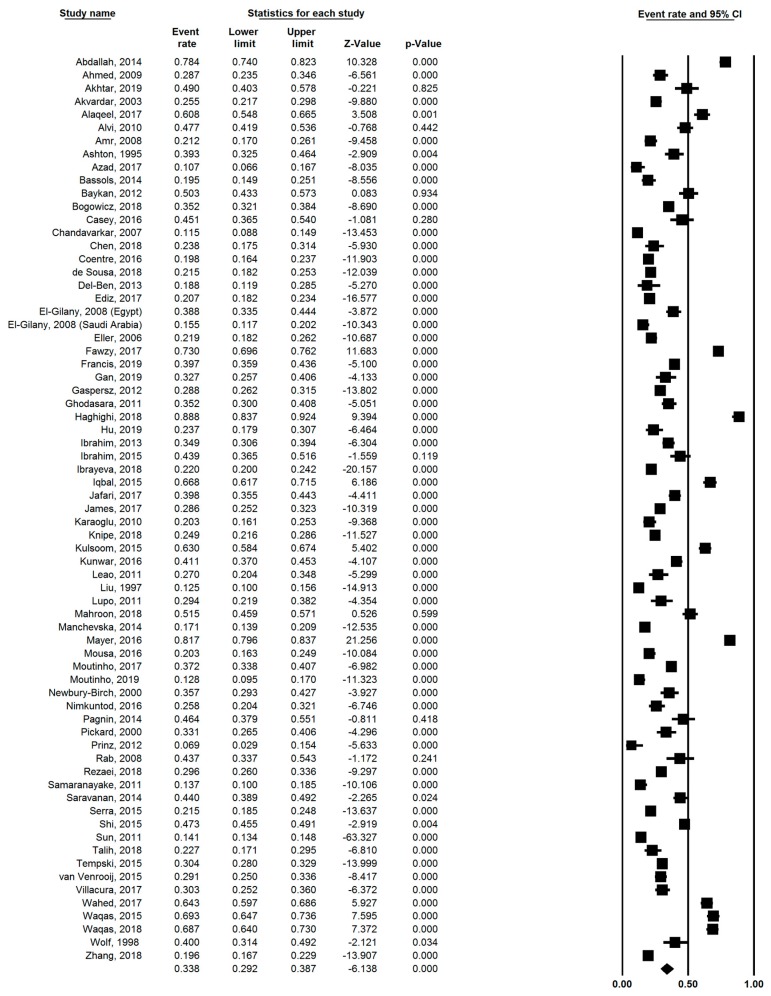
Anxiety, although as common and arguably as debilitating as depression, has garnered less attention, and is often undetected and undertreated in the general population. Similarly, anxiety among medical students warrants greater attention due to its significant implications. We aimed to study the global prevalence of anxiety among medical students and the associated factors predisposing medical students to anxiety. In February 2019, we carried out a systematic search for cross-sectional studies that examined the prevalence of anxiety among medical students. We computed the aggregate prevalence and pooled odds ratio (OR) using the random-effects model and used meta-regression analyses to explore the sources of heterogeneity. We pooled and analyzed data from sixty-nine studies comprising 40,348 medical students. The global prevalence rate of anxiety among medical students was 33.8% (95% Confidence Interval: 29.2–38.7%). Anxiety was most prevalent among medical students from the Middle East and Asia. Subgroup analyses by gender and year of study found no statistically significant differences in the prevalence of anxiety. About one in three medical students globally have anxiety—a prevalence rate which is substantially higher than the general population. Administrators and leaders of medical schools should take the lead in destigmatizing mental illnesses and promoting help-seeking behaviors when students are stressed and anxious. Further research is needed to identify risk factors of anxiety unique to medical students.
Overview
The claims and statistics of this paper haven’t been checked yet.
Run the check — free, no account needed. It reads the open-access text and checks the sources it cites.
Integrity signals
Registry
Cites
Statistics
Figures
Verification
Claims the paper makes
The claims and statistics of this paper haven’t been checked yet.
Run the check — free, no account needed. It reads the open-access text and checks the sources it cites.
Claims other papers make about this one
Each is checked against this paper’s own text: does it say what the citing paper says it does?
The cited source says what the claim attributes to it.
In the citing paper
“a meta-analysis revealed that approximately 1 in 3 medical students worldwide experiences anxiety, a rate significantly exceeding that of the general population [5].”
Self-check
Percentages, sums and reported differences re-computed from the paper’s own numbers.
The self-check needs the paper’s full text.
Citations
Cites
Preferred Reporting Items for Systematic Reviews and Meta-Analyses: the PRISMA statement
Moher, D., Liberati, A., Tetzlaff, J., Altman, D. G., & for the PRISMA Group (2009) · BMJ · doi:10.1136/bmj.b2535 · Cited by 83,823
Preferred Reporting Items for Systematic Reviews and Meta-Analyses: The PRISMA Statement
Moher, D., Liberati, A., Tetzlaff, J., Altman, D. G., & The PRISMA Group (2009) · PLoS Medicine · doi:10.1371/journal.pmed.1000097 · Cited by 64,042 · cited 1×
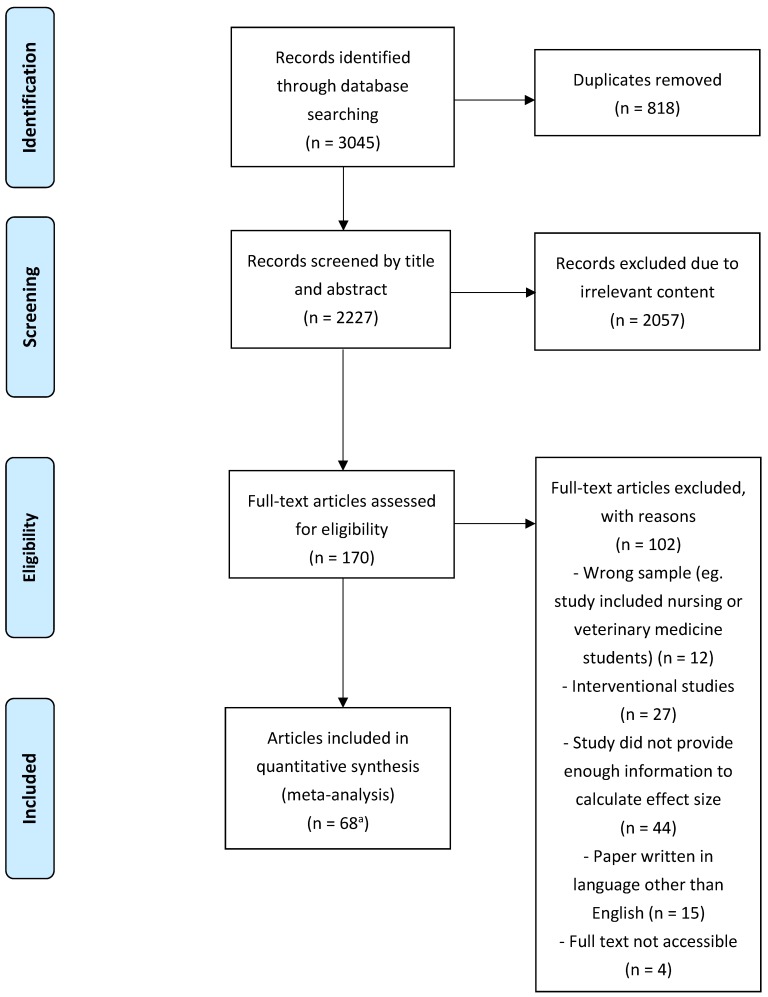
“The selection process, based on the Preferred Reporting Items for Systematic Reviews and Meta-Analyses (PRISMA) guidelines [18], is detailed in Figure 1.”
Bias in meta-analysis detected by a simple, graphical test
Egger, M., Smith, G. D., Schneider, M., & Minder, C. (1997) · BMJ · doi:10.1136/bmj.315.7109.629 · Cited by 56,722 · cited 1×
“We evaluated publication bias using the Egger’s regression method [22].”
MethodThe Hospital Anxiety and Depression Scale
Zigmond, A. S., & Snaith, R. P. (1983) · Acta Psychiatrica Scandinavica · doi:10.1111/j.1600-0447.1983.tb09716.x · Cited by 47,139 · cited 4×
“As a comparison, the prevalence of anxiety among the general population was found to be 3% as screened by the DASS-21 [96], 8.2% as screened by the GAD-7 [97], not more than 10% as screened by the BAI-21 [98] and not more than 25% as screened by the HADS-A [99].”
MethodInfluentialA Brief Measure for Assessing Generalized Anxiety Disorder: The GAD-7
Spitzer, R. L., Kroenke, K., Williams, J. B. W., & Löwe, B. (2006) · Archives of Internal Medicine · doi:10.1001/archinte.166.10.1092 · Cited by 31,765 · cited 4×
“As a comparison, the prevalence of anxiety among the general population was found to be 3% as screened by the DASS-21 [96], 8.2% as screened by the GAD-7 [97], not more than 10% as screened by the BAI-21 [98] and not more than 25% as screened by the HADS-A [99].”
MethodInfluentialWang, G., Ma, R., Qiao, G., Wada, K., Aizawa, Y., & Satoh, T. (2015) · Integrative Medicine International · doi:10.1159/000368408 · Cited by 18,762
An inventory for measuring clinical anxiety: Psychometric properties.
Beck, A. T., Epstein, N., Brown, G., & Steer, R. A. (1988) · Journal of Consulting and Clinical Psychology · doi:10.1037/0022-006x.56.6.893 · Cited by 14,407 · cited 4×
“As a comparison, the prevalence of anxiety among the general population was found to be 3% as screened by the DASS-21 [96], 8.2% as screened by the GAD-7 [97], not more than 10% as screened by the BAI-21 [98] and not more than 25% as screened by the HADS-A [99].”
MethodInfluentialDepression and quality of life in older persons: A review
Sivertsen, H., Bjørkløf, G. H., Engedal, K., Selbæk, G., & Helvik, A.-S. (2015) · Dementia and Geriatric Cognitive Disorders · doi:10.1159/000437299 · Cited by 14,152
Henry, J. D., & Crawford, J. R. (2005) · British Journal of Clinical Psychology · doi:10.1348/014466505x29657 · Cited by 5,801 · cited 4×
“As a comparison, the prevalence of anxiety among the general population was found to be 3% as screened by the DASS-21 [96], 8.2% as screened by the GAD-7 [97], not more than 10% as screened by the BAI-21 [98] and not more than 25% as screened by the HADS-A [99].”
MethodInfluentialAnxiety and cognitive performance: Attentional control theory
Eysenck, M. W., Derakshan, N., Santos, R., & Calvo, M. G. (2007) · Emotion · doi:10.1037/1528-3542.7.2.336 · Cited by 5,289 · cited 1×
“Anxiety can also impair goal-directed attention and concentration [9], working memory [10], and perceptual-motor function [11], all of which are important domains which enable medical students and physicians to provide safe and efficacious medical care to patients.”
Background
Research works printed but not linked: 2
- Prinz, 2012, Burnout, depression and depersonalisation--psychological factors and coping strategies in dental and medical students, GMS Z Med. Ausbild, 29, Doc10
- Lydiard, 2001, Irritable bowel syndrome, anxiety, and depression: What are the links?, J. Clin. Psychiatry, 62, 38
Cited by
Sorted by citations
Anxiety and coping strategies among nursing students during the covid-19 pandemic
Savitsky, B., Findling, Y., Ereli, A., & Hendel, T. (2020) · Nurse Education in Practice · doi:10.1016/j.nepr.2020.102809 · Cited by 812
Alsoufi, A., Alsuyihili, A., Msherghi, A. A. A., Elhadi, A., Atiyah, H., Ashini, A., Ashwieb, A., Ghula, M., Hasan, H. B., Abudabuos, S., et al. (2020) · PLoS ONE · doi:10.1371/journal.pone.0242905 · Cited by 749
“8% of them experienced anxiety symptoms when the results were pooled [24].”
BackgroundSaraswathi, I., Saikarthik, J., Senthil Kumar, K., Madhan Srinivasan, K., Ardhanaari, M., & Gunapriya, R. (2020) · PeerJ · doi:10.7717/peerj.10164 · Cited by 608
Shao, R., He, P., Ling, B., Tan, L., Xu, L., Hou, Y., Kong, L., & Yang, Y. (2020) · BMC Psychology · doi:10.1186/s40359-020-00402-8 · Cited by 422
“8%) estimated by a metaanalysis of 40,348 medical students across 69 studies [57].”
BackgroundEpidemiology of anxiety disorders: global burden and sociodemographic associations
Javaid, S. F., Hashim, I. J., Hashim, M. J., Stip, É., Samad, A., & Ahbabi, A. A. (2023) · Middle East Current Psychiatry · doi:10.1186/s43045-023-00315-3 · Cited by 565
“The finding associated with the relationship between anxiety and urbanization is consistent with recent research evidence [1, 37].”
BackgroundResultMedical education challenges and innovations during COVID-19 pandemic
Papapanou, M., Routsi, E., Tsamakis, K., Fotis, L., Marinos, G., Lidoriki, I., Karamanou, M., Papaioannou, T. G., Tsiptsios, D., Smyrnis, N., et al. (2021) · Postgraduate Medical Journal · doi:10.1136/postgradmedj-2021-140032 · Cited by 325
Lasheras, I., Gracia‐García, P., Lipnicki, D. M., Bueno‐Notivol, J., López‐Antón, R., de la Cámara, C., Lobo, A., & Santabárbara, J. (2020) · International Journal of Environmental Research and Public Health · doi:10.3390/ijerph17186603 · Cited by 308
“8% in a recent meta-analysis [14], and similar to the baseline rates reported in Chinese students by a systematic review published last year, where the mean prevalence of anxiety was 27.”
InfluentialSaddik, B., Hussein, A., Sharif-Askari, F., Kheder, W., Temsah, M., Koutaich, R., Haddad, E., Al-Roub, N., Marhoon, F. A., Hamid, Q., et al. (2020) · medRxiv · doi:10.2147/rmhp.s273333 · Cited by 214
Peng, P., Hao, Y., Liu, Y., Chen, S., Wang, Y., Yang, Q., Wang, X., Li, M., Wang, Y., He, L., et al. (2022) · Journal of Affective Disorders · doi:10.1016/j.jad.2022.10.040 · Cited by 264
Prevalence of burnout in medical students: A systematic review and meta-analysis
Almutairi, H., Alsubaiei, A., Abduljawad, S., Alshatti, A., Fekih‐Romdhane, F., Husni, M., & Jahrami, H. (2022) · International Journal of Social Psychiatry · doi:10.1177/00207640221106691 · Cited by 201
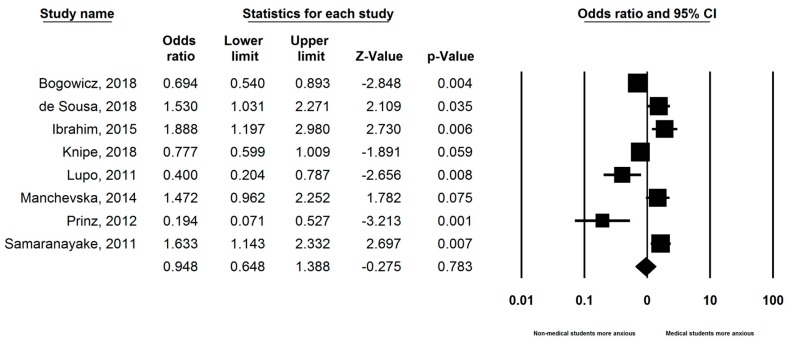
“Medical students have been shown to engage in even more stress exposure and display more mental health problems than non-medical students (Al-Dabal et al., 2010; Seedhom et al., 2019; Shad et al., 2015), and agematched individuals in the general population (Quek et al., 2019).”
BackgroundCheung, K., Tam, K. Y., Tsang, H., Zhang, L. W., & Lit, S.-W. (2020) · Journal of Affective Disorders · doi:10.1016/j.jad.2020.05.041 · Cited by 176
Zhang, C., Wang, T., Zeng, P., Zhao, M., Zhang, G., Zhai, S., Meng, L., Wang, Y., & Liu, D. (2021) · Frontiers in Psychiatry · doi:10.3389/fpsyt.2021.648755 · Cited by 175
“Anxiety is most prevalent among medical students from the Middle East and Asian countries (19).”
BackgroundMental Health of University Students in Southeastern Asia: A Systematic Review
Dessauvagie, A., Dang, H., Nguyen, T. A. T., & Groen, G. (2021) · Asia Pacific Journal of Public Health · doi:10.1177/10105395211055545 · Cited by 204
Rogowska, A. M., Павлова, Ю., Kuśnierz, C., Ochnik, D., Боднар, І., & Petrytsa, P. (2020) · Journal of Clinical Medicine · doi:10.3390/jcm9113494 · Cited by 179
“A previous meta-analysis showed a wide range of differences in the global prevalence of anxiety among medical students, which may also be related to cross-cultural differences [65].”
MethodPrevalence of anxiety in college and university students: An umbrella review
Tan, G. X. D., Soh, X. C., Hartanto, A., Goh, A. Y. H., & Majeed, N. M. (2023) · Journal of Affective Disorders Reports · doi:10.1016/j.jadr.2023.100658 · Cited by 218
Nishimura, Y., Ochi, K., Tokumasu, K., Obika, M., Hagiya, H., Kataoka, H., & Otsuka, F. (2021) · Journal of Medical Internet Research · doi:10.2196/25232 · Cited by 133
“Even before the COVID-19 pandemic, the global prevalence of anxiety among medical students was estimated to be 33.8%, and it was the most prevalent in those from the Middle East and Asia [21].”
BackgroundInfluentialPsychological impacts of COVID-19 pandemic on the university students in Egypt
Ghazawy, E. R., Ewis, A. A., Mahfouz, E. M., Khalil, D. M., Arafa, A., Mohammed, Z., Mohammed, E.-N. F., Hassan, E. E., Hamid, S. A., Ewis, S. A., et al. (2020) · Health Promotion International · doi:10.1093/heapro/daaa147 · Cited by 138
Akers, A., Blough, C. L., & Iyer, M. S. (2020) · Cureus · doi:10.7759/cureus.7800 · Cited by 127
“8% and 33% respectively, both substantially higher than the general population [26-27].”
BackgroundLevels of stress in medical students due to COVID-19
O’Byrne, L., Gavin, B. E., Adamis, D., Lim, Y. X., & McNicholas, F. (2021) · Journal of Medical Ethics · doi:10.1136/medethics-2020-107155 · Cited by 123
Johns, G., Samuel, V. M., Freemantle, L., Lewis, J., & Waddington, L. (2021) · Journal of Affective Disorders · doi:10.1016/j.jad.2021.11.026 · Cited by 121
“…that medical students and doctors are already at increased risk of psychological distress, depression, anxiety, burnout, and suicidality, compared with the general population (De Sio et al., 2020; Dong et. al., 2020; Tian-Ci Quek, 2019; Hayes et.al, 2017; Dai et al., 2015; Dyrbye et al., 2006).”
Impact of COVID-19 on medical students’ mental wellbeing in Jordan
Seetan, K. I., Al-Zubi, M. T., Rubbai, Y., Athamneh, M., Khamees, A., & Radaideh, T. (2021) · PLoS ONE · doi:10.1371/journal.pone.0253295 · Cited by 112
Safa, F., Anjum, A., Hossain, S., Trisa, T. I., Alam, S. F., Rafi, M. A., Podder, V., Koly, K. N., Azad, D. T., Ahmad, W. U., et al. (2020) · Children and Youth Services Review · doi:10.1016/j.childyouth.2020.105912 · Cited by 106
Mental Health Among Medical Students During COVID-19: A Systematic Review and Meta-Analysis
Jia, Q., Qu, Y., Sun, H., Huo, H., Hongxia, Y., & You, D. (2022) · Frontiers in Psychology · doi:10.3389/fpsyg.2022.846789 · Cited by 107
Ahmed, I., Hazell, C. M., Edwards, B., Glazebrook, C., & Davies, E. B. (2023) · BMC Psychiatry · doi:10.1186/s12888-023-04645-8 · Cited by 130
“Our findings compliment those of other reviews on the prevalence of common mental health problems in university students [14, 18, 25, 137].”
ResultSinval, J., Oliveira, P., Novais, F., Almeida, C. M., & Telles‐Correia, D. (2024) · Journal of Affective Disorders · doi:10.1016/j.jad.2024.09.116 · Cited by 96
Chi, T., Cheng, L., & Zhang, Z. (2023) · Brain and Behavior · doi:10.1002/brb3.2909 · Cited by 92
Self-citationEating Habits Among Medical Students at King Abdulaziz University, Jeddah, Saudi Arabia
Alzahrani, S. H., Saeedi, A. A., Baamer, M. K., Shalabi, A. F., & Alzahrani, A. (2020) · International Journal of General Medicine · doi:10.2147/ijgm.s246296 · Cited by 89
“The time and emotional commitments medical students must devote to their training are extensive, and such stress has a negative impact on students’ psychological health.(12) Healthy dietary habits among medical students are important because they are the future physicians, and students who personally ignore adopting a…”
BackgroundPorru, F., Robroek, S. J., Bültmann, U., Portoghese, I., Campagna, M., & Alex Burdorf, A. (2020) · Journal of Affective Disorders · doi:10.1016/j.jad.2020.12.183 · Cited by 112
Dhahri, A. A., Arain, S. Y., Memon, A. M., Rao, A., Mian, M. A., Khan, M., Hafeez, G., Dhahri, M. A., Mustafa, F. G., Malhi, S., et al. (2020) · Annals of Medicine and Surgery · doi:10.1016/j.amsu.2020.11.025 · Cited by 93
Assessing the Psychological Impacts of COVID-19 in Undergraduate Medical Students
Guo, A. A., Crum, M., & Fowler, L. A. (2021) · International Journal of Environmental Research and Public Health · doi:10.3390/ijerph18062952 · Cited by 84
Mirza, A. A., Milaat, W. A., Ramadan, I. K., Baig, M., Elmorsy, S. A., Beyari, G. M., Halawani, M. A., Azab, R. A., Zahrani, M. T., & Khayat, N. K. (2021) · Neurosciences · doi:10.17712/nsj.2021.2.20200127 · Cited by 87
Mohamad, N. E., Sidik, S. M., Akhtari‐Zavare, M., & Gani, N. A. (2021) · BMC Public Health · doi:10.1186/s12889-021-10440-5 · Cited by 119
Lee, M. H. L., Kaur, M., Shaker, V., Yee, A., Sham, R., & Siau, C. S. (2023) · International Journal of Environmental Research and Public Health · doi:10.3390/ijerph20043136 · Cited by 79
“8% [34], whilst the pooled prevalence of depression was 28% in another meta-analysis [35].”
BackgroundSwiss University Students’ Risk Perception and General Anxiety during the COVID-19 Pandemic
Dratva, J., Zysset, A. E., Schlatter, N., von Wyl, A., Huber, M., & Volken, T. (2020) · International Journal of Environmental Research and Public Health · doi:10.3390/ijerph17207433 · Cited by 89
“A pre-COVID university study found differences by faculties, with lowest anxiety in health professions and engineering students [33], while a global study in medical students observed higher general anxiety prevalence in medical students compared to same-age peers [34].”
BackgroundSigdel, A., Bista, A., Bhattarai, N., Pun, B. C., Giri, G., Marqusee, H., & Thapa, S. (2020) · medRxiv · doi:10.1101/2020.04.30.20086926 · Cited by 84
Burnout, depression and anxiety among Swiss medical students – A network analysis
Ernst, J., Jordan, K.-D., Weilenmann, S., Sazpinar, O., Gehrke, S., Paolercio, F., Petry, H., Pfaltz, M. C., Méan, M., Aebischer, O., et al. (2021) · Journal of Psychiatric Research · doi:10.1016/j.jpsychires.2021.09.017 · Cited by 84
Ramadianto, A. S., Kusumadewi, I., Agiananda, F., & Raharjanti, N. W. (2022) · BMC Psychiatry · doi:10.1186/s12888-022-03745-1 · Cited by 107
“Another global meta-analysis found that 1 in 3 medical students experience symptoms of anxiety [11].”
BackgroundJahrami, H., AlKaabi, J., Trabelsi, K., Pandi-Perumal, S. R., Saif, Z., Seeman, M. V., & Vitiello, M. V. (2023) · Journal of Psychosomatic Research · doi:10.1016/j.jpsychores.2023.111479 · Cited by 72
Adibi, A., Golitaleb, M., Farahi-Ashtiani, I., Pirani, D., Yousefi, K., Jamshidbeigi, Y., & Sahebi, A. (2021) · Frontiers in Psychiatry · doi:10.3389/fpsyt.2021.658846 · Cited by 72
The Effectiveness of Serious Games in Alleviating Anxiety: Systematic Review and Meta-analysis
Abd-Alrazaq, A. A., Alajlani, M., Alhuwail, D., Schneider, J., Akhu‐Zaheya, L., Ahmed, A., & Househ, M. S. (2021) · JMIR Serious Games · doi:10.2196/29137 · Cited by 82
Fekih‐Romdhane, F., Daher‐Nashif, S., Alhuwailah, A., Gahtani, H. M. S. A., Hubail, S., Shuwiekh, H. A. M., Khudhair, M. F., Alhaj, O. A., Bragazzi, N. L., & Jahrami, H. (2022) · Eating and Weight Disorders - Studies on Anorexia Bulimia and Obesity · doi:10.1007/s40519-021-01351-w · Cited by 71
“Medical students have been found to be exposed to more stressors and to experience more mental health issues as compared to students from other fields [99–101], and to age-matched general population [102].”
BackgroundPorru, F., Schuring, M., Bültmann, U., Portoghese, I., Alex Burdorf, A., & Robroek, S. J. (2021) · Journal of Affective Disorders · doi:10.1016/j.jad.2021.09.057 · Cited by 85
Lin, Y., Saragih, I. D., Lin, C., Liu, H.-L., Chen, C., & Yeh, Y. (2024) · BMC Psychology · doi:10.1186/s40359-024-01838-y · Cited by 79
“Medical students have been identified as having a high risk of developing mental health problems [17].”
BackgroundElhadi, M., Buzreg, A., Bouhuwaish, A. E. M., Khaled, A., Alhadi, A., Msherghi, A. A. A., Alsoufi, A., Alameen, H., Biala, M. I., Elgherwi, A., et al. (2020) · Frontiers in Psychology · doi:10.3389/fpsyg.2020.570435 · Cited by 64
Thai, T. T., Le, P. T. V., Huynh, Q. N. H., Pham, P. T. T., & Bui, H. H. T. (2021) · Psychology Research and Behavior Management · doi:10.2147/prbm.s317059 · Cited by 66
Anxiety, PTSD, and stressors in medical students during the initial peak of the COVID-19 pandemic
Lee, C. M., Juarez, M., Rae, G., Jones, L., Rodriguez, R. M., Davis, J. A., Boysen‐Osborn, M., Kashima, K. J., Krane, N. K., Kman, N. E., et al. (2021) · PLoS ONE · doi:10.1371/journal.pone.0255013 · Cited by 64
“Studies prior to the pandemic have demonstrated that medical student psychological distress varies by year, and is greater in clinical years; there is evidence that medical students have higher levels of anxiety and depression compared with the general population and age-matched peers [2, 3].”
BackgroundEffects of COVID-19 on career and specialty choices among Chinese medical students
Deng, J., Que, J., Wu, S., Zhang, Y., Liu, J., Chen, S., Wu, Y., Gong, Y., Sun, S., Yuan, K., et al. (2021) · Medical Education Online · doi:10.1080/10872981.2021.1913785 · Cited by 61
“Depression and anxiety have become pervasive among medical students during the COVID-19 pandemic [10,27].”
BackgroundSymptoms of depression, anxiety and stress in health students and impact on quality of life
de Freitas, P. H. B., Meireles, A. L., Ribeiro, I. K. D. S., Abreu, M. N. S., de Paula, W., & Cardoso, C. S. (2023) · Revista Latino-Americana de Enfermagem · doi:10.1590/1518-8345.6315.3885 · Cited by 80
Hayat, A. A., Choupani, H., & Dehsorkhi, H. F. (2021) · Journal of Education and Health Promotion · doi:10.4103/jehp.jehp_35_21 · Cited by 66
AlJaber, M. I. (2020) · Journal of Family Medicine and Primary Care · doi:10.4103/jfmpc.jfmpc_255_20 · Cited by 54
Perceived stress and anxiety among medical students at Helwan University: A cross-sectional study
Ebrahim, O. S., Sayed, H. A. E., Rabei, S., & Hegazy, N. (2024) · Journal of Public Health Research · doi:10.1177/22799036241227891 · Cited by 67
Efstathiou, M., Kakaidi, V., Tsitsas, G. D., Mantzoukas, S., Gouva, M., & Dragioti, E. (2025) · International Journal of Nursing Studies · doi:10.1016/j.ijnurstu.2025.104993 · Cited by 72
Mental health state in medical students during COVID-19 pandemic
Syakurah, R., & Natalia, D. (2021) · Journal of Education and Health Promotion · doi:10.4103/0003-2778.320283 · Cited by 55
Cofini, V., Perilli, E., Moretti, A., Bianchini, V., Perazzini, M., Muselli, M., Lanzi, S., Tobia, L., Fabiani, L., & Necozione, S. (2022) · International Journal of Environmental Research and Public Health · doi:10.3390/ijerph19138214 · Cited by 66
“Some studies reported a psychological impact of COVID-19 on students [64,65].”
BackgroundSmartphone overuse, depression & anxiety in medical students during the COVID-19 pandemic
Santander-Hernández, F. M., Peralta, C. I., Guevara-Morales, M. A., Díaz-Vélez, C., & Valladares-Garrido, M. J. (2022) · PLoS ONE · doi:10.1371/journal.pone.0273575 · Cited by 56
COVID-19 and mental health: A systematic review of international medical student surveys
Paz, D. C., Bains, M. S., Zueger, M. L., Bandi, V. R., Kuo, V. Y., Cook, K., & Ryznar, R. J. (2022) · Frontiers in Psychology · doi:10.3389/fpsyg.2022.1028559 · Cited by 56
Mental health trends among medical students
Nair, M., Moss, N., Bashir, A., Gárate, D., Thomas, D., Fu, S., Phu, D., & Pham, C. (2023) · Baylor University Medical Center Proceedings · doi:10.1080/08998280.2023.2187207 · Cited by 60
“and anxiety among medical students are estimated to be 27% and 34%, respectively.(4,5) Data collected across several countries shows that suicidal ideation rates among medical students is an alarming 11%.”
BackgroundCOVID-19 amongst the Pandemic of Medical Student Mental Health
Komer, L. (2020) · International Journal of Medical Students · doi:10.5195/ijms.2020.501 · Cited by 52
Exploring medical students' views on digital mental health interventions: A qualitative study
Dederichs, M., Weber, J., Pischke, C. R., Angerer, P., & Apolinário-Hagen, J. (2021) · Internet Interventions · doi:10.1016/j.invent.2021.100398 · Cited by 50
“Accumulating evidence indicates that medical students show high prevalence of different mental illnesses worldwide (Rotenstein et al., 2016; Tian-Ci Quek et al., 2019).”
BackgroundSandoval, K. D., Morote-Jayacc, P. V., Moreno-Molina, M., & Taype-Rondán, Á. (2021) · Revista Colombiana de Psiquiatría · doi:10.1016/j.rcp.2021.10.005 · Cited by 50
“Sentí que la vida no tenía ningún sentido 8 (2,8) 15 (5,3) 40 (14,1) 221 (77,8) 16.”
InfluentialVorontsova-Wenger, O., Ghisletta, P., Ababkov, V., & Barisnikov, K. (2021) · Psychological Reports · doi:10.1177/0033294119899906 · Cited by 47
“33), considerably lower than the rates indicated in recent meta-analyses (Quek et al., 2019; Rotenstein et al., 2016).”
MethodResultInfluentialAgyapong-Opoku, G., Agyapong, B., Obuobi-Donkor, G., & Eboreime, E. (2023) · Behavioral Sciences · doi:10.3390/bs13121002 · Cited by 62
Vallone, F., Galvin, J., Volta, M. F. C. D., Akhtar, A., Chua, S., Ghio, E., Giovazolias, T., Kazakou, Z., Kritikou, M., Koutra, K., et al. (2023) · Frontiers in Psychology · doi:10.3389/fpsyg.2023.1211134 · Cited by 66
“Indeed, research conducted worldwide has highlighted remarkable rates of severe psychological disease, in particular anxiety and depression, which were substantially higher than those reported among the general population (Eisenberg et al., 2007; Ibrahim et al., 2013; Quek et al., 2019; Mavrandrea and Giovazolias, 202…”
BackgroundWhy impaired wellness may be inevitable in medicine, and why that may not be a bad thing
Bynum, W. E., Varpio, L., & Teunissen, P. W. (2020) · Medical Education · doi:10.1111/medu.14284 · Cited by 47
Shafiee, A., Nakhaee, Z., Bahri, R. A., Amini, M. J., Salehi, A., Jafarabady, K., Seighali, N., Rashidian, P., Fathi, H., Abianeh, F. E., et al. (2024) · BMC Public Health · doi:10.1186/s12889-024-19184-4 · Cited by 65
Shen, Y., Zhang, Y., Chan, B. S. M., Meng, F., Yang, T., Luo, X., & Huang, C. (2020) · BMC Psychiatry · doi:10.1186/s12888-020-02555-7 · Cited by 48
Samreen, S., Siddiqui, N. A., & Mothana, R. A. (2020) · BioMed Research International · doi:10.1155/2020/2436538 · Cited by 51
“5%) among undergraduates were reported in American and European students [29].”
BackgroundPrevalence of Internet Gaming Disorder in Medical Students: A Meta-Analysis
Chiang, C. L. L., Zhang, M. W., & Ho, R. (2022) · Frontiers in Psychiatry · doi:10.3389/fpsyt.2021.760911 · Cited by 45
Self-citationThe Association Between Social Support, COVID-19 Exposure, and Medical Students' Mental Health
Yin, Y., Yang, X., Gao, L., Zhang, S.-Y., Qi, M., Zhang, L., Tan, Y., & Chen, J. (2021) · Frontiers in Psychiatry · doi:10.3389/fpsyt.2021.555893 · Cited by 46
Norton, E. J., Georgiou, I., Fung, A., Nazari, A., Bandyopadhyay, S., & Saunders, K. E. A. (2020) · Journal of Public Health · doi:10.1093/pubmed/fdaa187 · Cited by 45
Fernandez, M. D. S., Vieira, I. S., da Silva-Garcia, N. R. J., Cardoso, T. D. A., Bielavski, C. H., Rakovski, C., & Silva, A. E. R. (2021) · Journal of Dental Education · doi:10.1002/jdd.12742 · Cited by 44
Shiraly, R., Roshanfekr, A., Asadollahi, A., & Griffiths, M. D. (2024) · BMC Medical Education · doi:10.1186/s12909-024-05988-w · Cited by 74
Sleep Quality and Mental Health Among Medical Students: A Cross-Sectional Study
Vidović, S., Rakić, N., Kraštek, S., Pešikan, A., Degmečić, D., Zibar, L., Labak, I., Heffer, M., & Pogorelić, Z. (2025) · Journal of Clinical Medicine · doi:10.3390/jcm14072274 · Cited by 43
Alwhaibi, M., Alotaibi, A., & Alsaadi, B. (2023) · Healthcare · doi:10.3390/healthcare11111625 · Cited by 42
“Anxiety was most prevalent among medical students from the Middle East and Asia [10].”
BackgroundResultInfluentialAljhani, S., AlAteeq, D. A., Alwabili, A., & Alamro, A. (2021) · The Journal of Mental Health Training Education and Practice · doi:10.1108/jmhtep-04-2021-0037 · Cited by 44
Factors affecting test anxiety: a qualitative analysis of medical students’ views
Wadi, M., Yusoff, M. S. B., Rahim, A. F. A., & Lah, N. A. Z. N. (2022) · BMC Psychology · doi:10.1186/s40359-021-00715-2 · Cited by 54
“In a meta-analysis, Quek, Tam [7] reported that 33.”
BackgroundInfluentialSantabárbara, J., Olaya, B., Bueno‐Notivol, J., Pérez-Moreno, M., Gracia‐García, P., Ozamiz-Etxebarria, N., & Mondragón, N. I. (2021) · Revista médica de Chile · doi:10.4067/s0034-98872021001101579 · Cited by 41
Wang, J., Liu, M., Bai, J., Chen, Y., Xia, J., Liang, B., Wei, R., Lin, J., Wu, J., & Xiong, P. (2023) · Frontiers in Public Health · doi:10.3389/fpubh.2023.1116616 · Cited by 55
Atkinson, S. R. (2020) · PLoS ONE · doi:10.1371/journal.pone.0237008 · Cited by 41
“Previous research has been inconsistent when gender is compared to depression, anxiety, and stress which suggests that gender likely has no significant role as a risk factor for psychological distress [1, 3, 8, 31, 32].”
BackgroundResultChang, W., Shi, L.-X., Zhang, L., Jin, Y., & Yu, J. (2021) · Frontiers in Psychiatry · doi:10.3389/fpsyt.2021.755503 · Cited by 45
Qiu, L., Xu, H., Li, Y., Zhao, Y., & Yang, Q. (2024) · BMC Public Health · doi:10.1186/s12889-024-18826-x · Cited by 46
“Another meta-analysis estimated that the prevalence of anxiety among medical students was 33.8% [9].”
BackgroundInfluentialA comprehensive perspective of Huntington’s disease and mitochondrial dysfunction
Dai, Y., Wang, H., Lian, A., Li, J., Zhao, G., Hu, S., & Li, B. (2023) · Mitochondrion · doi:10.1016/j.mito.2023.03.001 · Cited by 40
Theobald, M., Breitwieser, J., & Brod, G. (2022) · Psychological Science · doi:10.1177/09567976221119391 · Cited by 50
Amaro, P., da Fonseca, C. J. V., Afonso, A., Jacinto, G., Gomes, L., Pereira, H. R., JOSÉ, H. M. G., Silva, C., Lima, A., do Arco, H. M. D. S. L. R., et al. (2024) · Depression and Anxiety · doi:10.1155/2024/5528350 · Cited by 37
“…also shown that the area of training (i.e., a student ’ s major) in fl uenced reported levels of mental distress (e.g., anxiety and depression), where the prevalence rate of anxiety in medical students was substantially higher than in the general population [25, 26] or non-medical students [27].”
Alharthi, H. (2020) · International Symposium on Distributed Computing and Applications for Business Engineering and Science (DCABES) · doi:10.1109/dcabes50732.2020.00064 · Cited by 39
“8% of medical students were showing symptoms of anxiety and the majority of which were in the Middle East and Asia [6].”
BackgroundSantiago, I. S., Castro, S. D. C. E., de Brito, A. P. A., Sanches, D., Quintanilha, L. F., Avena, K. D. M., & Andrade, B. B. (2024) · BMC Medical Education · doi:10.1186/s12909-024-05617-6 · Cited by 36
Awasthi, A. A., Taneja, N., Maheshwari, S., Gupta, T., & Bhavika (2020) · Osong Public Health and Research Perspectives · doi:10.24171/j.phrp.2020.11.5.06 · Cited by 44
“8% [6], and depression in 62,728 medical students globally was determined as 28% [7].”
BackgroundSaczuk, K., Łapińska, B., Wawrzynkiewicz, A., Witkowska, A., Arbildo-Vega, H. I., Domarecka, M., & Łukomska−Szymańska, M. (2022) · Healthcare · doi:10.3390/healthcare10040740 · Cited by 39
“It should be noted that studying in Medical University in general is regarded as emotionally challenging, and the students more often suffer from anxiety or depression [55,56].”
BackgroundAnxiety Assessment in Polish Students during the Russian–Ukrainian War
Skwirczyńska, E., Kozłowski, M., Nowak, K., Wróblewski, O., Sompolska‐Rzechuła, A., Kwiatkowski, S., & Cymbaluk‐Płoska, A. (2022) · International Journal of Environmental Research and Public Health · doi:10.3390/ijerph192013284 · Cited by 36
“Thus, it seemed reasonable to conclude that the prevalence of anxiety was higher among older students than among younger students [37].”
BackgroundJamil, H., Alakkari, M., Al-Mahini, M. S., Alsayid, M., & Al Jandali, O. (2022) · Avicenna Journal of Medicine · doi:10.1055/s-0042-1755181 · Cited by 34
Yuan, L., Lu, L., Wang, X., Qu, M., Gao, Y., & Pan, B. (2023) · BMC Psychiatry · doi:10.1186/s12888-023-04638-7 · Cited by 41
de Freitas, P. H. B., Meireles, A. L., Ribeiro, I. K. D. S., Abreu, M. N. S., de Paula, W., & Cardoso, C. S. (2023) · Revista Latino-Americana de Enfermagem · doi:10.1590/1518-8345.6315.3884 · Cited by 72
“8%, showing a higher prevalence than in the general population, which may substantially impact QoL(26).”
BackgroundOccupational Stress Among Health Worker in a National Dermatology Hospital in Vietnam, 2018
Ngoc, A. N., Thanh, X. L. T., Thi, H. L., Tuan, A. V., & Van, T. N. (2020) · Frontiers in Psychiatry · doi:10.3389/fpsyt.2019.00950 · Cited by 34
Brown, A. D., Kassam, A., Paget, M., Blades, K., Mercia, M., & Kachra, R. (2021) · Canadian Medical Education Journal · doi:10.36834/cmej.71149 · Cited by 36
“This is concerning given the existing evidence on the alarming prevalence of burnout and psychiatric morbidities in learners, as COVID-19 may amplify these pre-existing issues (Puthran et al. 2016; Frajerman et al. 2019; Quek et al. 2019; Hartzband & Groopman 2020).”
BackgroundAtienza-Carbonell, B., Guillén, V., Irigoyen-Otiñano, M., & Balanzá‐Martínez, V. (2022) · Journal of Affective Disorders · doi:10.1016/j.jad.2022.05.090 · Cited by 33
The association of vitamin D deficiency, age and depression in US adults: a cross-sectional analysis
Mo, H., Zhang, J., Huo, C., Zhang, M., Xiao, J., Peng, J., Wang, G., Wang, C., & Li, Y. (2023) · BMC Psychiatry · doi:10.1186/s12888-023-04685-0 · Cited by 36
Self-citationAslan, I., & Çınar, O. (2023) · Frontiers in Psychology · doi:10.3389/fpsyg.2022.1087528 · Cited by 32
“Moreover, female students displayed a higher fear of COVID-19 than male students during the lockdown among undergraduates from Ecuador (Rodríguez-Hidalgo et al., 2020).”
BackgroundAljuwaiser, S., Brazzelli, M. G., Arain, I., & Poobalan, A. S. (2023) · Journal of Mental Health · doi:10.1080/09638237.2023.2278095 · Cited by 45
“Of the meta-analyses that provided a pooled prevalence rate, the highest anxiety prevalence rate was 33.8% and was conducted globally (Quek et al., 2019); however, when anxiety prevalence rates were grouped by continent, the prevalence was highest in the Middle East at 42.4%, followed by Asia at…”
InfluentialMental health and burnout during medical school: Longitudinal evolution and covariates
Carrard, V., Berney, S., Bourquin, C., Ranjbar, S., Castelao, E., Schlegel, K., Gaume, J., Bart, P., Mast, M. S., Preisig, M., et al. (2024) · PLoS ONE · doi:10.1371/journal.pone.0295100 · Cited by 43
Students Anxiety Experiences in Higher Education Institutions
AlKandari, N. Y. (2020) · IntechOpen eBooks · doi:10.5772/intechopen.92079 · Cited by 35
Metadata
- Authors
- Tian-Ci Quek, T., Wai-San Tam, W., X. Tran, B., Zhang, M., Zhang, Z., Su-Hui Ho, C., & Chun-Man Ho, R.
- Affiliations
- Department of Psychological Medicine, Yong Loo Lin School of Medicine, National University of Singapore, Singapore 119007, Singapore
- Alice Lee Centre for Nursing Studies, National University of Singapore, Singapore 119007, Singapore
- Institute for Preventive Medicine and Public Health, Hanoi Medical University, Hanoi 100000, Vietnam
- Huaibei Normal University (CN)
- Department of Psychological Medicine, National University Health System, Singapore 119007, Singapore
- Corresponding author
- Zhang, Zhisong
- ORCID
- Venue
- International Journal of Environmental Research and Public Health
- Publisher
- MDPI AG
- Published
- 2019-07-31
- Volume
- 16
- Issue
- 15
- Pages
- 2735
- ISSN
- 1660-4601 (ISSN-L)
- PMC
- PMC6696211
- OpenAlex
- W2965255255
- Cited by
- 990
- References
- 136
- Citations by year
- 2026: 141 · 2025: 130 · 2024: 186 · 2023: 165 · 2022: 174 · 2021: 124 · 2020: 66 · 2019: 3
- FWCI
- 16.82
- Type
- journal article
- Language
- en
- Open access
- gold
- dx.doi.org
- Licence
- Locations
- International Journal of Environmental Research and Public Health (publishedVersion, cc-by)
- PubMed Central (publishedVersion, cc-by)
- PubMed (publishedVersion)
- Rare & Special e-Zone (The Hong Kong University of Science and Technology) (submittedVersion)
- National University of Singapore (submittedVersion, cc-by)
- RePEc: Research Papers in Economics (submittedVersion)
- DOAJ (DOAJ: Directory of Open Access Journals) (submittedVersion)
- Funders
- This study received funding from the National Social Science Fund (General Project of Education) (BBA170063)
- Topics
- Health Sciences › Health Professions › General Health Professions › Healthcare professionals’ stress and burnout
- Health Sciences › Medicine › Psychiatry and Mental health › Mental Health Treatment and Access
- Social Sciences › Psychology › Clinical Psychology › COVID-19 and Mental Health
- Keywords
- anxiety, medical students, prevalence, risk factors, mental health, medical education, help-seeking, stigma, gender differences, year of study
- MeSH terms
- Anxiety, Humans, Risk Factors, Students, Medical, Global Health, Models, Statistical, Prevalence, Odds Ratio
About these checks
Registry, retraction, Cites and statistics results are computed, not judged, with one exception: a printed reference that no index lists is read once by a model before it counts as a citation error. Claims are extracted by a model and kept only when their quote appears verbatim in the text; each cited source is then checked, with a model’s help, for whether it says what the claim relies on. Those verdicts can be wrong — read the claim’s quote and the cited source before relying on one.
Statistics and arithmetic are recomputed, not judged.
Confidence bands are shown only for fields calibrated on our annotated test set. None is calibrated yet, so no band is shown.
What counts as a claim ›How we measure confidence ›How we check this ›
Are you an author, or do you see a problem with this page? Request a review
