

The Effects of Cadmium Toxicity
Open accessThe DOI matches its Crossref record; 153 of the 156 references it cites were found in a registry or an index.
Abstract
Cadmium (Cd) is a toxic non-essential transition metal that poses a health risk for both humans and animals. It is naturally occurring in the environment as a pollutant that is derived from agricultural and industrial sources. Exposure to cadmium primarily occurs through the ingestion of contaminated food and water and, to a significant extent, through inhalation and cigarette smoking. Cadmium accumulates in plants and animals with a long half-life of about 25–30 years. Epidemiological data suggest that occupational and environmental cadmium exposure may be related to various types of cancer, including breast, lung, prostate, nasopharynx, pancreas, and kidney cancers. It has been also demonstrated that environmental cadmium may be a risk factor for osteoporosis. The liver and kidneys are extremely sensitive to cadmium’s toxic effects. This may be due to the ability of these tissues to synthesize metallothioneins (MT), which are Cd-inducible proteins that protect the cell by tightly binding the toxic cadmium ions. The oxidative stress induced by this xenobiotic may be one of the mechanisms responsible for several liver and kidney diseases. Mitochondria damage is highly plausible given that these organelles play a crucial role in the formation of ROS (reactive oxygen species) and are known to be among the key intracellular targets for cadmium. When mitochondria become dysfunctional after exposure to Cd, they produce less energy (ATP) and more ROS. Recent studies show that cadmium induces various epigenetic changes in mammalian cells, both in vivo and in vitro, causing pathogenic risks and the development of various types of cancers. The epigenetics present themselves as chemical modifications of DNA and histones that alter the chromatin without changing the sequence of the DNA nucleotide. DNA methyltransferase, histone acetyltransferase, histone deacetylase and histone methyltransferase, and micro RNA are involved in the epigenetic changes. Recently, investigations of the capability of sunflower (Helianthus annuus L.), Indian mustard (Brassica juncea), and river red gum (Eucalyptus camaldulensis) to remove cadmium from polluted soil and water have been carried out. Moreover, nanoparticles of TiO2 and Al2O3 have been used to efficiently remove cadmium from wastewater and soil. Finally, microbial fermentation has been studied as a promising method for removing cadmium from food. This review provides an update on the effects of Cd exposure on human health, focusing on the cellular and molecular alterations involved.
Overview
The claims and statistics of this paper haven’t been checked yet.
Free: it reads the open-access text and checks the first 5 claims that cite a source we can check. Create a free account to check every claim.
Integrity signals
Registry
Cites
Statistics
Figures
Verification
Claims the paper makes
The claims and statistics of this paper haven’t been checked yet.
Free: it reads the open-access text and checks the first 5 claims that cite a source we can check. Create a free account to check every claim.
Claims other papers make about this one
Each is checked against this paper’s own text: does it say what the citing paper says it does?
The cited source says what the claim attributes to it.
In the citing paper
“The human body is exposed to various toxic metals through inhalation, ingestion, and skin such as arsenic (As) (28), cadmium (Cd) (29), chromium (Cr) (30), lead (Pb) (31), and mercury (Hg) (23).”
From The dark side of beauty: an in-depth analysis of the health hazards and toxicological impact of synthetic cosmetics and personal care products (2024) · cites this paper as [28]
Self-check
Percentages, sums and reported differences re-computed from the paper’s own numbers.
The self-check needs the paper’s full text.
Citations
Cites
1 retracted
Zhou, Z., Wang, C., Liu, H., Huang, Q., Wang, M., & Lei, Y. (2013) · International Journal of Medical Sciences · doi:10.7150/ijms.6308 · Cited by 60 · cited 2×
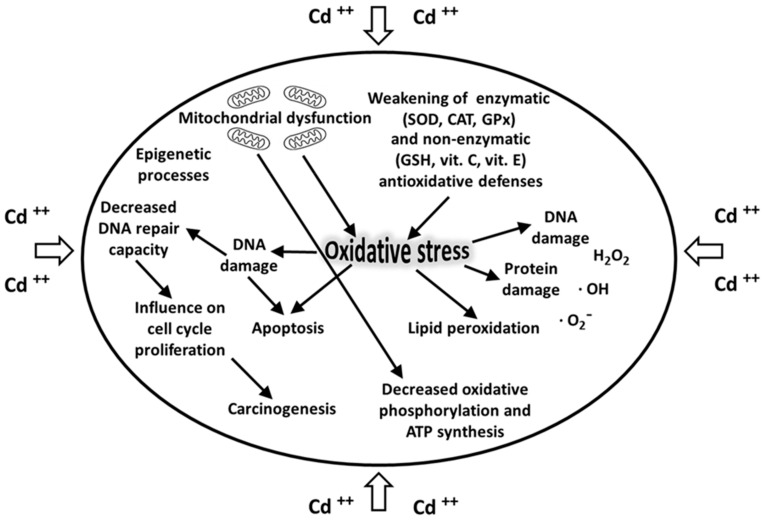
“The major Cd-induced carcinogenic mechanisms include the induction of inflammatory processes, oxidative stress, ROS, epigenetics, attenuation of apoptosis, damage to DNA, decreased DNA repair capacity, alteration in gene expression, cell proliferation, and aberrant DNA methylation [111,112,118,127].”
BackgroundRetractedThe C. elegans heterochronic gene lin-4 encodes small RNAs with antisense complementarity to lin-14
Lee, R. C., Feinbaum, R. L., & Ambros, V. (1993) · Cell · doi:10.1016/0092-8674(93)90529-y · Cited by 12,948 · cited 1×
“In the nematode Caenorhabditis elegans, lin-4 was the first miRNA to be discovered [122].”
BackgroundCurrent status of cadmium as an environmental health problem
Järup, L., & Åkesson, A. (2009) · Toxicology and Applied Pharmacology · doi:10.1016/j.taap.2009.04.020 · Cited by 2,355 · cited 1×
“Thus, heavy metal contamination of both drinking water and rivers with Cd may occur especially in areas near factories or mines [37].”
BackgroundMitochondria, oxidative stress and cell death
Ott, M., Gogvadze, V., Orrenius, S., & Zhivotovsky, B. (2007) · Apoptosis · doi:10.1007/s10495-007-0756-2 · Cited by 1,977 · cited 2×
“Excessive ROS production leads to a free radical attack of mitochondrial membrane phospholipids and mitochondrial membrane depolarization, which is a key step in the intrinsic pathway of apoptosis [85,86].”
BackgroundNickel: Human Health and Environmental Toxicology
Genchi, G., Carocci, A., Lauria, G., Sinicropi, M. S., & Catalano, A. (2020) · International Journal of Environmental Research and Public Health · doi:10.3390/ijerph17030679 · Cited by 1,602
Self-citationCadmium in soils and groundwater: A review
Kubier, A., Wilkin, R. T., & Pichler, T. (2019) · Applied Geochemistry · doi:10.1016/j.apgeochem.2019.104388 · Cited by 1,468 · cited 1×
“5) it remains in solution, in contrast to the typical fixation of other heavy metals [36].”
BackgroundA CADMIUM PROTEIN FROM EQUINE KIDNEY CORTEX
Margoshes, M., & Vallee, B. L. (1957) · Journal of the American Chemical Society · doi:10.1021/ja01574a064 · Cited by 1,300 · cited 1×
“Metallothionein was first identified in the kidney cortex of equines as a Cd-binding protein that is responsible for the accumulation of Cd in the tissues [89].”
BackgroundCadmium, Environmental Exposure, and Health Outcomes
Satarug, S., Garrett, S. H., Sens, M. A., & Sens, D. A. (2010) · Environmental Health Perspectives · doi:10.1289/ehp.0901234 · Cited by 1,164 · cited 1×
“In contrast, the half-life of Cd++ is very long (25–30 years) in the human body, where cadmium can unleash its toxic action [95,96].”
BackgroundMaking the life of heavy metal-stressed plants a little easier
Gratão, P. L., Polle, A., Lea, P. J., & Azevedo, R. A. (2005) · Functional Plant Biology · doi:10.1071/fp05016 · Cited by 1,156 · cited 1×
“Phytoremediation and nanoparticles are used as ecofriendly techniques and can be applied to both inorganic and organic pollutants, which are present in the water, soil, and air [145].”
BackgroundRepression of protein synthesis by miRNAs: how many mechanisms?
Pillai, R. S., Bhattacharyya, S. N., & Filipowicz, W. (2007) · Trends in Cell Biology · doi:10.1016/j.tcb.2006.12.007 · Cited by 1,108 · cited 1×
“MiRNA’s main function is to down-regulate gene expression by interfering with messenger RNA (mRNA) functions [117,118].”
Background
Research works printed but not linked: 5
- IARC IARC Monographs on the Evaluation of Carcinogenic Risks to Humans-Beryllium, Cadmium, Mercury, and Exposures in the Glass Manufacturing Industry Summary of Data Reported and Evaluation International Agency for Cancer Research-World Health Organization Geneva, Switzerland 1997 Volume 58 PMC7681476 8022054
- Prabu S.M. Shagirtha K. Cadmium and Apoptosis: A Molecular Approach Res. Rev. J. Toxicol. 2019 6 8 17
- Hagino N. Yoshioka Y. A study of the etiology of Itai-Itai disease J. Jpn. Orthop. Assoc. 1960 35 812 815
- Lakshmi B.V.S. Sudhakar M. Aparna M. Protective effect of black grapes on cadmium induced hepatotoxicity in rats World Pharm. Sci. 2014 2 276 282
- Final Review of Scientific Information on Cadmium Available online: https://www.unenvironment.org/resources/report/final-review-scientific-information-cadmium (accessed on 25 May 2020)
Cited by
Items 801–900 of 1,001
Dai, H., Zhang, H., Wang, H., Niu, J., Luo, B., Yan, J., & Li, X. (2022) · Biological Trace Element Research · doi:10.1007/s12011-022-03248-w · Cited by 14
“Cd induces the synthesis of MT and binds closely to it to form CdMT.”
BackgroundInfluentialTransporters and Toxicity: Insights From the International Transporter Consortium Workshop 4
Hafey, M. J., Aleksunes, L. M., Bridges, C. C., Brouwer, K. R., Chien, H., Leslie, E. M., Hu, S., Li, Y., Shen, J., Sparreboom, A., et al. (2022) · Clinical Pharmacology & Therapeutics · doi:10.1002/cpt.2638 · Cited by 15
“In addition to cancer, cadmium exposure can lead to a diverse array of adverse health effects, including the kidneys, liver, bones, lungs, and cardiovascular disease as well as anemia.(127) The kidneys are classically considered as the target organs due to the accumulation of cadmium protein complexes in proximal tubu…”
BackgroundEfficient Removal of Cd (II) from Aquatic Media by Heteronanostructure MgO@TiO2@g‐C3N4
Modwi, A. K., Ismail, M., Idriss, H., Aissa, M. A. B., Khezami, L., & Bououdina, M. (2022) · Journal of Nanomaterials · doi:10.1155/2022/1458442 · Cited by 14
“Furthermore, cadmium can cause severe kidney problems by impairing their ability to remove acids from the blood, also causes bones osteomalacia and osteoporosis, and is a major cause of heart disease [6].”
BackgroundZhang, K., Dong, W., Li, J., Gong, Z., Liu, W., He, S., Zou, H., Song, R., Liu, G., & Liu, Z. (2022) · Life · doi:10.3390/life12101574 · Cited by 15
“Cd induces the production of ROS and causes oxidative stress, which contribute to the development of various diseases including renal dysfunction, bone disease and cardiovascular disease [2].”
BackgroundMarrelli, M., Argentieri, M. P., Alexa, E., Meleleo, D., Statti, G. A., Avato, P., Conforti, F., & Mallamaci, R. (2022) · Food and Chemical Toxicology · doi:10.1016/j.fct.2022.113495 · Cited by 14
Pollutant-induced pyroptosis in humans and other animals
Berkel, Ç., & Çaçan, E. (2023) · Life Sciences · doi:10.1016/j.lfs.2023.121386 · Cited by 14
Red fox as a potential bioindicator of metal contamination in a European environment
Kalisińska, E., Kot, K., & Łanocha-Arendarczyk, N. (2023) · Chemosphere · doi:10.1016/j.chemosphere.2023.138037 · Cited by 18
Impacts of heavy metal exposure on the prostate of murine models: Mechanisms of toxicity
Silva, S. B., Ruiz, T. F. R., dos Santos, F. C. A., Taboga, S. R., & Vilamaior, P. S. L. (2023) · Reproductive Toxicology · doi:10.1016/j.reprotox.2023.108448 · Cited by 14
Tattoo inks: evaluation of cellular responses and analysis of some trace metals
Karadağlı, S. S., Kaftan, G., Cansever, İ., Armağan, G., & Söğüt, Ö. (2023) · BioMetals · doi:10.1007/s10534-023-00564-z · Cited by 14
“Cd toxicity may trigger the induction of inflammatory processes, attenuation of apoptosis, changes in gene expression, cell proliferation, and abnormal DNA methylation (Genchi et al. 2020).”
Mehri, F., Heshmati, A., Ghane, E. T., Mahmudiono, T., & Fakhri, Y. (2024) · Biological Trace Element Research · doi:10.1007/s12011-023-04049-5 · Cited by 14
“Generally, cadmium metal has high toxicity and exposure to it and can induce various types of cancer, including breast, lung, prostate, nasopharynx, pancreas, and kidney by agricultural and industrial sources [97, 104].”
Sun, J., Deng, Y.-P., Xu, J., Feng-min, Z., He, Q.-Y., Tang, M.-M., Liu, Y., Yang, J., Liu, H., Fu, L., et al. (2024) · Respiratory Research · doi:10.1186/s12931-024-02726-0 · Cited by 14
Liu, L., Yao, L., Dong, M., Liu, T., Lai, W., Yin, X. H., Zhou, S., Lv, L., Li, L., Wang, J., et al. (2021) · Journal of Trace Elements in Medicine and Biology · doi:10.1016/j.jtemb.2021.126823 · Cited by 14
Jabeen, G., Ishaq, S., Arshad, M., Fatima, S., Kanwal, Z., & Ali, F. (2022) · BioMed Research International · doi:10.1155/2022/2075791 · Cited by 14
“The potential causes of cadmium toxicity are agricultural and industrial sources leading to the contamination of food and water [14].”
BackgroundRetractedMicrobial cell factories in the remediation of e-wastes: an insight
Khan, S., Alam, F. S., & Borah, D. (2024) · Biotechnology for the Environment · doi:10.1186/s44314-024-00003-4 · Cited by 17
Amadou, A., Praud, D., Coudon, T., Danjou, A. M. N., Faure, É., Deygas, F., Grassot, L., Leffondré, K., Severi, G., Salizzoni, P., et al. (2021) · Scientific Reports · doi:10.1038/s41598-021-01243-0 · Cited by 13
Research progress of Bub3 gene in malignant tumors
Wang, C., Cheng, D., Wang, C., Wang, C., & Nie, Z. (2022) · Cell Biology International · doi:10.1002/cbin.11740 · Cited by 15
“It is listed as a human Class I carcinogen (Genchi et al., 2020).”
BackgroundA glance at the potential of Artocarpus genus fruit peels and its derivatives as adsorbent
Sarangi, B., & Mishra, S. P. (2023) · Bioresource Technology Reports · doi:10.1016/j.biteb.2023.101363 · Cited by 13
Evaluation of heavy metals in ground and surface water in Ranipet, India utilizing HPI model
Veluprabakaran, V., & Kavitha, M. (2023) · Environmental Monitoring and Assessment · doi:10.1007/s10661-023-11452-x · Cited by 14
“Cd is used in plastic and steel plants for the manufacture of batteries and released into the environment along with wastewater (Genchi et al., 2020).”
BackgroundMorphological and metabolic changes in microglia exposed to cadmium: Cues on neurotoxic mechanisms
Bovio, F., Perciballi, E., Melchioretto, P., Ferrari, D., Forcella, M. E., Fusi, P. A., & Urani, C. (2023) · Environmental Research · doi:10.1016/j.envres.2023.117470 · Cited by 15
“Thanks to its structural similarity with zinc, cadmium easily enters the cells with a mechanism known as “ Trojan horse ” (Martelli et al., 2006), exploiting zinc transporters and calcium channels (Genchi et al., 2020; Th ´ evenod et al., 2019).”
Wang, X., Wang, L., Fu, J., Zhang, Y., Dong, Y., Zheng, G., & Zhou, L. (2024) · ACS ES&T Engineering · doi:10.1021/acsestengg.3c00363 · Cited by 13
Defective autophagic flux aggravates cadmium-induced Sertoli cell apoptosis
Chen, N., Wan, X., Cheng, S., Tang, G., Xia, D., Xu, Y., & Shen, Y. (2024) · Ecotoxicology and Environmental Safety · doi:10.1016/j.ecoenv.2024.116095 · Cited by 14
Kumar, A., & Sharma, B. (2024) · Biological Trace Element Research · doi:10.1007/s12011-024-04162-z · Cited by 15
Yang, W., Hu, Y., Liu, J., Rao, X., Huang, X., Guo, X., Zhang, J., Rensing, C., Xing, S., & Zhang, L. (2024) · Chemosphere · doi:10.1016/j.chemosphere.2024.142417 · Cited by 13
Anoyege, R., & Alatinga, K. A. (2024) · Journal of Water and Health · doi:10.2166/wh.2024.196 · Cited by 18
“Cd, a toxic heavy metal, is present in river water from mining operations and can accumulate in soil, contaminating crops and posing health risks like kidney damage and respiratory diseases to consumers (Genchi et al. 2020).”
Yang, X., Yao, L., Yu, S., Mu, T., Hu, Y., He, X., Cheng, Y., & Xu, Z. (2024) · Analytical Chemistry · doi:10.1021/acs.analchem.4c02349 · Cited by 13
Niu, S., Li, T., Bao, X., Bai, J., Liu, L., Liu, S., Qin, W. D., Yang, L., & Guo, J. (2024) · Stress Biology · doi:10.1007/s44154-024-00187-5 · Cited by 14
“GSH and its metabolites play an important role in the absorption, transportation, accumulation, and detoxification of Cd in plants (Genchi et al. 2020).”
InfluentialAli, M. M., Anik, A. H., Islam, M. S., Islam, A. R. M. T., Saha, S. K., & Siddique, M. A. B. (2024) · Environmental Monitoring and Assessment · doi:10.1007/s10661-024-13418-z · Cited by 13
“Cd is toxic to the kidney and proximal tubular cells for accumulation (Genchi et al., 2020).”
Wang, L., Liu, Q., Fu, J., Xiao, Y., Yang, J., & Liao, X. (2024) · Ecotoxicology and Environmental Safety · doi:10.1016/j.ecoenv.2024.117453 · Cited by 13
Odesa, G. E., & Olannye, D. U. (2024) · Toxicology Reports · doi:10.1016/j.toxrep.2024.101852 · Cited by 13
“Acute ingestion of cadmium can result in severe gastrointestinal symptoms, including nausea, fever, vomiting, abdominal cramps, diarrhea, and tenesmus [32,64,66].”
Uptake and toxicity of heavy metals: The protective frontiers of metal binding proteins
Kaur, R., Kaur, H., & Sharma, A. (2025) · Journal of Geochemical Exploration · doi:10.1016/j.gexplo.2025.107673 · Cited by 15
Mohammadi, S., Kosari, A., Eslami, H., Moghadam, E. F., & Ghaffarian‐Bahraman, A. (2025) · Environmental Science and Pollution Research · doi:10.1007/s11356-025-35940-4 · Cited by 16
“It is also shown that different types of cancer can occur consequent to Cd exposure, including breast, lung, prostate, nasopharynx, pancreas, and kidney neoplasms (García-Esquinas et al. 2014; Genchi et al. 2020).”
Advances in graphene‐based nanomaterials for heavy metal removal from water: Mini review
Jalilian, M., Parvizi, P., & Zangeneh, M. R. (2025) · Water Environment Research · doi:10.1002/wer.70062 · Cited by 14
“Cadmium, linked to cancer and kidney damage, accumulates in aquatic life, prompting the WHO to recommend a 3 μ g/L limit in water (Genchi et al., 2020; Kubier et al., 2019; World Health Organization, 2004).”
Nedjimi, B. (2025) · Discover Plants. · doi:10.1007/s44372-025-00215-2 · Cited by 16
“Cadmium (Cd) is known for its toxic effects on living organisms, and its accumulation in the soil and water systems can have detrimental consequences in the environment and animal and human health [23, 24].”
Coenzyme Q10 and Xenobiotic Metabolism: An Overview
Mantle, D., & Golomb, B. A. (2025) · International Journal of Molecular Sciences · doi:10.3390/ijms26125788 · Cited by 14
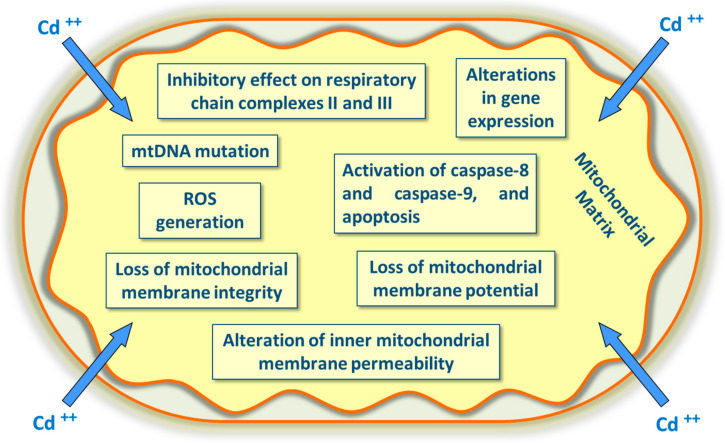
“For example, cadmium exerts its toxic action principally by blocking the mitochondrial electron-transfer chain, impairing electron flow through complex III; this in turn results in reduced ATP generation, increased oxidative stress, and apoptosis [21].”
Tao, Z., Su, L., Li, M., Xuan, X., Li, C., & Li, H. (2025) · Food Chemistry · doi:10.1016/j.foodchem.2025.145744 · Cited by 13
Seromo, L., Greesh, N., & Mofokeng, J. P. (2025) · Carbon Trends · doi:10.1016/j.cartre.2025.100566 · Cited by 13
Wilk, A., Romanowski, M., & Wiszniewska, B. (2021) · Biology · doi:10.3390/biology10010062 · Cited by 13
“The organelle that plays an important role in the formation of ROS (reactive oxygen species) is mitochondria.”
BackgroundInfluentialAdsorption of Cd to TiO2-NPs Forms Low Genotoxic Aggregates in Zebrafish Cells
Mottola, F., Santonastaso, M., Iovine, C., Feola, V., Pacifico, S., & Rocco, L. (2021) · Cells · doi:10.3390/cells10020310 · Cited by 13
“These results are in agreement with the literature as cadmium, by acting on the mitochondria, induces an increase in ROS production, with oxidation of macromolecules, DNA damage and alterations in the repair mechanisms with consequent apoptosis [47].”
ResultMasullo, T., Biondo, G., Natale, M. D., Tagliavia, M., Bennici, C., Musco, M., Ragusa, M. A., Costa, S., Cuttitta, A., & Nicosia, A. (2021) · Biology · doi:10.3390/biology10020103 · Cited by 18
Urine Cadmium as a Risk Factor for Osteoporosis and Osteopenia: A Meta-Analysis
Li, D., Lin, H., Zhang, M., Meng, J., Hu, L., & Yu, B. (2021) · Frontiers in Medicine · doi:10.3389/fmed.2021.648902 · Cited by 13
“Epidemiological data indicate that occupational and environmental Cd exposure may be related to various types of cancer, and Cd may be a risk factor for osteoporosis (6).”
BackgroundQuilaqueo, N., & Villegas, J. (2021) · Andrologia · doi:10.1111/and.14302 · Cited by 14
Espinosa-Ahedo, B. A., Madrigal‐Bujaidar, E., Sánchez‐Gutiérrez, M., Vega, J. A. I., Morales‐González, J. A., Madrigal‐Santillán, E., & Álvarez‐González, I. (2022) · Reproductive Toxicology · doi:10.1016/j.reprotox.2022.03.008 · Cited by 15
Ashfaq, A., Khan, Z. I., & Ahmad, K. (2022) · Environmental Monitoring and Assessment · doi:10.1007/s10661-022-10104-w · Cited by 13
“Cadmium (Cd) is a heavy metal with no physiological function and is frequently regarded as a toxin (Genchi et al., 2020).”
BackgroundBiagioni, C., Kasatkin, A. V., Sejkora, J., Nestola, F., & Škoda, R. (2022) · Mineralogical Magazine · doi:10.1180/mgm.2022.61 · Cited by 13
“The description of tennantite-(Cd) shows both kinds of implications, owing to the presence of the toxic element Cd (e.g. Genchi et al. , 2020) as well as to its potential electronic properties, similar to those shown by its Sb-counterpart Cu 10 Cd 2 Sb 4 S 13 (e.g. Kumar et al , 2016; Ghisani et…”
Heo, J. W., An, L., Chen, J., Kim, M. S., Lee, S.-D., & Kim, Y. S. (2022) · BioResources · doi:10.15376/biores.17.4.5958-5983 · Cited by 14
“Therefore, it accumulates in organs, such as the kidneys, and has a long half-life (Bian et al. 2015; Genchi et al. 2020).”
BackgroundYuan, J., Huang, X., Gu, J., Yuan, Y., Liu, Z., Zou, H., & Bian, J. (2022) · The Science of The Total Environment · doi:10.1016/j.scitotenv.2022.159626 · Cited by 13
Hafez, H. M., Waz, S., El‐Tahawy, N. F. G., & Mohamed, M. Z. (2022) · Toxicology and Applied Pharmacology · doi:10.1016/j.taap.2022.116313 · Cited by 13
Cisneros-Ontiveros, H. G., Medellín-Castillo, N. A., Aldama-Aguilera, C., Ilizaliturri-Hernandez, C. A., Cruz-Briano, S. A., Labrada-Delgado, G. J., & Flores-Rojas, A. I. (2022) · MRS Advances · doi:10.1557/s43580-022-00456-3 · Cited by 13
Jang, C., Kim, K., Nho, H., Lee, S. M., Mubarok, H., Han, J. H., Kim, H., Lee, D., Jang, Y., Lee, M. H., et al. (2023) · Small · doi:10.1002/smll.202206668 · Cited by 13
Red CdSe/ZnS QDs’ Intracellular Trafficking and Its Impact on Yeast Polarization and Actin Filament
Le, N., Routh, J. C., Kirk, C., Wu, Q., Patel, R., Keyes, C., & Kim, K. (2023) · Cells · doi:10.3390/cells12030484 · Cited by 13
Brdarić, E., Popović, D., Bajić, S. S., Tucović, D., Mutić, J. J., Čakić-Milošević, M., Đurđić, S., Tolinački, M., Aleksandrov, A. P., Golić, N., et al. (2023) · International Journal of Molecular Sciences · doi:10.3390/ijms24032845 · Cited by 13
“This leads to numerous chronic diseases of the kidneys, liver, and lungs, as well as cardiovascular diseases, reproductive dysfunction, and increased mortality [12,16,17].”
BackgroundLata, S., Sharma, S., & Kaur, S. (2023) · Water Air & Soil Pollution · doi:10.1007/s11270-023-06145-7 · Cited by 13
“Most of its properties are similar to zinc or mercury in many aspects, usually not flammable, insoluble, and non-corrosive but produces cadmium oxide when burnt in presence of air (Genchi et al., 2020).”
BackgroundElevated Serum and Hair Levels of Cadmium as a Risk Factor for Liver Carcinoma: A Meta-Analysis
Zhang, L., Wang, Y., Li, T., Zhuo, W., & Zhu, Y. (2023) · Nutrition and Cancer · doi:10.1080/01635581.2023.2192887 · Cited by 13
“However, from another perspective, the metallothionein formation of Cd is responsible for Cd accumulation in tissues and the decrease of biliary excretion of Cd (53).”
BackgroundBhattacharya, A., & Manivannan, V. (2023) · Journal of Photochemistry and Photobiology A Chemistry · doi:10.1016/j.jphotochem.2023.114913 · Cited by 14
Soto‐Ramírez, R., Tavernini, L., Lobos, M., Poirrier, P., & Chamy, R. (2023) · Algal Research · doi:10.1016/j.algal.2023.103179 · Cited by 14
Xiong, Y.-W., Li, D.-X., Ling, Z.-J., Tan, L., Zhang, Y., Zhang, J., Li, H., Chang, W., Zhu, H.-L., Zhang, J., et al. (2023) · Food and Chemical Toxicology · doi:10.1016/j.fct.2023.113967 · Cited by 14
Kim, W., Kim, W., Park, H., Hong, J., Lee, W., & Park, J. (2023) · Spectrochimica Acta Part A Molecular and Biomolecular Spectroscopy · doi:10.1016/j.saa.2023.123427 · Cited by 13
Heavy metal ion detection with Nano-Engineered Materials: Scaling down for precision
Dey, P., Kaur, M., Khajuria, A., Kaur, D., Singh, M., Alajangi, H. K., Singla, N., Singh, G., & Barnwal, R. P. (2023) · Microchemical Journal · doi:10.1016/j.microc.2023.109672 · Cited by 15
Shah, G. M., Farooq, U., Shabbir, Z., Guo, J., Dong, R., Bakhat, H. F., Wakeel, M., Siddique, A., & Shahid, N. (2023) · Toxics · doi:10.3390/toxics11121008 · Cited by 14
“Consuming Cd-contaminated vegetable can have serious health implications [13].”
BackgroundHussein, S., Bacha, A. G. B., Alonazi, M. A., Alwaili, M. A., Mobasher, M. A., Alburae, N. A., Banjabi, A. A., & El-Said, K. S. (2024) · Frontiers in Molecular Biosciences · doi:10.3389/fmolb.2024.1365440 · Cited by 13
Cao, H., Song, K., Hu, Y., Li, Q. X., Ma, T., Li, R., Chen, N., Zhu, S., & Liu, W. (2024) · Environmental Science and Pollution Research · doi:10.1007/s11356-024-33298-7 · Cited by 14
“Given that Cd toxicity induces mitochondrial damage leading to disruption in adenosine 5'-triphosphate (ATP) synthesis (Genchi et al. 2020), H 2 S can serve as an electron donor to the respiratory chain, thereby promoting ATP production (Olson 2018).”
Interaction between depression and non-essential heavy metals (Cd, Pb, and Hg) on metabolic diseases
Wang, Y., Xu, T., Zhang, Y., He, Y., Fang, J., Xu, Y., & Jin, L. (2024) · Journal of Trace Elements in Medicine and Biology · doi:10.1016/j.jtemb.2024.127484 · Cited by 14
Kısadere, İ., Karaman, M., Aydın, M. F., Dönmez, N., & Usta, M. (2021) · Archives of Environmental & Occupational Health · doi:10.1080/19338244.2021.2008852 · Cited by 15
“genic sources including the manufacturing of batteries, pigments, stabilizers, and alloys.(4,5) Human and ani-”
BackgroundCadmium and wild boar: Environmental exposure and immunological impact on macrophages
Franzoni, G., Ciccotelli, V., Masiello, L., Ciucis, C. G. D., Anfossi, A. G., Vivaldi, B., Ledda, M., Zinellu, S., Giudici, S. D., Berio, E., et al. (2022) · Toxicology Reports · doi:10.1016/j.toxrep.2022.01.009 · Cited by 13
Branca, J. J. V., Carrino, D., Paternostro, F., Morucci, G., Fiorillo, C., Nicoletti, C., Gulisano, M., Ghelardini, C., Mannelli, L. D. C., Becatti, M., et al. (2022) · Cells · doi:10.3390/cells11101646 · Cited by 14
“Once inside the human body, Cd has an average life of about 15–20 years, and the main organs affected are the kidney and liver [13].”
BackgroundNitric oxide alleviates cadmium-impeded growth by limiting ROS accumulation in pea seedlings
Khan, E. A., AHMED, H. M. I., MISRA, M., Sharma, P., Misra, A. N., & Hasanuzzaman, M. (2022) · Biocell · doi:10.32604/biocell.2022.021732 · Cited by 13
“Plants can change their NO metabolism when exposed to Cd toxicity; nevertheless, conflicting data are available showing the effect of Cd on endogenously produced NO (Genchi et al., 2020).”
BackgroundIhunwo, O. C., Ibezim-Ezeani, M. U., Wekpe, V. O., Shahabinia, A. R., Bonnail, E., Mmom, P. C., & Horsfall, M. (2022) · Environmental Research Communications · doi:10.1088/2515-7620/ac7f14 · Cited by 14
Bankole, A. O., Oluwasanya, G., & Odjegba, E. E. (2022) · Groundwater for Sustainable Development · doi:10.1016/j.gsd.2022.100845 · Cited by 14
Babin, É., Cano-Sancho, G., Vigneau, É., & Antignac, J. (2023) · Environmental Pollution · doi:10.1016/j.envpol.2023.121741 · Cited by 13
Foliar application with salicylic acid alleviates cadmium toxicity in chia (Salvia hispanica L.)
Rharbi, S., Talbi, C., Sijilmassi, B., Triqui, Z. E. A., Lamaoui, M., Filali‐Maltouf, A., Modafar, C. E., & Chakhchar, A. (2023) · Scientific African · doi:10.1016/j.sciaf.2023.e01773 · Cited by 14
Gheybi, F., Rajabian, F., Tayarani‐Najaran, Z., Adibi, A. R., Alavizadeh, S. H., Kesharwani, P., & Sahebkar, A. (2023) · Journal of Trace Elements in Medicine and Biology · doi:10.1016/j.jtemb.2023.127291 · Cited by 14
“Its occurrence in the environment is from agricultural and industrial sources coming from human activities including the use of fossil fuels, waste burning, mining performance, producing polyvinyl chloride plastic as well as nickel-Cd batteries [3].”
BackgroundRehman, M., Pan, J., Mubeen, S., Ma, W., Luo, D., Cao, S., Saeed, W., Liao, C., & Chen, P. (2023) · Journal of soil science and plant nutrition · doi:10.1007/s42729-023-01498-8 · Cited by 13
“Cd and Pb accumulation in plants can extend to effect animals and humans (Genchi et al. 2020; Chen et al. 2016a).”
Asiwe, J. N., & Oritsemuelebi, B. (2023) · Toxicology and Environmental Health Sciences · doi:10.1007/s13530-023-00196-3 · Cited by 14
“According to Genchi et al. [11], the three main ways that people are exposed to cadmium are through their diet, notably through their consumption of green vegetables and cereals, their water supply and their air supply.”
Yin, G., Wang, Z., Li, P., Cao, Y., Zhou, Z., Wu, W., Li, X., & Lou, Q. (2024) · International Immunopharmacology · doi:10.1016/j.intimp.2023.111434 · Cited by 13
Huang, W. X., Sun, D., Zhao, T., Long, K., & Zhang, Z. (2024) · Environmental Geochemistry and Health · doi:10.1007/s10653-023-01788-1 · Cited by 12
“%) and that the absorption rate in the respiratory sys-tem is about 10 times higher than that in the gastro-intestinal tract (Genchi et al., 2020; Satarug et al., 2020), suggesting that inhalation of Cd from the air is one of the most important ways of human long-term exposure to Cd. Atmospheric Cd…”
Heavy Metal Contamination in Soil and Vegetables: A Review with Health Risk Assessments
Shahriar, S. M. S., Hossain, M. S., Dipti, S., & Salam, S. M. A. (2024) · Journal of Science and Engineering Papers · doi:10.62275/josep.24.1000007 · Cited by 14
Cadmium as a male reproductive toxicant and natural and non-natural ways to tackle it: a review
Wanjari, U. R., & Gopalakrishnan, A. V. (2024) · Environmental Science and Pollution Research · doi:10.1007/s11356-024-32210-7 · Cited by 15
“Cd contamination is caused by its use as an anticorrosive agent in industry and as a polyvinyl chloride (PVC) product stabilizer, color pigment, and Ni–Cd batteries (Genchi et al. 2020a, b).”
InfluentialBlood Cadmium Level Is a Marker of Cancer Risk in Men
Derkacz, R., Marciniak, W., Baszuk, P., Wysokińska, M., Chrzanowska, N., Lener, M. R., Huzarski, T., Gronwald, J., Dębniak, T., Cybulski, C., et al. (2024) · Nutrients · doi:10.3390/nu16091309 · Cited by 12
Wagh, M. S., Sivarajan, S., & Osborne, J. W. (2024) · 3 Biotech · doi:10.1007/s13205-024-04001-x · Cited by 13
“…strains regulates the defense mechanism activating several antioxidant enzymes like SOD, CAT, APX and GST upholding the steady-state balance, by maintaining the levels of ROS which enriches the plant biological processes (Gupta et al. 2017; Song et al. 2019; Genchi et al. 2020; Wagh et al. 2023).”
Javed, S., Ali, A., Alam, S., Rafique, M., Gul, B., Chaudhary, H. J., & Santali, E. Y. (2024) · ACS ES&T Water · doi:10.1021/acsestwater.4c00406 · Cited by 13
Chitosan-integrated TiO2 nanocomposite for adsorptive removal of Cd and Pb from drinking water
Samejo, S., Baig, J. A., Kazi, T. G., Afridi, H. I., Ali, H. E., Perveen, S., Akhtar, K., Solangi, S. A., Abbasi, F., & Hussain, S. (2024) · Chemical Papers · doi:10.1007/s11696-024-03637-6 · Cited by 12
“Similarly, cadmium (Cd) contamination in drinking water may damage fundamental organs, including the liver, kidneys, lungs, bones, and heart (Genchi et al. 2020).”
Zhang, Z., Zhang, T., Lu, L., Qiu, S., Huang, Z., Wang, Y., Chen, X., Li, L., Sun, Y., Zhang, R., et al. (2024) · The Science of The Total Environment · doi:10.1016/j.scitotenv.2024.176369 · Cited by 19
Prasad, C., Dasgupta, D., Tripathi, A., Steele, N., Pyaram, K., & Sundar, I. K. (2024) · Toxicology · doi:10.1016/j.tox.2024.153971 · Cited by 14
Neuroprotective Effects of Morin Against Cadmium- and Arsenic-Induced Cell Damage in PC12 Neurons
Banaeeyeh, S., Razavi, B. M., & Hosseinzadeh, H. (2024) · Biological Trace Element Research · doi:10.1007/s12011-024-04407-x · Cited by 12
“These mitochondrial proteins activate catabolic hydrolases that target essential cellular components, ultimately leading to cell death [26].”
Metal components in industrial wastes and methods for metal ions recovery
Inobeme, A., Mathew, J. T., Devolli, A., Adetunji, C. O., Sharma, N., Maliki, M., Ajai, A. I., Inobeme, J., Mann, A., Enoyoze, G. E., et al. (2024) · Elsevier eBooks · doi:10.1016/b978-0-443-21884-2.00018-6 · Cited by 13
Detrimental effects of cadmium on male infertility: A review
Zečević, N., Kocic, J., Perović, M., & Stojsavljević, A. (2024) · Ecotoxicology and Environmental Safety · doi:10.1016/j.ecoenv.2024.117623 · Cited by 16
Guo, Z., Yin, Y., Nie, M., Ding, C., Wang, Y., Tang, X., He, L., Zhou, Z., Li, Z., Li, L., et al. (2025) · Journal of Agricultural and Food Chemistry · doi:10.1021/acs.jafc.4c12178 · Cited by 12
Wei, L.-X., Cui, Y. C., Lv, Y., Ye, Q.-Y., Chen, J., Zhan, X.-Y., Zhu, Z.-J., Zhu, X., & Zhou, B. (2025) · Ecotoxicology and Environmental Safety · doi:10.1016/j.ecoenv.2025.118148 · Cited by 12
Lu, Y., Dang, Y., Chen, Y., Chen, Y., Xu, H., Li, X., Fan, X., Yang, J., Ling, X., Ma, L., et al. (2025) · Ecotoxicology and Environmental Safety · doi:10.1016/j.ecoenv.2025.118247 · Cited by 14
Impact of processing techniques on reduction of heavy metal contamination in foods
Saravanan, S. B., Ukkunda, N. S., Negi, A., & Moses, J. A. (2025) · Discover Food · doi:10.1007/s44187-025-00402-w · Cited by 15
Romeh, A. A., Negm, A. M., & ELhelbawy, M. A. (2025) · Marine Pollution Bulletin · doi:10.1016/j.marpolbul.2025.118105 · Cited by 12
Majid, S., Smeets, K., Vergauwen, L., Pilehvar, A., Knapen, D., & Blust, R. (2025) · Ecotoxicology and Environmental Safety · doi:10.1016/j.ecoenv.2025.118368 · Cited by 12
Yang, J., Wang, D., Huang, J., Zhao, T. S., Chen, M., Lin, S., Yu, X., Yang, F., Liu, H., Xu, S., et al. (2025) · Environmental Pollution · doi:10.1016/j.envpol.2025.126696 · Cited by 15
Heavy Metals on the Move: From Land to Water: Sources and Transfer Dynamics
Dhinesh, R. (2025) · Springer eBooks · doi:10.1007/978-3-031-89725-2_4 · Cited by 15
Shi, Y., Yan, B., Huang, R., Yu, W., Xu, B., Mao, J., Liu, Z., & Wang, J. (2025) · Environmental Pollution · doi:10.1016/j.envpol.2025.127058 · Cited by 11
Drąg-Kozak, E., Łuszczek‐Trojnar, E., & Socha, M. (2021) · Animals · doi:10.3390/ani11082454 · Cited by 13
“Studies on the toxic effect of cadmium on organisms have shown that it interacts with metals such as iron, copper, and zinc [33,42,43].”
BackgroundSawicka, E., Saczko, J., Kulbacka, J., Szydełko, M., Szymańska, B., & Piwowar, A. (2022) · International Journal of Molecular Sciences · doi:10.3390/ijms23052628 · Cited by 12
“Introduction Cadmium is a highly toxic non-essential transition metal that constitutes an important potential health risk to the environment [1].”
BackgroundGende, M., & Schmeling, M. (2022) · PLoS ONE · doi:10.1371/journal.pone.0267775 · Cited by 12
“Other impacts are on the pulmonary system, especially for people with high exposure rates [2,20,22].”
BackgroundInfluentialSun, Y., Zeng, Y., Rajput, I. R., Sanganyado, E., Zheng, R., Xie, H., Li, C., Tian, Z., Huang, Y., Yang, L., et al. (2022) · Environmental Pollution · doi:10.1016/j.envpol.2022.120358 · Cited by 12
Wu, D., Shi, Y., Wang, M., Ran, M., Wang, Y., Tian, L., Ye, H., & Han, F. L. (2022) · Marine Pollution Bulletin · doi:10.1016/j.marpolbul.2022.114253 · Cited by 12
Metadata
- Authors
- Genchi, G., Sinicropi, M. S., Lauria, G., Carocci, A., & Catalano, A.
- Affiliations
- University of Calabria (IT)
- University of Bari Aldo Moro (IT)
- Corresponding author
- Sinicropi, Maria Stefania
- Carocci, Alessia
- Venue
- International Journal of Environmental Research and Public Health
- Publisher
- MDPI AG
- Published
- 2020-05-26
- Volume
- 17
- Issue
- 11
- Pages
- 3782
- ISSN
- 1660-4601 (ISSN-L)
- PMC
- PMC7312803
- OpenAlex
- W3032103849
- Cited by
- 2,722
- References
- 156
- Citations by year
- 2026: 401 · 2025: 590 · 2024: 615 · 2023: 486 · 2022: 373 · 2021: 228 · 2020: 26
- FWCI
- 24.11
- Type
- journal article
- Language
- en
- Open access
- gold
- dx.doi.org
- Licence
- Locations
- International Journal of Environmental Research and Public Health (publishedVersion, cc-by)
- PubMed Central (publishedVersion, cc-by)
- PubMed (publishedVersion)
- RePEc: Research Papers in Economics (submittedVersion)
- DOAJ (DOAJ: Directory of Open Access Journals) (submittedVersion)
- Archive of Doctoral Theses and Digital Collections (University of Calabria) (submittedVersion)
- CINECA IRIS Institutional Research Information System (University of Bari Aldo Moro) (submittedVersion, cc-by)
- Topics
- Physical Sciences › Environmental Science › Health, Toxicology and Mutagenesis › Heavy Metal Exposure and Toxicity
- Health Sciences › Nursing › Nutrition and Dietetics › Trace Elements in Health
- Physical Sciences › Environmental Science › Health, Toxicology and Mutagenesis › Environmental Toxicology and Ecotoxicology
- Keywords
- cadmium toxicity, cadmium exposure, osteoporosis, metallothionein, oxidative stress, mitochondrial dysfunction, reactive oxygen species, epigenetic modifications, DNA methylation, histone modifications, microRNA, titanium dioxide nanoparticles, Al2O3 nanoparticles, microbial fermentation, heavy metal contamination
- MeSH terms
- Animals, Cadmium, Cadmium Poisoning, Environmental Pollutants, Humans, Soil, Water Purification
About these checks
Registry, retraction, Cites and statistics results are computed, not judged, with one exception: a printed reference that no index lists is read once by a model before it counts as a citation error. Claims are extracted by a model and kept only when their quote appears verbatim in the text; each cited source is then checked, with a model’s help, for whether it says what the claim relies on. Those verdicts can be wrong — read the claim’s quote and the cited source before relying on one.
Statistics and arithmetic are recomputed, not judged.
Confidence bands are shown only for fields calibrated on our annotated test set. None is calibrated yet, so no band is shown.
What counts as a claim ›How we measure confidence ›How we check this ›
Are you an author, or do you see a problem with this page? Request a review
Data sources
Bibliographic data: Semantic Scholar, OpenAlex, Crossref.
Contains information from the Semantic Scholar Academic Graph Datasets, made available under the ODC Attribution License (ODC-BY 1.0).
Semantic Scholar’s data is described in: Kinney, R., et al. (2023). The Semantic Scholar Open Data Platform. arXiv:2301.10140.
