

The Prevalence of Depression, Anxiety and Stress and Their Associated Factors in College Students.
Open accessThe DOI matches its Crossref record; 65 of the 69 references it cites were found in a registry or an index; 4 of the 10 sources its claims cite were checked for support.
Abstract
AIM: To estimate the prevalence of symptoms of depression, anxiety, stress and associated factors in a population of college students. METHOD: Cross-sectional study of psychological distress measured through the Depression, Anxiety and Stress Scale (DASS-21) in a sample of 1074 college students. RESULTS: We found a moderate prevalence of depression (18.4%), anxiety (23.6%) and stress (34.5%) symptoms in our study population. Being <21, having problematic Internet use behavior, smoking, presenting insomnia and having a low self-esteem were independently associated with symptoms of depression, anxiety and stress. Being a woman, living with their family, having a stable partner, consuming alcohol frequently and having poor nutritional habits were significantly associated with symptoms of stress; lacking a stable partner was significantly associated with depressive symptoms; and frequent consumption of alcohol was significantly associated with symptoms of anxiety. CONCLUSION: We found a moderate prevalence of depression, anxiety and stress symptoms in our population. Interventions aimed at promoting mental health among college students should be implemented.
Overview
CoChat Summary
TL;DR
This cross-sectional study of 1,074 Spanish college students found moderate symptom prevalence of depression, anxiety, and stress measured by DASS-21. Younger age, problematic Internet use, smoking, insomnia, low self-esteem, and some lifestyle/living factors were associated with higher psychological distress.
Key findings
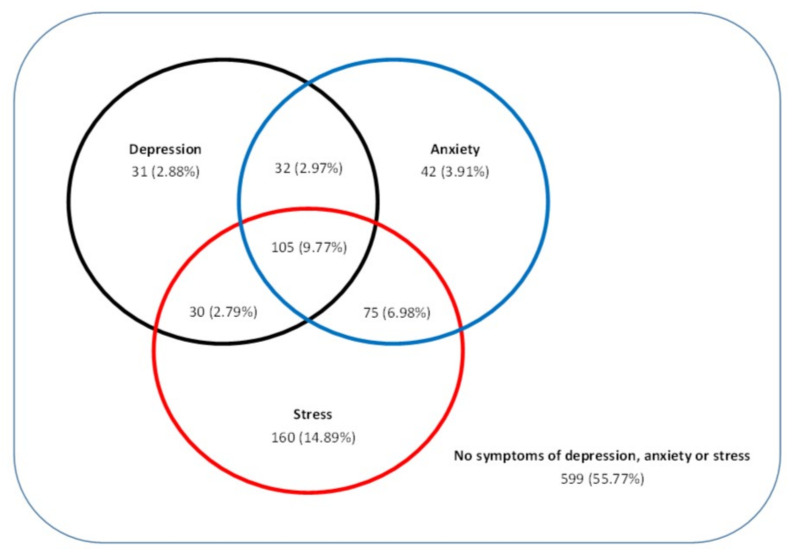
- In 1,074 undergraduate students, prevalence of symptoms above the normal range was 18.4% for depression, 23.6% for anxiety, and 34.5% for stress.
- 22.5% of participants had symptoms of two mental disorders, and 9.7% had symptoms of anxiety, depression, and stress simultaneously.
- In the final binary logistic regression, being <21, experiencing problematic Internet use, smoking, having insomnia, and low self-esteem were associated with depression, anxiety, and stress.
- Additional significant associations reported were: stress with being a woman, living with family, having a stable partner, frequent alcohol consumption, and poor diet; depression with lacking a stable partner; and anxiety with frequent alcohol consumption.
Methods
- Cross-sectional study of undergraduate students at San Jorge University (Zaragoza, Spain) during the 2018–2019 academic year.
- Sample: 1,074 students out of a total population of 1,341 who consented and completed the questionnaire.
- Main measures: DASS-21 for depression/anxiety/stress; sociodemographic and lifestyle variables including age, gender, relationship status, smoking, alcohol, physical activity, diet, Internet use, insomnia, and self-esteem.
- Analysis used descriptive statistics, bivariate tests, and binary logistic regression with backward stepwise selection; results presented were from the model including outliers.
Limitations
- The paper states that DASS-21 is a screening tool, not a formal diagnostic instrument, so additional tools would be needed for diagnosis.
- The authors note the cross-sectional design cannot establish causality, only associations.
- They say data were collected over eight months, so students may have experienced different academic conditions during collection.
- The authors state generalizability may be limited because the study was conducted in a private college in Spain.
Model-written summary. Check it against the paper before relying on it.
Integrity signals
Registry
Cites
Statistics
Figures
Verification
Claims the paper makes
3 Valid · 0 Not valid · 4 Not checked · 27 Own results and interpretations
A result the paper reports from its own data — it cites no other source for it, so there is none to check. The quote shows it is in the paper.
In the paper
“However, physical activity was not clearly associated with psychological distress in our sample.”
§ The Prevalence of Depression, Anxiety and Stress and Their Associated Factors in College Students > 4. Discussion
hedged- Asserted: passes — The authors put it forward as true.
- Checkable: passes — It can be checked against evidence.
- Load-bearing: passes — The paper’s conclusions depend on it.
- Based: passes — The paper gives a reason why it holds.
A result the paper reports from its own data — it cites no other source for it, so there is none to check. The quote shows it is in the paper.
In the paper
“It is also worth highlighting that being enrolled in a healthcare program did not increase the risk of experiencing symptoms of depression, anxiety and stress in our sample.”
§ The Prevalence of Depression, Anxiety and Stress and Their Associated Factors in College Students > 4. Discussion
plain- Asserted: passes — The authors put it forward as true.
- Checkable: passes — It can be checked against evidence.
- Load-bearing: unclear — It is unclear whether the paper’s conclusions depend on it.
- Based: passes — The paper gives a reason why it holds.
A result the paper reports from its own data — it cites no other source for it, so there is none to check. The quote shows it is in the paper.
In the paper
“We found a moderate prevalence of depression (18.4%), anxiety (23.6%) and stress (34.5%) symptoms in our study population.”
- Also stated in: § 3. Results · plain
“Of our participants, 23.6% and 34.5% had symptoms of anxiety and stress above the normal range, respectively.”
- Also stated in: § 4. Discussion · plain
“We identified a significant prevalence of symptoms of stress (34.5%), anxiety (23.6%) and depression (18.4%) in our population.”
§ The Prevalence of Depression, Anxiety and Stress and Their Associated Factors in College Students > Abstract
plain- Asserted: passes — The authors put it forward as true.
- Checkable: passes — It can be checked against evidence.
- Load-bearing: passes — The paper’s conclusions depend on it.
- Based: passes — The paper gives a reason why it holds.
- Also stated in: § 3. Results · plain
A result the paper reports from its own data — it cites no other source for it, so there is none to check. The quote shows it is in the paper.
In the paper
“In addition, being a woman, living with their family, having a stable partner, consuming alcohol regularly and following an inadequate or unhealthy diet were significantly associated with stress”
- Also stated in: § 3. Results · plain
“In both cases, women’s levels of anxiety and stress were higher than men’s (p < 0.05).”
- Also stated in: § 4. Discussion · plain
“In our sample, female students presented a higher prevalence of symptoms of stress and anxiety compared to male students.”
§ The Prevalence of Depression, Anxiety and Stress and Their Associated Factors in College Students > 3. Results
plainstates an association- Asserted: passes — The authors put it forward as true.
- Checkable: passes — It can be checked against evidence.
- Load-bearing: passes — The paper’s conclusions depend on it.
- Based: passes — The paper gives a reason why it holds.
- Also stated in: § 3. Results · plain
A result the paper reports from its own data — it cites no other source for it, so there is none to check. The quote shows it is in the paper.
In the paper
“The final models of binary logistic regression evidenced that being <21, experiencing PIU, smoking, having insomnia and reporting a low level of self-esteem were associated with depression, anxiety and stress (p < 0.05).”
- Also stated in: § 4. Discussion · plain
“As has been reported in previous studies involving similar samples, we found an association between certain habits such as tobacco and alcohol consumption [32], presenting PIU [11] and eating unhealthily [43,55] with higher levels of psychological distress.”
§ The Prevalence of Depression, Anxiety and Stress and Their Associated Factors in College Students > 3. Results
plainstates an association- Asserted: passes — The authors put it forward as true.
- Checkable: passes — It can be checked against evidence.
- Load-bearing: passes — The paper’s conclusions depend on it.
- Based: passes — The paper gives a reason why it holds.
- Also stated in: § 4. Discussion · plain
16 more claims
Create a free account to see all 34 claims and every source verdict.
- Probably not a substantial claim. 8
- The quote only partly states this claim. 6
- It may state two separate claims as one. 3
Claims other papers make about this one
Each is checked against this paper’s own text: does it say what the citing paper says it does?
The source backs part of the claim, not all of it — or backs it for a different population, condition or comparison.
In the citing paper
“which is significantly higher than college students (Ramón‐Arbués et al., 2020) and even higher than the medical student population (Quek et al., 2019).”
From Global prevalence and trend of anxiety among graduate students: A systematic review and meta‐analysis (2023) · cites this paper as Ramón‐Arbués et al., 2020
Experimental — accuracy not yet measuredThe cited source says what the claim attributes to it.
In the citing paper
“there is some literature that indicates that college students may be more likely to endorse symptoms of stress, in comparison to depression or anxiety symptoms (Ramón-Arbués et al., 2020).”
From Using network analysis to examine connections between Acceptance and Commitment Therapy (ACT) processes, internalizing symptoms, and well-being in a sample of undergraduates (2023) · cites this paper as Ramón-Arbués et al., 2020
Citations
Cites
James, S. L., Abate, D., Abate, K. H., Abay, S. M., Abbafati, C., Abbasi, N., Abbastabar, H., Abd-Allah, F., Abdela, J., Abdelalim, A., et al. (2018) · The Lancet · doi:10.1016/s0140-6736(18)32279-7 · Cited by 13,867
Vos, T., Abajobir, A. A., Abate, K. H., Abbafati, C., Abbas, K. M., Abd-Allah, F., Abdulkader, R. S., Abdulle, A. M., Abebo, T. A., Abera, S. F., et al. (2017) · The Lancet · doi:10.1016/s0140-6736(17)32154-2 · Cited by 13,220
Validation of the Insomnia Severity Index as an outcome measure for insomnia research
Bastien, C. (2001) · Sleep Medicine · doi:10.1016/s1389-9457(00)00065-4 · Cited by 8,067 · cited 1×
“The ISI total score is interpreted as follows: absence of insomnia (0–7); sub-threshold insomnia (8–14); moderate insomnia (15–21); and severe insomnia (22–28) [35].”
BackgroundThe prevalence and correlates of depression, anxiety, and stress in a sample of college students
Beiter, R., Nash, R., McCrady, M., Rhoades, D., Linscomb, M., Clarahan, M., & Sammut, S. (2015) · Journal of Affective Disorders · doi:10.1016/j.jad.2014.10.054 · Cited by 2,030
A systematic review of studies of depression prevalence in university students
Ibrahim, A. K., Kelly, S. J., Adams, C. E., & Glazebrook, C. (2013) · Journal of Psychiatric Research · doi:10.1016/j.jpsychires.2012.11.015 · Cited by 1,988
Physical Activity for Cognitive and Mental Health in Youth: A Systematic Review of Mechanisms
Lubans, D., Richards, J., Hillman, C., Faulkner, G., Beauchamp, M., Nilsson, M., Kelly, P., Smith, J., Raine, L., & Biddle, S. (2016) · Pediatrics · doi:10.1542/peds.2016-1642 · Cited by 1,548 · cited 1×
“Thus, physical activity has often been associated with psychological wellbeing through a range of mechanisms including the secretion of endogen substances such as endorphins, the activity of the regulation of stress responses through the hypothalamic-pituitary-adrenal (HPA) axis, the improvement of sleep quality and t…”
BackgroundMental health problems in college freshmen: Prevalence and academic functioning
Bruffaerts, R., Mortier, P., Kiekens, G., Auerbach, R. P., Cuijpers, P., Demyttenaere, K., Green, J. G., Nock, M. K., & Kessler, R. C. (2018) · Journal of Affective Disorders · doi:10.1016/j.jad.2017.07.044 · Cited by 1,047 · cited 1×
“Worldwide, it is estimated that 12–50% of college students present at least one diagnostic criterion for one or more mental disorders [14].”
BackgroundChange in mental health after smoking cessation: systematic review and meta-analysis
Taylor, G., McNeill, A., Girling, A., Farley, A., Lindson-Hawley, N., & Aveyard, P. (2014) · BMJ · doi:10.1136/bmj.g1151 · Cited by 1,039 · cited 1×
“First, it is likely that tobacco use and mental health problems have a common root; people who experience mental health problems may smoke to regulate feelings of low mood, stress and anxiety; smoking could also cause or exacerbate existing mental health problems [46].”
BackgroundChallenges and opportunities in global mental health: a research-to-practice perspective
Wainberg, M. L., Scorza, P., Shultz, J. M., Helpman, L., Mootz, J. J., Johnson, K. A., Neria, Y., Bradford, J.-M. E., Oquendo, M. A., & Arbuckle, M. R. (2017) · Current Psychiatry Reports · doi:10.1007/s11920-017-0780-z · Cited by 875 · cited 2×
“Yet, mental health problems are the first cause of disability and a major public health issue worldwide due to disease progression, difficulties in therapeutic management and increasing prevalence [2,3].”
BackgroundResultLai, J. S., Hiles, S., Bisquera, A., Hure, A. J., McEvoy, M., & Attia, J. (2014) · The American Journal of Clinical Nutrition · doi:10.3945/ajcn.113.069880 · Cited by 786 · cited 1×
“However, two previous systematic reviews [53,54] found limited and contradictory evidence to support the association between dietary patterns and mental health problems in adults.”
Result
Research works printed but not linked: 2
- Kumaraswamy, 2013, Academic stress, anxiety and depression among college students—A brief review, Int. Rev. Soc. Sci. Hum., 5, 135
- Balanza, 2008, Academic and psycho-socio-familiar factors associated to anxiety and depression in university students. Reliability and validity of a questionnaire, Rev. Esp. Salud Publica, 82, 189
Cited by
Items 101–200 of 617
Kotera, Y., Jackson, J. E., Kirkman, A., Edwards, A., Colman, R. D., Underhill, A., Jackson, J. G., Baker, D., & Ozaki, A. (2023) · International Journal of Mental Health and Addiction · doi:10.1007/s11469-023-01018-w · Cited by 32
“First, we compared the levels of mental health problems, namely depression, anxiety and stress (as these are common in university students (Ramón-Arbués et al., 2020)), mental health shame and self-compassion.”
Wang, W., Xu, H., Li, S., Jiang, Z., Sun, Y., & Wan, Y. (2024) · Frontiers in Psychiatry · doi:10.3389/fpsyt.2023.1281847 · Cited by 25
Li, H., Ludin, A. F. M., Ahmad, M., Xie, M., & Lei, H. Z. (2024) · Frontiers in Public Health · doi:10.3389/fpubh.2024.1358210 · Cited by 33
Dou, X., Lu, J., Yu, Y., Yi, Y., & Zhou, L. (2024) · Scientific Reports · doi:10.1038/s41598-024-71947-6 · Cited by 26
Tariq, R., Orozco-del-Castillo, M. G., Zamir, M. T., Soledad, M., & Awotwe, T. W. (2025) · Scientific Reports · doi:10.1038/s41598-025-22171-3 · Cited by 31
RetractedKöksal, B., & Topkaya, N. (2021) · Türk Eğitim Bilimleri Dergisi · doi:10.37217/tebd.933931 · Cited by 24
Tafoya, S. A., Aldrete–Cortez, V., Tafoya-Ramos, F., Morales, C. F., & Dı́az-Olavarrieta, C. (2023) · International Journal of Environmental Research and Public Health · doi:10.3390/ijerph20166560 · Cited by 21
Wang, F., Sun, M., Wang, X., Wu, Z., Guo, R., Yang, Y., Wang, Y., Liu, Y., Dong, Y., Wang, S., et al. (2023) · Journal of Affective Disorders · doi:10.1016/j.jad.2023.12.015 · Cited by 16
Wang, Y. (2024) · Acta Psychologica · doi:10.1016/j.actpsy.2024.104347 · Cited by 17
Zhao, J., Wu, Y., Xu, J., Du, K., Yu, Y., & Zang, S. (2025) · BMC Nursing · doi:10.1186/s12912-025-03472-4 · Cited by 19
“Depressive symptoms are marked by emotional disturbances, as well as fatigue, impaired concentration, and declines in sleep quality [64].”
Zhao, Y., Qian, W., Chen, Y.-R., Wu, D., Luo, Y., Gao, C. F., Wu, K., & Liu, Z. (2025) · Applied Psychology Health and Well-Being · doi:10.1111/aphw.70067 · Cited by 32
Braz‐José, C., Caldas, I. M., Azevedo, Á. F., & Pereira, M. L. (2022) · European Journal Of Dental Education · doi:10.1111/eje.12858 · Cited by 21
Remskar, M., Western, M. J., Maynard, O., & Ainsworth, B. (2022) · Frontiers in Psychology · doi:10.3389/fpsyg.2022.984232 · Cited by 29
“A considerable further proportion is affected by distress and low mood without meeting clinical thresholds (Ramón-Arbués et al., 2020).”
BackgroundZhang, D., Qu, Y., Zhai, S., Li, T., Xie, Y., Tao, S., Zou, L., Tao, F., & Wu, X. (2023) · BMC Psychiatry · doi:10.1186/s12888-023-04596-0 · Cited by 20
“In the United States, college students are at high risk for psychological problems [3].”
BackgroundResultAlfaro-González, S., Garrido‐Miguel, M., Pascual‐Morena, C., Pozuelo‐Carrascosa, D. P., Fernández‐Rodríguez, R., Martínez‐Hortelano, J. A., Mesas, A. E., & Martínez‐Vizcaíno, V. (2025) · Nutrients · doi:10.3390/nu17020346 · Cited by 19
“…as well as lifestyle choices, such as unhealthy diet, physical fitness, sleep quality, the academic environment, or alcohol abuse, among others, which can influence the mental health of young people, leading to poor mental health, especially the development of anxiety or depression [4,6,7].”
Yang, L., Wu, M., Wang, Y., & Peng, B. (2021) · Frontiers in Psychology · doi:10.3389/fpsyg.2021.701945 · Cited by 20
Mutiso, V., Ndetei, D. M., Muia, E. N., Musyimi, C. W., Masake, M., Osborn, T. L., Sourander, A., Weisz, J. R., & Mamah, D. T. (2023) · Scientific Reports · doi:10.1038/s41598-023-27608-1 · Cited by 24
Sinvani, R.-T., Fogel‐Grinvald, H., Afek, A., Ben-Avraham, R., Davidov, A., Cohen, N., Yehuda, A. B., Nahum, M., & Gilboa, Y. (2021) · Frontiers in Psychiatry · doi:10.3389/fpsyt.2021.672397 · Cited by 18
Park, C., & Shimada, S. (2022) · Journal of American College Health · doi:10.1080/07448481.2022.2100996 · Cited by 17
Yektatalab, S., Mohammadi, A., & Zarshenas, L. (2022) · PubMed Central · doi:10.30476/ijcbnm.2022.92902.1888 · Cited by 26
Phelan, J. M., Rosenkranz, R. R., Logan, C., Haub, M. D., Mailey, E. L., Ezzati, A., & Rosenkranz, S. K. (2024) · Journal of American College Health · doi:10.1080/07448481.2024.2418521 · Cited by 23
Maitiniyazi, G., Dilimulati, M., Abulaiti, R., Nijiati, Z., Tuergong, N., Ma, T., Li, C., & Xia, S. (2025) · BMC Public Health · doi:10.1186/s12889-025-24501-6 · Cited by 21
“Mental health problems, such as anxiety, depression, and stress, are major public health concerns and are highly prevalent among the college-aged population [1, 2].”
Mental health and sleep habits during preclinical years of medical school
McKinley, B., Daines, B., Allen, M., Pulsipher, K. J., Zapata, I., & Wilde, B. B. (2022) · Sleep Medicine · doi:10.1016/j.sleep.2022.09.001 · Cited by 18
Zapata, I., Maté‐Muñoz, J. L., Higueras, A., Hernández-Lougedo, J., Martín-Fidalgo, N., García-Fernández, P., Redondo-Vega, M. V., & Ruíz-Tóvar, J. (2022) · International Journal of Environmental Research and Public Health · doi:10.3390/ijerph192013213 · Cited by 19
Laranjeira, C., Dixe, M. D. A., & Querido, A. (2023) · European Journal of Investigation in Health Psychology and Education · doi:10.3390/ejihpe13020032 · Cited by 21
Chai, W., & Shek, D. T. L. (2023) · Psychiatry Research · doi:10.1016/j.psychres.2023.115666 · Cited by 13
Sun, D., Zhu, X., & Bao, Z. (2024) · Frontiers in Psychology · doi:10.3389/fpsyg.2024.1296154 · Cited by 17
Wu, L., & Liu, Y. (2024) · Medicine · doi:10.1097/md.0000000000039519 · Cited by 23
“[21] The finding of our research was also higher than another study conducted in the period of normalization of epidemic prevention and control, which showed 27.3%, 33.4%and 12.0% of the university students surveyed had mild to extremely severe complains of depression, anxiety and stress,…”
ResultInfluentialDing, Q., Ward, M. D., Edwards, N. E., Wu, E. A., Kersey, S., & Funk, M. (2023) · PLoS ONE · doi:10.1371/journal.pone.0279813 · Cited by 18
Camacho, C. R., & Delgado, M. G. (2025) · European Journal of Investigation in Health Psychology and Education · doi:10.3390/ejihpe15080163 · Cited by 40
“…however, points to the possibility that other differential factors— biological, social, or related to emotional socialization—may influence the tendency toward irritability in academic settings (Bezie et al., 2025; Chust-Hernández et al., 2022; Ramón-Arbués et al., 2020; Reddy et al., 2018).”
Internet Addiction in Relation to Mental Health among Medical Students, Menoufia University, Egypt
Ibrahem, R. A. L., Shalaby, A. S. M., & Hegazy, N. N. (2022) · The Egyptian Journal of Hospital Medicine · doi:10.21608/ejhm.2022.235956 · Cited by 18
İskender, M. D., Gülsoy, A., Özcan, E., & Uyan, Y. (2022) · Journal of Clinical Nursing · doi:10.1111/jocn.16602 · Cited by 16
Mental Health Concerns for College Students
Mason, B. (2023) · Primary Care Clinics in Office Practice · doi:10.1016/j.pop.2022.10.007 · Cited by 18
Betancourt‐Núñez, A., Nava-Amante, P. A., Bernal-Orozco, M. F., Vizmanos-Lamotte, B., Vargas-García, E. J., Márquez‐Sandoval, F., Salas-García, M. A., & Díaz‐López, A. (2023) · BMC Public Health · doi:10.1186/s12889-023-15755-z · Cited by 21
Alotaibi, N. M., Alkhamis, M. A., Alrasheedi, M., Alotaibi, K., Alduaij, L., Alazemi, F., Alfaraj, D., & Alrowaili, D. (2024) · International Journal of Environmental Research and Public Health · doi:10.3390/ijerph21030245 · Cited by 23
“Lastly, a collaboration between Kuwait University and other regional and international institutions can be a significant advantage to better exchange ideas and experiences in the areas of counselling services and wellness programs, thus maximizing benefits for students’ health and well-being.”
BackgroundMagni, O., Detopoulou, P., Fappa, E., Perrea, A., Levidi, D., Dedes, V., Tzoutzou, M., Gioxari, A., & Panoutsopoulos, G. I. (2024) · Diseases · doi:10.3390/diseases12050108 · Cited by 20
Dülger, H., & Ayaz‐Alkaya, S. (2025) · Journal of Evaluation in Clinical Practice · doi:10.1111/jep.70002 · Cited by 20
Miller, L., Déchelotte, P., Ladner, J., & Tavolacci, M. (2022) · Nutrients · doi:10.3390/nu14183862 · Cited by 16
Salud mental y satisfacción con la vida en estudiantes universitarios: Un estudio correlacional
Universidad Nacional Amazónica de Madre de Dios, P., & Estrada-Araoz, E. G. (2024) · Gaceta Médica de Caracas · doi:10.47307/gmc.2024.132.s1.17 · Cited by 21
Tian, H. M., Zhou, Y., Chang, X. L., & Wang, Y. F. (2025) · BMC Psychology · doi:10.1186/s40359-025-03541-y · Cited by 16
“Some researchers believe that most mental health problems occur in early adulthood, and depression are considered important indicators of mental health [1].”
Association between Depressive Symptoms and Adherence to the Mediterranean Diet in Nursing Students
Valle, V. I.-D., Navarro-Martínez, R., & Cauli, O. (2023) · Nutrients · doi:10.3390/nu15143158 · Cited by 13
Weiss, E. M., Staggl, S., Holzner, B., Rumpold, G., Dresen, V., & Canazei, M. (2024) · Behavioral Sciences · doi:10.3390/bs14030180 · Cited by 23
José, M. E. R., Ramos, I., de Sousa, T. M., & Canella, D. S. (2025) · Journal of Nutritional Science · doi:10.1017/jns.2024.90 · Cited by 23
Cénat, J. M., Manoni-Millar, S., David, A., Farahi, S. M. M. M., Jacob, G., Darius, W. P., Beogo, I., & Dalexis, R. D. (2025) · Research on Child and Adolescent Psychopathology · doi:10.1007/s10802-025-01316-y · Cited by 21
“For stress, participants with a score of 15 and above are classified as having mild to extremely severe stress symptoms (Nakie et al., 2022; Ramón-Arbués et al., 2020).”
Kandasamy, G., Almanasef, M. A., Almeleebia, T. M., Orayj, K. M., Shorog, E., Alshahrani, A. M., Khaled, A., Prabahar, K., Alqifari, S. F., Mani, V., et al. (2025) · Scientific Reports · doi:10.1038/s41598-025-00695-y · Cited by 26
Impact of COVID-19 and emotional states of Filipino university students
Miranda, J. P. P., & Tolentino, J. C. G. (2023) · International Journal of Evaluation and Research in Education (IJERE) · doi:10.11591/ijere.v12i3.24707 · Cited by 14
Kokkinos, C. M., & Koutsospyros, A. (2023) · The Journal of Psychology · doi:10.1080/00223980.2023.2244128 · Cited by 17
“…incidence of anxiety, stress, and depression among females compared to males (Altemus et al., 2014; Basta et al., 2022; Parker & Brotchie, 2010; Ramón-Arbués et al., 2020), although these differences are not attributed to innate biological factors but rather to social and cultural factors…”
BackgroundSanz-Pérez, A., Serrano, D. R., Fraguas‐Sánchez, A. I., Pardo, M. D. C., de León, J. M. R. S., Estupiñá, F. J., Pérez, T., & González‐Burgos, E. (2025) · Addictive Behaviors · doi:10.1016/j.addbeh.2025.108528 · Cited by 16
Fabio, R. A., Pietro, A. D., & Suriano, R. (2025) · Psychiatry International · doi:10.3390/psychiatryint7010005 · Cited by 16
“…data from an Italian context indicate that approximately 33% of university students report symptoms of anxiety and 27% report symptoms of depression, with negative consequences that may include social withdrawal, decreased academic performance, and, in more severe cases, university dropout [10,11].”
Ponce-Valencia, A., Jiménez‐Rodríguez, D., Simonelli‐Muñoz, A. J., Gallego‐Gómez, J. I., Castro-Luna, G. M., & Pérez, P. E. (2022) · Healthcare · doi:10.3390/healthcare10050932 · Cited by 14
Thomas, E. B. K., Sagorac Gruichich, T., Maronge, J. M., Hoel, S., Victory, A., Stowe, Z. N., & Cochran, A. (2023) · JMIR Mental Health · doi:10.2196/43065 · Cited by 9
“; this criterion was used as college students may be more likely to endorse stress than anxiety or depressive symptoms [48].”
Dating Apps and Mental Health Status: Is There a Link?
Freire, D., Rema, J., & Novais, F. (2023) · Journal of Psychosexual Health · doi:10.1177/26318318231213501 · Cited by 12
“20 Those surveyed who have ever used dating apps did not show higher scores than non-users.”
BackgroundCastillo-Díaz, M. A., Martínez, M. C., Periañez, C. A. H., & Sauceda-Acosta, D. (2024) · Health Promotion International · doi:10.1093/heapro/daae082 · Cited by 21
Symptoms of Anxiety and Depression in Italian Nursing Students: Prevalence and Predictors
Curcio, F., de Pinho, L. G., Rago, C., Bartoli, D., Pucciarelli, G., & González, C. I. A. (2024) · Healthcare · doi:10.3390/healthcare12212154 · Cited by 10
Prevalence and level of stress among final-year students at a health science institute in Bangladesh
Alam, M. J., Pratik, M. I. K., Khan, A. H., Islam, M. S., & Hossain, M. M. (2025) · Discover Mental Health · doi:10.1007/s44192-025-00136-2 · Cited by 26
“The increased utilization of college counseling centers across the United States is another significant indicator of the growing mental health challenges faced by students in higher education [4].”
Bezie, A. E., Abere, G., Zewude, G. T., Desye, B., Daba, C., Abeje, E. T., & Keleb, A. (2025) · Frontiers in Public Health · doi:10.3389/fpubh.2025.1518851 · Cited by 22
Emerging adulthood, socioemotional variables and mental health in Spanish university students
Rodríguez-Sáez, J. L., Antón, L. J. M., Ruíz, A. S., & Carbonero, M. Á. (2025) · BMC Psychology · doi:10.1186/s40359-025-02804-y · Cited by 27
“Similarly, Ramón-Arbués et al. (2020) found that 34.5% of students experienced stress, while 42% exhibited symptoms of anxiety and depression [6].”
InfluentialHasan, M. E., Arif, M., Hasan, S. M. R., Muwanguzi, M., Abaatyo, J., Kaggwa, M. M., ALmerab, M. M., Atroszko, P. A., Muhit, M., Al‐Mamun, F., et al. (2025) · Journal of Health Population and Nutrition · doi:10.1186/s41043-025-01095-8 · Cited by 36
“[10], except in discordant findings in Pakistan (anxiety 88.4% vs. depression 75”
InfluentialHarris, C. L., Goldman, B. M., Gurkas, P., Butler, C., & Bookman, P. (2022) · Journal of Health Psychology · doi:10.1177/13591053211068974 · Cited by 15
“…were selected as controls due to the common prevalence of anxiety and depression in college students (American Psychiatric Association, 2013; Ramón-Arbués et al., 2020) and the clinical associations of all of the conditions with psychiatric-medication induced obesity (Schwartz et al., 2004).”
BackgroundMora, M. N. C., Hoyos, C. A. A., Hurtado, A. F. V., & Velasco, S. J. J. (2022) · CES Medicina · doi:10.21615/cesmedicina.6700 · Cited by 24
Tao, H., Zeng, X., Hou, M., Chen, S., Shen, J., Liao, X., & Zou, C. (2023) · Frontiers in Psychology · doi:10.3389/fpsyg.2023.1134631 · Cited by 18
Morales‐Suárez‐Varela, M., Amezcua‐Prieto, C., González, A. L., Ayán, C., Mateos-Campos, R., Hernández‐Segura, N., Ortiz-Moncada, R., Almaraz, A., Alguacil, J., Delgado‐Rodríguez, M., et al. (2023) · Nutrients · doi:10.3390/nu15122757 · Cited by 13
“Despite finding a certain relationship between fish consumption and depression, there are many other factors that have more influence on the development of the disorder in a university student, such as age, consumption of certain drugs, sleep habits, self-esteem, or whether they have a partner or not [17].”
BackgroundRollo, S., Venuleo, C., Ferrante, L., & Picione, R. D. L. (2023) · International Journal of Environmental Research and Public Health · doi:10.3390/ijerph20217013 · Cited by 13
Serial Mediation Model of Social Capital Effects over Academic Stress in University Students
Torres, M. E. C., Vargas-Piérola, P. M., Pinto, C. F., & Alvarado, R. (2022) · European Journal of Investigation in Health Psychology and Education · doi:10.3390/ejihpe12110115 · Cited by 13
Sasser, J., Lecarie, E. K., Gusman, M. S., & Doane, L. D. (2024) · Development and Psychopathology · doi:10.1017/s0954579423001578 · Cited by 10
“…sleep disturbances on occasions that they perceived higher stress (Galambos et al., 2013), and complement existing evidence documenting the co-occurrence between stress, sleep problems, and depressive symptoms in young adulthood (Buysse et al., 2008; Doane et al., 2015; Ram´on-Arbués et al., 2020).”
Liao, Z., Fan, X., Ma, W., & Shen, Y. (2024) · Mathematics · doi:10.3390/math12101501 · Cited by 15
Fentahun, S., Takelle, G. M., Rtbey, G., Andualem, F., Tinsae, T., Nakie, G., Melkam, M., & Tadesse, G. (2024) · BMJ Open · doi:10.1136/bmjopen-2023-076580 · Cited by 16
Tomás-Gallego, G., Boraita, R. J., Sierra, J. O., Ibort, E. G., & Torres, J. M. D. (2024) · Healthcare · doi:10.3390/healthcare12151482 · Cited by 15
“According to Ram ó n-Arbu é s [38] 34.5% of Spanish students suffer from stress and 42% from symptoms of anxiety and depression.”
BackgroundInfluentialThe Potential of Wearable Sensors for Detecting Cognitive Rumination: A Scoping Review
Arnold, V. X., & Young, S. D. (2025) · Sensors · doi:10.3390/s25030654 · Cited by 11
“These self-report assessments provide the necessary context for researchers and clinicians to distinguish ruminative states from other overlapping forms of anxiety and stress [93,94].”
Anxiety in young university students: the mediating role of sense of coherence and self-esteem
da-Silva-Domingues, H., Moral, P. Á. P., & Casado, R. D. P. (2025) · BMC Public Health · doi:10.1186/s12889-025-24646-4 · Cited by 13
“Accordingly, previous studies have highlighted the role of social support [14], family functioning [15], sense of coherence (SOC) [16] and self-esteem [17] in modulating anxiety in this population.”
Depression, anxiety and stress among people infected with COVID-19 in Dhaka and Chittagong cities
Zahangir, M. S., & Rokonuzzaman, M. (2022) · Heliyon · doi:10.1016/j.heliyon.2022.e10415 · Cited by 9
Zhang, H., Chen, Y., Zhang, J., Li, C., Zhang, Z., Pan, C., Cheng, S., Yang, X., Meng, P., Jia, Y., et al. (2022) · Journal of Affective Disorders · doi:10.1016/j.jad.2022.09.157 · Cited by 11
Recommendation of Music Based on DASS-21 (Depression, Anxiety, Stress Scales) Using Fuzzy Clustering
Wang, E., Lee, H.-M., Do, K., Lee, M.-H., & Chung, S.-T. (2022) · Electronics · doi:10.3390/electronics12010168 · Cited by 10
Miniati, M., Busia, S., Conversano, C., Orrù, G., Ciacchini, R., Cosentino, V., Marazziti, D., Gemignani, A., & Palagini, L. (2023) · Life · doi:10.3390/life13030803 · Cited by 12
Maté‐Muñoz, J. L., Hernández-Lougedo, J., Ruíz-Tóvar, J., Olivares-Llorente, R., García-Fernández, P., & Zapata, I. (2023) · Healthcare · doi:10.3390/healthcare11111570 · Cited by 13
“Nevertheless, other studies conducted in university populations did find an association for smoking and alcohol consumption with higher stress levels [53,61,62].”
BackgroundEcheverria, I., Peraire, M., Penadés, D., Quintero, V., Benito, A., Almodóvar-Fernández, I., & Haro, G. (2022) · Frontiers in Psychiatry · doi:10.3389/fpsyt.2022.932249 · Cited by 18
“Because of this, an attempt has been made to identify possible predisposing factors so that effective prevention measures can be implemented (8).”
BackgroundÇalışkan, F. C., Akmehmet‐Şekerler, S., Kızıltepe, Z., Sünbül, Z. A., & Börkan, B. (2023) · British Journal of Guidance and Counselling · doi:10.1080/03069885.2023.2220896 · Cited by 11
“In college students, other stressors such as problematic Internet use and having low self-esteem were associated with symptoms of depression, anxiety and stress, and not having a stable partner was related to depressive symptoms (Ramón-Arbués et al., 2020).”
Li, M., Yuan, Y., Cheng, X., Wang, Y., & Xu, Z. (2024) · Acta Psychologica · doi:10.1016/j.actpsy.2024.104149 · Cited by 13
Rani, S., Sinha, N., & Kumar, R. (2024) · Industrial Psychiatry Journal · doi:10.4103/ipj.ipj_134_23 · Cited by 15
“This study found 58.1% of the medical students had stress (mild, moderate, severe, and extremely severe), which is higher than the finding from other countries [10,26,27] but lower than that of an Egyptian study.”
InfluentialNavarro, L. L., Quintas‐Hijós, A., & Bondía, M. J. S. (2024) · Journal of Science Education and Technology · doi:10.1007/s10956-024-10178-w · Cited by 16
“In Spain, there is a notable prevalence of psychological distress among first-year university students (Arias-de la Torre et al., 2019), with a moderate prevalence of symptoms related to depression, anxiety, and stress (Ramón-Arbués et al., 2020).”
Guo, J., Talib, M. A., Guo, B., Ren, J., & Liu, J. (2025) · Behavioral Sciences · doi:10.3390/bs15030392 · Cited by 13
“Mental health disorders are prevalent among this population, with anxiety, depression, and stress being particularly common (Ramón-Arbués et al., 2020).”
Maltoni, J., Neufeld, C. B., Aminoff, V., & Andersson, G. (2025) · Internet Interventions · doi:10.1016/j.invent.2025.100854 · Cited by 10
“Considering associated risk factors with common mental health symptoms, such as problematic internet use, insomnia, and low self-esteem (Ram ´ on-Arbu ´ es et al., 2020), modules addressing these issues may have contributed to the observed outcomes.”
Tuersun, Y., Xie, Y., Zhou, Q., Yu, Y., Wang, W., Wang, C., Liu, S., Song, Y., Liang, Z., & Qian, Y. (2025) · Frontiers in Psychiatry · doi:10.3389/fpsyt.2025.1639959 · Cited by 12
Loo, L. C., Ong, K. W., Nidzwal, A. K. A., Razali, M. H., Ahmad, N., Naim, A., Daud, F., Gafor, A. H. A., & Ahmad, N. (2022) · PLoS ONE · doi:10.1371/journal.pone.0274038 · Cited by 16
“University students are known as a susceptible subpopulation that experiences high levels of anxiety, depression and stress [32].”
BackgroundGiancola, D., Travers, R., & Coulombe, S. (2023) · Social Media + Society · doi:10.1177/20563051231177970 · Cited by 14
“In addition to anxiety and depression, students are also at risk of experiencing stress due to both academic and non-academic reasons, such as course workload, parental expectations, competitions, and more (Ramón-Arbués et al., 2020).”
BackgroundEditors’ Comments on the Special Issue “Social Determinants of Mental Health”
Motrico, E., Salinas-Pérez, J. A., Rodero‐Cosano, M. L., & Cerón, S. C. (2021) · International Journal of Environmental Research and Public Health · doi:10.3390/ijerph18083957 · Cited by 12
Zhuang, C. M., & Jenatabadi, H. S. (2022) · Healthcare · doi:10.3390/healthcare11010018 · Cited by 14
Clemente-Suárez, V. J., Beltrán-Velasco, A. I., Mendoza-Castejón, D., Rodríguez-Besteiro, S., López-Varas, F., & Martín-Rodríguez, A. (2024) · Children · doi:10.3390/children11070851 · Cited by 7
Serrão, C., Valquaresma, A., Rodrigues, A. R., & Duarte, I. (2023) · Healthcare · doi:10.3390/healthcare11182494 · Cited by 14
Thomas, C., Dondaine, T., Caron, C., Bastien, A., Chérot‐Kornobis, N., Deheul, S., Gautier, S., Cottencin, O., Moreau-Crépeaux, S., Bordet, R., et al. (2024) · Scientific Reports · doi:10.1038/s41598-024-63037-4 · Cited by 13
Chen, Y., Fang, N., Zhu, Y., Li, Z., & Zhu, Q. (2024) · Frontiers in Psychology · doi:10.3389/fpsyg.2024.1448827 · Cited by 7
Mental health challenges and substance use in student-athletes: prevalence and impact
Moore, E. M., Simmons, M. A., & Threatt, J. (2025) · Frontiers in Sports and Active Living · doi:10.3389/fspor.2025.1527793 · Cited by 19
Moreno-Montero, E., Moreta‐Herrera, R., Rodas, J. A., Oriol, X., Puerta-Cortés, D. X., Ferrufino-Borja, D., Diaz, R. G., Lobos-Rivera, M. E., Samaniego-Pinho, A., Bernal, M. B., et al. (2025) · Journal of Affective Disorders · doi:10.1016/j.jad.2025.03.188 · Cited by 11
Wang, C., Hu, J., Zhou, Y., Jiang, L., Chen, J., Xi, J., Fang, J. Q., & Zhang, S. (2025) · Journal of Affective Disorders Reports · doi:10.1016/j.jadr.2025.100907 · Cited by 10
Fang, Y., Yang, M. S., Huang, W., Zhang, Y., Gao, X., Chen, Y., Meng, S., & Zeng, S. (2025) · BMC Medical Education · doi:10.1186/s12909-025-07141-7 · Cited by 14
“A study showed that the prevalence of depression, anxiety and stress among college students was 18.4%, 23.6% and 34.5% respectively [19].”
InfluentialXiao, L., Liu, Y., Wu, M., Jia, J., Bao, Z., Tao, Y., Mei, X., He, W., Fan, J., Li, Z., et al. (2025) · BMC Nursing · doi:10.1186/s12912-025-03393-2 · Cited by 10
Factors Associated With Suicidal Ideation in College Students of Health Sciences
Moreno, L., Vázquez-Estévez, D., Martín‐García, J., & Talavera‐Velasco, B. (2025) · Depression and Anxiety · doi:10.1155/da/4397417 · Cited by 10
“In turn, 9.7 % of university students simultaneously show symptoms of anxiety, depression, and stress [15].”
InfluentialJuniar, D., van Ballegooijen, W., Kleygrewe, G., van Schaik, A., Passchier, J., & Riper, H. M. (2025) · Frontiers in Digital Health · doi:10.3389/fdgth.2025.1603389 · Cited by 22
Mental health of undergraduate distance learners: a cross-sectional study
Gamage, G. G. H. M., & Herath, H. M. C. J. (2021) · AAOU Journal/AAOU journal · doi:10.1108/aaouj-08-2021-0097 · Cited by 13
Forshaw, A., Alfrey, K.-L. R., Maher, J. P., & Rebar, A. L. (2023) · Mental health and physical activity · doi:10.1016/j.mhpa.2023.100524 · Cited by 8
Metadata
- Authors
- Ramón-Arbués, E., Gea-Caballero, V., Granada-López, J. M., Juárez-Vela, R., Pellicer-García, B., & Antón-Solanas, I.
- Affiliations
- Faculty of Health Sciences, Campus Universitario Villanueva de Gállego, Universidad San Jorge, 50830 Villanueva de Gállego, Zaragoza, Spain
- Universitat de València (ES)
- Universidad de Zaragoza (ES)
- Faculty of Health Sciences, La Rioja University, 26006 Logroño, Spain
- Servicio Aragonés de Salud (ES)
- Department of Physiatry and Nursing, Faculty of Health Sciences, University of Zaragoza, 50009 Zaragoza, Spain
- Corresponding author
- Gea-Caballero, Vicente
- Granada-López, José Manuel
- Venue
- International Journal of Environmental Research and Public Health
- Publisher
- MDPI AG
- Published
- 2020-09-24
- Volume
- 17
- Issue
- 19
- Pages
- 7001
- ISSN
- 1660-4601 (ISSN-L)
- PMC
- PMC7579351
- OpenAlex
- W3088546900
- Semantic Scholar
- 259f0a5e1460c4efcaa63718e8c4330369081b27
- Cited by
- 637
- References
- 69
- Citations by year
- 2026: 85 · 2025: 150 · 2024: 151 · 2023: 134 · 2022: 86 · 2021: 29 · 2020: 2
- FWCI
- 94.54
- Type
- journal article
- Language
- en
- Open access
- gold
- doi.org
- Licence
- Locations
- International Journal of Environmental Research and Public Health (publishedVersion, cc-by)
- PubMed Central (publishedVersion, cc-by)
- PubMed (publishedVersion)
- Zaguan (University of Zaragoza Repository) (submittedVersion, cc-by)
- RePEc: Research Papers in Economics (submittedVersion)
- DOAJ (DOAJ: Directory of Open Access Journals) (submittedVersion)
- RIUR (Universidad de La Rioja) (submittedVersion, other-oa)
- Topics
- Social Sciences › Psychology › Developmental and Educational Psychology › Student Stress and Coping
- Health Sciences › Medicine › Psychiatry and Mental health › Mental Health Treatment and Access
- Health Sciences › Health Professions › General Health Professions › Healthcare professionals’ stress and burnout
- Keywords
- depression, anxiety, stress, university students, psychological distress, prevalence, problematic internet use, smoking, insomnia, self-esteem, alcohol consumption, dietary habits, gender differences, mental health promotion
- MeSH terms
- Anxiety, Cross-Sectional Studies, Depression, Female, Humans, Male, Stress, Psychological, Students, Universities, Prevalence, Young Adult
About these checks
Registry, retraction, Cites and statistics results are computed, not judged, with one exception: a printed reference that no index lists is read once by a model before it counts as a citation error. Claims are extracted by a model and kept only when their quote appears verbatim in the text; each cited source is then checked, with a model’s help, for whether it says what the claim relies on. Those verdicts can be wrong — read the claim’s quote and the cited source before relying on one.
The claim verdicts this report counts are experimental: their accuracy is not yet measured.
A language model drew the claims from the paper on 2026-10-10, under version 3 of the claim definition (model deepseek-v4.1-flash, prompt extract-v3).
A second model labelled each claim on 2026-10-10 (model jev-1.13-20260917, definition revision gold-guideline-v0.2).
Statistics and arithmetic are recomputed, not judged.
Confidence bands are shown only for fields calibrated on our annotated test set. None is calibrated yet, so no band is shown.
What counts as a claim ›How we measure confidence ›How we check this ›
Are you an author, or do you see a problem with this page? Request a review
Data sources
Bibliographic data: Semantic Scholar, OpenAlex, Crossref.
Contains information from the Semantic Scholar Academic Graph Datasets, made available under the ODC Attribution License (ODC-BY 1.0).
Semantic Scholar’s data is described in: Kinney, R., et al. (2023). The Semantic Scholar Open Data Platform. arXiv:2301.10140.
