

The Prevalence of Depression, Anxiety and Stress and Their Associated Factors in College Students.
Open accessThe DOI matches its Crossref record; 65 of the 69 references it cites were found in a registry or an index; 4 of the 10 sources its claims cite were checked for support.
Abstract
AIM: To estimate the prevalence of symptoms of depression, anxiety, stress and associated factors in a population of college students. METHOD: Cross-sectional study of psychological distress measured through the Depression, Anxiety and Stress Scale (DASS-21) in a sample of 1074 college students. RESULTS: We found a moderate prevalence of depression (18.4%), anxiety (23.6%) and stress (34.5%) symptoms in our study population. Being <21, having problematic Internet use behavior, smoking, presenting insomnia and having a low self-esteem were independently associated with symptoms of depression, anxiety and stress. Being a woman, living with their family, having a stable partner, consuming alcohol frequently and having poor nutritional habits were significantly associated with symptoms of stress; lacking a stable partner was significantly associated with depressive symptoms; and frequent consumption of alcohol was significantly associated with symptoms of anxiety. CONCLUSION: We found a moderate prevalence of depression, anxiety and stress symptoms in our population. Interventions aimed at promoting mental health among college students should be implemented.
Overview
CoChat Summary
TL;DR
This cross-sectional study of 1,074 Spanish college students found moderate symptom prevalence of depression, anxiety, and stress measured by DASS-21. Younger age, problematic Internet use, smoking, insomnia, low self-esteem, and some lifestyle/living factors were associated with higher psychological distress.
Key findings
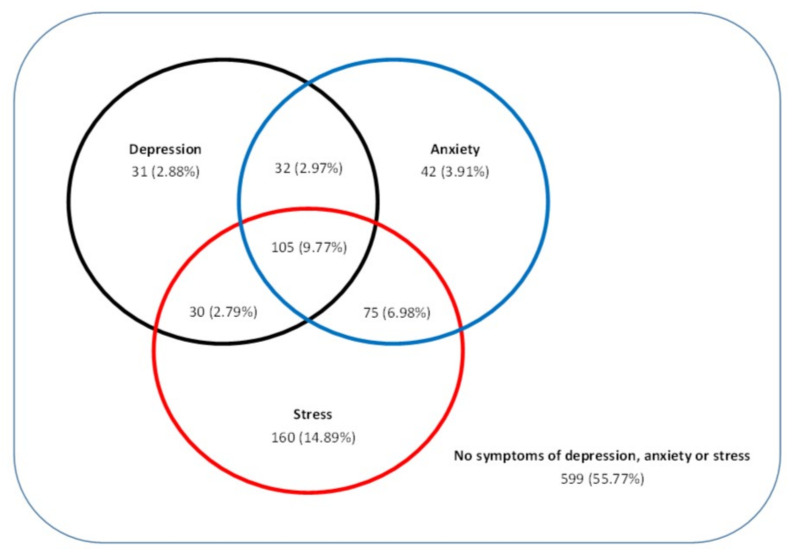
- In 1,074 undergraduate students, prevalence of symptoms above the normal range was 18.4% for depression, 23.6% for anxiety, and 34.5% for stress.
- 22.5% of participants had symptoms of two mental disorders, and 9.7% had symptoms of anxiety, depression, and stress simultaneously.
- In the final binary logistic regression, being <21, experiencing problematic Internet use, smoking, having insomnia, and low self-esteem were associated with depression, anxiety, and stress.
- Additional significant associations reported were: stress with being a woman, living with family, having a stable partner, frequent alcohol consumption, and poor diet; depression with lacking a stable partner; and anxiety with frequent alcohol consumption.
Methods
- Cross-sectional study of undergraduate students at San Jorge University (Zaragoza, Spain) during the 2018–2019 academic year.
- Sample: 1,074 students out of a total population of 1,341 who consented and completed the questionnaire.
- Main measures: DASS-21 for depression/anxiety/stress; sociodemographic and lifestyle variables including age, gender, relationship status, smoking, alcohol, physical activity, diet, Internet use, insomnia, and self-esteem.
- Analysis used descriptive statistics, bivariate tests, and binary logistic regression with backward stepwise selection; results presented were from the model including outliers.
Limitations
- The paper states that DASS-21 is a screening tool, not a formal diagnostic instrument, so additional tools would be needed for diagnosis.
- The authors note the cross-sectional design cannot establish causality, only associations.
- They say data were collected over eight months, so students may have experienced different academic conditions during collection.
- The authors state generalizability may be limited because the study was conducted in a private college in Spain.
Model-written summary. Check it against the paper before relying on it.
Integrity signals
Registry
Cites
Statistics
Figures
Verification
Claims the paper makes
3 Valid · 0 Not valid · 4 Not checked · 27 Own results and interpretations
A result the paper reports from its own data — it cites no other source for it, so there is none to check. The quote shows it is in the paper.
In the paper
“However, physical activity was not clearly associated with psychological distress in our sample.”
§ The Prevalence of Depression, Anxiety and Stress and Their Associated Factors in College Students > 4. Discussion
hedged- Asserted: passes — The authors put it forward as true.
- Checkable: passes — It can be checked against evidence.
- Load-bearing: passes — The paper’s conclusions depend on it.
- Based: passes — The paper gives a reason why it holds.
A result the paper reports from its own data — it cites no other source for it, so there is none to check. The quote shows it is in the paper.
In the paper
“It is also worth highlighting that being enrolled in a healthcare program did not increase the risk of experiencing symptoms of depression, anxiety and stress in our sample.”
§ The Prevalence of Depression, Anxiety and Stress and Their Associated Factors in College Students > 4. Discussion
plain- Asserted: passes — The authors put it forward as true.
- Checkable: passes — It can be checked against evidence.
- Load-bearing: unclear — It is unclear whether the paper’s conclusions depend on it.
- Based: passes — The paper gives a reason why it holds.
A result the paper reports from its own data — it cites no other source for it, so there is none to check. The quote shows it is in the paper.
In the paper
“We found a moderate prevalence of depression (18.4%), anxiety (23.6%) and stress (34.5%) symptoms in our study population.”
- Also stated in: § 3. Results · plain
“Of our participants, 23.6% and 34.5% had symptoms of anxiety and stress above the normal range, respectively.”
- Also stated in: § 4. Discussion · plain
“We identified a significant prevalence of symptoms of stress (34.5%), anxiety (23.6%) and depression (18.4%) in our population.”
§ The Prevalence of Depression, Anxiety and Stress and Their Associated Factors in College Students > Abstract
plain- Asserted: passes — The authors put it forward as true.
- Checkable: passes — It can be checked against evidence.
- Load-bearing: passes — The paper’s conclusions depend on it.
- Based: passes — The paper gives a reason why it holds.
- Also stated in: § 3. Results · plain
A result the paper reports from its own data — it cites no other source for it, so there is none to check. The quote shows it is in the paper.
In the paper
“In addition, being a woman, living with their family, having a stable partner, consuming alcohol regularly and following an inadequate or unhealthy diet were significantly associated with stress”
- Also stated in: § 3. Results · plain
“In both cases, women’s levels of anxiety and stress were higher than men’s (p < 0.05).”
- Also stated in: § 4. Discussion · plain
“In our sample, female students presented a higher prevalence of symptoms of stress and anxiety compared to male students.”
§ The Prevalence of Depression, Anxiety and Stress and Their Associated Factors in College Students > 3. Results
plainstates an association- Asserted: passes — The authors put it forward as true.
- Checkable: passes — It can be checked against evidence.
- Load-bearing: passes — The paper’s conclusions depend on it.
- Based: passes — The paper gives a reason why it holds.
- Also stated in: § 3. Results · plain
A result the paper reports from its own data — it cites no other source for it, so there is none to check. The quote shows it is in the paper.
In the paper
“The final models of binary logistic regression evidenced that being <21, experiencing PIU, smoking, having insomnia and reporting a low level of self-esteem were associated with depression, anxiety and stress (p < 0.05).”
- Also stated in: § 4. Discussion · plain
“As has been reported in previous studies involving similar samples, we found an association between certain habits such as tobacco and alcohol consumption [32], presenting PIU [11] and eating unhealthily [43,55] with higher levels of psychological distress.”
§ The Prevalence of Depression, Anxiety and Stress and Their Associated Factors in College Students > 3. Results
plainstates an association- Asserted: passes — The authors put it forward as true.
- Checkable: passes — It can be checked against evidence.
- Load-bearing: passes — The paper’s conclusions depend on it.
- Based: passes — The paper gives a reason why it holds.
- Also stated in: § 4. Discussion · plain
16 more claims
Create a free account to see all 34 claims and every source verdict.
- Probably not a substantial claim. 8
- The quote only partly states this claim. 6
- It may state two separate claims as one. 3
Claims other papers make about this one
Each is checked against this paper’s own text: does it say what the citing paper says it does?
The source backs part of the claim, not all of it — or backs it for a different population, condition or comparison.
In the citing paper
“which is significantly higher than college students (Ramón‐Arbués et al., 2020) and even higher than the medical student population (Quek et al., 2019).”
From Global prevalence and trend of anxiety among graduate students: A systematic review and meta‐analysis (2023) · cites this paper as Ramón‐Arbués et al., 2020
Experimental — accuracy not yet measuredThe cited source says what the claim attributes to it.
In the citing paper
“there is some literature that indicates that college students may be more likely to endorse symptoms of stress, in comparison to depression or anxiety symptoms (Ramón-Arbués et al., 2020).”
From Using network analysis to examine connections between Acceptance and Commitment Therapy (ACT) processes, internalizing symptoms, and well-being in a sample of undergraduates (2023) · cites this paper as Ramón-Arbués et al., 2020
Citations
Cites
James, S. L., Abate, D., Abate, K. H., Abay, S. M., Abbafati, C., Abbasi, N., Abbastabar, H., Abd-Allah, F., Abdela, J., Abdelalim, A., et al. (2018) · The Lancet · doi:10.1016/s0140-6736(18)32279-7 · Cited by 13,867
Vos, T., Abajobir, A. A., Abate, K. H., Abbafati, C., Abbas, K. M., Abd-Allah, F., Abdulkader, R. S., Abdulle, A. M., Abebo, T. A., Abera, S. F., et al. (2017) · The Lancet · doi:10.1016/s0140-6736(17)32154-2 · Cited by 13,220
Validation of the Insomnia Severity Index as an outcome measure for insomnia research
Bastien, C. (2001) · Sleep Medicine · doi:10.1016/s1389-9457(00)00065-4 · Cited by 8,067 · cited 1×
“The ISI total score is interpreted as follows: absence of insomnia (0–7); sub-threshold insomnia (8–14); moderate insomnia (15–21); and severe insomnia (22–28) [35].”
BackgroundThe prevalence and correlates of depression, anxiety, and stress in a sample of college students
Beiter, R., Nash, R., McCrady, M., Rhoades, D., Linscomb, M., Clarahan, M., & Sammut, S. (2015) · Journal of Affective Disorders · doi:10.1016/j.jad.2014.10.054 · Cited by 2,030
A systematic review of studies of depression prevalence in university students
Ibrahim, A. K., Kelly, S. J., Adams, C. E., & Glazebrook, C. (2013) · Journal of Psychiatric Research · doi:10.1016/j.jpsychires.2012.11.015 · Cited by 1,988
Physical Activity for Cognitive and Mental Health in Youth: A Systematic Review of Mechanisms
Lubans, D., Richards, J., Hillman, C., Faulkner, G., Beauchamp, M., Nilsson, M., Kelly, P., Smith, J., Raine, L., & Biddle, S. (2016) · Pediatrics · doi:10.1542/peds.2016-1642 · Cited by 1,548 · cited 1×
“Thus, physical activity has often been associated with psychological wellbeing through a range of mechanisms including the secretion of endogen substances such as endorphins, the activity of the regulation of stress responses through the hypothalamic-pituitary-adrenal (HPA) axis, the improvement of sleep quality and t…”
BackgroundMental health problems in college freshmen: Prevalence and academic functioning
Bruffaerts, R., Mortier, P., Kiekens, G., Auerbach, R. P., Cuijpers, P., Demyttenaere, K., Green, J. G., Nock, M. K., & Kessler, R. C. (2018) · Journal of Affective Disorders · doi:10.1016/j.jad.2017.07.044 · Cited by 1,047 · cited 1×
“Worldwide, it is estimated that 12–50% of college students present at least one diagnostic criterion for one or more mental disorders [14].”
BackgroundChange in mental health after smoking cessation: systematic review and meta-analysis
Taylor, G., McNeill, A., Girling, A., Farley, A., Lindson-Hawley, N., & Aveyard, P. (2014) · BMJ · doi:10.1136/bmj.g1151 · Cited by 1,039 · cited 1×
“First, it is likely that tobacco use and mental health problems have a common root; people who experience mental health problems may smoke to regulate feelings of low mood, stress and anxiety; smoking could also cause or exacerbate existing mental health problems [46].”
BackgroundChallenges and opportunities in global mental health: a research-to-practice perspective
Wainberg, M. L., Scorza, P., Shultz, J. M., Helpman, L., Mootz, J. J., Johnson, K. A., Neria, Y., Bradford, J.-M. E., Oquendo, M. A., & Arbuckle, M. R. (2017) · Current Psychiatry Reports · doi:10.1007/s11920-017-0780-z · Cited by 875 · cited 2×
“Yet, mental health problems are the first cause of disability and a major public health issue worldwide due to disease progression, difficulties in therapeutic management and increasing prevalence [2,3].”
BackgroundResultLai, J. S., Hiles, S., Bisquera, A., Hure, A. J., McEvoy, M., & Attia, J. (2014) · The American Journal of Clinical Nutrition · doi:10.3945/ajcn.113.069880 · Cited by 786 · cited 1×
“However, two previous systematic reviews [53,54] found limited and contradictory evidence to support the association between dietary patterns and mental health problems in adults.”
Result
Research works printed but not linked: 2
- Kumaraswamy, 2013, Academic stress, anxiety and depression among college students—A brief review, Int. Rev. Soc. Sci. Hum., 5, 135
- Balanza, 2008, Academic and psycho-socio-familiar factors associated to anxiety and depression in university students. Reliability and validity of a questionnaire, Rev. Esp. Salud Publica, 82, 189
Cited by
Items 301–400 of 617
Roslan, S. B., Ismail, M., Zaremohzzabieh, Z., Ahmad, N., Mohamad, Z., Ooi, D. J., Ishak, N. A., & Qamaruzzaman, F. (2022) · International Journal of Academic Research in Business and Social Sciences · doi:10.6007/ijarbss/v12-i9/14784 · Cited by 6
Reinventing Students' Self-esteem in Classrooms: The Need for Humanistic Pedagogy
Omodan, B. I., & Mtshatsha, N. D. M. (2022) · JETL (Journal Of Education Teaching and Learning) · doi:10.26737/jetl.v7i2.3243 · Cited by 3
Ansiedad y relación con el consumo de tabaco en estudiantes universitarios
Guerrero, G. H., & Delgado, R. P. (2023) · LATAM Revista Latinoamericana de Ciencias Sociales y Humanidades · doi:10.56712/latam.v4i1.248 · Cited by 4
Rani, S., Saleem, S., & Zahra, S. T. (2022) · Pakistan Journal of Psychological Research · doi:10.33824/pjpr.2022.37.4.41 · Cited by 4
Mental Health of University Students in Northern Malaysia
Maung, T. M., Win, P. T. N., & Oo, W. M. (2023) · National Journal of Community Medicine · doi:10.55489/njcm.140320232674 · Cited by 3
Adamowicz, J. L., Sirotiak, Z., & Thomas, E. B. K. (2023) · Psychology Health & Medicine · doi:10.1080/13548506.2023.2216940 · Cited by 7
“Distress was included as a second measure of mental health, as college students may be more likely to report symptoms of stress compared to anxiety or depressive symptoms (Ramón-Arbués et al., 2020).”
BackgroundHe, Y., Li, Z., Cao, L., Han, M., Tu, J., Deng, H., Huang, Z.-M., Geng, X., & Wu, J. (2023) · Psychiatry Research · doi:10.1016/j.psychres.2023.115297 · Cited by 3
Tang, X., Hu, W., Zhao, X., Liu, Y., Ren, Y., Tang, Z., & Yang, J. (2024) · Applied Psychology Health and Well-Being · doi:10.1111/aphw.12534 · Cited by 8
Ahmad, N. F., Kamarudin, E. M. E., Mahmud, M. I., -, A., Mohd Noor, A., & Mohd Alam, A. P. (2024) · Asian Journal of University Education · doi:10.24191/ajue.v20i1.25743 · Cited by 6
Triggering factors affecting primary school children in Lebanon: A pilot cross-sectional study
Ghanem, D., Tarhini, S., Manana, M., Awada, S., Assi, R. B., Elkak, A., & Hatem, G. (2024) · Forum for education studies. · doi:10.59400/fes.v2i2.541 · Cited by 3
Prevalence of Depression, Anxiety and Stress among Secondary School Students in Jeddah City
Al-Shehri, M. M., Harazi, N. M., Elmagd, M. H. A., Maram Alghabbashi, T., & Alshmemri, M. (2022) · ASEAN Journal of Psychiatry · doi:10.54615/2231-7805.47264 · Cited by 11
“Table 4 shows the correlation between psychological distress and academic achievement among secondary school students [17].”
BackgroundMylakumar, M. N., Geethanjali, B., Jagannath, M., AnanthaNarayanan, R., Murugappan, M., & Chowdhury, M. E. H. (2024) · IEEE Access · doi:10.1109/access.2024.3464129 · Cited by 4
“The cognitive function of an individual is adversely impacted by anxiety [37], [38].”
BackgroundBhuiyan, K. H., Kowser, A. M., & Deb, S. K. (2024) · Journal of Digital Marketing and Communication · doi:10.53623/jdmc.v4i2.494 · Cited by 3
Determinants of Adherence to The Mediterranean Diet and Depressive Symptoms in Turkish Young Adults
Ceylan, J. A., & Gümüş, A. B. (2025) · Journal of Basic and Clinical Health Sciences · doi:10.30621/jbachs.1530196 · Cited by 3
Internet Use, Internet Addiction, and Mental Health Among Adult Population: Bibliometric Analysis
Bhukya, A., & Govindappa, L. (2025) · Journal of Technology in Behavioral Science · doi:10.1007/s41347-025-00495-1 · Cited by 12
Payne, H., & Leslie, K. J. (2025) · Education Sciences · doi:10.3390/educsci15030311 · Cited by 3
“(Ramón-Arbués et al., 2020).”
Nunnink, M., Ballester, L., Vilagut, G., Alayo, I., Mortier, P., Almenara, J., Cebrià, A. I., Gabilondo, A., Gili, M., Lagares, C., et al. (2025) · Journal of Affective Disorders · doi:10.1016/j.jad.2025.120058 · Cited by 4
Prasetyaningtyas, W. E., Nasri, W. O. L. A., & Amalianita, B. (2020) · Konselor · doi:10.24036/0202092110553-0-00 · Cited by 5
Park, J., Choi, S., Hong, H. C., Lee, H., & Cho, A. (2022) · Journal of Affective Disorders · doi:10.1016/j.jad.2022.05.053 · Cited by 4
Chatbot-Based Interventions for Mental Health SupportPreprint
Wang, Y., & Farb, N. A. S. (2024) · doi:10.31234/osf.io/xj7cz · Cited by 3
Bibi, A., Ejaz, K., Khan, I. A., Khan, M. J., Ahmad, T., Zeb, K., Ahmad, A., & Iqbal, J. (2024) · NURSEARCHER (Journal of Nursing & Midwifery Sciences) · doi:10.54393/nrs.v4i01.67 · Cited by 2
Sun, X., Zhou, S., Liao, J., Wan, X., & Wang, J. (2024) · South African Journal of Psychology · doi:10.1177/00812463241291207 · Cited by 3
“…university students are experiencing a challenging period characterized by individuation, separation from family, and the development of new social connections (Duffy et al., 2019) Many changes can cause psychological problems, such as anxiety, depression and stress (Ramón-Arbués et al., 2020).”
Ojukwu, C. P., Ozioko, C. A., & Ebulum, G. C. (2025) · International Journal of Medicine and Health Development · doi:10.4103/ijmh.ijmh_48_24 · Cited by 2
ZUBAIRI, A. A., Nasharudin, N. A. S., & Ibrahim, M. K. (2025) · Jurnal Pendidikan Bitara UPSI · doi:10.37134/bitara.vol17.1.3.2025 · Cited by 4
Effect of digital mindfulness on perceived stress and anxious emotion among college students
Xiong, W., Xia, Y., Yu, L., & Yang, F. (2025) · Frontiers in Psychiatry · doi:10.3389/fpsyt.2025.1644370 · Cited by 4
Nkouonlack, C., Atemlefac, T. A., Tendonglefac, N. M., Nkoké, C., Denis, T., Fufi, N. C., Arnuld, M., Monono, N., & NJAMNSHI, A. K. (2025) · Open Journal of Depression · doi:10.4236/ojd.2025.143004 · Cited by 3
Prevalence and Contributing Factors of Illicit Drug Use Among Youth Aged 18–24 Years in South Korea
Kim, C., Han, K., Kim, J., Trinkoff, A. M., Park, S., & Kim, H. (2025) · Asian Nursing Research · doi:10.1016/j.anr.2025.07.003 · Cited by 3
Boutros, P. H., Papazian, T., Tawtah, L., Merhi, S., Salameh, E., & Fares, J. E. H. (2025) · BMC Public Health · doi:10.1186/s12889-025-25664-y · Cited by 2
“In contrast, Ramón-Arbués et al., reported that frequent alcohol use was significantly associated with symptoms of anxiety in university students [53].”
Hanifa, H., Alzoubi, M., Khallouf, E. S., Alzoubi, L., Hamesh, F., Qashqash, M. E., Albaroudi, F. H., Al-Baroudy, M., Mahouk, M. A. M., Al-Mashaqbah, Y. M., et al. (2025) · BMC Psychology · doi:10.1186/s40359-025-03879-3 · Cited by 5
“…from previous studies into Arabic using back-to-back translation to ensure accuracy and verification to confirm their compatibility with the original version and to facilitate reading for the participants, given that medical education in Syria is conducted in the native language (Arabic) [13, 14].”
Creative Partnerships between Humans and AI: A Fourth Learning Format?
Vikhrova, E. N., & Petrovskiy, V. (2026) · Высшее образование в России · doi:10.31992/0869-3617-2025-34-12-10-32 · Cited by 2
How Anxiety Shapes Students’ Self-Rated Health at Elite Universities: A Longitudinal Study
Liu, X., Zhang, X., & Liu, Y. (2026) · Behavioral Sciences · doi:10.3390/bs16020197 · Cited by 9
“In a sample of Spanish college students, 23.6% reported experiencing anxiety symptoms (Ramón-Arbués et al., 2020).”
InfluentialHong, Y., Cai, J., & Liao, M. (2026) · BMC Psychology · doi:10.1186/s40359-026-04035-1 · Cited by 1
“Depression, a key indicator of mental health, can manifest as a motivational deficit, weakened determination, sleep irregularities, impaired academic performance, and in severe cases, maladaptive behaviors such as self-harm, aggression, addiction, and loss of appetite [3, 4].”
Zhang, S., Liu, R., Rao, F., Zhou, Q., & 熊群 (2026) · Frontiers in Public Health · doi:10.3389/fpubh.2026.1845627 · Cited by 2
“SQ has been linked to emotion regulation, mood, and self-evaluative processes (34), and college students with more sleep problems tend to report higher levels of negative affect and psychological distress, as well as less favorable self-views (35–37).”
Impact of Levels of Education on Depression and Anxiety in Iranian Students
Rezvan, A. F., & Srimathi, N. L. (2022) · Pakistan Journal of Psychological Research · doi:10.33824/pjpr.2022.37.1.04 · Cited by 2
Pascal, S. A., & Chivu, A. C. (2022) · Revista de Pedagogie - Journal of Pedagogy · doi:10.26755/revped/2022.2/181 · Cited by 4
Kosalram, K. B., Elizabeth, J., & Kumar, D. (2023) · Journal of Education and Health Promotion · doi:10.4103/jehp.jehp_1287_22 · Cited by 4
“Ramón‐Arbués et al.[18] aimed to assess the prevalence of symptoms of depression, anxiety, stress, and associated factors in a population of college students.”
BackgroundInternet Gaming Disorder: Depression, Anxiety and Stress among Gamers
Radzi, M. A. M., Subhi, N., & Shaari, A. A. H. (2023) · International Journal of Academic Research in Business and Social Sciences · doi:10.6007/ijarbss/v13-i12/19787 · Cited by 3
Association between Anxiety Status and Hydration Status in Spanish University Students
Castro, M. J., Albertos, I., Íñigo, C. P., López, M., Jiménez, J. M., Cao, M.-J., Trayling, M., & Ruíz-Tóvar, J. (2023) · Nutrients · doi:10.3390/nu16010118 · Cited by 3
“Other aspects to analyse were specific behaviours related to alcohol consumption, tobacco, and Internet use, which demonstrated a strong association with psychological distress in the population of university students [6,7].”
BackgroundHe, Y., Zhao, B., Liu, Z., Li, Z., Han, M., Geng, X., & Wu, J. (2024) · Brain stimulation · doi:10.1016/j.brs.2024.02.007 · Cited by 2
“Dear Editor, Perceived stress is a complex psychobiological process with a high prevalence of 34.5% in young adults [1].”
InfluentialPHYSICAL EXERCISE, MENTAL HEALTH, QUALITY OF LIFE IN HIGHER EDUCATION– SYSTEMATIC REVIEW
Dias, I. S., Jacinto, M., Abreu, M. O., & Fonseca, M. (2023) · Psicologia Saúde & Doenças · doi:10.15309/23psd240313 · Cited by 4
“…visible in the high levels of stress, anxiety and depression (Bayram & Bilgel, 2008; Bahhawi et al., 2018; Beiter et al., 2015; Eisenberg et al., 2013; Fernández-Rodríguez et al., 2019; Hussain et al., 2013; Ibrahim et al., 2013; Liu et al., 2019; Potrebny et al., 2017; Ramón-Arbués et al., 2020).”
Mindfulness, Self-Care, and Stress Management
Stephen, J. S. (2024) · Springer texts in education · doi:10.1007/978-3-031-54439-2_12 · Cited by 2
García, D. M. J., Téllez, A., Sánchez-Jáuregui, T. D. J., Castruita, D. A. A., García-Fuentes, K., & Valdez, A. (2024) · Journal of Aggression Maltreatment & Trauma · doi:10.1080/10926771.2024.2342507 · Cited by 2
Concepción, U. C. D. L. S., Sáez-Delgado, F., Mella-Norambuena, J., María, U. T. F. S., Ron, V. L., del Norte, U. T., López-Angulo, Y., de Concepción, U., Sandoval-Henríquez, F. J., & Concepción, U. C. D. L. S. (2024) · Diálogos sobre educación · doi:10.32870/dse.v0i30.1428 · Cited by 4
Manajemen Depresi Berbasis Kelompok Dukungan Sebaya pada Mahasiswa Kesehatan
AS, A. N. A., Padad, A. T., & Jauhar, M. (2024) · Jurnal Inovasi Penelitian dan Pengabdian Masyarakat · doi:10.53621/jippmas.v4i1.287 · Cited by 5
“Selain itu dampak yang ditimbulkan adalah menjadi kecanduan internet, merokok, insomnia, dan memiliki harga diri rendah berdasarkan hal tersebut maka perlu dilakukan intervensi untuk meningkatkan kesehatan mental pada mahasiswa (Ramon-Arbues et al., 2020).”
BackgroundYelboğa, N. (2024) · Uludağ Üniversitesi Fen Edebiyat Fakültesi Sosyal Bilimler Dergisi · doi:10.21550/sosbilder.1438768 · Cited by 2
Faryabi, R., Domari, A. A., Vazirinasab, H., Ardaneh, M., Daneshi, S., & Hamidi, A. (2024) · The Open Public Health Journal · doi:10.2174/0118749445304093240516113739 · Cited by 2
Brito, A. I. D. C., Neto, J. N., Mendes, A. B. C., Nogueira, M. B., Gomes, L. M. R. D. S., Leal, P. D. C., & Moura, E. C. R. (2024) · Women & Health · doi:10.1080/03630242.2024.2395480 · Cited by 2
“…Association, anxiety and depression are emotional responses that lead to a series of symptoms that are similar to each other, are of a persistent nature, and include difficulty sleeping, fatigue, muscle tension and irritability in response to short-term external factors (Ramón-Arbués et al. 2020).”
Kievišienė, J. (2024) · Nordic Studies on Alcohol and Drugs · doi:10.1177/14550725241291330 · Cited by 3
“…mental health (Jacob et al., 2021; Li et al., 2020) and comorbid mental health problems, such as anxiety, stress and depression (Mohamed et al., 2020; Puddephatt et al., 2022; Ramón-Arbués et al., 2020) and often experience dif fi culties talking openly and sharing their thoughts and feelings.”
Academic Performance, Absenteeism, and Drug Use in Emerging Adulthood
Rodríguez-Sáez, J. L., Antón, L. J. M., Ruíz, A. S., & Carbonero, M. Á. (2025) · Cureus · doi:10.7759/cureus.78325 · Cited by 2
“…studies have explored the link between pressure from the higher education system and students’ health, demonstrating that stress negatively impacts overall health [33,34], affecting academic performance and quality of life and influencing behaviors such as substance use and academic cheating [35].”
Socias-Soler, J., Péris-Baquero, Ó., Martínez‐García, L., & Osma, J. (2025) · Current Psychology · doi:10.1007/s12144-025-07307-y · Cited by 7
“Of the total sample, 11.55% of participants had clinical symptoms of depression, a prev - alence rate lower than expected in this population based on previous studies (Ramón-Arbués et al., 2020).”
InfluentialMayoyo, N. (2025) · Open Journal of Social Sciences · doi:10.4236/jss.2025.132018 · Cited by 2
Nano, J. P., Catterall, W. A., Chang, M. L., & Ghaly, M. H. (2025) · Journal of Affective Disorders Reports · doi:10.1016/j.jadr.2025.100918 · Cited by 5
The role of sensory processing patterns on mental health in healthy adults
Doğu, S. E., & Bektaş, S. A. (2025) · British Journal of Occupational Therapy · doi:10.1177/03080226251340287 · Cited by 4
“In today’s challenging world, individuals are at an increased risk of experiencing stress, anxiety, and depression, which can have a detrimental impact on their overall well-being and quality of life (QoL; Ramón-Arbués et al., 2020).”
Ma, Y., Niu, X.-X., Yao, Z.-Y., Yan, Y.-N., Zheng, Z.-A., & Jia, C.-X. (2025) · Journal of Affective Disorders · doi:10.1016/j.jad.2025.120065 · Cited by 3
Peixoto, V. A., Júnior, A. E. D. S., Ferro, D. C., Pereira, M. R., Paula, D. T. D. C., Praxedes, D. R. S., Macêna, M. D. L., & Bueno, N. B. (2025) · Nutrition Research · doi:10.1016/j.nutres.2025.10.002 · Cited by 7
Analysis of the psychosocial profile of pre-service teachers
García‐Martínez, I., Augusto-Landa, J. M., Navío, E. P., et al. (2022) · Educación XX1 · doi:10.5944/eduxx1.30236 · Cited by 2
“There are a number of strengths such as adaptive social and emotional skills, self-perceptions and supportive interpersonal skills that can protect students from the negative effects of emotional distress (Ramón-Arbués et al., 2020).”
BackgroundGirousse, E., & Vuillerme, N. (2022) · JMIR Research Protocols · doi:10.2196/38785 · Cited by 2
“College students experience substantially higher rates of depression than the general population [4], and several studies have shown that anxiety is prevalent among them [5-10].”
BackgroundAyed, M., Yazdani, A., Esmaelili, H., AlSaleh, A. K., Sultan, A., Alamad, E., Bander, A., & Rawdhan, H. (2023) · Cureus · doi:10.7759/cureus.33606 · Cited by 2
Kumar, R. (2024) · Journal of Contemporary Medical Sciences · doi:10.22317/jcms.v10i3.1558 · Cited by 2
“4,7,8 This finding can be attributed to many reasons.”
BackgroundTorales, J. C., Alviso, A. I., Ríos-González, C. M., O’Higgins, M. G., Navarro, R. E., Ayala-Servín, N., Almirón‐Santacruz, J., Aquino-Arrúa, A., Balbuena-Monges, H., Guerra-Aquino, F., et al. (2021) · Revista del Nacional (Itaguá) · doi:10.18004/rdn2021.dic.02.018.028 · Cited by 3
Sasu, G.-V., Ciubotaru, B.-I., Popovici, R., Popovici, A.-F., Goga, N., & Datta, G. (2021) · E-Health and Bioengineering Conference (EHB) · doi:10.1109/ehb52898.2021.9657684 · Cited by 2
Pilatti, A., Correa, P., Michelini, Y., Bravo, A. J., Pacini, G., & Pautassi, R. M. (2024) · Substance Use & Misuse · doi:10.1080/10826084.2024.2370026 · Cited by 1
“For instance, in a study involving college students from Spain, 81.6 and 76.4% reported values within the normal range for depression and anxiety, respectively, with only 6.4 and 6.6% reporting indicators of severe or extreme depression or anxiety (Ramón-Arbués et al., 2020).”
InfluentialForster, M., & Kuhbandner, C. (2022) · Frontiers in Psychology · doi:10.3389/fpsyg.2022.816456 · Cited by 1
Uso não médico de psicotrópicos por estudantes de graduação: uma revisão integrativa
Arraes, L. T., Arraes, L. S. C., Arraes, C. T., Trajano, L. A. D. S. N., Trajano, E. T. L., & Silva, M. A. D. S. (2022) · Research Society and Development · doi:10.33448/rsd-v11i14.36164 · Cited by 11
EREN, S. Y., YILDIRIM, Ö., & Şahin, F. (2022) · Uluslararası Anadolu Sosyal Bilimler Dergisi · doi:10.47525/ulasbid.1176721 · Cited by 2
Cabongcal, J. M. C., Sanita, L. C., Sanita, L. C., Mancao, E. C., & Fabito, B. S. (2022) · International Conference on Digital Technology in Education (ICDTE) · doi:10.1145/3568739.3568782 · Cited by 1
“Depression may come in various symptoms, including weight loss, lack of energy and periods of sleep, inability to sustain daily activities, and possibly manifests a feeling of suicide[11].”
BackgroundDisordered eating attitudes, depressive symptomatology and alcohol consumption in young athletes
Perko, U., & Černelič-Bizjak, M. (2023) · Annales Kinesiologiae · doi:10.35469/ak.2022.358 · Cited by 1
“Studies conducted on different samples of college students have found a moderate to high prevalence of depression in this population (Al Bahhawi et al., 2018, Ramón-Arbués et al., 2020).”
BackgroundMehus, C. J., Stevenson, B. L., Weiler, L. M., Gunlicks‐Stoessel, M., Morrell, N., & Patrick, M. E. (2023) · Clinical Trials · doi:10.1177/17407745231176803 · Cited by 2
Tarasov, A. V., Rakhmanov, R. S., Bogomolova, E. S., Skoblina, N., Ivanova, S. A., Сухих, С. А., & Babich, O. (2023) · Sustainability · doi:10.3390/su15129594 · Cited by 1
Rahmania, F. A., & Kumolohadi, R. A. R. (2023) · Gadjah Mada Journal of Professional Psychology (GamaJPP) · doi:10.22146/gamajpp.88247 · Cited by 7
Emotions&Care: Designing a Mobile App for Supporting Depression of College Students
Rodriguez, P. D. G., Morales, M. S. A., Jesus, A. Z. C. D., Gonzalez, X. H., Flores, B. J. R., & Caro, K. (2023) · Mexican International Conference on Computer Science · doi:10.1109/enc60556.2023.10508706 · Cited by 1
“However, it is well known that much of the information on the internet today may come from an unreliable source or need better support [1].”
BackgroundHuamani-Calloapaza, T. C., Mendoza-Zuñiga, M., Larico-Uchamaco, G. R., Yana-Salluca, M., Yana-Salluca, N., Argollo, K. P., Mora-Estrada, O., & Yañez, E. J. P. (2024) · Salud Ciencia y Tecnología · doi:10.56294/saludcyt20241070 · Cited by 4
Self-Care Mediates Current Adverse Experiences and Depressive Symptoms Among Emerging Adults
Doudna, K. D., Chen, J.-C., & Holst, M. (2024) · Adversity and Resilience Science · doi:10.1007/s42844-024-00145-0 · Cited by 1
BİZZARİ, A., & Nasar, F. (2024) · Open Health · doi:10.1515/ohe-2023-0036 · Cited by 2
de Blas, C. S., Rojas, K., Sipols, A. E., Alonso, S. H., Castellanos, M. E., Cano, J. R., & Córdoba, C. (2024) · Learning and Motivation · doi:10.1016/j.lmot.2024.102058 · Cited by 5
Senayah, W. K., & Oppong, S. (2024) · International Journal of Fashion Design Technology and Education · doi:10.1080/17543266.2024.2440739 · Cited by 2
“For female non-traditional students, in particular, having poor nutritional habits and living with family resulted in higher stress levels (Ramón-Arbués et al., 2020).”
Sharma, R., & Aggarwal, A. (2025) · Advances in psychology, mental health, and behavioral studies (APMHBS) book series · doi:10.4018/979-8-3693-9341-3.ch009 · Cited by 1
Mazumdar, S., & Chowdhury, I. (2025) · Elsevier eBooks · doi:10.1016/b978-0-443-33498-6.00023-6 · Cited by 1
Kurt, F. Y., Munar, O. C., & Nedim, S. (2025) · Bandırma Onyedi Eylül Üniversitesi Sağlık Bilimleri ve Araştırmaları Dergisi · doi:10.46413/boneyusbad.1646015 · Cited by 1
Factors associated with the use of cannabis by students at a public university
Bernardino, I. L., Boska, G. D. A., Zanoti-Jeronymo, D. V., et al. (2025) · Revista gaúcha de enfermagem · doi:10.1590/1983-1447.2025.20240117.en · Cited by 1
Perceived stress, risk factors and prognostic monitoring loci for the development of depression
Li, X., Zhao, W., Wei, Y.-H., Zhang, X.-S., Zhu, Y., & Li, X. (2025) · World Journal of Psychiatry · doi:10.5498/wjp.v15.i6.105222 · Cited by 2
Petak, A., & Novak, M. (2025) · Chronobiology International · doi:10.1080/07420528.2025.2513433 · Cited by 1
“…(Hafner et al. 2023) and depression (Greenberg et al. 2023), as well as the high prevalence of both problems among students (Maithani et al. 2024; Ramón-Arbués et al. 2020; Zhou et al. 2022), it is essential to understand how poor sleep quality contributes to the incidence and maintenance of…”
Mental health stigma of American college students: Business student perceptions
Thompson, D. A., Dent, H. L., & Fine, M. B. (2025) · Journal of Education for Business · doi:10.1080/08832323.2025.2518078 · Cited by 1
“Stress, anxiety, and depression are risk factors associated with mental health (Mofatteh, 2021; Ramón-Arbués et al., 2020).”
Shukri, M. I. M., Baharom, A., & Nazan, A. I. N. M. (2025) · PeerJ · doi:10.7717/peerj.19304 · Cited by 2
Prevalence of Anxiety, Depression, and Stress Among Medical Students at the University of Benghazi
El-najjar, A. O., Mussa, S. S., Hamad, F. F., & Sultan, S. F. (2025) · Libyan journal of public health practices. · doi:10.37376/ljphp.v2i1.7338 · Cited by 1
Chen, Y., Liu, R., Yan, J., Luo, P., Yang, L., Wang, Y., Ji, G., Wang, C., Zheng, W., Wang, F., et al. (2025) · BMC Psychiatry · doi:10.1186/s12888-025-07118-2 · Cited by 1
“A systematic review reported that the prevalence of depression among university students varied between 10% and 55%, with an average weighted prevalence of 33.6% [2].”
InfluentialГафаров, В. В., Strigaleva, K. A., Громова, Е. А., Gagulin, I. V., Вахтанговна, Д. Д., & Гафарова, А. В. (2025) · Ateroscleroz · doi:10.52727/2078-256x-2025-21-2-126-133 · Cited by 1
Lyu, P., Li, X., & Yao, X. (2025) · Frontiers in Psychology · doi:10.3389/fpsyg.2025.1625325 · Cited by 1
Guzman, R. A., & Braitman, A. L. (2025) · Journal of Racial and Ethnic Health Disparities · doi:10.1007/s40615-025-02694-1 · Cited by 1
Chen, M., Li-Ya, A., Jiang, Y.-Y., Huang, H.-T., Liu, S., Ma, Y., Su, Z., Cheung, T. C. C., Ungvari, G. S., Ng, C. H., et al. (2025) · International Journal of Social Psychiatry · doi:10.1177/00207640251371433 · Cited by 2
“…poor social support, unplanned pregnancies, substance use, academic stress, disrupted sleep patterns, limited job prospects, and financial woes (Ghrouz et al., 2019; Ramón-Arbués et al., 2020; Simić-Vukomanović et al., 2016), which represent similar risk factors for loneliness (Besse et al., 2022).”
Zhu, X., Zheng, Y., Wang, M., Jian, W., Pan, H., Chen, L., & Liu, X. (2025) · Frontiers in Psychiatry · doi:10.3389/fpsyt.2025.1480559 · Cited by 1
Hetelekides, E. M., McMichael, T., Tyskiewicz, A. J., Prince, M. A., Emery, N. N., Conner, B. T., & Karoly, H. C. (2025) · Journal of Cannabis Research · doi:10.1186/s42238-025-00347-y · Cited by 1
“This is particularly relevant for young adults and college students, who experience elevated rates of depression, anxiety, and stress (Beiter et al. 2015; Melchior et al. 2007; Ramón-Arbués et al. 2020) as well as high rates of SCA use (Terry-McElrath and Patrick 2018).”
The effect of dietary carbohydrate quality on depression and anxiety levels in adolescents
Ülger, T. G., Sürücü, B., Menekşe, A. E., Çakmak, Y., Fidan, Ş., & İncekara, B. (2025) · Frontiers in Nutrition · doi:10.3389/fnut.2025.1689004 · Cited by 2
Ahmed, S. M. M., Eltaeib, I. A. H., Fadlelmoula, Y. A. D., Fadhl, H., & Abdulrahman, M. S. A. (2025) · BMC Psychology · doi:10.1186/s40359-025-03667-z · Cited by 1
“These mental health challenges are compounded by external pressures, particularly the intense expectations placed on students by their families and society [14, 15].”
Chapagai, S., Banjade, I. P., & Khanal, S. P. (2025) · Depression and Anxiety · doi:10.1155/da/8886228 · Cited by 1
Zhao, S.-X., Han, T., Bi, W.-Z., Fei, L.-L., Han, L.-L., Wang, Y.-L., Ping, Z.-G., Wang, C.-J., Hao, C.-F., & Xin, Y.-J. (2026) · World Journal of Psychiatry · doi:10.5498/wjp.v16.i1.111778 · Cited by 4
Alsaif, M. I., Rahmah, A. S. B., & Naser, A. Y. (2026) · Medicine · doi:10.1097/md.0000000000046968 · Cited by 4
Alenezi, L., Alhaddad, M., Almutairi, S., & AlMohri, F. (2026) · International Journal of Environmental Research and Public Health · doi:10.3390/ijerph23010082 · Cited by 1
Camargo, M. J. G., Felício, L. F. F., Schuch, F. B., Tornquist, D., Deslandes, A. C., Zanetti, A. C. G., Pires, D. A., da Silva, D. R. P., de Jesus‐Moraleida, F. R., Moura, H. F., et al. (2026) · Mental health and physical activity · doi:10.1016/j.mhpa.2025.100750 · Cited by 1
Xu, Z., Chen, F., Li, W., et al. (2026) · BMC Medical Education · doi:10.1186/s12909-026-08565-5 · Cited by 1
“Medical training, while essential for professional development, often exposes students to substantial psychological distress, including stress, anxiety, and depression [17, 18].”
Metadata
- Authors
- Ramón-Arbués, E., Gea-Caballero, V., Granada-López, J. M., Juárez-Vela, R., Pellicer-García, B., & Antón-Solanas, I.
- Affiliations
- Faculty of Health Sciences, Campus Universitario Villanueva de Gállego, Universidad San Jorge, 50830 Villanueva de Gállego, Zaragoza, Spain
- Universitat de València (ES)
- Universidad de Zaragoza (ES)
- Faculty of Health Sciences, La Rioja University, 26006 Logroño, Spain
- Servicio Aragonés de Salud (ES)
- Department of Physiatry and Nursing, Faculty of Health Sciences, University of Zaragoza, 50009 Zaragoza, Spain
- Corresponding author
- Gea-Caballero, Vicente
- Granada-López, José Manuel
- Venue
- International Journal of Environmental Research and Public Health
- Publisher
- MDPI AG
- Published
- 2020-09-24
- Volume
- 17
- Issue
- 19
- Pages
- 7001
- ISSN
- 1660-4601 (ISSN-L)
- PMC
- PMC7579351
- OpenAlex
- W3088546900
- Semantic Scholar
- 259f0a5e1460c4efcaa63718e8c4330369081b27
- Cited by
- 637
- References
- 69
- Citations by year
- 2026: 85 · 2025: 150 · 2024: 151 · 2023: 134 · 2022: 86 · 2021: 29 · 2020: 2
- FWCI
- 94.54
- Type
- journal article
- Language
- en
- Open access
- gold
- doi.org
- Licence
- Locations
- International Journal of Environmental Research and Public Health (publishedVersion, cc-by)
- PubMed Central (publishedVersion, cc-by)
- PubMed (publishedVersion)
- Zaguan (University of Zaragoza Repository) (submittedVersion, cc-by)
- RePEc: Research Papers in Economics (submittedVersion)
- DOAJ (DOAJ: Directory of Open Access Journals) (submittedVersion)
- RIUR (Universidad de La Rioja) (submittedVersion, other-oa)
- Topics
- Social Sciences › Psychology › Developmental and Educational Psychology › Student Stress and Coping
- Health Sciences › Medicine › Psychiatry and Mental health › Mental Health Treatment and Access
- Health Sciences › Health Professions › General Health Professions › Healthcare professionals’ stress and burnout
- Keywords
- depression, anxiety, stress, university students, psychological distress, prevalence, problematic internet use, smoking, insomnia, self-esteem, alcohol consumption, dietary habits, gender differences, mental health promotion
- MeSH terms
- Anxiety, Cross-Sectional Studies, Depression, Female, Humans, Male, Stress, Psychological, Students, Universities, Prevalence, Young Adult
About these checks
Registry, retraction, Cites and statistics results are computed, not judged, with one exception: a printed reference that no index lists is read once by a model before it counts as a citation error. Claims are extracted by a model and kept only when their quote appears verbatim in the text; each cited source is then checked, with a model’s help, for whether it says what the claim relies on. Those verdicts can be wrong — read the claim’s quote and the cited source before relying on one.
The claim verdicts this report counts are experimental: their accuracy is not yet measured.
A language model drew the claims from the paper on 2026-10-10, under version 3 of the claim definition (model deepseek-v4.1-flash, prompt extract-v3).
A second model labelled each claim on 2026-10-10 (model jev-1.13-20260917, definition revision gold-guideline-v0.2).
Statistics and arithmetic are recomputed, not judged.
Confidence bands are shown only for fields calibrated on our annotated test set. None is calibrated yet, so no band is shown.
What counts as a claim ›How we measure confidence ›How we check this ›
Are you an author, or do you see a problem with this page? Request a review
Data sources
Bibliographic data: Semantic Scholar, OpenAlex, Crossref.
Contains information from the Semantic Scholar Academic Graph Datasets, made available under the ODC Attribution License (ODC-BY 1.0).
Semantic Scholar’s data is described in: Kinney, R., et al. (2023). The Semantic Scholar Open Data Platform. arXiv:2301.10140.
