

The Prevalence of Depression, Anxiety and Stress and Their Associated Factors in College Students.
Open accessThe DOI matches its Crossref record; 65 of the 69 references it cites were found in a registry or an index; 4 of the 10 sources its claims cite were checked for support.
Abstract
AIM: To estimate the prevalence of symptoms of depression, anxiety, stress and associated factors in a population of college students. METHOD: Cross-sectional study of psychological distress measured through the Depression, Anxiety and Stress Scale (DASS-21) in a sample of 1074 college students. RESULTS: We found a moderate prevalence of depression (18.4%), anxiety (23.6%) and stress (34.5%) symptoms in our study population. Being <21, having problematic Internet use behavior, smoking, presenting insomnia and having a low self-esteem were independently associated with symptoms of depression, anxiety and stress. Being a woman, living with their family, having a stable partner, consuming alcohol frequently and having poor nutritional habits were significantly associated with symptoms of stress; lacking a stable partner was significantly associated with depressive symptoms; and frequent consumption of alcohol was significantly associated with symptoms of anxiety. CONCLUSION: We found a moderate prevalence of depression, anxiety and stress symptoms in our population. Interventions aimed at promoting mental health among college students should be implemented.
Overview
CoChat Summary
TL;DR
This cross-sectional study of 1,074 Spanish college students found moderate symptom prevalence of depression, anxiety, and stress measured by DASS-21. Younger age, problematic Internet use, smoking, insomnia, low self-esteem, and some lifestyle/living factors were associated with higher psychological distress.
Key findings
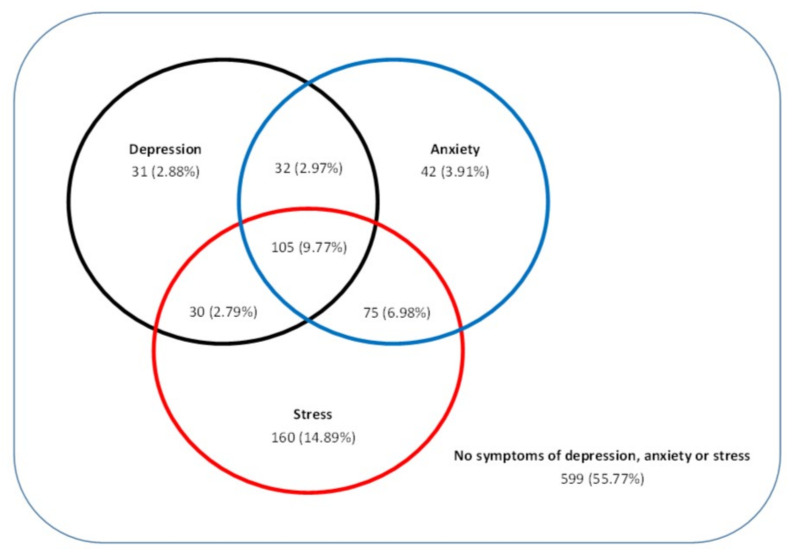
- In 1,074 undergraduate students, prevalence of symptoms above the normal range was 18.4% for depression, 23.6% for anxiety, and 34.5% for stress.
- 22.5% of participants had symptoms of two mental disorders, and 9.7% had symptoms of anxiety, depression, and stress simultaneously.
- In the final binary logistic regression, being <21, experiencing problematic Internet use, smoking, having insomnia, and low self-esteem were associated with depression, anxiety, and stress.
- Additional significant associations reported were: stress with being a woman, living with family, having a stable partner, frequent alcohol consumption, and poor diet; depression with lacking a stable partner; and anxiety with frequent alcohol consumption.
Methods
- Cross-sectional study of undergraduate students at San Jorge University (Zaragoza, Spain) during the 2018–2019 academic year.
- Sample: 1,074 students out of a total population of 1,341 who consented and completed the questionnaire.
- Main measures: DASS-21 for depression/anxiety/stress; sociodemographic and lifestyle variables including age, gender, relationship status, smoking, alcohol, physical activity, diet, Internet use, insomnia, and self-esteem.
- Analysis used descriptive statistics, bivariate tests, and binary logistic regression with backward stepwise selection; results presented were from the model including outliers.
Limitations
- The paper states that DASS-21 is a screening tool, not a formal diagnostic instrument, so additional tools would be needed for diagnosis.
- The authors note the cross-sectional design cannot establish causality, only associations.
- They say data were collected over eight months, so students may have experienced different academic conditions during collection.
- The authors state generalizability may be limited because the study was conducted in a private college in Spain.
Model-written summary. Check it against the paper before relying on it.
Integrity signals
Registry
Cites
Statistics
Figures
Verification
Claims the paper makes
3 Valid · 0 Not valid · 4 Not checked · 27 Own results and interpretations
A result the paper reports from its own data — it cites no other source for it, so there is none to check. The quote shows it is in the paper.
In the paper
“However, physical activity was not clearly associated with psychological distress in our sample.”
§ The Prevalence of Depression, Anxiety and Stress and Their Associated Factors in College Students > 4. Discussion
hedged- Asserted: passes — The authors put it forward as true.
- Checkable: passes — It can be checked against evidence.
- Load-bearing: passes — The paper’s conclusions depend on it.
- Based: passes — The paper gives a reason why it holds.
A result the paper reports from its own data — it cites no other source for it, so there is none to check. The quote shows it is in the paper.
In the paper
“It is also worth highlighting that being enrolled in a healthcare program did not increase the risk of experiencing symptoms of depression, anxiety and stress in our sample.”
§ The Prevalence of Depression, Anxiety and Stress and Their Associated Factors in College Students > 4. Discussion
plain- Asserted: passes — The authors put it forward as true.
- Checkable: passes — It can be checked against evidence.
- Load-bearing: unclear — It is unclear whether the paper’s conclusions depend on it.
- Based: passes — The paper gives a reason why it holds.
A result the paper reports from its own data — it cites no other source for it, so there is none to check. The quote shows it is in the paper.
In the paper
“We found a moderate prevalence of depression (18.4%), anxiety (23.6%) and stress (34.5%) symptoms in our study population.”
- Also stated in: § 3. Results · plain
“Of our participants, 23.6% and 34.5% had symptoms of anxiety and stress above the normal range, respectively.”
- Also stated in: § 4. Discussion · plain
“We identified a significant prevalence of symptoms of stress (34.5%), anxiety (23.6%) and depression (18.4%) in our population.”
§ The Prevalence of Depression, Anxiety and Stress and Their Associated Factors in College Students > Abstract
plain- Asserted: passes — The authors put it forward as true.
- Checkable: passes — It can be checked against evidence.
- Load-bearing: passes — The paper’s conclusions depend on it.
- Based: passes — The paper gives a reason why it holds.
- Also stated in: § 3. Results · plain
A result the paper reports from its own data — it cites no other source for it, so there is none to check. The quote shows it is in the paper.
In the paper
“In addition, being a woman, living with their family, having a stable partner, consuming alcohol regularly and following an inadequate or unhealthy diet were significantly associated with stress”
- Also stated in: § 3. Results · plain
“In both cases, women’s levels of anxiety and stress were higher than men’s (p < 0.05).”
- Also stated in: § 4. Discussion · plain
“In our sample, female students presented a higher prevalence of symptoms of stress and anxiety compared to male students.”
§ The Prevalence of Depression, Anxiety and Stress and Their Associated Factors in College Students > 3. Results
plainstates an association- Asserted: passes — The authors put it forward as true.
- Checkable: passes — It can be checked against evidence.
- Load-bearing: passes — The paper’s conclusions depend on it.
- Based: passes — The paper gives a reason why it holds.
- Also stated in: § 3. Results · plain
A result the paper reports from its own data — it cites no other source for it, so there is none to check. The quote shows it is in the paper.
In the paper
“The final models of binary logistic regression evidenced that being <21, experiencing PIU, smoking, having insomnia and reporting a low level of self-esteem were associated with depression, anxiety and stress (p < 0.05).”
- Also stated in: § 4. Discussion · plain
“As has been reported in previous studies involving similar samples, we found an association between certain habits such as tobacco and alcohol consumption [32], presenting PIU [11] and eating unhealthily [43,55] with higher levels of psychological distress.”
§ The Prevalence of Depression, Anxiety and Stress and Their Associated Factors in College Students > 3. Results
plainstates an association- Asserted: passes — The authors put it forward as true.
- Checkable: passes — It can be checked against evidence.
- Load-bearing: passes — The paper’s conclusions depend on it.
- Based: passes — The paper gives a reason why it holds.
- Also stated in: § 4. Discussion · plain
16 more claims
Create a free account to see all 34 claims and every source verdict.
- Probably not a substantial claim. 8
- The quote only partly states this claim. 6
- It may state two separate claims as one. 3
Claims other papers make about this one
Each is checked against this paper’s own text: does it say what the citing paper says it does?
The source backs part of the claim, not all of it — or backs it for a different population, condition or comparison.
In the citing paper
“which is significantly higher than college students (Ramón‐Arbués et al., 2020) and even higher than the medical student population (Quek et al., 2019).”
From Global prevalence and trend of anxiety among graduate students: A systematic review and meta‐analysis (2023) · cites this paper as Ramón‐Arbués et al., 2020
Experimental — accuracy not yet measuredThe cited source says what the claim attributes to it.
In the citing paper
“there is some literature that indicates that college students may be more likely to endorse symptoms of stress, in comparison to depression or anxiety symptoms (Ramón-Arbués et al., 2020).”
From Using network analysis to examine connections between Acceptance and Commitment Therapy (ACT) processes, internalizing symptoms, and well-being in a sample of undergraduates (2023) · cites this paper as Ramón-Arbués et al., 2020
Citations
Cites
James, S. L., Abate, D., Abate, K. H., Abay, S. M., Abbafati, C., Abbasi, N., Abbastabar, H., Abd-Allah, F., Abdela, J., Abdelalim, A., et al. (2018) · The Lancet · doi:10.1016/s0140-6736(18)32279-7 · Cited by 13,867
Vos, T., Abajobir, A. A., Abate, K. H., Abbafati, C., Abbas, K. M., Abd-Allah, F., Abdulkader, R. S., Abdulle, A. M., Abebo, T. A., Abera, S. F., et al. (2017) · The Lancet · doi:10.1016/s0140-6736(17)32154-2 · Cited by 13,220
Validation of the Insomnia Severity Index as an outcome measure for insomnia research
Bastien, C. (2001) · Sleep Medicine · doi:10.1016/s1389-9457(00)00065-4 · Cited by 8,067 · cited 1×
“The ISI total score is interpreted as follows: absence of insomnia (0–7); sub-threshold insomnia (8–14); moderate insomnia (15–21); and severe insomnia (22–28) [35].”
BackgroundThe prevalence and correlates of depression, anxiety, and stress in a sample of college students
Beiter, R., Nash, R., McCrady, M., Rhoades, D., Linscomb, M., Clarahan, M., & Sammut, S. (2015) · Journal of Affective Disorders · doi:10.1016/j.jad.2014.10.054 · Cited by 2,030
A systematic review of studies of depression prevalence in university students
Ibrahim, A. K., Kelly, S. J., Adams, C. E., & Glazebrook, C. (2013) · Journal of Psychiatric Research · doi:10.1016/j.jpsychires.2012.11.015 · Cited by 1,988
Physical Activity for Cognitive and Mental Health in Youth: A Systematic Review of Mechanisms
Lubans, D., Richards, J., Hillman, C., Faulkner, G., Beauchamp, M., Nilsson, M., Kelly, P., Smith, J., Raine, L., & Biddle, S. (2016) · Pediatrics · doi:10.1542/peds.2016-1642 · Cited by 1,548 · cited 1×
“Thus, physical activity has often been associated with psychological wellbeing through a range of mechanisms including the secretion of endogen substances such as endorphins, the activity of the regulation of stress responses through the hypothalamic-pituitary-adrenal (HPA) axis, the improvement of sleep quality and t…”
BackgroundMental health problems in college freshmen: Prevalence and academic functioning
Bruffaerts, R., Mortier, P., Kiekens, G., Auerbach, R. P., Cuijpers, P., Demyttenaere, K., Green, J. G., Nock, M. K., & Kessler, R. C. (2018) · Journal of Affective Disorders · doi:10.1016/j.jad.2017.07.044 · Cited by 1,047 · cited 1×
“Worldwide, it is estimated that 12–50% of college students present at least one diagnostic criterion for one or more mental disorders [14].”
BackgroundChange in mental health after smoking cessation: systematic review and meta-analysis
Taylor, G., McNeill, A., Girling, A., Farley, A., Lindson-Hawley, N., & Aveyard, P. (2014) · BMJ · doi:10.1136/bmj.g1151 · Cited by 1,039 · cited 1×
“First, it is likely that tobacco use and mental health problems have a common root; people who experience mental health problems may smoke to regulate feelings of low mood, stress and anxiety; smoking could also cause or exacerbate existing mental health problems [46].”
BackgroundChallenges and opportunities in global mental health: a research-to-practice perspective
Wainberg, M. L., Scorza, P., Shultz, J. M., Helpman, L., Mootz, J. J., Johnson, K. A., Neria, Y., Bradford, J.-M. E., Oquendo, M. A., & Arbuckle, M. R. (2017) · Current Psychiatry Reports · doi:10.1007/s11920-017-0780-z · Cited by 875 · cited 2×
“Yet, mental health problems are the first cause of disability and a major public health issue worldwide due to disease progression, difficulties in therapeutic management and increasing prevalence [2,3].”
BackgroundResultLai, J. S., Hiles, S., Bisquera, A., Hure, A. J., McEvoy, M., & Attia, J. (2014) · The American Journal of Clinical Nutrition · doi:10.3945/ajcn.113.069880 · Cited by 786 · cited 1×
“However, two previous systematic reviews [53,54] found limited and contradictory evidence to support the association between dietary patterns and mental health problems in adults.”
Result
Research works printed but not linked: 2
- Kumaraswamy, 2013, Academic stress, anxiety and depression among college students—A brief review, Int. Rev. Soc. Sci. Hum., 5, 135
- Balanza, 2008, Academic and psycho-socio-familiar factors associated to anxiety and depression in university students. Reliability and validity of a questionnaire, Rev. Esp. Salud Publica, 82, 189
Cited by
Items 501–600 of 617
Biswas, A. (2024) · Digital Repository Service (Northeastern University) · doi:10.17760/d20649822 · Cited by 7
Abzaliyeva, D., Umurkulova, M. M., Duisekova, S., & Mussatay, G. (2023) · Journal of Health Development · doi:10.32921/2225-9929-2023-4-54-11-17 · Cited by 2
Oliveira, P. S. D. C., Silvestre, J. V., Galvão, E. L., de Melo, J. M., de Souza, F. J. C., & Cartágenes, S. D. C. (2024) · OBSERVATÓRIO DE LA ECONOMÍA LATINOAMERICANA · doi:10.55905/oelv22n5-209
Panahi, R., Moghadam, M. R., Pakdaman, F., et al. (2024) · Research Square · doi:10.21203/rs.3.rs-4462316/v1
Metry, S. (2024) · Queensland University of Technology · doi:10.5204/thesis.eprints.249220 · Cited by 1
Şahbaz, Y., Özyurt, F., Dönmez, S., & Kara, G. (2024) · Gümüşhane Üniversitesi Sağlık Bilimleri Dergisi · doi:10.37989/gumussagbil.1410080
Leary, A. V., Dvorak, R. D., Burr, E. K., Leon, A. N. D., Klaver, S. J., Lynch, G., Toth, E., Diaz, M. J., & Martin, S. (2024) · Journal of Drug Education · doi:10.1177/00472379241272587
“Among college students, increases in depressive and anxiety symptomatology may also lead to maladaptive alcohol use (Ramón-Arbués et al., 2020).”
Martín-Lama, M. J., Morilla, R., & Praena‐Fernández, J. M. (2024) · Enfermería Clínica · doi:10.1016/j.enfcli.2024.06.013 · Cited by 1
Li, Z., & Yang, Z. (2024) · Applied Mathematics and Nonlinear Sciences · doi:10.2478/amns-2024-2429
Indonesian College Student Defense Mechanism Reflected in Taylor Swift's Anti-Hero
Saputro, B. Y. G., Ananda, R., Ardianto, F. D., et al. (2024) · HUMANIKA · doi:10.14710/humanika.v31i1.60698
“Academics, feelings of loneliness, job search, lack of spare time, family ties, personal interactions with others, financial constraints, life objectives, societal pressure, and physiology are all sources of college students' sad issues (Ramón-Arbués et al. 2020).”
BackgroundAlyamani, R. A. S., Alhussieni, J. A. A., Alghashmari, M. M. M., Alkhozai, R. M. S., Alsulami, R. A. O., Sab, S. Z. M., Alamri, R. A. A., Almuraee, A. A., Bakr, E.-S. H., Qadhi, A., et al. (2024) · Current Research in Nutrition and Food Science Journal · doi:10.12944/crnfsj.12.2.9
Efeitos da Pandemia de Covid-19 em Amostra de Universitários da Saúde no Norte do Brasil
Lira, L. D. R., FERREIRA, I. D. S., & Carvalho, A. E. V. (2024) · Revista Psicologia e Saúde · doi:10.20435/pssa.v16i1.2554
Korkmaz, B., Keloğlu, F. N., Mustafali, U., Ergun, C. C., Atay, B., Sire, B., Salmanova, A., Aydoğdu, S., & Burgin, G. (2025) · Klinik Psikoloji Dergisi · doi:10.57127/kpd.26024438.1497605 · Cited by 1
Jia, Z. (2024) · Applied Mathematics and Nonlinear Sciences · doi:10.2478/amns-2024-2877
Zheng, Z. (2024) · American Journal of Health Behavior · doi:10.5993/ajhb.48.4.17
Human Mental Stress Evaluation Using Wearable EEG and ECG Sensors
Fong, G., Ho, J. H., Lim, J. C., & Chan, B. T. (2024) · Lecture notes in bioengineering · doi:10.1007/978-981-97-1920-4_4 · Cited by 1
COVID-19 and the Mental Health of College Students
Knott, D., & Cross, J. (2024) · Urban Social Work · doi:10.1891/usw-2024-0027
Spillover Effect of Workplace Politics on Work-Family Conflict: A Mediated Moderating ModelPreprint
N.A., J. P. S. (2024) · Research Square · doi:10.21203/rs.3.rs-5329840/v1
Rahimi, S., Sadeghzadeh, N., Moradi, Y., & Khademvatani, K. (2024) · Nursing and Midwifery Journal · doi:10.61186/unmf.22.7.592
Grohmann, U. N. J. B., Alvarado, A. K. P. R., Amones, N. S. A., Grohmann, U. N. J. B., Cepeda, K. P. A., & Grohmann, U. N. J. B. (2024) · doi:10.59899/ges-cono-70-c2
Okonkwo, U. P., Udechukwu, R.-T. C., Amaechi, I. A., Mbanuzuru, A. V., Okafor, C. N., Tamu, J. B. M., & Daniel, J. A. (2024) · Research Square · doi:10.21203/rs.3.rs-5299928/v1
Estresse, ansiedade, depressão e qualidade de vida ao longo da graduação médica: estudo longitudinal
Maddalena, N. D. C. P. (2023) · doi:10.34019/ufjf/te/2023/00144 · Cited by 1
Vinyes, D. (2025) · International Journal of Clinical Case Reports and Reviews · doi:10.31579/2690-4861/643 · Cited by 5
Virtual Reality for Stress Management in University Students
Abreu, S., & Stiles, T. (2024) · IEEE International Conference on Collaboration and Internet Computing (CIC) · doi:10.1109/cic62241.2024.00026
“As stress mounts among university students and an increase in the number of students facing anxiety, depression, and undesirable outcomes such as difficulty sleeping, fatigue, muscle tension, and irritability, addressing ways to manage stress can lead to better outcomes (Ramon-Arbues et al., 2020).”
Development and psychometric testing of the school-life conflict scale (SLCS) among nursing students
Labrague, L. J., Rosales, R. A., Arteche, D. L., Santos, M. C., Calimbas, N. D. L., Yboa, B. C., Sabio, J. B., Quiña, C. R., Quiaño, L. Q., Apacible, M. A., et al. (2025) · Nurse Education Today · doi:10.1016/j.nedt.2025.106578 · Cited by 3
Lifestyles and their association with stress and sleep during the COVID-19 lockdown in students
Martín-Lama, M. J., Morilla, R., & Praena‐Fernández, J. M. (2025) · Enfermería Clínica (English Edition) · doi:10.1016/j.enfcle.2025.102137
Hering, C., Leistner, R., Aghdassi, S. J. S., Lemke, E., Gastmeier, P., Geffers, C., Gellert, P. R., & Schlosser, B. (2025) · American Journal of Infection Control · doi:10.1016/j.ajic.2025.02.010
Factors Associated with the Use of Psychoactive Drugs, Anxiety and Depression in University Students
Oliveira, A. R. C. D. L., Miasso, A. I., & Júnior, A. D. C. P. (2025) · Salud Mental · doi:10.17711/sm.0185-3325.2025.009
“University life entails changes in students’ habits, the acquisition of new responsibilities, and exposure to risk factors, including alcohol and tobacco, increasing the likelihood of developing mental disorders in this population (Fauzi et al., 2021; Islam et al., 2022; Ramón-Arbués et al., 2020).”
de Almeida, I. H. B., Podestá, M. H. M. C., Torres, L. H., de Souza, R. M. L., & Silva, A. O. (2025) · Brazilian Journal of Science · doi:10.14295/bjs.v4i4.713
“Anxiety and depression are pathologies characterized by emotional discomfort and physiological changes, presenting similar symptoms such as difficulty sleeping, fatigue, muscle tension, and irritability (Ramón-Arbués et al., 2020; Freitas et al., 2023).”
Wang, C., & Luo, J. (2025) · Quality in Sport · doi:10.12775/qs.2025.40.59674 · Cited by 1
Çin, N. N. A., Köktürk, S. N., Ersoy, N., & Yardımcı, H. (2025) · Topics in Clinical Nutrition · doi:10.1097/tin.0000000000000409
Poor dietary quality is associated with anxious and depressive symptoms in university studentsPreprint
Sabbagh, M. I. R., Meireles, A. L., Chagas, C. M. D. S., Cardoso, C. S., Ferreira, L. G., da Silva, L. S., Vidigal, F. D. C., de Freitas, E. D., de Oliveira, H. N., de Paula, W., et al. (2025) · Research Square · doi:10.21203/rs.3.rs-6185181/v1
Risk Factors and Prevalence of Suicide in Chilean University Students
Martínez-Líbano, J., Yeomans‐Cabrera, M., Barahona-Fuentes, G. D. F., Ramírez, N. S., Lara, R. I., Silva, V., & Okamoto, R. (2025) · Psychiatry International · doi:10.3390/psychiatryint6020049 · Cited by 4
“This may be because this gender has higher prevalence rates of depression, anxiety, and other affective disorders compared to men [49].”
Kamal, N. M. (2025) · Mağallaẗ al-Mawṣil li-l-tamrīḍ/Mosul journal of nursing · doi:10.33899/mjn.2025.146973.1101
Singh, S., Kunwer, R., Pathak, P., & Singh, C. (2025) · Healthline · doi:10.51957/healthline7022025
“A study conducted in Spain on college students showed a higher prevalence of anxiety among female [20] [21] students.”
Fatores associados ao uso de cannabis por estudantes de uma universidade pública
Bernardino, I. L., Boska, G. D. A., Zanoti-Jeronymo, D. V., et al. (2025) · Revista gaúcha de enfermagem · doi:10.1590/1983-1447.2025.20240117.pt
Liu, Y. (2025) · Applied and Computational Engineering · doi:10.54254/2755-2721/2025.po23118
Zeng, M., Zhang, L., Wei, H., & Zhou, L. (2025) · Research Square · doi:10.21203/rs.3.rs-6428609/v1
Li, Z., & Deng, W. (2025) · Frontiers in Psychology · doi:10.3389/fpsyg.2025.1473555 · Cited by 1
Travel for Work and Other Reasons
Halsey, E. S. (2025) · doi:10.1093/oso/9780197788547.003.0008
Lin, H., Yang, X., Li, G., & Sun, D. (2025) · Journal of Evaluation in Clinical Practice · doi:10.1111/jep.70133
Hoffman, K. L., García‐Torres, E., Basurto, E., & Cano-Ramírez, H. (2025) · Journal of Global Health Neurology and Psychiatry · doi:10.52872/001c.138831 · Cited by 1
ĐẶC ĐIỂM STRESS THEO THANG ĐIỂM SSI Ở SINH VIÊN Y KHOA TẠI TRƯỜNG ĐẠI HỌC Y DƯỢC CẦN THƠ NĂM 2024
Trần, H. P., Lê, T. G., Nguyễn, T. P. H., Nguyễn, T. M. N., & Nguyễn, V. T. (2025) · Tạp chí Y Dược học Cần Thơ · doi:10.58490/ctump.2025i86.3475
Berro, L. F., Albuquerque, I. C., Rubio, D. A. V., dos Santos, L. A. F. V., Retamoso, V. R., Pesarico, A. P., Manfredini, V., & Piccoli, J. D. C. E. (2025) · Stress and Health · doi:10.1002/smi.70073 · Cited by 1
Isha, D. S. N. S. A., Juhan, N., Hoque, M. Z., et al. (2025) · Communications in computer and information science · doi:10.1007/978-3-031-95901-1_18
Yan, K., Ikani, N., Yusainy, C., Guineau, M. G., Witteman, C. L. M., & Spijker, J. (2025) · PsyCh Journal · doi:10.1002/pchj.70043 · Cited by 2
“However, prior research in Indonesia demonstrated that even before the COVID-19 pandemic, students reported higher levels of general stress, anxiety, and depression (see El-Matury et al. 2018) compared to undergraduates in WEIRD countries (e.g., Bibi et al. 2020; Ramón-Arbués et al. 2020).”
Zhang, J., Wang, Z., Zhang, T., et al. (2025) · Research Square · doi:10.21203/rs.3.rs-7338769/v1
N.A., J. P. S. (2025) · Discover Psychology · doi:10.1007/s44202-025-00393-w
“The symptoms of depression, anxiety, and stress are closely associated with psychological distress [22].”
Li, L., & Yanxia, G. (2025) · Noise and Health · doi:10.4103/nah.nah_31_25 · Cited by 2
Personality (in)coherence and protective/vulnerability factors in the context of prolonged stress
Fajkowska, M., Alessandri, G., Cyniak‐Cieciura, M., Dobrowolski, P., Filosa, L., Popiel, A., & Zawadzki, B. (2025) · Journal of Research in Personality · doi:10.1016/j.jrp.2025.104668
CBD use & anxiety among college students
Pless, J., Dodd, K., Afroz, F., Graves, B. D., & Woodiwiss, J. L. (2025) · Journal of Substance Use · doi:10.1080/14659891.2025.2566638
“College students are often anxious, stressed, and over-tired from juggling the demands of coursework with extracurricu-lars, employment, and social activities (Matud et al., 2020; Ramon-Arbues et al., 2020).”
Estresse no meio acadêmico e suas interferências no sistema imune
de Jesus, C. M., de Sousa, M. E. R., dos Santos, T. L., & Neto, L. P. M. (2025) · Research Society and Development · doi:10.33448/rsd-v14i10.49765 · Cited by 1
Johannes, C., Danga, S. D., & Roman, N. V. (2025) · The Open Public Health Journal · doi:10.2174/0118749445421316251008074809
Verheyen, L., Vangeneugden, M., Alfano, R., Sleurs, H., Renaers, E., Nawrot, T. S., Vanbrabant, K., & Plusquin, M. (2025) · Green Health · doi:10.3390/greenhealth1030018
“These are factors that are consistently linked to declines in academic performance and overall well-being [5,6].”
Emotional burden and family functioning among caregivers of individuals with eating disorders
Lorenzo, R. D., Rovatti, M., Bottone, C., Rubini, I., Covezzi, R., Rovesti, S., & Ferri, P. (2025) · Journal of Eating Disorders · doi:10.1186/s40337-025-01365-0 · Cited by 6
“…anxiety; 7–0 = normal) and the DASS-D scale (> 27 = very severe depression; 27–21 = severe depression; 20–14 = moderate depression; 13–10 = mild depression; 9–0 = normal), DASS-S (> 33 = very severe stress; 33–26 = severe stress; 25–19 = moderate stress; 18–15 = mild stress; 14–0 = normal) [44].”
Reyna‐Beltrán, E., Lara-Contreras, A., Vázquez-Barba, G. A., et al. (2025) · Nutrición Hospitalaria · doi:10.20960/nh.05689
Alcohol consumption and associated psychosocial factors in medical students
Higuera-Dagovett, E., Valencia, J. T. R., Urrego-Novoa, J. R., Leguizamón, K. A. M., Galeano, J. T., Parra, K. Q., & Cadena, D. D. (2025) · Psychology Health & Medicine · doi:10.1080/13548506.2025.2587262 · Cited by 1
An explainable analysis of depression status and influencing factors among nursing students
Li, Y., Sun, B., Wu, X., & Li, Y. (2025) · Frontiers in Psychiatry · doi:10.3389/fpsyt.2025.1696139 · Cited by 1
Portraits in Misery: A Bottom-Up-to-Prototype Approach to Personality Assessment
Robinson, M. D., Irvin, R. L., Asad, M. R., Fereidouni, H., Rahier, L. L., & Vohra, P. (2025) · Journal of Personality Assessment · doi:10.1080/00223891.2025.2595280
“…made sense to recruit undergraduate samples seeking course credit, both because protocols were extensive and because many college students, but not all college students, exhibit problematic functioning in both behavioral and subjective realms (Castillo & Schwartz, 2013; Ramón-Arbués et al., 2020).”
Shuhaimi, N., Nadaraja, T., & Zainuddin, N. (2025) · Environment-Behaviour Proceedings Journal · doi:10.21834/e-bpj.v10isi35.7497
Xia, L., Bai, X., Feng, Z., Yan, J., & Yang, Z. (2025) · BMC Psychiatry · doi:10.1186/s12888-025-07732-0
“Moreover, mental health issues among college students are associated with poor academic performance, dysfunctional relationships, poor quality of life and a greater incidence of physical and psychiatric disorders over the long term [3].”
Coping Strategies as Predictors of Resilience Amongst Malaysian Undergraduate Students
Farhin, I. H. F. B. I., & Yap, C. K. (2026) · Springer Proceedings in Behavioral & Health Sciences. · doi:10.1007/978-981-95-6649-5_5
Exploring niacin skin flushing response in psychological screening of college students
Wang, T., Hu, X., Wang, D., Gao, Y., Li, S., Wang, J., Wang, Q., & Wan, C. (2026) · BMC Psychology · doi:10.1186/s40359-026-04149-6
“These issues adversely impact students’ daily performance [7] and academic performance [8, 9].”
Dong, Y., Li, J., Wu, J., & Luo, Y. L. L. (2026) · Journal of Affective Disorders · doi:10.1016/j.jad.2026.121382
Boraita, R. J., Alsina, D. A., González‐García, H., López, R. C., Pérez, J. M. G., Sánchez, J. S., Álvarez-Kurogi, L., & Cordón, J. T. (2026) · American Journal of Distance Education · doi:10.1080/08923647.2026.2629651
“…en estudiantado universi-tario español han identificado prevalencias del 18.4% para la depresión, del 23.6% para la ansiedad y del 34.5% para el estrés, lo que confirma que estas alteraciones emocionales constituyen un fenómeno frecuente en el ámbito académico (Ramón-Arbués et al., 2020).”
Influentialda Silva, S. S. F., Cruz, R. A. R. S., Gomes, G. V. A., Ribeiro, G. J. S., & Pinto, A. D. A. (2026) · Psychiatry International · doi:10.3390/psychiatryint7020048
“Stress was classified as absent ( ≤ 14) or present ( ≥ 15), following previously established thresholds [31].”
Zhang, N., Tseng, H. Y., Guo, Y., Thai, J., Thao, A., & Ghanghas, T. (2026) · Computers in Human Behavior Reports · doi:10.1016/j.chbr.2026.101002
Tomás-Gallego, G., Ibort, E. G., Torres, J. M. D., & Sierra, J. O. (2026) · Psychiatry International · doi:10.3390/psychiatryint7020066
Jomaah, J., Kassab, A., Zarzour, M., Sanjakdar, R., Kaddissi, P., Hachem, C. E., Richa, S., & Khalil, R. B. (2026) · Journal of Mental Health · doi:10.1080/09638237.2026.2645537
“…literature extensively documents the bidirectional association between alcohol consumption and symptoms of anxiety, depression, and stress, with higher alcohol intake linked to increased mental health issues and vice versa (Boden & Fergusson, 2011; Obeid et al., 2020; Ramón-Arbués et al., 2020).”
Buen, C. G., Martínez‐Rubio, D., García, L. G., Marin, A., Vara, M. D., & López-Pinar, C. (2026) · European Journal of Investigation in Health Psychology and Education · doi:10.3390/ejihpe16040047 · Cited by 3
“Depression, anxiety and stress are the most common symptoms (e.g., Mason et al., 2025; Ramón-Arbués et al., 2020).”
Anderson, N. J., Bloom, M. J., Cai, D., Castile, E. C., Jost, S. R., Lang, A., Mankin, N. V., Nelson, P. P., Gomes, V. R. C., Trompler, E. K., et al. (2026) · Education and human development · doi:10.5772/intechopen.1015064
Correlation and path analysis between sleep quality and psychological stress in college students
Liang, J., Shen, Y., Wu, S., Feng, Y., Ding, Q., Ouyang, Y., He, X., Song, X., Li, M., Qi, T., et al. (2026) · Journal of Health Psychology · doi:10.1177/13591053261437641
Duan, B., Liao, S., & Wang, H. (2026) · Frontiers in Psychology · doi:10.3389/fpsyg.2026.1813062
Psychological consequences of insufficient sleep in medical students
Zakiei, A., Rashidi, B., Sadeghi, K., Foroughi, A., & Komasi, S. (2026) · Discover Mental Health · doi:10.1007/s44192-026-00407-6
“Additionally, the prevalence of anxiety among students exceeds 23% [11], while the prevalence of depression in medical students has been reported to be over 27% [12].”
Wu, J., Xiao, W., Yang, L., Ge, Y., Li, J., Huang, Y., Wu, Q., & Wan, Y. (2026) · BMC Public Health · doi:10.1186/s12889-026-27296-2 · Cited by 1
“Moreover, other studies also indicate that the detection rate of mental health problems among international students in China is higher than that found in research on European American international students by Enrique Ramón-Arbués et al. [3].”
Zhang, J., Pu, G., & Qin, H. (2026) · International Journal of Clinical Practice · doi:10.1155/ijcp/5525682
Granero, R., Fernández‐Aranda, F., Demetrovics, Z., & Jiménez‐Múrcia, S. (2026) · Addictive Behaviors Reports · doi:10.1016/j.abrep.2026.100702
“…intensify (Adams et al., 2021; Cai et al., 2023; Farrer et al., 2024; Gulliver et al., 2022; Hidalgo-Fuentes et al., 2023; Kuss & L ´ opez-Fern ´ andez, 2016; Kuss et al., 2017a; Ram ´ on-Arbu ´ es et al., 2020), resulting in higher baseline levels and a gradual deterioration of outcomes over time.”
Sy, J. R. T., Brombach, R. K., Leete, J. J., Kim, K. N., Taylor, D. J., Huskey, A., Olson, E. A., Pauck, K., Emert, S. E., Bottrill, K., et al. (2026) · Chronobiology International · doi:10.1080/07420528.2026.2671355
“Rates of depression, anxiety, and stress have steadily risen in this population in recent years, with nearly one in five students reporting significant depressive symptoms and one in four experiencing anxiety symptoms (Goodwin et al. 2020; Ramón-Arbués et al. 2020; Xiang et al. 2024).”
Using Nielsen’s Heuristics for Redesigning an App for Supporting Mental Health of College Students
Gerardo, M. O., Loaiza, J. A. A., Ramírez, K., Chavez, S. H. H., Barajas, E. A. Z., Rodriguez, P. D. G., Zatarain-Aceves, H., & Caro, K. (2026) · Communications in computer and information science · doi:10.1007/978-3-032-16448-3_23
Prevalencia y caracterización de la sintomatología depresiva en estudiantes universitarios
Varela, C. A. T., Varela, J. R. T., & Ramírez, E. J. B. (2026) · CienciaUAT · doi:10.29059/cienciauat.v20i2.2064
Burnout in Undergraduate Students: An Investigation in the Context of University Perceptions
Salman, N., Öztürk, C. D., & Uçar, S. (2026) · Educational Academic Research · doi:10.33418/education.1666760
Wendi, C., Li, H., Tang, Q.-K., Fauzi, N. F. M., & Ludin, A. F. M. (2026) · Frontiers in Public Health · doi:10.3389/fpubh.2026.1754702
“Modern college students commonly face weakened immune function due to irregular routines (35), high stress levels (36), insufficient physical activity (2), and unbalanced diets (37).”
Bonn, K., Wohlfarth, D., Timm, I., Bender, O., Ebner‐Priemer, U., & Giurgiu, M. (2026) · JMIR mhealth and uhealth · doi:10.2196/81502
“Studies and replications should be conducted with diverse and stress-prone samples, such as students [91], to gain application-oriented insights into the interplay of the 24-hour physical behavior and mental health outcomes.”
Determinants of mental health service utilization among young adults with anxiety disorders
Ko, S., & Woo, H. (2026) · BMC Health Services Research · doi:10.1186/s12913-026-14697-7
Liu, X., Zhang, X., & Luo, Y. (2026) · Behavioral Sciences · doi:10.3390/bs16060863
“Depression is a negative emotional reaction and one of the most common mental health issues (Ramón-Arbués et al., 2020).”
Perfectionism and Obsessive-Compulsive Symptom Dimensions in University Students
Quarantini-Alvim, Y., Lima, M. O., Alves-Pereira, R., Christo, R. B., Alves, G. S., Dib, L., Roiter, D. G., Cupertino, F., Quarantini, L. C., & Sampaio, A. (2026) · Cureus · doi:10.7759/cureus.109940
“This is a particularly vulnerable phase of human development, characterized by a higher incidence of various mental health problems [20] such as post-traumatic stress disorder [21-24], suicide attempts [25], depression [26], experiential avoidance [27], and social anxiety [7].”
Prevalencia de Ansiedad en Estudiantes de Enfermería de una Universidad Pública Mexicana
Hernández, S. A. R., Luna, S. D. J. R., Hernández, M. V., et al. (2026) · Estudios y Perspectivas Revista Científica y Académica · doi:10.61384/r.c.a..v6i2.1892
Ncothweni, S. T., & Nhlabatsi, T. R. (2026) · Taiwanese Journal of Psychiatry · doi:10.4103/tpsy.tpsy_16_26
Cao, X. (2026) · New Directions for Child and Adolescent Development · doi:10.1155/cad/7825384
Ren, Y., Liang, S., Wang, R., Dong, S., Wu, Y., & Su, W. (2026) · Advances in Medical Education and Practice · doi:10.2147/amep.s601300
“Standardized self-report screening instruments such as the Patient Health Questionnaire-9 (PHQ-9), 34 Beck Depression Inventory-II (BDI-II), 35 and Depression Anxiety Stress Scales (DASS) 36 are widely used due to their ease of administration and validated psychometric properties.”
Özen, B., Agus, İ. D., & Uygur, S. S. (2026) · International Journal of Social Sciences and Education Research · doi:10.24289/ijsser.1833050
Zhumagulova, N., Mireeva, A., Akhelova, S., Koshkimbayeva, G., Askarova, A., Taipova, M., Amirkhanova, A., Kartbayeva, E., Kudaibergenova, B., Кошербеков, Е. Т., et al. (2026) · Healthcare · doi:10.3390/healthcare14121708 · Cited by 1
“…consistent role of psychological processes as proximal regulators of mental health suggests that interventions targeting coping strategies, perceived control, and emotional regulation may yield substantial benefits, particularly when implemented at scale within university settings [39,47,55,61].”
Liu, X., Shen, A., & Zhang, H. (2026) · Behavioral Sciences · doi:10.3390/bs16060999 · Cited by 1
Fareed, M., Alshahri, A., Alharthi, S., Almasood, A., Newigy, M. K., & Jeivanth, S. B. (2026) · Advanced Health Science and Technology Journal · doi:10.4103/ahstj.ahstj_42_25
Keblawy, M., Alsarhan, A., Taghi, A., Mohaisen, M. A. B., Atia, M., Alhamid, A. A. H., & Collaborators group (2026) · BMJ Public Health · doi:10.1136/bmjph-2025-003663
Academic stress and coping strategies among Vietnamese healthcare students: A cross-sectional study
Nguyen, D. T., Pham, N. H., Nguyen, N. M. H., & Nguyen-Thi, T.-T. (2026) · Multidisciplinary Science Journal · doi:10.31893/multiscience.2026941
Nowakowska, A., Nowak, M., Bigas, J., Gaweł, Z., Nęcki, M., & Rutkowski, S. (2026) · Healthcare · doi:10.3390/healthcare14152322
“Epidemiological studies indicate that a substantial proportion of students experience moderate-to-high levels of stress, as confirmed by both cross-sectional analyses and systematic reviews conducted across different countries and educational systems [1–3].”
Exploring Stress and Anxiety in University Settings: (Study and its Assessment)
Fazil, A., Agarwal, P., & Anas, M. (2026) · Innovations in Sustainable Technologies and Computing · doi:10.1007/978-3-032-22830-7_38
Metadata
- Authors
- Ramón-Arbués, E., Gea-Caballero, V., Granada-López, J. M., Juárez-Vela, R., Pellicer-García, B., & Antón-Solanas, I.
- Affiliations
- Faculty of Health Sciences, Campus Universitario Villanueva de Gállego, Universidad San Jorge, 50830 Villanueva de Gállego, Zaragoza, Spain
- Universitat de València (ES)
- Universidad de Zaragoza (ES)
- Faculty of Health Sciences, La Rioja University, 26006 Logroño, Spain
- Servicio Aragonés de Salud (ES)
- Department of Physiatry and Nursing, Faculty of Health Sciences, University of Zaragoza, 50009 Zaragoza, Spain
- Corresponding author
- Gea-Caballero, Vicente
- Granada-López, José Manuel
- Venue
- International Journal of Environmental Research and Public Health
- Publisher
- MDPI AG
- Published
- 2020-09-24
- Volume
- 17
- Issue
- 19
- Pages
- 7001
- ISSN
- 1660-4601 (ISSN-L)
- PMC
- PMC7579351
- OpenAlex
- W3088546900
- Semantic Scholar
- 259f0a5e1460c4efcaa63718e8c4330369081b27
- Cited by
- 637
- References
- 69
- Citations by year
- 2026: 85 · 2025: 150 · 2024: 151 · 2023: 134 · 2022: 86 · 2021: 29 · 2020: 2
- FWCI
- 94.54
- Type
- journal article
- Language
- en
- Open access
- gold
- doi.org
- Licence
- Locations
- International Journal of Environmental Research and Public Health (publishedVersion, cc-by)
- PubMed Central (publishedVersion, cc-by)
- PubMed (publishedVersion)
- Zaguan (University of Zaragoza Repository) (submittedVersion, cc-by)
- RePEc: Research Papers in Economics (submittedVersion)
- DOAJ (DOAJ: Directory of Open Access Journals) (submittedVersion)
- RIUR (Universidad de La Rioja) (submittedVersion, other-oa)
- Topics
- Social Sciences › Psychology › Developmental and Educational Psychology › Student Stress and Coping
- Health Sciences › Medicine › Psychiatry and Mental health › Mental Health Treatment and Access
- Health Sciences › Health Professions › General Health Professions › Healthcare professionals’ stress and burnout
- Keywords
- depression, anxiety, stress, university students, psychological distress, prevalence, problematic internet use, smoking, insomnia, self-esteem, alcohol consumption, dietary habits, gender differences, mental health promotion
- MeSH terms
- Anxiety, Cross-Sectional Studies, Depression, Female, Humans, Male, Stress, Psychological, Students, Universities, Prevalence, Young Adult
About these checks
Registry, retraction, Cites and statistics results are computed, not judged, with one exception: a printed reference that no index lists is read once by a model before it counts as a citation error. Claims are extracted by a model and kept only when their quote appears verbatim in the text; each cited source is then checked, with a model’s help, for whether it says what the claim relies on. Those verdicts can be wrong — read the claim’s quote and the cited source before relying on one.
The claim verdicts this report counts are experimental: their accuracy is not yet measured.
A language model drew the claims from the paper on 2026-10-10, under version 3 of the claim definition (model deepseek-v4.1-flash, prompt extract-v3).
A second model labelled each claim on 2026-10-10 (model jev-1.13-20260917, definition revision gold-guideline-v0.2).
Statistics and arithmetic are recomputed, not judged.
Confidence bands are shown only for fields calibrated on our annotated test set. None is calibrated yet, so no band is shown.
What counts as a claim ›How we measure confidence ›How we check this ›
Are you an author, or do you see a problem with this page? Request a review
Data sources
Bibliographic data: Semantic Scholar, OpenAlex, Crossref.
Contains information from the Semantic Scholar Academic Graph Datasets, made available under the ODC Attribution License (ODC-BY 1.0).
Semantic Scholar’s data is described in: Kinney, R., et al. (2023). The Semantic Scholar Open Data Platform. arXiv:2301.10140.
