

The Prevalence of Depression, Anxiety and Stress and Their Associated Factors in College Students.
Open accessThe DOI matches its Crossref record; 65 of the 69 references it cites were found in a registry or an index; 4 of the 10 sources its claims cite were checked for support.
Abstract
AIM: To estimate the prevalence of symptoms of depression, anxiety, stress and associated factors in a population of college students. METHOD: Cross-sectional study of psychological distress measured through the Depression, Anxiety and Stress Scale (DASS-21) in a sample of 1074 college students. RESULTS: We found a moderate prevalence of depression (18.4%), anxiety (23.6%) and stress (34.5%) symptoms in our study population. Being <21, having problematic Internet use behavior, smoking, presenting insomnia and having a low self-esteem were independently associated with symptoms of depression, anxiety and stress. Being a woman, living with their family, having a stable partner, consuming alcohol frequently and having poor nutritional habits were significantly associated with symptoms of stress; lacking a stable partner was significantly associated with depressive symptoms; and frequent consumption of alcohol was significantly associated with symptoms of anxiety. CONCLUSION: We found a moderate prevalence of depression, anxiety and stress symptoms in our population. Interventions aimed at promoting mental health among college students should be implemented.
Overview
CoChat Summary
TL;DR
This cross-sectional study of 1,074 Spanish college students found moderate symptom prevalence of depression, anxiety, and stress measured by DASS-21. Younger age, problematic Internet use, smoking, insomnia, low self-esteem, and some lifestyle/living factors were associated with higher psychological distress.
Key findings
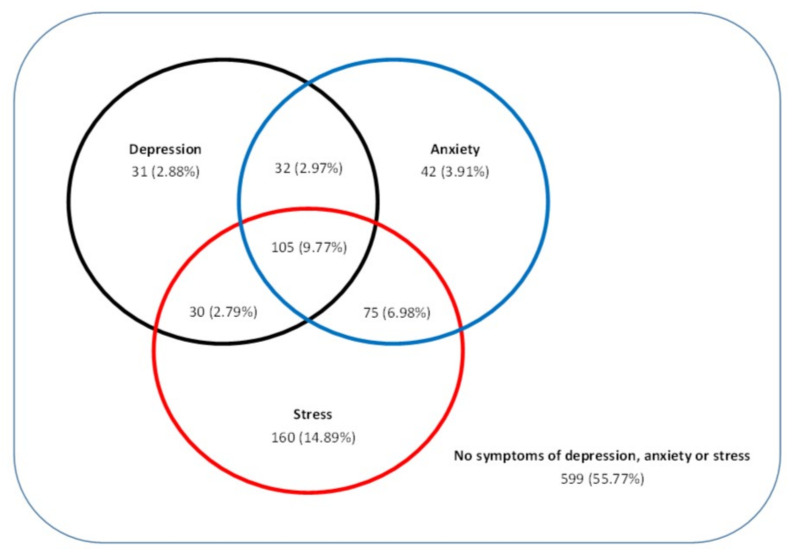
- In 1,074 undergraduate students, prevalence of symptoms above the normal range was 18.4% for depression, 23.6% for anxiety, and 34.5% for stress.
- 22.5% of participants had symptoms of two mental disorders, and 9.7% had symptoms of anxiety, depression, and stress simultaneously.
- In the final binary logistic regression, being <21, experiencing problematic Internet use, smoking, having insomnia, and low self-esteem were associated with depression, anxiety, and stress.
- Additional significant associations reported were: stress with being a woman, living with family, having a stable partner, frequent alcohol consumption, and poor diet; depression with lacking a stable partner; and anxiety with frequent alcohol consumption.
Methods
- Cross-sectional study of undergraduate students at San Jorge University (Zaragoza, Spain) during the 2018–2019 academic year.
- Sample: 1,074 students out of a total population of 1,341 who consented and completed the questionnaire.
- Main measures: DASS-21 for depression/anxiety/stress; sociodemographic and lifestyle variables including age, gender, relationship status, smoking, alcohol, physical activity, diet, Internet use, insomnia, and self-esteem.
- Analysis used descriptive statistics, bivariate tests, and binary logistic regression with backward stepwise selection; results presented were from the model including outliers.
Limitations
- The paper states that DASS-21 is a screening tool, not a formal diagnostic instrument, so additional tools would be needed for diagnosis.
- The authors note the cross-sectional design cannot establish causality, only associations.
- They say data were collected over eight months, so students may have experienced different academic conditions during collection.
- The authors state generalizability may be limited because the study was conducted in a private college in Spain.
Model-written summary. Check it against the paper before relying on it.
Integrity signals
Registry
Cites
Statistics
Figures
Verification
Claims the paper makes
3 Valid · 0 Not valid · 4 Not checked · 27 Own results and interpretations
A result the paper reports from its own data — it cites no other source for it, so there is none to check. The quote shows it is in the paper.
In the paper
“However, physical activity was not clearly associated with psychological distress in our sample.”
§ The Prevalence of Depression, Anxiety and Stress and Their Associated Factors in College Students > 4. Discussion
hedged- Asserted: passes — The authors put it forward as true.
- Checkable: passes — It can be checked against evidence.
- Load-bearing: passes — The paper’s conclusions depend on it.
- Based: passes — The paper gives a reason why it holds.
A result the paper reports from its own data — it cites no other source for it, so there is none to check. The quote shows it is in the paper.
In the paper
“It is also worth highlighting that being enrolled in a healthcare program did not increase the risk of experiencing symptoms of depression, anxiety and stress in our sample.”
§ The Prevalence of Depression, Anxiety and Stress and Their Associated Factors in College Students > 4. Discussion
plain- Asserted: passes — The authors put it forward as true.
- Checkable: passes — It can be checked against evidence.
- Load-bearing: unclear — It is unclear whether the paper’s conclusions depend on it.
- Based: passes — The paper gives a reason why it holds.
A result the paper reports from its own data — it cites no other source for it, so there is none to check. The quote shows it is in the paper.
In the paper
“We found a moderate prevalence of depression (18.4%), anxiety (23.6%) and stress (34.5%) symptoms in our study population.”
- Also stated in: § 3. Results · plain
“Of our participants, 23.6% and 34.5% had symptoms of anxiety and stress above the normal range, respectively.”
- Also stated in: § 4. Discussion · plain
“We identified a significant prevalence of symptoms of stress (34.5%), anxiety (23.6%) and depression (18.4%) in our population.”
§ The Prevalence of Depression, Anxiety and Stress and Their Associated Factors in College Students > Abstract
plain- Asserted: passes — The authors put it forward as true.
- Checkable: passes — It can be checked against evidence.
- Load-bearing: passes — The paper’s conclusions depend on it.
- Based: passes — The paper gives a reason why it holds.
- Also stated in: § 3. Results · plain
A result the paper reports from its own data — it cites no other source for it, so there is none to check. The quote shows it is in the paper.
In the paper
“In addition, being a woman, living with their family, having a stable partner, consuming alcohol regularly and following an inadequate or unhealthy diet were significantly associated with stress”
- Also stated in: § 3. Results · plain
“In both cases, women’s levels of anxiety and stress were higher than men’s (p < 0.05).”
- Also stated in: § 4. Discussion · plain
“In our sample, female students presented a higher prevalence of symptoms of stress and anxiety compared to male students.”
§ The Prevalence of Depression, Anxiety and Stress and Their Associated Factors in College Students > 3. Results
plainstates an association- Asserted: passes — The authors put it forward as true.
- Checkable: passes — It can be checked against evidence.
- Load-bearing: passes — The paper’s conclusions depend on it.
- Based: passes — The paper gives a reason why it holds.
- Also stated in: § 3. Results · plain
A result the paper reports from its own data — it cites no other source for it, so there is none to check. The quote shows it is in the paper.
In the paper
“The final models of binary logistic regression evidenced that being <21, experiencing PIU, smoking, having insomnia and reporting a low level of self-esteem were associated with depression, anxiety and stress (p < 0.05).”
- Also stated in: § 4. Discussion · plain
“As has been reported in previous studies involving similar samples, we found an association between certain habits such as tobacco and alcohol consumption [32], presenting PIU [11] and eating unhealthily [43,55] with higher levels of psychological distress.”
§ The Prevalence of Depression, Anxiety and Stress and Their Associated Factors in College Students > 3. Results
plainstates an association- Asserted: passes — The authors put it forward as true.
- Checkable: passes — It can be checked against evidence.
- Load-bearing: passes — The paper’s conclusions depend on it.
- Based: passes — The paper gives a reason why it holds.
- Also stated in: § 4. Discussion · plain
16 more claims
Create a free account to see all 34 claims and every source verdict.
- Probably not a substantial claim. 8
- The quote only partly states this claim. 6
- It may state two separate claims as one. 3
Claims other papers make about this one
Each is checked against this paper’s own text: does it say what the citing paper says it does?
The source backs part of the claim, not all of it — or backs it for a different population, condition or comparison.
In the citing paper
“which is significantly higher than college students (Ramón‐Arbués et al., 2020) and even higher than the medical student population (Quek et al., 2019).”
From Global prevalence and trend of anxiety among graduate students: A systematic review and meta‐analysis (2023) · cites this paper as Ramón‐Arbués et al., 2020
Experimental — accuracy not yet measuredThe cited source says what the claim attributes to it.
In the citing paper
“there is some literature that indicates that college students may be more likely to endorse symptoms of stress, in comparison to depression or anxiety symptoms (Ramón-Arbués et al., 2020).”
From Using network analysis to examine connections between Acceptance and Commitment Therapy (ACT) processes, internalizing symptoms, and well-being in a sample of undergraduates (2023) · cites this paper as Ramón-Arbués et al., 2020
Citations
Cites
James, S. L., Abate, D., Abate, K. H., Abay, S. M., Abbafati, C., Abbasi, N., Abbastabar, H., Abd-Allah, F., Abdela, J., Abdelalim, A., et al. (2018) · The Lancet · doi:10.1016/s0140-6736(18)32279-7 · Cited by 13,867
Vos, T., Abajobir, A. A., Abate, K. H., Abbafati, C., Abbas, K. M., Abd-Allah, F., Abdulkader, R. S., Abdulle, A. M., Abebo, T. A., Abera, S. F., et al. (2017) · The Lancet · doi:10.1016/s0140-6736(17)32154-2 · Cited by 13,220
Validation of the Insomnia Severity Index as an outcome measure for insomnia research
Bastien, C. (2001) · Sleep Medicine · doi:10.1016/s1389-9457(00)00065-4 · Cited by 8,067 · cited 1×
“The ISI total score is interpreted as follows: absence of insomnia (0–7); sub-threshold insomnia (8–14); moderate insomnia (15–21); and severe insomnia (22–28) [35].”
BackgroundThe prevalence and correlates of depression, anxiety, and stress in a sample of college students
Beiter, R., Nash, R., McCrady, M., Rhoades, D., Linscomb, M., Clarahan, M., & Sammut, S. (2015) · Journal of Affective Disorders · doi:10.1016/j.jad.2014.10.054 · Cited by 2,030
A systematic review of studies of depression prevalence in university students
Ibrahim, A. K., Kelly, S. J., Adams, C. E., & Glazebrook, C. (2013) · Journal of Psychiatric Research · doi:10.1016/j.jpsychires.2012.11.015 · Cited by 1,988
Physical Activity for Cognitive and Mental Health in Youth: A Systematic Review of Mechanisms
Lubans, D., Richards, J., Hillman, C., Faulkner, G., Beauchamp, M., Nilsson, M., Kelly, P., Smith, J., Raine, L., & Biddle, S. (2016) · Pediatrics · doi:10.1542/peds.2016-1642 · Cited by 1,548 · cited 1×
“Thus, physical activity has often been associated with psychological wellbeing through a range of mechanisms including the secretion of endogen substances such as endorphins, the activity of the regulation of stress responses through the hypothalamic-pituitary-adrenal (HPA) axis, the improvement of sleep quality and t…”
BackgroundMental health problems in college freshmen: Prevalence and academic functioning
Bruffaerts, R., Mortier, P., Kiekens, G., Auerbach, R. P., Cuijpers, P., Demyttenaere, K., Green, J. G., Nock, M. K., & Kessler, R. C. (2018) · Journal of Affective Disorders · doi:10.1016/j.jad.2017.07.044 · Cited by 1,047 · cited 1×
“Worldwide, it is estimated that 12–50% of college students present at least one diagnostic criterion for one or more mental disorders [14].”
BackgroundChange in mental health after smoking cessation: systematic review and meta-analysis
Taylor, G., McNeill, A., Girling, A., Farley, A., Lindson-Hawley, N., & Aveyard, P. (2014) · BMJ · doi:10.1136/bmj.g1151 · Cited by 1,039 · cited 1×
“First, it is likely that tobacco use and mental health problems have a common root; people who experience mental health problems may smoke to regulate feelings of low mood, stress and anxiety; smoking could also cause or exacerbate existing mental health problems [46].”
BackgroundChallenges and opportunities in global mental health: a research-to-practice perspective
Wainberg, M. L., Scorza, P., Shultz, J. M., Helpman, L., Mootz, J. J., Johnson, K. A., Neria, Y., Bradford, J.-M. E., Oquendo, M. A., & Arbuckle, M. R. (2017) · Current Psychiatry Reports · doi:10.1007/s11920-017-0780-z · Cited by 875 · cited 2×
“Yet, mental health problems are the first cause of disability and a major public health issue worldwide due to disease progression, difficulties in therapeutic management and increasing prevalence [2,3].”
BackgroundResultLai, J. S., Hiles, S., Bisquera, A., Hure, A. J., McEvoy, M., & Attia, J. (2014) · The American Journal of Clinical Nutrition · doi:10.3945/ajcn.113.069880 · Cited by 786 · cited 1×
“However, two previous systematic reviews [53,54] found limited and contradictory evidence to support the association between dietary patterns and mental health problems in adults.”
Result
Research works printed but not linked: 2
- Kumaraswamy, 2013, Academic stress, anxiety and depression among college students—A brief review, Int. Rev. Soc. Sci. Hum., 5, 135
- Balanza, 2008, Academic and psycho-socio-familiar factors associated to anxiety and depression in university students. Reliability and validity of a questionnaire, Rev. Esp. Salud Publica, 82, 189
Cited by
Items 201–300 of 617
Wang, H., Zhou, Y., Dai, P., Guan, Y., Zhong, J., Li, N., & Yu, M. (2023) · BMJ Open · doi:10.1136/bmjopen-2023-079084 · Cited by 10
“A variety of correlates, including sociodemographic factors, lifestyle behaviours, mental health and physical fight should be taken in consideration in solving adolescent anxiety symptoms.”
BackgroundChen, B., Cao, R., Pan, L., Song, D., Liao, C., & Li, Y. (2024) · Heliyon · doi:10.1016/j.heliyon.2024.e24529 · Cited by 10
Regalado, R. A. (2024) · Malaysian Journal of Learning and Instruction · doi:10.32890/mjli2024.21.1.2 · Cited by 19
Mindfulness-Based Intervention on Psychological Factors Among Students: A Meta-Analytic Study
Lal, D. M., & Kumar, S. (2023) · Journal of Rational-Emotive & Cognitive-Behavior Therapy · doi:10.1007/s10942-023-00514-1 · Cited by 13
Suicide Risk among University Students in Spain: Implications for Social Work
Aguilar, P. R., Díaz-Jiménez, R. M., & Caravaca-Sánchez, F. (2023) · Social Work · doi:10.1093/sw/swad025 · Cited by 14
Tavares, V. D. D. O., de Sousa, G. M., Schuch, F. B., Campanelli, S. E., Meyer, J. D., de Almeida, R. N., Agrícola, P. M. D., Alves, L., Gurgel, M. L., Gonçalves, K. T. D. C., et al. (2024) · Perceptual and Motor Skills · doi:10.1177/00315125241226997 · Cited by 8
“Adults are exposed to many environmental factors and chronic stressors that affect their health (Ramón-Arbu´es et al., 2020; Sharp & Theiler, 2018).”
BackgroundAssessment the mental health of university students in the Peruvian Amazon: A cross-sectional study
Peralta, J. N. P., Estrada-Araoz, E. G., León-Hancco, L. B., Avilés-Puma, B., Guizada, C. E. R., Pollito, P. A. Z., Giersch, L. V., Herrera-Osorio, A. J., & Pérez, D. D. I. (2024) · Salud Ciencia y Tecnología · doi:10.56294/saludcyt2024879 · Cited by 17
Zhang, H., & Wang, D. (2022) · Journal of Child Psychology and Psychiatry · doi:10.1111/jcpp.13660 · Cited by 13
Mehrabi, F., Amiri, P., Naseri, P., & Azizi, F. (2022) · Archives of Iranian Medicine · doi:10.34172/aim.2022.85 · Cited by 8
Identeg, F., Nigicser, I., Edlund, B., Forsberg, N., Sansone, M., Tranæus, U., & Hedelin, H. (2024) · BMC Sports Science Medicine and Rehabilitation · doi:10.1186/s13102-024-00826-4 · Cited by 8
“[21].”
Bae, M. I., Oh, J., Lee, H. S., Park, S., Kwon, I. G., & Song, Y. R. (2024) · General Hospital Psychiatry · doi:10.1016/j.genhosppsych.2024.04.001 · Cited by 8
Zhang, S., Yang, R., Cui, Y., Zhou, Y., Jiang, L., Xi, J., & Fang, J. Q. (2025) · International Journal of Mental Health Systems · doi:10.1186/s13033-025-00672-y · Cited by 11
“%) was lower than in two previous studies (19.0%, 32.6%, and 21.8%; 18.4%, 23.6%, and 34.5%, respectively) [3, 44].”
InfluentialGarcía-Pérez, L., Ruz, R. P., González, M. D. M. C., & Ubago-Jiménez, J. L. (2025) · Healthcare · doi:10.3390/healthcare13101197 · Cited by 13
“%) has been reported in Spanish universities [12,13].”
Vikoler, T., Ganesch, H., Dubravac, J., & Traut‐Mattausch, E. (2025) · Journal of Medical Internet Research · doi:10.2196/75785 · Cited by 6
“Similar to how digitalization has blurred work-life boundaries [49], students’ academic, social, and work lives are constantly blending, thereby potentially inducing a maladaptive work-life balance that contributes to heightened experiences of stress, anxiety, and depression symptoms [50,51].”
Pratummanee, W., Sangsuwan, T., Jatchavala, C., & Sirirak, T. (2025) · Frontiers in Psychiatry · doi:10.3389/fpsyt.2025.1555361 · Cited by 9
Toleuov, E., Inoue, K., Akkuzinova, K., Moldagaliyev, T., Seksenbayev, N., Jamedinova, U., Takeshita, H., Fujita, Y., Ospanova, N., & Dyussupov, A. (2025) · Healthcare · doi:10.3390/healthcare13202633 · Cited by 8
“These procedures also were based on earlier reports [34,35].”
Depression and Its Impact on Various Aspects of Life - A Narrative Review
Balatif, R., & Sukma, A. A. M. (2023) · Current Psychiatry Research and Reviews · doi:10.2174/2666082219666230518105004 · Cited by 8
Ballestar‐Tarín, M. L., Valle, V. I.-D., Mafla-España, M. A., Navarro-Martínez, R., & Cauli, O. (2024) · Diagnostics · doi:10.3390/diagnostics14040447 · Cited by 11
“Although mental health problems are highly prevalent in the general population in Spain [10], there are few studies on the mental health of Spanish university students [11].”
BackgroundKassa, M. A., Anbesaw, T., Nakie, G., Melkam, M., Azmeraw, M., Semagn, E. G., & Abate, B. B. (2024) · Frontiers in Psychiatry · doi:10.3389/fpsyt.2024.1368285 · Cited by 8
Martini, E., Semeraro, S., Lannoy, S., & Maurage, P. (2024) · Progress in Neuro-Psychopharmacology and Biological Psychiatry · doi:10.1016/j.pnpbp.2024.111138 · Cited by 7
Mammarella, S., Giusti, L., Vecchio, S. D., Salza, A., CASACCHIA, M., & Roncone, R. (2024) · Frontiers in Psychiatry · doi:10.3389/fpsyt.2024.1427316 · Cited by 8
Xing, W., Wang, X., Feng, T., Xie, J., Liu, C., Wang, X., Wang, H., Ren, L., & Liu, X. (2025) · Frontiers in Psychiatry · doi:10.3389/fpsyt.2025.1508756 · Cited by 8
“Compared to high school students, college students undergo substantial changes in their social networks and face increased social evaluation as they transition into social life (52, 53).”
The Role of Loneliness and Self-Compassion as Predictors of Depressive Symptoms in College Students
Ausie, R. K., & Poerwandari, K. (2021) · Jurnal Psikologi · doi:10.14710/jp.20.2.178-186 · Cited by 14
Denche-Zamorano, Á. M., Mendoza-Muñoz, D. M., Pastor-Cisneros, R., Adsuar, J. C., Carlos‐Vivas, J., Franco-García, J. M., Pérez‐Gómez, J., & Mendoza-Muñoz, M. (2022) · Healthcare · doi:10.3390/healthcare10081403 · Cited by 7
Awotidebe, A. W., Adamu, G. N., Ali, T. M., Mohammed, J., Lawal, I. U., & Lawan, A. (2022) · doi:10.36413/pjahs.0601.003 · Cited by 13
Symptoms of Depression, Anxiety, and Stress in Students in Albania
Pilika, A., Maksuti, P., & Simaku, A. (2022) · Open Access Macedonian Journal of Medical Sciences · doi:10.3889/oamjms.2022.9737 · Cited by 8
Tin Trung, P. H. A. M., Pham, T. T., Le, C. N., Suwanbamrung, C., Hieu Trung, L. E., Nguyễn, T. T. T., Nam, T. T., Phan, K. H., Phan, M., Dewey, R. S., et al. (2023) · Archives of the Balkan Medical Union · doi:10.31688/abmu.2023.58.2.09 · Cited by 6
Tilahun, W. M., Wolde, H. F., Gebreegziabher, Z. A., Abebaw, W. A., Simegn, M. B., & Tadesse, A. A. (2023) · PLoS ONE · doi:10.1371/journal.pone.0291137 · Cited by 11
“Behavioral factors like alcohol drinking [48,55], lack of adequate physical exercise [54,56], cigarette Smoking [48,51], and problematic internet use [51,56] were related to depression.”
BackgroundResultInfluentialGeller, K. S., Capito, A. M., & Marsh, Z. T. (2024) · MOJ Sports Medicine · doi:10.15406/mojsm.2024.07.00154 · Cited by 15
Pangngay, J. J. (2024) · Philippine Social Science Journal · doi:10.52006/main.v6i3.754 · Cited by 17
Manaf, M. R. A., Nawi, A. M., Tohit, N. M., Othman, H., Rahman, M. R. A., Yusoff, H. M., Safian, N., Ng, P. Y., Manaf, Z. A., Kadir, N. B. A., et al. (2021) · International Journal of Environmental Research and Public Health · doi:10.3390/ijerph182010903 · Cited by 14
Orrù, G., Piarulli, A., Conversano, C., Grenno, G., & Gemignani, A. (2025) · International Journal of Environmental Research and Public Health · doi:10.3390/ijerph22020132 · Cited by 15
“Similarly, other studies observed a rise in mental health issues, such as anxiety and depression, and perceived stress among university students [15].”
Association between depression, anxiety, stress, and vaping among university students in Egypt
ElBarazi, A. S. (2025) · Population Medicine · doi:10.18332/popmed/202345 · Cited by 5
Wen, L.-Y., Zhang, L., Zhu, L.-J., Song, J., Wang, A., Feng, Y., Tao, Y.-J., Zhu, Y., Jin, Y., & Chang, W. (2025) · Journal of Affective Disorders · doi:10.1016/j.jad.2025.119593 · Cited by 10
Huang, L., Jiaming, J., Huang, B., Lyu, Y., Liu, J., Lam, L. T.-M., & Yufei, C. (2025) · Frontiers in Psychology · doi:10.3389/fpsyg.2025.1532502 · Cited by 7
Depresión, ansiedad y estrés en estudiantes universitarios
Hurtado, W. A. J., Torres, N. C., Carpio, V. C., Amores, F. B. C., & Medina, F. P. E. (2023) · LATAM Revista Latinoamericana de Ciencias Sociales y Humanidades · doi:10.56712/latam.v4i3.1126 · Cited by 14
Zhao, J., Wu, Y., Yuan, J., Miao, J., Wang, X., Yu, Y., & Zang, S. (2024) · BMC Nursing · doi:10.1186/s12912-024-02537-0 · Cited by 5
Ahmad, F. M., & Sajit, D. M. (2024) · Frontiers in Public Health · doi:10.3389/fpubh.2024.1398238 · Cited by 10
Li, T., Tao, S., Jiang, T., Che, W., Zou, L., Yang, Y., Tao, F., & Wu, X. (2025) · BMC Public Health · doi:10.1186/s12889-025-21986-z · Cited by 6
“For example, a study of university students in Spain showed that the rates of mild depression, and moderate depression and above in university students were 7.5% and 10.9%, respectively [54].”
InfluentialSubirón‐Valera, A. B., Lucha-López, A. C., Rodríguez‐Roca, B., Urcola‐Pardo, F., Anguas-Gracia, A., Satústegui-Dordá, P. J., Fernández‐Rodrigo, M. T., & Antón‐Solanas, I. (2022) · Revista da Escola de Enfermagem da USP · doi:10.1590/1980-220x-reeusp-2021-0548en · Cited by 5
“Healthcare students experience a moderate level of psychological distress(8), but student nurses, in particular, experience a higher degree of anxiety in relation to their clinical placements(9).”
BackgroundSelf-citationCross-cultural adaptation of the University Student Depression Inventory for Brazil
Machado, F. P., & Soares, M. H. (2022) · Revista Brasileira de Enfermagem · doi:10.1590/0034-7167-2022-0004 · Cited by 5
Albrecht-Bisset, M., Wang, D., Martin, K., Côté, P., & Papaconstantinou, E. A. (2023) · Sleep Epidemiology · doi:10.1016/j.sleepe.2023.100062 · Cited by 12
The Pulse of Singapore: Short-Term HRV Norms
Ortega, E., Bryan, C. Y. X., & Christine, N. S. C. (2023) · Applied Psychophysiology and Biofeedback · doi:10.1007/s10484-023-09603-4 · Cited by 5
“It is constantly associated with lifestyle diseases, mental illnesses, and poor performance (Britt et al., 2005; Ramón-Arbués et al., 2020 ).”
Tang, Z., Xiang, H., Geng, Y., Liao, X., Zhang, M., & Zhang, T. (2023) · Nursing and Health Sciences · doi:10.1111/nhs.13059 · Cited by 6
Association between major dietary patterns and mental health problems among college students
Fayyazi, E., Mohammadi, E., & Aghamohammadi, V. (2024) · Journal of Education and Health Promotion · doi:10.4103/jehp.jehp_1405_23 · Cited by 7
“[1,2] According to the American Psychological Association, anxiety also manifests emotional responses including changes in sleep patterns, fatigue, irritability, and muscle tension.”
Luo, Y., Deng, Y., Wu, Y., Liu, J., Ran, H., Yuan, J., & Zhao, L. (2024) · Social Science & Medicine · doi:10.1016/j.socscimed.2024.117641 · Cited by 7
Elam, T., Efthemiou, A., & Taku, K. (2025) · Scientific Reports · doi:10.1038/s41598-025-86285-4 · Cited by 9
Depression, Self-Esteem, and Lifestyle Factors Among University Students in Singapore and Malaysia
Kwok, G. K. H., & Tam, C. L. (2022) · International Journal of Information Systems and Social Change · doi:10.4018/ijissc.314562 · Cited by 8
Multiple sequential mediation model of the effect of Social Capital Investment on Academic Stress
Torres, M. E. C., Vargas-Piérola, P. M., Pinto, C. F., & Alvarado, R. (2023) · International Journal of Educational Research Open · doi:10.1016/j.ijedro.2023.100259 · Cited by 9
Implications of dispositions for foreign language writing: The case of the Arabic–English learner
Pilotti, M., Mulhem, H. A., Alaoui, K. E., & Waked, A. (2024) · Language Teaching Research · doi:10.1177/13621688241231453 · Cited by 10
“…among college students and its association with diverse subject matters and circumstances (Asher BlackDeer et al., 2021; Haikalis et al., 2022; Ramón-Arbués et al., 2020), there seems to be a dearth of research on the contribution of anxiety to the English composition performance of Middle…”
Kobayashi, K., & Tadaka, E. (2022) · Healthcare · doi:10.3390/healthcare10101870 · Cited by 5
García-Pérez, L., Ruz, R. P., Cepero-González, M., & Ubago-Jiménez, J. L. (2025) · Behavioral Sciences · doi:10.3390/bs15040549 · Cited by 7
“…rates of depression, anxiety, and stress in Spanish universities, as well as functional impairment associated with mental disorders in Mediterranean regions (Ballester et al., 2020; Blasco et al., 2019; Ramón-Arbués et al., 2020; Rodríguez-Rodríguez et al., 2022; Tomás-Gallego et al., 2024).”
Ramos-Galarza, C., Flores, F., Argoti, T., Díaz‐Guerra, D. D., Hernández-Lugo, M. D. L. C., & Broche‐Pérez, Y. (2025) · Frontiers in Psychiatry · doi:10.3389/fpsyt.2025.1580673 · Cited by 8
Almaged, S., Zeyad, L., Sharaf, A., & Yasir, S. (2025) · Biomedical Human Kinetics · doi:10.2478/bhk-2025-0025 · Cited by 6
“Similarly, a 2020 study conducted in Spain on the prevalence of depression, anxiety, and stress among college students (Ramon-Arbues et al., 2020) showed that 28% had low physical activity levels.”
InfluentialWaclawovsky, A. J., de Oliveira, J., de Carvalho, C. P., Guimarães, M. E. A., dos Santos, E., Wolf, S., Cristi‐Montero, C., Teychenne, M. J., Stubbs, B., Deslandes, A. C., et al. (2026) · Journal of Affective Disorders · doi:10.1016/j.jad.2026.121319 · Cited by 6
Depression Among College Students: Prevalence And Associated Risk Factors
Dhillon, G. S., & Kaur, S. (2021) · Indian Journal of Mental Health(IJMH) · doi:10.30877/ijmh.9.2.2022.193-197 · Cited by 7
“review done for depression among students [22-24] our study dint show any significantly higher odds of depression among female students.”
BackgroundResultResilience in allied health undergraduate education: a scoping review
Arruzza, E. S., Chau, M. T., & van Kessel, G. (2024) · Disability and Rehabilitation · doi:10.1080/09638288.2024.2360062 · Cited by 8
“Research suggests a moderate incidence of depression, anxiety, and especially stress among college students [9].”
BackgroundAhmed, E., Methun, M. I. H., & Siam, M. R. (2025) · Journal of Affective Disorders · doi:10.1016/j.jad.2025.119771 · Cited by 4
Dresen, V., Sigmund, L., Staggl, S., Holzner, B., Rumpold, G., Fischer-Jbali, L. R., Canazei, M., & Weiss, E. M. (2025) · Nursing Reports · doi:10.3390/nursrep15080286 · Cited by 7
Trager, B. M., Morgan, R. M., Boyle, S. C., & LaBrie, J. W. (2022) · Addictive Behaviors · doi:10.1016/j.addbeh.2022.107502 · Cited by 4
Exercise, Depression, and Anxiety in Young People: A Cross-Sectional Survey
Huo, M., & Yang, Z. (2023) · International Journal of Mental Health Promotion · doi:10.32604/ijmhp.2023.023406 · Cited by 7
Bronfman, K., & Chao, A. M. (2023) · Journal of Psychosocial Nursing and Mental Health Services · doi:10.3928/02793695-20230421-01 · Cited by 6
Woo, J., Whyne, E. Z., Wright, J. I., Lehrer, H. M., & Steinhardt, M. A. (2023) · Health Behavior Research · doi:10.4148/2572-1836.1183 · Cited by 5
“Additionally, intolerance of uncertainty ( Nekić & Mamić , 2023), alcohol consumption (Ramón-Arbués et al., 2020), academic performance, pressure to succeed, finances, and family and friend relationships (Beiter et al., 2015) are all associated with anxiety and likely influence students’ college…”
BackgroundEstado emocional de los estudiantes universitarios al retorno a las clases presenciales
de Dios, U. N. A. D. M., & Estrada-Araoz, E. G. (2023) · Gaceta Médica de Caracas · doi:10.47307/gmc.2023.131.2.11 · Cited by 6
Fricker, F., Barbotte, M.-V., Pallot, G., Radoua, N., Sorci, G., Heitz, M., Brison, G., Salès-Wuillemin, É., & Connat, J. (2023) · Comprehensive Psychoneuroendocrinology · doi:10.1016/j.cpnec.2023.100220 · Cited by 9
“Stress also affects students who are more and more faced to organizational difficulties and apprehension of exams [2 – 4].”
BackgroundDigital students go to campus: did stress and anxiety affect the intention for organization?
Panduwiyasa, H., & Wibowo, F. S. (2024) · Journal of Education and Learning (EduLearn) · doi:10.11591/edulearn.v18i3.21744 · Cited by 6
“The fear of judgment or the perception of inadequate social skills may act as deterrents, hindering students from fully immersing themselves in the vibrant social fabric of campus life [42].”
BackgroundBurlaka, J., Johnson, R. M., Marsack‐Topolewski, C. N., Hughesdon, K., Owczarzak, J., Serdiuk, O., Богданов, Р. І., & Burlaka, V. (2024) · International Journal of Environmental Research and Public Health · doi:10.3390/ijerph21050586 · Cited by 6
“The prevalence of depression among university students varies around the world; it is estimated to be 24% in low-and middle-income countries [1], 41% in the U.S. [2], 23.8% in China [3], 18.4% in Spain [4], and varies from 15 to 32% in Ukraine [5–7].”
BackgroundInfluentialAlves, B. D. O., Lourenço, B. G., de Assis, B. B., Toledo, L. V., Chaves, R. L., Chaves, É. D. C. L., Chianca, T. C. M., & Moura, C. D. C. (2024) · Revista Brasileira de Enfermagem · doi:10.1590/0034-7167-2024-0040 · Cited by 16
Hu, B., Peng, Y., & Wu, Y. (2025) · Journal of Environmental Psychology · doi:10.1016/j.jenvp.2025.102557 · Cited by 7
Thakur, M. K., Philip, S. T., Desai, K. R., & Thakur, K. (2025) · Stress and Health · doi:10.1002/smi.70034 · Cited by 5
Analysis of the psychosocial profile of pre-service teachers
García‐Martínez, I., Augusto-Landa, J. M., Navío, E. P., & León, S. P. (2022) · Educación XX1 · doi:10.5944/educxx1.30236 · Cited by 16
Lapeyre-Rivera, A., Javier-Murillo, N., Perea-Flórez, F., Gamonal, B., Velásquez‐Rimachi, V., Alva‐Díaz, C., Ahmed, O., & Chung, S. (2022) · Frontiers in Psychiatry · doi:10.3389/fpsyt.2022.876379 · Cited by 8
“This translates into higher rates of stress and anxiety compared to those in the general population (8).”
ResultBalderas-Vazquez, C. L., Bernal-Morales, B., Garcia-Montalvo, E. A., Vega, L., Herrera-Huerta, E. V., Rodríguez-Landa, J. F., Velázquez-Hernández, J. F., Xotlanihua-Gervacio, M. D. C., & Valenzuela, O. L. (2022) · Frontiers in Psychology · doi:10.3389/fpsyg.2021.666347 · Cited by 4
Alotaibi, N. M., Alenezi, L., Ahmad, F. M., Almutairi, W., Alshammari, D., Alenezi, M., & Alotaibi, M. (2025) · Scientific Reports · doi:10.1038/s41598-025-01633-8 · Cited by 5
Jiang, B., Zhang, J., Yang, M., Zhang, X., & Yang, H. (2025) · World Journal of Psychiatry · doi:10.5498/wjp.v15.i6.106451 · Cited by 10
Lew, T., Dubale, N. M., Doose, E., Adenuga, A., Bates, H. E., & West, S. (2025) · JMIR Formative Research · doi:10.2196/66131 · Cited by 8
Vagiri, R. V., Sukati, V. N., Mphasha, M. H., Mayimele, N. N., Bangalee, V., Grootboom, W., Makhele, L., & Padayachee, N. (2025) · Clinical Optometry · doi:10.2147/opto.s523423 · Cited by 3
“65 Educational institutions should prioritize the development of supportive environments that promote mental well-being, enhance coping strategies, and reduce stigma associated with seeking help.”
Vagiri, R. V., Mohlabe, K., Mailula, L., Nhubunga, F., Maepa, M., Mphasha, M. H., Mayimele, N. N., Bangalee, V., Grootboom, W., Makhele, L., et al. (2025) · Acta Psychologica · doi:10.1016/j.actpsy.2025.105323 · Cited by 6
An Exploratory Study of Chatbot-Based Mindfulness for Mental Health Support
Wang, Y., & Farb, N. A. S. (2025) · Mindfulness · doi:10.1007/s12671-025-02685-7 · Cited by 7
“The prevalence of major depression and anxiety disorders among students has surged, surpassing rates observed in previous generations (Alshehri et al., 2023; Ramón-Arbués et al., 2020).”
Ye, X., Yang, W., Cheng, T., & Gao, H. (2025) · Behavioral Sciences · doi:10.3390/bs15111486 · Cited by 4
“Ramón-Arbués et al. (2020) reported depressive symptoms in 18.4% of Spanish college students and anxiety symptoms in 23.6%.”
InfluentialLiu, C., Yuan, Y., Zhu, J., Xiong, J., Xiao, Z., Sun, H., Jiang, J., Ma, Y., & Lu, J. (2025) · BMC Public Health · doi:10.1186/s12889-025-25675-9 · Cited by 4
“Many of these students have reported psychological health issues, such as depression [11], anxiety [12], stress [13], and loneliness [14].”
Li, T., Dong, Y., Jiao, Q., Chu, L., Qiu, J., Fu, Y., Gao, Y., Ma, Z., Sun, X., & Zhang, Y. (2026) · BMC Psychiatry · doi:10.1186/s12888-026-07799-3 · Cited by 3
“The study used the DASS-21 to assess clinical symptoms of the recruited adolescents with MDD [23].”
Castillo, M. G., Gonzalez, M. F. M., Jasso, A. A. E., Álvarez-Lozada, L. A., Pérez, A. L. T., Garza, A. Q., Guzmán-Avilán, R. I., Escamilla-Magaña, D., García, R. B., Sosa, M. L. P., et al. (2026) · International Journal of Environmental Research and Public Health · doi:10.3390/ijerph23010130 · Cited by 5
Multilevel mental health determinants among college students: A social ecological scoping review
Roy, S., Biswas, A. K., & Sharma, M. (2026) · Mental Health & Prevention · doi:10.1016/j.mhp.2026.200500 · Cited by 7
Pandey, D., Lelisho, M. E., Hasan, A., Rajput, N., Kumar, B., George, A. S., & Shahul, A. (2023) · Advances in marketing, customer relationship management, and e-services book series · doi:10.4018/978-1-6684-8150-9.ch010 · Cited by 3
Drenjak, J. L., Užičanin, E., & Zenić, N. (2023) · Polish Journal of Sport and Tourism · doi:10.2478/pjst-2023-0009 · Cited by 7
“…the previously specified negative effects of lockdown), and (ii) in college/university students (knowing the fact that they are older than 18 and therefore may purchase alco - hol legally, while this period of life is highly stressful and often accompanied with high alcohol consumption) [17, 18].”
BackgroundSreekanth, P., Poojitha, M., Kumar, G. B., Ugandar, D. R. E., Setlem, V. S. K., Pottipadu, D. V., Molugulu, N., & Chinnappan, S. (2023) · doi:10.53555/jptcp.v30i3.2508 · Cited by 2
Wang, T., Yin, J., Hu, C., Tang, W., Che, X., & Liu, Y. (2023) · Saudi Medical Journal · doi:10.15537/smj.2023.44.11.20230420 · Cited by 5
Perez, C. F., Montagud‐Romero, S., & Blanco-Gandía, M. C. (2024) · International Journal of Developmental and Educational Psychology Revista INFAD de psicología · doi:10.17060/ijodaep.2023.n2.v1.2584 · Cited by 5
Gonzalo Labarca, T., Henríquez‐Beltrán, M., Sanhueza, R., Burgos, M., Nova‐Lamperti, E., Fernandez-Bussy, I., & Castillo, P. R. (2024) · Journal of Clinical Sleep Medicine · doi:10.5664/jcsm.11032 · Cited by 2
Gyorda, J. A., Lekkas, D., & Jacobson, N. C. (2024) · Digital Biomarkers · doi:10.1159/000540546 · Cited by 10
“These stressors may render college students especially susceptible to heightened anxiety levels; for instance, recent research suggests that roughly a quarter of college students experience mild-to-severe anxiety symptoms [5].”
BackgroundAlanzi, T. M., Almumen, M., Almogrin, M., Asiri, A., Alhalal, R., Almuslem, Z., Alharbi, M., AlShammari, M. M., Altammar, J., Almarhoun, A., et al. (2024) · Cureus · doi:10.7759/cureus.69270 · Cited by 5
“This symptom was highlighted in studies [36,37], which found that students experiencing significant mental health issues often had disordered eating patterns and unexplained weight changes.”
BackgroundRweyemamu, L. P., Mbotwa, C. H., Massawe, J. I., & Mramba, R. P. (2024) · Discover Mental Health · doi:10.1007/s44192-024-00098-x · Cited by 11
Köksal, B., & Topkaya, N. (2025) · Current Psychology · doi:10.1007/s12144-025-07905-w · Cited by 6
Ali, M. H., Hossain, S. B., Mahmud, M. A., Rahman, K. M., Mridha, M. S., Hassan, M. S., Rahman, S. M. M., & Karim, M. R. (2025) · Journal of Affective Disorders Reports · doi:10.1016/j.jadr.2025.100936 · Cited by 5
Xian, X., Wang, R., Yao, W., Shi, Q., Zeng, L., & Niu, T. (2025) · Chronobiology International · doi:10.1080/07420528.2025.2571193 · Cited by 3
“A cross-sectional study of 1,074 Spanish college students found that the prevalence of depression was as high as 18.4% (Ramón-Arbués et al. 2020).”
InfluentialPerceived Depression, Anxiety, and Stress Outcomes Among Students of Early Entrance College Programs
Singh, S. P., Menon, S., Singh, S., Nadeau, A., & Jiao, J. (2021) · Cureus · doi:10.7759/cureus.20360 · Cited by 6
“This viewpoint also assumed that an eligible student was one that took on an increased load of demands put on them in early college and accelerated programs than that of their average peers [11-12].”
BackgroundWitt, J. K. (2022) · Medical Decision Making · doi:10.1177/0272989x221085489 · Cited by 3
“chosen given the relevance of these diseases for collegeaged students.(18) The first 50 students completed the study in May 2021.”
BackgroundAtoum, M., Al-Rawashdeh, S. Y., Al-Hawamdih, S., Atoum, H., Atoum, D., Atoum, S. A., & Almwajeh, A. (2022) · Electronic Journal of General Medicine · doi:10.29333/ejgm/12231 · Cited by 3
Expanding High School Counseling in a Social Media World: Improving Student and Community Well-Being
Teriba, A. A., & Dawson, D. A. (2022) · Psychological Reports · doi:10.1177/00332941221129138 · Cited by 14
“Many students end up struggling with anxiety and depression when they fi nish high school, with those entering college facing greater academic demands while managing mental health dif fi culties (Ghandour et al., 2019; Ramón-Arbu´es et al., 2020).”
Background
Metadata
- Authors
- Ramón-Arbués, E., Gea-Caballero, V., Granada-López, J. M., Juárez-Vela, R., Pellicer-García, B., & Antón-Solanas, I.
- Affiliations
- Faculty of Health Sciences, Campus Universitario Villanueva de Gállego, Universidad San Jorge, 50830 Villanueva de Gállego, Zaragoza, Spain
- Universitat de València (ES)
- Universidad de Zaragoza (ES)
- Faculty of Health Sciences, La Rioja University, 26006 Logroño, Spain
- Servicio Aragonés de Salud (ES)
- Department of Physiatry and Nursing, Faculty of Health Sciences, University of Zaragoza, 50009 Zaragoza, Spain
- Corresponding author
- Gea-Caballero, Vicente
- Granada-López, José Manuel
- Venue
- International Journal of Environmental Research and Public Health
- Publisher
- MDPI AG
- Published
- 2020-09-24
- Volume
- 17
- Issue
- 19
- Pages
- 7001
- ISSN
- 1660-4601 (ISSN-L)
- PMC
- PMC7579351
- OpenAlex
- W3088546900
- Semantic Scholar
- 259f0a5e1460c4efcaa63718e8c4330369081b27
- Cited by
- 637
- References
- 69
- Citations by year
- 2026: 85 · 2025: 150 · 2024: 151 · 2023: 134 · 2022: 86 · 2021: 29 · 2020: 2
- FWCI
- 94.54
- Type
- journal article
- Language
- en
- Open access
- gold
- doi.org
- Licence
- Locations
- International Journal of Environmental Research and Public Health (publishedVersion, cc-by)
- PubMed Central (publishedVersion, cc-by)
- PubMed (publishedVersion)
- Zaguan (University of Zaragoza Repository) (submittedVersion, cc-by)
- RePEc: Research Papers in Economics (submittedVersion)
- DOAJ (DOAJ: Directory of Open Access Journals) (submittedVersion)
- RIUR (Universidad de La Rioja) (submittedVersion, other-oa)
- Topics
- Social Sciences › Psychology › Developmental and Educational Psychology › Student Stress and Coping
- Health Sciences › Medicine › Psychiatry and Mental health › Mental Health Treatment and Access
- Health Sciences › Health Professions › General Health Professions › Healthcare professionals’ stress and burnout
- Keywords
- depression, anxiety, stress, university students, psychological distress, prevalence, problematic internet use, smoking, insomnia, self-esteem, alcohol consumption, dietary habits, gender differences, mental health promotion
- MeSH terms
- Anxiety, Cross-Sectional Studies, Depression, Female, Humans, Male, Stress, Psychological, Students, Universities, Prevalence, Young Adult
About these checks
Registry, retraction, Cites and statistics results are computed, not judged, with one exception: a printed reference that no index lists is read once by a model before it counts as a citation error. Claims are extracted by a model and kept only when their quote appears verbatim in the text; each cited source is then checked, with a model’s help, for whether it says what the claim relies on. Those verdicts can be wrong — read the claim’s quote and the cited source before relying on one.
The claim verdicts this report counts are experimental: their accuracy is not yet measured.
A language model drew the claims from the paper on 2026-10-10, under version 3 of the claim definition (model deepseek-v4.1-flash, prompt extract-v3).
A second model labelled each claim on 2026-10-10 (model jev-1.13-20260917, definition revision gold-guideline-v0.2).
Statistics and arithmetic are recomputed, not judged.
Confidence bands are shown only for fields calibrated on our annotated test set. None is calibrated yet, so no band is shown.
What counts as a claim ›How we measure confidence ›How we check this ›
Are you an author, or do you see a problem with this page? Request a review
Data sources
Bibliographic data: Semantic Scholar, OpenAlex, Crossref.
Contains information from the Semantic Scholar Academic Graph Datasets, made available under the ODC Attribution License (ODC-BY 1.0).
Semantic Scholar’s data is described in: Kinney, R., et al. (2023). The Semantic Scholar Open Data Platform. arXiv:2301.10140.
