

Exploring the Impact of COVID-19 on Mental Health Outcomes in Children and Adolescents: A Systematic Review
Open accessThe DOI matches its Crossref record; 70 of the 71 references it cites were found in a registry or an index; 38 of the 147 sources its claims cite were checked for support.
Abstract
The psychological impact of the COVID-19 pandemic has been widely discussed during the past few months, with scholars expressing concern about its potential debilitating consequences on youth mental health. Hence, this research aimed to provide a systematic review of the evidence on the COVID-19 pandemic’s impact on youth mental health. We conducted a mixed methods integrated review to identify any empirical study that focused on young people ≤ 18 years old. Eight databases were systematically searched to identify studies of any type of research design. The selection procedure followed the Preferred Reporting Items for Systematic Review and Meta-Analyses (PRISMA) guidelines. The protocol of this systematic review was registered with PROSPERO (protocol ID: CRD4202019375). Twelve studies deemed eligible for data extraction (n = 12,262). The findings show that COVID-19 has an impact on youth mental health and is particularly associated with depression and anxiety in adolescent cohorts. The quality appraisal indicated that all studies were of low or moderate methodological quality. The COVID-19 pandemic is affecting young people’s lives, and thus generating robust research evidence to inform policy decisions is essential. Hence, the methodological quality of future research should be drastically improved.
Overview
CoChat Summary
TL;DR
This systematic review synthesizes 12 studies (n = 12,262) on COVID-19’s impact on youth mental health and concludes that the pandemic affected young people’s mental health, particularly with depression and anxiety in adolescent cohorts. The included evidence was methodologically limited, with all studies rated low or moderate quality.
Key findings
- Across three studies reporting depression prevalence in young people, rates ranged from 22.6% to 43.7%; across two studies reporting anxiety, rates were 18.9% (SCARED) and 37.4% (GAD-7).
- COVID-19-related emotional reactions were present in children and adolescents, with reported rates ranging from 22% to 62.2% across three studies.
- COVID-19-related worry, fear, and stress predicted mental health outcomes including depression, anxiety, OCD symptoms, somatic symptoms, and intensified behaviour problems.
- Quality appraisal rated most included studies as low (n = 3) or moderate (n = 9) methodological quality.
Methods
- Mixed methods integrated systematic review following PRISMA, registered with PROSPERO (CRD4202019375), including quantitative, qualitative, and mixed methods designs.
- Eight databases were searched on 21 June 2020 with no time limit; inclusion required English, peer-reviewed empirical research, human participants aged ≤18 years, and COVID-19 specificity.
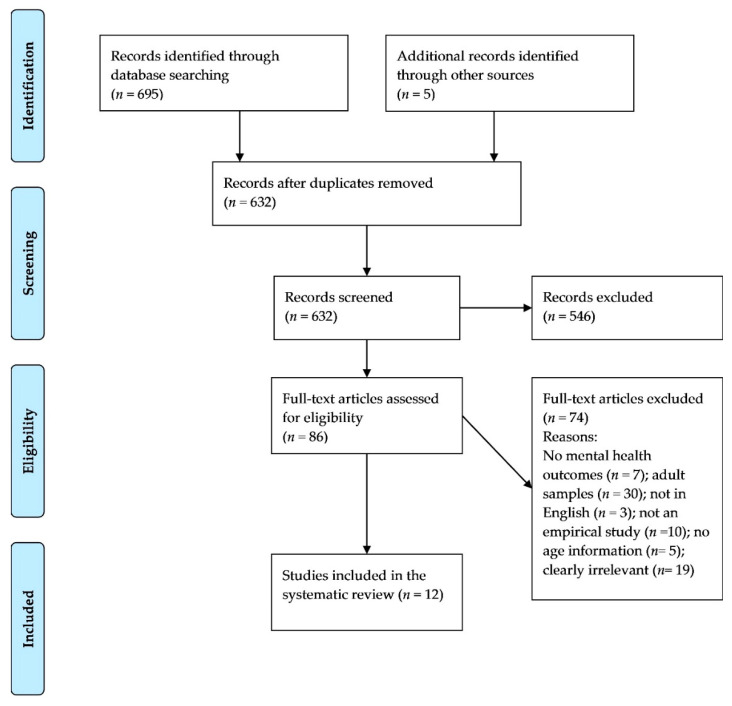
- From 700 records imported, 632 remained after duplicates, 74 underwent full-text review, and 12 studies were included (n = 12,262); findings were synthesized narratively because of heterogeneity, with quality assessed using JBI and MMAT tools.
Limitations
- Stated: included studies had low to moderate methodological quality regarding sampling, unclear validity of measurement, and statistical analysis; studies were excluded due to lacking or unclear information; only English-language studies were included; and few studies were available because COVID-19 was only declared a pandemic in March 2020.
- Evident from the text: five studies targeted the general population and included very small youth subgroups (n = 17–34), and one university study included n = 1118 young people <18 years but reported only descriptive statistics.
- Evident from the text: one included study did not conduct separate analyses for its <18-year subgroup, and heterogeneity prevented a meta-analytical synthesis.
Model-written summary. Check it against the paper before relying on it.
Integrity signals
Registry
Cites
Statistics
Figures
Verification
Claims the paper makes
27 Valid · 2 Not valid · 78 Not checked · 85 Own results and interpretations
Some cited sources support this claim and some don’t — read each source’s verdict below.
In the paper
“No conclusions can be drawn from the studies with very small sample sizes of young people [37,40,43,44].”
§ Exploring the Impact of COVID-19 on Mental Health Outcomes in Children and Adolescents: A Systematic Review > 4. Discussion > 4.2. Age and Gender Differences
What the sources say
- Disputedcites [37] Liu X. Luo W.T. Li Y. Li C.N. Hong Z.S. Chen H.L. Xiao F. Xia J.Y. Psychological status and behavior changes of the public during the COVID-19 epidemic in China Infect. Dis. Poverty 2020 9 58 10.1186/s40249-020-00678-3 32471513 PMC7256340 sourceExperimental — accuracy not yet measured
The paper does not say that its sample of young people was too small to draw conclusions. In “Anxiety by age groups” (page unavailable), it reports findings for respondents aged 19–39; in the Conclusions (page unavailable), it draws the qualified conclusion that this group appears likely to experience psychological stress during an epidemic. (LLM, conf=0.86)
Checked by a reasoning model — may be wrong.
- Partly supportedcites [40] Casanova M. Pagani Bagliacca E. Silva M. Patriarca C. Veneroni L. Clerici C.A. Spreafico F. Luksch R. Terenziani M. Meazza C. How young patients with cancer perceive the COVID-19 (coronavirus) epidemic in Milan, Italy: Is there room for other fears? Pediatr. Blood Cancer 2020 67 e28318 10.1002/pbc.28318 32240567 sourceExperimental — accuracy not yet measured
The Methods (p. 2) report three small groups of 25 young people, and the Discussion (p. 2) says the survey was not intended as an epidemiological study. But the Results (p. 2) explicitly report findings, so the source does not support the categorical assertion that no conclusions can be drawn. (LLM, conf=0.85)
- Not checked yetcites [43] Trzebiński J. Cabański M. Czarnecka J.Z. Reaction to the COVID-19 Pandemic: The Influence of Meaning in Life, Life Satisfaction, and Assumptions on World Orderliness and Positivity J. Loss Trauma. 2020 25 544 557 10.1080/15325024.2020.1765098 source
- Supportedcites [44] Tian F. Li H. Tian S. Yang J. Shao J. Tian C. Psychological symptoms of ordinary Chinese citizens based on SCL-90 during the level I emergency response to COVID-19 Psychiatry Res. 2020 288 112992 10.1016/j.psychres.2020.112992 32302816 PMC7151383 source
Table 3 (Results, ANOVA of different groups; page unavailable) shows that this study included only 22 participants under 18, supporting its citation as an example of a study with a very small sample of minors. The statement that no conclusions can be drawn is the citing authors’ assessment, not a conclusion attributed to Tian et al. (LLM, conf=0.86)
plain- Asserted: passes — The authors put it forward as true.
- Checkable: passes — It can be checked against evidence.
- Load-bearing: unclear — It is unclear whether the paper’s conclusions depend on it.
- Based: passes — The paper gives a reason why it holds.
- Disputed
The sources with a verdict support this claim; the rest weren’t checked yet, have no full text we could read, or their verdicts aren’t rated yet.
In the paper
“With social distancing measures and movement restrictions come serious risks of loneliness.”
§ Exploring the Impact of COVID-19 on Mental Health Outcomes in Children and Adolescents: A Systematic Review > 1. Introduction > 1.3. The Present Study
What the sources say
- Not checked yetcites [21] Caspi A. Harrington H.L. Moffitt T.E. Milne B.J. Poulton R. Socially isolated children 20 years later: Risk of cardiovascular disease Arch. Pediatr. Adolesc. Med. 2006 160 805 811 10.1001/archpedi.160.8.805 16894079 source
- Supportedcites [23] Loades M.E. Chatburn E. Higson-Sweeney N. Reynolds S. Shafran R. Brigden A. Linney C. McManus M.N. Borwick C. Crawley E. Rapid Systematic Review: The Impact of Social Isolation and Loneliness on the Mental Health of Children and Adolescents in the Context of COVID-19 J. Am. Acad. Child. Adolesc. Psychiatry 2020 59 1218 1239 10.1016/j.jaac.2020.05.009 32504808 PMC7267797 source
The paper states that social distancing and school closures are likely to increase loneliness in children and adolescents whose usual social contacts are curtailed (Abstract > Conclusion; page not provided). The Discussion also describes loneliness as an unintended consequence of disease-containment measures. (LLM, conf=0.91)
plainstates a cause- Asserted: passes — The authors put it forward as true.
- Checkable: passes — It can be checked against evidence.
- Load-bearing: passes — The paper’s conclusions depend on it.
- Based: passes — The paper gives a reason why it holds.
The sources with a verdict support this claim; the rest weren’t checked yet, have no full text we could read, or their verdicts aren’t rated yet.
In the paper
“The prevalence of depression in young people across the three studies that reported such information ranged from 22.6% to 43.7% [36,37,39].”
§ Exploring the Impact of COVID-19 on Mental Health Outcomes in Children and Adolescents: A Systematic Review > 3. Results > 3.2. Mental Health Outcomes
What the sources say
- Supportedcites [36] Zhou S.J. Zhang L.G. Wang L.L. Guo Z.C. Wang J.Q. Chen J.C. Liu M. Chen X. Chen J.X. Prevalence and socio-demographic correlates of psychological health problems in Chinese adolescents during the outbreak of COVID-19 Eur. Child. Adolesc. Psychiatry 2020 29 749 758 10.1007/s00787-020-01541-4 32363492 PMC7196181 source
The Discussion reports depressive symptoms in 43.7% of Chinese middle and high school students, supporting this paper's contribution to the upper end of the range. The 22.6% lower end is attributed to the other studies cited in the same sentence. Page numbers are not supplied in our copy. (LLM, conf=0.92)
- Supportedcites [37] Liu X. Luo W.T. Li Y. Li C.N. Hong Z.S. Chen H.L. Xiao F. Xia J.Y. Psychological status and behavior changes of the public during the COVID-19 epidemic in China Infect. Dis. Poverty 2020 9 58 10.1186/s40249-020-00678-3 32471513 PMC7256340 source
Table 4 (rendered under Conclusions; page unavailable) reports depression in 102 of 321 respondents aged 19–39, a prevalence of 31.8%, within the stated range. The 22.6% and 43.7% endpoints are attributed to the three studies collectively, not necessarily to this source alone. (LLM, conf=0.85)
- Not checked yetcites [39] Xie X. Xue Q. Zhou Y. Zhu K. Liu Q. Zhang J. Song R. Mental Health Status among Children in Home Confinement during the Coronavirus Disease 2019 Outbreak in Hubei Province, China JAMA Pediatr. 2020 174 898 900 10.1001/jamapediatrics.2020.1619 32329784 PMC7182958 source
plain- Asserted: passes — The authors put it forward as true.
- Checkable: passes — It can be checked against evidence.
- Load-bearing: unclear — It is unclear whether the paper’s conclusions depend on it.
- Based: passes — The paper gives a reason why it holds.
- Supported
Every source the paper cites for this claim was checked and supports it.
In the paper
“One study showed that as age increases, the intensity of behaviour problems induced by the pandemic in children with ASD decreases [34].”
§ Exploring the Impact of COVID-19 on Mental Health Outcomes in Children and Adolescents: A Systematic Review > 3. Results > 3.4. Age Differences
What the sources say
- Supportedcites [34] Colizzi M. Sironi E. Antonini F. Ciceri M.L. Bovo C. Zoccante L. Psychosocial and behavioral impact of COVID-19 in autism spectrum disorder: An online parent survey Brain Sci. 2020 10 341 10.3390/brainsci10060341 PMC7349059 32503172 source
The Results (section 3.3) report that increasing age was associated with a lower likelihood of more intense behavior problems following the COVID-19 outbreak. The Discussion (section 4) likewise suggests that older age may protect against emergency-induced intensification. This is an association in a parent survey, not evidence that an individual child’s problems diminish as they age. (LLM, conf=0.88)
plainstates a cause- Asserted: passes — The authors put it forward as true.
- Checkable: passes — It can be checked against evidence.
- Load-bearing: unclear — It is unclear whether the paper’s conclusions depend on it.
- Based: passes — The paper gives a reason why it holds.
- Supported
The sources with a verdict support this claim; the rest weren’t checked yet, have no full text we could read, or their verdicts aren’t rated yet.
In the paper
“Four studies reported mean scores of anxiety using Likert-point scales, with higher scores indicating higher levels of anxiety [35,38,42,43]”
§ Exploring the Impact of COVID-19 on Mental Health Outcomes in Children and Adolescents: A Systematic Review > 3. Results > 3.2. Mental Health Outcomes
What the sources say
- Supportedcites [35] Liu S. Liu Y. Liu Y. Somatic symptoms and concern regarding COVID-19 among Chinese college and primary school students: A cross-sectional survey Psychiatry Res. 2020 289 113070 10.1016/j.psychres.2020.113070 32422501 PMC7227526 source
The Method describes the Somatic Self-rating Scale as using items scored from 1 to 4, including anxiety symptoms. Results Table 2 reports mean anxiety scores for college and primary school students. This supports the paper’s inclusion as one of the four studies; the citation does not require this paper alone to establish the count of four. (LLM, conf=0.90)
- Not checked yetcites [38] Yang H. Bin P. He A.J. Opinions from the epicenter: An online survey of university students in Wuhan amidst the COVID-19 outbreak11 J. Chin. Gov. 2020 5 234 248 10.1080/23812346.2020.1745411 source
- Supportedcites [42] Oosterhoff B. Palmer C.A. Wilson J. Shook N. Adolescents’ motivations to engage in social distancing during the COVID-19 pandemic: Associations with mental and social health J. Adolesc. Health 2020 67 179 185 10.1016/j.jadohealth.2020.05.004 32487491 PMC7205689 source
The Anxiety symptoms section states that adolescents rated anxiety items on a 5-point scale and that mean scores were calculated, with higher values indicating greater anxiety symptoms. This confirms the measurement description for this cited study; the statement that four studies did so also depends on the other three citations. (LLM, conf=0.94)
- Not checked yetcites [43] Trzebiński J. Cabański M. Czarnecka J.Z. Reaction to the COVID-19 Pandemic: The Influence of Meaning in Life, Life Satisfaction, and Assumptions on World Orderliness and Positivity J. Loss Trauma. 2020 25 544 557 10.1080/15325024.2020.1765098 source
plain- Asserted: passes — The authors put it forward as true.
- Checkable: passes — It can be checked against evidence.
- Load-bearing: unclear — It is unclear whether the paper’s conclusions depend on it.
- Based: passes — The paper gives a reason why it holds.
- Supported
96 more claims · 17 with their cited sources checked
Create a free account to see all 192 claims and to verify the 109 references still open.
- Probably not a substantial claim. 73
- It may state two separate claims as one. 25
- The quote only partly states this claim. 1
Claims other papers make about this one
Each is checked against this paper’s own text: does it say what the citing paper says it does?
The cited source says what the claim attributes to it.
In the citing paper
“Systematic reviews of studies from early in the pandemic also found similar results of pandemic impacts on child and adolescent depression and anxiety symptoms [22,23,24].”
From Loneliness and Well-Being in Children and Adolescents during the COVID-19 Pandemic: A Systematic Review (2023) · cites this paper as [22]
In the citing paper
“Nearchou et al. [22] noted potential age-related differences in the pandemic’s impact. Older children may be impacted directly by school closures, whereas younger children may be impacted by pandemic-related stress placed on caregivers.”
From Loneliness and Well-Being in Children and Adolescents during the COVID-19 Pandemic: A Systematic Review (2023) · cites this paper as [22]
In the citing paper
“Parental stress caused by the pandemic-related factors may have a more significant impact on younger children, which can result in behavioural problems and can have a substantial effect on children with developmental disabilities [20].”
From A Qualitative Study of Child and Adolescent Mental Health during the COVID-19 Pandemic in Ireland (2021) · cites this paper as [20]
Self-check
Percentages, sums and reported differences re-computed from the paper’s own numbers.
Each contradiction between two passages listed here was confirmed by an independent check.
Rated minor: it would not touch a result — a value no result rests on, a p-value that stays on the same side of the significance level, or a conflict that is clerical, resolved elsewhere in the paper, or outside its own findings.
In the paper
§ Exploring the Impact of COVID-19 on Mental Health Outcomes in Children and Adolescents: A Systematic Review > 2. Methods > 2.3. Screening and Data Extraction
“Disagreements after full text review were resolved through discussion, and eight studies were included in the final stage of data extraction.”
§ Exploring the Impact of COVID-19 on Mental Health Outcomes in Children and Adolescents: A Systematic Review > 3. Results > 3.1. Methodological Characteristics of the Studies
“Of the 12 studies that were included in this systematic review, seven were conducted in China, two in Italy, one in Poland, one in Turkey and one in the United States.”
Citations
Cites
Preferred Reporting Items for Systematic Reviews and Meta-Analyses: the PRISMA statement
Moher, D., Liberati, A., Tetzlaff, J., Altman, D. G., & for the PRISMA Group (2009) · BMJ · doi:10.1136/bmj.b2535 · Cited by 83,823
Preferred Reporting Items for Systematic Reviews and Meta-Analyses: The PRISMA Statement
Moher, D., Liberati, A., Tetzlaff, J., Altman, D. G., & The PRISMA Group (2009) · PLoS Medicine · doi:10.1371/journal.pmed.1000097 · Cited by 64,042 · cited 1×
“The present systematic review was conducted in accordance with the Preferred Reporting Items for Systematic Reviews and Meta-Analysis (PRISMA) guidelines [28].”
Kessler, R. C., Berglund, P., Demler, O., Jin, R., Merikangas, K. R., & Walters, E. E. (2005) · Archives of General Psychiatry · doi:10.1001/archpsyc.62.6.593 · Cited by 20,391 · cited 1×
“It has been well established in the literature that children, and especially adolescents, are susceptible to experiencing mental health problems, while most mental disorders have their onset in this age period [51,52].”
BackgroundMerikangas, K. R., He, J.-P., Burstein, M., Swanson, S. A., Avenevoli, S., Cui, L., Benjet, C., Georgiades, K., & Swendsen, J. (2010) · Journal of the American Academy of Child & Adolescent Psychiatry · doi:10.1016/j.jaac.2010.05.017 · Cited by 6,278
The Mixed Methods Appraisal Tool (MMAT) version 2018 for information professionals and researchers
Hong, Q. N., Fàbregues, S., Bartlett, G., Boardman, F., Cargo, M., Dagenais, P., Gagnon, M.-P., Griffiths, F., Nicolau, B., O’Cathain, A., et al. (2018) · Education for Information · doi:10.3233/efi-180221 · Cited by 4,737 · cited 7×
“l ssess ent Tool [31] scree ing criteria.”
BackgroundMethodInfluentialWhy do many psychiatric disorders emerge during adolescence?
Paus, T., Keshavan, M., & Giedd, J. N. (2008) · Nature Reviews Neuroscience · doi:10.1038/nrn2513 · Cited by 3,123 · cited 1×
“It has been well established in the literature that children, and especially adolescents, are susceptible to experiencing mental health problems, while most mental disorders have their onset in this age period [51,52].”
BackgroundLoades, M. E., Chatburn, E., Higson-Sweeney, N., Reynolds, S., Shafran, R., Brigden, A., Linney, C., McManus, M. N., Borwick, C., & Crawley, E. (2020) · Journal of the American Academy of Child & Adolescent Psychiatry · doi:10.1016/j.jaac.2020.05.009 · Cited by 2,906 · cited 2×
“A rapid systematic review assessed the impact of social isolation and loneliness on the mental health of children and adolescents in the context of COVID-19 and concluded that there would be higher levels of depression and anxiety, both during and after imposed isolation periods come to an end [23].”
BackgroundMental health problems and social media exposure during COVID-19 outbreak
Gao, J., Zheng, P., Jia, Y., Chen, H., Mao, Y., Chen, S., Wang, Y., Fu, H., & Dai, J. (2020) · PLoS ONE · doi:10.1371/journal.pone.0231924 · Cited by 2,830 · cited 1×
“Frequent social media exposure during this pandemic has been associated with increased likelihood of depression and anxiety in adults [68].”
BackgroundMental Health Problems and Social Media Exposure During COVID-19 Outbreak
Gao, J., Zheng, P., Jia, Y., Chen, H., Mao, Y., Chen, S., Wang, Y., Fu, H., & Dai, J. (2020) · SSRN Electronic Journal · doi:10.2139/ssrn.3541120 · Cited by 2,830
Hankin, B. L., Abramson, L. Y., Moffitt, T. E., Silva, P. A., McGee, R., & Angell, K. E. (1998) · Journal of Abnormal Psychology · doi:10.1037/0021-843x.107.1.128 · Cited by 2,333 · cited 1×
“This is also consistent with evidence from other pre-COVID studies indicating that middle and late adolescents are likely to experience more heightened levels of distress than their younger peers [65,66].”
Result
Research works printed but not linked: 1
- Veritas Health Innovation Covidence Systematic Review Software Veritas Health Innovation Melbourne, Australia 2020 Available online: www.covidence.org (accessed on 21 June 2020)
Cited by
Items 101–200 of 629
Ertanir, B., Kassis, W., & Garrote, A. (2021) · International Journal of Environmental Research and Public Health · doi:10.3390/ijerph182312734 · Cited by 33
“[23] and a paper analyzing the longitudinal changes in adolescent depression and anxiety symptoms from before and during the COVID-19 pandemic revealed that an increase in mental health problems has been observed in conjunction with the pandemic [24].”
BackgroundOLIVE, L. S., Sciberras, E., Berkowitz, T. S., Hoare, E., Telford, R. M., O'Neil, A. E., Mikocka‐Walus, A. A., Evans, S., Hutchinson, D. M., McGillivray, J., et al. (2022) · Frontiers in Psychiatry · doi:10.3389/fpsyt.2021.774858 · Cited by 34
Lim, W., Theng, L. B., & Islam, A. F. M. (2022) · Education and Information Technologies · doi:10.1007/s10639-022-11472-z · Cited by 34
“Due to the great heterogeneity in concept, assessment tools, and intervention outcomes, a narrative rather than a meta-analytical approach was conducted (Keles et al., 2020; Nearchou et al., 2020; Zhu et al., 2021).”
BackgroundThe COVID ‐19 pandemic and young people's civic engagement: A scoping review
Schoon, I., Shukla, S., Verma, S., Terol, E. H., & da Cunha, J. M. (2024) · Journal of Research on Adolescence · doi:10.1111/jora.13039 · Cited by 32
Zimmerman, A., Lund, C., Araya, R., Hessel, P., Sánchez-Ariza, J., Garman, E., Evans-Lacko, S. E., Díaz, Y., & Avendaño, M. (2022) · BMJ Global Health · doi:10.1136/bmjgh-2021-006960 · Cited by 33
Chiaramonte, D. M., Simmons, C., Hamdan, N., Ayeni, O. O., López‐Zerón, G., Farero, A. M., Sprecher, M., & Sullivan, C. M. (2021) · Journal of Community Psychology · doi:10.1002/jcop.22765 · Cited by 31
Aliyah, P. N., & Kusdiyati, S. (2021) · Jurnal Riset Psikologi · doi:10.29313/jrp.v1i1.226 · Cited by 36
Neugebauer, M., Patzina, A., Dietrich, H. W., & Sandner, M. (2023) · European Sociological Review · doi:10.1093/esr/jcad077 · Cited by 35
“To this end, they typically relied on convenience samples and/or on cross-sectional studies that measured well-being without clear prepandemic comparisons (e.g., Al Omari et al., 2020; Gubler et al., 2021; Zhou et al., 2020; review: Nearchou et al., 2020).”
BackgroundThe imprinting effect of SARS experience on the fear of COVID-19: The role of AI and big data
Yao, H., Liu, W., Wu, C., & Yuan, Y. (2021) · Socio-Economic Planning Sciences · doi:10.1016/j.seps.2021.101086 · Cited by 30
“In addition, after the outbreak, the government became more concerned about the impact of COVID-19 pandemic on women, adolescents, university students, and nurses [21,58].”
BackgroundPost-Traumatic Growth and Resilience among Hospitalized COVID-19 Survivors: A Gendered Analysis
Adjorlolo, S., Adjorlolo, P. K., Andoh–Arthur, J., Ahiable, E. K., Kretchy, I. A., & Osafo, J. (2022) · International Journal of Environmental Research and Public Health · doi:10.3390/ijerph191610014 · Cited by 31
Courbet, O., Daviot, Q., Kalamarides, V., Habib, M., & Villemonteix, T. (2024) · Research on Child and Adolescent Psychopathology · doi:10.1007/s10802-024-01220-x · Cited by 31
“Rates of emotional problems in children and young people have increased over the past thirty years in Western countries, with a recent peak due to the COVID-19 pandemic (Collishaw, 2015; Nearchou et al., 2020 ).”
Morgado, T. M. M., Lopes, V., Carvalho, D., & Santos, E. J. F. (2022) · Nursing Reports · doi:10.3390/nursrep12010022 · Cited by 34
Psychological Impact of COVID-19 on People with Pre-Existing Chronic Disease
Budu, M. O., Rugel, E. J., Nocos, R., Teo, K. K., Rangarajan, S., & Lear, S. A. (2021) · International Journal of Environmental Research and Public Health · doi:10.3390/ijerph18115972 · Cited by 29
“Multiple studies have reported increased levels of anxiety, depression, and stress among adolescents during this pandemic [12,13].”
BackgroundToulany, A., Kurdyak, P. A., Stukel, T. A., Strauss, R., Fu, L., Guan, J., Fıksenbaum, L., Cohen, E., Guttmann, A., Vigod, S. N., et al. (2023) · The Canadian Journal of Psychiatry · doi:10.1177/07067437231156254 · Cited by 27
“Concerns about an increase in mental health problems in this group have emerged due to a combination of risk factors, including loss of essential support, social isolation, lack of control, fear of infection, changes in access to care, and parent/caregiver stress.(3,4) Despite this, there has been only a modest increa…”
BackgroundLongitudinal Changes in Youth Mental Health From Before to During the COVID-19 Pandemic
Blackwell, C. K., Wu, G., Chandran, A., Arizaga, J. A., Enlow, M. B., Brennan, P. A., Burton, P., Bush, N. R., Cella, D., Cummins, C., et al. (2024) · JAMA Network Open · doi:10.1001/jamanetworkopen.2024.30198 · Cited by 26
“5]).”
Miconi, D., Geenen, G., Frounfelker, R. L., Levinsson, A., & Rousseau, C. (2022) · Frontiers in Psychiatry · doi:10.3389/fpsyt.2022.765908 · Cited by 31
Perez, A., Göbel, A., Stuhrmann, L. Y., Schepanski, S. N., Singer, D., Bindt, C., & Mudra, S. (2022) · Frontiers in Psychology · doi:10.3389/fpsyg.2021.805543 · Cited by 33
Predictors of COVID-19 Stress and COVID-19 Vaccination Acceptance among Adolescents in Ghana
Adjaottor, E. S., Addo, F.-M., Ahorsu, F. A., Chen, H., & Ahorsu, D. K. (2022) · International Journal of Environmental Research and Public Health · doi:10.3390/ijerph19137871 · Cited by 28
Kassis, W., Janousch, C., Sidler, P., Aksoy, D., Favre, C. A., & Ertanir, B. (2022) · PLoS ONE · doi:10.1371/journal.pone.0276794 · Cited by 31
Systematic Review of Machine Learning applied to the Prediction of Obesity and Overweight
Ferreras, A., Cano, S. S., Martínez‐Licort, R., Elío, I., Pifarré, K. T., Prola, T. A., Mazón, J. L. V., Sahelices, B., & Díez, I. D. L. T. (2023) · Journal of Medical Systems · doi:10.1007/s10916-022-01904-1 · Cited by 33
“According to [30], an examination of bias highlights the compliance and transparency of the results provided by the documentation included in a systematic review, but according to [31] and [32], there are many examples of systematic reviews that do not include the evaluation of the bias.”
Yuda, A. K., Resita, C., Sumarsono, R. N., Gani, R. A., Németh, Z., & Setiawan, E. (2022) · Physical Education Theory and Methodology · doi:10.17309/tmfv.2022.2.05 · Cited by 26
“anxiety (Spinelli, Lionetti, Pastore & Fasolo, 2020; Nearchou et al., 2020; Alzween, Bashatwa & Hamadneh, 2021), loss of self-confidence (Malureanu, Panisoara & Lazar, 2021), and most fatally caused academic achievement to slowly decline (Hammerstein, König, Dreisörner & Frey, 2021).”
BackgroundBoursier, V., Gioia, F., Musetti, A., & Schimmenti, A. (2023) · Journal of Human Behavior in the Social Environment · doi:10.1080/10911359.2022.2059605 · Cited by 25
“Note: Relational closeness should moderate the relationship between adolescents’ loneliness, depression and stress. circumstance (Ellis et al., 2020; Nearchou et al., 2020; Panchal et al., 2021).”
BackgroundInfluentialMiconi, D., Dervishi, E., Wiium, N., Johnson‐Lafleur, J., Ibrahımı, S., & Rousseau, C. (2021) · Journal of Research on Adolescence · doi:10.1111/jora.12665 · Cited by 30
Vibert, B., Segura, P., Gallagher, L., Georgiades, S., Pervanidou, P., Thurm, A. E., Alexander, L. M., Anagnostou, E. A., Aoki, Y. Y., Birken, C. S., et al. (2023) · Molecular Autism · doi:10.1186/s13229-022-00536-z · Cited by 25
Work-family interface and children's mental health: a systematic review
Bilodeau, J., Mikutra-Cencora, M., & Quesnel‐Vallée, A. (2023) · Child and Adolescent Psychiatry and Mental Health · doi:10.1186/s13034-023-00596-w · Cited by 26
Fitzpatrick, O. M., Schleider, J. L., Mair, P., Carson, A., Harisinghani, A., & Weisz, J. R. (2023) · School Mental Health · doi:10.1007/s12310-023-09598-7 · Cited by 29
Lai, B. W., Young, R., Craig, M., Chaviano, K., Swanson‐Kimani, E., Wozow, C., Davis, D., & Rimmer, J. H. (2023) · JMIR Formative Research · doi:10.2196/47630 · Cited by 45
Lee, D.-J., So, W.-Y., & Lee, S.-M. (2021) · International Journal of Environmental Research and Public Health · doi:10.3390/ijerph18062950 · Cited by 28
“[1] found that fear and worry about contracting COVID-19 caused stress, depression, anxiety, obsessive symptoms, somatic symptoms, and intensified behavioral problems, which could negatively affect the health of young people.”
BackgroundCasu, G., Hlebec, V., Boccaletti, L., Bolko, I., Manattini, A., & Hanson, E. (2021) · International Journal of Environmental Research and Public Health · doi:10.3390/ijerph18042045 · Cited by 24
“Specifically, the perceived impact of the COVID-19 pandemic on everyday life and perceived mental health [128] will be assessed at all assessment points in both study groups.”
BackgroundSleep during COVID‐19‐related school lockdown, a longitudinal study among high school students
Saxvig, I. W., Pallesen, S., Sivertsen, B., Hysing, M., Evanger, L. N., & Bjorvatn, B. (2021) · Journal of Sleep Research · doi:10.1111/jsr.13499 · Cited by 27
“In line with such notions, studies have indicated an increase in sleep and mental health problems among adolescents during the pandemic (Bhatia, 2020; Magson et al., 2021; Nearchou et al., 2020; Zhou et al., 2020).”
ResultLaufer, A., & Bitton, M. S. (2021) · Journal of Family Issues · doi:10.1177/0192513x211054460 · Cited by 25
“Most of the studies examining the effect of the lockdown on children’s mental health found indications of elevated levels of stress, anxiety, and depression (Lee, 2020; Marques de Miranda et al., 2020; Nearchou et al., 2020; Racine et al., 2020; Spinelli et al., 2020).”
BackgroundMarkoulakis, R., Silva, A. D., Kodeeswaran, S., & LEVITT, A. J. (2022) · Child and Adolescent Psychiatry and Mental Health · doi:10.1186/s13034-022-00471-0 · Cited by 24
“Increases in youth MHA concerns have also been identified as a result of stress [7], fear of COVID-19 itself [3], social isolation, and peer pressure and judgement related to pandemic behaviours [9].”
BackgroundJanousch, C., Anyan, F., Morote, R., & Hjemdal, O. (2022) · International Journal of Adolescence and Youth · doi:10.1080/02673843.2022.2091938 · Cited by 27
“These findings were lower than the rates reported in the Chinese study and in recent systematic reviews where they ranged from 18.9% to 37.4% for anxiety and 22.6% to 43.7% for depression (Nearchou et al., 2020; Panda et al., 2021).”
ResultInfluentialBrakspear, L., Boules, D., Nicholls, D., & Burmester, V. (2022) · Nutrients · doi:10.3390/nu14173657 · Cited by 27
“Emerging studies on the child and adolescent population suggest that there are associations between the COVID-19 pandemic and negative mental health outcomes [15,16], with some studies noting increased rates of depression, anxiety [17,18], and eating disorders in this group [19].”
BackgroundWinfield, A., Sugar, C., & Fenesi, B. (2023) · PLoS ONE · doi:10.1371/journal.pone.0283227 · Cited by 27
“COVID-19 and the associated public health restrictions caused widespread psychological distress including depression and anxiety, increased fear, panic, and stress among younger and older adults [2–6], children and adolescents [7,8].”
BackgroundResultEffects of the COVID-19 pandemic on pediatric trauma in Southern California
Yeates, E. O., Grigorian, A., Schellenberg, M. A., Owattanapanich, N., Barmparas, G., Margulies, D. R., Juillard, C. J., Garber, K. D., Cryer, H., Tillou, A., et al. (2021) · Pediatric Surgery International · doi:10.1007/s00383-021-05050-6 · Cited by 23
Klanšček, H. J., & Furman, L. (2023) · International Journal of Environmental Research and Public Health · doi:10.3390/ijerph20136233 · Cited by 26
“All these disruptions can have a significant impact on adolescent well-being and mental health [17,20].”
BackgroundSantosh, P., Cortese, S., Hollis, C. P., Bölte, S., Daley, D., Coghill, D., Holtmann, M. H., Sonuga-Barke, E. J. S., Buitelaar, J. K., Banaschewski, T., et al. (2023) · European Child & Adolescent Psychiatry · doi:10.1007/s00787-023-02148-1 · Cited by 23
“Systematic reviews [31, 39, 41] and longitudinal studies [29, 42], have estimated the impact of the pandemic on children with neurodevelopmental disorders.”
Backgroundvan Agteren, J. E., Ali, K., Fassnacht, D. B., Iasiello, M. P., Furber, G., Howard, A., Woodyatt, L., Musker, M., & Kyrios, M. (2021) · JMIR Mental Health · doi:10.2196/28044 · Cited by 24
“generally points to a negative immediate consequence [33-39].”
BackgroundCoetzee, B., Gericke, H., Human, S., Stallard, P. N., & Loades, M. E. (2021) · Psychology and Psychotherapy Theory Research and Practice · doi:10.1111/papt.12374 · Cited by 22
Zartler, U., Dafert, V., & Dirnberger, P. (2022) · Journal of Family Research · doi:10.20377/jfr-713 · Cited by 27
“Likewise, the pandemic has negatively affected children’s emotional and physical health, social lives, and educational opportunities (Cowie & Myers 2021; Idoiaga et al. 2020; Loades et al. 2020; Marques de Miranda et al. 2020; Nearchou et al. 2020; Raw et al. 2021).”
BackgroundSchool Engagement in Times of Confinement: A Stress Process Approach
Núñez‐Regueiro, F., Jamain, L., Laurent-Chevalier, M., & Nakhili, N. (2022) · Journal of Youth and Adolescence · doi:10.1007/s10964-022-01621-5 · Cited by 21
“Although evidence existed on the mental health consequences of this historic episode in youth (e.g., increased psychological distress; Nearchou et al., 2020), more research was needed to understand its impact on motivational processes, particularly on school engagement during the pandemic.”
BackgroundGuidelines for the prevention and management of children and adolescents with COVID-19
Liu, E., Smyth, R. L., Li, Q., Qaseem, A., Flórez, I. D., Mathew, J., Amer, Y. S., Estill, J., Fu, Z., Lü, X., et al. (2022) · European Journal of Pediatrics · doi:10.1007/s00431-022-04615-4 · Cited by 21
Courbet, O., Daviot, Q., Kalamarides, V., Habib, M., Castillo, M.-C. C., & Villemonteix, T. (2022) · Trials · doi:10.1186/s13063-022-06979-2 · Cited by 23
Perozziello, A., Sousa, D., Aubriot, B., & Masson, V. D. (2023) · BMJ Open · doi:10.1136/bmjopen-2022-064305 · Cited by 24
Anxiety and Depression Treatment in Primary Care Pediatrics
Lester, T. R., Herrmann, J. E., Bannett, Y., Gardner, R. M., Feldman, H. M., & Huffman, L. C. (2023) · PEDIATRICS · doi:10.1542/peds.2022-058846 · Cited by 21
Waters, L. E., & Johnstone, A. (2022) · Journal of School and Educational Psychology · doi:10.47602/josep.v2i2.15 · Cited by 24
“The priority on well-being shown by this school throughout the two periods of remote learning is important given the existing data showing that young people’s mental health around the world has been negatively impacted during COVID-19 (Marques de Miranda et al., 2020; Nearchou et al., 2020).”
BackgroundLGBTQ Student Health: A Mixed‐Methods Study of Unmet Needs in Massachusetts Schools
Sava, L. M., Earnshaw, V. A., Menino, D. D., Perrotti, J., & Reisner, S. L. (2021) · Journal of School Health · doi:10.1111/josh.13082 · Cited by 22
Riiser, K., Richardsen, K. R., Haraldstad, K., Helseth, S., & Torbjørnsen, A. (2022) · PLoS ONE · doi:10.1371/journal.pone.0266510 · Cited by 21
Liang, E., Kutok, E. R., Rosen, R. K., Burke, T. A., & Ranney, M. L. (2023) · JMIR Mental Health · doi:10.2196/37711 · Cited by 23
“Increases in social media and technology use, increases in depressive and anxiety symptoms, and decreases in in-person support and interactions have been observed during pandemic-related school closures [10,11].”
Finch, J., Waters, A. M., & Farrell, L. J. (2023) · Child Psychiatry & Human Development · doi:10.1007/s10578-023-01568-z · Cited by 22
“Identified risk factors for poorer mental health outcomes in young people during the pandemic included low family income [e.g., 12 ], family stress/conflict [e.g., 12 , 13], pre-existing mental health concerns [e.g., 4 , 6 , 8], adolescence [e.g., 14 , 15 , 4 ] and female gender [e.g., 14 , 4].”
Palma, E. M. S., Reis de Sousa, A., Andrade de Morais, F., Evangelista Luz, R., Freitas Neto, Á. L., & Lima, P. P. F. (2022) · Revista da Escola de Enfermagem da USP · doi:10.1590/1980-220x-reeusp-2021-0303 · Cited by 19
Covid-19 and mental health of children and adolescents: A systematic review
Aarah‐Bapuah, M., Oppong, S. S., Yawson, A. O., Dzansi, G., & Adjorlolo, S. (2022) · Cogent Psychology · doi:10.1080/23311908.2022.2111849 · Cited by 19
“In an earlier review, it was found that the range of prevalence of depression was from 22.6% to 43.7% and that of anxiety from 18.9% to 37.4% (Nearchou et al., 2020b).”
BackgroundInfluentialDistance Learning Effects Among Italian Children and Parents During COVID-19 Related School Lockdown
Crisci, G., Mammarella, I. C., Moscardino, U. M. M., Roch, M., & Thorell, L. B. (2021) · Frontiers in Psychiatry · doi:10.3389/fpsyt.2021.782353 · Cited by 20
“Inclusion criteria for the present study were: (1) being the parent of a child (aged 6–19 years) receiving DL due to school closure during the COVID-19 pandemic; (2) being Italian (i.”
BackgroundInfluentialDu, Z., Zhang, X., Qin, H., Wang, R., Bai, Y., & Yao, X. (2022) · Frontiers in Public Health · doi:10.3389/fpubh.2022.1032266 · Cited by 22
A Comparison of Telehealth and In-Person Therapy for Youth Anxiety Disorders
Rabner, J. C., Norris, L. A., Olino, T. M., & Kendall, P. C. (2024) · Journal of Clinical Child & Adolescent Psychology · doi:10.1080/15374416.2024.2372770 · Cited by 18
“Though the long-term impact of the COVID-19 pandemic is yet to be determined, reviews have detailed an increase in anxiety, depression, and stress (Nearchou et al., 2020; Zolopa et al., 2022).”
Ramírez, S., Aldunate, M. P., Arriagada, C., Bueno, M., Cuevas, F., González, X., Araya, R., & Gaete, J. (2021) · Frontiers in Psychiatry · doi:10.3389/fpsyt.2021.647456 · Cited by 20
Lanza, K., Durand, C. P., Alcazar, M., Ehlers, S., Zhang, K., & Kohl, H. W. (2021) · International Journal of Environmental Research and Public Health · doi:10.3390/ijerph18179237 · Cited by 19
Paulsen, M., Scharff, A. Z., de Cassan, K., Sugianto, R. I., Blume, C. A., Blume, H., Christmann, M., Hauß, C., Illig, T., Jonczyk, R., et al. (2021) · Journal of Adolescent Health · doi:10.1016/j.jadohealth.2021.11.021 · Cited by 18
“The burden of COVID-19 pandemic on young people’s mental and physical health has been the subject of intense study, yet the full impact remains uncertain [4,5].”
Stalgaitis, C. A., Jordan, J. W., & Isaac, K. (2023) · Substance Use & Misuse · doi:10.1080/10826084.2023.2165411 · Cited by 19
“Adolescent mental health was worsening prior to the COVID-19 pandemic, and pressures of the pandemic amplified this trend (Centers for Disease Control & Prevention, 2019; Nearchou et al., 2020).”
BackgroundGalbally, M., Watson, S., Lewis, A. J., & van IJzendoorn, M. H. (2022) · Journal of Paediatrics and Child Health · doi:10.1111/jpc.16155 · Cited by 22
Kassis, W., Vasiou, A., Govaris, C., Favre, C. A., Aksoy, D., & Graf, U. (2023) · Education Sciences · doi:10.3390/educsci14010015 · Cited by 19
Aksoy, O., Wu, A. F.-W., Aksoy, S., & Rivas, C. A. (2024) · BMC Psychology · doi:10.1186/s40359-024-01596-x · Cited by 17
“Therefore, both age groups are at a transition point in their lives which affect mental wellbeing [58, 59].”
BackgroundEvidence linking COVID-19 and the health/well-being of children and adolescents: an umbrella review
Duan, C., Liu, L., Wang, T., Wang, G., Jiang, Z., Li, H., Zhang, G., Li, Y., Li, C., & Cao, Y. (2024) · BMC Medicine · doi:10.1186/s12916-024-03334-x · Cited by 19
“These indirect effects of COVID-19 have a disruptive impact on routine healthcare services and social interactions, which can further exacerbate mental and cognitive health challenges and worsen existing health disparities among this vulnerable population [7, 8].”
BackgroundLi, J., & Liu, Y. (2021) · Iranian Journal of Public Health · doi:10.18502/ijph.v50i11.7574 · Cited by 17
Renzi, A., Conte, G., & Tambelli, R. (2022) · Healthcare · doi:10.3390/healthcare10112171 · Cited by 17
Learning from adversity: What the COVID ‐19 pandemic can teach us about family resiliency
Brock, R. L., Calkins, F. C., Hamburger, E., Kumar, S. A., Laifer, L. M., Phillips, E. M., & Ramsdell, E. L. (2022) · Family Process · doi:10.1111/famp.12849 · Cited by 18
Bao, L., & Moretti, M. M. (2023) · Attachment & Human Development · doi:10.1080/14616734.2023.2179574 · Cited by 17
“During the COVID-19 pandemic, many adolescents reported even higher levels of mental health problems (Jones et al., 2021; Nearchou et al., 2020; Panda et al., 2020), and reports of familial violence and child maltreatment increased (Cappa & Jijon, 2021; Public Health Ontario, 2021).”
BackgroundHagquist, C. (2023) · Journal of Adolescent Health · doi:10.1016/j.jadohealth.2022.12.013 · Cited by 16
“Although there is an increasing number of studies pointing to negative impacts of the COVID-19 pandemic on young people’s mental health, it is hard to draw firm conclusions because of a scarcity of high quality empirical studies [6].”
BackgroundA Framework for Pediatric Health Care Providers to Promote Active Play in Nature for Children
Tandon, P. S., Hafferty, K. R., Kroshus, E., Angulo, A., Burton, M. S., Peyton, M., & Senturia, K. (2022) · Journal of Primary Care & Community Health · doi:10.1177/21501319221114842 · Cited by 16
Munir, M. M., Rubaca, U., Munir, M. H., & Munir, B. (2021) · International and Multidisciplinary Journal of Social Sciences · doi:10.17583/rimcis.2021.7546 · Cited by 17
Zarghami, A., Hussain, M. A., Campbell, J. A., Ezegbe, C., van der Mei, I. A. F., Taylor, B. V., & Claflin, S. B. (2022) · Multiple Sclerosis and Related Disorders · doi:10.1016/j.msard.2022.103562 · Cited by 16
Ma, C., Jiang, L., Chu, L.-T., Zhang, C.-C., Tian, Y., Chen, J., & Wang, Y. (2022) · Frontiers in Psychology · doi:10.3389/fpsyg.2022.1032244 · Cited by 16
“Furthermore, there is ample evidence showing that the reactions of differently aged children to COVID-19 vary significantly (Nearchou et al., 2020).”
BackgroundCarter, C., Barley, R., & Omar, A. (2023) · Children & Society · doi:10.1111/chso.12693 · Cited by 18
Emotion regulation styles and Adolescent adjustment following a COVID‐19 lockdown
Scharf, N., Benita, M., & Benish‐Weisman, M. (2023) · Stress and Health · doi:10.1002/smi.3274 · Cited by 18
Krasowski, M. D., Blau, J., Chen, S. J., Jones, K. A., Schmidt, T. J., & Bruch, L. A. (2021) · Academic Pathology · doi:10.1177/23742895211015337 · Cited by 19
“The pandemic has had major impact throughout society, including education throughout all levels.(3-5) In conjunction with government actions and recommendations, schools have had to make difficult decisions on whether to continue with in-person classes, adopt hybrid models, or switch completely to virtual teaching.”
Matiz, A., Fabbro, F., Paschetto, A., Urgesi, C., Ciucci, E., Baroncelli, A., & Crescentini, C. (2022) · Frontiers in Psychiatry · doi:10.3389/fpsyt.2021.803270 · Cited by 16
“, (92, 93)] and reviews (12, 16) reported greater severity of anxiety, depression and stress symptoms in adolescents than in primary school children during 2020.”
BackgroundSutomo, R., Ramadhani, F. P. R., & Hanifa, I. N. (2022) · Frontiers in Pediatrics · doi:10.3389/fped.2022.908384 · Cited by 16
Wang, Z., Hong, B., Zhang, Y., Su, Y., Li, M., Zhao, L., & Jia, P. (2023) · Frontiers in Psychiatry · doi:10.3389/fpsyt.2022.1068737 · Cited by 17
The Effects of the COVID-19 Pandemic on Violent Injuries in Children
Georgeades, C., & Flynn‐O’Brien, K. T. (2023) · Advances in Pediatrics · doi:10.1016/j.yapd.2023.03.002 · Cited by 16
“For many, this led to increased stress and social isolation and had a negative impact on mental health [2,3].”
Backgroundde Matos, M. G., & Wainwright, T. W. (2021) · The Psychologist Practice & Research Journal · doi:10.33525/pprj.v4i1.105 · Cited by 15
“An international study including Portugal, Italy and Spain (3-18 years old) reported that, among Portuguese children, 25% had symptoms of anxiety and 8.5% symptoms of depression (Orgilés et al., 2021).”
BackgroundInfluentialBringolf‐Isler, B., Hänggi, J. M., Kayser, B., Suggs, L. S., Dössegger, A., & Probst-Hensch, N. M. (2021) · Swiss Medical Weekly · doi:10.4414/smw.2021.w30071 · Cited by 18
“International studies have found an increase in depressive symptoms and more adolescents suffering from anxiety during the COVID-19 pandemic [8, 9].”
BackgroundJansen, E., Smith, K., Thapaliya, G., Sadler, J. R., Aghababian, A. H., & Carnell, S. (2022) · Physiology & Behavior · doi:10.1016/j.physbeh.2022.113837 · Cited by 15
Shattuck, D. G., Sebastian, R. A., Zamarin, K., Acosta, S., & Ramos, M. M. (2022) · The Journal of School Nursing · doi:10.1177/10598405221120437 · Cited by 14
“During the ongoing COVID-19 pandemic, children and adolescents ’ behavioral and mental health have deteriorated (Meherali et al., 2021; Nearchou et al., 2020).”
González, R. L., Noriega, C., Espín‐Lorite, E. J., García-Sastre, M., Rodríguez‐Rojo, I. C., Cuesta‐Lozano, D., & Peñacoba, C. (2022) · International Journal of Mental Health Nursing · doi:10.1111/inm.13077 · Cited by 16
Sundaram, N., Abramsky, T., Oswald, W. E., Cook, S., Halliday, K. E., Nguipdop‐Djomo, P., Sturgess, J., Ireland, G., Ladhani, S. N., Mangtani, P., et al. (2022) · Journal of School Health · doi:10.1111/josh.13264 · Cited by 14
“39) Characteristics of participants completing the headteacher questionnaire (prior to March 8, 2021) n= 40 n= 67 Headteacher questionnaire ever completed 44/45 (98%) 73/83 (88%) Headteacher questionnaire completed prior to March 8, 2021 40/45 (89%) 67/83 (81%) Role of participant, n (%) Headteacher 33 (83) 37 (55) De…”
Layman, H. M., Mann, M. J., Smith, M. L., Kogan, S. M., & Kristjánsson, Á. L. (2023) · Journal of School Health · doi:10.1111/josh.13296 · Cited by 16
Factors Associated With Depression and Anxiety in Korean Adolescents During the COVID-19 Pandemic
Kim, H., Jhon, M., Kim, J., Kang, H., Ryu, S., Kim, J., Lee, J. Y., & Kim, S. (2022) · Psychiatry Investigation · doi:10.30773/pi.2021.0365 · Cited by 18
Stefano, C. D., Laurent, I., Kaindje-Fondjo, V.-C., Estevez, M., Habran, E., Falissard, B., Haag, P., Khireddine-Medouni, I., D'Hont, F., Baubet, T., et al. (2022) · Frontiers in Psychiatry · doi:10.3389/fpsyt.2022.843104 · Cited by 16
Yoo, J.-I., Han, J. K., Youn, H.-S., & Jung, J.-H. (2021) · International Journal of Environmental Research and Public Health · doi:10.3390/ijerph18157937 · Cited by 15
Depression in Children's Lives
Crnic, K. A., & Lin, B. (2021) · Cambridge University Press eBooks · doi:10.1017/9781108887144 · Cited by 13
Lee, S.-M., Yoo, J.-I., & Youn, H.-S. (2021) · International Journal of Environmental Research and Public Health · doi:10.3390/ijerph182010981 · Cited by 13
“More specifically, they reported that COVID-19 pandemic has taken a toll on adolescents’ mental health, including elevated depression, anxiety, social isolation, maladaptive behavior, and stress [11-15].”
Preventive strategies for adolescent depression: What are we missing? A focus on biomarkers
Zonca, V. (2021) · Brain Behavior & Immunity - Health · doi:10.1016/j.bbih.2021.100385 · Cited by 14
Chan, C. S., Yang, C.-T., Xu, Y., He, L., & Yip, P. S. F. (2022) · Psychological Medicine · doi:10.1017/s0033291722000587 · Cited by 13
Kang, S., Jeong, Y., Park, E. H., & Hwang, S.-S. (2022) · Journal of Preventive Medicine and Public Health · doi:10.3961/jpmph.22.241 · Cited by 14
“In terms of mental health in adolescents, studies from various countries have found the COVID-19 pandemic to cause increased depression and anxiety [12,13].”
BackgroundGittings, L., Price, Y., Kelly, J., Kannemeyer, N., Thomas, A., Medley, S., Ralayo, N., Omollo, V., Cluver, L. D., Logie, C. H., et al. (2022) · Psychology Health & Medicine · doi:10.1080/13548506.2022.2108084 · Cited by 13
“Adolescent mental health-related challenges brought about and exacerbated by the COVID-19 pandemic are documented in a growing literature (Álvarez-Iglesias et al., 2021; Banati et al., 2020; Nearchou et al., 2020; L. L. Sherr et al., 2021).”
BackgroundMonnier, M., Moulin, F., Bailhache, M., Thierry, X., Vandentorren, S., Côté, S. M., Falissard, B., Simeon, T., Geay, B., Marchand‐Martin, L., et al. (2023) · Scientific Reports · doi:10.1038/s41598-023-31985-y · Cited by 13
Pillai, R., Patel, I., & Balkrishnan, R. (2023) · Global Health Journal · doi:10.1016/j.glohj.2023.04.004 · Cited by 14
“Studies were eligible for nclusion if they met the following inclusion criteria: (1) study popuation was adolescents/teenagers (few studies were included which did ot meet these criteria if they provided general trends of mental health n the post-COVID-19 environment); (2) main idea was relevant to the oncept of the a…”
BackgroundMethodInfluentialLampropoulou, A., Georgakakou‐Koutsonikou, N., Hatzichristou, C., & Ρούσσος, Π. (2023) · Education Sciences · doi:10.3390/educsci13070644 · Cited by 15
“Nonetheless, some studies have reported mixed or insignificant results [71].”
ResultAntoniou, T., PAJER, K. A., Gardner, W. P., Penner, M., Lunsky, Y., Tadrous, M., Mamdani, M., Gozdyra, P., Juurlink, D. N., & Gomes, T. (2023) · Frontiers in Pediatrics · doi:10.3389/fped.2023.1282845 · Cited by 14
Metadata
- Authors
- Nearchou, F., Flinn, C., Niland, R., Subramaniam, S. S., & Hennessy, E.
- Affiliations
- University College Dublin (IE)
- Corresponding author
- Nearchou, Finiki
- Venue
- International Journal of Environmental Research and Public Health
- Publisher
- MDPI AG
- Published
- 2020-11-16
- Volume
- 17
- Issue
- 22
- Pages
- 8479
- ISSN
- 1660-4601 (ISSN-L)
- PMC
- PMC7698263
- OpenAlex
- W3098856005
- Cited by
- 577
- References
- 71
- Citations by year
- 2026: 15 · 2025: 37 · 2024: 98 · 2023: 147 · 2022: 174 · 2021: 105 · 2020: 1
- FWCI
- 8.35
- Type
- journal article
- Language
- en
- Open access
- gold
- doi.org
- Licence
- Locations
- International Journal of Environmental Research and Public Health (publishedVersion, cc-by)
- PubMed Central (publishedVersion, cc-by)
- PubMed (publishedVersion)
- RePEc: Research Papers in Economics (submittedVersion)
- DOAJ (DOAJ: Directory of Open Access Journals) (submittedVersion, cc-by-sa)
- Topics
- Social Sciences › Psychology › Clinical Psychology › COVID-19 and Mental Health
- Social Sciences › Psychology › Clinical Psychology › Child and Adolescent Psychosocial and Emotional Development
- Health Sciences › Medicine › Public Health, Environmental and Occupational Health › Maternal Mental Health During Pregnancy and Postpartum
- Keywords
- COVID-19 pandemic, youth mental health, children and adolescents, depression, anxiety, psychological impact of pandemic, mental health outcomes
- MeSH terms
- Child Health, Adolescent Health, Betacoronavirus, COVID-19, SARS-CoV-2, Adolescent, Anxiety, Child, Depression, Humans, Mental Health, Pneumonia, Viral, Outcome Assessment, Health Care, Coronavirus Infections, Pandemics
About these checks
Registry, retraction, Cites and statistics results are computed, not judged, with one exception: a printed reference that no index lists is read once by a model before it counts as a citation error. Claims are extracted by a model and kept only when their quote appears verbatim in the text; each cited source is then checked, with a model’s help, for whether it says what the claim relies on. Those verdicts can be wrong — read the claim’s quote and the cited source before relying on one.
The claim verdicts this report counts are experimental: their accuracy is not yet measured.
A language model drew the claims from the paper on 2026-10-05, under version 3 of the claim definition (model deepseek-v4.1-flash, prompt extract-v3).
A second model labelled each claim on 2026-10-05 (model jev-1.13-20260917, definition revision gold-guideline-v0.2).
Cited sources are checked with a language model’s help (gpt-6-sol).
Statistics and arithmetic are recomputed, not judged.
Confidence bands are shown only for fields calibrated on our annotated test set. None is calibrated yet, so no band is shown.
What counts as a claim ›How we measure confidence ›How we check this ›
Are you an author, or do you see a problem with this page? Request a review
Data sources
Bibliographic data: Semantic Scholar, OpenAlex, Crossref.
Contains information from the Semantic Scholar Academic Graph Datasets, made available under the ODC Attribution License (ODC-BY 1.0).
Semantic Scholar’s data is described in: Kinney, R., et al. (2023). The Semantic Scholar Open Data Platform. arXiv:2301.10140.
