

Skin Cancer Detection: A Review Using Deep Learning Techniques
Open accessThe DOI matches its Crossref record; 70 of the 70 references it cites were found in a registry or an index.
Abstract
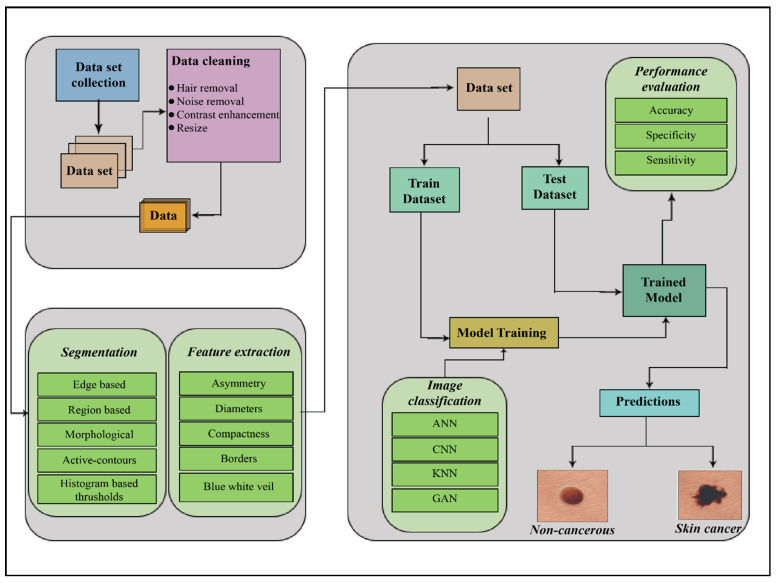
Skin cancer is one of the most dangerous forms of cancer. Skin cancer is caused by un-repaired deoxyribonucleic acid (DNA) in skin cells, which generate genetic defects or mutations on the skin. Skin cancer tends to gradually spread over other body parts, so it is more curable in initial stages, which is why it is best detected at early stages. The increasing rate of skin cancer cases, high mortality rate, and expensive medical treatment require that its symptoms be diagnosed early. Considering the seriousness of these issues, researchers have developed various early detection techniques for skin cancer. Lesion parameters such as symmetry, color, size, shape, etc. are used to detect skin cancer and to distinguish benign skin cancer from melanoma. This paper presents a detailed systematic review of deep learning techniques for the early detection of skin cancer. Research papers published in well-reputed journals, relevant to the topic of skin cancer diagnosis, were analyzed. Research findings are presented in tools, graphs, tables, techniques, and frameworks for better understanding.
Overview
The claims and statistics of this paper haven’t been checked yet.
Free: it reads the open-access text and checks the first 5 claims that cite a source we can check. Create a free account to check every claim.
Integrity signals
Registry
Cites
Statistics
Figures
Verification
Claims the paper makes
The claims and statistics of this paper haven’t been checked yet.
Free: it reads the open-access text and checks the first 5 claims that cite a source we can check. Create a free account to check every claim.
Self-check
Percentages, sums and reported differences re-computed from the paper’s own numbers.
The self-check needs the paper’s full text.
Citations
Cites
Dermatologist-level classification of skin cancer with deep neural networks
Esteva, A., Kuprel, B., Novoa, R. A., Ko, J., Swetter, S. M., Blau, H. M., & Thrun, S. (2017) · Nature · doi:10.1038/nature21056 · Cited by 14,362 · cited 1×
“[39] Melanoma /benign Keratinocyte carcinomas/benign SK Deep CNN ISIC-Dermoscopic Archive Expert-level performance against 21 certified dermatologists Accuracy (72.”
BackgroundA scaled conjugate gradient algorithm for fast supervised learning
Møller, M. F. (1993) · Neural Networks · doi:10.1016/s0893-6080(05)80056-5 · Cited by 4,052
Tschandl, P., Rosendahl, C., & Kittler, H. (2018) · Scientific Data · doi:10.1038/sdata.2018.161 · Cited by 3,628
Byrd, A. L., Belkaid, Y., & Segre, J. A. (2018) · Nature Reviews Microbiology · doi:10.1038/nrmicro.2017.157 · Cited by 2,806 · cited 1×
“As the skin is the body’s largest organ, the point of considering skin cancer as the most common type of cancer among humans is understandable [2].”
BackgroundCodella, N. C. F., Gutman, D., Celebi, M. E., Helba, B., Marchetti, M. A., Dusza, S. W., Kalloo, A., Liopyris, K., Mishra, N., Kittler, H., et al. (2018) · 2018 IEEE 15th International Symposium on Biomedical Imaging (ISBI 2018) · doi:10.1109/isbi.2018.8363547 · Cited by 2,620
NIPS 2016 Tutorial: Generative Adversarial Networks
Goodfellow, I. (2016) · arXiv (Cornell University) · doi:10.48550/arxiv.1701.00160 · Cited by 1,229
Automated Melanoma Recognition in Dermoscopy Images via Very Deep Residual Networks
Yu, L., Chen, H., Dou, Q., Qin, J., & Heng, P.-A. (2017) · IEEE Transactions on Medical Imaging · doi:10.1109/tmi.2016.2642839 · Cited by 1,140 · cited 3×
“This limited variation makes the task of image analysis and classification very complex [32].”
BackgroundMethodInfluentialPH2 - A dermoscopic image database for research and benchmarking
Mendonca, T., Ferreira, P. M., Marques, J. S., Marcal, A. R. S., & Rozeira, J. (2013) · 2013 35th Annual International Conference of the IEEE Engineering in Medicine and Biology Society (EMBC) · doi:10.1109/embc.2013.6610779 · Cited by 1,009 · cited 1×
“The dermoscopic images in the PH2 dataset were collected at the Dermatology Center of Pedro Hispano Hospital, Portugal [68].”
MethodThe Benefits and Challenges of Using Systematic Reviews in International Development Research
Mallett, R., Hagen-Zanker, J., Slater, R., & Duvendack, M. (2012) · Journal of Development Effectiveness · doi:10.1080/19439342.2012.711342 · Cited by 565 · cited 1×
“Once systematic literature is completed, it provides a more sensible, logical, and robust answer to the underlying question of the research [11].”
BackgroundVisualizing and Understanding Convolutional Networks
Zeiler, M. D., & Fergus, R. (2013) · arXiv · doi:10.48550/arxiv.1311.2901 · Cited by 522
Research works printed but not linked: 7
- Schlosser, 2006, The Role of Systematic Reviews in Evidence-Based Practice, Research and Development, Focus, 15, 1
- Kanimozhi, 2016, Computer-Aided Melanoma Skin Cancer Detection Using Artificial Neural Network Classifier, J. Sel. Areas Microelectron., 8, 35
- Bayot, 2007, Malignancy Detection of Candidate for Basal Cell Carcinoma Using Image Processing and Artificial Neural Network, Dlsu Eng. E J., 1, 70
- Kalouche, S. (2021, January 10). Vision-Based Classification of Skin Cancer Using Deep Learning. Available online: https://www.semanticscholar.org/paper/Vision-Based-Classification-of-Skin-Cancer-using-Kalouche/b57ba909756462d812dc20fca157b3972bc1f533.
- Sajid, 2018, Performance Evaluation of Classifiers for Automatic Early Detection of Skin Cancer, J. Adv. Res. Dyn. Control. Syst., 10, 454
- Shoieb, 2016, Computer-Aided Model for Skin Diagnosis Using Deep Learning, J. Image Graph., 4, 116
- Stanley, R.J., Stoecker, W.V., Moss, R.H., Gupta, K., and Jella, P. (2005, January 6–10). Color and Structural Features for Automatic Skin Lesion Discrimination in Dermoscopy Images. Proceedings of the 6th World Congress on Melanoma, Vancouver, BC, Canada.
Cited by
Items 201–300 of 598
Explainable AI for Skin Cancer Classification Unlocking Insights with Grad-Cam and Grad-Cam++
Mrabet, A. E., Benaly, M., Kouach, B., Alihamidi, I., Hlou, L., & gouri, R. E. (2025) · International Conference on Circuit, Systems and Communication (ICCSC) · doi:10.1109/iccsc66714.2025.11134955 · Cited by 7
“When diagnosed in its initial stages, skin cancer can often be treated effectively with minimally invasive procedures, significantly reducing morbidity and mortality [5][6][7].”
Islam, S., Wishart, G. C., Walls, J., Hall, P. N., de Herrera, A. G. S., Gan, J. Q., & Raza, H. (2026) · Scientific Reports · doi:10.1038/s41598-025-26392-4 · Cited by 14
“Dermoscopic images are now widely used for skin cancer detection 26 .”
Skin Disorders Prediction Using Deep Learning for Rural Health Monitoring
Anitha, P., Vijay, M., Amrita Priya, K., Бекзод, Б. Э., Naseeruddin, M., & Venkataramanaiah, B. (2026) · International Conference on Mobile Computing and Sustainable Informatics (ICMCSI) · doi:10.1109/icmcsi67283.2026.11412564 · Cited by 6
Dermatological disease prediction and diagnosis system using deep learning
Fatima, N., Rizvi, S. A. M., & Rizvi, M. S. B. A. (2023) · Irish Journal of Medical Science (1971 -) · doi:10.1007/s11845-023-03578-1 · Cited by 6
“Similar studies were incorporated to critically understand the nature and prevalence and detection of skin diseases using deep learning techniques in references [16–22].”
Skin Cancer Detection and Classification using Deep Learning
Jain, S., Dhakate, S., Gujar, P., Rajbhoj, P., & Sathawane, U. (2024) · International Conference on Emerging Systems and Intelligent Computing (ESIC) · doi:10.1109/esic60604.2024.10481538 · Cited by 6
“The research [7] focuses on non-invasive neural network methods for skin cancer diagnosis, with a concentration on preprocessing, segmentation, and classification.”
MethodAI in interventional cardiology: Innovations and challenges
Khelimskii, D. A., Гозоевич, Б. А., Krymcov, O., Baranov, A. A., Manukian, S. N., & Lazarev, M. (2024) · Heliyon · doi:10.1016/j.heliyon.2024.e36691 · Cited by 14
“…deep learning models have achieved the accuracy of physicians and, in some cases, surpass them in a wide range of diagnostic tasks, including but not limited to differentiating a mole from melanoma [77], diagnosing diabetic retinopathy [78], determining cardiovascular risk [79] [80] and more.”
BackgroundProgress in antitumor mechanisms and applications of phenformin (Review)
Zhong, Q., Li, D., & Yang, X. (2024) · Oncology Reports · doi:10.3892/or.2024.8810 · Cited by 8
“Melanoma is an infrequent and perilous form of skin cancer (96).”
BackgroundA combined approach of VGG 16 and LSTM transfer learning technique for skin melanoma classification
Arjun, K. P., & Kumar, K. S. (2022) · International Journal of Health Sciences · doi:10.53730/ijhs.v6ns1.8378 · Cited by 9
“Comparative analysis of 6 different TL algorithms [27] for multi class skin classification.”
MethodGayatri, E., & Aarthy, S. L. (2023) · Multimedia Tools and Applications · doi:10.1007/s11042-023-16999-y · Cited by 6
“Numerous approaches, which are non-invasive have been devised to analyze the skin cancer symptoms and identify the kinds, like nonmelanoma or melanoma [8, 9].”
Priya, S., Desai, V. M., & Singhvi, G. (2023) · Results in Chemistry · doi:10.1016/j.rechem.2023.101261 · Cited by 6
Blend of Deep Features and Binary Tree Growth Algorithm for Skin Lesion Classification
Kumar, S., Nath, V. K., & Hazarika, D. (2023) · Symmetry · doi:10.3390/sym15122213 · Cited by 7
Anupama, D., & Sumathi, D. (2022) · International Journal of Advanced Computer Science and Applications · doi:10.14569/ijacsa.2022.0131034 · Cited by 8
“Melanoma is considered the deadliest form of skin cancer worldwide which emerged as a common disease with highest mortality [3].”
BackgroundSkin region images extracted from 3D total body photographs for lesion detection
Saha, A., Adeola, J., Ferrera, N., Mothershaw, A., Rezze, G. G., Gaborit, S., D’Alessandro, B., Voskanyan, R., Szabó, G., Pataki, B., et al. (2025) · Scientific Data · doi:10.1038/s41597-025-05483-x · Cited by 9
Skin cancer detection using the HAM10000 dataset: a comparative study of machine learning models
Velaga, N., Vardineni, V. R., Tupakula, P., & Pamidimukkala, J. S. (2023) · 2023 Global Conference on Information Technologies and Communications (GCITC) · doi:10.1109/gcitc60406.2023.10425889 · Cited by 5
“Dermatologists visually inspect suspicious skin lesions, often using dermoscopy, a technique that magnifies the skin’s surface for detailed examination [5] [23].”
BackgroundMethodLactoferrin based copper nanoparticles: a promising anti-cancer strategy against malignant melanoma
Sharda, D., Kaur, A., Pattanayak, A., & Choudhury, D. (2025) · Scientific Reports · doi:10.1038/s41598-025-03221-2 · Cited by 5
Cherukuri, S., & Prasad, S. D. V. (2025) · Frontiers in Oncology · doi:10.3389/fonc.2025.1699960 · Cited by 10
Wahid, A., Khan, H. U., Naz, A., & Alarfaj, F. K. (2026) · PLoS ONE · doi:10.1371/journal.pone.0343510 · Cited by 5
Self-citationRisk factors for scabies in hospital: a systematic review
Kim, D.-H., Kim, Y., Yun, S. Y., Yu, H. S., Ko, H.-C., & Kim, M. (2024) · BMC Infectious Diseases · doi:10.1186/s12879-024-09167-6 · Cited by 18
Skin Cancer Image Segmentation Based on Midpoint Analysis Approach
Saghir, U., Singh, S. K., & Hasan, M. (2024) · Journal of Imaging Informatics in Medicine · doi:10.1007/s10278-024-01106-w · Cited by 6
“Some segmentation methods may struggle to represent the complex and diverse features of many types of skin lesions [24].”
Ensemble-Stacking Machine Learning Model for Multi-Class Skin Diseases Identification
Tandelon, D., Christiono, D. L., Andryani, N. A. C., Gondokaryono, S. P., Rahardja, J. I., & Danarti, R. (2024) · doi:10.1109/ibiomed62485.2024.10875816 · Cited by 6
Das, M., & Parhi, R. (2025) · Journal of Drug Delivery Science and Technology · doi:10.1016/j.jddst.2025.106748 · Cited by 12
Zhu, Y., Ding, D., Shen, F., Liu, F.-Y., Yang, Y., & Han, F. (2025) · Anti-Cancer Agents in Medicinal Chemistry · doi:10.2174/0118715206363456250226061713 · Cited by 6
Lunagaria, M., & Katkar, V. D. (2022) · International Conference on Computer Science, Engineering and Applications (ICCSEA) · doi:10.1109/iccsea54677.2022.9936194 · Cited by 5
“In addition to lung and breast cancer, as well as brain, head, neck cancer, advanced bone suppression in x-rays can be used to diagnose diabetic retinopathy, prostate segmentation and nodule classification, and identify skin lesions, to name a few applications [3], [4].”
BackgroundMachine Learning Assisted Early Diagnosis of Skin Cancer
Gupta, A., Gupta, R., & Kumar, S. (2022) · IEEE International Conference on Current Development in Engineering and Technology (CCET) · doi:10.1109/ccet56606.2022.10080671 · Cited by 6
“Initially, data is divided into 10 partitions and then HSV, opponent, Amp and Gabor filters are employed by combining each other for feature extraction purpose to give better results for melanoma classification in [15].”
MethodInfluentialRETRACTED ARTICLE: Multi-stage feature extraction-based classification of skin cancer detection
Bindhu, A., & Thanammal, K. K. (2023) · Soft Computing · doi:10.1007/s00500-023-08611-0 · Cited by 5
RetractedToward Fairness Across Skin Tones in Dermatological Image Processing
Almuzaini, A. A., Dendukuri, S. K., & Singh, V. K. (2023) · IEEE International Conference on Multimedia Information Processing and Retrieval (MIPR) · doi:10.1109/mipr59079.2023.00030 · Cited by 10
“These applications include chest X-ray diagnosis [9], brain MRI segmentation [15], and skin cancer detection [11, 18].”
BackgroundTypes of Cancers, Epidemiology, and Molecular Insights
Sobti, R. C., Gosipatala, S. B., Sharma, M., Reddy, P., Khalko, R. K., Kaur, T., & Thakur, M. (2023) · Springer eBooks · doi:10.1007/978-981-99-2196-6_1-1 · Cited by 9
Skin Cancer Detection by Using Deep Learning Approach
Alshalman, M., Gargoum, B. F., Nagem, T. A. M. H., & Bozed, K. A. (2023) · International Conference on Systems and Control (ICSC) · doi:10.1109/icsc58660.2023.10449804 · Cited by 8
Ensemble Deep Learning Methods for Detecting Skin Cancer
Sardar, M., Niazi, M. M., & Nasim, F. (2024) · Bulletin of Business and Economics (BBE) · doi:10.61506/01.00254 · Cited by 5
“Banerjee et al. developed a "You Simply See Once" (YOLO) technique for profound convolutional neural systems in (Dildar et al,2021).”
MethodData Engineering and AI-Powered Skin Cancer Identification for Healthcare Applications
Ahmed, I., Ahmad, M., Chehri, A., & Jeon, G. (2024) · Procedia Computer Science · doi:10.1016/j.procs.2024.09.240 · Cited by 5
A spatial mean-based feature fusion and ensemble learning framework for enhanced melanoma detection
Dubey, B., Dwivedi, A., Ghosh, S., & Jana, N. D. (2025) · International Journal of Information Technology · doi:10.1007/s41870-025-02841-1 · Cited by 5
Skin Disease Detection using Convolutional Neural Network
Saraf, P., Tharaniesh, P. R., & Singh, S. (2024) · International Conference on Networks, Multimedia and Information Technology (NMITCON) · doi:10.1109/nmitcon62075.2024.10699196 · Cited by 6
Naeem, M. A., Yang, S., Sharif, A., Saleem, M. A., & Sharif, M. I. (2024) · Research Square · doi:10.21203/rs.3.rs-4271003/v1 · Cited by 7
AI in Dermatology: A Systematic Review on Skin Cancer Detection
Andromeda, S., & Dwijaksara, N. L. B. (2024) · TIERS Information Technology Journal · doi:10.38043/tiers.v5i1.5444 · Cited by 4
“These methods analyze lesion features such as symmetry, color, size, and shape to distinguish between benign and malignant skin cancers [13].”
MethodTheijeswini, R. C., Basu, S., Swetha, R. G., Tharmalingam, J., Ramaiah, S., Calaivanane, R., Sreedharan, V. R., Livingstone, P. G., & Anbarasu, A. (2024) · Health and Technology · doi:10.1007/s12553-024-00816-z · Cited by 5
“…power but great accuracy [38] DnseNet Improvises the accuracy loss caused by fading gradients in powerful neural networks (image detection) [39] EfficientNet A CNN based model used in the scaling of high resolution of images and so on (e.g., virus related images) [38] InceptionV3 Used in…”
Satish, A. R., Maram, B., Perumalla, V. R., & Karreddula, M. R. (2025) · Neurocomputing · doi:10.1016/j.neucom.2025.129816 · Cited by 4
Wang, Y. (2025) · Scientific Reports · doi:10.1038/s41598-025-26035-8 · Cited by 4
“The preprocessing phase is crucial for improving the quality and robustness of the dataset, and it needs to standardize the images for deep learning models 42 .”
Systematic Review of Artificial Intelligence Applications in Scar Assessment and Management
Gill, H. S., Chong, G. S. L., & Gill, G. K. S. (2026) · Plastic Surgery · doi:10.1177/22925503251407252 · Cited by 4
Federated learning algorithm-based skin cancer detection
Hu, J. (2024) · Applied and Computational Engineering · doi:10.54254/2755-2721/49/20241065 · Cited by 4
“Melanoma and nonmelanoma skin cancer are the two primary subtypes of skin cancer [1].”
BackgroundAutomated lumpy skin grading in bovine images using novel deep convolutional neural networks
Muhammad, A. M., Zia‐ur‐Rehman, M., Mushtaq, Z., & Qureshi, M. F. (2024) · Multimedia Tools and Applications · doi:10.1007/s11042-024-20395-5 · Cited by 4
“Using DBN on the World Animal Health Information Database (WAHID), [39] was able to attain an accuracy of 0.85.”
InfluentialAdvanced Breast Cancer Detection Using Spatial Attention and Neural Architecture Search (SANAS-Net)
Souza, M. D., Prabhu, G. A., & Kumara, V. (2024) · SN Computer Science · doi:10.1007/s42979-024-03568-9 · Cited by 12
“[11], where the YOLO algorithm [12], a widely recognized algorithm for detection and classification, is employed to extract and categorize regions of interest (ROIs) in the entirety of the image concurrently.”
A Machine Learning Framework for Skin Cancer Detection using Transfer Learning
Augustine, M. L. P., Spanogianopoulos, S., & Sharif, M. S. (2025) · IEEE International Conference on Image Processing, Applications and Systems (IPAS) · doi:10.1109/ipas63548.2025.10924545 · Cited by 4
“Also, by improving diagnostic capacities through the mix of transformative measures and high-level deep learning algorithms, medical care resources can be used all the more productively, possibly decreasing medical care costs associated with misdiagnosis and unnecessary procedures [6] III.”
Skin Cancer Detection: A Hybrid Approach Combining CNNs and Explainable AI
Kumar, M. K., Vaishnavi, J., Anjibabu, T., & Jayasri, V. (2025) · International Conference on Machine Learning and Autonomous Systems (ICMLAS) · doi:10.1109/icmlas64557.2025.10968907 · Cited by 4
“To differentiate benign from melanoma, researchers [6] have created early detection methods based on lesion criteria.”
Mustahid, A. A. M., Rahman, M. S., Joy, M. I. K., Ishrak, M. F., Ahmed, N., & Muzahid, A. A. M. (2025) · International Conference on Computer and Automation Engineering · doi:10.1109/iccae64891.2025.10980560 · Cited by 4
“The skin cancer is a type of carcinoma, which is the most common of them and affects millions of people worldwide, increasing the number rapidly and causing it to be a preeminent public health threat [2].”
Now and future of artificial intelligence-based signet ring cell diagnosis: A survey
Zhu, M. S., Dong, J., Guo, L., Su, F., Liu, J., Wang, G., & Zhao, Z. (2025) · Expert Systems with Applications · doi:10.1016/j.eswa.2025.129188 · Cited by 6
Enhancing Early Skin Cancer Detection Through AI-Based Image Classification
Nayak, P., Manikanta, M., M, A. B., Nandan, S., & P, K. M. T. (2025) · International Conference on Computing Technologies (ICOCT) · doi:10.1109/icoct64433.2025.11118333 · Cited by 4
“[8] The model’s performance is assessed using metrics such as accuracy, precision, recall, F1-score, and the AUC-ROC curve.”
Al‐Azzawi, W. K., Chenchamma, G., Mohamad, A. A. H., Alshudukhi, J. S., Alhamazani, K. T., & Meraf, Z. (2022) · Journal of Nanomaterials · doi:10.1155/2022/8135715 · Cited by 4
Skin Cancer Detection and Intensity Calculator using Deep Learning
Mankawade, A., Bodhankar, A., Mahajan, A., Prasad, D., Mahajan, S., & Dhakalkar, R. (2023) · International Conference for Advancement in Technology (ICONAT) · doi:10.1109/iconat57137.2023.10080001 · Cited by 4
“The authors in the paper [2] presented that, in-advance prediction of skin condition symptoms might be essential because of the disease's ever rising incidences, extreme fatality amount, as well as prohibitively expensive medical curing.”
BackgroundComputer-aided Diagnosis and Analysis of Skin Cancer from Dermoscopic Images in India
Brar, K. K., & Shiney, O. J. (2023) · Current Medical Imaging Formerly Current Medical Imaging Reviews · doi:10.2174/1573405620666230410092618 · Cited by 5
Skin Lesion Segmentation Based on Modified U-NET Architecture
Sahli, H., Slama, A. B., & Sayadi, M. (2023) · IEEE International Conference on Advanced Systems and Emergent Technologies (IC_ASET) · doi:10.1109/ic_aset58101.2023.10150888 · Cited by 4
“Such methods have been confirmed to be valuable for the detection topic [12].”
MethodUsing Ensemble of Multiple Fine-Tuned EfficientNet Models for Skin Cancer Classification
Joshi, K. P., Davaria, S., & Saxena, K. (2023) · Asian Conference on Innovation in Technology (ASIANCON) · doi:10.1109/asiancon58793.2023.10270209 · Cited by 4
“Thanks to the recent developments in computer-based technologies, skin cancer can be diagnosed more quickly, affordably and comfortably [6].”
BackgroundAnalysis of Skin Lesions for Cancer Detection Using Convolutional Neural Networks
Korsak, K., Hernes, M., Walaszczyk, E., Rot, A., & Grzęda, A. (2023) · International Conference on Advanced Computer Information Technologies (ACIT) · doi:10.1109/acit58437.2023.10275657 · Cited by 4
“Mehwish Dildar et al. [15] in their paper reviewed the literature on skin cancer detection using deep neural networks.”
BackgroundSudhakar, P., & Satapathy, S. C. (2023) · EAI Endorsed Transactions on Pervasive Health and Technology · doi:10.4108/eetpht.9.4277 · Cited by 4
Rahman, S. Z., Singasani, T. R., & Shaik, K. S. (2023) · Healthcraft Frontiers · doi:10.56578/hf010102 · Cited by 6
VCCINet: A Multi-model Deep Learning Approach for Melanoma Skin Cancer Detection
Srivastava, K., Istwal, A., Kaur, J., & Gambhir, P. (2024) · International Conference on Advancement in Computation & Computer Technologies (InCACCT) · doi:10.1109/incacct61598.2024.10551176 · Cited by 5
“The study in [24] examined noninvasive neural network techniques for skin cancer detection, emphasizing CNNs and highlighting the potential of auto-organization in improving feature representation for accurate medical imaging diagnosis.”
BackgroundThinakaran, R., Somasekar, J., Neerugatti, V., & Ganga, K. (2024) · International Conference on Software Technology and Engineering · doi:10.1109/icste63875.2024.00047 · Cited by 5
Design of stacked ensemble classifier for skin cancer detection
Das, A., & Mohanty, M. N. (2025) · Multimedia Tools and Applications · doi:10.1007/s11042-025-20630-7 · Cited by 4
“Various steps followed in different state-of-art methods have been discussed in [5].”
Hidden markov model classification scheme for cancer detection in image processing
Nanwin, D. N., & Ofor, W. D. (2022) · Asian Journal of Multidimensional Research · doi:10.5958/2278-4853.2022.00170.7 · Cited by 4
Deep Learning Techniques Applied to Skin Lesion Classification: A Review
Silva, G. M., Lazzaretti, A. E., & Monteiro, F. C. (2022) · International Conference on Machine Learning, Control, and Robotics (MLCR) · doi:10.1109/mlcr57210.2022.00028 · Cited by 6
“explanation about the CNN architecture [9], [10] and others provide extra information about models, not CNN-based [8], [11], [12].”
BackgroundSkin Diseases Detection with Transfer Learning
Van-Quoc, V., & Thai-Nghe, N. (2023) · Lecture notes in networks and systems · doi:10.1007/978-981-19-6631-6_11 · Cited by 5
Nyatte, S. S., Ngoffé, S. P., Ondoa, G. A., Essiane, S. N., & Ele, P. (2023) · Lecture notes in electrical engineering · doi:10.1007/978-981-99-0248-4_32 · Cited by 5
An Efficient Method for Skin Cancer Detection Using Convolutional Neural Network
Sreelakshmi, C. S., Adithya, V., & Rajesh, R. (2023) · Lecture notes in electrical engineering · doi:10.1007/978-981-19-9090-8_15 · Cited by 4
Multi-Modal Skin Lesion Classification Based on Dermoscopic Images and Meta-Data
Belmili, D., Chelabi, H., & Kermi, A. (2023) · International Conference on Decision Aid Sciences and Applications (DASA) · doi:10.1109/dasa59624.2023.10286787 · Cited by 4
“In [7] authors focused on ANNs, CNNs, KNNs, and RBFNs for classification of lesion images.”
BackgroundFarady, I., Furqon, E. N., Kuo, C.-C., Jan, Y., & Lin, C. (2024) · Biomedical Signal Processing and Control · doi:10.1016/j.bspc.2024.106112 · Cited by 5
Extraction of Shape and Texture Features of Dermoscopy Image for Skin Cancer Identification
Aldi, F., & Sumijan, S. (2024) · SinkrOn · doi:10.33395/sinkron.v8i2.13557 · Cited by 7
Almufareh, M. F. (2024) · IEEE Access · doi:10.1109/access.2024.3395988 · Cited by 5
“Deep Learning for Early diagnosis [52]: By examining lesion parameters, deep learning approaches show promise for early skin cancer diagnosis.”
BackgroundMelatect: a machine learning approach for identifying malignant melanoma in skin growths
Meel, V., & Bodepudi, A. (2022) · International Conference on Machine Vision · doi:10.1117/12.2625005 · Cited by 4
“[13] performed a comprehensive study on approaches for detecting melanoma using CNN, KNN (Kohonen selforganizing neural networks), ANN (artificial neural networks) and GANs (generative adversarial neural networks).”
MethodSkin disease diagnosis using deep neural network and large language model
Xia, D. (2023) · DR-NTU (Nanyang Technological University) · doi:10.32657/10356/172895 · Cited by 6
Sahu, B., Sen, S. K., Panigrahi, A., Pati, A., Sahoo, G., & Ravindra, J. V. R. (2025) · International Conference on Smart Technologies, Communication and Robotics (STCR) · doi:10.1109/stcr62650.2025.11020172 · Cited by 3
“The features selected by the transfer learning algorithms contain noise that grades the performance of the classifier [6].”
Skin cancer detection using harmonic brown bear optimization enabled transfer learning
Manickavasagam, M., Rani, V. V., Giri, U. K., & Maram, B. (2025) · Computational Biology and Chemistry · doi:10.1016/j.compbiolchem.2025.108551 · Cited by 3
Wearable bioelectronics for skin cancer management
Liang, G., Chen, S., & Chen, J. (2025) · Biomaterials · doi:10.1016/j.biomaterials.2025.123669 · Cited by 4
Gupta, M., Kumar, M., & Dhir, R. (2025) · The Journal of Supercomputing · doi:10.1007/s11227-025-07941-0 · Cited by 3
“Dildar et al. [27] provided a study on deploying DL in early detection of skin cancer, emphasizing the rapid development of deep neural networks and their potential to outperform humans in several diagnostic tasks.”
Explainable transfer learning for skin cancer diagnosis
Alrabai, A., Echtioui, A., & Kallel, F. (2026) · Network Modeling Analysis in Health Informatics and Bioinformatics · doi:10.1007/s13721-025-00709-9 · Cited by 2
Gabor Transform-Based Deep Learning System Using CNN for Melanoma Detection
Deivasigamani, S., Senthilpari, C., Siva Sundhara Raja, D., Thankaraj, A., Narmadha, G., & Gowrishankar, K. (2026) · Computers · doi:10.3390/computers15010054 · Cited by 4
“Dildar, M. et al. (2021) [8] present a detailed review of skin cancer detection using Artificial Neural Networks (ANNs), Convolution Neural Networks (CNNs), Kohonen Neural Networks, and Generative Adversarial Neural Networks (GANs), and provide information about the datasets and open research…”
Automated Skin Lesion and Cancer Detection Using Computer Vision: A Comprehensive Review
Sonune, B. S., Ramanathan, U., Tulaskar, D. P., Nemane, S. G., Kulkarni, M. B., Rewatkar, P., & Bhaiyya, M. L. (2026) · Bioengineering · doi:10.3390/bioengineering13080872 · Cited by 4
Deep learning model enhanced skin cancer detection
Kolachina, S. K. K., Agada, R., Li, W., & Yan, J. Y. (2023) · doi:10.1117/12.2668381 · Cited by 3
“The combination visual inspection and tissue biopsy are still the most reliable method for diagnosis [10] [20].”
MethodPatil, N. V., & Biradar, R. V. (2023) · International Conference on Evolutionary Algorithms and Soft Computing Techniques (EASCT) · doi:10.1109/easct59475.2023.10393526 · Cited by 3
“Dildar M. (2021) reviewed component analysis and genetic involved in deep neural networks [5].”
BackgroundMachine Learning Approaches for Multi-Class Classification of Skin Cancer
Khuntia, S. S., Swain, A., Das, S., Behera, P., Dora, C., & Chakravarty, S. (2024) · International Conference on Cognitive, Green and Ubiquitous Computing (IC-CGU) · doi:10.1109/ic-cgu58078.2024.10530781 · Cited by 3
“Although melanoma contributes to only 1% out of all skin cancers, it has a higher death rate [2].”
BackgroundManoj, H. M., Pawar, P. P., Krupa, R., Pareek, P. K., Kumar, D., & Bandeppa, L. (2024) · International Conference on Data Science and Network Security (ICDSNS) · doi:10.1109/icdsns62112.2024.10690940 · Cited by 8
“In 1958, researchers in Denmark found the first case of mpox in a monkey lab [2].”
BackgroundRao, A. S., H, K. P. B., Veeresh, V., Rao, R., Mahima, M., Jeevith, D. R., & T, M. A. U. (2024) · International Conference on Electrical, Electronics, Information and Communication Technologies (ICEEICT) · doi:10.1109/iceeict61591.2024.10718411 · Cited by 3
“Despite the progress in AI-driven skin cancer diagnosis, numerous challenges persist [11].”
BackgroundZheng, S., Yu, H., Zhang, J., Lau, W. C., Chen, M., Cheng, H., Xian, H., Ming, W., Cheng, L. N., He, Y., et al. (2024) · BMJ Open · doi:10.1136/bmjopen-2024-086488 · Cited by 6
Mall, J., Haider, M. F., Naseem, N., Rahman, M. A., & Ahmad, I. S. (2025) · Naunyn-Schmiedeberg s Archives of Pharmacology · doi:10.1007/s00210-025-04431-1 · Cited by 3
Nanocarriers for siRNA Delivery Aimed at the Treatment of Melanoma: Systematic Review
de Araujo, B. R., do Nascimento, T., Matos, A. P. D. S., Belmiro, V. B. D. S., Monteiro, M. S. D. S. D. B., Santos‐Oliveira, R., & Ricci‐Júnior, E. (2023) · Current Drug Delivery · doi:10.2174/1567201820666230425234700 · Cited by 4
Parmonangan, I. H., Marsella, M., Pardede, D. F. R., Rijanto, K. P., Stephanie, S., Kesuma, K. A. C., Cahyaningtyas, V. T., & Anggreainy, M. S. (2023) · Engineering MAthematics and Computer Science (EMACS) Journal · doi:10.21512/emacsjournal.v5i2.9904 · Cited by 4
“Hence, skin cancer will most likely happen on the skin areas that are exposed to the sun extensively such as head area and arm (Dildar et al., 2021).”
BackgroundPrediction of Skin Cancer Using Convolutional Neural Network (CNN)
Deepa Nivethika, S., Srinivasan, D., SenthilPandian, M., Paulraj, P., Ashokkumar, N., Hariharan, K., I., M. V. V., & Raghuram, T. (2023) · Advances in systems analysis, software engineering, and high performance computing book series · doi:10.4018/978-1-6684-6596-7.ch005 · Cited by 3
Comparative Analysis of Machine Learning Methods for Multi-Label Skin Cancer Classification
Imad, M., Khan, Z. A., Bangash, S. H., Khan, I. U., Ahmad, S., & Ishtiaq, A. (2023) · International Conference on Information Technology Trends (ITT) · doi:10.1109/itt59889.2023.10184240 · Cited by 3
“Before many researchers used various methods of machine learning and deep learning techniques to detect the cancer but still need to improve the results of skin cancer [10].”
Vishwas, S., Paul, S. D., & Singh, D. (2023) · Current Drug Delivery · doi:10.2174/1567201820666230726150642 · Cited by 4
FDLM: An enhanced feature based deep learning model for skin lesion detection
Garg, S., & Jindal, B. (2023) · Multimedia Tools and Applications · doi:10.1007/s11042-023-17143-6 · Cited by 3
“Computer technology allows for a more comfortable, less costly, and faster identification of skin cancer symptoms [12, 14].”
Pokhrel, K., Giri, S., Karki, S., & Sanín, C. (2023) · Lecture notes in electrical engineering · doi:10.1007/978-3-031-29078-7_82 · Cited by 3
Soni, U., Gupta, J. K., Singh, K., & Khandelwal, G. (2023) · Current Cancer Therapy Reviews · doi:10.2174/0115733947263006231020185402 · Cited by 3
Skin Cancer Classification using ConvNET
Latha, D. U., Hemanth, K., Amogh, B. M., Praveen, K. S., & Darshan, B. Y. (2023) · International Conference on Recent Advances in Science and Engineering Technology (ICRASET) · doi:10.1109/icraset59632.2023.10420349 · Cited by 3
“Because the cancer of the skin tends to progressively spread to other body regions, it is best identified early because it is more treatable in the early stages [2].”
BackgroundEarly diagnosis of skin oncologic diseases using artificial intelligence technologies
Samokhin, S. О., Патрушев, А. В., Akaeva, Y. I., Parfenov, S. A., & Кутелев, Г. Г. (2024) · Vestnik dermatologii i venerologii · doi:10.25208/vdv16746 · Cited by 4
Hardware Design of Skin Cancer Detection Device
Widhianto, R. P., Priharti, W., Alia, F., Alfariyani, A. R., Al-Hamid, Z. A., & Sutedja, E. K. (2023) · International Conference on Engineering and Emerging Technologies (ICEET) · doi:10.1109/iceet60227.2023.10525755 · Cited by 3
Vasileiou, M., Dafni, M. F., Karaoulani, C., Paliatsou, I. D., Koutli, E., Karamalis, C., Diamantoudis, S. C., Bani, A., Mpiagkis, N., & Moustakas, D. C. (2024) · European Journal of Environment and Public Health · doi:10.29333/ejeph/14998 · Cited by 4
“The use of indoor tanning beds has been identified as a significant risk factor for NMSC, especially among young people [7-9].”
BackgroundImproving Skin Cancer Knowledge and Screening Among Older Chinese Americans
Wang, Y. (., Derouin, A. L., Turner, B. S., & Xu, H. (2024) · The Journal for Nurse Practitioners · doi:10.1016/j.nurpra.2024.105208 · Cited by 3
Explainable Multi-task Learning Approach for Skin Lesion Classification
Patel, K., Mehta, N., Easwaran, S., Walambe, R. A., Gite, S., Pradhan, B., & Saini, B. (2024) · Smart sensors, measurement and instrumentation · doi:10.1007/978-3-031-68602-3_14 · Cited by 3
Skin Cancer Detection Using Different Deep Learning Models
Chowdhury, S., & Das, D. K. (2024) · International Conference on Ubiquitous Computing and Intelligent Information Systems (ICUIS) · doi:10.1109/icuis64676.2024.10866480 · Cited by 3
Skin Cancer Detection Using A Multi-Scale AI Deep Learning Approach
Appavu, N. (2025) · International Conference on Advances in Electrical, Computing, Communication and Sustainable Technologies (ICAECT) · doi:10.1109/icaect63952.2025.10958835 · Cited by 3
“A thorough list of pertinent papers is provided in reference [12] for more related study.”
Aplikasi Mobile Deteksi Dini Kanker Kulit Berdasarkan Image Processing
Royana, F., Maulida, P. Y., Hasanah, R. N., Rahayu, S. S., & Rasim, R. (2021) · Jurnal Litbang Edusaintech · doi:10.51402/jle.v2i2.44 · Cited by 3
An Enhanced Deep Learning Method for Skin Cancer Detection and燙lassification
El-Soud, M. W. A., Gaber, T., Tahoun, M., & Alourani, A. (2022) · Computers, materials & continua/Computers, materials & continua (Print) · doi:10.32604/cmc.2022.028561 · Cited by 4
Metadata
- Authors
- Dildar, M., Akram, S., Irfan, M., Khan, H. U., Ramzan, M., Mahmood, A. R., Alsaiari, S. A., Saeed, A. H. M., Alraddadi, M. O., & Mahnashi, M. H.
- Affiliations
- Government Associate College for Women Mari Sargodha, Sargodha 40100, Pakistan
- University of Sargodha (PK)
- Najran University (SA)
- COMSATS University Islamabad (PK)
- University of Tabuk (SA)
- Corresponding author
- Ramzan, Muhammad
- Venue
- International Journal of Environmental Research and Public Health
- Publisher
- MDPI AG
- Published
- 2021-05-20
- Volume
- 18
- Issue
- 10
- Pages
- 5479
- ISSN
- 1660-4601 (ISSN-L)
- PMC
- PMC8160886
- OpenAlex
- W3165685657
- Semantic Scholar
- faec7030c99bf2fa29d341bc09d351b7edfa05bc
- Cited by
- 597
- References
- 62
- Citations by year
- 2026: 81 · 2025: 156 · 2024: 162 · 2023: 130 · 2022: 56 · 2021: 12
- FWCI
- 10.87
- Type
- journal article
- Language
- en
- Open access
- gold
- doi.org
- Licence
- Locations
- International Journal of Environmental Research and Public Health (publishedVersion, cc-by)
- PubMed Central (publishedVersion, cc-by)
- PubMed (publishedVersion)
- RePEc: Research Papers in Economics (submittedVersion)
- DOAJ (DOAJ: Directory of Open Access Journals) (submittedVersion)
- Funders
- Deanship of Scientific Research Najran University (DSR NU 2021)
- Topics
- Health Sciences › Medicine › Oncology › Cutaneous Melanoma Detection and Management
- Physical Sciences › Computer Science › Artificial Intelligence › AI in cancer detection
- Health Sciences › Health Professions › Health Information Management › Artificial Intelligence in Healthcare
- Keywords
- skin cancer, early detection, melanoma, benign skin lesions, deep learning, skin lesion classification, computer-aided diagnosis
- MeSH terms
- Deep Learning, Humans, Melanoma, Skin, Skin Neoplasms
About these checks
Registry, retraction, Cites and statistics results are computed, not judged, with one exception: a printed reference that no index lists is read once by a model before it counts as a citation error. Claims are extracted by a model and kept only when their quote appears verbatim in the text; each cited source is then checked, with a model’s help, for whether it says what the claim relies on. Those verdicts can be wrong — read the claim’s quote and the cited source before relying on one.
Statistics and arithmetic are recomputed, not judged.
Confidence bands are shown only for fields calibrated on our annotated test set. None is calibrated yet, so no band is shown.
What counts as a claim ›How we measure confidence ›How we check this ›
Are you an author, or do you see a problem with this page? Request a review
Data sources
Bibliographic data: Semantic Scholar, OpenAlex, Crossref.
Contains information from the Semantic Scholar Academic Graph Datasets, made available under the ODC Attribution License (ODC-BY 1.0).
Semantic Scholar’s data is described in: Kinney, R., et al. (2023). The Semantic Scholar Open Data Platform. arXiv:2301.10140.
