

Skin Cancer Detection: A Review Using Deep Learning Techniques
Open accessThe DOI matches its Crossref record; 70 of the 70 references it cites were found in a registry or an index.
Abstract
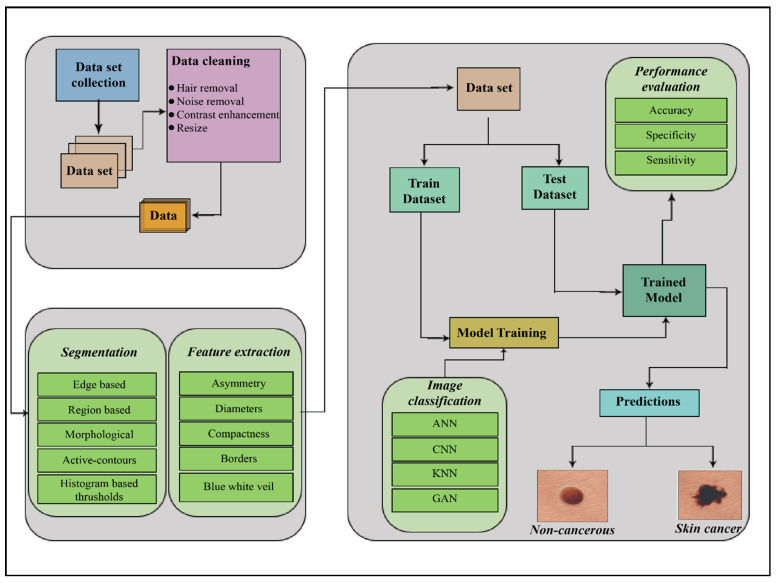
Skin cancer is one of the most dangerous forms of cancer. Skin cancer is caused by un-repaired deoxyribonucleic acid (DNA) in skin cells, which generate genetic defects or mutations on the skin. Skin cancer tends to gradually spread over other body parts, so it is more curable in initial stages, which is why it is best detected at early stages. The increasing rate of skin cancer cases, high mortality rate, and expensive medical treatment require that its symptoms be diagnosed early. Considering the seriousness of these issues, researchers have developed various early detection techniques for skin cancer. Lesion parameters such as symmetry, color, size, shape, etc. are used to detect skin cancer and to distinguish benign skin cancer from melanoma. This paper presents a detailed systematic review of deep learning techniques for the early detection of skin cancer. Research papers published in well-reputed journals, relevant to the topic of skin cancer diagnosis, were analyzed. Research findings are presented in tools, graphs, tables, techniques, and frameworks for better understanding.
Overview
The claims and statistics of this paper haven’t been checked yet.
Free: it reads the open-access text and checks the first 5 claims that cite a source we can check. Create a free account to check every claim.
Integrity signals
Registry
Cites
Statistics
Figures
Verification
Claims the paper makes
The claims and statistics of this paper haven’t been checked yet.
Free: it reads the open-access text and checks the first 5 claims that cite a source we can check. Create a free account to check every claim.
Self-check
Percentages, sums and reported differences re-computed from the paper’s own numbers.
The self-check needs the paper’s full text.
Citations
Cites
Dermatologist-level classification of skin cancer with deep neural networks
Esteva, A., Kuprel, B., Novoa, R. A., Ko, J., Swetter, S. M., Blau, H. M., & Thrun, S. (2017) · Nature · doi:10.1038/nature21056 · Cited by 14,362 · cited 1×
“[39] Melanoma /benign Keratinocyte carcinomas/benign SK Deep CNN ISIC-Dermoscopic Archive Expert-level performance against 21 certified dermatologists Accuracy (72.”
BackgroundA scaled conjugate gradient algorithm for fast supervised learning
Møller, M. F. (1993) · Neural Networks · doi:10.1016/s0893-6080(05)80056-5 · Cited by 4,052
Tschandl, P., Rosendahl, C., & Kittler, H. (2018) · Scientific Data · doi:10.1038/sdata.2018.161 · Cited by 3,628
Byrd, A. L., Belkaid, Y., & Segre, J. A. (2018) · Nature Reviews Microbiology · doi:10.1038/nrmicro.2017.157 · Cited by 2,806 · cited 1×
“As the skin is the body’s largest organ, the point of considering skin cancer as the most common type of cancer among humans is understandable [2].”
BackgroundCodella, N. C. F., Gutman, D., Celebi, M. E., Helba, B., Marchetti, M. A., Dusza, S. W., Kalloo, A., Liopyris, K., Mishra, N., Kittler, H., et al. (2018) · 2018 IEEE 15th International Symposium on Biomedical Imaging (ISBI 2018) · doi:10.1109/isbi.2018.8363547 · Cited by 2,620
NIPS 2016 Tutorial: Generative Adversarial Networks
Goodfellow, I. (2016) · arXiv (Cornell University) · doi:10.48550/arxiv.1701.00160 · Cited by 1,229
Automated Melanoma Recognition in Dermoscopy Images via Very Deep Residual Networks
Yu, L., Chen, H., Dou, Q., Qin, J., & Heng, P.-A. (2017) · IEEE Transactions on Medical Imaging · doi:10.1109/tmi.2016.2642839 · Cited by 1,140 · cited 3×
“This limited variation makes the task of image analysis and classification very complex [32].”
BackgroundMethodInfluentialPH2 - A dermoscopic image database for research and benchmarking
Mendonca, T., Ferreira, P. M., Marques, J. S., Marcal, A. R. S., & Rozeira, J. (2013) · 2013 35th Annual International Conference of the IEEE Engineering in Medicine and Biology Society (EMBC) · doi:10.1109/embc.2013.6610779 · Cited by 1,009 · cited 1×
“The dermoscopic images in the PH2 dataset were collected at the Dermatology Center of Pedro Hispano Hospital, Portugal [68].”
MethodThe Benefits and Challenges of Using Systematic Reviews in International Development Research
Mallett, R., Hagen-Zanker, J., Slater, R., & Duvendack, M. (2012) · Journal of Development Effectiveness · doi:10.1080/19439342.2012.711342 · Cited by 565 · cited 1×
“Once systematic literature is completed, it provides a more sensible, logical, and robust answer to the underlying question of the research [11].”
BackgroundVisualizing and Understanding Convolutional Networks
Zeiler, M. D., & Fergus, R. (2013) · arXiv · doi:10.48550/arxiv.1311.2901 · Cited by 522
Research works printed but not linked: 7
- Schlosser, 2006, The Role of Systematic Reviews in Evidence-Based Practice, Research and Development, Focus, 15, 1
- Kanimozhi, 2016, Computer-Aided Melanoma Skin Cancer Detection Using Artificial Neural Network Classifier, J. Sel. Areas Microelectron., 8, 35
- Bayot, 2007, Malignancy Detection of Candidate for Basal Cell Carcinoma Using Image Processing and Artificial Neural Network, Dlsu Eng. E J., 1, 70
- Kalouche, S. (2021, January 10). Vision-Based Classification of Skin Cancer Using Deep Learning. Available online: https://www.semanticscholar.org/paper/Vision-Based-Classification-of-Skin-Cancer-using-Kalouche/b57ba909756462d812dc20fca157b3972bc1f533.
- Sajid, 2018, Performance Evaluation of Classifiers for Automatic Early Detection of Skin Cancer, J. Adv. Res. Dyn. Control. Syst., 10, 454
- Shoieb, 2016, Computer-Aided Model for Skin Diagnosis Using Deep Learning, J. Image Graph., 4, 116
- Stanley, R.J., Stoecker, W.V., Moss, R.H., Gupta, K., and Jella, P. (2005, January 6–10). Color and Structural Features for Automatic Skin Lesion Discrimination in Dermoscopy Images. Proceedings of the 6th World Congress on Melanoma, Vancouver, BC, Canada.
Cited by
Items 101–200 of 598
An advanced deep learning framework for skin cancer classification
khan, M. A., Ali, M. D., Mazhar, T., Shahzad, T., Rehman, W. U., Shahid, M., & Hamam, H. (2025) · The Review of Socionetwork Strategies · doi:10.1007/s12626-025-00181-x · Cited by 16
“They propose hybrid deep learning approaches that combine pre-trained models and transfer learning techniques to improve the accuracy of skin can - cer classification [13 , 31 , 32 ].”
Ghosh, S., Singh, A. J., & Kumar, S. (2025) · Discover Internet of Things · doi:10.1007/s43926-025-00168-8 · Cited by 16
Manzoor, K., Gilal, N. U., Agus, M., & Schneider, J. (2025) · Digital Health · doi:10.1177/20552076251351858 · Cited by 36
Bibliometric analysis of the application of deep learning in cancer from 2015 to 2023
Wang, R., Huang, S., Wang, P., Shi, X., Li, S., Ye, Y., Zhang, W., Shi, L., Zhou, X., & Tang, X. (2024) · Cancer Imaging · doi:10.1186/s40644-024-00737-0 · Cited by 19
Djaroudib, K., Lorenz, P., Bouzida, R. B., & Merzougui, H. (2024) · Applied Sciences · doi:10.3390/app14177447 · Cited by 22
Jaiyeoba, O., Jaiyeoba, O., Ogbuju, E., & Oladipo, F. O. (2024) · Journal of Future Artificial Intelligence and Technologies · doi:10.62411/faith.3048-3719-46 · Cited by 21
Enhancing deep neural network training through learnable adaptive normalization
Ruhland, J. B., Masoudian, I., & Heider, D. (2025) · Knowledge-Based Systems · doi:10.1016/j.knosys.2025.113968 · Cited by 27
Öznacar, T., & KAYAPUNAR, N. V. (2025) · Scientific Reports · doi:10.1038/s41598-025-14963-4 · Cited by 24
Deep Residual Learning Image Recognition Model for Skin Cancer Disease Detection and Classification
Al-Tuwaijari, J. M., Yousir, N. T., Alhammadi, N. A. M., & Mostafa, S. A. (2022) · Acta Informatica Pragensia · doi:10.18267/j.aip.189 · Cited by 16
“A DL algorithm is a subfield of ML that works with ANNs, which are algorithms inspired by the structure and function of the brain (Dildar et al., 2021).”
BackgroundMethodSkinNet-8: An Efficient CNN Architecture for Classifying Skin Cancer on an Imbalanced Dataset
Fahad, N. M., Sakib, S., Raiaan, M. A. K., & Mukta, M. S. H. (2023) · International Conference on Electrical, Computer and Communication Engineering · doi:10.1109/ecce57851.2023.10101527 · Cited by 15
“Melanoma and non-melanoma are the two categories of skin cancer [2].”
BackgroundSkin lesion classification from dermoscopy images using ensemble learning of ConvNeXt models
Kablan, E. B., & Ayas, S. (2024) · Signal Image and Video Processing · doi:10.1007/s11760-024-03321-y · Cited by 18
Mangiferin: An effective agent against human malignancies
Irshad, N., Naeem, H., Shahbaz, M., Imran, M., Mujtaba, A., Hussain, M., Abdulmonem, W. A., Alsagaby, S. A., Yehuala, T. F., Abdelgawad, M. A., et al. (2024) · Food Science & Nutrition · doi:10.1002/fsn3.4434 · Cited by 19
“For most solid cancers, including melanomas, to proliferate and metastasize, the angiogenesis process is essential (Dildar et al., 2021 ).”
BackgroundNoaman, A., Ahmad, R. B., Khan, M. F., Mohammed, A. S., Farooq, M. U., & Khan, M. A. (2024) · Discover Applied Sciences · doi:10.1007/s42452-024-06448-2 · Cited by 25
Alex, V. (2025) · Computer Modeling in Engineering & Sciences · doi:10.32604/cmes.2025.067999 · Cited by 15
Küstner, T., Vogel, J., Hepp, T., Forschner, A., Pfannenberg, C., Schmidt, H., Schwenzer, N. F., Nikolaou, K., la Fougère, C., & Seith, F. (2022) · Diagnostics · doi:10.3390/diagnostics12092102 · Cited by 17
“Oncologic imaging is moving towards quantitative-data extraction, and additionally, artificial-intelligence (AI) methods have been proposed to support the conventional reading [13] to gain deeper insights into the tumor biology [14], recently shifting from radiomic features towards data-driven deep-learning features […”
BackgroundRahman, R., Alam, M. G. R., Reza, M. T., Huq, A., Jeon, G., Uddin, M. Z., & Hassan, M. M. (2023) · Ultrasonics · doi:10.1016/j.ultras.2023.107017 · Cited by 17
IARS SegNet: Interpretable Attention Residual Skip Connection SegNet for Melanoma Segmentation
Narayanan, V. S., Sikha, O. K., & Benítez, R. (2024) · IEEE Access · doi:10.1109/access.2024.3404224 · Cited by 18
“However, this procedure can be painful, slow, and time-consuming [1].”
BackgroundDomrös-Zoungrana, D., Rajaeean, N., Boie, S. D., Fröling, E., & Lenz, C. (2024) · Journal of Medical Education and Curricular Development · doi:10.1177/23821205241284719 · Cited by 23
Computational Intelligence-Based Melanoma Detection and Classification Using Dermoscopic Images
Vaiyapuri, T., Balaji, P., Shridevi, S., Alaskar, H., & Sbaï, Z. (2022) · Computational Intelligence and Neuroscience · doi:10.1155/2022/2370190 · Cited by 14
“To identify skin cancer quickly at the beginning and resolve the abovementioned problems, there is a comprehensive study solution by proposing a computer image analysis algorithm [6].”
BackgroundPetracchi, B., Torti, E., Marenzi, E., & Leporati, F. (2024) · Sensors · doi:10.3390/s24051399 · Cited by 18
“The traditional diagnosis procedure is biopsy, which consists in the removal of a sample of tissue from the living body, followed by histopathological inspection [5,6], representing an onerous and time-consuming process [5–7].”
MethodDeep learning model to improve melanoma detection in people of color
Kushimo, O. O., Salau, A. O., Adeleke, O. J., & Olaoye, D. S. (2023) · Arab Journal of Basic and Applied Sciences · doi:10.1080/25765299.2023.2170066 · Cited by 21
“In (Dildar et al., 2021), the authors presented a thorough analysis of deep learning methods for early detection of skin cancer.”
BackgroundMethodReddy, S., Shaheed, A., & Patel, R. (2024) · Cureus · doi:10.7759/cureus.54656 · Cited by 18
“When compared with previous research efforts focused on skin lesion classification, our AI model demonstrates competitive performance, as evidenced by the balanced performance metrics [12,19].”
ResultAlmufareh, M. F. (2024) · IEEE Access · doi:10.1109/access.2024.3444050 · Cited by 14
“Certain genetic changes can make a person more vulnerable to the damaging effects of UV light [20], [26], [27].”
BackgroundMethodBreast Cancer Detection Using Convolutional Neural Networks: A Deep Learning-Based Approach
Nasir, F., Rahman, S., & Nasir, N. (2025) · Cureus · doi:10.7759/cureus.83421 · Cited by 13
Skin Cancer Prediction using Deep Learning Techniques
Irfan, T., Rauf, A., & Iqbal, M. J. (2023) · International Multi-disciplinary Conference in Emerging Research Trends (IMCERT) · doi:10.1109/imcert57083.2023.10075313 · Cited by 13
“In nations like Canada, the USA, and Australia, skin cancer is rising quickly and at a higher rate [2].”
BackgroundYuan, L., Li, M., Li, J., Zhu, T., Dong, M., & Liu, L. (2024) · Analytica Chimica Acta · doi:10.1016/j.aca.2024.342214 · Cited by 13
Amit Kumar, K., & Satheesha, T. Y. (2022) · International Conference on Industry 4.0 Technology (I4Tech) · doi:10.1109/i4tech55392.2022.9952967 · Cited by 12
“According to [4] a detailed survey on deep learning approaches for skin cancer classification is proposed and discussed.”
BackgroundAccurate Deep Learning Algorithms for Skin Lesion Classification
Hasan, S. N. (2024) · Ingénierie des systèmes d information · doi:10.18280/isi.290426 · Cited by 12
“It has great predictive ability in the diagnosis of skin cancer with a primary role in most malignant cancers [8].”
Artificial Intelligence in the Non-Invasive Detection of Melanoma
Mendi, B. İ., Köse, K., Fleshner, L., Adam, R., Safai, B., Farabi, B., & Atak, M. F. (2024) · Life · doi:10.3390/life14121602 · Cited by 15
Deep learning in oncology: Transforming cancer diagnosis, prognosis, and treatment
Reis, T. C. (2025) · Emerging Trends in Drugs Addictions and Health · doi:10.1016/j.etdah.2025.100171 · Cited by 18
Skin Cancer Detection Using Deep Learning Approaches
Haque, S., Ahmad, F., Singh, V., Mathkor, D. M., & Babegi, A. S. (2025) · Cancer Biotherapy and Radiopharmaceuticals · doi:10.1089/cbr.2024.0161 · Cited by 22
“3 Regrettably, melanomas have fewer treatment choices than other cancer types.”
Classification of skin cancer using VGGNet model structures
Kaya, V., & Akgül, İ. (2022) · Gümüşhane Üniversitesi Fen Bilimleri Enstitüsü Dergisi · doi:10.17714/gumusfenbil.1069894 · Cited by 18
Aydın, Ç., Pehlivanoğlu, S., Yeşilot, Ş., & Yakut, S. (2023) · Biomass Conversion and Biorefinery · doi:10.1007/s13399-023-03833-6 · Cited by 14
“Today, surgical removal of the tumor, therapy, and irradiation together with therapy combinations are applied in the treatment [21].”
MethodSalvia, M. L., Torti, E., Marenzi, E., Danese, G., & Leporati, F. (2024) · The Journal of Supercomputing · doi:10.1007/s11227-024-06076-y · Cited by 17
“MSC develops from any cell capable of forming melanin and includes three subtypes: superficial extension, lentigo maligna and nodular tumor [24, 42–44].”
InfluentialEnsemble learning with weighted voting classifier for melanoma diagnosis
Ennaji, A., Sabri, M. A., & Aarab, A. (2024) · Multimedia Tools and Applications · doi:10.1007/s11042-024-19143-6 · Cited by 12
Enhanced Melanoma Detection Using a Fine-Tuned EfficientNetV2-L Model on Dermoscopic Images
Nasra, P. (2024) · International Conference on Intelligent Cyber Physical Systems and Internet of Things (ICoICI) · doi:10.1109/icoici62503.2024.10696263 · Cited by 11
“Some deep-learning methods have now been used for computer-based skin cancer diagnosis [4].”
MethodIbrahim, S., Amin, K., Alkanhel, R. I., Abdallah, H. A., & Ibrahim, M. (2024) · IEEE Access · doi:10.1109/access.2024.3486153 · Cited by 15
“In recent decades, deep learning approaches have radically changed the diagnostic process for skin cancer, achieving remarkable superiority over traditional machine learning methods [10].”
BackgroundKnowledge distillation approach for skin cancer classification on lightweight deep learning model
Saha, S., Hemal, M. M., Eidmum, M. Z. A., & Mridha, M. F. (2025) · Healthcare Technology Letters · doi:10.1049/htl2.12120 · Cited by 15
Erbay, H., Abulgasim, Y. M., Özer, D. E., & Ertürk, F. (2025) · Engineering Science and Technology an International Journal · doi:10.1016/j.jestch.2025.102145 · Cited by 22
DeepBLS: Deep Feature-Based Broad Learning System for Tissue Phenotyping in Colorectal Cancer WSIs
Bakht, A. B., Javed, S., Gilani, S. Q., Karki, H., Muneeb, M., & Werghi, N. (2023) · Journal of Imaging Informatics in Medicine · doi:10.1007/s10278-023-00797-x · Cited by 12
Uncovering the bookshelves of CRISPR-based libraries: Advances and applications in cancer studies
Ruiz, N. Q., Oliveira, W. D. L., Esteca, M. V., Granato, D. C., & Simabuco, F. M. (2024) · Critical Reviews in Oncology/Hematology · doi:10.1016/j.critrevonc.2024.104287 · Cited by 12
Maulana, A., Noviandy, T. R., Suhendra, R., Earlia, N., Sofyan, H., Subianto, M., & Idroes, R. (2023) · International Conference on Computer System, Information Technology, and Electrical Engineering (COSITE) · doi:10.1109/cosite60233.2023.10249760 · Cited by 14
“Classification for the severity level of atopic dermatitis skin disease can utilize machine learning or deep learning approaches [6], [7].”
BackgroundTRANSFER LEARNING MODELS COMPARISON FOR DETECTING AND DIAGNOSING SKIN CANCER
Abdalla, P. A., Qadir, A. M., Rashid, O. J., Karim, S. H. T., Mohammed, B. A., Mohammed, M., & Ghafoor, K. J. (2023) · Acta Informatica Malaysia · doi:10.26480/aim.01.2023.01.07 · Cited by 14
Janani, G., Girigoswami, A., Deepika, B., Udayakumar, S., Mercy, D. J., & Girigoswami, K. (2026) · Nanomedicine Nanotechnology Biology and Medicine · doi:10.1016/j.nano.2026.102901 · Cited by 12
Perspectives on Artificial Intelligence in Dermatology: An International Cross-Sectional Study
Karampinis, E., Zoumpourli, C.-M., Lallas, A., Apalla, Z., Paoli, J., Akay, B. N., Navarette-Dechent, C., Biswanath, B., Enechukwu, N. A., Chai, P., et al. (2026) · Medicina · doi:10.3390/medicina62040759 · Cited by 14
Singh, A. K., Sharma, K. K., Bajpai, M. K., & Cabezuelo, A. S. (2024) · Applied Soft Computing · doi:10.1016/j.asoc.2024.112374 · Cited by 12
Tsang, C., Zhao, C., Liu, Y., Lin, K. P. K., Tang, J. Y. M., Cheng, K. S., Chow, F. W., Yao, W., Chan, K., Poon, S. N. L., et al. (2024) · Emerging Microbes & Infections · doi:10.1080/22221751.2024.2434573 · Cited by 18
“It has been used successfully for clinical diagnosis of skin lesions [16,17], delineating radiological images [18,19], recognition of cancerous cells in histological sections [20–22], as well as detection of acid-fast bacilli in diagnosis of pulmonary tuberculosis [23–25] and also faecal protozoa…”
DeepMelaNet: Advancing Melanoma Stage Classification in Skin Cancer Diagnosis
Huda, M. S. A., Shrestha, T. E., Hossain, A. B. M. S., Sharif, N. B., Ali, M. A., & Erdei, T. I. (2025) · Engineering Technology & Applied Science Research · doi:10.48084/etasr.8336 · Cited by 13
Mini review on skin biopsy: traditional and modern techniques
Alwahaibi, N., & Alwahaibi, M. (2025) · Frontiers in Medicine · doi:10.3389/fmed.2025.1476685 · Cited by 17
“By learning from thousands of labeled images, CNNs can assist dermatologists in making quicker and more accurate diagnoses, improving patient care and outcomes (31).”
AI dermatology: Reviewing the frontiers of skin cancer detection technologies
Yu, Z., Xin, C., Yu, Y., Xia, J., & Han, L. (2025) · Intelligent Oncology · doi:10.1016/j.intonc.2025.03.002 · Cited by 15
Advancements in Diagnosis of Neoplastic and Inflammatory Skin Diseases: Old and Emerging Approaches
Federico, S., Cassalia, F., Mazza, M., Fiore, P. D., Ferrera, N., Malvehy, J., Trilli, I., Rivas, A. C., Cazzato, G., Ingravallo, G., et al. (2025) · Diagnostics · doi:10.3390/diagnostics15162100 · Cited by 15
Skuhala, T., Trkulja, V., Rimac, M., Dragobratović, A., & Desnica, B. (2022) · Life · doi:10.3390/life12070978 · Cited by 15
“In the future, we might hope for a computational neural network to be developed in order to help with diagnosing skin lesions consistent with infectious diseases, as such a tool already exists for skin cancer [49,50].”
BackgroundSVM and CNN based skin tumour classification using WLS smoothing filter
Karthik, B. U., & Muthupandi, G. (2022) · Optik · doi:10.1016/j.ijleo.2022.170337 · Cited by 10
Epidemiology, Detection and Management of Cancer: An Overview
Arzmi, M. H., Majeed, A. P. P. A., Musa, R. M., Razman, M. A. M., Gan, H., Khairuddin, I. M., & Nasir, A. F. A. (2023) · SpringerBriefs in applied sciences and technology · doi:10.1007/978-981-19-8937-7_1 · Cited by 10
Efficient Deep Learning Approach for Modern Skin Cancer Detection
Tlaisun, L., Hussain, J., Hnamte, V., Chhakchhuak, L., & Hmar, L. (2023) · Indian Journal of Science and Technology · doi:10.17485/ijst/v16sp1.msc15 · Cited by 11
Convolutional neural network-based skin cancer classification with transfer learning models
Oumoulylte, M., Alaoui, A. O., Farhaoui, Y., Allaoui, A. E., & Bahri, A. (2023) · RADIOELECTRONIC AND COMPUTER SYSTEMS · doi:10.32620/reks.2023.4.07 · Cited by 13
Kumar, K. A., & Vanmathi, C. (2024) · Soft Computing · doi:10.1007/s00500-024-09644-9 · Cited by 10
“Several deep learning techniques are utilized for computer-enabled skin cancer detection in present years (Dildar et al. 2021).”
RetractedThepade, S. D., & Shukla, S. (2024) · SN Computer Science · doi:10.1007/s42979-024-02821-5 · Cited by 12
“The scholarly article [8] emphasises the vital role of early identification in managing skin cancer, a hazardous variety of cancer that occurs due to un-mended DNA in epidermal cells, leading to skin mutations.”
Aspects of Lighting and Color in Classifying Malignant Skin Cancer with Deep Learning
dos Santos, A. R. F., Aires, K. R. T., & Veras, R. D. M. S. (2024) · Applied Sciences · doi:10.3390/app14083297 · Cited by 14
Improving Lung and Colon Cancer Detection using Ensemble Method Approach
Syal, J. S., Jain, A., Dubey, A. K., & Jain, V. (2024) · International Conference on Computing for Sustainable Global Development · doi:10.23919/indiacom61295.2024.10498812 · Cited by 11
“DL models [4], including pre-trained architectures [5] like EfficientNetB7, PretrainedModel2, InceptionV3, DenseNet201, and ResNet50, are used in this research to classify biomedical images.”
MethodOptimizing Skin Cancer Survival Prediction with Ensemble Techniques
Abbasi, E. Y., Deng, Z., Magsi, A. H., Arain, Q. A., Kumar, K., & Zubedi, A. (2023) · Bioengineering · doi:10.3390/bioengineering11010043 · Cited by 10
Design and Implementation of Convolutional Neural Network Model for Melanoma Classification
Hamsalekha, R., & Satheesh, T. Y. (2023) · IEEE Global Conference for Advancement in Technology (GCAT) · doi:10.1109/gcat59970.2023.10353265 · Cited by 10
“Over three thousand new cases were reported in only the year 2018 [4].”
BackgroundTowards Improved Skin Lesion Classification using Metadata Supervision
Pundhir, A., Dadhich, S., Agarwal, A., & Raman, B. (2022) · Proceedings - International Conference on Pattern Recognition/Proceedings/International Conference on Pattern Recognition · doi:10.1109/icpr56361.2022.9956071 · Cited by 11
“To address these issues, we have utilized shades of gray color constancy [36], [37] and contrast limited adaptive histogram equalization (CLAHE) [38], [39] algorithms.”
MethodLi, W., & Nadeem, M. (2024) · Heliyon · doi:10.1016/j.heliyon.2024.e33446 · Cited by 8
RetractedAsadollahi, L., Abbaspour-Ravasjani, S., Kim, K. A., Maghsoodi, M., Hamishehkar, H., Kosari-Nasab, M., & Kim, K. H. (2024) · Foods · doi:10.3390/foods13172803 · Cited by 9
“These mutations can lead to abnormal cell growth and the development of malignant tumors [18].”
BackgroundDetection and Analysis of Skin Cancer using different Machine Learning for enhanced accuracy
Narendran, S. (2023) · International Conference on Electronics, Materials Engineering & Nano-Technology (IEMENTech) · doi:10.1109/iementech60402.2023.10423399 · Cited by 9
“The most prevalent types of cutaneous malignant tumours are listed below [4].”
BackgroundPatil, S. S., khulbe, P., Nitalikar, M. M., Das, K., Mallikarjuna, B. P., Alshehri, S., Khormi, A. M. S., Almalki, M. E. M., Hussain, S. A., Rabbani, S. I., et al. (2024) · Saudi Pharmaceutical Journal · doi:10.1016/j.jsps.2024.102125 · Cited by 8
“(Dildar et al., 2021).”
Skin cancer detection with MobileNet-based transfer learning and MixNets for enhanced diagnosis
Zakariah, M., Al‐Razgan, M., & Alfakih, T. M. (2024) · Neural Computing and Applications · doi:10.1007/s00521-024-10227-w · Cited by 9
“The utilization of pre-trained models by MobileNet for skin cancer detection effectively tackles the obstacles presented by the limited processing capabilities of mobile devices, while also maximizing computational efficiency [11, 29–31].”
Kuppanda, P. M., Janda, M., Soyer, H. P., & Caffery, L. J. (2025) · Journal of Investigative Dermatology · doi:10.1016/j.jid.2025.01.013 · Cited by 11
Rashid, J., Boulaaras, S., Saleem, M. S., Faheem, M. R., & Shahzad, M. U. (2025) · International Journal of Imaging Systems and Technology · doi:10.1002/ima.70065 · Cited by 8
“The research by Dildar et al. [9] did not evaluate deep learning for skin cancer using 3D datasets or transfer learning.”
Hashem, R., El-Hussieny, H., Umezu, S., & El‐Bab, A. M. R. F. (2025) · Neural Computing and Applications · doi:10.1007/s00521-025-11126-4 · Cited by 9
“Machine learning (ML) and deep learning (DL) are being employed for detecting brain tumors, cervical cancer, breast cancer, and many others, as well as for recognizing physical activity, detecting thermal sensation, and assessing cognitive health in individuals with dementia [68–73].”
Ogundokun, R. O., Awoniyi, C., Adebola, N. T., Akinyemi, A., Akinpelu, S. A., & Adigun, M. O. (2025) · Procedia Computer Science · doi:10.1016/j.procs.2025.04.556 · Cited by 8
Advancing β-Glucan-Based Immunomodulation and Nanotherapeutic Strategies for Cancer Biotherapy
Kiran, N. S., Subramaniam, D., Yashaswini, C., Chatterjee, A., Prajapati, B. G., Alsaidan, O. A., Alzarea, S. I., & Bhattacharya, S. (2025) · Cancer Biotherapy and Radiopharmaceuticals · doi:10.1177/10849785251396324 · Cited by 16
“176 Moreover, topical applications of b -glucans have been explored for their wound-healing and anti-in fl ammatory properties, which may bene fi t patients undergoing dermatological cancer treatments.”
Sorrentino, S., Manetti, F., Bresci, A., Vernuccio, F., Ceconello, C., Ghislanzoni, S., Bongarzone, I., Vanna, R., Cerullo, G., & Polli, D. (2023) · Frontiers in Chemistry · doi:10.3389/fchem.2023.1213981 · Cited by 10
“Recent studies have demonstrated the potential of deep learning in the diagnosis of various types of cancer, including breast cancer, lung cancer, and skin cancer (Dildar et al., 2021; Mridha et al., 2021; Wang, 2022).”
BackgroundLewandowska, A., Lewandowski, T., Rudzki, G., Próchnicki, M., Laskowska, B. J., Pavlov, S. V., Власенко, О. В., Rudzki, S., & Wójcik, W. (2023) · Asian Pacific Journal of Cancer Prevention · doi:10.31557/apjcp.2023.24.7.2259 · Cited by 10
“Skin cancer is one of the most active types of cancer in the present decade (Watson et al., 2016; Dildar et al., 2021).”
BackgroundRevolutionizing Skin Cancer Detection: A Comprehensive Review of Deep Learning Methods
Goyal, Y., ., R., Rai, H. M., Aggarwal, M., Saxena, K., & Toksanovna, A. S. (2023) · International Conference on Information Management & Machine Intelligence (ICIMMI) · doi:10.1145/3647444.3647885 · Cited by 9
“Deep learning approaches, such as deep CNN and image processing, offer diagnostic potential for melanoma, but their high costs and training requirements present challenges [4].”
BackgroundKhan, M. A., Hamza, A., Shabaz, M., Kadry, S., Rubab, S., Bilal, M. A., Akbar, M., & Manic, K. S. (2024) · Discover Applied Sciences · doi:10.1007/s42452-024-05998-9 · Cited by 11
“R To attain more accuracy in minimum time and help inexperienced dermatologists, different computerized techniques of deep learning are introduced by computer vision researchers to detect skin cancer [12].”
RetractedLeveraging AI and patient metadata to develop a novel risk score for skin cancer detection
Islam, S., Wishart, G. C., Walls, J., Hall, P. N., de Herrera, A. G. S., Gan, J. Q., & Raza, H. (2024) · Scientific Reports · doi:10.1038/s41598-024-71244-2 · Cited by 9
“AI techniques have advanced the application of deep learning (DL) 10,11 and vision-based attention models 12 in skin cancer detection using image data.”
A Machine Learning-Based Model for the Detection of Skin Cancer Using YOLOv10
Ali, B. S., Nasir, H., Khan, A., Ashraf, M. W., & Akbar, S. M. (2024) · IEEE International Conference on Signal and Image Processing Applications (ICSIPA) · doi:10.1109/icsipa62061.2024.10686198 · Cited by 8
“Object detection has many benefits in diagnosing skin cancer [10].”
BackgroundRetracted: Skin Cancer Detection Using Machine Learning Algorithms
Ramachandro, M., Daniya, T., & Saritha, B. (2021) · Innovations in Power and Advanced Computing Technologies (i-PACT) · doi:10.1109/i-pact52855.2021.9696874 · Cited by 14
RetractedA Comprehensive Review on Skin Cancer Detection Strategies using Deep Neural Networks
Reddy, A. S., & Gopinath, M. P. (2022) · Journal of Computer Science · doi:10.3844/jcssp.2022.940.954 · Cited by 14
“If not caught early, melanoma cancer will spread to other areas of the body and the patient will pass away in excruciating pain (Dildar et al., 2021).”
BackgroundBruschi, M. L., & Nunes, G. C. D. S. (2023) · Pharmaceutics · doi:10.3390/pharmaceutics15041244 · Cited by 8
“, cancer) are factors that can lead to the morbidity of the skin [2,7].”
BackgroundInfluentialMachine Learning Approach in Melanoma Cancer Stage Detection
Chitte, A., Pawar, A., & Nale, M. (2023) · International Conference on Computing Communication Control and automation · doi:10.1109/iccubea58933.2023.10391951 · Cited by 10
DermaGenics - Early Detection of Melanoma using YOLOv5 Deep Convolutional Neural Networks
Chhatlani, J., Mahajan, T., Rijhwani, R., Bansode, A., & Bhatia, G. S. (2022) · IEEE Delhi Section Conference (DELCON) · doi:10.1109/delcon54057.2022.9753227 · Cited by 8
Govindu, S., Devi, O. R., Sitharam, M., Koreddi, V., Kumar, M. K., & Sunitha, M. (2026) · Biomedical Signal Processing and Control · doi:10.1016/j.bspc.2025.108929 · Cited by 7
Skin Cancer Detection and Intensity Analysis using Deep Learning
Rajesh, A. V. P., Rao, K. N., Sai, G. N. V., Kumar, K. D., & Karthik, K. R. S. (2024) · International Conference on Emerging Systems and Intelligent Computing (ESIC) · doi:10.1109/esic60604.2024.10481663 · Cited by 7
“In a number of computer vision tasks meant to detect skin cancer early, deep learning performed better than human specialists [8, 9], lowering the death rate.”
BackgroundAn automatic approach to detect skin cancer utilizing active infrared thermography
Soto, R. F., & Godoy, S. E. (2024) · Heliyon · doi:10.1016/j.heliyon.2024.e40608 · Cited by 9
Alasbali, N. A., Ahmad, J. E., Siddique, A. A., Saidani, O., Mazroa, A. A., Raza, A., Ullah, R., & Khan, M. S. (2025) · Frontiers in Computer Science · doi:10.3389/fcomp.2025.1550677 · Cited by 7
“In this sense, a new era in the identification of skin disorders and associated medical issues has been brought about by the development of methods using deep learning (DL), machine learning (ML) (Dildar et al., 2021).”
Asha, S., Sreeraj, R., Nambiar, S. K., & Cherian, A. K. (2025) · Multimedia Tools and Applications · doi:10.1007/s11042-025-20854-7 · Cited by 11
“Skin cancer is among the most common types of malignancies in the globe, with millions of new cases reported each year [1].”
Effective skin cancer classification by modified and optimized inception-ResNet-V2 model
Krishnamoorthy, U., Vanithamani, R., Priya, L., Harini, K., Dadi, M., Dixit, S., Chan, C. K., Kumar, S., & Siddiqui, M. I. H. (2025) · Scientific Reports · doi:10.1038/s41598-025-25480-9 · Cited by 7
“While a DL method can extract features efficiently when trained with sufficient data and thus are adequately investigated for implementing dermoscopic image based skin cancer diagnosis 8 .”
Rahman, A. U., Albashrawi, M. A., Saqia, B., & Halim, Z. (2026) · Biomedical Signal Processing and Control · doi:10.1016/j.bspc.2026.109544 · Cited by 8
Nirojini, P. S., Kanaga, K., Devika, S. V., & Pradeep, P. (2024) · Scholars Academic Journal of Pharmacy · doi:10.36347/sajp.2024.v13i02.003 · Cited by 14
Courtenay, L. A., Barbero-García, I., Aramendi, J., González‐Aguilera, D., Rodríguez‐Martín, M., Rodríguez‐Gonzálvez, P., Cañueto, J., & Román‐Curto, C. (2022) · Journal of Clinical Medicine · doi:10.3390/jcm11154392 · Cited by 9
“This variable can additionally be integrated into more developed methodologies using images and Artificial Intelligence, a field of research that has been of growing importance over the last few years [8,9].”
Retracted: A Comparative Study of various Skin Cancer using Deep Learning Techniques
Rawat, V., Singh, D. P., Singh, N., Kumar, P., & Goyal, T. (2022) · International Conference on Computational Intelligence and Sustainable Engineering Solutions (CISES) · doi:10.1109/cises54857.2022.9844409 · Cited by 8
“CNN is an extraordinary instrument for gathering and learning worldwide and nearby information by gathering basic highlights, for example, bends and lines to make compound elements like shapes and corners [21][22].”
BackgroundRetractedBharathi, G., Malleswaran, M., & Muthupriya, V. (2023) · Microscopy Research and Technique · doi:10.1002/jemt.24307 · Cited by 7
“Based on the growth of the abnormal cells in the skin images, the cancers are categorized into these three types (Gulati, 2019; Jason et al., 2019; Mehwish et al., 2021; Mirbeik-Sabzevari & Tavassolian, 2019; Singh et al., 2020; Soniya et al., 2017; Wei et al., 2020; Yang et al., 2018).”
BackgroundPandala, M. L., & Periyanayagi, S. (2023) · Scalable Computing Practice and Experience · doi:10.12694/scpe.v24i3.2241 · Cited by 8
“Therefore, algorithmic-based diagnosis of skin cancer produces accurate, less expensive, and speedy processes [21].”
BackgroundNivyashree, T., & Pramila, P. V. (2023) · International Conference on Intelligent Computing and Control for Engineering and Business Systems (ICCEBS) · doi:10.1109/iccebs58601.2023.10448550 · Cited by 7
“Early detection and diagnosis of skin cancer are crucial for its subsequent treatment [3].”
BackgroundVasanthakumari, P., Romano, R. A., Rosa, R. G. T., Sálvio, A. G., Yakovlev, V. V., Kurachi, C., Hirshburg, J. M., & Jo, J. A. (2024) · Biomedical Optics Express · doi:10.1364/boe.523831 · Cited by 7
“It is interesting to note that most of the previous works used publicly available dermoscopic datasets, such as ISBI, PH2, ISIC archive or Atlas [54,55].”
ResultOptimizing skin cancer screening with convolutional neural networks in smart healthcare systems
Raza, A., Ali, A., Ullah, S., Anjum, Y. N., & Rehman, B. (2025) · PLoS ONE · doi:10.1371/journal.pone.0317181 · Cited by 11
“Many studies have heavily relied on these approaches in their research such as those focusing on cardiovascular diseases classification, cancer prediction [4] pneumonia diagnosis among others [5].”
Optimizing ResNet-50 for Multiclass Classification: A Multi-Stage Learning Approach
Ambar, M. K., Öztoprak, H., & Yurtkan, K. (2025) · IEEE Access · doi:10.1109/access.2025.3597227 · Cited by 12
“Future research will explore advanced CNN architectures and learning methodologies aimed at enhancing diagnostic precision and facilitating early detection, both critical for increasing cancer patients’ survival rates [5].”
Metadata
- Authors
- Dildar, M., Akram, S., Irfan, M., Khan, H. U., Ramzan, M., Mahmood, A. R., Alsaiari, S. A., Saeed, A. H. M., Alraddadi, M. O., & Mahnashi, M. H.
- Affiliations
- Government Associate College for Women Mari Sargodha, Sargodha 40100, Pakistan
- University of Sargodha (PK)
- Najran University (SA)
- COMSATS University Islamabad (PK)
- University of Tabuk (SA)
- Corresponding author
- Ramzan, Muhammad
- Venue
- International Journal of Environmental Research and Public Health
- Publisher
- MDPI AG
- Published
- 2021-05-20
- Volume
- 18
- Issue
- 10
- Pages
- 5479
- ISSN
- 1660-4601 (ISSN-L)
- PMC
- PMC8160886
- OpenAlex
- W3165685657
- Semantic Scholar
- faec7030c99bf2fa29d341bc09d351b7edfa05bc
- Cited by
- 597
- References
- 62
- Citations by year
- 2026: 81 · 2025: 156 · 2024: 162 · 2023: 130 · 2022: 56 · 2021: 12
- FWCI
- 10.87
- Type
- journal article
- Language
- en
- Open access
- gold
- doi.org
- Licence
- Locations
- International Journal of Environmental Research and Public Health (publishedVersion, cc-by)
- PubMed Central (publishedVersion, cc-by)
- PubMed (publishedVersion)
- RePEc: Research Papers in Economics (submittedVersion)
- DOAJ (DOAJ: Directory of Open Access Journals) (submittedVersion)
- Funders
- Deanship of Scientific Research Najran University (DSR NU 2021)
- Topics
- Health Sciences › Medicine › Oncology › Cutaneous Melanoma Detection and Management
- Physical Sciences › Computer Science › Artificial Intelligence › AI in cancer detection
- Health Sciences › Health Professions › Health Information Management › Artificial Intelligence in Healthcare
- Keywords
- skin cancer, early detection, melanoma, benign skin lesions, deep learning, skin lesion classification, computer-aided diagnosis
- MeSH terms
- Deep Learning, Humans, Melanoma, Skin, Skin Neoplasms
About these checks
Registry, retraction, Cites and statistics results are computed, not judged, with one exception: a printed reference that no index lists is read once by a model before it counts as a citation error. Claims are extracted by a model and kept only when their quote appears verbatim in the text; each cited source is then checked, with a model’s help, for whether it says what the claim relies on. Those verdicts can be wrong — read the claim’s quote and the cited source before relying on one.
Statistics and arithmetic are recomputed, not judged.
Confidence bands are shown only for fields calibrated on our annotated test set. None is calibrated yet, so no band is shown.
What counts as a claim ›How we measure confidence ›How we check this ›
Are you an author, or do you see a problem with this page? Request a review
Data sources
Bibliographic data: Semantic Scholar, OpenAlex, Crossref.
Contains information from the Semantic Scholar Academic Graph Datasets, made available under the ODC Attribution License (ODC-BY 1.0).
Semantic Scholar’s data is described in: Kinney, R., et al. (2023). The Semantic Scholar Open Data Platform. arXiv:2301.10140.
