

Skin Cancer Detection: A Review Using Deep Learning Techniques
Open accessThe DOI matches its Crossref record; 70 of the 70 references it cites were found in a registry or an index.
Abstract
Skin cancer is one of the most dangerous forms of cancer. Skin cancer is caused by un-repaired deoxyribonucleic acid (DNA) in skin cells, which generate genetic defects or mutations on the skin. Skin cancer tends to gradually spread over other body parts, so it is more curable in initial stages, which is why it is best detected at early stages. The increasing rate of skin cancer cases, high mortality rate, and expensive medical treatment require that its symptoms be diagnosed early. Considering the seriousness of these issues, researchers have developed various early detection techniques for skin cancer. Lesion parameters such as symmetry, color, size, shape, etc. are used to detect skin cancer and to distinguish benign skin cancer from melanoma. This paper presents a detailed systematic review of deep learning techniques for the early detection of skin cancer. Research papers published in well-reputed journals, relevant to the topic of skin cancer diagnosis, were analyzed. Research findings are presented in tools, graphs, tables, techniques, and frameworks for better understanding.
Overview
The claims and statistics of this paper haven’t been checked yet.
Free: it reads the open-access text and checks the first 5 claims that cite a source we can check. Create a free account to check every claim.
Integrity signals
Registry
Cites
Statistics
Figures
Verification
Claims the paper makes
The claims and statistics of this paper haven’t been checked yet.
Free: it reads the open-access text and checks the first 5 claims that cite a source we can check. Create a free account to check every claim.
Self-check
Percentages, sums and reported differences re-computed from the paper’s own numbers.
The self-check needs the paper’s full text.
Citations
Cites
Dermatologist-level classification of skin cancer with deep neural networks
Esteva, A., Kuprel, B., Novoa, R. A., Ko, J., Swetter, S. M., Blau, H. M., & Thrun, S. (2017) · Nature · doi:10.1038/nature21056 · Cited by 14,362 · cited 1×
“[39] Melanoma /benign Keratinocyte carcinomas/benign SK Deep CNN ISIC-Dermoscopic Archive Expert-level performance against 21 certified dermatologists Accuracy (72.”
BackgroundA scaled conjugate gradient algorithm for fast supervised learning
Møller, M. F. (1993) · Neural Networks · doi:10.1016/s0893-6080(05)80056-5 · Cited by 4,052
Tschandl, P., Rosendahl, C., & Kittler, H. (2018) · Scientific Data · doi:10.1038/sdata.2018.161 · Cited by 3,628
Byrd, A. L., Belkaid, Y., & Segre, J. A. (2018) · Nature Reviews Microbiology · doi:10.1038/nrmicro.2017.157 · Cited by 2,806 · cited 1×
“As the skin is the body’s largest organ, the point of considering skin cancer as the most common type of cancer among humans is understandable [2].”
BackgroundCodella, N. C. F., Gutman, D., Celebi, M. E., Helba, B., Marchetti, M. A., Dusza, S. W., Kalloo, A., Liopyris, K., Mishra, N., Kittler, H., et al. (2018) · 2018 IEEE 15th International Symposium on Biomedical Imaging (ISBI 2018) · doi:10.1109/isbi.2018.8363547 · Cited by 2,620
NIPS 2016 Tutorial: Generative Adversarial Networks
Goodfellow, I. (2016) · arXiv (Cornell University) · doi:10.48550/arxiv.1701.00160 · Cited by 1,229
Automated Melanoma Recognition in Dermoscopy Images via Very Deep Residual Networks
Yu, L., Chen, H., Dou, Q., Qin, J., & Heng, P.-A. (2017) · IEEE Transactions on Medical Imaging · doi:10.1109/tmi.2016.2642839 · Cited by 1,140 · cited 3×
“This limited variation makes the task of image analysis and classification very complex [32].”
BackgroundMethodInfluentialPH2 - A dermoscopic image database for research and benchmarking
Mendonca, T., Ferreira, P. M., Marques, J. S., Marcal, A. R. S., & Rozeira, J. (2013) · 2013 35th Annual International Conference of the IEEE Engineering in Medicine and Biology Society (EMBC) · doi:10.1109/embc.2013.6610779 · Cited by 1,009 · cited 1×
“The dermoscopic images in the PH2 dataset were collected at the Dermatology Center of Pedro Hispano Hospital, Portugal [68].”
MethodThe Benefits and Challenges of Using Systematic Reviews in International Development Research
Mallett, R., Hagen-Zanker, J., Slater, R., & Duvendack, M. (2012) · Journal of Development Effectiveness · doi:10.1080/19439342.2012.711342 · Cited by 565 · cited 1×
“Once systematic literature is completed, it provides a more sensible, logical, and robust answer to the underlying question of the research [11].”
BackgroundVisualizing and Understanding Convolutional Networks
Zeiler, M. D., & Fergus, R. (2013) · arXiv · doi:10.48550/arxiv.1311.2901 · Cited by 522
Research works printed but not linked: 7
- Schlosser, 2006, The Role of Systematic Reviews in Evidence-Based Practice, Research and Development, Focus, 15, 1
- Kanimozhi, 2016, Computer-Aided Melanoma Skin Cancer Detection Using Artificial Neural Network Classifier, J. Sel. Areas Microelectron., 8, 35
- Bayot, 2007, Malignancy Detection of Candidate for Basal Cell Carcinoma Using Image Processing and Artificial Neural Network, Dlsu Eng. E J., 1, 70
- Kalouche, S. (2021, January 10). Vision-Based Classification of Skin Cancer Using Deep Learning. Available online: https://www.semanticscholar.org/paper/Vision-Based-Classification-of-Skin-Cancer-using-Kalouche/b57ba909756462d812dc20fca157b3972bc1f533.
- Sajid, 2018, Performance Evaluation of Classifiers for Automatic Early Detection of Skin Cancer, J. Adv. Res. Dyn. Control. Syst., 10, 454
- Shoieb, 2016, Computer-Aided Model for Skin Diagnosis Using Deep Learning, J. Image Graph., 4, 116
- Stanley, R.J., Stoecker, W.V., Moss, R.H., Gupta, K., and Jella, P. (2005, January 6–10). Color and Structural Features for Automatic Skin Lesion Discrimination in Dermoscopy Images. Proceedings of the 6th World Congress on Melanoma, Vancouver, BC, Canada.
Cited by
Items 301–400 of 598
A Multi-Class Skin Cancer Classification Through Deep Learning
Sripada, N. K., & Ismail, B. M. (2022) · Lecture notes on data engineering and communications technologies · doi:10.1007/978-981-16-9605-3_36 · Cited by 3
Identification of Suspicious Naevi in Dermoscopy Images by Learning Their Appearance
Zegair, F. A., Betz‐Stablein, B., Ge, Z., Rutjes, C., Soyer, H. P., & Chandra, S. S. (2022) · International Conference on Digital Image Computing: Techniques and Applications (DICTA) · doi:10.1109/dicta56598.2022.10034588 · Cited by 4
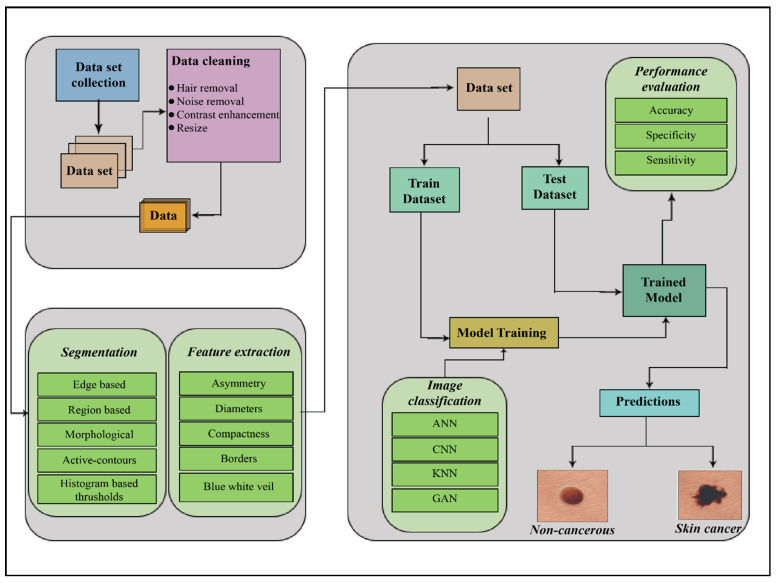
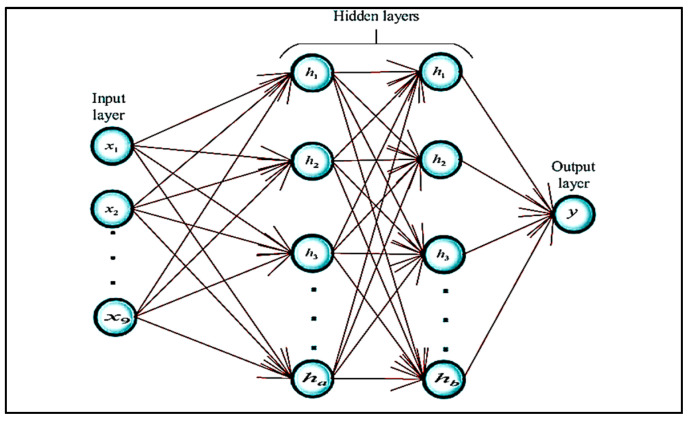
“ANN can also have multiple hidden layers which could then pass the processed data to the output layer [29].”
BackgroundSkin Cancer Classification Using Deep Networks
Karki, M. V., & Inamdar, S. (2022) · International Conference on Circuits, Control, Communication and Computing (I4C) · doi:10.1109/i4c57141.2022.10057868 · Cited by 4
“It needs two inputs that are completely processed on mathematical formulae [3].”
BackgroundKumar, R., Sood, P., Nirala, R. K., Ade, R. P., & Sonaji, A. V. (2023) · Journal for Research in Applied Sciences and Biotechnology · doi:10.55544/jrasb.2.5.9 · Cited by 4
Oversampled Two-dimensional Deep Learning Model for Septenary Classification of Skin Lesion Disease
Pati, N. K., Asish, Y. S., Kumar, K. M., & Prusty, M. R. (2022) · National Academy Science Letters · doi:10.1007/s40009-022-01175-x · Cited by 3
Silva, D. F. B., Firmino, R. T., Fugolin, A. P. P., Melo, S. L. S., Nóbrega, M. T. C., & de Melo, D. P. (2024) · Archives of Dermatological Research · doi:10.1007/s00403-024-03166-y · Cited by 2
“These lesions can affect any part of the body; however, they are more frequent in areas exposed to sunlight, such as hands, face, neck, lips and posterior region of the trunk [5, 6].”
Automatic detection of urban infrastructure elements from terrestrial images using deep learning
Macuácua, J. C., Centeno, J. A. S., Firmino, F. A. B., do Crato, J. K. T., Vestena, K. D. M., & Amisse, C. (2024) · Boletim de Ciências Geodésicas · doi:10.1590/s1982-21702024000100011 · Cited by 4
Light-responsive liposome as a smart vehicle for the delivery of anticancer herbal medicine to skin
Zarepour, A., Ülker, Z., Khosravi, A., Coşkun, A., Ertaş, Y. N., Yildiz, M., & Zarrabi, A. (2024) · Emergent Materials · doi:10.1007/s42247-024-00907-7 · Cited by 3
AI-Powered Dermatology: Revolutionizing Skin Cancer Detection Through Machine Learning Algorithms
Dubey, P., Bande, P., Shukla, R., Kshatri, S. S., Nayak, M., & Sharma, R. (2024) · International Conference on Cybernation and Computation (CYBERCOM) · doi:10.1109/cybercom63683.2024.10803244 · Cited by 5
Enhancing Skin Cancer Detection Through Automated Classification Using Convolutional Neural Networks
Hossain, M. J., Bhuiyan, M. D. W. I., Afrin, S., Tomal, M. A., Jennifer, S. S., Reza, A. W., & Siddique, N. H. (2024) · Lecture notes in networks and systems · doi:10.1007/978-3-031-73318-5_10 · Cited by 2
Ethosomes as a new frontier and revolutionary approach for targeted skin cancer therapy
Waqar, M. A., Mubarak, N., Khan, A. M., Zaib, M., Shoaib, Q.-U.-A., Alvi, A. S., & Dua-E-Zahra, S. (2025) · International Journal of Polymeric Materials · doi:10.1080/00914037.2025.2493916 · Cited by 2
Machine Learning Approach to Aerodynamic Analysis of NACA0005 Airfoil: ANN and CFD Integration
Kouser, T., Kurtuluş, D. F., Goli, S., Aliyu, A., Imran, I. H., Alhems, L. M., & Memon, A. M. (2025) · IEEE Access · doi:10.1109/access.2025.3592338 · Cited by 2
“It allows them to uncover large-scale patterns and hidden structures within the datasets [1], [2], [3], [4].”
Artificial Intelligence and the Use of Imaging Modalities in Biomedical Sciences
Ahanger, A. N., Nisa, B. U., Ahanger, A. B., Aalam, S. W., Bashir, S. M. O. A. B. S. M. O. A. , Macha, M. A., & Bhat, M. R. (2025) · Springer eBooks · doi:10.1007/978-981-96-8176-1_9 · Cited by 2
Prakash, C., Dhyani, B., Joshi, C., & Tiwari, R. (2024) · International Conference on Innovative Sustainable Computational Technologies (CISCT) · doi:10.1109/cisct62494.2024.11134179 · Cited by 2
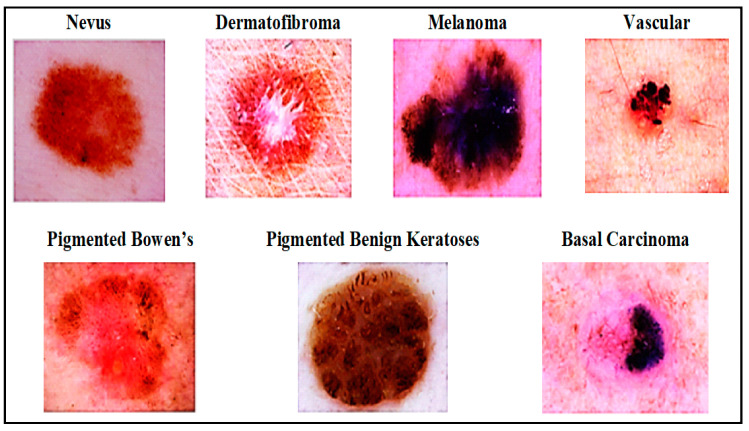
“The dataset contains seven types of skin problems which are actinic keratosis and intraepithelial carcinoma (AKIEC), vascular lesions (VASC), basal cell carcinoma (BCC), melanoma (MEL), dermatofibroma (DF), melanocytic nevi (NV) and benign keratosis like lesions (BKL) [19].”
FairDITA: Disentangled Image-Text Alignment for Fair Skin Cancer Diagnosis
Park, J., Lee, S., & Lee, Y. (2025) · Journal of Imaging Informatics in Medicine · doi:10.1007/s10278-025-01693-2 · Cited by 2
Karthiha, G., & Allwin, S. (2025) · PeerJ Computer Science · doi:10.7717/peerj-cs.3362 · Cited by 5
Kollem, S., Peddakrishna, S., Kumar, S., Chandrasekhar, S., & Venkatakrishnamoorthy, T. (2025) · IEEE International Conference on Advances in Computing Research on Science Engineering and Technology (ACROSET) · doi:10.1109/acroset66531.2025.11280942 · Cited by 2
“The role of deep learning in enhancing diagnostic accuracy and automation was again highlighted in [8], where issues such as data availability and model interpretability were also addressed.”
Bala, R., Duhan, N., & Bhatia, K. K. (2026) · Biomedical Signal Processing and Control · doi:10.1016/j.bspc.2026.109510 · Cited by 4
Automated Early Detection of Skin Cancer Using a CNN-ViT-Attention-Based Hybrid Model
Kanat, Z., Önal, M. K., Bingöl, H., Sener, S., Avcı, E., & Yildirim, M. (2026) · Biomedicines · doi:10.3390/biomedicines14030583 · Cited by 4
“They emphasized that early diagnosis is extremely vital at this point [14].”
A Review of Automatic Hair Removal in Dermoscopy Images: From Image Processing to Deep Learning
Bardou, D., Bouaziz, H., Lv, L., Bounezra, M., Vajdi, A., Zhang, T., Abbas, F., & Malah, M. (2026) · Journal of Imaging Informatics in Medicine · doi:10.1007/s10278-026-01950-y · Cited by 3
Hassanain, M., Sleem, A., Samy, M., & Anter, A. M. (2026) · Neural Computing and Applications · doi:10.1007/s00521-026-12077-0 · Cited by 2
“Dildar et al. [ 12] provided an extensive review of various deep learning approaches applied to skin cancer detection, emphasizing the effectiveness of CNNs in classifying skin lesions.”
SAVE: Spectrum-Aided Visual Enhancement for AI-Based Skin Cancer Detection
Huang, H., Nagisetti, Y., Mukundan, A., Karmakar, R., Libu, S. A., Liu, T., & Wang, H. (2026) · Diagnostics · doi:10.3390/diagnostics16121864 · Cited by 2
Sainudeen, J. P., & Meenakshi, N. (2022) · Cognitive science and technology · doi:10.1007/978-981-19-2350-0_84 · Cited by 2
An Optimal Architecture for Feature Optimization for Skin Lesion Detection
Sharma, N., & Verma, R. (2022) · International Conference on Parallel, Distributed and Grid Computing (PDGC) · doi:10.1109/pdgc56933.2022.10053106 · Cited by 2
“This paper is inspired by the research ideas of various researchers who had integrated machine learning approaches to address the challenges pertaining to the detection and diagnosis of skin cancer [10, 11, 12].”
BackgroundTarazona-Odar, M., Palomino-Davalos, W., & Auccahuasi, W. (2023) · International Conference on Software Engineering and Information Management (ICSIM) · doi:10.1145/3584871.3584887 · Cited by 2
“In this regard, the following statements from various studies stand out: A systematic and detailed review of deep learning techniques for early detection of skin cancer is presented in [4].”
BackgroundInfluentialGanesh, G. G., & Somasundaram, K. S. (2023) · Clinical Case Reports and Studies · doi:10.59657/2837-2565.brs.23.052 · Cited by 2
Kumar, M., Batra, S., Chakraborty, G. S., Kaur, P., & Mahajan, M. (2023) · International Conference on Augmented Intelligence and Sustainable Systems (ICAISS) · doi:10.1109/icaiss58487.2023.10250499 · Cited by 4
VGG Convolutional Neural Network Classification of Hyperspectral Images of Skin Neoplasms
Grechkin, B. V., Vinikurov, V. O., Khristoforova, Y. А., & Матвеева, И. А. (2023) · Journal of Biomedical Photonics & Engineering · doi:10.18287/jbpe23.09.040304 · Cited by 3
Tran, Q. N., Kakarndee, S., Suo, L., Jiraruttrakul, R., & Nuchitprasitchai, S. (2023) · Research, Invention, and Innovation Congress: Innovative Electricals and Electronics (RI2C) · doi:10.1109/ri2c60382.2023.10356008 · Cited by 2
“While the detection of skin cancer using GAN-based approaches obtain the accuracy between 70.1 to 86.1 [12].”
MethodInfluentialSkin Cancer Detection with Metadata Using Deep Learning Strategies
Devarakonda, N., Murthy, M. V. R., Reddy, R. R. C., & Harsha, P. B. L. S. (2024) · Lecture notes in electrical engineering · doi:10.1007/978-981-99-7633-1_16 · Cited by 3
Karli, A. B., & Kaya, B. (2024) · Fırat Üniversitesi Mühendislik Bilimleri Dergisi · doi:10.35234/fumbd.1426044 · Cited by 2
Deep learning and machine learning classification technique for integrated forecasting
Prem, M. V., Devakadacham, S. R., Shanmugam, N., Nandhakumar, N., Alagarsamy, M., & Kannadhasan, S. (2024) · IAES International Journal of Artificial Intelligence · doi:10.11591/ijai.v13.i2.pp1519-1525 · Cited by 2
Câncer de pele: uma revisão de literatura
Júnior, I. A. L., Lisboa, A. D. V., Ferreira, M. G. G., Júnior, A. M. D. P., Gomes, C. J., de Souza, J. A., de Oliveira, O. M. P., Vaz, G. R., Santos, S. D. S., Bezerra, V. M., et al. (2024) · Brazilian Journal of Implantology and Health Sciences · doi:10.36557/2674-8169.2024v6n4p2493-2501 · Cited by 2
Effective prediction of human skin cancer using stacking based ensemble deep learning algorithm
Devadhas, D. N. P., Sugirtharaj, H. P. I., Fernandez, F. M. H., & Duraipandy, P. (2024) · Network Computation in Neural Systems · doi:10.1080/0954898x.2024.2346608 · Cited by 5
“Medical testing is performed on a sample of a suspected skin lesion to identify if it is malignant (Dildar et al. 2021).”
Various Skin Cancer Classification & Detection using Deep learning
Tiwari, N., Sethia, A., Raj, A., Thanikaiselvan, V., Subashanthini, S., & Amirtharajan, R. (2024) · International Conference on Communications and Signal Processing (ICCSP) · doi:10.1109/iccsp60870.2024.10543937 · Cited by 2
A Dynamic Multi‐Output Convolutional Neural Network for Skin Lesion Classification
Zhou, Y., Guo, J., Yao, H., Zhao, J., Li, X., Qin, J., & Liu, S. (2024) · International Journal of Imaging Systems and Technology · doi:10.1002/ima.23164 · Cited by 2
Development of Skin Cancer Detection Using Deep Spiking Neural Networks
Habaebi, M. H., Zulkarnain, M. A., Gunawan, T. S., Fitriawan, H., Kartiwi, M., & Rahman, F. A. (2024) · IEEE International Conference on Smart Instrumentation, Measurement and Applications (ICSIMA) · doi:10.1109/icsima62563.2024.10675560 · Cited by 2
“Melanoma, squamous-cell carcinoma (SCC), and basal-cell carcinoma (BCC) are the three primary types of skin cancer [1].”
BackgroundAn Efficient Method For Skin Cancer Detection Using Convolutional Neural Network
Rajagopal, R., Karthik Kumar, G., V, Senbagavalli, M., & Priya, P. S. K. (2024) · doi:10.1109/icait61638.2024.10690677 · Cited by 2
Review Understanding of the many Facets of Cancer and the Management of Skin Cancer
Saloki, A., Shrivastava, A., Gaikwad, S., & Saraf, S. (2024) · Current Indian Science · doi:10.2174/012210299x350515241208061724 · Cited by 2
Korkut, Ş. G., Kocabaş, H., & Kurban, R. (2024) · Karadeniz Fen Bilimleri Dergisi · doi:10.31466/kfbd.1515451 · Cited by 2
The Future of Skin Cancer Detection: Machine Learning and Convolutional Neural Networks
Vayadande, K. B., Mirajkar, O., Mhetre, S., Mehta, H., Markande, S., & Mohol, S. (2024) · International Conference on Data Intelligence and Cognitive Informatics (ICDICI) · doi:10.1109/icdici62993.2024.10810972 · Cited by 2
Alzarea, A. I., Zafar, A., Alsaidan, O. A., Alanazi, A. S., Alzarea, S. I., Alhassan, H. H., & Uttekar, P. S. (2025) · International Journal of Biological Macromolecules · doi:10.1016/j.ijbiomac.2025.143836 · Cited by 2
Gaurav, A., Gupta, B. B., & Chui, K. T. (2025) · International Conference on Communications · doi:10.1109/icc52391.2025.11161199 · Cited by 2
“Dildar et al. [13] propose a systematic review of various deep learning techniques for early skin cancer detection.”
ANALYSIS OF SPECIFIC PARAMETERS FOR SKIN TUMOR CLASSIFICATION
Messadi, M., MAHMOUDI, S., & Bessaid, A. (2022) · Journal of Mechanics in Medicine and Biology · doi:10.1142/s0219519422500178 · Cited by 2
"Diagnostic Significance of Fine Needle Biopsy and Cell Block in Skin and Subcutaneous Nodules"
Hegazy, R. A. (2021) · Biomedical Journal of Scientific & Technical Research · doi:10.26717/bjstr.2021.39.006301 · Cited by 2
“It is suggested that skin cancer results from the presence of unpaired strands of deoxyribonucleic acid (DNA) in skin cells, resulting in skin genetic defects or mutations [3].”
BackgroundDiagnosis of Skin Malignancy using Deep Learning Approaches
Janney, J. B., Krishnamoorthy, N. R., Divakaran, S., Sudhakar, T., Krishnakumar, S., & Akshya, V. (2021) · International Conference on Advancements in Electrical, Electronics, Communication, Computing and Automation (ICAECA) · doi:10.1109/icaeca52838.2021.9675722 · Cited by 3
Deep Learning and Few-Shot Learning in the Detection of Skin Cancer: An Overview
Akinrinade, O. B., Du, C., Ajila, S. A., & Olowookere, T. A. (2022) · Lecture notes in networks and systems · doi:10.1007/978-3-031-18461-1_18 · Cited by 3
Rijhwani, R., Mahajan, T., Chhatlani, J., Bansode, A., & Bhatia, G. S. (2022) · IEEE Region Humanitarian Technology Conference · doi:10.1109/r10-htc54060.2022.9929864 · Cited by 2
Chatbot Combined with Deep Convolutional Neural Network for Skin Cancer Detection
Hu, Q., Xia, H., & Zhang, T. (2023) · Atlantis Highlights in Computer Sciences/Atlantis highlights in computer sciences · doi:10.2991/978-94-6463-040-4_7 · Cited by 2
A review of the application of CNN-based computer vision in auto-driving
Zhang, T. (2023) · Applied and Computational Engineering · doi:10.54254/2755-2721/5/20230533 · Cited by 3
Skin Cancer Classification using Multiple Convolutional Neural Networks
Praveen Raj, A., Kanishk, V., Vineesh, K., & Senthilselvi, A. (2023) · Journal of Soft Computing Paradigm · doi:10.36548/jscp.2023.4.001 · Cited by 2
Diagnosis of Chronic Kidney Disease Using Machine Learning Algorithm
Ahmed, A., Ahmed, G., Qureshi, E. A., & Ahmed, S. (2023) · European Journal of Theoretical and Applied Sciences · doi:10.59324/ejtas.2023.1(6).110 · Cited by 4
SVM-Based Skin Cancer Diagnosis for Malignant and Benign Tumor Distinction
Tanusha, G., & Ashwini, K. (2024) · IFIP advances in information and communication technology · doi:10.1007/978-3-031-69982-5_30 · Cited by 2
Classification of melanoma skin cancer using convolutional neural network
Lokesh, S., France, K. C., & Eliyas, S. (2024) · International Conference on Electrical Electronics and Computing Technologies (ICEECT) · doi:10.1109/iceect61758.2024.10739043 · Cited by 2
“The signs of skin cancer may now be quickly, easily, and affordably diagnosed because of computer-based technologies [9]. reconstructed strain in ultrasonic elastography using neural networks that were given extra-privileged data.”
BackgroundMulticlass Skin Cancer Classification using Ensembled Deep Learning ModelPreprint
Prakash, S., Acharya, S. S., Hiriyannaiah, S., Siddesh, G., & Sriniv, K. G. (2022) · Research Square · doi:10.21203/rs.3.rs-2265972/v1 · Cited by 2
Emerging Soft Computation Tools for Skin Cancer Diagnostics
Janney, J. B., Divakaran, S., Sudhakar, T., Prince, P. G. K., Hemalatha, R. J., & Nag, M. (2023) · EAI/Springer Innovations in Communication and Computing · doi:10.1007/978-3-031-27700-9_16 · Cited by 1
Classification of Skin Cancer With Using Color-ILQP and MEETG
Armi, L., & Ebrahimpour-Komleh, H. (2023) · doi:10.1109/ipria59240.2023.10147194 · Cited by 1
Mahmoud, H., Omer, O. A., Ragab, S. M., Esmaiel, H., & Abdel‐Nasser, M. (2024) · Traitement du signal · doi:10.18280/ts.410211 · Cited by 2
“Generally, non-melanoma cancers carry a more favorable prognosis than melanoma cancers [6].”
Skin Cancer Detection Using Deep Learning
Osman, S., Maher, H., & Sayed, B. (2023) · Journal of ACS Advances in Computer Science · doi:10.21608/asc.2023.328067 · Cited by 1
Melanoma Risks Detection Using Ensemble Random Forest Model
Padam, G., Shafaque, D., Mishra, S., Dabas, A., & Dheidan, A. H. (2024) · Lecture notes in networks and systems · doi:10.1007/978-981-97-6318-4_34 · Cited by 1
Comparison Between Novel Machine and Deep Learning-based Skin Tumor Recognition Techniques
Barbu, T., & Murgu, L. (2024) · E-Health and Bioengineering Conference (EHB) · doi:10.1109/ehb64556.2024.10805703 · Cited by 1
“Various machine and deep learning techniques for skin tumor detection [3, 4] and classification [5, 6] have been proposed recently.”
A Digital Dermoscopy: CNNs in the Era of Automated Skin Cancer Detection
Mir, T. A., Anand, V., Gupta, S., Upadhyay, D., & Rawat, R. S. (2024) · Asian Conference on Innovation in Technology (ASIANCON) · doi:10.1109/asiancon62057.2024.10837874 · Cited by 1
Role of Capsule Network Model in Brain Tumor Analysis and Detection: A Review
Sharma, M., Singh, S., & Singh, S. (2025) · Lecture notes in networks and systems · doi:10.1007/978-981-97-8329-8_66 · Cited by 1
Skin Cancer Detection Using a Deep-Learning Based Framework
Ghosh, M., Maiti, A. K., Sarkar, P., Jana, A., & Roy, A. (2025) · Springer eBooks · doi:10.1007/978-981-97-8627-5_8 · Cited by 1
Soft Attention-Enhanced ResNet101 for Robust Skin Lesion Classification in Dermoscopic Images
Abuhammad, H., Alhawarat, M. O., & Mehiar, D. (2025) · International Conference for Artificial Intelligence, Applications, Innovation and Ethics (AI2E) · doi:10.1109/ai2e64943.2025.10983896 · Cited by 1
A Revolutionary Transfer Learning System for Multimodal Skin Lesion Evaluation
Saieswari, G., Praneetha, G., D., Y., Sai Sandeep, A., Yuvaraj, P., & Elisha Raju, B. (2025) · International Conference on Augmented Intelligence and Sustainable Systems (ICAISS) · doi:10.1109/icaiss61471.2025.11042165 · Cited by 1
Attention-Enhanced EfficientNet for Accurate Skin Cancer Diagnosis: A Deep Learning Approach
Uma, S., Tamilmani, G., Komaravalli, P. R., Karthik, B. N., & Mary, K. D. (2025) · Communications in computer and information science · doi:10.1007/978-3-031-92041-7_16 · Cited by 2
YOLOv10x Model for Accurate First Detection of Skin Diseases from Dermoscopic Objects
Tjahjono, W. T. D., Paramita, C., Supriyanto, C., Savičević, A. J., Rakasiwi, S., & Haresta, A. A. (2025) · International Conference on Smart Computing, IoT and Machine Learning (SIML) · doi:10.1109/siml65326.2025.11080864 · Cited by 3
Skin Cancer Detection Using A Multi-Scale AI Deep Learning CNN Techniques
Appavu, N. (2025) · International Conference on Recent Advances in Information Technology · doi:10.1109/rait65068.2025.11089187 · Cited by 1
“Using a confirmatory method, they improved their model and obtained accuracies of 19.7% and 70.1% in various situations [12].”
InfluentialEnhanced Deep Learning Model ResNet101 for Efficient Skin Disease Detection
Agrawal, K., Goyal, M., & Jain, S. (2025) · Lecture notes in networks and systems · doi:10.1007/978-981-96-5822-0_10 · Cited by 1
Kaushik, V., Singhal, C., Khodaskar, D., & Gupta, A. R. (2025) · International Conference for Emerging Technology (INCET) · doi:10.1109/incet64471.2025.11140277 · Cited by 1
The Influence of Pressure on Magnetite–Zinc Oxide Synthesis in Hydrothermal Conditions
Ioța, M.-A., Cursaru, L.-M., Tudor, I. A., Costea, M.-N., Matei, A. C., Drăguț, D. V., Piticescu, R. M., & Șchiopu, A.-G. (2025) · Crystals · doi:10.3390/cryst15090829 · Cited by 1
Skin Cancer Detection and Classification Using CNN and SVM
Slimen, S., Mezghani, A., & Kherallah, M. (2025) · Lecture notes in networks and systems · doi:10.1007/978-3-031-78922-9_13 · Cited by 1
Analyzing Skin Cancer Datasets for Early Detection Using Deep Learning
Thorat, A., & Jadhav, C. R. (2025) · International Conference on Computing Communication Control and automation · doi:10.1109/iccubea65967.2025.11283977 · Cited by 1
“Dildar et al. provided a detailed review of DL techniques, identifying prevailing trends and challenges [16].”
To Implement and Identify Skin Cancer Disease Prediction by using Deep CNN Bi-LSTM
Vishwakarma, B., Pandey, V. P., Jeswani, R., Badugu, B., Thakur, N., & Salve, M. (2025) · IEEE International Conference on Advances in Computing Research on Science Engineering and Technology (ACROSET) · doi:10.1109/acroset66531.2025.11281185 · Cited by 1
“The system will be trained & tested on a dermoscopic image dataset consisting of 10,000 images and will aim for a classification accuracy of 96.07% or better, enabling earlier diagnosis and supporting clinical decisions by dermatologists [7].”
InfluentialAlBabele, O., Malik, H., Jabeur, N. H., Anwar, R. W., & Dampier, D. (2025) · Procedia Computer Science · doi:10.1016/j.procs.2025.10.209 · Cited by 3
Sancho, T. B., Soares, A. K. M. D. C., Santos, M. C. R., Barbosa, V. F., de Azevedo, F. M., Rocha, H. A. O., & Medeiros, A. C. (2025) · Medical Oncology · doi:10.1007/s12032-025-03138-w · Cited by 1
Alhassan, A. M., & Altmami, N. I. (2025) · Ain Shams Engineering Journal · doi:10.1016/j.asej.2025.103956 · Cited by 2
Barman, A. D., Roy, K. R., Sultana, M. T., Mandal, A. K., & Bhowmik, P. (2025) · Communications in computer and information science · doi:10.1007/978-3-032-11335-1_28 · Cited by 1
An Investigation on the Detection and Classification of Skin Cancer Using Deep Learning
Narmadha, G., & Sivasakthi, M. (2026) · Studies in systems, decision and control · doi:10.1007/978-3-032-10016-0_44 · Cited by 1
Innovative Photothermal Nanomaterials for Combating Melanoma
Moghadasi, H., & Varshosaz, J. (2026) · BioNanoScience · doi:10.1007/s12668-025-02283-w · Cited by 1
Hybrid CNN-BI-Directional LSTM Model for Early Skin Cancer Detection
Vijayakumari, G., Kumar, V., Priya, S. L., Gladis, S. S., & Kavibharathi, P. (2025) · International Conference on Networks and Soft Computing (ICNSoC) · doi:10.1109/icnsoc66817.2025.00105 · Cited by 1
Zuo, C., Wang, X., Cao, N., Guo, X., Zhang, Z., Chen, S. M., & Zhang, G. (2026) · Photodiagnosis and Photodynamic Therapy · doi:10.1016/j.pdpdt.2026.105413 · Cited by 1
A Melanoma Skin Cancer Detection and Classification System Using Deep Transfer Learning
Yaqoob, M. M., Hamidullah, S., Manan, R., Khalid, A., Khattak, U. F., & Khan, M. A. (2026) · Engineering Technology & Applied Science Research · doi:10.48084/etasr.15730 · Cited by 2
“In [15], a skin cancer diagnosis model used deep learning algorithms, including Inception-ResNet-v2 and ResNet-101 architectures, achieving an accuracy of 93.5% on a test set of 500 images, outperforming earlier state-of-the-art models by 5.5%.”
InfluentialAlarfaj, F. K., & Khan, H. U. (2026) · Information Systems Frontiers · doi:10.1007/s10796-026-10749-9 · Cited by 2
“Based on the neural architecture search (NAS), NASNetMobile is lightweight and efficient and is optimized for mobile and resource-constrained envi - ronments, considering the tradeoff between accuracy and computational efficiency (Dildar et al. 2021 ).”
Self-citationJeon, J. J., Chun, H., Lee, J., Son, H., Lee, C., Lee, K., Oh, S. S., Hwang, S., Hyun, C. S., Kim, M. H., et al. (2026) · American Journal of Clinical Dermatology · doi:10.1007/s40257-026-01034-1 · Cited by 1
Saleh, N., Shaaban, A., & Salaheldin, A. M. (2026) · Biomedical Physics & Engineering Express · doi:10.1088/2057-1976/ae74d6 · Cited by 1
“More details of the employed datasets are available in [2, 17, 18, 25, 27, 29, 47, 107, 108].”
InfluentialHauza, E., Mutai, I., Necel, A., Kamya, D., Śliwka, P., Dusza, I., Węgrzyn, A., & Skaradzińska, A. (2026) · Clinical Microbiology Reviews · doi:10.1128/cmr.00048-26 · Cited by 2
“Although it accounts for only about 1% of all skin cancers, melanoma is the most lethal subtype, responsible for the majority of skin cancer-related deaths (192).”
Moghadasi, H., Varshosaz, J., Minayian, M., Jahanian‐Najafabadi, A., & Hassanzadeh, F. (2026) · Journal of Drug Delivery Science and Technology · doi:10.1016/j.jddst.2026.108595 · Cited by 1
A Deep Review On Skin Cancer Through Deep Residual Networks
Gomathi, S. S., & Sudhakar, S. (2021) · International Conference on Computing and Communications Technologies (ICCCT) · doi:10.1109/iccct53315.2021.9711808 · Cited by 1
Akinrinade, O. B., Du, C., & Ajila, S. A. (2022) · Communications in computer and information science · doi:10.1007/978-3-031-12641-3_9 · Cited by 1
Contributions and Limitations About the Use of Deep Learning for Skin Diagnosis: A Review
Nascimento, E. L. L., & Viera, Á. F. G. (2022) · Lecture notes of the Institute for Computer Sciences, Social Informatics and Telecommunications Engineering · doi:10.1007/978-3-031-22324-2_11 · Cited by 1
ANN Based Skin Cancer Detection
Sudhamsu, G., & Mahesh, T. R. (2022) · International Interdisciplinary Humanitarian Conference for Sustainability (IIHC) · doi:10.1109/iihc55949.2022.10060456 · Cited by 1
A Deep Learning Model Approach Using Feature Engineering To Predict Melanoma Tumour Size
Sarkar, T., Parekh, M., Shetty, S. S., & Bhise, A. (2022) · IEEE International Conference on Interdisciplinary Approaches in Technology and Management for Social Innovation (IATMSI) · doi:10.1109/iatmsi56455.2022.10119334 · Cited by 1
“[25] The class labels used for training and prediction vary for different datasets.”
BackgroundSkin Lesions Detection using Deep Learning Techniques
Sundari, S. S., Sampath, A. K., & Islabudeen, M. (2023) · International Journal for Research in Applied Science and Engineering Technology · doi:10.22214/ijraset.2023.52129 · Cited by 1
Segmentação Semântica do Câncer de Pele Utilizando Aprendizado Profundo
da Silva, J. V. M., Aires, K. R. T., dos Santos, A. R. F., Veras, R. D. M. S., Neto, L. D. S. B., Sousa, L. P., & Filho, F. D. C. I. (2023) · doi:10.5753/sbcas.2023.229926 · Cited by 1
“O aprendizado profundo é uma metodologia computacional que vem se tornando popular para problemas que envolvem imagens médicas [Dildar et al. 2021].”
BackgroundInfluentialA Comparative Analysis of Deep Learning and Hybrid Models to Diagnose Multi-Class Skin Cancer
Nawrin, I. N., Trina, T. T., Rahman, R., & Rasel, A. A. (2023) · International Conference on Next-Generation Computing, IoT and Machine Learning (NCIM) · doi:10.1109/ncim59001.2023.10212670 · Cited by 3
“It has demonstrated promising results across a wide range of fine-grained item categorizations in a variety of broad and highly variable tasks [8].”
BackgroundOPT-MobileNet: A Deep Learning Approach for Carcinogenic Classification of Human Skin mole
Chaudhuri, R., Das, S., & Deb, S. (2023) · International Conference on Innovation and Intelligence for Informatics, Computing, and Technologies (3ICT) · doi:10.1109/3ict60104.2023.10391498 · Cited by 1
“Mehwish Dildar et al. [13] presented a detailed systematic review of certain DL-assisted strategies for detecting early stages of skin cancer.”
BackgroundManaging Healthcare Data Using ML Algorithms and Society 5.0
Anupama, D., Athota, R. K., & Sumathi, D. (2024) · Disruptive technologies and digital transformations for society 5.0 · doi:10.1007/978-981-99-8118-2_4 · Cited by 2
Deep Learning for Skin Disease Diagnosis with End-to-End Data Security
Pingulkar, S., Divekar, D., & Tiwary, A. (2023) · International Conference on Informatics (ICI) · doi:10.1109/ici60088.2023.10421188 · Cited by 2
“The proposed framework demonstrated promising accuracies across all tasks[3].”
Metadata
- Authors
- Dildar, M., Akram, S., Irfan, M., Khan, H. U., Ramzan, M., Mahmood, A. R., Alsaiari, S. A., Saeed, A. H. M., Alraddadi, M. O., & Mahnashi, M. H.
- Affiliations
- Government Associate College for Women Mari Sargodha, Sargodha 40100, Pakistan
- University of Sargodha (PK)
- Najran University (SA)
- COMSATS University Islamabad (PK)
- University of Tabuk (SA)
- Corresponding author
- Ramzan, Muhammad
- Venue
- International Journal of Environmental Research and Public Health
- Publisher
- MDPI AG
- Published
- 2021-05-20
- Volume
- 18
- Issue
- 10
- Pages
- 5479
- ISSN
- 1660-4601 (ISSN-L)
- PMC
- PMC8160886
- OpenAlex
- W3165685657
- Semantic Scholar
- faec7030c99bf2fa29d341bc09d351b7edfa05bc
- Cited by
- 597
- References
- 62
- Citations by year
- 2026: 81 · 2025: 156 · 2024: 162 · 2023: 130 · 2022: 56 · 2021: 12
- FWCI
- 10.87
- Type
- journal article
- Language
- en
- Open access
- gold
- doi.org
- Licence
- Locations
- International Journal of Environmental Research and Public Health (publishedVersion, cc-by)
- PubMed Central (publishedVersion, cc-by)
- PubMed (publishedVersion)
- RePEc: Research Papers in Economics (submittedVersion)
- DOAJ (DOAJ: Directory of Open Access Journals) (submittedVersion)
- Funders
- Deanship of Scientific Research Najran University (DSR NU 2021)
- Topics
- Health Sciences › Medicine › Oncology › Cutaneous Melanoma Detection and Management
- Physical Sciences › Computer Science › Artificial Intelligence › AI in cancer detection
- Health Sciences › Health Professions › Health Information Management › Artificial Intelligence in Healthcare
- Keywords
- skin cancer, early detection, melanoma, benign skin lesions, deep learning, skin lesion classification, computer-aided diagnosis
- MeSH terms
- Deep Learning, Humans, Melanoma, Skin, Skin Neoplasms
About these checks
Registry, retraction, Cites and statistics results are computed, not judged, with one exception: a printed reference that no index lists is read once by a model before it counts as a citation error. Claims are extracted by a model and kept only when their quote appears verbatim in the text; each cited source is then checked, with a model’s help, for whether it says what the claim relies on. Those verdicts can be wrong — read the claim’s quote and the cited source before relying on one.
Statistics and arithmetic are recomputed, not judged.
Confidence bands are shown only for fields calibrated on our annotated test set. None is calibrated yet, so no band is shown.
What counts as a claim ›How we measure confidence ›How we check this ›
Are you an author, or do you see a problem with this page? Request a review
Data sources
Bibliographic data: Semantic Scholar, OpenAlex, Crossref.
Contains information from the Semantic Scholar Academic Graph Datasets, made available under the ODC Attribution License (ODC-BY 1.0).
Semantic Scholar’s data is described in: Kinney, R., et al. (2023). The Semantic Scholar Open Data Platform. arXiv:2301.10140.
