

Skin Cancer Detection: A Review Using Deep Learning Techniques
Open accessThe DOI matches its Crossref record; 70 of the 70 references it cites were found in a registry or an index.
Abstract
Skin cancer is one of the most dangerous forms of cancer. Skin cancer is caused by un-repaired deoxyribonucleic acid (DNA) in skin cells, which generate genetic defects or mutations on the skin. Skin cancer tends to gradually spread over other body parts, so it is more curable in initial stages, which is why it is best detected at early stages. The increasing rate of skin cancer cases, high mortality rate, and expensive medical treatment require that its symptoms be diagnosed early. Considering the seriousness of these issues, researchers have developed various early detection techniques for skin cancer. Lesion parameters such as symmetry, color, size, shape, etc. are used to detect skin cancer and to distinguish benign skin cancer from melanoma. This paper presents a detailed systematic review of deep learning techniques for the early detection of skin cancer. Research papers published in well-reputed journals, relevant to the topic of skin cancer diagnosis, were analyzed. Research findings are presented in tools, graphs, tables, techniques, and frameworks for better understanding.
Overview
The claims and statistics of this paper haven’t been checked yet.
Free: it reads the open-access text and checks the first 5 claims that cite a source we can check. Create a free account to check every claim.
Integrity signals
Registry
Cites
Statistics
Figures
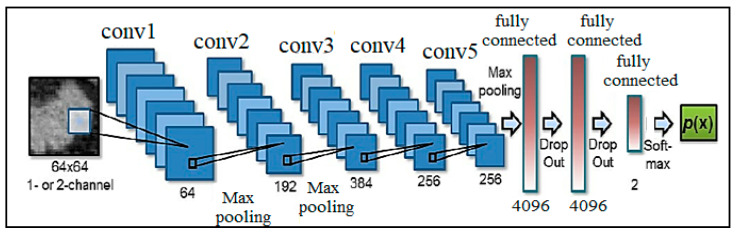
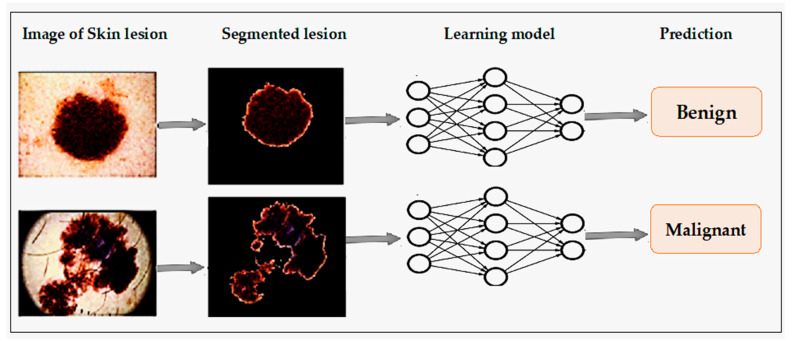
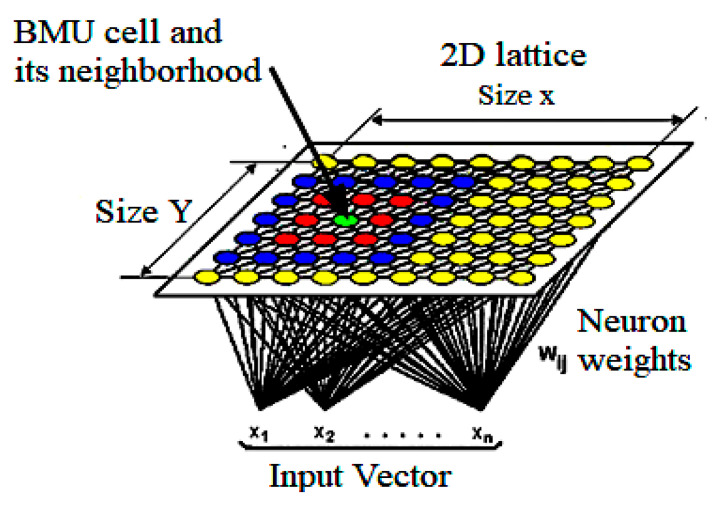
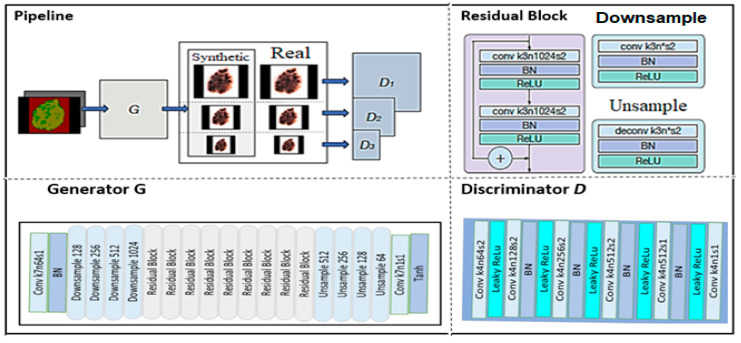
Verification
Claims the paper makes
The claims and statistics of this paper haven’t been checked yet.
Free: it reads the open-access text and checks the first 5 claims that cite a source we can check. Create a free account to check every claim.
Self-check
Percentages, sums and reported differences re-computed from the paper’s own numbers.
The self-check needs the paper’s full text.
Citations
Cites
Dermatologist-level classification of skin cancer with deep neural networks
Esteva, A., Kuprel, B., Novoa, R. A., Ko, J., Swetter, S. M., Blau, H. M., & Thrun, S. (2017) · Nature · doi:10.1038/nature21056 · Cited by 14,362 · cited 1×
“[39] Melanoma /benign Keratinocyte carcinomas/benign SK Deep CNN ISIC-Dermoscopic Archive Expert-level performance against 21 certified dermatologists Accuracy (72.”
BackgroundA scaled conjugate gradient algorithm for fast supervised learning
Møller, M. F. (1993) · Neural Networks · doi:10.1016/s0893-6080(05)80056-5 · Cited by 4,052
Tschandl, P., Rosendahl, C., & Kittler, H. (2018) · Scientific Data · doi:10.1038/sdata.2018.161 · Cited by 3,628
Byrd, A. L., Belkaid, Y., & Segre, J. A. (2018) · Nature Reviews Microbiology · doi:10.1038/nrmicro.2017.157 · Cited by 2,806 · cited 1×
“As the skin is the body’s largest organ, the point of considering skin cancer as the most common type of cancer among humans is understandable [2].”
BackgroundCodella, N. C. F., Gutman, D., Celebi, M. E., Helba, B., Marchetti, M. A., Dusza, S. W., Kalloo, A., Liopyris, K., Mishra, N., Kittler, H., et al. (2018) · 2018 IEEE 15th International Symposium on Biomedical Imaging (ISBI 2018) · doi:10.1109/isbi.2018.8363547 · Cited by 2,620
NIPS 2016 Tutorial: Generative Adversarial Networks
Goodfellow, I. (2016) · arXiv (Cornell University) · doi:10.48550/arxiv.1701.00160 · Cited by 1,229
Automated Melanoma Recognition in Dermoscopy Images via Very Deep Residual Networks
Yu, L., Chen, H., Dou, Q., Qin, J., & Heng, P.-A. (2017) · IEEE Transactions on Medical Imaging · doi:10.1109/tmi.2016.2642839 · Cited by 1,140 · cited 3×
“This limited variation makes the task of image analysis and classification very complex [32].”
BackgroundMethodInfluentialPH2 - A dermoscopic image database for research and benchmarking
Mendonca, T., Ferreira, P. M., Marques, J. S., Marcal, A. R. S., & Rozeira, J. (2013) · 2013 35th Annual International Conference of the IEEE Engineering in Medicine and Biology Society (EMBC) · doi:10.1109/embc.2013.6610779 · Cited by 1,009 · cited 1×
“The dermoscopic images in the PH2 dataset were collected at the Dermatology Center of Pedro Hispano Hospital, Portugal [68].”
MethodThe Benefits and Challenges of Using Systematic Reviews in International Development Research
Mallett, R., Hagen-Zanker, J., Slater, R., & Duvendack, M. (2012) · Journal of Development Effectiveness · doi:10.1080/19439342.2012.711342 · Cited by 565 · cited 1×
“Once systematic literature is completed, it provides a more sensible, logical, and robust answer to the underlying question of the research [11].”
BackgroundVisualizing and Understanding Convolutional Networks
Zeiler, M. D., & Fergus, R. (2013) · arXiv · doi:10.48550/arxiv.1311.2901 · Cited by 522
Research works printed but not linked: 7
- Schlosser, 2006, The Role of Systematic Reviews in Evidence-Based Practice, Research and Development, Focus, 15, 1
- Kanimozhi, 2016, Computer-Aided Melanoma Skin Cancer Detection Using Artificial Neural Network Classifier, J. Sel. Areas Microelectron., 8, 35
- Bayot, 2007, Malignancy Detection of Candidate for Basal Cell Carcinoma Using Image Processing and Artificial Neural Network, Dlsu Eng. E J., 1, 70
- Kalouche, S. (2021, January 10). Vision-Based Classification of Skin Cancer Using Deep Learning. Available online: https://www.semanticscholar.org/paper/Vision-Based-Classification-of-Skin-Cancer-using-Kalouche/b57ba909756462d812dc20fca157b3972bc1f533.
- Sajid, 2018, Performance Evaluation of Classifiers for Automatic Early Detection of Skin Cancer, J. Adv. Res. Dyn. Control. Syst., 10, 454
- Shoieb, 2016, Computer-Aided Model for Skin Diagnosis Using Deep Learning, J. Image Graph., 4, 116
- Stanley, R.J., Stoecker, W.V., Moss, R.H., Gupta, K., and Jella, P. (2005, January 6–10). Color and Structural Features for Automatic Skin Lesion Discrimination in Dermoscopy Images. Proceedings of the 6th World Congress on Melanoma, Vancouver, BC, Canada.
Cited by
Items 401–500 of 598
Decoding the Skin with AI: A Review of Cutting-Edge Technologies and Applications*
Kumari, S., Umrao, S., & Kushwaha, D. K. (2024) · International Conference on Disruptive Technologies (ICDT) · doi:10.1109/icdt61202.2024.10489672 · Cited by 1
“Inaccurate diagnoses can result from biased datasets that lack diversity in age groups, skin tones, and illness presentations, especially for marginalized commu-nities [10].”
BackgroundA Se-ResNet50 Based Deep Learning Method for Stomach And Tract Segementation
Chen, N. (2024) · International Conference on Neural Networks, Information and Communication Engineering (NNICE) · doi:10.1109/nnice61279.2024.10498249 · Cited by 1
Automated Multiclass Dermatological Diagnosis Prediction using Improved Mobile-Net Model
UmaRani, V., & Anupriya, J. (2024) · IEEE International Conference on Interdisciplinary Approaches in Technology and Management for Social Innovation (IATMSI) · doi:10.1109/iatmsi60426.2024.10503214 · Cited by 1
“Hikmat Ullah Khan [7] provided a thorough, methodical analysis of DL approaches for the preliminary identification of skin cancer using ISIC dataset.”
MethodA Comprehensive Approach to Classify the Skin Cancer Disease Using Latest CNN Model (YOLOv8)
Purkait, P. S., Ghosh, N., Dey, S., Roy, H., & Dhar, S. (2024) · Advances in intelligent systems and computing · doi:10.1007/978-981-97-2321-8_14 · Cited by 1
Automated fingerprint analysis as a diagnostic tool for the genetic disorder Kabuki syndrome
Agustsson, V. I., Björnsson, P. Á., Fridriksdottir, A., Bjornsson, H. T., & Ellingsen, L. M. (2024) · Genetics in Medicine Open · doi:10.1016/j.gimo.2024.101884 · Cited by 3
Unlocking the Potential of Patient Metadata for Skin Cancer Detection: An AI Framework
Islam, M. S., Wishart, G. C., Walls, J., Hall, P. N., Garcia, A., Gan, J. Q., & Raza, H. (2024) · IEEE International Conference on Digital Health (ICDH) · doi:10.1109/icdh62654.2024.00026 · Cited by 1
“Due to significant advancements in computer vision (CV) technology, researchers now use image data for skin cancer detection [5].”
BackgroundTypes of Cancers, Epidemiology, and Molecular Insights
Sobti, R. C., Gosipatala, S. B., Sharma, M., Reddy, P., Khalko, R. K., Kaur, T., & Thakur, M. (2024) · Springer eBooks · doi:10.1007/978-981-99-6263-1_1 · Cited by 2
Ensemble Model Using Various CNNs for Improved Skin Cancer Diagnosis
A, S. A. M. S., Gounder, K. K., & Wagh, D. A. (2024) · International Conference on Intelligent Cyber Physical Systems and Internet of Things (ICoICI) · doi:10.1109/icoici62503.2024.10696508 · Cited by 4
“They emphasize the need for large datasets and advanced preprocessing methods to improve model performance [1].”
BackgroundSkin Cancer Detection Using Deep Learning
Rakshit, P., Ghosh, A., Chakraborty, C., Paul, J., & Das, D. (2024) · Lecture notes in electrical engineering · doi:10.1007/978-981-97-6465-5_29 · Cited by 3
Merkel cell carcinoma detection using deep learning algorithms
Maideen, A. K., Sakthivel, M., & Angeline, A. (2024) · AIP conference proceedings · doi:10.1063/5.0241830 · Cited by 1
Skin Cancer Classification Using Enhanced DCNN
Dharmaraj, N., Rakesh, S., Modi, U. K., Ramanan, B. S., Sanjana, S., & Thabitha, V. A. R. (2024) · IEEE International Conference on Smart Power Control and Renewable Energy (ICSPCRE) · doi:10.1109/icspcre62303.2024.10675257 · Cited by 1
An Efficient Approach towards Skin Cancer Diagnosis with EfficientNetB3
Saha, P., Ghoshal, R., & Ghosal, A. (2024) · Journal of Innovative Image Processing · doi:10.36548/jiip.2024.4.002 · Cited by 1
Armanda, D.-M., Cococi, A.-G., Dogaru, I., & Dogaru, R. (2024) · E-Health and Bioengineering Conference (EHB) · doi:10.1109/ehb64556.2024.10805739 · Cited by 1
Shaheen, H., & Singh, M. P. (2025) · Communications in computer and information science · doi:10.1007/978-3-031-81339-9_1 · Cited by 1
Molecular Docking Study: Application to the Epidermal Growth Factor Receptor
Asli, F., & Bensahbane, I. (2024) · doi:10.3390/ecsoc-28-20219 · Cited by 1
Loganathan, R., & Latha, S. (2025) · Technology and Health Care · doi:10.1177/09287329241301649 · Cited by 1
“Dildar et al. 14 used this approach to diagnose skin cancer.”
Skin Cancer Recognition Using Attention-Based CNN Algorithm
Ingle, Y. S., & Shaikh, N. F. (2024) · IEEE Pune Section International Conference (PuneCon) · doi:10.1109/punecon63413.2024.10895882 · Cited by 1
“Numerous algorithms rely on human visual specialists to evaluate the septal (sandwich) imaging of a histological segment [15].”
Kim, J., Chen, T., Nguyen, H., & Kabir, M. F. (2024) · International Conference on Machine Learning and Applications · doi:10.1109/icmla61862.2024.00061 · Cited by 1
“DNN-based models have shown strong performance in detecting skin cancer, often matching or surpassing human experts in various studies [3], [5].”
Ahmed, I., Ahmad, M., Chehri, A., & Jeon, G. (2024) · Globecom · doi:10.1109/globecom52923.2024.10901659 · Cited by 1
“In their study, Dildar et al. [7] thoroughly examined various skin cancer detection methods that rely on deep learning techniques.”
Ahmed, A., Sun, G., Li, Y., & Saadeldin, M. (2024) · International Conference on Electronic Information Engineering and Computer Communication (EIECC) · doi:10.1109/eiecc64539.2024.10929611 · Cited by 1
“Traditional diagnostic methods like biopsy are invasive and time-consuming, prompting the development of non-invasive computer-based tools for early detection [5].”
Implementation InceptionV3 + SVM Model to Achieve High Accuracy for Skin Cancer Classification
Raj, A., Yogitha, M., & Hegde, S. S. (2025) · Lecture notes in networks and systems · doi:10.1007/978-981-96-2694-6_29 · Cited by 1
Multiscale Dynamic Attention Framework for Skin Lesion Segmentation and Classification
Devaraj, G. P., Vanitha, V., Vimala, K., & Gupta, P. K. (2025) · International Journal of Imaging Systems and Technology · doi:10.1002/ima.70130 · Cited by 1
A CDSS for Conducing Prediction and Prescription of Non-Cancerous Skin Disease
Sudham, K. M., Rehan, M., Havale, D., Nandan, K., & Divyashree, N. (2025) · International Conference on Smart Applications, Communications and Networking (SmartNets) · doi:10.1109/smartnets65254.2025.11106868 · Cited by 1
Cherukuri, S., & Prasad, S. D. V. (2025) · Computational Biology and Chemistry · doi:10.1016/j.compbiolchem.2025.108738 · Cited by 2
Deep Semantic Segmentation in Skin Detection
Cuza, D., Loreggia, A., Lumini, A., & Nanni, L. (2022) · European Symposium on Artificial Neural Networks, Computational Intelligence and Machine Learning (ESANN) · doi:10.14428/esann/2022.es2022-35 · Cited by 1
“For a comprehensive study about skin cancer detection, we point the reader to a recent survey on skin cancer detection using Deep Learning Techniques [3].”
MethodAn Improved Method for Skin Cancer Prediction Using Machine Learning Techniques
Gupta, B., Jain, C. K., Srivastava, R. L., Ghosh, D., & Singh, R. (2022) · International Journal of Electrical and Electronics Research · doi:10.37391/ijeer.100422 · Cited by 1
“Using HAM10000 dataset [13], exploratory data analysis has been done, then resizing of images has been performed to fit as a column in the data frame.”
MethodSKIN LESION ANALYSIS USING CNN
Gaikwad, S., Agnihotri, A., Khan, A., & Kanekar, V. (2021) · International Journal of Engineering Applied Sciences and Technology · doi:10.33564/ijeast.2021.v06i06.035 · Cited by 1
Classification of Skin Tumor Lesions Based on Transfer Learning Using Dermoscopic Images
Iqbal, M. M. (2023) · International Conference on Intelligent Medicine and Image Processing (IMIP) · doi:10.1109/imip57114.2023.00013 · Cited by 1
Melatect: A Machine Learning Model Approach For Identifying Malignant Melanoma in Skin GrowthsPreprint
Meel, V., & Bodepudi, A. (2021) · arXiv (Cornell University) · doi:10.48550/arxiv.2109.03310 · Cited by 1
“[13] performed a comprehensive study on approaches for detecting melanoma using CNN, KNN (Kohonen selforganizing neural networks), ANN (artificial neural networks) and GANs (generative adversarial neural networks).”
MethodRani, B. (2023) · Isra Medical Journal · doi:10.55282/imj.ltr35 · Cited by 1
Deep learning-based skin lesion classification for cancer detectionPreprint
Premnath, K. N., Sundaravadivel, P., Augustian Isaac, R., Srimathi, K., Vaishnavi, M., & Sathya, N. (2024) · Research Square · doi:10.21203/rs.3.rs-5675190/v1 · Cited by 1
How is Artificial Intelligence Transforming the Skin Cancer Screening Pathway? An Umbrella ReviewPreprint
Sollis, L. J., Bunnell, A., Cho, E., Willingham, M. L., Jr., Cruz-Mattos, G., Arii, A., Lum, C., Cassel, K., & Shepherd, J. (2026) · Research Square · doi:10.21203/rs.3.rs-9069373/v1 · Cited by 2
Enhancing Melanoma Skin Cancer Detection Using Ensemble Deep Learning
Minhas, N., Singh, S., Malik, A., & Kumar, D. (2026) · National Academy Science Letters · doi:10.1007/s40009-026-02262-z · Cited by 1
Sonuç, E., Saihood, Q., Yargı Baydilli, Y., & Özcan, E. (2026) · Frontiers in Medicine · doi:10.3389/fmed.2026.1871689
Clinical Diagnosis and Classification
Vakharia, K. T. (2021) · Clinics in Plastic Surgery · doi:10.1016/j.cps.2021.06.006
3D-WAVELET TRANSFORM BASED SKIN CANCER CLASSIFICATION OF VGG-16 NETWORK MODEL
Maniraj, S. P., & Maran, P. S. (2021) · Indian Journal of Computer Science and Engineering · doi:10.21817/indjcse/2021/v12i5/211205117 · Cited by 2
“ n s s k s k n aH n x n Detail ) 2 ( ) ( ) ( * , (4)”
BackgroundInfluentialA Survey on Data Mining Techniques for COVID Prediction
(2021) · International Journal of Emerging Trends in Engineering Research · doi:10.30534/ijeter/2021/02982021
Education in aesthetics and beyond
Amrani, C. (2022) · Journal of Aesthetic Nursing · doi:10.12968/joan.2022.2.8.360
An Insight into Applications of Deep Learning in Cancer Classification
Jyothi, B. N., Tejasvi, K., Begum, R., & Jabbar, M. A. (2022) · International Conference on Computation, Automation and Knowledge Management (ICCAKM) · doi:10.1109/iccakm54721.2022.9990525
“This makes data key challenge for any deep learning model [7].”
BackgroundErythemato-Squamous Disease Detection using Best Optimized Estimators of ANN
Deva, R., & .Narsimha, G. (2023) · International Journal of Advanced Computer Science and Applications · doi:10.14569/ijacsa.2023.0140274
Artificial Intelligence and Malignant Melanoma : A Review
Ramezanpour, P., Sasani, S., & Rad, S. G. (2022) · Journal of Student Research · doi:10.47611/jsrhs.v11i3.2675
Skin Lesion Segmentation and Classification Using Deep Learning
S, M. G. K., T, M. P. S., & Mr. Hema Vasanth, S., V (2023) · International Journal for Research in Applied Science and Engineering Technology · doi:10.22214/ijraset.2023.50055
Detection of Skin Cancer using Convolutional Neural Network
Prabu, P. M., M, S. R., & Saranya, R. (2023) · International Journal of Advanced Research in Science Communication and Technology · doi:10.48175/ijarsct-9262
Application of Deep Learning on Skin Cancer Prediction
Dhiman, A., & Chauhan, N. (2023) · Lecture notes in electrical engineering · doi:10.1007/978-981-19-9090-8_26
Identification of circRNA-miRNA-mRNA Network Regulated by Hsp90 in Human Melanoma A375 Cells
Fu, Q., Gao, H., Liu, K., Su, J., Zhang, J., Guo, X., & Yang, F. Y. (2023) · Combinatorial Chemistry & High Throughput Screening · doi:10.2174/1386207326666230609145247 · Cited by 1
FRĄCZ, G., Dobko, K., Agata, G. L. A. C., KULIGA, K., Musz, K., SEJNOWSKA, N., Socha, A., Surowiec, A., ŚNIEŻEK, K., & Zając, A. (2023) · Journal of Education Health and Sport · doi:10.12775/jehs.2023.14.01.012 · Cited by 1
“W pytaniu, który nowotwór jest potencjalnie najgroźniejszą postacią raka skóry i odpowiada za zdecydowaną większość zgonów, 84,2% ankietowanych postawiło na czerniaka, co jest zgodne z aktualną wiedzą medyczną [17,18].”
Design of inception architecture for skin melanoma classification
Manikandan, S. P., Karthikeyan, V., & Nalinashini, G. (2023) · Indonesian Journal of Electrical Engineering and Computer Science · doi:10.11591/ijeecs.v31.i3.pp1372-1381
“The DL method and a CNN model for skin cancer detection are discussed in [6].”
Segmentation based early Melanoma Detection Using Random Forest AlgorithmPreprint
Abate, M., Hussein, J., Varadarajan, V. K., & Zemene, S. (2023) · Research Square · doi:10.21203/rs.3.rs-3251466/v1 · Cited by 1
A Review on Skin Disease Classification and Detection Using Deep Learning Techniques
Kavitha, M., & Prasanna, P. L. (2023) · International Journal on Recent and Innovation Trends in Computing and Communication · doi:10.17762/ijritcc.v11i7s.6973 · Cited by 1
Automatic Detection and Classification of Melanoma Using the Combination of CNN and SVM
Sandhya, G., Susmitha, A., Sravya, M. L., Ramya, M. S., & Kiranmai, K. (2023) · Lecture notes in networks and systems · doi:10.1007/978-981-99-2602-2_23
A Comprehensive Study of Different Skin Cancer Detection Models Using Deep Learning Techniques
Kumar, G. S., Prashanti, G., & Jagadeesh, G. (2023) · International Journal on Recent and Innovation Trends in Computing and Communication · doi:10.17762/ijritcc.v11i10s.7699
Predicting Pancreatic Cancer using AIML Techniques
Mr. Raghavendrachar, S., Jahnavi, P., Kushal, K., Jnanesh, A. S., & Patil, A. (2023) · International Journal for Research in Applied Science and Engineering Technology · doi:10.22214/ijraset.2023.56641
Computação Visual e Detecção Precoce de Doenças em Escala Global: Oportunidades e Desafios
Oliveira, M. M., Meneguel, G., Rönnau, M. M., & Rados, P. V. (2023) · doi:10.5753/sbc.13058.5.6
Multidirectional Analysis of Curvelet Against Skin CancerPreprint
Kolekar, M. H., Lakshmi, V., V, Razak, M. S. A., & Theivanathan, G. (2024) · Research Square · doi:10.21203/rs.3.rs-3817570/v1
Automatic Skin Pathology Prognoser - Cutis Care
Snekha, S., Sanjana., M., Sanjiv., S., Kishore Harshan Kumar., R., & Ramya, J. (2023) · International Conference on Innovative Computing, Intelligent Communication and Smart Electrical Systems (ICSES) · doi:10.1109/icses60034.2023.10465283
Asghar, M. A., Shafiq, S., Ibrahim, J., & Safdar, F. (2023) · International Multi-Topic Conference · doi:10.1109/inmic60434.2023.10465881
“BCC is considered the least aggressive type of NMSC and typically grows in the neck and head area in the majority of patients, whereas SCC has aggressive tumours with high invasive properties [3] [4].”
BackgroundBengin and Malignant Disease Detection Using Deep Learning Techniques
Kumar, M. N. S., Reddy, M. K., Srihitha, M. B., Priya, P. G. N. D., & Kishore, M. R. (2024) · International Conference on Emerging Systems and Intelligent Computing (ESIC) · doi:10.1109/esic60604.2024.10481546
Segmentation of Skin Cancer and Intensity Classification Using Deep Convolutional Neural Network
Aljuaid, H., Alhammad, A. T., Alsakran, N., Alnoghaimshi, R., Aldhafer, F., & Alahmari, Y. (2023) · Congress in Computer Science, Computer Engineering, and Applied Computing (CSCE) · doi:10.1109/csce60160.2023.00123
“Usually, the Benign does not return after its removal, and if it does, it will be in the same place from which it was previously removed, this is because it does not spread through the body[6][7].”
BackgroundMelanoma image synthesis: a review using generative adversarial networks
Ahmed, M. A., Qureshi, M. N., Umar, M. S., & Bedoui, M. (2024) · Indonesian Journal of Electrical Engineering and Computer Science · doi:10.11591/ijeecs.v35.i1.pp551-569
“These days, GANs are being used effectively in skin cancer diagnostic systems [29].”
MethodImproving CNN's application in the early identification of skin cancer and its types
Al-Ghanimi, A. (2024) · International Journal of Computing Programming and Database Management · doi:10.33545/27076636.2024.v5.i1a.89
Lessons learnt from an aggressive tumour masquerading as a neuropathic heel ulcer: a case report
Aljarrah, Q. M., Hammad, A. M., Shehadeh, B. E., Alqudah, M., & Abou-Foul, A. K. (2024) · Journal of Wound Care · doi:10.12968/jowc.2022.0281
Pavithra, R., & Samraj, J. (2024) · Lecture notes in electrical engineering · doi:10.1007/978-981-97-2839-8_6
Abo-Zahhad, M. M., & Abo-Zahhad, M. M. (2024) · International Telecommunications Conference (ITC-Egypt) · doi:10.1109/itc-egypt61547.2024.10620504 · Cited by 1
“1. shows the types of skin cancer [2].”
BackgroundSkin Symphony on Deep Learning Echoes in Melanoma Prediction
Packiamary, M., & Muthukumaravel, A. (2024) · Advances in computer and electrical engineering book series · doi:10.4018/979-8-3693-3739-4.ch016
Multiresolution Evaluation of Contourlet Transform for the Diagnosis of Skin CancerPreprint
Sikkander, A. R. M., Lakshmi, V. V., Theivanathan, G., & Radhakrishnan, K. (2024) · Research Square · doi:10.21203/rs.3.rs-4778827/v1 · Cited by 8
Malaiarasan, S., & Ravi, R. (2024) · International Journal of Imaging Systems and Technology · doi:10.1002/ima.23167
Automized Quick Prediction of Skin Cancer Diagnosis by Enhanced Deep Convolutional Neural Network
Jeyalakshmi, V. S., Shunmugam, N. B., Kavitha, M., & Dani, D. P. D. (2024) · Communications in computer and information science · doi:10.1007/978-3-031-73065-8_24 · Cited by 1
Analysis of Different CNN Algorithms to Detect Dermatological Issues
Preethi, G., Kanimozhi, J., Vaitheeshwari, S., Aishwarya, S., & Malleswari, M. (2024) · International Conference on Advanced Computing and Communication Systems (ICACCS) · doi:10.1109/icaccs60874.2024.10717304
“This procedure is difficult, cumbersome, and slow [4].”
BackgroundMethodInfluentialClassification of skin cancer images using two-level ensemble deep learning
Jaberi, P., Nemati, S., & Basiri, M. E. (2024) · Archives de l'Institut d'Hessarek. · doi:10.61186/jsdp.21.2.79 · Cited by 1
Youth’s Awareness about Skin Cancer, with Particular Emphasis on Melanoma
Zaborska, M., Marek, A., Ogonowska, W., Niedbał, Z., & Michalik-Marcinkowska, U. (2024) · Journal of Health Study and Medicine · doi:10.2478/jhsm-2024-0011
A Unified DL Framework for Dual Cancer Diagnosis: Responding to Environmental and Health Challenges
Rapria, S., Farhan, F., Sharma, D., Bhardwaj, S., & Gupta, A. (2024) · Lecture notes in networks and systems · doi:10.1007/978-981-97-5146-4_20
Utilizing a YOLOv8 Segmentation-Based Model for Automated Defect Detection in Bread Images
Magdaleno, D., Rivera, M. M., Estrada, B., & Ochoa, A. (2024) · Studies in computational intelligence · doi:10.1007/978-3-031-69769-2_20 · Cited by 2
A Portable Embedded System for Skin Lesions Detection
Bustos, G. L., Sanchez, X. A. M., & Florez, E. E. S. (2024) · International Symposium on Medical Information Processing and Analysis (SIPAIM) · doi:10.1109/sipaim62974.2024.10783563
Transfer Learning Based Skin Cancer Detection Using Convolutional Neural Networks
Moradi, S., & Shaikh, M. R. (2024) · International Conference on Intelligent Informatics and Biomedical Sciences (ICIIBMS) · doi:10.1109/iciibms62405.2024.10792809 · Cited by 1
“Computer-based technology presents a promising avenue for diagnosing skin cancer symptoms, offering advantages in comfort, cost-effectiveness, and speed [18].”
Skin Cancer Cell Detection Using Machine Learning and Image Processing
Devaraj Verma, C., & Prajwala, R. (2024) · International Journal of Advanced Medical Sciences and Technology · doi:10.54105/ijamst.c3014.05011224
“Dermoscopy is the instrument used to treat the skin lesion [12].”
Retracted: Melanoma Skin Cancer Detection Using Deep Learning Techniques
Kashikar, A., Maurya, S., Pant, H., Gupta, P., Asudani, D. S., & Yadav, A. K. (2024) · International Conference on Contemporary Computing and Informatics (IC3I) · doi:10.1109/ic3i61595.2024.10828767
“An establishment put aside by youth tanning and consuming from the sun [2].”
RetractedBoosting Skin Cancer Detection Accuracy: A Hierarchical Ensemble Approach with Feature Fusion
Kolachina, S. K. K., Agada, R., & Yan, J. Y. (2024) · IEEE International Conference on Big Data (BigData) · doi:10.1109/bigdata62323.2024.10825039
Towards Robust Skin Cancer Diagnosis: Deep Fusion of VGG16 and MobileNet Features
Harshini, A., Sathwika, K., Nikhitha, B., Vamsi, P., Suvarna, B., & Nannapaneni, U. K. (2025) · Communications in computer and information science · doi:10.1007/978-3-031-79041-6_15
Deep Learning Strategies for Multiclass Skin Disease Classification
Venkat, N. L. S., Tejasri, M. N. V., Uppalapati, P. J., Rao, V. V. R. M., Lakshmi, S. V. S. S., & Murty, P. S. R. (2025) · Lecture notes of the Institute for Computer Sciences, Social Informatics and Telecommunications Engineering · doi:10.1007/978-3-031-77075-3_18 · Cited by 2
Artificial Intelligence-Driven Multidirectional Curvelet Analysis for Enganced Skin Cancer DetectionPreprint
RAZAK, M. S. A., Lakshmi, V., V, Theivanathan, G., & Radhakrishnan, K. (2025) · SSRN Electronic Journal · doi:10.2139/ssrn.5127060 · Cited by 5
Gonzaga, A. R. A. D., & Alves, F. P. (2025) · Revista interdisciplinar em saúde · doi:10.35621/23587490.v12.n1.p129-137
Skin Cancer Diagnosis Using Image Processing and Xception-CNN Model
Sunitha, R., Pankaja, R., Pavithra, H. C., Kumar, A. P., & Mohanesh, B. M. (2024) · International Conference on Mobile Networks and Wireless Communications (ICMNWC) · doi:10.1109/icmnwc63764.2024.10872101
“Dilda et al. [3] conducted a systematic review of deep learning techniques, encompassing artificial neural networks, k-nearest neighbors, Convolutional Neural Network, and generative adversarial networks (GAN), for timely skin cancer diagnosis.”
Gonzaga, A. R. A. D., & Alves, F. P. (2025) · Revista interdisciplinar em saúde · doi:10.35621/23587490.v12.n1.p1046-1054
A Systematic Review on Skin Cancer Classification and Novel Approaches in Deep Learning
Narmada, V., & Vardhan, K. A. (2025) · Smart innovation, systems and technologies · doi:10.1007/978-981-97-8355-7_49
Zarrin, M., Nikkhah, H., & Nourian, M. (2025) · SSRN Electronic Journal · doi:10.2139/ssrn.5158494
Behera, A., Panda, M., Swain, K., & Sarangi, P. P. (2025) · Learning and analytics in intelligent systems · doi:10.1007/978-3-031-82706-8_36
Comparitive Analysis Of Deep Learning Techniques For Prediction of Complex Skin Cancer
Chakradhar, A., Harsha, Y. S., Sathwika, G., Swathi, J., & Kamal, G. (2024) · International Conference on Recent Innovation in Smart and Sustainable Technology (ICRISST) · doi:10.1109/icrisst59181.2024.10921854
“In [16], For these models one can use several deep learning techniques to give best accuracy images in skin lesion classification and can use SVM to increase the best accuracy.”
Dermoscopic Image Analysis for Skin Cancer Detection Using Deep Features and Support Vector Machines
Afzal, F., Naqvi, S. Z. H., & Faraz, M. (2024) · International Conference on Emerging Technologies · doi:10.1109/icet63392.2024.10935112
Thaker, P., & Asif, A. (2025) · Lecture notes in electrical engineering · doi:10.1007/978-981-96-3863-5_8
Multi-Model Hybrid ML-DL Framework for Early Detection of Skin Cancer
Aftave, S., Dutta, A., Dewan, S. K., Dasgupta, M., & Chakraborty, I. (2025) · International Conference on Intelligent Systems, Advanced Computing and Communication (ISACC) · doi:10.1109/isacc65211.2025.10969363
“Dildar, et al. in [8], discussed about different neural network techniques for the detection of skin cancer, mainly focusing on ANNs, CNNs, KNNs, RBFNs for the classification of the different lesion types.”
Skin Cancer Classification from Dermatoscopic Images Using Deep Learning TechniquesPreprint
Oberoi, S. S., Sandhir, I., & Rajalakshmi, M. (2025) · Research Square · doi:10.21203/rs.3.rs-6473686/v1
Singh, P., & Kumar, S. (2025) · Recent Advances in Computer Science and Communications · doi:10.2174/0126662558360533250221044123
Skin Cancer Classification using Machine Learning Techniques
Sapthami, I., Ch, S., Saranya, B. S., Kumareshan, N., Ayyasamy, R. K., & Chinnasamy, P. (2024) · International BIT Conference (BITCON) · doi:10.1109/bitcon63716.2024.10985339
“[7].”
Optimizing Skin Cancer Detection: A Review of Hybrid Algorithms and Deep Learning Frameworks
Goyal, P. K., Bibhu, V., & Khatter, H. (2025) · International Conference on Cognitive Computing in Engineering, Communications, Sciences and Biomedical Health Informatics (IC3ECSBHI) · doi:10.1109/ic3ecsbhi63591.2025.10990642
A Lightweight Hybrid CNN Model for Classification of Arsenic-Induced Skin LesionsPreprint
Sintheia, T. S., Kabir, M. S., Tanvir, K., Gomes, D. J., Jony, A. I., & Hena, K. T. (2025) · Research Square · doi:10.21203/rs.3.rs-6612143/v1
Economic burden of skin cancer in Southern Iran: A cost-of-illness study
Jalali, F. S., Keshavarz, K., Seif, M., Jafari, A., & Ravangard, R. (2025) · Journal of Cancer Policy · doi:10.1016/j.jcpo.2025.100602
Introduction to Deep Learning for Disease Prediction
Thakur, A., & Kumar, A. (2025) · Springer eBooks · doi:10.1007/978-981-96-4241-0_3 · Cited by 1
Hassan, F., Fahim, S. A., Zaman, M. A., & Farin, N. J. (2024) · International Conference on Computer and Information Technology (ICCIT) · doi:10.1109/iccit64611.2024.11022114
“Some prominent skin cancer benchmark datasets are HAM10000, PH2, ISIC Archive, Derm Quest, DermIS, At-lasDerm, and Dermnet [7] with HAM10000 being the latest publicly available dataset, published with the intention of solving the lack of diversity and smaller size of the dermato-scopic image…”
Deep Learning-Based Multi-Pox Disease Identification Using a Hybrid Model
Sohel, A., Rahman, M. M., Khan, N., Zubaer, T., Rifat, R. I., & Akash, A. A. K. (2024) · International Conference on Computer and Information Technology (ICCIT) · doi:10.1109/iccit64611.2024.11021940 · Cited by 1
Deep Learning Technique to Extract Skin Cancer in Earlier Stage Through Optimization
Ori, C. V., & Kumar, J. A. (2025) · International Conference on Frontier Technologies and Solutions (ICFTS) · doi:10.1109/icfts62006.2025.11031489
“The section contains experimental results which evaluate different models through precision along with accuracy and computational speed and recall performance levels [5].”
Metadata
- Authors
- Dildar, M., Akram, S., Irfan, M., Khan, H. U., Ramzan, M., Mahmood, A. R., Alsaiari, S. A., Saeed, A. H. M., Alraddadi, M. O., & Mahnashi, M. H.
- Affiliations
- Government Associate College for Women Mari Sargodha, Sargodha 40100, Pakistan
- University of Sargodha (PK)
- Najran University (SA)
- COMSATS University Islamabad (PK)
- University of Tabuk (SA)
- Corresponding author
- Ramzan, Muhammad
- Venue
- International Journal of Environmental Research and Public Health
- Publisher
- MDPI AG
- Published
- 2021-05-20
- Volume
- 18
- Issue
- 10
- Pages
- 5479
- ISSN
- 1660-4601 (ISSN-L)
- PMC
- PMC8160886
- OpenAlex
- W3165685657
- Semantic Scholar
- faec7030c99bf2fa29d341bc09d351b7edfa05bc
- Cited by
- 597
- References
- 62
- Citations by year
- 2026: 81 · 2025: 156 · 2024: 162 · 2023: 130 · 2022: 56 · 2021: 12
- FWCI
- 10.87
- Type
- journal article
- Language
- en
- Open access
- gold
- doi.org
- Licence
- Locations
- International Journal of Environmental Research and Public Health (publishedVersion, cc-by)
- PubMed Central (publishedVersion, cc-by)
- PubMed (publishedVersion)
- RePEc: Research Papers in Economics (submittedVersion)
- DOAJ (DOAJ: Directory of Open Access Journals) (submittedVersion)
- Funders
- Deanship of Scientific Research Najran University (DSR NU 2021)
- Topics
- Health Sciences › Medicine › Oncology › Cutaneous Melanoma Detection and Management
- Physical Sciences › Computer Science › Artificial Intelligence › AI in cancer detection
- Health Sciences › Health Professions › Health Information Management › Artificial Intelligence in Healthcare
- Keywords
- skin cancer, early detection, melanoma, benign skin lesions, deep learning, skin lesion classification, computer-aided diagnosis
- MeSH terms
- Deep Learning, Humans, Melanoma, Skin, Skin Neoplasms
About these checks
Registry, retraction, Cites and statistics results are computed, not judged, with one exception: a printed reference that no index lists is read once by a model before it counts as a citation error. Claims are extracted by a model and kept only when their quote appears verbatim in the text; each cited source is then checked, with a model’s help, for whether it says what the claim relies on. Those verdicts can be wrong — read the claim’s quote and the cited source before relying on one.
Statistics and arithmetic are recomputed, not judged.
Confidence bands are shown only for fields calibrated on our annotated test set. None is calibrated yet, so no band is shown.
What counts as a claim ›How we measure confidence ›How we check this ›
Are you an author, or do you see a problem with this page? Request a review
Data sources
Bibliographic data: Semantic Scholar, OpenAlex, Crossref.
Contains information from the Semantic Scholar Academic Graph Datasets, made available under the ODC Attribution License (ODC-BY 1.0).
Semantic Scholar’s data is described in: Kinney, R., et al. (2023). The Semantic Scholar Open Data Platform. arXiv:2301.10140.
