

The DOI matches its Crossref record; 97 of the 98 references it cites were found in a registry or an index, and 1 are not checked yet.
Artificial Intelligence Enabled Personalised Assistive Tools to Enhance Education of Children with Neurodevelopmental Disorders—A Review
Open accessAbstract
Mental disorders (MDs) with onset in childhood or adolescence include neurodevelopmental disorders (NDDs) (intellectual disability and specific learning disabilities, such as dyslexia, attention deficit disorder (ADHD), and autism spectrum disorders (ASD)), as well as a broad range of mental health disorders (MHDs), including anxiety, depressive, stress-related and psychotic disorders. There is a high co-morbidity of NDDs and MHDs. Globally, there have been dramatic increases in the diagnosis of childhood-onset mental disorders, with a 2- to 3-fold rise in prevalence for several MHDs in the US over the past 20 years. Depending on the type of MD, children often grapple with social and communication deficits and difficulties adapting to changes in their environment, which can impact their ability to learn effectively. To improve outcomes for children, it is important to provide timely and effective interventions. This review summarises the range and effectiveness of AI-assisted tools, developed using machine learning models, which have been applied to address learning challenges in students with a range of NDDs. Our review summarises the evidence that AI tools can be successfully used to improve social interaction and supportive education. Based on the limitations of existing AI tools, we provide recommendations for the development of future AI tools with a focus on providing personalised learning for individuals with NDDs.
Overview
The claims and statistics of this paper haven’t been checked yet.
Run the check — free, no account needed. It reads the open-access text and checks the sources it cites.
Integrity signals
Registry
Cites
Statistics
Figures

Verification
Claims the paper makes
The claims and statistics of this paper haven’t been checked yet.
Run the check — free, no account needed. It reads the open-access text and checks the sources it cites.
Claims other papers make about this one
Each is checked against this paper’s own text: does it say what the citing paper says it does?
The cited source says what the claim attributes to it.
In the citing paper
“Artificial intelligence can be used to support students with disabilities in a variety of ways (Barua et al., 2022).”
From The Future of Artificial Intelligence in Special Education Technology (2023) · cites this paper as Barua et al., 2022
Self-check
Percentages, sums and reported differences re-computed from the paper’s own numbers.
The self-check needs the paper’s full text.
Citations
Cites
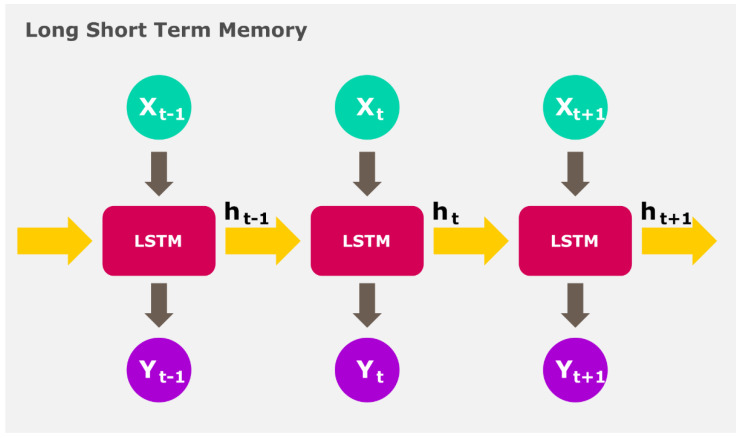
Hochreiter, S., & Schmidhuber, J. (1997) · Neural Computation · doi:10.1162/neco.1997.9.8.1735 · Cited by 102,318
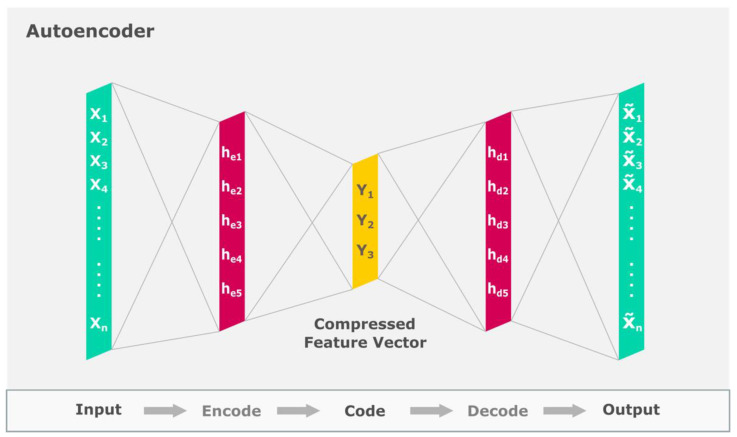
Reducing the dimensionality of data with neural networks
Hinton, G. E., & Salakhutdinov, R. R. (2006) · Science · doi:10.1126/science.1127647 · Cited by 20,928
Child and adolescent mental health worldwide: evidence for action
Kieling, C., Baker-Henningham, H., Belfer, M., Conti, G., Ertem, I., Omigbodun, O., Rohde, L. A., Srinath, S., Ulkuer, N., & Rahman, A. (2011) · The Lancet · doi:10.1016/s0140-6736(11)60827-1 · Cited by 2,449
Encyclopedia of Quality of Life and Well-Being Research
Michalos, A. C. (2014) · Springer eBooks · doi:10.1007/978-94-007-0753-5 · Cited by 1,291
Danielson, M. L., Bitsko, R. H., Ghandour, R. M., Holbrook, J. R., Kogan, M. D., & Blumberg, S. J. (2018) · Journal of Clinical Child & Adolescent Psychology · doi:10.1080/15374416.2017.1417860 · Cited by 1,181
Loss of mTOR-Dependent Macroautophagy Causes Autistic-like Synaptic Pruning Deficits
Tang, G., Gudsnuk, K., Kuo, S.-H., Cotrina, M. L., Rosoklija, G., Sosunov, A., Sonders, M. S., Kanter, E., Castagna, C., Yamamoto, A., et al. (2014) · Neuron · doi:10.1016/j.neuron.2014.07.040 · Cited by 1,146
BIEDERMAN, J., MONUTEAUX, M. C., MICK, E., SPENCER, T., WILENS, T. E., SILVA, J. M., SNYDER, L. E., & FARAONE, S. V. (2006) · Psychological Medicine · doi:10.1017/s0033291705006410 · Cited by 850
Conceptual Understanding of Convolutional Neural Network- A Deep Learning Approach
Indolia, S., Goswami, A. K., Mishra, S., & Asopa, P. (2018) · Procedia Computer Science · doi:10.1016/j.procs.2018.05.069 · Cited by 841
Linnet, K. M., Dalsgaard, S., Obel, C., Wisborg, K., Henriksen, T. B., Rodriguez, A., Kotimaa, A., Moilanen, I., Thomsen, P. H., Olsen, J., et al. (2003) · American Journal of Psychiatry · doi:10.1176/appi.ajp.160.6.1028 · Cited by 778
Automated EEG-based screening of depression using deep convolutional neural network
Acharya, U. R., Oh, S. L., Hagiwara, Y., Tan, J. H., Adeli, H., & Subha, D. P. (2018) · Computer Methods and Programs in Biomedicine · doi:10.1016/j.cmpb.2018.04.012 · Cited by 650
Self-citation
Research works printed but not linked: 6
- (2012). Dyslexia. Encyclopedia of Human Behavior, Academic Press. [2nd ed.].
- Sharif, H., and Khan, R.A. (2019). A novel framework for automatic detection of Autism: A study on Corpus Callosum and Intracranial Brain Volume. arXiv.
- Shukla, 2020, A Comprehensive Study of Audio Visual Aids for Dyslexic Children, IJEET, 11, 211
- Rouhi, A., Spitale, M., Catania, F., Cosentino, G., Gelsomini, M., and Garzotto, F. (2019, January 16–20). Emotify: Emotional game for children with autism spectrum disorder based-on machine learning. Proceedings of the 24th International Conference on Intelligent User Interfaces: Companion, Marina del Ray, CA, USA.
- Smith, S.W., Bourgeois, D.T., James, L., and Mortati, J. (2021, February 25). The Ethical and Legal Implications of Information Systems; 2021. Available online: https://bus206.pressbooks.com/chapter/chapter-12-the-ethical-and-legal-implications-of-information-systems/.
- 2015, The Internet of Things. A New Companion to Digit, Humanit, 2012, 42
Cited by
Sorted by citations
State of the art and practice in AI in education
Holmes, W., & Tuomi, I. (2022) · European Journal of Education · doi:10.1111/ejed.12533 · Cited by 1,093
AI‐driven adaptive learning for sustainable educational transformation
Strielkowski, W., Grebennikova, V., Lisovskiy, A., Rakhimova, G., & Vasileva, T. (2025) · Sustainable Development · doi:10.1002/sd.3221 · Cited by 581
Almufareh, M. F., Kausar, S., Humayun, M., & Tehsin, S. (2024) · Journal of Disability Research · doi:10.57197/jdr-2023-0060 · Cited by 159
The Future of Artificial Intelligence in Special Education Technology
Marino, M. T., Vasquez, E., Dieker, L., Basham, J., & Blackorby, J. (2023) · Journal of Special Education Technology · doi:10.1177/01626434231165977 · Cited by 142
The threat, hype, and promise of artificial intelligence in education
Humble, N., & Mozelius, P. (2022) · Discover Artificial Intelligence · doi:10.1007/s44163-022-00039-z · Cited by 125
Kirk, H. R., Vidgen, B., Röttger, P., & Hale, S. A. (2024) · Nature Machine Intelligence · doi:10.1038/s42256-024-00820-y · Cited by 122
Integrating AI literacy into teacher education: a critical perspective paper
Daher, R. (2025) · Discover Artificial Intelligence · doi:10.1007/s44163-025-00475-7 · Cited by 195
Yenduri, G., Kaluri, R., Rajput, D. S., Lakshmanna, K., Gadekallu, T. R., Mahmud, M., & Brown, D. J. (2023) · IEEE Access · doi:10.1109/access.2023.3289496 · Cited by 135
Breaking Barriers—The Intersection of AI and Assistive Technology in Autism Care: A Narrative Review
Iannone, A., & Giansanti, D. (2023) · Journal of Personalized Medicine · doi:10.3390/jpm14010041 · Cited by 87
Inclusive education with AI: supporting special needs and tackling language barriers
Fitas, R. (2025) · AI and Ethics · doi:10.1007/s43681-025-00824-3 · Cited by 198
A social robot connected with chatGPT to improve cognitive functioning in ASD subjects
Bertacchini, F., Demarco, F., Scuro, C., Pantano, P., & Bilotta, E. (2023) · Frontiers in Psychology · doi:10.3389/fpsyg.2023.1232177 · Cited by 83
Firth, J., Torous, J. B., López‐Gil, J. F., Linardon, J., Milton, A. C., Lambert, J. D., Smith, L., Jarić, I., Fabian, H., Vancampfort, D., et al. (2024) · World Psychiatry · doi:10.1002/wps.21188 · Cited by 109
Artificial Intelligence: An Untapped Opportunity for Equity and Access in STEM Education
Kohnke, S., & Zaugg, T. (2025) · Education Sciences · doi:10.3390/educsci15010068 · Cited by 99
The Integration of Artificial Intelligence in Inclusive Education: A Scoping Review
Pagliara, S. M., Bonavolontà, G., Pia, M., Falchi, S., Zurru, A. L., Fenu, G., & Mura, A. (2024) · Information · doi:10.3390/info15120774 · Cited by 106
Kooli, C., & Yusuf, N. (2024) · International Journal of Human–Computer Interaction · doi:10.1080/10447318.2024.2338330 · Cited by 63
Assessing the Challenges and Opportunities of Artificial Intelligence in Indian Education
Agarwal, P., & Vij, A. (2024) · International Journal for Global Academic & Scientific Research · doi:10.55938/ijgasr.v3i1.71 · Cited by 63
Ahmed, S., Rahman, M. S., Kaiser, M. S., & Hosen, A. S. M. S. (2025) · Digital · doi:10.3390/digital5020011 · Cited by 86
A Review of Artificial Intelligence Interventions for Students with Autism Spectrum Disorder
Κώτση, Σ., Χανδρινού, Σ., Iatraki, G., & Soulis, S. (2025) · Disabilities · doi:10.3390/disabilities5010007 · Cited by 59
Inclusive Education with AI: Supporting Special Needs and Tackling Language BarriersPreprint
Fitas, R. (2025) · SSRN Electronic Journal · doi:10.2139/ssrn.5366398 · Cited by 41
Stein, B., Hoeft, F., & Richter, C. G. (2024) · Current Opinion in Behavioral Sciences · doi:10.1016/j.cobeha.2024.101410 · Cited by 38
Chen, R., Lee, V. R., & G Lee, M. (2025) · Education and Information Technologies · doi:10.1007/s10639-025-13350-w · Cited by 43
“Much publicized generative AI tutor projects encountered real-world challenges (Barua et al., 2022; Kamalov et al., 2023).”
AI-Enhanced Dyscalculia Screening: A Survey of Methods and Applications for Children
Bhushan, S., Sharmila, A., Eisa, T. A. E., Nasser, M., Singh, A. K., & Kumar, P. (2024) · Diagnostics · doi:10.3390/diagnostics14131441 · Cited by 47
Neurobiological Relationships Between Neurodevelopmental Disorders and Mood Disorders
Bertollo, A. G., Puntel, C. F., da Silva, B. V., Martins, M., Bagatini, M. D., & Ignácio, Z. M. (2025) · Brain Sciences · doi:10.3390/brainsci15030307 · Cited by 36
Kooli, C., & CHAKRAOUI, R. (2025) · Sustainable Futures · doi:10.1016/j.sftr.2025.101042 · Cited by 91
Oyelere, S. S., & Aruleba, K. (2025) · Computers and Education Open · doi:10.1016/j.caeo.2025.100245 · Cited by 47
Machine Learning for Predicting Neurodevelopmental Disorders in Children
Toki, E. I., Tsoulos, I. G., Santamato, V., & Pange, J. (2024) · Applied Sciences · doi:10.3390/app14020837 · Cited by 35
Kayyali, M. (2024) · Advances in educational technologies and instructional design book series · doi:10.4018/979-8-3693-7220-3.ch013 · Cited by 34
Chen, J. J. (2025) · AI Brain and Child · doi:10.1007/s44436-025-00002-6 · Cited by 37
Albahri, A. S., Joudar, S. S., Hamid, R. A., Zahid, I. A., Alqaysi, M. E., Albahri, O. S., Alamoodi, A. H., Kou, G., & Sharaf, I. M. (2023) · International Journal of Fuzzy Systems · doi:10.1007/s40815-023-01597-9 · Cited by 28
Altınay, Z., Altınay, F., Sharma, R. C., Dağlı, G., Shadiev, R., Yıkıcı, B., & Altınay, M. (2024) · Societies · doi:10.3390/soc14080148 · Cited by 27
Zhang, L., Carter, R. A., Liu, Y., & Peng, P. (2024) · Review of Educational Research · doi:10.3102/00346543241293424 · Cited by 52
Hoose, S., & Králiková, K. (2024) · Administrative Sciences · doi:10.3390/admsci14090227 · Cited by 37
Elshaer, I. A., AlNajdi, S. M., & Salem, M. A. (2025) · Sustainability · doi:10.3390/su17125609 · Cited by 38
AI Adoption for Collaboration: Factors Influencing Inclusive Learning Adoption in Higher Education
Alyoussef, I. Y., Drwish, A. M., Albakheet, F. A., Alqahtani, R. H. A., & Technology, A. A. A. E. (2025) · IEEE Access · doi:10.1109/access.2025.3567656 · Cited by 46
AI Tools Like ChatGPT for People with Neurodevelopmental Disorders
Moraiti, I., & Drigas, A. S. (2023) · International Journal of Online and Biomedical Engineering (iJOE) · doi:10.3991/ijoe.v19i16.43399 · Cited by 26
Yu, L., Ge, Y., Ansari, S., Imran, M. A., & Ahmad, W. (2025) · Sensors · doi:10.3390/s25154763 · Cited by 26
Habibi, F., Sedaghatshoar, S., Attar, T., Shokoohi, M., Kiani, A., & Malek, A. N. (2025) · AI and Ethics · doi:10.1007/s43681-024-00608-1 · Cited by 21
Functionality of Apps for People with Autism: Comparison between Educators from Florence and Granada
Montes, C. D. P. G., Fuentes, A. R., Cara, M. J. C., & Capperucci, D. (2022) · International Journal of Environmental Research and Public Health · doi:10.3390/ijerph19127019 · Cited by 20
Okul Öncesi Eğitimi Öğretmenlerinin Yapay Zekâya İlişkin Görüşleri
Küçükkara, M. F., Ünal, M., & Sezer, T. (2024) · Temel Eğitim Araştırmaları Dergisi · doi:10.55008/te-ad.1431142 · Cited by 23
Al-Nafjan, A., Alghamdi, M. M. M., Alhakbani, N., & Al-Ohali, Y. (2024) · Diagnostics · doi:10.3390/diagnostics15010060 · Cited by 21
AI-Assisted Models for Dyslexia and Dysgraphia
Iyer, L., Chakraborty, T., Reddy, K. N., Jyothish, K., & Krishnaswami, M. (2023) · Advances in educational technologies and instructional design book series · doi:10.4018/979-8-3693-0378-8.ch008 · Cited by 19
Pan, Y., & Foroughi, A. (2024) · Journal of Cloud Computing Advances Systems and Applications · doi:10.1186/s13677-023-00558-9 · Cited by 19
Aldakhil, A. F. (2024) · Research in Developmental Disabilities · doi:10.1016/j.ridd.2024.104858 · Cited by 30
Hong, H., & Kim, Y. (2024) · Education and Information Technologies · doi:10.1007/s10639-024-12809-6 · Cited by 25
Alsudairy, N. A., & Eltantawy, M. M. (2024) · Journal of Intellectual Disability - Diagnosis and Treatment · doi:10.6000/2292-2598.2024.12.02.5 · Cited by 18
Explainable AI for Autism Classification in Children
Magboo, M. S. A., & Magboo, V. P. C. (2022) · Smart innovation, systems and technologies · doi:10.1007/978-981-19-3359-2_17 · Cited by 18
Design of an intelligent grading system for college English translation based on big data technology
Li, X., & Huang, C. (2025) · Systems and Soft Computing · doi:10.1016/j.sasc.2025.200205 · Cited by 17
Digital Dialogue—How Youth Are Interacting With Chatbots
Pratt, N., Madhavan, R., & Weleff, J. (2024) · Archives of Pediatrics and Adolescent Medicine · doi:10.1001/jamapediatrics.2024.0084 · Cited by 17
Integrating AI tools for enhanced autism education: a comprehensive review
Adako, O. P., Adeusi, O. C., & Alaba, P. A. (2024) · International Journal of Developmental Disabilities · doi:10.1080/20473869.2024.2392983 · Cited by 23
GenAI, Robots, and Inclusive Special Education
Sağdıç, A., Elumar-efe, E., & Sani-Bozkurt, S. (2024) · Advances in educational technologies and instructional design book series · doi:10.4018/979-8-3693-1351-0.ch015 · Cited by 17
Stasolla, F., Akbar, K., Passaro, A., Dragone, M., Gioia, M. D., & Zullo, A. (2024) · Frontiers in Psychology · doi:10.3389/fpsyg.2024.1372769 · Cited by 16
AI Syndrome: an intellectual asset for students or a progressive cognitive decline
Ahmad, O., maliha, H., & Ahmed, I. (2024) · Asian Journal of Psychiatry · doi:10.1016/j.ajp.2024.103969 · Cited by 14
Utepbayeva, A. (2024) · International Journal of Information and Education Technology · doi:10.18178/ijiet.2024.14.7.2119 · Cited by 17
Kim, H.-S., Hwang, H., Gwak, S., Yoon, J., & Park, K. (2024) · PLoS ONE · doi:10.1371/journal.pone.0305726 · Cited by 27
Ahmad, W., Raj, R., & Shokeen, R. (2024) · Advances in educational technologies and instructional design book series · doi:10.4018/979-8-3693-5538-1.ch001 · Cited by 14
Adako, O. P., Adeusi, O. C., & Alaba, P. A. (2025) · Disability and Rehabilitation Assistive Technology · doi:10.1080/17483107.2025.2477678 · Cited by 22
Artificial Intelligence and Innovative Applications in Special Education
Şen, N., & Akbay, T. (2023) · Öğretim Teknolojisi ve Hayat Boyu Öğrenme Dergisi - Instructional Technology and Lifelong Learning · doi:10.52911/itall.1297978 · Cited by 13
Liu, X., Lau, N. M. L., Chuin, A., Leung, W.-K., Ho, A.-T. T., Das, M., Liu, M., & Kwok, C. (2023) · International Symposium of Chinese CHI (Chinese CHI) · doi:10.1145/3629606.3629625 · Cited by 18
Distractibility and Impulsivity in ADHD as an Evolutionary Mismatch of High Trait Curiosity
Cunff, A. L. (2024) · Evolutionary Psychological Science · doi:10.1007/s40806-024-00400-8 · Cited by 20
Acosta-Vargas, P., Acosta-Vargas, G., Salvador-Acosta, B., & Jadán-Guerrero, J. L. (2024) · International Conference on eDemocracy & eGovernment · doi:10.1109/icedeg61611.2024.10702085 · Cited by 13
ChatGPT enhances reading comprehension for children with dyslexia in Arabic language
Gharaibeh, M., & Basulayyim, A. (2025) · Disability and Rehabilitation: Assistive Technology · doi:10.1080/17483107.2025.2508389 · Cited by 13
Amouri, H., Haroud, S., Ouchaouka, L., & Saqri, N. (2025) · Frontiers in Artificial Intelligence · doi:10.3389/frai.2025.1616327 · Cited by 12
Dange, P., Mistry, T., & Mann, S. (2023) · Communications in computer and information science · doi:10.1007/978-3-031-47997-7_3 · Cited by 12
Yang, F., Wei, J., Zhao, X., & An, R. (2025) · JMIR mhealth and uhealth · doi:10.2196/58597 · Cited by 15
Educational Games and the Potential of AI to Transform Writing Across the Curriculum
Evmenova, A. S., Regan, K. S., Mergen, R. L., & Nawash, R. H. (2025) · Education Sciences · doi:10.3390/educsci15050567 · Cited by 28
The Impact of Artificial Intelligence on Learners and Teachers: A Mathematics Education Perspective
Li, X., Gould, T., & Zaki, R. (2024) · Integrated science · doi:10.1007/978-3-031-60713-4_9 · Cited by 11
Shahini, A., Kamath, A. P., Sharma, E., Salvi, M., Tan, R., Siuly, S., Seoni, S., Ganguly, R., Devi, A., Deo, R. C., et al. (2025) · Information Fusion · doi:10.1016/j.inffus.2025.103441 · Cited by 21
Self-citationCesaroni, V., Pasqua, E., Bisconti, P., & Galletti, M. (2025) · Lecture notes in computer science · doi:10.1007/978-3-031-98462-4_10 · Cited by 11
A SYSTEMATIC ANALYSIS OF AI-EMPOWERED EDUCATIONAL TOOLS DEVELOPED IN INDIA FOR DISABLED PEOPLE
Shivani, Gupta, M., & Gupta, S. B. (2024) · Information Technologies and Learning Tools · doi:10.33407/itlt.v100i2.5501 · Cited by 9
AI in autism education: a review of collaborative and longitudinal approaches
Adako, O. P., Adeusi, O. C., & Alaba, P. A. (2025) · Disability and Rehabilitation Assistive Technology · doi:10.1080/17483107.2025.2579825 · Cited by 10
Artificial Intelligence and Literacy Development in K–12 Schools
Maher, D., & Young, K. (2023) · Advances in educational technologies and instructional design book series · doi:10.4018/979-8-3693-0205-7.ch004 · Cited by 8
Supporting Preschool Emotional Development with AI-Powered Robot
Berrezueta-Guzmán, J., Dolón-Poza, M., & Wagner, S. (2025) · ACM International Conference on Interaction Design and Children (IDC) · doi:10.1145/3713043.3731548 · Cited by 9
Revolutionizing Education With NLP and ML
Ravikumar, R. N., Aarthi, S., Sapaeva, B. S., Jumaniyozov, Y., Praveen, V. M., & Siddheswaran, V. (2025) · Advances in computational intelligence and robotics book series · doi:10.4018/979-8-3373-6791-0.ch011 · Cited by 8
Sandipa, B. D., Mitratne, D. M., Isurika, M. D. A., Kandanaarachchi, D. S., Rathnayake, S. C., & Tissera, W. (2023) · International Research Journal of Innovations in Engineering and Technology · doi:10.47001/irjiet/2023.709010 · Cited by 8
Using Artificial Intelligence in Teaching Health and Physical Education
Konukman, F., Sortwell, A., Filiz, B., Tüfekçioğlu, E., Yılmaz, E. B., & Ünlü, H. (2025) · Journal of Physical Education Recreation & Dance · doi:10.1080/07303084.2025.2522601 · Cited by 7
Rappa, N. A., Nonis, K. P., Tang, K., Cooper, G., Cooper, M. G., & Sims, C. (2026) · British Journal of Educational Technology · doi:10.1111/bjet.70048 · Cited by 10
Jia, Q., Wang, X., Zhou, R., Ma, B., Fei, F., & Han, H. (2023) · Frontiers in Neuroinformatics · doi:10.3389/fninf.2023.1310400 · Cited by 13
Kamber, E. (2025) · Advances in educational technologies and instructional design book series · doi:10.4018/979-8-3693-7949-3.ch007 · Cited by 7
Tozzi, A. E., Gesualdo, F., Pandolfi, E., Ferro, D., Cinelli, G., Bozzola, E., Aversa, T., Mauro, A. D., Mameli, C., & Croci, I. (2023) · The Italian Journal of Pediatrics/Italian journal of pediatrics · doi:10.1186/s13052-023-01512-w · Cited by 8
Ateeq, A. A., Alzoraiki, M., Milhem, M., Beshr, B. A. H., & Meer, S. A. (2024) · Studies in systems, decision and control · doi:10.1007/978-3-031-54379-1_50 · Cited by 7
Hurford, R. M., Derry, M., & Bavuso, E. (2025) · Journal of Vocational Rehabilitation · doi:10.1177/10522263241312734 · Cited by 6
Artificial intelligence impacts in education and pediatric mental health
Liberatore, G., Kim, A., Brenner, J., & Milanaik, R. L. (2025) · Current Opinion in Pediatrics · doi:10.1097/mop.0000000000001453 · Cited by 6
The Evolution of AI in Education From Concept to Classroom
Kayyali, M. (2025) · Advances in computational intelligence and robotics book series · doi:10.4018/979-8-3373-1827-1.ch013 · Cited by 7
Oleribe, O. O. (2025) · Healthcare · doi:10.3390/healthcare13151898 · Cited by 7
Baeyaert, J. (2025) · Sustainable Futures · doi:10.1016/j.sftr.2025.101126 · Cited by 9
Hamid, M. S., Hamza, E. A., Bedewy, D., Elsiddig, F. M. E., AlShammari, S. A., Bakhiet, S. F. A., & Mohamed, N. I. A. (2025) · Frontiers in Education · doi:10.3389/feduc.2025.1640556 · Cited by 14
Nasrallah, M., Moghrabi, A. E., Kayal, M., Matar, D., Alwan, I. H., & Fakhoury, M. (2025) · International Journal of Developmental Disabilities · doi:10.1080/20473869.2025.2456800 · Cited by 8
“Empowering Education: The Role of Artificial Intelligence in Supporting Students with Disabilities”
Tripathi, V., Palak, P., Bali, A., Sharma, P., Chadha, S., & Sharma, B. (2024) · International Conference on Recent Trends in Microelectronics, Automation, Computing and Communications Systems (ICMACC) · doi:10.1109/icmacc62921.2024.10893983 · Cited by 6
An Overview of Socially Assistive Robotics for Special Education
Suneesh, S., & Garate, V. R. (2022) · Lecture notes in computer science · doi:10.1007/978-3-031-24670-8_17 · Cited by 6
Acharya, M., & Mohbey, K. K. (2024) · Applied Intelligence and Informatics. · doi:10.1007/978-981-97-0914-4_3 · Cited by 6
AI and the Next Generation: Protecting Childhood in the Digital Age
de Barros, G. O., & Soares, O. S. (2025) · Information systems engineering and management · doi:10.1007/978-3-031-86079-9_5 · Cited by 5
Using AI to teach English to multilingual autistic children: a qualitative study
Mohamed, A. M. A. (2025) · International Journal of Inclusive Education · doi:10.1080/13603116.2025.2564336 · Cited by 12
Reframing AI governance in education: insights from the social model of disability
Marland, B., & Arantes, J. A. (2026) · Learning Media and Technology · doi:10.1080/17439884.2025.2595443 · Cited by 5
Altınay, F., Tlili, A., Altınay, Z., Dağlı, G., Adedoyın, O. B., Huang, R., Xu, L., Jemni, M., Mogavi, R. H., & Metwally, A. H. S. (2024) · Smart computing and intelligence · doi:10.1007/978-981-97-1298-4_7 · Cited by 7
Zraydi, F., Opoku, M. P., Guirguis, B. M., Ndijuye, L. G., & Gyimah, E. M. (2026) · Smart Learning Environments · doi:10.1186/s40561-026-00430-8 · Cited by 10
Mullan, F., Mather, H., Bateman, H., Cairns, A., Nasseripour, M., Binnie, V., Dawson, L. J., McCracken, G., & Ellis, J. S. (2024) · BDJ · doi:10.1038/s41415-024-7948-9 · Cited by 4
Ahmed, S. (2025) · Journal of Posthumanism · doi:10.63332/joph.v4i3.1816 · Cited by 4
The role of integration of AI in Science Learning in Special Education Needs
Kotsari, K., & Smyrnaiou, Z. (2024) · International Conference on Software Development and Technologies for Enhancing Accessibility and Fighting Info-exclusion (DSAI) · doi:10.1145/3696593.3696639 · Cited by 5
Alhaif, A. M., Aleidi, A. I., Ali, D. A. S., Besheir, M. A., Diab, H. M., & Ibrahem, U. M. (2025) · Education and Information Technologies · doi:10.1007/s10639-025-13635-0 · Cited by 4
Digital Health: An Opportunity to Advance Health Equity for People With Disabilities
JAIN, P., Jain, B., Doshi, R. H., Jain, U., Claypool, H., Aboulafia, A. H., & Swenor, B. K. (2025) · Milbank Quarterly · doi:10.1111/1468-0009.70049 · Cited by 4
Metadata
- Authors
- Barua, P. D., Vicnesh, J., Gururajan, R., Oh, S. L., Palmer, E., Azizan, M. M., Kadri, N. A., & Acharya, U. R.
- Affiliations
- University of Technology Sydney (AU)
- Ngee Ann Polytechnic (SG)
- University of Southern Queensland (AU)
- UNSW Sydney (AU)
- Universiti Sains Islam Malaysia (MY)
- University of Malaya (MY)
- Asia University (TW)
- Corresponding author
- Azizan, Muhammad Mokhzaini
- ORCID
- Venue
- International Journal of Environmental Research and Public Health
- Publisher
- MDPI AG
- Published
- 2022-01-21
- Volume
- 19
- Issue
- 3
- Pages
- 1192
- ISSN
- 1660-4601 (ISSN-L)
- PMC
- PMC8835076
- OpenAlex
- W4205370021
- Cited by
- 270
- References
- 97
- Citations by year
- 2026: 70 · 2025: 106 · 2024: 63 · 2023: 23 · 2022: 8
- FWCI
- 6.31
- Type
- journal article
- Language
- en
- Open access
- gold
- doi.org
- Licence
- Locations
- International Journal of Environmental Research and Public Health (publishedVersion, cc-by)
- PubMed Central (publishedVersion, cc-by)
- PubMed (publishedVersion)
- RePEc: Research Papers in Economics (submittedVersion)
- DOAJ (DOAJ: Directory of Open Access Journals) (submittedVersion)
- Topics
- Social Sciences › Education › Artificial Intelligence in Education
- Physical Sciences › Computer Science › Artificial Intelligence › Intelligent Tutoring Systems and Adaptive Learning
- Life Sciences › Neuroscience › Cognitive Neuroscience › Autism Spectrum Disorder Research
- Keywords
- artificial intelligence, assistive technology, neurodevelopmental disorders, children with disabilities, personalized learning, autism spectrum disorder, dyslexia, attention deficit hyperactivity disorder, intellectual disability, mental illness, learning difficulties, social interaction, machine learning, educational intervention
- MeSH terms
- Autism Spectrum Disorder, Adolescent, Anxiety Disorders, Artificial Intelligence, Attention Deficit Disorder with Hyperactivity, Child, Humans, Neurodevelopmental Disorders
About these checks
Registry, retraction, Cites and statistics results are computed, not judged, with one exception: a printed reference that no index lists is read once by a model before it counts as a citation error. Claims are extracted by a model and kept only when their quote appears verbatim in the text; each cited source is then checked, with a model’s help, for whether it says what the claim relies on. Those verdicts can be wrong — read the claim’s quote and the cited source before relying on one.
Statistics and arithmetic are recomputed, not judged.
Confidence bands are shown only for fields calibrated on our annotated test set. None is calibrated yet, so no band is shown.
What counts as a claim ›How we measure confidence ›How we check this ›
Are you an author, or do you see a problem with this page? Request a review
