

The DOI matches its Crossref record; 159 of the 172 references it cites were found in a registry or an index.
From Structure to Phenotype: Impact of Collagen Alterations on Human Health
Open accessAbstract
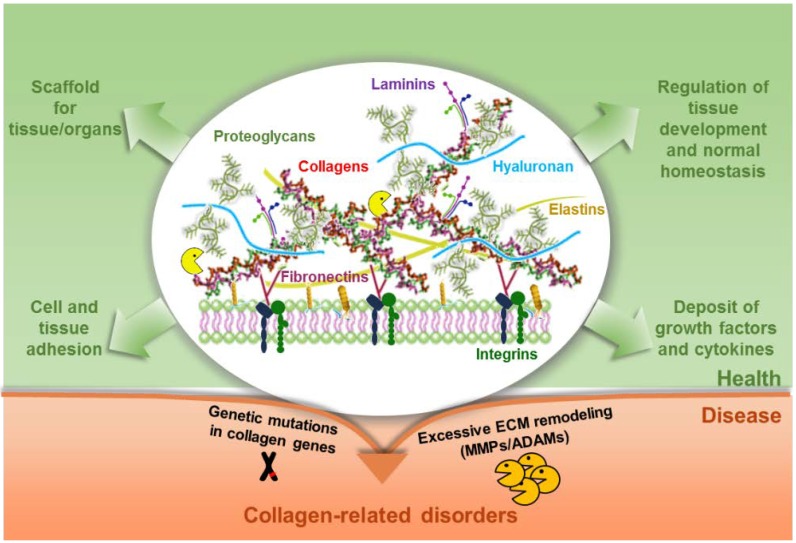
The extracellular matrix (ECM) is a highly dynamic and heterogeneous structure that plays multiple roles in living organisms. Its integrity and homeostasis are crucial for normal tissue development and organ physiology. Loss or alteration of ECM components turns towards a disease outcome. In this review, we provide a general overview of ECM components with a special focus on collagens, the most abundant and diverse ECM molecules. We discuss the different functions of the ECM including its impact on cell proliferation, migration and differentiation by highlighting the relevance of the bidirectional cross-talk between the matrix and surrounding cells. By systematically reviewing all the hereditary disorders associated to altered collagen structure or resulting in excessive collagen degradation, we point to the functional relevance of the collagen and therefore of the ECM elements for human health. Moreover, the large overlapping spectrum of clinical features of the collagen-related disorders makes in some cases the patient clinical diagnosis very difficult. A better understanding of ECM complexity and molecular mechanisms regulating the expression and functions of the various ECM elements will be fundamental to fully recognize the different clinical entities.
Overview
The claims and statistics of this paper haven’t been checked yet.
Run the check — free, no account needed. It reads the open-access text and checks the sources it cites.
Integrity signals
Registry
Cites
Statistics
Figures
Verification
Claims the paper makes
The claims and statistics of this paper haven’t been checked yet.
Run the check — free, no account needed. It reads the open-access text and checks the sources it cites.
Claims other papers make about this one
Each is checked against this paper’s own text: does it say what the citing paper says it does?
The check wasn’t confident either way, so it gives no verdict — never disputed.
In the citing paper
“With regard to psychiatry, the most robust relationship with joint hypermobility in child cohorts is for ADHD. 18–21”
From No association between joint hypermobility, musculoskeletal pain and neurodevelopmental problems in a school-based sample of 11-year-old children (2025) · cites this paper as [19]
Experimental — accuracy not yet measured
Self-check
Percentages, sums and reported differences re-computed from the paper’s own numbers.
The self-check needs the paper’s full text.
Citations
Cites
Remodelling the extracellular matrix in development and disease
Bonnans, C., Chou, J., & Werb, Z. (2014) · Nature Reviews Molecular Cell Biology · doi:10.1038/nrm3904 · Cited by 4,367 · cited 1×
“They act at neutral pH and recognize specific cleavage sites on the target molecules [67].”
BackgroundThe extracellular matrix at a glance
Frantz, C., Stewart, K. M., & Weaver, V. M. (2010) · Journal of Cell Science · doi:10.1242/jcs.023820 · Cited by 4,334 · cited 1×
“The ECM tensile strength is determined by the dynamic activities of lysil oxidase (LOX) and lysil hydroxylase, two enzymes involved in regulating the cross-linking between collagens and elastin [13].”
BackgroundTensional homeostasis and the malignant phenotype
Paszek, M. J., Zahir, N., Johnson, K. R., Lakins, J. N., Rozenberg, G. I., Gefen, A., Reinhart-King, C. A., Margulies, S. S., Dembo, M., Boettiger, D., et al. (2005) · Cancer Cell · doi:10.1016/j.ccr.2005.08.010 · Cited by 3,941 · cited 1×
“Tissue stiffness can drive malignant transformation via integrin-mediated mechanisms [23] and such fibrotic “stiff” lesions are associated with a poor prognosis [24].”
BackgroundThe Extracellular Matrix: Not Just Pretty Fibrils
Hynes, R. O. (2009) · Science · doi:10.1126/science.1176009 · Cited by 3,527 · cited 3×
“In addition, through the adhesion with ECM components, the ECM can modulate the ligand-receptors interaction and control the formation of morphogen gradients, whose concentration regulates developmental processes [21].”
BackgroundInfluentialRicard-Blum, S. (2011) · Cold Spring Harbor Perspectives in Biology · doi:10.1101/cshperspect.a004978 · Cited by 2,305 · cited 2×
“The ectodomains of membrane collagens XIII, XVII, XXIII and XXV [33] are matricryptins involved in cell adhesion, migration or proliferation [34].”
BackgroundThe 2017 international classification of the Ehlers–Danlos syndromes
Malfait, F., Francomano, C., Byers, P., Belmont, J., Berglund, B., Black, J., Bloom, L., Bowen, J. M., Brady, A. F., Burrows, N. P., et al. (2017) · American Journal of Medical Genetics Part C: Seminars in Medical Genetics · doi:10.1002/ajmg.c.31552 · Cited by 1,936 · cited 3×
“Hyperelasticity of the skin without excessive fragility and hypermobility of the joints are other hallmarks of the disease [164].”
BackgroundInfluentialDiagnostic exome sequencing in persons with severe intellectual disability
de Ligt, J., Willemsen, M. H., van Bon, B. W. M., Kleefstra, T., Yntema, H. G., Kroes, T., Vulto-van Silfhout, A. T., Koolen, D. A., de Vries, P., Gilissen, C., et al. (2012) · New England Journal of Medicine · doi:10.1056/nejmoa1206524 · Cited by 1,546 · cited 1×
“Normal growth parameters and no evident dysmorphism are recorded in adults [121,122].”
BackgroundNaba, A., Clauser, K. R., Hoersch, S., Liu, H., Carr, S. A., & Hynes, R. O. (2012) · Molecular & Cellular Proteomics · doi:10.1074/mcp.m111.014647 · Cited by 1,354 · cited 2×
“A significant input derives from the definition of the “matrisome,” a list of proteins contributing to the ECM in different organisms and tissues, which has been predicted by integrating the information derived from experimental knowledge, genome comparative studies and bioinformatics tools [2].”
BackgroundOverview of the Matrisome--An Inventory of Extracellular Matrix Constituents and Functions
Hynes, R. O., & Naba, A. (2012) · Cold Spring Harbor Perspectives in Biology · doi:10.1101/cshperspect.a004903 · Cited by 1,349 · cited 3×
“5% of the mammalian pro e me, requir s further investigatio s and biochemical characterization [3].”
BackgroundInfluentialmultifunctional enzymes in cancer
Mohamed, M. M., & Sloane, B. F. (2006) · Nature reviews. Cancer · doi:10.1038/nrc1949 · Cited by 1,303 · cited 1×
“It has been shown that in macrophages uPARAP/Endo180 acts as collagen internalization receptor after the interaction with pro-uPA (pro-urokinase plasminogen activator) and uPAR (urokinase plasminogen activator receptor [71]) proteins.”
Background
Research works printed but not linked: 13
- Davies, J.A. (2001). Extracellular Matrix, John Wiley & Sons Ltd.
- Mithieux, 2005, Elastin, Adv. Protein Chem., 70, 437, 10.1016/S0065-3233(05)70013-9 · DOI
- Uchimura, K., Morimoto-Tomita, M., Bistrup, A., Li, J., Lyon, M., Gallagher, J., Werb, Z., and Rosen, S.D. (2006). HSulf-2, an extracellular endoglucosamine-6-sulfatase, selectively mobilizes heparin-bound growth factors and chemokines: Effects on VEGF, FGF-1, and SDF-1. BMC Biochem., 7. · DOI
- Karsdal, M.A. (2016). Biochemistry of Collagens, Laminins and Elastin: Structure, Function and Biomarkers, Elsevier.
- Marini, 2017, Osteogenesis imperfecta, Nat. Rev. Dis. Primers, 3, 17052, 10.1038/nrdp.2017.52 · DOI · Paper page
- Anderson, 1990, Spondyloepiphyseal dysplasia congenita: Genetic linkage to type II collagen (COL2AI), Am. J. Hum. Genet., 46, 896
- Faber, 2000, Clinical variability of stickler syndrome with a COL2A1 haploinsufficiency mutation: Implications for genetic counselling, J. Med. Genet., 37, 318, 10.1136/jmg.37.4.318 · DOI
- Granata, 2005, Schizencephaly: Clinical spectrum, epilepsy, and pathogenesis, J. Child Neurol., 20, 313, 10.1177/08830738050200040801 · DOI
- Badenas, 2002, Mutations in the COL4A4 and COL4A3 genes cause familial benign hematuria, J. Am. Soc. Nephrol., 13, 1248, 10.1681/ASN.V1351248 · DOI
- Zech, 2015, Recessive mutations in the α3 (VI) collagen gene COL6A3 cause early-onset isolated dystonia, Am. J. Hum. Genet., 96, 883, 10.1016/j.ajhg.2015.04.010 · DOI
- Yasukawa, 2002, Toenail dystrophy with COL7A1 glycine substitution mutations segregates as an autosomal dominant trait in 2 families with dystrophic epidermolysis bullosa, Arch. Dermatol., 138, 269, 10.1001/archderm.138.2.269 · DOI
- Baratz, 2010, E2-2 protein and Fuchs’s corneal dystrophy, N. Engl. J. Med., 363, 1016, 10.1056/NEJMoa1007064 · DOI
- Shetty, 2015, Attenuation of lysyl oxidase and collagen gene expression in keratoconus patient corneal epithelium corresponds to disease severity, Mol. Vis., 21, 12
Cited by
Sorted by citations
Regulation of Collagen I and Collagen III in Tissue Injury and Regeneration
Singh, D., Rai, V., & Agrawal, D. K. (2023) · Cardiology and Cardiovascular Medicine · doi:10.26502/fccm.92920302 · Cited by 519
“Alterations in the morphology and function of heart ventricles can occur from disruptions in collagen metabolism, which in turn cause anomalies in the remodeling of the collagen network [76].”
BackgroundThe extracellular matrix in development
Walma, D. A. C., & Yamada, K. M. (2020) · Development · doi:10.1242/dev.175596 · Cited by 403
“Human genetic disorders can result from perturbed ECM structure, dynamics, components and/or interactions (Arseni et al., 2018; Bateman et al., 2009; Lamande and Bateman, 2019; Pozzi et al., 2017).”
BackgroundCollagen: quantification, biomechanics and role of minor subtypes in cartilage
Bielajew, B. J., Hu, J. C. Y., & Athanasiou, K. A. (2020) · Nature Reviews Materials · doi:10.1038/s41578-020-0213-1 · Cited by 325
Diet and Skin Aging—From the Perspective of Food Nutrition
Cao, C., Xiao, Z., Wu, Y., & Ge, C. (2020) · Nutrients · doi:10.3390/nu12030870 · Cited by 231
“epidermis, which is the connective tissue composed of fibroblasts, responsible for the synthesis and secretion of collagen and other matrix proteins (such as fibronectin, elastin, and glycans) to the extracellular environment, giving the skin elasticity, strength, and ability to resist external interference [6,7].”
BackgroundFrom mechanical resilience to active material properties in biopolymer networks
Burla, F., Mulla, Y., Vos, B. E., Aufderhorst-Roberts, A., & Koenderink, G. H. (2019) · Nature Reviews Physics · doi:10.1038/s42254-019-0036-4 · Cited by 224
The Role of Extracellular Matrix in Skin Wound Healing
Потекаев, Н. Н., Borzykh, O. B., Medvedev, G. V., Pushkin, D. V., Петрова, М. М., Petrov, A. V., Дмитренко, Д. В., Karpova, E. I., Demina, O. M., & Shnayder, N. A. (2021) · Journal of Clinical Medicine · doi:10.3390/jcm10245947 · Cited by 219
“The large, branched hyaluronic acid molecule traps TGF-β1 molecules near the fibroblast.”
BackgroundInfluentialBolke, L., Schlippe, G., Gerß, J., & Voss, W. (2019) · Nutrients · doi:10.3390/nu11102494 · Cited by 223
Alcaide-Ruggiero, L., Molina-Hernández, V., Granados, M., & Domínguez, J. M. (2021) · International Journal of Molecular Sciences · doi:10.3390/ijms222413329 · Cited by 152
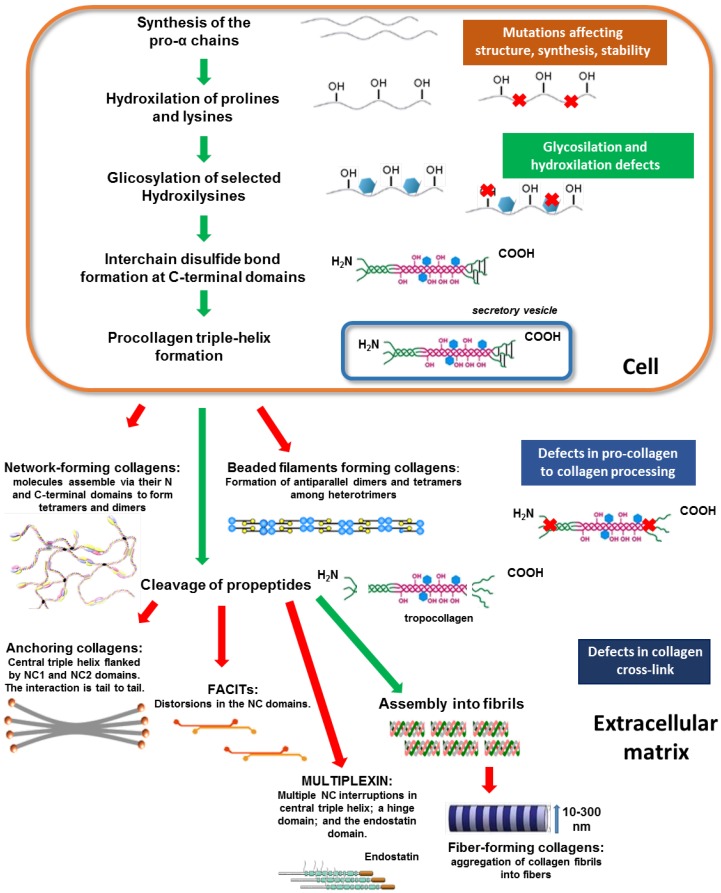
“In the Golgi, three of these α chains are assembled one around the other, along a central axis, to generate a procollagen molecule in the form of right-handed triple-helix (Figure 2-3) [32,33].”
BackgroundInfluentialEpigenetic Regulation of Skin Cells in Natural Aging and Premature Aging Diseases
Orioli, D., & Dellambra, E. (2018) · Cells · doi:10.3390/cells7120268 · Cited by 150
“Matrix components maintain the skin architecture and confer elasticity as well as resistance and strength to tissue [1,6].”
BackgroundSelf-citationCollagen Biosynthesis, Processing, and Maturation in Lung Ageing
Onursal, C., Dick, E., Angelidis, I., Schiller, H. B., & Staab-Weijnitz, C. A. (2021) · Frontiers in Medicine · doi:10.3389/fmed.2021.593874 · Cited by 132
Research Advances on the Damage Mechanism of Skin Glycation and Related Inhibitors
Zheng, W., Li, H., Go, Y., Chan, X. H. F., Huang, Q., & Wu, J. (2022) · Nutrients · doi:10.3390/nu14214588 · Cited by 97
“The extracellular matrix (ECM) is a complex, non-cellular network produced primarily by fibroblasts, including proteoglycans, hyaluronic acid, adhesion glycoproteins (fibronectin and laminin), and fibrin (collagen and elastin), as well as growth factors and cytokines [84].”
BackgroundChiarelli, N., Ritelli, M., Zoppi, N., & Colombi, M. (2019) · Genes · doi:10.3390/genes10080609 · Cited by 82
“Collagens are also involved in cell adhesion, chemotaxis, and migration [1,2].”
BackgroundAvian Coloration Genetics: Recent Advances and Emerging Questions
Price-Waldman, R., & Stoddard, M. C. (2021) · Journal of Heredity · doi:10.1093/jhered/esab015 · Cited by 118
“However, the molecular and genetic basis of collagen has been extensively studied in other systems (Kadler et al. 2008; Arseni et al. 2018; Holmes et al. 2018; Haq et al. 2019); insights into the regulation of collagen fiber diameter and spacing suggest promising avenues for research into the genetics of structurally…”
BackgroundSaberi, A., Kouhjani, M., Mohammadi, M., & Hosta‐Rigau, L. (2023) · Journal of Nanobiotechnology · doi:10.1186/s12951-023-02115-7 · Cited by 93
“Collagen, for instance, has been identified in at least 28 different types [171].”
BackgroundA natural strategy for astaxanthin stabilization and color regulation: Interaction with proteins.
Yao, Q., Ma, J., Chen, X., Zhao, G., & Zang, J. (2022) · Food Chemistry · doi:10.1016/j.foodchem.2022.134343 · Cited by 71
Polydeoxyribonucleotide: A promising skin anti-aging agent
Khan, A., Wang, G., Zhou, F., Gong, L., Zhang, J., Qi, L., & Cui, H. (2022) · Chinese Journal of Plastic and Reconstructive Surgery · doi:10.1016/j.cjprs.2022.09.015 · Cited by 60
Caputo, V., Strafella, C., Termine, A., Dattola, A., Mazzilli, S., Lanna, C., Cosio, T., Campione, E., Novelli, G., Giardina, E., et al. (2020) · Journal of Cellular and Molecular Medicine · doi:10.1111/jcmm.15742 · Cited by 61
Salvatore, L., Natali, M. L., Brunetti, C., Sannino, A., & Gallo, N. (2023) · Polymers · doi:10.3390/polym15041020 · Cited by 71
Biodegradable Materials for Tissue Engineering: Development, Classification and Current Applications
Modrák, M., Trebuňová, M., Balogová, A. F., Hudák, R., & Živčák, J. (2023) · Journal of Functional Biomaterials · doi:10.3390/jfb14030159 · Cited by 71
“At least 28 different types of collagens are currently recognized [60].”
BackgroundWang, J., Hu, H., Wang, J., Qiu, H., Gao, Y., Xu, Y., Liu, Z., Tang, Y., Song, L., Ramshaw, J. A. M., et al. (2022) · Journal of Leather Science and Engineering · doi:10.1186/s42825-022-00103-5 · Cited by 47
Senolytic therapeutics: An emerging treatment modality for osteoarthritis
Ansari, M. M., Ghosh, M., Lee, D., & Son, Y. (2024) · Ageing Research Reviews · doi:10.1016/j.arr.2024.102275 · Cited by 49
Glycosylation Modulates the Structure and Functions of Collagen: A Review
Tvaroška, I. (2024) · Molecules · doi:10.3390/molecules29071417 · Cited by 58
“See, for example, references [14,15,31,194,212–216].”
BackgroundCardiac ECM: Its Epigenetic Regulation and Role in Heart Development and Repair
Song, R., & Zhang, L. (2020) · International Journal of Molecular Sciences · doi:10.3390/ijms21228610 · Cited by 52
Kim, J. H., Jeong, H. D., Song, M. J., Lee, D. H., Chung, J. H., & Lee, S. (2022) · Antioxidants · doi:10.3390/antiox11050928 · Cited by 36
“The dermal ECM comprises fibrillar collagen, including the most abundant type I collagen, elastin, and proteoglycan [7,8].”
BackgroundAltoé, L. S., Alves, R. S., Miranda, L. L., Sarandy, M. M., Bastos, D. S. S., Gonçalves-Santos, E., Novaes, R. D., & Gonçalves, R. V. (2021) · Oxidative Medicine and Cellular Longevity · doi:10.1155/2021/4681041 · Cited by 37
Carvalho, D. N., Gonçalves, C., Sousa, R. O., Reis, R. L., Oliveira, J. M., & Silva, T. H. (2024) · Marine Biotechnology · doi:10.1007/s10126-024-10361-5 · Cited by 42
Tyavambiza, C., Dube, P., Goboza, M., Meyer, S., Madiehe, A. M., & Meyer, M. (2021) · Plants · doi:10.3390/plants10122635 · Cited by 44
“The level of vascularity decreases as the scar matures [30,31].”
BackgroundRomero‐Ortuño, R., Kenny, R. A., & McManus, R. (2019) · Experimental Gerontology · doi:10.1016/j.exger.2019.110781 · Cited by 29
Advances of three-dimensional (3D) culture systems for in vitro spermatogenesis
Salem, M., Khadivi, F., Javanbakht, P., Mojaverrostami, S., Abbasi, M., Feizollahi, N., Abbasi, Y., Heidarian, E., & Yazdi, F. R. (2023) · Stem Cell Research & Therapy · doi:10.1186/s13287-023-03466-6 · Cited by 39
“It plays a critical role in maintenance of organ structure, tissue integrity and normal functioning [110, 111].”
BackgroundChen, Y., Chen, W., Dai, X., Zhang, C., Zhang, Q., & Lu, J. (2020) · International Immunopharmacology · doi:10.1016/j.intimp.2020.106798 · Cited by 29
Nikolenko, V. N., Oganesyan, M. V., Vovkogon, A. D., Cao, Y., Churganova, A. A., Золотарева, М. А., Ачкасов, Е. Е., Sankova, M. V., Rizaeva, N. A., & Sinelnikov, M. Y. (2020) · BMC Musculoskeletal Disorders · doi:10.1186/s12891-020-03698-0 · Cited by 26
Modulation of Stiffness-Dependent Macrophage Inflammatory Responses by Collagen Deposition
Meli, V. S., Rowley, A. T., Veerasubramanian, P. K., Heedy, S., Liu, W. F., & Wang, S. (2024) · ACS Biomaterials Science & Engineering · doi:10.1021/acsbiomaterials.3c01892 · Cited by 23
Genetic and Epigenetic Aspects of Skin Collagen Fiber Turnover and Functioning
Потекаев, Н. Н., Borzykh, O. B., Medvedev, G. V., Петрова, М. М., Gavrilyuk, O. A., Karpova, E. I., Trefilova, V. V., Demina, O. M., Popova, T. E., & Shnayder, N. A. (2021) · Cosmetics · doi:10.3390/cosmetics8040092 · Cited by 32
Jo, Y., Hwang, S. H., & Jang, J. (2021) · International Journal of Molecular Sciences · doi:10.3390/ijms22179367 · Cited by 24
“As the strict regulation of ECM synthesis and remodeling is directly associated with healthy tissue conditions, alterations in ECM remodeling can affect the course and progression of several other pathological conditions, including fibrosis, disorders, and cancers [2].”
BackgroundExtracellular Matrix in Development and Disease
Oxford, J., Reeck, J., & Hardy, M. J. (2019) · International Journal of Molecular Sciences · doi:10.3390/ijms20010205 · Cited by 24
“The link between ECM molecules and phenotypic characteristics of specific hereditary diseases is reviewed by Arseni and colleagues [3], with an emphasis on the most prevalent of all ECM proteins, collagens, and mutations that result in bone fragility, muscle weakness, and skin defects.”
BackgroundLi, C.-N., Yang, M., Qu, Z., Ruan, S., Chen, B., Ran, J., Shu, W., Chen, Y.-L., & Hou, W.-G. (2022) · International Urogynecology Journal · doi:10.1007/s00192-022-05106-8 · Cited by 22
“Fiber-forming collagen is stabilized by nonreducible covalent cross-links between specific triplehelix domains and telopeptides, such as interstitial collagen (collagen I, collagen II, and collagen III), collagen V, and collagen XI [22].”
BackgroundGlycosaminoglycan Modification of Decorin Depends on MMP14 Activity and Regulates Collagen Assembly
Daquinag, A. C., Gao, Z., Fussell, C., Sun, K., & Kolonin, M. G. (2020) · Cells · doi:10.3390/cells9122646 · Cited by 29
Preedalikit, W., Chittasupho, C., Leelapornpisid, P., Potprommanee, S., & Kiattisin, K. (2023) · Foods · doi:10.3390/foods12234292 · Cited by 23
“The inhibitory effects of this specific enzyme can help to delay the process of collagen breakdown and the subsequent development of wrinkles [67].”
BackgroundPotential of Atlantic Codfish (Gadus morhua) Skin Collagen for Skincare Biomaterials
Rodrigues, C. V., Sousa, R. O., Carvalho, A. C., Alves, A. L. D. S., Marques, C. F., Cerqueira, M. T., Reis, R. L., & Silva, T. H. (2023) · Molecules · doi:10.3390/molecules28083394 · Cited by 23
“To date, 28 types of collagen were identified and characterized, presenting a triple helix structure [6,7].”
BackgroundSianipar, R. N. R., Suryanegara, L., Fatrıasarı, W., Arung, E. T., Kusuma, I. W., Achmadi, S. S., Azelee, N. I. W., & Hamid, Z. A. A. (2023) · Saudi Pharmaceutical Journal · doi:10.1016/j.jsps.2023.01.006 · Cited by 32
“…(MACITs) or transmembrane networks; collagen types XV and XVIII form multiple triple-helix domains and interruptions (MULTIPLEXINs); and the two unclassi-fied collagen types, the type XXVI and XXVIII (Andriotis et al., 2023; Arseni et al., 2018; Mak and Mei, 2017; Sun et al., 2019; Uitto, 2019).”
Urbizu, A., Garrett, M., Soldano, K., Drechsel, O., Loth, D., Marcé-Grau, A., Soler, O., Poca, M., Ossowski, S., Macaya, A., et al. (2021) · PLoS ONE · doi:10.1371/journal.pone.0251289 · Cited by 21
“Since each collagen is generally expressed in several different tissues, and is tightly associated with other ECM components, alterations in the collagen genes can result in widely overlapping clinical features [38].”
BackgroundThe roles of collagen in chronic kidney disease and vascular calcification
Huang, A., Guo, G., Yu, Y., & Yao, L. (2020) · Journal of Molecular Medicine · doi:10.1007/s00109-020-02014-6 · Cited by 28
“participates in endothelial cell migration and tumor growth [13].”
BackgroundInfluentialCaputo, V., Strafella, C., Termine, A., Campione, E., Bianchi, L., Novelli, G., Giardina, E., & Cascella, R. (2020) · International Journal of Molecular Sciences · doi:10.3390/ijms21082740 · Cited by 20
“The most abundant components of the ECM are collagens, the fibrous proteins that are involved in the formation and maintenance of structural components and provide mechanical strength and elasticity to connective tissues (such as cartilage, bone, epidermis, cornea and blood vessels) [10,11].”
BackgroundApical cell expansion maintained by Dusky-like establishes a scaffold for corneal lens morphogenesis
Ghosh, N., & Treisman, J. (2024) · Science Advances · doi:10.1126/sciadv.ado4167 · Cited by 18
Bioactive extracellular matrix fragments in tendon repair
Mohindra, R., Mohindra, R., Agrawal, D. K., & Thankam, F. G. (2022) · Cell and Tissue Research · doi:10.1007/s00441-022-03684-z · Cited by 17
“Proteinases, such as MMPs, cathepsins, and plasmins, are the main mediators of collagen fragmentation (Arseni et al. 2018).”
BackgroundWang, C., Wang, Y., Fu, Z., Huang, W., Yu, Z., Wang, J., Zheng, K., Zhang, S., Li, S., & Chen, J. (2022) · Frontiers in Oncology · doi:10.3389/fonc.2022.837581 · Cited by 18
“Collagens, the main protein component of ECM, exhibit a variety of effects, demonstrating proliferative, migratory, and differentiative cellular activities in vivo (19).”
Araújo, R., Martín, V., Ferreira, R. M., Fernandes, M. H., & Gomes, P. S. (2022) · Bone · doi:10.1016/j.bone.2022.116355 · Cited by 20
Stromal Protein-Mediated Immune Regulation in Digestive Cancers
Gamradt, P., de la Fouchardière, C., & Hennino, A. (2021) · Cancers · doi:10.3390/cancers13010146 · Cited by 27
“Collagen is the most abundant ECM protein that self-assembles into fibrils, provides tissue support for cell growth, and contributes to mechanical resilience of connective tissue [49].”
BackgroundNagao, H., Jayavelu, A. K., Cai, W., Pan, H., Dreyfuss, J. M., Batista, T. M., Brandão, B. B., Mann, M., & Kahn, C. R. (2023) · Nature Communications · doi:10.1038/s41467-022-35693-5 · Cited by 23
Song, F., Wang, L., Mu, J., & Ma, H. (2022) · Evidence-based Complementary and Alternative Medicine · doi:10.1155/2022/4156330 · Cited by 17
“e ECM provides significant conditions for the survival and activity of cells, which can affect the shape, function, metabolism, migration, proliferation, and differentiation of cells through signal transduction systems [4].”
BackgroundRetractedPromoting collagen synthesis: a viable strategy to combat skin ageing
Wang, S., Li, F., Feng, X., Feng, M., Niu, X., Jiang, X., Chen, W., & Bai, R. (2025) · Journal of Enzyme Inhibition and Medicinal Chemistry · doi:10.1080/14756366.2025.2488821 · Cited by 18
Papadopoulou, S. N. A., Anastasiou, E. A., Adamantidi, T., Ofrydopoulou, A., Letsiou, S., & Τσούπρας, Α. (2025) · Applied Sciences · doi:10.3390/app15020796 · Cited by 25
“Normally, young skin contains more than 75% of collagen [178,179].”
Shi, H., Yuan, M., Cai, J., Lan, L., Wang, Y., Wang, W., Zhou, J., Wang, B., Yu, W., Dong, Z., et al. (2024) · Journal of Translational Medicine · doi:10.1186/s12967-024-05098-7 · Cited by 18
“It plays a critical role in various cellular processes such as cell proliferation, differentiation, and migration [55, 56].”
BackgroundHypusinated eIF5A is required for the translation of collagen
Barba-Aliaga, M., Mena, A., Espinoza, V., Apostolova, N., Costell, M., & Alepúz, P. (2021) · bioRxiv · doi:10.1101/2021.02.23.432471 · Cited by 16
Quantitative nanohistology of aging dermal collagen
Huang, S., Strange, A. P., Maeva, A. R., Siddiqui, S., Bastien, P., Aguayo, S. D., Vaez, M., Pollock, H. M., Ghibaudo, M., Potter, A., et al. (2023) · Frontiers in Aging · doi:10.3389/fragi.2023.1178566 · Cited by 15
“By implementing Convolutional Neural Network (CNN) approaches37 to identify pathologyrelated morphological collagen fingerprints, it will be possible to create CNN models to predict either early signs or the severity of collagen-based conditions (Arseni et al., 2018).”
BackgroundMethodLi, J., Tian, Z., Yang, H., Duan, L., & Liu, Y. (2022) · Journal of Applied Polymer Science · doi:10.1002/app.53366 · Cited by 17
Abe, Y., Seino, S., Kurihara, H., Kage, M., & Tokudome, Y. (2022) · Journal of Cosmetic Dermatology · doi:10.1111/jocd.15097 · Cited by 14
Collagen synthesis in the skin, its functional and structural features
Borzykh, O. B., Schneider, N. A., Карпова, Е. И., Petrova, M. M., Demina, O. M., & Nasyrova, R. F. (2021) · Medical news of the North Caucasus · doi:10.14300/mnnc.2021.16108 · Cited by 20
“может зависеть от разных факторов, как внешних, так и внутренних [3, 4].”
Bharti, A., Ajinkya, K., Markus, M. A., Ramos‐Gomes, F., Bohnenberger, H., Ströbel, P., Alves, F., & Klein, O. (2024) · npj Imaging · doi:10.1038/s44303-024-00041-3 · Cited by 13
“…multimodalapproachintroducedinourstudycouldbeusedtoidentifynoveltargetsnotonlyincancerbutalsoinvariouscollagen-associateddiseases, suchasorgan fi brosisofdifferentorigins,skeletalandcartilageabnormalities, skin alterations, hearing loss and visual defects, as well as muscle weakness 59 .”
Atopic Eczema: Genetic Analysis of COL6A5, COL8A1, and COL10A1 in Mediterranean Populations
Strafella, C., Caputo, V., Minozzi, G., Milano, F., Arcangeli, M., Sobhy, N., Abdelmaksood, R., Hashad, D. I., Vakirlis, E., Novelli, G., et al. (2019) · BioMed Research International · doi:10.1155/2019/3457898 · Cited by 13
Kitami, M., Kaku, M., Thant, L., & Maeda, T. (2024) · GeroScience · doi:10.1007/s11357-024-01143-x · Cited by 10
“Failure of primary cilia affects various cellular processes, including chondrocyte differentiation [23] and ECM production [20, 24, 25].”
Samadi, A., Movaffaghi, M., Kazemi, F., Yazdanparast, T., Nasrollahi, S. A., & Firooz, A. (2023) · Journal of Cosmetic Dermatology · doi:10.1111/jocd.15700 · Cited by 16
Lephart, E. D. (2019) · Journal of Functional Foods · doi:10.1016/j.jff.2019.03.025 · Cited by 13
Recent Advances in Collagen and Collagen-Based Packaging Materials: A Review
Ezati, P., Khan, A., Bhattacharya, T., Zaitoon, A., Zhang, W.-L., Roy, S., Rhim, J., & Lim, L.-T. (2025) · ACS Food Science & Technology · doi:10.1021/acsfoodscitech.4c00938 · Cited by 11
Multi-organ Transcriptome Atlas of a Mouse Model of Relative Energy Deficiency in Sport (REDs)
van Rosmalen, L., Zhu, J.-Y., Maier, G., Gacasan, E., Lin, T., Zhemchuzhnikova, E., Rothenberg, V., Razu, S. S., Deota, S., Ramasamy, R. K., et al. (2024) · Cell Metabolism · doi:10.1016/j.cmet.2024.08.001 · Cited by 11
Healthy Aging Metabolomic and Proteomic Signatures Across Multiple Physiological Compartments
Moaddel, R., Candia, J., Ubaida‐Mohien, C., Tanaka, T., Moore, A. Z., Zhu, M., Fantoni, G., Church, S. J., D'Agostino, J., Fan, J., et al. (2025) · Aging Cell · doi:10.1111/acel.70014 · Cited by 15
The Role of Collagens in Atopic Dermatitis
Szalus, K., & Trzeciak, M. (2024) · International Journal of Molecular Sciences · doi:10.3390/ijms25147647 · Cited by 10
“This process plays a critical role in development, wound healing, and maintaining proper organ homeostasis [24].”
BackgroundRai, M. F., Cai, L., Tycksen, E. D., Keener, J., & Chamberlain, A. M. (2022) · Journal of Orthopaedic Research · doi:10.1002/jor.25296 · Cited by 10
“Further immunostaining studies would be needed to demonstrate the association of collagen organization and the functional implication of these collagens in the tendon tissues as changes in collagens have been associated with specific connective tissue diseases.(35) This study also demonstrates the loss in the expressi…”
BackgroundPaediatric Metabolic Bone Disease: A Lifetime Ahead
Gómez‐Alonso, C. (2020) · Advances in Therapy · doi:10.1007/s12325-019-01174-3 · Cited by 11
Constructing networks for comparison of collagen types
Wesp, V., Scholz, L., Ziermann-Canabarro, J. M., Schuster, S., & Stark, H. (2024) · Journal of Integrative Bioinformatics · doi:10.1515/jib-2024-0020 · Cited by 9
“Theunderstandingofthesequenceandstructureofcollagensiscrucialbecauseofhereditarydiseasesbased on mutations in collagen genes [40], such as osteogenesis imperfecta, Ehlers-Danlos syndrome, and Stickler syndrome.”
Trono, P., Masi, I., Ottavi, F., & Rosanò, L. (2026) · Journal of Biomedical Science · doi:10.1186/s12929-025-01211-0 · Cited by 13
“…reorganization is central to shaping tissue mechanics in diverse cellular processes driving development, tissue repair, and pathological states [36, 37], DDR2, as major transducer of collagen cues, senses collagen dynamicity and activates intracellular pathways, with a profound impact on cell…”
Santorella, E. M., Balsbaugh, J. L., Ge, S., Saboori, P., Baker, D., & Pachter, J. S. (2023) · Fluids and Barriers of the CNS · doi:10.1186/s12987-023-00473-w · Cited by 10
“Type VI collagen, found in both brain and spinal meninges, consists of monomers that aggregate linearly to form beaded filaments or laterally through their globular domains [9], and might further lend to creating a 3D network in these tissues capable of filtering cellular and soluble elements [56].”
BackgroundLuo, X., Liu, Y., Zheng, C., Huo, Q., & Liu, X.-H. (2021) · International Journal of Biological Macromolecules · doi:10.1016/j.ijbiomac.2021.10.091 · Cited by 9
Félix, E. D. S., & Silva, J. (2025) · Animal Reproduction Science · doi:10.1016/j.anireprosci.2025.108029 · Cited by 8
Cell and tissue reprogramming: Unlocking a new era in medical drug discovery
Sen, C. K., Friday, A. J., & Roy, S. (2025) · Pharmacological Reviews · doi:10.1016/j.pharmr.2025.100077 · Cited by 9
Araújo, R., Páscoa, R. N. M. J., Bernardino, R. L., & Gomes, P. S. (2025) · Cells · doi:10.3390/cells14020130 · Cited by 8
“The ECM integrates an array of local and systemic factors, which regulate cellular processes such as growth, differentiation, migration, and survival, through their role in distinct signaling pathways [5,6].”
Neto, N. S. R., Pereira, I. A., Sztajnbok, F., & Azevedo, V. F. (2024) · Revista Brasileira de Reumatologia · doi:10.1186/s42358-024-00373-z · Cited by 11
The CMS19 disease model specifies a pivotal role for collagen XIII in bone homeostasis
Kemppainen, A., Finnilä, M., Heikkinen, A., Härönen, H., Izzi, V., Kauppinen, S., Saarakkala, S. S., Pihlajaniemi, T. A., & Koivunen, J. T. (2022) · Scientific Reports · doi:10.1038/s41598-022-09653-4 · Cited by 9
Contrasting Local and Macroscopic Effects of Collagen Hydroxylation
Varma, S., Orgel, J., & Schieber, J. (2021) · International Journal of Molecular Sciences · doi:10.3390/ijms22169068 · Cited by 8
MiR‐1297 attenuates high glucose‐induced injury in HK‐2 cells via targeting COL1A2
Wang, S., Sun, K., Hu, H.-L., Jin, X., Wang, Z., Zhang, H., & Zhao, X. (2021) · Nephrology · doi:10.1111/nep.13881 · Cited by 8
“As the highest content of proteins in mammalian, collagens are the substantial composition of extracellular matrix (ECM), providing scaffolds for tissue formation, remodelling and maintenance.(5) There are at least 28 members of collagen in vertebrates.”
BackgroundInfluentialZague, V., Pinheiro, A. L. T. A., Pinto, J. R., Facchini, G., & Eberlin, S. (2025) · Journal of Medicinal Food · doi:10.1089/jmf.2024.0252 · Cited by 7
A Comprehensive Review on the Role of Collagen in Health and Disease
Pillai, N. S., Khan, S. A., Mehrotra, N., & Jadhav, K. (2024) · Biosciences Biotechnology Research Asia · doi:10.13005/bbra/3307 · Cited by 10
miR–122–5p Promotes Cowshed Particulate Matter2.5-Induced Apoptosis in NR8383 by Targeting COL4A1
Sun, Y., Sun, K., Ma, Z., Zhang, X., Du, X., Jia, Y., Zhu, Y., Inam, M., Gao, Y., & Basang, W. (2024) · Toxics · doi:10.3390/toxics12060386 · Cited by 6
“The overabundance or degradation of the ECM will impact the cell structure; hence, we can infer that the condition of the cells may be affected in this manner [42].”
BackgroundSankova, M. V., Nikolenko, V. N., Oganesyan, M. V., Sankov, S. V., Sinelnikov, M. Y., Suslov, A. V., Trishina, A. S., Zharikova, T. S., Pontes‐Silva, A., & Zharikov, Y. O. (2024) · Sport Sciences for Health · doi:10.1007/s11332-024-01179-8 · Cited by 6
“Connective tissue pathology is based on either a violation of the formation of the main extracellular matrix com-ponents—proteoglycans, collagen, and elastin—or their increased degradation [23, 24].”
Exome sequencing‐aided precise diagnosis of four families with type I Stickler syndrome
Tian, R., Tong, P., He, Y., Zang, L., Zhou, S., & Tian, Q. (2023) · Molecular Genetics & Genomic Medicine · doi:10.1002/mgg3.2331 · Cited by 7
“Sufficient native COL2A1 collagen is necessary for the stability of the ECM and function of cell (Arseni et al., 2018).”
BackgroundSunarwidhi, A. L., Rosyantari, A., Prasedya, E. S., Ardiana, N., Ilhami, B. T. K., Abidin, A. S., Ambana, Y., Kirana, I. P. B. P., Wirasisya, D. G., Anugrah, W., et al. (2021) · IOP Conference Series Earth and Environmental Science · doi:10.1088/1755-1315/913/1/012103 · Cited by 6
“Introduction Collagen represents the most abundant part of the skin’s extracellular matrix, which determines the skin physiology by maintainence of the skin structure [1, 2].”
BackgroundBorzykh, O. B., Петрова, М. М., Karpova, E. I., & Shnayder, N. A. (2022) · Vestnik dermatologii i venerologii · doi:10.25208/vdv1232 · Cited by 10
Zhang, L.-Z., Liu, Y., Wang, X.-T., Li, C., Shen, M., Di, L., He, S., & Li, Y. (2020) · doi:10.1016/j.jtcms.2020.01.001 · Cited by 7
Vaiasicca, S., James, D. W., Melone, G., Saeed, O., Francis, L. W., & Corradetti, B. (2025) · Stem Cell Research & Therapy · doi:10.1186/s13287-025-04262-0 · Cited by 5
“They are heavily involved in the formation and remodeling of tissues’ extracellular matrix and are therefore crucial to achieve the complex task of wound healing [61].”
Multi-index-dependent decellularization processes for scalable tissue-specific bioink production
Kim, H. J., Park, I., Choi, Y., Choi, H., Jeong, S. H., Yoon, J., Kim, D., Lee, B. R., & Jang, J. (2025) · Chemical Engineering Journal · doi:10.1016/j.cej.2025.161827 · Cited by 6
Collagen XIII Is the Key Molecule of Neurovascular Junctions in the Neuroendocrine System
Nakakura, T., Horiguchi, K., & Suzuki, T. (2024) · Neuroendocrinology · doi:10.1159/000538976 · Cited by 5
“The collagen family is involved in various genetic and acquired disorders in humans [13].”
Szalus, K., Zysk, W., Glén, J., Zabłotna, M., Nowicki, R., & Trzeciak, M. (2023) · Journal of Personalized Medicine · doi:10.3390/jpm13040661 · Cited by 6
“encoding collagens can generate structurally and functionally abnormal connective tissues, which are more susceptible to mechanical stress, loss of epidermal integrity, and aging [6].”
BackgroundStatzer, C., Luthria, K. D., Sharma, A., Kann, M. G., & Ewald, C. Y. (2023) · Biomedicines · doi:10.3390/biomedicines11041212 · Cited by 10
“Previously, more than 1000 mutations in collagens were implicated in about 20 common diseases [15,16].”
BackgroundDiGiovanna, J. J., Randall, G., Edelman, A., Allawh, R. M., Xiong, M. Y., Tamura, D., Khan, S. G., Rizza, E. R. H., Reynolds, J. C., Paul, S. M., et al. (2022) · American Journal of Medical Genetics Part A · doi:10.1002/ajmg.a.62962 · Cited by 9
“Patients with LCP and MED usually respond well to surgical interventions directed at alignment of the femur and acetabulum.”
BackgroundInfluentialChen, H., Kung, M., Huang, W., Fu, R., Yu, A. Y., Yang, Y.-T., & Hung, H. (2021) · Colloids and Surfaces A Physicochemical and Engineering Aspects · doi:10.1016/j.colsurfa.2021.127298 · Cited by 6
Dähnhardt, D., Dähnhardt‐Pfeiffer, S., Segger, D., Pöeggeler, B., & Lemmnitz, G. (2024) · Dermatology and Therapy · doi:10.1007/s13555-024-01251-8 · Cited by 5
“Extensive collagen fragmentation, clumping of the fragmented collagen, and a reduced quantity and quality of the collagen fiber network were observed in aged and photodamaged skin [2–4, 6, 8].”
BackgroundBoone, K., Cloyd, A. K., Derakovic, E., Spencer, P., & Tamerler, C. (2023) · Applied Sciences · doi:10.3390/app13053342 · Cited by 5
“Collagen is a protein supramolecular assembly of tropo-collagen fibrils whose dynamic inter-chain interactions respond to changes in pH, temperature, and solute concentrations [5,19,20].”
Bone Molecular Modifications Induced by Diagenesis Followed-Up for 12 Months
Falgayrac, G., Vitale, R., Delannoy, Y., Béhal, H., Penel, G., Olejnik, C., Duponchel, L., & Colard, T. (2022) · Biology · doi:10.3390/biology11101542 · Cited by 5
“Thus, hydroxyproline and proline are involved in the stabilization of collagen, by forming hydrogen bonds between collagen chains (intrafibrillar cross-links) [44,45].”
BackgroundPastushkova, L. K., Русанов, В. Б., Goncharova, A. G., Nosovskiy, A. M., Luchitskaya, E. S., Kashirina, D. N., Kononikhin, A. S., Рейнгольдовна, К. А., Yakhya, Y. D., Larina, I. M., et al. (2021) · Frontiers in Physiology · doi:10.3389/fphys.2021.760875 · Cited by 5
Polarized photoacoustic microscopy based on high-order harmonics for anisotropy detection
Wang, T., Yang, J. S., Wang, W., Wang, L., Wang, X., & Zhou, S. (2022) · Annals of Translational Medicine · doi:10.21037/atm-22-794 · Cited by 6
“as ( ) ( ) ( ) ( ) 1 1 2 1 1 cos 2 1 F F a b φ θ = − − − , and then the amplitude of the photoacoustic signal at the second layer can be expressed as ( ) ( ) ( ) ( ) 1 1 1, 1 cos 2 1 PA F a b φ φ θ ∝ + − [5]”
Metadata
- Authors
- Arseni, L., Lombardi, A., & Orioli, D.
- Affiliations
- German Cancer Research Center (DE)
- Istituto di Genetica Molecolare (IT)
- Corresponding author
- Orioli, Donata
- Venue
- International Journal of Molecular Sciences
- Publisher
- MDPI AG
- Published
- 2018-05-08
- Volume
- 19
- Issue
- 5
- Pages
- 1407
- ISSN
- 1422-0067 (ISSN-L)
- PMC
- PMC5983607
- OpenAlex
- W2800155899
- Cited by
- 186
- References
- 172
- Citations by year
- 2026: 15 · 2025: 31 · 2024: 33 · 2023: 21 · 2022: 23 · 2021: 31 · 2020: 14 · 2019: 12 · 2018: 4
- FWCI
- 2.13
- Type
- journal article
- Language
- en
- Open access
- gold
- doi.org
- Licence
- Locations
- International Journal of Molecular Sciences (publishedVersion, cc-by)
- Europe PMC (PubMed Central) (publishedVersion, cc-by)
- PubMed Central (publishedVersion, cc-by)
- PubMed (publishedVersion)
- DOAJ (DOAJ: Directory of Open Access Journals) (submittedVersion, cc-by-sa)
- Funders
- Deutsches Krebsforschungszentrum
- Fondazione Umberto Veronesi
- Associazione Italiana per la Ricerca sul Cancro (IG 17710, 17710)
- Topics
- Life Sciences › Biochemistry, Genetics and Molecular Biology › Genetics › Connective tissue disorders research
- Physical Sciences › Materials Science › Biomaterials › Collagen: Extraction and Characterization
- Life Sciences › Biochemistry, Genetics and Molecular Biology › Cell Biology › Cellular Mechanics and Interactions
- Keywords
- collagen, extracellular matrix, collagen degradation, cell proliferation, cell migration, cell differentiation, diagnosis
- MeSH terms
- Cell Movement, Collagen, Extracellular Matrix, Humans, Phenotype, Structure-Activity Relationship, Extracellular Matrix Proteins, Genetic Diseases, Inborn, Cell Proliferation
About these checks
Registry, retraction, Cites and statistics results are computed, not judged, with one exception: a printed reference that no index lists is read once by a model before it counts as a citation error. Claims are extracted by a model and kept only when their quote appears verbatim in the text; each cited source is then checked, with a model’s help, for whether it says what the claim relies on. Those verdicts can be wrong — read the claim’s quote and the cited source before relying on one.
Statistics and arithmetic are recomputed, not judged.
Confidence bands are shown only for fields calibrated on our annotated test set. None is calibrated yet, so no band is shown.
What counts as a claim ›How we measure confidence ›How we check this ›
Are you an author, or do you see a problem with this page? Request a review
