

The DOI matches its Crossref record; 159 of the 172 references it cites were found in a registry or an index.
From Structure to Phenotype: Impact of Collagen Alterations on Human Health
Open accessAbstract
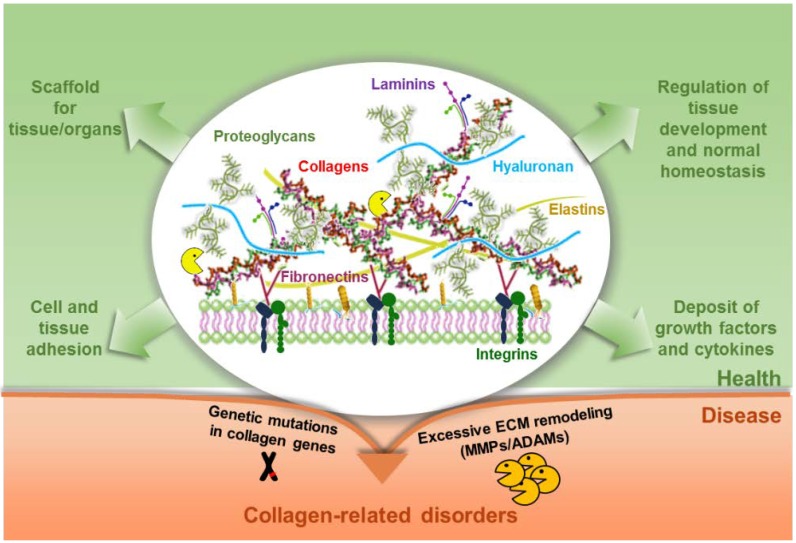
The extracellular matrix (ECM) is a highly dynamic and heterogeneous structure that plays multiple roles in living organisms. Its integrity and homeostasis are crucial for normal tissue development and organ physiology. Loss or alteration of ECM components turns towards a disease outcome. In this review, we provide a general overview of ECM components with a special focus on collagens, the most abundant and diverse ECM molecules. We discuss the different functions of the ECM including its impact on cell proliferation, migration and differentiation by highlighting the relevance of the bidirectional cross-talk between the matrix and surrounding cells. By systematically reviewing all the hereditary disorders associated to altered collagen structure or resulting in excessive collagen degradation, we point to the functional relevance of the collagen and therefore of the ECM elements for human health. Moreover, the large overlapping spectrum of clinical features of the collagen-related disorders makes in some cases the patient clinical diagnosis very difficult. A better understanding of ECM complexity and molecular mechanisms regulating the expression and functions of the various ECM elements will be fundamental to fully recognize the different clinical entities.
Overview
The claims and statistics of this paper haven’t been checked yet.
Run the check — free, no account needed. It reads the open-access text and checks the sources it cites.
Integrity signals
Registry
Cites
Statistics
Figures
Verification
Claims the paper makes
The claims and statistics of this paper haven’t been checked yet.
Run the check — free, no account needed. It reads the open-access text and checks the sources it cites.
Claims other papers make about this one
Each is checked against this paper’s own text: does it say what the citing paper says it does?
The check wasn’t confident either way, so it gives no verdict — never disputed.
In the citing paper
“With regard to psychiatry, the most robust relationship with joint hypermobility in child cohorts is for ADHD. 18–21”
From No association between joint hypermobility, musculoskeletal pain and neurodevelopmental problems in a school-based sample of 11-year-old children (2025) · cites this paper as [19]
Experimental — accuracy not yet measured
Self-check
Percentages, sums and reported differences re-computed from the paper’s own numbers.
The self-check needs the paper’s full text.
Citations
Cites
Remodelling the extracellular matrix in development and disease
Bonnans, C., Chou, J., & Werb, Z. (2014) · Nature Reviews Molecular Cell Biology · doi:10.1038/nrm3904 · Cited by 4,367 · cited 1×
“They act at neutral pH and recognize specific cleavage sites on the target molecules [67].”
BackgroundThe extracellular matrix at a glance
Frantz, C., Stewart, K. M., & Weaver, V. M. (2010) · Journal of Cell Science · doi:10.1242/jcs.023820 · Cited by 4,334 · cited 1×
“The ECM tensile strength is determined by the dynamic activities of lysil oxidase (LOX) and lysil hydroxylase, two enzymes involved in regulating the cross-linking between collagens and elastin [13].”
BackgroundTensional homeostasis and the malignant phenotype
Paszek, M. J., Zahir, N., Johnson, K. R., Lakins, J. N., Rozenberg, G. I., Gefen, A., Reinhart-King, C. A., Margulies, S. S., Dembo, M., Boettiger, D., et al. (2005) · Cancer Cell · doi:10.1016/j.ccr.2005.08.010 · Cited by 3,941 · cited 1×
“Tissue stiffness can drive malignant transformation via integrin-mediated mechanisms [23] and such fibrotic “stiff” lesions are associated with a poor prognosis [24].”
BackgroundThe Extracellular Matrix: Not Just Pretty Fibrils
Hynes, R. O. (2009) · Science · doi:10.1126/science.1176009 · Cited by 3,527 · cited 3×
“In addition, through the adhesion with ECM components, the ECM can modulate the ligand-receptors interaction and control the formation of morphogen gradients, whose concentration regulates developmental processes [21].”
BackgroundInfluentialRicard-Blum, S. (2011) · Cold Spring Harbor Perspectives in Biology · doi:10.1101/cshperspect.a004978 · Cited by 2,305 · cited 2×
“The ectodomains of membrane collagens XIII, XVII, XXIII and XXV [33] are matricryptins involved in cell adhesion, migration or proliferation [34].”
BackgroundThe 2017 international classification of the Ehlers–Danlos syndromes
Malfait, F., Francomano, C., Byers, P., Belmont, J., Berglund, B., Black, J., Bloom, L., Bowen, J. M., Brady, A. F., Burrows, N. P., et al. (2017) · American Journal of Medical Genetics Part C: Seminars in Medical Genetics · doi:10.1002/ajmg.c.31552 · Cited by 1,936 · cited 3×
“Hyperelasticity of the skin without excessive fragility and hypermobility of the joints are other hallmarks of the disease [164].”
BackgroundInfluentialDiagnostic exome sequencing in persons with severe intellectual disability
de Ligt, J., Willemsen, M. H., van Bon, B. W. M., Kleefstra, T., Yntema, H. G., Kroes, T., Vulto-van Silfhout, A. T., Koolen, D. A., de Vries, P., Gilissen, C., et al. (2012) · New England Journal of Medicine · doi:10.1056/nejmoa1206524 · Cited by 1,546 · cited 1×
“Normal growth parameters and no evident dysmorphism are recorded in adults [121,122].”
BackgroundNaba, A., Clauser, K. R., Hoersch, S., Liu, H., Carr, S. A., & Hynes, R. O. (2012) · Molecular & Cellular Proteomics · doi:10.1074/mcp.m111.014647 · Cited by 1,354 · cited 2×
“A significant input derives from the definition of the “matrisome,” a list of proteins contributing to the ECM in different organisms and tissues, which has been predicted by integrating the information derived from experimental knowledge, genome comparative studies and bioinformatics tools [2].”
BackgroundOverview of the Matrisome--An Inventory of Extracellular Matrix Constituents and Functions
Hynes, R. O., & Naba, A. (2012) · Cold Spring Harbor Perspectives in Biology · doi:10.1101/cshperspect.a004903 · Cited by 1,349 · cited 3×
“5% of the mammalian pro e me, requir s further investigatio s and biochemical characterization [3].”
BackgroundInfluentialmultifunctional enzymes in cancer
Mohamed, M. M., & Sloane, B. F. (2006) · Nature reviews. Cancer · doi:10.1038/nrc1949 · Cited by 1,303 · cited 1×
“It has been shown that in macrophages uPARAP/Endo180 acts as collagen internalization receptor after the interaction with pro-uPA (pro-urokinase plasminogen activator) and uPAR (urokinase plasminogen activator receptor [71]) proteins.”
BackgroundSTEM CELL NICHE: Structure and Function
Li, L., & Xie, T. (2005) · Annual Review of Cell and Developmental Biology · doi:10.1146/annurev.cellbio.21.012704.131525 · Cited by 1,268 · cited 1×
“These adhesion dynamics are particularly important to maintain the right balance between self-renewal and differentiation of stem cells [25].”
BackgroundKim, S., Turnbull, J. E., & Guimond, S. E. (2011) · Journal of Endocrinology · doi:10.1530/joe-10-0377 · Cited by 1,206 · cited 1×
“They share multiple repeating domains and motifs typical of the ECM constituents and promote cell adhesion, cell signalling and binding to growth factors [8].”
BackgroundCross-linking in collagen and elastin.
Eyre, D. R., Paz, M. A., & Gallop, P. (1984) · Annual Review of Biochemistry · doi:10.1146/annurev.bi.53.070184.003441 · Cited by 1,133 · cited 1×
“They are stabilized by non-reducible covalent crosslinks among specific triple-helix domains and telopeptides [59].”
BackgroundFunctions of hyaluronan in wound repair
Chen, W. Y. J., & Abatangelo, G. (1999) · Wound Repair and Regeneration · doi:10.1046/j.1524-475x.1999.00079.x · Cited by 1,109 · cited 1×
“In spite of its simple structure, HA plays a role in several biological processes, including cell signalling, inflammation, wound healing and cell development [5] and contributes to maintain tissue homeostasis by interacting with other ECM proteins or proteoglycans [6].”
BackgroundRegulation of cell signalling by uPAR
Smith, H. W., & Marshall, C. (2009) · Nature Reviews Molecular Cell Biology · doi:10.1038/nrm2821 · Cited by 983 · cited 1×
“Plasmin and elastase are serine proteinases, the first degrades fibrin, fibronectin and laminin [47], whereas the latter degrades fibronectin and elastin [48].”
BackgroundAssembly of Fibronectin Extracellular Matrix
Singh, P., Carraher, C. L., & Schwarzbauer, J. E. (2010) · Annual Review of Cell and Developmental Biology · doi:10.1146/annurev-cellbio-100109-104020 · Cited by 964 · cited 1×
“All these modules are organized in order to contain binding sites for a variety of other molecules, such as heparin sulphate proteoglycans (HSPGs), integrins and collagens [9].”
BackgroundKadler, K. E., Baldock, C., Bella, J., & Boot-Handford, R. (2007) · Journal of Cell Science · doi:10.1242/jcs.03453 · Cited by 887 · cited 4×
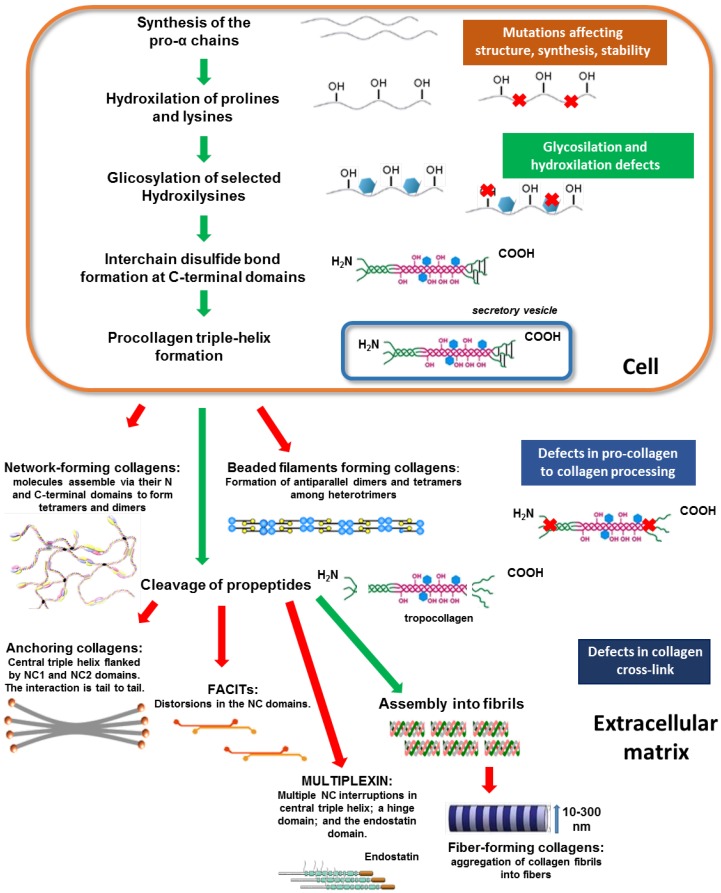
“The function of these network-forming collagens varies and likely depends on their structural organization [53,60].”
BackgroundInfluentialNishimura, A. L., Mitne-Neto, M., Silva, H. C. A., Richieri-Costa, A., Middleton, S., Cascio, D., Kok, F., Oliveira, J. R. M., Gillingwater, T., Webb, J., et al. (2004) · The American Journal of Human Genetics · doi:10.1086/425287 · Cited by 880 · cited 1×
“The resting cartilage appeared hypercellular with large chondrocytes [102,103].”
BackgroundCollagen : structure and mechanics
Fratzl, P. (2008) · Springer eBooks · doi:10.1007/978-0-387-73906-9 · Cited by 858 · cited 3×
“The anchoring filaments are assembled in an antiparallel manner, tail to tail with some C-terminal overlap [62,64].”
BackgroundAdhesion signaling – crosstalk between integrins, Src and Rho
Huveneers, S., & Danen, E. H. J. (2009) · Journal of Cell Science · doi:10.1242/jcs.039446 · Cited by 845 · cited 1×
“Integrins can sense the physical state of the matrix, by interacting with specific ECM molecules, such as collagens and laminins and activate downstream intracellular signalling cascades involving the focal adhesion kinase (FAK) signalling pathway, the mitogen-activated protein (MAP) kinases and the Rho family GTPases…”
BackgroundProcollagen trafficking, processing and fibrillogenesis
Canty‐Laird, E. G., & Kadler, K. E. (2005) · Journal of Cell Science · doi:10.1242/jcs.01731 · Cited by 797 · cited 1×
“The N- and C-propeptides (telopeptides) are subsequently removed by procollagen aminoproteinases and procollagen carboxyproteinases, respectively, giving rise to tropocollagen units [55,56].”
BackgroundLeach, J., & Powell, E. M. (2015) · Neuromethods · doi:10.1007/978-1-4939-2083-9 · Cited by 738 · cited 1×
“Among these, laminin G domain-like (LG) of the laminin α2 chain is composed by a β sandwich structure and contains a calcium-binding site, surrounded by a large number of epitopes involved in the interaction with cellular receptors and extracellular ligands ([10,11] and references therein).”
BackgroundOsteogenesis imperfecta: Clinical diagnosis, nomenclature and severity assessment
van Dijk, F. V., & Sillence, D. (2014) · American Journal of Medical Genetics. Part A · doi:10.1002/ajmg.a.36545 · Cited by 734 · cited 1×
“Additional symptoms may include blue sclera, short height, loose joints, hearing loss, breathing and teeth problems, cervical artery dissection and aortic dissection [82,83].”
BackgroundEarly molecular events in the assembly of matrix adhesions at the leading edge of migrating cells
Zaidel-Bar, R., Ballestrem, C., Kam, Z., & Geiger, B. (2003) · Journal of Cell Science · doi:10.1242/jcs.00792 · Cited by 719 · cited 1×
“Integrins can sense the physical state of the matrix, by interacting with specific ECM molecules, such as collagens and laminins and activate downstream intracellular signalling cascades involving the focal adhesion kinase (FAK) signalling pathway, the mitogen-activated protein (MAP) kinases and the Rho family GTPases…”
BackgroundHyaluronan: A simple polysaccharide with diverse biological functions
Dicker, K. T., Gurski, L. A., Pradhan-Bhatt, S., Witt, R. L., Farach‐Carson, M. C., & Jia, X. (2013) · Acta Biomaterialia · doi:10.1016/j.actbio.2013.12.019 · Cited by 701 · cited 1×
“In spite of its simple structure, HA plays a role in several biological processes, including cell signalling, inflammation, wound healing and cell development [5] and contributes to maintain tissue homeostasis by interacting with other ECM proteins or proteoglycans [6].”
BackgroundAntiangiogenesis in cancer therapy—endostatin and its mechanisms of action
Folkman, J. (2005) · Experimental Cell Research · doi:10.1016/j.yexcr.2005.11.015 · Cited by 675 · cited 5×
“More severe vision defects can be observed in patients with the Knobloch syndrome-1 due to alterations of the type XVIII collagen.”
BackgroundInfluentialExtracellular Matrix Molecules: Potential Targets in Pharmacotherapy
Järveläinen, H., Sainio, A., Koulu, M., Wight, T. N., & Penttinen, R. P. K. (2009) · Pharmacological Reviews · doi:10.1124/pr.109.001289 · Cited by 602 · cited 1×
“The main ECM components include collagens, proteoglycans and glycoproteins [1].”
BackgroundTGF-β/BMP signaling and other molecular events: regulation of osteoblastogenesis and bone formation
Rahman, M. S., Akhtar, N., Jamil, H. M., Banik, R. S., & Asaduzzaman, S. M. (2015) · Bone Research · doi:10.1038/boneres.2015.5 · Cited by 596 · cited 1×
“Also, fibrillin-containing microfibrils of the ECM regulate the availability and activity of bone morphogenetic proteins (BMPs) and growth and differentiation factor-5 (GDF-5), cytokines of the TGFβ family [19].”
BackgroundMolecular Architecture and Function of Matrix AdhesionsPreprint
Geiger, B., & Yamada, K. M. (2011) · Cold Spring Harbor Perspectives in Biology · doi:10.1101/cshperspect.a005033 · Cited by 572 · cited 1×
“Synthesized and organized by the cells, the matrix itself can actively regulate cell behaviour [20].”
BackgroundAltered Growth and Branching Patterns in Synpolydactyly Caused by Mutations in HOXD13
Muragaki, Y., Mundlos, S., Upton, J., & Olsen, B. (1996) · Science · doi:10.1126/science.272.5261.548 · Cited by 570 · cited 1×
“Few patients experience involvement of elbow, wrist or ankle [142].”
BackgroundMetalloproteinases and their natural inhibitors in inflammation and immunity
Khokha, R., Murthy, A., & Weiss, A. (2013) · Nature reviews. Immunology · doi:10.1038/nri3499 · Cited by 552 · cited 1×
“Although each TIMP molecule is active against various MMPs, they all show some substrate preferences [46].”
BackgroundRegulation, function and clinical significance of heparanase in cancer metastasis and angiogenesis.
Ilan, N., Elkin, M., & Vlodavsky, I. (2006) · International Journal of Biochemistry and Cell Biology · doi:10.1016/j.biocel.2006.06.004 · Cited by 523 · cited 1×
“Heparanases and sulphatases cleave heparin sulphate [49] and remove its 6-O-sulphate residues, respectively.”
BackgroundCRTAP is required for prolyl 3- hydroxylation and mutations cause recessive osteogenesis imperfecta.
Morello, R., Bertin, T., Chen, Y., Hicks, J., Tonachini, L., Monticone, M., Castagnola, P., Rauch, F., Glorieux, F., Vranka, J., et al. (2006) · Cell · doi:10.1016/j.cell.2006.08.039 · Cited by 519 · cited 1×
“Among the OI associated to collagen alterations, the type VII (mutations in CRTAP) is sometimes considered a lethal form with multiple fractures, long bone deformities, scoliosis and short stature [84].”
BackgroundThe prevalence of childhood atopic eczema in a general population.
Kay, J., Gawkrodger, D., Mortimer, M. J., & Jaron, A. (1994) · Journal of American Academy of Dermatology · doi:10.1016/s0190-9622(94)70004-4 · Cited by 508 · cited 1×
“The onset of disease is typically observed during the first two years of life [161].”
BackgroundApte, S. (2009) · Journal of Biological Chemistry · doi:10.1074/jbc.r109.052340 · Cited by 506 · cited 1×
“ADAMs are involved in cytokines processing and growth factor receptor shedding [43] while ADAMTS play a role in degradation of ECM components, particularly collagens and proteoglycans [44].”
BackgroundDavis, G. E., Bayless, K. J., Davis, M. J., & Meininger, G. A. (2000) · American Journal Of Pathology · doi:10.1016/s0002-9440(10)65020-1 · Cited by 463 · cited 1×
“Matrikines were first described by Maquart and colleagues in 1999 [29] and then named matricryptins one year later by Davis and colleagues with the following definition “biologically active sites that are not exposed in the mature, secreted form of ECM molecules but which become exposed after structural or conformatio…”
BackgroundThe ADAMs: signalling scissors in the tumour microenvironment
Murphy, G. (2008) · Nature Reviews Cancer · doi:10.1038/nrc2459 · Cited by 451 · cited 1×
“ADAMs are involved in cytokines processing and growth factor receptor shedding [43] while ADAMTS play a role in degradation of ECM components, particularly collagens and proteoglycans [44].”
BackgroundA review of keratoconus: Diagnosis, pathophysiology, and genetics
Tur, V. M., MacGregor, C., Jayaswal, R., O'Brart, D. P. S., & Maycock, N. J. R. (2017) · Survey of Ophthalmology · doi:10.1016/j.survophthal.2017.06.009 · Cited by 441 · cited 1×
“No specific treatment exists except corneal transplantation when visual acuity can no longer be corrected by contact lenses [172].”
BackgroundCell-Cycle Control by Physiological Matrix Elasticity and In Vivo Tissue Stiffening
Klein, E. A., Yin, L., Kothapalli, D., Castagnino, P. A., Byfield, F. J., Xu, T., Levental, I., Hawthorne, E. A., Janmey, P. A., & Assoian, R. K. (2009) · Current Biology · doi:10.1016/j.cub.2009.07.069 · Cited by 421 · cited 1×
“Human tumours for example are surrounded by a stiff matrix with high collagen concentrations and the ECM rigidity might represent an optimal growing milieu for some surrounding cells that are therefore attracted towards this source [22].”
BackgroundDe Novo Mutations in Moderate or Severe Intellectual Disability
Hamdan, F. F., Srour, M., Capo-Chichi, J.-M., Daoud, H., Nassif, C., Patry, L., Massicotte, C., Ambalavanan, A., Spiegelman, D., Diallo, O., et al. (2014) · PLoS Genetics · doi:10.1371/journal.pgen.1004772 · Cited by 419 · cited 1×
“Normal growth parameters and no evident dysmorphism are recorded in adults [121,122].”
BackgroundAutosomal dominant and recessive osteochondrodysplasias associated with the COL11A2 locus.
Vikkula, M., Madman, E. C. M., Lui, V., Zhidkova, N. I., Tiller, G., Goldring, M., van Beersum, S. V., Malefijt, M. C. D. W., van den Hoogen, F. V. D., Ropers, H., et al. (1995) · Cell · doi:10.1016/0092-8674(95)90493-x · Cited by 387 · cited 1×
“Diagnostic radiologic findings are enlarged epiphyses combined with moderate platyspondyly, mainly in the lower thoracic region [111].”
BackgroundCross Talk among TGF- Signaling Pathways, Integrins, and the Extracellular Matrix
Munger, J. S., & Sheppard, D. (2011) · Cold Spring Harbor Perspectives in Biology · doi:10.1101/cshperspect.a005017 · Cited by 372 · cited 1×
“One representative example is the TGFβ proteins, which indirectly connect to fibrillins and fibronectins [18] and are stored in the ECM in their inactive form until proteolitically activated by matrix metalloproteinases (MMP) or by mechanical forces.”
BackgroundShaping Morphogen Gradients by ProteoglycansPreprint
Yan, D., & Lin, X.-H. (2009) · Cold Spring Harbor Perspectives in Biology · doi:10.1101/cshperspect.a002493 · Cited by 363 · cited 1×
“One example of ECM molecule directly implicated in the regulation of morphogens gradients is represented by the HSPGs, which binds morphogens but also many cell surface co-receptors, thus acting as a linking platform that mediates the interactions of morphogens with the other ECM components [27].”
BackgroundAumailley, M. (2013) · Cell Adhesion & Migration · doi:10.4161/cam.22826 · Cited by 332
Osteonecrosis of the femoral head: Etiology, imaging and treatment
Malizos, K. N., Karantanas, A. H., Varitimidis, S. E., Dailiana, Z. H., Bargiotas, K., & Maris, T. (2007) · European Journal of Radiology · doi:10.1016/j.ejrad.2007.03.019 · Cited by 316 · cited 1×
“Nearly half of patients require hip replacement before 40 years of age [114].”
BackgroundPhagocytosis and intracellular digestion of collagen, its role in turnover and remodelling
Everts, V., van der Zee, E., Creemers, L., & Beertsen, W. (1996) · The Histochemical Journal · doi:10.1007/bf02409011 · Cited by 309 · cited 1×
“Collagen degradation is a multi-step process that relies first on the activity of extracellular proteases to break down the ECM collagen fibrils and subsequently on the cellular uptake and intracellular lysosomal degradation of fragmented fibrils [66].”
BackgroundHeparin-II Domain of Fibronectin Is a Vascular Endothelial Growth Factor-Binding Domain
Wijelath, E. S., Rahman, S., Namekata, M., Murray, J., Nishimura, T., Mostafavi‐Pour, Z., Patel, Y., Suda, Y., Humphries, M. J., & Sobel, M. (2006) · Circulation Research · doi:10.1161/01.res.0000246849.17887.66 · Cited by 306 · cited 1×
“Indeed, it was shown that vascular endothelial growth factor (VEGF) binds to the type III modules of fibronectin and this interaction depends on the heparin-binding residues of fibronectin [14].”
BackgroundPPIB mutations cause severe osteogenesis imperfecta.
van Dijk, F. V., Nesbitt, I., Zwikstra, E. H., Nikkels, P., Piersma, S., Fratantoni, S. A., Jiménez, C., Huizer, M., Morsman, A. C., Cobben, J., et al. (2009) · American Journal of Human Genetics · doi:10.1016/j.ajhg.2009.09.001 · Cited by 283 · cited 1×
“Radiographs and an autopsy showed the presence of shortened, bowed and fractured long bones without evident rhizomelia [86].”
BackgroundRole, Metabolism, Chemical Modifications and Applications of Hyaluronan
Volpi, N., Schiller, J., Stern, R., & Šoltés, L. (2009) · Current Medicinal Chemistry · doi:10.2174/092986709788186138 · Cited by 279
β1 Integrin deletion from the basal compartment of the mammary epithelium affects stem cells
Hosseraye, I. T.-D. L., Deugnier, M., Faraldo, M. M., Petit, V., Bouvard, D., Medina, D., Fässler, R., Thiery, J. P., & Glukhova, M. A. (2008) · Nature Cell Biology · doi:10.1038/ncb1734 · Cited by 276 · cited 1×
“In this respect, it has been shown that the genomic loss of integrin β1 encoding gene in the basal cells of mouse mammary epithelium affects stem cell regeneration and results in irregular branching ducts due to developmental defects of the mammary gland [26].”
BackgroundAlport syndrome—insights from basic and clinical research
Kruegel, J., Rubel, D., & Gross, O. (2013) · Nature Reviews Nephrology · doi:10.1038/nrneph.2012.259 · Cited by 274 · cited 1×
“Anterior lenticonus, abnormal coloration of the retina, lens rupture, cataracts and corneal erosions can be found [116].”
BackgroundAlmond, A. (2007) · Cellular and Molecular Life Sciences · doi:10.1007/s00018-007-7032-z · Cited by 272
Faghri, S., Tamura, D., Kraemer, K. H., & DiGiovanna, J. J. (2008) · Journal of Medical Genetics · doi:10.1136/jmg.2008.058743 · Cited by 264 · cited 1×
“TTD patients present a 20-fold higher mortality compared to the US general population [158,159].”
BackgroundGenotype-phenotype correlation in X-linked Alport syndrome.
Bekheirnia, M., Reed, B., Gregory, M., Mcfann, K., Shamshirsaz, A. A., Masoumi, A., & Schrier, R. (2010) · Journal of the American Society of Nephrology · doi:10.1681/asn.2009070784 · Cited by 256 · cited 1×
“5%) of women with COL4A5 mutations develop microscopic haematuria [118].”
BackgroundSbardella, D., Fasciglione, G. F., Gioia, M., Ciaccio, C., Tundo, G. R., Marini, S., & Coletta, M. (2011) · Molecular Aspects of Medicine · doi:10.1016/j.mam.2011.10.015 · Cited by 251 · cited 1×
“At least 24 MMPs proteins have been so far identified and, based on their structural organization and substrate specificity, MMPs can be classified into: collagenases, gelatinases, stromelysins, matrilysins and membrane-type I [42].”
BackgroundCOL4A1 Mutations as a Monogenic Cause of Cerebral Small Vessel Disease
Lanfranconi, S., & Markus, H. S. (2010) · Stroke · doi:10.1161/strokeaha.110.581918 · Cited by 248
The extracellular matrix and blood vessel formation: not just a scaffold
Rhodes, J., & Simons, M. (2007) · Journal of Cellular and Molecular Medicine · doi:10.1111/j.1582-4934.2007.00031.x · Cited by 247 · cited 2×
“Therefore, these ECM-fragments may act by regulating cell proliferation, cell death, cell differentiation and angiogenesis [35].”
BackgroundDiscoidin Domain Receptors: Unique Receptor Tyrosine Kinases in Collagen-mediated Signaling
Fu, H.-L., Valiathan, R. R., Arkwright, R. T., Sohail, A., Mihai, C., Kumarasiri, M., Mahasenan, K. V., Mobashery, S., Huang, P. H., Agarwal, G., et al. (2013) · Journal of Biological Chemistry · doi:10.1074/jbc.r112.444158 · Cited by 245 · cited 1×
“Also, ECM receptors play a role in signal transduction, in particular the collagen receptors DDRs with their intracellular tyrosine kinase activity and the integrin proteins capable of transmitting chemical signals into the cells [37].”
BackgroundPhysiological role of collagen XVIII and endostatin
Marneros, A. G., & Olsen, B. R. (2005) · The FASEB Journal · doi:10.1096/fj.04-2134rev · Cited by 231 · cited 1×
“Several studies show the anti-angiogenic properties of endostatin as inhibitor of endothelial cell migration and tumour growth [62,63].”
BackgroundMatricryptins and matrikines: biologically active fragments of the extracellular matrix
Ricard‐Blum, S., & Salza, R. (2014) · Experimental Dermatology · doi:10.1111/exd.12435 · Cited by 224 · cited 2×
“The ectodomains of syndecans 1–4 are also matricryptins, whereas fragments derived from hyaluronan degradation regulate inflammation and wound healing ([28] and references therein).”
BackgroundGottsch, J., Sundin, O., Liu, S. H., Jun, A. S., Broman, K., Stark, W., Vito, E. C. L., Narang, A., Thompson, J. M., & Magovern, M. (2005) · Investigative Ophthalmology and Visual Science · doi:10.1167/iovs.04-0937 · Cited by 223 · cited 1×
“Another family with one PPCD2 patient and few FECD cases, due to heterozygous missense mutation in COL8A2, has been described [139].”
BackgroundCOL4A3/COL4A4 mutations: from familial hematuria to autosomal-dominant or recessive Alport syndrome.
Longo, I., Porcedda, P., Mari, F., Giachino, D., Meloni, I., Deplano, C., Brusco, A., Bosio, M., Massella, L., Lavoratti, G., et al. (2002) · Kidney International · doi:10.1046/j.1523-1755.2002.00379.x · Cited by 223 · cited 1×
“Autosomal recessive Alport syndrome presents as gross proteinuria in childhood and progression to end-stage kidney disease often before the fourth decade [120].”
BackgroundVariants in a Novel Epidermal Collagen Gene (COL29A1) Are Associated with Atopic Dermatitis
Söderhäll, C., Marenholz, I., Kerscher, T., Rüschendorf, F., Esparza-Gordillo, J., Worm, M., Grüber, C., Mayr, G., Albrecht, M., Rohde, K., et al. (2007) · PLoS Biology · doi:10.1371/journal.pbio.0050242 · Cited by 223 · cited 1×
“Lack of COL29A1 expression in the outer layers of the epidermis of ATOD patients points to a role of collagen XXIX in epidermal integrity, whose breakdown is a clinical hallmark of AD [160].”
Backgroundvan de Wetering, J. K., GOLDE, L. M. G. V., & Batenburg, J. J. (2004) · European Journal of Biochemistry · doi:10.1111/j.1432-1033.2004.04040.x · Cited by 221 · cited 1×
“Notably, collagen-like triple helical domains are found in several other proteins that do not have structural function and therefore are not considered as real collagens [65].”
BackgroundCell-Matrix Interactions in Mammary Gland Development and Breast CancerPreprint
Muschler, J. L., & Streuli, C. H. (2010) · Cold Spring Harbor Perspectives in Biology · doi:10.1101/cshperspect.a003202 · Cited by 215 · cited 1×
“Alterations of ECM remodelling can also influence the course and progression of several other pathological conditions, including fibrosis, skin disorders and cancer [74].”
BackgroundExtracellular microfibrils: contextual platforms for TGFβ and BMP signaling
Ramirez, F., & Rifkin, D. B. (2009) · Current Opinion in Cell Biology · doi:10.1016/j.ceb.2009.05.005 · Cited by 207
Hyaluronan synthesis and degradation in cartilage and bone
Bastow, E. R., Byers, S., Golub, S. B., Clarkin, C. E., Pitsillides, A. A., & Fosang, A. (2007) · Cellular and Molecular Life Sciences · doi:10.1007/s00018-007-7360-z · Cited by 201 · cited 1×
“Hyaluronidases are a family of enzymes capable of degrading HA [51].”
BackgroundA mutation in COL9A1 causes multiple epiphyseal dysplasia: further evidence for locus heterogeneity.
Czarny‐Ratajczak, M., Lohiniva, J., Rogala, P., Kozłowski, K., Perälä, M., Carter, L., Spector, T., Kołodziej, L., Seppänen, U., Glazar, R., et al. (2001) · American Journal of Human Genetics · doi:10.1086/324023 · Cited by 198 · cited 1×
“The mother had the same mutation but she did not reveal any symptom before age 45 years [143]”
BackgroundLeuchter, R. H., Alanay, Y., Bank, R. A., Campos‐Xavier, B., Zankl, A., Superti‐Furga, A., & Bonafé, L. (2004) · American Journal of Medical Genetics Part A · doi:10.1002/ajmg.a.30231 · Cited by 189 · cited 1×
“Mutations in this gene affect the instalment and secretion of collagen fibres from osteoblasts [163].”
BackgroundMutations in FKBP10 Cause Recessive Osteogenesis Imperfecta and Bruck Syndrome
Kelley, B., Malfait, F., Bonafė, L., Baldridge, D., Homan, E. P., Symoens, S., Willaert, A., Elcioglu, N., Maldergem, L. V., Verellen-Dumoulin, C., et al. (2010) · Journal of Bone and Mineral Research · doi:10.1002/jbmr.250 · Cited by 186 · cited 1×
“All the others clinical data on the 29 patients with OI type XI (mutations in FKBP10) are limited and heterogeneous regarding the age of onset, the number of fractures, the type of affected bones and the severity of the disorder [88].”
BackgroundPhenotypic Spectrum of COL4A1 Mutations: Porencephaly to Schizencephaly
Yoneda, Y., Haginoya, K., Kato, M., Osaka, H., Yokochi, K., Arai, H., Kakita, A., Yamamoto, T., Otsuki, Y., Shimizu, S., et al. (2012) · Annals of Neurology · doi:10.1002/ana.23736 · Cited by 183 · cited 1×
“Affected individuals have delayed growth and development, hypotonia, spastic hemiplegia, seizures, migraine headaches, speech problems and intellectual disability with variable severity [126].”
BackgroundPhenotypic classification of male pseudohermaphroditism due to steroid 5α-reductase 2 deficiency
Sinnecker, G. H. G., Hiort, O., DIBBELT, L., Albers, N., Dörr, H. G., Hauß, H., Heinrich, U., Hemminghaus, M., Hoepffner, W., Holder, M., et al. (1996) · American Journal of Medical Genetics · doi:10.1002/(sici)1096-8628(19960503)63:1 · Cited by 181
Chen, M., Marinkovich, M., Veis, A., Cai, X.-Y., Rao, C. N., O'Toole, E., & Woodley, D. (1997) · Journal of Biological Chemistry · doi:10.1074/jbc.272.23.14516 · Cited by 173 · cited 1×
“The anchoring filaments are assembled in an antiparallel manner, tail to tail with some C-terminal overlap [62,64].”
BackgroundRahman, S., Patel, Y., Murray, J., Patel, K. V., Sumathipala, R., Sobel, M., & Wijelath, E. S. (2005) · BMC Cell Biology · doi:10.1186/1471-2121-6-8 · Cited by 173 · cited 1×
“Hepatocyte growth factor (HGF) binds to the 70 kDa N-terminal and the 40 kDa C-terminal fragments of fibronectin [15], whereas platelet-derived growth factor (PDGF) binds the type III and the variable domains of fibronectin [16].”
BackgroundKnowlton, R., Katzenstein, P., Moskowitz, R., Weaver, E. J., Malemud, C., Pathria, M., Jimenez, S., & Prockop, D. (1990) · New England Journal of Medicine · doi:10.1056/nejm199002223220807 · Cited by 169 · cited 1×
“Several cases have been reported, included family members over various generations [95,100,101].”
BackgroundCollagenase: a key enzyme in collagen turnover
Shingleton, W. D., Cawston, T. E., Hodges, D. J., & Brick, P. (1996) · Biochemistry and Cell Biology · doi:10.1139/o96-083 · Cited by 166 · cited 1×
“Finally, lysosomes fuse together to generate large structures containing collagen and ECM fragments that undergo enzymatic digestion by cysteine cathepsins [72,73].”
BackgroundMonea, S., Lehti, K., Keski-oja, J., & Mignatti, P. (2002) · Journal of Cellular Physiology · doi:10.1002/jcp.10126 · Cited by 165 · cited 1×
“Upon activation, MMP-2 can degrade several collagen types, fibronectin, elastin as well as gelatin, the denatured form of collagen [69].”
BackgroundBaumann, M., Giunta, C., Krabichler, B., Rüschendorf, F., Zoppi, N., Colombi, M., Bittner, R. E., Quijano-Roy, S., Muntoni, F., Cirak, S., et al. (2012) · The American Journal of Human Genetics · doi:10.1016/j.ajhg.2011.12.004 · Cited by 162 · cited 1×
“It catalyses the folding of COL3 and interacts with COL3, COL4 and COLX [165].”
BackgroundInherited epidermolysis bullosa: new diagnostic criteria and classification.
Intong, L., & Murrell, D. (2012) · Clinical Dermatology · doi:10.1016/j.clindermatol.2011.03.012 · Cited by 159 · cited 1×
“Patients usually do not survive more than 30 years due to severe renal complications or aggressive squamous cell carcinoma arising in the areas of repeated scarring [154].”
BackgroundBonnefoy, A., & Legrand, C. (2000) · Thrombosis Research · doi:10.1016/s0049-3848(99)00242-x · Cited by 158 · cited 1×
“Plasmin and elastase are serine proteinases, the first degrades fibrin, fibronectin and laminin [47], whereas the latter degrades fibronectin and elastin [48].”
BackgroundMutation Update for COL2A1 Gene Variants Associated with Type II Collagenopathies
Barat-Houari, M., Sarrabay, G., Gatinois, V., Fabre, A., Dumont, B., Geneviève, D., & Touitou, I. (2016) · Human Mutation · doi:10.1002/humu.22915 · Cited by 152 · cited 2×
“The cartilage appears as abnormal gelatinous texture and translucent [75].”
BackgroundAutosomal recessive cutis laxa syndrome revisited
Morava, E., Guillard, M., Lefeber, D., & Wevers, R. (2009) · European Journal of Human Genetics · doi:10.1038/ejhg.2009.22 · Cited by 146 · cited 2×
“Cutis laxa is a rare skin disorder characterized by wrinkled, redundant, inelastic and sagging skin due to defective synthesis of elastic fibres and other proteins of the ECM [167].”
BackgroundRecessive Osteogenesis Imperfecta Caused by Missense Mutations in SPARC
Mendoza‐Londono, R., Fahiminiya, S., Majewski, J., Tétreault, M., Nadaf, J., Kannus, P., Sochett, E. B., Howard, A., Stimec, J., Dupuis, L., et al. (2015) · The American Journal of Human Genetics · doi:10.1016/j.ajhg.2015.04.021 · Cited by 140 · cited 1×
“Other features are decreased calf muscle mass, joint hyperlaxity and soft skin [89].”
BackgroundBrown, N. H. (2011) · Cold Spring Harbor Perspectives in Biology · doi:10.1101/cshperspect.a005082 · Cited by 129 · cited 1×
“An example of coexistence is observed during muscle differentiation, where a sticky ECM is required to bind the extremities of the cells, whereas a slippery matrix coats the lateral sides [38].”
BackgroundAutosomal recessive myosclerosis myopathy is a collagen VI disorder
Merlini, L., Martoni, E., Grumati, P., Sabatelli, P., Squarzoni, S., Urciuolo, A., Ferlini, A., Gualandi, F., & Bonaldo, P. (2008) · Neurology · doi:10.1212/01.wnl.0000327611.01687.5e · Cited by 125 · cited 1×
“Increased serum creatine kinase was also found [133].”
BackgroundMatricryptins derived from collagens and proteoglycans
Ricard‐Blum, S. (2010) · Frontiers in bioscience · doi:10.2741/3712 · Cited by 124 · cited 5×
“More severe vision defects can be observed in patients with the Knobloch syndrome-1 due to alterations of the type XVIII collagen.”
BackgroundInfluentialThe Non-phagocytic Route of Collagen Uptake
Madsen, D. H., Ingvarsen, S., Jürgensen, H. J., Melander, M. C., Kjøller, L., Moyer, A. B., Honoré, C., Madsen, C. A., Garred, P., Burgdorf, S., et al. (2011) · Journal of Biological Chemistry · doi:10.1074/jbc.m110.208033 · Cited by 122 · cited 1×
“Finally, lysosomes fuse together to generate large structures containing collagen and ECM fragments that undergo enzymatic digestion by cysteine cathepsins [72,73].”
BackgroundTrichothiodystrophy: From basic mechanisms to clinical implications
Stefanini, M., Botta, E., Lanzafame, M., & Orioli, D. (2009) · DNA repair · doi:10.1016/j.dnarep.2009.10.005 · Cited by 120 · cited 1×
“TTD patients present a 20-fold higher mortality compared to the US general population [158,159].”
BackgroundSelf-citationStructural basis of homo- and heterotrimerization of collagen I
Sharma, U., Carrique, L., Goff, S. V., Mariano, N., Georges, R.-N., Delolme, F., Koivunen, P., Myllyharju, J., Moali, C., Aghajari, N., et al. (2017) · Nature Communications · doi:10.1038/ncomms14671 · Cited by 119 · cited 1×
“The most abundant collagen of the human body, the interstitial type I collagen, is made by two identical α1 and one α2 chain, which shows high sequence homology with α1 [57].”
BackgroundStructure of Homo- and Hetero-oligomeric Meprin Metalloproteases
Bertenshaw, G. P., Norcum, M. T., & Bond, J. S. (2003) · Journal of Biological Chemistry · doi:10.1074/jbc.m208808200 · Cited by 113 · cited 6×
“ADAMs are involved in cytokines processing and growth factor receptor shedding [43] while ADAMTS play a role in degradation of ECM components, particularly collagens and proteoglycans [44].”
BackgroundInfluentialNovel and emerging therapies in the treatment of recessive dystrophic epidermolysis bullosa
Rashidghamat, E., & McGrath, J. A. (2017) · Intractable & Rare Diseases Research · doi:10.5582/irdr.2017.01005 · Cited by 110 · cited 1×
“DDEB and RDEB are also known as Cockayne-Touraine disease and Hallopeau-Siemens disease, respectively [135].”
BackgroundMüller, T., Mizumoto, S., Suresh, I., Komatsu, Y., Vodopiutz, J., Dündar, M., Straub, V. W., Lingenhel, A., Melmer, A., Lechner, S., et al. (2013) · Human Molecular Genetics · doi:10.1093/hmg/ddt227 · Cited by 107 · cited 2×
“EDSMC1 and 2 share most of the clinical features, even though the majority of cases (31) refer to the EDSMC1 and only three cases are reported for the EDSMC2 type [78].”
BackgroundNovel COL4A1 mutations associated with HANAC syndrome: A role for the triple helical CB3[IV] domain
Plaisier, E., Chen, Z.-Y., Gekeler, F., Benhassine, S., Dahan, K., Marro, B., Alamowitch, S., Pâques, M., & Ronco, P. (2010) · American Journal of Medical Genetics. Part A · doi:10.1002/ajmg.a.33659 · Cited by 104 · cited 1×
“In addition, patients may manifest eye problems, like arterial retinal tortuosity, cataract and abnormality called Axenfeld-Rieger anomaly [124].”
BackgroundTiteux, M., Pendaries, V., Tonasso‐Calvière, L., Décha, A., Bodemer, C., & Hovnanian, A. (2007) · Human Mutation · doi:10.1002/humu.20647 · Cited by 104 · cited 2×
“An association between disease severity and specific SNP in MMP1 gene (*120353) was found in three affected members of one family and in a cohort of 31 unrelated French RDEB patients [136].”
BackgroundGenetic risk factors for spontaneous intracerebral haemorrhage
Carpenter, A., Singh, I. P., Gandhi, C. D., & Prestigiacomo, C. J. (2015) · Nature Reviews Neurology · doi:10.1038/nrneurol.2015.226 · Cited by 103 · cited 1×
“The mutated vascular collagen diminishes the tensile strength of vessels and increases their fragility, which can lead to haemorrhage [128].”
BackgroundCollagenous transmembrane proteins: collagen XVII as a prototype
Franzke, C.-W., Tasanen, K., Schumann, H., & Bruckner‐Tuderman, L. (2003) · Matrix Biology · doi:10.1016/s0945-053x(03)00051-9 · Cited by 101 · cited 1×
“Collagen types XIII and XVII are included in this group [61].”
BackgroundA loss of function mutation in the COL9A2 gene causes autosomal recessive Stickler syndrome
Baker, S., Booth, C., Fillman, C., Shapiro, M., Blair, M., Hyland, J., & Ala-kokko, L. (2011) · American Journal of Medical Genetics. Part A · doi:10.1002/ajmg.a.34071 · Cited by 101 · cited 2×
“None of the family members was known to have cleft palate and, although there was short stature in childhood, normal height was found in adults [108].”
BackgroundTiller, G. E., Polumbo, P. A., Weis, M. A., Bogaert, R., Lachman, R. S., Cohn, D. H., Rimoin, D. L., & Eyre, D. R. (1995) · Nature Genetics · doi:10.1038/ng0995-87 · Cited by 94 · cited 1×
“The disorder is a skeletal dysplasia with platyspondyly and brachydactyly E-like changes (short meta-carpals and metatarsals, short distal phalanges in the hand and feet) [107].”
BackgroundTopical Review: Schizencephaly: Clinical Spectrum, Epilepsy, and Pathogenesis
Granata, T., Freri, E., Caccia, C., Setola, V., Taroni, F., & Battaglia, G. (2004) · Journal of Child Neurology · doi:10.1177/08830738040190030801 · Cited by 92 · cited 1×
“Type II is associated with mental retardation, seizures, hypotonia, spasticity, inability to walk or speak and blindness [127].”
BackgroundFischer‐Zirnsak, B., Escande‐Beillard, N., Ganesh, J., Tan, Y. X., Al-Bughaili, M., Lin, A. E., Sahai, I., Bahena, P., Reichert, S. L., Loh, A., et al. (2015) · The American Journal of Human Genetics · doi:10.1016/j.ajhg.2015.08.001 · Cited by 89 · cited 1×
“Patients also exhibit a combination of muscular hypotonia with brisk muscle reflexes [170].”
BackgroundMajava, M., Hoornaert, K. P., Bartholdi, D., Bouma, M., Bouman, K., Carrera, M., Devriendt, K., Hurst, J., Kitsos, G., Niedrist, D., et al. (2007) · American Journal of Medical Genetics. Part A · doi:10.1002/ajmg.a.31586 · Cited by 88 · cited 1×
“Moreover, COL11A1 mutations are associated by early-onset hearing loss [110].”
BackgroundBertini, E., & Pepe, G. (2002) · European journal of paediatric neurology · doi:10.1053/ejpn.2002.0593 · Cited by 88 · cited 1×
“The mild form may also reveal skin abnormalities, including follicular hyperkeratosis on the arms and legs; soft, velvety skin on the hand palms and feet soles; abnormal wound healing resulting in shallow scars [131].”
BackgroundMalfait, F., Coster, P. D., Haußer, I., van Essen, A. J., Franck, P., Colige, A., Nusgens, B., MARTENS, L. C., & Paepe, A. D. (2004) · American Journal of Medical Genetics Part A · doi:10.1002/ajmg.a.30299 · Cited by 85 · cited 1×
“Extra (redundant) folds of skin may be present as affected children get older [81].”
BackgroundLogan, C. V., Cossins, J., Cruz, P. M. R., Parry, D. A., Maxwell, S., Martínez‐Martínez, P., Riepsaame, J., Abdelhamed, Z. A., Lake, A. V. R., Moran, M., et al. (2015) · The American Journal of Human Genetics · doi:10.1016/j.ajhg.2015.10.017 · Cited by 82 · cited 1×
“The severity of the weakness and disease course is variable [149].”
BackgroundRégulation de l’activité cellulaire par la matrice extracelulaire : le concept de matrikines
Maquart, F., Siméon, A., Pasco, S., & Monboisse, J. (1999) · Journal de la Société de Biologie · doi:10.1051/jbio/1999193040423 · Cited by 81
Fibronectin Growth Factor-Binding Domains Are Required for Fibroblast Survival
Lin, F., Ren, X.-D., Pan, Z., Macri, L. K., Zong, W., Tonnesen, M. G., Rafailovich, M. H., Bar‐Sagi, D., & Clark, R. A. F. (2010) · Journal of Investigative Dermatology · doi:10.1038/jid.2010.253 · Cited by 77 · cited 1×
“Hepatocyte growth factor (HGF) binds to the 70 kDa N-terminal and the 40 kDa C-terminal fragments of fibronectin [15], whereas platelet-derived growth factor (PDGF) binds the type III and the variable domains of fibronectin [16].”
BackgroundInfantile Cortical Hyperostosis (Caffey Disease): A Review
Kamoun-Goldrat, A. S., & Merrer, M. F. L. (2008) · Journal of Oral and Maxillofacial Surgery · doi:10.1016/j.joms.2007.09.007 · Cited by 73 · cited 1×
“Rare cases of recurrence have also been described [90].”
BackgroundYonekawa, T., & Nishino, I. (2014) · Journal of Neurology Neurosurgery & Psychiatry · doi:10.1136/jnnp-2013-307052 · Cited by 71 · cited 1×
“As in BTHLM1, some people with UCMD1 have follicular hyperkeratosis [132].”
BackgroundOsteogenesis Imperfecta: A Translational Approach to Brittle Bone Disease
Shapiro, J., Byers, P., Glorieux, F., & Sponsellor, P. (2013) · doi:10.1016/c2011-0-07790-6 · Cited by 68 · cited 1×
“Types X OI is a severe deforming form of the disorder characterized by aberrant collagen crosslinking, folding and chaperoning [87].”
BackgroundRost, S., Bach, E., Neuner, C., Nanda, I., Dysek, S., Bittner, R., Keller, A., Bartsch, O., Mlynski, R., Haaf, T., et al. (2013) · European Journal of Human Genetics · doi:10.1038/ejhg.2013.108 · Cited by 66 · cited 1×
“Female patients develop mild to moderate hearing impairment in the third/fourth decades of life and rarely hearing loss in the first decade of life [129].”
BackgroundThe phenotype of the musculocontractural type of Ehlers‐Danlos syndrome due to CHST14 mutations
Janecke, A. R., Li, B., Boehm, M., Krabichler, B., Rohrbach, M., Müller, T., Fuchs, I., Golas, G., Katagiri, Y., Ziegler, S. G., et al. (2016) · American Journal of Medical Genetics Part A · doi:10.1002/ajmg.a.37383 · Cited by 66 · cited 1×
“EDSMC neonates show distal arthrogryposis and muscular hypotonia [78,79].”
BackgroundColpaert, C., Vermeulen, P., Marck, E. V., & Dirix, L. (2001) · American Journal of Surgical Pathology · doi:10.1097/00000478-200112000-00016 · Cited by 61 · cited 1×
“Tissue stiffness can drive malignant transformation via integrin-mediated mechanisms [23] and such fibrotic “stiff” lesions are associated with a poor prognosis [24].”
BackgroundJackson, G. C., Marcus‐Soekarman, D., Stolte‐Dijkstra, I., Verrips, A., Taylor, J. A., & Briggs, M. D. (2010) · American Journal of Medical Genetics Part A · doi:10.1002/ajmg.a.33240 · Cited by 59 · cited 1×
“EDM2 onset is usually in childhood, around 3-4 years of age and clinical variability is observed even within the same family [141].”
BackgroundMcAlinden, A., Majava, M., Bishop, P. N., Perveen, R., Black, G. C. M., Pierpont, M. E., Ala‐Kokko, L., & Männikkö, M. (2007) · Human Mutation · doi:10.1002/humu.20603 · Cited by 58 · cited 1×
“Systemic features of premature osteoarthritis, cleft palate, hearing impairment and craniofacial abnormalities are very mild or absent [113].”
BackgroundZankl, A., Neumann, L., Ignatius, J., Nikkels, P., Schrander-Stumpel, C., Mortier, G., Omran, H., Wright, M., Hilbert, K., Bonafė, L., et al. (2005) · American Journal of Medical Genetics. Part A · doi:10.1002/ajmg.a.30531 · Cited by 55 · cited 1×
“The resting cartilage appeared hypercellular with large chondrocytes [102,103].”
BackgroundUnraveling metalloproteinase function in skeletal biology and disease using genetically altered mice
Aiken, A., & Khokha, R. (2009) · Biochimica et Biophysica Acta (BBA) - Molecular Cell Research · doi:10.1016/j.bbamcr.2009.07.002 · Cited by 53
Schmid type of metaphyseal chondrodysplasia and COL10A1 mutations—findings in 10 patients
Mäkitie, O., Susic, M., Ward, L., Barclay, C., Glorieux, F., & Cole, W. (2005) · American Journal of Medical Genetics. Part A · doi:10.1002/ajmg.a.30855 · Cited by 53 · cited 1×
“These defects give rise to unusual “waddling” walk (gait) [144].”
BackgroundAldahmesh, M., Khan, A. O., Mohamed, J. Y., & Alkuraya, F. (2011) · Genetics in Medicine · doi:10.1097/gim.0b013e31822623d5 · Cited by 52 · cited 1×
“Skull defects range from occipital encephalocele to occult cutis aplasia [151].”
BackgroundDe Barsy syndrome: a review of the phenotype
Kivuva, E., Parker, M., Cohen, M. C., Wagner, B., & Sobey, G. (2008) · Clinical Dysmorphology · doi:10.1097/mcd.0b013e3282f4a964 · Cited by 52 · cited 1×
“ARCL3A is characterized by cutis laxa (a progeria-like appearance) and ophthalmologic abnormalities [169].”
BackgroundMolecular Packing in Network-Forming Collagens
Knupp, C., & Squire, J. (2003) · TheScientificWorldJournal · doi:10.1100/tsw.2003.40 · Cited by 52 · cited 2×
“For this reason collagen type VI can also be included among the network-forming collagens [60].”
BackgroundAlport syndrome with diffuse leiomyomatosis
Anker, M., Arnemann, J., Neumann, K., Ahrens, P., Schmidt, H., & König, R. (2003) · American Journal of Medical Genetics. Part A · doi:10.1002/ajmg.a.20019 · Cited by 51 · cited 1×
“DL-ATS reveals the Alport syndrome features associated with diffuse leiomyomatosis [119].”
BackgroundA novel locus for autosomal dominant nonsyndromic hearing loss, DFNA13, maps to chromosome 6p.
Brown, M. R., Tomek, M., Laer, L. V., Smith, S. D., Kenyon, J., Camp, G. V., & Smith, R. J. H. (1997) · American Journal of Human Genetics · doi:10.1086/514892 · Cited by 51 · cited 1×
“The affected individuals experienced progressive hearing loss beginning in the second to fourth decades [147].”
BackgroundAutosomal recessive Stickler syndrome in two families is caused by mutations in the COL9A1 gene.
Nikopoulos, K., Schrauwen, I., Simon, M. E. H., Collin, R. W., Veckeneer, M., Keymolen, K., Camp, G. V., Cremers, F., & van den Born, L. I. (2011) · Investigative Ophthalmology and Visual Science · doi:10.1167/iovs.10-7128 · Cited by 50 · cited 1×
“Individuals affected by STL4 have moderate-to-severe sensorineural hearing loss, moderate-to-high myopia with vitreoretinopathy, cataracts and epiphyseal dysplasia [112].”
BackgroundRecessive mutations in COL25A1 are a cause of congenital cranial dysinnervation disorder.
Shinwari, J. M. A., Khan, A. O., Awad, S., Shinwari, Z., Alaiya, A., Al-anazi, M., Tahir, A. I., Poizat, C., & Tassan, N. A. (2015) · American Journal of Human Genetics · doi:10.1016/j.ajhg.2014.11.006 · Cited by 49 · cited 1×
“The third sib had no ptosis but showed bilateral Duane retraction syndrome, exotropic in the right eye and esotropic in the left [152].”
BackgroundSaratzis, A., Sarafidis, P., Melas, N., & Khaira, H. (2014) · Journal of Vascular Surgery · doi:10.1016/j.jvs.2014.03.282 · Cited by 48 · cited 1×
“The main symptoms of this condition are dysphasia, frontotemporal cerebral atrophy and frontotemporal dementia, speech disorder, memory impairment [155].”
BackgroundThe shed ectodomain of type XIII collagen affects cell behaviour in a matrix-dependent manner
Väisänen, M., Väisänen, T., & Pihlajaniemi, T. A. (2004) · Biochemical Journal · doi:10.1042/bj20031974 · Cited by 47 · cited 1×
“The ectodomains of membrane collagens XIII, XVII, XXIII and XXV [33] are matricryptins involved in cell adhesion, migration or proliferation [34].”
BackgroundSpondylometepiphyseal dysplasia, Strudwick type.
Anderson, C., Sillence, D., Lachman, R., Toomey, K., Bull, M., Dorst, J., Rimoin, D., & Opitz, J. M. (1982) · American journal of medical genetics · doi:10.1002/ajmg.1320130304 · Cited by 46 · cited 1×
“Distinctive radiographic feature is irregular sclerotic changes, described as “dappled” in the metaphyses of the long bones that are caused by alternating zones of osteopenia and osteosclerosis [106].”
BackgroundCzech dysplasia metatarsal type: another type II collagen disorder
Hoornaert, K., Mařík, I. A., Kozlowski, K. S., Cole, T. R. P., Merrer, M. F. L., Leroy, J. G., Coucke, P. J., Sillence, D. O., & Mortier, G. R. (2007) · European Journal of Human Genetics · doi:10.1038/sj.ejhg.5201913 · Cited by 46 · cited 1×
“Only five affected families from the Czech Republic have been so far reported [98].”
BackgroundA COL17A1 Splice-Altering Mutation Is Prevalent in Inherited Recurrent Corneal Erosions
Oliver, V. F., van Bysterveldt, K. A., Cadzow, M. J., Steger, B., Romano, V., Markie, D., Hewitt, A. W., Mackey, D. A., Willoughby, C. E., Sherwin, T., et al. (2016) · Ophthalmology · doi:10.1016/j.ophtha.2015.12.008 · Cited by 45 · cited 4×
“Epithelial recurrent erosion dystrophy (ERED) COL17 ERED (#122400) is caused by heterozygous mutation in COL17A1 gene (*113811) on chromosome 10q24.”
BackgroundInfluentialTarget-Derived Matricryptins Organize Cerebellar Synapse Formation Through α3β1 Integrins
Su, J., Stenbjorn, R. S., Gorse, K., Su, K., Hauser, K., Ricard-Blum, S., Pihlajaniemi, T., & Fox, M. A. (2012) · Cell Reports · doi:10.1016/j.celrep.2012.07.001 · Cited by 45 · cited 1×
“Matrikines from collagens IV are involved in angiogenesis [35] and synapse formation [36].”
BackgroundExtracellular Matrix Degradation
Murphy, G., & Reynolds, J. J. (2003) · Definitions · doi:10.1002/0471221929.ch7 · Cited by 43 · cited 1×
“Cathepsin S was shown to target and degrade collagens [68].”
BackgroundMitochondrial oxidative phosphorylation in autosomal dominant optic atrophy
Mayorov, V., Lowrey, A. J., Biousse, V., Newman, N. J., Cline, S. D., & Brown, M. D. (2008) · BMC Biochemistry · doi:10.1186/1471-2091-9-22 · Cited by 42 · cited 1×
“They affect the ability of heparin sulphate to bind several growth factors such as VEGF, PDGF and FGF, thus altering the downstream signalling events [50].”
BackgroundChen, W.-M., Liu, Y.-F., Lin, M.-W., Chen, I.-C., Lin, P.-Y., Lin, G.-L., Jou, Y., Lin, Y., Fann, C., Wu, J.-Y., et al. (2004) · American Journal of Human Genetics · doi:10.1086/422702 · Cited by 41 · cited 1×
“LCPD affects more often boys who are usually shorter than their peers [99].”
BackgroundNon-Lethal Type VIII Osteogenesis Imperfecta Has Elevated Bone Matrix Mineralization
Fratzl‐Zelman, N., Barnes, A. M., Weis, M., Carter, E. M., Hefferan, T. E., Perino, G., Chang, W., Smith, P. A., Roschger, P., Klaus Klaushofer, A., et al. (2016) · The Journal of Clinical Endocrinology & Metabolism · doi:10.1210/jc.2016-1334 · Cited by 41 · cited 1×
“The type VIII form of OI (mutations in P3H1) includes severe growth defects, skeletal demineralization, scoliosis, round face and proptosis [85].”
BackgroundZenteno, J. C., Crespí, J., Buentello‐Volante, B., Buil, J. A., Bassaganyas, F., Vela, J. I., Díaz‐Cascajosa, J., & Marieges, M. T. (2014) · Graefe s Archive for Clinical and Experimental Ophthalmology · doi:10.1007/s00417-014-2800-6 · Cited by 40 · cited 1×
“Involvement of non-ocular vascular beds has not been demonstrated in most cases but occasionally other associated vascular abnormalities have been recorded, including malformations in the Kieselbach nasal septum, spinal cord vascular mass, telangiectasis of bulbar conjunctiva and internal carotid artery aneurysm [123].”
BackgroundExpanding the clinical and mutational spectrum of B4GALT7-spondylodysplastic Ehlers-Danlos syndrome
Ritelli, M., Dordoni, C., Cinquina, V., Venturini, M., Calzavara‐Pinton, P., & Colombi, M. (2017) · Orphanet Journal of Rare Diseases · doi:10.1186/s13023-017-0704-3 · Cited by 38
A constitutional disorder of connective tissue suggesting a defect in collagen biosynthesis
Meigel, W., M�ller, P. K., Pontz, B. F., S�rensen, N., & Spranger, J. W. (1974) · Journal of Molecular Medicine · doi:10.1007/bf01468935 · Cited by 36 · cited 1×
“Alpha-2-Deficient Collagen Disease COL1 In 1974 Meigel and co-authors [91] described a 10-year-old son of consanguineous parents, with an apparently ‘new’ connective tissue disorder.”
BackgroundThiagarajan, G., Li, Y., Mohs, A., Strafaci, C., Popiel, M., Baum, J., & Brodsky, B. (2008) · Journal of Molecular Biology · doi:10.1016/j.jmb.2007.11.075 · Cited by 35 · cited 1×
“Non-collagenous (NC) regions may also have structural function as shown by the transmembrane collagens [58].”
BackgroundLin, D., Yeung, C., Liu, H., Ho, C., Shu, C., Chuang, C., Huang, Y., Wu, T., Huang, Z., Jian, Y.-R., et al. (2011) · American Journal of Medical Genetics Part A · doi:10.1002/ajmg.a.33963 · Cited by 30 · cited 1×
“ARCL3B is a rare autosomal recessive disorder characterized by a progeria-like appearance with distinctive facial features, sparse hair, ophthalmologic abnormalities and intrauterine growth retardation [168].”
BackgroundArseni, L., Lanzafame, M., Compe, E., Fortugno, P., Afonso-Barroso, A., Peverali, F. A., Lehmann, A. R., Zambruno, G., Egly, J., Stefanini, M., et al. (2015) · Proceedings of the National Academy of Sciences · doi:10.1073/pnas.1416181112 · Cited by 30 · cited 1×
“This event leads to hyper-secretion of active MMP1 enzyme and degradation of collagen type I in the dermis of TTD patient skin [157].”
BackgroundSelf-citationArora, P. D., Wang, Y., Bresnick, A., Dawson, J. F., Janmey, P., & McCulloch, C. (2013) · Molecular Biology of the Cell · doi:10.1091/mbc.e12-10-0754 · Cited by 30 · cited 1×
“The extracellular collagen fragments are then recruited through phagocytosis from the neighbouring cells, mainly fibroblasts and macrophages, which send them to degradation via the lysosomal pathway [70].”
BackgroundOrioli, D., Compe, E., Nardò, T., Mura, M., Giraudon, C., Botta, E., Arrigoni, L., Peverali, F. A., Egly, J., & Stefanini, M. (2012) · Human Molecular Genetics · doi:10.1093/hmg/dds508 · Cited by 26 · cited 1×
“A reduced expression of COL6A1 (*120220), an abundant collagen of skin and connective tissue, has been shown in the skin of TTD patients with mutations in the ERCC2/XPD gene [156].”
BackgroundSelf-citationMoravej, H., Karamifar, H., Karamizadeh, Z., Amirhakimi, G., Atashi, S., & Nasirabadi, S. (2015) · Endokrynologia Polska · doi:10.5603/ep.2015.0024 · Cited by 24
Czech Dysplasia Metatarsal Type
Marik, I., Marikova, O., Zemková, D., Kuklik, M., & Kozlowski, K. (2004) · American Journal of Medical Genetics. Part A · doi:10.1002/ajmg.a.30132 · Cited by 23 · cited 1×
“Czech dysplasia is a skeletal dysplasia characterized by early and progressive onset, shortening of the third and fourth toes caused by metatarsal hypoplasia [97].”
BackgroundBlack, G., Biswas, S., Munier, F., Stone, E., Bonshek, R., & McLeod, D. (2002) · doi:10.1042/cs103069pb · Cited by 23 · cited 1×
“The authors suggested that the underlying pathogenesis of FECD and PPCD2 may be related to disturbance of the role of COL8 in influencing the terminal differentiation of the neural crest-derived corneal endothelial cell [140].”
BackgroundTompson, S. W., Faqeih, E., Ala-kokko, L., Hecht, J. T., Miki, R., Funari, T. L., Funari, V., Nevarez, L., Krakow, D., & Cohn, D. H. (2012) · American Journal of Medical Genetics. Part A · doi:10.1002/ajmg.a.34406 · Cited by 22 · cited 1×
“Affected individuals who survive the neonatal period have high myopia, mild to moderate hearing loss and severe skeletal dysplasia [146].”
BackgroundIdentification of supernumerary der(20) chromosomes by FISH in three patients
Viersbach, R., Engels, H., & Schwanitz, G. (1997) · American Journal of Medical Genetics · doi:10.1002/(sici)1096-8628(19970613)70:3 · Cited by 21
Recurrence of achondrogenesis type 2 in sibs: Additional evidence for germline mosaicism
Comstock, J., Putnam, A., Sangle, N., Lowichik, A., Rose, N., & Opitz, J. M. (2010) · American Journal of Medical Genetics. Part A · doi:10.1002/ajmg.a.33463 · Cited by 21 · cited 1×
“The inheritance is autosomal dominant but somatic and germline mosaicism have also been reported [96].”
BackgroundFlynn, J., Ramírez, N., Betz, R., Mulcahey, M., Pino, F., Herrera-soto, J. A., Carlo, S., & Cornier, A. (2010) · Journal of pediatric orthopedics · doi:10.1097/bpo.0b013e3181d3e464 · Cited by 21 · cited 1×
“The dislocated hips are resistant to surgical intervention [153].”
BackgroundAvgitidou, G., Siebelmann, S., Bachmann, B. O., Kohlhase, J., Heindl, L. M., & Cursiefen, C. (2015) · Case Reports in Ophthalmological Medicine · doi:10.1155/2015/637084 · Cited by 20 · cited 1×
“Systemic abnormalities included increased skin laxity, pectus excavatum, scoliosis, congenital hip dislocation, recurrent shoulder dislocation, high-frequency hearing loss, high-arched palate and mitral valve prolapse [166].”
BackgroundPregnancy in women with Alport syndrome
Crovetto, F., Moroni, G., Zaina, B., Acaia, B., Ossola, M., & Fedele, L. (2013) · International Urology and Nephrology · doi:10.1007/s11255-012-0154-8 · Cited by 20
Dominant inheritance of multiple epiphyseal dysplasia, myopia and deafness
Beighton, P., Goldberg, L., & Hof, J. (1978) · Clinical Genetics · doi:10.1111/j.1399-0004.1978.tb02125.x · Cited by 20 · cited 2×
“Several cases have been reported, included family members over various generations [95,100,101].”
BackgroundNeumann, L., Kunze, J., Uhl, M., Stöver, B., Zabel, B., & Spranger, J. (2003) · Pediatric Radiology · doi:10.1007/s00247-003-1055-x · Cited by 18 · cited 1×
“Though generally lethal in the perinatal period, a few long-term survivors with PLSD-T have been reported [104].”
BackgroundModulating Collagen Triple-Helix Stability with 4-Chloro, 4-Fluoro, and 4-Methylprolines
Shoulders, M., & Raines, R. T. (2009) · Advances in Experimental Medicine and Biology · doi:10.1007/978-0-387-73657-0_115 · Cited by 16 · cited 2×
“Finally, fibrils assemble into fibres of larger diameter [52].”
BackgroundA case of Marshall's syndrome and review of the literature
Çalışkan, E., Açıkgöz, G., Yeniay, Y., Özmen, I., Gamsızkan, M., & Akar, A. (2015) · International Journal of Dermatology · doi:10.1111/ijd.12471 · Cited by 7
Nishimura, G., Saitoh, Y., Okuzumi, S., Imaizumi, K., Hayasaka, K., & Hashimoto, M. (1998) · Skeletal Radiology · doi:10.1007/s002560050363 · Cited by 7 · cited 1×
“Other clinical characteristics are generalized platyspondyly, hypoplastic pelvis, epiphyseal flattening with metaphyseal splaying of the long bones and enlarged phalangeal epimetaphyses of the hands [93,94].”
BackgroundZankl, A., Scheffer, H., & Schinzel, A. (2004) · American Journal of Medical Genetics. Part A · doi:10.1002/ajmg.a.20646 · Cited by 6 · cited 1×
“Some patients also present shortening of long bones, degenerative changes in the proximal femora, limited elbow extension, midface hypoplasia, myopia, deafness and mental retardation [105].”
BackgroundNamaqualand hip dysplasia. Orthopedic implications.
Learmonth, I., Christy, G., & Beighton, P. (1987) · Clinical Orthopaedics and Related Research · doi:10.1097/00003086-198705000-00020 · Cited by 5
Hammarsjö, A., Nordgren, A., Lagerstedt-Robinson, K., Malmgren, H., Nilsson, D., Wedrén, S., Nordenskjöld, M., Nishimura, G., & Grigelioniene, G. (2016) · American Journal of Medical Genetics. Part A · doi:10.1002/ajmg.a.37387 · Cited by 3 · cited 1×
“Other clinical characteristics are generalized platyspondyly, hypoplastic pelvis, epiphyseal flattening with metaphyseal splaying of the long bones and enlarged phalangeal epimetaphyses of the hands [93,94].”
Background
Research works printed but not linked: 13
- Davies, J.A. (2001). Extracellular Matrix, John Wiley & Sons Ltd.
- Mithieux, 2005, Elastin, Adv. Protein Chem., 70, 437, 10.1016/S0065-3233(05)70013-9 · DOI
- Uchimura, K., Morimoto-Tomita, M., Bistrup, A., Li, J., Lyon, M., Gallagher, J., Werb, Z., and Rosen, S.D. (2006). HSulf-2, an extracellular endoglucosamine-6-sulfatase, selectively mobilizes heparin-bound growth factors and chemokines: Effects on VEGF, FGF-1, and SDF-1. BMC Biochem., 7. · DOI
- Karsdal, M.A. (2016). Biochemistry of Collagens, Laminins and Elastin: Structure, Function and Biomarkers, Elsevier.
- Marini, 2017, Osteogenesis imperfecta, Nat. Rev. Dis. Primers, 3, 17052, 10.1038/nrdp.2017.52 · DOI · Paper page
- Anderson, 1990, Spondyloepiphyseal dysplasia congenita: Genetic linkage to type II collagen (COL2AI), Am. J. Hum. Genet., 46, 896
- Faber, 2000, Clinical variability of stickler syndrome with a COL2A1 haploinsufficiency mutation: Implications for genetic counselling, J. Med. Genet., 37, 318, 10.1136/jmg.37.4.318 · DOI
- Granata, 2005, Schizencephaly: Clinical spectrum, epilepsy, and pathogenesis, J. Child Neurol., 20, 313, 10.1177/08830738050200040801 · DOI
- Badenas, 2002, Mutations in the COL4A4 and COL4A3 genes cause familial benign hematuria, J. Am. Soc. Nephrol., 13, 1248, 10.1681/ASN.V1351248 · DOI
- Zech, 2015, Recessive mutations in the α3 (VI) collagen gene COL6A3 cause early-onset isolated dystonia, Am. J. Hum. Genet., 96, 883, 10.1016/j.ajhg.2015.04.010 · DOI
- Yasukawa, 2002, Toenail dystrophy with COL7A1 glycine substitution mutations segregates as an autosomal dominant trait in 2 families with dystrophic epidermolysis bullosa, Arch. Dermatol., 138, 269, 10.1001/archderm.138.2.269 · DOI
- Baratz, 2010, E2-2 protein and Fuchs’s corneal dystrophy, N. Engl. J. Med., 363, 1016, 10.1056/NEJMoa1007064 · DOI
- Shetty, 2015, Attenuation of lysyl oxidase and collagen gene expression in keratoconus patient corneal epithelium corresponds to disease severity, Mol. Vis., 21, 12
Cited by
Sorted by citations
Regulation of Collagen I and Collagen III in Tissue Injury and Regeneration
Singh, D., Rai, V., & Agrawal, D. K. (2023) · Cardiology and Cardiovascular Medicine · doi:10.26502/fccm.92920302 · Cited by 519
“Alterations in the morphology and function of heart ventricles can occur from disruptions in collagen metabolism, which in turn cause anomalies in the remodeling of the collagen network [76].”
BackgroundThe extracellular matrix in development
Walma, D. A. C., & Yamada, K. M. (2020) · Development · doi:10.1242/dev.175596 · Cited by 403
“Human genetic disorders can result from perturbed ECM structure, dynamics, components and/or interactions (Arseni et al., 2018; Bateman et al., 2009; Lamande and Bateman, 2019; Pozzi et al., 2017).”
BackgroundCollagen: quantification, biomechanics and role of minor subtypes in cartilage
Bielajew, B. J., Hu, J. C. Y., & Athanasiou, K. A. (2020) · Nature Reviews Materials · doi:10.1038/s41578-020-0213-1 · Cited by 325
Diet and Skin Aging—From the Perspective of Food Nutrition
Cao, C., Xiao, Z., Wu, Y., & Ge, C. (2020) · Nutrients · doi:10.3390/nu12030870 · Cited by 231
“epidermis, which is the connective tissue composed of fibroblasts, responsible for the synthesis and secretion of collagen and other matrix proteins (such as fibronectin, elastin, and glycans) to the extracellular environment, giving the skin elasticity, strength, and ability to resist external interference [6,7].”
BackgroundFrom mechanical resilience to active material properties in biopolymer networks
Burla, F., Mulla, Y., Vos, B. E., Aufderhorst-Roberts, A., & Koenderink, G. H. (2019) · Nature Reviews Physics · doi:10.1038/s42254-019-0036-4 · Cited by 224
Metadata
- Authors
- Arseni, L., Lombardi, A., & Orioli, D.
- Affiliations
- German Cancer Research Center (DE)
- Istituto di Genetica Molecolare (IT)
- Corresponding author
- Orioli, Donata
- Venue
- International Journal of Molecular Sciences
- Publisher
- MDPI AG
- Published
- 2018-05-08
- Volume
- 19
- Issue
- 5
- Pages
- 1407
- ISSN
- 1422-0067 (ISSN-L)
- PMC
- PMC5983607
- OpenAlex
- W2800155899
- Cited by
- 186
- References
- 172
- Citations by year
- 2026: 15 · 2025: 31 · 2024: 33 · 2023: 21 · 2022: 23 · 2021: 31 · 2020: 14 · 2019: 12 · 2018: 4
- FWCI
- 2.13
- Type
- journal article
- Language
- en
- Open access
- gold
- doi.org
- Licence
- Locations
- International Journal of Molecular Sciences (publishedVersion, cc-by)
- Europe PMC (PubMed Central) (publishedVersion, cc-by)
- PubMed Central (publishedVersion, cc-by)
- PubMed (publishedVersion)
- DOAJ (DOAJ: Directory of Open Access Journals) (submittedVersion, cc-by-sa)
- Funders
- Deutsches Krebsforschungszentrum
- Fondazione Umberto Veronesi
- Associazione Italiana per la Ricerca sul Cancro (IG 17710, 17710)
- Topics
- Life Sciences › Biochemistry, Genetics and Molecular Biology › Genetics › Connective tissue disorders research
- Physical Sciences › Materials Science › Biomaterials › Collagen: Extraction and Characterization
- Life Sciences › Biochemistry, Genetics and Molecular Biology › Cell Biology › Cellular Mechanics and Interactions
- Keywords
- collagen, extracellular matrix, collagen degradation, cell proliferation, cell migration, cell differentiation, diagnosis
- MeSH terms
- Cell Movement, Collagen, Extracellular Matrix, Humans, Phenotype, Structure-Activity Relationship, Extracellular Matrix Proteins, Genetic Diseases, Inborn, Cell Proliferation
About these checks
Registry, retraction, Cites and statistics results are computed, not judged, with one exception: a printed reference that no index lists is read once by a model before it counts as a citation error. Claims are extracted by a model and kept only when their quote appears verbatim in the text; each cited source is then checked, with a model’s help, for whether it says what the claim relies on. Those verdicts can be wrong — read the claim’s quote and the cited source before relying on one.
Statistics and arithmetic are recomputed, not judged.
Confidence bands are shown only for fields calibrated on our annotated test set. None is calibrated yet, so no band is shown.
What counts as a claim ›How we measure confidence ›How we check this ›
Are you an author, or do you see a problem with this page? Request a review
