

The DOI matches its Crossref record; 141 of the 142 references it cites were found in a registry or an index.
The Role of AMPK in the Regulation of Skeletal Muscle Size, Hypertrophy, and Regeneration
Open accessAbstract
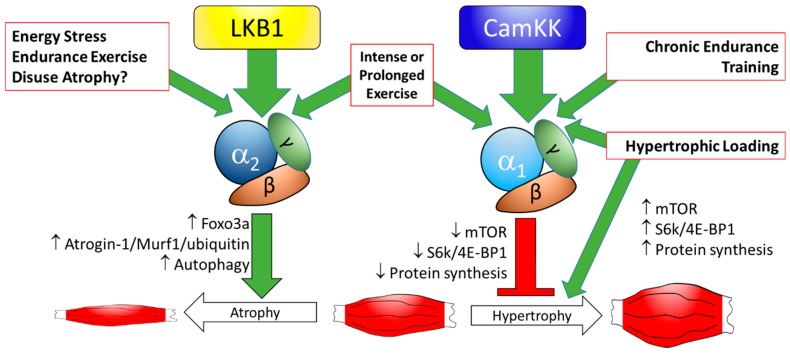
AMPK (5’-adenosine monophosphate-activated protein kinase) is heavily involved in skeletal muscle metabolic control through its regulation of many downstream targets. Because of their effects on anabolic and catabolic cellular processes, AMPK plays an important role in the control of skeletal muscle development and growth. In this review, the effects of AMPK signaling, and those of its upstream activator, liver kinase B1 (LKB1), on skeletal muscle growth and atrophy are reviewed. The effect of AMPK activity on satellite cell-mediated muscle growth and regeneration after injury is also reviewed. Together, the current data indicate that AMPK does play an important role in regulating muscle mass and regeneration, with AMPKα1 playing a prominent role in stimulating anabolism and in regulating satellite cell dynamics during regeneration, and AMPKα2 playing a potentially more important role in regulating muscle degradation during atrophy.
Overview
The claims and statistics of this paper haven’t been checked yet.
Run the check — free, no account needed. It reads the open-access text and checks the sources it cites.
Integrity signals
Registry
Cites
Statistics
Figures
Verification
Claims the paper makes
The claims and statistics of this paper haven’t been checked yet.
Run the check — free, no account needed. It reads the open-access text and checks the sources it cites.
Claims other papers make about this one
Each is checked against this paper’s own text: does it say what the citing paper says it does?
The check wasn’t confident either way, so it gives no verdict — never disputed.
In the citing paper
“AMPK can inhibit RNA polymerase I activity through multiple mechanisms, including suppression of TIF-1A function and modulation of chromatin accessibility at rDNA loci”
From Ribosome Biogenesis as a Putative Bottleneck to Skeletal Muscle Hypertrophy: Mechanisms, Human Evidence, and Practical Modulators (2026) · cites this paper as [62]
Experimental — accuracy not yet measuredThe check wasn’t confident either way, so it gives no verdict — never disputed.
In the citing paper
“A novel biomechanical stimulus might successfully initiate Pol I, but concurrent metabolic stress might abort snoRNA-guided processing downstream, leading to aborted assembly despite massive precursor transcripts [60,62].”
From Ribosome Biogenesis as a Putative Bottleneck to Skeletal Muscle Hypertrophy: Mechanisms, Human Evidence, and Practical Modulators (2026) · cites this paper as [62]
Experimental — accuracy not yet measured
Self-check
Percentages, sums and reported differences re-computed from the paper’s own numbers.
The self-check needs the paper’s full text.
Citations
Cites
Repertoires of Autophagy in the Pathogenesis of Ocular Diseases
Li, Y., Jiang, Q. L., Cao, G.-F., Yao, J., & Yan, B. (2015) · Cellular Physiology and Biochemistry · doi:10.1159/000373980 · Cited by 16,351
AMPK and mTOR regulate autophagy through direct phosphorylation of Ulk1
Kim, J., Kundu, M., Viollet, B., & Guan, K.-L. (2011) · Nature Cell Biology · doi:10.1038/ncb2152 · Cited by 7,227
Role of AMP-Activated Protein Kinase in Mechanism of Metformin Action
Zhou, G., Myers, R., Li, Y., Chen, Y., Shen, X., Fenyk-Melody, J., Wu, M., Ventre, J., Doebber, T., Fujii, N., et al. (2001) · Journal of Clinical Investigation · doi:10.1172/jci13505 · Cited by 5,652
AMPK: guardian of metabolism and mitochondrial homeostasis
Herzig, S., & Shaw, R. J. (2017) · Nature Reviews Molecular Cell Biology · doi:10.1038/nrm.2017.95 · Cited by 4,192
AMPK Phosphorylation of Raptor Mediates a Metabolic Checkpoint
Gwinn, D. M., Shackelford, D. B., Egan, D. F., Mihaylova, M. M., Mery, A., Vasquez, D. S., Turk, B. E., & Shaw, R. J. (2008) · Molecular Cell · doi:10.1016/j.molcel.2008.03.003 · Cited by 3,849
AMPK regulates energy expenditure by modulating NAD+ metabolism and SIRT1 activity
Cantó, C., Gerhart-Hines, Z., Feige, J. N., Lagouge, M., Noriega, L., Milne, J. C., Elliott, P. J., Puigserver, P., & Auwerx, J. (2009) · Nature · doi:10.1038/nature07813 · Cited by 3,300
The mechanisms of action of metformin
Rena, G., Hardie, D. G., & Pearson, E. R. (2017) · Diabetologia · doi:10.1007/s00125-017-4342-z · Cited by 2,287
Corton, J. M., Gillespie, J. G., Hawley, S. A., & Hardie, D. G. (1995) · European Journal of Biochemistry · doi:10.1111/j.1432-1033.1995.tb20498.x · Cited by 1,232
Merrill, G. F., Kurth, E. J., Hardie, D. G., & Winder, W. W. (1997) · American Journal of Physiology-Endocrinology and Metabolism · doi:10.1152/ajpendo.1997.273.6.e1107 · Cited by 1,048
Rheb Binds and Regulates the mTOR Kinase
Long, X., Lin, Y., Ortiz-Vega, S., Yonezawa, K., & Avruch, J. (2005) · Current Biology · doi:10.1016/j.cub.2005.02.053 · Cited by 1,005
Cited by
Sorted by citations
Items 101–200 of 275
Jia, S., Wu, Q., Wang, S., Kan, J., Zhang, Z., Zhang, X., Zhang, X., Li, J., Xu, W., Du, J., et al. (2022) · Frontiers in Nutrition · doi:10.3389/fnut.2022.878229 · Cited by 12
“AMPK has also been considered to play an important role in regulating muscle mass and regeneration due to their effects on anabolic and catabolic cellular processes (18, 19).”
BackgroundPan, B., Long, H., Yuan, Y., Zhang, H., Peng, Y., Zhou, D., Liu, C., Xiang, B., Huang, Y., Zhao, Y., et al. (2022) · Animals · doi:10.3390/ani12141839 · Cited by 12
“The activation of AMPK can reportedly exert the inhibitory effects of protein synthesis on multiple cell types [57,58], particularly muscle cells and cardiomyocytes [52,59].”
BackgroundYthdf2-mediated STK11 mRNA decay supports myogenesis by inhibiting the AMPK/mTOR pathway
Deng, K., Liu, Z., Li, X., Ren, C., Fan, Y., Guo, J., Li, P., Deng, M., Xue, G., Yu, X., et al. (2023) · International Journal of Biological Macromolecules · doi:10.1016/j.ijbiomac.2023.127614 · Cited by 12
Ahn, Y., Lee, H., Lee, S., Joa, K., Lim, C. Y., Ahn, Y. J., Suh, H. J., Park, S., & Hong, K. (2023) · Phytotherapy Research · doi:10.1002/ptr.7801 · Cited by 11
“…activates AMP-activated protein kinase (AMPK) and peroxisome proliferator-activated receptor gamma coactivator-1 alpha (PGC-1α), which is known to regulate mitochondrial biosynthesis, energy homeostasis, body temperature, and glucose metabolism (Hardie, 2014; Hardie & Ashford, 2014; Thomson, 2018).”
BackgroundVilchinskaya, N. A., Rozhkov, S. V., Turtikova, O. V., Mirzoev, T. M., & Shenkman, B. S. (2023) · Cells · doi:10.3390/cells12060920 · Cited by 11
“In addition, the lack of AMPK in SCs can block normal muscle regeneration after injury [16].”
BackgroundZheng, S., Li, L., Zhou, H., Zhang, X., Xu, X., Dai, D., Zhan, S., Cao, J., Guo, J., Zhong, T., et al. (2022) · International Journal of Molecular Sciences · doi:10.3390/ijms232112868 · Cited by 11
Talib, N. F., Zhu, Z., & Kim, K. S. (2023) · Nutrients · doi:10.3390/nu15224714 · Cited by 12
“During periods of energy deficiency or cellular stress, AMPK is activated to conserve energy, potentially leading to muscle atrophy [39,40].”
BackgroundHwang, J. H., Kang, S. Y., & Jung, H. W. (2022) · Molecular Medicine Reports · doi:10.3892/mmr.2022.12708 · Cited by 11
Heat Therapy: Targeting Health, Disease, and Disability
Richey, R. E., Hyldahl, R. D., Kaiser, B. W., Geiger, P. C., Halliwill, J. R., & Minson, C. T. (2026) · Comprehensive physiology · doi:10.1002/cph4.70089 · Cited by 11
Hwangbo, H., Kim, M. Y., Ji, S. Y., Kim, D. H., Park, B. S., Jeong, S. U., Yoon, J. H., Kim, T. H., Kim, G., & Choi, Y. H. (2023) · Journal of Microbiology and Biotechnology · doi:10.4014/jmb.2306.06012 · Cited by 11
Xiao, L., Chen, J., He, X., Zhang, X., & Luo, W. (2024) · Poultry Science · doi:10.1016/j.psj.2024.104173 · Cited by 10
“We observed multiple signaling pathways regulating muscle growth in the enrichment analysis of target genes in DEMs, such as mTOR signaling pathway (Wang et al., 2023b), Wnt signaling pathway (Cisternas et al., 2014), and AMPK signaling pathway (Thomson, 2018).”
BackgroundMolecular mechanism of skeletal muscle loss and its prevention by natural resources
Kim, J. T., Jeon, D. H., & Lee, H. J. (2024) · Food Science and Biotechnology · doi:10.1007/s10068-024-01678-x · Cited by 12
“AMP-activated protein kinase (AMPK), one of the well-known intracellular regulators of energy consumption and skeletal muscle metabolism, is critically involved in muscle mass regeneration and muscle atrophy (Fu et al., 2013; Thomson, 2018).”
Elmorsy, E. A., Youssef, M. E., Abdel-Hamed, M. R., Amer, M. M., Elghandour, S. R., Alkhamiss, A. S., Mohamed, N. B., Khodeir, M. M., Elsisi, H. A., Alsaeed, T. S., et al. (2024) · Frontiers in Pharmacology · doi:10.3389/fphar.2024.1456058 · Cited by 10
“Consistent with our results, a decrease in AMPK activity in in fl amed rat colons led to a further inactivation in the SIRT1/FOXO3a pathway (Thomson, 2018; An et al., 2020).”
ResultNaringenin alleviates cisplatin induced muscle atrophy by regulating RIPK1/AMPK/NF-κB pathway
Zhang, H., Chi, M., Wang, Y., Chen, L., Sun, X., Wan, L., Yang, Q., & Guo, C. (2021) · Journal of Functional Foods · doi:10.1016/j.jff.2021.104714 · Cited by 10
AMP-Activated Protein Kinase Signalling
Neumann, D., & Viollet, B. (2019) · International Journal of Molecular Sciences · doi:10.3390/ijms20030766 · Cited by 10
“In a monograph, Thomson summarizes AMPK signal integration in regulating skeletal muscle growth and atrophy [4].”
Defective BVES-mediated feedback control of cAMP in muscular dystrophy
Li, H., Wang, P., Zhang, C., Zuo, Y., Zhou, Y., & Han, R. (2023) · Nature Communications · doi:10.1038/s41467-023-37496-8 · Cited by 9
Truong, T. M. T., Jang, H., Ghosh, M., Son, Y., & Kang, I. (2023) · Journal of Functional Foods · doi:10.1016/j.jff.2023.105979 · Cited by 9
Burén, J., Svensson, M., Liv, P., & Sjödin, A. (2024) · Nutrients · doi:10.3390/nu16132030 · Cited by 9
Insights into the epitranscriptomic role of N6-methyladenosine on aging skeletal muscle
Enechojo, O. S., Wang, J., Shi, Y., Wang, Y., Xu, Z., Abankwah, J. K., Pozzo, L. D., Zhao, S., Zhou, H., Peng, Y., et al. (2024) · Biomedicine & Pharmacotherapy · doi:10.1016/j.biopha.2024.117041 · Cited by 10
Du, F., Cao, Y., Ran, Y., Wu, Q., & Chen, B. (2021) · Experimental and Therapeutic Medicine · doi:10.3892/etm.2021.10665 · Cited by 9
“Previous studies have revealed that treatment with metformin increased MuRF1 and MAFbx transcription, in addition to increasing AMPK phos‐ phorylation (34,35).”
BackgroundZuo, A., Zhou, Y., Li, Y., Zhang, Y., Yi, Z., Xiao, Y., Mei, Z., Cao, S., Qu, F., Tang, J., et al. (2022) · Animals · doi:10.3390/ani12182474 · Cited by 9
“Similarly, Thomson found that mice with skeletal muscle and myocardial LKB1 double knockout had skeletal muscle atrophy and severe atrial dilation, suggesting cardiac insufficiency and heart failure [33].”
BackgroundMetformin regulates myoblast differentiation through an AMPK-dependent mechanism
Maniscalco, E., Abbadessa, G., Giordano, M., Grasso, L., Borrione, P., & Racca, S. (2023) · PLoS ONE · doi:10.1371/journal.pone.0281718 · Cited by 11
“Furthermore, transfection of C2C12 myoblasts with Ca2+/CaM-dependent protein kinase kinase β (CamKKβ), an AMPK activator, resulted in AMPK activation, cell cycle arrest and impaired proliferation as well as impaired differentiation [4, 5].”
BackgroundMonserdà-Vilaró, A., Balsalobre‐Fernández, C., Hoffman, J. R., Alix‐Fages, C., & Sáiz, S. L. J. (2022) · The Journal of Strength and Conditioning Research · doi:10.1519/jsc.0000000000004304 · Cited by 9
“However, performing short-duration, high-intensity interval exercise has been shown to result in higher activation of AMPK (11,63,79) (a protein which is proposed to inhibit mTORC1 (73)) and may therefore exacerbate the potential for an interference effect (13,24).”
BackgroundXiong, H., Zhang, Y., & Zhao, Z. (2024) · Animal Bioscience · doi:10.5713/ab.24.0135 · Cited by 8
Does AMPK bind glycogen in skeletal muscle or is the relationship correlative?
Frankish, B. P., & Murphy, R. M. (2024) · Essays in Biochemistry · doi:10.1042/ebc20240006 · Cited by 7
“Formorethorough reviews of AMPK in skeletal muscle and exercise, the reader is referred to [30–32].”
Li, X., Wang, J., Zhou, X., Dong, Z., Yang, F., Huang, L., Ji, L., Lu, Y., Xiang, T., Ai, T., et al. (2026) · Dental Research · doi:10.1016/j.dtrs.2025.100003 · Cited by 8
Lyu, P., & Jiang, H. (2022) · Cells · doi:10.3390/cells11223549 · Cited by 8
“Within the cytoplasm, multiple signal transduction pathways, including the mTOR and AMPK pathways, ensure accurate epigenetic control of gene expression during myoblast differentiation [12,13].”
BackgroundInfluentialEnergy Regulation in Inflammatory Sarcopenia by the Purinergic System
Marco-Bonilla, M., Fresnadillo, M. J., Largo, R., Herrero‐Beaumont, G., & Mediero, A. (2023) · International Journal of Molecular Sciences · doi:10.3390/ijms242316904 · Cited by 8
“This increases the intracellular AMP concentration and thus the AMP/ATP ratio, similar to events during muscle contraction [124].”
BackgroundSCFJFK is functionally linked to obesity and metabolic syndrome
He, L., Yan, R., Yang, Z., Zhang, Y., Liu, X., Yang, J., Liu, X., Liu, X., Xia, L., Wang, Y., et al. (2021) · EMBO Reports · doi:10.15252/embr.202052036 · Cited by 7
Kai, W., Wu, P., Shu-Jie, W., Ji, X., Dong, C., Anan, J., Wei-hang, X., Yanzhi, J., Li, Z., Yang-shuang, Z., et al. (2022) · Journal of Integrative Agriculture · doi:10.1016/s2095-3119(21)63814-5 · Cited by 8
Kwon, I. (2023) · Physical Activity and Nutrition · doi:10.20463/pan.2023.0010 · Cited by 8
Lv, M., Liu, C., Jiang, X., Ge, M., Wang, H., & Yu, W. (2024) · Poultry Science · doi:10.1016/j.psj.2024.104641 · Cited by 7
Ojeda, Á. H., Rojas, J. R., Cancino-López, J., Barahona-Fuentes, G. D. F., Pavéz, L., Yeomans‐Cabrera, M., & Jorquera-Aguilera, C. (2024) · Nutrients · doi:10.3390/nu17010107 · Cited by 11
“Therefore, a future line of research should focus on determining the impact of LmW, in various doses and formats, on performance in aerobic, anaerobic, and muscle strength tests.”
Mechanisms of the biological response cascade to exercise-induced stress: a comprehensive review
Xu, J., Zhang, J., & Sang, K. (2025) · Frontiers in Sports and Active Living · doi:10.3389/fspor.2025.1691779 · Cited by 8
Characteristics of microRNAs in Skeletal Muscle of Intrauterine Growth-Restricted Pigs
Jing, Y., Gan, M., Xie, Z., Ma, J., Chen, L., Zhang, S., Zhao, Y., Niu, L., Wang, Y., Zhu, L., et al. (2023) · Genes · doi:10.3390/genes14071372 · Cited by 7
“KEGG analysis showed that the signaling pathways with DEMs enrichment were highly coincident, mainly enriched in endocytosis, FoxO signaling pathway [71], MAPK signaling pathway [72], regulation of the actin cytoskeleton, metabolic pathways, and insulin resistance [73].”
BackgroundLu, Y., Zhou, J., Li, F., Cao, H., Zhang, X., Yu, D., He, Z., Ji, H., Lv, K., Wu, G., et al. (2023) · International Journal of Molecular Sciences · doi:10.3390/ijms242015476 · Cited by 8
Podocan promoting skeletal muscle post‐injury regeneration by inhibiting TGF ‐β signaling pathway
Teng, H., Zheng, J., Liang, Y., Zhao, J., Yan, Y., Li, S., Li, S., & Tong, H. (2024) · The FASEB Journal · doi:10.1096/fj.202302158rr · Cited by 7
Wang, S.-J., Liu, B., Zhang, F., Su, X., Li, Y., Yang, C.-T., Zhang, Z.-H., & Cong, B. (2023) · Scientific Reports · doi:10.1038/s41598-023-41819-6 · Cited by 7
“When energy metabolism was impaired AMPK can be phosphorylation and then phosphorylated AMPK/AMPKα1 can reduce the activity of mTOR and S6K1 34,35 .”
BackgroundEffects of low‐dose metformin on pre‐frailty among middle‐aged and elderly pre‐diabetic people
Huang, C., Shiao, M., & Mao, T. (2022) · JCSM Rapid Communications · doi:10.1002/rco2.55 · Cited by 7
“may overactivate AMPK at high doses, reducing total protein synthesis and anabolic metabolism, including the production of myostatin.(14,15,39) Furthermore, only myostatin mRNA expression in muscle can directly represent myostatin’s biolog-”
BackgroundAbuduwaili, H., Kamoshita, K., Ishii, K.-A., Takahashi, K., Abuduyimiti, T., Qifang, L., Isobe, Y., Goto, H., Nakano, Y., Takeshita, Y., et al. (2023) · American Journal of Physiology-Endocrinology and Metabolism · doi:10.1152/ajpendo.00270.2022 · Cited by 7
Regulation of Autophagy Signaling Pathways by Ginseng Saponins: A Review
Zhuang, Z., Li, F., Lv, D., Duan, H., Chen, L., Chen, P., Zhi-qiang, S., & He, B. (2024) · Chemistry & Biodiversity · doi:10.1002/cbdv.202400934 · Cited by 6
Daidzein improves muscle atrophy caused by lovastatin by regulating the AMPK/FOXO3a axis
Wang, K., Zeng, H., & Yang, H. Q. (2024) · Chinese Medicine · doi:10.1186/s13020-024-01034-5 · Cited by 6
“Therefore, AMPK plays a vital function in controlling the skeletal muscle growth and development [20].”
Vignaud, J., Loiseau, C., Côme, M., Martin, I., Rasoanarivo, R., Hérault, J., Mayer, C., Lépine, O., & Ulmann, L. (2025) · Nutrients · doi:10.3390/nu17020283 · Cited by 6
Lim, I., Kim, S.-H., Kim, M. J., Yun, C., Min, K., & Choi, Y. (2025) · Regenerative Biomaterials · doi:10.1093/rb/rbaf090 · Cited by 6
“AMPK activity is regulated by the intracellular ATP/AMP and ATP/ADP ratios [42, 43]; thus, reduced ATP levels due to muscle damage can activate AMPK and promote catabolic signaling that contributes to atrophy.”
Samali, S. A., Hosseini, S. F., Mohammadi, Y., Sadri, F., & Rezaei, Z. (2025) · Molecular Biology Reports · doi:10.1007/s11033-025-11390-6 · Cited by 9
“AMPK, typically activated under low energy condi - tions, has been shown to upregulate myostatin expression and suppress muscle growth [69 ].”
Qiao, J., Sun, J., Chen, L., Li, B., & Gu, Y. (2022) · Acta Biochimica et Biophysica Sinica · doi:10.3724/abbs.2022158 · Cited by 6
“A number of studies have shown that the Akt/mTOR/p70S6K pathway plays an important role in the proliferation and differentiation of muscle satellite cells [36,37], the formation of nascent muscle fibers [38], and the growth of regenerating muscle fibers during skeletal muscle regeneration [39].”
BackgroundPanteli, N., Feidantsis, K. G., Demertzioglou, M., Paralika, V., Karapanagiotis, S., Mylonas, C. C., Kormas, K. A., Mente, E., Makridis, P., & Antonopoulou, E. (2023) · Animals · doi:10.3390/ani13132154 · Cited by 6
“Skeletal muscle growth depends on protein anabolism [102], an energy-consuming procedure, and thus additional energy may be required by the greater amberjack reared under the P.”
BackgroundTong, Y., Ma, S., Awa, R., Tagawa, T., Seki, Y., Cao, T., Kobori, H., & Suzuki, K. (2025) · Nutrients · doi:10.3390/nu17040668 · Cited by 7
“AMPK is a key metabolic sensor that maintains muscle performance and supports adaptive responses to exercise by promoting mitochondrial biogenesis and optimizing energy metabolism [75].”
Exposure of low-concentration arsenic induces myotube atrophy by inhibiting an Akt signaling pathway
Chiu, C., Chung, M.-N., Lan, K., Yang, R., & Liu, S. (2020) · Toxicology in Vitro · doi:10.1016/j.tiv.2020.104829 · Cited by 6
AXIN-AMPK signaling: Implications for healthy aging
Mallick, A., & Gupta, B. P. (2021) · F1000Research · doi:10.12688/f1000research.74220.1 · Cited by 6
“Consistent with the role of AXIN in AMPK activation and myogenesis, AMPK is shown to be crucial for regulating skeletal muscle development, growth, and degradation.(18) In skeletal muscle, AMPK signaling has been linked to both acute and chronic exercise adaptations, in addition to a broad range of skeletal muscle dis…”
BackgroundVansana, P., Kakura, K., Taniguchi, Y., Egashira, K., Matsuzaki, E., Tsutsumi, T., & Kido, H. (2021) · Journal of Dental Sciences · doi:10.1016/j.jds.2021.12.003 · Cited by 6
Sharlo, K. A., Lvova, I. D., Sidorenko, D. A., Tyganov, S. A., Sharlo, D. T., & Shenkman, E. A. (2023) · Archives of Biochemistry and Biophysics · doi:10.1016/j.abb.2023.109647 · Cited by 6
Zhang, Z., Luo, W., Chen, G., Chen, J., Lin, S., Ren, T., Lin, Z., Zhao, C., Wen, H., Nie, Q., et al. (2023) · International Journal of Biological Macromolecules · doi:10.1016/j.ijbiomac.2023.127629 · Cited by 6
Zhang, K., Xie, N., Ye, H., Miao, J., Xia, B., Yu, Y., Peng, H., Xu, S. B., Wu, T., Tao, C., et al. (2023) · iScience · doi:10.1016/j.isci.2023.108590 · Cited by 6
Feng, H., Qi, Y., Wang, X., Chen, F., & Li, X. (2022) · Neurocritical Care · doi:10.1007/s12028-022-01575-3 · Cited by 6
“Studies have shown that AMPK activation promotes C2C12 myotube degradation and inhibits muscle hypertrophy [22].”
BackgroundAllele-specific expression reveals the phenotypic differences between thin- and fat-tailed sheepPreprint
Shao, J., He, S., Pan, X., Yang, Z., Nanaei, H. A., Chen, L., Li, R., Wang, Y., Gao, S., Xu, H., et al. (2020) · Research Square · doi:10.21203/rs.3.rs-56388/v1 · Cited by 6
Wenlun, W., Chaohang, Y., Yan, H., Li, W., Nanqing, Z., Qianmin, H., Shengcai, W., Yuan, Q. M., Yu, S., Zhang, F., et al. (2025) · Frontiers in Bioinformatics · doi:10.3389/fbinf.2024.1494717 · Cited by 5
RyR1 Is Involved in the Control of Myogenesis
Tourel, A., Reynaud-Dulaurier, R., Brocard, J., Fauré, J., Marty, I., & Petiot, A. (2025) · Cells · doi:10.3390/cells14030158 · Cited by 5
“It has been shown that AMPK activation blocks muscle proliferation and differentiation [44–48].”
Iwamoto, Y., Yamakoshi, S., Sekimoto, A., Hosomi, K., Toyama, T., Saito, Y., Kunisawa, J., Takahashi, N., Mishima, E., & Sato, E. (2025) · The Journal of Nutritional Biochemistry · doi:10.1016/j.jnutbio.2025.110039 · Cited by 5
Xie, W., Hong, Z., Xie, Y., Hou, K., Li, S., Fang, M., Guan, Y., Zhang, Z., & Zhang, M. (2025) · The FASEB Journal · doi:10.1096/fj.202501549rr · Cited by 5
CRISPR/Cas9-mediated mstnb knockout enhances muscle growth in salt-tolerant tilapia
Yang, Z., Le, W., Sun, F., Wong, J. E. L., Lee, M., & Yue, G. H. (2026) · Aquaculture · doi:10.1016/j.aquaculture.2026.743829 · Cited by 5
Tan, W., Liu, C., Liu, J., Wen, S., Chen, Y., Ren, R., Gao, N., Ding, X., He, J., & Zhang, Y. (2025) · International Journal of Molecular Sciences · doi:10.3390/ijms26062634 · Cited by 5
He, M., Zhang, W., Wang, S., Ge, L., Cao, X., Wang, S., Yuan, Z., Lv, X., Getachew, T., Mwacharo, J. M., et al. (2022) · Animal Biotechnology · doi:10.1080/10495398.2022.2112688 · Cited by 5
“aged muscle tissue through activation and proliferation.(9) In the present study, we used Hu sheep”
MethodVilchinskaya, N. A., Mochalova, E. P., Paramonova, I. I., Belova, S. P., Mirzoev, T. M., & Shenkman, E. A. (2020) · Biochemistry (Moscow) Supplement Series A Membrane and Cell Biology · doi:10.1134/s1990747819060102 · Cited by 5
Manipulating Cellular Energetics to Slow Aging of Tissues and Organs
Соколов, С. С., & Severin, F. F. (2020) · Biochemistry (Moscow) · doi:10.1134/s0006297920060024 · Cited by 6
Peng, Z., Yang, T., Xu, S., Yang, B., Zhang, Z., Ding, M., Gu, W., & Zheng, L. (2025) · Free Radical Biology and Medicine · doi:10.1016/j.freeradbiomed.2025.07.007 · Cited by 5
Dietary perennial ryegrass improves meat quality: insights into the gut-muscle axis in geese
Zulfiqar, Z., Asif, M. A., Alharbi, K., Yao, H., Zhu, X., Wang, Z., Sun, H., Cui, Y., Liu, B., Huang, S., et al. (2025) · npj Science of Food · doi:10.1038/s41538-025-00642-1 · Cited by 4
“AMPK is activated under conditions of energy stress, promoting fat oxidation and inhibiting anabolic processes like muscle protein synthesis to conserve energy 13 .”
Marco-Bonilla, M., Fresnadillo, M. J., Sánchez-Platero, I., de la Riva-Bueno, M., Huete‐Toral, F., Carracedo, G., Conde, C., Benítez, Y., Mínguez, P., Cifuentes, S. C., et al. (2025) · Arthritis & Rheumatology · doi:10.1002/art.70047 · Cited by 4
“10,21,39 Notably, A2BR activation and elevated cAMP levels are well-established positive regulators of muscle growth, hypertrophy, and physical activity.”
Zhang, D., Zhang, Q., Wu, X., Wang, L., Zhang, X., Liu, D., & Yang, X. (2024) · Cells · doi:10.3390/cells13242118 · Cited by 4
Tofogliflozin ameliorates cardiotoxin induced skeletal muscle injury and fibrosis in obesity
Bilal, M., Phuong, N. Q., Kado, T., Liu, J., Anh, L. D., Khalid, S., Aslam, M. R., Memoona, M., Nishimura, A., Igarashi, Y., et al. (2025) · Scientific Reports · doi:10.1038/s41598-025-12734-9 · Cited by 4
“Recently, it was shown that the inhibition of AMPK subunit α1 (AMPKα1) in FAPs impairs muscle repair and promotes fibrosis 13,36 .”
Zhou, H., Chen, X., Deng, X., Zhang, X., Zeng, X., Xu, K., & Chen, H. (2024) · Genes · doi:10.3390/genes15030359 · Cited by 4
“The regulation of skeletal muscle mass involves various molecular mechanisms, including signal transduction [12,13], transcription factors [11,12], and epigenetic modifications [14]. miRNAs are small non-coding RNAs that act as inhibitors of gene expression and play important roles in skeletal…”
BackgroundLi, N., Lan, J., Yang, J., & Ding, H. W. (2024) · Nutrition & Metabolism · doi:10.1186/s12986-024-00862-4 · Cited by 4
“Under conditions of nutrient deprivation, AMPK activation suppresses mTOR activity [8]. mTOR, a highly conserved nutrient-responsive regulator of cell growth in all eukaryotes, controls cell growth and metabolism in response to nutrients, growth factors, and cellular energy status (mediated by…”
BackgroundHotspots and trends in liver kinase B1 research: A bibliometric analysis
Song, Y., Zhao, F., Ma, W., & Li, G. (2021) · PLoS ONE · doi:10.1371/journal.pone.0259240 · Cited by 4
da Silva, H. N. M., Fernandes, E. M., Pereira, V. A., Mizobuti, D. S., Covatti, C., da Rocha, G. L., & Minatel, E. (2024) · PLoS ONE · doi:10.1371/journal.pone.0300006 · Cited by 4
LC-MS/MS based metabolomics reveals the mechanism of skeletal muscle regeneration
Lei, Y., Wang, K., Liufu, S., Chen, W., Chen, B., Liu, X., Liu, C., Liu, J., Xu, X., & Ma, H. (2025) · BMC Musculoskeletal Disorders · doi:10.1186/s12891-025-08703-y · Cited by 3
“Adenosine monophosphate-activated protein kinase (AMPK) is a protein kinase activated by Adenosine monophosphate (AMP), and both excessive activation and deficiency of AMPK can affect skeletal muscle regeneration [30].”
Energy deprivation in youth and old age
Stern, M. (2025) · Journal of Cell Science · doi:10.1242/jcs.264018 · Cited by 3
Bae, J., You, C., Jeong, Y., Kim, J., Lee, J., Jeong, H., Kim, H., Vuong, T. A., Gwon, Y., Bae, G., et al. (2025) · Autophagy · doi:10.1080/15548627.2025.2551477 · Cited by 3
“These pathways are essential for regulating muscle metabolism and maintenance, especially during conditions of energetic and metabolic stress, where they help modulate muscle adaptation [46–48].”
Djordjevic, B., Stojiljković, V., Veličkov, A., Kocic, J., Milenković, J., Veljković, A., Bašić, J., & Cvetković, T. (2026) · Medicina · doi:10.3390/medicina62020329 · Cited by 4
Jude, M., Rajasingh, S., Alway, S. E., & Rajasingh, J. (2026) · Experimental Cell Research · doi:10.1016/j.yexcr.2026.114969 · Cited by 4
AMPK Signalling in Heart Failure: From Metabolic Sensor to Context-Dependent Therapeutic Target
Arzouni, R., Aazar, R. F. M., Asakrieh, S., Cattan, S., & Jovanović, A. (2026) · Biomedicines · doi:10.3390/biomedicines14061362 · Cited by 4
“Although prolonged activation can maintain metabolic homeostasis under certain conditions, excessive suppression of anabolic signaling pathways may impair normal cellular growth, protein synthesis, and tissue repair [106,107].”
Huang, Y., Gong, Y., Liu, Y., & Lü, J.-Q. (2022) · Frontiers in Neurology · doi:10.3389/fneur.2022.991099 · Cited by 4
Sanglard, L. P., Márquez, D. E. C., da Silva, W., Fontes, M. M. D. S., Costa, T. C., Júnior, D. T. V., Gionbelli, M. P., Serão, N. V. L., Sampaio, C. B., & Duarte, M. D. S. (2022) · Ciência Rural · doi:10.1590/0103-8478cr20210917 · Cited by 7
Niu, Y., Guo, D., Wei, Y., Li, J., Bai, Y., Liu, Z., Jia, X., Chen, Z., Li, L., Shi, B., et al. (2024) · Animals · doi:10.3390/ani14152278 · Cited by 3
“For instance, the AMPK signaling pathway plays a critical role in the reparative process following muscle injury [11,12].”
BackgroundInfluentialJeong, D., Kim, M.-J., & Park, C. (2025) · International Journal of Molecular Sciences · doi:10.3390/ijms26020451 · Cited by 3
Sharlo, K. A., Lvova, I. D., Vilchinskaya, N. A., Tyganov, S. A., Turtikova, O. V., Sergeeva, K. V., Bokov, R. O., Shenkman, B. S., Tomilovskaya, E., & Orlov, O. I. (2025) · Sports Medicine and Health Science · doi:10.1016/j.smhs.2025.06.002 · Cited by 3
Horton, K. A., Sporer, K. R. B., Tempelman, R. J., Malila, Y., Reed, K. M., Velleman, S. G., & Strasburg, G. M. (2020) · Frontiers in Physiology · doi:10.3389/fphys.2020.01036 · Cited by 3
The role of 5′-adenosine monophosphate-activated protein kinase (AMPK) in skeletal muscle atrophy
Dang, K., Farooq, H. M. U., GAO, Y., Deng, X., & Qian, A. (2022) · Biocell · doi:10.32604/biocell.2023.023766 · Cited by 3
“…activate GTPase, which can convert GTP to GDP and can form a complex with TSC1 and TBC1D7, reducing the ability of a GTPase, Rheb, whose binding with GTP is needed for mTORC1 activity. c. AMPK can phosphorylate RAPTOR, leading to impaired mTORC1 activity mediated by 14-3-3 proteins (Thomson, 2018).”
BackgroundInfluentialAutophagy signaling in hypertrophied muscles of diabetic and control rats
Scervino, M. V. M., Fortes, M. A. S., Vitzel, K. F., de Souza, D. R., Murata, G. M., Santana, G. O., da Silva, E. B., Levada‐Pires, A. C., Kuwabara, W. M. T., Alba‐Loureiro, T. C., et al. (2023) · FEBS Open Bio · doi:10.1002/2211-5463.13677 · Cited by 3
Involvement of the AMPK Pathways in Muscle Development Disparities across Genders in Muscovy Ducks
Zhao, W., He, Y., Du, Z., Yu, X., Chen, J., Li, A., & Huang, C. (2024) · International Journal of Molecular Sciences · doi:10.3390/ijms251810132 · Cited by 3
“Once activated, phosphorylated AMPK leads to the negative feedback regulation of key lipogenic genes such as SREBP1 [10,24], CD36 [25], and CPT1A [24], thereby promoting muscle cell growth, development, and regeneration [26,27].”
BackgroundSha, P., Feng, X., Wang, Y., Meng, J., Deng, L., Ma, Z., Li, D., Wang, J., Zhou, Z., Zhu, J., et al. (2024) · International Journal of Biological Macromolecules · doi:10.1016/j.ijbiomac.2024.138268 · Cited by 2
Lee, E. H., Park, S., & Jeong, K. (2025) · Biogerontology · doi:10.1007/s10522-025-10238-7 · Cited by 2
“Furthermore, liver kinase B1 (LKB1), an upstream activator of AMPK, promotes myogenic differentiation by destabilizing microtubules (Mian et al. 2012; Thomson 2018).”
The regeneration model of aging and its practical implications
Dassoff, E. (2026) · Discover Medicine · doi:10.1007/s44337-025-00558-5 · Cited by 2
“Indeed, AMPK hyper-activation can blunt the proliferation and differentiation of myoblasts in culture [159].”
Gardeniae Fructus Extract Alleviates Dexamethasone-Induced Muscle Atrophy in Mice
Lee, J. A., Lee, S. H., Shin, M.-R., Park, H.-J., & Roh, S. (2022) · Journal of Medicinal Food · doi:10.1089/jmf.2022.k.0038 · Cited by 2
“21 Also, the mitochondrial dysfunction due to MA results in insufficient energy supply and activation of AMPK, which promotes the expression of MuRF-1 and MAFbx/Atrogin-1, in turn accelerating muscle breakdown.”
Metformin Protects Rat Skeletal Muscle from Physical Exercise-Induced Injury
Abbadessa, G., Maniscalco, E., Grasso, L., Popara, J., Scipio, F. D., Franco, F., Mancardi, D., Pigozzi, F., Borrione, P., Berta, G. N., et al. (2023) · Biomedicines · doi:10.3390/biomedicines11092334 · Cited by 2
“Recently, it has been reported the phosphorylation of Ser2448 leads to inactivation of mTOR as part of an inhibitory feedback mechanism induced by the activated form of p70S6K, which switches off the mTOR signal [60,61].”
The impact of exercise on cardiovascular system: Molecular signaling pathway and cardiac adaptations
Toktarbay, B., Khamitova, Z. K., Zholshybek, N., Jumadilova, D., Rakhmanov, Y., Bekbossynova, M., Gaipov, A., & Salustri, A. (2023) · Journal of Clinical Medicine of Kazakhstan · doi:10.23950/jcmk/13825 · Cited by 2
Shi, Y., Wang, Y., Shi, X., Zhang, X., & Zhang, S. (2023) · Journal of Functional Foods · doi:10.1016/j.jff.2023.105902 · Cited by 3
Hyatt, J. K., Lu, E. J., & McCall, G. E. (2024) · Frontiers in Physiology · doi:10.3389/fphys.2024.1420276 · Cited by 2
“…directed toward maintaining the mitochondrial pool by activating mitochondrial biogenesis or for another divergent pathway such as mito/autophagy (Thomson, 2018; Seabright and Lai, 2020); at a minimum, these fi ndings suggest that the activation of AMPK participates in maintaining the…”
BackgroundDiao, Z., Jia, S., Itoyama, E., Yoshioka, H., Murakami, M., & Funaba, M. (2024) · Scientific Reports · doi:10.1038/s41598-024-81272-7 · Cited by 2
“Although the hyperactivation of AMPK by use of synthetic reagent AICAR inhibits myogenesis 33 , the physiological significance of weak phosphorylation of AMPK remains unclear.”
Unconventional myosin VI is involved in regulation of muscle energy metabolism
Wojton, D., Dymkowska, D., Matysniak, D. P., Topolewska, M., Rędowicz, M. J., & Lehka, L. (2025) · American Journal of Physiology-Cell Physiology · doi:10.1152/ajpcell.00300.2025 · Cited by 2
Metadata
- Authors
- Thomson, D. M.
- Affiliations
- Brigham Young University (US)
- Corresponding author
- Thomson, David M.
- ORCID
- Thomson, David M.
- Venue
- International Journal of Molecular Sciences
- Publisher
- MDPI AG
- Published
- 2018-10-11
- Volume
- 19
- Issue
- 10
- Pages
- 3125
- ISSN
- 1422-0067 (ISSN-L)
- PMC
- PMC6212977
- OpenAlex
- W2896374260
- Cited by
- 267
- References
- 142
- Citations by year
- 2026: 29 · 2025: 36 · 2024: 41 · 2023: 52 · 2022: 40 · 2021: 31 · 2020: 24 · 2019: 13 · 2018: 1
- FWCI
- 1.68
- Type
- journal article
- Language
- en
- Open access
- gold
- dx.doi.org
- Licence
- Locations
- International Journal of Molecular Sciences (publishedVersion, cc-by)
- Europe PMC (PubMed Central) (publishedVersion, other-oa)
- PubMed Central (publishedVersion, cc-by)
- PubMed (publishedVersion)
- DOAJ (DOAJ: Directory of Open Access Journals) (submittedVersion, cc-by-sa)
- Topics
- Life Sciences › Biochemistry, Genetics and Molecular Biology › Molecular Biology › Muscle Physiology and Disorders
- Life Sciences › Biochemistry, Genetics and Molecular Biology › Molecular Biology › Metabolism, Diabetes, and Cancer
- Health Sciences › Nursing › Nutrition and Dietetics › Muscle metabolism and nutrition
- Keywords
- AMPK, skeletal muscle growth, muscle hypertrophy, muscle atrophy, muscle regeneration, satellite cells, LKB1, AMPKα1, AMPKα2, muscle metabolism, myogenesis
- MeSH terms
- Animals, Energy Metabolism, Enzyme Activation, Humans, Hypertrophy, Organ Size, Regeneration, Wound Healing, Signal Transduction, Biomarkers, Muscle, Skeletal, Muscle Fibers, Skeletal, Muscle Development, AMP-Activated Protein Kinases
About these checks
Registry, retraction, Cites and statistics results are computed, not judged, with one exception: a printed reference that no index lists is read once by a model before it counts as a citation error. Claims are extracted by a model and kept only when their quote appears verbatim in the text; each cited source is then checked, with a model’s help, for whether it says what the claim relies on. Those verdicts can be wrong — read the claim’s quote and the cited source before relying on one.
Statistics and arithmetic are recomputed, not judged.
Confidence bands are shown only for fields calibrated on our annotated test set. None is calibrated yet, so no band is shown.
What counts as a claim ›How we measure confidence ›How we check this ›
Are you an author, or do you see a problem with this page? Request a review
