

The DOI matches its Crossref record; 240 of the 241 references it cites were found in a registry or an index.
Contributions of DNA Damage to Alzheimer’s Disease
Open accessAbstract
Alzheimer’s disease (AD) is the most common type of neurodegenerative disease. Its typical pathology consists of extracellular amyloid-β (Aβ) plaques and intracellular tau neurofibrillary tangles. Mutations in the APP, PSEN1, and PSEN2 genes increase Aβ production and aggregation, and thus cause early onset or familial AD. Even with this strong genetic evidence, recent studies support AD to result from complex etiological alterations. Among them, aging is the strongest risk factor for the vast majority of AD cases: Sporadic late onset AD (LOAD). Accumulation of DNA damage is a well-established aging factor. In this regard, a large amount of evidence reveals DNA damage as a critical pathological cause of AD. Clinically, DNA damage is accumulated in brains of AD patients. Genetically, defects in DNA damage repair resulted from mutations in the BRAC1 and other DNA damage repair genes occur in AD brain and facilitate the pathogenesis. Abnormalities in DNA damage repair can be used as diagnostic biomarkers for AD. In this review, we discuss the association, the causative potential, and the biomarker values of DNA damage in AD pathogenesis.
Overview
The claims and statistics of this paper haven’t been checked yet.
Run the check — free, no account needed. It reads the open-access text and checks the sources it cites.
Integrity signals
Registry
Cites
Statistics
Figures
Verification
Claims the paper makes
The claims and statistics of this paper haven’t been checked yet.
Run the check — free, no account needed. It reads the open-access text and checks the sources it cites.
Claims other papers make about this one
Each is checked against this paper’s own text: does it say what the citing paper says it does?
The source backs part of the claim, not all of it — or backs it for a different population, condition or comparison.
In the citing paper
“Conversely, 5xFAD-Dp16 also exhibited greatly decreased NES for several gene sets, including DNA repair, Myc targets V1, and oxidative phosphorylation, all of which are linked to cellular damage or stress facilitating the progression of the pathogenesis and contributing to neurodegeneration in AD48,49,50 (Figures 3A and S3A).”
From Interferon signaling modulates Down syndrome-associated Alzheimer’s disease pathology in a mouse model (2025) · cites this paper as [49]
Experimental — accuracy not yet measuredThe source backs part of the claim, not all of it — or backs it for a different population, condition or comparison.
In the citing paper
“Oxidative DNA damage and mitochondrial dysfunction are thought to contribute to the neurodegeneration of AD [75,76], vascular dementia [77], HD [78], PD [79] and epilepsy [80].”
From Rlip76: An Unexplored Player in Neurodegeneration and Alzheimer’s Disease? (2022) · cites this paper as [75]
Experimental — accuracy not yet measured
Self-check
Percentages, sums and reported differences re-computed from the paper’s own numbers.
The self-check needs the paper’s full text.
Citations
Cites
2 retracted
RETRACTED: Human SIRT6 Promotes DNA End Resection Through CtIP Deacetylation
Kaidi, A., Weinert, B. T., Choudhary, C., & Jackson, S. P. (2010) · Science · doi:10.1126/science.1192049 · Cited by 366
RetractedGao, S., Zhang, X., Song, Q., Liu, J., Ji, X., & Wang, P. (2019) · Biomedicine & Pharmacotherapy · doi:10.1016/j.biopha.2019.108833 · Cited by 15
RetractedPRISMA-P Group, Moher, D., Shamseer, L., Clarke, M., Ghersi, D., Liberati, A., Petticrew, M., Shekelle, P., & Stewart, L. A. (2015) · Systematic Reviews · doi:10.1186/2046-4053-4-1 · Cited by 26,223 · cited 1×
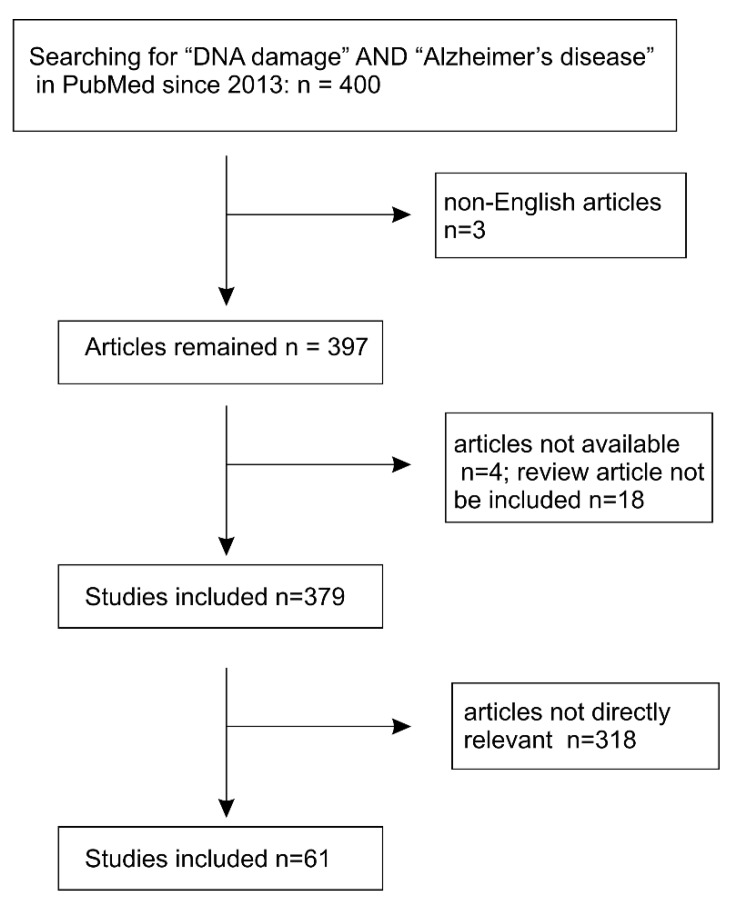
“Data used in this review were extracted from PubMed and selected according to the PRISMA Guidelines [38,39] (Figure 1).”
The Amyloid Hypothesis of Alzheimer’s Disease: Progress and Problems on the Road to Therapeutics
Hardy, J., & Selkoe, D. J. (2002) · Science · doi:10.1126/science.1072994 · Cited by 13,864
Shamseer, L., Moher, D., Clarke, M., Ghersi, D., Liberati, A., Petticrew, M., Shekelle, P., Stewart, L. A., & the PRISMA-P Group (2015) · BMJ · doi:10.1136/bmj.g7647 · Cited by 13,120 · cited 1×
“Data used in this review were extracted from PubMed and selected according to the PRISMA Guidelines [38,39] (Figure 1).”
MethodAmyloid oligomers exacerbate tau pathology in a mouse model of tauopathy
Selenica, M.-L. B., Brownlow, M., Jimenez, J. P., Lee, D. C., Pena, G., Dickey, C. A., Gordon, M. N., & Morgan, D. (2013) · Neurodegenerative Diseases · doi:10.1159/000337230 · Cited by 10,359
Alzheimer's disease: the amyloid cascade hypothesis
Hardy, J. A., & Higgins, G. A. (1992) · Science · doi:10.1126/science.1566067 · Cited by 7,484
The amyloid hypothesis of Alzheimer's disease at 25 years
Selkoe, D. J., & Hardy, J. (2016) · EMBO Molecular Medicine · doi:10.15252/emmm.201606210 · Cited by 6,164
Instability and decay of the primary structure of DNA
Lindahl, T. (1993) · Nature · doi:10.1038/362709a0 · Cited by 5,679
The DNA damage response: putting checkpoints in perspective
Zhou, B.-B. S., & Elledge, S. J. (2000) · Nature · doi:10.1038/35044005 · Cited by 3,213
Cited by
Sorted by citations
Molecular mechanisms of aging and anti-aging strategies
Li, Y., Tian, X., Luo, J., Bao, T., Wang, S., & Wu, X. (2024) · Cell Communication and Signaling · doi:10.1186/s12964-024-01663-1 · Cited by 358
“…breakdown of repair functions, eventually leading to the loss of cell and organ function and promoting the occurrence and development of age-related diseases disease [53], Alzheimer’s disease [54], and cancer [55], suggesting that DNA damage is directly related to the incidence of these diseases.”
BackgroundNeurogenesis in aging and age-related neurodegenerative diseases
Čulig, L., Chu, X., & Bohr, V. A. (2022) · Ageing Research Reviews · doi:10.1016/j.arr.2022.101636 · Cited by 235
Alzheimer’s Disease: Exploring the Landscape of Cognitive Decline
Tenchov, R., Sasso, J. M., & Zhou, Q. A. (2024) · ACS Chemical Neuroscience · doi:10.1021/acschemneuro.4c00339 · Cited by 170
The role of PARP1 in neurodegenerative diseases and aging
Mao, K., & Zhang, G. (2022) · The FEBS Journal · doi:10.1111/febs.15716 · Cited by 172
Redox dysregulation as a driver for DNA damage and its relationship to neurodegenerative diseases
Shadfar, S., Parakh, S., Jamali, M. S., & Atkin, J. D. (2023) · Translational Neurodegeneration · doi:10.1186/s40035-023-00350-4 · Cited by 148
“Several mechanisms have been implicated in the pathogenesis, including both oxidative stress and DNA damage [236, 240].”
Background
Metadata
- Authors
- Lin, X., Kapoor, A., Gu, Y., Chow, M. J., Peng, J., Zhao, K., & Tang, D.
- Affiliations
- St. Joseph’s Healthcare Hamilton (CA)
- Corresponding author
- Tang, Damu
- Venue
- International Journal of Molecular Sciences
- Publisher
- MDPI AG
- Published
- 2020-02-28
- Volume
- 21
- Issue
- 5
- Pages
- 1666
- ISSN
- 1422-0067 (ISSN-L)
- PMC
- PMC7084447
- OpenAlex
- W3009111493
- Cited by
- 117
- References
- 241
- Citations by year
- 2026: 15 · 2025: 19 · 2024: 22 · 2023: 18 · 2022: 19 · 2021: 16 · 2020: 5
- FWCI
- 1.85
- Type
- journal article
- Language
- en
- Open access
- gold
- dx.doi.org
- Licence
- Locations
- International Journal of Molecular Sciences (publishedVersion, cc-by)
- PubMed Central (publishedVersion, cc-by)
- PubMed (publishedVersion)
- DOAJ (DOAJ: Directory of Open Access Journals) (submittedVersion, cc-by-sa)
- Funders
- Cancer Research Society (NA)
- Canadian Cancer Society (319412)
- Canadian Institutes of Health Research (NA)
- Topics
- Life Sciences › Neuroscience › Cellular and Molecular Neuroscience › Alzheimer's disease research and treatments
- Health Sciences › Medicine › Psychiatry and Mental health › Dementia and Cognitive Impairment Research
- Life Sciences › Biochemistry, Genetics and Molecular Biology › Molecular Biology › DNA Repair Mechanisms
- Keywords
- Alzheimer's disease, DNA damage, DNA repair, aging, amyloid plaques, neurofibrillary tangles, BRCA1, familial Alzheimer's disease, late-onset Alzheimer's disease, diagnostic biomarkers, neurodegeneration
- MeSH terms
- Alzheimer Disease, DNA Damage, DNA Repair, Humans, Models, Biological, Risk Factors, Neurogenesis
About these checks
Registry, retraction, Cites and statistics results are computed, not judged, with one exception: a printed reference that no index lists is read once by a model before it counts as a citation error. Claims are extracted by a model and kept only when their quote appears verbatim in the text; each cited source is then checked, with a model’s help, for whether it says what the claim relies on. Those verdicts can be wrong — read the claim’s quote and the cited source before relying on one.
Statistics and arithmetic are recomputed, not judged.
Confidence bands are shown only for fields calibrated on our annotated test set. None is calibrated yet, so no band is shown.
What counts as a claim ›How we measure confidence ›How we check this ›
Are you an author, or do you see a problem with this page? Request a review
