

The DOI matches its Crossref record; 240 of the 241 references it cites were found in a registry or an index.
Contributions of DNA Damage to Alzheimer’s Disease
Open accessAbstract
Alzheimer’s disease (AD) is the most common type of neurodegenerative disease. Its typical pathology consists of extracellular amyloid-β (Aβ) plaques and intracellular tau neurofibrillary tangles. Mutations in the APP, PSEN1, and PSEN2 genes increase Aβ production and aggregation, and thus cause early onset or familial AD. Even with this strong genetic evidence, recent studies support AD to result from complex etiological alterations. Among them, aging is the strongest risk factor for the vast majority of AD cases: Sporadic late onset AD (LOAD). Accumulation of DNA damage is a well-established aging factor. In this regard, a large amount of evidence reveals DNA damage as a critical pathological cause of AD. Clinically, DNA damage is accumulated in brains of AD patients. Genetically, defects in DNA damage repair resulted from mutations in the BRAC1 and other DNA damage repair genes occur in AD brain and facilitate the pathogenesis. Abnormalities in DNA damage repair can be used as diagnostic biomarkers for AD. In this review, we discuss the association, the causative potential, and the biomarker values of DNA damage in AD pathogenesis.
Overview
The claims and statistics of this paper haven’t been checked yet.
Run the check — free, no account needed. It reads the open-access text and checks the sources it cites.
Integrity signals
Registry
Cites
Statistics
Figures
Verification
Claims the paper makes
The claims and statistics of this paper haven’t been checked yet.
Run the check — free, no account needed. It reads the open-access text and checks the sources it cites.
Claims other papers make about this one
Each is checked against this paper’s own text: does it say what the citing paper says it does?
The source backs part of the claim, not all of it — or backs it for a different population, condition or comparison.
In the citing paper
“Conversely, 5xFAD-Dp16 also exhibited greatly decreased NES for several gene sets, including DNA repair, Myc targets V1, and oxidative phosphorylation, all of which are linked to cellular damage or stress facilitating the progression of the pathogenesis and contributing to neurodegeneration in AD48,49,50 (Figures 3A and S3A).”
From Interferon signaling modulates Down syndrome-associated Alzheimer’s disease pathology in a mouse model (2025) · cites this paper as [49]
Experimental — accuracy not yet measuredThe source backs part of the claim, not all of it — or backs it for a different population, condition or comparison.
In the citing paper
“Oxidative DNA damage and mitochondrial dysfunction are thought to contribute to the neurodegeneration of AD [75,76], vascular dementia [77], HD [78], PD [79] and epilepsy [80].”
From Rlip76: An Unexplored Player in Neurodegeneration and Alzheimer’s Disease? (2022) · cites this paper as [75]
Experimental — accuracy not yet measured
Self-check
Percentages, sums and reported differences re-computed from the paper’s own numbers.
The self-check needs the paper’s full text.
Citations
Cites
2 retracted
RETRACTED: Human SIRT6 Promotes DNA End Resection Through CtIP Deacetylation
Kaidi, A., Weinert, B. T., Choudhary, C., & Jackson, S. P. (2010) · Science · doi:10.1126/science.1192049 · Cited by 366
RetractedGao, S., Zhang, X., Song, Q., Liu, J., Ji, X., & Wang, P. (2019) · Biomedicine & Pharmacotherapy · doi:10.1016/j.biopha.2019.108833 · Cited by 15
RetractedPRISMA-P Group, Moher, D., Shamseer, L., Clarke, M., Ghersi, D., Liberati, A., Petticrew, M., Shekelle, P., & Stewart, L. A. (2015) · Systematic Reviews · doi:10.1186/2046-4053-4-1 · Cited by 26,223 · cited 1×
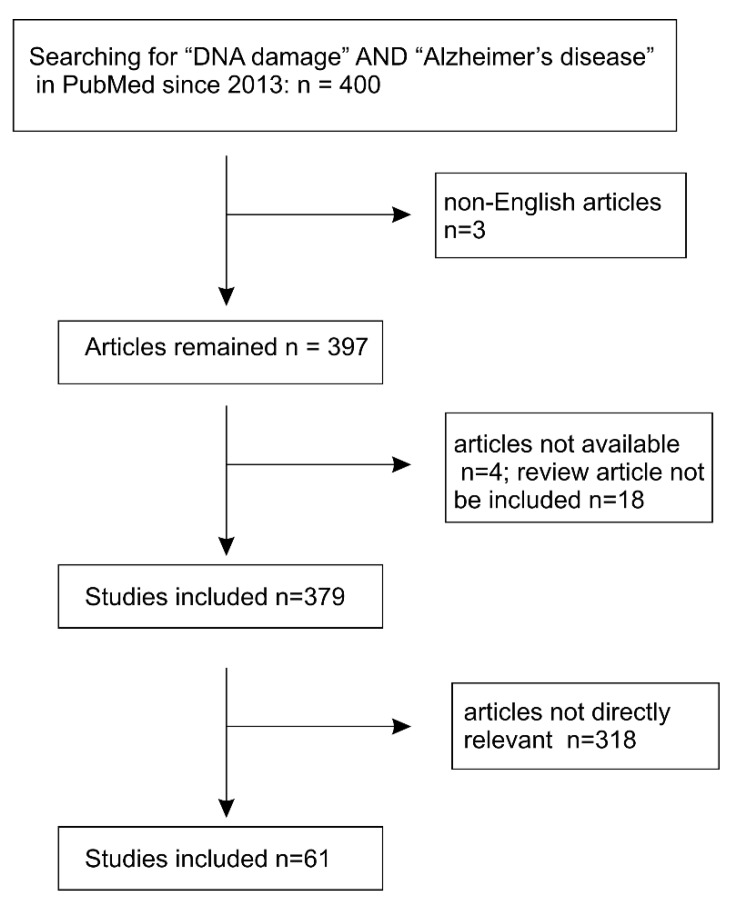
“Data used in this review were extracted from PubMed and selected according to the PRISMA Guidelines [38,39] (Figure 1).”
The Amyloid Hypothesis of Alzheimer’s Disease: Progress and Problems on the Road to Therapeutics
Hardy, J., & Selkoe, D. J. (2002) · Science · doi:10.1126/science.1072994 · Cited by 13,864
Shamseer, L., Moher, D., Clarke, M., Ghersi, D., Liberati, A., Petticrew, M., Shekelle, P., Stewart, L. A., & the PRISMA-P Group (2015) · BMJ · doi:10.1136/bmj.g7647 · Cited by 13,120 · cited 1×
“Data used in this review were extracted from PubMed and selected according to the PRISMA Guidelines [38,39] (Figure 1).”
MethodAmyloid oligomers exacerbate tau pathology in a mouse model of tauopathy
Selenica, M.-L. B., Brownlow, M., Jimenez, J. P., Lee, D. C., Pena, G., Dickey, C. A., Gordon, M. N., & Morgan, D. (2013) · Neurodegenerative Diseases · doi:10.1159/000337230 · Cited by 10,359
Alzheimer's disease: the amyloid cascade hypothesis
Hardy, J. A., & Higgins, G. A. (1992) · Science · doi:10.1126/science.1566067 · Cited by 7,484
The amyloid hypothesis of Alzheimer's disease at 25 years
Selkoe, D. J., & Hardy, J. (2016) · EMBO Molecular Medicine · doi:10.15252/emmm.201606210 · Cited by 6,164
Instability and decay of the primary structure of DNA
Lindahl, T. (1993) · Nature · doi:10.1038/362709a0 · Cited by 5,679
The DNA damage response: putting checkpoints in perspective
Zhou, B.-B. S., & Elledge, S. J. (2000) · Nature · doi:10.1038/35044005 · Cited by 3,213
Cahoy, J. D., Emery, B., Kaushal, A., Foo, L. C., Zamanian, J. L., Christopherson, K. S., Xing, Y., Lubischer, J. L., Krieg, P. A., Krupenko, S. A., et al. (2008) · The Journal of Neuroscience · doi:10.1523/jneurosci.4178-07.2008 · Cited by 3,129
The molecular pathology of Alzheimer's disease
Selkoe, D. J. (1991) · Neuron · doi:10.1016/0896-6273(91)90052-2 · Cited by 2,708
Lane, C. A., Hardy, J., & Schott, J. M. (2018) · European Journal of Neurology · doi:10.1111/ene.13439 · Cited by 2,616 · cited 1×
“Although familial AD constitutes less than 1% of AD cases [28,29], the hypothesis has been widely accepted to guide research in advancing the understanding of both familial AD and LOAD in the past two decades [30,31].”
BackgroundAmyloid deposition as the central event in the aetiology of Alzheimer’s disease
Hardy, J., & Allsop, D. (1991) · Trends in Pharmacological Sciences · doi:10.1016/0165-6147(91)90609-v · Cited by 2,538
The Cellular Phase of Alzheimer’s Disease
De Strooper, B., & Karran, E. (2016) · Cell · doi:10.1016/j.cell.2015.12.056 · Cited by 1,990
Bmi-1 is required for maintenance of adult self-renewing haematopoietic stem cells.
Park, I.-K., Qian, D., Kiel, M., Becker, M. W., Pihalja, M., Weissman, I. L., Morrison, S. J., & Clarke, M. F. (2003) · Nature · doi:10.1038/nature01587 · Cited by 1,871
Masters, C. L., Bateman, R., Blennow, K., Rowe, C. C., Sperling, R. A., & Cummings, J. L. (2015) · Nature Reviews Disease Primers · doi:10.1038/nrdp.2015.56 · Cited by 1,853 · cited 1×
“Nonetheless, it is becoming increasingly clear that complex pathological etiology instead of the amyloid-cascade hypothesis is involved in LOAD, which accounts for more than 90% of AD cases in patients over 65 year old [32,33].”
BackgroundGenomic Instability and Aging-like Phenotype in the Absence of Mammalian SIRT6
Mostoslavsky, R., Chua, K. F., Lombard, D. B., Pang, W. W., Fischer, M. R., Gellon, L., Liu, P., Mostoslavsky, G., Franco, S., Murphy, M. M., et al. (2006) · Cell · doi:10.1016/j.cell.2005.11.044 · Cited by 1,637
Repair Pathway Choices and Consequences at the Double-Strand Break
Ceccaldi, R., Rondinelli, B., & D’Andrea, A. D. (2016) · Trends in Cell Biology · doi:10.1016/j.tcb.2015.07.009 · Cited by 1,499 · cited 7×
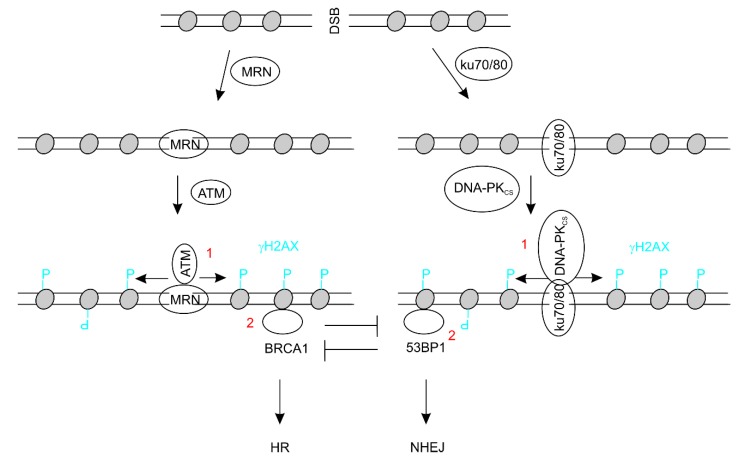
“BRCA1 plays an essential role in DSB repair using the HR process and recruitment of BRCA1 to DSBs commits cells to HR (Figure 2) [80,86].”
BackgroundResultInfluentialThe ATM–Chk2 and ATR–Chk1 Pathways in DNA Damage Signaling and Cancer
Smith, J., Tho, L. M., Xu, N., & Gillespie, D. A. (2010) · Advances in cancer research · doi:10.1016/b978-0-12-380888-2.00003-0 · Cited by 1,326
Bmi-1 dependence distinguishes neural stem cell self-renewal from progenitor proliferation
Molofsky, A. V., Pardal, R., Iwashita, T., Park, I.-K., Clarke, M. F., & Morrison, S. J. (2003) · Nature · doi:10.1038/nature02060 · Cited by 1,317
Occurrence of neuropathological changes and dementia of Alzheimer’s disease in Down’s syndrome
Wisniewski, K. E., Wisniewski, H. M., & Wen, G. Y. (1985) · Annals of Neurology · doi:10.1002/ana.410170310 · Cited by 1,159
Amyloid Precursor Protein Trafficking, Processing, and Function
Thinakaran, G., & Koo, E. H. (2008) · Journal of Biological Chemistry · doi:10.1074/jbc.r800019200 · Cited by 1,141 · cited 3×
“γ-secretase with mutant presenilin 1 or presenilin 2 subunit favors Aβ1-42 production [16,17].”
BackgroundSIRT6 is a histone H3 lysine 9 deacetylase that modulates telomeric chromatin
Michishita, E., McCord, R. A., Berber, E., Kioi, M., Padilla-Nash, H., Damian, M., Cheung, P., Kusumoto, R., Kawahara, T. L. A., Barrett, J. C., et al. (2008) · Nature · doi:10.1038/nature06736 · Cited by 1,111
Assembly and aggregation properties of synthetic Alzheimer's A4/beta amyloid peptide analogs.
Burdick, D., Soreghan, B., Kwon, M., Kosmoski, J., Knauer, M., Henschen, A., Yates, J., Cotman, C., & Glabe, C. (1992) · Journal of Biological Chemistry · doi:10.1016/s0021-9258(18)48529-8 · Cited by 1,014
p35 is a neural-specific regulatory subunit of cyclin-dependent kinase 5
Tsai, L., Delalle, I., Caviness, V. S., Chae, T. H., & Harlow, E. (1994) · Nature · doi:10.1038/371419a0 · Cited by 923
SIRT6 Promotes DNA Repair Under Stress by Activating PARP1
Mao, Z., Hine, C., Tian, X., Van Meter, M., Au, M., Vaidya, A., Seluanov, A., & Gorbunova, V. (2011) · Science · doi:10.1126/science.1202723 · Cited by 867
A Topoisomerase IIß-Mediated dsDNA Break Required for Regulated Transcription
Ju, B., Lunyak, V. V., Perissi, V., García-Bassets, I., Rose, D. W., Glass, C. K., & Rosenfeld, M. G. (2006) · Science · doi:10.1126/science.1127196 · Cited by 842
Senescing human cells and ageing mice accumulate DNA lesions with unrepairable double-strand breaks
Sedelnikova, O. A., Horikawa, I., Zimonjic, D. B., Popescu, N. C., Bonner, W. M., & Barrett, J. C. (2004) · Nature Cell Biology · doi:10.1038/ncb1095 · Cited by 790 · cited 1×
“Genome rearrangement and double strand breaks (DSBs) increase in aging mice and senescing human cells [40,41].”
BackgroundA role for the Tip60 histone acetyltransferase in the acetylation and activation of ATM
Sun, Y., Jiang, X., Chen, S., Fernandes, N., & Price, B. D. (2005) · Proceedings of the National Academy of Sciences · doi:10.1073/pnas.0504211102 · Cited by 738 · cited 1×
“Tip60 has a key function in DSB-induced ATM activation through acetylation of ATM at lysine 3016 [98,99]; mice deficient in FE65 are more sensitive to DNA damage [96].”
BackgroundTumor surveillance via the ARF–p53 pathwayPreprint
Sherr, C. J. (1998) · Genes & Development · doi:10.1101/gad.12.19.2984 · Cited by 718
Endogenous DNA double-strand breaks: production, fidelity of repair, and induction of cancer
Vilenchik, M. M., & Knudson, A. G. (2003) · Proceedings of the National Academy of Sciences · doi:10.1073/pnas.2135498100 · Cited by 717
Activity-Induced DNA Breaks Govern the Expression of Neuronal Early-Response Genes
Madabhushi, R., Gao, F., Pfenning, A. R., Pan, L., Yamakawa, S., Seo, J., Rueda, R., Phan, T. X., Yamakawa, H., Pao, P.-C., et al. (2015) · Cell · doi:10.1016/j.cell.2015.05.032 · Cited by 700 · cited 4×
“These results are well in accordance with the concept that physiological neuronal activities increase transcription of early response genes through processes promoted by DSBs [65].”
BackgroundResultInfluentialAmyloid β Protein (Aβ) in Alzheimeri's Disease Brain
Gravina, S. A., Ho, L., Eckman, C. B., Long, K. E., Otvos, L., Younkin, L. H., Suzuki, N., & Younkin, S. G. (1995) · Journal of Biological Chemistry · doi:10.1074/jbc.270.13.7013 · Cited by 676
DNA damage and its links to neurodegeneration
Madabhushi, R., Pan, L., & Tsai, L.-H. (2014) · Neuron · doi:10.1016/j.neuron.2014.06.034 · Cited by 654 · cited 2×
“Furthermore, CDK5 activities affect DNA damage response [12], supporting a linkage of DNA damage with AD [13,14].”
BackgroundKirova, A.-M., Bays, R. B., & Lagalwar, S. (2015) · BioMed Research International · doi:10.1155/2015/748212 · Cited by 649 · cited 2×
“Using two independent cohorts (n = 13 and n = 23), significant increases in γH2AX were recently demonstrated in astrocytes and neurons in the hippocampus and frontal cortex of AD brains [44]; the increase occurred in brains with mild cognitive impairment (MCI) [44], a preclinical stage of AD [45,46], suggesting an imp…”
BackgroundAge, APOE and sex: triad of risk of Alzheimer’s disease.
Riedel, B. C., Thompson, P. M., & Brinton, R. D. (2016) · The Journal of Steroid Biochemistry and Molecular Biology · doi:10.1016/j.jsbmb.2016.03.012 · Cited by 627 · cited 1×
“In sporadic LOAD cases, aging is the strongest risk factor [30,35].”
BackgroundAndrogen-induced TOP2B-mediated double-strand breaks and prostate cancer gene rearrangements
Haffner, M. C., Aryee, M. J., Toubaji, A., Esopi, D., Albadine, R., Gürel, B., Isaacs, W. B., Bova, G. S., Liu, W., Xu, J., et al. (2010) · Nature Genetics · doi:10.1038/ng.613 · Cited by 624
Cruz, J. C., Tseng, H.-C., Goldman, J. A., Shih, H., & Tsai, L.-H. (2003) · Neuron · doi:10.1016/s0896-6273(03)00627-5 · Cited by 609 · cited 3×
“Additionally, CDK5 phosphorylates the amyloid precursor protein (APP) at threonine 668 (T668), which stimulates β-amyloid (Aβ) peptide accumulation [8].”
BackgroundInfluentialMolofsky, A. V., He, S., Bydon, M., Morrison, S. J., & Pardal, R. (2005) · Genes & Development · doi:10.1101/gad.1299505 · Cited by 599
Energetic basis of brain activity: implications for neuroimaging
Shulman, R. G., Rothman, D. L., Behar, K. L., & Hyder, F. (2004) · Trends in Neurosciences · doi:10.1016/j.tins.2004.06.005 · Cited by 590 · cited 2×
“Post‐mitotic neurons of the central nervous system have a high rate of metabolism [49]; the human brain accounts for 2% of body mass and consumes 20% of oxygen [50].”
BackgroundDetectable clonal mosaicism and its relationship to aging and cancer
Jacobs, K. B., Yeager, M., Zhou, W., Wacholder, S., Wang, Z., Rodriguez-Santiago, B., Hutchinson, A., Deng, X., Liu, C., Horner, M.-J., et al. (2012) · Nature Genetics · doi:10.1038/ng.2270 · Cited by 589
A brain-specific activator of cyclin-dependent kinase 5
Lew, J., Huang, Q.-Q., Qi, R. Z., Winkfein, R. J., Aebersold, R. H., Hunt, T., & Wang, J. H.-C. (1994) · Nature · doi:10.1038/371423a0 · Cited by 580
Amyloid-β-independent regulators of tau pathology in Alzheimer disease
van der Kant, R., Goldstein, L. S. B., & Ossenkoppele, R. (2020) · Nature reviews. Neuroscience · doi:10.1038/s41583-019-0240-3 · Cited by 580 · cited 3×
“For instance, tau pathology seems to show higher match with AD development than with Aβ pathology [31].”
BackgroundBateman, R. J., Aisen, P. S., De Strooper, B., Fox, N. C., Lemere, C. A., Ringman, J. M., Salloway, S., Sperling, R. A., Windisch, M., & Xiong, C. (2010) · Alzheimer's Research & Therapy · doi:10.1186/alzrt59 · Cited by 573
A Prospective Study of Alzheimer Disease in Down Syndrome
Lai, F., & Williams, R. S. (1989) · Archives of Neurology · doi:10.1001/archneur.1989.00520440031017 · Cited by 561
Neuronal Activity-Regulated Gene Transcription in Synapse Development and Cognitive Function
West, A. E., & Greenberg, M. E. (2011) · Cold Spring Harbor Perspectives in Biology · doi:10.1101/cshperspect.a005744 · Cited by 532 · cited 1×
“DSBs occur in the promoters of several early response genes and contribute to their transcription [65]; early response genes function in learning and memory [67,68] suggesting an association of DSB accumulation with cognitive decline, a major defect in patients with AD.”
BackgroundLyras, L., Cairns, N. J., Jenner, A., Jenner, P., & Halliwell, B. (1997) · Journal of Neurochemistry · doi:10.1046/j.1471-4159.1997.68052061.x · Cited by 531 · cited 1×
“In this regard, accumulation of DNA oxidization was observed in AD brains [51,52]; the lesion was also detected in brains with MCI [53–55] and preclinical AD (PCAD) [55,56].”
BackgroundOxidative DNA damage in mild cognitive impairment and late-stage Alzheimer's disease
Lovell, M. A., & Markesbery, W. R. (2007) · Nucleic Acids Research · doi:10.1093/nar/gkm821 · Cited by 515
Hazra, T. K., Izumi, T., Boldogh, I. R., Imhoff, B. R., Kow, Y. W., Jaruga, P., Dizdaroğlu, M., & MITRA, S. P. (2002) · Proceedings of the National Academy of Sciences · doi:10.1073/pnas.062053799 · Cited by 497
Tau promotes neurodegeneration through global chromatin relaxation
Frost, B., Hemberg, M., Lewis, J., & Feany, M. B. (2014) · Nature Neuroscience · doi:10.1038/nn.3639 · Cited by 495
Bmi1, stem cells, and senescence regulation
Park, I.-K., Morrison, S. J., & Clarke, M. F. (2004) · Journal of Clinical Investigation · doi:10.1172/jci200420800 · Cited by 495
Suberbielle, E., Sanchez, P. E., Kravitz, A. V., Wang, X., Ho, K., Eilertson, K., Devidze, N., Kreitzer, A. C., & Mucke, L. (2013) · Nature Neuroscience · doi:10.1038/nn.3356 · Cited by 487
Abnormal Alzheimer‐like phosphorylation of tau‐protein by cyclin‐dependent kinases cdk2 and cdk5
Baumann, K., Mandelkow, E., Biernat, J., Piwnica-Worms, H. M., & Mandelkow, E. (1993) · FEBS Letters · doi:10.1016/0014-5793(93)80849-p · Cited by 479
Increased Nuclear DNA Oxidation in the Brain in Alzheimer's Disease
Gabbita, S. P., Lovell, M. A., & Markesbery, W. R. (1998) · Journal of Neurochemistry · doi:10.1046/j.1471-4159.1998.71052034.x · Cited by 479 · cited 1×
“In this regard, accumulation of DNA oxidization was observed in AD brains [51,52]; the lesion was also detected in brains with MCI [53–55] and preclinical AD (PCAD) [55,56].”
BackgroundBrain metabolic dysfunction at the core of Alzheimer's disease
de la Monte, S. M., & Tong, M. (2014) · Biochemical Pharmacology · doi:10.1016/j.bcp.2013.12.012 · Cited by 472
Hou, Y., Lautrup, S., Cordonnier, S., Wang, Y., Croteau, D. L., Zavala, E., Zhang, Y., Moritoh, K., O’Connell, J. F., Baptiste, B. A., et al. (2018) · Proceedings of the National Academy of Sciences · doi:10.1073/pnas.1718819115 · Cited by 472
NAD + Depletion Is Necessary and Sufficient forPoly(ADP-Ribose) Polymerase-1-Mediated Neuronal Death
Alano, C. C., Garnier, P., Ying, W., Higashi, Y., Kauppinen, T. M., & Swanson, R. A. (2010) · The Journal of Neuroscience · doi:10.1523/jneurosci.5552-09.2010 · Cited by 439
White Matter Structural Integrity in Healthy Aging Adults and Patients With Alzheimer Disease
Bartzokis, G., Cummings, J. L., Sultzer, D. L., Henderson, V. W., Nuechterlein, K. H., & Mintz, J. (2003) · Archives of Neurology · doi:10.1001/archneur.60.3.393 · Cited by 431
Topoisomerases facilitate transcription of long genes linked to autism
King, I. F. G., Yandava, C., Mabb, A. M., Hsiao, J. S., Huang, H., Pearson, B. L., Calabrese, J. M., Starmer, J., Parker, J. S., Magnuson, T., et al. (2013) · Nature · doi:10.1038/nature12504 · Cited by 430 · cited 6×
“Subsequently, glucocorticoid receptor was also reported to transactivate genes via TOP2β-produced DSBs [73].”
BackgroundInfluentialAuguste D and Alzheimer's disease
Maurer, K., Volk, S., & Gerbaldo, H. (1997) · The Lancet · doi:10.1016/s0140-6736(96)10203-8 · Cited by 417 · cited 1×
“AD was first described by Alois Alzheimer more than one century ago on a patient named Auguste D [1]; the typical pathological features include extensive cerebral amyloid plaques and neurofibrillary tangles [2,3].”
Transcription–replication conflicts: how they occur and how they are resolved
García‐Muse, T., & Aguilera, A. (2016) · Nature Reviews Molecular Cell Biology · doi:10.1038/nrm.2016.88 · Cited by 417
Base excision repair: A critical player in many games
Wallace, S. S. (2014) · DNA Repair · doi:10.1016/j.dnarep.2014.03.030 · Cited by 401
BACE1: The β-Secretase Enzyme in Alzheimer's Disease
Vassar, R. J. (2004) · Journal of Molecular Neuroscience · doi:10.1385/jmn:23:1-2:105 · Cited by 383
Presenilin: Running with Scissors in the Membrane
Selkoe, D. J., & Wolfe, M. S. (2007) · Cell · doi:10.1016/j.cell.2007.10.012 · Cited by 379
“Preclinical” AD revisited: Neuropathology of cognitively normal older adults
Schmitt, F. A., Davis, D. G., Wekstein, D. R., Smith, C. D., Ashford, J. W., & Markesbery, W. R. (2000) · Neurology · doi:10.1212/wnl.55.3.370 · Cited by 369 · cited 1×
“, without overt manifestation of AD, but with pathological features of AD [56,57].”
BackgroundDNA double-strand break repair pathway choice and cancer
Aparicio, T., Baer, R., & Gautier, J. (2014) · DNA Repair · doi:10.1016/j.dnarep.2014.03.014 · Cited by 347
The pathological association between down syndrome and Alzheimer disease
Mann, D. M. A. (1988) · Mechanisms of Ageing and Development · doi:10.1016/0047-6374(88)90041-3 · Cited by 346
Proteolytic processing of Alzheimer’s β‐amyloid precursor protein
Zhang, H., Ma, Q., Zhang, Y., & Xu, H. (2011) · Journal of Neurochemistry · doi:10.1111/j.1471-4159.2011.07519.x · Cited by 344
An Isoform of the Neuronal Cyclin-dependent Kinase 5 (Cdk5) Activator
Tang, D., Yeung, J., Lee, K., Matsushita, M., Matsui, H., Tomizawa, K., Hatase, O., & Wang, J. H.-C. (1995) · Journal of Biological Chemistry · doi:10.1074/jbc.270.45.26897 · Cited by 340
Self-citationGenetics, environmental factors and the emerging role of epigenetics in neurodegenerative diseases
Migliore, L., & Coppedè, F. (2008) · Mutation research. Fundamental and molecular mechanisms of mutagenesis · doi:10.1016/j.mrfmmm.2008.10.011 · Cited by 331 · cited 1×
“Although familial AD constitutes less than 1% of AD cases [28,29], the hypothesis has been widely accepted to guide research in advancing the understanding of both familial AD and LOAD in the past two decades [30,31].”
BackgroundBandaru, V. (2002) · DNA repair · doi:10.1016/s1568-7864(02)00036-8 · Cited by 329
Hazra, T. K., Kow, Y. W., Hatahet, Z., Imhoff, B. R., Boldogh, I. R., Mokkapati, S. K., MITRA, S. P., & Izumi, T. (2002) · Journal of Biological Chemistry · doi:10.1074/jbc.c200355200 · Cited by 325
DNA Damage-Induced Acetylation of Lysine 3016 of ATM Activates ATM Kinase Activity
Sun, Y., Xu, Y., Roy, K., & Price, B. D. (2007) · Molecular and Cellular Biology · doi:10.1128/mcb.01382-07 · Cited by 319 · cited 1×
“Tip60 has a key function in DSB-induced ATM activation through acetylation of ATM at lysine 3016 [98,99]; mice deficient in FE65 are more sensitive to DNA damage [96].”
BackgroundBruggeman, S. W. M., Valk-Lingbeek, M. E., van der Stoop, P. P. M., Jacobs, J. J. L., Kieboom, K., Tanger, E., Hulsman, D., Leung, C., Arsenijevic, Y., Marino, S., et al. (2005) · Genes & Development · doi:10.1101/gad.1299305 · Cited by 315
Cyclin-Dependent Kinases in Brain Development and Disease
Su, S. C., & Tsai, L. (2011) · Annual Review of Cell and Developmental Biology · doi:10.1146/annurev-cellbio-092910-154023 · Cited by 314
Salami, M., Itami, C., Tsumoto, T., & Kimura, F. (2003) · Proceedings of the National Academy of Sciences · doi:10.1073/pnas.0937380100 · Cited by 314
Weissman, L., Jo, D.-G., Sorensen, M. M., de Souza-Pinto, N. C., Markesbery, W. R., Mattson, M. P., & Bohr, V. A. (2007) · Nucleic Acids Research · doi:10.1093/nar/gkm605 · Cited by 299
Lovell, M. A., Gabbita, S. P., & Markesbery, W. R. (1999) · Journal of Neurochemistry · doi:10.1046/j.1471-4159.1999.0720771.x · Cited by 291 · cited 2×
“Increase of 8‐OHdG in ventricular cerebrospinal fluid (CSF) was observed in AD brains, suggesting a biomarker value of 8‐OHdG in AD diagnosis [58].”
BackgroundDown syndrome and Alzheimer's disease: common pathways, common goals
Hartley, D., Blumenthal, T., Carrillo, M., DiPaolo, G., Esralew, L., Gardiner, K., Granholm, A.-C., Iqbal, K., Krams, M., Lemere, C., et al. (2015) · Alzheimer's & Dementia · doi:10.1016/j.jalz.2014.10.007 · Cited by 290
Deregulation of HDAC1 by p25/Cdk5 in Neurotoxicity
Kim, D., Frank, C. L., Dobbin, M. M., Tsunemoto, R. K., Tu, W., Peng, P. L., Guan, J.-S., Lee, B.-H., Moy, L. Y., Giusti, P., et al. (2008) · Neuron · doi:10.1016/j.neuron.2008.10.015 · Cited by 286
Jette, N., & Lees‐Miller, S. P. (2014) · Progress in Biophysics and Molecular Biology · doi:10.1016/j.pbiomolbio.2014.12.003 · Cited by 281
The Role of Cdk5 in Alzheimer’s Disease
Liu, S., Wang, C., Jiang, T., Tan, L., Xing, A., & Yu, J. (2015) · Molecular Neurobiology · doi:10.1007/s12035-015-9369-x · Cited by 274
Oxidative DNA damage repair in mammalian cells: A new perspective
Hazra, T. K., DAS, A., Das, S. K., CHOUDHURY, S., Kow, Y. W., & Roy, R. (2006) · DNA repair · doi:10.1016/j.dnarep.2006.10.011 · Cited by 264
Jin, M. H., & Oh, D. (2019) · Pharmacology & Therapeutics · doi:10.1016/j.pharmthera.2019.07.002 · Cited by 260 · cited 2×
“BRCA1 plays an essential role in HR-mediated repair of DSB [80,84,85,200].”
BackgroundIncreased oxidative damage in nuclear and mitochondrial DNA in mild cognitive impairment
Wang, J., Markesbery, W. R., & Lovell, M. A. (2006) · Journal of Neurochemistry · doi:10.1111/j.1471-4159.2005.03615.x · Cited by 260
BMI1-mediated histone ubiquitylation promotes DNA double-strand break repair
Ismail, I. H., Andrin, C., McDonald, D., & Hendzel, M. J. (2010) · Journal of Cell Biology · doi:10.1083/jcb.201003034 · Cited by 255
Increased poly(ADP-ribosyl)ation of nuclear proteins in Alzheimer's disease
Love, S., Barber, R., & Wilcock, G. K. (1999) · Brain · doi:10.1093/brain/122.2.247 · Cited by 254
Facchino, S., Abdouh, M., Chatoo, W., & Bernier, G. (2010) · The Journal of Neuroscience · doi:10.1523/jneurosci.1634-10.2010 · Cited by 253
Violet, M., Delattre, L., Tardivel, M., Sultan, A., Chauderlier, A., Caillierez, R., Talahari, S., Nesslany, F., Lefebvre, B., Bonnefoy, E., et al. (2014) · Frontiers in Cellular Neuroscience · doi:10.3389/fncel.2014.00084 · Cited by 251
Neuronal cell cycle: the neuron itself and its circumstances
Frade, J. M., & Ovejero-Benito, M. C. (2015) · Cell Cycle · doi:10.1080/15384101.2015.1004937 · Cited by 250
Rapid accumulation of genome rearrangements in liver but not in brain of old mice
Dollé, M. E. T., Giese, H., Hopkins, C. L., Martus, H., Hausdorff, J. M., & Vijg, J. (1997) · Nature Genetics · doi:10.1038/ng1297-431 · Cited by 248 · cited 2×
“The mutation rate increases following aging in mouse liver but not in the animal brain [40], thus mouse models of AD likely have major limitations in studying aging process of LOAD.”
BackgroundOguro, H., Iwama, A., Morita, Y., Kamijo, T., van Lohuizen, M., & Nakauchi, H. (2006) · The Journal of Experimental Medicine · doi:10.1084/jem.20052477 · Cited by 237
Early neuronal accumulation of DNA double strand breaks in Alzheimer’s disease
Shanbhag, N. M., Evans, M. D., Mao, W., Nana, A. L., Seeley, W. W., Adame, A., Rissman, R. A., Masliah, E., & Mucke, L. (2019) · Acta Neuropathologica Communications · doi:10.1186/s40478-019-0723-5 · Cited by 214 · cited 3×
“Reduction in DSB repair will lead to DSB accumulation, neuron loss, cognitive decline, and thus AD [44,78,79].”
BackgroundTranscriptional elongation requires DNA break-induced signalling
Bunch, H., Lawney, B. P., Lin, Y., Asaithamby, A., Murshid, A., Wang, Y. E., Chen, B. P. C., & Calderwood, S. K. (2015) · Nature Communications · doi:10.1038/ncomms10191 · Cited by 212
The viral protein corona directs viral pathogenesis and amyloid aggregation
Ezzat, K., Pernemalm, M., Pålsson, S., Roberts, T. C., Järver, P., Dondalska, A., Bestas, B., Sobkowiak, M. J., Levänen, B., Sköld, M., et al. (2019) · Nature Communications · doi:10.1038/s41467-019-10192-2 · Cited by 209 · cited 1×
“HSV-1 induces AD via affecting multiple AD events, such as through enhancing Aβ1−42 production [104].”
BackgroundHarnessing DNA Double-Strand Break Repair for Cancer Treatment
Trenner, A., & Sartori, A. A. (2019) · Frontiers in Oncology · doi:10.3389/fonc.2019.01388 · Cited by 205 · cited 5×
“BRCA1 plays an essential role in DSB repair using the HR process and recruitment of BRCA1 to DSBs commits cells to HR (Figure 2) [80,86].”
BackgroundResultInfluentialSnaidero, N., & Simons, M. (2014) · Journal of Cell Science · doi:10.1242/jcs.151043 · Cited by 204
DNA repair factor BRCA1 depletion occurs in Alzheimer brains and impairs cognitive function in mice
Suberbielle, E., Djukic, B., Evans, M., Kim, D. H., Taneja, P., Wang, X., Finucane, M. M., Knox, J. A., Ho, K., Devidze, N., et al. (2015) · Nature Communications · doi:10.1038/ncomms9897 · Cited by 204
Korolev, I. O., Symonds, L. L., Bozoki, A., & Initiative, A. D. N. (2016) · PLoS ONE · doi:10.1371/journal.pone.0138866 · Cited by 203 · cited 2×
“Using two independent cohorts (n = 13 and n = 23), significant increases in γH2AX were recently demonstrated in astrocytes and neurons in the hippocampus and frontal cortex of AD brains [44]; the increase occurred in brains with mild cognitive impairment (MCI) [44], a preclinical stage of AD [45,46], suggesting an imp…”
BackgroundDNA damage in neurodegenerative diseases
Coppedè, F., & Migliore, L. (2014) · Mutation research. Fundamental and molecular mechanisms of mutagenesis · doi:10.1016/j.mrfmmm.2014.11.010 · Cited by 202 · cited 1×
“Nonetheless, it is becoming increasingly clear that complex pathological etiology instead of the amyloid-cascade hypothesis is involved in LOAD, which accounts for more than 90% of AD cases in patients over 65 year old [32,33].”
BackgroundA Cdk5 inhibitory peptide reduces tau hyperphosphorylation and apoptosis in neurons
Zheng, Y., Kesavapany, S., Gravell, M., Hamilton, R. S., Schubert, M., Amin, N. D., Albers, W., Grant, P. G., & Pant, H. C. (2004) · The EMBO Journal · doi:10.1038/sj.emboj.7600441 · Cited by 190
Silencing of CDK5 Reduces Neurofibrillary Tangles in Transgenic Alzheimer's Mice
Piedrahita, D., Hernández, I., Tobon, A., Fedorov, D., Obara, B., Manjunath, B. S., Boudreau, R. L., Davidson, B. L., LaFerla, F. M., Gallego-Gómez, J. C., et al. (2010) · Journal of Neuroscience · doi:10.1523/jneurosci.3637-10.2010 · Cited by 188
Health Conditions Associated with Aging and End of Life of Adults with Down Syndrome
Esbensen, A. J. (2010) · International review of research in mental retardation · doi:10.1016/s0074-7750(10)39004-5 · Cited by 186
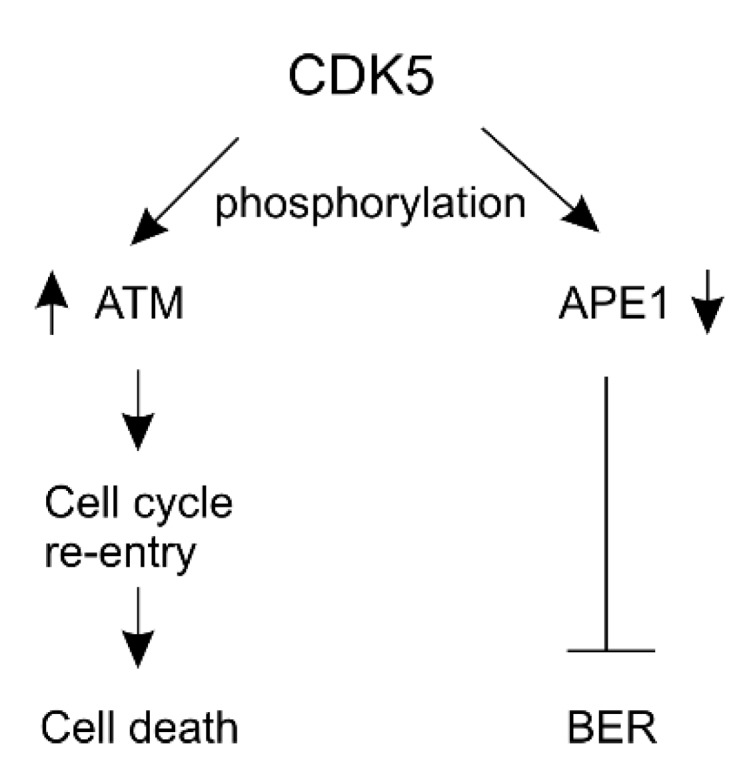
Phosphorylation of ATM by Cdk5 mediates DNA damage signalling and regulates neuronal death
Tian, B., Yang, Q., & Mao, Z. (2009) · Nature Cell Biology · doi:10.1038/ncb1829 · Cited by 184
Su, J. H., Deng, G., & Cotman, C. W. (1997) · Brain Research · doi:10.1016/s0006-8993(97)81703-9 · Cited by 175 · cited 3×
“Additionally, DSBs may occur prior to the onset of AD [78,79].”
BackgroundDecreased base excision repair and increased helicase activity in Alzheimer's disease brain
Lovell, M. A., Xie, C., & Markesbery, W. R. (2000) · Brain Research · doi:10.1016/s0006-8993(99)02335-5 · Cited by 174
Evidence of DNA damage in Alzheimer disease: phosphorylation of histone H2AX in astrocytes
Myung, N.-H., Zhu, X., Kruman, I. I., Castellani, R. J., Petersen, R. B., Siedlak, S. L., Perry, G., Smith, M. A., & Lee, H.-G. (2008) · AGE · doi:10.1007/s11357-008-9050-7 · Cited by 170 · cited 2×
“Elevations in γH2AX, a well-established marker of DSB [42], were detected in 11 of 13 AD brains in astrocytes of hippocampus and cerebral cortex [43].”
BackgroundNeuroprotective Functions for the Histone Deacetylase SIRT6
Kaluski, S., Portillo, M., Besnard, A., Stein, D., Einav, M., Zhong, L., Ueberham, U., Arendt, T., Mostoslavsky, R., Sahay, A., et al. (2017) · Cell Reports · doi:10.1016/j.celrep.2017.03.008 · Cited by 167
DNA strand breaks in Alzheimer’s disease
Adamec, E., Vonsattel, J. P., & Nixon, R. A. (1999) · Brain Research · doi:10.1016/s0006-8993(99)02004-1 · Cited by 167 · cited 2×
“Furthermore, DSBs and single strand breaks (SSBs) were demonstrated at the DNA level in hippocampi of AD brains [47].”
BackgroundGenome integrity and disease prevention in the nervous systemPreprint
McKinnon, P. J. (2017) · Genes & Development · doi:10.1101/gad.301325.117 · Cited by 161 · cited 1×
“Brain is particularly vulnerable to impairment in DNA repair [62], which is likely attributable to the high levels of metabolism and transcription activities in neurons of the central nervous system (CNS) [48,49,63].”
BackgroundTranscription-Coupled DNA Double-Strand Break Repair: Active Genes Need Special Care
Marnef, A., Cohen, S., & Legube, G. (2017) · Journal of Molecular Biology · doi:10.1016/j.jmb.2017.03.024 · Cited by 156 · cited 1×
“In addition to ROS as a source of DSBs in neurons of CSN, recent development reveals an essential association of transcription with DSB [64].”
BackgroundTakao, M., Kanno, S., Shiromoto, T., Hasegawa, R., Ide, H., Ikeda, S., Sarker, A. H., Seki, S., Xing, J. Z., Le, X. C., et al. (2002) · The EMBO Journal · doi:10.1093/emboj/cdf350 · Cited by 154
Xiao, C., Wang, R.-H., Lahusen, T. J., Park, O., Bertola, A., Maruyama, T., Reynolds, D. A., Chen, Q., Xu, X., Young, H. A., et al. (2012) · Journal of Biological Chemistry · doi:10.1074/jbc.m112.415182 · Cited by 152
Essential roles for the FE65 amyloid precursor protein‐interacting proteins in brain development
Guénette, S. Y., Chang, Y., Hiesberger, T., Richardson, J. A., Eckman, C. B., Eckman, E. A., Hammer, R. E., & Herz, J. (2006) · The EMBO Journal · doi:10.1038/sj.emboj.7600926 · Cited by 148
Chromosome Missegregation and Trisomy 21 Mosaicism in Alzheimer's Disease
Geller, L. N., & Potter, H. (1999) · Neurobiology of Disease · doi:10.1006/nbdi.1999.0236 · Cited by 147
Mansuroglu, Z., Benhelli-Mokrani, H., Marcato, V., Sultan, A., Violet, M., Chauderlier, A., Delattre, L., Loyens, A., Talahari, S., Bégard, S., et al. (2016) · Scientific Reports · doi:10.1038/srep33047 · Cited by 146
A hippocampal Cdk5 pathway regulates extinction of contextual fear
Sananbenesi, F., Fischer, A., Wang, X., Schrick, C., Neve, R. L., Radulović, J., & Tsai, L. (2007) · Nature Neuroscience · doi:10.1038/nn1943 · Cited by 143
Herpes Simplex Virus Type 1 in Alzheimer's Disease: The Enemy Within
Itzhaki, R. F., & Wozniak, M. A. (2008) · Journal of Alzheimer s Disease · doi:10.3233/jad-2008-13405 · Cited by 143 · cited 3×
“In line with HSV‐1 infection as a well‐recognized risk factor of AD [102,103] in part via inducing DSB accumulation in neurons [105], the virus stimulates CDK5 activation, changes its subcellular location, and induces γH2AX nuclear foci (DSB marker) in infected mouse neurons [167].”
BackgroundOxidative genome damage and its repair: implications in aging and neurodegenerative diseases
Hegde, M. L., Mantha, A. K., Hazra, T. K., Bhakat, K. K., Mitra, S., & Szczesny, B. (2012) · Mechanisms of Ageing and Development · doi:10.1016/j.mad.2012.01.005 · Cited by 141
DNA polymerase β deficiency leads to neurodegeneration and exacerbates Alzheimer disease phenotypes
Sýkora, P., Misiak, M., Wang, Y., Ghosh, S., Leandro, G. D. S., Liu, D., Tian, J. Y., Baptiste, B. A., Cong, W., Brenerman, B. M., et al. (2014) · Nucleic Acids Research · doi:10.1093/nar/gku1356 · Cited by 140
X chromosome aneuploidy in the Alzheimer’s disease brain
Yurov, Y. B., Vorsanova, S. G., Liehr, T., Kolotii, A. D., & Iourov, I. Y. (2014) · Molecular Cytogenetics · doi:10.1186/1755-8166-7-20 · Cited by 140
The role of DNA repair in brain related disease pathology
Canugovi, C., Misiak, M., Ferrarelli, L. K., Croteau, D. L., & Bohr, V. A. (2013) · DNA repair · doi:10.1016/j.dnarep.2013.04.010 · Cited by 138 · cited 15×
“Collectively, evidence favors a critical role of BRCA1 in DSB repair in CNS neurons and its dysfunction contributes to DSB accumulation and AD pathogenesis.”
BackgroundInfluentialThe neurological phenotype of ataxia-telangiectasia: Solving a persistent puzzle
Biton, S., Barzilai, A., & Shiloh, Y. (2008) · DNA repair · doi:10.1016/j.dnarep.2008.03.006 · Cited by 136 · cited 2×
“Ataxia telangiectasia (AT) is caused by mutations in the ATM gene; the disease manifests defects in multiple system including its typical clinical presentation of ataxia due to progressive neurodegeneration that occurs in early childhood [87].”
BackgroundThe Role of Epigenetic Mechanisms in the Regulation of Gene Expression in the Nervous System
Cholewa-Waclaw, J., Bird, A. P., von Schimmelmann, M. J., Schaefer, A., Yu, H., Song, H., Madabhushi, R., & Tsai, L. (2016) · Journal of Neuroscience · doi:10.1523/jneurosci.2492-16.2016 · Cited by 136 · cited 1×
“DSBs occur in the promoters of several early response genes and contribute to their transcription [65]; early response genes function in learning and memory [67,68] suggesting an association of DSB accumulation with cognitive decline, a major defect in patients with AD.”
BackgroundSnider, B. J., Norton, J. B., Coats, M. A., Chakraverty, S., Hou, C. E., Jervis, R., Lendon, C. L., Goate, A., McKeel, D. W., & Morris, J. C. (2005) · Archives of Neurology · doi:10.1001/archneur.62.12.1821 · Cited by 133 · cited 1×
“Individuals with these mutations develop early onset dementia in an autosomal-dominant manner [20]; the typical onset starts between 30 and 50 years of age in PSEN1 mutant carriers with some being affected at in their 20s [20,21].”
BackgroundOyama, F., Cairns, N. J., Shimada, H., Oyama, R., Titani, K., & Ihara, Y. (1994) · Journal of Neurochemistry · doi:10.1046/j.1471-4159.1994.62031062.x · Cited by 129
Identification and characterization of OGG1 mutations in patients with Alzheimer's disease
Mao, G., Pan, X., Zhu, B., Zhang, Y., Yuan, F., Huang, J. V., Lovell, M. A., Lee, M. P., Markesbery, W. R., Li, G., et al. (2007) · Nucleic Acids Research · doi:10.1093/nar/gkm189 · Cited by 124
Teixeira, J. P., de Castro, A. A., Soares, F. V., da Cunha, E. F. F., & Ramalho, T. C. (2019) · Molecules · doi:10.3390/molecules24234410 · Cited by 124 · cited 2×
“The 40 residue Aβ peptide (Aβ1-40) is the major product, accounting for more than 50% of Aβ peptides [9,17].”
BackgroundOxidatively modified nucleic acids in preclinical Alzheimer's disease (PCAD) brain
Lovell, M. A., Soman, S., & Bradley, M. A. (2011) · Mechanisms of Ageing and Development · doi:10.1016/j.mad.2011.08.003 · Cited by 124 · cited 8×
“In this regard, accumulation of DNA oxidization was observed in AD brains [51,52]; the lesion was also detected in brains with MCI [53–55] and preclinical AD (PCAD) [55,56].”
BackgroundInfluentialNeurons in Vulnerable Regions of the Alzheimer’s Disease Brain Display Reduced ATM Signaling
Shen, X., Chen, J., Li, J., Kofler, J., & Herrup, K. (2016) · eNeuro · doi:10.1523/eneuro.0124-15.2016 · Cited by 121 · cited 4×
“In comparison to age‐matched control subjects, reductions in both the ATM protein and its mRNA were detected in the front cortex of AD brains (n = 9, 5 males and 4 females) [88].”
BackgroundResultInfluentialThe role of Cdk5-mediated apurinic/apyrimidinic endonuclease 1 phosphorylation in neuronal death
Huang, E., Qu, D., Zhang, Y., Venderová, K., Haque, M. E., Rousseaux, M. W. C., Slack, R. S., Woulfe, J., & Park, D. S. (2010) · Nature Cell Biology · doi:10.1038/ncb2058 · Cited by 121
Petr, M. A., Tulika, T., Carmona-Marin, L. M., & Scheibye‐Knudsen, M. (2020) · Trends in Cell Biology · doi:10.1016/j.tcb.2019.12.001 · Cited by 121 · cited 1×
“Aging is clearly a complex process; nonetheless, accumulative evidence reveals a central role of DNA damage in aging [36].”
BackgroundGenome instability in Alzheimer disease
Hou, Y., Song, H., Croteau, D. L., Akbari, M., & Bohr, V. A. (2017) · Mechanisms of Ageing and Development · doi:10.1016/j.mad.2016.04.005 · Cited by 120 · cited 1×
“The topic of “DNA and neurodegenerative diseases” has been previously reviewed [14,30,37].”
BackgroundTissue-specific alternative splicing in the human INK4a/ARF cell cycle regulatory locus
Robertson, K. D., & Jones, P. A. (1999) · Oncogene · doi:10.1038/sj.onc.1202737 · Cited by 115
Cabelof, D. C., Raffoul, J. J., Yanamadala, S., Ganir, C., Guo, Z., & Heydari, A. R. (2002) · Mutation research. Fundamental and molecular mechanisms of mutagenesis · doi:10.1016/s0027-5107(02)00003-9 · Cited by 114
Estrogen receptor α-mediated transcription induces cell cycle-dependent DNA double-strand breaks
Williamson, L. M., & Lees‐Miller, S. P. (2010) · Carcinogenesis · doi:10.1093/carcin/bgq255 · Cited by 112
Nucleic acid oxidation: an early feature of Alzheimer's disease
Bradley‐Whitman, M. A., Timmons, M. D., Beckett, T. L., Murphy, M. P., Lynn, B. C., & Lovell, M. A. (2014) · Journal of Neurochemistry · doi:10.1111/jnc.12444 · Cited by 112 · cited 8×
“In this regard, accumulation of DNA oxidization was observed in AD brains [51,52]; the lesion was also detected in brains with MCI [53–55] and preclinical AD (PCAD) [55,56].”
BackgroundInfluentialLiu, F., Yuan, S., Li, B., Zhou, Y., Ryder, J. W., Gonzalez‐DeWhitt, P. A., May, P. C., & Ni, B. (2003) · FEBS Letters · doi:10.1016/s0014-5793(03)00714-2 · Cited by 110
Poly(ADP-ribose) Polymerase-1 in Amyloid Beta Toxicity and Alzheimer's Disease
Strosznajder, J. B., Czapski, G. A., Adamczyk, A., & Strosznajder, R. P. (2012) · Molecular Neurobiology · doi:10.1007/s12035-012-8258-9 · Cited by 109
DNA damage in the oligodendrocyte lineage and its role in brain aging
Tse, K.-H., & Herrup, K. (2017) · Mechanisms of Ageing and Development · doi:10.1016/j.mad.2016.05.006 · Cited by 108
Tse, K., & Herrup, K. (2017) · Journal of Neurochemistry · doi:10.1111/jnc.14079 · Cited by 107 · cited 3×
“In sporadic LOAD cases, aging is the strongest risk factor [30,35].”
BackgroundIs DNA repair compromised in Alzheimer’s disease?
Davydov, V., Hansen, L. A., & Shackelford, D. A. (2003) · Neurobiology of Aging · doi:10.1016/s0197-4580(02)00229-4 · Cited by 106
Bmi1 regulates murine intestinal stem cell proliferation and self-renewal downstream of Notch
López‐Arribillaga, E., Rodilla, V., Pellegrinet, L., Guiu, J., Iglesias, M., Román, Á., Gutarra, S., González, S., Muñoz‐Cánoves, P., Fernández‐Salguero, P. M., et al. (2014) · Development · doi:10.1242/dev.107714 · Cited by 105
Repair of 8-oxoG:A mismatches by the MUTYH glycosylase: Mechanism, metals and medicine
Banda, D. M., Nuñez, N. N., Burnside, M. A., Bradshaw, K. M., & David, S. S. (2017) · Free Radical Biology and Medicine · doi:10.1016/j.freeradbiomed.2017.01.008 · Cited by 105
Mano, T., Nagata, K., Nonaka, T., Tarutani, A., Imamura, T., Hashimoto, T., Bannai, T., Mano, K. K., Tsuchida, T., Ohtomo, R., et al. (2017) · Proceedings of the National Academy of Sciences · doi:10.1073/pnas.1707151114 · Cited by 105
Simpson, J. E., Ince, P. G., Haynes, L. J., Theaker, R., Gelsthorpe, C., Baxter, L., Forster, G., Lace, G., Shaw, P. J., Matthews, F. E., et al. (2009) · Neuropathology and Applied Neurobiology · doi:10.1111/j.1365-2990.2009.01030.x · Cited by 104
RAD52 is required for RNA-templated recombination repair in post-mitotic neurons
Welty, S., Teng, Y., Liang, Z., Zhao, W., Sanders, L. H., Greenamyre, J. T., Rubio, M. E., Thathiah, A., Kodali, R. B., Wetzel, R. B., et al. (2017) · Journal of Biological Chemistry · doi:10.1074/jbc.m117.808402 · Cited by 104 · cited 1×
“This possibility is further supported b induction of the HR protein RAD52 by nascent mRNAs in terminally differentiated neurons and Aβ inhibits RAD52 expression [90].”
BackgroundWeishaupt, J. H. (2003) · Molecular and Cellular Neuroscience · doi:10.1016/s1044-7431(03)00221-5 · Cited by 100
Austin, C. A., Lee, K. C., Swan, R. L., Khazeem, M. M., Manville, C. M., Cridland, P., Treumann, A., Porter, A., Morris, N. J., & Cowell, I. G. (2018) · International Journal of Molecular Sciences · doi:10.3390/ijms19092765 · Cited by 100 · cited 1×
“Additionally, TOP2β is expressed in differentiation cells and neurons [74,75]; the expression of long-transcripts linked to autism is facilitated by TOP2β [76].”
BackgroundSilva, A. R. T., Santos, A. C. F., Farfel, J. M., Grinberg, L. T., Ferretti, R. E. L., Campos, A. H. J. F. M., Cunha, I. W., Begnami, M. D., Rocha, R. M., Carraro, D. M., et al. (2014) · PLoS ONE · doi:10.1371/journal.pone.0099897 · Cited by 99
Oligodendroglial Cells in Alzheimer’s Disease
Butt, A. M., Rocha, I. C. D. L., & Rivera, A. D. (2019) · Advances in experimental medicine and biology · doi:10.1007/978-981-13-9913-8_12 · Cited by 97
Park, J., Choi, H., Min, J., Kim, B., Lee, S., Yun, J. W., Choi, M., Chang, K., & Lee, D. (2015) · Journal of Neurochemistry · doi:10.1111/jnc.12984 · Cited by 93
Śliwińska, A., Kwiatkowski, D., Czarny, P. L., Toma, M. M., Wigner, P., Drzewoski, J., Fabianowska‐Majewska, K., Szemraj, J., Maes, M. H. J., Gałecki, P., et al. (2016) · Journal of the Neurological Sciences · doi:10.1016/j.jns.2016.07.008 · Cited by 92
Telomeres: Implications for Cancer Development
Bernal, A., & Tusell, L. (2018) · International Journal of Molecular Sciences · doi:10.3390/ijms19010294 · Cited by 92
p53-dependent SIRT6 expression protects Aβ42-induced DNA damage
Jung, E. S., Choi, H., Song, H., Hwang, Y. J., Kim, A., Ryu, H., & Mook‐Jung, I. (2016) · Scientific Reports · doi:10.1038/srep25628 · Cited by 91
Brasnjevic, I., Hof, P. R., Steinbusch, H. W. M., & Schmitz, C. (2008) · DNA repair · doi:10.1016/j.dnarep.2008.03.010 · Cited by 90 · cited 1×
“By using autoradiographic methods to examine DNA damage (SSB) and repair capacity in neurons, an inverse association of accumulation of nuclear DNA (nDNA) breaks and nDNA repair was documented in aging mouse brain [59,60]; accumulation of nDNA SSB was detected in mouse cerebellar granule cells as well as hippocampal p…”
MethodBall, M. J., Lukiw, W. J., Kammerman, E. M., & Hill, J. M. (2013) · Alzheimer's & Dementia · doi:10.1016/j.jalz.2012.07.005 · Cited by 89 · cited 3×
“In line with HSV‐1 infection as a well‐recognized risk factor of AD [102,103] in part via inducing DSB accumulation in neurons [105], the virus stimulates CDK5 activation, changes its subcellular location, and induces γH2AX nuclear foci (DSB marker) in infected mouse neurons [167].”
BackgroundRapid phosphorylation of histone H2A.X following ionotropic glutamate receptor activation
Crowe, S. L., Movsesyan, V. A., Jorgensen, T. J., & Kondratyev, A. D. (2006) · European Journal of Neuroscience · doi:10.1111/j.1460-9568.2006.04768.x · Cited by 87 · cited 2×
“As high transcription activity in post-mitotic neurons remains a major source of DSBs associated with neuron activities and transcription [63,65,66], it seems logical for defects in NHEJ being favored over HR leading to DSB accumulation in AD.”
BackgroundDNA double strand break repair, aging and the chromatin connection
Gorbunova, V., & Seluanov, A. (2016) · Mutation Research - Fundamental and Molecular Mechanisms of Mutagenesis · doi:10.1016/j.mrfmmm.2016.02.004 · Cited by 87 · cited 1×
“While it is indeed intriguing for an essential role of DSBs at least in a subset of gene transcription, it is clear that DSBs need to be effectively repaired regardless of their sources of generation owning to their toxic impact on genome stability [77].”
BackgroundMorell, P., & Norton, W. T. (1980) · Scientific American · doi:10.1038/scientificamerican0580-88 · Cited by 86
miR-34a in Neurophysiology and Neuropathology
Chua, C. E. L., & Tang, B. L. (2018) · Journal of Molecular Neuroscience · doi:10.1007/s12031-018-1231-y · Cited by 84
Histopathology and APOE genotype of the first Alzheimer disease patient, Auguste D.
Graeber, M. B., Kösel, S., Grasbon-Frodl, E. M., Möller, H. ‐., & Mehraein, P. (1998) · Neurogenetics · doi:10.1007/s100480050033 · Cited by 82 · cited 1×
“AD was first described by Alois Alzheimer more than one century ago on a patient named Auguste D [1]; the typical pathological features include extensive cerebral amyloid plaques and neurofibrillary tangles [2,3].”
BackgroundThe aging brain: Accumulation of DNA damage or neuron loss?
Rutten, B. P. F., Schmitz, C., Gerlach, O. H. H., Oyen, H. M., de Mesquita, E. B., Steinbusch, H. W. M., & Korr, H. (2005) · Neurobiology of Aging · doi:10.1016/j.neurobiolaging.2005.10.019 · Cited by 81 · cited 1×
“By using autoradiographic methods to examine DNA damage (SSB) and repair capacity in neurons, an inverse association of accumulation of nuclear DNA (nDNA) breaks and nDNA repair was documented in aging mouse brain [59,60]; accumulation of nDNA SSB was detected in mouse cerebellar granule cells as well as hippocampal p…”
MethodCanugovi, C., Yoon, J. S., Feldman, N. H., Croteau, D. L., Mattson, M. P., & Bohr, V. A. (2012) · Proceedings of the National Academy of Sciences · doi:10.1073/pnas.1204156109 · Cited by 80
Trotter, K. W., King, H. A., & Archer, T. (2015) · Molecular and Cellular Biology · doi:10.1128/mcb.00230-15 · Cited by 79 · cited 1×
“Subsequently, glucocorticoid receptor was also reported to transactivate genes via TOP2β-produced DSBs [73].”
BackgroundCulmsee, C., Bondada, S., & Mattson, M. P. (2001) · Molecular Brain Research · doi:10.1016/s0169-328x(01)00008-0 · Cited by 78
An anticlastogenic function for the Polycomb Group gene Bmi1
Chagraoui, J., Hébert, J., Girard, S., & Sauvageau, G. (2011) · Proceedings of the National Academy of Sciences · doi:10.1073/pnas.1014263108 · Cited by 73
Kimura, T., Tsutsumi, K., Taoka, M., Saito, T., Masuda‐Suzukake, M., Ishiguro, K., Plattner, F., Uchida, T., Isobe, T., Hasegawa, M., et al. (2013) · Journal of Biological Chemistry · doi:10.1074/jbc.m112.433326 · Cited by 73
A Novel Aspect of Tumorigenesis—BMI1 Functions in Regulating DNA Damage Response
Lin, X., Ojo, D., Wei, F., Wong, N., Gu, Y. J., & Tang, D. (2015) · Biomolecules · doi:10.3390/biom5043396 · Cited by 72
Self-citationMutational spectrum at GATA1 provides insights into mutagenesis and leukemogenesis in Down syndrome
Cabelof, D. C., Patel, H., Chen, Q., Remmen, H. V., Matherly, L. H., Ge, Y., & Taub, J. W. (2009) · Blood · doi:10.1182/blood-2008-11-190330 · Cited by 71
Khan, R. I., Nirzhor, S. S. R., & Akter, R. (2018) · Biomolecules · doi:10.3390/biom8030044 · Cited by 71
Cdk5 at crossroads of protein oligomerization in neurodegenerative diseases: facts and hypotheses
Wilkaniec, A., Czapski, G. A., & Adamczyk, A. (2015) · Journal of Neurochemistry · doi:10.1111/jnc.13365 · Cited by 69
Leandro, G. D. S., Evangelista, A. F., Lôbo, R. R., Xavier, D. J., Moriguti, J. C., & Sakamoto‐Hojo, E. T. (2018) · Journal of Alzheimer s Disease · doi:10.3233/jad-170205 · Cited by 67
Cdk5 links with DNA damage response and cancer
Liu, W., Li, J., Song, Y., Li, Y., Jia, Y., & Zhao, H. (2017) · Molecular Cancer · doi:10.1186/s12943-017-0611-1 · Cited by 66 · cited 1×
“Furthermore, CDK5 activities affect DNA damage response [12], supporting a linkage of DNA damage with AD [13,14].”
BackgroundHyperphosphorylation Results in Tau Dysfunction in DNA Folding and Protection
Lü, Y., He, H.-J., Zhou, J., Jun-Ye, M. I. A. O., Lü, J., He, Y.-G., Pan, R., Yan, W., Liu, Y. M., & He, R. (2013) · Journal of Alzheimer s Disease · doi:10.3233/jad-130602 · Cited by 65
Modeling Late-Onset Sporadic Alzheimer’s Disease through BMI1 Deficiency
Flamier, A., El Hajjar, J., Adjaye, J., Fernandes, K. J., Abdouh, M., & Bernier, G. (2018) · Cell Reports · doi:10.1016/j.celrep.2018.04.097 · Cited by 65
Martire, S., Fuso, A., Mosca, L., Forte, E., Correani, V., Fontana, M., Scarpa, S., Maras, B., & D’Erme, M. (2016) · Journal of Alzheimer s Disease · doi:10.3233/jad-151040 · Cited by 64
Base excision DNA repair levels in mitochondrial lysates of Alzheimer's disease
Canugovi, C., Shamanna, R. A., Croteau, D. L., & Bohr, V. A. (2014) · Neurobiology of Aging · doi:10.1016/j.neurobiolaging.2014.01.004 · Cited by 63
Robin, G., Lopez, J. R., Espinal, G. M., Hulsizer, S., Hagerman, P. J., & Pessah, I. N. (2017) · Human Molecular Genetics · doi:10.1093/hmg/ddx148 · Cited by 61
Jacob, K. D., Hooten, N. N., Tadokoro, T., Lohani, A., Barnes, J., & Evans, M. K. (2013) · Free Radical Biology and Medicine · doi:10.1016/j.freeradbiomed.2013.05.010 · Cited by 59
Reanalysis of the first case of Alzheimer’s disease
Graeber, M. B., & Mehraein, P. (1999) · European Archives of Psychiatry and Clinical Neuroscience · doi:10.1007/pl00014167 · Cited by 59
Expression of the Fe65 adapter protein in adult and developing mouse brain
Kesavapany, S., Banner, S. J., Lau, K., Shaw, C. E., Miller, C. C. J., Cooper, J. D., & McLoughlin, D. M. (2002) · Neuroscience · doi:10.1016/s0306-4522(02)00422-0 · Cited by 57 · cited 1×
“FE65 is an adaptor protein with its expression enriched in the brain [94,95].”
BackgroundMechanisms and consequences of aneuploidy and chromosome instability in the aging brain
Andriani, G. A., Vijg, J., & Montagna, C. (2016) · Mechanisms of Ageing and Development · doi:10.1016/j.mad.2016.03.007 · Cited by 56
Tse, K., Cheng, A., Ma, F., & Herrup, K. (2018) · Alzheimer's & Dementia · doi:10.1016/j.jalz.2017.11.010 · Cited by 56
Evaluation of the poly(ADP‐ribose) polymerase‐1 gene variants in Alzheimer's disease
Liu, H., Lin, W., Wu, B., Liu, S. R., Wang, W., Tsai, C., Lee, C., & Tsai, F. (2010) · Journal of Clinical Laboratory Analysis · doi:10.1002/jcla.20379 · Cited by 54
Strosznajder, J. B., Jęśko, H. M., & Strosznajder, R. P. (2000) · Acta Biochimica Polonica · doi:10.18388/abp.2000_4003 · Cited by 54
Sublethal Doses of β-Amyloid Peptide Abrogate DNA-dependent Protein Kinase Activity
Cardinale, A., Racaniello, M., Saladini, S., Chiara, G. D., Mollinari, C., de Stefano, M. C., Pocchiari, M., Garaci, E., & Merlo, D. (2011) · Journal of Biological Chemistry · doi:10.1074/jbc.m111.276550 · Cited by 54
Zeng, J., Libien, J. M., Shaik, F., Wolk, J., & Hernandez, A. I. (2016) · Neural Plasticity · doi:10.1155/2016/8987928 · Cited by 54
Sheng, J. G., Mrak, R. E., & Griffin, W. S. T. (1998) · Journal of Neuropathology & Experimental Neurology · doi:10.1097/00005072-199804000-00003 · Cited by 53 · cited 3×
“Additionally, DSBs may occur prior to the onset of AD [78,79].”
BackgroundModeling an Anti-Amyloid Combination Therapy for Alzheimer’s Disease
Chow, V. W., Savonenko, A. V., Melnikova, T., Kim, H., Price, D. L., Li, T., & Wong, P. C. (2010) · Science Translational Medicine · doi:10.1126/scitranslmed.3000337 · Cited by 53
Harkin, L. F., Gerrelli, D., Diaz, D. G., Santos, C., Alzu’bi, A., Austin, C. A., & Clowry, G. J. (2015) · Journal of Anatomy · doi:10.1111/joa.12416 · Cited by 53 · cited 1×
“Additionally, TOP2β is expressed in differentiation cells and neurons [74,75]; the expression of long-transcripts linked to autism is facilitated by TOP2β [76].”
BackgroundWężyk, M., Szybińska, A., Wojsiat, J., Szczerba, M., Day, K., Rönnholm, H., Kele, M., Berdyński, M., Pepłońska, B., Fichna, J. P., et al. (2018) · Journal of Alzheimer s Disease · doi:10.3233/jad-170830 · Cited by 51 · cited 9×
“In neurons differentiated from induced pluripotent stem cells (iPSC) that were reprogrammed from fibroblasts of familial AD patients, location of BRCA1 to cytosol is also demonstrated [89].”
BackgroundInfluentialMisiak, M., Greeno, R. V., Baptiste, B. A., Sýkora, P., Liu, D., Cordonnier, S. A., Fang, E. F., Croteau, D. L., Mattson, M. P., & Bohr, V. A. (2016) · Aging Cell · doi:10.1111/acel.12541 · Cited by 50
Altered DNA repair; an early pathogenic pathway in Alzheimer’s disease and obesity
Yu, H., Harrison, F. E., & Xia, F. (2018) · Scientific Reports · doi:10.1038/s41598-018-23644-4 · Cited by 50 · cited 3×
“In the APP/PSEN1 mouse model for AD, a decrease in the HR protein RAD51 co-exists with DSB accumulation [91].”
BackgroundInfluentialAberrant Accumulation of BRCA1 in Alzheimer Disease and Other Tauopathies
Nakamura, M., Kaneko, S., Dickson, D. W., & Kusaka, H. (2019) · Journal of Neuropathology & Experimental Neurology · doi:10.1093/jnen/nlz107 · Cited by 48 · cited 1×
“The association of BRCA1 with phosphorylated tau in AD brain was also observed [93], consistent with tau hyperphosphorylation causing tau aggregation.”
Doğru‐Abbasoğlu, S., Aykaç‐Toker, G., Hanagasi, H. A., Gurvit, H. I., Emre, M., & Uysal, M. (2007) · Neurological Sciences · doi:10.1007/s10072-007-0744-x · Cited by 48
NAD attenuates oxidative DNA damages induced by amyloid beta-peptide in primary rat cortical neurons
Wu, M.-H., Yin, J., Hwang, C.-S., Tang, C.-M., & Yang, D. (2014) · Free Radical Research · doi:10.3109/10715762.2014.907889 · Cited by 47
Neuron loss during early adulthood following prenatal low-dose X-irradiation in the mouse brain
Korr, H. (2001) · International Journal of Radiation Biology · doi:10.1080/09553000010028467 · Cited by 47 · cited 1×
“By using autoradiographic methods to examine DNA damage (SSB) and repair capacity in neurons, an inverse association of accumulation of nuclear DNA (nDNA) breaks and nDNA repair was documented in aging mouse brain [59,60]; accumulation of nDNA SSB was detected in mouse cerebellar granule cells as well as hippocampal p…”
MethodHajjar, J. E., Chatoo, W., Hanna, R., Nkanza, P., Tétreault, N., Tse, Y. C., Wong, T. P., Abdouh, M., & Bernier, G. (2019) · Scientific Reports · doi:10.1038/s41598-018-37444-3 · Cited by 46
Cited by
Sorted by citations
Molecular mechanisms of aging and anti-aging strategies
Li, Y., Tian, X., Luo, J., Bao, T., Wang, S., & Wu, X. (2024) · Cell Communication and Signaling · doi:10.1186/s12964-024-01663-1 · Cited by 358
“…breakdown of repair functions, eventually leading to the loss of cell and organ function and promoting the occurrence and development of age-related diseases disease [53], Alzheimer’s disease [54], and cancer [55], suggesting that DNA damage is directly related to the incidence of these diseases.”
BackgroundNeurogenesis in aging and age-related neurodegenerative diseases
Čulig, L., Chu, X., & Bohr, V. A. (2022) · Ageing Research Reviews · doi:10.1016/j.arr.2022.101636 · Cited by 235
Alzheimer’s Disease: Exploring the Landscape of Cognitive Decline
Tenchov, R., Sasso, J. M., & Zhou, Q. A. (2024) · ACS Chemical Neuroscience · doi:10.1021/acschemneuro.4c00339 · Cited by 170
The role of PARP1 in neurodegenerative diseases and aging
Mao, K., & Zhang, G. (2022) · The FEBS Journal · doi:10.1111/febs.15716 · Cited by 172
Redox dysregulation as a driver for DNA damage and its relationship to neurodegenerative diseases
Shadfar, S., Parakh, S., Jamali, M. S., & Atkin, J. D. (2023) · Translational Neurodegeneration · doi:10.1186/s40035-023-00350-4 · Cited by 148
“Several mechanisms have been implicated in the pathogenesis, including both oxidative stress and DNA damage [236, 240].”
Background
Metadata
- Authors
- Lin, X., Kapoor, A., Gu, Y., Chow, M. J., Peng, J., Zhao, K., & Tang, D.
- Affiliations
- St. Joseph’s Healthcare Hamilton (CA)
- Corresponding author
- Tang, Damu
- Venue
- International Journal of Molecular Sciences
- Publisher
- MDPI AG
- Published
- 2020-02-28
- Volume
- 21
- Issue
- 5
- Pages
- 1666
- ISSN
- 1422-0067 (ISSN-L)
- PMC
- PMC7084447
- OpenAlex
- W3009111493
- Cited by
- 117
- References
- 241
- Citations by year
- 2026: 15 · 2025: 19 · 2024: 22 · 2023: 18 · 2022: 19 · 2021: 16 · 2020: 5
- FWCI
- 1.85
- Type
- journal article
- Language
- en
- Open access
- gold
- dx.doi.org
- Licence
- Locations
- International Journal of Molecular Sciences (publishedVersion, cc-by)
- PubMed Central (publishedVersion, cc-by)
- PubMed (publishedVersion)
- DOAJ (DOAJ: Directory of Open Access Journals) (submittedVersion, cc-by-sa)
- Funders
- Cancer Research Society (NA)
- Canadian Cancer Society (319412)
- Canadian Institutes of Health Research (NA)
- Topics
- Life Sciences › Neuroscience › Cellular and Molecular Neuroscience › Alzheimer's disease research and treatments
- Health Sciences › Medicine › Psychiatry and Mental health › Dementia and Cognitive Impairment Research
- Life Sciences › Biochemistry, Genetics and Molecular Biology › Molecular Biology › DNA Repair Mechanisms
- Keywords
- Alzheimer's disease, DNA damage, DNA repair, aging, amyloid plaques, neurofibrillary tangles, BRCA1, familial Alzheimer's disease, late-onset Alzheimer's disease, diagnostic biomarkers, neurodegeneration
- MeSH terms
- Alzheimer Disease, DNA Damage, DNA Repair, Humans, Models, Biological, Risk Factors, Neurogenesis
About these checks
Registry, retraction, Cites and statistics results are computed, not judged, with one exception: a printed reference that no index lists is read once by a model before it counts as a citation error. Claims are extracted by a model and kept only when their quote appears verbatim in the text; each cited source is then checked, with a model’s help, for whether it says what the claim relies on. Those verdicts can be wrong — read the claim’s quote and the cited source before relying on one.
Statistics and arithmetic are recomputed, not judged.
Confidence bands are shown only for fields calibrated on our annotated test set. None is calibrated yet, so no band is shown.
What counts as a claim ›How we measure confidence ›How we check this ›
Are you an author, or do you see a problem with this page? Request a review
