

Virtual Reality Interventions for Needle-Related Procedural Pain, Fear and Anxiety—A Systematic Review and Meta-Analysis
Open accessThe DOI matches its Crossref record; 62 of the 63 references it cites were found in a registry or an index, and 1 are not checked yet.
Abstract
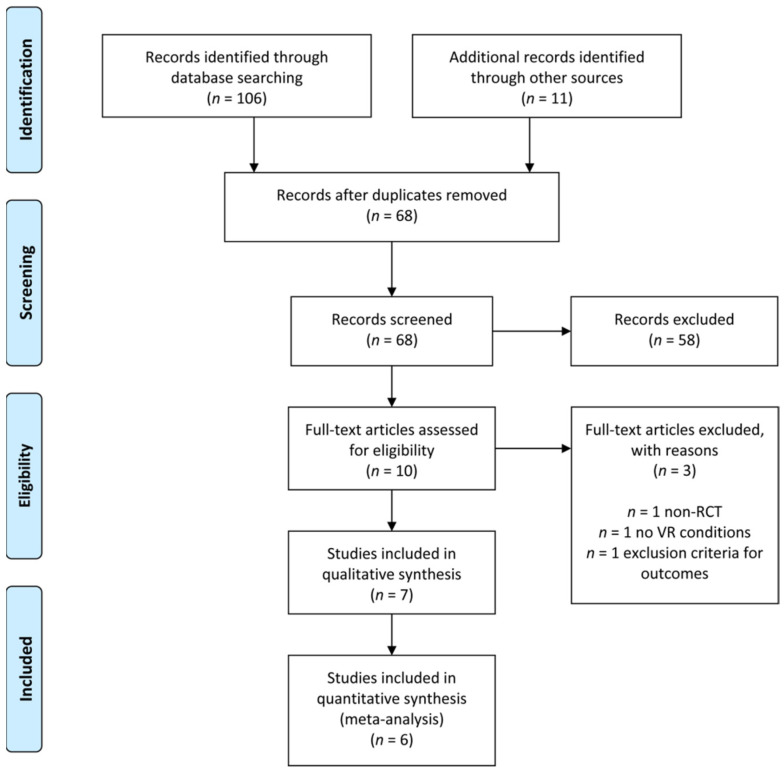
Needle-related procedures are often a source of pain, anxiety and fear in young patients. This systematic review aimed to investigate the effectiveness of virtual reality (VR) on reducing pain, fear and anxiety in pediatric patients undergoing needle-related procedures. Pain, anxiety, fear, changes in blood pressure and heart rate as well as satisfaction were evaluated as outcomes during needle-related procedures in VR compared with standard care conditions. A meta-analysis was performed, taking into account online databases. Two authors independently conducted literature searches in December 2020. The last search was conducted in March 2021 from a total of 106 records, 7 met our inclusion criteria. One study was excluded from the meta-analysis due to insufficient data. VR was applied as a distractor during venous access. Statistically significant benefits of using VR were shown in children’s pain scores, where VR significantly decreased symptoms (n = 3204 patients, MD = −2.85; 95% CI −3.57, −2.14, for the Wong–Baker Faces Pain Rating Scale and n = 2240 patients, MD = −0.19; 95% CI −0.58, 0.20, for the Faces Pain Scale—Revised). The analysis of fear, anxiety and satisfaction scores revealed no significant differences between the conditions, as the studies were too heterogeneous to be pooled. Distraction using virtual reality may be an effective intervention for reducing pain in children undergoing needle-related medical procedures. However, further research in the implementation of VR as a distractor for children and adolescents is required, due to the limited research into this field.
Overview
The claims and statistics of this paper haven’t been checked yet.
Free: it reads the open-access text and checks the first 5 claims that cite a source we can check. Create a free account to check every claim.
Integrity signals
Registry
Cites
Statistics
Figures





Verification
Claims the paper makes
The claims and statistics of this paper haven’t been checked yet.
Free: it reads the open-access text and checks the first 5 claims that cite a source we can check. Create a free account to check every claim.
Claims other papers make about this one
Each is checked against this paper’s own text: does it say what the citing paper says it does?
The cited source says what the claim attributes to it.
In the citing paper
“VR is a non-pharmacological pain relief method that helps reduce pain perception by diverting the patient’s attention.”
From A Pilot Study of Virtual Reality in Hemodialysis for Mitigating Pain and Anxiety: User Experiences and Perceptions (2025) · cites this paper as [24]
Self-check
Percentages, sums and reported differences re-computed from the paper’s own numbers.
The self-check needs the paper’s full text.
Citations
Cites
1 retracted
López-Valverde, N., Fernández, J. M., López‐Valverde, A., Juan, L. F. V., Ramírez, J. M., Fraile, J. F., Payo, J. H., Antona, L. B., de Sousa, B. M., & Bravo, M. (2020) · Journal of Clinical Medicine · doi:10.3390/jcm9041025 · Cited by 46
RetractedPreferred Reporting Items for Systematic Reviews and Meta-Analyses: the PRISMA statement
Moher, D., Liberati, A., Tetzlaff, J., Altman, D. G., & for the PRISMA Group (2009) · BMJ · doi:10.1136/bmj.b2535 · Cited by 83,823
Statistical power analysis for the behavioral sciences
(1990) · Computers, Environment and Urban Systems · doi:10.1016/0198-9715(90)90050-4 · Cited by 65,269
The Cochrane Collaboration's tool for assessing risk of bias in randomised trials
Higgins, J. P. T., Altman, D. G., Gotzsche, P. C., Juni, P., Moher, D., Oxman, A. D., Savovic, J., Schulz, K. F., Weeks, L., Sterne, J. A. C., et al. (2011) · BMJ · doi:10.1136/bmj.d5928 · Cited by 33,817
Statistical Power Analysis for the Behavioral Sciences
Cohen, J. (2013) · doi:10.4324/9780203771587 · Cited by 25,373
Dermyshi, E., Wang, Y., Yan, C., Hong, W., Qiu, G., Gong, X., & Zhang, T. (2017) · Neonatology · doi:10.1159/000454668 · Cited by 24,451
Preferred reporting items for systematic reviews and meta-analyses: The PRISMA statement
Moher, D., Liberati, A., Tetzlaff, J., & Altman, D. G. (2010) · International Journal of Surgery · doi:10.1016/j.ijsu.2010.02.007 · Cited by 12,156
Waddell, G., Newton, M., Henderson, I., Somerville, D., & Main, C. J. (1993) · Pain · doi:10.1016/0304-3959(93)90127-b · Cited by 3,167
Estimating effect sizes from pretest-posttest-control group designs
Morris, S. B. (2008) · Organizational Research Methods · doi:10.1177/1094428106291059 · Cited by 2,133
Virtual reality for stroke rehabilitation
Laver, K. E., George, S., Thomas, S., Deutsch, J. E., & Crotty, M. (2015) · Cochrane Database of Systematic Reviews · doi:10.1002/14651858.cd008349.pub3 · Cited by 1,131
Fear-Avoidance Model of Chronic Pain: The Next Generation
Crombez, G., Eccleston, C., Van Damme, S., Vlaeyen, J. W. S., & Karoly, P. (2012) · The Clinical Journal of Pain · doi:10.1097/ajp.0b013e3182385392 · Cited by 960
Virtual reality for stroke rehabilitation
Laver, K. E., Lange, B., George, S., Deutsch, J. E., Saposnik, G., & Crotty, M. (2017) · Cochrane Database of Systematic Reviews · doi:10.1002/14651858.cd008349.pub4 · Cited by 800
Birnie, K. A., Noel, M., Chambers, C. T., Uman, L. S., & Parker, J. A. (2018) · Cochrane Database of Systematic Reviews · doi:10.1002/14651858.cd005179.pub4 · Cited by 755
The fear of needles: a systematic review and meta-analysis
McLenon, J., & Rogers, M. A. M. (2019) · Journal of Advanced Nursing · doi:10.1111/jan.13818 · Cited by 623 · cited 1×
“Frequent stress and anxiety associated with needle-related procedures may lead to needle phobia [7].”
BackgroundSystematic Review and Meta-analysis of Virtual Reality in Pediatrics: Effects on Pain and Anxiety
Eijlers, R., Utens, E. M. W. J., Staals, L. M., de Nijs, P. F. A., Berghmans, J. M., Wijnen, R. M. H., Hillegers, M. H. J., Dierckx, B., & Legerstee, J. S. (2019) · Anesthesia & Analgesia · doi:10.1213/ane.0000000000004165 · Cited by 605 · cited 2×
“The large effect size could lead to the drawing of specific conclusions: as a method for reducing pain and anxiety in pediatric patients undergoing medical procedures, VR is an effective distraction intervention [22].”
BackgroundVirtual Reality and Pain Management: Current Trends and Future Directions
Li, A., Montaño, Z., Chen, V. J., & Gold, J. I. (2011) · Pain Management · doi:10.2217/pmt.10.15 · Cited by 536 · cited 1×
“VR has been used to manage the pain and anxiety associated with medical procedures [16].”
MethodUman, L. S., Chambers, C. T., McGrath, P. J., & Kisely, S. R. (2006) · Cochrane Database of Systematic Reviews · doi:10.1002/14651858.cd005179.pub2 · Cited by 472
Effectiveness of Virtual Reality for Pediatric Pain Distraction during IV Placement
Gold, J. I., Kim, S. H., Kant, A. J., Joseph, M. H., & Rizzo, A. ". (2006) · CyberPsychology & Behavior · doi:10.1089/cpb.2006.9.207 · Cited by 391
Modulation of thermal pain-related brain activity with virtual reality: evidence from fMRI
Hoffman, H. G., Richards, T. L., Coda, B., Bills, A. R., Blough, D., Richards, A. L., & Sharar, S. R. (2004) · NeuroReport · doi:10.1097/01.wnr.0000127826.73576.91 · Cited by 380 · cited 1×
“[50] provides converging evidence from subjective and objective measures that VR reduces pain.”
BackgroundVirtual Reality for Stroke Rehabilitation
Laver, K. E., Lange, B., George, S., Deutsch, J. E., Saposnik, G., & Crotty, M. (2018) · Stroke · doi:10.1161/strokeaha.117.020275 · Cited by 354
Birnie, K. A., Noel, M., Parker, J. A., Chambers, C. T., Uman, L. S., Kisely, S. R., & McGrath, P. J. (2014) · Journal of Pediatric Psychology · doi:10.1093/jpepsy/jsu029 · Cited by 292 · cited 1×
“[53] compared other methods of distraction such as watching TV, listening to music, reading books, hypnosis or parental distraction.”
MethodUman, L. S., Birnie, K. A., Noel, M., Parker, J. A., Chambers, C. T., McGrath, P. J., & Kisely, S. R. (2013) · Cochrane Database of Systematic Reviews · doi:10.1002/14651858.cd005179.pub3 · Cited by 287
Nguyen, T. N., Nilsson, S., Hellström, A.-L., & Bengtson, A. (2010) · Journal of Pediatric Oncology Nursing · doi:10.1177/1043454209355983 · Cited by 280
Klassen, J. A., Liang, Y., Tjosvold, L., Klassen, T. P., & Hartling, L. (2008) · Ambulatory Pediatrics · doi:10.1016/j.ambp.2007.12.005 · Cited by 272 · cited 1×
“Moreover, both active music therapy, with the participation of a therapist, and passive, without the intervention of the caregiver, turned out to be equally effective [47].”
BackgroundDental anxiety: An understudied problem in youth
Seligman, L. D., Hovey, J. D., Chacon, K., & Ollendick, T. H. (2017) · Clinical Psychology Review · doi:10.1016/j.cpr.2017.04.004 · Cited by 267 · cited 1×
“The value of this type of research is also confirmed by the WHO, which considers the fear of dental procedures to be a serious problem in 15–20% of the population [45].”
BackgroundThe fear avoidance model of chronic pain: Examination for pediatric application
Simons, L. E., & Kaczynski, K. J. (2012) · The Journal of Pain · doi:10.1016/j.jpain.2012.05.002 · Cited by 250 · cited 1×
“The literature suggests that stress, anxiety and fear may not only increase pain but can also induce it [4,5].”
BackgroundVirtual reality in psychiatric disorders: A systematic review of reviews
Cieślik, B., Mazurek, J., Rutkowski, S., Kiper, P., Turolla, A., & Szczepańska-Gieracha, J. (2020) · Complementary Therapies in Medicine · doi:10.1016/j.ctim.2020.102480 · Cited by 240 · cited 1×
“VR interventions have been used by psychologists, pediatricians, neurologists and physiotherapists [23,24].”
Self-citationWint, S. S., Eshelman, D., Steele, J., & Guzzetta, C. E. (2002) · Oncology Nursing Forum · doi:10.1188/02.onf.e8-e15 · Cited by 234 · cited 6×
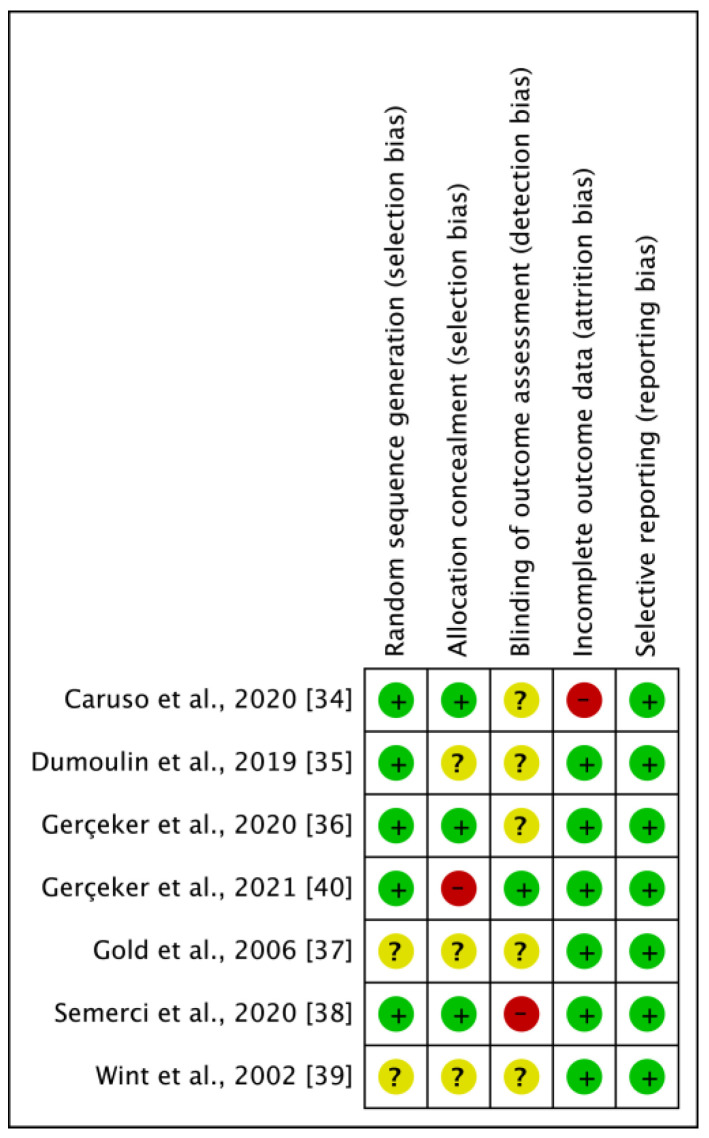
“assessed with an unclear risk of bias as they contained no information about allocation concealment procedures [35,37,39].”
BackgroundInfluentialNilsson, S., Finnström, B., Kokinsky, E., & Enskär, K. (2009) · European Journal of Oncology Nursing · doi:10.1016/j.ejon.2009.01.003 · Cited by 207 · cited 2×
“One study was considered ineligible as it was non-RCT [41], while one study did not use VR conditions [42].”
BackgroundÖzalp Gerçeker, G., Ayar, D., Özdemir, E. Z., & Bektaş, M. (2020) · Journal of Clinical Nursing · doi:10.1111/jocn.15173 · Cited by 179
Aminabadi, N. A., Erfanparast, L., Sohrabi, A., Oskouei, S. G., & Naghili, A. (2012) · PubMed · doi:10.5681/joddd.2012.025 · Cited by 162 · cited 1×
“This type of technology can be interesting and engaging for children [20].”
BackgroundGerçeker, G. Ö., Bektaş, M., Aydınok, Y., Ören, H., Ellidokuz, H., & Olgun, N. (2021) · European Journal of Oncology Nursing · doi:10.1016/j.ejon.2020.101886 · Cited by 160 · cited 4×
“Blinding of outcome assessment (detection bias): In one study the data analyst was blinded, so the risk of bias was judged as low [40].”
BackgroundMethodInfluentialLiu, Q., Zhou, Y., Xie, X., Xue, Q., Zhu, K., Wan, Z., Wu, H., Zhang, J., & Song, R. (2021) · Journal of Affective Disorders · doi:10.1016/j.jad.2020.10.008 · Cited by 158
Dumoulin, S., Bouchard, S., Ellis, J., Lavoie, K. L., Vézina, M.-P., Charbonneau, P., Tardif, J., & Hajjar, A. (2019) · Games for Health Journal · doi:10.1089/g4h.2018.0111 · Cited by 152 · cited 4×
“Three studies were assessed with an unclear risk of bias as they contained no information about allocation concealment procedures [35,37,39].”
BackgroundInfluentialRutkowski, S., Kiper, P., Cacciante, L., Cieślik, B., Mazurek, J., Turolla, A., & Szczepańska-Gieracha, J. (2020) · Journal of Rehabilitation Medicine · doi:10.2340/16501977-2755 · Cited by 149 · cited 1×
“VR interventions have been used by psychologists, pediatricians, neurologists and physiotherapists [23,24].”
Self-citationErdogan, B., & Aytekin Ozdemir, A. (2021) · Journal of Pediatric Nursing · doi:10.1016/j.pedn.2021.01.001 · Cited by 148
Zeltzer, L. K., Altman, A., Cohen, D., LeBaron, S., Munuksela, E. L., & Schechter, N. L. (1990) · Pediatrics · doi:10.1542/peds.86.5.826 · Cited by 140
Massage Therapy for Children With Cancer
Post‐White, J., Fitzgerald, M., Savik, K., Hooke, M. C., Hannahan, A. B., & Sencer, S. (2008) · Journal of Pediatric Oncology Nursing · doi:10.1177/1043454208323295 · Cited by 123
Lee, D., Chan, A., Wong, S., Fung, T., Li, A., Chan, S., Mui, L., Ng, E., & Chung, S. (2004) · Endoscopy · doi:10.1055/s-2004-814247 · Cited by 122 · cited 2×
“Research shows that combining visual and audio distraction stimuli is more effective than using visual stimuli alone [15].”
BackgroundSemerci, R., Kostak, M. A., Eren, T., & Avci, G. (2020) · Journal of Pediatric Oncology Nursing · doi:10.1177/1043454220975702 · Cited by 108 · cited 3×
“The mean pain score of the children in the control group was significantly higher than that of the VR group [38].”
BackgroundMethodAydın, D., Şahiner, N. C., & Çiftçi, E. K. (2016) · Journal of Clinical Nursing · doi:10.1111/jocn.13321 · Cited by 107 · cited 1×
“The results showed no significant difference in the children’s anxiety and pain levels [52].”
BackgroundDistraction and Placebo: Two Separate Routes to Pain Control
Buhle, J. T., Stevens, B. L., Friedman, J. J., & Wager, T. D. (2012) · Psychological Science · doi:10.1177/0956797611427919 · Cited by 105
Cavender, K., Goff, M. D., Hollon, E. C., & Guzzetta, C. E. (2004) · Journal of Holistic Nursing · doi:10.1177/0898010104263306 · Cited by 104 · cited 1×
“Such anticipatory fear may also cause an increase in pain resulting in emotional distress [6].”
BackgroundVariability in placebo analgesia and the role of fear of pain—an ERP study
Lyby, P. S., Aslaksen, P. M., & Flaten, M. A. (2011) · Pain · doi:10.1016/j.pain.2011.07.010 · Cited by 103
An analysis of a behavioral intervention for children undergoing venipuncture.
Manne, S. L., Bakeman, R., Jacobsen, P. B., & Gorfinkle, K. (1994) · Health Psychology · doi:10.1037//0278-6133.13.6.556 · Cited by 99
Virtual Body Ownership Illusions for Mental Health: A Narrative Review
Matamala-Gomez, M., Maselli, A., Malighetti, C., Realdon, O., Mantovani, F., & Riva, G. (2021) · Journal of Clinical Medicine · doi:10.3390/jcm10010139 · Cited by 97 · cited 1×
“The value of the application of immersive VR in clinical settings is that immersive VR environments can enable researchers or clinicians to modify multimodal input stimuli to make patients feel “present” in the projected environment [18,19].”
BackgroundRutkowski, S. (2021) · Journal of Clinical Medicine · doi:10.3390/jcm10061261 · Cited by 87 · cited 1×
“The literature identifies four types of VR: immersive virtual reality, nonimmersive (desktop) virtual reality, augmented virtual reality and mixed virtual reality (a combination of real objects and environments with virtual people or places) [17].”
BackgroundSelf-citationRutkowski, S., Szczegielniak, J., & Szczepańska-Gieracha, J. (2021) · Journal of Clinical Medicine · doi:10.3390/jcm10020352 · Cited by 85 · cited 1×
“According to research, in the treatment of depression, it may be effective to transfer the patient to a virtual world [25,26].”
BackgroundSelf-citationLuo, H., Cao, C., Zhong, J., Chen, J., & Cen, Y. (2019) · Wound Repair and Regeneration · doi:10.1111/wrr.1 · Cited by 77 · cited 1×
“[48] tried to explain the mechanism of the impact of VR on pain perception.”
BackgroundSzczepańska-Gieracha, J., Cieślik, B., Serweta, A., & Klajs, K. (2021) · Journal of Clinical Medicine · doi:10.3390/jcm10091942 · Cited by 77 · cited 1×
“According to research, in the treatment of depression, it may be effective to transfer the patient to a virtual world [25,26].”
BackgroundEffects of quarantine on mental health of populations affected by Covid-19
de Lima, C. V. C., Cândido, E. L., da Silva, J. A., Albuquerque, L. V., Soares, L. D. M., do Nascimento, M. M., de Oliveira, S. A., & Neto, M. L. R. (2020) · Journal of Affective Disorders · doi:10.1016/j.jad.2020.06.063 · Cited by 76 · cited 1×
“implementation of VR in the process of mass vaccination, as the latest scientific reports suggest a significant deterioration of the mental condition of the population, in particular of pupils up to 18 years of age, and unpleasant memories of vaccination could exacerbate this [54,55].”
BackgroundEffectiveness of Virtual Reality Glasses as a Distraction for Children During Dental Care.
Custódio, N. B., Costa, F. D. S., Cademartori, M. G., da Costa, V. P. P., & Goettems, M. L. (2020) · PubMed · Cited by 67
Caruso, T. J., George, A., Menendez, M., Souza, E. D., Khoury, M., Kist, M. N., & Rodríguez, S. (2019) · Pediatric Anesthesia · doi:10.1111/pan.13778 · Cited by 66 · cited 3×
“One study was assessed with a high risk, as the study was not blinded [34].”
BackgroundMethodBurns‐Nader, S., Joe, L., & Pinion, K. (2017) · Burns · doi:10.1016/j.burns.2017.02.015 · Cited by 61
Rutkowski, S., Rutkowska, A., Jastrzębski, D., Racheniuk, H., Pawełczyk, W., & Szczegielniak, J. (2019) · Journal of Human Kinetics · doi:10.2478/hukin-2019-0022 · Cited by 61 · cited 1×
“Systems such as Neuroforma, Xbox Kinect, or Nintendo Wii help patients regain and maintain, physical fitness [27], balance [28], or motor function [29].”
BackgroundSelf-citationAsmundson, G. J., Parkerson, H. A., Petter, M., & Noel, M. (2012) · Pain Management · doi:10.2217/pmt.12.15 · Cited by 49 · cited 1×
“The literature suggests that stress, anxiety and fear may not only increase pain but can also induce it [4,5].”
BackgroundLópez-Valverde, N., Muriel-Fernández, J., López-Valverde, A., Valero-Juan, L. F., Ramírez, J. M., Flores-Fraile, J., Herrero-Payo, J., Blanco-Antona, L. A., Macedo-de-Sousa, B., & Bravo, M. (2020) · Journal of Clinical Medicine · doi:10.3390/jcm9103086 · Cited by 48 · cited 1×
“The results show a significant reduction of pain and anxiety [44].”
BackgroundDunn, A., Patterson, J., Biega, C. F., Grishchenko, A., Luna, J., Stanek, J. R., & Strouse, R. (2019) · JMIR Serious Games · doi:10.2196/10902 · Cited by 43 · cited 1×
“The measured outcomes were safety concerns, effectiveness, usability and engagement of VR during intravenous procedures [43].”
McKenna, K. D., Gallagher, K. A. S., Forbes, P. W., & Ibeziako, P. I. (2014) · Psychosomatics · doi:10.1016/j.psym.2014.06.003 · Cited by 32
Hughes, S., Zhao, H., Auvinet, E., & Strutton, P. H. (2019) · PAIN Reports · doi:10.1097/pr9.0000000000000790 · Cited by 32 · cited 1×
“[49] suggests that distractionbased analgesia is a form of nonpharmacological therapy that has been shown to alter the perception of acute pain by reducing the activity within pain-related brain regions.”
BackgroundEbrahimpour, F., Sadeghi, N., Najafi, M., Iraj, B., & Shahrokhi, A. (2015) · Iranian Journal of Pediatrics · doi:10.5812/ijp.25(3)2015.427 · Cited by 29 · cited 1×
“One study was considered ineligible as it was non-RCT [41], while one study did not use VR conditions [42].”
BackgroundWhat can virtual reality offer to stroke patients? A narrative review of the literature
Szczepańska-Gieracha, J., Cieślik, B., Rutkowski, S., Kiper, P., & Turolla, A. (2020) · NeuroRehabilitation · doi:10.3233/nre-203209 · Cited by 26 · cited 1×
“The value of the application of immersive VR in clinical settings is that immersive VR environments can enable researchers or clinicians to modify multimodal input stimuli to make patients feel “present” in the projected environment [18,19].”
BackgroundSelf-citationPulmonary Rehabilitation with a Stabilometric Platform After Thoracic Surgery: A Preliminary Report
Jastrzębski, D., Żebrowska, A., Rutkowski, S., Rutkowska, A., Warzecha, J., Ziaja, B., Pałka, A., Czyżewska, B., Czyżewski, D., & Ziora, D. I. (2018) · Journal of Human Kinetics · doi:10.2478/hukin-2018-0044 · Cited by 23 · cited 1×
“Systems such as Neuroforma, Xbox Kinect, or Nintendo Wii help patients regain and maintain, physical fitness [27], balance [28], or motor function [29].”
BackgroundSelf-citation
Cited by
Mazgelytė, E., Rekienė, V., Dereškevičiūtė, E., Petrėnas, T., Songailienė, J., Utkus, A., Chomentauskas, G., & Karčiauskaitė, D. (2021) · Healthcare · doi:10.3390/healthcare9121729 · Cited by 76
“Recently published meta-analysis showed that VR technique was superior to the standard care methods in decreasing pain scores in the pediatric population exposed to needle-related medical procedures [17].”
BackgroundMethodRutkowski, S., Czech, O., Wrzeciono, A., Kiper, P., Szczepańska-Gieracha, J., & Malicka, I. (2021) · Complementary Therapies in Medicine · doi:10.1016/j.ctim.2021.102767 · Cited by 73
Self-citationWang, Y., Guo, L., & Xiong, X. (2022) · Frontiers in Psychology · doi:10.3389/fpsyg.2022.842847 · Cited by 58
“A recent meta-analysis attempted to analyze seven VR studies but could not demonstrate an advantage of VR because the studies were too heterogeneous to be pooled (Czech et al., 2021).”
MethodA New Virtual World? The Future of Immersive Environments in Anesthesiology
Alam, F., & Matava, C. T. (2022) · Anesthesia & Analgesia · doi:10.1213/ane.0000000000006118 · Cited by 55
Development of an Empathy-Centric Counseling Chatbot System Capable of Sentimental Dialogue Analysis
Trappey, A. J. C., Lin, A. P. C., Hsu, K. Y. K., Trappey, C. V., & Tu, K. L. K. (2022) · Processes · doi:10.3390/pr10050930 · Cited by 49
“In addition, other research performed meta-analyses and found that VR can be used as an effective intervention to distract patients with needle-related surgery and relieve pain in children [24].”
Metadata
- Authors
- Czech, O., Wrzeciono, A., Rutkowska, A., Guzik, A., Kiper, P., & Rutkowski, S.
- Affiliations
- Opole University of Technology (PL)
- University of Rzeszów (PL)
- Physical Medicine and Rehabilitation Unit, Azienda ULSS 3 Serenissima, 30126 Venice, Italy
- Corresponding author
- Rutkowski, Sebastian
- Venue
- Journal of Clinical Medicine
- Publisher
- MDPI AG
- Published
- 2021-07-23
- Volume
- 10
- Issue
- 15
- Pages
- 3248
- ISSN
- 2077-0383 (ISSN-L)
- PMC
- PMC8347054
- OpenAlex
- W3186317448
- Cited by
- 151
- References
- 62
- Citations by year
- 2026: 21 · 2025: 64 · 2024: 27 · 2023: 19 · 2022: 16 · 2021: 4
- FWCI
- 4.00
- Type
- journal article
- Language
- en
- Open access
- gold
- doi.org
- Licence
- Locations
- Journal of Clinical Medicine (publishedVersion, cc-by)
- PubMed Central (publishedVersion, cc-by)
- PubMed (publishedVersion)
- DOAJ (DOAJ: Directory of Open Access Journals) (submittedVersion, cc-by-sa)
- Funders
- European Respiratory Society
- Lloyd's Tercentenary Research Foundation
- Topics
- Health Sciences › Medicine › Pediatrics, Perinatology and Child Health › Pediatric Pain Management Techniques
- Physical Sciences › Computer Science › Human-Computer Interaction › Virtual Reality Applications and Impacts
- Health Sciences › Dentistry › Oral Surgery › Dental Anxiety and Anesthesia Techniques
- Keywords
- virtual reality, distraction therapy, procedural pain, needle-related procedures, pediatric patients, fear, anxiety, venous access, blood pressure, heart rate, patient satisfaction
About these checks
Registry, retraction, Cites and statistics results are computed, not judged, with one exception: a printed reference that no index lists is read once by a model before it counts as a citation error. Claims are extracted by a model and kept only when their quote appears verbatim in the text; each cited source is then checked, with a model’s help, for whether it says what the claim relies on. Those verdicts can be wrong — read the claim’s quote and the cited source before relying on one.
Statistics and arithmetic are recomputed, not judged.
Confidence bands are shown only for fields calibrated on our annotated test set. None is calibrated yet, so no band is shown.
What counts as a claim ›How we measure confidence ›How we check this ›
Are you an author, or do you see a problem with this page? Request a review
Data sources
Bibliographic data: Semantic Scholar, OpenAlex, Crossref.
Contains information from the Semantic Scholar Academic Graph Datasets, made available under the ODC Attribution License (ODC-BY 1.0).
Semantic Scholar’s data is described in: Kinney, R., et al. (2023). The Semantic Scholar Open Data Platform. arXiv:2301.10140.
