

Brief and Telehealth Acceptance and Commitment Therapy (ACT) Interventions for Stress in Inflammatory Bowel Disease (IBD): A Series of Single Case Experimental Design (SCED) Studies
Open accessThe DOI matches its Crossref record; 102 of the 107 references it cites were found in a registry or an index; 77 of the 153 sources its claims cite were checked for support.
Abstract
Psychological intervention targeting distress is now considered an integral component of inflammatory bowel disease (IBD) management. However, significant barriers to access exist which necessitate the development of effective, economic, and accessible brief and remote interventions. Acceptance and commitment therapy (ACT) is a therapy with demonstrated acceptability and a growing evidence base for the treatment of distress in IBD populations. The present paper trialled two brief ACT interventions via randomized multiple baseline designs. Study 1 trialled a single-session ACT intervention (delivered face-to-face and lasting approximately two hours) targeting stress and experiential avoidance, respectively. Participants were seven people with an IBD diagnosis who presented with moderate to extremely severe stress (five females, two males; M age = 39.57, SD = 5.74). The findings of study 1 indicate that a single-session ACT intervention represented an insufficient dosage to reduce stress and experiential avoidance. Study 2 investigated a brief telehealth ACT intervention (delivered via a video conferencing platform and lasting approximately four hours) targeting stress and increased psychological flexibility. Participants (N = 12 people with an IBD diagnosis and mild to extremely severe stress) completed baselines lasting from 21 to 66 days before receiving a two-session ACT telehealth intervention supplemented by a workbook and phone consultation. Approximately half of participants experienced reduced stress, increased engagement in valued action, and increased functioning. Despite shortcomings such as missing data and the context of COVID-19, the present findings suggest that brief ACT interventions in this population may be effective and economic, though further research and replications are necessary. © 2022 by the authors. Licensee MDPI, Basel, Switzerland.
Overview
CoChat Summary
## TL;DR
This paper reports two randomized multiple-baseline SCED studies of brief ACT for stress in people with IBD: a single-session face-to-face intervention (Study 1) and a two-session telehealth intervention with workbook and phone follow-up (Study 2). Study 1 showed little overall benefit, while Study 2 showed more promising effects for stress and valued action, though the authors caution about missing data and COVID-19 context.
## Key findings
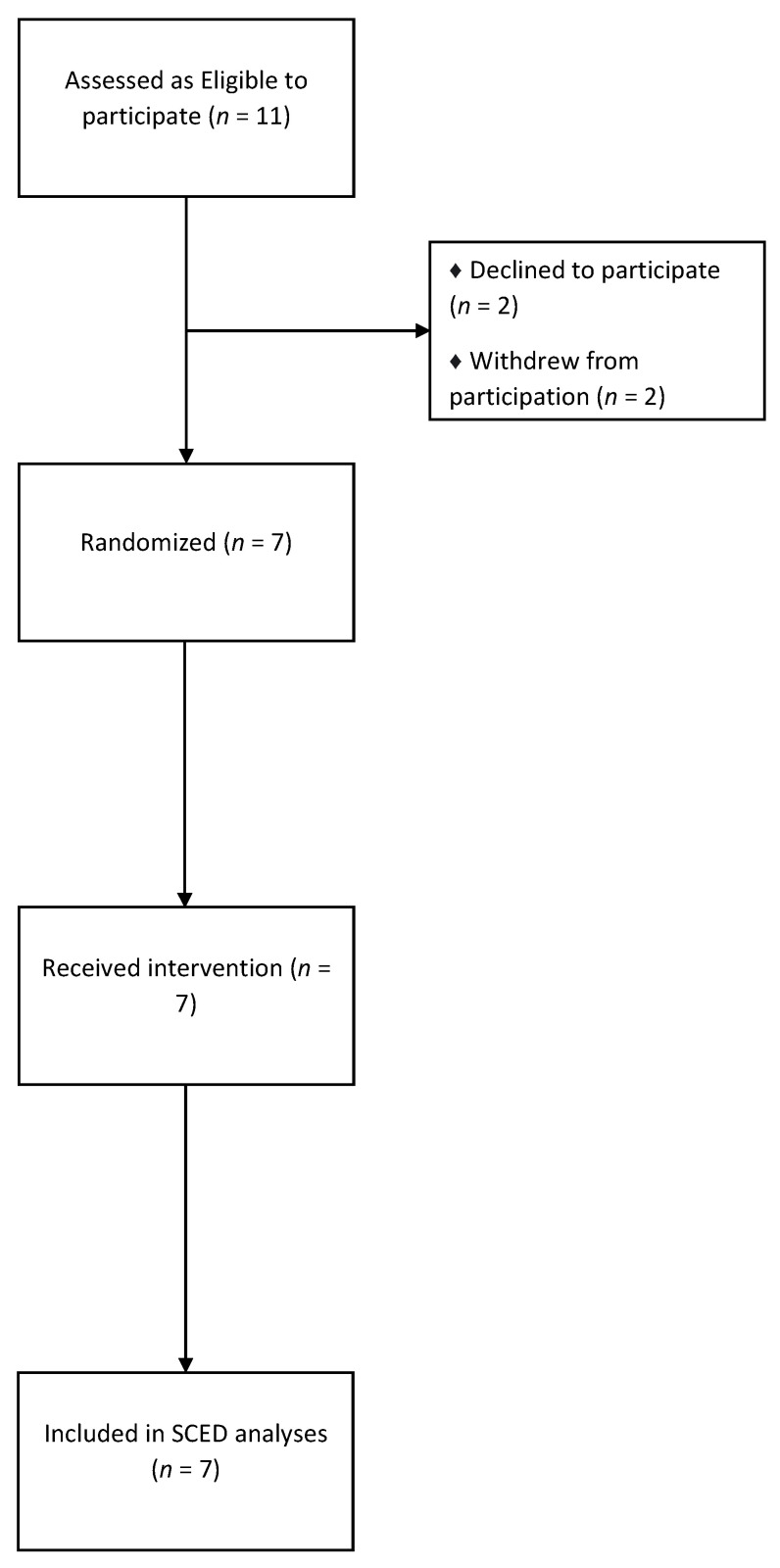
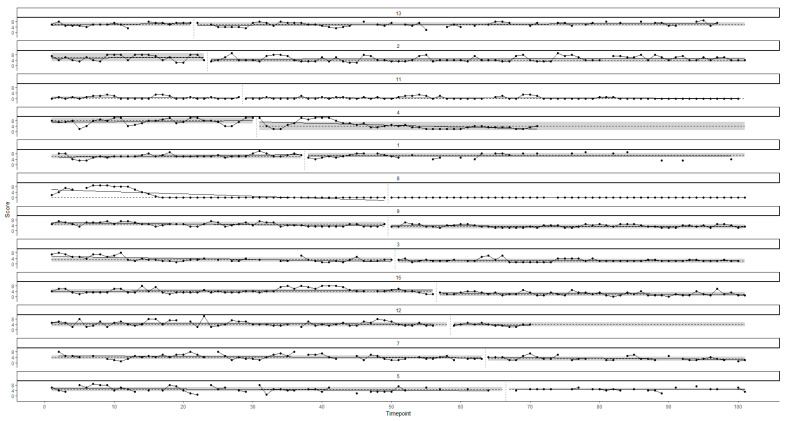
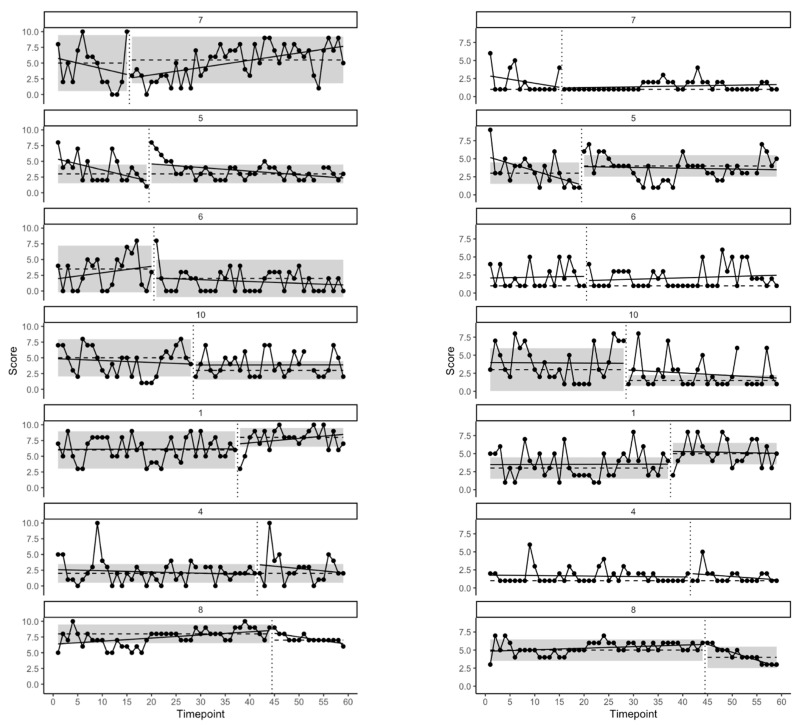
- Study 1 (n = 7): A single-session ACT intervention was judged insufficient overall; meta-analysis found little generalizable effect on daily stress, with P(A < B) = 0.511, p = 0.8287, and generalized OR = 1.05.
- In Study 1, 1/7 (14%) participants showed statistically significant reduced stress after intervention, and 1/7 (14%) showed statistically significant increased stress; for daily experiential avoidance, meta-analysis also suggested little effect (P(A < B) = 0.471, p = 0.6665, generalized OR = 0.89).
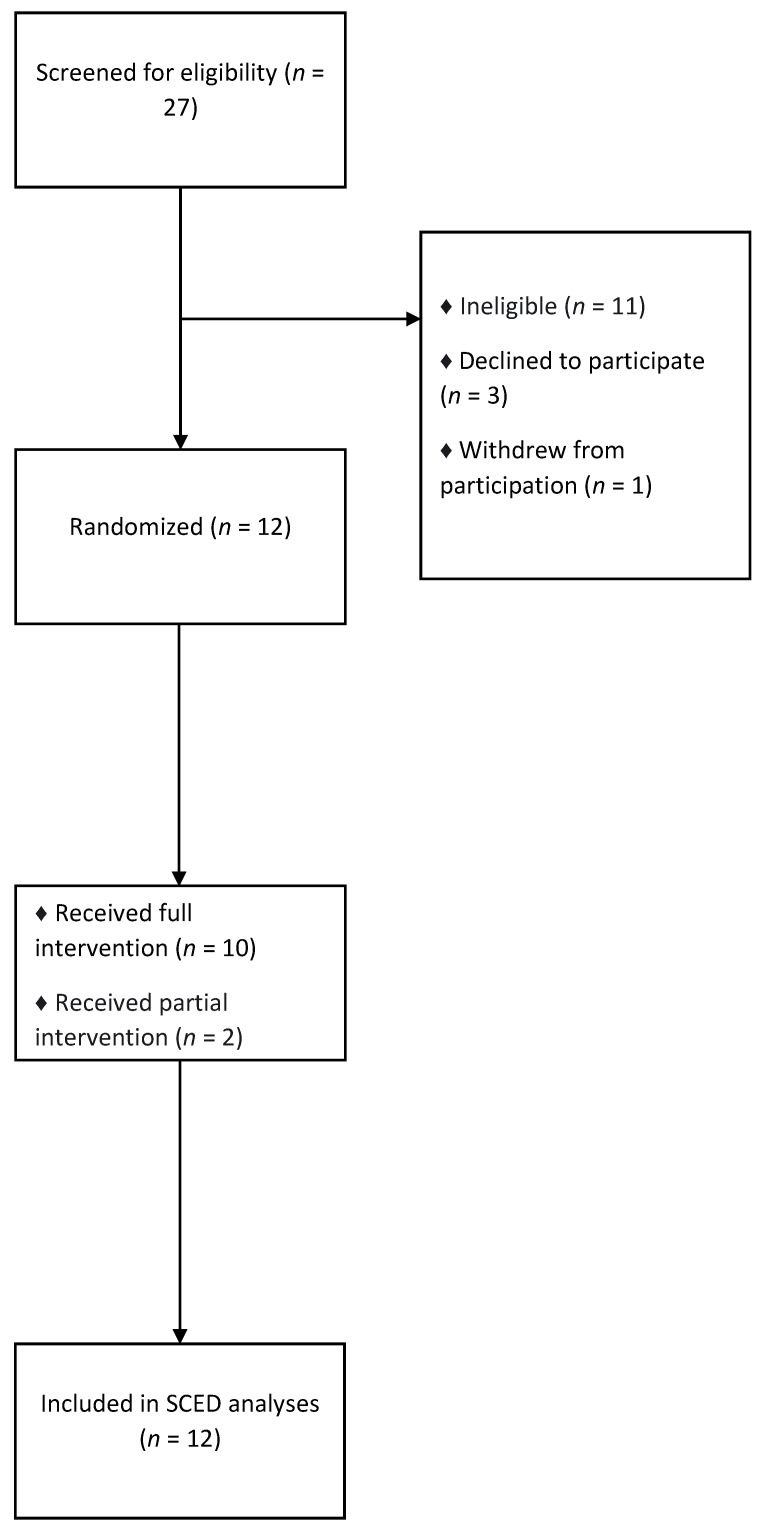
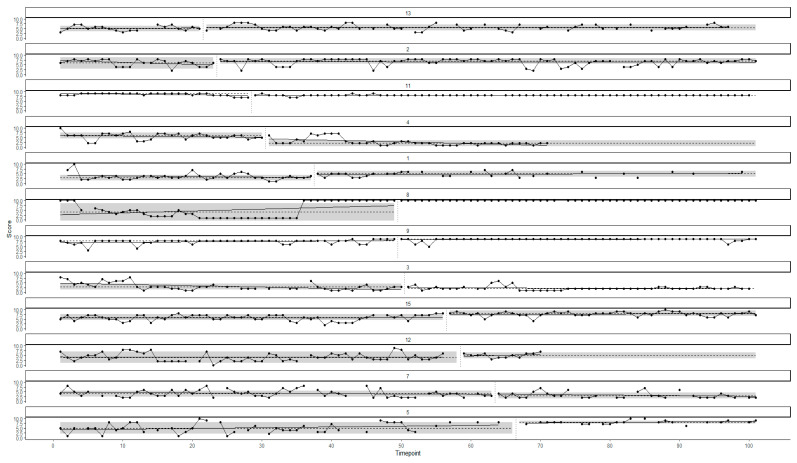
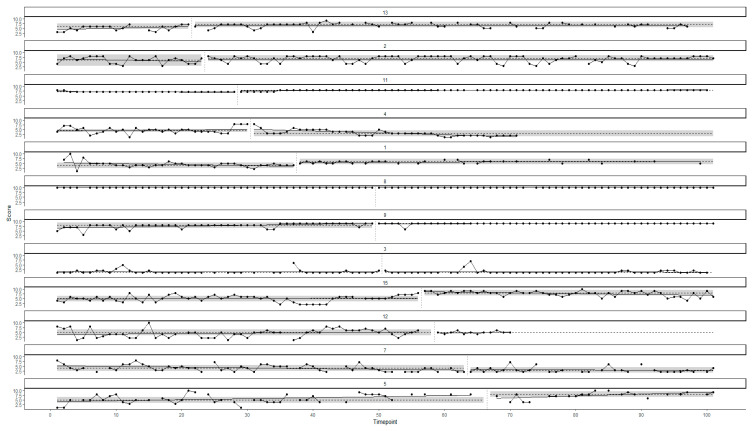
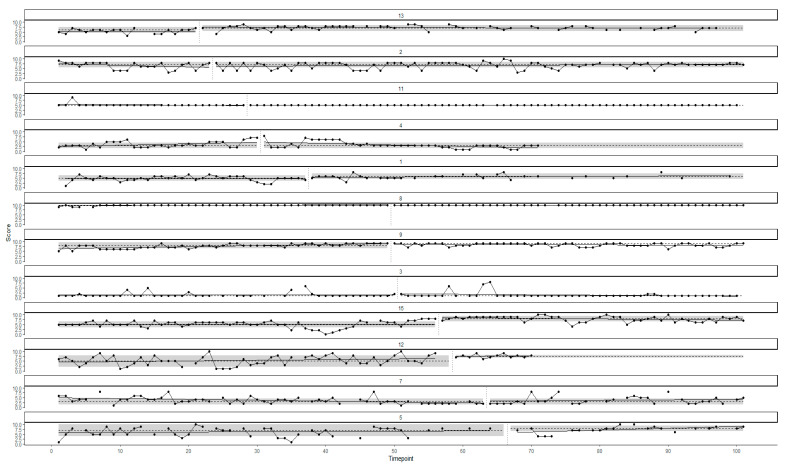
- Study 2 (n = 12): Daily-data meta-analysis indicated reduced stress as a function of the intervention, with N = 7, median median-difference = −1, p < 0.0001, and generalized OR = 0.55.
- In Study 2, 6/12 (50%) participants showed reduced stress, 7/12 (58%) showed increased valued action, and 3/12 showed reliable improvement in DASS-21 stress; 1/12 had clinically significant stress improvement. No reliable or clinically significant changes were found for CompACT-measured psychological flexibility.
## Methods
- The paper used two single-case experimental designs (SCEDs) with randomized multiple baseline timing and daily pre/post intervention assessment.
- Study 1 recruited 7 final participants (from 11 invited) with IBD and moderate-to-extreme stress; they received one face-to-face ACT session lasting about 2 hours and completed daily SMS measures for 59 days.
- Study 2 recruited 12 final participants (from 16 identified) with IBD and mild-to-extreme stress; they received two telehealth ACT sessions via Zoom (about 4 total hours), plus an ACT workbook and a brief phone follow-up, with daily SMS measures for 101 days.
- Analyses included visual inspection, permutation-based SCED statistics, effect sizes, and meta-analysis using R packages SCED and metafor; clinically significant change was assessed with the Leeds Reliable Change Indicator.
## Limitations
- The paper states there was no comparator intervention, so improvement cannot be clearly attributed to ACT’s active ingredients.
- The paper states existing psychological diagnoses and receipt of psychological support were not screened for, so concurrent therapies or undisclosed mental health conditions may have influenced outcomes.
- The paper states findings are limited by missing data, the COVID-19 context in Study 2, and measure issues for experiential avoidance/psychological flexibility.
- Evident from the text: the samples were small and relatively homogeneous (Study 1 mostly female; Study 2 mostly female), and many outcomes relied on single-item daily measures, which the authors note may limit generalizability and comparability.
Model-written summary. Check it against the paper before relying on it.
Integrity signals
Registry
Cites
Statistics
Figures
Verification
Claims the paper makes
43 Valid · 0 Not valid · 26 Not checked · 110 Own results and interpretations
The cited sources support only part of this claim — read each source’s verdict below.
In the paper
“Given such convincing evidence of a psychological component and impact in and of IBD, psychological support is now considered an integral component of modern IBD management [16,17].”
- Also stated in: § Abstract Psychological intervention targeting distress is now considered an integral component of inflammatory bowel disease (IBD) management. However, significant barriers to access exist which necessitate the development of effective, economic, and accessible brief and remote interventions. Acceptance and commitment therapy (ACT) is a therapy with demonstrated acceptability and a growing evidence base for the treatment of distress in IBD populations. The present paper trialled two brief ACT interventions via randomized multiple baseline designs. Study 1 trialled a single-session ACT intervention (delivered face-to-face and lasting approximately two hours) targeting stress and experiential avoidance, respectively. Participants were seven people with an IBD diagnosis who presented with moderate to extremely severe stress (five females, two males; M age = 39.57, SD = 5.74). The findings of study 1 indicate that a single-session ACT intervention represented an insufficient dosage to reduce stress and experiential avoidance. Study 2 investigated a brief telehealth ACT intervention (delivered via a video conferencing platform and lasting approximately four hours) targeting stress and increased psychological flexibility. Participants (N = 12 people with an IBD diagnosis and mild to extremely severe stress) completed baselines lasting from 21 to 66 days before receiving a two-session ACT telehealth intervention supplemented by a workbook and phone consultation. Approximately half of participants experienced reduced stress, increased engagement in valued action, and increased functioning. Despite shortcomings such as missing data and the context of COVID-19, the present findings suggest that brief ACT interventions in this population may be effective and economic, though further research and replications are necessary. · plain
“Psychological intervention targeting distress is now considered an integral component of inflammatory bowel disease (IBD) management.”
§ Brief and Telehealth Acceptance and Commitment Therapy (ACT) Interventions for Stress in Inflammatory Bowel Disease (IBD): A Series of Single Case Experimental Design (SCED) Studies > 1. Introduction
What the sources say
- Not checked — no full text of the sourcecites [16] Williet N. Sandborn W.J. Peyrin-Biroulet L. Patient-reported outcomes as primary end points in clinical trials of inflammatory bowel disease Clin. Gastroenterol. Hepatol. 2014 12 1246 1256.e6 10.1016/j.cgh.2014.02.016 24534550 source
- Partly supportedcites [17] Gracie D.J. Guthrie E.A. Hamlin P.J. Ford A.C. Bi-directionality of Brain-Gut Interactions in Patients With Inflammatory Bowel Disease Gastroenterology 2018 154 1635 1646.e3 10.1053/j.gastro.2018.01.027 29366841 sourceExperimental — accuracy not yet measured
The Discussion (p. 19) calls for an integrated biopsychosocial model of IBD care, supporting attention to psychological wellbeing in management. But it presents psychological interventions as a potential addition to traditional care, not as an established integral component of current management; the Discussion (p. 23) also calls for further trials. (LLM, conf=0.87)
plain- Asserted: passes — The authors put it forward as true.
- Checkable: passes — It can be checked against evidence.
- Load-bearing: passes — The paper’s conclusions depend on it.
- Based: passes — The paper gives a reason why it holds.
- Also stated in: § Abstract Psychological intervention targeting distress is now considered an integral component of inflammatory bowel disease (IBD) management. However, significant barriers to access exist which necessitate the development of effective, economic, and accessible brief and remote interventions. Acceptance and commitment therapy (ACT) is a therapy with demonstrated acceptability and a growing evidence base for the treatment of distress in IBD populations. The present paper trialled two brief ACT interventions via randomized multiple baseline designs. Study 1 trialled a single-session ACT intervention (delivered face-to-face and lasting approximately two hours) targeting stress and experiential avoidance, respectively. Participants were seven people with an IBD diagnosis who presented with moderate to extremely severe stress (five females, two males; M age = 39.57, SD = 5.74). The findings of study 1 indicate that a single-session ACT intervention represented an insufficient dosage to reduce stress and experiential avoidance. Study 2 investigated a brief telehealth ACT intervention (delivered via a video conferencing platform and lasting approximately four hours) targeting stress and increased psychological flexibility. Participants (N = 12 people with an IBD diagnosis and mild to extremely severe stress) completed baselines lasting from 21 to 66 days before receiving a two-session ACT telehealth intervention supplemented by a workbook and phone consultation. Approximately half of participants experienced reduced stress, increased engagement in valued action, and increased functioning. Despite shortcomings such as missing data and the context of COVID-19, the present findings suggest that brief ACT interventions in this population may be effective and economic, though further research and replications are necessary. · plain
The cited sources support only part of this claim — read each source’s verdict below.
In the paper
“ACT interventions, particularly brief ACT interventions, appear to be acceptable to people with IBD and other chronic health conditions [34,35,36].”
§ Brief and Telehealth Acceptance and Commitment Therapy (ACT) Interventions for Stress in Inflammatory Bowel Disease (IBD): A Series of Single Case Experimental Design (SCED) Studies > 1. Introduction
What the sources say
- Not checked — no full text of the sourcecites [34] Hou J.K. Vanga R.R. Thakur E. Gonzalez I. Willis D. Dindo L. One-Day Behavioral Intervention for Patients With Inflammatory Bowel Disease and Co-Occurring Psychological Distress Clin. Gastroenterol. Hepatol. 2017 15 1633 1634 10.1016/j.cgh.2017.05.022 28532699 source
- Partly supportedcites [35] Dindo L. One-day acceptance and commitment training workshops in medical populations Curr. Opin. Psychol. 2015 2 38 42 10.1016/j.copsyc.2015.01.018 25793217 PMC4360910 sourceExperimental — accuracy not yet measured
The Brief ACT Workshops sections on migraine and vascular disease report that patients viewed one-day workshops favorably; most vascular-disease participants described their workshop as highly valuable. This supports apparent acceptability for some chronic health conditions, but the paper does not establish acceptability among people with IBD. (LLM, conf=0.85)
- Not checked — no full text of the sourcecites [36] Dober M. Mikocka-Walus A. Evans S. Beswick L. Emerson C. Olive L. Perspectives on an Acceptance and Commitment Therapy (ACT) based program for patients with inflammatory bowel disease and comorbid anxiety and/or depressive symptoms Psychother. Res. 2021 31 668 681 10.1080/10503307.2020.1813915 32892715 source
hedged- Asserted: passes — The authors put it forward as true.
- Checkable: passes — It can be checked against evidence.
- Load-bearing: passes — The paper’s conclusions depend on it.
- Based: passes — The paper gives a reason why it holds.
The cited sources support only part of this claim — read each source’s verdict below.
In the paper
“Growing evidence suggests that stress—in particular—is associated with disease activity and severity while conflicting evidence suggests that stress may also be involved in the initial development of IBD [9,15].”
§ Brief and Telehealth Acceptance and Commitment Therapy (ACT) Interventions for Stress in Inflammatory Bowel Disease (IBD): A Series of Single Case Experimental Design (SCED) Studies > 1. Introduction
What the sources say
- Not checked — no full text of the sourcecites [9] Bitton A. Sewitch M.J. Peppercorn M.A. deB Edwardes M.D. Shah S. Ransil B. Locke S.E. Psychosocial determinants of relapse in ulcerative colitis: A longitudinal study Am. J. Gastroenterol. 2003 98 2203 2208 10.1111/j.1572-0241.2003.07717.x 14572569 source
- Partly supportedcites [15] Shiga H. Miyazawa T. Kinouchi Y. Takahashi S. Tominaga G. Takahashi H. Takagi S. Obana N. Kikuchi T. Oomori S. Life-event stress induced by the Great East Japan Earthquake was associated with relapse in ulcerative colitis but not Crohn’s disease: A retrospective cohort study BMJ Open 2013 3 e002294 10.1136/bmjopen-2012-002294 PMC3586105 23396562 sourceExperimental — accuracy not yet measured
The Discussion reports that earthquake-related psychological stress was associated with relapse in ulcerative colitis, but not Crohn’s disease. This supports an association with disease activity in one form of IBD, not the broader claim across IBD or a separate association with disease severity. (LLM, conf=0.88)
hedgedstates an association- Asserted: passes — The authors put it forward as true.
- Checkable: passes — It can be checked against evidence.
- Load-bearing: passes — The paper’s conclusions depend on it.
- Based: passes — The paper gives a reason why it holds.
The cited sources support only part of this claim — read each source’s verdict below.
In the paper
“Many studies are observed to be non-randomized, devoid of inclusion and exclusion criteria, neglect to report salient participant data (e.g., IBD type), and neglect to report sufficient intervention program detail [18,19,20,21].”
§ Brief and Telehealth Acceptance and Commitment Therapy (ACT) Interventions for Stress in Inflammatory Bowel Disease (IBD): A Series of Single Case Experimental Design (SCED) Studies > 1. Introduction
What the sources say
- Partly supportedcites [18] Gracie D.J. Irvine A.J. Sood R. Mikocka-Walus A. Hamlin P.J. Ford A.C. Effect of psychological therapy on disease activity, psychological comorbidity, and quality of life in inflammatory bowel disease: A systematic review and meta-analysis Lancet Gastroenterol. Hepatol. 2017 2 189 199 10.1016/S2468-1253(16)30206-0 28404134 sourceExperimental — accuracy not yet measured
The Discussion (p. 20) says all included trials were at high risk of bias, chiefly because of inadequate blinding. It also notes that some studies considered for the review were excluded for lack of randomisation or separately reported patient data (p. 19). The paper does not establish that many studies omitted inclusion and exclusion criteria, IBD type, or sufficient intervention details. (LLM, conf=0.87)
- Not checked — no full text of the sourcecites [19] Knowles S.R. Monshat K. Castle D.J. The Efficacy and Methodological Challenges of Psychotherapy for Adults with Inflammatory Bowel Disease Inflamm. Bowel Dis. 2013 19 2704 2715 10.1097/MIB.0b013e318296ae5a 23846488 source
- Not checked — no full text of the sourcecites [20] Timmer A. Preiss J.C. Motschall E. Rücker G. Jantschek G. Moser G. Psychological interventions for treatment of inflammatory bowel disease Cochrane Database Syst. Rev. 2011 2 CD006913 10.1002/14651858.CD006913.pub2 21328288 source
- Not checked — no full text of the sourcecites [21] Von Wietersheim J. Kessler H. Psychotherapy with chronic inflammatory bowel disease patients: A Review Inflamm. Bowel Dis. 2006 12 1175 1184 10.1097/01.mib.0000236925.87502.e0 17119392 source
plain- Asserted: passes — The authors put it forward as true.
- Checkable: passes — It can be checked against evidence.
- Load-bearing: passes — The paper’s conclusions depend on it.
- Based: passes — The paper gives a reason why it holds.
- Partly supported
The cited sources support only part of this claim — read each source’s verdict below.
In the paper
“Growing evidence has supported the effectiveness of ACT for myriad psychological and health conditions including anxiety, depression, stress, chronic pain, irritable bowel syndrome (IBS) and smoking cessation [25,26,27,28,29,30].”
§ Brief and Telehealth Acceptance and Commitment Therapy (ACT) Interventions for Stress in Inflammatory Bowel Disease (IBD): A Series of Single Case Experimental Design (SCED) Studies > 1. Introduction
What the sources say
- Partly supportedcites [25] A-Tjak J.G.L. Davis M.L. Morina N. Powers M.B. Smits J.A.J. Emmelkamp P.M.G. A Meta-Analysis of the Efficacy of Acceptance and Commitment Therapy for Clinically Relevant Mental and Physical Health Problems Psychother. Psychosom. 2015 84 30 36 10.1159/000365764 25547522 sourceExperimental — accuracy not yet measured
The Discussion reports that the findings support ACT for anxiety disorders, depression, addiction, and somatic health problems. The Description of Studies identifies smoking-cessation trials among the included studies, but the paper reports outcomes for broad groups rather than smoking cessation separately. The passages do not establish effectiveness specifically for stress, chronic pain, or IBS. Page numbers are unavailable in our copy. (LLM, conf=0.84)
- Not checked — no full text of the sourcecites [26] Hann K.E.J. McCracken L.M. A systematic review of randomized controlled trials of Acceptance and Commitment Therapy for adults with chronic pain: Outcome domains, design quality, and efficacy J. Contextual Behav. Sci. 2014 3 217 227 10.1016/j.jcbs.2014.10.001 source
- Partly supportedcites [27] Serfaty S. Gale G. Beadman M. Froeliger B. Kamboj S.K. Mindfulness, Acceptance and Defusion Strategies in Smokers: A Systematic Review of Laboratory Studies Mindfulness 2018 9 44 58 10.1007/s12671-017-0767-1 29387264 PMC5770486 sourceExperimental — accuracy not yet measured
The Introduction (page unavailable) says evidence for the efficacy of comprehensive psychological-flexibility interventions for smoking cessation is accumulating and identifies ACT as one such approach. This supports the smoking-cessation part of the multi-citation sentence, but the review does not establish effectiveness of ACT specifically or address the other listed conditions. (LLM, conf=0.86)
- Partly supportedcites [28] Swain J. Hancock K. Hainsworth C. Bowman J. Acceptance and commitment therapy in the treatment of anxiety: A systematic review Clin. Psychol. Rev. 2013 33 965 978 10.1016/j.cpr.2013.07.002 23999201 sourceExperimental — accuracy not yet measured
The Discussion (p. 11) and Conclusion (p. 12) report evidence for ACT in treating anxiety, while emphasizing that the findings are preliminary and the studies have methodological limitations. The paper mentions depression and stress in relation to anxiety studies or earlier reviews, but does not establish effectiveness for those conditions separately; it does not substantiate the listed claims for chronic pain, IBS, or smoking cessation. (LLM, conf=0.88)
- Partly supportedcites [29] Graham C.D. Gouick J. Krahé C. Gillanders D. A systematic review of the use of Acceptance and Commitment Therapy (ACT) in chronic disease and long-term conditions Clin. Psychol. Rev. 2016 46 46 58 10.1016/j.cpr.2016.04.009 27176925 sourceExperimental — accuracy not yet measured
The “Efficacy of ACT in other contexts” section reports growing ACT research and small-to-medium effects across mental-health conditions and chronic pain; the “Distress” section also reports improvements in stress and post-stroke anxiety. The review cautions that study quality is often low and does not establish effectiveness for every condition listed. Searches for irritable bowel syndrome and smoking cessation found no supporting passage in our copy (page numbers unavailable). (LLM, conf=0.88)
- Supportedcites [30] Ferreira N.B. Gillanders D. Morris P.G. Eugenicos M. Pilot study of acceptance and commitment therapy for irritable bowel syndrome: A preliminary analysis of treatment outcomes and processes of change Clin. Psychol. 2018 22 241 250 10.1111/cp.12123 source
This source supports the IBS portion of the multi-citation sentence. The Discussion reports significant improvements in IBS outcomes after an ACT intervention and says the findings add to evidence for ACT-informed interventions for IBS. (LLM, conf=0.92)
plainstates a cause- Asserted: passes — The authors put it forward as true.
- Checkable: passes — It can be checked against evidence.
- Load-bearing: passes — The paper’s conclusions depend on it.
- Based: passes — The paper gives a reason why it holds.
- Partly supported
84 more claims · 12 with their cited sources checked
Create a free account to see all 179 claims and to verify the 6 references still open.
- Probably not a substantial claim. 53
- It may state two separate claims as one. 53
Claims other papers make about this one
Each is checked against this paper’s own text: does it say what the citing paper says it does?
The cited source says what the claim attributes to it.
In the citing paper
“Recent findings have highlighted that ACT-based interventions seem to be efficacious in reducing symptoms of stress (Lavelle et al., 2022), depression and anxiety (Romano et al., 2023) as well as feasible and well-accepted by adults living with IBD (Dober et al., 2021; Lavelle et al., 2022; Romano et al., 2023).”
From Randomized controlled trial of an Acceptance and Commitment Therapy and compassion-based group intervention for persons with inflammatory bowel disease: the LIFEwithIBD intervention (2024) · cites this paper as Lavelle et al., 2022
The check wasn’t confident either way, so it gives no verdict — never disputed.
In the citing paper
“Online versus in-person delivery of psychotherapy have produced inconclusive results (Lavelle et al., 2022; Mikocka-Walus et al., 2017)”
From Moving Towards Acceptance and Values: A Qualitative Study of ACTforIBD Compared to IBD Psychoeducation (2024) · cites this paper as Lavelle et al., 2022
Experimental — accuracy not yet measuredIn the citing paper
“While less robust, emerging evidence also suggests that ACT protocols are acceptable for patients with IBD and may be helpful for managing psychological distress (42,43,48,49).”
From Acceptance and commitment therapy for the treatment of irritable bowel syndrome and inflammatory bowel disease: a narrative review (2024) · cites this paper as [48]
In the citing paper
“One study examined a two-hour face-to-face ACT intervention targeting stress and experiential avoidance. They found that most participants did not experience reductions in these constructs and concluded that the ACT intervention was too brief to impact study outcomes (48).”
From Acceptance and commitment therapy for the treatment of irritable bowel syndrome and inflammatory bowel disease: a narrative review (2024) · cites this paper as [48]
Citations
Cites
Conducting Meta-Analyses in R with the metafor Package
Viechtbauer, W. (2010) · Journal of Statistical Software · doi:10.18637/jss.v036.i03 · Cited by 20,464
Lovibond, P. F., & Lovibond, S. H. (1995) · Behaviour Research and Therapy · doi:10.1016/0005-7967(94)00075-u · Cited by 14,523 · cited 3×
“Note: Severity bands are derived from the DASS-21 manual and appear to the left of the participants’ scores [62].”
MethodInfluentialBundesgesundheitsblatt - Gesundheitsforschung - Gesundheitsschutz
(2013) · Bundesgesundheitsblatt - Gesundheitsforschung - Gesundheitsschutz · doi:10.1007/103.1437-1588 · Cited by 11,796
Jacobson, N. S., & Truax, P. (1991) · Journal of Consulting and Clinical Psychology · doi:10.1037/0022-006x.59.1.12 · Cited by 7,770 · cited 1×
“However, it could be argued that a change of this magnitude such that participants’ scores fall into the range of healthy peers may be unreasonable given the persistence and impact of lifelong illness in the form of IBD [80].”
BackgroundAcceptance and commitment therapy: model, processes and outcomes
Hayes, S. C., Luoma, J. B., Bond, F. W., Masuda, A., & Lillis, J. (2006) · Behaviour Research and Therapy · doi:10.1016/j.brat.2005.06.006 · Cited by 6,587 · cited 1×
“ACT aims not to change or reduce distressing and unwanted internal experiences, but to shape ways of limiting the influence of those thoughts and feelings on day-to-day living and goal achievement by increasing psychological flexibility [23].”
BackgroundNonparametric permutation tests for functional neuroimaging: A primer with examples
Nichols, T. E., & Holmes, A. P. (2002) · Human Brain Mapping · doi:10.1002/hbm.1058 · Cited by 6,256
Henry, J. D., & Crawford, J. R. (2005) · British Journal of Clinical Psychology · doi:10.1348/014466505x29657 · Cited by 5,801
Bond, F. W., Hayes, S. C., Baer, R. A., Carpenter, K. M., Guenole, N., Orcutt, H. K., Waltz, T., & Zettle, R. D. (2011) · Behavior Therapy · doi:10.1016/j.beth.2011.03.007 · Cited by 3,950 · cited 12×
“Participants who provided informed consent completed the DASS-21 and AAQ-II on week 0 and post-study.”
BackgroundMethodResultInfluentialMolenaar, P. C. M. (2004) · Measurement: Interdisciplinary Research & Perspective · doi:10.1207/s15366359mea0204_1 · Cited by 1,943
Psychometric properties of the Depression Anxiety Stress Scales (DASS) in clinical samples
Brown, T. A., Chorpita, B. F., Korotitsch, W., & Barlow, D. H. (1997) · Behaviour Research and Therapy · doi:10.1016/s0005-7967(96)00068-x · Cited by 1,860
Research works printed but not linked: 1
- Assman L. Pasi H.J. Mottus R. Gillanders D. The brief acceptance measure: Development and initial validation of an ultra-brief measure of psychological flexibility, suitable for daily use Proceedings of the The Chester Contextual Behavioural Science Research Colloquium Chester, UK 28–29 August 2018
Cited by
AGA Clinical Practice Update on Telemedicine in Gastroenterology: Commentary
Gellad, Z. F., Diamond, S. J., Crockett, S. D., & Cross, R. K. (2023) · Gastroenterology · doi:10.1053/j.gastro.2022.12.043 · Cited by 22
Ferreira, C., Pereira, J., Skvarc, D., Oliveira, S., Galhardo, A., Ferreira, N. B., Lucena-Santos, P., Carvalho, S. A., Matos-Pina, I., Rocha, B. S., et al. (2024) · Frontiers in Psychology · doi:10.3389/fpsyg.2024.1367913 · Cited by 12
Gut Feelings: The Psychological Impact of Inflammatory Bowel Disease
Caballero-Mateos, A. M. (2023) · Journal of Clinical Medicine · doi:10.3390/jcm12123867 · Cited by 11
“Research on acceptance and commitment therapy (ACT) interventions for stress in IBD populations has shown promise [10].”
BackgroundAllostatic load increases the incidence and risk of adverse prognosis in inflammatory bowel disease
Zhao, J., Xue, E., Zhou, S., Zhang, M., Jiang, F., Wu, W., Liu, Z., & Li, X. (2024) · Alimentary Pharmacology & Therapeutics · doi:10.1111/apt.18217 · Cited by 13
“32 Patients with IBD have higher levels of stress and psychological distress than the general population, 33 and AL provides a new way to understand the impact of long-term toxic stress on clinical outcomes.”
Marchese, S. H., Naftaly, J. P., & Pandolfino, J. (2024) · Translational Gastroenterology and Hepatology · doi:10.21037/tgh-24-10 · Cited by 8
Lin, K., Cavadino, A., Ow, M., Douglas, M., & Serlachius, A. S. (2025) · Frontiers in Digital Health · doi:10.3389/fdgth.2025.1587765 · Cited by 8
Musa, N., Pang, N. T. P., Kamu, A., Ho, C. M., Waters, C., Berrett, J., Moghaddam, N., & Wider, W. (2022) · International Journal of Environmental Research and Public Health · doi:10.3390/ijerph19159624 · Cited by 6
Wilkin, K., Evans, S., Van Niekerk, L., Romano, D., Fuller-Tyszkiewicz, M., Knowles, S., Chesterman, S., Raven, L., & Mikocka-Walus, A. (2024) · Journal of Clinical Psychology in Medical Settings · doi:10.1007/s10880-023-09999-5 · Cited by 5
“Online versus in-person delivery of psychotherapy have produced inconclusive results (Lavelle et al., 2022; Mikocka-Walus et al., 2017), whereas the combination of self-and therapist-led online psychotherapy programs appears to be most beneficial to this population (Dober et al., 2021;…”
Result«Digesting Crohn’s Disease»: The Journey of Young Adults since Diagnosis
Touma, N., Zanni, L., Blanc, P., Savoye, G., & Baeza‐Velasco, C. (2023) · Journal of Clinical Medicine · doi:10.3390/jcm12227128 · Cited by 6
Stapleton, A., Stynes, G., Cassidy, S., & McHugh, L. (2023) · Journal of Contextual Behavioral Science · doi:10.1016/j.jcbs.2023.06.011 · Cited by 6
Self-citationLuck, S. A. M., Moghaddam, N. G., & Dawson, D. L. (2024) · Behavior Therapy · doi:10.1016/j.beth.2024.01.008 · Cited by 8
Teugels, A., van den Eijnden, I., Keersmaekers, B., Verstockt, B., Sabino, J., Vermeire, S., Guadagnoli, L. A., Diest, I. V., & Ferrante, M. (2024) · Journal of Crohn s and Colitis · doi:10.1093/ecco-jcc/jjae025 · Cited by 5
Chen, Y.-T., Lehman, M., Van Denend, T., Kish, J., Wu, Y., Preissner, K., Plow, M., & Packer, T. L. (2025) · Journal of Medical Internet Research · doi:10.2196/58543 · Cited by 3
Gorbounova, I., van Diggelen, T. R., Slack, K. E., Murphy, L. K., & Palermo, T. M. (2022) · Crohn s & Colitis 360 · doi:10.1093/crocol/otac040 · Cited by 4
Jäghult, S., Adamina, M., Farrell, D., Bager, P., Czuber‐Dochan, W., Kemp, K., Boontje, N., D’Amico, F., Dewitte, G., Haj, O., et al. (2026) · Journal of Crohn s and Colitis · doi:10.1093/ecco-jcc/jjag054 · Cited by 3
Stapleton, A., Moore, B., Stynes, G., Richardson, N., Russell, T., & McHugh, L. (2026) · Advancements in Agricultural Development · doi:10.37433/aad.v7i2.657 · Cited by 4
Self-citationRehman, S., Ghazali, S. R., & Elklit, A. (2026) · Journal of Contemporary Psychotherapy · doi:10.1007/s10879-026-09731-y · Cited by 2
Seaman, A., & Ferreira, N. B. (2024) · Gastrointestinal Disorders · doi:10.3390/gidisord6010014 · Cited by 1
Goli, F., Derakhshanjan, A., Jahanzad, S., Haghayegh, S. A., Afshar, H., & Adibi, P. (2025) · Crohn s & Colitis 360 · doi:10.1093/crocol/otaf018 · Cited by 2
“However, Lavelle and his colleagues 18 mentioned that ACT can have adverse effects on some participants and took an opposite view.”
A Heavy Feeling in the Stomach: Neural Correlates of Anxiety in Crohn's Disease
Valenta, S. T., Ventura, S., Benuzzi, F., Rizzello, F., Gionchetti, P., Ronchi, D. D., Atti, A. R., Agostini, A., & Filippini, N. (2025) · Neurogastroenterology & Motility · doi:10.1111/nmo.70029 · Cited by 1
“Specifically, studies have highlighted the benefits of cognitive behavioral therapy (CBT) [71, 72], mindfulness-based cognitive therapy (MBCT) [73], acceptance and commitment therapy (ACT) [74, 75], and psychological or psychosocial group-based intervention programs [76].”
Chappell, K. D., Chinbaatar, O., Goodman, K. J., & Kroeker, K. I. (2025) · Journal of Digestive Diseases · doi:10.1111/1751-2980.13342
Gallego, A., Navarrete, J., Gorinelli, S., Brandolin, F., Lappalainen, P., Moghaddam, N. G., Dawson, D. L., Lappalainen, R. I., & Luciano, J. V. (2025) · Journal of Contextual Behavioral Science · doi:10.1016/j.jcbs.2025.100952 · Cited by 1
Nicholenas, A., Lavelle, J., Mellotte, G. S., Harpur, L. L., Mulcahy, H. E., & McHugh, L. (2025) · Journal of Contextual Behavioral Science · doi:10.1016/j.jcbs.2025.100951
Self-citation
Metadata
- Authors
- Lavelle, J., Storan, D., Eswara Murthy, V., De Dominicis, N., Mulcahy, H. E., & McHugh, L.
- Affiliations
- University College Dublin (IE)
- School of Psychology, University College Dublin, D04 V1W8 Dublin, Ireland
- Department of Gastroenterology, Saint Vincent’s University Hospital, D04 T6F4 Dublin, Ireland
- Corresponding author
- Lavelle, Joseph
- Venue
- Journal of Clinical Medicine
- Publisher
- MDPI AG
- Published
- 2022-05-13
- Volume
- 11
- Issue
- 10
- Pages
- 2757
- ISSN
- 2077-0383 (ISSN-L)
- PMC
- PMC9145285
- OpenAlex
- W4280612503
- Semantic Scholar
- 78d71ed813a5e977dc69ba7b5abe1a1f5512fee3
- Cited by
- 23
- References
- 107
- Citations by year
- 2026: 3 · 2025: 7 · 2024: 7 · 2023: 4 · 2022: 2
- FWCI
- 4.56
- Type
- journal article
- Language
- en
- Open access
- gold
- doi.org
- Licence
- Locations
- Journal of Clinical Medicine (publishedVersion, cc-by)
- PubMed Central (publishedVersion, cc-by)
- PubMed (publishedVersion)
- DOAJ (DOAJ: Directory of Open Access Journals) (submittedVersion, cc-by-sa)
- Funders
- Ferring Pharmaceuticals
- Boston Scientific
- Topics
- Social Sciences › Psychology › Clinical Psychology › Mindfulness and Compassion Interventions
- Social Sciences › Psychology › Applied Psychology › Digital Mental Health Interventions
- Health Sciences › Medicine › Public Health, Environmental and Occupational Health › Telemedicine and Telehealth Implementation
- Keywords
- acceptance and commitment therapy, inflammatory bowel disease, stress, experiential avoidance, psychological flexibility, telemedicine, brief psychological intervention, single-session intervention, valued action, COVID-19 pandemic
About these checks
Registry, retraction, Cites and statistics results are computed, not judged, with one exception: a printed reference that no index lists is read once by a model before it counts as a citation error. Claims are extracted by a model and kept only when their quote appears verbatim in the text; each cited source is then checked, with a model’s help, for whether it says what the claim relies on. Those verdicts can be wrong — read the claim’s quote and the cited source before relying on one.
The claim verdicts this report counts are experimental: their accuracy is not yet measured.
A language model drew the claims from the paper on 2026-10-11, under version 3 of the claim definition (model deepseek-v4.1-flash, prompt extract-v3).
A second model labelled each claim on 2026-10-11 (model jev-1.13-20260917, definition revision gold-guideline-v0.2).
Cited sources are checked with a language model’s help (gpt-6-sol).
Statistics and arithmetic are recomputed, not judged.
Confidence bands are shown only for fields calibrated on our annotated test set. None is calibrated yet, so no band is shown.
What counts as a claim ›How we measure confidence ›How we check this ›
Are you an author, or do you see a problem with this page? Request a review
Data sources
Bibliographic data: Semantic Scholar, OpenAlex, Crossref.
Contains information from the Semantic Scholar Academic Graph Datasets, made available under the ODC Attribution License (ODC-BY 1.0).
Semantic Scholar’s data is described in: Kinney, R., et al. (2023). The Semantic Scholar Open Data Platform. arXiv:2301.10140.
