

A Multisite Non-Inferiority Randomized Controlled Trial of the Efficacy of Cognitive-Behavior Therapy for Generalized Anxiety Disorder Delivered by Videoconference
Open accessThe DOI matches its Crossref record; 91 of the 94 references it cites were found in a registry or an index; 31 of the 100 sources its claims cite were checked for support.
Abstract
Delivering psychotherapy by videoconference has been studied in a number of clinical trials, but no large controlled trial has involved generalized anxiety disorder (GAD). This multicenter randomized controlled non-inferiority trial was conducted to test if cognitive-behavior psychotherapy delivered by videoconference (VCP) is as effective as cognitive-behavior psychotherapy delivered face-to-face, using a strict margin of tolerance for non-inferiority. A total of 148 adults received a 15-session weekly manualized program. The treatment was based on the intolerance of uncertainty model of GAD. The impact of treatment was assessed using primary (GAD severity), secondary (worry, anxiety, and intolerance of uncertainty) and tertiary (general functioning) variables measured before and after treatment and at 6-month and 12-month follow-ups. Results showed that: (a) the treatment was effective; (b) VCP for GAD was statistically non-inferior to face-to-face psychotherapy on primary, secondary and tertiary measures at all assessment points; (c) change in intolerance of uncertainty significantly predicted change in the primary outcome measure over and above important clinical factors common to all psychotherapies (motivation, working alliance, perceived therapist competence, and client satisfaction). These findings support the use of VCP as a promising treatment option for adults with GAD. Clinical trial registry: ISRCTN#12662027. © 2022 by the authors.
Overview
CoChat Summary
## TL;DR
This multisite randomized non-inferiority trial found that 15 weekly sessions of CBT for GAD delivered by videoconference were not inferior to face-to-face CBT on primary, secondary, and tertiary outcomes. The paper also found that change in intolerance of uncertainty significantly predicted improvement in GAD severity beyond common therapy factors.
## Key findings
- In 148 adults with GAD, CBT delivered by videoconference was statistically non-inferior to face-to-face CBT on all measured outcomes at post-treatment, 6-month follow-up, and 12-month follow-up.
- On the primary ADIS-IV measure, mean scores improved by 44.47% in the VCP condition and 42.44% in the face-to-face condition; using the ADIS-IV cutoff of 4, 68% vs. 57% no longer met diagnostic criteria for GAD at post-treatment, 64% vs. 61% at 6 months, and 65% vs. 62% at 12 months.
- Repeated-measures analyses showed large time effects across outcomes, including ADIS-IV (partial eta-squared = 0.59 post), PSWQ (0.55), WAQ (0.54), IUS (0.50), BDI-II (0.40), WHO-QOL Psychological (0.31), and WHO-QOL Social relations (0.11).
- In hierarchical regression, change in intolerance of uncertainty was the only statistically significant predictor of residualized change in ADIS-IV scores; the final model was significant (F(7,113) = 7.33, p < 0.001, R² = 0.32, adjusted R² = 0.27), and adding intolerance-of-uncertainty change increased explained variance by ΔR² = 0.25.
## Methods
- Multisite randomized controlled non-inferiority trial comparing videoconference psychotherapy (VCP) with face-to-face psychotherapy for GAD; the study was conducted across five centers in Quebec, Canada.
- Sample: 148 adults, all of White ethnicity, aged 18 to 75, with primary GAD; recruitment ran from March 2014 to December 2016.
- Intervention: 15 weekly, 60-minute manual-based CBT sessions grounded in the intolerance of uncertainty model of GAD.
- Main analysis: intent-to-treat repeated-measures ANOVAs with non-inferiority testing using a prespecified margin of ε = 0.36 (about 10%), plus hierarchical regression predicting change in ADIS-IV severity from common therapy factors and change in intolerance of uncertainty.
## Limitations
- The paper states that the sample was limited to volunteers of White ethnicity who agreed to randomization, so results may not fully apply to other cultures or to people who would not choose VCP; it also notes participants were highly motivated for psychotherapy.
- The treatment protocol has evolved over time and now focuses more specifically on intolerance of uncertainty; the paper says some strategies used here, such as problem-solving, are “no longer germane” to the protocol.
- Evidence evident from the text: the trial used dedicated videoconference hardware and university-based clinic settings, so the findings may not generalize to current home-based or software-based teletherapy contexts.
Model-written summary. Check it against the paper before relying on it.
Integrity signals
Registry
Cites
Statistics
Figures
Verification
Claims the paper makes
18 Valid · 4 Not valid · 15 Not checked · 59 Own results and interpretations
The cited sources support only part of this claim — read each source’s verdict below.
In the paper
“Delivering psychotherapy by videoconference has been studied in a number of clinical trials, but no large controlled trial has involved generalized anxiety disorder (GAD).”
- Also stated in: § 1. Introduction · plain
“All reviews have highlighted the need for more randomized controlled trials for mental health disorders that have not yet been studied [26,29,38], such as GAD.”
§ A Multisite Non-Inferiority Randomized Controlled Trial of the Efficacy of Cognitive-Behavior Therapy for Generalized Anxiety Disorder Delivered by Videoconference > Abstract
What the sources say
- Not checked — no full text of the sourcecites [26] Batastini A.B. Paprzycki P. Jones A.C. MacLean N. Are videoconferenced mental and behavioral health services just as good as in-person? A meta-analysis of a fast-growing practice Clin. Psychol. Rev. 2020 83 101944 10.1016/j.cpr.2020.101944 33227560 source
- Not checked — no full text of the sourcecites [29] Lin T. Heckman T.G. Anderson T. The efficacy of synchronous teletherapy versus in-person therapy: A meta-analysis of randomized clinical trials Clin. Psychol. Sci. Pract. 2022 29 167 178 10.1037/cps0000056 source
- Partly supportedcites [38] Morland L.A. Mackintosh M.-A. Rosen C.S. Willis E. Resick P. Chard K. Frueh B.C. Telemedicine versus in-person delivery of cognitive processing therapy for women with posttraumatic stress disorder: A randomized noninferiority trial Depress. Anxiety 2015 32 811 820 10.1002/da.22397 26243685 sourceExperimental — accuracy not yet measured
The Introduction says videoconference psychotherapy has been studied across various patient populations, and the paper reports a controlled trial involving women with PTSD. Neither the Introduction nor the passages retrieved for GAD and large controlled trials establish that no such trial has involved GAD. (LLM, conf=0.82)
plain- Asserted: passes — The authors put it forward as true.
- Checkable: passes — It can be checked against evidence.
- Load-bearing: passes — The paper’s conclusions depend on it.
- Based: passes — The paper gives a reason why it holds.
- Also stated in: § 1. Introduction · plain
The cited sources support only part of this claim — read each source’s verdict below.
In the paper
“Several randomized controlled trials have demonstrated the efficacy of CBT-IU for GAD [16,17,18,19,20,21].”
§ A Multisite Non-Inferiority Randomized Controlled Trial of the Efficacy of Cognitive-Behavior Therapy for Generalized Anxiety Disorder Delivered by Videoconference > 1. Introduction
What the sources say
- Not checked — no full text of the sourcecites [16] Dugas M.J. Ladouceur R. Léger E. Freeston M.H. Langolis F. Provencher M.D. Boisvert J.-M. Group cognitive-behavioral therapy for generalized anxiety disorder: Treatment outcome and long-term follow-up J. Consult. Clin. Psychol. 2003 71 821 825 10.1037/0022-006X.71.4.821 12924687 source
- Supportedcites [17] Dugas M.J. Brillon P. Savard P. Turcotte J. Gaudet A. Ladouceur R. Leblanc R. Gervais N.J. A randomized clinical trial of cognitive-behavioral therapy and applied relaxation for adults with generalized anxiety disorder Behav. Ther. 2010 41 46 58 10.1016/j.beth.2008.12.004 20171327 PMC2896392 source
The paper’s introductory discussion describes three randomized clinical trials of its intolerance-of-uncertainty-focused CBT protocol and reports favorable outcomes in the first two. The Short-Term Outcomes section says the current trial provides further support for CBT’s efficacy for GAD symptoms and global improvement. Page numbers were not supplied. (LLM, conf=0.92)
- Partly supportedcites [18] Dugas M.J. Sexton K.A. Hebert E.A. Bouchard S. Gouin J.-P. Shafran R. Behavioral experiments for intolerance of uncertainty: A randomized clinical trial for adults with generalized anxiety disorder Behav. Ther. 2022 advance online publication 10.1016/j.beth.2022.05.003 36229113 sourceExperimental — accuracy not yet measured
The introduction identifies CBT focused on intolerance of uncertainty as an empirically supported treatment for GAD. The Discussion reports that this randomized trial found benefits over a waiting list, but describes the tested intervention as a single-component behavioral-experiments treatment, not a full CBT-IU protocol. This source therefore supports the efficacy claim in part, but not its characterization as a trial of CBT-IU. (LLM, conf=0.82)
- Not checked — no full text of the sourcecites [19] Gosselin P. Ladouceur R. Morin C.M. Dugas M.J. Baillargeon L. Benzodiazepine discontinuation among adults with GAD: A randomized trial of cognitive-behavioral therapy J. Consult. Clin. Psychol. 2006 74 908 919 10.1037/0022-006X.74.5.908 17032095 source
- Not checked — no full text of the sourcecites [20] Ladouceur R. Dugas M.J. Freeston M.H. Léger E. Gagnon F. Thibodeau N. Efficacy of a cognitive–behavioral treatment for generalized anxiety disorder: Evaluation in a controlled clinical trial J. Consult. Clin. Psychol. 2000 68 957 964 10.1037/0022-006X.68.6.957 11142548 source
- Not checked — no full text of the sourcecites [21] van der Heiden C. Muris P. van der Molen H.T. Randomized controlled trial on the effectiveness of metacognitive therapy and intolerance-of-uncertainty therapy for generalized anxiety disorder Behav. Res. Ther. 2012 50 100 109 10.1016/j.brat.2011.12.005 22222208 source
boostedstates a cause- Asserted: passes — The authors put it forward as true.
- Checkable: passes — It can be checked against evidence.
- Load-bearing: passes — The paper’s conclusions depend on it.
- Based: passes — The paper gives a reason why it holds.
The sources with a verdict support this claim; the rest weren’t checked yet, have no full text we could read, or their verdicts aren’t rated yet.
In the paper
“Moreover, a handful of studies have documented the non-inferiority of VCP when compared to gold-standard treatments [34,35,36,37,38].”
§ A Multisite Non-Inferiority Randomized Controlled Trial of the Efficacy of Cognitive-Behavior Therapy for Generalized Anxiety Disorder Delivered by Videoconference > 1. Introduction
What the sources say
- Supportedcites [34] Bouchard S. Allard M. Robillard G. Dumoulin S. Guitard T. Loranger C. Green-Demers I. Marchand A. Renaud P. Cournoyer L.-G. Videoconferencing psychotherapy for panic disorder and agoraphobia: Outcome and treatment processes from a non-randomized non-inferiority trial Front. Psychol. 2020 11 2164 10.3389/fpsyg.2020.02164 32973638 PMC7472915 source
The Abstract (Methods) identifies face-to-face CBT as the gold-standard comparator for panic disorder and agoraphobia. The Abstract (Results) reports that non-inferiority tests found VCP no less effective on the primary outcome and two of three secondary outcomes. This paper therefore supports its role as one of the studies cited, though it does not establish the number of such studies. (LLM, conf=0.92)
- Not checked — no full text of the sourcecites [35] Liu L. Thorp S.R. Moreno L. Wells S.Y. Glassman L.H. Busch A.C. Zamora T. Rodgers C.S. Allard C. Morland L.A. Videoconferencing psychotherapy for veterans with PTSD: Results from a randomized controlled non-inferiority trial J. Telemed. Telecare 2019 26 507 519 10.1177/1357633X19853947 31216210 source
- Not checked — no full text of the sourcecites [36] Morland L.A. Greene C.J. Rosen C.S. Foy D. Reilly P. Shore J. He Q. Frueh B.C. Telemedicine for Anger Management Therapy in a Rural Population of Combat Veterans with Posttraumatic Stress Disorder: A randomized noninferiority trial J. Clin. Psychiatry 2010 71 855 863 10.4088/JCP.09m05604blu 20122374 source
- Not checked — no full text of the sourcecites [37] Morland L.A. Mackintosh M.-A. Greene C.J. Rosen C.S. Chard K.M. Resick P. Frueh B.C. Cognitive processing therapy for posttraumatic stress disorder delivered to rural veterans via telemental health J. Clin. Psychiatry 2014 75 470 476 10.4088/JCP.13m08842 24922484 source
- Supportedcites [38] Morland L.A. Mackintosh M.-A. Rosen C.S. Willis E. Resick P. Chard K. Frueh B.C. Telemedicine versus in-person delivery of cognitive processing therapy for women with posttraumatic stress disorder: A randomized noninferiority trial Depress. Anxiety 2015 32 811 820 10.1002/da.22397 26243685 source
The Results report that videoteleconferencing delivery of cognitive processing therapy was noninferior to in-person delivery for PTSD outcomes in the women studied. This paper supports the citing sentence as one of the studies documenting that comparison, rather than establishing how many such studies exist. (LLM, conf=0.92)
plain- Asserted: passes — The authors put it forward as true.
- Checkable: passes — It can be checked against evidence.
- Load-bearing: passes — The paper’s conclusions depend on it.
- Based: passes — The paper gives a reason why it holds.
- Supported
The cited sources support only part of this claim — read each source’s verdict below.
In the paper
“In CBT for anxiety disorders, demographic variables (i.e., age, sex and socioeconomic status) are usually not significant predictors of treatment outcome and treatment adherence [42,43,44,45,46,47].”
§ A Multisite Non-Inferiority Randomized Controlled Trial of the Efficacy of Cognitive-Behavior Therapy for Generalized Anxiety Disorder Delivered by Videoconference > 1. Introduction
What the sources say
- Not checked — no full text of the sourcecites [42] Taylor S. Abramowitz J.S. McKay D. Non-adherence and non-response in the treatment of anxiety disorders J. Anxiety Disord. 2012 26 583 589 10.1016/j.janxdis.2012.02.010 22440391 source
- Not checked — no full text of the sourcecites [43] Hofmann S.G. Richey J.A. Asnaani A. Sawyer A.T. Avoiding treatment failure in social anxiety disorder Avoiding Treatment Failures in the Anxiety Disorders Otto M.W. Hofmann S.G. Springer Science & Business Media New York, NY, USA 2010 169 184 10.1007/978-1-4419-0612-0_10 source
- Not checked — no full text of the sourcecites [44] Keeley M.L. Storch E.A. Merlo L.J. Geffken G.R. Clinical predictors of response to cognitive-behavioral therapy for obsessive–compulsive disorder Clin. Psychol. Rev. 2008 28 118 130 10.1016/j.cpr.2007.04.003 17531365 source
- Not matchedcites [45] Taylor S. Understanding and Treating Panic Disorder: Cognitive-Behavioural Approaches Wiley Hoboken, NJ, USA 2000
We searched by its title and found no matching paper.
- Partly supportedcites [46] Watanabe N. Furukawa T.A. Chen J. Kinoshita Y. Nakano Y. Ogawa S. Funayama T. Ietsugu T. Noda Y. Change in quality of life and their predictors in the long-term follow-up after group cognitive behavioral therapy for social anxiety disorder: A prospective cohort study BMC Psychiatry 2010 10 81 10.1186/1471-244X-10-81 20942980 PMC2965130 sourceExperimental — accuracy not yet measured
In Results > Potential predictors at baseline for changes in QoL at follow-ups (page unavailable), sex, age of onset and education were not selected as predictors of quality-of-life outcomes, but employment was a significant predictor in one model. Results > Demographic and clinical characteristics (page unavailable) show no significant differences by age, sex, employment or education between completers and dropouts, but living situation differed significantly. This single study of social anxiety disorder also cannot establish what is ‘usually’ true across anxiety disorders; its outcome analysis tested age of onset, not current age. (LLM, conf=0.85)
- Not checked — no full text of the sourcecites [47] Wolitzky-Taylor K.B. Arch J.J. Rosenfield D. Craske M.G. Moderators and non-specific predictors of treatment outcome for anxiety disorders: A comparison of cognitive behavioral therapy to acceptance and commitment therapy J. Consult. Clin. Psychol. 2012 80 786 799 10.1037/a0029418 22823858 source
plain- Asserted: passes — The authors put it forward as true.
- Checkable: passes — It can be checked against evidence.
- Load-bearing: unclear — It is unclear whether the paper’s conclusions depend on it.
- Based: passes — The paper gives a reason why it holds.
The cited sources support only part of this claim — read each source’s verdict below.
In the paper
“The study was not designed to demonstrate the causal role of change in intolerance of uncertainty (as shown by Bomyea et al. [52]) but to document the relative contribution of specific and non-specific factors associated with the treatment outcomes of CBT-IU.”
§ A Multisite Non-Inferiority Randomized Controlled Trial of the Efficacy of Cognitive-Behavior Therapy for Generalized Anxiety Disorder Delivered by Videoconference > 1. Introduction
What the sources say
- Partly supportedcites [52] Bomyea J. Ramsawh H. Ball T. Taylor C. Paulus M. Lang A. Stein M. Intolerance of uncertainty as a mediator of reductions in worry in a cognitive behavioral treatment program for generalized anxiety disorder J. Anxiety Disord. 2015 33 90 94 10.1016/j.janxdis.2015.05.004 26037493 PMC4480197 sourceExperimental — accuracy not yet measured
Bomyea et al. report in Results §3.2 that reductions in intolerance of uncertainty preceded and mediated subsequent reductions in worry, supporting a role for that change in treatment outcomes. But Conclusions §4 says the findings suggest IU may be causally linked to worry and notes that the design lacked a control group. The citation therefore supports a mediating role, not a demonstrated causal role; the statement about what the citing authors’ own study was designed to do is not attributed to Bomyea et al. (LLM, conf=0.83)
plain- Asserted: passes — The authors put it forward as true.
- Checkable: passes — It can be checked against evidence.
- Load-bearing: passes — The paper’s conclusions depend on it.
- Based: passes — The paper gives a reason why it holds.
- Partly supported
35 more claims · 4 with their cited sources checked
Create a free account to see all 96 claims and to verify the 1 reference still open.
- Probably not a substantial claim. 36
- It may state two separate claims as one. 32
- The quote only partly states this claim. 1
Statistics that don’t add up
Each reported p-value recomputed from its test statistic and degrees of freedom, each partial η² from its F, and each ratio, mean difference or B printed with a p checked against its own confidence interval.
Rated minor: it would not touch a result — a value no result rests on, a p-value that stays on the same side of the significance level, or a conflict that is clerical, resolved elsewhere in the paper, or outside its own findings.
In the paper
“F(1,146) = 0.822, p = 0.323”
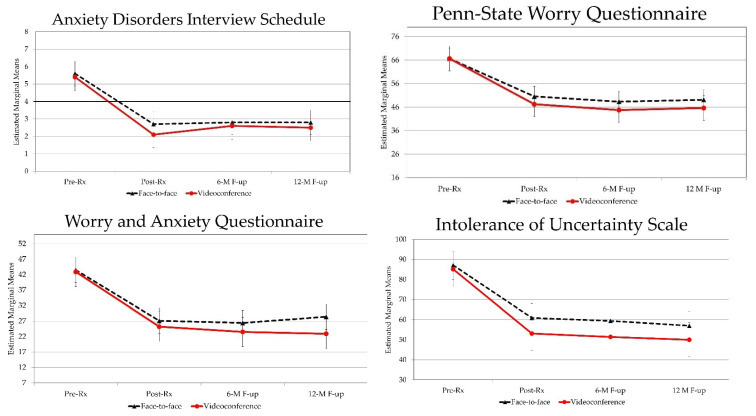
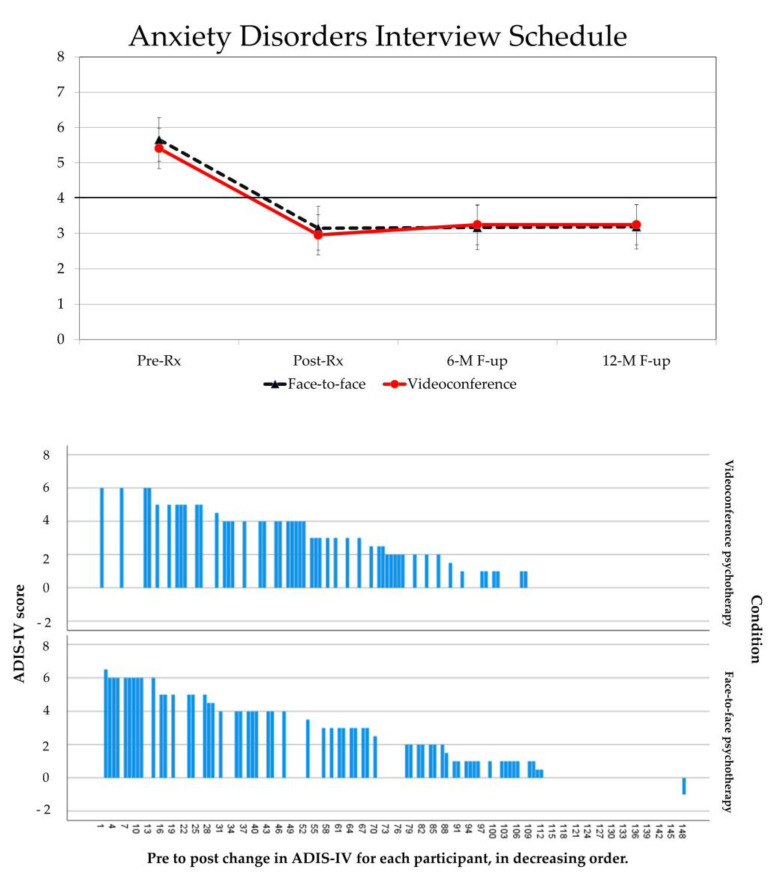
§ A Multisite Non-Inferiority Randomized Controlled Trial of the Efficacy of Cognitive-Behavior Therapy for Generalized Anxiety Disorder Delivered by Videoconference > 3. Results > 3.3. Main Outcome and Non-Inferiority Analyses Descriptive statistics at each time point are reported in Table 2, and results of the non-inferiority analyses are reported in Table 3. The repeated measures ANOVAs confirmed statistically significant and large time effects for each variable. Contrasts comparing pre and post-treatment were all statistically significant, and effect sizes were large for the ADIS-IV (pre/post F(1,146) = 211.08, p < 0.001, partial eta-squared = 0.59; pre/6-month follow-up F(1,146) = 192.6, p < 0.001, partial eta-squared = 0.57; pre/12-month follow-up (1,146) = 191.32, p < 0.001, partial eta-squared = 0.57), the PSWQ (pre/post F(1,146) = 177.78, p < 0.001, partial eta-squared = 0.55; pre/6-month follow-up F(1,146) = 202.19, p < 0.001, partial eta-squared = 0.58; pre/12-month follow-up (1,146) = 191.29, p < 0.001, partial eta-squared = 0.57), the WAQ (pre/post F(1,146) = 167.9, p < 0.001, partial eta-squared = 0.54; pre/6-month follow-up F(1,146) = 204.08, p < 0.001, partial eta-squared = 0.58; pre/12-month follow-up (1,146) = 187.93, p < 0.001, partial eta-squared = 0.56), the IUS (pre/post F(1,146) = 143.21, p < 0.001, partial eta-squared = 0.50; pre/6-month follow-up F(1,146) = 165.4, p < 0.001, partial eta-squared = 0.53; pre/12-month follow-up (1,146) = 168.83, p < 0.001, partial eta-squared = 0.54], the BDI-II (pre/post F(1,146) = 95.14, p < 0.001, partial eta-squared = 0.40; pre/6-month follow-up F(1,146) = 108.75, p < 0.001, partial eta-squared = 0.43; pre/12-month follow-up (1,146) = 92.97, p < 0.001, partial eta-squared = 0.39), the WHO-QOL-Psychological subscale (pre/post F(1,146) = 60.58, p < 0.001, partial eta-squared = 0.31; pre/6-month follow-up F(1,146) = 69.42, p < 0.001, partial eta-squared = 0.34; pre/12-month follow-up (1,146) = 71.25, p < 0.001, partial eta-squared = 0.34], and the WHO-QOL-Social relations subscale (pre/post F(1,146) = 16.42, p < 0.001, partial eta-squared = 0.11; pre/6-month follow-up F(1,146) = 30.51, p < 0.001, partial eta-squared = 0.18; pre/12-month follow-up (1,146) = 30.6, p < 0.001, partial eta-squared = 0.18). Main effects for all conditions were statistically non-significant (see Table 3), with partial eta-squares of 0.001 for the ADIS-IV, 0.01 for the PSQW, 0.006 for the WAQ, 0.009 for the IUS, 0.000 for the BDI-II, 0.004 for the WHO-QOL-Psychological subscale, and 0.009 for the WHO-QOL-Social relations subscale, respectively. Time by Condition interaction contrasts comparing CBT-IU delivered by VCP and delivered face-to-face revealed very small effect sizes for all variables: ADIS-IV (pre/post F(1,146) = 0.006, p = 0.938, partial eta-squared = 0.000, difference in improvement = −0.03; pre/6-month follow-up F(1,146) = 0.762, p = 0.384, partial eta-squared = 0.005, difference in improvement = −0.29; pre/12-month follow-up (1,146) = 0.667, p = 0.42, partial eta-squared = 0.005, difference in improvement = −0.27), the PSWQ (pre/post F(1,146) = 0.822, p = 0.323, partial eta-squared = 0.007, difference in improvement = 2.1; pre/6-month follow-up F(1,146) = 1.364, p = 0.245, partial eta-squared = 0.009, difference in improvement = 2.6; pre/12-month follow-up (1,146) = 1.314, p = 0.245, partial eta-squared = 0.009, difference in improvement = 2.5), the WAQ (pre/post F(1,146) = 0.024, p = 0.877, partial eta-squared = 0.000, difference in improvement = −0.3; pre/6-month follow-up F(1,146) = 0.159, p = 0.69, partial eta-squared = 0.001, difference in improvement = 0.8; pre/12-month follow-up (1,146) = 0.1.907, p = 0.169, partial eta-squared = 0.013, difference in improvement = 2.8), the IUS (pre/post F(1,146) = 0.138, p = 0.711, partial eta-squared = 0.001, difference in improvement = 1.4; pre/6-month follow-up F(1,146) = 0.593, p = 0.442, partial eta-squared = 0.004, difference in improvement = 2.9; pre/12-month follow-up (1,146) = 0.311, p = 0.578, partial eta-squared = 0.002, difference in improvement = 2.1), the BDI-II (pre/post F(1,146) = 0.257, p = 0.613, partial eta-squared = 0.000, difference in improvement = 0.88; pre/6-month follow-up F(1,146) = 0.006, p = 0.938, partial eta-squared = 0.000, difference in improvement = −0.13; pre/12-month follow-up (1,146) = 0.496, p = 0.482, partial eta-squared = 0.003, difference in improvement = 1.26), the WHO-QOL-Psychological subscale (pre/post F(1,146) = 0.213, p = 0.645, partial eta-squared = 0.002, difference in improvement = 0.14; pre/6-month follow-up F(1,146) = 0.387, p = 0.535, partial eta-squared = 0.003, difference in improvement = −0.26; pre/12-month follow-up (1,146) = 0.720, p = 0.398, partial eta-squared = 0.005, difference in improvement = 0.37), and the WHO-QOL-Social relations subscale (pre/post F(1,146) = 0.179, p = 0.673, partial eta-squared = 0.001, difference in improvement = 0.16; pre/6-month follow-up F(1,146) = 0.347, p = 0.557, partial eta-squared = 0.003, difference in improvement = 0.52; pre/12-month follow-up (1,146) = 0.198, p = 0.657, partial eta-squared = 0.001, difference in improvement = 0.35). The non-inferiority tests (Table 3) showed that the impact of the treatment was statistically non-inferior when delivered by VCP compared to face-to-face for all measures. For the primary measure of efficacy (ADIS-IV), mean scores improved from pre to post-treatment on average by 44.47% in the VCP condition and by 42.44% in the face-to-face condition. Using the cut-off severity score of 4 on ADIS-IV, 68% participants in the VCP condition no longer met diagnostic criteria for GAD (vs. 57% in the face-to-face condition) at post-treatment, 64% (vs. 61%) at 6-month follow-up, and 65% (vs. 62%) at 12-month follow-up. No statistical analyses were conducted on remission rates to avoid redundancy with the ADIS-IV severity scores. A visual representation of the results is provided in Figure 2 in the form of a line chart with 95% confidence intervals and a waterfall bar chart of each individual’s change from pre to post-treatment. Only five participants who completed the treatment (one in VCP, four in face-to-face therapy) reported no improvement on the ADIS-IV at post-treatment. The remaining participants with no change illustrate the impact of the intent-to-treat methodology. One participant (in the face-to-face condition) reported a deterioration of 1 point at post-treatment. As recommended [77], non-inferiority analyses were also conducted with treatment completers (i.e., per protocol; see also Appendix A for results from MLM analyses). The analyses of the treatment completers sample replicated the results from the intent-to-treat sample, as shown in Table 4, with the exception of the measure of change in global psychological quality of life from pre-treatment to 6-month follow-up. In this case, the probability of the non-inferiority tests was lower than 0.05 (p = 0.03) but did not reach the Bonferroni corrected level of significance due to lack of power (see the Figure in Appendix A for a visual illustration of the results). If the tolerance margin for defining a difference as negligible would have been set at 12% instead of 10%, the non-inferiority test would have met the Bonferroni correction. Using the cut-off severity score of 4 on ADIS-IV, 90% participants in the VCP condition no longer met diagnostic criteria for GAD (vs. 67% in the face-to-face condition) at post-treatment, 85% (vs. 72%) at 6-month follow-up, and 87% (vs. 74%) at 12-month follow-up. To document the potential effects of sex, the presence of at least one comorbid disorder, medication use, previous psychotherapy, recruitment site, and psychotherapist site, analyses were conducted by considering these variables as independent factors and repeating the main repeated measures analyses for each factor. The only statistically significant interaction was found for the effect of psychotherapist site for the measures of depressed mood and quality of life in social relations. The statistically significant interaction effects for psychotherapist site did not influence the results of the non-inferiority analyses (i.e., what was statistically significant remained statistically significant, and vice versa), but the findings needed to be investigated. The Time by Treatment condition by Psychotherapist site interaction was statistically significant for the BDI-II (F(8.24,414) = 2.1, p = 0.034, partial eta-squared = 0.06) and the WHO-QOL-Social relations subscale (F(9.66,384) = 1.93, p = 0.042, partial eta-squared = 0.06). Probing the interactions revealed that the Time by Treatment condition interaction contrast was statistically significant for two psychotherapist sites. Face-to-face CBT seemed more impactful on these two measures than VCP when comparing the effect of psychotherapists from the Montréal site to those from the Gatineau site. A detailed exploration of the data revealed that there was less comorbidity in participants treated face-to-face by psychotherapists from the Montréal site (n = 16 co-diagnosed disorders) than from the Gatineau site (n = 26 co-diagnosed disorders). The difference in number of comorbid diagnoses per participant was not statistically significant (F(1,67) = 0.41, p = 0.53, partial eta-squared = 0.006), but the number of comorbid disorders was statistically significantly associated with more severe depressed mood (r = 0.37, p = 0.002) and lower quality of life in social relations (r = −0.28, p = 0.027) at pre-treatment.
Reported p = .323 · recomputed p = .366
Rated minor: it would not touch a result — a value no result rests on, a p-value that stays on the same side of the significance level, or a conflict that is clerical, resolved elsewhere in the paper, or outside its own findings.
In the paper
“F(1,146) = 60.58, p < 0.001, partial eta-squared = 0.31”
§ A Multisite Non-Inferiority Randomized Controlled Trial of the Efficacy of Cognitive-Behavior Therapy for Generalized Anxiety Disorder Delivered by Videoconference > 3. Results > 3.3. Main Outcome and Non-Inferiority Analyses Descriptive statistics at each time point are reported in Table 2, and results of the non-inferiority analyses are reported in Table 3. The repeated measures ANOVAs confirmed statistically significant and large time effects for each variable. Contrasts comparing pre and post-treatment were all statistically significant, and effect sizes were large for the ADIS-IV (pre/post F(1,146) = 211.08, p < 0.001, partial eta-squared = 0.59; pre/6-month follow-up F(1,146) = 192.6, p < 0.001, partial eta-squared = 0.57; pre/12-month follow-up (1,146) = 191.32, p < 0.001, partial eta-squared = 0.57), the PSWQ (pre/post F(1,146) = 177.78, p < 0.001, partial eta-squared = 0.55; pre/6-month follow-up F(1,146) = 202.19, p < 0.001, partial eta-squared = 0.58; pre/12-month follow-up (1,146) = 191.29, p < 0.001, partial eta-squared = 0.57), the WAQ (pre/post F(1,146) = 167.9, p < 0.001, partial eta-squared = 0.54; pre/6-month follow-up F(1,146) = 204.08, p < 0.001, partial eta-squared = 0.58; pre/12-month follow-up (1,146) = 187.93, p < 0.001, partial eta-squared = 0.56), the IUS (pre/post F(1,146) = 143.21, p < 0.001, partial eta-squared = 0.50; pre/6-month follow-up F(1,146) = 165.4, p < 0.001, partial eta-squared = 0.53; pre/12-month follow-up (1,146) = 168.83, p < 0.001, partial eta-squared = 0.54], the BDI-II (pre/post F(1,146) = 95.14, p < 0.001, partial eta-squared = 0.40; pre/6-month follow-up F(1,146) = 108.75, p < 0.001, partial eta-squared = 0.43; pre/12-month follow-up (1,146) = 92.97, p < 0.001, partial eta-squared = 0.39), the WHO-QOL-Psychological subscale (pre/post F(1,146) = 60.58, p < 0.001, partial eta-squared = 0.31; pre/6-month follow-up F(1,146) = 69.42, p < 0.001, partial eta-squared = 0.34; pre/12-month follow-up (1,146) = 71.25, p < 0.001, partial eta-squared = 0.34], and the WHO-QOL-Social relations subscale (pre/post F(1,146) = 16.42, p < 0.001, partial eta-squared = 0.11; pre/6-month follow-up F(1,146) = 30.51, p < 0.001, partial eta-squared = 0.18; pre/12-month follow-up (1,146) = 30.6, p < 0.001, partial eta-squared = 0.18). Main effects for all conditions were statistically non-significant (see Table 3), with partial eta-squares of 0.001 for the ADIS-IV, 0.01 for the PSQW, 0.006 for the WAQ, 0.009 for the IUS, 0.000 for the BDI-II, 0.004 for the WHO-QOL-Psychological subscale, and 0.009 for the WHO-QOL-Social relations subscale, respectively. Time by Condition interaction contrasts comparing CBT-IU delivered by VCP and delivered face-to-face revealed very small effect sizes for all variables: ADIS-IV (pre/post F(1,146) = 0.006, p = 0.938, partial eta-squared = 0.000, difference in improvement = −0.03; pre/6-month follow-up F(1,146) = 0.762, p = 0.384, partial eta-squared = 0.005, difference in improvement = −0.29; pre/12-month follow-up (1,146) = 0.667, p = 0.42, partial eta-squared = 0.005, difference in improvement = −0.27), the PSWQ (pre/post F(1,146) = 0.822, p = 0.323, partial eta-squared = 0.007, difference in improvement = 2.1; pre/6-month follow-up F(1,146) = 1.364, p = 0.245, partial eta-squared = 0.009, difference in improvement = 2.6; pre/12-month follow-up (1,146) = 1.314, p = 0.245, partial eta-squared = 0.009, difference in improvement = 2.5), the WAQ (pre/post F(1,146) = 0.024, p = 0.877, partial eta-squared = 0.000, difference in improvement = −0.3; pre/6-month follow-up F(1,146) = 0.159, p = 0.69, partial eta-squared = 0.001, difference in improvement = 0.8; pre/12-month follow-up (1,146) = 0.1.907, p = 0.169, partial eta-squared = 0.013, difference in improvement = 2.8), the IUS (pre/post F(1,146) = 0.138, p = 0.711, partial eta-squared = 0.001, difference in improvement = 1.4; pre/6-month follow-up F(1,146) = 0.593, p = 0.442, partial eta-squared = 0.004, difference in improvement = 2.9; pre/12-month follow-up (1,146) = 0.311, p = 0.578, partial eta-squared = 0.002, difference in improvement = 2.1), the BDI-II (pre/post F(1,146) = 0.257, p = 0.613, partial eta-squared = 0.000, difference in improvement = 0.88; pre/6-month follow-up F(1,146) = 0.006, p = 0.938, partial eta-squared = 0.000, difference in improvement = −0.13; pre/12-month follow-up (1,146) = 0.496, p = 0.482, partial eta-squared = 0.003, difference in improvement = 1.26), the WHO-QOL-Psychological subscale (pre/post F(1,146) = 0.213, p = 0.645, partial eta-squared = 0.002, difference in improvement = 0.14; pre/6-month follow-up F(1,146) = 0.387, p = 0.535, partial eta-squared = 0.003, difference in improvement = −0.26; pre/12-month follow-up (1,146) = 0.720, p = 0.398, partial eta-squared = 0.005, difference in improvement = 0.37), and the WHO-QOL-Social relations subscale (pre/post F(1,146) = 0.179, p = 0.673, partial eta-squared = 0.001, difference in improvement = 0.16; pre/6-month follow-up F(1,146) = 0.347, p = 0.557, partial eta-squared = 0.003, difference in improvement = 0.52; pre/12-month follow-up (1,146) = 0.198, p = 0.657, partial eta-squared = 0.001, difference in improvement = 0.35). The non-inferiority tests (Table 3) showed that the impact of the treatment was statistically non-inferior when delivered by VCP compared to face-to-face for all measures. For the primary measure of efficacy (ADIS-IV), mean scores improved from pre to post-treatment on average by 44.47% in the VCP condition and by 42.44% in the face-to-face condition. Using the cut-off severity score of 4 on ADIS-IV, 68% participants in the VCP condition no longer met diagnostic criteria for GAD (vs. 57% in the face-to-face condition) at post-treatment, 64% (vs. 61%) at 6-month follow-up, and 65% (vs. 62%) at 12-month follow-up. No statistical analyses were conducted on remission rates to avoid redundancy with the ADIS-IV severity scores. A visual representation of the results is provided in Figure 2 in the form of a line chart with 95% confidence intervals and a waterfall bar chart of each individual’s change from pre to post-treatment. Only five participants who completed the treatment (one in VCP, four in face-to-face therapy) reported no improvement on the ADIS-IV at post-treatment. The remaining participants with no change illustrate the impact of the intent-to-treat methodology. One participant (in the face-to-face condition) reported a deterioration of 1 point at post-treatment. As recommended [77], non-inferiority analyses were also conducted with treatment completers (i.e., per protocol; see also Appendix A for results from MLM analyses). The analyses of the treatment completers sample replicated the results from the intent-to-treat sample, as shown in Table 4, with the exception of the measure of change in global psychological quality of life from pre-treatment to 6-month follow-up. In this case, the probability of the non-inferiority tests was lower than 0.05 (p = 0.03) but did not reach the Bonferroni corrected level of significance due to lack of power (see the Figure in Appendix A for a visual illustration of the results). If the tolerance margin for defining a difference as negligible would have been set at 12% instead of 10%, the non-inferiority test would have met the Bonferroni correction. Using the cut-off severity score of 4 on ADIS-IV, 90% participants in the VCP condition no longer met diagnostic criteria for GAD (vs. 67% in the face-to-face condition) at post-treatment, 85% (vs. 72%) at 6-month follow-up, and 87% (vs. 74%) at 12-month follow-up. To document the potential effects of sex, the presence of at least one comorbid disorder, medication use, previous psychotherapy, recruitment site, and psychotherapist site, analyses were conducted by considering these variables as independent factors and repeating the main repeated measures analyses for each factor. The only statistically significant interaction was found for the effect of psychotherapist site for the measures of depressed mood and quality of life in social relations. The statistically significant interaction effects for psychotherapist site did not influence the results of the non-inferiority analyses (i.e., what was statistically significant remained statistically significant, and vice versa), but the findings needed to be investigated. The Time by Treatment condition by Psychotherapist site interaction was statistically significant for the BDI-II (F(8.24,414) = 2.1, p = 0.034, partial eta-squared = 0.06) and the WHO-QOL-Social relations subscale (F(9.66,384) = 1.93, p = 0.042, partial eta-squared = 0.06). Probing the interactions revealed that the Time by Treatment condition interaction contrast was statistically significant for two psychotherapist sites. Face-to-face CBT seemed more impactful on these two measures than VCP when comparing the effect of psychotherapists from the Montréal site to those from the Gatineau site. A detailed exploration of the data revealed that there was less comorbidity in participants treated face-to-face by psychotherapists from the Montréal site (n = 16 co-diagnosed disorders) than from the Gatineau site (n = 26 co-diagnosed disorders). The difference in number of comorbid diagnoses per participant was not statistically significant (F(1,67) = 0.41, p = 0.53, partial eta-squared = 0.006), but the number of comorbid disorders was statistically significantly associated with more severe depressed mood (r = 0.37, p = 0.002) and lower quality of life in social relations (r = −0.28, p = 0.027) at pre-treatment.
Reported ηp² = .31 · recomputed ηp² .29324–.29326
Rated minor: it would not touch a result — a value no result rests on, a p-value that stays on the same side of the significance level, or a conflict that is clerical, resolved elsewhere in the paper, or outside its own findings.
In the paper
“F(4,100) = 1.89, p = 0.117, partial eta-squared = 0.0710”
§ A Multisite Non-Inferiority Randomized Controlled Trial of the Efficacy of Cognitive-Behavior Therapy for Generalized Anxiety Disorder Delivered by Videoconference > 2. Materials and Methods > 2.5. Treatment
Reported ηp² = .0710 · recomputed ηp² .0702–.0704
Rated minor: it would not touch a result — a value no result rests on, a p-value that stays on the same side of the significance level, or a conflict that is clerical, resolved elsewhere in the paper, or outside its own findings.
In the paper
“F(1,146) = 0.347, p = 0.557, partial eta-squared = 0.003”
§ A Multisite Non-Inferiority Randomized Controlled Trial of the Efficacy of Cognitive-Behavior Therapy for Generalized Anxiety Disorder Delivered by Videoconference > 3. Results > 3.3. Main Outcome and Non-Inferiority Analyses Descriptive statistics at each time point are reported in Table 2, and results of the non-inferiority analyses are reported in Table 3. The repeated measures ANOVAs confirmed statistically significant and large time effects for each variable. Contrasts comparing pre and post-treatment were all statistically significant, and effect sizes were large for the ADIS-IV (pre/post F(1,146) = 211.08, p < 0.001, partial eta-squared = 0.59; pre/6-month follow-up F(1,146) = 192.6, p < 0.001, partial eta-squared = 0.57; pre/12-month follow-up (1,146) = 191.32, p < 0.001, partial eta-squared = 0.57), the PSWQ (pre/post F(1,146) = 177.78, p < 0.001, partial eta-squared = 0.55; pre/6-month follow-up F(1,146) = 202.19, p < 0.001, partial eta-squared = 0.58; pre/12-month follow-up (1,146) = 191.29, p < 0.001, partial eta-squared = 0.57), the WAQ (pre/post F(1,146) = 167.9, p < 0.001, partial eta-squared = 0.54; pre/6-month follow-up F(1,146) = 204.08, p < 0.001, partial eta-squared = 0.58; pre/12-month follow-up (1,146) = 187.93, p < 0.001, partial eta-squared = 0.56), the IUS (pre/post F(1,146) = 143.21, p < 0.001, partial eta-squared = 0.50; pre/6-month follow-up F(1,146) = 165.4, p < 0.001, partial eta-squared = 0.53; pre/12-month follow-up (1,146) = 168.83, p < 0.001, partial eta-squared = 0.54], the BDI-II (pre/post F(1,146) = 95.14, p < 0.001, partial eta-squared = 0.40; pre/6-month follow-up F(1,146) = 108.75, p < 0.001, partial eta-squared = 0.43; pre/12-month follow-up (1,146) = 92.97, p < 0.001, partial eta-squared = 0.39), the WHO-QOL-Psychological subscale (pre/post F(1,146) = 60.58, p < 0.001, partial eta-squared = 0.31; pre/6-month follow-up F(1,146) = 69.42, p < 0.001, partial eta-squared = 0.34; pre/12-month follow-up (1,146) = 71.25, p < 0.001, partial eta-squared = 0.34], and the WHO-QOL-Social relations subscale (pre/post F(1,146) = 16.42, p < 0.001, partial eta-squared = 0.11; pre/6-month follow-up F(1,146) = 30.51, p < 0.001, partial eta-squared = 0.18; pre/12-month follow-up (1,146) = 30.6, p < 0.001, partial eta-squared = 0.18). Main effects for all conditions were statistically non-significant (see Table 3), with partial eta-squares of 0.001 for the ADIS-IV, 0.01 for the PSQW, 0.006 for the WAQ, 0.009 for the IUS, 0.000 for the BDI-II, 0.004 for the WHO-QOL-Psychological subscale, and 0.009 for the WHO-QOL-Social relations subscale, respectively. Time by Condition interaction contrasts comparing CBT-IU delivered by VCP and delivered face-to-face revealed very small effect sizes for all variables: ADIS-IV (pre/post F(1,146) = 0.006, p = 0.938, partial eta-squared = 0.000, difference in improvement = −0.03; pre/6-month follow-up F(1,146) = 0.762, p = 0.384, partial eta-squared = 0.005, difference in improvement = −0.29; pre/12-month follow-up (1,146) = 0.667, p = 0.42, partial eta-squared = 0.005, difference in improvement = −0.27), the PSWQ (pre/post F(1,146) = 0.822, p = 0.323, partial eta-squared = 0.007, difference in improvement = 2.1; pre/6-month follow-up F(1,146) = 1.364, p = 0.245, partial eta-squared = 0.009, difference in improvement = 2.6; pre/12-month follow-up (1,146) = 1.314, p = 0.245, partial eta-squared = 0.009, difference in improvement = 2.5), the WAQ (pre/post F(1,146) = 0.024, p = 0.877, partial eta-squared = 0.000, difference in improvement = −0.3; pre/6-month follow-up F(1,146) = 0.159, p = 0.69, partial eta-squared = 0.001, difference in improvement = 0.8; pre/12-month follow-up (1,146) = 0.1.907, p = 0.169, partial eta-squared = 0.013, difference in improvement = 2.8), the IUS (pre/post F(1,146) = 0.138, p = 0.711, partial eta-squared = 0.001, difference in improvement = 1.4; pre/6-month follow-up F(1,146) = 0.593, p = 0.442, partial eta-squared = 0.004, difference in improvement = 2.9; pre/12-month follow-up (1,146) = 0.311, p = 0.578, partial eta-squared = 0.002, difference in improvement = 2.1), the BDI-II (pre/post F(1,146) = 0.257, p = 0.613, partial eta-squared = 0.000, difference in improvement = 0.88; pre/6-month follow-up F(1,146) = 0.006, p = 0.938, partial eta-squared = 0.000, difference in improvement = −0.13; pre/12-month follow-up (1,146) = 0.496, p = 0.482, partial eta-squared = 0.003, difference in improvement = 1.26), the WHO-QOL-Psychological subscale (pre/post F(1,146) = 0.213, p = 0.645, partial eta-squared = 0.002, difference in improvement = 0.14; pre/6-month follow-up F(1,146) = 0.387, p = 0.535, partial eta-squared = 0.003, difference in improvement = −0.26; pre/12-month follow-up (1,146) = 0.720, p = 0.398, partial eta-squared = 0.005, difference in improvement = 0.37), and the WHO-QOL-Social relations subscale (pre/post F(1,146) = 0.179, p = 0.673, partial eta-squared = 0.001, difference in improvement = 0.16; pre/6-month follow-up F(1,146) = 0.347, p = 0.557, partial eta-squared = 0.003, difference in improvement = 0.52; pre/12-month follow-up (1,146) = 0.198, p = 0.657, partial eta-squared = 0.001, difference in improvement = 0.35). The non-inferiority tests (Table 3) showed that the impact of the treatment was statistically non-inferior when delivered by VCP compared to face-to-face for all measures. For the primary measure of efficacy (ADIS-IV), mean scores improved from pre to post-treatment on average by 44.47% in the VCP condition and by 42.44% in the face-to-face condition. Using the cut-off severity score of 4 on ADIS-IV, 68% participants in the VCP condition no longer met diagnostic criteria for GAD (vs. 57% in the face-to-face condition) at post-treatment, 64% (vs. 61%) at 6-month follow-up, and 65% (vs. 62%) at 12-month follow-up. No statistical analyses were conducted on remission rates to avoid redundancy with the ADIS-IV severity scores. A visual representation of the results is provided in Figure 2 in the form of a line chart with 95% confidence intervals and a waterfall bar chart of each individual’s change from pre to post-treatment. Only five participants who completed the treatment (one in VCP, four in face-to-face therapy) reported no improvement on the ADIS-IV at post-treatment. The remaining participants with no change illustrate the impact of the intent-to-treat methodology. One participant (in the face-to-face condition) reported a deterioration of 1 point at post-treatment. As recommended [77], non-inferiority analyses were also conducted with treatment completers (i.e., per protocol; see also Appendix A for results from MLM analyses). The analyses of the treatment completers sample replicated the results from the intent-to-treat sample, as shown in Table 4, with the exception of the measure of change in global psychological quality of life from pre-treatment to 6-month follow-up. In this case, the probability of the non-inferiority tests was lower than 0.05 (p = 0.03) but did not reach the Bonferroni corrected level of significance due to lack of power (see the Figure in Appendix A for a visual illustration of the results). If the tolerance margin for defining a difference as negligible would have been set at 12% instead of 10%, the non-inferiority test would have met the Bonferroni correction. Using the cut-off severity score of 4 on ADIS-IV, 90% participants in the VCP condition no longer met diagnostic criteria for GAD (vs. 67% in the face-to-face condition) at post-treatment, 85% (vs. 72%) at 6-month follow-up, and 87% (vs. 74%) at 12-month follow-up. To document the potential effects of sex, the presence of at least one comorbid disorder, medication use, previous psychotherapy, recruitment site, and psychotherapist site, analyses were conducted by considering these variables as independent factors and repeating the main repeated measures analyses for each factor. The only statistically significant interaction was found for the effect of psychotherapist site for the measures of depressed mood and quality of life in social relations. The statistically significant interaction effects for psychotherapist site did not influence the results of the non-inferiority analyses (i.e., what was statistically significant remained statistically significant, and vice versa), but the findings needed to be investigated. The Time by Treatment condition by Psychotherapist site interaction was statistically significant for the BDI-II (F(8.24,414) = 2.1, p = 0.034, partial eta-squared = 0.06) and the WHO-QOL-Social relations subscale (F(9.66,384) = 1.93, p = 0.042, partial eta-squared = 0.06). Probing the interactions revealed that the Time by Treatment condition interaction contrast was statistically significant for two psychotherapist sites. Face-to-face CBT seemed more impactful on these two measures than VCP when comparing the effect of psychotherapists from the Montréal site to those from the Gatineau site. A detailed exploration of the data revealed that there was less comorbidity in participants treated face-to-face by psychotherapists from the Montréal site (n = 16 co-diagnosed disorders) than from the Gatineau site (n = 26 co-diagnosed disorders). The difference in number of comorbid diagnoses per participant was not statistically significant (F(1,67) = 0.41, p = 0.53, partial eta-squared = 0.006), but the number of comorbid disorders was statistically significantly associated with more severe depressed mood (r = 0.37, p = 0.002) and lower quality of life in social relations (r = −0.28, p = 0.027) at pre-treatment.
Reported ηp² = .003 · recomputed ηp² = .00237
Rated minor: it would not touch a result — a value no result rests on, a p-value that stays on the same side of the significance level, or a conflict that is clerical, resolved elsewhere in the paper, or outside its own findings.
In the paper
“F(9.66,384) = 1.93, p = 0.042, partial eta-squared = 0.06”
§ A Multisite Non-Inferiority Randomized Controlled Trial of the Efficacy of Cognitive-Behavior Therapy for Generalized Anxiety Disorder Delivered by Videoconference > 3. Results > 3.3. Main Outcome and Non-Inferiority Analyses Descriptive statistics at each time point are reported in Table 2, and results of the non-inferiority analyses are reported in Table 3. The repeated measures ANOVAs confirmed statistically significant and large time effects for each variable. Contrasts comparing pre and post-treatment were all statistically significant, and effect sizes were large for the ADIS-IV (pre/post F(1,146) = 211.08, p < 0.001, partial eta-squared = 0.59; pre/6-month follow-up F(1,146) = 192.6, p < 0.001, partial eta-squared = 0.57; pre/12-month follow-up (1,146) = 191.32, p < 0.001, partial eta-squared = 0.57), the PSWQ (pre/post F(1,146) = 177.78, p < 0.001, partial eta-squared = 0.55; pre/6-month follow-up F(1,146) = 202.19, p < 0.001, partial eta-squared = 0.58; pre/12-month follow-up (1,146) = 191.29, p < 0.001, partial eta-squared = 0.57), the WAQ (pre/post F(1,146) = 167.9, p < 0.001, partial eta-squared = 0.54; pre/6-month follow-up F(1,146) = 204.08, p < 0.001, partial eta-squared = 0.58; pre/12-month follow-up (1,146) = 187.93, p < 0.001, partial eta-squared = 0.56), the IUS (pre/post F(1,146) = 143.21, p < 0.001, partial eta-squared = 0.50; pre/6-month follow-up F(1,146) = 165.4, p < 0.001, partial eta-squared = 0.53; pre/12-month follow-up (1,146) = 168.83, p < 0.001, partial eta-squared = 0.54], the BDI-II (pre/post F(1,146) = 95.14, p < 0.001, partial eta-squared = 0.40; pre/6-month follow-up F(1,146) = 108.75, p < 0.001, partial eta-squared = 0.43; pre/12-month follow-up (1,146) = 92.97, p < 0.001, partial eta-squared = 0.39), the WHO-QOL-Psychological subscale (pre/post F(1,146) = 60.58, p < 0.001, partial eta-squared = 0.31; pre/6-month follow-up F(1,146) = 69.42, p < 0.001, partial eta-squared = 0.34; pre/12-month follow-up (1,146) = 71.25, p < 0.001, partial eta-squared = 0.34], and the WHO-QOL-Social relations subscale (pre/post F(1,146) = 16.42, p < 0.001, partial eta-squared = 0.11; pre/6-month follow-up F(1,146) = 30.51, p < 0.001, partial eta-squared = 0.18; pre/12-month follow-up (1,146) = 30.6, p < 0.001, partial eta-squared = 0.18). Main effects for all conditions were statistically non-significant (see Table 3), with partial eta-squares of 0.001 for the ADIS-IV, 0.01 for the PSQW, 0.006 for the WAQ, 0.009 for the IUS, 0.000 for the BDI-II, 0.004 for the WHO-QOL-Psychological subscale, and 0.009 for the WHO-QOL-Social relations subscale, respectively. Time by Condition interaction contrasts comparing CBT-IU delivered by VCP and delivered face-to-face revealed very small effect sizes for all variables: ADIS-IV (pre/post F(1,146) = 0.006, p = 0.938, partial eta-squared = 0.000, difference in improvement = −0.03; pre/6-month follow-up F(1,146) = 0.762, p = 0.384, partial eta-squared = 0.005, difference in improvement = −0.29; pre/12-month follow-up (1,146) = 0.667, p = 0.42, partial eta-squared = 0.005, difference in improvement = −0.27), the PSWQ (pre/post F(1,146) = 0.822, p = 0.323, partial eta-squared = 0.007, difference in improvement = 2.1; pre/6-month follow-up F(1,146) = 1.364, p = 0.245, partial eta-squared = 0.009, difference in improvement = 2.6; pre/12-month follow-up (1,146) = 1.314, p = 0.245, partial eta-squared = 0.009, difference in improvement = 2.5), the WAQ (pre/post F(1,146) = 0.024, p = 0.877, partial eta-squared = 0.000, difference in improvement = −0.3; pre/6-month follow-up F(1,146) = 0.159, p = 0.69, partial eta-squared = 0.001, difference in improvement = 0.8; pre/12-month follow-up (1,146) = 0.1.907, p = 0.169, partial eta-squared = 0.013, difference in improvement = 2.8), the IUS (pre/post F(1,146) = 0.138, p = 0.711, partial eta-squared = 0.001, difference in improvement = 1.4; pre/6-month follow-up F(1,146) = 0.593, p = 0.442, partial eta-squared = 0.004, difference in improvement = 2.9; pre/12-month follow-up (1,146) = 0.311, p = 0.578, partial eta-squared = 0.002, difference in improvement = 2.1), the BDI-II (pre/post F(1,146) = 0.257, p = 0.613, partial eta-squared = 0.000, difference in improvement = 0.88; pre/6-month follow-up F(1,146) = 0.006, p = 0.938, partial eta-squared = 0.000, difference in improvement = −0.13; pre/12-month follow-up (1,146) = 0.496, p = 0.482, partial eta-squared = 0.003, difference in improvement = 1.26), the WHO-QOL-Psychological subscale (pre/post F(1,146) = 0.213, p = 0.645, partial eta-squared = 0.002, difference in improvement = 0.14; pre/6-month follow-up F(1,146) = 0.387, p = 0.535, partial eta-squared = 0.003, difference in improvement = −0.26; pre/12-month follow-up (1,146) = 0.720, p = 0.398, partial eta-squared = 0.005, difference in improvement = 0.37), and the WHO-QOL-Social relations subscale (pre/post F(1,146) = 0.179, p = 0.673, partial eta-squared = 0.001, difference in improvement = 0.16; pre/6-month follow-up F(1,146) = 0.347, p = 0.557, partial eta-squared = 0.003, difference in improvement = 0.52; pre/12-month follow-up (1,146) = 0.198, p = 0.657, partial eta-squared = 0.001, difference in improvement = 0.35). The non-inferiority tests (Table 3) showed that the impact of the treatment was statistically non-inferior when delivered by VCP compared to face-to-face for all measures. For the primary measure of efficacy (ADIS-IV), mean scores improved from pre to post-treatment on average by 44.47% in the VCP condition and by 42.44% in the face-to-face condition. Using the cut-off severity score of 4 on ADIS-IV, 68% participants in the VCP condition no longer met diagnostic criteria for GAD (vs. 57% in the face-to-face condition) at post-treatment, 64% (vs. 61%) at 6-month follow-up, and 65% (vs. 62%) at 12-month follow-up. No statistical analyses were conducted on remission rates to avoid redundancy with the ADIS-IV severity scores. A visual representation of the results is provided in Figure 2 in the form of a line chart with 95% confidence intervals and a waterfall bar chart of each individual’s change from pre to post-treatment. Only five participants who completed the treatment (one in VCP, four in face-to-face therapy) reported no improvement on the ADIS-IV at post-treatment. The remaining participants with no change illustrate the impact of the intent-to-treat methodology. One participant (in the face-to-face condition) reported a deterioration of 1 point at post-treatment. As recommended [77], non-inferiority analyses were also conducted with treatment completers (i.e., per protocol; see also Appendix A for results from MLM analyses). The analyses of the treatment completers sample replicated the results from the intent-to-treat sample, as shown in Table 4, with the exception of the measure of change in global psychological quality of life from pre-treatment to 6-month follow-up. In this case, the probability of the non-inferiority tests was lower than 0.05 (p = 0.03) but did not reach the Bonferroni corrected level of significance due to lack of power (see the Figure in Appendix A for a visual illustration of the results). If the tolerance margin for defining a difference as negligible would have been set at 12% instead of 10%, the non-inferiority test would have met the Bonferroni correction. Using the cut-off severity score of 4 on ADIS-IV, 90% participants in the VCP condition no longer met diagnostic criteria for GAD (vs. 67% in the face-to-face condition) at post-treatment, 85% (vs. 72%) at 6-month follow-up, and 87% (vs. 74%) at 12-month follow-up. To document the potential effects of sex, the presence of at least one comorbid disorder, medication use, previous psychotherapy, recruitment site, and psychotherapist site, analyses were conducted by considering these variables as independent factors and repeating the main repeated measures analyses for each factor. The only statistically significant interaction was found for the effect of psychotherapist site for the measures of depressed mood and quality of life in social relations. The statistically significant interaction effects for psychotherapist site did not influence the results of the non-inferiority analyses (i.e., what was statistically significant remained statistically significant, and vice versa), but the findings needed to be investigated. The Time by Treatment condition by Psychotherapist site interaction was statistically significant for the BDI-II (F(8.24,414) = 2.1, p = 0.034, partial eta-squared = 0.06) and the WHO-QOL-Social relations subscale (F(9.66,384) = 1.93, p = 0.042, partial eta-squared = 0.06). Probing the interactions revealed that the Time by Treatment condition interaction contrast was statistically significant for two psychotherapist sites. Face-to-face CBT seemed more impactful on these two measures than VCP when comparing the effect of psychotherapists from the Montréal site to those from the Gatineau site. A detailed exploration of the data revealed that there was less comorbidity in participants treated face-to-face by psychotherapists from the Montréal site (n = 16 co-diagnosed disorders) than from the Gatineau site (n = 26 co-diagnosed disorders). The difference in number of comorbid diagnoses per participant was not statistically significant (F(1,67) = 0.41, p = 0.53, partial eta-squared = 0.006), but the number of comorbid disorders was statistically significantly associated with more severe depressed mood (r = 0.37, p = 0.002) and lower quality of life in social relations (r = −0.28, p = 0.027) at pre-treatment.
Reported ηp² = .06 · recomputed ηp² .0462–.0464
6 more findings
Create a free account to see every finding of this check.
Statistics recomputed
Every reported test result, recomputed from its test statistic and degrees of freedom. A result shows as not adding up only once an independent check has confirmed it.
- Doesn’t add upF(1, 146) = 0.822reported p = .323 · recomputed p = .366
“F(1,146) = 0.822, p = .323”
- ConsistentF(4, 100) = 1.89reported p = .117 · recomputed p = .118
“F(4,100) = 1.89, p = .117”
- Consistentχ²(1) = 1.06reported p = .3 · recomputed p = .303
“X2(1) = 1.06, p = .30”
- ConsistentF(1, 146) = 211.08reported p < .001 · recomputed p < .001
“F(1,146) = 211.08, p < .001”
- ConsistentF(1, 146) = 192.6reported p < .001 · recomputed p < .001
“F(1,146) = 192.6, p < .001”
28 more recomputed tests
Create a free account to see every test the Stats check recomputed.
Self-check
Percentages, sums and reported differences re-computed from the paper’s own numbers.
Each contradiction between two passages listed here was confirmed by an independent check.
Rated minor: it would not touch a result — a value no result rests on, a p-value that stays on the same side of the significance level, or a conflict that is clerical, resolved elsewhere in the paper, or outside its own findings.
In the paper
§ A Multisite Non-Inferiority Randomized Controlled Trial of the Efficacy of Cognitive-Behavior Therapy for Generalized Anxiety Disorder Delivered by Videoconference > 3. Results > 3.1. Statistical Analyses
“significantly lower scores among the non-completers in motivation, PSQW, and measures of quality of life, as well as higher BDI-II scores.”
§ A Multisite Non-Inferiority Randomized Controlled Trial of the Efficacy of Cognitive-Behavior Therapy for Generalized Anxiety Disorder Delivered by Videoconference > 2. Materials and Methods > 2.4. Assessment
“Penn-State Worry Questionnaire (PSWQ). The PSWQ [59] is the most widely used measure of excessive worry,”
Citations
Cites
Diagnostic and Statistical Manual of Mental Disorders
American Psychiatric Association (2013) · doi:10.1176/appi.books.9780890425596 · Cited by 116,369
Development and validation of the Penn State Worry Questionnaire
Meyer, T. J., Miller, M. L., Metzger, R. L., & Borkovec, T. D. (1990) · Behaviour Research and Therapy · doi:10.1016/0005-7967(90)90135-6 · Cited by 5,099 · cited 7×
“Higher PSWQ scores indicate greater levels of worry.”
InfluentialDevelopment and validation of the working alliance inventory
Horvath, A. O., & Greenberg, L. S. (1989) · Journal of Counseling Psychology · doi:10.1037//0022-0167.36.2.223 · Cited by 3,520 · cited 2×
“The WAI [69], patient-version, is the most widely used instrument for assessing the working alliance.”
Deci, E. L., & Ryan, R. M. (2012) · Handbook of Theories of Social Psychology: Volume 1 · doi:10.4135/9781446249215.n21 · Cited by 3,161
Equivalence Tests: A Practical Primer for t Tests, Correlations, and Meta-Analyses
Lakens, D. (2017) · Social Psychological and Personality Science · doi:10.1177/1948550617697177 · Cited by 3,001
Assessment of client/patient satisfaction: development of a general scale
Larsen, D. L., Attkisson, C. C., Hargreaves, W. A., & Nguyen, T. D. (1979) · Evaluation and Program Planning · doi:10.1016/0149-7189(79)90094-6 · Cited by 2,887 · cited 1×
“The CSQ [71].”
Piaggio, G., Elbourne, D. R., Pocock, S. J., Evans, S. J. W., Altman, D. G., & CONSORT Group, F. T. (2012) · JAMA · doi:10.1001/jama.2012.87802 · Cited by 2,428 · cited 1×
“The study was designed, funded, and conducted in accordance with CONSORT (Consoli-dated Standards of Reporting Trials) guidelines for trials assessing non-pharmacological treatments and for non-equivalence trials [55,56].”
Freeston, M. H., Rhéaume, J., Letarte, H., Dugas, M. J., & Ladouceur, R. (1994) · Personality and Individual Differences · doi:10.1016/0191-8869(94)90048-5 · Cited by 1,731 · cited 1×
“The IUS [64] is a self-report measure consisting of 27 items assessing negative beliefs about, and reactions to, uncertainty.”
Self-citationBoutron, I., Altman, D. G., Moher, D., Schulz, K. F., Ravaud, P., & for the CONSORT NPT Group* (2017) · Annals of Internal Medicine · doi:10.7326/m17-0046 · Cited by 1,538
The economic burden of anxiety disorders in the 1990s
Greenberg, P. E., Sisitsky, T., Kessler, R. C., Finkelstein, S. N., Berndt, E. R., Davidson, J. R. T., Ballenger, J. C., & Fyer, A. J. (1999) · The Journal of Clinical Psychiatry · doi:10.4088/jcp.v60n0702 · Cited by 1,242 · cited 1×
“Individuals with GAD report high levels of psychological distress, low quality of life and high impairment at work, with high rates of absenteeism and low productivity [6].”
Research works printed but not linked: 8
- Kessler R.C. Walters E.E. Wittchen H.-U. Epidemiology Generalized Anxiety Disorder: Advances in Research and Practice Heimberg R.G. Turk C.L. Mennin D.S. The Guilford Press New York, NY, USA 2004 29 50
- Taylor S. Understanding and Treating Panic Disorder: Cognitive-Behavioural Approaches Wiley Hoboken, NJ, USA 2000
- Di Nardo P.A. Brown T.A. Barlow D.H. Anxiety Disorders Interview Schedule for DSM-IV (ADIS-IV) Oxford University Press New York, NY, USA 1994
- Dugas M.J. Freeston M.H. Provencher M. Lachance S. Ladouceur R. Gosselin P. Le questionnaire sur l’inquiétude et l’anxiété: Validation dans des échantillons non cliniques et cliniques [The Worry and Anxiety Questionnaire: Validation in non-clinical and clinical samples] J. Thérapie Comport. Cogn. 2001 11 31 36
- Sévigny J.F. Gilbert S. Deguise S. Gosselin P. Relation entre le sentiment d’efficacité parental et les symptômes d’anxiété postnatale chez les mères d’un nouvel enfant Sci. Comport. 2021 31 18 28 Available online: http://www.science-et-comportement.uqam.ca/AnciensNumeros/V31/022_Article_final.pdf (accessed on 15 January 2022)
- First M.B. Gibbon M. Spitzer R.L. Williams J.B.W. Benjamin L.S. Structured Clinical Interview for DSM-IV Axis II Personality Disorders (SCID-II) American Psychiatric Press, Inc. Washington, DC, USA 1997
- Dugas M.J. Robichaud M. Cognitive-Behavioral Treatment for Generalized Anxiety Disorder: From Science to Practice Routledge/Taylor & Francis Group New York, NY, USA 2007
- Haddouk L. Bouchard S. Brivio E. Galimberti C. Trognon A. Assessing presence in videoconference telepsychotherapies: A complementary qualitative study on breaks in telepresence and intersubjectivity co-construction processes Annual Review of Cyber Therapy and Telemedicine Wiederhold B.K. Riva G. Bouchard S. IOS Press Amsterdam, The Netherlands 2018 118 123
Cited by
Papola, D., Ostuzzi, G., Tedeschi, F., Gastaldon, C., Purgato, M., Del Giovane, C., Pompoli, A., Pauley, D., Karyotaki, E., Sijbrandij, M., et al. (2023) · Psychological Medicine · doi:10.1017/s0033291722003683 · Cited by 77
“…Rees, Roberts, & Kane, 2013; Théberge-Lapointe, Marchand, Langlois, Gosselin, & Watts, 2015), and although preliminary evidence is encouraging (Bouchard et al., 2004, 2022), to date there is no randomised evidence for the individual or group remote synchronous CBT treatment of panic disorder.”
Papola, D., Miguel, C., Mazzaglia, M., Franco, P., Tedeschi, F., Romero, S. A., Patel, A., Ostuzzi, G., Gastaldon, C., Karyotaki, E., et al. (2023) · JAMA Psychiatry · doi:10.1001/jamapsychiatry.2023.3971 · Cited by 138
Seuling, P. D., Fendel, J. C., Spille, L., Göritz, A. S., & Schmidt, S. (2024) · Journal of Telemedicine and Telecare · doi:10.1177/1357633x231161774 · Cited by 57
“%) speci fi ed the location of the patients in the VCP sessions: In three studies the patients were at home, 49,54,57 in eight studies in a research facility, 10,47,48,50,51,53,56,59 in four studies in a local clinic, 6,27,52,55 and in one study in a psychiatric prison.”
Doorn, K. A., Spina, D. S., Horne, S. J., & Békés, V. (2024) · Clinical Psychology Review · doi:10.1016/j.cpr.2024.102430 · Cited by 66
Wilson, E. J., Abbott, M. J., & Norton, A. R. (2023) · Journal of Anxiety Disorders · doi:10.1016/j.janxdis.2023.102729 · Cited by 52
Morriss, J. (2025) · Neuroscience & Biobehavioral Reviews · doi:10.1016/j.neubiorev.2025.106138 · Cited by 28
Margherita, G., Caffieri, A., & Maio, N. D. (2023) · Counselling and Psychotherapy Research · doi:10.1002/capr.12704 · Cited by 11
Ebrahimjee, A., Hodsoll, J. P., Valmaggia, L., Hickling, L. M., & Riches, S. (2024) · The Cognitive Behaviour Therapist · doi:10.1017/s1754470x2400028x · Cited by 10
“(2017; 11.9% weight) and Bouchard et al .”
InfluentialLarochelle, S., Dugas, M. J., Langlois, F., Gosselin, P., Belleville, G., & Bouchard, S. (2025) · Journal of Clinical Medicine · doi:10.3390/jcm14051502 · Cited by 11
“Finally, treatment research shows that a reduction in the level of intolerance of uncertainty predicts a reduction in the severity of worry in patients receiving cognitive behavioral therapy for GAD [27,28].”
InfluentialSelf-citationBouchard, S., Berthiaume, M., Robillard, G., Allard, M., Green‐Demers, I., Watts, S., Marchand, A., Gosselin, P., Langlois, F., Belleville, G., et al. (2023) · Clinical Psychology & Psychotherapy · doi:10.1002/cpp.2816 · Cited by 7
Self-citationTechnological Advances in Treating Anxiety Disorders
Goetter, E. M., & Yuen, E. K. (2024) · Psychiatric Clinics of North America · doi:10.1016/j.psc.2024.04.020 · Cited by 6
Basile, V. T., Newton-John, T. R. O., McDonald, S., & Wootton, B. M. (2024) · British Journal of Clinical Psychology · doi:10.1111/bjc.12482 · Cited by 13
Cecagno, P. O. M., Polesello, N. D., Duque-Cartagena, T., Luz, P. M., Mundstock, E., Dalla, M. D. B., Sato, D. K., & Mattiello, R. (2025) · Telemedicine Journal and e-Health · doi:10.1089/tmj.2024.0297 · Cited by 6
“26 Five instruments used to measure depressive symptoms were reported as follows: The Beck Depression Inventory was reported in three studies; 24,26,27 the Children ’ s Depression Inventory, 22 the Hamilton Depression Rating Scale, 23 the Patient Health Questionnaire-9, 23 and The Depression…”
Aviandr is a new original drug for treating anxiety
Parfenov, V. A. (2024) · Neurology neuropsychiatry Psychosomatics · doi:10.14412/2074-2711-2024-4-98-102 · Cited by 3
Daniels, S., Hasan, Y., & Schweizer, S. (2025) · Psychological Medicine · doi:10.1017/s0033291725102419 · Cited by 2
“To help facilitate access to mental health support, several online cognitive-behavioral therapy-based interventions have been developed that reduce IU in individuals with anxiety disorders (Bouchard et al., 2022; Hedman et al., 2013).”
Bouchard, S., Dugas, M. J., Belleville, G., et al. (2025) · Journal of Clinical Medicine · doi:10.3390/jcm14010226
Self-citationYuen, E. K., & Goetter, E. M. (2025) · CBT: science into practice · doi:10.1007/978-3-031-91439-3_7
Plant-based protein sources: Grains, fruits, vegetables, and other plant sources
Shweta, S., Deepali, D., Shivam, K., Rajbongshi, B., Nickhil, C., & Deka, S. C. (2025) · Elsevier eBooks · doi:10.1016/b978-0-443-33955-4.00023-1 · Cited by 1
Wilson, E., Abbott, M. J., Norton, A. R., Riley, J. A., & Berle, D. (2026) · Journal of Anxiety Disorders · doi:10.1016/j.janxdis.2026.103112 · Cited by 1
Patient Perspectives of Teletherapy
Doorn, K. A., Levy, S., Teklu, K., & Békés, V. (2026) · Springer eBooks · doi:10.1007/978-3-032-08980-9_4
An examination of core beliefs in generalized anxiety disorder
Doust, A., Basile, V. T., McDonald, S., Newton-John, T. R. O., & Wootton, B. M. (2026) · British Journal of Clinical Psychology · doi:10.1111/bjc.70047
Metadata
- Authors
- Bouchard, S., Dugas, M. J., Belleville, G., Langlois, F., Gosselin, P., Robillard, G., Corno, G., & Marchand, A.
- Affiliations
- Université du Québec en Outaouais (CA)
- Université Laval (CA)
- Département de Psychologie, Université du Québec à Trois-Rivières, Trois-Rivières, QC G8Z 4M3, Canada
- Université de Sherbrooke (CA)
- Université du Québec à Montréal (CA)
- Corresponding author
- Bouchard, Stéphane
- ORCID
- Venue
- Journal of Clinical Medicine
- Publisher
- MDPI AG
- Published
- 2022-10-07
- Volume
- 11
- Issue
- 19
- Pages
- 5924
- ISSN
- 2077-0383 (ISSN-L)
- PMC
- PMC9572194
- OpenAlex
- W4303710088
- Cited by
- 21
- References
- 94
- Citations by year
- 2026: 3 · 2025: 6 · 2024: 6 · 2023: 4 · 2022: 2
- FWCI
- 3.97
- Type
- journal article
- Language
- en
- Update notices
- correction (2022-10-07)
- Open access
- gold
- doi.org
- Licence
- Locations
- Journal of Clinical Medicine (publishedVersion, cc-by)
- PubMed Central (publishedVersion, cc-by)
- PubMed (publishedVersion)
- DOAJ (DOAJ: Directory of Open Access Journals) (submittedVersion, cc-by-sa)
- Funders
- the Canadian Institutes of Health Research (176854)
- the Canada Research Chairs (210762, 231039)
- Topics
- Social Sciences › Psychology › Applied Psychology › Digital Mental Health Interventions
- Health Sciences › Medicine › Public Health, Environmental and Occupational Health › Telemedicine and Telehealth Implementation
- Social Sciences › Psychology › Experimental and Cognitive Psychology › Anxiety, Depression, Psychometrics, Treatment, Cognitive Processes
- Keywords
- generalized anxiety disorder, cognitive behavioral therapy, telemedicine, non-inferiority, intolerance of uncertainty, worry, treatment outcome predictors, therapeutic relationship, client satisfaction
About these checks
Registry, retraction, Cites and statistics results are computed, not judged, with one exception: a printed reference that no index lists is read once by a model before it counts as a citation error. Claims are extracted by a model and kept only when their quote appears verbatim in the text; each cited source is then checked, with a model’s help, for whether it says what the claim relies on. Those verdicts can be wrong — read the claim’s quote and the cited source before relying on one.
The claim verdicts this report counts are experimental: their accuracy is not yet measured.
A language model drew the claims from the paper on 2026-10-11, under version 3 of the claim definition (model deepseek-v4.1-flash, prompt extract-v3).
A second model labelled each claim on 2026-10-11 (model jev-1.13-20260917, definition revision gold-guideline-v0.2).
Cited sources are checked with a language model’s help (gpt-6-sol).
Statistics and arithmetic are recomputed, not judged.
Confidence bands are shown only for fields calibrated on our annotated test set. None is calibrated yet, so no band is shown.
What counts as a claim ›How we measure confidence ›How we check this ›
Are you an author, or do you see a problem with this page? Request a review
Data sources
Bibliographic data: Semantic Scholar, OpenAlex, Crossref.
Contains information from the Semantic Scholar Academic Graph Datasets, made available under the ODC Attribution License (ODC-BY 1.0).
Semantic Scholar’s data is described in: Kinney, R., et al. (2023). The Semantic Scholar Open Data Platform. arXiv:2301.10140.
