

Developing an Interpretable Machine Learning Model to Predict in-Hospital Mortality in Sepsis Patients: A Retrospective Temporal Validation Study
Open accessThe DOI matches its Crossref record; 44 of the 45 references it cites were found in a registry or an index, and 1 are not checked yet.
Abstract
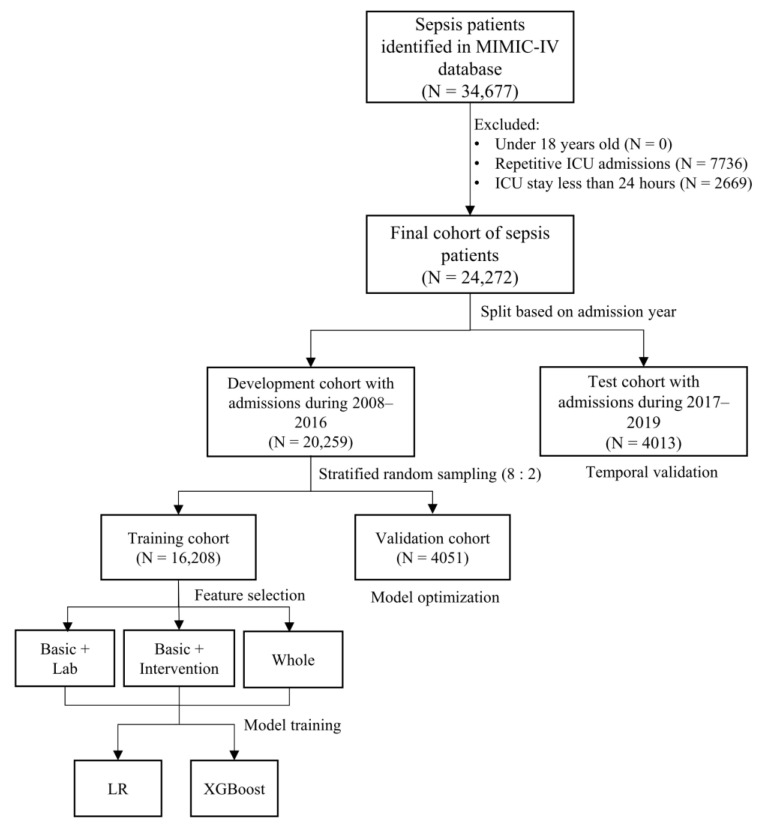
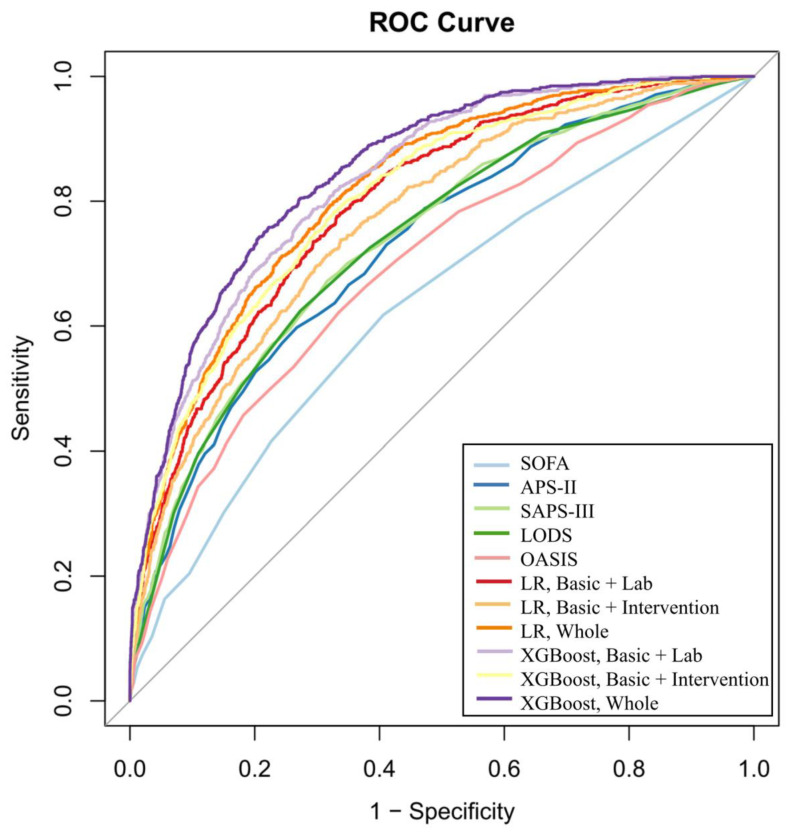
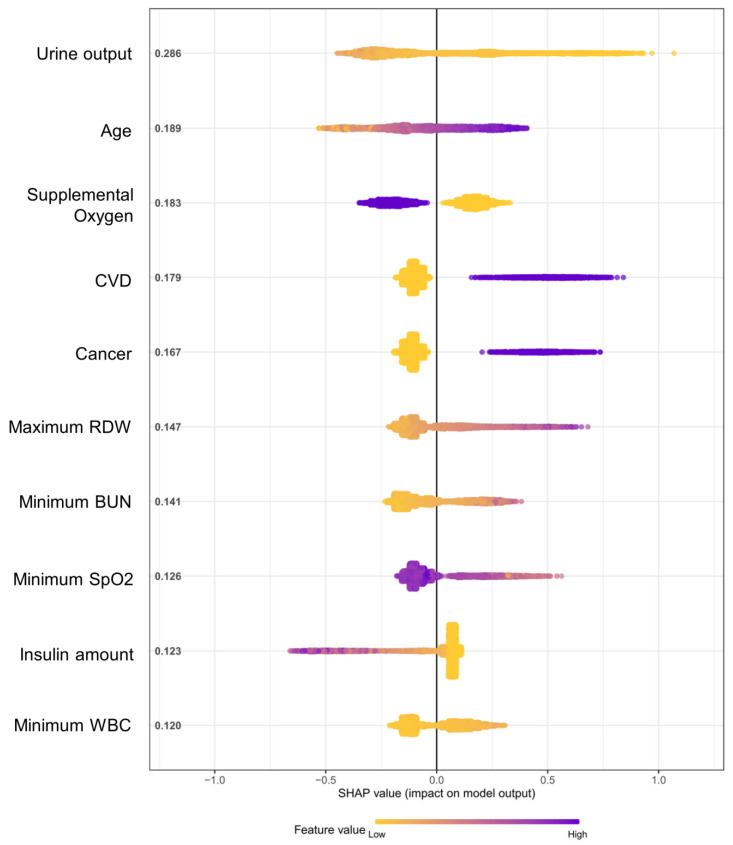
Background: Risk stratification plays an essential role in the decision making for sepsis management, as existing approaches can hardly satisfy the need to assess this heterogeneous population. We aimed to develop and validate a machine learning model to predict in-hospital mortality in critically ill patients with sepsis. Methods: Adult patients fulfilling the definition of Sepsis-3 were included at a large tertiary medical center. Relevant clinical features were extracted within the first 24 h in ICU, re-classified into different genres, and utilized for model development under three strategies: “Basic + Lab”, “Basic + Intervention”, and “Whole” feature sets. Extreme gradient boosting (XGBoost) was compared with logistic regression (LR) and established severity scores. Temporal validation was conducted using admissions from 2017 to 2019. Results: The final cohort included 24,272 patients, of which 4013 patients formed the test cohort for temporal validation. The trained and fine-tuned XGBoost model with the whole feature set showed the best discriminatory ability in the test cohort with AUROC as 0.85, significantly higher than the XGBoost “Basic + Lab” model (0.83), the LR “Whole” model (0.82), SOFA (0.63), SAPS-II (0.73), and LODS score (0.74). The performance in varying subgroups remained robust, and predictors, such as increased urine output and supplemental oxygen therapy, were crucially correlated with improved survival when interpretability was explored. Conclusions: We developed and validated a novel XGBoost-based model and demonstrated significantly improved performance to LR and other scores in predicting the mortality risks of sepsis patients in the hospital using features in the first 24 h.
Overview
The claims and statistics of this paper haven’t been checked yet.
Free: it reads the open-access text and checks the first 5 claims that cite a source we can check. Create a free account to check every claim.
Integrity signals
Registry
Cites
Statistics
Figures
Verification
Claims the paper makes
The claims and statistics of this paper haven’t been checked yet.
Free: it reads the open-access text and checks the first 5 claims that cite a source we can check. Create a free account to check every claim.
Claims other papers make about this one
Each is checked against this paper’s own text: does it say what the citing paper says it does?
The source backs part of the claim, not all of it — or backs it for a different population, condition or comparison.
In the citing paper
“These interpretability strategies enabled the identification of key physiological variables driving model predictions, such as respiratory rate (RR), Glasgow Coma Scale, mean arterial pressure (MAP), lactate, creatinine, heart rate (HR), blood urea nitrogen (BUN), body temperature, platelet count, and urine output [7, 12–18, 22, 24, 25, 39].”
From Explainable AI for critical care: a systematic review of interpretable models for sepsis and ICU mortality prediction (2026) · cites this paper as [15]
Experimental — accuracy not yet measuredThe cited source says what the claim attributes to it.
In the citing paper
“Most published studies rely on retrospective data and are often based on a single institution or dataset [12–17].”
From Explainable AI for critical care: a systematic review of interpretable models for sepsis and ICU mortality prediction (2026) · cites this paper as [15]
The cited source says what the claim attributes to it.
In the citing paper
“Interpretability methods were widely applied across these studies, with SHAP emerging as the most frequently used technique [12, 13, 15, 16, 18, 19, 22, 24, 39].”
From Explainable AI for critical care: a systematic review of interpretable models for sepsis and ICU mortality prediction (2026) · cites this paper as [15]
The cited source says what the claim attributes to it.
In the citing paper
“Only a limited number of studies conducted external or temporal validation ([7, 15, 18, 22, 24]), and very few models have been prospectively implemented in real clinical environments.”
From Explainable AI for critical care: a systematic review of interpretable models for sepsis and ICU mortality prediction (2026) · cites this paper as [15]
Self-check
Percentages, sums and reported differences re-computed from the paper’s own numbers.
The self-check needs the paper’s full text.
Citations
Cites
XGBoost: A Scalable Tree Boosting System
Chen, T., & Guestrin, C. (2016) · Proceedings of the 22nd ACM SIGKDD International Conference on Knowledge Discovery and Data Mining · doi:10.1145/2939672.2939785 · Cited by 54,569 · cited 1×
“XGBoost is a decision-tree-based algorithm, where weak learners are ensembled iteratively into a strong predictor when the loss function is minimized through gradient boosting [40].”
BackgroundThe third international consensus definitions for sepsis and septic shock (Sepsis-3).
Singer, M., Deutschman, C. S., Seymour, C. W., Shankar-Hari, M., Annane, D., Bauer, M., Bellomo, R., Bernard, G. R., Chiche, J.-D., Coopersmith, C. M., et al. (2016) · JAMA · doi:10.1001/jama.2016.0287 · Cited by 28,250 · cited 3×
“For instance, Sequential Organ Failure Assessment (SOFA) score was initially created based on expert consensus [1].”
BackgroundMethodInfluentialGoldberger, A. L., Amaral, L. A. N., Glass, L., Hausdorff, J. M., Ivanov, P. C., Mark, R. G., Mietus, J. E., Moody, G. B., Peng, C.-K., & Stanley, H. E. (2000) · Circulation · doi:10.1161/01.cir.101.23.e215 · Cited by 14,809
pROC: an open-source package for R and S+ to analyze and compare ROC curves
Robin, X., Turck, N., Hainard, A., Tiberti, N., Lisacek, F., Sanchez, J.-C., & Müller, M. (2011) · BMC Bioinformatics · doi:10.1186/1471-2105-12-77 · Cited by 13,697
Vincent, J. L., Moreno, R., Takala, J., Willatts, S., De Mendonça, A., Bruining, H., Reinhart, C. K., Suter, P. M., & Thijs, L. G. (1996) · Intensive Care Medicine · doi:10.1007/bf01709751 · Cited by 11,674 · cited 1×
“Additionally, Simplified Acute Physiology Score (SAPS)-II [22], APS-III [23], Logistic Organ Dysfunction Score (LODS) [24], Oxford Acute Severity of Illness Score (OASIS) [25], and SOFA score [26] acted as benchmarks for evaluating the performance of the new scoring tool.”
MethodMIMIC-III, a freely accessible critical care database
Johnson, A. E. W., Pollard, T. J., Shen, L., Lehman, L.-W. H., Feng, M., Ghassemi, M., Moody, B., Szolovits, P., Anthony Celi, L., & Mark, R. G. (2016) · Scientific Data · doi:10.1038/sdata.2016.35 · Cited by 8,141 · cited 1×
“The Institutional Review Board of the BIDMC and Massachusetts Institute of Technology approved the research use of the MIMIC database [21].”
MethodRudd, K. E., Johnson, S. C., Agesa, K. M., Shackelford, K. A., Tsoi, D., Kievlan, D. R., Colombara, D. V., Ikuta, K. S., Kissoon, N., Finfer, S., et al. (2020) · The Lancet · doi:10.1016/s0140-6736(19)32989-7 · Cited by 7,971
Le Gall, J.-R. (1993) · JAMA: The Journal of the American Medical Association · doi:10.1001/jama.270.24.2957 · Cited by 7,773 · cited 1×
“Additionally, Simplified Acute Physiology Score (SAPS)-II [22], APS-III [23], Logistic Organ Dysfunction Score (LODS) [24], Oxford Acute Severity of Illness Score (OASIS) [25], and SOFA score [26] acted as benchmarks for evaluating the performance of the new scoring tool.”
Method(2010) · University of Twente Research Information · Cited by 6,037
The APACHE III Prognostic System
Knaus, W. A., Wagner, D. P., Draper, E. A., Zimmerman, J. E., Bergner, M., Bastos, P. G., Sirio, C. A., Murphy, D. J., Lotring, T., Damiano, A., et al. (1991) · Chest · doi:10.1378/chest.100.6.1619 · Cited by 3,439 · cited 3×
“Models AUROC AUROC 95% CI Cut-Offs Se Sp Accuracy PPV NPV DOR Training cohort (N = 16,208) XGBoost, Basic + Lab 0.97 [0.964, 0.971] 0.23 0.89 0.92 0.92 0.66 0.98 95.12 XGBoost, Basic + Intervention 0.90 [0.892, 0.905] 0.15 0.86 0.78 0.79 0.40 0.97 21.56 XGBoost, Whole 0.95 [0.942, 0.950] 0.18 0.90 0.85 0.86 0.51 0.98…”
MethodInfluentialEpidemiology of acute kidney injury in critically ill patients: the multinational AKI-EPI study
Hoste, E. A. J., Bagshaw, S. M., Bellomo, R., Cely, C. M., Colman, R., Cruz, D. N., Edipidis, K., Forni, L. G., Gomersall, C. D., Govil, D., et al. (2015) · Intensive Care Medicine · doi:10.1007/s00134-015-3934-7 · Cited by 3,061 · cited 1×
“Urine output in the first day and minimum BUN both showed pivotal importance in predicting mortality, as sepsis-associated acute kidney injury (AKI) is strongly associated with poor clinical outcomes [47].”
BackgroundJakobsen, J. C., Gluud, C., Wetterslev, J., & Winkel, P. (2017) · BMC Medical Research Methodology · doi:10.1186/s12874-017-0442-1 · Cited by 2,747 · cited 1×
“Features with absent proportions above 40% were excluded from modeling [38].”
BackgroundHigh-Flow Oxygen through Nasal Cannula in Acute Hypoxemic Respiratory Failure
Frat, J.-P., Thille, A. W., Mercat, A., Girault, C., Ragot, S., Perbet, S., Prat, G., Boulain, T., Morawiec, E., Cottereau, A., et al. (2015) · New England Journal of Medicine · doi:10.1056/nejmoa1503326 · Cited by 2,342
Zimmerman, J. E., Kramer, A. A., McNair, D. S., & Malila, F. M. (2006) · Critical Care Medicine · doi:10.1097/01.ccm.0000215112.84523.f0 · Cited by 1,764 · cited 2×
“Acute Physiology and Chronic Health Evaluation (APACHE) score used binary logistic regression (LR) equations [10], requiring no intercorrelation between features and displaying a limited ability to deal with missing data [11].”
BackgroundMethodPeerapornratana, S., Manrique-Caballero, C. L., Gómez, H., & Kellum, J. A. (2019) · Kidney International · doi:10.1016/j.kint.2019.05.026 · Cited by 1,471 · cited 1×
“In sepsis, oliguria might carry increased significance in detection of AKI, possibly because it is tricky to confirm urine output criteria outside the ICU [48].”
BackgroundThe surviving sepsis campaign bundle: 2018 update
Levy, M. M., Evans, L. E., & Rhodes, A. (2018) · Intensive Care Medicine · doi:10.1007/s00134-018-5085-0 · Cited by 1,445 · cited 1×
“Since Survival Sepsis Campaign’s 1 h bundle [51] has been broadly promoted, serum lactate has become a routine measurement in ICU; thus, introducing lactate levels into novel scoring systems should be advocated.”
BackgroundMoreno, R. P., Metnitz, P. G. H., Almeida, E., Jordan, B., Bauer, P., Campos, R. A., Iapichino, G., Edbrooke, D., Capuzzo, M., Le Gall, J.-R., et al. (2005) · Intensive Care Medicine · doi:10.1007/s00134-005-2763-5 · Cited by 1,413
Lee, D. S., Austin, P. C., Rouleau, J. L., Liu, P. P., Naimark, D., & Tu, J. V. (2003) · JAMA · doi:10.1001/jama.290.19.2581 · Cited by 1,272
Collinearity diagnostics of binary logistic regression model
Midi, H., Sarkar, S. K., & Rana, S. (2010) · Journal of Interdisciplinary Mathematics · doi:10.1080/09720502.2010.10700699 · Cited by 1,095 · cited 2×
“Acute Physiology and Chronic Health Evaluation (APACHE) score used binary logistic regression (LR) equations [10], requiring no intercorrelation between features and displaying a limited ability to deal with missing data [11].”
BackgroundMethodExternal validation of prognostic models: what, why, how, when and where?
Ramspek, C. L., Jager, K. J., Dekker, F. W., Zoccali, C., & van Diepen, M. (2021) · Clinical Kidney Journal · doi:10.1093/ckj/sfaa188 · Cited by 887 · cited 2×
“Nevertheless, the clinical impact of these models has been heavily limited, and one of the main reasons is that only a small number of them are validated externally to ensure reproducibility and generalizability [17].”
BackgroundUrine Output Assessment as a Clinical Quality Measure
Macedo, E. (2015) · Nephron · doi:10.1159/000437312 · Cited by 798
Le Gall, J.-R. (1996) · JAMA · doi:10.1001/jama.1996.03540100046027 · Cited by 735 · cited 6×
“2023, 12, 915 5 of 15 BMI, body mass index; CVICU, Cardiovascular Intensive Care Unit; CCU, Coronary Care Unit; MICU, Medical Intensive Care Unit; SICU, Surgical Intensive Care Unit; TSICU, Trauma Surgical Intensive Care Unit; MI, Myocardial infarction; CHF, Congestive Heart Failure; CVD, Cerebrovascular Disorder; CPD…”
BackgroundMethodInfluentialBiomarkers of sepsis: time for a reappraisal
Pierrakos, C., Velissaris, D., Bisdorff, M., Marshall, J. C., & Vincent, J.-L. (2020) · Critical Care · doi:10.1186/s13054-020-02993-5 · Cited by 713
Tuning multiple imputation by predictive mean matching and local residual draws
Morris, T. P., White, I. R., & Royston, P. (2014) · BMC Medical Research Methodology · doi:10.1186/1471-2288-14-75 · Cited by 568 · cited 1×
“Missing records were imputed based on predictive mean matching [39].”
MethodGall, J. R. L. (1996) · JAMA · doi:10.1001/jama.276.10.802 · Cited by 543
Cleland, J., Cohen-Solal, A., Aguilar, J. C., Dietz, R., Eastaugh, J., Follath, F., Freemantle, N., Gavazzi, A., van Gilst, W., Hobbs, F., et al. (2002) · The Lancet · doi:10.1016/s0140-6736(02)11601-1 · Cited by 535 · cited 1×
“This tool can help intensivists to identify high-risk patients early; thus, they can initiate therapies carrying more than minimal risk for younger patients [4], or consider symptom relief and end-of-life (EOL) issues for elderly patients [44].”
BackgroundClassifying AKI by Urine Output versus Serum Creatinine Level
Kellum, J. A., Sileanu, F. E., Murugan, R., Lucko, N., Shaw, A. D., & Clermont, G. (2015) · Journal of the American Society of Nephrology · doi:10.1681/asn.2014070724 · Cited by 527 · cited 1×
“Urine output also demonstrated crucial importance in predicting short- and long-term survival, even a brief episode of isolated oliguria (no serum creatinine criteria present) seems to be associated with decreased 1-year survival [49].”
BackgroundJohnson, A., Bulgarelli, L., Pollard, T., Horng, S., Celi, L. A., & Mark, R. (2023) · PhysioNet · doi:10.13026/s6n6-xd98 · Cited by 524
Liu, Z., Meng, Z., Li, Y., Zhao, J., Wu, S., Gou, S., & Wu, H. (2019) · Scandinavian Journal of Trauma, Resuscitation and Emergency Medicine · doi:10.1186/s13049-019-0609-3 · Cited by 340
Johnson, A. E. W., Kramer, A. A., & Clifford, G. D. (2013) · Critical Care Medicine · doi:10.1097/ccm.0b013e31828a24fe · Cited by 297 · cited 4×
“Models AUROC AUROC 95% CI Cut-Offs Se Sp Accuracy PPV NPV DOR Training cohort (N = 16,208) XGBoost, Basic + Lab 0.97 [0.964, 0.971] 0.23 0.89 0.92 0.92 0.66 0.98 95.12 XGBoost, Basic + Intervention 0.90 [0.892, 0.905] 0.15 0.86 0.78 0.79 0.40 0.97 21.56 XGBoost, Whole 0.95 [0.942, 0.950] 0.18 0.90 0.85 0.86 0.51 0.98…”
MethodInfluentialBig Data and Data Science in Critical Care
Sanchez-Pinto, L. N., Luo, Y., & Churpek, M. M. (2018) · Chest · doi:10.1016/j.chest.2018.04.037 · Cited by 282 · cited 4×
“Good interpretability has become a crucial issue in model development, not only for researchers to verify the reliability of new models, but also for clinicians to gain confidence in sharing decision-making responsibilities with understandable algorithms [12].”
BackgroundInfluentialUsing machine learning methods to predict in-hospital mortality of sepsis patients in the ICU
Kong, G., Lin, K., & Hu, Y. (2020) · BMC Medical Informatics and Decision Making · doi:10.1186/s12911-020-01271-2 · Cited by 180 · cited 1×
“[42] developed ML-based models to predict the hospital mortality of sepsis patients based on the MIMIC-III database, utilizing demographic features and clinical features, such as acute physiological measurements in the first 24 h in ICU and chronic health status.”
MethodHu, C., Li, L., Huang, W., Wu, T., Xu, Q., Liu, J., & Hu, B. (2022) · Infectious Diseases and Therapy · doi:10.1007/s40121-022-00628-6 · Cited by 160 · cited 2×
“Researchers have already developed ML-based predictive approaches in critically ill patients with sepsis [13,14], influenza [15], cerebral hemorrhage [16], etc.”
BackgroundMethodHu, C.-A., Chen, C.-M., Fang, Y.-C., Liang, S.-J., Wang, H.-C., Fang, W.-F., Sheu, C.-C., Perng, W.-C., Yang, K.-Y., Kao, K.-C., et al. (2020) · BMJ Open · doi:10.1136/bmjopen-2019-033898 · Cited by 106 · cited 1×
“Researchers have already developed ML-based predictive approaches in critically ill patients with sepsis [13,14], influenza [15], cerebral hemorrhage [16], etc.”
BackgroundDimoula, A., Pradier, O., Kassengera, Z., Dalcomune, D. M., Türkan, H., & Vincent, J. (2013) · Clinical Infectious Diseases · doi:10.1093/cid/cit936 · Cited by 104 · cited 2×
“Single serum biomarkers, such as procalcitonin, interleukin-6 [6], presepsin [7], or CD64 [8], have shown insufficient sensitivity or specificity in practice, because sepsis is”
BackgroundInterpretable clinical prediction via attention-based neural network
Chen, P., Dong, W., Wang, J., Lu, X., Kaymak, U., & Huang, Z. (2020) · BMC Medical Informatics and Decision Making · doi:10.1186/s12911-020-1110-7 · Cited by 86 · cited 1×
“Another significant obstacle is the “black-box” nature of such systems, especially in critical fields, such as healthcare [18].”
BackgroundA Machine Learning-Based Prediction of Hospital Mortality in Patients With Postoperative Sepsis
Yao, R.-Q., Jin, X., Wang, G.-W., Yu, Y., Wu, G.-S., Zhu, Y.-B., Li, L., Li, Y.-X., Zhao, P.-Y., Zhu, S.-Y., et al. (2020) · Frontiers in Medicine · doi:10.3389/fmed.2020.00445 · Cited by 79 · cited 1×
“Researchers have already developed ML-based predictive approaches in critically ill patients with sepsis [13,14], influenza [15], cerebral hemorrhage [16], etc.”
BackgroundNakamura, Y., Hoshino, K., Kiyomi, F., Kawano, Y., Mizunuma, M., Tanaka, J., Nishida, T., & Ishikura, H. (2018) · Clinica Chimica Acta · doi:10.1016/j.cca.2018.09.013 · Cited by 56 · cited 1×
“Single serum biomarkers, such as procalcitonin, interleukin-6 [6], presepsin [7], or CD64 [8], have shown insufficient sensitivity or specificity in practice, because sepsis is”
BackgroundDeasy, J., Liò, P., & Ercole, A. (2020) · Scientific Reports · doi:10.1038/s41598-020-79142-z · Cited by 52 · cited 1×
“In addition, a deep-learning-based autonomous pipeline was constructed, capable of offering hourly refreshed probabilities on sepsis patients’ survival [43].”
BackgroundTrauma Early Mortality Prediction Tool (TEMPT) for assessing 28-day mortality
Kunitake, R. C., Kornblith, L. Z., Cohen, M. J. M., & Callcut, R. A. (2018) · Trauma Surgery & Acute Care Open · doi:10.1136/tsaco-2017-000131 · Cited by 49
Nie, X., Cai, Y., Liu, J., Liu, X., Zhao, J., Yang, Z., Wen, M., & Liu, L. (2021) · Frontiers in Neurology · doi:10.3389/fneur.2020.610531 · Cited by 39 · cited 1×
“Researchers have already developed ML-based predictive approaches in critically ill patients with sepsis [13,14], influenza [15], cerebral hemorrhage [16], etc.”
BackgroundHenning, D. J., Hall, M. K., Watsjold, B. K., Bhatraju, P. K., Harju-Baker, S., Shapiro, N. I., Liles, W. C., & Wurfel, M. M. (2019) · The American Journal of Emergency Medicine · doi:10.1016/j.ajem.2019.158361 · Cited by 29 · cited 1×
“Single serum biomarkers, such as procalcitonin, interleukin-6 [6], presepsin [7], or CD64 [8], have shown insufficient sensitivity or specificity in practice, because sepsis is”
BackgroundDevelopment of a new score for early mortality prediction in trauma ICU patients: RETRASCORE
Serviá, L., Llompart‐Pou, J. A., Chico‐Fernández, M., Montserrat, N., Badía, M., Barea‐Mendoza, J. A., Ballesteros-Sanz, M. D. L. Á., Trujillano, J., & the Neurointensive Care and Trauma Working Group of the Spanish Society of Intensive Care Medicine (SEMICYUC) (2021) · Critical Care · doi:10.1186/s13054-021-03845-6 · Cited by 15
The Uncertain Science of Predicting Death
Baum, L. V. M., & Friedman, D. L. (2020) · JAMA Network Open · doi:10.1001/jamanetworkopen.2020.1736 · Cited by 9 · cited 1×
“Therefore, patients who are classified as low risk by the ML model might still need EOL preparedness, when high-risk elderly patients and family members could benefit from understanding their own mortality and disease trajectories in early phases and advocating for care consistent with their goals and values [45].”
BackgroundTrials on oxygen supplementation in sepsis: better late than never
Perner, A., JONG, A. D., & Shankar‐Hari, M. (2019) · Intensive Care Medicine · doi:10.1007/s00134-019-05874-w · Cited by 8 · cited 1×
“Oxygen supplementation has been commonly applied in patients with sepsis when insufficient trials are focused explicitly on different non-invasive oxygenation strategies in the sepsis cohort [46].”
Method
Research works printed but not linked: 1
- Alexander Kowarik M.T. Imputation with the R Package VIM J. Stat. Softw. 2016 74 1 16
Cited by
Liu, F., Yao, J. J., Liu, C., & Shou, S. (2023) · BMC Surgery · doi:10.1186/s12893-023-02151-y · Cited by 58
“A retrospective temporal validation study suggested an interpretable machine learning model performed significantly better than LR and outperformed conventional severity scores in predicting in-hospital mortality among sepsis patients and varying subgroups [31].”
MethodSARIDAŞ, A., & Cetinkaya, R. (2025) · Diagnostics · doi:10.3390/diagnostics15081026 · Cited by 45
“Prior studies have shown that XGBoost effectively models complex clinical datasets and achieves strong discriminative performance in sepsis-related mortality prediction [15,16].”
AI Advances in ICU with an Emphasis on Sepsis Prediction: An Overview
Stylianides, C., Nicolaou, A., Sulaiman, W. A., Alexandropoulou, C.-A., Panagiotopoulos, I., Karathanasopoulou, K., Dimitrakopoulos, G., Kleanthous, S., Politi, E., Ntalaperas, D., et al. (2025) · Machine Learning and Knowledge Extraction · doi:10.3390/make7010006 · Cited by 28
“For sepsis mortality prediction models, built-in feature importance [113,240–242], SHAP [240,241,243–246], LIME [127,245,247], Break Down [241], Ceteris Paribus [241], and INVASE [242] are the explainable AI techniques used in literature.”
Zhuang, J., Huang, H., Jiang, S., Liang, J., Liu, Y., & Yu, X. (2023) · BMC Medical Informatics and Decision Making · doi:10.1186/s12911-023-02279-0 · Cited by 28
“Several studies have already developed ML-based risk assessment models for patients with sepsis in the ICU settings [21–23], such as Extreme Gradient Boosting (XGBoost), stepwise logistic regression, stochastic gradient boosting, and random forest (RF).”
BackgroundMethodInfluentialMiao, J., Zuo, C., Cao, H., Gu, Z., Huang, Y., Song, Y., & Wang, F. (2023) · Journal of the Neurological Sciences · doi:10.1016/j.jns.2023.122849 · Cited by 20
Metadata
- Authors
- Li, S., Dou, R., Song, X., Lui, K., Xu, J., Guo, Z., Hu, X., Guan, X., & Cai, C.
- Affiliations
- The First Affiliated Hospital, Sun Yat-sen University (CN)
- Rice University (US)
- Corresponding author
- Cai, Changjie
- Venue
- Journal of Clinical Medicine
- Publisher
- MDPI AG
- Published
- 2023-01-24
- Volume
- 12
- Issue
- 3
- Pages
- 915
- ISSN
- 2077-0383 (ISSN-L)
- PMC
- PMC9917524
- OpenAlex
- W4317933350
- Cited by
- 25
- References
- 43
- Citations by year
- 2026: 9 · 2025: 7 · 2024: 5 · 2023: 4
- FWCI
- 4.99
- Type
- journal article
- Language
- en
- Open access
- gold
- doi.org
- Licence
- Locations
- Journal of Clinical Medicine (publishedVersion, cc-by)
- PubMed Central (publishedVersion, cc-by)
- PubMed (publishedVersion)
- Funders
- Massachusetts Institute of Technology
- Topics
- Health Sciences › Medicine › Critical Care and Intensive Care Medicine › Sepsis Diagnosis and Treatment
- Physical Sciences › Computer Science › Artificial Intelligence › Machine Learning in Healthcare
- Health Sciences › Medicine › Endocrinology, Diabetes and Metabolism › Hyperglycemia and glycemic control in critically ill and hospitalized patients
- Keywords
- sepsis, in-hospital mortality prediction, model interpretability, XGBoost, risk stratification, Sepsis-3, severity scoring, SOFA score, SAPS II, urine output, supplemental oxygen, critically ill patients, temporal validation
About these checks
Registry, retraction, Cites and statistics results are computed, not judged, with one exception: a printed reference that no index lists is read once by a model before it counts as a citation error. Claims are extracted by a model and kept only when their quote appears verbatim in the text; each cited source is then checked, with a model’s help, for whether it says what the claim relies on. Those verdicts can be wrong — read the claim’s quote and the cited source before relying on one.
Statistics and arithmetic are recomputed, not judged.
Confidence bands are shown only for fields calibrated on our annotated test set. None is calibrated yet, so no band is shown.
What counts as a claim ›How we measure confidence ›How we check this ›
Are you an author, or do you see a problem with this page? Request a review
Data sources
Bibliographic data: Semantic Scholar, OpenAlex, Crossref.
Contains information from the Semantic Scholar Academic Graph Datasets, made available under the ODC Attribution License (ODC-BY 1.0).
Semantic Scholar’s data is described in: Kinney, R., et al. (2023). The Semantic Scholar Open Data Platform. arXiv:2301.10140.
