

The DOI matches its Crossref record; 26 of the 26 references it cites were found in a registry or an index.
The Gut Microbiome and Metastatic Renal Cell Carcinoma
Abstract
The introduction of targeted therapy (TT) and immuno-oncology (IO) agents have revolutionized the treatment of metastatic renal cell carcinoma (mRCC). However, despite the significant improvements in survival and clinical response yielded by these agents, a significant percentage of patients still experience progressive disease. Evidence now suggests that microorganisms living in the gut (i.e., the gut microbiome) could be used as a biomarker for response and may also have utility in increasing response to these treatments. In this review, we present an overview of the role of the gut microbiome in cancer and its potential implications in the treatment of mRCC.
Overview
The claims and statistics of this paper haven’t been checked yet.
Run the check — free, no account needed. It reads the open-access text and checks the sources it cites.
Integrity signals
Registry
Cites
Statistics
Figures
Verification
Claims the paper makes
The claims and statistics of this paper haven’t been checked yet.
Run the check — free, no account needed. It reads the open-access text and checks the sources it cites.
Claims other papers make about this one
Each is checked against this paper’s own text: does it say what the citing paper says it does?
In the citing paper
“In recent years, treatments for metastatic RCC have advanced significantly through targeted therapies and immune checkpoint inhibitors, with different types and targets [247].”
From Emerging role of exosomes in cancer therapy: progress and challenges (2025) · cites this paper as [247]
Self-check
Percentages, sums and reported differences re-computed from the paper’s own numbers.
The self-check needs the paper’s full text.
Citations
Cites
Gut microbiome influences efficacy of PD-1-based immunotherapy against epithelial tumors
Routy, B., Le Chatelier, E., Derosa, L., Duong, C. P. M., Alou, M. T., Daillère, R., Fluckiger, A., Messaoudene, M., Rauber, C., Roberti, M. P., et al. (2018) · Science · doi:10.1126/science.aan3706 · Cited by 5,671 · cited 4×
“Whereas it is certainly challenging to ascertain which of these factors has the biggest influence in the context of cancer, there is an increasing body of evidence suggesting that microbial metabolites and secondary metabolites not only play a key role in the onset and development of numerous malignancies, but could a…”
BackgroundInfluentialGut microbiome modulates response to anti-PD-1 immunotherapy in melanoma patients
Gopalakrishnan, V., Spencer, C. N., Nezi, L., Reuben, A., Andrews, M. C., Karpinets, T. V., Prieto, P. A., Vicente, D., Hoffman, K., Wei, S. C., et al. (2018) · Science · doi:10.1126/science.aan4236 · Cited by 4,812 · cited 1×
“Whereas it is certainly challenging to ascertain which of these factors has the biggest influence in the context of cancer, there is an increasing body of evidence suggesting that microbial metabolites and secondary metabolites not only play a key role in the onset and development of numerous malignancies, but could a…”
BackgroundThe commensal microbiome is associated with anti-PD-1 efficacy in metastatic melanoma patients
Matson, V., Fessler, J., Bao, R., Chongsuwat, T., Zha, Y., Alegre, M.-L., Luke, J. J., & Gajewski, T. F. (2018) · Science · doi:10.1126/science.aao3290 · Cited by 3,107
Fecal microbiota transplant overcomes resistance to anti–PD-1 therapy in melanoma patients
Davar, D., Dzutsev, A. K., McCulloch, J. A., Rodrigues, R. R., Chauvin, J.-M., Morrison, R. M., Deblasio, R. N., Menna, C., Ding, Q., Pagliano, O., et al. (2021) · Science · doi:10.1126/science.abf3363 · Cited by 1,781 · cited 1×
“Moreover, similar concepts have already been successfully implemented in cohorts of immunotherapy-refractory patients with melanoma [56,57].”
BackgroundFecal microbiota transplant promotes response in immunotherapy-refractory melanoma patients
Baruch, E. N., Youngster, I., Ben-Betzalel, G., Ortenberg, R., Lahat, A., Katz, L., Adler, K., Dick-Necula, D., Raskin, S., Bloch, N., et al. (2021) · Science · doi:10.1126/science.abb5920 · Cited by 1,757
The Integrative Human Microbiome Project
The Integrative HMP (iHMP) Research Network Consortium, Proctor, L. M., Creasy, H. H., Fettweis, J. M., Lloyd-Price, J., Mahurkar, A., Zhou, W., Buck, G. A., Snyder, M. P., Strauss, J. F., et al. (2019) · Nature · doi:10.1038/s41586-019-1238-8 · Cited by 1,381
The maternal microbiota drives early postnatal innate immune development
Gomez de Agüero, M., Ganal-Vonarburg, S. C., Fuhrer, T., Rupp, S., Uchimura, Y., Li, H., Steinert, A., Heikenwalder, M., Hapfelmeier, S., Sauer, U., et al. (2016) · Science · doi:10.1126/science.aad2571 · Cited by 1,231
Mutational signature in colorectal cancer caused by genotoxic pks+ E. coli
Pleguezuelos-Manzano, C., Puschhof, J., Rosendahl Huber, A., van Hoeck, A., Wood, H. M., Nomburg, J., Gurjao, C., Manders, F., Dalmasso, G., Stege, P. B., et al. (2020) · Nature · doi:10.1038/s41586-020-2080-8 · Cited by 1,208
Kootte, R. S., Levin, E., Salojärvi, J., Smits, L. P., Hartstra, A. V., Udayappan, S. D., Hermes, G., Bouter, K. E., Koopen, A. M., Holst, J. J., et al. (2017) · Cell Metabolism · doi:10.1016/j.cmet.2017.09.008 · Cited by 1,039
Dietary fiber and probiotics influence the gut microbiome and melanoma immunotherapy response
Spencer, C. N., McQuade, J. L., Gopalakrishnan, V., McCulloch, J. A., Vetizou, M., Cogdill, A. P., Khan, M. A. W., Zhang, X., White, M. G., Peterson, C. B., et al. (2021) · Science · doi:10.1126/science.aaz7015 · Cited by 966
Derosa, L., Hellmann, M. D., Spaziano, M., Halpenny, D., Fidelle, M., Rizvi, H., Long, N., Plodkowski, A. J., Arbour, K. C., Chaft, J. E., et al. (2018) · Annals of Oncology · doi:10.1093/annonc/mdy103 · Cited by 908 · cited 1×
“Overall, the resulting evidence indicates that treatment with antibiotics is associated with decreased overall survival (OS), progression-free survival (PFS) and objective response rate (ORR) in patients with mRCC treated with standard-of-care ICIs [84].”
BackgroundFecal microbiota transplantation for refractory immune checkpoint inhibitor-associated colitis
Wang, Y., Wiesnoski, D. H., Helmink, B. A., Gopalakrishnan, V., Choi, K., DuPont, H. L., Jiang, Z.-D., Abu-Sbeih, H., Sanchez, C. A., Chang, C.-C., et al. (2018) · Nature Medicine · doi:10.1038/s41591-018-0238-9 · Cited by 740 · cited 1×
“This finding could potentially be used to develop biomarkers to predict their occurrence prior to initiation of therapy, as well as devising interventions to abrogate these events once they ensue [49].”
BackgroundFrankel, A. E., Coughlin, L. A., Kim, J., Froehlich, T. W., Xie, Y., Frenkel, E. P., & Koh, A. Y. (2017) · Neoplasia · doi:10.1016/j.neo.2017.08.004 · Cited by 709
Regulation of intestinal inflammation by microbiota following allogeneic bone marrow transplantation
Jenq, R. R., Ubeda, C., Taur, Y., Menezes, C. C., Khanin, R., Dudakov, J. A., Liu, C., West, M. L., Singer, N. V., Equinda, M. J., et al. (2012) · Journal of Experimental Medicine · doi:10.1084/jem.20112408 · Cited by 626
Genomic correlates of response to immune checkpoint blockade in microsatellite-stable solid tumors
Miao, D., Margolis, C. A., Vokes, N. I., Liu, D., Taylor-Weiner, A., Wankowicz, S. M., Adeegbe, D., Keliher, D., Schilling, B., Tracy, A., et al. (2018) · Nature Genetics · doi:10.1038/s41588-018-0200-2 · Cited by 620
Dizman, N., Meza, L., Bergerot, P., Alcantara, M., Dorff, T., Lyou, Y., Frankel, P., Cui, Y., Mira, V., Llamas, M., et al. (2022) · Nature Medicine · doi:10.1038/s41591-022-01694-6 · Cited by 515
Self-citationGut microbiota signatures are associated with toxicity to combined CTLA-4 and PD-1 blockade
Andrews, M. C., Duong, C. P. M., Gopalakrishnan, V., Iebba, V., Chen, W.-S., Derosa, L., Khan, M. A. W., Cogdill, A. P., White, M. G., Wong, M. C., et al. (2021) · Nature Medicine · doi:10.1038/s41591-021-01406-6 · Cited by 437
Derosa, L., Routy, B., Fidelle, M., Iebba, V., Alla, L., Pasolli, E., Segata, N., Desnoyer, A., Pietrantonio, F., Ferrere, G., et al. (2020) · European Urology · doi:10.1016/j.eururo.2020.04.044 · Cited by 398
Gut microbiota diversity across ethnicities in the United States
Brooks, A. W., Priya, S., Blekhman, R., & Bordenstein, S. R. (2018) · PLOS Biology · doi:10.1371/journal.pbio.2006842 · Cited by 304
Ianiro, G., Maida, M., Burisch, J., Simonelli, C., Hold, G., Ventimiglia, M., Gasbarrini, A., & Cammarota, G. (2018) · United European Gastroenterology Journal · doi:10.1177/2050640618780762 · Cited by 203
Weber, D., Oefner, P. J., Hiergeist, A., Koestler, J., Gessner, A., Weber, M., Hahn, J., Wolff, D., Stämmler, F., Spang, R., et al. (2015) · Blood · doi:10.1182/blood-2015-04-638858 · Cited by 195
Salgia, N. J., Bergerot, P. G., Maia, M. C., Dizman, N., Hsu, J., Gillece, J. D., Folkerts, M., Reining, L., Trent, J., Highlander, S. K., et al. (2020) · European Urology · doi:10.1016/j.eururo.2020.07.011 · Cited by 194
Self-citationHagihara, M., Kuroki, Y., Ariyoshi, T., Higashi, S., Fukuda, K., Yamashita, R., Matsumoto, A., Mori, T., Mimura, K., Yamaguchi, N., et al. (2020) · iScience · doi:10.1016/j.isci.2019.100772 · Cited by 162
Yonekura, S., Terrisse, S., Alves Costa Silva, C., Lafarge, A., Iebba, V., Ferrere, G., Goubet, A.-G., Fahrner, J.-E., Lahmar, I., Ueda, K., et al. (2022) · Cancer Discovery · doi:10.1158/2159-8290.cd-21-0999 · Cited by 112
The Impact of Intratumoral and Gastrointestinal Microbiota on Systemic Cancer Therapy
Cogdill, A. P., Gaudreau, P. O., Arora, R., Gopalakrishnan, V., & Wargo, J. A. (2018) · Trends in Immunology · doi:10.1016/j.it.2018.09.007 · Cited by 98 · cited 1×
“The most utilized tool as a strategy to surpass the challenge of obtaining reliable and high-quality samples is sequencing the 16S rRNA gene, which is present only in prokaryotic cells, with the drawback of identifying only bacteria [106].”
MethodDizman, N., Hsu, J., Bergerot, P. G., Gillece, J. D., Folkerts, M., Reining, L., Trent, J., Highlander, S. K., & Pal, S. K. (2021) · Cancer Medicine · doi:10.1002/cam4.3569 · Cited by 78
Self-citation
Research works printed but not linked: 78
- Motzer, 2007, Sunitinib versus Interferon Alfa in Metastatic Renal-Cell Carcinoma, N. Engl. J. Med., 356, 115, 10.1056/NEJMoa065044 · DOI
- Sternberg, 2010, Pazopanib in Locally Advanced or Metastatic Renal Cell Carcinoma: Results of a Randomized Phase III Trial, J. Clin. Oncol., 28, 1061, 10.1200/JCO.2009.23.9764 · DOI
- Rini, 2011, Comparative effectiveness of axitinib versus sorafenib in advanced renal cell carcinoma (AXIS): A randomised phase 3 trial, Lancet, 378, 1931, 10.1016/S0140-6736(11)61613-9 · DOI
- Choueiri, 2017, Cabozantinib Versus Sunitinib As Initial Targeted Therapy for Patients with Metastatic Renal Cell Carcinoma of Poor or Intermediate Risk: The Alliance A031203 CABOSUN Trial, J. Clin. Oncol., 35, 591, 10.1200/JCO.2016.70.7398 · DOI
- Motzer, 2015, Lenvatinib, everolimus, and the combination in patients with metastatic renal cell carcinoma: A randomised, phase 2, open-label, multicentre trial, Lancet Oncol., 16, 1473, 10.1016/S1470-2045(15)00290-9 · DOI
- Hudes, 2007, Temsirolimus, Interferon Alfa, or Both for Advanced Renal-Cell Carcinoma, N. Engl. J. Med., 356, 2271, 10.1056/NEJMoa066838 · DOI
- Meza, 2022, Cabozantinib plus immunotherapy combinations in metastatic renal cell and urothelial carcinoma, Futur. Oncol., 18, 21, 10.2217/fon-2021-0570 · DOI
- Dudani, 2020, An Update on Predictive Biomarkers in Metastatic Renal Cell Carcinoma, Eur. Urol. Focus, 6, 34, 10.1016/j.euf.2019.04.004 · DOI
- Zitvogel, 2021, The microbiome and human cancer, Science, 371, eabc4552, 10.1126/science.abc4552 · DOI · Paper page
- Bianconi, 2013, An estimation of the number of cells in the human body, Ann. Hum. Biol., 40, 463, 10.3109/03014460.2013.807878 · DOI · Paper page
- Sender, R., Fuchs, S., and Milo, R. (2016). Revised Estimates for the Number of Human and Bacteria Cells in the Body. PLOS Biol., 14. · DOI
- Thomas, 2017, The Host Microbiome Regulates and Maintains Human Health: A Primer and Perspective for Non-Microbiologists, Cancer Res., 77, 1783, 10.1158/0008-5472.CAN-16-2929 · DOI
- Schluter, 2020, The gut microbiota is associated with immune cell dynamics in humans, Nature, 588, 303, 10.1038/s41586-020-2971-8 · DOI · Paper page
- Mazmanian, 2005, An Immunomodulatory Molecule of Symbiotic Bacteria Directs Maturation of the Host Immune System, Cell, 122, 107, 10.1016/j.cell.2005.05.007 · DOI · Paper page
- Olin, 2018, Stereotypic Immune System Development in Newborn Children, Cell, 174, 1277, 10.1016/j.cell.2018.06.045 · DOI
- Tan, 2016, Identifying species of symbiont bacteria from the human gut that, alone, can induce intestinal Th17 cells in mice, Proc. Natl. Acad. Sci. USA, 113, E8141, 10.1073/pnas.1617460113 · DOI · Paper page
- Deshmukh, 2014, The microbiota regulates neutrophil homeostasis and host resistance to Escherichia coli K1 sepsis in neonatal mice, Nat. Med., 20, 524, 10.1038/nm.3542 · DOI · Paper page
- Ivanov, 2008, Specific Microbiota Direct the Differentiation of IL-17-Producing T-Helper Cells in the Mucosa of the Small Intestine, Cell Host Microbe, 4, 337, 10.1016/j.chom.2008.09.009 · DOI · Paper page
- Sefik, 2017, Mining the Human Gut Microbiota for Immunomodulatory Organisms, Cell, 168, 928, 10.1016/j.cell.2017.01.022 · DOI · Paper page
- Zaneveld, 2008, Host-bacterial coevolution and the search for new drug targets, Curr. Opin. Chem. Biol., 12, 109, 10.1016/j.cbpa.2008.01.015 · DOI
- Khan, 2022, Circulating microbiota and metabolites: Insights into cardiovascular diseases, J. Clin. Lab. Anal., 36, e24779, 10.1002/jcla.24779 · DOI
- Arze, 2019, Multi-omics of the gut microbial ecosystem in inflammatory bowel diseases, Nature, 569, 655, 10.1038/s41586-019-1237-9 · DOI · Paper page
- Azzouz, 2019, Lupus nephritis is linked to disease-activity associated expansions and immunity to a gut commensal, Ann. Rheum. Dis., 78, 947, 10.1136/annrheumdis-2018-214856 · DOI
- Kong, 2020, Linking Strain Engraftment in Fecal Microbiota Transplantation with Maintenance of Remission in Crohn’s Disease, Gastroenterology, 159, 2193, 10.1053/j.gastro.2020.08.045 · DOI · Paper page
- Rous, 1911, A Sarcoma of the Fowl Transmissible by an Agent Separable from the Tumor Cells, J. Exp. Med., 13, 397, 10.1084/jem.13.4.397 · DOI · Paper page
- Yang, 2022, Global research trends on the links between gut microbiota and cancer immunotherapy: A bibliometric analysis (2012–2021), Front. Immunol., 13, 952546, 10.3389/fimmu.2022.952546 · DOI
- White, 2014, Viruses and Human Cancers: A Long Road of Discovery of Molecular Paradigms, Clin. Microbiol. Rev., 27, 463, 10.1128/CMR.00124-13 · DOI
- Knippel, 2021, The Cancer Microbiome: Recent Highlights and Knowledge Gaps, Cancer Discov., 11, 2378, 10.1158/2159-8290.CD-21-0324 · DOI
- Park, 2022, Targeting the gut and tumor microbiota in cancer, Nat. Med., 28, 690, 10.1038/s41591-022-01779-2 · DOI · Paper page
- Brennan, 2016, Gut Microbiota, Inflammation, and Colorectal Cancer, Annu. Rev. Microbiol., 70, 395, 10.1146/annurev-micro-102215-095513 · DOI
- Yang, 2017, Novel insights into microbiome in colitis and colorectal cancer, Curr. Opin. Gastroenterol., 33, 422, 10.1097/MOG.0000000000000399 · DOI
- Mei, 2022, Dysbiosis: The first hit for digestive system cancer, Front. Physiol., 13, 1040991, 10.3389/fphys.2022.1040991 · DOI
- Mima, 2017, The microbiome and hepatobiliary-pancreatic cancers, Cancer Lett., 402, 9, 10.1016/j.canlet.2017.05.001 · DOI
- Wu, 2022, Elevated bile acid metabolism and microbiome are associated with suppressed cell proliferation and better survival in breast cancer, Am. J. Cancer Res., 12, 5271
- Mekadim, C., Skalnikova, H.K., Cizkova, J., Cizkova, V., Palanova, A., Horak, V., and Mrazek, J. (2022). Dysbiosis of skin microbiome and gut microbiome in melanoma progression. BMC Microbiol., 22. · DOI
- Viaud, 2013, The Intestinal Microbiota Modulates the Anticancer Immune Effects of Cyclophosphamide, Science, 342, 971, 10.1126/science.1240537 · DOI · Paper page
- Iida, 2019, Commensal Bacteria Control Cancer Response to Therapy by Modulating the Tumor Microenvironment, Science, 342, 967, 10.1126/science.1240527 · DOI · Paper page
- Simpson, 2022, Diet-driven microbial ecology underpins associations between cancer immunotherapy outcomes and the gut microbiome, Nat. Med., 28, 2344, 10.1038/s41591-022-01965-2 · DOI · Paper page
- Liu, 2021, Intestinal Microbiome Associated with Immune-Related Adverse Events for Patients Treated with Anti-PD-1 Inhibitors, a Real-World Study, Front. Immunol., 12, 5334, 10.3389/fimmu.2021.756872 · DOI
- Fernandes, 2022, Targeting the gut microbiota for cancer therapy, Nat. Rev. Cancer, 22, 703, 10.1038/s41568-022-00513-x · DOI · Paper page
- Tomita, 2020, Association of Probiotic Clostridium butyricum Therapy with Survival and Response to Immune Checkpoint Blockade in Patients with Lung Cancer, Cancer Immunol. Res., 8, 1236, 10.1158/2326-6066.CIR-20-0051 · DOI · Paper page
- Lythgoe, 2022, Polymorphic microbes: A new emerging hallmark of cancer, Trends Microbiol., 30, 1131, 10.1016/j.tim.2022.08.004 · DOI
- Hanahan, 2022, Hallmarks of Cancer: New Dimensions, Cancer Discov., 12, 31, 10.1158/2159-8290.CD-21-1059 · DOI · Paper page
- Helmink, 2019, The microbiome, cancer, and cancer therapy, Nat. Med., 25, 377, 10.1038/s41591-019-0377-7 · DOI · Paper page
- Yoon, 2021, Akkermansia muciniphila secretes a glucagon-like peptide-1-inducing protein that improves glucose homeostasis and ameliorates metabolic disease in mice, Nat. Microbiol., 6, 563, 10.1038/s41564-021-00880-5 · DOI · Paper page
- Derosa, 2021, Microbiota-Centered Interventions: The Next Breakthrough in Immuno-Oncology?, Cancer Discov., 11, 2396, 10.1158/2159-8290.CD-21-0236 · DOI · Paper page
- Okumura, 2021, Gut bacteria identified in colorectal cancer patients promote tumourigenesis via butyrate secretion, Nat. Commun., 12, 5674, 10.1038/s41467-021-25965-x · DOI
- Rossi, T., Vergara, D., Fanini, F., Maffia, M., Bravaccini, S., and Pirini, F. (2020). Microbiota-Derived Metabolites in Tumor Progression and Metastasis. Int. J. Mol. Sci., 21. · DOI
- Blake, 2021, The immunotoxicity, but not anti-tumor efficacy, of anti-CD40 and anti-CD137 immunotherapies is dependent on the gut microbiota, Cell Rep. Med., 2, 100464, 10.1016/j.xcrm.2021.100464 · DOI
- Furusawa, 2013, Commensal microbe-derived butyrate induces the differentiation of colonic regulatory T cells, Nature, 504, 446, 10.1038/nature12721 · DOI · Paper page
- Makki, 2018, The Impact of Dietary Fiber on Gut Microbiota in Host Health and Disease, Cell Host Microbe, 23, 705, 10.1016/j.chom.2018.05.012 · DOI · Paper page
- Morrison, 2016, Formation of short chain fatty acids by the gut microbiota and their impact on human metabolism, Gut Microbes, 7, 189, 10.1080/19490976.2015.1134082 · DOI · Paper page
- Kespohl, 2017, The Microbial Metabolite Butyrate Induces Expression of Th1-Associated Factors in CD4+ T Cells, Front. Immunol., 8, 1036, 10.3389/fimmu.2017.01036 · DOI · Paper page
- Luu, 2018, Regulation of the effector function of CD8+ T cells by gut microbiota-derived metabolite butyrate, Sci. Rep., 8, 14430, 10.1038/s41598-018-32860-x · DOI
- Salvi, P.S., and Cowles, R.A. (2021). Butyrate and the Intestinal Epithelium: Modulation of Proliferation and Inflammation in Homeostasis and Disease. Cells, 10. · DOI
- Bordonaro, 2001, Cell type- and promoter-dependent modulation of the Wnt signaling pathway by sodium butyrate, Int. J. Cancer, 97, 42, 10.1002/ijc.1577 · DOI
- Bordonaro, 2008, Role of Tcf-DNA binding and the chromatin remodeling factor Brg-1 in the modulation of Wnt activity by butyrate, Cell Cycle, 7, 3472, 10.4161/cc.7.21.6933 · DOI
- Mandal, 2001, Butyric acid induces apoptosis by up-regulating Bax expression via stimulation of the c-Jun N-terminal kinase/activation protein-1 pathway in human colon cancer cells, Gastroenterology, 120, 71, 10.1053/gast.2001.20897 · DOI
- Thangaraju, 2009, GPR109A Is a G-protein–Coupled Receptor for the Bacterial Fermentation Product Butyrate and Functions as a Tumor Suppressor in Colon, Cancer Res., 69, 2826, 10.1158/0008-5472.CAN-08-4466 · DOI · Paper page
- Chen, 2019, Clostridium butyricum, a butyrate-producing probiotic, inhibits intestinal tumor development through modulating Wnt signaling and gut microbiota, Cancer Lett., 469, 456, 10.1016/j.canlet.2019.11.019 · DOI
- McDermott, 2018, Clinical activity and molecular correlates of response to atezolizumab alone or in combination with bevacizumab versus sunitinib in renal cell carcinoma, Nat. Med., 24, 749, 10.1038/s41591-018-0053-3 · DOI · Paper page
- Garon, 2015, Pembrolizumab for the Treatment of Non–Small-Cell Lung Cancer, N. Engl. J. Med., 372, 2018, 10.1056/NEJMoa1501824 · DOI · Paper page
- Tumeh, 2014, PD-1 blockade induces responses by inhibiting adaptive immune resistance, Nature, 515, 568, 10.1038/nature13954 · DOI · Paper page
- Albiges, 2020, Nivolumab plus ipilimumab versus sunitinib for first-line treatment of advanced renal cell carcinoma: Extended 4-year follow-up of the phase III CheckMate 214 trial, ESMO Open, 5, e001079, 10.1136/esmoopen-2020-001079 · DOI
- Sivan, 2015, Commensal Bifidobacterium promotes antitumor immunity and facilitates anti-PD-L1 efficacy, Science, 350, 1084, 10.1126/science.aac4255 · DOI · Paper page
- Balan, 2015, Novel Roles of c-Met in the Survival of Renal Cancer Cells through the Regulation of HO-1 and PD-L1 Expression, J. Biol. Chem., 290, 8110, 10.1074/jbc.M114.612689 · DOI
- Paolino, M., and Penninger, J.M. (2016). The Role of TAM Family Receptors in Immune Cell Function: Implications for Cancer Therapy. Cancers, 8. · DOI
- Voron, 2014, Control of the Immune Response by Pro-Angiogenic Factors, Front. Oncol., 4, 70, 10.3389/fonc.2014.00070 · DOI
- Hughes, 2016, Targeted Therapy and Checkpoint Immunotherapy Combinations for the Treatment of Cancer, Trends Immunol., 37, 462, 10.1016/j.it.2016.04.010 · DOI
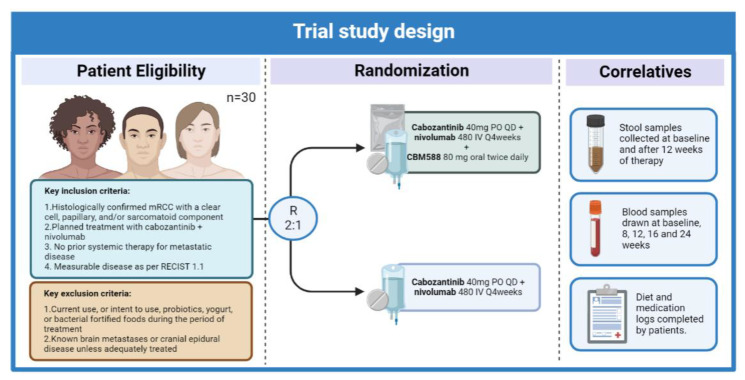
- Meza, 2022, A phase I trial to evaluate the biologic effect of CBM588 (Clostridium butyricum) in combination with cabozantinib plus nivolumab for patients with metastatic renal cell carcinoma (mRCC), J. Clin. Oncol., 40, TPS4606, 10.1200/JCO.2022.40.16_suppl.TPS4606 · DOI
- Meza, 2022, Live bacterial supplementation for improving treatment response in metastatic renal cell carcinoma, Clin. Transl. Med., 12, e948, 10.1002/ctm2.948 · DOI
- Ninkov, M., Schmerk, C.L., Moradizadeh, M., Parvathy, S.N., Figueredo, R., Burton, J.P., Silverman, M.S., Fernandes, R., Vareki, S.M., and Haeryfar, S.M.M. (2022). Improved MAIT cell functions following fecal microbiota transplantation for metastatic renal cell carcinoma. Cancer Immunol. Immunother., 1–14. · DOI
- Ianiro, 2020, Faecal microbiota transplantation for the treatment of diarrhoea induced by tyrosine-kinase inhibitors in patients with metastatic renal cell carcinoma, Nat. Commun., 11, 4333, 10.1038/s41467-020-18127-y · DOI
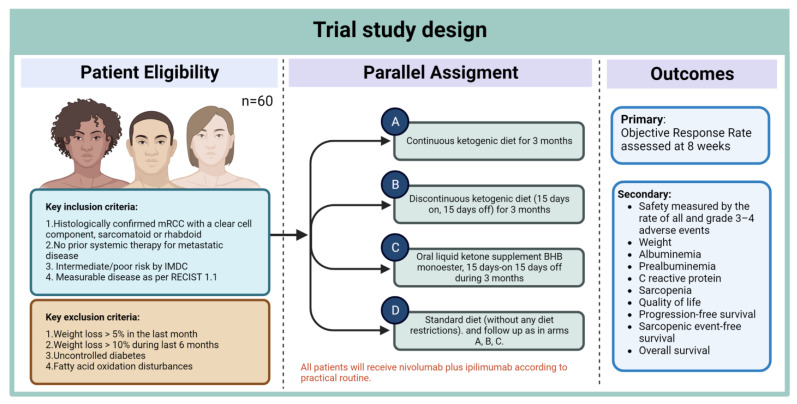
- Ferrere, 2021, Ketogenic diet and ketone bodies enhance the anticancer effects of PD-1 blockade, J. Clin. Investig., 6, e145207
- Huttenhower, 2016, The healthy human microbiome, Genome Med., 8, 51, 10.1186/s13073-016-0307-y · DOI · Paper page
- Qin, 2010, A human gut microbial gene catalogue established by metagenomic sequencing, Nature, 464, 59, 10.1038/nature08821 · DOI · Paper page
- Qin, 2012, A metagenome-wide association study of gut microbiota in type 2 diabetes, Nature, 490, 55, 10.1038/nature11450 · DOI · Paper page
- Li, 2022, Gut microbiome in modulating immune checkpoint inhibitors, Ebiomedicine, 82, 104163, 10.1016/j.ebiom.2022.104163 · DOI
Cited by
Sorted by citations
Emerging role of exosomes in cancer therapy: progress and challenges
Li, J., Wang, J., & Chen, Z. (2025) · Molecular Cancer · doi:10.1186/s12943-024-02215-4 · Cited by 297
Metadata
- Authors
- Meza, L., Feng, M., Lee, K., Sperandio, R., & Pal, S. K.
- Venue
- Journal of Clinical Medicine
- Publisher
- MDPI AG
- Published
- 2023-02-14
- Volume
- 12
- Issue
- 4
- Pages
- 1502
- ISSN
- 2077-0383
- PMC
- PMC9960560
- Cited by
- 12
- References
- 26
- Language
- en
About these checks
Registry, retraction, Cites and statistics results are computed, not judged, with one exception: a printed reference that no index lists is read once by a model before it counts as a citation error. Claims are extracted by a model and kept only when their quote appears verbatim in the text; each cited source is then checked, with a model’s help, for whether it says what the claim relies on. Those verdicts can be wrong — read the claim’s quote and the cited source before relying on one.
Statistics and arithmetic are recomputed, not judged.
Confidence bands are shown only for fields calibrated on our annotated test set. None is calibrated yet, so no band is shown.
What counts as a claim ›How we measure confidence ›How we check this ›
Are you an author, or do you see a problem with this page? Request a review
