

Interactions between Aspergillus fumigatus and Pulmonary Bacteria: Current State of the Field, New Data, and Future Perspective
Open accessThe DOI matches its Crossref record; 91 of the 93 references it cites were found in a registry or an index.
Abstract
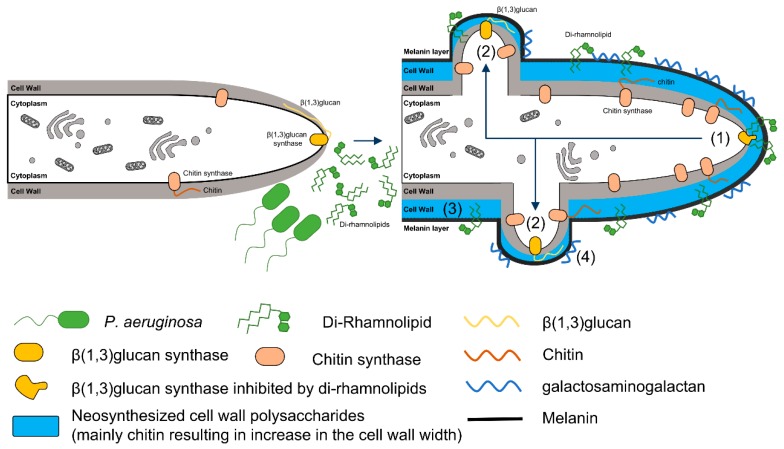
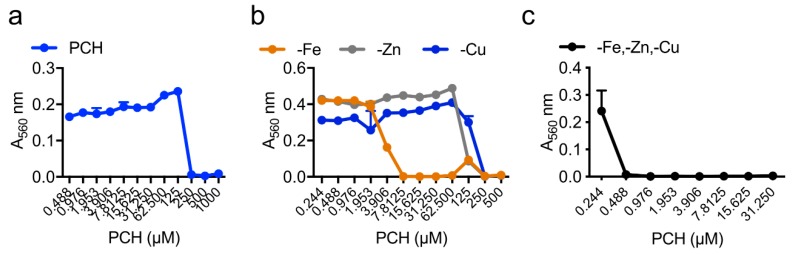
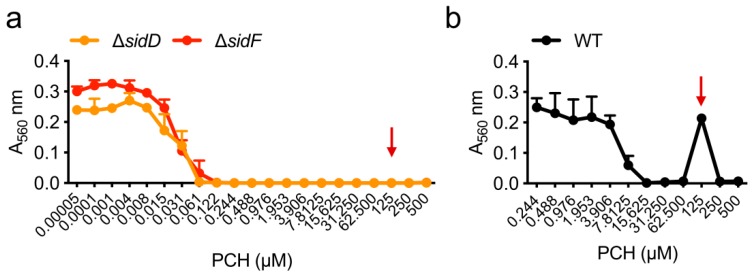
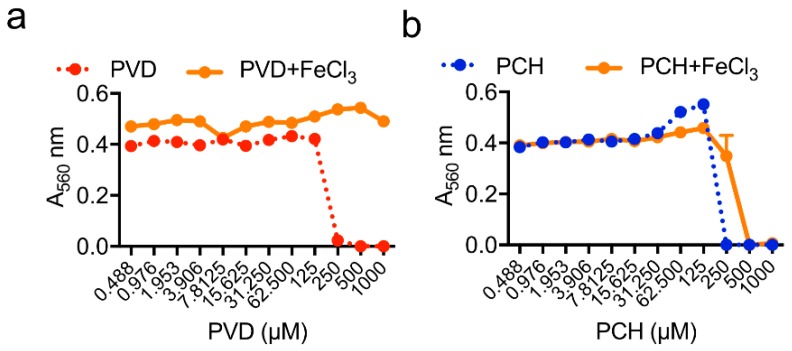
Aspergillus fumigatus and Pseudomonas aeruginosa are central fungal and bacterial members of the pulmonary microbiota. The interactions between A. fumigatus and P. aeruginosa have only just begun to be explored. A balance between inhibitory and stimulatory effects on fungal growth was observed in mixed A. fumigatus–P. aeruginosa cultures. Negative interactions have been seen for homoserine-lactones, pyoverdine and pyochelin resulting from iron starvation and intracellular inhibitory reactive oxidant production. In contrast, several types of positive interactions were recognized. Dirhamnolipids resulted in the production of a thick fungal cell wall, allowing the fungus to resist stress. Phenazines and pyochelin favor iron uptake for the fungus. A. fumigatus is able to use bacterial volatiles to promote its growth. The immune response is also differentially regulated by co-infections.
Overview
The claims and statistics of this paper haven’t been checked yet.
Free: it reads the open-access text and checks the first 5 claims that cite a source we can check. Create a free account to check every claim.
Integrity signals
Registry
Cites
Statistics
Figures
Verification
Claims the paper makes
The claims and statistics of this paper haven’t been checked yet.
Free: it reads the open-access text and checks the first 5 claims that cite a source we can check. Create a free account to check every claim.
Claims other papers make about this one
Each is checked against this paper’s own text: does it say what the citing paper says it does?
In the citing paper
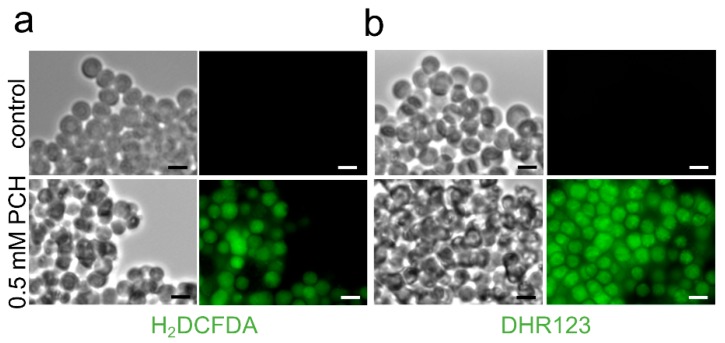
“Like phenazine, pyoverdine and pyochelin are able to penetrate the fungal cells and induce detrimental ROS species, especially under hypoxic conditions (578, 579).”
From Aspergillus fumigatus and Aspergillosis in 2019 (2019) · cites this paper as [579]
Self-check
Percentages, sums and reported differences re-computed from the paper’s own numbers.
The self-check needs the paper’s full text.
Citations
Cites
1 retracted
Hunter, R. C., Klepac-Ceraj, V., Lorenzi, M. M., Grotzinger, H., Martin, T. R., & Newman, D. K. (2012) · American Journal of Respiratory Cell and Molecular Biology · doi:10.1165/rcmb.2012-0088oc · Cited by 168 · cited 2×
“fumigatus susceptibility; (ii) phenazines which at biological concentrations (<100 μM) [74] enhance fungus growth with ferrous iron uptake; (iii) pyochelin, which at sub-inhibitory concentrations can be used by A.”
BackgroundRetractedAspergillus fumigatus and Aspergillosis
Latgé, J.-P. (1999) · Clinical Microbiology Reviews · doi:10.1128/cmr.12.2.310 · Cited by 2,307 · cited 4×
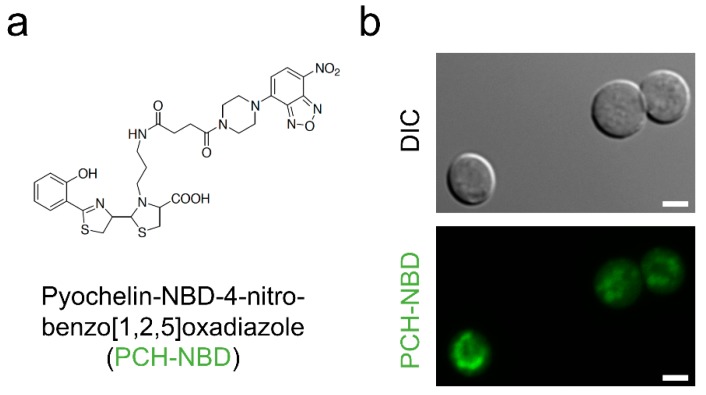
“Structure (a) and penetration (b) of pyochelin 4-nitrobenzo[1,2,5]oxadiazole (PCH-NBD) in A.”
BackgroundInfluentialFrey-Klett, P., Burlinson, P., Deveau, A., Barret, M., Tarkka, M., & Sarniguet, A. (2011) · Microbiology and Molecular Biology Reviews · doi:10.1128/mmbr.00020-11 · Cited by 913
The clinical spectrum of pulmonary aspergillosis
Kosmidis, C., & Denning, D. W. (2015) · Thorax · doi:10.1136/thoraxjnl-2014-206291 · Cited by 850 · cited 3×
“Structure (a) and penetration (b) of pyochelin 4-nitrobenzo[1,2,5]oxadiazole (PCH-NBD) in A.”
BackgroundThe Multiple Signaling Systems Regulating Virulence in Pseudomonas aeruginosa
Nadal Jimenez, P., Koch, G., Thompson, J. A., Xavier, K. B., Cool, R. H., & Quax, W. J. (2012) · Microbiology and Molecular Biology Reviews · doi:10.1128/mmbr.05007-11 · Cited by 736
Co-culture systems and technologies: taking synthetic biology to the next level
Goers, L., Freemont, P., & Polizzi, K. M. (2014) · Journal of The Royal Society Interface · doi:10.1098/rsif.2014.0065 · Cited by 630 · cited 2×
“In vitro models of interaction are highly dependent on the bacterial and fungal inoculum, the strains used, the composition of the medium, solid or liquid medium, shaken conditions including a membrane separating the two microorganisms or unshaken conditions, temperature and pH [29].”
BackgroundA Pseudomonas aeruginosa quorum‐sensing molecule influences Candida albicans morphology
Hogan, D. A., Vik, Å., & Kolter, R. (2004) · Molecular Microbiology · doi:10.1111/j.1365-2958.2004.04349.x · Cited by 575 · cited 1×
“albicans, as it inhibits hyphal growth and consequently the biofilm formation [53].”
BackgroundAbalos, A., Pinazo, A., Infante, M. R., Casals, M., García, F., & Manresa, A. (2001) · Langmuir · doi:10.1021/la0011735 · Cited by 451
Lung organoids: current uses and future promise
Barkauskas, C. E., Chung, M.-I., Fioret, B., Gao, X., Katsura, H., & Hogan, B. L. M. (2017) · Development · doi:10.1242/dev.140103 · Cited by 444 · cited 1×
“Organoid models recently developed could be an interesting alternative [86,87].”
BackgroundThe lung microbiome in moderate and severe chronic obstructive pulmonary disease
Pragman, A. A., Kim, H. B., Reilly, C. S., Wendt, C., & Isaacson, R. E. (2012) · PLoS ONE · doi:10.1371/journal.pone.0047305 · Cited by 437 · cited 1×
“fumigatus is never alone, but is always present in microbial communities [8,9].”
Background
Cited by
Aspergillus fumigatus and Aspergillosis in 2019
Latgé, J.-P., & Chamilos, G. (2019) · Clinical Microbiology Reviews · doi:10.1128/cmr.00140-18 · Cited by 1,400
Self-citationEnaud, R., Prevel, R., Ciarlo, E., Beaufils, F., Wieërs, G., Guery, B., & Delhaes, L. (2020) · Frontiers in Cellular and Infection Microbiology · doi:10.3389/fcimb.2020.00009 · Cited by 738
“aeruginosa-derived volatile sulfur compounds (Briard et al., 2019; Scott et al., 2019).”
Camus, L., Briaud, P., Vandenesch, F., & Moreau, K. (2021) · Frontiers in Microbiology · doi:10.3389/fmicb.2021.617784 · Cited by 96
Let’s Get Physical: Bacterial-Fungal Interactions and Their Consequences in Agriculture and Health
Steffan, B. N., Venkatesh, N., & Keller, N. P. (2020) · Journal of Fungi · doi:10.3390/jof6040243 · Cited by 87
Bacterial‐fungal interactions and their impact on microbial pathogenesis
MacAlpine, J., Robbins, N., & Cowen, L. E. (2022) · Molecular Ecology · doi:10.1111/mec.16411 · Cited by 80
“Several recent publications have also reviewed bacterial- fungal interactions in the context of the human host (Briard et al., 2019; Kapitan et al., 2019; Kumari & Singh, 2019; Mayer & Kronstad, 2019; Montelongo- Jauregui & Lopez- Ribot, 2018; Negrini et al., 2019; Nogueira et al., 2019; Santus et…”
BackgroundYeasts of Burden: Exploring the Mycobiome–Bacteriome of the Piglet GI Tract
Arfken, A. M., Frey, J. F., Ramsay, T. G., & Summers, K. L. (2019) · Frontiers in Microbiology · doi:10.3389/fmicb.2019.02286 · Cited by 62
Pathogenetic Impact of Bacterial–Fungal Interactions
Nogueira, F., Sharghi, S., Kuchler, K., & Lion, T. (2019) · Microorganisms · doi:10.3390/microorganisms7100459 · Cited by 69
Reece, E., Bettio, P. H. D. A., & Renwick, J. (2021) · Antibiotics · doi:10.3390/antibiotics10070827 · Cited by 58
“Inter-species, cross-genera, and cross-Kingdom interactions have been shown to influence pathogen virulence [17–19], reduce susceptibility to antibiotics [20,21], and impact patient health [17,22,23].”
BackgroundDüesberg, U., Wosniok, J., Naehrlich, L., Eschenhagen, P. N., & Schwarz, C. (2020) · Scientific Reports · doi:10.1038/s41598-020-75886-w · Cited by 54
Palmieri, F., Koutsokera, A., Bernasconi, E., Junier, P., von Garnier, C., & Ubags, N. D. J. (2022) · Frontiers in Medicine · doi:10.3389/fmed.2022.832510 · Cited by 66
Role of pulmonary microorganisms in the development of chronic obstructive pulmonary disease
Liu, J., Ran, Z., Wang, F., Xin, C., Xiong, B., & Song, Z. (2020) · Critical Reviews in Microbiology · doi:10.1080/1040841x.2020.1830748 · Cited by 48
“Epstein Barr virus can also affect Aspergillus infection (Briard et al. 2019).”
BackgroundSpecific inactivation of an antifungal bacterial siderophore by a fungal plant pathogen
Ho, Y.-N., Hoo, S. Y., Wang, B., Hsieh, C., Lin, C.-C., Sun, C.-H., Peng, C., Lin, C., & Yang, Y. (2021) · The ISME Journal · doi:10.1038/s41396-020-00871-0 · Cited by 43
Chatterjee, P., Sass, G., Świętnicki, W., & Stevens, D. A. (2020) · Journal of Fungi · doi:10.3390/jof6020081 · Cited by 44
“This new β-1,3-glucan synthase is further inhibited by the rhamnolipids, thus inducing the multibranched hyphal phenotype (with short apical cells) in the fungus [19,93].”
BackgroundInfluentialLi, Z., Li, Y., Chen, Y., Li, J., Li, S., Li, C., Lin, Y., Jian, W., Shi, J., Zhan, Y., et al. (2021) · Emerging Microbes & Infections · doi:10.1080/22221751.2021.1894902 · Cited by 47
“and Pseudomonas aeruginosa, which are two central members of the fungal and bacterial pulmonary microbiota have also been reported [33,34].”
BackgroundArmstrong, D. A., Lee, M. K., Hazlett, H. F., Dessaint, J. A., Mellinger, D., Aridgides, D. S., Hendricks, G. M., Abdalla, M. A. K., Christensen, B. C., & Ashare, A. (2020) · ImmunoHorizons · doi:10.4049/immunohorizons.2000026 · Cited by 38
“aeruginosa is the most dominant pathogen of the lung microbiota of adultCFpatients andcommonly infects pediatricCF patients (7).”
BackgroundNitrogen, Iron, and Zinc Acquisition: Key Nutrients to Aspergillus fumigatus Virulence
Perez‐Cuesta, U., Guruceaga, X., Cendon‐Sanchez, S., Pelegri‐Martinez, E., Hernando, F. L., Ramirez‐Garcia, A., Abad, A., & Rementería, A. (2021) · Journal of Fungi · doi:10.3390/jof7070518 · Cited by 36
Aspergillus fumigatus escape mechanisms from its harsh survival environments
Liu, F., Zeng, M., Zhou, X., Huang, F., & Song, Z. (2024) · Applied Microbiology and Biotechnology · doi:10.1007/s00253-023-12952-z · Cited by 33
“…may also kill A. fumigatus by inducing oxidative and nitrosative stress and iron starvation; however, sub-inhibitory phenazine, pyocyanin, phenazine-1-carboxamide, and phen-azine-1-carboxylic acid concentrations can stimulate fungal growth via iron acquisition (Briard et al. 2015, 2019).”
Unraveling the Interconnection Patterns Across Lung Microbiome, Respiratory Diseases, and COVID-19
Stavropoulou, E., Kantartzi, K. M., Tsigalou, C., Konstantinidis, T. G., Voidarou, C. C., Κωνσταντινίδης, Θ. Κ., & Bezirtzoglou, E. (2021) · Frontiers in Cellular and Infection Microbiology · doi:10.3389/fcimb.2020.619075 · Cited by 32
“Pseudomonas aeruginosa produces volatile sulfur compounds enhancing growth of Aspergillus fumigatus (Briard et al., 2019).”
BackgroundEmerging Fungal Threats in Cystic Fibrosis
Schwarz, C., Eschenhagen, P. N., & Bouchara, J. (2021) · Mycopathologia · doi:10.1007/s11046-021-00574-w · Cited by 27
Bastos, R. W., Akiyama, D. Y., dos Reis, T. F., Colabardini, A. C., Luperini, R. S., de Castro, P. A., Baldini, R. L., Fill, T. P., & Goldman, G. H. (2022) · mBio · doi:10.1128/mbio.01850-22 · Cited by 35
“The antagonistic actions of phenazines are attributed to their redox potential, since reduced phenazines are oxidized in the fungal cell by oxygen and NADPH through a NapA-dependent oxidative stress response, generating reactive oxygen species (ROS) (17, 22).”
BackgroundInfluentialAl-Wrafy, F. A., Reem, A., Noman, E. A., Al-Gheethi, A. A. S., & Mutahar, M. (2023) · Microbiological Research · doi:10.1016/j.micres.2022.127298 · Cited by 26
Renner, S., Nachbaur, E., Jaksch, P., & Dehlink, E. (2020) · Journal of Fungi · doi:10.3390/jof6040381 · Cited by 23
“Research on the interplay between fungi like Aspergillus fumigatus and the lung microbiota, in particular Pseudomonas aeruginosa, has been emerging, and both inhibitory as well as stimulating effects on growth and virulence have been reported in vitro and in ex vivo models [11,24].”
BackgroundBacterial Interactions with Aspergillus fumigatus in the Immunocompromised Lung
Margalit, A., Carolan, J. C., & Kavanagh, K. A. (2021) · Microorganisms · doi:10.3390/microorganisms9020435 · Cited by 22
“What drives pulmonary exacerbation when the two pathogens are present remains to be fully elucidated [90,91].”
BackgroundMargalit, A., Sheehan, D., Carolan, J. C., & Kavanagh, K. A. (2022) · Microbiology · doi:10.1099/mic.0.001164 · Cited by 21
“The inhibitory effects of P. aeruginosa cells and P. aeruginosa secondary metabolites on A. fumigatus biofilm formation and fungal growth and development are well established [27, 28, 37, 43, 44].”
Ostapska, H., Mauff, F. L., Gravelat, F. N., Snarr, B. D., Bamford, N. C., Loon, J. C. V., McKay, G. A., Nguyen, D. M., Howell, P. L., & Sheppard, D. C. (2022) · Journal of Fungi · doi:10.3390/jof8040336 · Cited by 22
“While low levels of pyochelin can sequester iron and impair fungal growth, at higher levels this chelator can transfer iron to the fungal siderophore triacetylfusarinine C and stimulate fungal growth [10].”
BackgroundBeswick, E., Amich, J., & Gago, S. (2020) · Pathogens · doi:10.3390/pathogens9080639 · Cited by 20
Mular, A., Piasta, K., Jedyńczuk, A., Kamińska, K., Olshvang, E., Metzler‐Nolte, N., Wojaczyńska, E., Kozłowski, H., & Gumienna‐Kontecka, E. (2023) · Coordination Chemistry Reviews · doi:10.1016/j.ccr.2023.215551 · Cited by 22
de Mello, T. P., Lackner, M., Branquinha, M. H., & dos Santos, A. L. S. (2020) · Journal of Cystic Fibrosis · doi:10.1016/j.jcf.2020.12.001 · Cited by 22
The Fungal and Bacterial Interface in the Respiratory Mycobiome with a Focus on Aspergillus spp.
Rozaliyani, A., Antariksa, B., Nurwidya, F., Zaini, J., Setianingrum, F., Hasan, F. N., Nugrahapraja, H., Yusva, H., Wibowo, H., Bowolaksono, A., et al. (2023) · Life · doi:10.3390/life13041017 · Cited by 22
Virus Infection of Aspergillus fumigatus Compromises the Fungus in Intermicrobial Competition
Nazik, H., Kotta‐Loizou, I., Sass, G., Coutts, R. H. A., & Stevens, D. A. (2021) · Viruses · doi:10.3390/v13040686 · Cited by 17
Microbiota and fungal-bacterial interactions in the cystic fibrosis lung
Santos-Fernandez, E., Martin–Souto, L., Antoran, A., Areitio, M., Aparicio-Fernandez, L., Bouchara, J., Schwarz, C., Rementería, A., Buldain, I., & Ramirez‐Garcia, A. (2023) · FEMS Microbiology Reviews · doi:10.1093/femsre/fuad029 · Cited by 17
Roisin, L., Melloul, É., Woerther, P., Royer, G., Decousser, J., Guillot, J., Dannaoui, É., & Botterel, F. (2020) · Frontiers in Cellular and Infection Microbiology · doi:10.3389/fcimb.2020.574028 · Cited by 18
An invisible threat? Aspergillus positive cultures and co-infecting bacteria in airway samples
Hughes, D. A., Rosenthal, M., Cuthbertson, L., Ramadan, N. A., Felton, I. C., Simmonds, N. J., Loebinger, M. R., Price, H., Armstrong-James, D. P. H., Elborn, J. S., et al. (2022) · Journal of Cystic Fibrosis · doi:10.1016/j.jcf.2022.07.009 · Cited by 15
Wurster, S., Sass, G., Albert, N. D., Nazik, H., Déziel, É., Stevens, D. A., & Kontoyiannis, D. P. (2020) · Virulence · doi:10.1080/21505594.2020.1827885 · Cited by 14
“Therefore, our titratable system can avoid or delay overgrowth of mycelia by PA cells during biofilm formation, a common issue of experimental in vitro systems for co-culture studies [19].”
BackgroundZhai, P., Chai, Y., & Lü, L. (2022) · Microorganisms · doi:10.3390/microorganisms10122469 · Cited by 13
Allergic Diseases Caused by Aspergillus Species in Patients with Cystic Fibrosis
Curran, A. K., & Hava, D. L. (2021) · Antibiotics · doi:10.3390/antibiotics10040357 · Cited by 17
“CF patients have a complex lung microbiota, where there is likely significant interplay between colonizing bacteria and fungi [36].”
Backgroundde Oliveira, E. B., Xisto, M. I. D. D. S., Rollin‐Pinheiro, R., Rochetti, V. P., & Barreto‐Bergter, E. (2020) · Frontiers in Cellular and Infection Microbiology · doi:10.3389/fcimb.2020.598823 · Cited by 11
Pseudomonas aeruginosa in the Cystic Fibrosis Lung
King, J., Murphy, R. A., & Davies, J. C. (2022) · Advances in experimental medicine and biology · doi:10.1007/978-3-031-08491-1_13 · Cited by 11
Nazik, H., Sass, G., Williams, P. M., Déziel, É., & Stevens, D. A. (2021) · Journal of Fungi · doi:10.3390/jof7050343 · Cited by 9
Metagenomics Applied to the Respiratory Mycobiome in Cystic Fibrosis
Angebault, C., & Botterel, F. (2024) · Mycopathologia · doi:10.1007/s11046-024-00887-6 · Cited by 8
Subtle relationships between Pseudomonas aeruginosa and fungi in patients with cystic fibrosis
Yan, K., Yin, H., Wang, J., & Cai, Y. (2020) · Acta Clinica Belgica · doi:10.1080/17843286.2020.1852850 · Cited by 8
“The virulence factors of PA participate in not only the growth of mycelia [84] but also the death of mycelium [27].”
BackgroundDebourgogne, A., Monpierre, L., Sy, K. A., Valsecchi, I., Decousser, J., & Botterel, F. (2023) · Journal of Fungi · doi:10.3390/jof9090900 · Cited by 7
“The effect was mediated by dimethyl sulphide, which is a volatile gaseous compound [51,52].”
Backgroundde Castro, P. A., Akiyama, D. Y., Pinzan, C. F., dos Reis, T. F., Delbaje, E., Rocha, P. S., Izidoro, M. A., Schenkman, S., Sugimoto, S., Takeshita, N., et al. (2025) · mBio · doi:10.1128/mbio.00363-25 · Cited by 6
“Rhamnose is the precursor of P. aeruginosa rhamno lipids, which have been shown to modulate A. fumigatus galactosaminogalactan and melanin production, hyphal wall thickness, and cell wall chitin concentrations through the inhibition of β-1,3 glucan synthase (12, 13).”
The Deciphering of Growth-Dependent Strategies for Quorum-Sensing Networks in Pseudomonas aeruginosa
Juříková, T., Mácha, H., Lupjanová, V., Pluháček, T., Marešová, H., Papoušková, B., Luptáková, D., Patil, R. H., Benada, O., Grulich, M., et al. (2023) · Microorganisms · doi:10.3390/microorganisms11092329 · Cited by 7
Schroeder, A. L. B., Radwan, O. E., Ruiz, O. N., Gunasekera, T. S., & Hoffmann, A. (2024) · International Biodeterioration & Biodegradation · doi:10.1016/j.ibiod.2024.105943 · Cited by 6
Barry, A., Reed, A. M., Radwan, O. E., Bowen, L. L., Ruiz, O. N., Gunasekera, T. S., & Hoffmann, A. (2025) · Biomolecules · doi:10.3390/biom15020227 · Cited by 7
“The equilibrium between growth-inhibitory and stimulatory effects of bacterial and fungal consortia is a phenomenon commonly observed in various co-culture scenarios [55,56].”
Elnagar, R. (2024) · Bioscience of Microbiota Food and Health · doi:10.12938/bmfh.2024-031 · Cited by 7
“Additionally, Aspergillus colonization of the lower respiratory tract is linked with poor control and reduced lung functions in asthma and allergic bronchopulmonary aspergillosis (ABPA) [25, 34].”
BackgroundGliotoxin Production and Self-Defense in Filamentous Fungi
Delbaje, E., de Castro, P. A., Pupo, M. T., Rokas, A., & Goldman, G. H. (2025) · Annual Review of Microbiology · doi:10.1146/annurev-micro-040324-032342 · Cited by 5
Dewi, I. M. W., Bruno, M., Janssen, N. A. F., Gresnigt, M. S., van Laarhoven, A., van Crevel, R., & van de Veerdonk, F. L. (2025) · Cytokine · doi:10.1016/j.cyto.2025.157018 · Cited by 4
Rethinking Aspergillosis in the Era of Microbiota and Mycobiota
Barac, A. M., Vujović, A., Perić, J., Tulić, I., Stojanović, M., & Stjepanović, M. (2024) · Mycopathologia · doi:10.1007/s11046-024-00853-2 · Cited by 6
“These bacteria produce antifungal chemicals that limit the growth of A. fumigatus , such as dary-amide, actinomycin, fungichromin, antifungalmycin, thailandin, bafilomycin, and others [31, 32].”
InfluentialRibeiro, M. M., Liu, C., Xu, J.-F., Liang, S., & Goldman, G. H. (2026) · G3 Genes Genomes Genetics · doi:10.1093/g3journal/jkag063 · Cited by 3
“…murine coinfection models indicate that these interactions are not restricted to in vitro systems: co-infected animals show altered fungal burden and survival compared with monoinfection, demonstrating that interkingdom competition reshapes disease trajectories in vivo (Briard et al. 2019).”
Liu, C., Ribeiro, M. M., Yang, J., Li, L., Li, J., Chen, X., Yude, W., Wang, L. L., Wang, B., Zhou, Y., et al. (2026) · mBio · doi:10.1128/mbio.00348-26 · Cited by 6
“A. fumigatus is the most common filamentous fungus detected in chronic respiratory diseases and is almost always accompanied by bacteria, especially gram-negative bacilli, such as P. aeruginosa and others (15, 20, 34, 35).”
Mansour, A., Jeong, T., Lee, D., Song, J., Kim, E., Lee, D., Mannaa, M., & Seo, Y. (2025) · Journal of Invertebrate Pathology · doi:10.1016/j.jip.2025.108327 · Cited by 3
de Mello, T. P., Barcellos, I. C., Lackner, M., Branquinha, M. H., & dos Santos, A. L. S. (2023) · Journal of Fungi · doi:10.3390/jof9050502 · Cited by 3
“Iron is an essential nutrient for all microorganisms and its acquisition is necessary for the successful host colonization [16,17].”
BackgroundInfluentialGenome analysis of Pseudomonas strain 4B with broad antagonistic activity against toxigenic fungi
Veras, F. F., Stincone, P., Welke, J. E., Ritter, A. C., Siqueira, F. M., Varela, A. P. M., Mayer, F. Q., & Brandelli, A. (2024) · Brazilian Journal of Microbiology · doi:10.1007/s42770-024-01253-w · Cited by 2
“Moreover, many other antifungal compounds were predicted by genome-wide identification, annotation, and analysis through antiSMASH, and those with higher percentage of similarity include thanamycin [47], rhizomide [48], and pyochelin [49].”
Special Issue: Fungal–Bacterial Interactions—Current Knowledge and Future Perspectives
Fidel, P. L., & Noverr, M. C. (2019) · Journal of Fungi · doi:10.3390/jof5040089 · Cited by 1
Le futur en infectiologie respiratoire
Delomez, J., Gosset, P., Botterel, F., & Si‐Tahar, M. (2021) · Revue des Maladies Respiratoires Actualités · doi:10.1016/s1877-1203(21)00067-7
SURVIVAL STRATEGIES OF PSEUDOMONAS AERUGINOSA IN THE RESPIRATORY TRACT IN CYSTIC FIBROSIS
Іщенко, О., Efimenko, A. Y., Andriiashyna, O., Koshova, I., & Stepanskyi, D. (2021) · Bulletin of Problems Biology and Medicine · doi:10.29254/2077-4214-2021-2-160-29-34
Virgianti, D. P., Natalia, D., & Aryantha, I. N. P. (2023) · Agriculture and Natural Resources · doi:10.34044/j.anres.2023.57.1.19
朱, 玉. (2025) · Advances in Clinical Medicine · doi:10.12677/acm.2025.152522
Characterization of fungal communities transmitted from sow to piglet
Fan, J., Song, M., Ling, Y., Wu, Z., Xiong, W., Tao, S., & Shen, Y. (2025) · Microbiology Spectrum · doi:10.1128/spectrum.02078-24
“Previous studies have shown that Aspergillus can directly interact with bacterial species, such as Stenotrophomonas and Pseudomonas , and exacerbate disease severity (43–45).”
Khau, S., Treps, L., Ilango, G., Riteau, N., Couillin, I., Togbe, D., Bigot, J., Balloy, V., David, C., Blan, M. C. L., et al. (2026) · bioRxiv (Cold Spring Harbor Laboratory) · doi:10.64898/2026.02.20.707105
Self-citationCamus, L. (2020) · theses.fr (ABES) · doi:10.70675/ecddb701z1d6fz422fz86d0zc4e6a93d6a98 · Cited by 1
Hong, G., Vesely, E. M., Memon, W., Walsh, J., Hsu, J. Y., O’Dea, A. L., Dezube, R., Goss, C. H., Gross, J. E., Nichols, D. P., et al. (2026) · Microbiology Spectrum · doi:10.1128/spectrum.00181-26
“Though Pseudomonas aeruginosa and A. fumigatus co-infection is common in people with CF, pathogen interactions exist which inhibit the in vitro growth of Pseudomonas and A. fumigatus on co-culture (7, 22–26).”
Llamosí, M., Sempere, J., Gómez‐López, A., Yuste, J., & Domenech, M. (2026) · Journal of Fungi · doi:10.3390/jof12090663
“Fungal-derived metabolites such as GT have been increasingly recognized as key mediators of interkingdom interactions capable of shaping microbial communities leading to disease progression [53].”
Natural products shape microbial ecology and disease in the cystic fibrosis airway
Bhowmik, N., & Stubbendieck, R. M. (2026) · Natural Product Reports · doi:10.1039/d6np00067c · Cited by 1
Metadata
- Authors
- Briard, B., Mislin, G. L. A., Latgé, J.-P., & Beauvais, A.
- Affiliations
- Institut Pasteur (FR)
- Centre National de la Recherche Scientifique (FR)
- Corresponding author
- Beauvais, Anne
- Venue
- Journal of Fungi
- Publisher
- MDPI AG
- Published
- 2019-06-12
- Volume
- 5
- Issue
- 2
- Pages
- 48
- ISSN
- 2309-608X (ISSN-L)
- PMC
- PMC6617096
- OpenAlex
- W2950932263
- Cited by
- 69
- References
- 93
- Citations by year
- 2026: 6 · 2025: 7 · 2024: 6 · 2023: 8 · 2022: 9 · 2021: 15 · 2020: 14 · 2019: 4
- FWCI
- 0.93
- Type
- journal article
- Language
- en
- Open access
- gold
- dx.doi.org
- Licence
- Locations
- Journal of Fungi (publishedVersion, cc-by)
- Europe PMC (PubMed Central) (publishedVersion, cc-by)
- PubMed Central (publishedVersion, cc-by)
- PubMed (publishedVersion)
- HAL (submittedVersion)
- DOAJ (DOAJ: Directory of Open Access Journals) (submittedVersion, cc-by-sa)
- univOAK (4 institutions : Université de Strasbourg, Université de Haute Alsace, INSA Strasbourg, Bibliothèque Nationale et Universitaire de Strasbourg) (submittedVersion)
- Funders
- Association Vaincre la Mucoviscidose (RIF20140501052/1/1/141, RIF20180502335)
- Topics
- Life Sciences › Biochemistry, Genetics and Molecular Biology › Molecular Biology › Bacterial biofilms and quorum sensing
- Health Sciences › Medicine › Infectious Diseases › Antifungal resistance and susceptibility
- Life Sciences › Biochemistry, Genetics and Molecular Biology › Molecular Biology › Fungal and yeast genetics research
- Keywords
- Aspergillus fumigatus, Pseudomonas aeruginosa, fungal-bacterial interactions, pulmonary microbiota, co-infection, homoserine lactone, pyoverdine, pyochelin, di-rhamnolipids, phenazine, iron starvation, reactive oxygen species, bacterial volatiles, host immune response
About these checks
Registry, retraction, Cites and statistics results are computed, not judged, with one exception: a printed reference that no index lists is read once by a model before it counts as a citation error. Claims are extracted by a model and kept only when their quote appears verbatim in the text; each cited source is then checked, with a model’s help, for whether it says what the claim relies on. Those verdicts can be wrong — read the claim’s quote and the cited source before relying on one.
Statistics and arithmetic are recomputed, not judged.
Confidence bands are shown only for fields calibrated on our annotated test set. None is calibrated yet, so no band is shown.
What counts as a claim ›How we measure confidence ›How we check this ›
Are you an author, or do you see a problem with this page? Request a review
Data sources
Bibliographic data: Semantic Scholar, OpenAlex, Crossref.
Contains information from the Semantic Scholar Academic Graph Datasets, made available under the ODC Attribution License (ODC-BY 1.0).
Semantic Scholar’s data is described in: Kinney, R., et al. (2023). The Semantic Scholar Open Data Platform. arXiv:2301.10140.
