

Determination of the Respiratory Compensation Point by Detecting Changes in Intercostal Muscles Oxygenation by Using Near-Infrared Spectroscopy
Open accessThe DOI matches its Crossref record; 67 of the 67 references it cites were found in a registry or an index.
Abstract
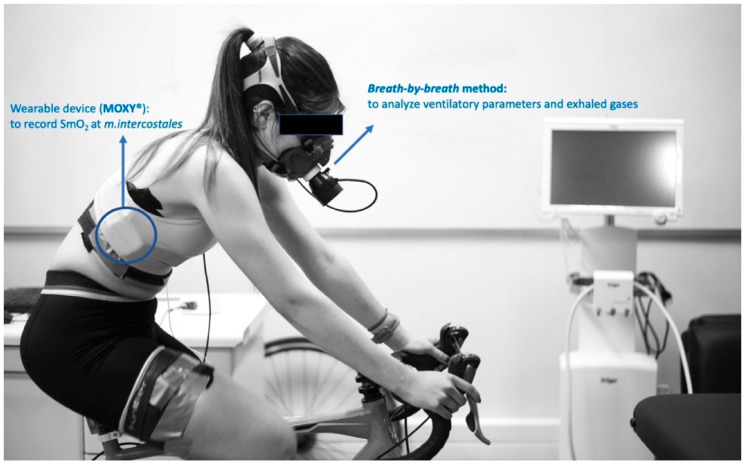
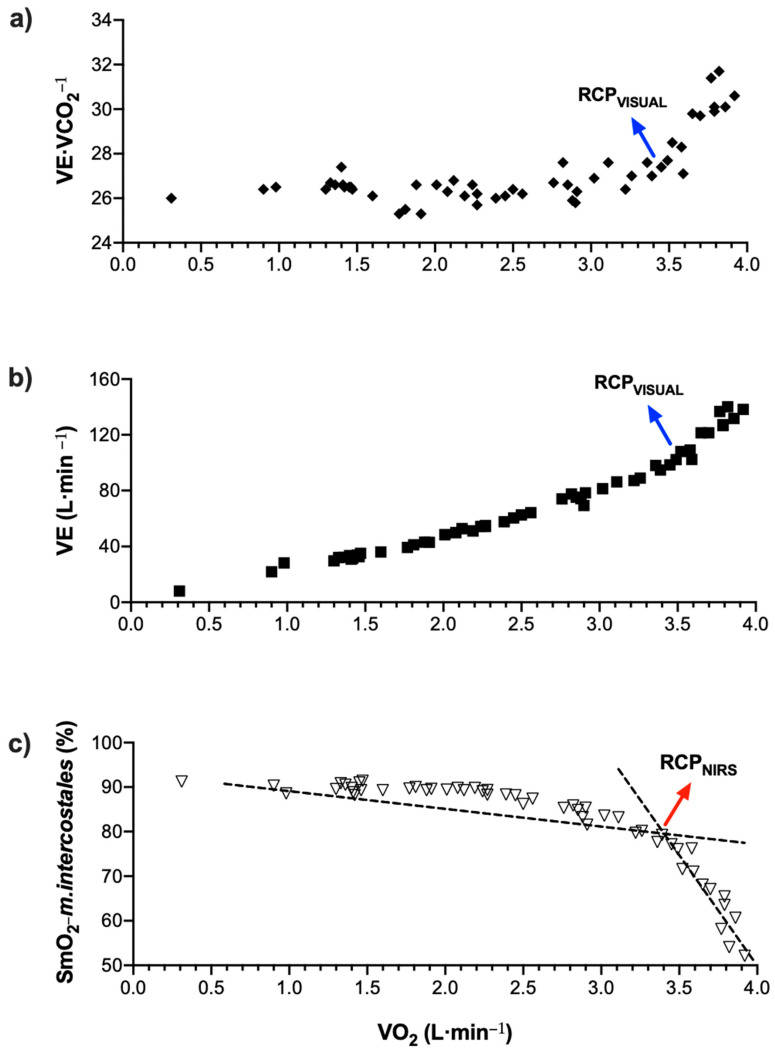
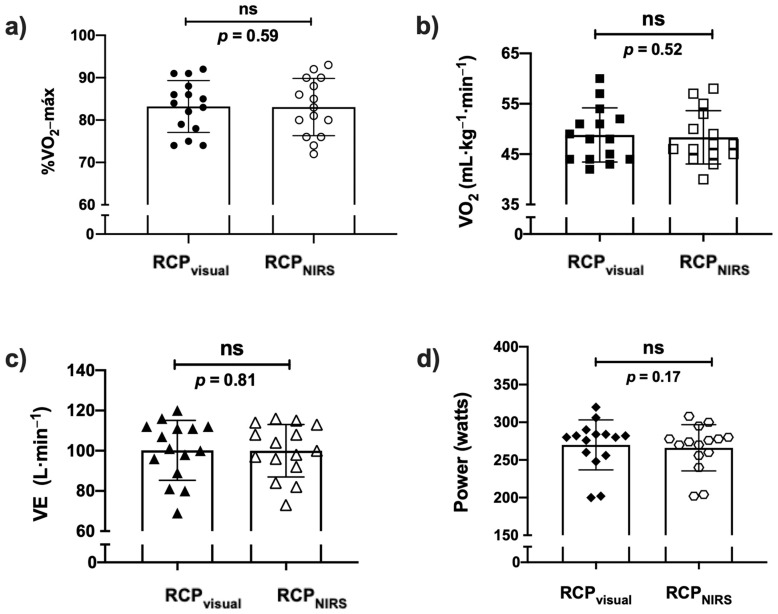
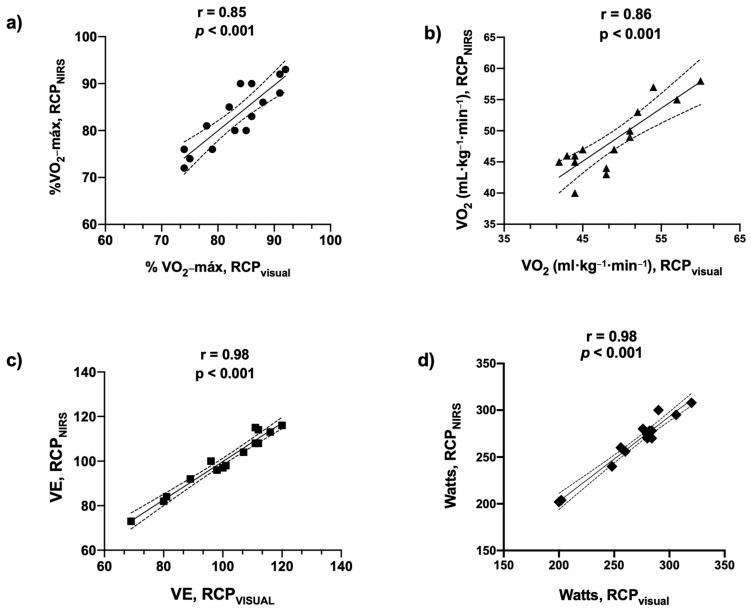
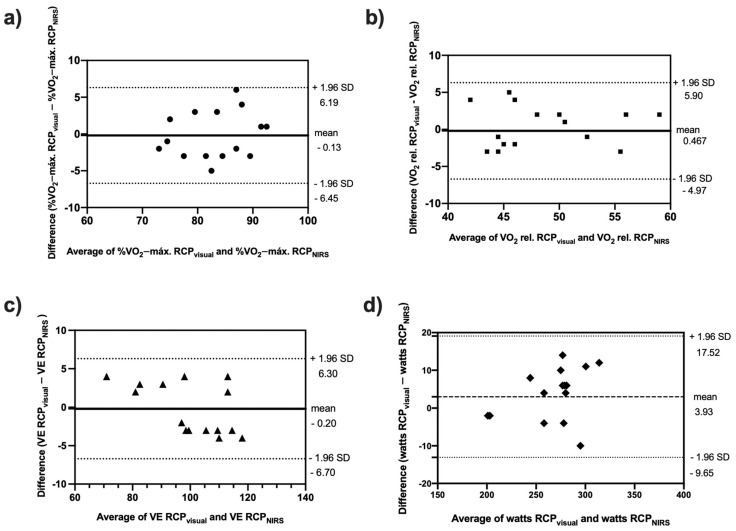
This study aimed to evaluate if the changes in oxygen saturation levels at intercostal muscles (SmO2-m.intercostales) assessed by near-infrared spectroscopy (NIRS) using a wearable device could determine the respiratory compensation point (RCP) during exercise. Fifteen healthy competitive triathletes (eight males; 29 ± 6 years; height 167.6 ± 25.6 cm; weight 69.2 ± 9.4 kg; V˙O2-máx 58.4 ± 8.1 mL·kg−1·min−1) were evaluated in a cycle ergometer during the maximal oxygen-uptake test (V˙O2-máx), while lung ventilation (V˙E), power output (watts, W) and SmO2-m.intercostales were measured. RCP was determined by visual method (RCPvisual: changes at ventilatory equivalents (V˙E·V˙CO2−1, V˙E·V˙O2−1) and end-tidal respiratory pressure (PetO2, PetCO2) and NIRS method (RCPNIRS: breakpoint of fall in SmO2-m.intercostales). During exercise, SmO2-m.intercostales decreased continuously showing a higher decrease when V˙E increased abruptly. A good agreement between methods used to determine RCP was found (visual vs NIRS) at %V˙O2-máx, V˙O2, V˙E, and W (Bland-Altman test). Correlations were found to each parameters analyzed (r = 0.854; r = 0.865; r = 0.981; and r = 0,968; respectively. p < 0.001 in all variables, Pearson test), with no differences (p < 0.001 in all variables, Student’s t-test) between methods used (RCPvisual and RCPNIRS). We concluded that changes at SmO2-m.intercostales measured by NIRS could adequately determine RCP in triathletes.
Overview
The claims and statistics of this paper haven’t been checked yet.
Free: it reads the open-access text and checks the first 5 claims that cite a source we can check. Create a free account to check every claim.
Integrity signals
Registry
Cites
Statistics
Figures
Verification
Claims the paper makes
The claims and statistics of this paper haven’t been checked yet.
Free: it reads the open-access text and checks the first 5 claims that cite a source we can check. Create a free account to check every claim.
Claims other papers make about this one
Each is checked against this paper’s own text: does it say what the citing paper says it does?
The source backs part of the claim, not all of it — or backs it for a different population, condition or comparison.
In the citing paper
“The remaining studies also compared gas exchange with muscle oxygenation in the second threshold in cycling16,39,42,43 and running16,40.”
From Reliability of threshold determination using portable muscle oxygenation monitors during exercise testing: a systematic review and meta-analysis (2023) · cites this paper as [39]
Experimental — accuracy not yet measuredThe source backs part of the claim, not all of it — or backs it for a different population, condition or comparison.
In the citing paper
“The results of the different studies suggest that the relationship between both methods in threshold determination is affected by the region assessed by the NIRS device, as good values (ICC = 0.92–0.97) were observed on assessing the intercostalis during cycling39.”
From Reliability of threshold determination using portable muscle oxygenation monitors during exercise testing: a systematic review and meta-analysis (2023) · cites this paper as [39]
Experimental — accuracy not yet measuredThe source backs part of the claim, not all of it — or backs it for a different population, condition or comparison.
In the citing paper
“Some of the articles included in this review demonstrate mean bias between MOT2 and LT2 or VT2 ranging from 0.01 and 0.4 km·h−125,44,45,49, between 3.9 and 15.4 W39,41, 0.05 W·kg−117 and 10.7% of the power output26.”
From Reliability of threshold determination using portable muscle oxygenation monitors during exercise testing: a systematic review and meta-analysis (2023) · cites this paper as [39]
Experimental — accuracy not yet measuredThe cited source says what the claim attributes to it.
In the citing paper
“The articles included in this systematic review use different methods for determining thresholds: BSX Insight (20%, N = 3)45,47,49, double linear regression (46%, N = 7)16,26,39,41–44, visual method17,25,40, Dmax or modified Dmax46 and applications of devices Humon Beta48.”
From Reliability of threshold determination using portable muscle oxygenation monitors during exercise testing: a systematic review and meta-analysis (2023) · cites this paper as [39]
Self-check
Percentages, sums and reported differences re-computed from the paper’s own numbers.
The self-check needs the paper’s full text.
Citations
Cites
A new method for detecting anaerobic threshold by gas exchange
Beaver, W. L., Wasserman, K., & Whipp, B. J. (1986) · Journal of Applied Physiology · doi:10.1152/jappl.1986.60.6.2020 · Cited by 4,103 · cited 1×
“VO2 [24,44,45], breakpoint at heart-rate variability [46–50], or lactate blood level curves [11,41,51]; however, in order to diminish the variability inter- and intra- evaluator, we chose the method widely used for exercise”
ATS/ERS Statement on Respiratory Muscle Testing
(2002) · American Journal of Respiratory and Critical Care Medicine · doi:10.1164/rccm.166.4.518 · Cited by 2,841
Estimating regression models with unknown break‐points
Muggeo, V. M. R. (2003) · Statistics in Medicine · doi:10.1002/sim.1545 · Cited by 2,371 · cited 11×
“intercostales values recorded by MOXY® [33].”
InfluentialThe maximal expiratory flow-volume curve. Normal standards, variability, and effects of age.
Knudson, R. J., Slatin, R. C., Lebowitz, M. D., & Burrows, B. A. (1976) · PubMed · doi:10.1164/arrd.1976.113.5.587 · Cited by 695 · cited 1×
“…the participants arrived at the laboratory; subsequently, spirometry (Microlab, model ML3500, CareFusion®, San Diego, CA, USA) was performed according to the American Thoracic Society (ATS) and European Respiratory Society (ERS) protocols [26], utilizing the reference values of Knudson et al. [27].”
Validation of near-infrared spectroscopy in humans
Mancini, D. M., Bolinger, L., Li, H., Kendrick, K., Chance, B., & Wilson, J. R. (1994) · Journal of Applied Physiology · doi:10.1152/jappl.1994.77.6.2740 · Cited by 669 · cited 1×
“Regarding, SmO2 has mainly been evaluated in locomotor muscles [12], showing good values for validity [13] and reliability [14,15].”
BackgroundSeiler, K. S., & Kjerland, G. Ø. (2006) · Scandinavian Journal of Medicine & Science in Sports · doi:10.1111/j.1600-0838.2004.00418.x · Cited by 643
What is Best Practice for Training Intensity and Duration Distribution in Endurance Athletes?
Seiler, S. (2010) · International Journal of Sports Physiology and Performance · doi:10.1123/ijspp.5.3.276 · Cited by 625 · cited 1×
“as marathon, road cycling, or triathlon [1–3].”
Understanding near infrared spectroscopy and its application to skeletal muscle research
Barstow, T. J. (2019) · Journal of Applied Physiology · doi:10.1152/japplphysiol.00166.2018 · Cited by 470 · cited 2×
“, (2021) in runners [25] have reported interesting results, those data are difficult to extrapolate to our participants owing to factors such as the method used for RCP determination [11,32], sex-differences associated to ventilatory response to exercise [23], high biological variability of cardioventilatory responses…”
The maximally attainable V̇o2during exercise in humans: the peak vs. maximum issue
Day, J. R., Rossiter, H. B., Coats, E. M., Skasick, A., & Whipp, B. J. (2003) · Journal of Applied Physiology · doi:10.1152/japplphysiol.00024.2003 · Cited by 447 · cited 1×
“The V̇ O 2 -máx. was calculated as the highest value obtained during the last 30 s of the incremental test, despite increasing the exercise intensity (<150 mL·min −1 of exercise) [28].”
An Examination and Critique of Current Methods to Determine Exercise Intensity
Jamnick, N. A., Pettitt, R. W., Granata, C., Pyne, D. B., & Bishop, D. J. (2020) · Sports Medicine · doi:10.1007/s40279-020-01322-8 · Cited by 424
Adipose tissue thickness affects in vivo quantitative near-IR spectroscopy in human skeletal muscle
VAN BEEKVELT, M. C. P., BORGHUIS, M. S., VAN ENGELEN, B. G. M., WEVERS, R. A., & COLIER, W. N. J. M. (2001) · Clinical Science · doi:10.1042/cs1010021 · Cited by 369 · cited 1×
“…exercise performed [20,34–36], decreased muscle perfusion as a consequence of muscular contractions [37,38], loss of SmO 2 signal due to changes in positions and/or adipose tissue where the devices are positioned [39,40], and type of device used to record muscle oxygen levels [12,30,41,42].”
Gas exchange theory and the lactic acidosis (anaerobic) threshold.
Wasserman, K., Beaver, W. L., & Whipp, B. J. (1990) · PubMed · Cited by 347
The training intensity distribution among well-trained and elite endurance athletes
Stöggl, T. L., & Sperlich, B. (2015) · Frontiers in Physiology · doi:10.3389/fphys.2015.00295 · Cited by 265 · cited 1×
“Different models have been used to define training intensities zones according to changes in these parameters at systemic levels [6–10].”
A Critical Evaluation of Current Methods for Exercise Prescription in Women and Men
IANNETTA, D., INGLIS, E. C., MATTU, A. T., FONTANA, F. Y., POGLIAGHI, S., KEIR, D. A., & MURIAS, J. M. (2020) · Medicine & Science in Sports & Exercise · doi:10.1249/mss.0000000000002147 · Cited by 236 · cited 1×
“, work rate (power (watts, W) or velocity), and lactate levels in capillary blood ([Lac] blood ) [4,5].”
Effect of inspiratory muscle work on peripheral fatigue of locomotor muscles in healthy humans
Romer, L. M., Lovering, A. T., Haverkamp, H. C., Pegelow, D. F., & Dempsey, J. A. (2006) · The Journal of Physiology · doi:10.1113/jphysiol.2005.099697 · Cited by 225 · cited 1×
“This evidence gives to SmO2 in locomotor muscles relevance and confidence to other traditional methods for prescribing exercise; however, this parameter can be conditioned by the energy demand of the respiratory muscles associated with the cost of breathing (COB) during exercise [18], a factor that varies among sports…”
BackgroundMuscle Oximetry in Sports Science: A Systematic Review
Perrey, S., & Ferrari, M. (2018) · Sports Medicine · doi:10.1007/s40279-017-0820-1 · Cited by 220 · cited 5×
“intercostales) were non-invasively assessed using the monitor MOXY® (Fortiori Design LLC, Hutchinso , MN, USA), which emits ligh waves close to the infrared range (NearInfrared Spectroscopy, NIRS (630–850 nm)) from diodes to the surrounding tissue and records total haemoglobin (THb) and myoglob n (mHb) concentrations…”
BackgroundMethodResultInfluentialTraining Techniques to Improve Endurance Exercise Performances
Kubukeli, Z. N., Noakes, T. D., & Dennis, S. C. (2002) · Sports Medicine · doi:10.2165/00007256-200232080-00002 · Cited by 217 · cited 1×
“as marathon, road cycling, or triathlon [1–3].”
Validity and reliability of the Moxy oxygen monitor during incremental cycling exercise
Crum, E. M., O'Connor, W. J., Van Loo, L., Valckx, M., & Stannard, S. R. (2017) · European Journal of Sport Science · doi:10.1080/17461391.2017.1330899 · Cited by 206 · cited 2×
“This device has shown good values of validity [14] and reliability [22] to record SmO2 during exercise; and good agreement levels to other NIRS devices [30].”
McManus, C. J., Collison, J., & Cooper, C. E. (2018) · Journal of Biomedical Optics · doi:10.1117/1.jbo.23.1.015007 · Cited by 205 · cited 14×
“This prevented us from verifying that the muscle tissue assessed was within the measuring range of the wearable device used to record SmO2 (MOXY®) [30].”
InfluentialFeldmann, A., Schmitz, R. W., & Erlacher, D. (2019) · Journal of Biomedical Optics · doi:10.1117/1.jbo.24.11.115001 · Cited by 203 · cited 2×
“In this study, the data of SmO 2 were expressed as a percentage ranging from 0 to 100%, considering the value at the resting stage as the maximal %SmO 2 - m.intercostales [ 31] .”
InfluentialVentilatory cost of exercise in chronic obstructive pulmonary disease.
Levison, H., & Cherniack, R. M. (1968) · Journal of Applied Physiology · doi:10.1152/jappl.1968.25.1.21 · Cited by 196
Cottin, F., Leprêtre, P., Lopes, P., Papelier, Y., Médigue, C., & Billat, V. L. (2006) · International Journal of Sports Medicine · doi:10.1055/s-2006-923849 · Cited by 154
The simplified V-slope method of detecting the gas exchange threshold
SCHNEIDER, D. A., PHILLIPS, S. E., & STOFFOLANO, S. (1993) · Medicine & Science in Sports & Exercise · doi:10.1249/00005768-199310000-00015 · Cited by 153 · cited 1×
“VO2 [24,44,45], breakpoint at heart-rate variability [46–50], or lactate blood level curves [11,41,51]; however, in order to diminish the variability inter- and intra- evaluator, we chose the method widely used for exercise”
Muscle Oxygenation Trends During Dynamic Exercise Measured by Near Infrared Spectroscopy
Bhambhani, Y. N. (2004) · Canadian Journal of Applied Physiology · doi:10.1139/h04-033 · Cited by 149 · cited 1×
“…responses during exercise in a non-steady-state [19], breathing patterns adopted during effort [21], intensity of physical exercise performed [20,34–36], decreased muscle perfusion as a consequence of muscular contractions [37,38], loss of SmO 2 signal due to changes in positions and/or adipose…”
The Anaerobic Threshold: Definition, Physiological Significance and Identification
Wasserman, K. (2015) · Advances in Cardiology · doi:10.1159/000413434 · Cited by 139 · cited 1×
“…the criterion used by experienced researchers, who determine RCP considering the abrupt increase in the ventilatory equivalent of carbon dioxide production ( V̇ E· V̇ CO 2−1 ) and decrease in the pressure value at the end of CO 2 expiration (Pet-CO 2 ) during exercise, above aerobic threshold [43].”
Sex Differences in Respiratory Exercise Physiology
Sheel, A. W., Richards, J. C., Foster, G. E., & Guenette, J. A. (2004) · Sports Medicine · doi:10.2165/00007256-200434090-00002 · Cited by 137 · cited 1×
“…both sex groups showed similar results (data not showed); however, possible sex differences is another aspect to include in future research because women have shown more COB at the same exercise intensity with lower values of SmO 2 at respiratory muscles than their male counterparts [23,59–61].”
Oxygen cost of exercise hyperpnea: measurement
Aaron, E. A., Johnson, B. D., Seow, C. K., & Dempsey, J. A. (1992) · Journal of Applied Physiology · doi:10.1152/jappl.1992.72.5.1810 · Cited by 132 · cited 1×
“in trained subjects [53,54], 10–15% in inactive subjects [55], and 30–45% in patients with chronic respiratory diseases [56–58].”
Oxygen cost of exercise hyperpnoea is greater in women compared with men
Dominelli, P. B., Render, J. N., Molgat‐Seon, Y., Foster, G. E., Romer, L. M., & Sheel, A. W. (2015) · The Journal of Physiology · doi:10.1113/jphysiol.2014.285965 · Cited by 130 · cited 1×
“…both sex groups showed similar results (data not showed); however, possible sex differences is another aspect to include in future research because women have shown more COB at the same exercise intensity with lower values of SmO 2 at respiratory muscles than their male counterparts [23,59–61].”
Cottin, F., Médigue, C., Lopes, P., Leprêtre, P.-M., Heubert, R., & Billat, V. (2007) · International Journal of Sports Medicine · doi:10.1055/s-2006-924355 · Cited by 125 · cited 1×
“…as the v-slope method, based on the breakpoint of the linearity of the curve V̇ CO 2 vs V̇ O 2 [24,44,45], breakpoint at heart-rate variability [46–50], or lactate blood level curves [11,41,51]; however, in order to diminish the variability inter-and intra-evaluator, we chose the method widely…”
Resting energy expenditure and oxygen cost of breathing in patients with cystic fibrosis.
Bell, S. C., Saunders, M. J., Elborn, J. S., & Shale, D. J. (1996) · Thorax · doi:10.1136/thx.51.2.126 · Cited by 109
Farzam, P., Starkweather, Z., & Franceschini, M. A. (2018) · Physiological Reports · doi:10.14814/phy2.13664 · Cited by 107 · cited 3×
“VO2 [24,44,45], breakpoint at heart-rate variability [46–50], or lactate blood level curves [11,41,51]; however, in order to diminish the variability inter- and intra- evaluator, we chose the method widely used for exercise”
MethodResultVentilatory work and oxygen consumption during exercise and hyperventilation
Coast, J. R., Rasmussen, S. A., Krause, K. M., O'Kroy, J. A., Loy, R. A., & Rhodes, J. (1993) · Journal of Applied Physiology · doi:10.1152/jappl.1993.74.2.793 · Cited by 105 · cited 1×
“in trained subjects [53,54], 10–15% in inactive subjects [55], and 30–45% in patients with chronic respiratory diseases [56–58].”
Oxfeldt, M., Dalgaard, L. B., Jørgensen, A. A., & Hansen, M. (2020) · International Journal of Sports Physiology and Performance · doi:10.1123/ijspp.2019-0636 · Cited by 98 · cited 1×
“New studies could consider the stage of the menstrual cycle; however, it is not consistently found to influence exercise performance [65,66].”
BackgroundCraig, J. C., Broxterman, R. M., Wilcox, S. L., Chen, C., & Barstow, T. J. (2017) · Journal of Applied Physiology · doi:10.1152/japplphysiol.00207.2017 · Cited by 95
How to breathe? Respiratory mechanics and breathing pattern
Mortola, J. P. (2018) · Respiratory Physiology & Neurobiology · doi:10.1016/j.resp.2018.12.005 · Cited by 83 · cited 1×
“adults [52], while during exercise, by the increase of .”
BackgroundImpact of menstrual cycle phase on the exercise status of young, sedentary women
Redman, L. M., SCROOP, G. C., & Norman, R. J. (2003) · European Journal of Applied Physiology · doi:10.1007/s00421-003-0889-0 · Cited by 81
Heart rate variability to assess ventilatory thresholds in professional basketball players
Ramos‐Campo, D. J., Rubio‐Arias, J. Á., Ávila-Gandía, V., Marín‐Pagán, C., Luque, A., & Alcaráz, P. E. (2016) · Journal of sport and health science/Journal of Sport and Health Science · doi:10.1016/j.jshs.2016.01.002 · Cited by 79
González‐Ravé, J. M., Hermosilla-Perona, F., González‐Mohíno, F., Casado, A., & Pyne, D. B. (2021) · International Journal of Sports Physiology and Performance · doi:10.1123/ijspp.2020-0906 · Cited by 75 · cited 1×
“Different models have been used to define training intensities zones according to changes in these parameters at systemic levels [6–10].”
Related Trends in Locomotor and Respiratory Muscle Oxygenation during Exercise
LEGRAND, R., MARLES, A., PRIEUR, F., LAZZARI, S., BLONDEL, N., & MUCCI, P. (2007) · Medicine & Science in Sports & Exercise · doi:10.1249/01.mss.0000241638.90348.67 · Cited by 70 · cited 2×
“The changes of oxygen levels in respiratory muscles during our exercise protocol were similar to previous studies [16,20–25, 34], recognizing this In this study, both sex groups showed similar results (data not showed); however, possible sex differences is another aspect to include in future…”
The Anaerobic Threshold Measurement in Exercise Testing
Wasserman, K. (1984) · Clinics in Chest Medicine · doi:10.1016/s0272-5231(21)00233-1 · Cited by 70
Heather, A. K., Thorpe, H., Ogilvie, M., Sims, S. T., Beable, S., Milsom, S., Schofield, K. L., Coleman, L., & Hamilton, B. (2021) · Frontiers in Sports and Active Living · doi:10.3389/fspor.2021.601420 · Cited by 69 · cited 1×
“New studies could consider the stage of the menstrual cycle; however, it is not consistently found to influence exercise performance [65,66].”
BackgroundMuscle Deoxygenation during Sustained and Intermittent Isometric Exercise in Hypoxia
Katayama, K., Yoshitake, Y., Watanabe, K., Akima, H., & Ishida, K. (2010) · Medicine & Science in Sports & Exercise · doi:10.1249/mss.0b013e3181cae12f · Cited by 64 · cited 2×
“, (2021) in runners [25] have reported interesting results, those data are difficult to extrapolate to our participants owing to factors such as the method used for RCP determination [11,32], sex-differences associated to ventilatory response to exercise [23], high biological variability of cardioventilatory responses…”
ResultFontana, F. Y., Keir, D. A., Bellotti, C., De Roia, G. F., Murias, J. M., & Pogliaghi, S. (2015) · Journal of Science and Medicine in Sport · doi:10.1016/j.jsams.2014.07.016 · Cited by 63 · cited 3×
“Although, Moalla et al., (2005) in children [24], Fontana et al. (2015) [16] in healthy adults, and Rodrigo-Carranza et al., (2021) in runners [25] have reported interesting results, those data are difficult to extrapolate to our participants owing to factors such as the method used for RCP…”
InfluentialKenneally, M., Casado, A., Gomez‐Ezeiza, J., & Santos‐Concejero, J. (2020) · European Journal of Sport Science · doi:10.1080/17461391.2020.1773934 · Cited by 62
Reliability of near-infrared spectroscopy for determining muscle oxygen saturation during exercise
Austin, K. G., Daigle, K. A., Patterson, P., Cowman, J., Chelland, S., & Haymes, E. M. (2005) · Research Quarterly for Exercise and Sport · doi:10.1080/02701367.2005.10599317 · Cited by 58 · cited 2×
“0 mm from the source, thus locally recording SmO2 through the interpretation of THb and mHb levels [29].”
Bellinger, P., Arnold, B. J. W., & MINAHAN, C. L. (2019) · International Journal of Sports Physiology and Performance · doi:10.1123/ijspp.2019-0298 · Cited by 53
Training-intensity Distribution on Middle- and Long-distance Runners: A Systematic Review
Campos, Y., Casado, A., Vieira, J. G., Guimarães, M. P., Sant’Ana, L. D. O., Leitão, L., da Silva, S. F., de Azevedo, P. H. S. M., Vianna, J. M., & Domínguez, R. (2021) · International Journal of Sports Medicine · doi:10.1055/a-1559-3623 · Cited by 52
Oxygen cost of ventilation during incremental exercise to VO2 max
Vella, C. A., Marks, D. W., & Robergs, R. A. (2006) · Respirology · doi:10.1111/j.1440-1843.2006.00825.x · Cited by 46
Kilbride, E., McLoughlin, P., Gallagher, C. G., & Harty, H. R. (2003) · European Journal of Applied Physiology · doi:10.1007/s00421-003-0853-z · Cited by 40 · cited 1×
“Another limitation is that the cyclic hormonal variations should be considered in women participants, given that oedema, dehydration, and altered thermoregulation are factors affecting physical performance by modifying the ventilatory center response [62–64].”
Reliability of NIRS portable device for measuring intercostal muscles oxygenation during exercise
Contreras-Briceño, F., Espinosa-Ramirez, M., Hevia, G., Llambias, D., Carrasco, M., Cerda, F., López-Fuenzalida, A., García, P., Gabrielli, L., & Viscor, G. (2019) · Journal of Sports Sciences · doi:10.1080/02640414.2019.1653422 · Cited by 40 · cited 2×
“Our research group previously had been reported the good-to-excellent reliability of SmO2-RM measurements in long-distance runners [22], the impact associated with breathing patterns [21], and sex differences during exercise [23].”
Self-citationEspinosa‐Ramírez, M., Moya, E., Araya-Román, F., Riquelme-Sánchez, S., Rodriguez-García, G., Reid, W. D., Viscor, G., Araneda, O. F., Gabrielli, L., & Briceño, F. A. C. (2021) · Frontiers in Physiology · doi:10.3389/fphys.2021.738063 · Cited by 32 · cited 5×
“0%) [23] and competitive marathoners during running (from 74.”
InfluentialSelf-citationHayashi, K., Kawashima, T., & Suzuki, Y. (2012) · Journal of Applied Physiology · doi:10.1152/japplphysiol.01199.2011 · Cited by 32 · cited 1×
“Another limitation is that the cyclic hormonal variations should be considered in women participants, given that oedema, dehydration, and altered thermoregulation are factors affecting physical performance by modifying the ventilatory center response [62–64].”
Moalla, W., Dupont, G., Berthoin, S., & Ahmaidi, S. (2005) · International Journal of Sports Medicine · doi:10.1055/s-2004-830332 · Cited by 30 · cited 3×
“, (2005) in children [24], Fontana et al.”
Muscle oxygenation trends during constant work rate cycle exercise in men and women
BHAMBHANI, Y., BUCKLEY, S., & SUSAKI, T. (1999) · Medicine & Science in Sports & Exercise · doi:10.1097/00005768-199901000-00015 · Cited by 30
Reproducibility of muscle oxygen saturation
Thiel, C., Vogt, L., Himmelreich, H., Hübscher, M., & Banzer, W. (2011) · International Journal of Sports Medicine · doi:10.1055/s-0030-1269922 · Cited by 27 · cited 1×
“Regarding, SmO2 has mainly been evaluated in locomotor muscles [12], showing good values for validity [13] and reliability [14,15].”
BackgroundSecond Ventilatory Threshold From Heart-Rate Variability: Valid When the Upper Body Is Involved?
Mourot, L., Fabre, N., Savoldelli, A., & Schena, F. (2014) · International Journal of Sports Physiology and Performance · doi:10.1123/ijspp.2013-0286 · Cited by 25
Klusiewicz, A., Rębiś, K., Ozimek, M., & Czaplicki, A. (2021) · Biology of Sport · doi:10.5114/biolsport.2021.103571 · Cited by 24 · cited 1×
“[17] determined that changes in SmO2-m.”
Using a Portable Near-infrared Spectroscopy Device to Estimate The Second Ventilatory Threshold
Rodrigo-Carranza, V., González-Mohíno, F., Turner, A. P., Rodriguez-Barbero, S., & González-Ravé, J. M. (2021) · International Journal of Sports Medicine · doi:10.1055/a-1343-2127 · Cited by 24 · cited 3×
“, (2021) in runners [25] have reported interesting results, those data are difficult to extrapolate to our participants owing to factors such as the method used for RCP determination [11,32], sex-differences associated to ventilatory response to exercise [23], high biological variability of cardioventilatory responses…”
Measuring the oxygen cost of breathing in normal adults and patients with cystic fibrosis
Katsardis, C. V., Desmond, K. J., & Coates, A. L. (1986) · Respiration Physiology · doi:10.1016/0034-5687(86)90011-3 · Cited by 24
Respiratory Muscle Oxygenation Kinetics: Relationships with Breathing Pattern during Exercise
Legrand, R., Prieur, F., Marles, A., Nourry, C., Lazzari, S., Blondel, N., & Mucci, P. (2007) · International Journal of Sports Medicine · doi:10.1055/s-2006-924056 · Cited by 21 · cited 1×
“This evidence gives to SmO2 in locomotor muscles relevance and confidence to other traditional methods for prescribing exercise; however, this parameter can be conditioned by the energy demand of the respiratory muscles associated with the cost of breathing (COB) during exercise [18], a factor that varies among sports…”
BackgroundBriceño, F. A. C., Espinosa‐Ramírez, M., Moya-Gallardo, E., Fuentes-Kloss, R., Gabrielli, L., Araneda, O. F., & Viscor, G. (2021) · International Journal of Environmental Research and Public Health · doi:10.3390/ijerph18168287 · Cited by 20 · cited 6×
“Our research group previously had been reported the good-to-excellent reliability of SmO2-RM measurements in long-distance runners [22], the impact associated with breathing patterns [21], and sex differences during exercise [23].”
InfluentialSelf-citationVentilatory response during an incremental exercise test: A mode of testing effect
Power, G. A., Handrigan, G. A., & Basset, F. A. (2011) · European Journal of Sport Science · doi:10.1080/17461391.2011.573580 · Cited by 18 · cited 3×
“, (2021) in runners [25] have reported interesting results, those data are difficult to extrapolate to our participants owing to factors such as the method used for RCP determination [11,32], sex-differences associated to ventilatory response to exercise [23], high biological variability of cardioventilatory responses…”
Yoshiko, A., Katayama, K., Ishida, K., Ando, R., Koike, T., Oshida, Y., & Akima, H. (2020) · Scientific Reports · doi:10.1038/s41598-019-57099-y · Cited by 17 · cited 2×
“, (2021) in runners [25] have reported interesting results, those data are difficult to extrapolate to our participants owing to factors such as the method used for RCP determination [11,32], sex-differences associated to ventilatory response to exercise [23], high biological variability of cardioventilatory responses…”
Vainshelboim, B., Rao, S., Chan, K., Lima, R. M., Ashley, E. A., & MYERS, J. N. (2017) · Canadian Journal of Anesthesia/Journal canadien d anesthésie · doi:10.1007/s12630-017-0862-8 · Cited by 16
Second Ventilatory Threshold Assessed by Heart Rate Variability in a Multiple Shuttle Run Test
Stergiopoulos, D. C., Kounalakis, S. N., Miliotis, P. G., & Geladas, N. D. (2020) · International Journal of Sports Medicine · doi:10.1055/a-1214-6309 · Cited by 11 · cited 1×
“…as the v-slope method, based on the breakpoint of the linearity of the curve V̇ CO 2 vs V̇ O 2 [24,44,45], breakpoint at heart-rate variability [46–50], or lactate blood level curves [11,41,51]; however, in order to diminish the variability inter-and intra-evaluator, we chose the method widely…”
Breathing in exercise: Battle of the sexes
Harms, C. A. (2015) · The Journal of Physiology · doi:10.1113/jphysiol.2015.270249 · Cited by 1
Contreras-Briceño, F., Espinosa-Ramírez, M., Moya-Gallardo, E., Fuentes-Kloss, R., Gabrielli, L., Araneda, O., & Viscor, G. (2021) · doi:10.20944/preprints202106.0630.v1
Self-citation
Cited by
Muscle Oximetry in Sports Science: An Updated Systematic Review
Perrey, S., Quaresima, V., & Ferrari, M. (2024) · Sports Medicine · doi:10.1007/s40279-023-01987-x · Cited by 100
Sendra-Pérez, C., Sanchez-Jimenez, J. L., Marzano-Felisatti, J. M., Encarnación-Martínez, A., Salvador-Palmer, R., & Priego-Quesada, J. I. (2023) · Scientific Reports · doi:10.1038/s41598-023-39651-z · Cited by 52
“The articles included in this systematic review use different methods for determining thresholds: BSX Insight (20%, N = 3) 45,47,49 , double linear regression (46%, N = 7) 16,26,39,41–44 , visual method 17,25,40 , Dmax or modified Dmax 46 and applications of devices Humon Beta 48 .”
BackgroundMethodResultInfluentialKowalski, T., Kasiak, P. S., Rębiś, K., Klusiewicz, A., Granda, D., & Wiecha, S. (2023) · Frontiers in Physiology · doi:10.3389/fphys.2023.1264265 · Cited by 29
Sendra-Pérez, C., Encarnacion-Martinez, A., Salvador-Palmer, R., Murias, J. M., & Priego-Quesada, J. I. (2025) · European Journal of Applied Physiology · doi:10.1007/s00421-024-05593-1 · Cited by 16
“…2021), most of the studies examining NIRS break-points have only assessed one muscle, such as the vastus lateralis (Cayot et al. 2021), rectus femoris (Salas-Montoro et al. 2022), deltoideus (Yogev et al. 2022), gastrocnemius (Borges & Driller 2016), or intercostals (Contreras-Briceño et al. 2022).”
Espinosa‐Ramírez, M., Riquelme-Sánchez, S., Araya, F., Rodríguez, G., Figueroa-Martínez, F., Gabrielli, L., Viscor, G., Reid, W. D., & Briceño, F. A. C. (2023) · Biology · doi:10.3390/biology12020219 · Cited by 21
Self-citation
Metadata
- Authors
- Contreras-Briceño, F., Espinosa-Ramirez, M., Keim-Bagnara, V., Carreño-Román, M., Rodríguez-Villagra, R., Villegas-Belmar, F., Viscor, G., Gabrielli, L., Andía, M. E., Araneda, O. F., & Hurtado, D. E.
- Affiliations
- Laboratory of Exercise Physiology, Department of Health Science, Facultad de Medicina, Pontificia Universidad Católica de Chile, Santiago 7820436, Chile
- Pontificia Universidad Católica de Chile (CL)
- Universitat de Barcelona (ES)
- Universidad de Los Andes, Chile (CL)
- ORCID
- Venue
- Life
- Publisher
- MDPI AG
- Published
- 2022-03-17
- Volume
- 12
- Issue
- 3
- Pages
- 444
- ISSN
- 2075-1729 (ISSN-L)
- PMC
- PMC8954259
- OpenAlex
- W4220866167
- Semantic Scholar
- 0ce8e37daca3ac5d2733e744a78e8d68adb11488
- Cited by
- 17
- References
- 67
- Citations by year
- 2026: 2 · 2025: 6 · 2024: 5 · 2023: 4
- FWCI
- 3.92
- Type
- journal article
- Language
- en
- Open access
- gold
- doi.org
- Licence
- Locations
- Life (publishedVersion, cc-by)
- PubMed Central (publishedVersion, cc-by)
- PubMed (publishedVersion)
- Dipòsit Digital de la Universitat de Barcelona (Universitat de Barcelona) (submittedVersion, cc-by)
- DOAJ (DOAJ: Directory of Open Access Journals) (submittedVersion, cc-by-sa)
- Funders
- ANID-Millennium Science Initiative Program (ICN2021_004)
- Topics
- Health Sciences › Medicine › Physiology (medical) › Cardiovascular and exercise physiology
- Health Sciences › Medicine › Orthopedics and Sports Medicine › Sports Performance and Training
- Physical Sciences › Engineering › Biomedical Engineering › Non-Invasive Vital Sign Monitoring
- Keywords
- respiratory compensation point, near-infrared spectroscopy, ventilatory equivalents, VO2max, exercise ventilation, triathletes
About these checks
Registry, retraction, Cites and statistics results are computed, not judged, with one exception: a printed reference that no index lists is read once by a model before it counts as a citation error. Claims are extracted by a model and kept only when their quote appears verbatim in the text; each cited source is then checked, with a model’s help, for whether it says what the claim relies on. Those verdicts can be wrong — read the claim’s quote and the cited source before relying on one.
Statistics and arithmetic are recomputed, not judged.
Confidence bands are shown only for fields calibrated on our annotated test set. None is calibrated yet, so no band is shown.
What counts as a claim ›How we measure confidence ›How we check this ›
Are you an author, or do you see a problem with this page? Request a review
Data sources
Bibliographic data: Semantic Scholar, OpenAlex, Crossref.
Contains information from the Semantic Scholar Academic Graph Datasets, made available under the ODC Attribution License (ODC-BY 1.0).
Semantic Scholar’s data is described in: Kinney, R., et al. (2023). The Semantic Scholar Open Data Platform. arXiv:2301.10140.
