

The DOI matches its Crossref record; 187 of the 191 references it cites were found in a registry or an index.
Antitumor Compounds from Marine Actinomycetes
Open accessAbstract
Chemotherapy is one of the main treatments used to combat cancer. A great number of antitumor compounds are natural products or their derivatives, mainly produced by microorganisms. In particular, actinomycetes are the producers of a large number of natural products with different biological activities, including antitumor properties. These antitumor compounds belong to several structural classes such as anthracyclines, enediynes, indolocarbazoles, isoprenoides, macrolides, non-ribosomal peptides and others, and they exert antitumor activity by inducing apoptosis through DNA cleavage mediated by topoisomerase I or II inhibition, mitochondria permeabilization, inhibition of key enzymes involved in signal transduction like proteases, or cellular metabolism and in some cases by inhibiting tumor-induced angiogenesis. Marine organisms have attracted special attention in the last years for their ability to produce interesting pharmacological lead compounds.
Overview
The claims and statistics of this paper haven’t been checked yet.
Run the check — free, no account needed. It reads the open-access text and checks the sources it cites.
Integrity signals
Registry
Cites
Statistics
Figures
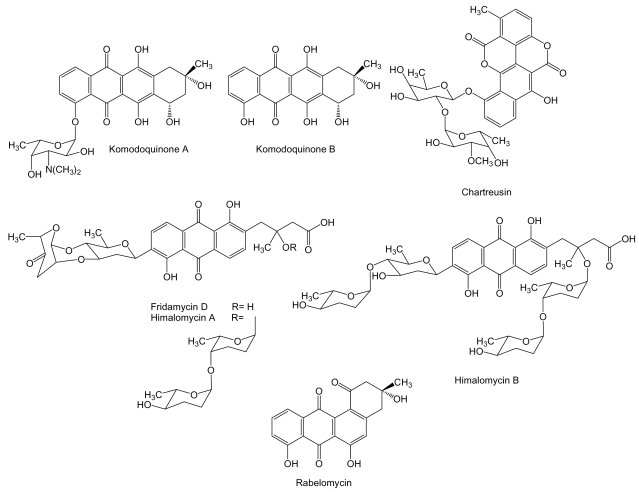
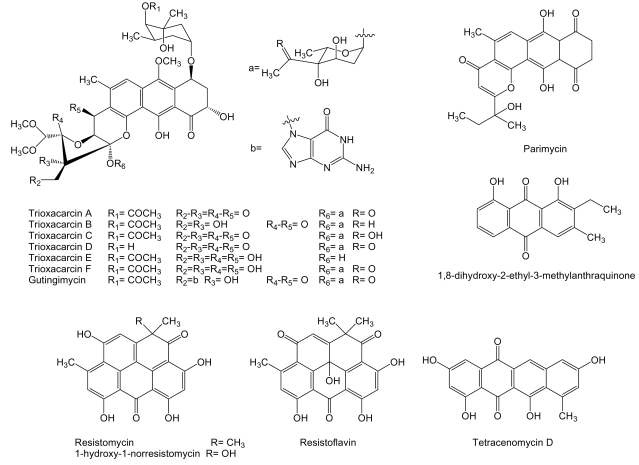
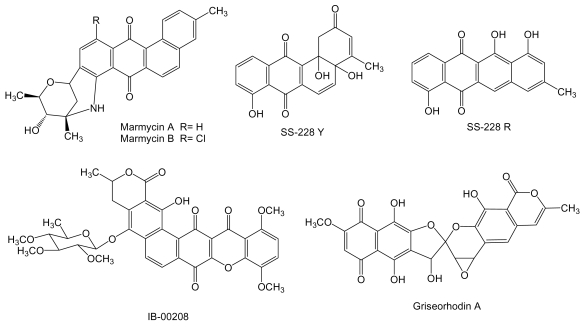
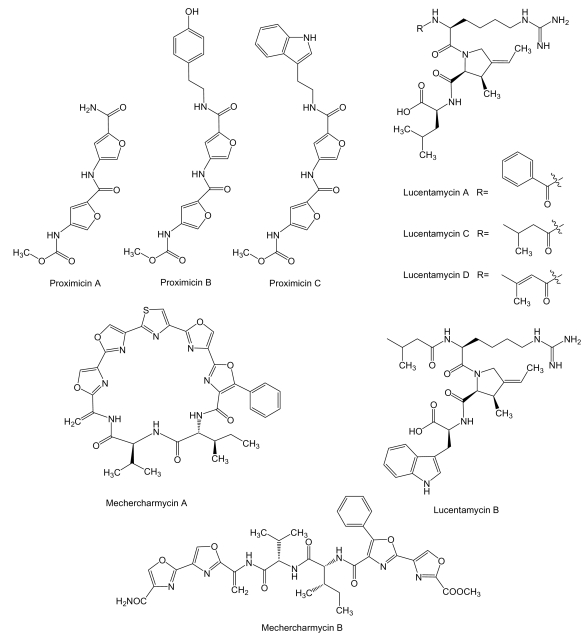
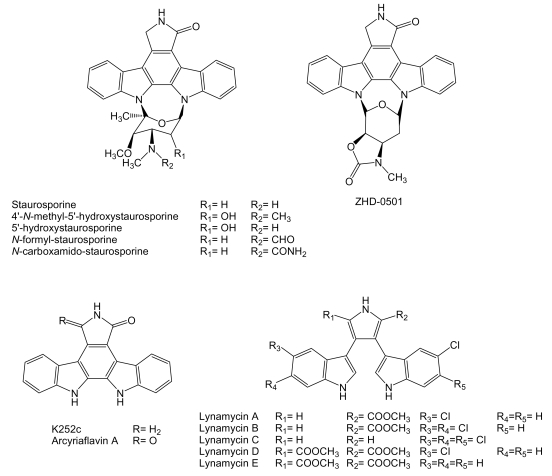
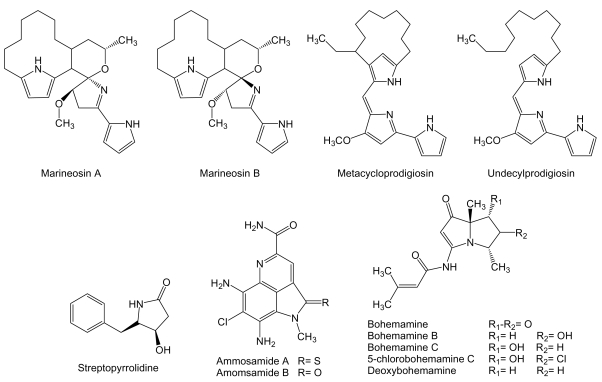
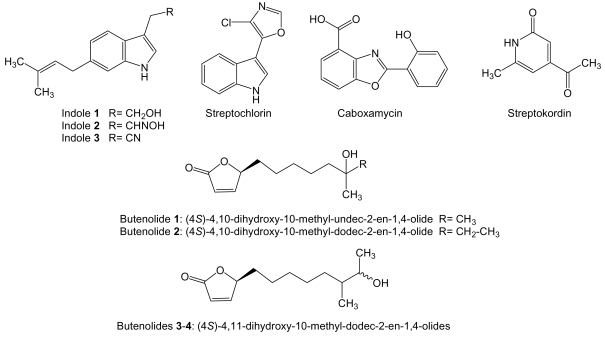
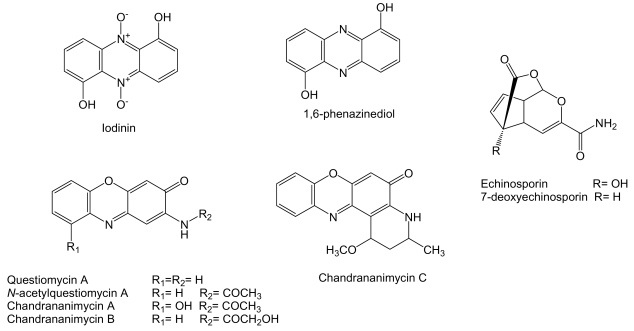
Verification
Claims the paper makes
The claims and statistics of this paper haven’t been checked yet.
Run the check — free, no account needed. It reads the open-access text and checks the sources it cites.
Claims other papers make about this one
Each is checked against this paper’s own text: does it say what the citing paper says it does?
The source backs part of the claim, not all of it — or backs it for a different population, condition or comparison.
In the citing paper
“Of these actinomycete-derived compounds, 75% were derived from Streptomyce whereas 25% were derived from rare actinomycetes [125,126].”
From Marine Natural Products: A Source of Novel Anticancer Drugs (2019) · cites this paper as [125]
Experimental — accuracy not yet measuredThe source backs part of the claim, not all of it — or backs it for a different population, condition or comparison.
In the citing paper
“Actinomycete-isolated secondary metabolites account for ca. 45% (~10,000 compounds) of the total known anti-microbial metabolites.”
From Marine Natural Products: A Source of Novel Anticancer Drugs (2019) · cites this paper as [125]
Experimental — accuracy not yet measured
Self-check
Percentages, sums and reported differences re-computed from the paper’s own numbers.
The self-check needs the paper’s full text.
Citations
Cites
Natural products as sources of new drugs over the last 25 years
Newman, D. J., & Cragg, G. M. (2007) · Journal of Natural Products · doi:10.1021/np068054v · Cited by 5,517
Faulkner, D. J. (1990) · Natural Product Reports · doi:10.1039/np9900700269 · Cited by 4,880
Bioactive Microbial Metabolites: A Personal View
Bérdy, J. (2005) · The Journal of Antibiotics · doi:10.1038/ja.2005.1 · Cited by 3,170
Fischbach, M. A., & Walsh, C. T. (2006) · Chemical Reviews · doi:10.1021/cr0503097 · Cited by 1,469
Polyamines and cancer: old molecules, new understanding
Gerner, E. W., & Meyskens, F. L. (2004) · Nature reviews. Cancer · doi:10.1038/nrc1454 · Cited by 1,163
Genomics of Actinobacteria : Tracing the Evolutionary History of an Ancient Phylum
Ventura, M., Canchaya, C. A., Tauch, A., Chandra, G., Fitzgerald, G. F., Chater, K. F., & van Sinderen, D. (2007) · Microbiology and Molecular Biology Reviews · doi:10.1128/mmbr.00005-07 · Cited by 1,140
Natural products to drugs: natural product-derived compounds in clinical trials
Butler, M. S. (2008) · Natural Product Reports · doi:10.1039/b514294f · Cited by 1,086
Feling, R. H., Buchanan, G. O., Mincer, T. J., Kauffman, C. A., Jensen, P. R., & Fenical, W. (2003) · Angewandte Chemie International Edition · doi:10.1002/anie.200390115 · Cited by 1,057
Goodfellow, M., & Williams, S. T. (1983) · Annual Review of Microbiology · doi:10.1146/annurev.mi.37.100183.001201 · Cited by 1,022
Microbial drug discovery: 80 years of progress
Demain, A. L., & Sánchez, S. (2009) · The Journal of Antibiotics · doi:10.1038/ja.2008.16 · Cited by 1,004
Developing a new resource for drug discovery: marine actinomycete bacteria
Fenical, W., & Jensen, P. R. (2006) · Nature Chemical Biology · doi:10.1038/nchembio841 · Cited by 787
Janssen, P. H., Yates, P. S., Grinton, B. E., Taylor, P., & Sait, M. L. (2002) · Applied and Environmental Microbiology · doi:10.1128/aem.68.5.2391-2396.2002 · Cited by 729
Ōmura, S., IWAI, Y., Hirano, A., Nakagawa, A., Awaya, J., Tsuchiya, H., Takahashi, Y., & ASUMA, R. (1977) · The Journal of Antibiotics · doi:10.7164/antibiotics.30.275 · Cited by 676
Polyketide and Nonribosomal Peptide Antibiotics: Modularity and Versatility
Walsh, C. T. (2004) · Science · doi:10.1126/science.1094318 · Cited by 631
p53-dependent apoptosis produced by Rb-deficiency in the developing mouse lens
Morgenbesser, S. D., Williams, B. O., Jacks, T., & DePinho, R. A. (1994) · Nature · doi:10.1038/371072a0 · Cited by 607
Molecular Mechanisms Underlying Nonribosomal Peptide Synthesis: Approaches to New Antibiotics
Sieber, S. A., & Marahiel, M. A. (2005) · Chemical Reviews · doi:10.1021/cr0301191 · Cited by 601
Metabolites from symbiotic bacteria
Piel, J. (2008) · Natural Product Reports · doi:10.1039/b703499g · Cited by 579
Polyketide biosynthesis beyond the type I, II and III polyketide synthase paradigms
Shen, B. (2003) · Current Opinion in Chemical Biology · doi:10.1016/s1367-5931(03)00020-6 · Cited by 565
Udwary, D., Allen, L. Z., Asolkar, R. N., Singan, V. R., Lapidus, A. L., Fenical, W., Jensen, P. R., & Moore, B. S. (2007) · Proceedings of the National Academy of Sciences · doi:10.1073/pnas.0700962104 · Cited by 537
Shay, J. W. (2001) · Human Molecular Genetics · doi:10.1093/hmg/10.7.677 · Cited by 525
Blunt, J. W., Copp, B. R., Hu, W.-P., Munro, M. H. G., Northcote, P. T., & Prinsep, M. R. (2009) · Natural Product Reports · doi:10.1039/b805113p · Cited by 520
Renaissance in antibacterial discovery from actinomycetes
Baltz, R. H. (2008) · Current Opinion in Pharmacology · doi:10.1016/j.coph.2008.04.008 · Cited by 503
Blunt, J. W., Copp, B. R., Munro, M. H. G., Northcote, P. T., & Prinsep, M. R. (2006) · Natural Product Reports · doi:10.1039/b502792f · Cited by 422
Indolocarbazole natural products: occurrence, biosynthesis, and biological activity
Sánchez, C., Méndez, C., & Salas, J. A. (2006) · Natural Product Reports · doi:10.1039/b601930g · Cited by 408
Self-citationMarine actinobacteria: new opportunities for natural product search and discovery
Bull, A. T., & Stach, J. E. M. (2007) · Trends in Microbiology · doi:10.1016/j.tim.2007.10.004 · Cited by 390
Actinomycetes for marine drug discovery isolated from mangrove soils and plants in China
Hong, K., Gao, A.-H., Xie, Q.-Y., Gao, H. G., Zhuang, L., Lin, H.-P., Yu, H.-P., Li, J., Yao, X.-S., Goodfellow, M., et al. (2009) · Marine Drugs · doi:10.3390/md7010024 · Cited by 372
Phylogenetic Diversity of Gram-Positive Bacteria Cultured from Marine Sediments
Gontang, E. A., Fenical, W., & Jensen, P. R. (2007) · Applied and Environmental Microbiology · doi:10.1128/aem.02811-06 · Cited by 340
Actinomycetes as agents of biodegradation in the environment — a review
McCarthy, A. J., & Williams, S. T. (1992) · Gene · doi:10.1016/0378-1119(92)90558-7 · Cited by 335
Species-Specific Secondary Metabolite Production in Marine Actinomycetes of the Genus Salinispora
Jensen, P. R., Williams, P. G., Oh, D., Allen, L. Z., & Fenical, W. (2006) · Applied and Environmental Microbiology · doi:10.1128/aem.01891-06 · Cited by 321
Piel, J. (2004) · Natural Product Reports · doi:10.1039/b310175b · Cited by 310
Riedlinger, J., Reicke, A., Zähner, H., Krismer, B., Bull, A. T., Maldonado, L. A., Ward, A. C., Goodfellow, M., Bister, B., Bischoff, D., et al. (2004) · The Journal of Antibiotics · doi:10.7164/antibiotics.57.271 · Cited by 295
Kwon, H. C., Kauffman, C. A., Jensen, P. R., & Fenical, W. (2006) · Journal of the American Chemical Society · doi:10.1021/ja0558948 · Cited by 294
Diversity of actinomycetes isolated from Challenger Deep sediment (10,898 m) from the Mariana Trench
., W. P.-A., Stach, J. E. M., Ward, A. C., Horikoshi, K., Bull, A. T., & Goodfellow, M. (2006) · Extremophiles · doi:10.1007/s00792-005-0482-z · Cited by 277
Marine actinomycetes as a source of novel secondary metabolites
Fiedler, H., Bruntner, C., Bull, A. T., Ward, A. C., Goodfellow, M., Potterat, O., Puder, C., & Mihm, G. (2005) · Antonie van Leeuwenhoek · doi:10.1007/s10482-004-6538-8 · Cited by 267
Identification of Ras farnesyltransferase inhibitors by microbial screening.
Hara, M., Akasaka, K., Akinaga, S., Okabe, M., Nakano, H., Gomez, R., Wood, D., Uh, M., & Tamanoi, F. (1993) · Proceedings of the National Academy of Sciences · doi:10.1073/pnas.90.6.2281 · Cited by 257
Combinatorial biosynthesis of antitumor indolocarbazole compounds
Sánchez, C., Zhu, L., Braña, A. F., Salas, A. P., Rohr, J., Méndez, C., & Salas, J. A. (2004) · Proceedings of the National Academy of Sciences · doi:10.1073/pnas.0407809102 · Cited by 242
Self-citationTaxonomy, Fermentation, Isolation and Biological Activities.
Mori, H., Urano, Y., Abe, F., Furukawa, S., Furukawa, S., TSURUMI, Y., Sakamoto, K., Hashimoto, M., Takase, S., Hino, M., et al. (2003) · The Journal of Antibiotics · doi:10.7164/antibiotics.56.72 · Cited by 238
Marine actinobacteria: perspectives, challenges, future directions
Bull, A. T., Stach, J. E. M., Ward, A. C., & Goodfellow, M. (2005) · Antonie van Leeuwenhoek · doi:10.1007/s10482-004-6562-8 · Cited by 232
The prodigiosins, proapoptotic drugs with anticancer properties
Pérez‐Tomás, R., Montaner, B., Llagostera, E., & Soto‐Cerrato, V. (2003) · Biochemical Pharmacology · doi:10.1016/s0006-2952(03)00496-9 · Cited by 224
Panning for chemical gold: marine bacteria as a source of new therapeutics
Williams, P. G. (2008) · Trends in biotechnology · doi:10.1016/j.tibtech.2008.10.005 · Cited by 217
Romero, F., Espliego, F., Baz, J. P., de Quesada, T. G., Gravalos, D., de la Calle, F., & Fernández-Puentes, J. L. (1997) · Journal of antibiotics (Tokyo. 1968) · doi:10.7164/antibiotics.50.734 · Cited by 212
Miller, C. P., Ban, K., Dujka, M. E., McConkey, D. J., Munsell, M., Palladino, M. A., & Chandra, J. (2007) · Blood · doi:10.1182/blood-2006-03-013128 · Cited by 204
Bredholdt, H., Галатенко, О. А., Engelhardt, K., Fjærvik, E., Terekhova, L. P., & Zotchev, S. B. (2007) · Environmental Microbiology · doi:10.1111/j.1462-2920.2007.01387.x · Cited by 201
The Ammosamides: Structures of Cell Cycle Modulators from a Marine‐Derived Streptomyces Species
Hughes, C. C., MacMillan, J. B., Gaudêncio, S. P., Jensen, P. R., & Fenical, W. (2008) · Angewandte Chemie International Edition · doi:10.1002/anie.200804890 · Cited by 189
Hohmann, C., Schneider, K., Bruntner, C., Irran, E., NICHOLSON, G. J., Bull, A. T., Jones, A. L., Brown, R., Stach, J. E. M., Goodfellow, M., et al. (2009) · The Journal of Antibiotics · doi:10.1038/ja.2008.24 · Cited by 187
Lombó, F., Velasco, A. L., Castro, A., de la Calle, F., Braña, A. F., Sánchez-Puelles, J.-M., Méndez, C., & Salas, J. A. (2006) · ChemBioChem · doi:10.1002/cbic.200500325 · Cited by 185
Self-citationDiversity and biogeography of marine actinobacteria
Ward, A. C., & Bora, N. (2006) · Current Opinion in Microbiology · doi:10.1016/j.mib.2006.04.004 · Cited by 183
Selvin, J., Shanmughapriya, S., Gandhimathi, R., Kiran, G. S., Ravji, T. R., Natarajaseenivasan, K., & Hema, T. A. (2009) · Applied Microbiology and Biotechnology · doi:10.1007/s00253-009-1878-y · Cited by 180
New Cytotoxic Salinosporamides from the Marine Actinomycete Salinispora tropica
Williams, P. G., Buchanan, G. O., Feling, R. H., Kauffman, C. A., Jensen, P. R., & Fenical, W. (2005) · The Journal of Organic Chemistry · doi:10.1021/jo050511+ · Cited by 170
Oh, D., Williams, P. G., Kauffman, C. A., Jensen, P. R., & Fenical, W. (2006) · Organic Letters · doi:10.1021/ol052686b · Cited by 165
Microbial technologies for the discovery of novel bioactive metabolites
Donadio, S., Monciardini, P., Alduina, R., Mazza, P., Chiocchini, C., Cavaletti, L., Sosio, M., & Puglia, A. M. (2002) · Journal of Biotechnology · doi:10.1016/s0168-1656(02)00209-2 · Cited by 165
Mayer, A. M. S., Rodrı́guez, A. D., Berlinck, R. G. S., & Hamann, M. T. (2007) · Comparative Biochemistry and Physiology Part C Toxicology & Pharmacology · doi:10.1016/j.cbpc.2007.01.015 · Cited by 163
Antibiotic Terpenoid Chloro-Dihydroquinones from a New Marine Actinomycete
Soria-Mercado, I. E., Prieto‐Davó, A., Jensen, P. R., & Fenical, W. (2005) · Journal of Natural Products · doi:10.1021/np058011z · Cited by 161
Li, A., & Piel, J. (2002) · Chemistry & Biology · doi:10.1016/s1074-5521(02)00223-5 · Cited by 159
Fiedler, H., Bruntner, C., Riedlinger, J., Bull, A. T., Knutsen, G., Goodfellow, M., Jones, A. L., Maldonado, L. A., ., W. P.-A., Beil, W., et al. (2008) · The Journal of Antibiotics · doi:10.1038/ja.2008.125 · Cited by 159
MASKEY, R. P., HELMKE, E., KAYSER, O., FIEBIG, H. H., MAIER, A., BUSCHE, A., & LAATSCH, H. (2004) · The Journal of Antibiotics · doi:10.7164/antibiotics.57.771 · Cited by 158
Ueno, T., Takahashi, H., Oda, M., Mizunuma, M., Yokoyama, A., Goto, Y., Mizushina, Y., Sakaguchi, K., & Hayashi, H. (2000) · Biochemistry · doi:10.1021/bi992661i · Cited by 154
Lynamicins A−E, Chlorinated Bisindole Pyrrole Antibiotics from a Novel Marine Actinomycete
McArthur, K., Mitchell, S. S., Tsueng, G., Rheingold, A. L., White, D. J., Grodberg, J., Lam, K. S., & Potts, B. C. M. (2008) · Journal of Natural Products · doi:10.1021/np800286d · Cited by 151
Buchanan, G. O., Williams, P. G., Feling, R. H., Kauffman, C. A., Jensen, P. R., & Fenical, W. (2005) · Organic Letters · doi:10.1021/ol050901i · Cited by 150
Maskey, R. P., Li, F., Qin, S., Fiebig, H., & Laatsch, H. (2003) · The Journal of Antibiotics · doi:10.7164/antibiotics.56.622 · Cited by 149
Biosynthetic Studies of Daunorubicin and Tetracenomycin C
Hutchinson, C. R. (1997) · Chemical Reviews · doi:10.1021/cr960022x · Cited by 149
Olano, C., Méndez, C., & Salas, J. A. (2009) · Natural Product Reports · doi:10.1039/b822528a · Cited by 141
Self-citationMechercharmycins A and B, Cytotoxic Substances from Marine-derived Thermoactinomyces sp. YM3-251
Kanoh, K., Matsuo, Y., Adachi, K., Imagawa, H., Nishizawa, M., & Shizuri, Y. (2005) · The Journal of Antibiotics · doi:10.1038/ja.2005.36 · Cited by 139
BAZ, J. P., Cañedo, L. M., PUENTES, J. L. F., & Elipe, M. V. S. (1997) · The Journal of Antibiotics · doi:10.7164/antibiotics.50.738 · Cited by 137
Manam, R. R., Teisan, S., White, D. J., Nicholson, B., Grodberg, J., Neuteboom, S., Lam, K. S., Mosca, D. A., Lloyd, G. K., & Potts, B. C. M. (2005) · Journal of Natural Products · doi:10.1021/np049725x · Cited by 133
Onaka, H., TANIFGUCHI, S.-I., Igarashi, Y., & FURUMAI, T. (2002) · The Journal of Antibiotics · doi:10.7164/antibiotics.55.1063 · Cited by 131
Estimating and comparing the diversity of marine actinobacteria
Stach, J. E. M., & Bull, A. T. (2005) · Antonie van Leeuwenhoek · doi:10.1007/s10482-004-6524-1 · Cited by 127
Recognition and degradation of chitin by streptomycetes
Schrempf, H. (2001) · Antonie van Leeuwenhoek · doi:10.1023/a:1012058205158 · Cited by 126
Takahashi, A., KURASAWA, S., Ikeda, D., Okami, Y., & TAKEUCHI, T. (1989) · The Journal of Antibiotics · doi:10.7164/antibiotics.42.1556 · Cited by 126
Miller, E. D., Kauffman, C. A., Jensen, P. R., & Fenical, W. (2006) · The Journal of Organic Chemistry · doi:10.1021/jo061064g · Cited by 125
Salas, A. P., Zhu, L., Sánchez, C., Braña, A. F., Rohr, J., Méndez, C., & Salas, J. A. (2005) · Molecular Microbiology · doi:10.1111/j.1365-2958.2005.04777.x · Cited by 122
Self-citationLucentamycins A−D, Cytotoxic Peptides from the Marine-Derived Actinomycete Nocardiopsis lucentensis
Cho, J. Y., Williams, P. G., Kwon, H. C., Jensen, P. R., & Fenical, W. (2007) · Journal of Natural Products · doi:10.1021/np070101b · Cited by 120
Li, F., Maskey, R. P., Qin, S., Sattler, I., Fiebig, H., Maier, A., Zeeck, A., & Laatsch, H. (2005) · Journal of Natural Products · doi:10.1021/np030518r · Cited by 119
Arenamides A−C, Cytotoxic NFκB Inhibitors from the Marine Actinomycete Salinispora arenicola
Asolkar, R. N., Freel, K. C., Jensen, P. R., Fenical, W., Kondratyuk, T. P., Park, E., & Pezzuto, J. M. (2008) · Journal of Natural Products · doi:10.1021/np800617a · Cited by 119
Marineosins A and B, Cytotoxic Spiroaminals from a Marine-Derived Actinomycete
Boonlarppradab, C., Kauffman, C. A., Jensen, P. R., & Fenical, W. (2008) · Organic Letters · doi:10.1021/ol8020644 · Cited by 118
Saliniketals A and B, Bicyclic Polyketides from the Marine Actinomycete Salinispora arenicola
Williams, P. G., Asolkar, R. N., Kondratyuk, T. P., Pezzuto, J. M., Jensen, P. R., & Fenical, W. (2006) · Journal of Natural Products · doi:10.1021/np0604580 · Cited by 118
Zheng, Z., Zeng, W., Huang, Y., Yang, Z., Li, J., Cai, H., & Su, W. (2000) · FEMS Microbiology Letters · doi:10.1111/j.1574-6968.2000.tb09173.x · Cited by 116
Mutasynthesis of Fluorosalinosporamide, a Potent and Reversible Inhibitor of the Proteasome
Eustáquio, A. S., & Moore, B. S. (2008) · Angewandte Chemie International Edition · doi:10.1002/anie.200800177 · Cited by 116
OKAZAKI, T., KITAHARA, T., & Okami, Y. (1975) · The Journal of Antibiotics · doi:10.7164/antibiotics.28.176 · Cited by 112
Pathirana, C., Jensen, P. R., & Fenical, W. (1992) · Tetrahedron Letters · doi:10.1016/0040-4039(93)88010-g · Cited by 110
Mitchell, S. S., Nicholson, B., Teisan, S., Lam, K. S., & Potts, B. C. M. (2004) · Journal of Natural Products · doi:10.1021/np049970g · Cited by 107
Maskey, R. P., Helmke, E., & Laatsch, H. (2003) · The Journal of Antibiotics · doi:10.7164/antibiotics.56.942 · Cited by 105
Host-microbe interaction: bacteria
Sasakawa, C., & Hacker, J. H. (2006) · Current Opinion in Microbiology · doi:10.1016/j.mib.2005.12.015 · Cited by 103
Mode of action of thiocoraline, a natural marine compound with anti-tumour activity
Erba, E., Bergamaschi, D., Ronzoni, S., Faretta, M., Taverna, S., Bonfanti, M., Catapano, C. V., Faircloth, G., Jimeno, J., & D’Incalci, M. (1999) · British Journal of Cancer · doi:10.1038/sj.bjc.6690451 · Cited by 103
Arenicolides A−C, 26-Membered Ring Macrolides from the Marine Actinomycete Salinispora arenicola
Williams, P. G., Miller, E. D., Asolkar, R. N., Jensen, P. R., & Fenical, W. (2007) · The Journal of Organic Chemistry · doi:10.1021/jo061878x · Cited by 102
Hardt, I. H., Jensen, P. R., & Fenical, W. (2000) · Tetrahedron Letters · doi:10.1016/s0040-4039(00)00117-9 · Cited by 102
Dawson, S. J., Malkinson, J. P., Paumier, D., & Searcey, M. (2006) · Natural Product Reports · doi:10.1039/b516347c · Cited by 100
Actinobacterial diversity from marine sediments collected in Mexico
Maldonado, L. A., Fragoso-Yáñez, D., Pérez-García, A., Rosellon‐Druker, J., & Quintana, E. T. (2008) · Antonie van Leeuwenhoek · doi:10.1007/s10482-008-9294-3 · Cited by 99
NF-κB as a target for cancer therapy
Melisi, D., & Chiao, P. J. (2007) · Expert Opinion on Therapeutic Targets · doi:10.1517/14728222.11.2.133 · Cited by 99
Oh, D., Gontang, E. A., Kauffman, C. A., Jensen, P. R., & Fenical, W. (2008) · Journal of Natural Products · doi:10.1021/np0705155 · Cited by 95
The manumycin-group metabolites
Sattler, I., Thiericke, R., & Zeeck, A. (1998) · Natural Product Reports · doi:10.1039/a815221y · Cited by 95
Xu, Z., Jakobi, K., Welzel, K., & Hertweck, C. (2005) · Chemistry & Biology · doi:10.1016/j.chembiol.2005.04.017 · Cited by 94
Schneider, K., Keller, S., Wolter, F. E., Röglin, L., Beil, W., Seitz, O., NICHOLSON, G. J., Bruntner, C., Riedlinger, J., Fiedler, H., et al. (2008) · Angewandte Chemie International Edition · doi:10.1002/anie.200705295 · Cited by 92
Asolkar, R. N., Jensen, P. R., Kauffman, C. A., & Fenical, W. (2006) · Journal of Natural Products · doi:10.1021/np0603828 · Cited by 89
Liu, R., Cui, C., Duan, L., Gu, Q., & Zhu, W. (2005) · Archives of Pharmacal Research · doi:10.1007/bf02977899 · Cited by 89
Reed, K. A., Manam, R. R., Mitchell, S. S., Xu, J., Teisan, S., Chao, T., Deyanat‐Yazdi, G., Neuteboom, S., Lam, K. S., & Potts, B. C. M. (2007) · Journal of Natural Products · doi:10.1021/np0603471 · Cited by 88
Volatile metabolites from actinomycetes
Wilkins, K. (1996) · Chemosphere · doi:10.1016/0045-6535(96)00051-3 · Cited by 83
Metacycloprodigiosin, a tripyrrole pigment from Streptomyces longisporus ruber
Wasserman, H. H., Rodgers, G. C., & Keith, D. D. (1969) · Journal of the American Chemical Society · doi:10.1021/ja01033a065 · Cited by 82
Kim, T. K., & Fuerst, J. A. (2006) · Environmental Microbiology · doi:10.1111/j.1462-2920.2006.01040.x · Cited by 82
Studies on Biosynthetic Genes and Enzymes of Isoprenoids Produced by Actinomycetes
Dairi, T. (2005) · The Journal of Antibiotics · doi:10.1038/ja.2005.27 · Cited by 81
New Lactone-Containing Metabolites from a Marine-Derived Bacterium of the GenusStreptomyces
Cho, K. W., Lee, H., Rho, J., Kim, T. S., Mo, S. J., & Shin, J. (2001) · Journal of Natural Products · doi:10.1021/np000599g · Cited by 80
Isolation and enumeration of marine actinomycetes from seawater and sediments in Alexandria.
Ghanem, N. B. E. D., Sabry, S. A., El-Sherif, Z. M., & El-Ela, G. A. A. (2000) · The Journal of General and Applied Microbiology · doi:10.2323/jgam.46.105 · Cited by 80
Martin, G. D. A., Tan, L. T., Jensen, P. R., Dimayuga, R. E., Fairchild, C. R., Raventós-Suárez, C., & Fenical, W. (2007) · Journal of Natural Products · doi:10.1021/np060621r · Cited by 80
Jakobi, K., & Hertweck, C. (2004) · Journal of the American Chemical Society · doi:10.1021/ja0390698 · Cited by 79
Mobile ionophores are a novel class of P‐glycoprotein inhibitors
Borrel, M.-N., Pereira-Maia, E. C., Fiallo, M. M. L., & Garnier‐Suillerot, A. (1994) · European Journal of Biochemistry · doi:10.1111/j.1432-1033.1994.tb18973.x · Cited by 78
Cho, J. Y., Kwon, H. C., Williams, P. G., Kauffman, C. A., Jensen, P. R., & Fenical, W. (2006) · Journal of Natural Products · doi:10.1021/np050402q · Cited by 78
New Butenolides from Two Marine Streptomycetes
Venugopal, M., Speitling, M., Laatsch, H., & Helmke, E. (2000) · Journal of Natural Products · doi:10.1021/np0001676 · Cited by 78
Chalcomycin B, a New Macrolide Antibiotic from the Marine Isolate Streptomyces sp. B7064.
Asolkar, R. N., Maskey, R. P., Helmke, E., & Laatsch, H. (2002) · The Journal of Antibiotics · doi:10.7164/antibiotics.55.893 · Cited by 78
Biosynthetic Convergence of Salinosporamides A and B in the Marine Actinomycete Salinispora tropica
Beer, L. L., & Moore, B. S. (2007) · Organic Letters · doi:10.1021/ol063102o · Cited by 77
New antitumor antibiotics, OS-4742 A1, A2, B1 and B2 produced by a strain of Streptomyces.
Ōmura, S., Tanaka, H., OIWA, R., Awaya, J., Masuma, R., & Tanaka, K. (1977) · The Journal of Antibiotics · doi:10.7164/antibiotics.30.908 · Cited by 76
Jeong, S., Shin, H. J., Kim, T. S., Lee, H., Park, S., & Kim, H. M. (2006) · The Journal of Antibiotics · doi:10.1038/ja.2006.33 · Cited by 76
Amorphane Sesquiterpenes from a Marine Streptomyces sp.,1
Wu, S. J., Fotso, S., Li, F., Qin, S., & Laatsch, H. (2007) · Journal of Natural Products · doi:10.1021/np050358e · Cited by 75
Resistoflavine, cytotoxic compound from a marine actinomycete, Streptomyces chibaensis AUBN1/7
Gorajana, A., Venkatesan, M., Vinjamuri, S., Kurada, B. V. V. S. N., Peela, S., Jangam, P., Ellaiah, P., & Zeeck, A. (2006) · Microbiological Research · doi:10.1016/j.micres.2006.01.012 · Cited by 74
Versatility of polyketide synthases in generating metabolic diversity
Gokhale, R. S., Sankaranarayanan, R., & Mohanty, D. (2007) · Current Opinion in Structural Biology · doi:10.1016/j.sbi.2007.08.021 · Cited by 73
Inhibitors Targeting the LFA-1/ICAM-1 Cell-Adhesion Interaction: Design and Mechanism of Action
Zimmerman, T., & Blanco, F. J. (2008) · Current Pharmaceutical Design · doi:10.2174/138161208785740225 · Cited by 73
Ward, S. L., Hu, Z., Schirmer, A., Reid, R. C., Revill, W. P., Reeves, C. D., Petrakovsky, O. V., Dong, S. D., & Katz, L. (2004) · Antimicrobial Agents and Chemotherapy · doi:10.1128/aac.48.12.4703-4712.2004 · Cited by 73
Altemicidin, a new acaricidal and antitumor substance. II. Structure determination.
Takahashi, A., Ikeda, D., Nakamura, H., NAGANAWA, H., KURASAWA, S., Okami, Y., TAKEUCHI, T., & Iitaka, Y. (1989) · The Journal of Antibiotics · doi:10.7164/antibiotics.42.1562 · Cited by 72
Kock, I., Maskey, R. P., Biabani, M. A. F., Helmke, E., & Laatsch, H. (2005) · The Journal of Antibiotics · doi:10.1038/ja.2005.73 · Cited by 70
An assessment of actinobacterial diversity in the marine environment
Jensen, P. R., & Lauro, F. M. (2008) · Antonie van Leeuwenhoek · doi:10.1007/s10482-008-9239-x · Cited by 70
Biosynthesis and Structural Revision of Neomarinone
Kalaitzis, J. A., Hamano, Y., Nilsen, G., & Moore, B. S. (2003) · Organic Letters · doi:10.1021/ol035748b · Cited by 68
Engineered Biosynthesis of Antiprotealide and Other Unnatural Salinosporamide Proteasome Inhibitors
McGlinchey, R. P., Nett, M., Eustáquio, A. S., Asolkar, R. N., Fenical, W., & Moore, B. S. (2008) · Journal of the American Chemical Society · doi:10.1021/ja8029398 · Cited by 68
New Cytotoxic Indolic Metabolites from a Marine Streptomyces
López, J. M. S., Insua, M. M., BAZ, J. P., PUENTES, J. L. F., & Cañedo, L. M. (2003) · Journal of Natural Products · doi:10.1021/np0204444 · Cited by 68
Li, D. H., Zhu, T. J., Liu, H. B., Fang, Y. C., Gu, Q. Q., & Zhu, W. M. (2006) · Archives of Pharmacal Research · doi:10.1007/bf02968245 · Cited by 66
Ding, L., Pfoh, R., Rühl, S., Qin, S., & Laatsch, H. (2008) · Journal of Natural Products · doi:10.1021/np8006843 · Cited by 66
Wu, S. J., Fotso, S., Li, F., Qin, S., Kelter, G., Fiebig, H., & Laatsch, H. (2006) · The Journal of Antibiotics · doi:10.1038/ja.2006.46 · Cited by 65
Streptopyrrolidine, an angiogenesis inhibitor from a marine-derived Streptomyces sp. KORDI-3973
Shin, H. J., Kim, T. S., Lee, H., Park, J. Y., Choi, I.-K., & Kwon, H. J. (2008) · Phytochemistry · doi:10.1016/j.phytochem.2008.05.020 · Cited by 65
Lorico, A., & Long, B. H. (1993) · European Journal of Cancer · doi:10.1016/0959-8049(93)90459-s · Cited by 65
Biosynthesis of vineomycins A1 and B2.
Imamura, N., Kakinuma, S., Ikekawa, N., Tanaka, H., & Ōmura, S. (1982) · The Journal of Antibiotics · doi:10.7164/antibiotics.35.602 · Cited by 65
Gutingimycin: A Highly Complex Metabolite from a Marine Streptomycete
Maskey, R. P., Sevvana, M., Usón, I., Helmke, E., & Laatsch, H. (2004) · Angewandte Chemie International Edition · doi:10.1002/anie.200352312 · Cited by 63
Bohemamines from a Marine-Derived Streptomyces sp.
Bugni, T. S., Woolery, M., Kauffman, C. A., Jensen, P. R., & Fenical, W. (2006) · Journal of Natural Products · doi:10.1021/np0602721 · Cited by 62
Nuclear Factor-κB: A Holy Grail in Cancer Prevention and Therapy
Aggarwal, B. B., Sethi, G., Nair, S. A., & Ichikawa, H. (2006) · Current Signal Transduction Therapy · doi:10.2174/157436206775269235 · Cited by 61
Robey, R. W., Shukla, S., Steadman, K., Obrzut, T., Finley, E. M., Ambudkar, S. V., & Bates, S. E. (2007) · Molecular Cancer Therapeutics · doi:10.1158/1535-7163.mct-06-0811 · Cited by 61
Malet‐Cascon, L., ROMERO, F., Espliego‐Vazquez, F., GRAVALOS, D. G., & Fernández-Puentes, J. L. (2003) · The Journal of Antibiotics · doi:10.7164/antibiotics.56.219 · Cited by 60
Fukuda, D. S., Mynderse, J. S., Baker, P. J., BERRY, D. M., BOECK, L. D., YAO, R. C., MERTZ, F. P., Nakatsukasa, W. M., MABE, J. A., OTT, J. L., et al. (1990) · The Journal of Antibiotics · doi:10.7164/antibiotics.43.623 · Cited by 60
Komodoquinone A, a Novel Neuritogenic Anthracycline, from Marine Streptomyces sp. KS3
Ito, T., Kinoshita, M., Aoki, S., & Kobayashi, M. (2003) · Journal of Natural Products · doi:10.1021/np030212k · Cited by 58
Piericidins C7 and C8, New Cytotoxic Antibiotics Produced by a Marine Streptomyces sp.
Hayakawa, Y., Shirasaki, S., Shiba, S., Kawasaki, T., Matsuo, Y., Adachi, K., & Shizuri, Y. (2007) · The Journal of Antibiotics · doi:10.1038/ja.2007.22 · Cited by 57
Cañedo, L. M., Blanco, J. A. D. L. F., BAZ, J. P., PUENTES, J. L. F., MILLÁN, F. R., Espliego‐Vazquez, F., Fernandez‐Chimeno, R. I., & GRAVALOS, D. G. (2000) · The Journal of Antibiotics · doi:10.7164/antibiotics.53.895 · Cited by 55
Indolocarbazole antitumour compounds by combinatorial biosynthesis
Salas, J. A., & Méndez, C. (2009) · Current Opinion in Chemical Biology · doi:10.1016/j.cbpa.2009.02.003 · Cited by 54
Self-citationGorajana, A., Kurada, B. V. V. S. N., Peela, S., Jangam, P., Vinjamuri, S., Ellaiah, P., & Zeeck, A. (2005) · The Journal of Antibiotics · doi:10.1038/ja.2005.72 · Cited by 53
Cross resistance pattern towards anticancer drugs of a human carcinoma multidrug-resistant cell line
Gupta, R., Murray, W., & Gupta, R. S. (1988) · British Journal of Cancer · doi:10.1038/bjc.1988.237 · Cited by 52
Exploiting marine actinomycete biosynthetic pathways for drug discovery
Moore, B. S., Kalaitzis, J. A., & Xiang, L. (2005) · Antonie van Leeuwenhoek · doi:10.1007/s10482-004-6541-0 · Cited by 51
ZHD-0501, a novel naturally occurring staurosporine analog from Actinomadura sp. 007
Xiao-xian, H., Cui, C., Gu, Q., Zhu, W., Liu, H., Gu, J., & Osada, H. (2005) · Tetrahedron Letters · doi:10.1016/j.tetlet.2005.06.154 · Cited by 51
Smith, W. C., Xiang, L., & Shen, B. (2000) · Antimicrobial Agents and Chemotherapy · doi:10.1128/aac.44.7.1809-1817.2000 · Cited by 50
Engineering biosynthetic pathways to generate antitumor indolocarbazole derivatives
Sánchez, C., Méndez, C., & Salas, J. A. (2006) · Journal of Industrial Microbiology & Biotechnology · doi:10.1007/s10295-006-0092-5 · Cited by 48
Self-citationZhao, C., Ju, J., Christenson, S. D., Smith, W. C., Song, D., Zhou, X., Shen, B., & Deng, Z. (2006) · Journal of Bacteriology · doi:10.1128/jb.00173-06 · Cited by 48
Lissoclinolide, the First Non-Nitrogenous Metabolite from a Lissoclinum tunicate
Davidson, B. S., & Ireland, C. M. (1990) · Journal of Natural Products · doi:10.1021/np50070a049 · Cited by 46
Maskey, R. P., Helmke, E., Fiebig, H., & Laatsch, H. (2002) · The Journal of Antibiotics · doi:10.7164/antibiotics.55.1031 · Cited by 46
Rodriguez, J. C., PUENTES, J. L. F., BAZ, J. P., & Cañedo, L. M. (2003) · The Journal of Antibiotics · doi:10.7164/antibiotics.56.318 · Cited by 46
Fernandez‐Chimeno, R. I., Cañedo, L. M., ESPLIEGO, F., GRAVALOS, D. G., de la Calle, F., Fernández-Puentes, J. L., & ROMERO, F. (2000) · The Journal of Antibiotics · doi:10.7164/antibiotics.53.474 · Cited by 45
Two indolocarbazole alkaloids with apoptosis activity from a marine-derived actinomycete Z2039-2
Liu, R., Zhu, T., Li, D., Gu, J., Xia, W., Fang, Y., Liu, H., Zhu, W., & Gu, Q. (2007) · Archives of Pharmacal Research · doi:10.1007/bf02977605 · Cited by 44
Shin, H. J., Jeong, H. S., Lee, H. S., Park, S. K., Kim, H. M., & Kwon, H. J. (2007) · PubMed · Cited by 44
Mining Marine Microorganisms as a Source of New Antimicrobials and Antifungals
Bernan, V., Greenstein, M., & Carter, G. (2004) · Anti-Infective Agents · doi:10.2174/1568012043353883 · Cited by 42
New Cell-cell Adhesion Inhibitors from Streptomyces sp. UMA-044
Zhang, Q., Schrader, K. K., ElSohly, H. N., & Takamatsu, S. (2003) · The Journal of Antibiotics · doi:10.7164/antibiotics.56.673 · Cited by 42
Induction of apoptosis by streptochlorin isolated from Streptomyces sp. in human leukemic U937 cells
Park, C., Shin, H. J., Kim, G., Kwon, T. K., Nam, T., Kim, S., Cheong, J., Choi, I., & Choi, Y. H. (2008) · Toxicology in Vitro · doi:10.1016/j.tiv.2008.06.010 · Cited by 41
Cañedo, L. M., PUENTES, J. L. F., BAZ, J. P., Huang, X. ‐., & Rinehart, K. L. (2000) · The Journal of Antibiotics · doi:10.7164/antibiotics.53.479 · Cited by 41
Carbon-13 nuclear magnetic resonance chemical shifts of substituted phenazines
Breitmaier, E., & Hollstein, U. (1976) · The Journal of Organic Chemistry · doi:10.1021/jo00874a008 · Cited by 39
Gallo, G. G., Coronelli, C., Vigevani, A., & Lancini, G. (1969) · Tetrahedron · doi:10.1016/s0040-4020(01)83074-x · Cited by 38
Tsueng, G., Teisan, S., & Lam, K. S. (2008) · Applied Microbiology and Biotechnology · doi:10.1007/s00253-008-1358-9 · Cited by 38
Antiprotealide Is a Natural Product
Manam, R. R., Macherla, V. R., Tsueng, G., Dring, C. W., Weiss, J., Neuteboom, S., Lam, K. S., & Potts, B. C. M. (2009) · Journal of Natural Products · doi:10.1021/np800578e · Cited by 37
Antitumor activity and preliminary drug disposition studies on chartreusin (NSC 5159).
Jp, M., NEIL, G. L., Crampton, S. L., Robinson, M. I., & Jd, D. (1977) · PubMed · Cited by 36
The structure of metacycloprodigiosin
Wasserman, H. H., Keith, D. D., & Rodgers, G. C. (1976) · Tetrahedron · doi:10.1016/0040-4020(76)85186-1 · Cited by 34
Lam, K. S., Tsueng, G., McArthur, K., Mitchell, S. S., Potts, B. C. M., & Xu, J. (2007) · The Journal of Antibiotics · doi:10.1038/ja.2007.2 · Cited by 34
Structures of New Cytotoxic Antibiotics, Piericidins C7 and C8
Hayakawa, Y., Shirasaki, S., Kawasaki, T., Matsuo, Y., Adachi, K., & Shizuri, Y. (2007) · The Journal of Antibiotics · doi:10.1038/ja.2007.23 · Cited by 34
Shiono, Y., Shiono, N., Seo, S., Oka, S., & Yamazaki, Y. (2002) · Zeitschrift für Naturforschung C · doi:10.1515/znc-2002-9-1028 · Cited by 33
Choi, I.-K., Shin, H. J., Lee, H. S., & Kwon, H. J. (2007) · PubMed · Cited by 33
Saha, M., Jaisankar, P., Das, S., Sarkar, K. K., Roy, S., Besra, S. E., Vedasiromani, J. R., Ghosh, D., Sana, B., & Mukherjee, J. (2006) · Biotechnology Letters · doi:10.1007/s10529-006-9054-2 · Cited by 31
Tsujibo, H., Sato, T., Inui, M., Yamamoto, H., & Inamori, Y. (1988) · Agricultural and Biological Chemistry · doi:10.1271/bbb1961.52.301 · Cited by 31
One new anthraquinone from marine Streptomyces sp. FX-58
Huang, Y., Li, T. X., Fu, H., Hua, H., & Pei, Y. (2006) · Natural Product Research · doi:10.1080/14786410600899142 · Cited by 29
The structure of SS-228Y, an antibiotic from Chainia sp.
KITAHARA, T., NAGANAWA, H., OKAZAKI, T., Okami, Y., & UMEZAWA, H. (1975) · The Journal of Antibiotics · doi:10.7164/antibiotics.28.280 · Cited by 29
Topoisomerase i inhibitors from theStreptomyces sp. strain KM86-9B isolated from a marine sponge
Lee, H. K., Lee, D.-S., Lim, J., Kim, J. S., Im, K. S., & Jung, J. H. (1998) · Archives of Pharmacal Research · doi:10.1007/bf02976766 · Cited by 28
CUI, C. ‐., Liu, H. B., Gu, J.-M., Gu, Q., Cai, B., Zhang, D. Y., & Zhu, T. J. (2007) · Fitoterapia · doi:10.1016/j.fitote.2006.11.017 · Cited by 26
Choi, Y. H. (2008) · Journal of Microbiology and Biotechnology · doi:10.4014/jmb.0800.124 · Cited by 24
Synthesis and cytotoxic activity of tetracenomycin d and of saintopin analogues
Martin, P., Rodier, S., Mondon, M., Renoux, B., Pfeiffer, B., Renard, P., Pierré, A., & Gesson, J. (2002) · Bioorganic & Medicinal Chemistry · doi:10.1016/s0968-0896(01)00273-5 · Cited by 22
Antibiotika aus actinomyceten. Zur chemischen konstitution des antibiotikums griseorhodin A
TRESSELT, D., Eckardt, K., & Ihn, W. (1978) · Tetrahedron · doi:10.1016/0040-4020(78)88406-3 · Cited by 20
Formation of gutingimycin: analytical investigation of trioxacarcin A-mediated alkylation of dsDNA
Fitzner, A., Frauendorf, H., Laatsch, H., & Diederichsen, U. (2008) · Analytical and Bioanalytical Chemistry · doi:10.1007/s00216-007-1737-6 · Cited by 20
The Carbon-13 NMR Spectra and Electronic Structure of 3H-Phenoxazin-3-ones
Hasegawa, K.-I., & Ueno, Y. (1985) · Bulletin of the Chemical Society of Japan · doi:10.1246/bcsj.58.2832 · Cited by 20
Stereostructure of Komodoquinone A, a Neuritogenic Anthracycline, from Marine Streptomyces sp. KS3
Ito, T., Kinoshita, M., Wei, H., & Kobayashi, M. (2003) · Chemical and Pharmaceutical Bulletin · doi:10.1248/cpb.51.1402 · Cited by 20
A profile of the in vitro antitumor activity of lissoclinolide
Richardson, A. D., & Ireland, C. M. (2003) · Toxicology and Applied Pharmacology · doi:10.1016/j.taap.2003.10.004 · Cited by 19
Biosynthesis of the Antibiotic Echinosporin by a Novel Branch of the Shikimate Pathway
Dübeler, A., Krastel, P., Floss, H. G., & Zeeck, A. (2002) · European Journal of Organic Chemistry · doi:10.1002/1099-0690(200203)2002:6 · Cited by 17
TETRENOLIN AND SS/1018 A, ANTIBACTERIAL AGENTS ISOLATED FROM A STRAIN OF ACTINOMYCETALES
PAGANI, H., Lancini, G., TAMONI, G., & Coronelli, C. (1973) · The Journal of Antibiotics · doi:10.7164/antibiotics.26.1 · Cited by 15
Anzai, K., Nakashima, T., Kuwahara, N., Suzuki, R., Ohfuku, Y., Takeshita, S., & Ando, K. (2008) · Journal of Bioscience and Bioengineering · doi:10.1263/jbb.106.215 · Cited by 14
Light-activated cytotoxic compounds from Malaysian microorganisms for photodynamic therapy of cancer
Kamal, N., Sabaratnam, V., Abdullah, N., Ho, A. S. H., Teo, S., & Lee, H. B. (2009) · Antonie van Leeuwenhoek · doi:10.1007/s10482-008-9301-8 · Cited by 13
A new antibiotic echinosporin (XK-213) - PRODUCING ORGANISM, ISOLATION AND CHARACTERIZATION.
Sato, T., Kawamoto, I., OKA, T., & Okachi, R. (1982) · The Journal of Antibiotics · doi:10.7164/antibiotics.35.266 · Cited by 13
Suzuki, H., Sugimoto, Y., Tanaka, K., Nishimura, T., & Tanaka, N. (1984) · The Journal of Antibiotics · doi:10.7164/antibiotics.37.602 · Cited by 9
ANTITUMOR ACTIVITY OF ECHINOSPORIN
Morimoto, M., & Imai, R. (1985) · The Journal of Antibiotics · doi:10.7164/antibiotics.38.490 · Cited by 8
ZHD‐0501, a Novel Naturally Occurring Staurosporine Analogue from Actinomadura sp. 007.
Xiao-xian, H., Cui, C., Gu, Q., Zhu, W., Liu, H., Gu, J., & Osada, H. (2005) · ChemInform · doi:10.1002/chin.200552177 · Cited by 6
Hou, Y., Wang, Q., Ding, L., Li, F., & Qin, S. (2008) · Biotechnology and Applied Biochemistry · doi:10.1042/ba20070124 · Cited by 2
Research works printed but not linked: 3
- Fenical, 2002, Marine microorganisms as a developing resource for drug discovery, Pharm News, 9, 489
- Bull, 2007, Marine actinobacteria: new opportunities for natural product search and discovery, Trends Microbiol, 15, 491, 10.1016/j.tim.2007.10.004 · DOI
- Lam, 2007, Effects of halogens on the production of salinosporamides by the obligate marine actinomycete Salinispora tropica, J Antibiot, 60, 13, 10.1038/ja.2007.2 · DOI
Cited by
Sorted by citations
Faulkner, D. J. (1990) · Natural Product Reports · doi:10.1039/np9900700269 · Cited by 4,880
Effects of UV radiation on aquatic ecosystems and interactions with climate change
Häder, D., Helbling, E. W., Williamson, C. E., & Worrest, R. C. (2011) · Photochemical & Photobiological Sciences · doi:10.1039/c0pp90036b · Cited by 768
Actinobacteria: Current research and perspectives for bioremediation of pesticides and heavy metals
Álvarez, A., Saez, J. M., Costa, J. S. D., Colin, V. L., Fuentes, M. S., Cuozzo, S. A., Benimeli, C. S., Polti, M. A., & Amoroso, M. J. (2016) · Chemosphere · doi:10.1016/j.chemosphere.2016.09.070 · Cited by 633
Marine Natural Products: A Source of Novel Anticancer Drugs
Khalifa, S. A. M., Elias, N., Farag, M. A., Chen, L., Saeed, A., Hegazy, M.-E. F., Moustafa, M. S., Abd El-Wahed, A., Al-Mousawi, S. M., Musharraf, S. G., et al. (2019) · Marine Drugs · doi:10.3390/md17090491 · Cited by 555
“Of these actinomycete-derived compounds, 75% were derived from Streptomyce whereas 25% were derived from rare actinomycetes [125,126].”
BackgroundBlunt, J. W., Copp, B. R., Munro, M. H. G., Northcote, P. T., & Prinsep, M. R. (2010) · Natural Product Reports · doi:10.1039/c005001f · Cited by 483
Metadata
- Authors
- Olano, C., Méndez, C., & Salas, J. A.
- Affiliations
- Universidad de Oviedo (ES)
- Departamento de Biología Funcional e Instituto Universitario de Oncología del Principado de Asturias (I.U.O.P.A), Universidad de Oviedo, 33006 Oviedo, Spain
- Corresponding author
- Salas, José A.
- Venue
- Marine Drugs
- Publisher
- MDPI AG
- Published
- 2009-06-11
- Volume
- 7
- Issue
- 2
- Pages
- 210-248
- ISSN
- 1660-3397 (ISSN-L)
- PMC
- PMC2707044
- OpenAlex
- W1985089556
- Cited by
- 330
- References
- 191
- Citations by year
- 2026: 15 · 2025: 10 · 2024: 17 · 2023: 15 · 2022: 20 · 2021: 19 · 2020: 24 · 2019: 18 · 2018: 18 · 2017: 10 · 2016: 21 · 2015: 27 · 2014: 21 · 2013: 32 · 2012: 24
- FWCI
- 2.16
- Type
- journal article
- Language
- en
- Open access
- gold
- doi.org
- Licence
- Locations
- Marine Drugs (publishedVersion, cc-by)
- PubMed Central (publishedVersion, cc-by)
- PubMed (publishedVersion)
- Consultation of the Doctoral Thesis Database (TESEO) (Ministerio de Educación, Cultura y Deporte) (submittedVersion, cc-by-nc-nd)
- DOAJ (DOAJ: Directory of Open Access Journals) (submittedVersion, cc-by-sa)
- Topics
- Life Sciences › Immunology and Microbiology › Applied Microbiology and Biotechnology › Microbial Natural Products and Biosynthesis
- Life Sciences › Biochemistry, Genetics and Molecular Biology › Biotechnology › Marine Sponges and Natural Products
- Life Sciences › Biochemistry, Genetics and Molecular Biology › Biotechnology › Microbial Metabolism and Applications
- Keywords
- anticancer agents, marine actinomycetes, natural products, anthracyclines, enediynes, indolocarbazole, macrolides, nonribosomal peptides, topoisomerase inhibition, apoptosis, angiogenesis inhibition, cancer chemotherapy
- MeSH terms
- Animals, Antineoplastic Agents, Carbazoles, Glycosides, Humans, Marine Biology, Peptides, Terpenes, Actinobacteria
About these checks
Registry, retraction, Cites and statistics results are computed, not judged, with one exception: a printed reference that no index lists is read once by a model before it counts as a citation error. Claims are extracted by a model and kept only when their quote appears verbatim in the text; each cited source is then checked, with a model’s help, for whether it says what the claim relies on. Those verdicts can be wrong — read the claim’s quote and the cited source before relying on one.
Statistics and arithmetic are recomputed, not judged.
Confidence bands are shown only for fields calibrated on our annotated test set. None is calibrated yet, so no band is shown.
What counts as a claim ›How we measure confidence ›How we check this ›
Are you an author, or do you see a problem with this page? Request a review
