

The DOI matches its Crossref record; 124 of the 124 references it cites were found in a registry or an index.
Immense Essence of Excellence: Marine Microbial Bioactive Compounds
Open accessAbstract
Oceans have borne most of the biological activities on our planet. A number of biologically active compounds with varying degrees of action, such as anti-tumor, anti-cancer, anti-microtubule, anti-proliferative, cytotoxic, photo protective, as well as antibiotic and antifouling properties, have been isolated to date from marine sources. The marine environment also represents a largely unexplored source for isolation of new microbes (bacteria, fungi, actinomycetes, microalgae-cyanobacteria and diatoms) that are potent producers of bioactive secondary metabolites. Extensive research has been done to unveil the bioactive potential of marine microbes (free living and symbiotic) and the results are amazingly diverse and productive. Some of these bioactive secondary metabolites of microbial origin with strong antibacterial and antifungal activities are being intensely used as antibiotics and may be effective against infectious diseases such as HIV, conditions of multiple bacterial infections (penicillin, cephalosporines, streptomycin, and vancomycin) or neuropsychiatric sequelae. Research is also being conducted on the general aspects of biophysical and biochemical properties, chemical structures and biotechnological applications of the bioactive substances derived from marine microorganisms, and their potential use as cosmeceuticals and nutraceuticals. This review is an attempt to consolidate the latest studies and critical research in this field, and to showcase the immense competence of marine microbial flora as bioactive metabolite producers. In addition, the present review addresses some effective and novel approaches of procuring marine microbial compounds utilizing the latest screening strategies of drug discovery.
Overview
The claims and statistics of this paper haven’t been checked yet.
Run the check — free, no account needed. It reads the open-access text and checks the sources it cites.
Integrity signals
Registry
Cites
Statistics
Figures
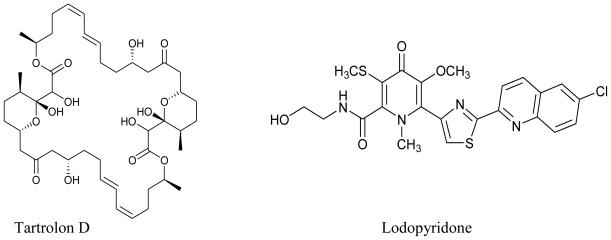
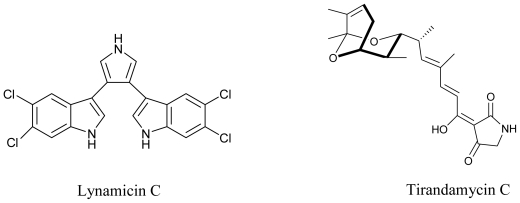
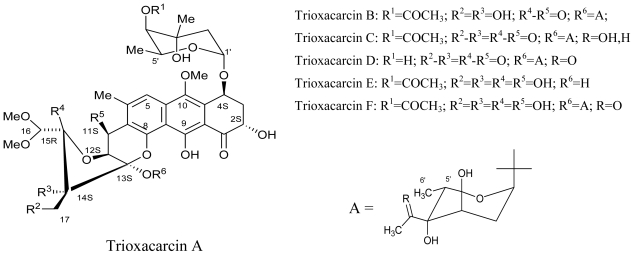
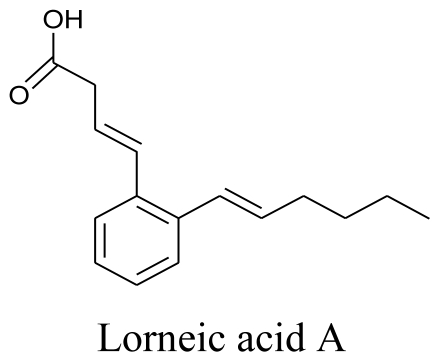
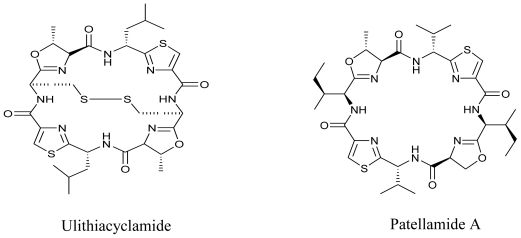
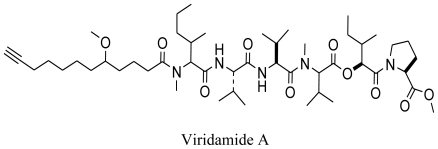
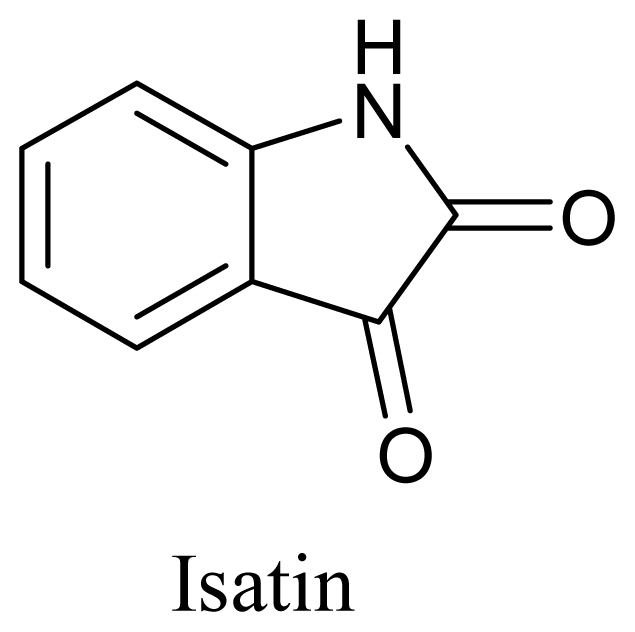
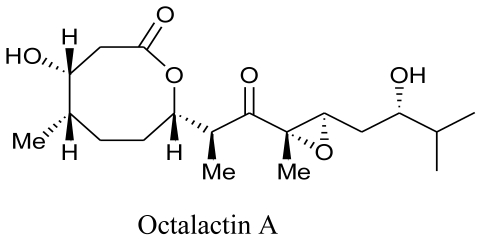
Verification
Claims the paper makes
The claims and statistics of this paper haven’t been checked yet.
Run the check — free, no account needed. It reads the open-access text and checks the sources it cites.
Claims other papers make about this one
Each is checked against this paper’s own text: does it say what the citing paper says it does?
The cited source says what the claim attributes to it.
In the citing paper
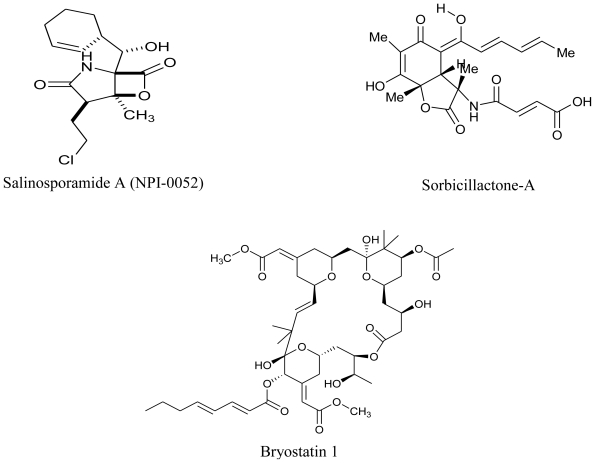
“Salinosporamide A, a novel long-lasting proteasome inhibitor isolated from a marine bacterium Salinispora tropica [230] in phase I clinical trials, has more efficacy against a wider range of hematologic malignancies and many solid tumor models, and less cytotoxicity to normal cells (Figure 8) [101].”
From Marine Natural Products: A Source of Novel Anticancer Drugs (2019) · cites this paper as [101]
The cited source says what the claim attributes to it.
In the citing paper
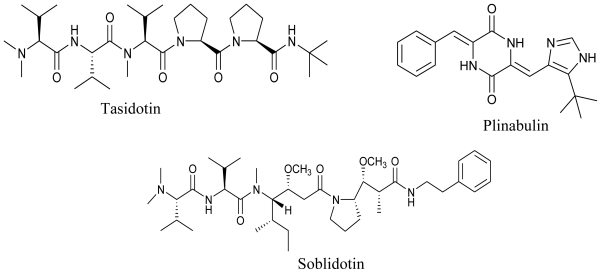
“Tasidotin, Synthadotin (ILX-651), derived from a marine bacterium in phase II clinical trials, and Soblidotin (TZT 1027), the bacterial peptide of marine origin in phase III clinical trials, are promising anticancer agents [101].”
From Marine Natural Products: A Source of Novel Anticancer Drugs (2019) · cites this paper as [101]
The cited source says what the claim attributes to it.
In the citing paper
“Salinosporamide A, a novel long-lasting proteasome inhibitor isolated from a marine bacterium Salinispora tropica [230] in phase I clinical trials, has more efficacy against a wider range of hematologic malignancies and many solid tumor models, and less cytotoxicity to normal cells (Figure 8) [101].”
From Marine Natural Products: A Source of Novel Anticancer Drugs (2019) · cites this paper as [101]
Self-check
Percentages, sums and reported differences re-computed from the paper’s own numbers.
The self-check needs the paper’s full text.
Citations
Cites
1 retracted
Biomedical Compounds from Marine organisms
Jha, R. K., & Zi-rong, X. (2004) · Marine Drugs · doi:10.3390/md203123 · Cited by 324
RetractedFaulkner, D. J. (1990) · Natural Product Reports · doi:10.1039/np9900700269 · Cited by 4,880
Bioactive Microbial Metabolites: A Personal View
Bérdy, J. (2005) · The Journal of Antibiotics · doi:10.1038/ja.2005.1 · Cited by 3,170
Feling, R. H., Buchanan, G. O., Mincer, T. J., Kauffman, C. A., Jensen, P. R., & Fenical, W. (2003) · Angewandte Chemie International Edition · doi:10.1002/anie.200390115 · Cited by 1,057
Marine cyanobacteria—a prolific source of natural products
Burja, A. M., Banaigs, B., Abou-Mansour, E., Grant Burgess, J., & Wright, P. C. (2001) · Tetrahedron · doi:10.1016/s0040-4020(01)00931-0 · Cited by 841
Inagaki, F., Nunoura, T., Nakagawa, S., Teske, A., Lever, M. A., Lauer, A., Suzuki, M., Takai, K., Delwiche, M. E., Colwell, F. S., et al. (2006) · Proceedings of the National Academy of Sciences · doi:10.1073/pnas.0511033103 · Cited by 694
The odyssey of marine pharmaceuticals: a current pipeline perspective
Mayer, A. M. S., Glaser, K. B., Cuevas, C., Jacobs, R. S., Kem, W. R., Little, R. D., McIntosh, J. M., Newman, D. J., Potts, B. C. M., & Shuster, D. E. (2010) · Trends in Pharmacological Sciences · doi:10.1016/j.tips.2010.02.005 · Cited by 669
Bioactive compounds from cyanobacteria and microalgae: an overview
Singh, S., Kate, B. N., & Banerjee, U. C. (2005) · Critical Reviews in Biotechnology · doi:10.1080/07388550500248498 · Cited by 619
Bioactive natural products from marine cyanobacteria for drug discovery
Tan, L. T. (2007) · Phytochemistry · doi:10.1016/j.phytochem.2007.01.012 · Cited by 534
Biosurfactants, bioemulsifiers and exopolysaccharides from marine microorganisms
Satpute, S., Banat, I. M., Dhakephalkar, P. K., Banpurkar, A. G., & Chopade, B. A. (2010) · Biotechnology Advances · doi:10.1016/j.biotechadv.2010.02.006 · Cited by 517
Research works printed but not linked: 5
- (1999). Monsoons to Microbes: Understanding the Ocean's Role in Human Health, The National Academies Press.
- Okami, 1993, The search for bioactive metabolites form marine bacteria, Mar. Biotechnol, 1, 59
- Falch, 1996, What remains of cyanobacteria?, Pharm. i. u. Zeit, 25, 311
- Fusetani, N (2000). Drugs from the Sea, Karger Publishers. · DOI
- Fusetani, N (2000). Drugs from the Sea, Karger Publishers. · DOI
Cited by
Sorted by citations
Faulkner, D. J. (1990) · Natural Product Reports · doi:10.1039/np9900700269 · Cited by 4,880
Martins, A., Vieira, H., Gaspar, H., & Santos, S. (2014) · Marine Drugs · doi:10.3390/md12021066 · Cited by 600
Marine Natural Products: A Source of Novel Anticancer Drugs
Khalifa, S. A. M., Elias, N., Farag, M. A., Chen, L., Saeed, A., Hegazy, M.-E. F., Moustafa, M. S., Abd El-Wahed, A., Al-Mousawi, S. M., Musharraf, S. G., et al. (2019) · Marine Drugs · doi:10.3390/md17090491 · Cited by 555
“Cyanobacteria produce a family of antitumor agents known as cryptophycins, which interfere with tubulin assembly [101].”
BackgroundBlunt, J. W., Copp, B. R., Keyzers, R. A., Munro, M. H. G., & Prinsep, M. R. (2011) · Natural Product Reports · doi:10.1039/c2np00090c · Cited by 489
Aeroplysinin-1, a Sponge-Derived Multi-Targeted Bioactive Marine Drug
Garcia‐Vilas, J. A., Martı́nez-Poveda, B., Quesada, A. R., & Medina, M. Á. (2015) · Marine Drugs · doi:10.3390/md14010001 · Cited by 296
Metadata
- Authors
- Bhatnagar, I., & Kim, S.-K.
- Affiliations
- Pukyong National University (KR)
- Corresponding author
- Kim, Se-Kwon
- Venue
- Marine Drugs
- Publisher
- MDPI AG
- Published
- 2010-10-15
- Volume
- 8
- Issue
- 10
- Pages
- 2673-2701
- ISSN
- 1660-3397 (ISSN-L)
- PMC
- PMC2993000
- OpenAlex
- W2029997716
- Cited by
- 384
- References
- 124
- Citations by year
- 2026: 12 · 2025: 13 · 2024: 21 · 2023: 23 · 2022: 28 · 2021: 18 · 2020: 39 · 2019: 26 · 2018: 25 · 2017: 26 · 2016: 32 · 2015: 28 · 2014: 30 · 2013: 23 · 2012: 27
- FWCI
- 2.25
- Type
- journal article
- Language
- en
- Open access
- gold
- doi.org
- Licence
- Locations
- Marine Drugs (publishedVersion, cc-by)
- PubMed Central (publishedVersion, cc-by)
- PubMed (publishedVersion)
- DOAJ (DOAJ: Directory of Open Access Journals) (submittedVersion, cc-by-sa)
- Topics
- Life Sciences › Immunology and Microbiology › Applied Microbiology and Biotechnology › Microbial Natural Products and Biosynthesis
- Life Sciences › Biochemistry, Genetics and Molecular Biology › Biotechnology › Marine Sponges and Natural Products
- Life Sciences › Agricultural and Biological Sciences › Aquatic Science › Seaweed-derived Bioactive Compounds
- Keywords
- marine microorganisms, bioactive secondary metabolites, marine natural products, antibacterial agents, antifungal agents, anticancer agents, marine bacteria, actinomycetes, cyanobacteria, diatoms, microbial symbionts, drug discovery screening, cosmeceuticals, nutraceuticals
- MeSH terms
- Cyanobacteria, Animals, Anti-Bacterial Agents, Antifungal Agents, Antineoplastic Agents, Bacteria, Clinical Trials as Topic, Fungi, Seawater, Symbiosis, Diatoms, Drug Discovery, Microalgae, Aquatic Organisms
About these checks
Registry, retraction, Cites and statistics results are computed, not judged, with one exception: a printed reference that no index lists is read once by a model before it counts as a citation error. Claims are extracted by a model and kept only when their quote appears verbatim in the text; each cited source is then checked, with a model’s help, for whether it says what the claim relies on. Those verdicts can be wrong — read the claim’s quote and the cited source before relying on one.
Statistics and arithmetic are recomputed, not judged.
Confidence bands are shown only for fields calibrated on our annotated test set. None is calibrated yet, so no band is shown.
What counts as a claim ›How we measure confidence ›How we check this ›
Are you an author, or do you see a problem with this page? Request a review
