

The DOI matches its Crossref record; 7 of the 7 references it cites were found in a registry or an index.
Microplastics in Freshwaters: Implications for Aquatic Autotrophic Organisms and Fauna Health
Abstract
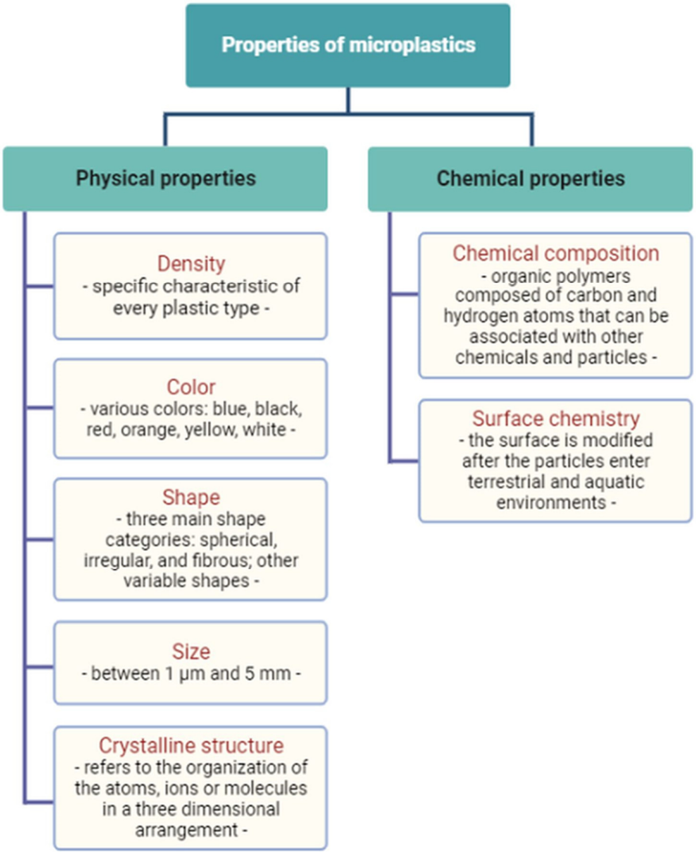
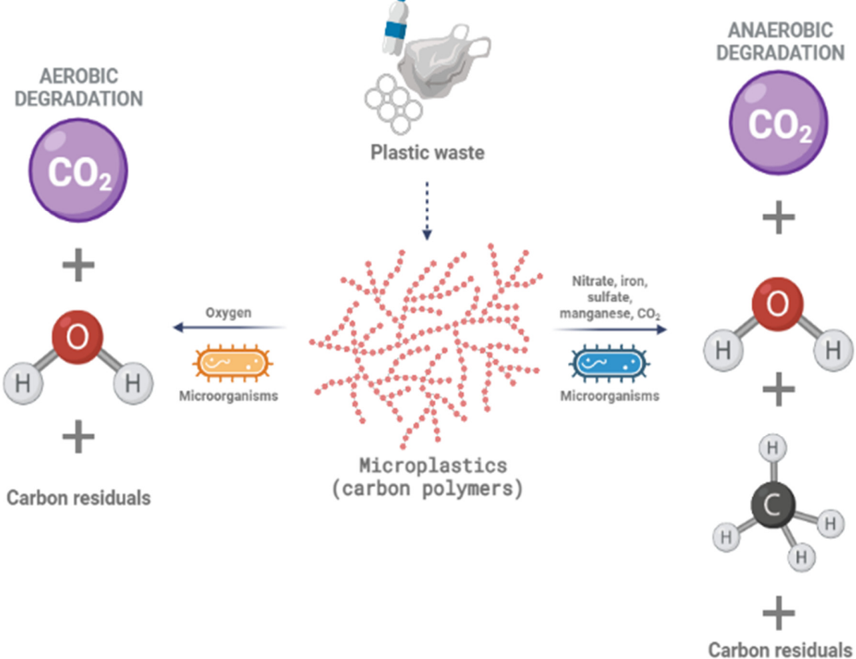
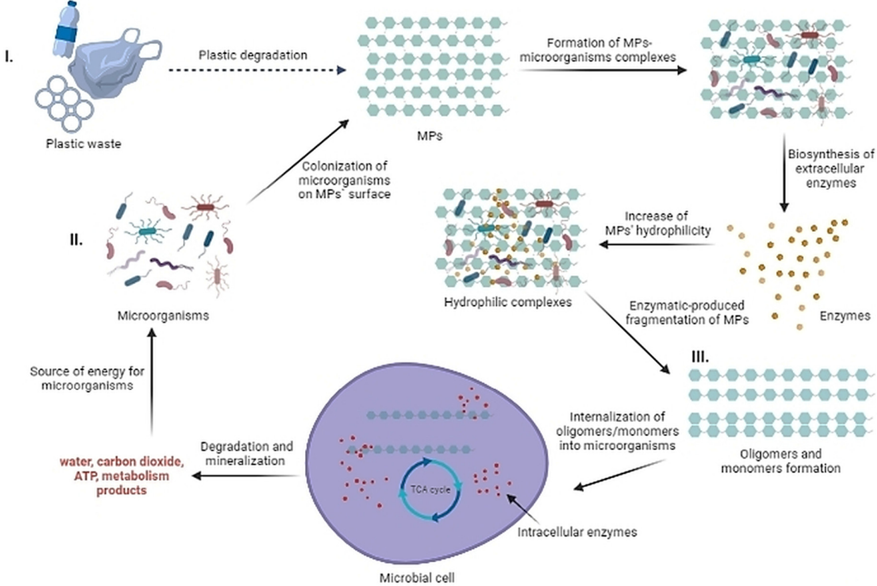
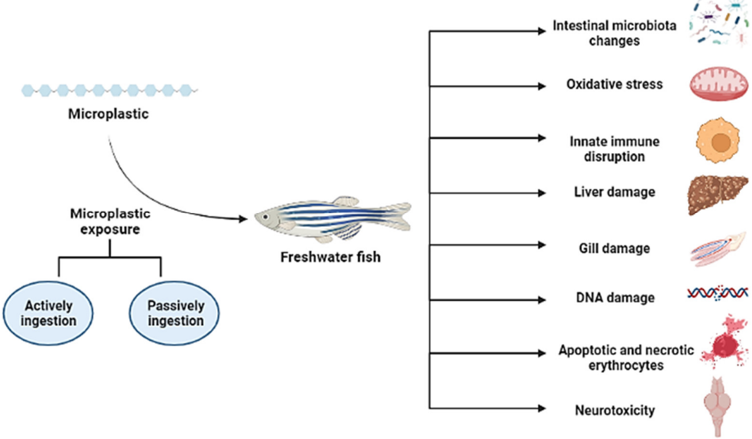
Microplastics (MPs) represent small plastic particles with sizes between 1 μm and 5 mm, are insoluble in water, andclassified as primary (these are originally produced in small sizes) or secondary (the result of the degradation of plastic) types. MPs accumulate in all ecosystems, including freshwater environments, where they are subjected to degradation processes. Due to their ubiquitous nature, freshwater ecosystems, which have a vital importance in human life, are permanently subjected to these small plastic particles. In this context, MPs pollution is considered to be a global issue, and it is associated with toxic effects on all the elements of the freshwater environment. In this review, we present, in detail, the main physical (density, size, color, shape, and crystallinity) and chemical (chemical composition and modification of the MPs’ surface) properties of MPs, the mechanism of biodegradation, and the consequences of autotrophic organisms and fauna exposure by focusing on the freshwater environment. The toxicity mechanisms triggered by MPs are related to the critical parameters of the particles: size, concentration, type, and form, but they are also dependent on species exposed to MPs and the exposure route.
Overview
The claims and statistics of this paper haven’t been checked yet.
Run the check — free, no account needed. It reads the open-access text and checks the sources it cites.
Integrity signals
Registry
Cites
Statistics
Figures


Verification
Claims the paper makes
The claims and statistics of this paper haven’t been checked yet.
Run the check — free, no account needed. It reads the open-access text and checks the sources it cites.
Claims other papers make about this one
Each is checked against this paper’s own text: does it say what the citing paper says it does?
In the citing paper
“The toxicity of MP depends on several factors such as polymer composition, size, and shape (Badea et al., 2023) .”
From Airborne microplastic exposure and urinary oxidative damage biomarkers in populations living in traffic-congested areas (2026) · cites this paper as Badea et al., 2023
Self-check
Percentages, sums and reported differences re-computed from the paper’s own numbers.
The self-check needs the paper’s full text.
Citations
Cites
Simplifying Microplastic via Continuous Probability Distributions for Size, Shape, and Density
Kooi, M., & Koelmans, A. A. (2019) · Environmental Science & Technology Letters · doi:10.1021/acs.estlett.9b00379 · Cited by 639
Microplastic ingestion by Daphnia magna and its enhancement on algal growth
Canniff, P. M., & Hoang, T. C. (2018) · Science of The Total Environment · doi:10.1016/j.scitotenv.2018.03.176 · Cited by 411
Interaction of freshwater microplastics with biota and heavy metals: a review
Naqash, N., Prakash, S., Kapoor, D., & Singh, R. (2020) · Environmental Chemistry Letters · doi:10.1007/s10311-020-01044-3 · Cited by 406
Weber, A., Scherer, C., Brennholt, N., Reifferscheid, G., & Wagner, M. (2018) · Environmental Pollution · doi:10.1016/j.envpol.2017.11.014 · Cited by 233
Polystyrene microplastics ingestion induced behavioral effects to the cladoceran Daphnia magna
De Felice, B., Sabatini, V., Antenucci, S., Gattoni, G., Santo, N., Bacchetta, R., Ortenzi, M. A., & Parolini, M. (2019) · Chemosphere · doi:10.1016/j.chemosphere.2019.05.115 · Cited by 190
Scherer, C., Wolf, R., Völker, J., Stock, F., Brennhold, N., Reifferscheid, G., & Wagner, M. (2020) · Science of The Total Environment · doi:10.1016/j.scitotenv.2019.134604 · Cited by 96
Guilhermino, L., Martins, A., Cunha, S., & Fernandes, J. O. (2021) · Science of The Total Environment · doi:10.1016/j.scitotenv.2021.147082 · Cited by 86
Research works printed but not linked: 149
- Lim, 2021, Microplastics are everywhere—But are they harmful?, Nature, 593, 22, 10.1038/d41586-021-01143-3 · DOI
- Zeenat, 2021, Plastics degradation by microbes: A sustainable approach, J. King Saud Univ. Sci., 33, 101538, 10.1016/j.jksus.2021.101538 · DOI
- Anik, 2021, Microplastics pollution: A comprehensive review on the sources, fates, effects, and potential remediation, Environ. Nanotechnol. Monit. Manag., 16, 100530
- Akdogan, 2019, Microplastics in the environment: A critical review of current understanding and identification of future research needs, Environ. Pollut., 254, 113011, 10.1016/j.envpol.2019.113011 · DOI
- Lehtiniemi, 2018, Size matters more than shape: Ingestion of primary and secondary microplastics by small predators, Food Webs., 17, e00097, 10.1016/j.fooweb.2018.e00097 · DOI
- Yuan, 2022, Human health concerns regarding microplastics in the aquatic environment—From marine to food systems, Sci. Total Environ., 823, 153730, 10.1016/j.scitotenv.2022.153730 · DOI
- Rahman, 2021, Potential human health risks due to environmental exposure to nano- and microplastics and knowledge gaps: A scoping review, Sci. Total Environ., 757, 143872, 10.1016/j.scitotenv.2020.143872 · DOI
- Alimba, 2019, Microplastics in the marine environment: Current trends in environmental pollution and mechanisms of toxicological profile, Environ. Toxicol. Pharmacol., 68, 61, 10.1016/j.etap.2019.03.001 · DOI
- Guo, 2019, The chemical behaviors of microplastics in marine environment: A review, Mar. Pollut. Bull., 142, 1, 10.1016/j.marpolbul.2019.03.019 · DOI · Paper page
- Astorga, 2021, Microplastic pollution in seawater and marine organisms across the Tropical Eastern Pacific and Galápagos, Sci. Rep., 11, 6424, 10.1038/s41598-021-85939-3 · DOI · Paper page
- Sharma, 2021, Microplastics in the Mediterranean Sea: Sources, Pollution Intensity, Sea Health, and Regulatory Policies, Front. Mar. Sci., 8, 634934, 10.3389/fmars.2021.634934 · DOI
- Amelia, 2021, Marine microplastics as vectors of major ocean pollutants and its hazards to the marine ecosystem and humans, Prog. Earth Planet. Sci., 8, 12, 10.1186/s40645-020-00405-4 · DOI · Paper page
- Pradinaud, 2019, Defining freshwater as a natural resource: A framework linking water use to the area of protection natural resources, Int. J. Life Cycle Assess., 24, 960, 10.1007/s11367-018-1543-8 · DOI
- Podschun, 2022, Freshwater systems and ecosystem services: Challenges and chances for cross-fertilization of disciplines, Ambio, 51, 135, 10.1007/s13280-021-01556-4 · DOI
- Carpenter, 2011, State of the world’s freshwater ecosystems: Physical, chemical, and biological changes, Annu. Rev. Environ. Resour., 36, 75, 10.1146/annurev-environ-021810-094524 · DOI
- Chen, 2021, A review on the occurrence, distribution, characteristics, and analysis methods of microplastic pollution in ecosystems, Env. Pollut. Bioavail., 33, 227, 10.1080/26395940.2021.1960198 · DOI
- Lambert, 2017, Ecotoxicity testing of microplastics: Considering the heterogeneity of physicochemical properties, Integr. Environ. Assess. Manag., 13, 470, 10.1002/ieam.1901 · DOI
- Balcer, 2019, Microplastics in freshwater environments: A review of quantification assessment, Trends Analyt. Chem., 113, 402, 10.1016/j.trac.2018.10.020 · DOI
- Talbot, 2022, Microplastics in freshwater: A global review of factors affecting spatial and temporal variations, Environ. Pollut., 292, 118393, 10.1016/j.envpol.2021.118393 · DOI
- Guo, 2016, Research on flotation technique of separating PET from plastic packaging wastes, Procedia Environ. Sci., 31, 178, 10.1016/j.proenv.2016.02.024 · DOI
- Ren, 2020, Abundance and characteristics of microplastic in sewage sludge: A case study of Yangling, Shaanxi province, China, Case Stud. Chem. Environ. Eng., 2, 100050, 10.1016/j.cscee.2020.100050 · DOI
- Zhao, 2022, Pollution status of microplastics in the freshwater environment of China: A mini review, Water Emerg. Contam. Nanoplastics, 1, 5
- Astel, 2022, Microplastics occurrence in two mountainous rivers in the Lowland area—A case study of the Central Pomeranian Region, Poland, Microplastics, 1, 167, 10.3390/microplastics1010011 · DOI
- Wu, 2020, Spatial-temporal distribution of microplastics in surface water and sediments of Maozhou River within Guangdong-Hong Kong-Macao Greater Bay Area, Sci. Total Environ., 717, 135187, 10.1016/j.scitotenv.2019.135187 · DOI
- Okamoto, 2022, Color preferences and gastrointestinal-tract retention times of microplastics by freshwater and marine fishes, Environ. Pollut., 304, 119253, 10.1016/j.envpol.2022.119253 · DOI
- Schwarzer, 2022, Shape, size, and polymer dependent effects of microplastics on Daphnia magna, J. Hazard. Mater., 426, 128136, 10.1016/j.jhazmat.2021.128136 · DOI
- Lozano, 2021, Microplastic shape, polymer type, and concentration affect soil properties and plant biomass, Front. Plant Sci., 12, 616645, 10.3389/fpls.2021.616645 · DOI
- Kumar, 2021, Abundance, interaction, ingestion, ecological concerns, and mitigation policies of microplastic pollution in riverine ecosystem: A review, Sci. Total Environ., 782, 146695, 10.1016/j.scitotenv.2021.146695 · DOI
- Marrone, A., La Russa, M.F., Randazzo, L., La Russa, D., Cellini, E., and Pellegrino, D. (2021). Microplastics in the center of Mediterranean: Comparison of the two calabrian coasts and distribution from coastal areas to the Open Sea. Int. J. Environ. Res. Public Health, 18. · DOI
- He, 2020, Abundance, distribution patterns, and identification of microplastics in Brisbane River sediments, Australia, Sci. Total Environ., 700, 134467, 10.1016/j.scitotenv.2019.134467 · DOI
- Eo, 2019, Spatiotemporal distribution and annual load of microplastics in the Nakdong River, South Korea, Water Res., 160, 228, 10.1016/j.watres.2019.05.053 · DOI
- Mani, 2019, Repeated detection of polystyrene microbeads in the Lower Rhine River, Environ. Pollut., 245, 634, 10.1016/j.envpol.2018.11.036 · DOI
- Wang, 2018, Preferential accumulation of small (<300 μm) microplastics in the sediments of a coastal plain river network in eastern China, Water Res., 144, 393, 10.1016/j.watres.2018.07.050 · DOI
- Meng, 2020, Advances and challenges of microplastic pollution in freshwater ecosystems: A UK perspective, Environ. Pollut., 256, 113445, 10.1016/j.envpol.2019.113445 · DOI
- Roch, 2021, Microplastic evacuation in fish is particle size-dependent, Freshw. Biol., 66, 926, 10.1111/fwb.13687 · DOI
- Bobori, 2022, Differentiation in the expression of toxic effects of polyethylene-microplastics on two freshwater fish species: Size matters, Sci. Total Environ., 830, 154603, 10.1016/j.scitotenv.2022.154603 · DOI
- Andrady, 2017, The plastic in microplastics: A review, Mar. Pollut. Bull., 119, 12, 10.1016/j.marpolbul.2017.01.082 · DOI · Paper page
- Yao, 2021, The role of crystallinity and particle morphology on the sorption of dibutyl phthalate on polyethylene microplastics: Implications for the behavior of phthalate plastic additives, Environ. Pollut., 283, 117393, 10.1016/j.envpol.2021.117393 · DOI
- McGivney, 2020, Rapid physicochemical changes in microplastic induced by biofilm formation, Front. Bioeng. Biotechnol., 8, 205, 10.3389/fbioe.2020.00205 · DOI
- Campanale, C., Massarelli, C., Savino, I., Locaputo, V., and Uricchio, V.F. (2020). A detailed review study on potential effects of microplastics and additives of concern on human health. Int. J. Environ. Res. Public Health, 17. · DOI
- Cao, 2021, A critical review on the interactions of microplastics with heavy metals: Mechanism and their combined effect on organisms and humans, Sci. Total Environ., 788, 147620, 10.1016/j.scitotenv.2021.147620 · DOI
- Turner, 2015, Adsorption of trace metals by microplastic pellets in fresh water, Environ. Chem., 12, 600, 10.1071/EN14143 · DOI
- Khalid, 2021, Interactions and effects of microplastics with heavy metals in aquatic and terrestrial environments, Environ. Ploutt., 290, 118104
- Gao, 2021, Behaviors and influencing factors of the heavy metals adsorption onto microplastics: A review, J. Clean. Prod., 319, 128777, 10.1016/j.jclepro.2021.128777 · DOI
- Liu, 2021, Interactions between microplastics and heavy metals in aquatic environments: A review, Front. Microbiol., 12, 652520, 10.3389/fmicb.2021.652520 · DOI
- Takada, 2017, Degradation of Various Plastics in the Environment, Hazardous Chemicals Associated with Plastics in the Marine Environment, Volume 78, 71, 10.1007/698_2017_11 · DOI
- Miao, 2019, Acute effects of nanoplastics and microplastics on periphytic biofilms depending on particle size, concentration and surface modification, Environ. Pollut., 255, 113300, 10.1016/j.envpol.2019.113300 · DOI
- Kannan, 2021, A review of human exposure to microplastics and insights into microplastics as obesogens, Front. Endocrinol., 12, 724989, 10.3389/fendo.2021.724989 · DOI
- Zhang, 2021, Understanding plastic degradation and microplastic formation in the environment: A review, Environ. Pollut., 274, 116554, 10.1016/j.envpol.2021.116554 · DOI
- Rocha-Santos, T., Costa, M., and Mouneyrac, C. (2021). Degradation of Microplastics in the Environment. Handbook of Microplastics in the Environment, Springer. · DOI
- Arpia, 2021, Microplastic degradation as a sustainable concurrent approach for producing biofuel and obliterating hazardous environmental effects: A state-of-the-art review, J. Hazard. Mater., 418, 126381, 10.1016/j.jhazmat.2021.126381 · DOI
- Kaushal, 2021, Recent insight into enzymatic degradation of plastics prevalent in the environment: A minireview, Chem. Eng. Technol., 2, 100083
- Shah, 2008, Biological degradation of plastics: A comprehensive review, Biotechnol. Adv., 26, 246, 10.1016/j.biotechadv.2007.12.005 · DOI · Paper page
- Othman, 2021, Microbial degradation of microplastics by enzymatic processes: A review, Environ. Chem. Lett., 19, 3057, 10.1007/s10311-021-01197-9 · DOI
- Miri, 2022, Biodegradation of microplastics: Better late than never, Chemosphere, 286, 131670, 10.1016/j.chemosphere.2021.131670 · DOI
- Khan, 2019, Biodegradation of synthetic and natural plastics by microorganisms: A mini review, J. Nat. Appl. Sci. Pak., 1, 180
- Lin, 2022, Current progress on plastic/microplastic degradation: Fact influences and mechanism, Environ. Pollut., 304, 119159, 10.1016/j.envpol.2022.119159 · DOI
- Chen, 2021, Microplastics as carbon-nutrient sources and shaper for microbial communities in stagnant water, J. Hazard. Mater., 420, 126662, 10.1016/j.jhazmat.2021.126662 · DOI
- Mohanan, 2020, Microbial and enzymatic degradation of synthetic plastics, Front. Microbiol., 11, 580709, 10.3389/fmicb.2020.580709 · DOI
- Liu, 2022, On the degradation of (micro)plastics: Degradation methods, influencing factors, environmental impacts, Sci. Total Environ., 806, 151312, 10.1016/j.scitotenv.2021.151312 · DOI
- Morohoshi, 2018, Biofilm formation and degradation of commercially available biodegradable plastic films by bacterial consortiums in freshwater environments, Microbes Environ., 33, 332, 10.1264/jsme2.ME18033 · DOI
- Qiang, 2021, Characterization of microplastic-associated biofilm development along a freshwater-estuarine gradient, Environ. Sci. Technol., 55, 16402, 10.1021/acs.est.1c04108 · DOI
- Bahl, 2021, Biodegradation of plastics: A state of the art review, Mater. Today Proc., 39, 31, 10.1016/j.matpr.2020.06.096 · DOI
- Bakker, 2016, Herbivory on freshwater and marine macrophytes: A review and perspective, Aquat. Bot., 135, 18, 10.1016/j.aquabot.2016.04.008 · DOI
- Gotvajn, 2017, Impact of polyethylene microbeads on the floating freshwater plant duckweed Lemna minor, Environ. Pollut., 230, 1108, 10.1016/j.envpol.2017.07.050 · DOI
- Dovidat, 2020, Plastic particles adsorb to the roots of freshwater vascular plant Spirodela polyrhiza but do not impair growth, Limnol. Oceanogr. Lett., 5, 37, 10.1002/lol2.10118 · DOI
- Diepens, 2019, Effects of nanoplastics and microplastics on the growth of sediment-rooted macrophytes, Sci. Total Environ., 654, 1040, 10.1016/j.scitotenv.2018.11.183 · DOI
- Bhattacharya, 2010, Physical adsorption of charged plastic nanoparticles affects algal photosynthesis, J. Phys. Chem. C, 114, 16556, 10.1021/jp1054759 · DOI · Paper page
- Nolte, 2017, The toxicity of plastic nanoparticles to green algae as influenced by surface modification, medium hardness and cellular adsorption, Aquat. Toxicol., 183, 11, 10.1016/j.aquatox.2016.12.005 · DOI
- Sjollema, 2016, Do plastic particles affect microalgal photosynthesis and growth?, Aquat. Toxicol., 170, 259, 10.1016/j.aquatox.2015.12.002 · DOI
- Lagarde, 2016, Microplastic interactions with freshwater microalgae: Hetero-aggregation and changes in plastic density appear strongly dependent on polymer type, Environ. Pollut., 215, 331, 10.1016/j.envpol.2016.05.006 · DOI
- Zhu, 2019, Joint toxicity of microplastics with triclosan to marine microalgae, Environ. Pollut., 246, 509, 10.1016/j.envpol.2018.12.044 · DOI
- Li, 2020, Influence of polystyrene microplastics on the growth, photosynthetic efficiency and aggregation of freshwater microalgae Chlamydomonas reinhardtii, Sci. Total Environ., 714, 136767, 10.1016/j.scitotenv.2020.136767 · DOI
- Fajardo, 2021, Effects of polyethylene-type microplastics on the growth and primary production of the freshwater phytoplankton species Scenedesmus armatus and Microcystis aeruginosa, Environ. Exp. Bot., 188, 104510, 10.1016/j.envexpbot.2021.104510 · DOI
- Chen, 2019, Sinking of floating plastic debris caused by biofilm development in a freshwater lake, Chemosphere, 222, 856, 10.1016/j.chemosphere.2019.02.015 · DOI
- Chen, 2020, Is color a matter of concern during microplastic exposure to Scenedesmus obliquus and Daphnia magna?, J. Hazard. Mater., 383, 121224, 10.1016/j.jhazmat.2019.121224 · DOI
- Andrade, 2019, First account of plastic pollution impacting freshwater fishes in the Amazon: Ingestion of plastic debris by piranhas and other serrasalmids with diverse feeding habits, Environ. Pollut., 244, 766, 10.1016/j.envpol.2018.10.088 · DOI
- Parvin, 2021, Abundance, characteristics and variation of microplastics in different freshwater fish species from Bangladesh, Sci. Total. Environ., 784, 147137, 10.1016/j.scitotenv.2021.147137 · DOI
- Saad, 2022, First biomonitoring of microplastic pollution in the Vaal River using Carp fish (Cyprinus carpio) “as a bio-indicator”, Sci. Total Environ., 836, 155623, 10.1016/j.scitotenv.2022.155623 · DOI
- Pastorino, P., Prearo, M., Anselmi, S., Menconi, V., Bertoli, M., Dondo, A., Pizzul, E., and Renzi, M. (2021). Use of the zebra mussel Dreissena polymorpha (Mollusca, Bivalvia) as a bioindicator of microplastics pollution in freshwater ecosystems: A case study from lake Iseo (North Italy). Water, 13. · DOI
- Ehlers, 2019, Microplastics of different characteristics are incorporated into the larval cases of the freshwater caddisfly Lepidostoma basale, Aquat. Biol., 28, 67, 10.3354/ab00711 · DOI
- Enyoh, 2020, Microplastics exposure routes and toxicity studies to ecosystems: An overview, Environ. Anal. Health Toxicol., 35, e2020004, 10.5620/eaht.e2020004 · DOI
- Bhuyan, 2022, Effects of microplastics on fish and in human health, Front. Environ. Sci., 10, 827289, 10.3389/fenvs.2022.827289 · DOI
- Oshiro, S., Okuyama, N., Kataoka, T., Mukotaka, A., and Nihei, Y. (2020, January 14–17). The impacts of microplastics pollution on freshwater fishes in Japan’s Komaoi River and Tama River. Proceedings of the 22nd IAHR-APD Congress, Sapporo, Japan.
- 2020, Microplastics in freshwater fish from Central European lowland River (Widawa, R., SW Poland), Environ. Sci. Pollut. Res., 27, 11438, 10.1007/s11356-020-08031-9 · DOI
- Kasamesiri, 2020, Microplastic ingestion by freshwater fish in the Chi River, Thailand, Int. J. GEOMATE, 18, 114, 10.21660/2020.67.9110 · DOI
- Khan, 2022, Microplastic ingestion by fishes from Jamuna River, Bangladesh, Environ. Nat. Resour. J., 20, 157, 10.32526/ennrj/20/202100164 · DOI
- Bastian, 2020, First record of microplastics in two freshwater fish species (Iheringhthys labrosus and Astyanax lacustris) from the middle section of the Uruguay River, Brazil, Acta Limnol. Bras., 32, e26, 10.1590/s2179-975x3020 · DOI
- Ferreira, 2019, Use of Estuarine Resources by Top Predator Fishes. How Do Ecological Patterns Affect Rates of Contamination by Microplastics?, Sci. Total Environ., 655, 292, 10.1016/j.scitotenv.2018.11.229 · DOI
- Silva, 2017, Microplastics Ingestion by a Common Tropical Freshwater Fishing Resource, Environ. Pollut., 221, 218, 10.1016/j.envpol.2016.11.068 · DOI
- Horton, 2018, The influence of exposure and physiology on microplastic ingestion by the freshwater fish Rutilus rutilus (roach) in the River Thames, UK, Environ. Pollut., 236, 188, 10.1016/j.envpol.2018.01.044 · DOI
- Pazos, 2017, Microplastics in gut contents of coastal freshwater fish from Río de la Plata estuary, Mar. Pollut. Bull., 122, 85, 10.1016/j.marpolbul.2017.06.007 · DOI
- Slootmaekers, 2019, Microplastic Contamination in Gudgeons (Gobio gobio) from Flemish Rivers (Belgium), Environ. Pollut., 244, 675, 10.1016/j.envpol.2018.09.136 · DOI
- Biginagwa, 2016, First Evidence of Microplastics in the African Great Lakes: Recovery from Lake Victoria Nile Perch and Nile Tilapia, J. Great Lakes Res., 42, 146, 10.1016/j.jglr.2015.10.012 · DOI
- Su, 2019, Microplastics biomonitoring in Australian urban wetlands using a common noxious fish (Gambusia holbrooki), Chemosphere, 228, 65, 10.1016/j.chemosphere.2019.04.114 · DOI
- Peters, 2016, Urbanization is a major influence on microplastic ingestion by sunfish in the Brazos River Basin, Central Texas, USA, Environ. Pollut., 210, 380, 10.1016/j.envpol.2016.01.018 · DOI
- Hurt, 2020, Microplastic prevalence in two fish species in two U.S. reservoirs, Limnol. Oceanogr. Lett., 5, 147, 10.1002/lol2.10140 · DOI
- Xiong, 2018, Sources and Distribution of Microplastics in China’s Largest Inland Lake—Qinghai Lake, Environ. Pollut., 235, 899, 10.1016/j.envpol.2017.12.081 · DOI
- Yuan, 2019, Microplastic Abundance, Distribution and Composition in Water, Sediments, and Wild Fish from Poyang Lake, China, Ecotoxicol. Environ. Saf., 170, 180, 10.1016/j.ecoenv.2018.11.126 · DOI
- Jabeen, 2017, Microplastics and mesoplastics in fish from coastal and fresh waters of China, Environ. Pollut., 221, 141, 10.1016/j.envpol.2016.11.055 · DOI
- Collicutt, 2019, Microplastics in juvenile Chinook salmon and their nearshore environments on the east coast of Vancouver Island, Environ. Pollut., 244, 135, 10.1016/j.envpol.2018.09.137 · DOI
- Atamanalp, 2022, A new record for the presence of microplastics in dominant fish species of the Karasu River Erzurum, Turkey, Environ. Sci. Pollut. Res., 29, 7866, 10.1007/s11356-021-16243-w · DOI
- Parker, 2021, Microplastics in freshwater fishes: Occurrence, impacts and future perspectives, Fish Fish., 22, 467, 10.1111/faf.12528 · DOI
- Roch, 2020, Uptake routes of microplastics in fishes: Practical and theoretical approaches to test existing theories, Sci. Rep., 10, 3896, 10.1038/s41598-020-60630-1 · DOI
- Cera, 2021, Freshwater wild biota exposure to microplastics: A global perspective, Ecol. Evol., 11, 9904, 10.1002/ece3.7844 · DOI
- Xia, 2020, Polyvinyl chloride microplastics induce growth inhibition and oxidative stress in Cyprinus carpio var. larvae, Sci. Total. Environ., 716, 136479, 10.1016/j.scitotenv.2019.136479 · DOI
- Chen, 2022, Long-term exposure to polyethylene microplastics and glyphosate interferes with the behavior, intestinal microbial homeostasis, and metabolites of the common carp (Cyprinus carpio L.), Sci. Total Environ., 814, 152681, 10.1016/j.scitotenv.2021.152681 · DOI
- Haghi, 2017, Effects of micro-plastic particles on paraquat toxicity to common carp (Cyprinus carpio): Biochemical changes, Int. J. Environ. Sci. Technol., 14, 521, 10.1007/s13762-016-1171-4 · DOI
- Ding, 2018, Accumulation, tissue distribution, and biochemical effects of polystyrene microplastics in the freshwater fish red tilapia (Oreochromis niloticus), Environ. Pollut., 238, 1, 10.1016/j.envpol.2018.03.001 · DOI · Paper page
- Malafaia, 2021, Toxic effects of naturally-aged microplastics on zebrafish juveniles: A more realistic approach to plastic pollution in freshwater ecosystems, J. Hazard. Mater., 407, 124833, 10.1016/j.jhazmat.2020.124833 · DOI
- Xue, 2021, Effects of polyethylene microplastics exposure on intestinal flora of zebrafish, Pol. J. Environ. Stud., 30, 5885
- Pei, 2022, Polystyrene nano/microplastics induce microbiota dysbiosis, oxidative damage, and innate immune disruption in zebrafish, Microb. Pathog., 163, 105387, 10.1016/j.micpath.2021.105387 · DOI · Paper page
- Kaloyanni, M., Bobori, D.C., Xanthopoulou, D., Malioufa, G., Sampsonidis, I., Kalogiannis, S., Feidantsis, K., Kastrinaki, G., Dimitriadi, A., and Koumoundouros, G. (2021). Toxicity and functional tissue responses of two freshwater fish after exposure to polystyrene microplastics. Toxics, 9. · DOI
- Collard, 2019, Plastic particle ingestion by wild freshwater fish: A critical review, Environ. Sci. Technol., 53, 12974, 10.1021/acs.est.9b03083 · DOI · Paper page
- Galafassi, S., Campanale, C., Massarelli, C., Uricchio, V.F., and Volta, P. (2021). Do freshwater fish eat microplastics? A review with a focus on effects on fish health and predictive traits of MPs ingestion. Water, 13. · DOI
- Nugnes, 2022, Toxic impact of polystyrene microplastic particles in freshwater organisms, Chemosphere, 299, 134373, 10.1016/j.chemosphere.2022.134373 · DOI
- Weber, 2021, Ingestion and toxicity of polystyrene microplastics in freshwater bivalves, Environ. Toxicol. Chem., 40, 2247, 10.1002/etc.5076 · DOI
- Li, 2021, Nanoplastic-induced genotoxicity and intestinal damage in freshwater Benthic clams (Corbicula fluminea): Comparison with microplastics, ACS Nano, 15, 9469, 10.1021/acsnano.1c02407 · DOI
- Guilhermino, 2018, Uptake and effects of the antimicrobial florfenicol, microplastics and their mixtures on freshwater exotic invasive bivalve Corbicula fluminea, Sci. Total Environ., 622–623, 1131, 10.1016/j.scitotenv.2017.12.020 · DOI
- Aljaibachi, 2018, Impact of polystyrene microplastics on Daphnia magna mortality and reproduction in relation to food availability, PeerJ, 6, e4601, 10.7717/peerj.4601 · DOI
- Jemec, 2016, Uptake and effects of microplastic textile fibers on freshwater crustacean Daphnia magna, Environ. Pollut., 219, 201, 10.1016/j.envpol.2016.10.037 · DOI · Paper page
- Fabricant, 2021, The effect of microplastics on the speed, mortality rate, and swimming patterns of Daphnia magna, J. Emerg. Investig., 4, 1
- Rehse, 2016, Short-term exposure with high concentrations of pristine microplastic particles leads to immobilisation of Daphnia magna, Chemosphere, 153, 91, 10.1016/j.chemosphere.2016.02.133 · DOI
- Au, 2015, Responses of Hyalella azteca to acute and chronic microplastic exposures, Environ. Toxicol. Chem., 34, 2564, 10.1002/etc.3093 · DOI · Paper page
- Blarer, 2016, Microplastics affect assimilation efficiency in the freshwater amphipod Gammarus fossarum, Environ. Sci. Pollut. Res., 23, 23522, 10.1007/s11356-016-7584-2 · DOI
- Meitern, 2022, Effects of environmentally relevant concentrations of microplastics on amphipods, Chemosphere, 309, 136599, 10.1016/j.chemosphere.2022.136599 · DOI
- Lei, 2018, Microplastic particles cause intestinal damage and other adverse effects in zebrafish Danio rerio and nematode Caenorhabditis elegans, Sci. Total Environ., 619–620, 1, 10.1016/j.scitotenv.2017.11.103 · DOI
- Shang, 2020, Microplastic (1 and 5 μm) exposure disturbs lifespan and intestine function in the nematode Caenorhabditis elegans, Sci. Total Environ., 705, 135837, 10.1016/j.scitotenv.2019.135837 · DOI
- Yu, 2020, Polystyrene microplastics (PS-MPs) toxicity induced oxidative stress and intestinal injury in nematode Caenorhabditis elegans, Sci. Total Environ., 726, 138679, 10.1016/j.scitotenv.2020.138679 · DOI
- Mueller, 2020, Species-specific effects of long-term microplastic exposure on the population growth of nematodes, with a focus on microplastic ingestion, Ecol. Indic., 118, 106698, 10.1016/j.ecolind.2020.106698 · DOI
- Rodrigues, 2020, How much are microplastics harmful to the health of amphibians? A study with pristine polyethylene microplastics and Physalaemus cuvieri, J. Hazard. Mater., 382, 121066, 10.1016/j.jhazmat.2019.121066 · DOI
- Silva, 2021, Lumbriculus variegatus (oligochaeta) exposed to polyethylene microplastics: Biochemical, physiological and reproductive responses, Ecotoxicol. Environ. Saf., 207, 111375, 10.1016/j.ecoenv.2020.111375 · DOI
- Klein, 2021, Chemicals associated with biodegradable microplastic drive the toxicity to the freshwater oligochaete Lumbriculus variegatus, Aquat. Toxicol., 231, 105723, 10.1016/j.aquatox.2020.105723 · DOI
- Castro, 2020, Effects of polyethylene microplastics on freshwater oligochaeta Allonais inaequalis (Stephenson, 1911) under conventional and stressful exposures, Water Air Soil Pollut., 231, 475, 10.1007/s11270-020-04845-y · DOI
- Scott, 2019, Polyethylene microplastics adhere to Lemna minor (L.), yet have no effects on plant growth or feeding by Gammarus duebeni (Lillj.), Sci. Total Environ., 689, 413, 10.1016/j.scitotenv.2019.06.359 · DOI
- Weber, 2021, Ingestion and toxicity of microplastics in the freshwater gastropod Lymnaea stagnalis: No microplastic-induced effects alone or in combination with copper, Chemosphere, 263, 128040, 10.1016/j.chemosphere.2020.128040 · DOI
- Scopetani, C., Esterhuizen, M., Cincinelli, A., and Pflugmacher, S. (2020). Microplastics exposure causes negligible effects on the oxidative response enzymes glutathione reductase and peroxidase in the oligochaete Tubifex tubifex. Toxics, 8. · DOI
- Stock, 2019, Uptake and effects of orally ingested polystyrene microplastic particles in vitro and in vivo, Arch. Toxicol., 93, 1817, 10.1007/s00204-019-02478-7 · DOI
- Gautam, 2022, Evaluation of potential toxicity of polyethylene microplastics on human derived cell lines, Sci. Total Environ., 838, 156089, 10.1016/j.scitotenv.2022.156089 · DOI
- Wu, 2019, Size-dependent effects of polystyrene microplastics on cytotoxicity and efflux pump inhibition in human Caco-2 cells, Chemosphere, 221, 333, 10.1016/j.chemosphere.2019.01.056 · DOI
- Zhang, 2022, The potential effects of microplastic pollution on human digestive tract cells, Chemosphere, 291, 132714, 10.1016/j.chemosphere.2021.132714 · DOI
- Lee, 2021, Adverse effect of polystyrene microplastics (PS-MPs) on tube formation and viability of human umbilical vein endothelial cells, Food Chem. Toxicol., 154, 112356, 10.1016/j.fct.2021.112356 · DOI
- 2021, Genotoxic and cytotoxic effects of polyethylene microplastics on human peripheral blood lymphocytes, Chemosphere, 272, 129805, 10.1016/j.chemosphere.2021.129805 · DOI
- Goodman, 2021, Exposure of human lung cells to polystyrene microplastics significantly retards cell proliferation and triggers morphological changes, Chem. Res. Toxicol., 34, 1069, 10.1021/acs.chemrestox.0c00486 · DOI
- Shi, X., Huang, R., Wang, X., Tang, C., Hu, C., and Wang, F. (2022, August 08). Cytotoxicity and Genotoxicity of Polystyrene Microplastics with Different Size and Surface Modification in A549 Human Lung Cells. Available online: https://ssrn.com/abstract=3935593. · DOI
- Dong, 2020, Polystyrene microplastic particles: In vitro pulmonary toxicity assessment, J. Hazard. Mater., 385, 121575, 10.1016/j.jhazmat.2019.121575 · DOI
- Hwang, 2020, Potential toxicity of polystyrene microplastic particles, Sci. Rep., 10, 7391, 10.1038/s41598-020-64464-9 · DOI
- Hwang, 2019, An assessment of the toxicity of polypropylene microplastics in human derived cells, Sci. Total Environ., 684, 657, 10.1016/j.scitotenv.2019.05.071 · DOI
- Wang, 2021, The kidney-related effects of polystyrene microplastics on human kidney proximal tubular epithelial cells HK-2 and male C57BL/6 mice, Environ. Health Perspect., 129, 57003, 10.1289/EHP7612 · DOI
Cited by
Sorted by citations
Navasumrit, P., Chompoobut, C., Rattanayut, P., Kuntinuguntanon, A., Waeya, S., Kanitwithayanun, J., & Ruchirawat, M. (2026) · Journal of Hazardous Materials Advances · doi:10.1016/j.hazadv.2026.101571
Metadata
- Authors
- Badea, M. A., Balas, M., & Dinischiotu, A.
- Affiliations
- Department of Biochemistry and Molecular Biology, Faculty of Biology, University of Bucharest, 91-95 Splaiul Independentei, 050095 Bucharest, Romania
- ORCID
- Balas, Mihaela
- Venue
- Microplastics
- Publisher
- MDPI AG
- Published
- 2023-01-11
- Volume
- 2
- Issue
- 1
- Pages
- 39-59
- ISSN
- 2673-8929
- Cited by
- 29
- References
- 7
- Language
- en
About these checks
Registry, retraction, Cites and statistics results are computed, not judged, with one exception: a printed reference that no index lists is read once by a model before it counts as a citation error. Claims are extracted by a model and kept only when their quote appears verbatim in the text; each cited source is then checked, with a model’s help, for whether it says what the claim relies on. Those verdicts can be wrong — read the claim’s quote and the cited source before relying on one.
Statistics and arithmetic are recomputed, not judged.
Confidence bands are shown only for fields calibrated on our annotated test set. None is calibrated yet, so no band is shown.
What counts as a claim ›How we measure confidence ›How we check this ›
Are you an author, or do you see a problem with this page? Request a review
