

Microextraction Techniques with Deep Eutectic Solvents
Open accessThe DOI matches its Crossref record; 132 of the 136 references it cites were found in a registry or an index; 21 of the 99 sources its claims cite were checked for support.
Abstract
In this review, the ever-increasing use of deep eutectic solvents (DES) in microextraction techniques will be discussed, focusing on the reasons needed to replace conventional extraction techniques with greener approaches that follow the principles of green analytical chemistry. The properties of DES will be discussed, pinpointing their exceptional performance and analytical parameters, justifying their current extensive scientific interest. Finally, a variety of applications for commonly used microextraction techniques will be reported.
Overview
CoChat Summary
TL;DR
This review discusses the increasing use of deep eutectic solvents (DES) in microextraction techniques as greener alternatives in analytical sample preparation. It summarizes DES synthesis/properties and surveys applications across solid-phase and liquid-phase microextraction, reporting high recoveries and low detection limits.
Key findings
- DES are presented as greener alternatives to ionic liquids and organic solvents because of easier and cheaper production, lower reported toxicity, and tunable properties, though the review notes DES are not yet commercially available and the number of available HBAs/HBDs remains limited.
- In solid-phase microextraction applications, reported recoveries include 102.6 ± 4.1% for ginseng compounds using sucrose/L-proline/glycerol at 1:4:9, and 95.38% for sulfamerazine with DES-graphene versus 26.98% with graphene alone.
- In liquid-phase microextraction, reported LODs include 0.008 ng g−1 for Pb and 0.0002 ng g−1 for Cd in edible oils; DLLME examples report LODs such as 0.39–3.1 ng/mL for pesticides and 0.02–0.05 μg/mL for sulfonamides, with many recoveries around 90–105%.
- The review states that most DES applications concern liquid-phase microextraction rather than solid-phase microextraction, because DES are liquid and simpler to use as extraction phases than as supporting solid adsorbents.
Methods
- Narrative review; no primary experimental design. It synthesizes literature on DES synthesis, properties, and their use in analytical microextraction.
- Covers solid-phase extraction, solid-phase microextraction, stir bar sorptive extraction, and liquid-phase microextraction variants including hollow-fiber LPME, single-drop microextraction, and dispersive liquid–liquid microextraction.
- Main analysis is qualitative synthesis of reported analytical parameters—recoveries, LODs/LOQs, linear ranges—across environmental, food, biological, pharmaceutical, and traditional Chinese medicine samples.
Limitations
- The paper states that DES toxicity needs further investigation, the number of HBAs and HBDs is quite limited, and DES are not commercially available yet, limiting routine use in industrial or certified laboratories.
- Evident from the text: as a review, it relies on cited studies and does not provide new experimental validation or standardized comparisons; reported performance values come from heterogeneous methods, matrices, and detection systems, so direct comparison is limited.
Model-written summary. Check it against the paper before relying on it.
Integrity signals
Registry
Cites
Statistics
Figures
Verification
Claims the paper makes
19 Valid · 2 Not valid · 70 Not checked · 4 Own results and interpretations
The cited sources support only part of this claim — read each source’s verdict below.
In the paper
“Nevertheless, analytes and interferents could coelute from the SPE sorbent because of the limited selectivity of conventional solid sorbents, such as silica-based, carbon-based, and clay-based resins [41,42].”
§ Microextraction Techniques with Deep Eutectic Solvents > 3. Microextraction Techniques Using DES > 3.1. Solid Phase Microextraction
What the sources say
- Partly supportedcites [41] 2020, Hydrophobic deep eutectic solvents in microextraction techniques—A review, Microchem. J. sourceExperimental — accuracy not yet measured
Section 3.6 (Solid phase extraction; page not provided) says analytes and interferences could coelute because conventional solid sorbents have limited selectivity. It does not identify silica-based, carbon-based, and clay-based resins as the sorbents responsible, so the specific examples are not supported by this source. (LLM, conf=0.86)
- Not checked — no full text of the sourcecites [42] Keçili, R., Büyüktiryaki, S., Dolak, I., and Hussain, C.M. (2020). The use of magnetic nanoparticles in sample preparation devices and tools. Handbook of Nanomaterials in Analytical Chemistry, Elsevier. source
hedgedstates a possible cause- Asserted: passes — The authors put it forward as true.
- Checkable: passes — It can be checked against evidence.
- Load-bearing: passes — The paper’s conclusions depend on it.
- Based: passes — The paper gives a reason why it holds.
- Partly supported
The cited sources support only part of this claim — read each source’s verdict below.
In the paper
“Both intra-day and inter-day yielded recoveries of the five analytes between 80–98% [55].”
§ Microextraction Techniques with Deep Eutectic Solvents > 3. Microextraction Techniques Using DES > 3.1. Solid Phase Microextraction
What the sources say
- Partly supportedcites [55] Ma, W., and Row, K.H. (2020). Solid-Phase Extraction of Catechins from Green Tea with Deep Eutectic Solvent Immobilized Magnetic Molybdenum Disulfide Molecularly Imprinted Polymer. Molecules, 25. sourceExperimental — accuracy not yet measured
Section 2.4, Validation and Applications (page unavailable), reports testing five catechins in fortified samples on the same and different days. It gives intra-day and inter-day relative standard deviations, but the available passage does not give 80–98% recoveries for those tests. Its separate recovery figure concerns reuse of the adsorbent, not intra-day or inter-day recovery. (LLM, conf=0.82)
plain- Asserted: passes — The authors put it forward as true.
- Checkable: passes — It can be checked against evidence.
- Load-bearing: unclear — It is unclear whether the paper’s conclusions depend on it.
- Based: passes — The paper gives a reason why it holds.
- Partly supported
Every source the paper cites for this claim was checked and supports it.
In the paper
“Out of the four DESs, the one that was the most compatible for this work was ChCl:Resorcinol (1:2 molar ratio).”
§ Microextraction Techniques with Deep Eutectic Solvents > 3. Microextraction Techniques Using DES > 3.1. Solid Phase Microextraction
What the sources say
- Supportedcites [71] Zarei, 2017, Deep eutectic solvent based magnetic nanofluid in the development of stir bar sorptive dispersive microextraction: An efficient hyphenated sample preparation for ultra-trace nitroaromatic explosives extraction in wastewater, J. Sep. Sci. source
Section 2.4 states that the authors prepared four DESs, each with ChCl and a hydrogen-bond donor at a 1:2 molar ratio. Section 3.2 identifies resorcinol–ChCl as the DES used under the optimized conditions for extracting nitroaromatic compounds from water samples. (LLM, conf=0.88)
plain- Asserted: passes — The authors put it forward as true.
- Checkable: passes — It can be checked against evidence.
- Load-bearing: passes — The paper’s conclusions depend on it.
- Based: passes — The paper gives a reason why it holds.
- Supported
Every source the paper cites for this claim was checked and supports it.
In the paper
“The adsorption capacity of gallic acid on HMICS with DES was 10.13 mg/g, 2.36 times higher than that of NICS (non-imprinted chitosan) without DES [63].”
§ Microextraction Techniques with Deep Eutectic Solvents > 3. Microextraction Techniques Using DES > 3.1. Solid Phase Microextraction
What the sources say
- Supportedcites [63] Li, G., and Rwo, K.H. (2019). Hydrophilic molecularly imprinted chitosan based on deep eutectic solvents for the enrichment of gallic acid in red ginseng tea. Polymers (Basel), 11. source
Section 3.1 (Adsorption Properties) reports a gallic-acid adsorption capacity of 10.13 mg·g−1 for HMICS with DES, approximately 2.36 times the 4.30 mg·g−1 capacity of NICS without DES. Section 2.3.2 identifies NICS as non-imprinted chitosan. (LLM, conf=0.95)
plainstates a cause- Asserted: passes — The authors put it forward as true.
- Checkable: passes — It can be checked against evidence.
- Load-bearing: passes — The paper’s conclusions depend on it.
- Based: passes — The paper gives a reason why it holds.
- Supported
The cited sources support only part of this claim — read each source’s verdict below.
In the paper
“Patent Blue V analysis in syrup and water samples by UV-VIS [82]”
§ Microextraction Techniques with Deep Eutectic Solvents > 3. Microextraction Techniques Using DES > 3.2. Liquid Phase Microextraction
What the sources say
- Partly supportedcites [82] Kanberoglu, 2019, Developing a new and simple ultrasound-assisted emulsification liquid phase microextraction method built upon deep eutectic solvents for Patent Blue V in syrup and water samples, Microchem. J. sourceExperimental — accuracy not yet measured
Section 2.4 says ChCl–phenol solvents at both 1:3 and 1:4 were prepared and tested. Section 3.2 says 1:4 was selected and used thereafter; section 3.8 reports UV–Vis analysis of syrup and water samples. The copy does not support saying that 1:3 was applied to those samples. (LLM, conf=0.90)
plain- Asserted: passes — The authors put it forward as true.
- Checkable: passes — It can be checked against evidence.
- Load-bearing: unclear — It is unclear whether the paper’s conclusions depend on it.
- Based: passes — The paper gives a reason why it holds.
- Partly supported
35 more claims · 3 with their cited sources checked
Create a free account to see all 95 claims and every source verdict.
- Probably not a substantial claim. 10
- It may state two separate claims as one. 45
- The quote only partly states this claim. 4
Claims other papers make about this one
Each is checked against this paper’s own text: does it say what the citing paper says it does?
The source backs part of the claim, not all of it — or backs it for a different population, condition or comparison.
In the citing paper
“Moreover, some DESs are cost-effective, have low toxicity, and are biodegradable, making them attractive alternatives to traditional organic solvents in microextraction [18,19,20].”
From A Novel DLLME Method Involving a Solidifying Hydrophobic Deep Eutectic Solvent Using Hydrophilic Deep Eutectic Solvent as the Dispersant for the Determination of Polychlorinated Biphenyls in Water Samples (2024) · cites this paper as [19]
Experimental — accuracy not yet measuredThe cited source says what the claim attributes to it.
In the citing paper
“There are four main types of deep eutectic solvents: type I, where a metal chloride is combined with a quaternary salt, type II, where a hydrated metal chloride is merged with a quaternary salt, type III, where an HBD is put together with an HBA quaternary salt, and type IV, where an organic HBD compound reacts with a metal chloride [2,33].”
From Applications of Deep Eutectic Solvents in Sample Preparation and Extraction of Organic Molecules (2022) · cites this paper as [2]
In the citing paper
“The use of DESs in SFOD improves extraction efficiency and selectivity while also reducing environmental and health concerns associated with hazardous organic solvents [30].”
From Eco-Friendly Deep Eutectic Solvent-Based Extraction Technologies: A Comprehensive Review of Principles, Applications, and Comparative Insights (2026) · cites this paper as [30]
In the citing paper
“The properties that need to be considered when using DES and/or NADES are density, acidity, conductivity, viscosity, volatility, the melting and freezing point, and surface tension. Additionally, the toxicity, cost, thermal stability, and biodegradability should not be passed over [2,37].”
From Applications of Deep Eutectic Solvents in Sample Preparation and Extraction of Organic Molecules (2022) · cites this paper as [2]
Citations
Cites
Deep Eutectic Solvents (DESs) and Their Applications
Smith, E. L., Abbott, A. P., & Ryder, K. S. (2014) · Chemical Reviews · doi:10.1021/cr300162p · Cited by 7,378
Abbott, A. P., Capper, G., Davies, D. L., Rasheed, R. K., & Tambyrajah, V. (2003) · Chemical Communications · doi:10.1039/b210714g · Cited by 5,738 · cited 1×
“The first two types are used to synthesize hydrophilic DESs, whilst the other two for hydrophobic DESs [20,34].”
MethodSolid phase microextraction with thermal desorption using fused silica optical fibers
Arthur, C. L., & Pawliszyn, J. (1990) · Analytical Chemistry · doi:10.1021/ac00218a019 · Cited by 4,997 · cited 1×
“Solid phase microextraction (SPME) is a sample preparation technique developed by Pawliszyn in 1990, where a fiber, with a small diameter, coated with a sorbent, is placed in aqueous solutions, so as to extract the analytes [64].”
MethodAbbott, A. P., Boothby, D., Capper, G., Davies, D. L., & Rasheed, R. K. (2004) · Journal of the American Chemical Society · doi:10.1021/ja048266j · Cited by 4,340 · cited 1×
“Typically, ambient temperature molten salts have been formed by mixing quaternary ammonium salts, a hydrogen bond acceptor (HBA) with metal salts [32,33].”
BackgroundIonic Liquids--Solvents of the Future?
Rogers, R. D., & Seddon, K. R. (2003) · Science · doi:10.1126/science.1090313 · Cited by 4,130
Determination of organic compounds in water using dispersive liquid–liquid microextraction
Rezaee, M., Assadi, Y., Milani Hosseini, M.-R., Aghaee, E., Ahmadi, F., & Berijani, S. (2006) · Journal of Chromatography A · doi:10.1016/j.chroma.2006.03.007 · Cited by 3,402
Baltussen, E., Sandra, P., David, F., & Cramers, C. (1999) · Journal of Microcolumn Separations · doi:10.1002/(sici)1520-667x(1999)11:10<737::aid-mcs7>3.0.co;2-4 · Cited by 1,502 · cited 1×
“The former is more suitable for stirring sample volumes from 10–50 mL, and the latter is suited for volumes up to 250 mL [69].”
BackgroundSolvent Microextraction into a Single Drop
Jeannot, M. A., & Cantwell, F. F. (1996) · Analytical Chemistry · doi:10.1021/ac960042z · Cited by 1,282 · cited 1×
“In addition, a comparison of the introduced technique with SPME showed that they were comparable in terms of precision, sensitivity, and extraction time, although SPME was considered less complicated [93].”
MethodPedersen-Bjergaard, S., & Rasmussen, K. E. (1999) · Analytical Chemistry · doi:10.1021/ac990055n · Cited by 1,245 · cited 1×
“Hollow fiber LPME (HF-LPME) was firstly introduced by Pedersen-Bjergaard and Rasmussen as a liquid–liquid–liquid microextraction technique, prior to capillary electrophoresis for the preconcentration of methamphetamine in biological samples [85].”
MethodArmenta, S., Garrigues, S., & de la Guardia, M. (2008) · TrAC Trends in Analytical Chemistry · doi:10.1016/j.trac.2008.05.003 · Cited by 1,213
Cited by
Deep Eutectic Solvents (DESs) and Their Application in Biosensor Development
Svigelj, R., Dossi, N., Grazioli, C., & Toniolo, R. (2021) · Sensors · doi:10.3390/s21134263 · Cited by 137
“To date, DESs have found many applications in analytical chemistry, such as in the extraction of analytes from complex liquid and solid matrices [15], as modification media for nanomaterials [16,17], for elution in dispersive solid-phase extractions, and as a mobilephase modifier in chromatography [18,19].”
Applications of (natural) deep eutectic solvents in liquid phase microextraction: A review
Mansour, F. R., Bedair, A., Hamed, M., Magdy, G., Ali, I., & Locatelli, M. (2024) · Microchemical Journal · doi:10.1016/j.microc.2024.110178 · Cited by 112
Menthol-Based (Deep) Eutectic Solvents: A Review on Properties and Application in Extraction
Cherniakova, M., Varchenko, V., & Belikov, K. (2024) · The Chemical Record · doi:10.1002/tcr.202300267 · Cited by 83
Yıldırım, S., Cocovi-Solberg, D. J., Uslu, B., Solich, P., & Horstkotte, B. (2022) · Talanta · doi:10.1016/j.talanta.2022.123476 · Cited by 81
Design Strategy and Application of Deep Eutectic Solvents for Green Synthesis of Nanomaterials
Nam, N. N., Do, H. D. K., Trinh, K. T. L., & Lee, N. Y. (2023) · Nanomaterials · doi:10.3390/nano13071164 · Cited by 85
de Andrade, D. C., Monteiro, S. A., & Merib, J. (2022) · Advances in Sample Preparation · doi:10.1016/j.sampre.2022.100007 · Cited by 91
Gholami, Z., Marhamatizadeh, M. H., Yousefinejad, S., Rashedinia, M., & Mazloomi, S. M. (2021) · Microchemical Journal · doi:10.1016/j.microc.2021.106671 · Cited by 78
Calderón‐Oliver, M., & Ponce‐Alquicira, E. (2021) · Molecules · doi:10.3390/molecules26071869 · Cited by 89
“The first two mixtures are used to synthesize hydrophilic DESs, while mixtures 3 and 4 generate hydrophobic DESs [47].”
MethodElik, A., Demirbaş, A., & Altunay, N. (2022) · Food Chemistry · doi:10.1016/j.foodchem.2021.131138 · Cited by 52
Duque, A., Grau, J., Benedé, J. L., Alonso, R. M., Campanero, M. Á., & Chisvert, A. (2022) · Talanta · doi:10.1016/j.talanta.2022.123378 · Cited by 47
Applications of Deep Eutectic Solvents in Sample Preparation and Extraction of Organic Molecules
Plastiras, O.-E., & Samanidou, V. (2022) · Molecules · doi:10.3390/molecules27227699 · Cited by 45
“thermal stability, and biodegradability should not be passed over [2,37].”
BackgroundInfluentialSelf-citationGreen sample preparation of alternative biosamples in forensic toxicology
Manousi, N., & Samanidou, V. (2021) · Sustainable Chemistry and Pharmacy · doi:10.1016/j.scp.2021.100388 · Cited by 58
Self-citationValorization of homogeneous linear catechyl lignin: opportunities and challenges
Li, Y., Meng, X., Meng, R., et al. (2023) · RSC Advances · doi:10.1039/d3ra01546g · Cited by 38
Current trends in green sample preparation before liquid chromatographic bioanalysis
Alampanos, V. D., & Samanidou, V. (2021) · Current Opinion in Green and Sustainable Chemistry · doi:10.1016/j.cogsc.2021.100499 · Cited by 40
Self-citationEl‐Deen, A. K., Abdallah, N. A., Elmansi, H., Belal, F. F., & Magdy, G. (2023) · Talanta · doi:10.1016/j.talanta.2023.124813 · Cited by 42
Дмитриенко, С. Г., Apyari, V. V., Tolmacheva, V. V., & Gorbunova, M. V. (2021) · Journal of Analytical Chemistry · doi:10.1134/s1061934821080049 · Cited by 35
García‐Atienza, P., Martínez-Pérez-Cejuela, H., Herrero‐Martínez, J. M., & Armenta, S. (2023) · Talanta · doi:10.1016/j.talanta.2023.125277 · Cited by 32
The Use of Ferrofluids in Analytical Sample Preparation: A Review
González-Martín, R., Gutiérrez‐Serpa, A., & Pino, V. (2021) · Separations · doi:10.3390/separations8040047 · Cited by 30
“Consequently, all the beneficial properties offered by DESs have been introduced in sample preparation and in analytical chemistry when utilizing these materials as alternative green extractant phases and/or as additives [50,51].”
BackgroundApplications of Graphene-Based Nanomaterials in Environmental Analysis
Plastiras, O., Deliyanni, E. A., & Samanidou, V. (2021) · Applied Sciences · doi:10.3390/app11073028 · Cited by 33
Self-citationUğan, M., Onaç, C., Kaya, A., Köseoğlu, D., & Akdoğan, A. (2024) · Journal of Molecular Liquids · doi:10.1016/j.molliq.2024.124249 · Cited by 33
Overview of Different Modes and Applications of Liquid Phase-Based Microextraction Techniques
Câmara, J. S., Perestrelo, R., Olayanju, B., Berenguer, C. V., Kabir, A., & Pereira, J. A. M. (2022) · Processes · doi:10.3390/pr10071347 · Cited by 33
Manousi, N., Kabir, A., Furton, K. G., Zachariadis, G. A., & Rosenberg, E. (2022) · Microchemical Journal · doi:10.1016/j.microc.2022.107524 · Cited by 25
Sengane, M. V., Sihlahla, M., Nomngongo, P. N., & Mketo, N. (2024) · Microchemical Journal · doi:10.1016/j.microc.2024.111984 · Cited by 27
Han, Y., Fan, C., Shan, Y., & Cao, X. (2023) · Microchemical Journal · doi:10.1016/j.microc.2023.109884 · Cited by 25
Yang, Y., Liu, W., Hang, N., Zhao, W., Lu, P., & Li, S. (2022) · Journal of Chromatography A · doi:10.1016/j.chroma.2022.463136 · Cited by 25
Luján, C. E., Lemos, A. A., Oviedo, M. N., Llaver, M., & Wuilloud, R. G. (2024) · Talanta · doi:10.1016/j.talanta.2023.125451 · Cited by 21
Nezami, R. A., Tehrani, M. S., Faraji, H., Husain, S. W., & Azar, P. A. (2021) · Journal of Chromatography B · doi:10.1016/j.jchromb.2021.122973 · Cited by 23
Kokosa, J. M. (2021) · Sustainable Chemistry and Pharmacy · doi:10.1016/j.scp.2021.100478 · Cited by 22
Kaur, H., Siwal, S. S., Kumar, V., & Thakur, V. K. (2023) · Industrial & Engineering Chemistry Research · doi:10.1021/acs.iecr.3c00410 · Cited by 18
Quintanilla, I., Fontàs, C., & Anticó, E. (2024) · Analytica Chimica Acta · doi:10.1016/j.aca.2024.342940 · Cited by 18
Xia, H., Lv, C., Lu, Y., Zeng, C., Qin, S., & Shi, M. (2023) · Food Research International · doi:10.1016/j.foodres.2023.113368 · Cited by 22
Lim, E., Kim, B., Oh, M. S., & You, J. B. (2023) · Journal of Colloid and Interface Science · doi:10.1016/j.jcis.2023.03.201 · Cited by 19
Soylak, M., Salamat, Q., & Ahmed, H. E. H. (2025) · Microchemical Journal · doi:10.1016/j.microc.2025.114896 · Cited by 20
Bahia, P. V. B., Brandão, B. D. R. L., & Machado, M. E. (2024) · Talanta · doi:10.1016/j.talanta.2024.126418 · Cited by 22
Plastiras, O., Deliyanni, E. A., & Samanidou, V. (2021) · Applied Sciences · doi:10.3390/app11177828 · Cited by 16
“Consequently, there is a need to develop new analytical methods with the utilization of novel and green microextraction techniques that use inexpensive and easily prepared materials [10,11].”
BackgroundSelf-citationCheng, L., Fan, C., Jin, M., & Zhang, R. (2025) · Microchemical Journal · doi:10.1016/j.microc.2025.112859 · Cited by 16
Anđelović, S., Božinović, M., Ćurić, Ž., Šalić, A., Tušek, A. J., Kučan, K. Z., Rogošić, M., Radović, M., Bubalo, M. C., & Zelić, B. (2022) · Bioengineering · doi:10.3390/bioengineering9110665 · Cited by 16
Aracier, E. D., Kök Yetimoğlu, E., & Aydın Urucu, O. (2023) · Analytical Sciences · doi:10.1007/s44211-023-00315-7 · Cited by 14
Solubility Enhancement of valine using deep eutectic Solvents: COSMO-RS and experimental validation
Aman, Z., Khan, H. W., Lam, M. K., Goto, M., & Moniruzzaman, M. (2025) · Journal of Molecular Liquids · doi:10.1016/j.molliq.2025.126949 · Cited by 15
Lemos, V. A., Santos, L. B., & de Assis, R. D. S. (2022) · Microchemical Journal · doi:10.1016/j.microc.2022.107543 · Cited by 15
Özgür, A., Aktürk, E. Z., Köseoğlu, D., Onaç, C., & Akdoğan, A. (2023) · Journal of Food Composition and Analysis · doi:10.1016/j.jfca.2023.105208 · Cited by 12
Mamounas, G., Manousi, N., Kabir, A., Furton, K. G., Mystridis, G. A., Vizirianakis, I. S., & Zacharis, C. K. (2022) · Journal of Chromatography A · doi:10.1016/j.chroma.2022.463432 · Cited by 12
Deep eutectic solvents in microextraction
Alshana, U., & Soylak, M. (2021) · Elsevier eBooks · doi:10.1016/b978-0-12-822139-6.00019-5 · Cited by 14
Zhao, J., Hou, L., Zhao, L., Liu, L., Qi, J., & Wang, L. (2023) · RSC Advances · doi:10.1039/d2ra07145b · Cited by 13
Manousi, N., Tsiona, S. V., & Zacharis, C. K. (2022) · Applied Sciences · doi:10.3390/app12136658 · Cited by 11
Aydın, E. S., Zaman, B. T., Serbest, H., Kapukıran, F., Turak, F., & Bakırdere, S. (2022) · Journal of Food Composition and Analysis · doi:10.1016/j.jfca.2022.104833 · Cited by 10
Taşpınar, H., & Altunay, N. (2023) · Microchemical Journal · doi:10.1016/j.microc.2023.109024 · Cited by 8
Zhang, S., Chen, B., Liu, Y., Sun, H., Zhang, H., Li, N., Yang, Q., Elango, J., Zhao, D., & Wu, W. (2025) · Foods · doi:10.3390/foods14030384 · Cited by 9
Surface nanodroplets as platforms for small scale chemical engineering
You, J. B. (2024) · Chemical Engineering Journal · doi:10.1016/j.cej.2024.149252 · Cited by 8
Sample preparation for liquid chromatography
Kataoka, H. (2023) · Elsevier eBooks · doi:10.1016/b978-0-323-99969-4.00006-1 · Cited by 13
Shahzad, S., Arain, M. B., & Soylak, M. (2026) · Microchemical Journal · doi:10.1016/j.microc.2026.117450 · Cited by 10
Liu, Y., Zhang, Y., Bian, Y., Sang, Q., Ma, J., Li, P.-Y., Zhang, J., & Feng, X. (2023) · Ecotoxicology and Environmental Safety · doi:10.1016/j.ecoenv.2023.115650 · Cited by 9
Sample preparation in a green perspective
Plastiras, O., Gionfriddo, E., & Samanidou, V. (2022) · Elsevier eBooks · doi:10.1016/b978-0-12-822234-8.00008-1 · Cited by 8
Self-citationWu, S., Fan, X., Yang, P., Tian, B., Jia, X., Xie, H., Shan, C., Han, J., Zhang, F., & Wang, H. (2026) · Industrial Crops and Products · doi:10.1016/j.indcrop.2026.122900 · Cited by 7
Luo, J., Lu, H., Wen, B., Zheng, Q., Zhang, J., Li, Y., Hong, W., Zhao, S., Shun, L., Li, F., et al. (2024) · Analytical Chemistry · doi:10.1021/acs.analchem.4c04776 · Cited by 6
Ghasemi, M., Rahmani, M., & Khajeh, M. (2023) · Journal of Chromatographic Science · doi:10.1093/chromsci/bmad028 · Cited by 5
Werner, J., Kohut, K., Frankowski, R., & Zgoła‐Grześkowiak, A. (2022) · Journal of Separation Science · doi:10.1002/jssc.202200682 · Cited by 6
Peng, C., Zhang, S., & Li, X. (2024) · Molecules · doi:10.3390/molecules29153480 · Cited by 5
Zhou, A., Longacre, L., Motati, R., & Acree, W. E. (2023) · Compounds · doi:10.3390/compounds3010017 · Cited by 4
Li, D., Jiang, X., Zhang, Y., Xue, W., & Fu, J. (2023) · Analytical Methods · doi:10.1039/d2ay01995g · Cited by 3
Achievements and perspectives of using deep eutectic solvents in the analytical chemistry field
Silva, F. A. E., & Freire, M. G. (2021) · Elsevier eBooks · doi:10.1016/b978-0-12-823334-4.00002-3 · Cited by 5
Deep eutectic solvents in biomedical applications: A mini review
Tarif, E., Hossain, M. S., Roymahapatra, G., & Rabbani, M. M. (2026) · Next Nanotechnology · doi:10.1016/j.nxnano.2026.100401 · Cited by 7
Meryem, B., & Nehal, F. (2025) · South African Journal of Botany · doi:10.1016/j.sajb.2025.11.024 · Cited by 4
Liu, J., Ma, L., Deng, S., Chen, X., Li, Q., Xu, A., Tong, T., Tan, S., Wang, M., Cai, J., et al. (2024) · Foods · doi:10.3390/foods13071070 · Cited by 4
“This was followed by DESs based on choline chloride and glucose, betaine and citric acid, and proline and lactic acid, with inhibition rates of 55.08%, 43.18%, and 41.31%, respectively.”
MethodInfluentialAbdel‐Monem, M. M., Eid, M., Aly, F. A., & Abdallah, N. A. (2026) · Microchemical Journal · doi:10.1016/j.microc.2026.118475 · Cited by 3
Mani, U., Balaraman, H. B., Saravanan, J., & Rathnasamy, S. (2026) · Algal Research · doi:10.1016/j.algal.2026.104640 · Cited by 3
Azman, A. N.-A., Nasir, N. M., Machmudah, S., Yahaya, N., Ibrahim, W. N. W., Johari, I. S., & Kamaruzaman, S. (2025) · Journal of Food Composition and Analysis · doi:10.1016/j.jfca.2025.108120 · Cited by 2
Lagos, A. S., & Landázuri, A. C. (2024) · Journal of Ionic Liquids · doi:10.1016/j.jil.2024.100126 · Cited by 4
Fabric phase sorptive extraction: A sustainable approach in analysis of pharmaceutical product
Prajapati, P., Patel, N., & Kankva, D. (2024) · Journal of Pharmaceutical and Biological Sciences · doi:10.18231/j.jpbs.2023.019 · Cited by 3
Wolters, K. D., & Dietz, M. L. (2023) · Journal of Chromatography A · doi:10.1016/j.chroma.2023.464215 · Cited by 4
Alahmadi, S. M., & Abu-Dief, A. M. (2026) · Sustainable Chemistry · doi:10.3390/suschem7030033 · Cited by 1
“The use of DESs in SFOD improves extraction efficiency and selectivity while also reducing environmental and health concerns associated with hazardous organic solvents [30].”
A review on deep eutectic solvent-functionalized paper analytical platforms
Shishov, A. Y., Nugbienyo, L., Davidova, E., & Bulatov, A. V. (2026) · Analytica Chimica Acta · doi:10.1016/j.aca.2026.345924 · Cited by 1
Wang, Y., Ma, Y., Jiang, Z., Tang, W., Wang, C., Zhao, H., & Zhang, Y. (2025) · Molecules · doi:10.3390/molecules30234531 · Cited by 1
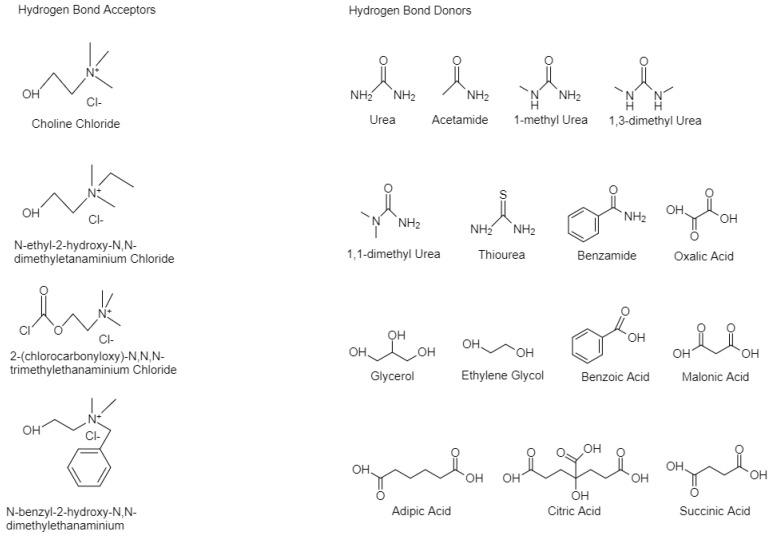
“NADES are typically composed of natural, primary metabolites, such as choline chloride (a hydrogen bond acceptor, HBA) and organic acids or sugars (hydrogen bond donors, HBD), which form a low-temperature eutectic mixture through extensive hydrogen-bonding networks [15–17].”
Manousi, N., Deliyanni, E. A., & Zachariadis, G. A. (2023) · Elsevier eBooks · doi:10.1016/b978-0-323-91894-7.00013-x · Cited by 1
Han, Y., Pei, H., Han, T., & Cao, X. (2026) · Fluid Phase Equilibria · doi:10.1016/j.fluid.2026.114821 · Cited by 1
Zhang, C., Liu, J., Tan, J., Cai, J., Long, Y., Deng, S., Guo, S., & Liu, C. (2026) · Ultrasonics Sonochemistry · doi:10.1016/j.ultsonch.2026.107944
“In this study, all DES extracts exhibited higher flavonoid and phenolic contents compared to aqueous and ethanol extracts [51].”
Besler, A. N., & Çıtak, D. (2026) · Analytical Letters · doi:10.1080/00032719.2026.2680702
Naveed, M., Haq, H. U., & Shah, N. (2026) · Analytical Chemistry Letters · doi:10.1080/22297928.2026.2688201
“A sample typically consists of two components: the analyte of interest and the matrix 13 .”
Lu, X., Wu, Y., Wu, J., Wang, Y., Gao, S., Shen, X., & Wang, X. (2026) · Microchemical Journal · doi:10.1016/j.microc.2026.118215 · Cited by 1
Azman, A. N.-A., Nasir, N. M., Yahaya, N., Ibrahim, W. N. W., Liao, P.-C., Razak, M. R., & Kamaruzaman, S. (2026) · Journal of Food Composition and Analysis · doi:10.1016/j.jfca.2026.109148 · Cited by 1
Rutkowska, M., Jatkowska, N., Marć, M., Bunkoed, O., Morrison, C., & Płotka‐Wasylka, J. (2025) · Comprehensive analytical chemistry · doi:10.1016/bs.coac.2025.01.005 · Cited by 1
Deep eutectic solvents in forensic drug analysis
Yahaya, N., Zain, N. N. M., Miskam, M., Kamaruzaman, S., & Mohamed, A. H. (2024) · Elsevier eBooks · doi:10.1016/b978-0-443-13907-9.00015-2
Current Applications of Green Sample Preparation in Pharmaceutical Analysis
Manousi, N., Kalogiouri, N. P., Locatelli, M., & Samanidou, V. (2023) · Royal Society of Chemistry eBooks · doi:10.1039/bk9781839166419-00364
Self-citation
Metadata
- Authors
- Plastiras, O.-E., Andreasidou, E., & Samanidou, V.
- Affiliations
- Aristotle University of Thessaloniki (GR)
- Corresponding author
- Samanidou, Victoria
- Venue
- Molecules
- Publisher
- MDPI AG
- Published
- 2020-12-19
- Volume
- 25
- Issue
- 24
- Pages
- 6026
- ISSN
- 1420-3049 (ISSN-L)
- PMC
- PMC7767243
- OpenAlex
- W3113460930
- Semantic Scholar
- ffc083919e5191c751adc7ff22189b2b9a954f78
- Cited by
- 84
- References
- 136
- Citations by year
- 2026: 14 · 2025: 8 · 2024: 12 · 2023: 22 · 2022: 14 · 2021: 14
- FWCI
- 1.66
- Type
- journal article
- Language
- en
- Open access
- gold
- doi.org
- Licence
- Locations
- Molecules (publishedVersion, cc-by)
- PubMed Central (publishedVersion, cc-by)
- PubMed (publishedVersion)
- DOAJ (DOAJ: Directory of Open Access Journals) (submittedVersion, cc-by-sa)
- Topics
- Physical Sciences › Chemistry › Analytical Chemistry › Analytical chemistry methods development
- Physical Sciences › Chemistry › Physical and Theoretical Chemistry › Ionic liquids properties and applications
- Physical Sciences › Chemistry › Electrochemistry › Electrochemical Analysis and Applications
- Keywords
- deep eutectic solvents, microextraction, green analytical chemistry, solvent replacement, extraction properties, analytical parameters
- MeSH terms
- Humans, Solvents, Green Chemistry Technology, Liquid Phase Microextraction
About these checks
Registry, retraction, Cites and statistics results are computed, not judged, with one exception: a printed reference that no index lists is read once by a model before it counts as a citation error. Claims are extracted by a model and kept only when their quote appears verbatim in the text; each cited source is then checked, with a model’s help, for whether it says what the claim relies on. Those verdicts can be wrong — read the claim’s quote and the cited source before relying on one.
The claim verdicts this report counts are experimental: their accuracy is not yet measured.
A language model drew the claims from the paper on 2026-09-29, under version 3 of the claim definition (model deepseek-v4.1-flash, prompt extract-v3).
A second model labelled each claim on 2026-09-29 (model jev-1.13-20260917, definition revision gold-guideline-v0.2).
Cited sources are checked with a language model’s help (gpt-6-sol).
Statistics and arithmetic are recomputed, not judged.
Confidence bands are shown only for fields calibrated on our annotated test set. None is calibrated yet, so no band is shown.
What counts as a claim ›How we measure confidence ›How we check this ›
Are you an author, or do you see a problem with this page? Request a review
Data sources
Bibliographic data: Semantic Scholar, OpenAlex, Crossref.
Contains information from the Semantic Scholar Academic Graph Datasets, made available under the ODC Attribution License (ODC-BY 1.0).
Semantic Scholar’s data is described in: Kinney, R., et al. (2023). The Semantic Scholar Open Data Platform. arXiv:2301.10140.
