

The DOI matches its Crossref record; 122 of the 122 references it cites were found in a registry or an index.
Omega-3 Fatty Acids and Insulin Resistance: Focus on the Regulation of Mitochondria and Endoplasmic Reticulum Stress
Open accessAbstract
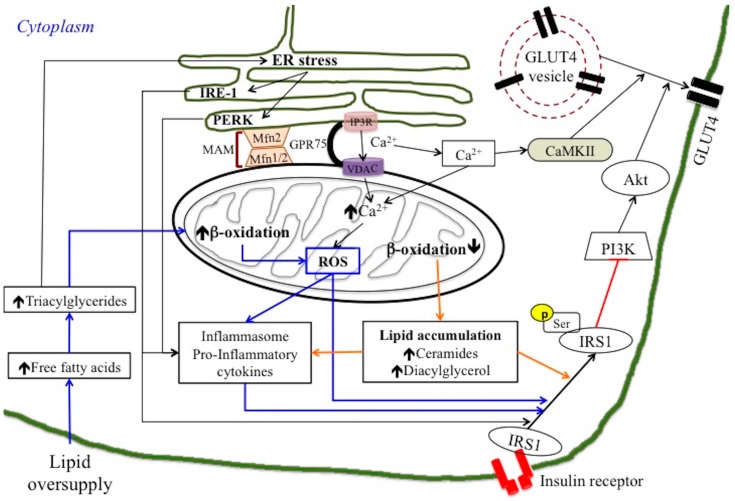
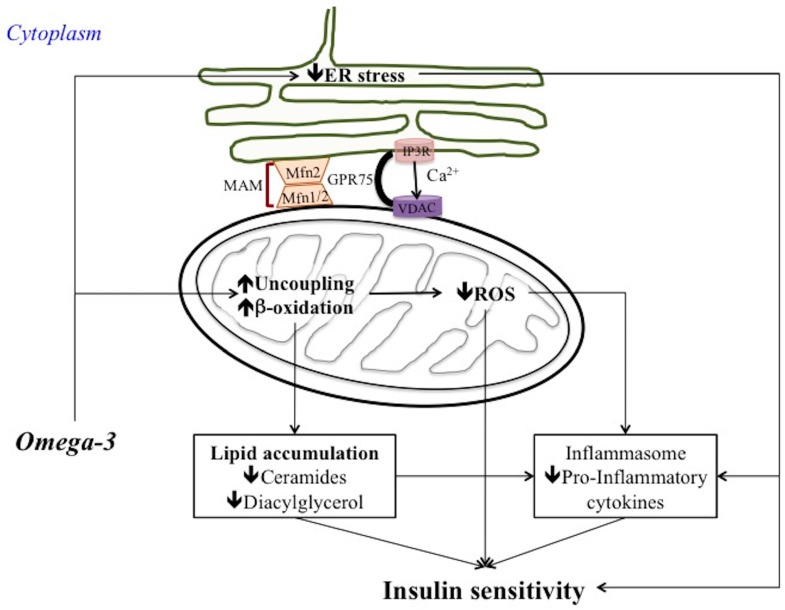
Mitochondrial dysfunction and endoplasmic reticulum (ER) stress have been suggested to play a key role in insulin resistance development. Reactive oxygen species (ROS) production and lipid accumulation due to mitochondrial dysfunction seemed to be important mechanisms leading to cellular insulin resistance. Moreover, mitochondria are functionally and structurally linked to ER, which undergoes stress in conditions of chronic overnutrition, activating the unfolded protein response, which in turn activates the principal inflammatory pathways that impair insulin action. Among the nutrients, dietary fats are believed to play key roles in insulin resistance onset. However, not all dietary fats exert the same effects on cellular energy metabolism. Dietary omega 3 polyunsaturated fatty acids (PUFA) have been suggested to counteract insulin resistance development by modulating mitochondrial bioenergetics and ER stress. In the current review, we summarized current knowledge on the role played by mitochondrial and ER stress in inflammation and insulin resistance onset, focusing on the modulation role of omega 3 PUFA on these stress pathways. Understanding the mechanisms by which omega 3 PUFA modulates cellular metabolism and insulin resistance in peripheral tissues may provide additional details on the potential impact of omega 3 PUFA on metabolic function and the management of insulin resistance in humans.
Overview
The claims and statistics of this paper haven’t been checked yet.
Run the check — free, no account needed. It reads the open-access text and checks the sources it cites.
Integrity signals
Registry
Cites
Statistics
Figures
Verification
Claims the paper makes
The claims and statistics of this paper haven’t been checked yet.
Run the check — free, no account needed. It reads the open-access text and checks the sources it cites.
Claims other papers make about this one
Each is checked against this paper’s own text: does it say what the citing paper says it does?
The source backs part of the claim, not all of it — or backs it for a different population, condition or comparison.
In the citing paper
“Dietary fat quality also has a significant influence, with unsaturated fats, particularly omega-3 fatty acids, exhibiting anti-inflammatory and insulin-sensitizing effects [19].”
From Nutritional and herbal interventions for polycystic ovary syndrome (PCOS): a comprehensive review of dietary approaches, macronutrient impact, and herbal medicine in management (2025) · cites this paper as [19]
Experimental — accuracy not yet measuredThe source backs part of the claim, not all of it — or backs it for a different population, condition or comparison.
In the citing paper
“However, in diabetic MASLD patients, severe insulin resistance, chronic inflammation, and oxidative stress may impair these pathways, leading to the failure of omega-3 therapy.39”
From The Impact of Omega-3 Fatty Acids on Triglyceride Levels in Patients with Metabolic Dysfunction-Associated Steatotic Liver Disease: A Meta-Analysis of Randomized Controlled Trials with Subgroup Analysis by Diabetes Status (2026) · cites this paper as [39]
Experimental — accuracy not yet measured
Self-check
Percentages, sums and reported differences re-computed from the paper’s own numbers.
The self-check needs the paper’s full text.
Citations
Cites
A role for mitochondria in nlrp3 inflammasome activation
Zhou, R., Yazdi, A. S., Menu, P., & Tschopp, J. (2011) · Nature · doi:10.1038/nature09663 · Cited by 5,602
Endoplasmic Reticulum Stress Links Obesity, Insulin Action, and Type 2 Diabetes
Özcan, U., Cao, Q., Yilmaz, E., Lee, A.-H., Iwakoshi, N. N., Özdelen, E., Tuncman, G., Görgün, C., Glimcher, L. H., & Hotamisligil, G. S. (2004) · Science · doi:10.1126/science.1103160 · Cited by 3,844
Activation and regulation of the inflammasomes
Latz, E., Xiao, T. S., & Stutz, A. (2013) · Nature Reviews Immunology · doi:10.1038/nri3452 · Cited by 2,884
The NLRP3 inflammasome instigates obesity-induced inflammation and insulin resistance
Vandanmagsar, B., Youm, Y.-H., Ravussin, A., Galgani, J. E., Stadler, K., Mynatt, R. L., Ravussin, E., Stephens, J. M., & Dixit, V. D. (2011) · Nature Medicine · doi:10.1038/nm.2279 · Cited by 2,655
Inflammation, metaflammation and immunometabolic disorders
Hotamisligil, G. S. (2017) · Nature · doi:10.1038/nature21363 · Cited by 2,570
Mitofusin 2 tethers endoplasmic reticulum to mitochondria
de Brito, O. M., & Scorrano, L. (2008) · Nature · doi:10.1038/nature07534 · Cited by 2,442
Dysfunction of Mitochondria in Human Skeletal Muscle in Type 2 Diabetes
Kelley, D. E., He, J., Menshikova, E. V., & Ritov, V. B. (2002) · Diabetes · doi:10.2337/diabetes.51.10.2944 · Cited by 2,321
Mechanisms for Insulin Resistance: Common Threads and Missing Links
Samuel, V. T., & Shulman, G. I. (2012) · Cell · doi:10.1016/j.cell.2012.02.017 · Cited by 2,294
Oxidized mitochondrial DNA activates the NLRP3 inflammasome during apoptosis
Shimada, K., Crother, T. R., Karlin, J., Dagvadorj, J., Chiba, N., Chen, S., Ramanujan, V. K., Wolf, A. J., Vergnes, L., Ojcius, D. M., et al. (2012) · Immunity · doi:10.1016/j.immuni.2012.01.009 · Cited by 2,282
Skeletal Muscle Insulin Resistance Is the Primary Defect in Type 2 Diabetes
DeFronzo, R. A., & Tripathy, D. (2009) · Diabetes Care · doi:10.2337/dc09-s302 · Cited by 2,102 · cited 2×
“Skeletal muscle seems to play a significant role in whole body insulin resistance [2,3].”
Background
Cited by
Sorted by citations
Sergi, D., Naumovski, N., Heilbronn, L. K., Abeywardena, M., O’Callaghan, N., Lionetti, L., & Luscombe-Marsh, N. (2019) · Frontiers in Physiology · doi:10.3389/fphys.2019.00532 · Cited by 347
Self-citationBurgos-Aceves, M. A., Lionetti, L., & Faggio, C. (2019) · The Science of The Total Environment · doi:10.1016/j.scitotenv.2019.03.275 · Cited by 317
Self-citationMachate, D. J., Figueiredo, P. S., Marcelino, G., Guimarães, R. D. C. A., Hiane, P. A., Bogo, D., Pinheiro, V. A. Z., Oliveira, L. C. S. D., & Pott, A. (2020) · International Journal of Molecular Sciences · doi:10.3390/ijms21114093 · Cited by 243
Newsholme, P., Keane, K. N., Carlessi, R., & Cruzat, V. F. (2019) · American Journal of Physiology-Cell Physiology · doi:10.1152/ajpcell.00141.2019 · Cited by 232
Wu, S., Wang, Y., Iqbal, M., Mehmood, K., Li, Y., Tang, Z., & Zhang, H. (2022) · Environmental Pollution · doi:10.1016/j.envpol.2022.119241 · Cited by 190
Role of Personalized Nutrition in Chronic-Degenerative Diseases
Renzo, L. D., Gualtieri, P., Romano, L., Marrone, G., Noce, A., Pujia, A. M., Perrone, M. A., Aiello, V., Colica, C., & LORENZO, A. D. (2019) · Nutrients · doi:10.3390/nu11081707 · Cited by 194
Ye, Z., Wang, S., Zhang, C., & Zhao, Y. (2020) · Frontiers in Endocrinology · doi:10.3389/fendo.2020.00617 · Cited by 178
Causal relationship between insulin resistance and sarcopenia
Liu, Z.-J., & Zhu, C. (2023) · Diabetology & Metabolic Syndrome · doi:10.1186/s13098-023-01022-z · Cited by 163
The Eye, Oxidative Damage and Polyunsaturated Fatty Acids
Saccà, S. C., Cutolo, C. A., Ferrari, D., Corazza, P., & Traverso, C. E. (2018) · Nutrients · doi:10.3390/nu10060668 · Cited by 150
Mititelu, M., Lupuliasa, D., Neacșu, S. M., Olteanu, G., Busnatu, Ș., Mihai, A., Popovici, V., Măru, N., Boroghină, S. C., Mihai, S., et al. (2024) · Foods · doi:10.3390/foods14010046 · Cited by 168
Lee, C.-H., Fu, Y., Yang, S., & Chi, C. (2020) · Nutrients · doi:10.3390/nu12092769 · Cited by 148
Mitochondrial Dysfunction and Oxidative Stress in Rheumatoid Arthritis
López-Armada, M. J., Fernández-Rodríguez, J. A., & Blanco, F. J. (2022) · Antioxidants · doi:10.3390/antiox11061151 · Cited by 118
Fish and fish side streams are valuable sources of high-value components
Välimaa, A., Mäkinen, S., Mattila, P. H., Marnila, P., Pihlanto, A., Mäki, M., & Hiidenhovi, J. A. (2019) · Food Quality and Safety · doi:10.1093/fqsafe/fyz024 · Cited by 101
Review: Lipid biology in the periparturient dairy cow: contemporary perspectives
McFadden, J. W. (2020) · animal · doi:10.1017/s1751731119003185 · Cited by 99
Natural Products Targeting ER Stress, and the Functional Link to Mitochondria
Martucciello, S., Masullo, M., Cerulli, A., & Piacente, S. (2020) · International Journal of Molecular Sciences · doi:10.3390/ijms21061905 · Cited by 97
Self-citationFatty Acid-Stimulated Insulin Secretion vs. Lipotoxicity
Ježek, P., Jabůrek, M., Holendová, B., & Plecitá‐Hlavatá, L. (2018) · Molecules · doi:10.3390/molecules23061483 · Cited by 87
Omega-3 supplementation and diabetes: A systematic review and meta-analysis
Delpino, F. M., Figueiredo, L. M., da Silva, B. G. C., da Silva, T. G., Mintem, G. C., Bielemann, R. M., & Gigante, D. P. (2021) · Critical Reviews in Food Science and Nutrition · doi:10.1080/10408398.2021.1875977 · Cited by 87
Fatty acids and their role in type‑2 diabetes (Review)
Shetty, S. S., & Kumari, S. (2021) · Experimental and Therapeutic Medicine · doi:10.3892/etm.2021.10138 · Cited by 83
Bae, J. H., Lim, H., & Lim, S. (2023) · Advances in Nutrition · doi:10.1016/j.advnut.2023.03.014 · Cited by 78
Lipid-Induced Mechanisms of Metabolic Syndrome
Denisenko, Y., Kytikovа, O. Y., Novgorodtseva, T. P., Antonyuk, M. V., Gvozdenko, T. A., & Анатольевна, К. Т. (2020) · Journal of Obesity · doi:10.1155/2020/5762395 · Cited by 81
Rizzo, M., Colletti, A., Penson, P. E., Katsiki, N., Mikhailidis, D. P., Toth, P. P., Gouni‐Berthold, I., Mancini, J., MARAIS, D. P., Moriarty, P. M., et al. (2023) · Pharmacological Research · doi:10.1016/j.phrs.2023.106679 · Cited by 75
Burgos-Aceves, M. A., Migliaccio, V., Gregorio, I. D., Paolella, G., Lepretti, M., Faggio, C., & Lionetti, L. (2021) · Environmental Toxicology and Pharmacology · doi:10.1016/j.etap.2021.103684 · Cited by 68
Self-citationYu, T., Wang, L., Zhang, L., & Deuster, P. A. (2023) · Antioxidants · doi:10.3390/antiox12061163 · Cited by 72
Chacińska, M., Zabielski, P., Książek, M., Szałaj, P., Jarząbek, K., Kojta, I., Chabowski, A., & Błachnio-Zabielska, A. U. (2019) · Nutrients · doi:10.3390/nu11040835 · Cited by 66
Robles-Rivera, R. R., Castellanos‐González, J. A., Olvera-Montaño, C., Flores-Martin, R. A., López-Contreras, A. K., Arévalo-Simental, D. E., Cardona-Muñóz, E. G., Román-Pintos, L. M., & Rodríguez-Carrizález, A. D. (2020) · Oxidative Medicine and Cellular Longevity · doi:10.1155/2020/3096470 · Cited by 64
Nutrition, Bioenergetics, and Metabolic Syndrome
García‐García, F. J., Monistrol-Mula, A., Cardellach, F., & Garrabou, G. (2020) · Nutrients · doi:10.3390/nu12092785 · Cited by 71
Nonalcoholic Fatty Liver Disease and Omega-3 Fatty Acids: Mechanisms and Clinical Use
Spooner, M. H., & Jump, D. Β. (2023) · Annual Review of Nutrition · doi:10.1146/annurev-nutr-061021-030223 · Cited by 63
Russo, G. L., Siani, A., Fogliano, V., Geleijnse, J. M., Giacco, R., Giampaoli, S., Iacoviello, L., Kromhout, D., Lionetti, L., Naska, A., et al. (2021) · Nutrition Metabolism and Cardiovascular Diseases · doi:10.1016/j.numecd.2020.12.020 · Cited by 65
Self-citationThe Role of Omega- 3 Polyunsaturated Fatty Acids in Diabetes Mellitus Management: A Narrative Review
Bayram, S. Ş., & Kızıltan, G. (2024) · Current Nutrition Reports · doi:10.1007/s13668-024-00561-9 · Cited by 61
The Effect of Omega-3 Fatty Acids on Insulin Resistance
Sinha, S., Haque, M., Lugova, H., & Kumar, S. (2023) · Life · doi:10.3390/life13061322 · Cited by 59
Jerab, D., Blangero, F., da Costa, P. C. T., Alves, J. L. D. B., Kéfi, R., Jamoussi, H., Morio, B., & Eljaafari, A. (2025) · Nutrients · doi:10.3390/nu17071253 · Cited by 66
Kumar, M., Pal, N., Sharma, P., Kumawat, M., Sarma, D. K., Nabi, B., Verma, V., Tiwari, R. R., Shubham, S., Arjmandi, B. H., et al. (2022) · Nutrients · doi:10.3390/nu14091723 · Cited by 57
Kobyliak, N. M., Falalyeyeva, T. M., Mykhalchyshyn, G., Molochek, N., Savchuk, О., Kyriienko, D., & Komisarenko, I. (2020) · Obesity Medicine · doi:10.1016/j.obmed.2020.100248 · Cited by 54
Kalkman, H. O., Hersberger, M., Walitza, S., & Berger, G. E. (2021) · International Journal of Molecular Sciences · doi:10.3390/ijms22094393 · Cited by 54
Omega-3 Fatty Acids in Cardiovascular Disease and Diabetes: a Review of Recent Evidence
Bhat, S. Z., Sarkar, S., Zaffar, D., Dandona, P., & Kalyani, R. R. (2023) · Current Cardiology Reports · doi:10.1007/s11886-022-01831-0 · Cited by 51
Liu, R., Chen, L., Wang, Z., Zheng, X., Hou, Z., Zhao, D., Long, J., & Liu, J. (2020) · The Journal of Nutritional Biochemistry · doi:10.1016/j.jnutbio.2020.108503 · Cited by 47
Peak week recommendations for bodybuilders: an evidence based approach
Escalante, G., Stevenson, S. W., Barakat, C., Aragon, A. A., & Schoenfeld, B. J. (2021) · BMC Sports Science Medicine and Rehabilitation · doi:10.1186/s13102-021-00296-y · Cited by 60
Gomez, C. L., Santiago‐Fernández, C., García‐Serrano, S., García‐Escobar, E., Gutiérrez‐Repiso, C., Rodriguez, C., Ho‐Plagaro, A., Martín‐Reyes, F., Garrido‐Sánchez, L., Valdés, S., et al. (2020) · Journal of Clinical Medicine · doi:10.3390/jcm9082615 · Cited by 48
Borja-Magno, A. I., Furuzawa‐Carballeda, J., Guevara‐Cruz, M., Arias, C., Granados, J., Bourges, H., Tovar, A. R., Sears, B., Noriega, L. G., & Gómez, F. E. (2023) · The Journal of Nutritional Biochemistry · doi:10.1016/j.jnutbio.2023.109415 · Cited by 45
Effect of ω-3 Polyunsaturated Fatty Acids-Derived Bioactive Lipids on Metabolic Disorders
Duan, J., Song, Y., Zhang, X., & Wang, C. (2021) · Frontiers in Physiology · doi:10.3389/fphys.2021.646491 · Cited by 47
Kongsuphol, P., Gupta, S., Liu, Y., Gourikutty, S. B. N., Biswas, S. K., & Ramadan, Q. (2019) · Scientific Reports · doi:10.1038/s41598-019-41338-3 · Cited by 44
Li, H., Herrmann, T. R. W., Seeßle, J., Liebisch, G., Merle, U., Stremmel, W., & Chamulitrat, W. (2022) · Bioscience Reports · doi:10.1042/bsr20211854 · Cited by 43
Shetty, S. S., Kumari, S., & Shetty, P. K. (2020) · Nutrition · doi:10.1016/j.nut.2020.110968 · Cited by 43
Nutritional Considerations for Peripheral Arterial Disease: A Narrative Review
Delaney, C. L., Smale, M., & Miller, M. (2019) · Nutrients · doi:10.3390/nu11061219 · Cited by 44
Environmental Pollutants Effect on Brown Adipose Tissue
Gregorio, I. D., Busiello, R. A., Burgos-Aceves, M. A., Lepretti, M., Paolella, G., & Lionetti, L. (2019) · Frontiers in Physiology · doi:10.3389/fphys.2018.01891 · Cited by 43
Self-citationOmega-3 intake is associated with liver disease protection
Vell, M. S., Creasy, K. T., Scorletti, E., Seeling, K. S., Hehl, L., Rendel, M. D., Schneider, K. M., & Schneider, C. V. (2023) · Frontiers in Public Health · doi:10.3389/fpubh.2023.1192099 · Cited by 41
Mitochondria‐Associated Endoplasmic Reticulum Membranes in Human Health and Diseases
Liu, Y., Mao, Z., Huang, J., Wang, H., Zhang, X., Zhou, X., Xu, Y., Pan, S., Liu, D., Liu, Z., et al. (2025) · MedComm · doi:10.1002/mco2.70259 · Cited by 42
Yang, Y., Du, L., Hosokawa, M., & Miyashita, K. (2019) · Journal of Functional Foods · doi:10.1016/j.jff.2019.103741 · Cited by 38
Dietary intake of fatty acids and risk of pancreatic cancer: Golestan cohort study
Shishavan, N. G., Masoudi, S., Mohamadkhani, A., Sepanlou, S. G., Sharafkhah, M., Poustchi, H., Mohamadnejad, M., Hekmatdoost, A., & Pourshams, A. (2021) · Nutrition Journal · doi:10.1186/s12937-021-00723-3 · Cited by 36
N-3 fatty acids as preventive and therapeutic agents in attenuating PCOS complications
Salek, M., Clark, C. C. T., Taghizadeh, M., & Jafarnejad, S. (2019) · EXCLI journal · doi:10.17179/excli2019-1534 · Cited by 41
Mitochondrial dynamics dysfunction: Unraveling the hidden link to depression
Chen, H., Lu, M., Lyu, Q., Shi, L., Zhou, C., Li, M., Feng, S., Liang, X., Zhou, X., & Ren, L. (2024) · Biomedicine & Pharmacotherapy · doi:10.1016/j.biopha.2024.116656 · Cited by 34
Association between endoplasmic reticulum stress and risk factors of diabetic retinopathy
De-qian, K., Li, L., Liu, Y., & Zheng, G. (2018) · International Journal of Ophthalmology · doi:10.18240/ijo.2018.10.20 · Cited by 33
Sublette, M. E., Daray, F. M., Ganança, L., & Shaikh, S. R. (2023) · Molecular Psychiatry · doi:10.1038/s41380-023-02322-6 · Cited by 35
Dietary Modulation of Metabolic Health: From Bioactive Compounds to Personalized Nutrition
Leziak, A., Lipina, J., Reclik, M., & Kocełak, P. (2025) · Metabolites · doi:10.3390/metabo15090624 · Cited by 36
Glucose Metabolism in Burns—What Happens?
Bădoiu, S. C., Miricescu, D., Stănescu-Spînu, I.-I., Totan, A., Badoiu, S. E., Costagliola, M., & Greabu, M. (2021) · International Journal of Molecular Sciences · doi:10.3390/ijms22105159 · Cited by 35
Baazm, M., Behrens, V., Beyer, C., Nikoubashman, O., & Zendedel, A. (2021) · Cells · doi:10.3390/cells10113147 · Cited by 35
Omega-3 fatty acids and individual variability in plasma triglyceride response: A mini-review
Rundblad, A., Sandoval, V., Holven, K. B., Ordovás, J. M., & Ulven, S. M. (2023) · Redox Biology · doi:10.1016/j.redox.2023.102730 · Cited by 35
Cardiovascular Disease Risk Reduction and Body Mass Index
Samson, R., Ennezat, P. V., Jemtel, T. H. L., & Oparil, S. (2022) · Current Hypertension Reports · doi:10.1007/s11906-022-01213-5 · Cited by 31
Ciubuc-Batcu, M. T., Stapelberg, N. J. C., Headrick, J. P., & Renshaw, G. M. C. (2023) · Biochimica et Biophysica Acta (BBA) - Molecular Basis of Disease · doi:10.1016/j.bbadis.2023.166920 · Cited by 31
The impact of EPA and DHA on ceramide lipotoxicity in the metabolic syndrome
Walchuk, C., Wang, Y., & Suh, M. (2020) · British Journal Of Nutrition · doi:10.1017/s0007114520003177 · Cited by 28
Li, Y., Lou, N., Liu, X., Zhuang, X., & Chen, S. (2024) · Biomedicine & Pharmacotherapy · doi:10.1016/j.biopha.2024.116755 · Cited by 27
Wasserfurth, P., Nebl, J., Rühling, M. R., Shammas, H., Bednarczyk, J., Koehler, K., Boßlau, T. K., Krüger, K., Hahn, A., & Das, A. M. (2021) · Nutrients · doi:10.3390/nu13113824 · Cited by 27
Muhammed Saeed, A. A., Noreen, S., Awlqadr, F. H., Farooq, M. I., Qadeer, M., Rai, N., Farag, H. A., & Saeed, M. N. (2025) · Journal of Health, Population and Nutrition · doi:10.1186/s41043-025-00899-y · Cited by 29
“Dietary fat quality also has a significant influence, with unsaturated fats, particularly omega-3 fatty acids, exhibiting anti-inflammatory and insulin-sensitizing effects [19].”
Could Omega 3 Fatty Acids Preserve Muscle Health in Rheumatoid Arthritis?
Lanchais, K., Capel, F., & Tournadre, A. (2020) · Nutrients · doi:10.3390/nu12010223 · Cited by 25
Stiefvatter, L., Frick, K., Lehnert, K., Vetter, W., Montoya‐Arroyo, A., Frank, J., Schmid‐Staiger, U., & Bischoff, S. C. (2022) · Marine Drugs · doi:10.3390/md20110716 · Cited by 28
Liu, W., Gao, M., Yang, S., Sun, C., Bi, Y., Li, Y., Wang, J., & Yuan, X. (2023) · Journal of Diabetes and its Complications · doi:10.1016/j.jdiacomp.2023.108451 · Cited by 26
Zhang, S., Guo, Y., Fidelito, G., Robinson, D. R. L., Liang, C., Lim, R., Bichler, Z., Guo, R., Wu, G., Xu, H., et al. (2023) · iScience · doi:10.1016/j.isci.2023.107558 · Cited by 28
Markers of Metabolic Abnormalities in Vitiligo Patients
Papaccio, F., Ottaviani, M., Truglio, M., D’Arino, A., Caputo, S., Pacifico, A., Iacovelli, P., Nardo, A. D., Picardo, M., & Bellei, B. (2024) · International Journal of Molecular Sciences · doi:10.3390/ijms251810201 · Cited by 27
Zhang, L., Yan, F., Li, L., Fu, H., Song, D., Wu, D., & Wang, X. (2021) · Clinical and Translational Medicine · doi:10.1002/ctm2.626 · Cited by 24
The Mitochondrial Unfolded Protein Response: A Novel Protective Pathway Targeting Cardiomyocytes
Liu, J., He, X., Zheng, S., Zhu, A., & Wang, J. (2022) · Oxidative Medicine and Cellular Longevity · doi:10.1155/2022/6430342 · Cited by 25
Tharayil, S. P., & Shukla, P. (2025) · International Journal of Molecular Sciences · doi:10.3390/ijms26136233 · Cited by 29
Rodríguez, L. R., Lapeña-Luzón, T., Calap-Quintana, P., Moltó, M. D., González‐Cabo, P., & Navarro, J. A. (2020) · Antioxidants · doi:10.3390/antiox9080664 · Cited by 24
Vaccarin enhances intestinal barrier function in type 2 diabetic mice
Sun, J., Yu, X., Hou, B., Ai, M., Qi, M., Ma, X., Cai, M.-J., Gao, M., Cai, W.-W., Ni, L., et al. (2021) · European Journal of Pharmacology · doi:10.1016/j.ejphar.2021.174375 · Cited by 22
Zanella, L., & Vianello, F. (2023) · Nutraceuticals · doi:10.3390/nutraceuticals3010010 · Cited by 24
Hao, L., Chen, C., Nie, Y.-H., Kaliannan, K., & Kang, J. X. (2023) · International Journal of Molecular Sciences · doi:10.3390/ijms242417261 · Cited by 22
Emerging antioxidant therapies in Friedreich’s ataxia
Edzeamey, F. J., Ramchunder, Z., Pourzand, C., & Virmouni, S. A. (2024) · Frontiers in Pharmacology · doi:10.3389/fphar.2024.1359618 · Cited by 23
Migliaccio, V., Sica, R., Gregorio, I. D., Putti, R., & Lionetti, L. (2019) · International Journal of Molecular Sciences · doi:10.3390/ijms20123110 · Cited by 22
Self-citationEndoplasmic reticulum stress in the pathogenesis of alcoholic liver disease
Na, M., Yang, X., Deng, Y., Yin, Z., & Li, M. (2023) · PeerJ · doi:10.7717/peerj.16398 · Cited by 23
Kounatidis, D. C., Tentolouris, N., Vallianou, N. G., Mourouzis, I. S., Karampela, Ι., Stratigou, T., Rebelos, E., Kouveletsou, M., Stamatopoulos, V., Tsaroucha, E., et al. (2024) · Metabolites · doi:10.3390/metabo14070388 · Cited by 23
Dietary and serum n -3 PUFA and polycystic ovary syndrome: a matched case–control study
Lu, L., Li, X., Lv, L., Xu, Y., Wu, B., & Huang, C. (2022) · British Journal of Nutrition · doi:10.1017/s0007114521003007 · Cited by 20
The dietary regulation of LEAP2 depends on meal composition in mice
Gradel, A. K. J., Holm, S. K., Byberg, S., Merkestein, M., Hogendorf, W. F. J., Lund, M. L., Buijink, J. A., Damgaard, J., Lykkesfeldt, J., & Holst, B. (2023) · The FASEB Journal · doi:10.1096/fj.202201828r · Cited by 20
Omega-3 polyunsatured fatty acids and physical performance across the lifespan: a narrative review
Azzolino, D., Bertoni, C., Cosmi, V. D., Spolidoro, G. C. I., Agostoni, C. V., Lucchi, T. A., & Mazzocchi, A. (2024) · Frontiers in Nutrition · doi:10.3389/fnut.2024.1414132 · Cited by 25
de Sousa, I. F., Migliaccio, V., Lepretti, M., Paolella, G., Gregorio, I. D., Caputo, I., Ribeiro, E. B., & Lionetti, L. (2021) · International Journal of Molecular Sciences · doi:10.3390/ijms22189812 · Cited by 20
Self-citationAndersson-Hall, U. K., Carlsson, N., Sandberg, A., & Holmäng, A. B. (2018) · Nutrients · doi:10.3390/nu10111629 · Cited by 20
Moore, E., Patanwala, I., Jafari, A., Davies, I. G., Kirwan, R., Newson, L., Mazidi, M., & Lane, K. E. (2023) · Nutrition Reviews · doi:10.1093/nutrit/nuad054 · Cited by 20
Resveratrol metabolites ameliorate insulin resistance in HepG2 hepatocytes by modulating IRS-1/AMPK
Teng, W., Yin, W., Zhao, L., Ma, C., Huang, J., & Ren, F. (2018) · RSC Advances · doi:10.1039/c8ra05092a · Cited by 19
Ko, J., Skudder‐Hill, L., Tarrant, C., Kimita, W., Bharmal, S. H., & Petrov, M. S. (2021) · Clinical Nutrition · doi:10.1016/j.clnu.2021.06.017 · Cited by 19
Biomarkers of food intake and their relevance to metabolic syndrome
Cifuentes, M., Vahid, F., Devaux, Y., & Bohn, T. (2024) · Food & Function · doi:10.1039/d4fo00721b · Cited by 18
Sergi, D., Luscombe‐Marsh, N. D., Heilbronn, L. K., Birch‐Machin, M. A., Naumovski, N., Lionetti, L., Proud, C. G., Abeywardena, M. Y., & O’Callaghan, N. J. (2020) · Journal of Nutrition · doi:10.1093/jn/nxaa430 · Cited by 18
Self-citationKabel, A. M., Ashour, A. M., Omar, M. S., & Estfanous, R. S. (2020) · Food Science & Nutrition · doi:10.1002/fsn3.1819 · Cited by 17
Yeo, D., Zhang, T., Liu, T., Zhang, Y., Kang, C., & Ji, L. L. (2021) · The Journal of Nutritional Biochemistry · doi:10.1016/j.jnutbio.2021.108902 · Cited by 16
Zhou, J., Zuo, W., Tan, Y., Wang, X., Zhu, M., & Zhang, H. (2023) · Journal of Ovarian Research · doi:10.1186/s13048-023-01130-4 · Cited by 16
Mitochondrial dysfunction in heart diseases: Potential therapeutic effects of Panax ginseng
Cao, X., Yao, F., Zhang, B., & Sun, X. (2023) · Frontiers in Pharmacology · doi:10.3389/fphar.2023.1218803 · Cited by 15
Scanlon, G., Loughman, J., Farrell, D., & McCartney, D. M. A. (2019) · Nutrition Research Reviews · doi:10.1017/s095442241900012x · Cited by 17
Cao, B., Sun, Y., Lam, C., Chen, Y., Dri, C. E., & McIntyre, R. S. (2025) · Diabetes Obesity and Metabolism · doi:10.1111/dom.16535 · Cited by 17
DHA and EPA inhibit porcine coronavirus replication by alleviating ER stress
Suo, X., Wang, J., Wang, D., Fan, G., Zhu, M., Fan, B., Yang, X., & Li, B. (2023) · Journal of Virology · doi:10.1128/jvi.01209-23 · Cited by 15
Passaro, A., Sanz, J. M., Naumovski, N., & Sergi, D. (2024) · Advances in Redox Research · doi:10.1016/j.arres.2024.100100 · Cited by 17
Bednarski, T. K., Rahim, M., Hasenour, C. M., Banerjee, D. R., Trenary, I. A., Wasserman, D. H., & Young, J. D. (2024) · Journal of Lipid Research · doi:10.1016/j.jlr.2024.100558 · Cited by 15
X chromosome dosage drives statin-induced dysglycemia and mitochondrial dysfunction
Zhang, P., Munier, J. J., Wiese, C. B., Vergnes, L., Link, J. C., Abbasi, F., Ronquillo, E., Scheker, K., Muñoz, A., Kuang, Y., et al. (2024) · Nature Communications · doi:10.1038/s41467-024-49764-2 · Cited by 16
Enache, R. M., Roşu, O. A., Profir, M., Pavelescu, L. A., Creţoiu, S. M., & Gașpar, B. S. (2025) · International Journal of Molecular Sciences · doi:10.3390/ijms26031372 · Cited by 14
Metadata
- Authors
- Lepretti, M., Martucciello, S., Burgos Aceves, M., Putti, R., & Lionetti, L.
- Affiliations
- University of Salerno (IT)
- Department of Chemistry and Biology, University of Salerno, Via Giovanni Paolo II, 132, Fisciano 84084, Italy
- University of Naples Federico II (IT)
- Corresponding author
- Lionetti, Lillà
- Venue
- Nutrients
- Publisher
- MDPI AG
- Published
- 2018-03-14
- Volume
- 10
- Issue
- 3
- Pages
- 350
- ISSN
- 2072-6643 (ISSN-L)
- PMC
- PMC5872768
- OpenAlex
- W2790337766
- Cited by
- 232
- References
- 122
- Citations by year
- 2026: 18 · 2025: 30 · 2024: 38 · 2023: 41 · 2022: 19 · 2021: 25 · 2020: 33 · 2019: 21 · 2018: 7
- FWCI
- 2.76
- Type
- journal article
- Language
- en
- Open access
- gold
- doi.org
- Licence
- Locations
- Nutrients (publishedVersion, cc-by)
- Europe PMC (PubMed Central) (publishedVersion, cc-by)
- PubMed Central (publishedVersion, cc-by)
- PubMed (publishedVersion)
- DOAJ (DOAJ: Directory of Open Access Journals) (submittedVersion, cc-by-sa)
- Topics
- Health Sciences › Nursing › Nutrition and Dietetics › Fatty Acid Research and Health
- Life Sciences › Biochemistry, Genetics and Molecular Biology › Molecular Biology › Mitochondrial Function and Pathology
- Health Sciences › Medicine › Physiology (medical) › Adipose Tissue and Metabolism
- Keywords
- omega-3 fatty acids, insulin resistance, mitochondrial dysfunction, endoplasmic reticulum stress, reactive oxygen species, lipid accumulation, unfolded protein response, inflammation, dietary fat, polyunsaturated fatty acids, mitochondrial bioenergetics, energy metabolism, overnutrition
- MeSH terms
- Animals, Humans, Insulin Resistance, Mitochondria, Fatty Acids, Omega-3, Endoplasmic Reticulum Stress
About these checks
Registry, retraction, Cites and statistics results are computed, not judged, with one exception: a printed reference that no index lists is read once by a model before it counts as a citation error. Claims are extracted by a model and kept only when their quote appears verbatim in the text; each cited source is then checked, with a model’s help, for whether it says what the claim relies on. Those verdicts can be wrong — read the claim’s quote and the cited source before relying on one.
Statistics and arithmetic are recomputed, not judged.
Confidence bands are shown only for fields calibrated on our annotated test set. None is calibrated yet, so no band is shown.
What counts as a claim ›How we measure confidence ›How we check this ›
Are you an author, or do you see a problem with this page? Request a review
