

The DOI matches its Crossref record; 148 of the 148 references it cites were found in a registry or an index.
Vitamin C, Aging and Alzheimer’s Disease
Open accessAbstract
Accumulating evidence in mice models of accelerated senescence indicates a rescuing role of ascorbic acid in premature aging. Supplementation of ascorbic acid appeared to halt cell growth, oxidative stress, telomere attrition, disorganization of chromatin, and excessive secretion of inflammatory factors, and extend lifespan. Interestingly, ascorbic acid (AA) was also found to positively modulate inflamm-aging and immunosenescence, two hallmarks of biological aging. Moreover, ascorbic acid has been shown to epigenetically regulate genome integrity and stability, indicating a key role of targeted nutrition in healthy aging. Growing in vivo evidence supports the role of ascorbic acid in ameliorating factors linked to Alzheimer’s disease (AD) pathogenesis, although evidence in humans yielded equivocal results. The neuroprotective role of ascorbic acid not only relies on the general free radical trapping, but also on the suppression of pro-inflammatory genes, mitigating neuroinflammation, on the chelation of iron, copper, and zinc, and on the suppression of amyloid-beta peptide (Aβ) fibrillogenesis. Epidemiological evidence linking diet, one of the most important modifiable lifestyle factors, and risk of Alzheimer's disease is rapidly increasing. Thus, dietary interventions, as a way to epigenetically modulate the human genome, may play a role in the prevention of AD. The present review is aimed at providing an up to date overview of the main biological mechanisms that are associated with ascorbic acid supplementation/bioavailability in the process of aging and Alzheimer’s disease. In addition, we will address new fields of research and future directions.
Overview
The claims and statistics of this paper haven’t been checked yet.
Run the check — free, no account needed. It reads the open-access text and checks the sources it cites.
Integrity signals
Registry
Cites
Statistics
Figures
Verification
Claims the paper makes
The claims and statistics of this paper haven’t been checked yet.
Run the check — free, no account needed. It reads the open-access text and checks the sources it cites.
Claims other papers make about this one
Each is checked against this paper’s own text: does it say what the citing paper says it does?
In the citing paper
“In the brain, AA has been increasingly found to promote several beneficial effects on neurodegeneration by direct neuroprotection against OS [116].”
From The Role of Antioxidants in the Interplay between Oxidative Stress and Senescence (2022) · cites this paper as [116]
In the citing paper
“Vitamin C or ascorbic acid (AA) is a powerful antioxidant that can have beneficial effects on delaying the aging process and age-related diseases thorough its action on redox oxidative and mitochondrial pathways, on the immune system, on inflamm-aging, on endothelial integrity, and on lipoprotein metabolism [114,115,116,117,118,119,120,121].”
From The Role of Antioxidants in the Interplay between Oxidative Stress and Senescence (2022) · cites this paper as [116]
Self-check
Percentages, sums and reported differences re-computed from the paper’s own numbers.
The self-check needs the paper’s full text.
Citations
Cites
Inflamm‐aging: An Evolutionary Perspective on Immunosenescence
FRANCESCHI, C., BONAFÈ, M., VALENSIN, S., OLIVIERI, F., DE LUCA, M., OTTAVIANI, E., & DE BENEDICTIS, G. (2000) · Annals of the New York Academy of Sciences · doi:10.1111/j.1749-6632.2000.tb06651.x · Cited by 5,358 · cited 1×
“Inflamm-aging may be considered a biological background for both the aging process and the pathophysiological process of frailty in humans [7].”
BackgroundMetals, Toxicity and Oxidative Stress
Valko, M., Morris, H., & Cronin, M. (2005) · Current Medicinal Chemistry · doi:10.2174/0929867053764635 · Cited by 5,018 · cited 1×
“Interestingly, some in vitro studies investigated the pro-oxidant properties of ascorbate [109], which were mainly attributed to the release of metal ions from damaged cells.”
BackgroundChronic Inflammation (Inflammaging) and Its Potential Contribution to Age-Associated Diseases
Franceschi, C., & Campisi, J. (2014) · The Journals of Gerontology Series A: Biological Sciences and Medical Sciences · doi:10.1093/gerona/glu057 · Cited by 3,891 · cited 1×
“The free radical theory of aging allows an explanation of the molecular mechanisms underlying the aging process, at least partially, and the pathogenesis of age-related diseases, such as atherosclerosis, cardiovascular diseases, dementia, diabetes, and osteoporosis [3,4].”
BackgroundBloom (2014) · doi:10.1001/jamaneurol.2013.5847 · Cited by 2,194 · cited 1×
“Extracellular amyloid plaques are also responsible for the hyperphosphorylation of the cytoskeletal Tau protein [67].”
BackgroundVitamin C as an Antioxidant: Evaluation of Its Role in Disease Prevention
Padayatty, S. J., Katz, A., Wang, Y., Eck, P., Kwon, O., Lee, J.-H., Chen, S., Corpe, C., Dutta, A., Dutta, S. K., et al. (2003) · Journal of the American College of Nutrition · doi:10.1080/07315724.2003.10719272 · Cited by 1,949 · cited 2×
“The increasing burden of this life-threatening condition [60] and the lack of disease-modifying drugs have guided the research towards preventive strategies, targeting AD modifiable risk factors [12].”
BackgroundOxidative Stress, Prooxidants, and Antioxidants: The Interplay
Rahal, A., Kumar, A., Singh, V., Yadav, B., Tiwari, R., Chakraborty, S., & Dhama, K. (2014) · BioMed Research International · doi:10.1155/2014/761264 · Cited by 1,806 · cited 1×
“A pro-oxidant or antioxidant effect of AA mainly relies on the concentration gradient and redox state of a cell [106].”
BackgroundProinflammatory Cytokines, Aging, and Age-Related Diseases
Michaud, M., Balardy, L., Moulis, G., Gaudin, C., Peyrot, C., Vellas, B., Cesari, M., & Nourhashemi, F. (2013) · Journal of the American Medical Directors Association · doi:10.1016/j.jamda.2013.05.009 · Cited by 1,094 · cited 2×
“mechanisms are responsible for altered T cell expression and the altered phenotype of immunological subpopulations [6].”
BackgroundDietary Intake of Antioxidants and Risk of Alzheimer Disease
Engelhart, M. J. (2002) · JAMA · doi:10.1001/jama.287.24.3223 · Cited by 1,080 · cited 1×
“The Rotterdam study showed the most consistent association between higher AA intake and reduced relative risk for AD in the largest population study [140] with the higher magnitude of association in people most depleted of AA (e.”
BackgroundMetals, oxidative stress and neurodegenerative disorders
Jomová, K., Vondráková, D., Lawson, M. K., & Valko, M. (2010) · Molecular and Cellular Biochemistry · doi:10.1007/s11010-010-0563-x · Cited by 1,074 · cited 4×
“AA repressed telomere shortening, decreased the production of pro-inflammatory cytokines, such as IL-6 and IL-8, downregulated the expression of markers of aging, such as cyclin-dependent kinase inhibitor 2A, multiple tumor suppressor 1 p16Ink4a and zinc finger transcriptional GATA4, and repressed the SASP (elevated s…”
BackgroundInfluentialIschiropoulos, H. (1998) · Archives of Biochemistry and Biophysics · doi:10.1006/abbi.1998.0755 · Cited by 1,025 · cited 1×
“The conjugated aromatic ring of tyrosine residues is also a target for free-radical attack, and accumulation of dityrosine and 3-nitrotyrosine has also been reported in the AD brain [77].”
Background
Cited by
Sorted by citations
Diet and Inflammation in Cognitive Ageing and Alzheimer’s Disease
McGrattan, A., McGuinness, B., McKinley, M. C., Kee, F., Passmore, P., Woodside, J. V., & McEvoy, C. T. (2019) · Current Nutrition Reports · doi:10.1007/s13668-019-0271-4 · Cited by 414
Neuroinflammation in Alzheimer’s Disease
Onyango, I. G., Jauregui, G. V., Čarná, M., Bennett, J. P., & Stokin, G. B. (2021) · Biomedicines · doi:10.3390/biomedicines9050524 · Cited by 330
Plascencia‐Villa, G., & Perry, G. L. (2020) · Antioxidants and Redox Signaling · doi:10.1089/ars.2020.8134 · Cited by 188
“Ascorbic acid supplementation showed neuroprotective properties, reducing free radicals and neuroinflammation, also iron chelation and Ab reduction (118).”
BackgroundDietary habits, lifestyle factors and neurodegenerative diseases
Popa‐Wagner, A., Dumbrava, D., Dumitrascu, D., Căpitănescu, B., Petcu, E. B., Surugiu, R., & Fang, W.-H. (2019) · Neural Regeneration Research · doi:10.4103/1673-5374.266045 · Cited by 190
Promoting Successful Cognitive Aging: A Ten-Year Update
Krivanek, T. J., Gale, S. A., McFeeley, B. M., Nicastri, C. M., & Daffner, K. R. (2021) · Journal of Alzheimer s Disease · doi:10.3233/jad-201462 · Cited by 189
“fatty acids [173, 174], antioxidant vitamins [175],”
Feng, J., Zheng, Y., Guo, M., Arés, I., Martínez, M., López-Torres, B., Martínez‐Larrañaga, M., Wang, X., Anadón, A., & Martínez, M. (2023) · Acta Pharmaceutica Sinica B · doi:10.1016/j.apsb.2023.07.010 · Cited by 187
“However, it is also noteworthy that randomized clinical trials have still failed to demonstrate any association between vitamin C and pathophysiological remission of NDs 86 , suggesting that prevention of defi-ciency appears to be more beneficial than vitamin C supplementation.”
BackgroundPoor cognitive ageing: Vulnerabilities, mechanisms and the impact of nutritional interventions
Miquel, S., Champ, C., Day, J. E. L., Aarts, E., Bahr, B. A., Bakker, M. J., Bánáti, D., Calabrese, V., Cederholm, T., Cryan, J. F., et al. (2017) · Ageing Research Reviews · doi:10.1016/j.arr.2017.12.004 · Cited by 166
“…of accumulated cellular/tissue damage, and has been shown to underpin a wide variety of disorders associated with neurodegeneration (e.g. AD (Monacelli et al., 2017) and PD (Reeve et al., 2014), cardiovascular diseases (Ghebre et al., 2016), and metabolic dysfunction (Brewer et al., 2016)).”
Roles of Oxidative Stress in Synaptic Dysfunction and Neuronal Cell Death in Alzheimer’s Disease
Plascencia‐Villa, G., & Perry, G. L. (2023) · Antioxidants · doi:10.3390/antiox12081628 · Cited by 178
The Role of Antioxidants in the Interplay between Oxidative Stress and Senescence
Varesi, A., Chirumbolo, S., Campagnoli, L. I. M., Pierella, E., Piccini, G. B., Carrara, A., Ricevuti, G., Scassellati, C., Bonvicini, C., & Pascale, A. (2022) · Antioxidants · doi:10.3390/antiox11071224 · Cited by 145
“In the brain, AA has been increasingly found to promote several beneficial effects on neurodegeneration by direct neuroprotection against OS [116].”
BackgroundTherapeutic Perspective of Vitamin C and Its Derivatives
Meščić, A., Kraljević, T. G., & Raić‐Malić, S. (2019) · Antioxidants · doi:10.3390/antiox8080247 · Cited by 161
“Vitamin C has been shown to suppress free radical generation and attenuate oxidative damage resulting from the reactive oxygen species (ROS) [2,3].”
BackgroundInfluentialKonno, T., Melo, E. P., Chambers, J. E., & Avezov, E. (2021) · Cells · doi:10.3390/cells10020233 · Cited by 143
Inflammation in Neurological Disorders: The Thin Boundary Between Brain and Periphery
Cervellati, C., Trentini, A., Pecorelli, A., & Valacchi, G. (2020) · Antioxidants and Redox Signaling · doi:10.1089/ars.2020.8076 · Cited by 140
“As exhaustively reviewed elsewhere, no clinical trials clearly demonstrate that a specific antioxidant intervention could be effective in AD (22, 128).”
Precision Redox: The Key for Antioxidant Pharmacology
Meng, J., Lv, Z., Zhang, Y., Wang, Y., Qiao, X., Sun, C., Chen, Y., Guo, M., Han, W., Ye, A., et al. (2021) · Antioxidants & Redox Signaling · doi:10.1089/ars.2020.8212 · Cited by 122
“damage and subsequently increase healthy longevity (9, 60, 71, 97), a number of experiments or clinical trials have shown harmful effects (57, 101).”
BackgroundPetrović, S., Arsić, A., Ristić-Medić, D., Cvetković, Z., & Vučić, V. (2020) · Antioxidants · doi:10.3390/antiox9111128 · Cited by 123
Xie, J., Gonzalez‐Carter, D., Tockary, T. A., Nakamura, N., Xue, Y., Nakakido, M., Akiba, H., Dirisala, A., Liu, X., Toh, K., et al. (2020) · ACS Nano · doi:10.1021/acsnano.9b09991 · Cited by 117
The mechanisms of ferroptosis and its role in alzheimer’s disease
Ma, H., Dong, Y., Chu, Y., Guo, Y., & Li, L. (2022) · Frontiers in Molecular Biosciences · doi:10.3389/fmolb.2022.965064 · Cited by 115
Preventive and therapeutic potential of ascorbic acid in neurodegenerative diseases
Moretti, M., Fraga, D. B., & Rodrigues, A. L. S. (2017) · CNS Neuroscience & Therapeutics · doi:10.1111/cns.12767 · Cited by 116
Neurobiology of vitamin C: Expanding the focus from antioxidant to endogenous neuromodulator
Ballaz, S., & Rebec, G. V. (2019) · Pharmacological Research · doi:10.1016/j.phrs.2019.104321 · Cited by 106
Effect of aging on behaviour of mesenchymal stem cells
Fafián‐Labora, J., Morente-López, M., & Arufe, M. C. (2019) · World Journal of Stem Cells · doi:10.4252/wjsc.v11.i6.337 · Cited by 108
Nitti, M., Marengo, B., Furfaro, A. L., Pronzato, M. A., Marinari, U. M., Domenicotti, C., & Traverso, N. (2022) · Antioxidants · doi:10.3390/antiox11081613 · Cited by 101
“In AD, although promising results have been found with antioxidant supplementation in animal models, the results in humans yielded equivocal results, even if epidemiological data linking diet and risk of AD is rapidly increasing [301].”
ResultMediterranean diet and cognitive function: From methodology to mechanisms of action
Siervo, M., Shannon, O. M., Llewellyn, D. J., Stephan, B. C. M., & Fontana, L. (2021) · Free Radical Biology and Medicine · doi:10.1016/j.freeradbiomed.2021.09.018 · Cited by 91
Mei, J., Li, Y., Niu, L., Liang, R., Tang, M., Cai, Q., Xu, J., Zhang, D., Yin, X., Liu, X., et al. (2024) · Translational Neurodegeneration · doi:10.1186/s40035-024-00431-y · Cited by 91
“Vitamin C, a potent antioxidant, may treat cognitive impairment by suppressing the expression of pro-inflammatory genes, diminishing neuroinflammation, and preventing Aβ fibril formation [144], enhancing the therapeutic effect when used with SGLT2 inhibitors.”
BackgroundIn Pursuit of Healthy Aging: Effects of Nutrition on Brain Function
Melzer, T. M., Manosso, L. M., Yau, S., Gil‐Mohapel, J., & Brocardo, P. S. (2021) · International Journal of Molecular Sciences · doi:10.3390/ijms22095026 · Cited by 97
Ding, Z., Chang, X., Fu, X., Kong, H., Yang, Y., Xu, H., Shan, Y., & Ding, S. (2022) · International Journal of Biological Macromolecules · doi:10.1016/j.ijbiomac.2022.07.236 · Cited by 79
The Role of Vitamin C in Cancer Prevention and Therapy: A Literature Review
Villagrán, M., Ferreira, J. L., Martorell, M., & Mardones, L. (2021) · Antioxidants · doi:10.3390/antiox10121894 · Cited by 73
“On the other hand, at the nervous system level, vitamin C acts as an antioxidant and suppresses the formation of beta-amyloid peptide and glutamatemediated excitotoxicity [22].”
BackgroundDynamics of ascorbic acid content in apple (Malus x domestica) during fruit development and storage
Lemmens, E., Alós, E., Rymenants, M., Storme, N. D., & Keulemans, W. (2020) · Plant Physiology and Biochemistry · doi:10.1016/j.plaphy.2020.03.006 · Cited by 70
The role of diet in preventing and reducing cognitive decline
Angeloni, C., Businaro, R., & Vauzour, D. (2020) · Current Opinion in Psychiatry · doi:10.1097/yco.0000000000000605 · Cited by 74
“In order to combat oxidative stress and prevent ROS production, ascorbic acid and vitamin E have been extensively used.”
BackgroundInfluentialDietary natural products as epigenetic modifiers in aging-associated inflammation and disease
Evans, L. W., Stratton, M. S., & Ferguson, B. S. (2020) · Natural Product Reports · doi:10.1039/c9np00057g · Cited by 71
Vitamins in Alzheimer’s Disease—Review of the Latest Reports
Mielech, A., Puścion‐Jakubik, A., Markiewicz‐Żukowska, R., & Socha, K. (2020) · Nutrients · doi:10.3390/nu12113458 · Cited by 72
“It is a key antioxidant of the central nervous system [36].”
BackgroundIron and manganese-related CNS toxicity: mechanisms, diagnosis and treatment
Chen, P., Totten, M. S., Zhang, Z., Bucinca, H., Erikson, K. M., Santamarı́a, A., Bowman, A. B., & Aschner, M. (2019) · Expert Review of Neurotherapeutics · doi:10.1080/14737175.2019.1581608 · Cited by 67
“The antioxidant ascorbic acid (Vitamin C) was studied extensively, but was found ineffective in clinical trials [105].”
BackgroundA quantitative meta-analysis of vitamin C in the pathophysiology of Alzheimer’s disease
Hamid, M., Mansoor, S., Amber, S., & Zahid, S. (2022) · Frontiers in Aging Neuroscience · doi:10.3389/fnagi.2022.970263 · Cited by 67
Dias, D., Portugal, C. C., Relvas, J. B., & Socodato, R. (2025) · Cells · doi:10.3390/cells14040243 · Cited by 71
Vitamin C and the Immune System
Jafari, D., Esmaeilzadeh, A., Mohammadi-Kordkhayli, M., & Rezaei, N. (2019) · Springer eBooks · doi:10.1007/978-3-030-16073-9_5 · Cited by 64
Ghosh, S., Durgvanshi, S., Agarwal, S., Raghunath, M., & Sinha, J. K. (2020) · Current Neuropharmacology · doi:10.2174/1570159x18666200429011823 · Cited by 57
“Vitamin C, on the other hand, has been reported for its epigenetic regulation of AD-related genes and ROS scavenging property [119].”
Oxidative Stress in Tauopathies: From Cause to Therapy
Bartolomé, F. B., Carro, E., & Alquézar, C. (2022) · Antioxidants · doi:10.3390/antiox11081421 · Cited by 59
“Vitamin C has demonstrated a protective function against AD and other tauopathies [162,163].”
BackgroundPreventive and Therapeutic Potential of Vitamin C in Mental Disorders
Han, Q.-Q., Shen, T., Wang, F., Wu, P., & Chen, J.-G. (2018) · Current Medical Science · doi:10.1007/s11596-018-1840-2 · Cited by 55
Novel Antioxidant Properties of Doxycycline
Clemens, D. L., Duryee, M. J., Sarmiento, C., Chiou, A., McGowan, J. D., Hunter, C. D., Schlichte, S. L., Tian, J., Klassen, L. W., O’Dell, J. R., et al. (2018) · International Journal of Molecular Sciences · doi:10.3390/ijms19124078 · Cited by 54
Huang, W., Zhang, Z., Colucci, M., Deng, L., Yang, M., Huang, X., Zhou, X. J., Jin, Y., Lazzarini, E., Balbi, C., et al. (2024) · Environment International · doi:10.1016/j.envint.2024.108447 · Cited by 57
Sharma, K., Lee, H.-H., Gong, D.-S., Park, S., Yi, E., Schini‐Kerth, V. B., & Oak, M. (2019) · Environmental Pollution · doi:10.1016/j.envpol.2019.05.066 · Cited by 46
Distinctive Neurochemistry in Alzheimer’s Disease via 7 T In Vivo Magnetic Resonance Spectroscopy
Marjańska, M., McCarten, J. R., Hodges, J. S., Hemmy, L. S., & Terpstra, M. (2019) · Journal of Alzheimer s Disease · doi:10.3233/jad-180861 · Cited by 45
“Because extracellular concentration of Asc is substantially lower than intracellular concentration, the role that Asc plays in modulating neurotransmission [10, 39, 42] is unlikely to affect the Asc concentration measured in this study.”
BackgroundInfluentialXiong, L., Deng, N., Zheng, B., Li, T., & Liu, R. H. (2021) · Food & Function · doi:10.1039/d0fo03300f · Cited by 43
Mo, E., Ebedy, Y. A., Ibrahim, M. A., Farroh, K. Y., & Hassanen, E. I. (2022) · Scientific Reports · doi:10.1038/s41598-022-13960-1 · Cited by 47
Non-Enzymatic Antioxidants against Alzheimer’s Disease: Prevention, Diagnosis and Therapy
Varesi, A., Campagnoli, L. I. M., Carrara, A., Pola, I., Floris, E., Ricevuti, G., Chirumbolo, S., & Pascale, A. (2023) · Antioxidants · doi:10.3390/antiox12010180 · Cited by 51
Vitamin C Inhibits the Metabolic Changes Induced by Tet1 Insufficiency Under High Fat Diet Stress
Yuan, Y., Liu, C., Chen, X., Sun, Y., Xiong, M., Fan, Y., Petersen, R. B., Chen, H., Huang, K., & Zheng, L. (2021) · Molecular Nutrition & Food Research · doi:10.1002/mnfr.202100417 · Cited by 37
Kalmankar, N. V., Hari, H., Sowdhamini, R., & Venkatesan, R. (2021) · Journal of Medicinal Chemistry · doi:10.1021/acs.jmedchem.1c00033 · Cited by 37
Trends in Natural Nutrients for Oxidative Stress and Cell Senescence
Omidifar, N., moghadami, M., Mousavi, S. M., Hashemi, S. A., Gholami, A., Shokripour, M., & Sohrabi, Z. (2021) · Oxidative Medicine and Cellular Longevity · doi:10.1155/2021/7501424 · Cited by 36
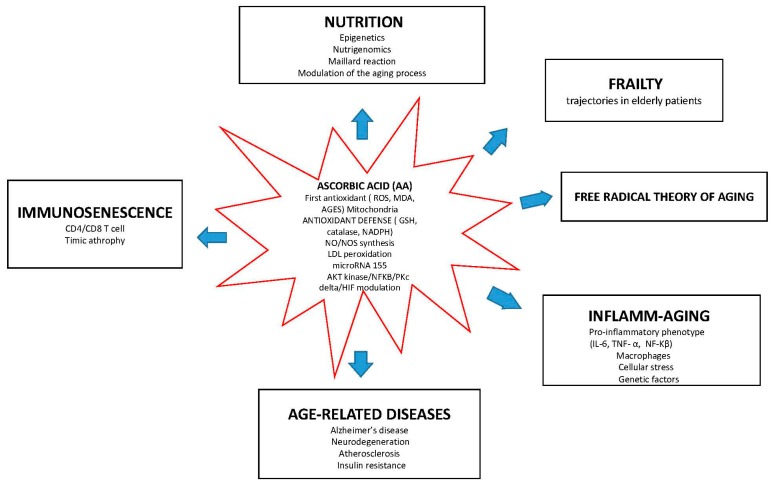
“It can also affect cell senescence via modulating nutrigenomic and epigenetic pathways that can be so important for the prevention of age-related diseases such as Alzheimer’s disease, insulin resistance, atherosclerosis, and neurodegeneration [39].”
BackgroundRistori, S., Bertoni, G., Bientinesi, E., & Monti, D. (2025) · Nutrients · doi:10.3390/nu17111837 · Cited by 43
“The primary neuroprotective mechanisms attributed to AAC include ROS-scavenging activity, neuroinflammation modulation, A β fibrillation inhibition, and the chelation of metals such as iron, copper, and zinc [214].”
Cellular toxicity driven by high-dose vitamin C on normal and cancer stem cells
Kim, T., Byun, J., Kwon, H. S., & Kim, D. (2018) · Biochemical and Biophysical Research Communications · doi:10.1016/j.bbrc.2018.02.083 · Cited by 36
Samuelsson, J., Najar, J., Wallengren, O., Kern, S., Wetterberg, H., Fässberg, M. M., Zetterberg, H., Blennow, K., Lissner, L., Rothenberg, E. M., et al. (2021) · European Journal of Nutrition · doi:10.1007/s00394-021-02688-9 · Cited by 38
Ramakrishna, K., Karuturi, P., Siakabinga, Q., Viswanadh, M. K., Dumala, N., Guntupalli, C., Nalluri, B. N., Venkateswarlu, K., Prasanna, V. S., Gutti, G., et al. (2024) · Phytotherapy Research · doi:10.1002/ptr.8122 · Cited by 34
“Vitamin C decreases β -amyloid generation and AChE activity and prevents endothelial dysfunction by regulating NO (Monacelli et al., 2017).”
BackgroundNeurovascular coupling impairment as a mechanism for cognitive deficits in COVID-19
Owens, C. D., Pinto, C. B., Detwiler, S., Olay, L., Pinaffi‐Langley, A. C. D. C., Mukli, P., Péterfi, A., Szarvas, Z., James, J. A., Galván, V., et al. (2024) · Brain Communications · doi:10.1093/braincomms/fcae080 · Cited by 36
“209 In vitamin C deficiency, preclinical models showed elevated oxidative stress markers and increased A β levels, emphasizing its role in mitigating neurodegenerative processes.”
BackgroundAkhtar, A., Singh, S., Kaushik, R., Awasthi, R., & Behl, T. (2024) · Ageing Research Reviews · doi:10.1016/j.arr.2024.102289 · Cited by 38
Šagud, M., Tudor, L., & Pivac, N. (2021) · Expert Review of Neurotherapeutics · doi:10.1080/14737175.2021.1906223 · Cited by 31
The Association between Dietary Nutrient Intake and Acceleration of Aging: Evidence from NHANES
Ma, J., Li, P., Jiang, Y., Yang, X., Luo, Y., Tao, L., Guo, X., & Gao, B. (2024) · Nutrients · doi:10.3390/nu16111635 · Cited by 32
“In addition, previous research has reported that caffeine, total dietary sugar, vitamin C, and vitamin K can each decelerate aging through distinct mechanisms [51–55].”
BackgroundDing, H., Reiss, A. B., Pinkhasov, A., & Kasselman, L. J. (2022) · Medicina · doi:10.3390/medicina58081025 · Cited by 32
“The neuroprotective effects of vitamin C are also due to its mitigation of neuroinflammation and suppression of beta-amyloid proteins [112].”
BackgroundNeuroprotective Natural Molecules, From Food to Brain
González-Fuentes, J., Selva, J. S., Moya‐López, C., Castro‐Vázquez, L., Lozano, M. V., Marcos, P., Plaza-Oliver, M., Robledo, V. R., Santander-Ortega, M. J., Villaseca-González, N., et al. (2018) · Frontiers in Neuroscience · doi:10.3389/fnins.2018.00721 · Cited by 34
Somade, O. T., Adeyi, O. E., Ajayi, B. O., Asunde, O. O., Iloh, P. D., Adesanya, A. A., Babalola, O. I., Folorunsho, O. T., Olakunle, D. A., & Lawal, O. F. (2022) · Metabolism Open · doi:10.1016/j.metop.2022.100179 · Cited by 32
“Antioxidant property of ASC confers its ability to suppress the production of beta-amyloid peptide and glutamate-mediated excitotoxicity [26].”
BackgroundMaherani, B., Harich, M., Salmieri, S., & Lacroix, M. (2018) · European Food Research and Technology · doi:10.1007/s00217-018-3211-4 · Cited by 32
Sultana, O. F., Hia, R. A., & Reddy, P. H. (2024) · Antioxidants · doi:10.3390/antiox13020202 · Cited by 31
The evolution of Alzheimer’s disease: From mitochondria to microglia
Yang, F., Liang, Y., Wang, X., Wang, J.-T., Gao, W., Ye, Q.-Y., Li, X., Yu, Y., & Li, H. (2025) · Ageing Research Reviews · doi:10.1016/j.arr.2025.102838 · Cited by 32
Choi, Y. K., Kang, J.-I., Han, S. H., Kim, Y. R., Jo, J., Kang, Y. W., Choo, D. R., Hyun, J. W., Koh, Y. S., Yoo, E.-S., et al. (2020) · Nutrients · doi:10.3390/nu12051351 · Cited by 30
“L-AA has been effective in the treatment of oral diseases [7], cardiovascular diseases [8], iron deficiency anemia [9], diabetes [10], age-related eye disease [11], Alzheimer’s disease [12], and viral infections [13].”
BackgroundYang, L., & Zeng, C. (2018) · Molecules · doi:10.3390/molecules23123122 · Cited by 31
The Roles of Vitamins in Diabetic Retinopathy: A Narrative Review
Ruamviboonsuk, V., & Grzybowski, A. E. (2022) · Journal of Clinical Medicine · doi:10.3390/jcm11216490 · Cited by 29
“Vitamin C (ascorbic acid) is an antioxidant that provides beneficial effects on endothelial integrity which would result in improving endothelial dysfunction [30].”
BackgroundGan, L., Fan, H., Nie, W., & Guo, Y. (2018) · Journal of Animal Science and Biotechnology/Journal of animal science and biotechnology · doi:10.1186/s40104-018-0284-7 · Cited by 30
N-of-1 Clinical Trials in Nutritional Interventions Directed at Improving Cognitive Function
Soldevila‐Domenech, N., Boronat, A., Langohr, K., & de la Torre, R. (2019) · Frontiers in Nutrition · doi:10.3389/fnut.2019.00110 · Cited by 27
“Concerning vitamin C, MCI and AD patients present lower levels of ascorbic acid in plasma (138, 139).”
BackgroundMitochondrial mechanisms in Alzheimer’s disease: Quest for therapeutics
Kalani, K., Chaturvedi, P., Chaturvedi, P., Verma, V. K., Lal, N., Awasthi, S. K., & Kalani, A. (2023) · Drug Discovery Today · doi:10.1016/j.drudis.2023.103547 · Cited by 28
Monnerat, J. A. D. S., de Souza, P. R., Cardoso, L. M. D. F., Mattos, J. D., Rocha, G. D. S., & Medeiros, R. F. (2020) · European Journal of Nutrition · doi:10.1007/s00394-020-02410-1 · Cited by 26
Optic Nerve Neuroprotection in Glaucoma: A Narrative Review
D’Angelo, A., Vitiello, L., Lixi, F., Abbinante, G., Coppola, A., Gagliardi, V., Pellegrino, A., & Giannaccare, G. (2024) · Journal of Clinical Medicine · doi:10.3390/jcm13082214 · Cited by 29
“Vitamin C is synthesized from glucose in the liver of many mammalian species; however, humans have evolutionarily lost this synthetic ability, making it necessary to obtain vitamin C through the diet [89], and fruits and vegetables are the main sources of vitamin C.”
BackgroundCsaba, G. (2018) · Acta Microbiologica et Immunologica Hungarica · doi:10.1556/030.65.2018.029 · Cited by 26
Ikeda, Y., Nagase, N., Tsuji, A., Kitagishi, Y., & Matsuda, S. (2021) · World Journal of Biological Chemistry · doi:10.4331/wjbc.v12.i6.104 · Cited by 25
Association between dietary vitamin C and telomere length: A cross-sectional study
Cai, Y., Zhong, Y.-D., Zhang, H., Lu, P.-L., Liang, Y., Hu, B., & Wu, H. M. (2023) · Frontiers in Nutrition · doi:10.3389/fnut.2023.1025936 · Cited by 25
Differential roles of regulatory T cells in Alzheimer's disease
Jafarzadeh, A., Sheikhi, A., Jafarzadeh, Z., & Nemati, M. (2023) · Cellular Immunology · doi:10.1016/j.cellimm.2023.104778 · Cited by 26
The Antioxidant and Antiproliferative Activities of 1,2,3-Triazolyl-L-Ascorbic Acid Derivatives
Harej, A., Meščić, A., Stepanić, V., Klobučar, M., Pavelić, K., Pavelić, S. K., & Raić‐Malić, S. (2019) · International Journal of Molecular Sciences · doi:10.3390/ijms20194735 · Cited by 23
Nutrition: A non‐negligible factor in the pathogenesis and treatment of Alzheimer's disease
Wen, B., Han, X., Gong, J., Wang, P., Sun, W., Xu, C., Shan, A., Wang, X., Luan, H., Li, S., et al. (2025) · Alzheimer s & Dementia · doi:10.1002/alz.14547 · Cited by 27
“127 Therefore,consideringtheundeniablerolesofvitaminsinantioxida-tion, anti-inflammation, and regulation of the gut microbiota, vitamins are a potential multi-target therapeutic approach for the prevention and treatment of AD.”
Ascorbate deficiency decreases dopamine release in gulo–/– and APP/PSEN1 mice
Consoli, D. C., Brady, L. J., Bowman, A. B., Calipari, E. S., & Harrison, F. E. (2020) · Journal of Neurochemistry · doi:10.1111/jnc.15151 · Cited by 23
Varshavi, D., Scott, F. H., Varshavi, D., Veeravalli, S., Phillips, I. R., Veselkov, K., Strittmatter, N., Takáts, Z., Shephard, E. A., & Everett, J. R. (2018) · Frontiers in Molecular Biosciences · doi:10.3389/fmolb.2018.00028 · Cited by 23
“Ascorbate is known to be helpful in preventing or delaying the progression of ageing and age-related disease (Monacelli et al., 2017).”
BackgroundUna mirada actual de la vitamina C en salud y enfermedad
Villagrán, M., Muñoz-Roa, M., Díaz, F., Troncoso-Pantoja, C., Celis-Morales, C. A., & Mardones, L. (2019) · Revista chilena de nutrición · doi:10.4067/s0717-75182019000600800 · Cited by 22
Denniss, R. J., & Barker, L. A. (2023) · Behavioral Sciences · doi:10.3390/bs13050388 · Cited by 25
“Research has shown that increased vitamin C intake reduced oxidative stress and neuroinflammation in a mouse model of Alzheimer’s disease, slowing progression of the condition [90], and demonstrating its powerful antioxidant effects [89].”
BackgroundMaiuolo, J., Bosco, F., Guarnieri, L., Nucera, S., Ruga, S., Oppedisano, F., Tucci, L., Muscoli, C., Palma, E., Giuffrè, A. M., et al. (2023) · Plants · doi:10.3390/plants12112126 · Cited by 22
Role of functional food components in COVID-19 pandemic: A review
Hamid, H., Thakur, A., & Thakur, N. S. (2021) · Annals of Phytomedicine An International Journal · doi:10.21276/ap.covid19.2021.10.1.22 · Cited by 20
Targeted Mitochondrial Epigenetics: A New Direction in Alzheimer’s Disease Treatment
Song, Y., Zhu, X., Zhang, X.-M., & Xiong, H. (2022) · International Journal of Molecular Sciences · doi:10.3390/ijms23179703 · Cited by 21
“Traditional antioxidants such as vitamin C [98,99] and vitamin E (vit E) [100] have been used to study whether they have therapeutic effects on AD, but the results are not satisfactory.”
BackgroundShen, Y.-J., Huang, Y.-C., & Cheng, Y. (2024) · Antioxidants · doi:10.3390/antiox14010017 · Cited by 24
“Beyond its antioxidative properties, vitamin C has demonstrated neuroprotective and immunomodulatory effects in neurodegenerative diseases, further supporting its therapeutic potential [65–67].”
Zhang, Y., Peng, Y., Deng, W., Xiang, Q., Zhang, W., & Liu, M. (2024) · Frontiers in Aging Neuroscience · doi:10.3389/fnagi.2024.1371873 · Cited by 21
“Whereas, polyphenols and antioxidant vitamins were identified as associated with decreased oxidative stress and neuroinflammation (Monacelli et al., 2017).”
BackgroundDiet Associated with Inflammation and Alzheimer’s Disease
Vasefi, M., Hudson, M., & Ghaboolian-Zare, E. (2019) · Journal of Alzheimer s Disease Reports · doi:10.3233/adr-190152 · Cited by 21
“Vitamin C, or ascorbic acid, is theorized to hamper AD pathology and neurodegeneration by two main mechanisms: the modulation of oxidative stress and neuroinflammation [26, 30].”
BackgroundShiwakoti, S., Adhikari, D., Lee, J. P., Kang, K., Lee, I., Kim, H. J., & Oak, M. (2020) · Antioxidants · doi:10.3390/antiox9121243 · Cited by 20
“Various antioxidants, such as ascorbic acid and N-acetylcysteine, have shown a significant role in delaying age-related endothelial dysfunction [51,52].”
BackgroundVenkataraman, A., Kordic, I., Li, J., Zhang, N. Y., Bharadwaj, N. S., Fang, Z., Das, S., & Coskun, A. F. (2024) · npj Aging · doi:10.1038/s41514-024-00178-w · Cited by 21
Future foods, dietary factors and healthspan
Li, K., Wang, C., Wang, Y., Fu, L., & Zhang, N. (2023) · Journal of Future Foods · doi:10.1016/j.jfutfo.2022.12.001 · Cited by 20
Marchi, F. D., Vignaroli, F., Mazzini, L., Comi, C., & Tondo, G. (2023) · CNS & Neurological Disorders - Drug Targets · doi:10.2174/1871527322666230608110201 · Cited by 19
Wang, Y., Huang, Y., Ma, A., You, J., Miao, J., & Li, J. (2024) · Journal of Agricultural and Food Chemistry · doi:10.1021/acs.jafc.4c01323 · Cited by 21
Mitochondrial Dysfunction as a Key Event during Aging: From Synaptic Failure to Memory Loss
Jara, C., Torres, A. K., Olesen, M. A., & Tapia‐Rojas, C. (2019) · IntechOpen eBooks · doi:10.5772/intechopen.88445 · Cited by 20
Unraveling the Vicious Cycle: Oxidative Stress and Neurotoxicity in Neurodegenerative Diseases
Wang, X., Dong, B., Gan, Q., Li, J., Wu, P., Guan, Y., & Wang, J. (2025) · FASEB BioAdvances · doi:10.1096/fba.2025-00093 · Cited by 24
Portugal, C. C. (2024) · Free Radical Biology and Medicine · doi:10.1016/j.freeradbiomed.2023.12.040 · Cited by 18
Ferroptosis and Alzheimer’s: unveiling new avenues for the treatment and prevention
Sharma, V., Sharma, P., & Singh, T. G. (2025) · Metabolic Brain Disease · doi:10.1007/s11011-025-01587-w · Cited by 18
“In the 5X-FAD mouse model, treatment with high doses of ascorbic acid decreases the formation of Aβ plaque (Monacelli et al. 2017).”
Do natural antioxidants play a role in Alzheimer's disease?
Lange, K. W., Lange, K. M., Nakamura, Y., & Li, S. (2020) · Journal of Food Bioactives · doi:10.31665/jfb.2020.11233 · Cited by 17
Ganeshkumar, A., Suvaithenamudhan, S., & Rajaram, R. (2020) · Current Microbiology · doi:10.1007/s00284-020-02269-9 · Cited by 17
Han, Z., Zhang, Z., Guan, Y., Chen, B., Yu, M., Zhang, L., Fang, J., Gao, Y., & Guo, Z. (2021) · International Journal of Biological Macromolecules · doi:10.1016/j.ijbiomac.2021.01.120 · Cited by 18
Tolédano, A., Rodríguez‐Casado, A., Álvarez, M., & Toledano‐Díaz, A. (2024) · Brain Sciences · doi:10.3390/brainsci14111101 · Cited by 19
Abd-Allah, H., Nasr, M., Ahmed-Farid, O. A.-H., El‐Marasy, S. A., Bakeer, R. M., & Ahmed, R. F. (2021) · ACS Omega · doi:10.1021/acsomega.0c05096 · Cited by 16
Effect of antioxidant intake patterns on risks of dementia and cognitive decline
Zhou, F., Xie, X., Zhang, H., & Liu, T. (2022) · European Geriatric Medicine · doi:10.1007/s41999-022-00720-7 · Cited by 17
Molecular Pharmacology of Vitamin C and Relevance to Health and Obesity—A Narrative Review
Wilson, R. B., Liang, Y., Kaushal, D., & Carr, A. C. (2024) · International Journal of Molecular Sciences · doi:10.3390/ijms25147523 · Cited by 16
“SVCT-1 and SVCT-2 expression decreases with age, which impairs the absorption and distribution of vitamin C in the body in older persons [47–49].”
Background
Metadata
- Authors
- Monacelli, F., Acquarone, E., Giannotti, C., Borghi, R., & Nencioni, A.
- Affiliations
- University of Genoa (IT)
- Corresponding author
- Monacelli, Fiammetta
- Venue
- Nutrients
- Publisher
- MDPI AG
- Published
- 2017-06-27
- Volume
- 9
- Issue
- 7
- Pages
- 670
- ISSN
- 2072-6643 (ISSN-L)
- PMC
- PMC5537785
- OpenAlex
- W2724874603
- Cited by
- 243
- References
- 148
- Citations by year
- 2026: 9 · 2025: 29 · 2024: 37 · 2023: 31 · 2022: 38 · 2021: 34 · 2020: 27 · 2019: 22 · 2018: 14 · 2017: 2
- FWCI
- 1.83
- Type
- journal article
- Language
- en
- Open access
- gold
- doi.org
- Licence
- Locations
- Nutrients (publishedVersion, cc-by)
- Europe PMC (PubMed Central) (publishedVersion, cc-by)
- PubMed Central (publishedVersion, cc-by)
- PubMed (publishedVersion)
- CINECA IRIS Institutial Research Information System (University of Genoa) (submittedVersion, other-oa)
- Topics
- Health Sciences › Nursing › Nutrition and Dietetics › Vitamin C and Antioxidants Research
- Life Sciences › Neuroscience › Cellular and Molecular Neuroscience › Alzheimer's disease research and treatments
- Health Sciences › Medicine › Biochemistry (medical) › Antioxidant Activity and Oxidative Stress
- Keywords
- vitamin C, aging, Alzheimer's disease, accelerated senescence, inflammaging, immunosenescence, telomere shortening, oxidative stress, epigenetic regulation, neuroinflammation, dietary supplementation, lifespan extension, healthy aging
- MeSH terms
- Aging, Alzheimer Disease, Animals, Ascorbic Acid, Brain, Disease Models, Animal, Humans, Vascular Diseases, Randomized Controlled Trials as Topic, Oxidative Stress, Nutrigenomics, Epigenomics, Plaque, Amyloid, Observational Studies as Topic
About these checks
Registry, retraction, Cites and statistics results are computed, not judged, with one exception: a printed reference that no index lists is read once by a model before it counts as a citation error. Claims are extracted by a model and kept only when their quote appears verbatim in the text; each cited source is then checked, with a model’s help, for whether it says what the claim relies on. Those verdicts can be wrong — read the claim’s quote and the cited source before relying on one.
Statistics and arithmetic are recomputed, not judged.
Confidence bands are shown only for fields calibrated on our annotated test set. None is calibrated yet, so no band is shown.
What counts as a claim ›How we measure confidence ›How we check this ›
Are you an author, or do you see a problem with this page? Request a review
