

Optimal Magnetic Sensor Vests for Cardiac Source Imaging
Open accessThe DOI matches its Crossref record; 74 of the 75 references it cites were found in a registry or an index.
Abstract
Magnetocardiography (MCG) non-invasively provides functional information about the heart. New room-temperature magnetic field sensors, specifically magnetoresistive and optically pumped magnetometers, have reached sensitivities in the ultra-low range of cardiac fields while allowing for free placement around the human torso. Our aim is to optimize positions and orientations of such magnetic sensors in a vest-like arrangement for robust reconstruction of the electric current distributions in the heart. We optimized a set of 32 sensors on the surface of a torso model with respect to a 13-dipole cardiac source model under noise-free conditions. The reconstruction robustness was estimated by the condition of the lead field matrix. Optimization improved the condition of the lead field matrix by approximately two orders of magnitude compared to a regular array at the front of the torso. Optimized setups exhibited distributions of sensors over the whole torso with denser sampling above the heart at the front and back of the torso. Sensors close to the heart were arranged predominantly tangential to the body surface. The optimized sensor setup could facilitate the definition of a standard for sensor placement in MCG and the development of a wearable MCG vest for clinical diagnostics.
Overview
The claims and statistics of this paper haven’t been checked yet.
Free: it reads the open-access text and checks the first 5 claims that cite a source we can check. Create a free account to check every claim.
Integrity signals
Registry
Cites
Statistics
Figures


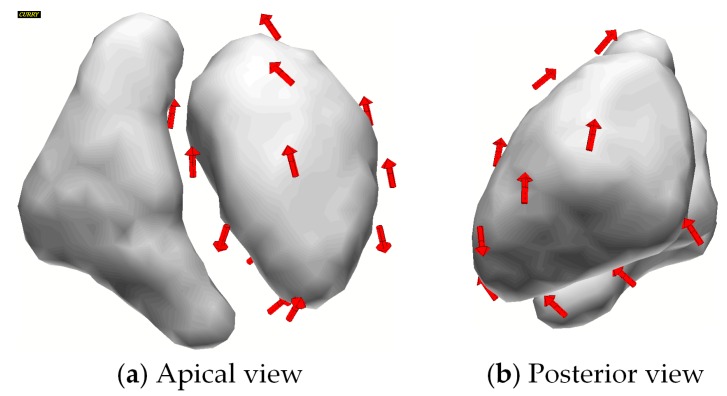
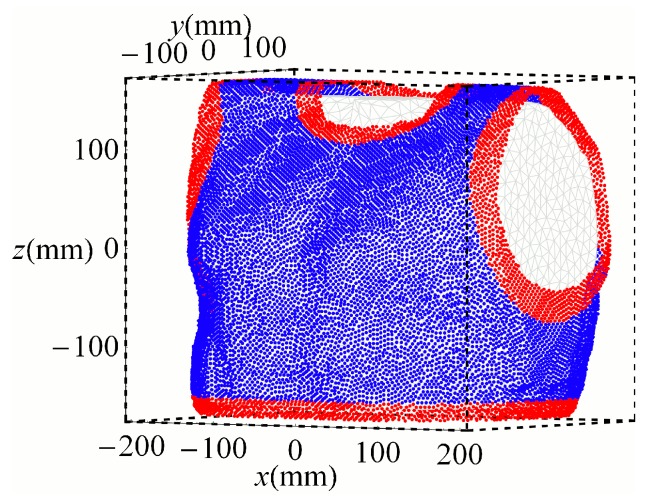

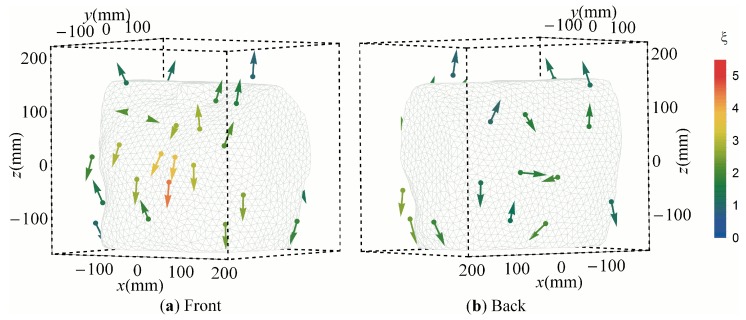
Verification
Claims the paper makes
The claims and statistics of this paper haven’t been checked yet.
Free: it reads the open-access text and checks the first 5 claims that cite a source we can check. Create a free account to check every claim.
Self-check
Percentages, sums and reported differences re-computed from the paper’s own numbers.
The self-check needs the paper’s full text.
Citations
Cites
Large Magnetoresistance at Room Temperature in Ferromagnetic Thin Film Tunnel Junctions
Moodera, J. S., Kinder, L. R., Wong, T. M., & Meservey, R. (1995) · Physical Review Letters · doi:10.1103/physrevlett.74.3273 · Cited by 3,707
Budker, D., & Romalis, M. (2007) · Nature Physics · doi:10.1038/nphys566 · Cited by 1,916
Clustering by means of medoids
Kaufman, L., & Rousseeuw, P. J. (1987) · Lirias · Cited by 1,311
Statistical Analysis of Spherical Data
Fisher, N. I., Lewis, T., & Embleton, B. J. J. (1987) · Cambridge University Press eBooks · doi:10.1017/cbo9780511623059 · Cited by 1,013
Ultrahigh sensitivity magnetic field and magnetization measurements with an atomic magnetometer
Dang, H. B., Maloof, A. C., & Romalis, M. V. (2010) · Applied Physics Letters · doi:10.1063/1.3491215 · Cited by 891 · cited 1×
“While many experimental OPMs are 1–5 cm large to increase sensitivity [9,12,30,31,34,35], it is possible to miniaturize them to 5 mm diameter [28,29] and to reduce power consumption to approximately 5 mW [28].”
BackgroundGallagher, J. J., Pritchett, E. L. C., Sealy, W. C., Kasell, J., & Wallace, A. G. (1978) · Progress in Cardiovascular Diseases · doi:10.1016/0033-0620(78)90015-4 · Cited by 757
Statistical Analysis of Spherical Data.
Jupp, P. E., Fisher, N. I., Lewis, T., & Embleton, B. J. J. (1988) · Biometrics · doi:10.2307/2531880 · Cited by 704
Freitas, P. P., Ferreira, R., Cardoso, S., & Cardoso, F. (2007) · Journal of Physics: Condensed Matter · doi:10.1088/0953-8984/19/16/165221 · Cited by 422
A compact, high performance atomic magnetometer for biomedical applications
Shah, V. K., & Wakai, R. T. (2013) · Physics in Medicine and Biology · doi:10.1088/0031-9155/58/22/8153 · Cited by 322 · cited 1×
“While many experimental OPMs are 1–5 cm large to increase sensitivity [9,12,30,31,34,35], it is possible to miniaturize them to 5 mm diameter [28,29] and to reduce power consumption to approximately 5 mW [28].”
BackgroundMagnetoencephalography with a chip-scale atomic magnetometer
Sander, T. H., Preusser, J., Mhaskar, R., Kitching, J., Trahms, L., & Knappe, S. (2012) · Biomedical Optics Express · doi:10.1364/boe.3.000981 · Cited by 293
Research works printed but not linked: 8
- Dössel, O. Inverse Problem of Electro- and Magnetocardiography: Review and Recent Progress. Available online: http://www.ijbem.org/volume2/number2/doessel/paper_ijbem.htm.
- Burghoff, 2004, Selection of optimal recording sites in electrocardiography and magnetocardiography, Biomed. Eng. Biomed. Te., 48, 174
- Golub, G.H., and Loan, C.F.V. (1996). Matrix Computations, John Hopkins University Press.
- Engelbrecht, A.P. (2005). Fundamentals of Swarm Intelligence, Wiley.
- Dodge, Y. (1987). Statistical Data Analysis Based on the L1 Norm and Related Methods, North Holland/Elsevier.
- Jazbinšek, V., Kosch, O., Meindl, P., Steinhoff, U., Trontelj, Z., and Trahms, L. (2000, January 13–17). Multichannel vector MFM and BSPM of chest and back. Proceedings of the 12th International Conference on Biomagnetism Biomag, Espoo, Finland.
- Kim, 2004, Design of a SQUID sensor array measuring the tangential field components in magnetocardiogram, Prog. Supercond., 45, 56
- Mulyadi, I.H., Fiedler, P., Eichardt, R., Zelle, D., Haueisen, J., and Supriyanto, E. (2016). Optimal electrode placement for smart clothing: Compromises between electrophysiological and practical aspects. IEEE J. Biomed. Health Inform., in press.
Cited by
Ultrasensitive Magnetic Field Sensors for Biomedical Applications
Murzin, D., Mapps, D. J., Levada, K., Belyaev, V., Omelyanchik, A., Panina, L., & Rodionova, V. (2020) · Sensors · doi:10.3390/s20061569 · Cited by 277
Clinical magnetocardiography: the unshielded bet—past, present, and future
Brisinda, D., Fenici, P., & Fenici, R. (2023) · Frontiers in Cardiovascular Medicine · doi:10.3389/fcvm.2023.1232882 · Cited by 80
Recording the heart beat of cattle using a gradiometer system of optically pumped magnetometers
Sutter, J. U., Lewis, O., Robinson, C., McMahon, A., Boyce, R., Bragg, R., Macrae, A., Orton, J., Shah, V., Ingleby, S. J., et al. (2020) · Computers and Electronics in Agriculture · doi:10.1016/j.compag.2020.105651 · Cited by 35
“Recent work on the identification of optimum sensor positioning has shown that a wide range of heart beat characteristics, such as the spatial and temporal magnetic signature of the heart action, are becoming measurable with OPMs (Lau et al., 2016).”
InfluentialBîcă, I., & Anitas, E. M. (2018) · Composites Part B Engineering · doi:10.1016/j.compositesb.2018.09.058 · Cited by 22
Sorbo, A. R., Lombardi, G., La Brocca, L., Guida, G., Fenici, R., & Brisinda, D. (2018) · Annals of Noninvasive Electrocardiology · doi:10.1111/anec.12526 · Cited by 18
“, 2017; Shah, 2013) or even for dynamic monitoring (Lau et al., 2016).”
Background
Metadata
- Authors
- Lau, S., Petković, B., & Haueisen, J.
- Affiliations
- Technische Universität Ilmenau (DE)
- Corresponding author
- Lau, Stephan
- Venue
- Sensors
- Publisher
- MDPI AG
- Published
- 2016-05-24
- Volume
- 16
- Issue
- 6
- Pages
- 754
- ISSN
- 1424-8220 (ISSN-L)
- PMC
- PMC4934180
- OpenAlex
- W2402812596
- Cited by
- 17
- References
- 75
- Citations by year
- 2026: 2 · 2025: 3 · 2024: 2 · 2023: 2 · 2022: 1 · 2021: 1 · 2020: 2 · 2018: 3 · 2017: 1
- FWCI
- 0.63
- Type
- journal article
- Language
- en
- Open access
- gold
- doi.org
- Licence
- Locations
- Sensors (publishedVersion, cc-by)
- Europe PMC (PubMed Central) (publishedVersion, cc-by)
- PubMed Central (publishedVersion, cc-by)
- PubMed (publishedVersion)
- Minerva Access (University of Melbourne) (submittedVersion, cc-by)
- DOAJ (DOAJ: Directory of Open Access Journals) (submittedVersion, cc-by-sa)
- Common Library Network (Der Gemeinsame Bibliotheksverbund) (submittedVersion, cc-by)
- Funders
- German Research Council (GK 1567-C4)
- Topics
- Physical Sciences › Physics and Astronomy › Atomic and Molecular Physics, and Optics › Atomic and Subatomic Physics Research
- Health Sciences › Medicine › Cardiology and Cardiovascular Medicine › ECG Monitoring and Analysis
- Physical Sciences › Engineering › Electrical and Electronic Engineering › Magnetic Field Sensors Techniques
- Keywords
- magnetocardiography, sensor placement optimization, magnetoresistive sensors, optically pumped magnetometers, torso model, cardiac magnetic field
- MeSH terms
- Cardiovascular Diseases, Humans, Magnetics, Biosensing Techniques, Magnetocardiography
About these checks
Registry, retraction, Cites and statistics results are computed, not judged, with one exception: a printed reference that no index lists is read once by a model before it counts as a citation error. Claims are extracted by a model and kept only when their quote appears verbatim in the text; each cited source is then checked, with a model’s help, for whether it says what the claim relies on. Those verdicts can be wrong — read the claim’s quote and the cited source before relying on one.
Statistics and arithmetic are recomputed, not judged.
Confidence bands are shown only for fields calibrated on our annotated test set. None is calibrated yet, so no band is shown.
What counts as a claim ›How we measure confidence ›How we check this ›
Are you an author, or do you see a problem with this page? Request a review
How to cite
Cite CoChat for the checks on this page, and the paper for its own findings.
- This page
- CoChat. (2026). Citation check: Optimal Magnetic Sensor Vests for Cardiac Source Imaging. https://app.cochat.ai/papers/10.3390/s16060754
- The paper
- Lau, S., Petković, B., & Haueisen, J. (2016). Optimal Magnetic Sensor Vests for Cardiac Source Imaging. Sensors. https://doi.org/10.3390/s16060754
Data sources
Bibliographic data: Semantic Scholar, OpenAlex, Crossref.
Contains information from the Semantic Scholar Academic Graph Datasets, made available under the ODC Attribution License (ODC-BY 1.0).
Semantic Scholar’s data is described in: Kinney, R., et al. (2023). The Semantic Scholar Open Data Platform. arXiv:2301.10140.
