

Learning-Based Motion-Intention Prediction for End-Point Control of Upper-Limb-Assistive Robots
Open accessThe DOI matches its Crossref record; 44 of the 44 references it cites were found in a registry or an index.
Abstract
The lack of intuitive and active human–robot interaction makes it difficult to use upper-limb-assistive devices. In this paper, we propose a novel learning-based controller that intuitively uses onset motion to predict the desired end-point position for an assistive robot. A multi-modal sensing system comprising inertial measurement units (IMUs), electromyographic (EMG) sensors, and mechanomyography (MMG) sensors was implemented. This system was used to acquire kinematic and physiological signals during reaching and placing tasks performed by five healthy subjects. The onset motion data of each motion trial were extracted to input into traditional regression models and deep learning models for training and testing. The models can predict the position of the hand in planar space, which is the reference position for low-level position controllers. The results show that using IMU sensor with the proposed prediction model is sufficient for motion intention detection, which can provide almost the same prediction performance compared with adding EMG or MMG. Additionally, recurrent neural network (RNN)-based models can predict target positions over a short onset time window for reaching motions and are suitable for predicting targets over a longer horizon for placing tasks. This study’s detailed analysis can improve the usability of the assistive/rehabilitation robots.
Overview
The claims and statistics of this paper haven’t been checked yet.
Free: it reads the open-access text and checks the first 5 claims that cite a source we can check. Create a free account to check every claim.
Integrity signals
Registry
Cites
Statistics
Figures




Verification
Claims the paper makes
The claims and statistics of this paper haven’t been checked yet.
Free: it reads the open-access text and checks the first 5 claims that cite a source we can check. Create a free account to check every claim.
Self-check
Percentages, sums and reported differences re-computed from the paper’s own numbers.
The self-check needs the paper’s full text.
Citations
Cites
Quinlan, J. R. (1986) · Machine Learning · doi:10.1007/bf00116251 · Cited by 21,439 · cited 1×
“Tree-based regression models enable one to build a tree-like structure for predicting the output [39].”
BackgroundDevelopment of recommendations for SEMG sensors and sensor placement procedures
Hermens, H. J., Freriks, B., Disselhorst-Klug, C., & Rau, G. (2000) · Journal of Electromyography and Kinesiology · doi:10.1016/s1050-6411(00)00027-4 · Cited by 7,213 · cited 1×
“Four EMG sensors (Delsys Trigno) were placed on the muscle belly of the biceps brachii (BB), triceps brachii (TB), anterior deltoid (AD), and pectoralis major (PM) following the SENIAM guidelines [33].”
MethodFeature reduction and selection for EMG signal classification
Phinyomark, A., Phukpattaranont, P., & Limsakul, C. (2012) · Expert Systems with Applications · doi:10.1016/j.eswa.2012.01.102 · Cited by 1,542
Upper-Limb Powered Exoskeleton Design
Perry, J. C., Rosen, J., & Burns, S. (2007) · IEEE/ASME Transactions on Mechatronics · doi:10.1109/tmech.2007.901934 · Cited by 1,023 · cited 1×
“Assistive robots such as exoskeletons [3] and intelligent prostheses [4] are designed to assist patients in daily activities and help to improve their quality of life [5].”
BackgroundActivity, participation, and quality of life 6 months poststroke
Mayo, N. E., Wood-Dauphinee, S., Côté, R., Durcan, L., & Carlton, J. (2002) · Archives of Physical Medicine and Rehabilitation · doi:10.1053/apmr.2002.33984 · Cited by 837 · cited 4×
“However, the common limitation of the mentioned studies is that prediction is limited to a single joint, which does not correspond to the full movement of the upper limb in ADLs.”
BackgroundInfluentialTSFEL: Time Series Feature Extraction Library
Barandas, M., Folgado, D., Fernandes, L., Santos, S., Abreu, M., Bota, P., Liu, H., Schultz, T., & Gamboa, H. (2020) · SoftwareX · doi:10.1016/j.softx.2020.100456 · Cited by 525 · cited 1×
“Hence, we want to approach more types of input features (such as from the time series feature extraction library [36]) to compare the performances of alternatives.”
Control of upper limb prostheses: terminology and proportional myoelectric control-a review
Fougner, A., Stavdahl, Ø., Kyberd, P. J., Losier, Y. G., & Parker, P. A. (2012) · IEEE Transactions on Neural Systems and Rehabilitation Engineering · doi:10.1109/tnsre.2012.2196711 · Cited by 495 · cited 1×
“They mainly measure the electrical activity of muscles, known as EMG signals [13], or the mechanical response of muscles, known as MMG signals [14].”
BackgroundTime series forecasting using artificial neural networks methodologies: A systematic review
Tealab, A. (2018) · Future Computing and Informatics Journal · doi:10.1016/j.fcij.2018.10.003 · Cited by 489
Bi, L., Feleke, A. >., & Guan, C. (2019) · Biomedical Signal Processing and Control · doi:10.1016/j.bspc.2019.02.011 · Cited by 418
Intention-Based EMG Control for Powered Exoskeletons
Lenzi, T., De Rossi, S. M. M., Vitiello, N., & Carrozza, M. C. (2012) · IEEE Transactions on Biomedical Engineering · doi:10.1109/tbme.2012.2198821 · Cited by 400
A survey of sensor fusion methods in wearable robotics
Novak, D., & Riener, R. (2015) · Robotics and Autonomous Systems · doi:10.1016/j.robot.2014.08.012 · Cited by 252 · cited 1×
“However, the current active assistive robots are still not widely accepted by users due to the lack of a reliable and intuitive controller which can detect the user’s intention and provide assistive motion in a natural way [6].”
BackgroundLeeb, R., Sagha, H., Chavarriaga, R., & Millán, J. D. R. (2011) · Journal of Neural Engineering · doi:10.1088/1741-2560/8/2/025011 · Cited by 242 · cited 1×
“Fusing EMG and EEG data provided a reliable source of data for creating a brain–computer interface able to decode the motion pattern of elbow flexion (one DOF), even under conditions of muscular fatigue [29].”
MethodsEMG-Based Joint Force Control for an Upper-Limb Power-Assist Exoskeleton Robot
Li, Z., Wang, B., Sun, F., Yang, C., Xie, Q., & Zhang, W. (2014) · IEEE Journal of Biomedical and Health Informatics · doi:10.1109/jbhi.2013.2286455 · Cited by 197 · cited 1×
“Physiological signals are widely used as control interfaces for assistive and rehabilitation robots, which can detect the potential intention of motion [11,12].”
BackgroundA structured overview of trends and technologies used in dynamic hand orthoses
Bos, R. A., Haarman, C. J. W., Stortelder, T., Nizamis, K., Herder, J. L., Stienen, A. H. A., & Plettenburg, D. H. (2016) · Journal of NeuroEngineering and Rehabilitation · doi:10.1186/s12984-016-0168-z · Cited by 162 · cited 4×
“However, the common limitation of the mentioned studies is that prediction is limited to a single joint, which does not correspond to the full movement of the upper limb in ADLs.”
BackgroundInfluentialMechanomyogram for Muscle Function Assessment: A Review
Islam, M. A., Sundaraj, K., Ahmad, R. B., & Ahamed, N. U. (2013) · PLoS ONE · doi:10.1371/journal.pone.0058902 · Cited by 134 · cited 1×
“They mainly measure the electrical activity of muscles, known as EMG signals [13], or the mechanical response of muscles, known as MMG signals [14].”
BackgroundMachine Learning in Robot-Assisted Upper Limb Rehabilitation: A Focused Review
Ai, Q., Liu, Z., Meng, W., Liu, Q., & Xie, S. Q. (2021) · IEEE Transactions on Cognitive and Developmental Systems · doi:10.1109/tcds.2021.3098350 · Cited by 107 · cited 1×
“Normally, a mapping model can be established to match the relationship between past movement and intended motion [23].”
BackgroundReal-Time Intended Knee Joint Motion Prediction by Deep-Recurrent Neural Networks
Huang, Y., He, Z., Liu, Y., Yang, R., Zhang, X., Cheng, G., Yi, J., Ferreira, J. P., & Liu, T. (2019) · IEEE Sensors Journal · doi:10.1109/jsen.2019.2933603 · Cited by 105 · cited 1×
“[25] used two IMUs for predicting intended joint motion in real-time via deep-recurrent neural networks.”
MethodBao, T., Xie, S. Q., Yang, P., Zhou, P., & Zhang, Z. (2022) · IEEE Journal of Biomedical and Health Informatics · doi:10.1109/jbhi.2022.3159792 · Cited by 96 · cited 1×
“In these techniques, multiple signals are fused so that the shortcomings associated with each signal are compensated by complementing the intention prediction [26,27].”
BackgroundAn EMG-Driven Musculoskeletal Model for Estimating Continuous Wrist Motion
Zhao, Y., Zhang, Z., Li, Z., Yang, Z.-X., Dehghani-Sanij, A. A., & Xie, S. Q. (2020) · IEEE Transactions on Neural Systems and Rehabilitation Engineering · doi:10.1109/tnsre.2020.3038051 · Cited by 93
Mechanomyography Assisted Myoeletric Sensing for Upper-Extremity Prostheses: A Hybrid Approach
Guo, W., Sheng, X., Liu, H., & Zhu, X. (2017) · IEEE Sensors Journal · doi:10.1109/jsen.2017.2679806 · Cited by 91 · cited 2×
“For example, hybrid EMGMMG sensing was proposed to classify the motion pattern of the hand [12].”
BackgroundDeep Learning based Motion Prediction for Exoskeleton Robot Control in Upper Limb Rehabilitation
Ren, J.-L., Chien, Y.-H., Chia, E.-Y., Fu, L., & Lai, J. (2019) · Proceedings - IEEE International Conference on Robotics and Automation/Proceedings · doi:10.1109/icra.2019.8794187 · Cited by 89 · cited 2×
“In the state of the art, two main approaches of motion intention detection are explored: human-motion activity recognition [7] and continuously decoding joint angles in time series [8].”
BackgroundMethodContinuous Estimation of Human Multi-Joint Angles From sEMG Using a State-Space Model
Ding, Q., Han, J., & Zhao, X. (2016) · IEEE Transactions on Neural Systems and Rehabilitation Engineering · doi:10.1109/tnsre.2016.2639527 · Cited by 88 · cited 2×
“In addition, researchers have worked on predicting kinematic joint angles of the upper limb in time series using learning-based methods [17] or model-based methods (e.”
BackgroundFormulation of a new gradient descent MARG orientation algorithm: Case study on robot teleoperation
Wilson, S., Eberle, H., Hayashi, Y., Madgwick, S., McGregor, A. H., Jing, X., & Vaidyanathan, R. (2019) · Mechanical Systems and Signal Processing · doi:10.1016/j.ymssp.2019.04.064 · Cited by 86 · cited 1×
“Its effectiveness has been demonstrated in stroke rehabilitation [19], human–robot interaction [20], and prosthetic control [21,22].”
BackgroundLalitharatne, T. D., Teramoto, K., Hayashi, Y., & Kiguchi, K. (2013) · Paladyn Journal of Behavioral Robotics · doi:10.2478/pjbr-2013-0009 · Cited by 84 · cited 1×
“The concept of multi-modal sensing interfaces has shown improved accuracy, reliability, and robustness compared to single-signal methods [28].”
BackgroundAssistive robots to improve the independent living of older persons: results from a needs study
Fiorini, L., De Mul, M., Fabbricotti, I., Limosani, R., Vitanza, A., D’Onofrio, G., Tsui, M., Sancarlo, D., Giuliani, F., Greco, A., et al. (2021) · Disability and Rehabilitation: Assistive Technology · doi:10.1080/17483107.2019.1642392 · Cited by 76 · cited 1×
“Assistive robots such as exoskeletons [3] and intelligent prostheses [4] are designed to assist patients in daily activities and help to improve their quality of life [5].”
BackgroundHow Validation Methodology Influences Human Activity Recognition Mobile Systems
Bragança, H. L. D. S., Colonna, J. G., Oliveira, H. A. B. F., & Souto, E. (2022) · Sensors · doi:10.3390/s22062360 · Cited by 65 · cited 1×
“Within the training dataset, 5-fold cross-validation was used to validate the performance of the models and find the best hyperparameters of each model [41].”
MethodWilliams, H. E., Shehata, A. W., Dawson, M. R. W., Scheme, E., Hebert, J. S., & Pilarski, P. M. (2022) · IEEE Transactions on Biomedical Engineering · doi:10.1109/tbme.2022.3140269 · Cited by 61 · cited 1×
“[31] proposed a recurrent convolutional neural network for position-aware myoelectric prosthesis control strategies, which fused EMG and IMU signals.”
BackgroundKrausz, N. E., Lamotte, D., Batzianoulis, I., Hargrove, L. J., Micera, S., & Billard, A. (2020) · IEEE Transactions on Neural Systems and Rehabilitation Engineering · doi:10.1109/tnsre.2020.2992885 · Cited by 55 · cited 2×
“The detection of the final goal based on onset motion can be useful in achieving the relevant motion assist function without too much of a mental burden on the patients [10].”
BackgroundMultimodal Uncertainty Reduction for Intention Recognition in Human-Robot Interaction
Trick, S., Koert, D., Peters, J., & Rothkopf, C. A. (2019) · IEEE/RSJ International Conference on Intelligent Robots and Systems (IROS) · doi:10.1109/iros40897.2019.8968171 · Cited by 53 · cited 1×
“In these techniques, multiple signals are fused so that the shortcomings associated with each signal are compensated by complementing the intention prediction [26,27].”
BackgroundBruinsma, J., & Carloni, R. (2021) · IEEE Transactions on Neural Systems and Rehabilitation Engineering · doi:10.1109/tnsre.2021.3086843 · Cited by 49 · cited 1×
“Three different RNN models were designed in this study, including RNN, long shortterm memory (LSTM) networks, and gated recurrent unit (GRU) networks [40].”
MethodPosatskiy, A. O., & Chau, T. T. (2012) · Medical Engineering & Physics · doi:10.1016/j.medengphy.2011.12.007 · Cited by 48 · cited 1×
“the low-frequency mechanical vibrations generated by the contractions or oscillations of muscles [34].”
BackgroundCallens, T., van der Have, A., Rossom, S. V., Schutter, J. D., & Aertbeliën, E. (2020) · IEEE Robotics and Automation Letters · doi:10.1109/lra.2020.3005892 · Cited by 45 · cited 1×
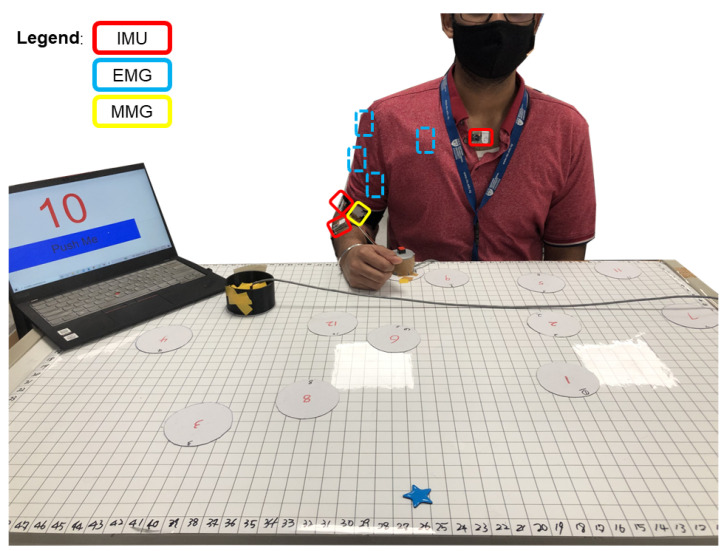
“Therefore, we propose an intuitive control system that can directly predict the end-effector position in a planar space from the user’s onset motions (Figure 1), which enables one to encode of a large amount of information about the trajectory [9].”
BackgroundCastillo, C. S. M., Wilson, S., Vaidyanathan, R., & Atashzar, S. F. (2020) · IEEE Transactions on Neural Systems and Rehabilitation Engineering · doi:10.1109/tnsre.2020.3043368 · Cited by 44 · cited 1×
“Its effectiveness has been demonstrated in stroke rehabilitation [19], human–robot interaction [20], and prosthetic control [21,22].”
BackgroundFormstone, L., Huo, W., Wilson, S., McGregor, A. H., Bentley, P., & Vaidyanathan, R. (2021) · IEEE Transactions on Neural Systems and Rehabilitation Engineering · doi:10.1109/tnsre.2021.3089613 · Cited by 43 · cited 1×
“Its effectiveness has been demonstrated in stroke rehabilitation [19], human–robot interaction [20], and prosthetic control [21,22].”
BackgroundSiu, H. C., Arenas, A. M., Sun, T., & Stirling, L. (2018) · Sensors · doi:10.3390/s18020467 · Cited by 38 · cited 1×
“There is not much variance in the sensor signals from different humans [32].”
BackgroundHidden Markov Model and Its Application in Human Activity Recognition and Fall Detection: A Review
Xue, T., & Liu, H. (2022) · Lecture notes in electrical engineering · doi:10.1007/978-981-19-0390-8_108 · Cited by 37
Liu, H., Gamboa, H. F. S., & Schultz, T. (2022) · Sensors · doi:10.3390/s23010125 · Cited by 37
TSSEARCH: Time Series Subsequence Search Library
Folgado, D., Barandas, M., Antunes, M., Nunes, M. L., Liu, H., Hartmann, Y., Schultz, T., & Gamboa, H. F. S. (2022) · SoftwareX · doi:10.1016/j.softx.2022.101049 · Cited by 32
Little, K., Pappachan, B. K., Yang, S., Noronha, B., Campolo, D., & Accoto, D. (2021) · Sensors · doi:10.3390/s21020498 · Cited by 31 · cited 2×
“As discussed in our previous work [30], multiple algorithms based on four different working principles were selected for performance comparison.”
MethodSelf-citationA Multimodal Intention Detection Sensor Suite for Shared Autonomy of Upper-Limb Robotic Prostheses
Gardner, M., Castillo, C. S. M., Wilson, S., Farina, D., Burdet, E., Khoo, B. C., Atashzar, S. F., & Vaidyanathan, R. (2020) · Sensors · doi:10.3390/s20216097 · Cited by 29 · cited 1×
“Its effectiveness has been demonstrated in stroke rehabilitation [19], human–robot interaction [20], and prosthetic control [21,22].”
BackgroundInteractive and Interpretable Online Human Activity Recognition
Hartmann, Y., Liu, H., & Schultz, T. (2022) · IEEE International Conference on Pervasive Computing and Communications Workshops (PerCom Workshops) · doi:10.1109/percomworkshops53856.2022.9767207 · Cited by 28 · cited 1×
“We aim to propose new prediction models, such as the mixture density network (MDN), which might model the uncertainty level of motion based on the IMU input features or the hidden markov model (HMM) [44,45], which enables one to apply sequential modeling to further improve the prediction performance.”
MethodShoulder Motion Intention Detection Through Myoelectric Pattern Recognition
Tigrini, A., Pettinari, L. A., Verdini, F., Fioretti, S., & Mengarelli, A. (2021) · IEEE Sensors Letters · doi:10.1109/lsens.2021.3100607 · Cited by 24
Detection of the Intention to Grasp During Reaching in Stroke Using Inertial Sensing
van Ommeren, A. L., Sawaryn, B., Prange-Lasonder, G. B., Buurke, J. H., Rietman, J. S., & Veltink, P. H. (2019) · IEEE Transactions on Neural Systems and Rehabilitation Engineering · doi:10.1109/tnsre.2019.2939202 · Cited by 19 · cited 1×
“For example, researchers investigate the inertial sensing information to classify the reaching or grasping motion for stroke patients [24].”
BackgroundA Systematic Literature Review of Intent Sensing for Control of Medical Devices
Russell, J., & Bergmann, J. (2021) · IEEE Transactions on Medical Robotics and Bionics · doi:10.1109/tmrb.2021.3135704 · Cited by 16 · cited 1×
“In a sense, it can be classified as an inference of the task goal by a short-term motion [35].”
Background
Research works printed but not linked: 2
- Johannes M.S. Bigelow J.D. Burck J.M. Harshbarger S.D. Kozlowski M.V. Van Doren T. An overview of the developmental process for the modular prosthetic limb Johns Hopkins APL Tech. Dig. 2011 30 207 216
- Tilley A.R. Henry Dreyfuss Associates. The Measure of Man and Woman: Human Factors in Design John Wiley & Sons Hoboken, NJ, USA 2001
Cited by
Lobo, P. L. S., Morais, P., Murray, P., & Vilaça, J. L. (2024) · Sensors · doi:10.3390/s24247973 · Cited by 53
Robotic-Assisted Rehabilitation for Post-Stroke Shoulder Pain: A Systematic Review
Gnasso, R., Palermi, S., Picone, A., Tarantino, D., Fusco, G., Messina, M. M., & Sirico, F. (2023) · Sensors · doi:10.3390/s23198239 · Cited by 26
“Moreover, these new technologies have already been tested for the rehabilitation of the shoulder, indicating how this complex articulation can benefit from such a new approach [8–10].”
BackgroundEMG feature extraction and muscle selection for continuous upper limb movement regression
Quesada, L., Verdel, D., Bruneau, O., Berret, B., Amorim, M., & Vignais, N. (2024) · Biomedical Signal Processing and Control · doi:10.1016/j.bspc.2024.107323 · Cited by 21
Learning Human-Arm Reaching Motion Using a Wearable Device in Human–Robot Collaboration
Kahanowich, N. D., & Sintov, A. (2024) · IEEE Access · doi:10.1109/access.2024.3365661 · Cited by 15
“In a work more related to ours, two IMU’s were combined with EMG and Mechanomyography (MMG) to predict future targets among several discrete ones [42].”
MethodChen, S., Peng, C., Yang, B., Lin, J., Zhou, L., Jiang, Z., Liu, Z., Liu, Y., & Tang, L. (2026) · npj Artificial Intelligence · doi:10.1038/s44387-026-00083-5 · Cited by 9
Metadata
- Authors
- Yang, S., Garg, N. P., Gao, R., Yuan, M., Noronha, B., Ang, W. T., & Accoto, D.
- Affiliations
- Nanyang Technological University (SG)
- KU Leuven (BE)
- Corresponding author
- Yang, Sibo
- Venue
- Sensors
- Publisher
- MDPI AG
- Published
- 2023-03-10
- Volume
- 23
- Issue
- 6
- Pages
- 2998
- ISSN
- 1424-8220 (ISSN-L)
- PMC
- PMC10056111
- OpenAlex
- W4323851676
- Cited by
- 20
- References
- 44
- Citations by year
- 2026: 5 · 2025: 3 · 2024: 5 · 2023: 7
- FWCI
- 1.58
- Type
- journal article
- Language
- en
- Open access
- gold
- doi.org
- Licence
- Locations
- Sensors (publishedVersion, cc-by)
- PubMed Central (publishedVersion, cc-by)
- PubMed (publishedVersion)
- Lirias (submittedVersion, cc-by)
- DOAJ (DOAJ: Directory of Open Access Journals) (submittedVersion, cc-by-sa)
- DR-NTU (Nanyang Technological University) (submittedVersion, cc-by)
- Funders
- “Intelligent Human–robot interface for upper limb wearable robots” (SERC1922500046)
- Topics
- Physical Sciences › Engineering › Biomedical Engineering › Prosthetics and Rehabilitation Robotics
- Physical Sciences › Engineering › Biomedical Engineering › Muscle activation and electromyography studies
- Health Sciences › Medicine › Rehabilitation › Stroke Rehabilitation and Recovery
- Keywords
- endpoint control, inertial measurement unit, electromyography, mechanomyography, multimodal sensing, recurrent neural networks, human-robot interaction, rehabilitation robots
- MeSH terms
- Electromyography, Humans, Motion, Robotics, Intention, Upper Extremity
About these checks
Registry, retraction, Cites and statistics results are computed, not judged, with one exception: a printed reference that no index lists is read once by a model before it counts as a citation error. Claims are extracted by a model and kept only when their quote appears verbatim in the text; each cited source is then checked, with a model’s help, for whether it says what the claim relies on. Those verdicts can be wrong — read the claim’s quote and the cited source before relying on one.
Statistics and arithmetic are recomputed, not judged.
Confidence bands are shown only for fields calibrated on our annotated test set. None is calibrated yet, so no band is shown.
What counts as a claim ›How we measure confidence ›How we check this ›
Are you an author, or do you see a problem with this page? Request a review
Data sources
Bibliographic data: Semantic Scholar, OpenAlex, Crossref.
Contains information from the Semantic Scholar Academic Graph Datasets, made available under the ODC Attribution License (ODC-BY 1.0).
Semantic Scholar’s data is described in: Kinney, R., et al. (2023). The Semantic Scholar Open Data Platform. arXiv:2301.10140.
