

Near-InfraRed Spectroscopy Provides a Reproducible Estimate of Muscle Aerobic Capacity, but Not Whole-Body Aerobic Power
Open accessThe DOI matches its Crossref record; 39 of the 39 references it cites were found in a registry or an index.
Abstract
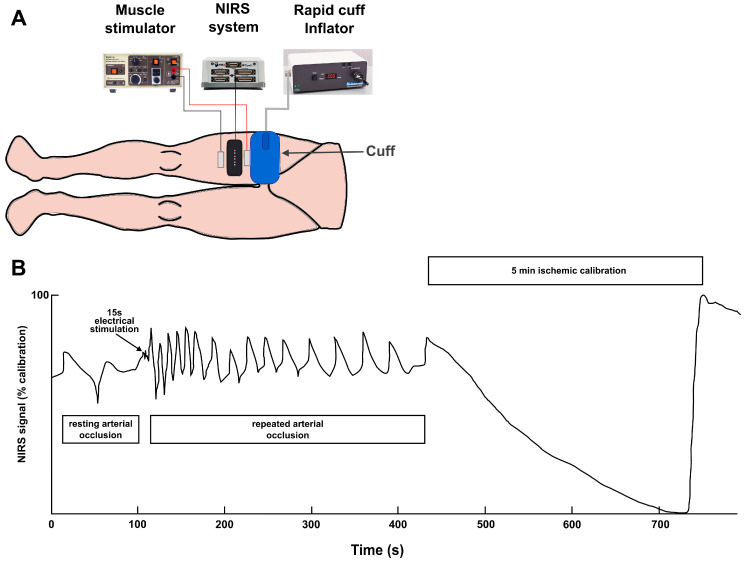
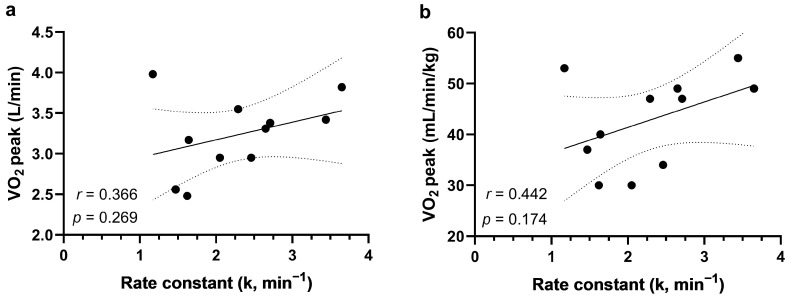
Near-infrared spectroscopy (NIRS) during repeated limb occlusions is a noninvasive tool for assessing muscle oxidative capacity. However, the method’s reliability and validity remain under investigation. This study aimed to determine the reliability of the NIRS-derived mitochondrial power of the musculus vastus lateralis and its correlation with whole-body (cycling) aerobic power (V̇O2 peak). Eleven healthy active men (28 ± 10 y) twice (2 days apart) underwent repeated arterial occlusions to induce changes in muscle oxygen delivery after 15 s of electrical muscle stimulation. The muscle oxygen consumption (mV̇O2) recovery time and rate (k) constants were calculated from the NIRS O2Hb signal. We assessed the reliability (coefficient of variation and intraclass coefficient of correlation [ICC]) and equivalency (t-test) between visits. The results showed high reproducibility for the mV̇O2 recovery time constant (ICC = 0.859) and moderate reproducibility for the k value (ICC = 0.674), with no significant differences between visits (p > 0.05). NIRS-derived k did not correlate with the V̇O2 peak relative to body mass (r = 0.441, p = 0.17) or the absolute V̇O2 peak (r = 0.366, p = 0.26). In conclusion, NIRS provides a reproducible estimate of muscle mitochondrial power, which, however, was not correlated with whole-body aerobic capacity in the current study, suggesting that even if somewhat overlapping, not the same set of factors underpin these distinct indices of aerobic capacity at the different (peripheral and whole-body systemic) levels.
Overview
The claims and statistics of this paper haven’t been checked yet.
Free: it reads the open-access text and checks the first 5 claims that cite a source we can check. Create a free account to check every claim.
Integrity signals
Registry
Cites
Statistics
Figures
Verification
Claims the paper makes
The claims and statistics of this paper haven’t been checked yet.
Free: it reads the open-access text and checks the first 5 claims that cite a source we can check. Create a free account to check every claim.
Claims other papers make about this one
Each is checked against this paper’s own text: does it say what the citing paper says it does?
The check wasn’t confident either way, so it gives no verdict — never disputed.
In the citing paper
“Previous studies (Sendra‐Perez, Sanchez‐Jimenez et al., 2023; Venckunas et al., 2024) have reported a weak or non‐significant correlation between SmO2‐derived BPs and established physiological thresholds such as MLSS and CP.”
From Agreement between muscle saturation breakpoints and lactate thresholds: Muscles comparison and sex difference in world‐class Nordic skiers (2026) · cites this paper as Venckunas et al., 2024
Experimental — accuracy not yet measured
Self-check
Percentages, sums and reported differences re-computed from the paper’s own numbers.
The self-check needs the paper’s full text.
Citations
Cites
Progressive Statistics for Studies in Sports Medicine and Exercise Science
HOPKINS, W. G., MARSHALL, S. W., BATTERHAM, A. M., & HANIN, J. (2009) · Medicine & Science in Sports & Exercise · doi:10.1249/mss.0b013e31818cb278 · Cited by 9,128 · cited 1×
“The Pearson correlation coefficient (r) values were interpreted as the following strengths of correlation: moderate, 0.30–0.49; large, 0.50–0.69; very large, 0.70–0.89; nearly perfect, 0.90–0.99; and perfect, 1.00 [33].”
BackgroundInfluentialData on the distribution of fibre types in thirty-six human muscles
Johnson, M. A., Polgar, J., Weightman, D., & Appleton, D. (1973) · Journal of the Neurological Sciences · doi:10.1016/0022-510x(73)90023-3 · Cited by 2,200
Exercise Promotes Healthy Aging of Skeletal Muscle
Cartee, G. D., Hepple, R. T., Bamman, M. M., & Zierath, J. R. (2016) · Cell Metabolism · doi:10.1016/j.cmet.2016.05.007 · Cited by 483 · cited 1×
“As a major site for oxidative phosphorylation, skeletal muscle is an important player in metabolic health, and its mitochondrial oxidative capacity is negatively associated with the risk of cardiovascular disease [7].”
BackgroundNoninvasive measures of oxidative metabolism on working human muscles by near-infrared spectroscopy
Hamaoka, T., Iwane, H., Shimomitsu, T., Katsumura, T., Murase, N., Nishio, S., Osada, T., Kurosawa, Y., & Chance, B. (1996) · Journal of Applied Physiology · doi:10.1152/jappl.1996.81.3.1410 · Cited by 280 · cited 2×
“…high-precision blood flow occlusions together with metabolic activation of the muscle with contractile activity allows us to obtain an objective measure of skeletal muscle aerobic/oxidative capacity corresponding closely with values obtained by phosphorus magnetic resonance spectroscopy [8,9].”
BackgroundMethodRyan, T. E., Erickson, M. L., Brizendine, J. T., Young, H.-J., & McCully, K. K. (2012) · Journal of Applied Physiology · doi:10.1152/japplphysiol.00319.2012 · Cited by 233 · cited 7×
“…[HbO 2 ], deoxyhemoglobin [HHb], or calculated tissue saturation index) have been investigated for different limb muscles including plantar flexors [10–19], plantar extensors [16], knee extensors [10,20], knee flex-ors [20], wrist flexors [11,17], and some other superficial small muscles [13] in…”
BackgroundMethodResultInfluentialMcCully, K. K., Iotti, S., Kendrick, K., Wang, Z., Posner, J. D., Leigh, J., & Chance, B. (1994) · Journal of Applied Physiology · doi:10.1152/jappl.1994.77.1.5 · Cited by 228 · cited 2×
“…flow was occluded for 5 min to completely deoxygenate the muscle tissue under the optodes, and then the pressure was released to obtain the peak hyperemic response with maximal oxygenation [32]. performed in the following order: 5 × 5 s (5 s relief), 5 × 10 s (10 s relief), and 5 × 15 s ( relief).”
MethodRyan, T. E., Southern, W. M., Reynolds, M. A., & McCully, K. K. (2013) · Journal of Applied Physiology · doi:10.1152/japplphysiol.00835.2013 · Cited by 192 · cited 2×
“…for different limb muscles including plantar flexors [10–19], plantar extensors [16], knee extensors [10,20], knee flex-ors [20], wrist flexors [11,17], and some other superficial small muscles [13] in different age and gender populations ranging from completely inactive [21] to highly trained…”
BackgroundSurvival of the fittest VO sub 2 sub max a key predictor of longevity
Strasser, B. (2018) · Frontiers in Bioscience · doi:10.2741/4657 · Cited by 162 · cited 1×
“Whole-body maximal oxygen uptake ( ˙VO 2 max) is one of the most commonly used parameters of aerobic power and is directly associated with exercise capacity and inversely associated with mortality [1–4].”
BackgroundRyan, T. E., Brophy, P., Lin, C., Hickner, R. C., & Neufer, P. D. (2014) · The Journal of Physiology · doi:10.1113/jphysiol.2014.274456 · Cited by 151 · cited 3×
“…high-precision blood flow occlusions together with metabolic activation of the muscle with contractile activity allows us to obtain an objective measure of skeletal muscle aerobic/oxidative capacity corresponding closely with values obtained by phosphorus magnetic resonance spectroscopy [8,9].”
BackgroundMethodContribution of oxygen extraction fraction to maximal oxygen uptake in healthy young men
Skattebo, Ø., Calbet, J. A. L., Rud, B., Capelli, C., & Hallén, J. (2020) · Acta Physiologica · doi:10.1111/apha.13486 · Cited by 90 · cited 3×
“Indeed, there is a long-standing consensus that a multitude of factors affect the ˙VO 2 peak, even if the capacity of the cardiovascular system to deliver oxygenized blood to the working muscle is, in most cases, considered to be the primary limitation [5].”
BackgroundUnder the Hood: Skeletal Muscle Determinants of Endurance Performance
van der Zwaard, S., Brocherie, F., & Jaspers, R. T. (2021) · Frontiers in Sports and Active Living · doi:10.3389/fspor.2021.719434 · Cited by 89 · cited 1×
“Whole-body maximal oxygen uptake ( ˙VO 2 max) is one of the most commonly used parameters of aerobic power and is directly associated with exercise capacity and inversely associated with mortality [1–4].”
BackgroundSkeletal Muscle Metabolism in Endurance Athletes with Near-Infrared Spectroscopy
BRIZENDINE, J. T., RYAN, T. E., LARSON, R. D., & McCULLY, K. K. (2013) · Medicine & Science in Sports & Exercise · doi:10.1249/mss.0b013e31827e0eb6 · Cited by 83 · cited 1×
“Testing was performed according to the protocol described by Brizendine et al. [31].”
Methodda Silva, J. C. L., Tarassova, O., Ekblom, M., Andersson, E. A., Rönquist, G., & Arndt, A. (2016) · European Journal of Applied Physiology · doi:10.1007/s00421-016-3428-5 · Cited by 76 · cited 2×
“Despite the fact that the muscle under investigation is heavily involved not only in daily activities but also during cycling [36,37], which was the exercise mode used for the ˙VO 2 peak test protocol, the correlation between NIRS-derived muscle oxidative power and whole body (cycling) ˙VO 2 peak…”
BackgroundMethodAdami, A., & Rossiter, H. B. (2018) · Journal of Applied Physiology · doi:10.1152/japplphysiol.00445.2017 · Cited by 70 · cited 4×
“…differences between and within the studies in the extent of the induced mitochondrial respiration, an important factor for the correctness of the measurements [28], add to the complexity of the findings and their interpretation and may lead to reported “somewhat large” test–retest variability [25].”
BackgroundResultInfluentialBeever, A. T., Tripp, T. R., Zhang, J., & MacInnis, M. J. (2020) · Journal of Applied Physiology · doi:10.1152/japplphysiol.00017.2020 · Cited by 70 · cited 6×
“…the issue of the reproducibility of NIRS-derived signals, their ability to represent true/real skeletal muscle mitochondrial capacity, and the physiological and practical significance of the indirectly derived measures for physiological whole-body functioning merit further evaluation [14].”
BackgroundResultInfluentialDeterminants of maximal oxygen consumption
Wagner, P. D. (2022) · Journal of Muscle Research and Cell Motility · doi:10.1007/s10974-022-09636-y · Cited by 70 · cited 1×
“The ˙ VO 2 max depends on both the “central” (i.e., largely cardiac blood pumping capacity and oxygen carrying capacity of the blood) and the “peripheral” (i.e., muscle capacity to use oxygen) sets of factors [5,6].”
BackgroundPilotto, A. M., Adami, A., Mazzolari, R., Brocca, L., Crea, E., Zuccarelli, L., Pellegrino, M. A., Bottinelli, R., Grassi, B., Rossiter, H. B., et al. (2022) · The Journal of Physiology · doi:10.1113/jp283267 · Cited by 64 · cited 2×
“…differences between and within the studies in the extent of the induced mitochondrial respiration, an important factor for the correctness of the measurements [28], add to the complexity of the findings and their interpretation and may lead to reported “somewhat large” test–retest variability [25].”
BackgroundResultReproducibility of NIRS assessment of muscle oxidative capacity in smokers with and without COPD
Adami, A., Cao, R., Porszasz, J., Casaburi, R., & Rossiter, H. B. (2017) · Respiratory Physiology & Neurobiology · doi:10.1016/j.resp.2016.09.008 · Cited by 63
Lagerwaard, B., Keijer, J., McCully, K. K., de Boer, V. C. J., & Nieuwenhuizen, A. G. (2019) · European Journal of Applied Physiology · doi:10.1007/s00421-019-04169-8 · Cited by 44 · cited 3×
“…muscles including plantar flexors [10–19], plantar extensors [16], knee extensors [10,20], knee flex-ors [20], wrist flexors [11,17], and some other superficial small muscles [13] in different age and gender populations ranging from completely inactive [21] to highly trained individuals [22,23].”
BackgroundLagerwaard, B., Nieuwenhuizen, A. G., de Boer, V. C. J., & Keijer, J. (2020) · GeroScience · doi:10.1007/s11357-019-00145-4 · Cited by 43 · cited 1×
“…or calculated tissue saturation index) have been investigated for different limb muscles including plantar flexors [10–19], plantar extensors [16], knee extensors [10,20], knee flex-ors [20], wrist flexors [11,17], and some other superficial small muscles [13] in different age and gender…”
BackgroundBallesteros-Pomar, M. D., Calleja‐Fernández, A., Díez-Rodríguez, R., Vidal‐Casariego, A., Blanco-Suárez, M. D., & Cano-Rodríguez, I. (2012) · PubMed · doi:10.3305/nh.2012.27.5.5989 · Cited by 36 · cited 1×
“The device extrapolates overall body composition from impedance, calculated body fat, and fat-free mass using a proprietary equation based on resistance, weight, height, age, and sex [30].”
MethodOverreaching Attenuates Training-induced Improvements in Muscle Oxidative Capacity
Bellinger, P., Sabapathy, S., Craven, J., Arnold, B. J. W., & MINAHAN, C. L. (2019) · Medicine & Science in Sports & Exercise · doi:10.1249/mss.0000000000002095 · Cited by 35 · cited 1×
“Additionally, the CVs of the between-day time and/or rate constants of oxygen recovery kinetics have been reported to be quite similar for another leg muscle frequently investigated, the gastrocnemius [10,12,24,34].”
BackgroundBatterson, P. M., Norton, M. R., Hetz, S. E., Rohilla, S., Lindsay, K. G., Subudhi, A. W., & Jacobs, R. A. (2020) · Physiological Reports · doi:10.14814/phy2.14342 · Cited by 32 · cited 2×
“…found this indirect marker of mitochondrial power, among multitudes of traditional physiological indices, to be the best predictor of prolonged time trial performance in the moderate altitude lab [22], leaving us to speculate for now whether this would translate to other settings and populations.”
BackgroundZuccarelli, L., do Nascimento Salvador, P. C., Del Torto, A., Fiorentino, R., & Grassi, B. (2020) · Journal of Applied Physiology · doi:10.1152/japplphysiol.00580.2019 · Cited by 32 · cited 4×
“The oxygen consumption rate in each participant for a total of 22 measurements increased by no less than three times, a recommended minimum for the successful application of NIRS in estimating muscle mitochondrial capacity [10,20,26].”
BackgroundMethodInfluentialCentral Cardiovascular System Limits to Aerobic Capacity
Joyner, M. J., & Dominelli, P. B. (2021) · Experimental Physiology · doi:10.1113/ep088187 · Cited by 32
Muscle mitochondrial capacity in high‐ and low‐fitness females using near‐infrared spectroscopy
Lagerwaard, B., Janssen, J. J. E., Cuijpers, I., Keijer, J., de Boer, V. C. J., & Nieuwenhuizen, A. G. (2021) · Physiological Reports · doi:10.14814/phy2.14838 · Cited by 26 · cited 3×
“The same approach in females has revealed similar cycling ˙VO 2 peak associations, with the aerobic power of plantar flexors and, somewhat weaker, with that of wrist flexors [17].”
BackgroundYoshiko, A., Shiozawa, K., Niwa, S., Takahashi, H., Koike, T., Watanabe, K., Katayama, K., & Akima, H. (2023) · GeroScience · doi:10.1007/s11357-023-01043-6 · Cited by 24 · cited 1×
“…2 ], deoxyhemoglobin [HHb], or calculated tissue saturation index) have been investigated for different limb muscles including plantar flexors [10–19], plantar extensors [16], knee extensors [10,20], knee flex-ors [20], wrist flexors [11,17], and some other superficial small muscles [13] in…”
BackgroundMcPhee, J. S., Williams, A. G., Perez-Schindler, J., Degens, H., Baar, K., & Jones, D. A. (2011) · Experimental Physiology · doi:10.1113/expphysiol.2011.057729 · Cited by 22 · cited 1×
“In support of the above interpretations, changes in the ˙VO 2 peak with training in women have been shown not to be associated with the training-induced changes in the metabolic enzyme content of the trained muscle [38].”
BackgroundSolomon, A., Borodulin, K., Ngandu, T., Kivipelto, M., Laatikainen, T. K., & Kulmala, J. (2017) · Scandinavian Journal of Medicine and Science in Sports · doi:10.1111/sms.12924 · Cited by 21
Association between muscle aerobic capacity and whole-body peak oxygen uptake
Guzman, S. D., Ramirez, J., Keslacy, S., de Leon, R. D., Yamazaki, K. G., & Dy, C. J. (2020) · European Journal of Applied Physiology · doi:10.1007/s00421-020-04402-9 · Cited by 18 · cited 2×
“A moderate and significant correlation was found between cycling peak oxygen consumption and the NIRS-derived aerobic power of both the plantar flexors and knee extensors within a group of young participants with varied aerobic fitness levels [15].”
BackgroundKoutlas, A., Smilios, I., Kokkinou, E. M., Myrkos, A., Kounoupis, A., Dipla, K., & Zafeiridis, A. (2024) · Research Quarterly for Exercise and Sport · doi:10.1080/02701367.2022.2159309 · Cited by 18 · cited 1×
“…NIRS and mitochondrial power is estimated, metabolic activation of the muscle is achieved with voluntary muscle contraction [9,26] or electrical stimulation [20], and recently, even the possibility of not activating the muscle by any contractions preceding the measurements has been proposed [27].”
BackgroundReproducibility of NIRS-derived mitochondrial oxidative capacity in highly active older adults
Fennell, C. R. J., Mauger, A. R., & Hopker, J. (2023) · Experimental Gerontology · doi:10.1016/j.exger.2023.112156 · Cited by 17 · cited 6×
“On the contrary, even in very active older individuals, the calculated vastus lateralis k was substantially lower [23], indicative of the declining aerobic capacity of the muscle with aging.”
BackgroundMethodResultInfluentialBilateral NIRS measurements of muscle mitochondrial capacity: Feasibility and repeatability
Hanna, R. B., Gosalia, J., Demalis, A., Hobson, Z. R., McCully, K. K., Irving, B. A., Mookerjee, S., Vairo, G. L., & Proctor, D. N. (2021) · Physiological Reports · doi:10.14814/phy2.14826 · Cited by 15 · cited 7×
“…lateralis NIRS-derived mitochondrial power in our present study are of quite similar magnitude and strength to those reported by Hanna et al. [20], Pilotto et al. [28], Fennel et al. [23], Beever et al. [14], and Ryan et al. [10], investigating the same muscle on slightly different…”
BackgroundResultInfluentialAzevedo, R. D. A., Forot, J., Millet, G. Y., & Murias, J. M. (2022) · Journal of Applied Physiology · doi:10.1152/japplphysiol.00754.2021 · Cited by 14 · cited 1×
“Finally, somewhat contrasting with the findings mentioned above, Azevedo et al. [35] reported a tight interdependence between NIRS-determined aerobic power in the m. vastus lateralis and pulmonary oxygen uptake across various intensities during recumbent cycling.”
Resultde Aguiar, R. A., Turnes, T., Borszcz, F. K., Raimundo, J. A. G., & Caputo, F. (2022) · Experimental Physiology · doi:10.1113/ep090105 · Cited by 12
Katona, P., Pilissy, T., Tihanyi, A., & Laczkó, J. (2014) · Acta Physiologica Hungarica · doi:10.1556/aphysiol.101.2014.4.12 · Cited by 10 · cited 2×
“Despite the fact that the muscle under investigation is heavily involved not only in daily activities but also during cycling [36,37], which was the exercise mode used for the ˙VO 2 peak test protocol, the correlation between NIRS-derived muscle oxidative power and whole body (cycling) ˙VO 2 peak…”
BackgroundMethodLai, R. E., Holman, M. E., Chen, Q., Rivers, J. F., Lesnefsky, E. J., & Gorgey, A. S. (2022) · PLoS ONE · doi:10.1371/journal.pone.0265141 · Cited by 9 · cited 1×
“…muscles including plantar flexors [10–19], plantar extensors [16], knee extensors [10,20], knee flex-ors [20], wrist flexors [11,17], and some other superficial small muscles [13] in different age and gender populations ranging from completely inactive [21] to highly trained individuals [22,23].”
BackgroundJuškevičiūtė, E., Neuberger, E. W. I., Eimantas, N., Venckūnas, T., Kamandulis, S., Simon, P. D., & Brazaitis, M. (2023) · European Journal of Applied Physiology · doi:10.1007/s00421-023-05366-2 · Cited by 7 · cited 1×
“In the second phase, within one week, a cycling ramp test until exhaustion was conducted to measure whole-body aerobic power [29].”
MethodSelf-citationPelka, E. Z., Davis, B. R., Tomko, P. M., & McDaniel, J. (2023) · European Journal of Applied Physiology · doi:10.1007/s00421-023-05221-4 · Cited by 5
Cited by
Acute Fatigue Impairs Heart Rate Variability and Resting Muscle Oxygen Consumption Kinetics
Vasquez-Bonilla, A. A., Sepulveda, R. A. Y., Tuesta, M., Martín, E. B.-S., Monsalves‐Álvarez, M., Arancibia, J. E. O., Bastías, D. M. D., Recabarren-Dueñas, C., & Alacid, F. (2024) · Applied Sciences · doi:10.3390/app14209166 · Cited by 10
Critical power and critical oxygenation: examining transferability between normoxia and hypoxia
Kowalski, T., Rębiś, K., Wilk, A., Szwed, P., Klusiewicz, A., Debevec, T., & Faiss, R. (2025) · European Journal of Applied Physiology · doi:10.1007/s00421-025-05825-y · Cited by 5
“Additionally, a single NIRS device provides local SmO 2 measurements and may not always represent a systemic physiological response (Venckunas et al. 2024).”
Forot, J., Schorderet, F., Burdet, C., Brocherie, F., & Millet, G. P. (2026) · Experimental Physiology · doi:10.1113/ep093311 · Cited by 1
“Previous studies (Sendra-Perez, Sanchez-Jimenez et al., 2023; Venckunas et al., 2024) have reported a weak or non-significant correlation between S mO 2 -derived BPs and established physiological thresholds such as MLSS and CP.”
Is maximal oxygen consumption an appropriate metric for metabolic health?
Lovell, D. I., Stuelcken, M., & Eagles, A. N. (2025) · European Journal of Applied Physiology · doi:10.1007/s00421-025-05875-2 · Cited by 2
“Additionally, Venckunas and colleagues (Venckunas et al. 2024) recently reported that muscle mitochondrial power estimated from near-infrared spectroscopy was not correlated with whole-body aerobic capacity and that different factors may under-pin the two indices of aerobic capacity.”
Echeverría, S., Caulier‐Cisterna, R., Vergara-Quezada, J., Briceño, F. A. C., & Fuentealba, P. (2025) · IEEE CHILEAN Conference on Electrical, Electronics Engineering, Information and Communication Technologies (CHILECON) · doi:10.1109/chilecon66915.2025.11476014
“Recent works confirm that NIRS can provide reliable physiological information across exercise intensities, supporting its potential as a dual-purpose monitoring tool that integrates oxygenation with HR and RR estimation [10]–[12].”
Metadata
- Authors
- Venckunas, T., Satas, A., Brazaitis, M., Eimantas, N., Sipaviciene, S., & Kamandulis, S.
- Affiliations
- Institute of Sport Science and Innovations, Lithuanian Sports University, 44221 Kaunas, Lithuania
- Lithuanian Sports University (LT)
- Department of Health Promotion and Rehabilitation, Lithuanian Sports University, 44221 Kaunas, Lithuania
- ORCID
- Venue
- Sensors
- Publisher
- MDPI AG
- Published
- 2024-04-03
- Volume
- 24
- Issue
- 7
- Pages
- 2277
- ISSN
- 1424-8220 (ISSN-L)
- PMC
- PMC11014184
- OpenAlex
- W4393862014
- Semantic Scholar
- f586f78f59a4d966121fdd3a7901df1aedda3d00
- Cited by
- 6
- References
- 39
- Citations by year
- 2026: 2 · 2025: 3 · 2024: 1
- FWCI
- 3.00
- Type
- journal article
- Language
- en
- Open access
- gold
- doi.org
- Licence
- Locations
- Sensors (publishedVersion, cc-by)
- PubMed Central (publishedVersion, cc-by)
- PubMed (publishedVersion)
- DOAJ (DOAJ: Directory of Open Access Journals) (submittedVersion, cc-by-sa)
- Funders
- Research Council of Lithuania (S-MIP-19-54)
- Topics
- Health Sciences › Medicine › Physiology (medical) › Cardiovascular and exercise physiology
- Health Sciences › Medicine › Radiology, Nuclear Medicine and Imaging › Optical Imaging and Spectroscopy Techniques
- Health Sciences › Medicine › Orthopedics and Sports Medicine › Sports Performance and Training
- Keywords
- near-infrared spectroscopy, muscle oxygen consumption, arterial occlusion, muscle oxygen delivery, vastus lateralis, reproducibility, peak oxygen uptake, muscle oxidative capacity
- MeSH terms
- Bicycling, Electric Stimulation, Humans, Male, Reproducibility of Results, Spectroscopy, Near-Infrared, Quadriceps Muscle
About these checks
Registry, retraction, Cites and statistics results are computed, not judged, with one exception: a printed reference that no index lists is read once by a model before it counts as a citation error. Claims are extracted by a model and kept only when their quote appears verbatim in the text; each cited source is then checked, with a model’s help, for whether it says what the claim relies on. Those verdicts can be wrong — read the claim’s quote and the cited source before relying on one.
Statistics and arithmetic are recomputed, not judged.
Confidence bands are shown only for fields calibrated on our annotated test set. None is calibrated yet, so no band is shown.
What counts as a claim ›How we measure confidence ›How we check this ›
Are you an author, or do you see a problem with this page? Request a review
Data sources
Bibliographic data: Semantic Scholar, OpenAlex, Crossref.
Contains information from the Semantic Scholar Academic Graph Datasets, made available under the ODC Attribution License (ODC-BY 1.0).
Semantic Scholar’s data is described in: Kinney, R., et al. (2023). The Semantic Scholar Open Data Platform. arXiv:2301.10140.
