

Loading recommendations for muscle strength, hypertrophy, and local endurance: a re-examination of the repetition continuum.
Open accessThe DOI matches its Crossref record; 99 of the 101 references it cites were found in a registry or an index; 37 of the 135 sources its claims cite were checked for support.
Abstract
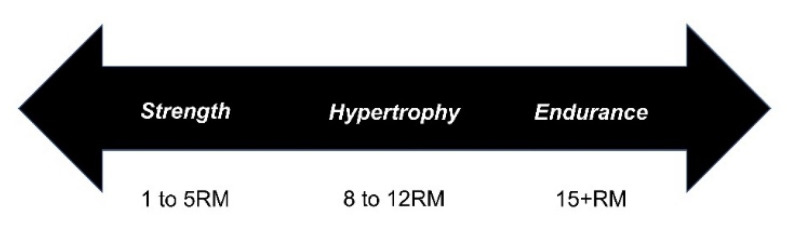
Loading recommendations for resistance training are typically prescribed along what has come to be known as the “repetition continuum”, which proposes that the number of repetitions performed at a given magnitude of load will result in specific adaptations. Specifically, the theory postulates that heavy load training optimizes increases maximal strength, moderate load training optimizes increases muscle hypertrophy, and low-load training optimizes increases local muscular endurance. However, despite the widespread acceptance of this theory, current research fails to support some of its underlying presumptions. Based on the emerging evidence, we propose a new paradigm whereby muscular adaptations can be obtained, and in some cases optimized, across a wide spectrum of loading zones. The nuances and implications of this paradigm are discussed herein.
Overview
CoChat Summary
TL;DR
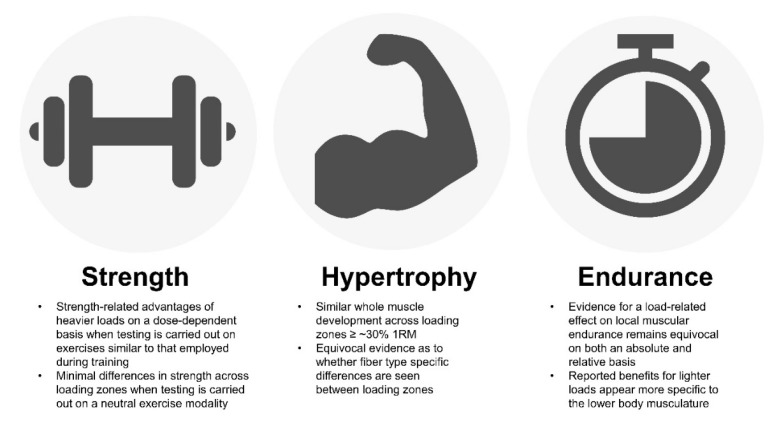
This review re-examines the “repetition continuum” and concludes that current research does not fully support its loading-zone presumptions. It proposes a new paradigm in which strength still benefits from heavy loads, hypertrophy can be achieved across a wide loading spectrum ≥ ~30% 1RM, and local endurance effects remain equivocal.
Key findings
- For strength, meta-analytic data show a moderate-to-large effect favoring high (>60% 1RM) vs. low (≤60% 1RM) loads (ES = 0.58), with a similar advantage in older individuals (ES = 0.43); however, when strength is tested on an isometric device, the benefit is small and non-significant (ES = 0.16).
- For hypertrophy, meta-analysis found no difference between high and low loads (trivial ES = 0.03; 95% CI −0.16 to 0.22), and similar whole-muscle growth can occur across loading ranges ≥ ~30% 1RM; a fiber-type meta-analysis found no significant difference for type I CSA and a non-significant effect favoring high load for type II CSA (ES = 0.30; 95% CI −0.05, 0.66; p = 0.089).
- For local muscular endurance, early work by Anderson and Kearney reported absolute endurance gains of 41% (low load), 39% (medium), and 28% (high), while relative endurance changed by 22% and 28% for low and medium loads but decreased 7% with high loads; later findings are conflicting and depend on whether pre- or post-intervention 1RM is used.
- Practically, moderate loads may be the most efficient for hypertrophy because light loads require many more repetitions and cause more discomfort, while heavy loads require more sets and increase joint stress/overtraining potential.
Methods
- Design: narrative critical review of the literature on the repetition continuum, intended to scrutinize research, identify gaps, and draw practical conclusions for exercise prescription.
- Data: published studies and meta-analyses on resistance training load and adaptations in muscle strength, hypertrophy, and local muscular endurance, including comparisons of high, moderate, and low loads.
- Analysis: narrative synthesis of acute mechanistic, longitudinal training, and meta-analytic evidence, with summary tables for strength, hypertrophy, and endurance studies.
Limitations
- The paper states a paucity of studies in women and suggests possible sex-specific differences in fatigue resistance and adaptations across the repetition continuum; it also notes limited research in highly trained/elite individuals and calls for further study on volume load, fiber-type responses, and minimum loading thresholds.
- The paper states that evidence for a load-specific effect on local muscular endurance remains equivocal and that findings are conflicting, particularly for relative endurance.
- Evident from the text: this is a narrative review without a stated systematic search or meta-analytic protocol, and many conclusions depend on studies with methodological differences such as training to failure vs. not, rest-interval differences, and pre- vs. post-intervention 1RM testing.
Model-written summary. Check it against the paper before relying on it.
Integrity signals
Registry
Cites
Statistics
Figures
Verification
Claims the paper makes
35 Valid · 1 Not valid · 54 Not checked · 59 Own results and interpretations
At least one cited source doesn’t support this claim or points to a different paper, and none confirmed it — see the verdicts below.
In the paper
“studies in which local muscular endurance testing is based on pre-study 1RM tend to refute the benefit of low-load training for this outcome.”
§ Loading Recommendations for Muscle Strength, Hypertrophy, and Local Endurance: A Re-Examination of the Repetition Continuum > 4. Muscular Endurance
What the sources say
- Disputedcites [31] Jessee M.B. Buckner S.L. Mouser J.G. Mattocks K.T. Dankel S.J. Abe T. Bell Z.W. Bentley J.P. Loenneke J.P. Muscle Adaptations to High-Load Training and Very Low-Load Training with and without Blood Flow Restriction Front. Physiol. 2018 9 1448 10.3389/fphys.2018.01448 30386254 PMC6198179 sourceExperimental — accuracy not yet measured
The Methods (Endurance; page not provided) confirm that endurance was tested at 42.5% of pre-training 1RM. But the Results (Endurance; page not provided) report significant increases in endurance in every low-load condition, with the high-BFR low-load condition improving more than high-load training. This study therefore does not refute a benefit of low-load training for endurance. (LLM, conf=0.86)
Checked by a reasoning model — may be wrong.
- Not checked — no full text of the sourcecites [79] Buckner S.L. Jessee M.B. Dankel S.J. Mattocks K.T. Mouser J.G. Bell Z.W. Abe T. Bentley J.P. Loenneke J.P. Blood flow restriction does not augment low force contractions taken to or near task failure Eur. J. Sport Sci. 2020 20 650 659 10.1080/17461391.2019.1664640 31486720 source
plain- Asserted: passes — The authors put it forward as true.
- Checkable: passes — It can be checked against evidence.
- Load-bearing: passes — The paper’s conclusions depend on it.
- Based: passes — The paper gives a reason why it holds.
- Disputed
The cited sources support only part of this claim — read each source’s verdict below.
In the paper
“In support of this theory, Jenkins et al. [8] demonstrated greater increases in percent voluntary muscle activation and electromyographic amplitude when performing leg extension RT to failure with 80% 1RM compared to 30% 1RM over a 6-week study period.”
§ Loading Recommendations for Muscle Strength, Hypertrophy, and Local Endurance: A Re-Examination of the Repetition Continuum > 2. Strength
What the sources say
- Partly supportedcites [8] Jenkins N.D.M. Miramonti A.A. Hill E.C. Smith C.M. Cochrane-Snyman K.C. Housh T.J. Cramer J.T. Greater Neural Adaptations following High- vs. Low-Load Resistance Training Front. Physiol. 2017 8 331 10.3389/fphys.2017.00331 28611677 PMC5447067 sourceExperimental — accuracy not yet measured
The Abstract and Results report six weeks of leg-extension training to failure and greater voluntary activation in the 80% 1RM group at Week 6. The Discussion’s Neural adaptations section says EMG amplitude increased significantly only within the 80% group, but it explicitly reports no between-group difference in EMG amplitude at Week 3 or Week 6. Thus the claim overstates the evidence for a greater EMG increase compared with 30% 1RM. (LLM, conf=0.88)
boostedstates a cause- Asserted: passes — The authors put it forward as true.
- Checkable: passes — It can be checked against evidence.
- Load-bearing: passes — The paper’s conclusions depend on it.
- Based: passes — The paper gives a reason why it holds.
- Partly supported
Every source the paper cites for this claim was checked and supports it.
In the paper
“Indeed, evidence shows a lack of correlation between acute post-exercise MPS measures and chronic increases in muscle mass [43].”
§ Loading Recommendations for Muscle Strength, Hypertrophy, and Local Endurance: A Re-Examination of the Repetition Continuum > 3. Hypertrophy
What the sources say
- Supportedcites [43] Mitchell C.J. Churchward-Venne T.A. Parise G. Bellamy L. Baker S.K. Smith K. Atherton P.J. Phillips S.M. Acute post-exercise myofibrillar protein synthesis is not correlated with resistance training-induced muscle hypertrophy in young men PLoS ONE 2014 9 e89431 10.1371/journal.pone.0089431 24586775 PMC3933567 source
The Results (Myofibrillar Protein Synthesis) report no correlation between MPS measured in any post-exercise period and the change in MRI-measured muscle volume. The Discussion specifies that this finding concerns MPS measured over six hours after exercise and nutrition and hypertrophy after 16 weeks of resistance training in the same subjects. (LLM, conf=0.94)
plain- Asserted: passes — The authors put it forward as true.
- Checkable: passes — It can be checked against evidence.
- Load-bearing: passes — The paper’s conclusions depend on it.
- Based: passes — The paper gives a reason why it holds.
- Supported
Every source the paper cites for this claim was checked and supports it.
In the paper
“Lopes et al. [48] found no differences in fat-free mass between volume load-equated low (3 sets of 20RM) and high (6 sets of 10RM) load training protocols in resistance-trained men who performed a total-body RT program for 6 weeks.”
§ Loading Recommendations for Muscle Strength, Hypertrophy, and Local Endurance: A Re-Examination of the Repetition Continuum > 3. Hypertrophy
What the sources say
- Supportedcites [48] Lopes C.R. Aoki M.S. Crisp A.H. de Mattos R.S. Lins M.A. da Mota G.R. Schoenfeld B.J. Marchetti P.H. The effect of different resistance training load schemes on strength and body composition in trained men J. Hum. Kinet. 2017 1 177 186 10.1515/hukin-2017-0081 PMC5548165 28828088 source
Split into 2 atoms — 2 confirmed, 0 partially supported, 0 disputed, 0 misattributed, 0 unverifiable. Expand the claim to see per-atom verdicts.
plain- Asserted: passes — The authors put it forward as true.
- Checkable: passes — It can be checked against evidence.
- Load-bearing: passes — The paper’s conclusions depend on it.
- Based: passes — The paper gives a reason why it holds.
- Supported
The sources with a verdict support this claim; the rest weren’t checked yet, have no full text we could read, or their verdicts aren’t rated yet.
In the paper
“That said, preliminary evidence for potential differences in intracellular anabolic signaling between loading zones cannot be discounted [40,41], and may have practical implications for RT program design.”
§ Loading Recommendations for Muscle Strength, Hypertrophy, and Local Endurance: A Re-Examination of the Repetition Continuum > 3. Hypertrophy
What the sources say
- Not checked — no full text of the sourcecites [40] Popov D.V. Lysenko E.A. Bachinin A.V. Miller T.F. Kurochkina N.S. Kravchenko I.V. Furalyov V.A. Vinogradova O.L. Influence of resistance exercise intensity and metabolic stress on anabolic signaling and expression of myogenic genes in skeletal muscle Muscle Nerve 2015 51 434 442 10.1002/mus.24314 24916884 source
- Supportedcites [41] Lysenko E.A. Popov D.V. Vepkhvadze T.F. Sharova A.P. Vinogradova O.L. Signaling responses to high and moderate load strength exercise in trained muscle Physiol. Rep. 2019 7 e14100 10.14814/phy2.14100 31090216 PMC6517334 source
The Discussion reports that high- and moderate-load exercise to failure activated different signaling cascades in trained skeletal muscle. The Conclusions specify mTORC1-dependent signaling after moderate-load exercise and MEK–ERK1/2 signaling and eEF2 after high-load exercise, supporting the cited claim of potential differences between loading zones. (LLM, conf=0.94)
hedged- Asserted: passes — The authors put it forward as true.
- Checkable: passes — It can be checked against evidence.
- Load-bearing: unclear — It is unclear whether the paper’s conclusions depend on it.
- Based: passes — The paper gives a reason why it holds.
97 more claims · 18 with their cited sources checked
Create a free account to see all 149 claims and to verify the 2 references still open.
- It may state two separate claims as one. 35
- Probably not a substantial claim. 15
Claims other papers make about this one
Each is checked against this paper’s own text: does it say what the citing paper says it does?
The source backs part of the claim, not all of it — or backs it for a different population, condition or comparison.
In the citing paper
“The method of testing muscular endurance (e.g., absolute vs relative, pre- vs postintervention strength) was not accounted for in the data synthesis and should be considered when designing future studies (196).”
From American College of Sports Medicine Position Stand. Resistance Training Prescription for Muscle Function, Hypertrophy, and Physical Performance in Healthy Adults: An Overview of Reviews (2026) · cites this paper as [196]
Experimental — accuracy not yet measured
Self-check
Percentages, sums and reported differences re-computed from the paper’s own numbers.
Each contradiction between two passages listed here was confirmed by an independent check.
Rated minor: it would not touch a result — a value no result rests on, a p-value that stays on the same side of the significance level, or a conflict that is clerical, resolved elsewhere in the paper, or outside its own findings.
In the paper
§ Loading Recommendations for Muscle Strength, Hypertrophy, and Local Endurance: A Re-Examination of the Repetition Continuum > 4. Muscular Endurance
“our group [20] showed greater improvements in relative upper body muscular endurance (50% 1RM in the bench press) when training with low- (25 to 35RM) compared to moderate- (8 to 12RM) loads.”
§ Loading Recommendations for Muscle Strength, Hypertrophy, and Local Endurance: A Re-Examination of the Repetition Continuum > 3. Hypertrophy
“Our group [20] randomized resistance-trained men to perform volume load-equated RT using either a bodybuilding-type protocol (3 sets of ~10RM) or a powerlifting-type protocol (7 sets of ~3RM).”
Citations
Cites
Progression Models in Resistance Training for Healthy Adults
(2009) · Medicine & Science in Sports & Exercise · doi:10.1249/mss.0b013e3181915670 · Cited by 4,332
Progression Models in Resistance Training for Healthy Adults
(2002) · Medicine and Science in Sports and Exercise · doi:10.1097/00005768-200202000-00027 · Cited by 2,979
Fundamentals of Resistance Training: Progression and Exercise Prescription
KRAEMER, W. J., & RATAMESS, N. A. (2004) · Medicine & Science in Sports & Exercise · doi:10.1249/01.mss.0000121945.36635.61 · Cited by 2,722 · cited 4×
“Evidence indicates that optimizing these adaptations requires manipulation of RT variables [1,2].”
BackgroundInfluentialThe mechanisms of muscle hypertrophy and their application to resistance training
Schoenfeld, B. J. (2010) · Journal of Strength and Conditioning Research · doi:10.1519/jsc.0b013e3181e840f3 · Cited by 1,214 · cited 1×
“Other research papers provide similar loading recommendations when training to maximize muscle development [1,34].”
BackgroundSelf-citationCampos, G., Luecke, T., Wendeln, H., Toma, K., Hagerman, F., Murray, T., Ragg, K., Ratamess, N., Kraemer, W., & Staron, R. (2002) · European Journal of Applied Physiology · doi:10.1007/s00421-002-0681-6 · Cited by 1,066 · cited 6×
“Campos et al. 2002 [19] Young untrained men(n = 27) 4 × 3–5RM 3 × 9–11RM 2 × 20–28RM 8 weeks; 2–3 times per week 1RM squat 1RM leg press 1RM knee extension 1RM squat: significantly greater gains in strength in the high load (3–5 RM) group.”
BackgroundInfluentialSchoenfeld, B. J., Grgic, J., Ogborn, D., & Krieger, J. W. (2017) · Journal of Strength and Conditioning Research · doi:10.1519/jsc.0000000000002200 · Cited by 851 · cited 5×
“For example, a recent meta-analysis [10] reported a moderate to large effect size (ES) difference (ES = 0.”
BackgroundMethodSelf-citationKumar, V., Selby, A., Rankin, D., Patel, R., Atherton, P., Hildebrandt, W., Williams, J., Smith, K., Seynnes, O., Hiscock, N., et al. (2009) · The Journal of Physiology · doi:10.1113/jphysiol.2008.164483 · Cited by 740 · cited 2×
“Some studies show an impaired acute MPS response when training with lower loads [37,38] while others report similar increases in mixed and myofibrillar protein synthesis rates [39].”
BackgroundSchoenfeld, B. J., Ogborn, D., & Krieger, J. W. (2017) · Journal of Sports Sciences · doi:10.1080/02640414.2016.1210197 · Cited by 671 · cited 1×
“Volume, expressed as the number of sets performed, is an important driver of muscle hypertrophy, with an established linear dose-response relationship [46].”
BackgroundSelf-citationResistance exercise load does not determine training-mediated hypertrophic gains in young men
Mitchell, C. J., Churchward-Venne, T. A., West, D. W. D., Burd, N. A., Breen, L., Baker, S. K., & Phillips, S. M. (2012) · Journal of Applied Physiology · doi:10.1152/japplphysiol.00307.2012 · Cited by 627 · cited 6×
“Given the evidence that training with 30% 1RM produces comparable hypertrophy to that with heavy loads [73], it can be inferred that the minimum threshold is somewhere in the range of 30% 1RM.”
BackgroundInfluentialSex differences in human fatigability: mechanisms and insight to physiological responses
Hunter, S. K. (2014) · Acta Physiologica · doi:10.1111/apha.12234 · Cited by 595 · cited 1×
“Given evidence that women possess a greater capacity to resist fatigue [87], it is conceivable there may be sex-specific differences in adaptations across the repetition continuum.”
Background
Research works printed but not linked: 1
- Stone M. Position/policy statement and literature review for the National Strength and Conditioning Association on “Explosive Exercise” NSCA J. 1993 15 7 15
Cited by
Items 201–300 of 334
Exercise Intensity and Circulating Exerkine Responses: A Narrative Review of Selected Molecules
Zhao, Y., Wang, T., Zhang, X., Wang, W., Fu, Y., Laher, I., & Li, S. (2026) · Biomolecules · doi:10.3390/biom16060852 · Cited by 1
“For resistance training, the intensity is typically measured as a percentage of one-repetition maximum (1RM) [17].”
Fat-Free Mass Accretion: Limits, Targets, and Best Practices
Trexler, E. T., Jagim, A. R., Torres, M., Potter, N. D., Ketterly, J., Kerkow-Provo, Z., & Lane, M. T. (2026) · Strength and conditioning journal · doi:10.1519/ssc.0000000000000986 · Cited by 1
Lee, K. (2026) · International Journal of Medical Informatics · doi:10.1016/j.ijmedinf.2026.106594 · Cited by 1
Shannon, S., Brick, N., & Breslin, G. (2026) · International Journal of Sport and Exercise Psychology · doi:10.1080/1612197x.2026.2701831 · Cited by 1
Fasihiyan, M., Forbes, S. C., Taheri, M., Lopez, J. G., Babaie, M., Dejam, B., & Nourshahi, M. (2023) · Scientific Journal of Sport and Performance · doi:10.55860/zmkl1980 · Cited by 3
Burcu, A., Kılıç, T., & Kahraman, Y. (2023) · Revista de Gestão e Secretariado (Management and Administrative Professional Review) · doi:10.7769/gesec.v14i10.3081 · Cited by 3
“Working of repetition continuum is important to rapid force production in strength zones prenciple on multi joint muscle performance is also the same limb may also be required for peak isom reach with reduced repetitions (Schoenfeld et al., 2021; Martinopoulou et al., 2022).”
BackgroundMethodInfluentialARINLI, Y., Umutlu, G., & Pehlevan, Z. (2023) · Research in Dance Education · doi:10.1080/14647893.2023.2276958 · Cited by 1
“…of gravity and move the weight line closer to the supporting leg due to asymmetrical and unstable posture, fatigue in the supporting limb accompanied by poor balance and shorter stance duration (Jonsson, Seiger, and Hirschfeld 2004; Mak and Ng 2003; Muehlbauer et al. 2014; Schoenfeld et al. 2021).”
Remon, F. J. G., Espinosa, L. E. B., Reyes, D. M. S., Aguinaga, C. A. P., Shishco, S. G. M., & Bocanegra, C. A. S. (2023) · IEEE International Conference on Electronics, Electrical Engineering and Computing (INTERCON) · doi:10.1109/intercon59652.2023.10326037 · Cited by 1
“It has been found that a trained muscle exhibits higher EMG amplitudes than an untrained muscle [6], [7].”
BackgroundBana, P., Nurhasan, N., Kristiyandaru, A., Kusnanik, N. W., Turi, M., & Ayubi, N. (2024) · Retos · doi:10.47197/retos.v54.101466 · Cited by 3
“Several studies have reported that weight training in the form of leg press and deadlift exercises has been widely used to increase hypertrophy and muscle strength (Schoenfeld et al., 2021).”
Background́énez-Saiz, S. L. J., Alix, C., Coso, J. D., & Balsalobre‐Fernández, C. (2023) · E-balonmano com Journal Sports Science · doi:10.17398/1885-7019.19.139 · Cited by 3
Mang, Z. A., Beam, J. R., Vigil, E. D., & Martinez, A. (2024) · International Journal of Strength and Conditioning · doi:10.47206/ijsc.v4i1.268 · Cited by 2
“Resistance training (RT) is reported to stimulate several neuromuscular adaptations such as increased local muscular endurance, skeletal muscle hypertrophy, strength, and power (5, 18, 27, 43, 44).”
BackgroundInfluentialAromatherapy and Its Impact on Taekwondo Athletes' Performance: A Bibliographic Review
Bahouq, M., Bahouq, H., Soulaymani, A., Ali, A., & Driss, E. (2025) · International Journal of Sports Science and Physical Education · doi:10.11648/j.ijsspe.20251001.11 · Cited by 1
Effect of Exercise Therapy on Endurance and Flexibility in Young School Children
Khan, U. A., Ansari, B., & Azeemi, H. I. (2025) · Journal of Political Stability Archive · doi:10.63468/jpsa.3.1.03 · Cited by 2
Anugrah, T. (2025) · Jurnal Obsesi Jurnal Pendidikan Anak Usia Dini · doi:10.31004/obsesi.v9i5.6980 · Cited by 1
“Latihan gerak lompat dan loncat yang dilakukan secara berulang menghasilkan adaptasi otot dan daya tahan otot (Schoenfeld et al ., 2021).”
Miftachurochmah, Y., Tomoliyus, T., Sukamti, E. R., Pamungkas, G., & Pavlović, R. (2025) · Health sport rehabilitation · doi:10.58962/hsr.2025.11.2.115-126 · Cited by 1
Ravalo, M. (2025) · Psychology and Education A Multidisciplinary Journal · doi:10.70838/pemj.490504 · Cited by 1
The minimum effective training dose required to increase 1RM strength in powerliftersPreprint
Androulakis‐Korakakis, P., Michalopoulos, N., Fisher, J. P., Keogh, J., Loenneke, J. P., Helms, E. R., Wolf, M., Nuckols, G. L., & Steele, J. (2021) · SportRxiv (OSF Preprints) · doi:10.31236/osf.io/wubps · Cited by 2
Ozaki, H. (2023) · Journal of Trainology · doi:10.17338/trainology.12.1_14
Wibowo, A. P., Perdana, S. S., & Azizah, A. N. (2023) · Advances in health sciences research/Advances in Health Sciences Research · doi:10.2991/978-94-6463-184-5_30
Maior, A. S., & de Assis, M. L. M. (2023) · International Journal of Strength and Conditioning · doi:10.47206/ijsc.v3i1.125
장기간의 저항성 트레이닝이 전문 보디빌더의 중심 동맥 혈압 및 경직도에 미치는 영향
이, 동., 박, 원., 이, 재., 백, 형., & 홍, 광. (2023) · 한국체육학회지 · doi:10.23949/kjpe.2023.7.62.4.1
ธนาเลิศสมบูรณ์, ภ. (2022) · Chula Digiverse · doi:10.58837/chula.the.2022.764
Keskin, K., & Tokat, F. (2023) · Turkish Journal of Kinesiology · doi:10.31459/turkjkin.1339348
“An optimized strength increase is observed when employing a low repetition scheme involving heavy loads, ranging from 1 to 5 repetitions per set, at loads between 80% to 100% of the individual's 1RM (Schoenfeld et al., 2021).”
MethodCallegari, I. O. M., Santarem, P. S. M., Arrivabene, T. T., & Oliveira, A. G. (2023) · Strength and conditioning journal · doi:10.1519/ssc.0000000000000819
The Relationship Between Isometric Strength and Body Mass to Dynamic Performance in Youth Athletes
Lutton, G. (2023) · Research & Investigations in Sports Medicine · doi:10.31031/rism.2023.10.000728
Bodyweight Training for Muscular Strength & Endurance
Vecchio, L. D., Green, S., & Daewoud, H. (2022) · Journal of Yoga and Physiotherapy · doi:10.19080/jyp.2022.10.555783 · Cited by 1
Külkamp, W., Kons, R. L., de Souza, J., Kunzler, D. H., & Bishop, C. J. (2024) · Sports Engineering · doi:10.1007/s12283-024-00450-y
“Despite some criticism [6, 7], this approach has been widely adopted in resistance training programs.”
Arjuna, F., Pamungkas, G., Primasoni, N., & Rahayu, T. W. (2024) · Physical Education Theory and Methodology · doi:10.17309/tmfv.2024.1.01
Mang, Z. A., Beam, J. R., Vigil, E. D., & MARTINEZ, A. H. (2024) · Gazzetta Medica Italiana Archivio per le Scienze Mediche · doi:10.23736/s0393-3660.23.05090-8
FORÇA DE PREENSÃO MANUAL NÃO DIFERE ENTRE PESOS LIVRES OU MÁQUINAS EM IDOSOS: METANÁLISE
de Moraes, P. F. M. B., Pasqualotti, A., & Sbardelotto, M. L. (2023) · Revista Brasileira de Medicina do Esporte · doi:10.47870/1517-8692202430032022_0248p
GRIP STRENGTH DOES NOT DIFFER BETWEEN FREE WEIGHTS OR MACHINES IN OLDER ADULTS: META-ANALYSIS
de Moraes, P. F. M. B., Pasqualotti, A., & Sbardelotto, M. L. (2023) · Revista Brasileira de Medicina do Esporte · doi:10.47870/1517-8692202430032022_0248i
The Technical Report: What is Continuum Zone Repetition on Popular Resistance Training Periodization
Kahraman, Y. (2023) · Sports Medicine Curiosity Journal · doi:10.15294/smcj.v2i2.75388 · Cited by 1
Kahraman, Y., Varol, İ., Şahan, A., & Hocalar, A. (2024) · Scientific Journal of Sport and Performance · doi:10.55860/rjko3098 · Cited by 2
“The current approach is that continuum zone repetitions are a more effective resistance training regimes for strength gain, unlike general training adaptation (Schoenfeld et al., 2021).”
BackgroundInfluentialKurhan, S., Kurtoğlu, A., Kurhan, C. O., Eken, Ö., & Çar, B. (2024) · Pedagogy of Physical Culture and Sports · doi:10.15561/26649837.2024.0203 · Cited by 1
“The study also highlighted that resistance training can be as effective as stretch training to increase joint range of motion [21].”
BackgroundANALYSIS OF ARMENIAN STUDENTS STRENGTH ENDURANCE INDICATORS
Gharibyan, G. G., Hakobyan, S. H., & Gasparyan, H. (2024) · Գիտությունը սպորտում արդի հիմնախնդիրներ · doi:10.53068/25792997-2024.1.11-51
Anugrah, T., Sumaryanti, S., Ambardini, R. L., Nugroho, S., Sutapa, P., Arovah, N. I., & Simatupang, N. (2024) · Retos · doi:10.47197/retos.v58.102542 · Cited by 2
“Repetitive hopping and jumping movements training results in muscle adaptations and muscle endurance (Schoenfeld et al., 2021).”
BackgroundLanger, K., Andersen, V. S., & Stien, N. (2024) · PLoS ONE · doi:10.1371/journal.pone.0306300 · Cited by 1
Ferdinando, D. C. (2024) · Digital Library of Theses and Dissertations (Universidade de São Paulo) · doi:10.11606/t.5.2024.tde-25062024-124301 · Cited by 1
Mang, Z. A., Beam, J. R., Ruch, A. R., & Martinez, A. H. (2024) · Strength and conditioning journal · doi:10.1519/ssc.0000000000000858
Noushad, N., Gopaladhas, S., & Chinnavan, E. (2024) · International Journal of Pharmaceutical and Bio-Medical Science · doi:10.47191/ijpbms/v4-i7-09
Making Exercise as Medicine a Clinical Reality: Program Development and Implementation
Wonders, K. Y., Franklin, B. A., & Brown, S. (2024) · ACSMʼs Health & Fitness Journal · doi:10.1249/fit.0000000000000997
Paksoy, Y., Kpobi, D., Henschke, J., Risch, L., & Engel, T. (2024) · Frontiers in Sports and Active Living · doi:10.3389/fspor.2024.1431607
“Additionally, participants with higher training loads may have developed greater muscle endurance and strength, potentially affecting their response to the experimental intervention compared to those with lower training loads (45).”
BackgroundSevilmiş, E., Atalağ, O., Baytaş, E., Henselmans, M., Balyan, M., & Binboğa, E. (2024) · Perceptual and Motor Skills · doi:10.1177/00315125241279086
“In terms of physical bene fi ts, resistance exercise can stimulate increases in muscular size, strength, power output, motor performance, bone mineral density, insulin sensitivity, resting metabolism, and cardiovascular fi tness (Schoenfeld et al., 2021).”
Jin, Z., & ALI, H. M. (2024) · Journal of Education and Educational Research · doi:10.54097/0xnwgt89
“Through targeted training, these muscle groups are effectively strengthened, and their contraction capacity and endurance are significantly improved [2].”
BackgroundTrening miofunkcjonalny w ujęciu fizjologii wysiłku fizycznego
Koprowski, P., & Siudak, A. (2024) · Annales Universitatis Paedagogicae Cracoviensis Studia Logopaedica · doi:10.24917/20837283.8.4
Regenerative Medicine to Improve Skeletal Muscle Healing After Injury, Disease, and Aging
Groesbeck, A., Luhmann, M., Singer, J., Knezic, N., Lind, D. R. G., Lopez, L., Robinson, S., & Huard, J. (2025) · Springer eBooks · doi:10.1007/978-3-031-84693-9_24
Strength and speed training practices of female Gaelic football coaches in Ireland
Hughes, W., Beattie, K., Lyons, M., Higginbotham, C. L., Lane, A., & Healy, R. (2025) · International Journal of Sports Science & Coaching · doi:10.1177/17479541251333946 · Cited by 1
“…hurdle hops, bounds, drop jumps) 10 ; and (iv) strength endurance, de fi ned as exercise that involves low loads and higher repetitions ( ≥ 15 reps; ≤ 60% 1RM) 11 that may be completed in a gym, sports hall, or on the pitch in the form of circuit training (e.g., squats, press ups, jumps etc.).”
Advanced Strength Training Techniques
Telegadas, K., Myers, C., & Gilday, C. (2025) · Springer eBooks · doi:10.1007/978-3-031-87305-8_10
Ntoukas, S. M., McNeely, M. L., Prado, C. M. M., & Courneya, K. S. (2025) · PLoS ONE · doi:10.1371/journal.pone.0326860
Song, J. S., Kataoka, R., Yamada, Y., Hammert, W. B., Kang, A., Wong, V. H. Y., Spitz, R. W., Seffrin, A., Kassiano, W., & Loenneke, J. P. (2025) · Research Quarterly for Exercise and Sport · doi:10.1080/02701367.2025.2528821
“Muscular endurance refers to the ability of muscles to perform successive contractions at a submaximal load, which can be further specified into absolute and relative muscular endurance (Fisher et al., 2020; Schoenfeld et al., 2021).”
Dow, E., Hernandez, M. I., & Johnston, C. S. (2025) · Women in Sport and Physical Activity Journal · doi:10.1123/wspaj.2025-0033
Estimation of Arm Curl Repetitions Based on Personal Ability and Condition Using Fuzzy Inference
Yeung, C., OKABE, K., Sato-Shimokawara, E., & Okamoto, Y. (2025) · IEEE International Conference on Fuzzy Systems (FUZZ-IEEE) · doi:10.1109/fuzz62266.2025.11152084
“[11]The American College of Sports Medicine RT guidelines emphasize this perspective’s practical ramifications by recommending modest loads for hypertrophy training.”
Tan, H., & Wei, B. (2025) · Frontiers in Humanities and Social Sciences · doi:10.54691/2q4gzw80
“This inclination arises from both a desire for improved body image — seeking muscle definition and physique enhancement — and frequent engagement in sports and athletic competitions where RT enhances performance[5].”
Neijman, M., van Alphen, M. J. A., van Son, R. J. J. H., Stuiver, M. M., Hilgers, F. J. M., van den Brekel, M. W. M., & van der Molen, L. (2025) · European Archives of Oto-Rhino-Laryngology · doi:10.1007/s00405-025-09642-z · Cited by 2
Abdala, D. W., Martins, T. B., Pereira, B. M., Onuzik, L., Guimarães, A. M., Iunes, D. H., Simão, A. P., & Carvalho, L. C. (2025) · JOSPT Methods · doi:10.2519/josptmethods.2025.0006
Effects of Aerobic and Anaerobic Exercise Order on Blood Variables in Adult Males: A 12-Week Study
Choi, C., Kang, E., Seon, H., Kim, M., Je, M., & Ryo, H. (2025) · The Asian Journal of Kinesiology · doi:10.15758/ajk.2025.27.4.78
Havers, T., Wagner, N., Held, S., Geisler, S., & Wiewelhove, T. (2025) · European Journal of Sport Science · doi:10.1002/ejsc.70087 · Cited by 2
Skeletal Muscle Androgen-Regulated Gene Expression Following High- and Low-Load Resistance Exercise
Costa, B. G., Cardaci, T. D., Harris, D. R., Machek, S. B., & Willoughby, D. S. (2025) · DNA · doi:10.3390/dna5040056
“Typically, HL RE involves fewer repetitions performed under a greater mechanical tension relative to time, whereas LL RE leads to increased repetitions performed at lower relative intensities [6].”
Application of linear programming methods for automated planning of personalized training programs
Tatarenko, M. N. (2025) · Modelling and Data Analysis · doi:10.17759/mda.2025150405
Mengl, A., & Bakodi, R. (2025) · MSK – Muskuloskelettale Physiotherapie · doi:10.1055/a-2595-4542
Lindblom, H., Waldén, M., & Hägglund, M. (2023) · Figshare · doi:10.6084/m9.figshare.23691135
Enhancing Arm Strength with High and Low Repetition Training
Hofeliña, E. S. (2025) · USFD Journal of Physical Education Pedagogy & Sports Performance · doi:10.64339/usfd-e748yw86 · Cited by 1
Lindblom, H., Waldén, M., & Hägglund, M. (2023) · Figshare · doi:10.6084/m9.figshare.23691132
Lindblom, H., Waldén, M., & Hägglund, M. (2023) · Figshare · doi:10.6084/m9.figshare.23691138
Barraco, G., & Bopp, M. (2025) · Women in Sport and Physical Activity Journal · doi:10.1123/wspaj.2025-0060
Physical Activity in People with Hemophilia
Cruz‐Montecinos, C., Joaquin, C., Andersen, L. L., Daffunchio, C., Soto, V., López, M., Pérez‐Alenda, S., Chimeno‐Hernández, A., Stephensen, D., & Núñez-Cortés, R. (2025) · Seminars in Thrombosis and Hemostasis · doi:10.1055/a-2778-9890 · Cited by 3
Resistance Training and Elite Athletes: A Systematic Bibliometric Analysis (2015–2023)
Dinata, W. W., Fitri, M., Mukhtarsyaf, F., & Rifki, M. S. (2026) · Physical Education Theory and Methodology · doi:10.17309/tmfv.2026.1.02
Martins, R. J. C., Rosa, M., Padovan, R., Sá, M., Antunes, J. P., Afonso, J. M. S., & García‐Ramos, A. (2026) · International Journal of Sports Physiology and Performance · doi:10.1123/ijspp.2025-0296
Do Flywheel Exercises Provide Eccentric-Overload Training?
Spudić, D., & Nosaka, K. (2026) · Sports Medicine - Open · doi:10.1186/s40798-025-00974-y · Cited by 6
“Drawing parallels with traditional resistance exercise [58, 59], it could be speculated that higher FW inertias might be more beneficial for improving maximal strength and hypertrophy due to the greater mechanical stimulus [60], while lower FW inertias might be more effective for enhancing peak…”
PİŞKİN, N. E., YAVUZ, G., & AKTUĞ, Z. B. (2026) · Turkish Journal of Kinesiology · doi:10.31459/turkjkin.1812674
Radfar, B., Bagheri, R., Ghobadi, H., Hematabadi, A., Askari, B., Rashidlamir, A., & Dutheil, F. (2026) · Nutrients · doi:10.3390/nu18040611
“The primary mechanism driving early strength gains from RT is neuromuscular adaptation characterized by improved muscle activation, higher motor unit firing rates, better coordination, and optimized agonist–antagonist muscle activation [78,79].”
Upper arm strength as a predictor of throwing velocity in university-level male javelin throwers
Billah, M. M., Islam, M. R., Rakib, M. R., Wahed, M. A., Nayan, M. N. I., Gazi, M. A., Akter, K., Rumky, U. H., Biswas, S., Arafat, M. Y., et al. (2026) · International Journal of Scientific Reports · doi:10.18203/issn.2454-2156.intjscirep20260365
Pancar, Z., Ilhan, M.-J., Darendeli, M. K., Karaca, B., İkidağ, M. A., Taşdoğan, A. M., Ulema, M. S., Alkhamees, N. H., Al-Mhanna, S. B., & Batrakoulis, A. (2026) · Scientific Reports · doi:10.1038/s41598-026-40612-5
Gamiel, A., Fayaz, N. A., amr, M., Aboelwafa, N., & Ibrahim, M. M. (2025) · SPORT TK-Revista EuroAmericana de Ciencias del Deporte · doi:10.6018/sportk.695421
“Patients performed each exercise for three to five repetitions for three sets with a 2-minutes rest interval period between sets (National Strength and Conditioning Association, 2021; Schoenfeld et al., 2021).”
Dudek, M., Robinson, A., Newcomer, M., & Haytmanek, C. T. (2026) · International Journal of Sports Physical Therapy · doi:10.26603/001c.156435
Kadlubowski, B., Keiner, M., WIRTH, K. J., & Csapo, R. (2026) · Frontiers in Sports and Active Living · doi:10.3389/fspor.2026.1742295 · Cited by 2
Schulter-Odyssee – Moderne Schulterrehabilitation: einfache Therapie für komplexe Wirkung
Pfaller, D. (2026) · physiopraxis · doi:10.1055/a-2755-6480
Ma, Z., Zheng, C., Gao, T., Zhao, Z., Zheng, X. M., Liao, T., & Wang, Y. T. (2026) · Frontiers in Physiology · doi:10.3389/fphys.2026.1748244 · Cited by 2
“Behm and Sale’s classic theory posited that training effect transfer extent depends on neuromuscular activation pattern similarity (Schoenfeld et al., 2021).”
PİŞKİN, N. E. (2026) · Journal of Global Sport and Education Research · doi:10.55142/jogser.1861996
Moore, M. S., Redd, M. K., Hill, R., Farmer, K. W., & Zeppieri, G. (2026) · International Journal of Sports Physical Therapy · doi:10.26603/001c.158671
Reliability and Validity of Ankle Muscle Strength Testing Using the ISOTIB Device
Drew, S., Horan, S. A., & Duhig, S. J. (2026) · Journal of Foot and Ankle Research · doi:10.1002/jfa2.70098
“Adopting a structured and tailored resistance training approach using specific variables of load, volume, rest, and tempo enables individuals to target and optimise different training outcomes such as endurance, hypertrophy, maximal strength, and power [11].”
Shetty, S., Luo, Y., Thomas, A., Gamil, K., Saxena, I., Guha, S., Vohra, R., & Lott, D. J. (2026) · Journal of Neurology · doi:10.1007/s00415-026-13808-y
Repeatability of Knee Extension Muscle Endurance Between 20% and 40% of One Repetition Maximum
Hillen, S. J., Fliss, M. D., & Mitchell, C. J. (2026) · Muscles · doi:10.3390/muscles5020026
“Muscular endurance can be expressed as the number of repetitions that can be performed with a given load, either as a relative percentage of an individual’s one repetition maximum (1RM) or absolutely at a fixed load [1].”
InfluentialWiens, L., Fliss, M. D., Abercrombie, M. J., Smith, C. S., Barclay, R., Valiakhmetov, G., Schweitzer, A. M., Beauchamp, B., & Mitchell, C. J. (2026) · Applied Physiology, Nutrition, and Metabolism · doi:10.1139/apnm-2026-0003 · Cited by 1
Bradshaw, J. T., Sanzo, K., Barakat, C., Barshun, A., Inglima, S., Gotla, T. Z., Thompson, B. K., Souza, E. O. D., & Walters, J. (2026) · The Journal of Strength and Conditioning Research · doi:10.1519/jsc.0000000000005388
Tucker, S., Taylor, K. L., Lipsey, K. L., Brook, M., Minch, C., & Morgan, K. A. (2026) · American Journal of Health Promotion · doi:10.1177/08901171261441081
Validation of constant and progressive CAM configurations for torque modulation
Costa-Machado, R. A. D., Marques, D. L., Marson, R. A., Louro, H. G., Marinho, D. A., & Conceição, A. T. (2026) · Mechanics Based Design of Structures and Machines · doi:10.1080/15397734.2026.2669990
Kim, D., Woo, J., 이승렬, Jung, J., Lee, D., Hong, J., Yu, J., Kim, J., 남연교, & Jeon, J. (2026) · Journal of Clinical Medicine · doi:10.3390/jcm15103925
“Resistance training involves the generation of muscular force against external resistance and is widely used to enhance muscular strength, hypertrophy, and endurance [1,2].”
Reliability and Validity of Critical Force Estimated From a 3-Minute All-Out Squat Test
Yang, Y.-J., Wang, H.-J., Lin, C.-Y., Lin, Y.-D., & Cheng, C.-F. (2026) · The Journal of Strength and Conditioning Research · doi:10.1519/jsc.0000000000005524
Roderick, K., Comfort, P., Suchomel, T., Swinton, P. A., & Schoenfeld, B. J. (2026) · The Journal of Strength and Conditioning Research · doi:10.1519/jsc.0000000000005529
Self-citationYoung, J., & Mock, A. J. (2026) · American Journal of Lifestyle Medicine · doi:10.1177/15598276261454617 · Cited by 1
Metadata
- Authors
- Schoenfeld, B. J., Grgic, J., Van Every, D. W., & Plotkin, D. L.
- Affiliations
- Lehman College (US)
- Institute for Health and Sport, Victoria University, Melbourne, VIC 8001, Australia
- Department of Health Sciences, CUNY Lehman College, Bronx, NY 10468, USA
- Corresponding author
- Schoenfeld, Brad J.
- Venue
- Sports
- Publisher
- MDPI AG
- Published
- 2021-02-22
- Volume
- 9
- Issue
- 2
- Pages
- 32
- ISSN
- 2075-4663 (ISSN-L)
- PMC
- PMC7927075
- OpenAlex
- W3131924960
- Semantic Scholar
- 5362f4e0989fd10230d9fe23dfd4f63482d8047d
- Cited by
- 334
- References
- 98
- Citations by year
- 2026: 69 · 2025: 81 · 2024: 61 · 2023: 56 · 2022: 50 · 2021: 17
- FWCI
- 9.81
- Type
- journal article
- Language
- en
- Open access
- gold
- doi.org
- Licence
- Locations
- Sports (publishedVersion, cc-by)
- PubMed Central (publishedVersion, cc-by)
- PubMed (publishedVersion)
- Victoria University Research Repository (Victoria University) (submittedVersion, cc-by)
- DOAJ (DOAJ: Directory of Open Access Journals) (submittedVersion, cc-by-sa)
- Topics
- Health Sciences › Medicine › Orthopedics and Sports Medicine › Sports Performance and Training
- Health Sciences › Medicine › Physiology (medical) › Cardiovascular and exercise physiology
- Health Sciences › Nursing › Nutrition and Dietetics › Muscle metabolism and nutrition
- Keywords
- resistance training, training load, muscle strength, muscle hypertrophy, muscular endurance, loading zones, training effects
About these checks
Registry, retraction, Cites and statistics results are computed, not judged, with one exception: a printed reference that no index lists is read once by a model before it counts as a citation error. Claims are extracted by a model and kept only when their quote appears verbatim in the text; each cited source is then checked, with a model’s help, for whether it says what the claim relies on. Those verdicts can be wrong — read the claim’s quote and the cited source before relying on one.
The claim verdicts this report counts are experimental: their accuracy is not yet measured.
A language model drew the claims from the paper on 2026-11-02, under version 3 of the claim definition (model deepseek-v4.1-flash, prompt extract-v3).
A second model labelled each claim on 2026-11-02 (model jev-1.13-20260917, definition revision gold-guideline-v0.2).
Cited sources are checked with a language model’s help (gpt-6-sol).
Statistics and arithmetic are recomputed, not judged.
Confidence bands are shown only for fields calibrated on our annotated test set. None is calibrated yet, so no band is shown.
What counts as a claim ›How we measure confidence ›How we check this ›
Are you an author, or do you see a problem with this page? Request a review
Data sources
Bibliographic data: Semantic Scholar, OpenAlex, Crossref.
Contains information from the Semantic Scholar Academic Graph Datasets, made available under the ODC Attribution License (ODC-BY 1.0).
Semantic Scholar’s data is described in: Kinney, R., et al. (2023). The Semantic Scholar Open Data Platform. arXiv:2301.10140.
