

Facial Expression Recognition: A Survey
Open accessThe DOI matches its Crossref record; 130 of the 131 references it cites were found in a registry or an index.
Abstract
Facial Expression Recognition (FER), as the primary processing method for non-verbal intentions, is an important and promising field of computer vision and artificial intelligence, and one of the subject areas of symmetry. This survey is a comprehensive and structured overview of recent advances in FER. We first categorise the existing FER methods into two main groups, i.e., conventional approaches and deep learning-based approaches. Methodologically, to highlight the differences and similarities, we propose a general framework of a conventional FER approach and review the possible technologies that can be employed in each component. As for deep learning-based methods, four kinds of neural network-based state-of-the-art FER approaches are presented and analysed. Besides, we introduce seventeen commonly used FER datasets and summarise four FER-related elements of datasets that may influence the choosing and processing of FER approaches. Evaluation methods and metrics are given in the later part to show how to assess FER algorithms, along with subsequent performance comparisons of different FER approaches on the benchmark datasets. At the end of the survey, we present some challenges and opportunities that need to be addressed in future.
Overview
The claims and statistics of this paper haven’t been checked yet.
Free: it reads the open-access text and checks the first 5 claims that cite a source we can check. Create a free account to check every claim.
Integrity signals
Registry
Cites
Statistics
Figures


Verification
Claims the paper makes
The claims and statistics of this paper haven’t been checked yet.
Free: it reads the open-access text and checks the first 5 claims that cite a source we can check. Create a free account to check every claim.
Self-check
Percentages, sums and reported differences re-computed from the paper’s own numbers.
The self-check needs the paper’s full text.
Citations
Cites
1 retracted
RETRACTED CHAPTER: Real-Life Facial Expression Recognition Systems: A Review
Goyal, S. J., Upadhyay, A. K., Jadon, R. S., & Goyal, R. (2017) · Smart innovation, systems and technologies · doi:10.1007/978-981-10-5544-7_31 · Cited by 22 · cited 1×
“Some real-life challenges of FER systems are proposed in [32,33].”
BackgroundRetractedGAN(Generative Adversarial Nets)
(2017) · Journal of Japan Society for Fuzzy Theory and Intelligent Informatics · doi:10.3156/jsoft.29.5_177_2 · Cited by 19,270
Rapid object detection using a boosted cascade of simple features
Viola, P., & Jones, M. (2005) · Proceedings of the 2001 IEEE Computer Society Conference on Computer Vision and Pattern Recognition. CVPR 2001 · doi:10.1109/cvpr.2001.990517 · Cited by 18,300 · cited 1×
“The Haar-like feature template [57] is the combination of edge, linear, centre and diagonal features.”
A fast learning algorithm for deep belief nets
Hinton, G. E., Osindero, S., & Teh, Y.-W. (2006) · Neural Computation · doi:10.1162/neco.2006.18.7.1527 · Cited by 16,336 · cited 13×
“In [94], the robust LDPP-PCA-GDA (Local Directional Position Pattern, Principal Component Analysis, Generalised Discriminant Analysis) features are combined with DBN for modelling the expressions as well as recognition.”
MethodInfluentialRussell, J. A. (1980) · Journal of Personality and Social Psychology · doi:10.1037/h0077714 · Cited by 16,334 · cited 1×
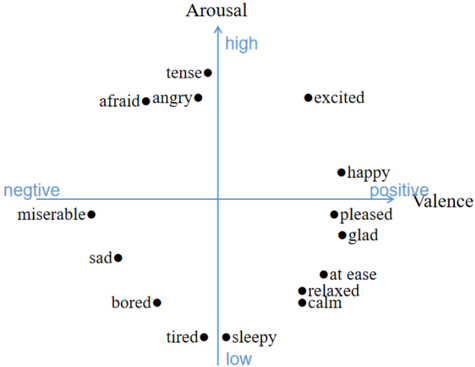
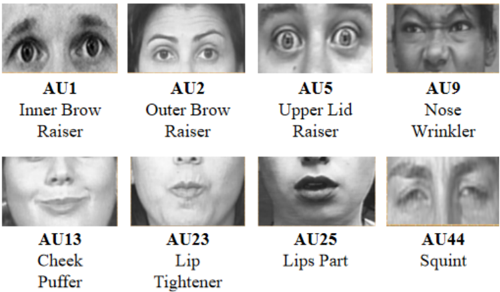
“In the decades of studying FER, Action Units (AUs) [11] and the Valence–Arousal space (V–A space) [12] are two popular models.”
BackgroundRobust Real-Time Face Detection
Viola, P., & Jones, M. J. (2004) · International Journal of Computer Vision · doi:10.1023/b:visi.0000013087.49260.fb · Cited by 14,097
Horn, B. K. P., & Schunck, B. G. (1981) · Artificial Intelligence · doi:10.1016/0004-3702(81)90024-2 · Cited by 10,312
An argument for basic emotions
Ekman, P. (1992) · Cognition and Emotion · doi:10.1080/02699939208411068 · Cited by 9,646 · cited 1×
“, happiness, surprise, sadness, anger, disgust, and fear, are proposed in [20].”
(1974) · Medical Entomology and Zoology · Cited by 7,295
Active Shape Models-Their Training and Application
Cootes, T. F., Taylor, C. J., Cooper, D. H., & Graham, J. (1995) · Computer Vision and Image Understanding · doi:10.1006/cviu.1995.1004 · Cited by 7,190 · cited 1×
“The Active Shape Model (ASM) proposed in [49] is based on statistical models and is generally used to extract feature points on expression contours.”
Method
Research works printed but not linked: 2
- 83. Walecki, R.; Rudovic, O.; Pavlovic, V.; Schuller, B.; Pantic, M. Deep structured learning for facial expression intensity estimation. Image Vis. Comput 2017, 259, 143-154.
- 98. Goodfellow, I.; Pouget-Abadie, J.; Mirza, M.; Xu, B.; Warde-Farley, D.; Ozair, S.; Courville, A.; Bengio, Y. Generative adversarial nets. In Proceedings of the Conference on Neural Information Processing Systems (NIPS), Montreal, QC, Canad, 8-13 December 2014; pp. 2672-2680.
Cited by
Items 101–200 of 235
Facial Expression Recognition by Regional Weighting with Approximated Q-Learning
Oh, S.-G., & Kim, T. (2020) · Symmetry · doi:10.3390/sym12020319 · Cited by 6
“This section introduces the structural di ff erences between the k-Nearest Neighbor (kNN) and ECOC-SVM, the most representative of multi-class classifiers, and predicts their resulting di ff erences in classification accuracy.”
MethodSian, L. J., Stofa, M. M., Min, K. S., & Zulkifley, M. A. (2021) · International Journal of Advanced Computer Science and Applications · doi:10.14569/ijacsa.2021.0121274 · Cited by 6
Zhang, Y., Qiu, C., Zhong, N., Su, X., Zhang, X., Huang, F., Wang, L., & Wang, L. (2021) · International Conference on Video and Image Processing (ICVIP) · doi:10.1145/3511176.3511196 · Cited by 6
Complex Facial Emotion Recognition -A systematic literature Review
Talele, M., & Jain, R. (2023) · International Conference on Advances in Electrical, Computing, Communication and Sustainable Technologies (ICAECT) · doi:10.1109/icaect57570.2023.10117836 · Cited by 6
Dominant and complementary emotion recognition using hybrid recurrent neural network
Jiddah, S. M., & Yurtkan, K. (2023) · Signal Image and Video Processing · doi:10.1007/s11760-023-02563-6 · Cited by 6
“Facial expressions are the primary method of identifying individual human emotions as a nonverbal means of communication [4].”
MethodDerin Öğrenme Modeli ile Yüz İfadelerinden Duygu Tanıma
Akar, F., & Akgül, İ. (2022) · Iğdır Üniversitesi Fen Bilimleri Enstitüsü Dergisi · doi:10.21597/jist.976577 · Cited by 6
Hynes, E., Flynn, R., Lee, B., & Murray, N. (2020) · Irish Signals and Systems Conference · doi:10.1109/issc49989.2020.9180173 · Cited by 6
Facial Expression Recognition and Image Description Generation in Vietnamese
Lâm, K. N., Nguyen, K.-N. T., Nguy, L. H., & Kalita, J. K. (2021) · Frontiers in artificial intelligence and applications · doi:10.3233/faia210176 · Cited by 6
Effect of distance education courses held in different environments on emotions of the instructor
Tonguç, G. (2024) · PLoS ONE · doi:10.1371/journal.pone.0295935 · Cited by 5
Complex Face Emotion Recognition Using Computer Vision and Machine Learning
Talele, M., Jain, R., & Mapari, S. A. (2024) · Advances in computational intelligence and robotics book series · doi:10.4018/979-8-3693-2794-4.ch011 · Cited by 5
Facial Geometrical Features based Pain Assessment using KNN and Regression Tree Classifiers
Jerritta, S., Murugappan, M., ..., B., Vidhya, R. B., Rajagopal, R., & Hara, S. S. H. (2022) · International Conference on Electrical, Electronics, Information and Communication Technologies (ICEEICT) · doi:10.1109/iceeict53079.2022.9768609 · Cited by 5
Monitoring the Impact of Stress on Facial Skin Using Affective Computing
Herath, H. M. K. K. M. B., Karunasena, G., & Mittal, M. (2022) · Lecture notes on data engineering and communications technologies · doi:10.1007/978-981-19-1724-0_4 · Cited by 5
Thirunavukkarasu, J., Jebamathi, M. S., Varshaa, P., Nisha, M., & Sri, M. N. (2024) · International Conference on Advances in Computing, Communication and Applied Informatics (ACCAI) · doi:10.1109/accai61061.2024.10602143 · Cited by 5
“The chosen model's parameters [9] were adjusted to maximize metrics such as accuracy and F1-score.”
MethodA fine-tuned vision transformer-based on limited dataset for facial expression recognition
Febrian, R., Huang, R., Setiono, N., Ramdhan, D., & Chowanda, A. (2024) · Procedia Computer Science · doi:10.1016/j.procs.2024.10.284 · Cited by 5
PTZ-Camera-Based Facial Expression Analysis using Faster R-CNN for Student Engagement Recognition
Komagal, E., & Yogameena, B. (2023) · Lecture notes in electrical engineering · doi:10.1007/978-981-19-7169-3_1 · Cited by 5
Ohashi, T., Watanabe, M., Takenaka, Y., & Saijo, M. (2021) · Integrative Psychological and Behavioral Science · doi:10.1007/s12124-020-09592-7 · Cited by 5
On the pitfalls of learning with limited data: A facial expression recognition case study
Santander, M. R., Albarracín, J. F. H., & Rivera, A. R. (2021) · Expert Systems with Applications · doi:10.1016/j.eswa.2021.114991 · Cited by 5
Krisnahati, I., Suciati, N., & Hidayati, S. C. (2022) · International Conference on Information Technology, Information Systems and Electrical Engineering (ICITISEE) · doi:10.1109/icitisee57756.2022.10057710 · Cited by 5
“Based on studies [10], [11], preprocessing is essential to improve the performance of classification that contains face detection, correction, or normalization.”
BackgroundFacial Expression Recognition: A Survey of Techniques, Datasets, and Real-World Challenges
Abdeldayem, M., Hamed, H. F. A., & Nagy, A. M. (2025) · Statistics, Optimization & Information Computing · doi:10.19139/soic-2310-5070-2789 · Cited by 4
Yi, Z., Ding, X., You, C., & Zhou, X. (2025) · Designing Interactive Systems Conference · doi:10.1145/3715336.3735822 · Cited by 4
Alaskar, H. (2023) · Computers, materials & continua/Computers, materials & continua (Print) · doi:10.32604/cmc.2023.035266 · Cited by 4
Enhancing Engagement in Virtual Classrooms: A Contactless Multi-Modal Emotion Detection Model
Olaniyan, D., Adebiyi, M. O., Adebiyi, A. A., & Olaniyan, J. (2024) · International Conference on Science, Engineering and Business for Driving Sustainable Development Goals (SEB4SDG) · doi:10.1109/seb4sdg60871.2024.10630108 · Cited by 4
“The FER-2013 (Facial Expression Recognition 2013) dataset, developed by researchers at the University of Montreal, is a public resource extensively used in facial expression recognition and emotion analysis [27].”
BackgroundPengenalan Ekspresi Wajah Peserta Didik di Ruang Kelas Menggunakan Vision Transformer (ViT)
Fadhlurrahman, M. F., Munir, M., & Wihardi, Y. (2025) · Jurnal Komputer Teknologi Informasi Sistem Komputer (JUKTISI) · doi:10.62712/juktisi.v4i2.531 · Cited by 4
A Generalized Review Of Human-Computer Interaction Using Electromyogram Signals
Maity, S., & Veer, K. (2022) · Recent Patents on Engineering · doi:10.2174/1872212116666220518122621 · Cited by 4
Selective local binary pattern with convolutional neural network for facial expression recognition
Zulkarnain, S. T., & Suciati, N. (2022) · International Journal of Power Electronics and Drive Systems/International Journal of Electrical and Computer Engineering · doi:10.11591/ijece.v12i6.pp6724-6735 · Cited by 4
Dense SIFT-Based Facial Expression Recognition Using Machine Learning Techniques
Vaijayanthi, S., & Arunnehru, J. (2022) · Lecture notes in networks and systems · doi:10.1007/978-981-19-2225-1_27 · Cited by 4
Dynamic facial expression recognition with pseudo‐label guided multi‐modal pre‐training
Yin, B., Yin, S. N., Liu, C., Zhang, Y., Xi, C., Yin, B., & Ling, Z.-H. (2023) · IET Computer Vision · doi:10.1049/cvi2.12217 · Cited by 4
K-Face Net: A Two-Stage Framework for Balanced Feature Space in Facial Expression Recognition
Yang, Z., Luo, L., Gu, Y., & Ren, F. (2024) · IEEE International Conference on Multimedia and Expo (ICME) · doi:10.1109/icme57554.2024.10688346 · Cited by 4
“Facial Expression Recognition (FER) is crucial to human-computer interaction and affective computing applications [7], [12].”
BackgroundGrover, R., & Bansal, S. R. (2024) · Journal of The Institution of Engineers (India) Series B · doi:10.1007/s40031-024-01184-y · Cited by 4
“For instance, a person expressing happiness exhibits a smile, causing the muscles of the cheeks to expand and move upward, disrupting the normal facial structure [4].”
A Comprehensive Study on Facial Expression Recognition Techniques using Convolutional Neural Network
Vasudeva, K., & Chandran, S. (2020) · International Conference on Communications and Signal Processing (ICCSP) · doi:10.1109/iccsp48568.2020.9182076 · Cited by 4
Facial Expression Recognition and Ordinal Intensity Estimation: A Multilabel Learning Approach
Ekundayo, O., & Viriri, S. (2020) · Lecture notes in computer science · doi:10.1007/978-3-030-64559-5_46 · Cited by 4
ExpressionHop: A Lightweight Human Facial Expression Classifier
Wei, C., Kuo, C. ‐. J., Testa, R. L., Machado‐Lima, A., & Nunes, F. L. S. (2022) · IEEE International Conference on Multimedia Information Processing and Retrieval (MIPR) · doi:10.1109/mipr54900.2022.00042 · Cited by 4
“Furthermore, they fine-tune extracted features to provide robust results against light and rotation variations [11].”
BackgroundMethodA New Facial Expression Processing System for an Affectively Aware Robot
Baglayici, E., Gürpınar, C., Uluer, P., & Köse, H. (2021) · Lecture notes in computer science · doi:10.1007/978-3-030-68790-8_4 · Cited by 4
Improving Identity-Robustness for Face ModelsPreprint
Qi, Q., & Ardeshir, S. (2023) · arXiv (Cornell University) · doi:10.48550/arxiv.2304.03838 · Cited by 4
Facial Recognition Techniques and Their Applicability to Student Concentration Assessment: A Survey
Roy, M. L., Malathi, D., & Jayaseeli, J. D. D. (2022) · Advances in intelligent systems and computing · doi:10.1007/978-981-16-5652-1_18 · Cited by 3
Facial Expression Recognition Enhancement Using Convolutional Neural Network
Hassan, Z. F., Al-Turfi, M. N., & Alawy, F. A. (2024) · Al-Iraqia Journal of Scientific Engineering Research · doi:10.58564/ijser.3.2.2024.182 · Cited by 3
Dataset to Detect Emotions from a Robot-Centric Perspective
Quiroz, M., Patiño-Escarcina, R. E., Díaz-Amado, J., & Cardinale, Y. (2022) · Ambient intelligence and smart environments · doi:10.3233/aise220019 · Cited by 3
Hynes, E., Flynn, R., Lee, B., & Murray, N. (2022) · ACM Multimedia Systems Conference (MMSys) · doi:10.1145/3524273.3532899 · Cited by 3
“Micro facial expressions (MFEs) are described as spontaneous and subtle facial movements [43] that occur when a person experiences emotion [44] .”
BackgroundJeong, J.-Y., Hong, S., Hong, S., Oh, J., Jung, Y., Kim, S., & Jeong, J.-W. (2023) · Lecture notes in computer science · doi:10.1007/978-3-031-25075-0_5 · Cited by 3
An Emotionally Aware Friend: Moving Towards Artificial General Intelligence
Vishwakarma, A., Sawant, S., Sawant, P., & Shankarmani, R. (2021) · International Conference on Inventive Research in Computing Applications (ICIRCA) · doi:10.1109/icirca51532.2021.9544616 · Cited by 3
Adaptação automática de jogos sérios a partir de emoções e traços de personalidade.
Aranha, R. V. (2022) · Digital Library of Theses and Dissertations (Universidade de São Paulo) · doi:10.11606/t.3.2022.tde-31032023-080241 · Cited by 3
(Mis)decoding affect in the face and in the brain
Viola, M. (2024) · Developments in neuroethics and bioethics · doi:10.1016/bs.dnb.2024.02.002 · Cited by 2
Montri, W., Chaikhamwang, S., Fongmanee, S., & Janthajirakowit, C. (2025) · Edelweiss Applied Science and Technology · doi:10.55214/2576-8484.v9i10.10555 · Cited by 2
Development of Face Expression Recognition Model to Support Learning Feedback in Higher Education
Mustapha, M. F., & Hamid, S. H. A. (2025) · International Journal of Research and Innovation in Social Science · doi:10.47772/ijriss.2025.91100070 · Cited by 2
Fekri-Ershad, S. (2026) · Neural Computing and Applications · doi:10.1007/s00521-025-11797-z · Cited by 2
“Most of the methods that have been presented so far can be classified into two groups, based on machine learning and based on deep learning [1, 8 ].”
CS3D: An Efficient Facial Expression Recognition via Event Vision
Wang, Z., Song, Q., Peng, Y., & Bai, W. (2025) · IEEE International Conference on Robotics and Biomimetics (ROBIO) · doi:10.1109/robio66223.2025.11378336 · Cited by 2
“It is widely acknowledged that FER can generally be performed using different types of cameras [4].”
Analysis of Candidates’ Facial Expressions in the Process of Electronic Knowledge Assessment
Strugarević, D., Jevremović, A., & Peraković, D. (2026) · Lecture notes of the Institute for Computer Sciences, Social Informatics and Telecommunications Engineering · doi:10.1007/978-3-032-32862-5_7 · Cited by 2
Understanding Facial Expression Expressing Hate from Online Short-form Videos
Montefalcon, M. D., Padilla, J. R., Paulino, J., Go, J. G., Rodriguez, R. L., & Imperial, J. M. (2021) · International Conference on E-Society, E-Education and E-Technology (ICSET) · doi:10.1145/3485768.3485785 · Cited by 2
“In comparison with the conventional FER approach, in Huang et al [36], the study provides an empirical evidence that deep learning-based models outperform conventional approach significantly in FER.”
ResultFRU-Adapter: Frame Recalibration Unit Adapter for Dynamic Facial Expression Recognition
Her, M., Nabi, H. G., & Han, J.-H. (2025) · Electronics · doi:10.3390/electronics14050978 · Cited by 2
Карабущенко, Н. Б., Pilishvili, T., Чхиквадзе, Т. В., Сорокоумова, С. Н., & Дюкарева, Ю. А. (2021) · Vestnik of Minin University · doi:10.26795/2307-1281-2021-9-2-7 · Cited by 2
Classroom monitoring system based on facial expression recognition
Zhang, B., Wei, D., Zhang, Q., Si, W., Li, X., & Zhu, Q. (2021) · International Symposium on Distributed Computing and Applications for Business Engineering and Science (DCABES) · doi:10.1109/dcabes52998.2021.00034 · Cited by 2
Yulina, S., & Rachmawati, H. (2023) · Jurnal Sisfokom (Sistem Informasi dan Komputer) · doi:10.32736/sisfokom.v12i3.1742 · Cited by 2
Facial emotion recognition under face mask occlusion using vision transformers
Maghari, A. Y. A., & Telbani, A. M. (2026) · International Journal of Power Electronics and Drive Systems/International Journal of Electrical and Computer Engineering · doi:10.11591/ijece.v16i1.pp395-403 · Cited by 2
Zhu, J., Wang, B., Sun, W., & Dai, J. (2020) · International Symposium on Computational Intelligence and Design · doi:10.1109/iscid51228.2020.00060 · Cited by 2
Happy and Sad Classification using HOG Feature Descriptor in SVM Model Selection
Alamsyah, D., & Fachrurrozi, M. (2021) · International Conference on Informatics, Multimedia, Cyber and Information System (ICIMCIS) · doi:10.1109/icimcis53775.2021.9699183 · Cited by 2
Facial Expression Recognition: A Survey and its Applications
Dang, V.-T., Do, H.-Q., Vu, V.-V., & Yoon, B.-N. (2022) · International Conference on Advanced Communication Technology · doi:10.23919/icact53585.2022.9728930 · Cited by 2
Eeswar, S. S., Samaratunga, J. S., Nivethika, G., Wickramasinghe, A., Jayasingha, T. B., Pandithakoralage, S., & Kasthurirathna, D. (2022) · IEEE Region 10 Conference (TENCON) · doi:10.1109/tencon55691.2022.9977977 · Cited by 2
Monica, L. L., Cenerini, C., Vollero, L., Pennazza, G., Santonico, M., & Keller, F. (2023) · Sensors · doi:10.3390/s23208376 · Cited by 2
“Further datasets for facial emotion recognition encompass EmoReact, MMI, and RAF-DB [21,22].”
BackgroundMethodEmotion-aware cross-modal domain adaptation in video sequences
Athanasiadis, C. (2022) · Research Publications (Maastricht University) · doi:10.26481/dis.20221020ca · Cited by 2
Emotion-Aware ResNet50V2: Enhancing Mental Health Detection through Facial Expression AnalysisPreprint
Lahiri, P., Dey, R., Jana, T., Roy, H., & Bhattacharjee, D. (2025) · Research Square · doi:10.21203/rs.3.rs-7236314/v1 · Cited by 2
Facial Expression Identification using Regularized Supervised Distance Preserving Projection
Jahan, S., Akter, M., Yeasmin, S., & Simi, F. A. (2021) · Dhaka University Journal of Science · doi:10.3329/dujs.v69i2.56485 · Cited by 1
Dondero, M. G. (2023) · Routledge eBooks · doi:10.4324/9781003380047-5 · Cited by 1
A novel PSO-ViT approach for facial emotion recognition
Fliss, I., & Zemzem, W. (2023) · Computer Methods in Biomechanics and Biomedical Engineering Imaging & Visualization · doi:10.1080/21681163.2023.2297016 · Cited by 2
“According to (Huang et al. 2019; Ge et al. 2022), Deep learning-based methods do far better than conventional methods in terms of facial expression recognition.”
BackgroundOnline Student Assessment Based on Facial Expression Recognition through Machine Learning
Majed, S., Al-Hameed, M. R., Hussian, A., Zearah, S. A., Dawood, M. N., & Abbas, J. K. K. (2023) · Annual International Conference on Emerging Research Areas and International Conference on Microelectronics, Communications and Renewable Energy · doi:10.1109/aicera/icis59538.2023.10420310 · Cited by 1
Positive-Unlabeled Learning Method for Positive Emotion Recognition Using EEG technology
Li, Z., Shen, C., & Cao, J. (2024) · INTERNATIONAL JOURNAL OF COMPUTERS & TECHNOLOGY · doi:10.24297/ijct.v24i.9650 · Cited by 1
A Deep Learning Approaches from Expression to Emotions
Sowndarya, S., & Anusuriya, V. (2025) · International Conference on Emerging Technologies in Engineering Applications (ICETEA) · doi:10.1109/icetea64585.2025.11100003 · Cited by 1
Empowering cognitive disabilities in transit: an explainable, emotion-aware ITS framework
Almaliki, M., Bamaqa, A., Farrag, T. A., Balaha, H. M., Badawy, M., & Elhosseini, M. A. (2025) · PeerJ Computer Science · doi:10.7717/peerj-cs.3301 · Cited by 1
Exploring a Non-Parametric Uncertain Adaptive training method for facial expression recognition
Sun, R., Wang, C., & Wang, Y. (2025) · Journal of Visual Communication and Image Representation · doi:10.1016/j.jvcir.2025.104636 · Cited by 1
Sahapudeen, F. F., & Vigneswari, T. (2026) · Wiley eBooks · doi:10.1002/9781394422760.ch14 · Cited by 1
Pain Detection Using Face Expression
Patil, D. S., Rahane, W. P., & Rathore, J. (2021) · Journal of Science and Technology · doi:10.46243/jst.2021.v6.i0pp352-357 · Cited by 1
Activation Layers Implication of CNN Sequential Models for Facial Expression Recognition
Devi, M. S., Sagar, A., Thapa, K., Hazarika, M., & Swathi, P. G. (2021) · IOP Conference Series Materials Science and Engineering · doi:10.1088/1757-899x/1074/1/012030 · Cited by 1
Research on Campus Physical Measurement System Based on CNN-LSTM
Wei, M., Fu, Y., Li, C., Li, Y., Feng, W., & Zhu, Q. (2021) · International Symposium on Distributed Computing and Applications for Business Engineering and Science (DCABES) · doi:10.1109/dcabes52998.2021.00035 · Cited by 1
Analyze of facial expression and hand gestures using deep learning
Gopinath, D., Vijayakumar, S., & Harish, J. (2022) · AIP conference proceedings · doi:10.1063/5.0078347 · Cited by 1
Image preprocessing techniques for facial expression classification
Pereira, A. L. D. S., Fernandes, L. A. F., & Conci, A. (2022) · doi:10.5753/lique.2022.19995 · Cited by 1
BhavnaNet: A Deep Convolutional Neural Network for Facial Emotion Recognition
Chauhan, K., Jain, R., Maheshwari, R., & Pandey, D. (2022) · International Conference on Computational Intelligence and Sustainable Engineering Solutions (CISES) · doi:10.1109/cises54857.2022.9844377 · Cited by 1
Jain, A., Sah, H. R., & Atre, H. (2023) · Proceedings on Engineering Sciences · doi:10.24874/pes05.04.021 · Cited by 1
Nugroho, H. T. (2023) · JUPIK : Jurnal Penelitian Ilmu komputer · Cited by 1
Laranti, M. F. B., & Nurjaya (2024) · OKTAL : Jurnal Ilmu Komputer dan Sains · Cited by 1
Hierachical Delta-Attention Method for Multimodal FusionPreprint
Panchal, K. (2020) · arXiv (Cornell University) · doi:10.48550/arxiv.2011.10916 · Cited by 1
Facial expression recognition in videos
Abbasnejad, M. E. (2020) · Espace ÉTS (ETS) · Cited by 1
Li, Y., Liu, H., Feng, H., Shen, X., Chen, Z., Luo, W., Li, N., & Tan, S. (2024) · Research Square · doi:10.21203/rs.3.rs-4417607/v1 · Cited by 1
Authentic Emotion Classification: A Machine Learning Study on Therapy ClipsPreprint
Diemerling, H., Kulla, P., & Kruse, J. (2025) · OSF Preprints (OSF Preprints) · doi:10.31219/osf.io/q9wx6 · Cited by 1
Automatic Emotion Identification: Analysis and Detection of Facial Expressions in Movies
de Almeida, J. C. M. (2020) · Portuguese National Funding Agency for Science, Research and Technology (RCAAP Project by FCT) · doi:10.34626/59c2-d303
Facial Expression Recognition Based on Texture Features
Najeb, A. N. H., & Nasser, N. (2021) · Al-Nahrain Journal for Engineering Sciences · doi:10.29194/njes.24020144
A multi-scale sentiment recognition network based on deep learning
Zhang, N., & Zhang, X. (2023) · Asia-Pacific Conference on Communications Technology and Computer Science (ACCTCS) · doi:10.1109/acctcs58815.2023.00106
“In the last decade, the rapid development of deep learning has led researchers to actively explore many models for facial expression recognition (FER) [2].”
BackgroundA Systematic Assessment on 3D-Based Deep Learning Models and Challenges in FER
Singh, R., & Vohra, A. (2023) · Lecture notes in electrical engineering · doi:10.1007/978-981-99-2271-0_34
A Deep Learning Model to Recognise Facial Emotion Expressions
Feidakis, M., Maros, G., & Antikantzidis, A. (2023) · Lecture notes in networks and systems · doi:10.1007/978-3-031-44097-7_4
Bellentani, F. (2023) · Routledge eBooks · doi:10.4324/9781003380047-12
Framework for the Classification of Facial Emotions Using Soft Computing Techniques
Maity, S., & Veer, K. (2024) · Current Signal Transduction Therapy · doi:10.2174/0115743624273918240102060402
Unmasking Sentiments: A Comprehensive Review on Emotion Detection Technologies
Jeya Daisy, I., Pavin, P. S., Harihaaran, D. K., & Kowshik, B. (2024) · International Research Journal on Advanced Engineering Hub (IRJAEH) · doi:10.47392/irjaeh.2024.0055
Analysis of Face Recognition and Emotion Detection Systems Using Deep LearningPreprint
Arora, N. R., Sharma, A. K., Kumar, D., Sinha, A., Yadav, A. K., Kumar, S., & Dangi, M. (2024) · SSRN Electronic Journal · doi:10.2139/ssrn.4482752
D, K. N. V., & Jolly, B. L. K. (2024) · World Journal of Advanced Engineering Technology and Sciences · doi:10.30574/wjaets.2024.13.2.0630
Facial Expression Recognition via Closed-Loop Transcription
Liu, X., Ma, J., & Wang, Q. (2024) · Annual Conference of the IEEE Industrial Electronics Society (IECON) · doi:10.1109/iecon55916.2024.10905539
“GAN is mostly utilized to mitigate pose variation and identity bias in FER [13].”
Gunathilake, L., & Edirisinghe, R. K. (2025) · Lecture notes in civil engineering · doi:10.1007/978-981-96-2802-5_32
Facial Expressions Detections Model Using YOLOv5 Trained with Custom Images
Ishtiaq, H. M., Siddique, A., Fayez, Husain, M. Z., Hasan, M. Z., & Nosheen, S. (2024) · Recent Advances in Sustainable Engineering and Future Technologies (RASEFT) · doi:10.1109/raseft61414.2024.00025
Vision Aid: AI-Powered Assistive Technology for the Visually Impaired
Jomy, D. K., Joseph, E., Nayana, M., Parvathi, P. L., Antony, A., & Sreejith, P. S. (2025) · AIJR Proceedings · doi:10.21467/proceedings.7.5.3
Makouei, S. T. Z., Uyulan, Ç., Erguzel, T. T., & Tarhan, N. (2025) · Clinical EEG and Neuroscience · doi:10.1177/15500594251366792
Human-Machine Interaction through Facial Expressions: A Comprehensive Review and Future Prospects
Grover, R., & Bansal, S. R. (2025) · BENTHAM SCIENCE PUBLISHERS eBooks · doi:10.2174/9789815324242125010009
Agrawal, T. (2025) · International Journal of Advanced Research · doi:10.21474/ijar01/22403
Metadata
- Authors
- Huang, Y., Chen, F., Lv, S., & Wang, X.
- Affiliations
- National University of Defense Technology (CN)
- Corresponding author
- Wang, Xiaodong
- Venue
- Symmetry
- Publisher
- MDPI AG
- Published
- 2019-09-20
- Volume
- 11
- Issue
- 10
- Pages
- 1189
- ISSN
- 2073-8994 (ISSN-L)
- OpenAlex
- W2974043081
- Cited by
- 195
- References
- 131
- Citations by year
- 2026: 18 · 2025: 14 · 2024: 30 · 2023: 33 · 2022: 41 · 2021: 39 · 2020: 18 · 2019: 1
- FWCI
- 29.14
- Type
- journal article
- Language
- en
- Open access
- gold
- dx.doi.org
- Licence
- Locations
- Symmetry (publishedVersion, cc-by)
- DOAJ (DOAJ: Directory of Open Access Journals) (submittedVersion, cc-by-sa)
- Funders
- National Natural Science Foundation of China (61572513)
- Topics
- Physical Sciences › Computer Science › Artificial Intelligence › Emotion and Mood Recognition
- Physical Sciences › Computer Science › Computer Vision and Pattern Recognition › Face recognition and analysis
- Physical Sciences › Computer Science › Computer Vision and Pattern Recognition › Face and Expression Recognition
- Keywords
- facial expression recognition, nonverbal communication, neural network architecture, facial expression datasets, evaluation metrics, benchmark dataset, performance comparison
About these checks
Registry, retraction, Cites and statistics results are computed, not judged, with one exception: a printed reference that no index lists is read once by a model before it counts as a citation error. Claims are extracted by a model and kept only when their quote appears verbatim in the text; each cited source is then checked, with a model’s help, for whether it says what the claim relies on. Those verdicts can be wrong — read the claim’s quote and the cited source before relying on one.
Statistics and arithmetic are recomputed, not judged.
Confidence bands are shown only for fields calibrated on our annotated test set. None is calibrated yet, so no band is shown.
What counts as a claim ›How we measure confidence ›How we check this ›
Are you an author, or do you see a problem with this page? Request a review
Data sources
Bibliographic data: Semantic Scholar, OpenAlex, Crossref.
Contains information from the Semantic Scholar Academic Graph Datasets, made available under the ODC Attribution License (ODC-BY 1.0).
Semantic Scholar’s data is described in: Kinney, R., et al. (2023). The Semantic Scholar Open Data Platform. arXiv:2301.10140.
