

Facial Expression Recognition: A Survey
Open accessThe DOI matches its Crossref record; 130 of the 131 references it cites were found in a registry or an index.
Abstract
Facial Expression Recognition (FER), as the primary processing method for non-verbal intentions, is an important and promising field of computer vision and artificial intelligence, and one of the subject areas of symmetry. This survey is a comprehensive and structured overview of recent advances in FER. We first categorise the existing FER methods into two main groups, i.e., conventional approaches and deep learning-based approaches. Methodologically, to highlight the differences and similarities, we propose a general framework of a conventional FER approach and review the possible technologies that can be employed in each component. As for deep learning-based methods, four kinds of neural network-based state-of-the-art FER approaches are presented and analysed. Besides, we introduce seventeen commonly used FER datasets and summarise four FER-related elements of datasets that may influence the choosing and processing of FER approaches. Evaluation methods and metrics are given in the later part to show how to assess FER algorithms, along with subsequent performance comparisons of different FER approaches on the benchmark datasets. At the end of the survey, we present some challenges and opportunities that need to be addressed in future.
Overview
The claims and statistics of this paper haven’t been checked yet.
Free: it reads the open-access text and checks the first 5 claims that cite a source we can check. Create a free account to check every claim.
Integrity signals
Registry
Cites
Statistics
Figures


Verification
Claims the paper makes
The claims and statistics of this paper haven’t been checked yet.
Free: it reads the open-access text and checks the first 5 claims that cite a source we can check. Create a free account to check every claim.
Self-check
Percentages, sums and reported differences re-computed from the paper’s own numbers.
The self-check needs the paper’s full text.
Citations
Cites
1 retracted
RETRACTED CHAPTER: Real-Life Facial Expression Recognition Systems: A Review
Goyal, S. J., Upadhyay, A. K., Jadon, R. S., & Goyal, R. (2017) · Smart innovation, systems and technologies · doi:10.1007/978-981-10-5544-7_31 · Cited by 22 · cited 1×
“Some real-life challenges of FER systems are proposed in [32,33].”
BackgroundRetractedGAN(Generative Adversarial Nets)
(2017) · Journal of Japan Society for Fuzzy Theory and Intelligent Informatics · doi:10.3156/jsoft.29.5_177_2 · Cited by 19,270
Rapid object detection using a boosted cascade of simple features
Viola, P., & Jones, M. (2005) · Proceedings of the 2001 IEEE Computer Society Conference on Computer Vision and Pattern Recognition. CVPR 2001 · doi:10.1109/cvpr.2001.990517 · Cited by 18,300 · cited 1×
“The Haar-like feature template [57] is the combination of edge, linear, centre and diagonal features.”
A fast learning algorithm for deep belief nets
Hinton, G. E., Osindero, S., & Teh, Y.-W. (2006) · Neural Computation · doi:10.1162/neco.2006.18.7.1527 · Cited by 16,336 · cited 13×
“In [94], the robust LDPP-PCA-GDA (Local Directional Position Pattern, Principal Component Analysis, Generalised Discriminant Analysis) features are combined with DBN for modelling the expressions as well as recognition.”
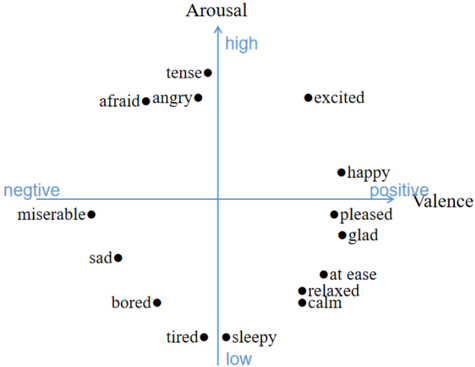
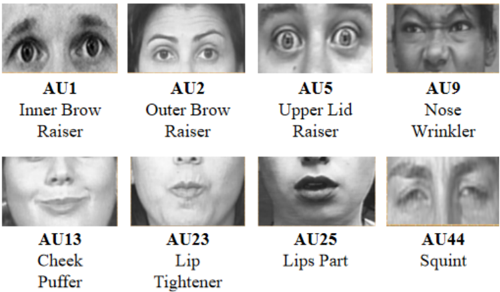
MethodInfluentialRussell, J. A. (1980) · Journal of Personality and Social Psychology · doi:10.1037/h0077714 · Cited by 16,334 · cited 1×
“In the decades of studying FER, Action Units (AUs) [11] and the Valence–Arousal space (V–A space) [12] are two popular models.”
BackgroundRobust Real-Time Face Detection
Viola, P., & Jones, M. J. (2004) · International Journal of Computer Vision · doi:10.1023/b:visi.0000013087.49260.fb · Cited by 14,097
Horn, B. K. P., & Schunck, B. G. (1981) · Artificial Intelligence · doi:10.1016/0004-3702(81)90024-2 · Cited by 10,312
An argument for basic emotions
Ekman, P. (1992) · Cognition and Emotion · doi:10.1080/02699939208411068 · Cited by 9,646 · cited 1×
“, happiness, surprise, sadness, anger, disgust, and fear, are proposed in [20].”
(1974) · Medical Entomology and Zoology · Cited by 7,295
Active Shape Models-Their Training and Application
Cootes, T. F., Taylor, C. J., Cooper, D. H., & Graham, J. (1995) · Computer Vision and Image Understanding · doi:10.1006/cviu.1995.1004 · Cited by 7,190 · cited 1×
“The Active Shape Model (ASM) proposed in [49] is based on statistical models and is generally used to extract feature points on expression contours.”
Method
Research works printed but not linked: 2
- 83. Walecki, R.; Rudovic, O.; Pavlovic, V.; Schuller, B.; Pantic, M. Deep structured learning for facial expression intensity estimation. Image Vis. Comput 2017, 259, 143-154.
- 98. Goodfellow, I.; Pouget-Abadie, J.; Mirza, M.; Xu, B.; Warde-Farley, D.; Ozair, S.; Courville, A.; Bengio, Y. Generative adversarial nets. In Proceedings of the Conference on Neural Information Processing Systems (NIPS), Montreal, QC, Canad, 8-13 December 2014; pp. 2672-2680.
Cited by
Items 201–235 of 235
Ineview: An Automated Comprehensive Interview System
Gupta, U. (2026) · Lecture notes in networks and systems · doi:10.1007/978-981-96-8104-4_24
Mapping Facial Emotions Through Deep Neural Networks
Kumar, S., Sharma, L., Mittal, P., & Agarwal, P. (2026) · Lecture notes in electrical engineering · doi:10.1007/978-981-96-9724-3_22
Saad, N. (2026) · Information systems engineering and management · doi:10.1007/978-3-032-14778-3_6
Chova, L. L. (2025) · TITULA
Hynes, E. (2023) · Research@THEA
Facial Pose Adaptation: Intersective Attention U-Net for Facial Expression Recognition
Yadav, S. P., & Shrivastava, S. K. (2026) · Journal of Systems Science and Systems Engineering · doi:10.1007/s11518-025-5678-4
Ahamed, H., Aafrith, M., Dilexsan, L., Isanka, U., & Gamlath, Y. (2026) · International Conference on Advanced Research in Computing (ICARC) · doi:10.1109/icarc68737.2026.11453529
“Early methods relied on handcrafted geometric or appearance features combined with classical classifiers, while recent approaches employ convolutional neural networks (CNNs) and Vision Transformers (ViTs) to achieve state of the art performance on FER benchmarks [1], [2].”
Reconnaissance automatique des expressions faciales en présence d’occultations partielles du visage
Poux, D. (2021) · theses.fr (ABES) · doi:10.70675/e66867bcz6ef8z4525za620zf06f4c8a8482
Deep learning for automatic facial expression assessment with application to the expression of pain
Vu, M. T. (2022) · theses.fr (ABES) · doi:10.70675/b3a4930cz2ae5z4f53z9602ze781cb8f524a
A Lightweight Vision-Based Emotion Sensing Framework for Assistive Healthcare Robotics
Zolfonoon, H., Araújo, H. J., & Marques, L. (2026) · Sensors · doi:10.3390/s26092865
“They are effective in both binary and multi-class classification but can become computationally expensive with large-scale or high-dimensional data [5].”
Alghamdi, A. M., Ashraf, M. U., Bahaddad, A. A. S., Almarhabi, K. A., & Shehri, W. A. A. (2026) · Alexandria Engineering Journal · doi:10.1016/j.aej.2026.05.041
FACIAL EXPRESSION – A WINDOW INTO EMOTIONS. AUTOMATED VALIDATION OF EMOTION CLASSIFICATION
Paraschiv, R.-V., Mucenica, P.-R., Tanase, V. I., Mateescu, O., Mucenica, P.-R., Caloenescu, A. R., & Stan, A. (2026) · International Conference Education and Creativity for a Knowledge-based Society – Psychology · doi:10.66793/titup19proceeding4
Adn, M. A., Gustalika, M. A., & Nugroho, N. E. W. (2026) · FINGER Jurnal Ilmiah Teknologi Pendidikan · doi:10.58723/finger.v5i2.685
Facial Expression Recognition using Deep Learning Techniques
Shetty, G. B., Shetty, K. V., shetty, K., Ahamed, S. G., & Kasilingam, N. (2026) · International Conference on Smart Computing and Communication for Sustainable Convergence (ISCCSC) · doi:10.13052/rp-9788743814399a29
Fourier Mixed Convolution and Bidirectional GRU for EEG-Based Emotion Recognition
Xiong, H., Zeng, W., Zhang, W., Hu, Z., & Zeng, H. (2026) · KSII Transactions on Internet and Information Systems · doi:10.3837/tiis.2026.06.008
Patil, S., Patole, V., Pendse, S., Pande, D., Patil, A., & Deshmukh, A. (2026) · International Journal of Latest Technology in Engineering Management & Applied Science · doi:10.51583/ijltemas.2026.150600034
Wu, X., Lu, J., Zhang, Y., & Hu, W. (2026) · Multimedia Systems · doi:10.1007/s00530-026-02474-9
“Current mainstream methods (channel attention [10], spatial attention, CBAM, etc.) each have their focuses in expression recognition.”
Emotion Recognition System to Assess Student Engagement in Online Classes
Sowmia, K. R., Abhirami, M., & Catherine Celina, D. (2026) · International Conference on Computing Methodologies and Communication (ICCMC) · doi:10.1109/iccmc69250.2026.11624826
“[4], [6], while the JAFFE dataset showed limitations of controlled facial-expression corpora [5].”
Guo, T., & Inoue, K. (2026) · Knowledge-Based Systems · doi:10.1016/j.knosys.2026.116727
Класифікація емоцій облич у реальному часі за допомогою методів ШІ
Кодлубовський, К. С. (2025) · Електронний архів наукових та освітніх матеріалів КПІ ім. Ігоря Сікорського (КПІ ім. Ігоря Сікорського)
Park, J. S., & Cho, S. (2026) · International Journal of Interactive Multimedia and Artificial Intelligence · doi:10.9781/ijimai.2026.2235
Facial Awkwardness Detection System using Human Perceptual Feature
Tanaka, S. (2021) · Institutional Repositories DataBase (IRDB) · doi:10.20776/900119588
Analysis of Human-Computer Interaction Aimed at Reducing Error in Assessing Students’ Knowledge
Strugarević, D., Nikolić, V. R., Peraković, D., & Jevremović, A. (2026) · Mobile Networks and Applications · doi:10.1007/s11036-026-02538-0
Currò, F., Nanni, E., & Parlangeli, O. (2026) · European Conference on Cognitive Ergonomics · doi:10.1145/3822301.3822312
Squint ASSIST: A Novel Application Program for Detecting Strabismus and Measuring Angle of Deviation
Srisaenpang, N., Homdee, N., Yospaiboon, Y., & Suwannaraj, S. (2026) · Clinical ophthalmology · doi:10.2147/opth.s578342
Reconocimiento de expresiones faciales
Mesa, I. C. (2026) · UPM Digital Archive (Technical University of Madrid)
Cloud-Based Facial Expression Recognition Using Squeeze Vision Transformer
AL-DARRAJI, S., & Jalil, A. J. (2026) · African Journal Of Applied Research · doi:10.26437/2pdqpg59
“What exists in all of this is that the standard pipeline, which detects and aligns faces, extracts features, and classifies, improves most when the architecture is designed to resist occlusion and pose variation (Huang et al., 2019).”
A Multi-scale Attention-based Facial Emotion Recognition Method Based on Deep Learning
Zhang, N., ZHANG, X., Fu, X., & Qi, G. (2022) · Instrumentation
NGHIÊN CỨU NHẬN DẠNG BIỂU CẢM KHUÔN MẶT BẰNG PHƯƠNG PHÁP HỌC SÂU SỬ DỤNG KIẾN TRÚC RESNET
Hồ, T. H. T., & PHƯƠNG, N. K. (2022) · Tạp chí Khoa học Công nghệ Hàng hải
Optimization of deep networks for facial expression recognition
Zupančič, N. (2025) · University of Maribor digital library (University of Maribor)
Facial Expression Classification in The Wild by Traditional Machine Learning and Deep Learning
Mandave, D. D., & Patil, L. V. (2025) · Journal of Neonatal Surgery
Emotional intelligence and self-disclosure strategies in WhatsApp profile photos among young adults
Currò, F., Nanni, E., & Parlangeli, O. (2026) · Behaviour and Information Technology · doi:10.1080/0144929x.2026.2752040
Deep Learning Based Facial Expression Recognition for Emotion-Aware Chatbot
Sheng, T. Y., Azzuri, P. N., Shuhaimi, F. N., Yahya, S., & Jaimun, M. (2026) · IEEE Symposium on Computers & Informatics (ISCI) · doi:10.1109/isci69762.2026.11763356
Metadata
- Authors
- Huang, Y., Chen, F., Lv, S., & Wang, X.
- Affiliations
- National University of Defense Technology (CN)
- Corresponding author
- Wang, Xiaodong
- Venue
- Symmetry
- Publisher
- MDPI AG
- Published
- 2019-09-20
- Volume
- 11
- Issue
- 10
- Pages
- 1189
- ISSN
- 2073-8994 (ISSN-L)
- OpenAlex
- W2974043081
- Cited by
- 195
- References
- 131
- Citations by year
- 2026: 18 · 2025: 14 · 2024: 30 · 2023: 33 · 2022: 41 · 2021: 39 · 2020: 18 · 2019: 1
- FWCI
- 29.14
- Type
- journal article
- Language
- en
- Open access
- gold
- dx.doi.org
- Licence
- Locations
- Symmetry (publishedVersion, cc-by)
- DOAJ (DOAJ: Directory of Open Access Journals) (submittedVersion, cc-by-sa)
- Funders
- National Natural Science Foundation of China (61572513)
- Topics
- Physical Sciences › Computer Science › Artificial Intelligence › Emotion and Mood Recognition
- Physical Sciences › Computer Science › Computer Vision and Pattern Recognition › Face recognition and analysis
- Physical Sciences › Computer Science › Computer Vision and Pattern Recognition › Face and Expression Recognition
- Keywords
- facial expression recognition, nonverbal communication, neural network architecture, facial expression datasets, evaluation metrics, benchmark dataset, performance comparison
About these checks
Registry, retraction, Cites and statistics results are computed, not judged, with one exception: a printed reference that no index lists is read once by a model before it counts as a citation error. Claims are extracted by a model and kept only when their quote appears verbatim in the text; each cited source is then checked, with a model’s help, for whether it says what the claim relies on. Those verdicts can be wrong — read the claim’s quote and the cited source before relying on one.
Statistics and arithmetic are recomputed, not judged.
Confidence bands are shown only for fields calibrated on our annotated test set. None is calibrated yet, so no band is shown.
What counts as a claim ›How we measure confidence ›How we check this ›
Are you an author, or do you see a problem with this page? Request a review
Data sources
Bibliographic data: Semantic Scholar, OpenAlex, Crossref.
Contains information from the Semantic Scholar Academic Graph Datasets, made available under the ODC Attribution License (ODC-BY 1.0).
Semantic Scholar’s data is described in: Kinney, R., et al. (2023). The Semantic Scholar Open Data Platform. arXiv:2301.10140.
