

PFAS Molecules: A Major Concern for the Human Health and the Environment
Open accessThe DOI matches its Crossref record; 292 of the 292 references it cites were found in a registry or an index.
Abstract
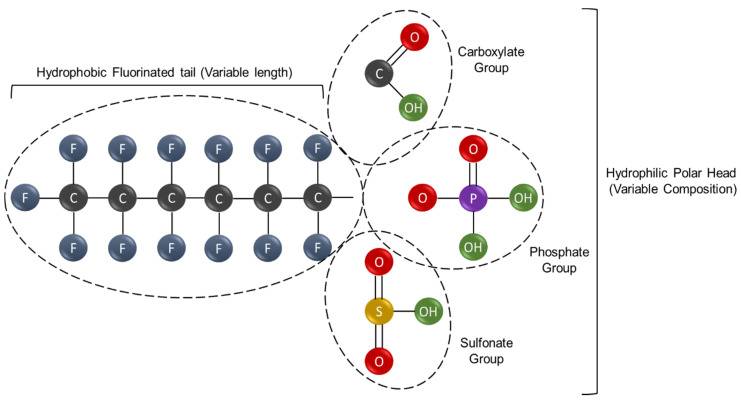
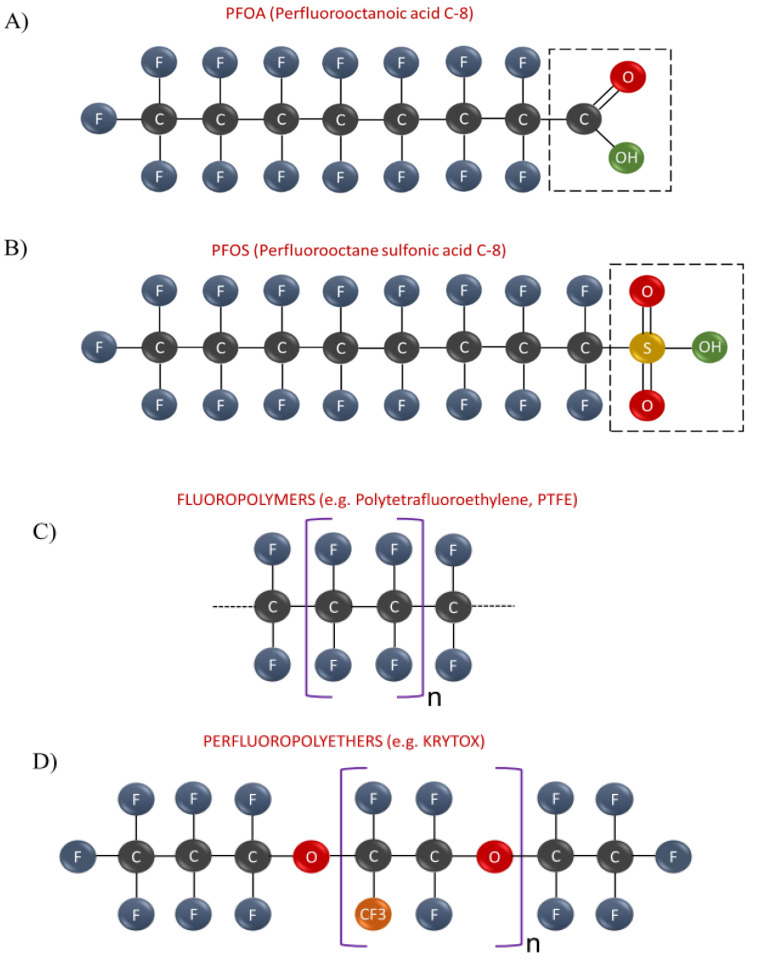
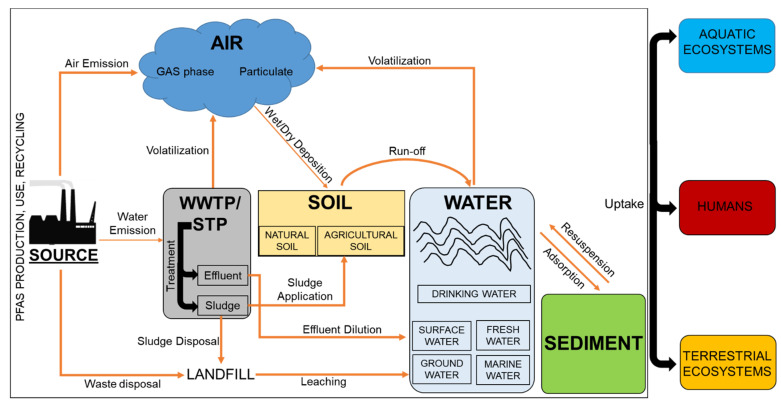
Per- and polyfluoroalkyl substances (PFAS) are a group of over 4700 heterogeneous compounds with amphipathic properties and exceptional stability to chemical and thermal degradation. The unique properties of PFAS compounds has been exploited for almost 60 years and has largely contributed to their wide applicability over a vast range of industrial, professional and non-professional uses. However, increasing evidence indicate that these compounds represent also a serious concern for both wildlife and human health as a result of their ubiquitous distribution, their extreme persistence and their bioaccumulative potential. In light of the adverse effects that have been already documented in biota and human populations or that might occur in absence of prompt interventions, the competent authorities in matter of health and environment protection, the industries as well as scientists are cooperating to identify the most appropriate regulatory measures, substitution plans and remediation technologies to mitigate PFAS impacts. In this review, starting from PFAS chemistry, uses and environmental fate, we summarize the current knowledge on PFAS occurrence in different environmental media and their effects on living organisms, with a particular emphasis on humans. Also, we describe present and provisional legislative measures in the European Union framework strategy to regulate PFAS manufacture, import and use as well as some of the most promising treatment technologies designed to remediate PFAS contamination in different environmental compartments.
Overview
The claims and statistics of this paper haven’t been checked yet.
Free: it reads the open-access text and checks the first 5 claims that cite a source we can check. Create a free account to check every claim.
Integrity signals
Registry
Cites
Statistics
Figures
Verification
Claims the paper makes
The claims and statistics of this paper haven’t been checked yet.
Free: it reads the open-access text and checks the first 5 claims that cite a source we can check. Create a free account to check every claim.
Claims other papers make about this one
Each is checked against this paper’s own text: does it say what the citing paper says it does?
The source backs part of the claim, not all of it — or backs it for a different population, condition or comparison.
In the citing paper
“Humans are exposed to complex mixtures of these substances, with their combined effects potentially being additive, synergistic or antagonistic (Glüge et al., 2020; Panieri et al., 2022).”
From Estimation of per- and polyfluoroalkyl substances (PFAS) half-lives in human studies: a systematic review and meta-analysis (2024) · cites this paper as Panieri et al., 2022
Experimental — accuracy not yet measuredThe source backs part of the claim, not all of it — or backs it for a different population, condition or comparison.
In the citing paper
“In healthcare environments—especially neonatal and pediatric intensive care—PFASs exposure may arise through the prolonged use of medical devices containing fluorinated polymers.”
From Exposure to Per- and Polyfluoroalkyl Substances (PFASs) in Healthcare: Environmental and Clinical Insights (2025) · cites this paper as [71]
Experimental — accuracy not yet measuredThe source backs part of the claim, not all of it — or backs it for a different population, condition or comparison.
In the citing paper
“The medical technology sector relies on PFASs for their unique properties, including chemical resistance, heat resistance, durability, and biocompatibility.”
From Exposure to Per- and Polyfluoroalkyl Substances (PFASs) in Healthcare: Environmental and Clinical Insights (2025) · cites this paper as [71]
Experimental — accuracy not yet measuredThe check wasn’t confident either way, so it gives no verdict — never disputed.
In the citing paper
“It is important to note that PFAS toxicokinetics could also be shaped by the combined effect of joint exposures.”
From Estimation of per- and polyfluoroalkyl substances (PFAS) half-lives in human studies: a systematic review and meta-analysis (2024) · cites this paper as Panieri et al., 2022
Experimental — accuracy not yet measuredThe check wasn’t confident either way, so it gives no verdict — never disputed.
In the citing paper
“PFASs impact platelet function by altering plasma membrane dynamics and calcium signaling, leading to enhanced adhesion, aggregation, and thrombus formation—thus elevating pro-thrombotic risk, especially in individuals with pre-existing vascular conditions [71,72].”
From Exposure to Per- and Polyfluoroalkyl Substances (PFASs) in Healthcare: Environmental and Clinical Insights (2025) · cites this paper as [71]
Experimental — accuracy not yet measured
Self-check
Percentages, sums and reported differences re-computed from the paper’s own numbers.
The self-check needs the paper’s full text.
Citations
Cites
Buck, R. C., Franklin, J., Berger, U., Conder, J. M., Cousins, I. T., de Voogt, P., Jensen, A. A., Kannan, K., Mabury, S. A., & van Leeuwen, S. P. (2011) · Integrated Environmental Assessment and Management · doi:10.1002/ieam.258 · Cited by 4,641
Emerging threats and persistent conservation challenges for freshwater biodiversity
Reid, A. J., Carlson, A. K., Creed, I. F., Eliason, E. J., Gell, P. A., Johnson, P. T. J., Kidd, K. A., MacCormack, T. J., Olden, J. D., Ormerod, S. J., et al. (2019) · Biological Reviews · doi:10.1111/brv.12480 · Cited by 3,645
Sources, fate and transport of perfluorocarboxylates
Prevedouros, K., Cousins, I. T., Buck, R. C., & Korzeniowski, S. H. (2006) · Environmental Science & Technology · doi:10.1021/es0512475 · Cited by 2,594
An overview of the uses of per- and polyfluoroalkyl substances (PFAS)
Glüge, J., Scheringer, M., Cousins, I. T., DeWitt, J. C., Goldenman, G., Herzke, D., Lohmann, R., Ng, C. A., Trier, X., & Wang, Z. (2020) · Environmental Science: Processes & Impacts · doi:10.1039/d0em00291g · Cited by 2,466
Fenton, S. E., Ducatman, A., Boobis, A., DeWitt, J. C., Lau, C., Ng, C., Smith, J. S., & Roberts, S. M. (2020) · Environmental Toxicology and Chemistry · doi:10.1002/etc.4890 · Cited by 2,445
Hu, X. C., Andrews, D. Q., Lindstrom, A. B., Bruton, T. A., Schaider, L. A., Grandjean, P., Lohmann, R., Carignan, C. C., Blum, A., Balan, S. A., et al. (2016) · Environmental Science & Technology Letters · doi:10.1021/acs.estlett.6b00260 · Cited by 1,333
Gagliano, E., Sgroi, M., Falciglia, P. P., Vagliasindi, F. G. A., & Roccaro, P. (2020) · Water Research · doi:10.1016/j.watres.2019.115381 · Cited by 1,249
Kelessidis, A., & Stasinakis, A. S. (2012) · Waste Management · doi:10.1016/j.wasman.2012.01.012 · Cited by 1,241
A first global production, emission, and environmental inventory for perfluorooctane sulfonate
Paul, A. G., Jones, K. C., & Sweetman, A. J. (2009) · Environmental Science & Technology · doi:10.1021/es802216n · Cited by 1,096
Ellis, D. A., Martin, J. W., De Silva, A. O., Mabury, S. A., Hurley, M. D., Sulbaek Andersen, M. P., & Wallington, T. J. (2004) · Environmental Science & Technology · doi:10.1021/es049860w · Cited by 1,000
Cited by
Brunn, H., Arnold, G., Körner, W., Rippen, G., Steinhäuser, K. G., & Valentin, I. (2023) · Environmental Sciences Europe · doi:10.1186/s12302-023-00721-8 · Cited by 504
Ackerman Grunfeld, D., Gilbert, D., Hou, J., Jones, A. M., Lee, M. J., Kibbey, T. C. G., & O’Carroll, D. M. (2024) · Nature Geoscience · doi:10.1038/s41561-024-01402-8 · Cited by 403
Nishmitha, P. S., Akhilghosh, K. A., Aiswriya, V. P., Ramesh, A., Muthuchamy, M., & Muthukumar, A. (2025) · Journal of Hazardous Materials Advances · doi:10.1016/j.hazadv.2025.100755 · Cited by 282
Rosato, I., Bonato, T., Fletcher, T., Batzella, E., & Canova, C. (2024) · Environmental Research · doi:10.1016/j.envres.2023.117743 · Cited by 273
Winkler, A. S., Brux, C. M., Carabin, H., das Neves, C. G., Häsler, B., Zinsstag, J., Fèvre, E. M., Okello, A. L., Laing, G., Harrison, W. E., et al. (2025) · The Lancet · doi:10.1016/s0140-6736(25)00627-0 · Cited by 198
Habib, Z., Song, M., Ikram, S., & Zahra, Z. (2024) · Pollutants · doi:10.3390/pollutants4010009 · Cited by 137
Mazumder, N., Hossain, M. T., Jahura, F. T., Girase, A., Hall, A. S., Lu, J., & Ormond, R. B. (2023) · Frontiers in Materials · doi:10.3389/fmats.2023.1143411 · Cited by 136
Comprehensive analysis of PFAS presence from environment to plate
Dimitrakopoulou, M., Karvounis, M., Marinos, G., Theodorakopoulou, Z., Aloizou, E., Petsangourakis, G., Papakonstantinou, M., & Stoitsis, G. (2024) · npj Science of Food · doi:10.1038/s41538-024-00319-1 · Cited by 136
Wen, Z.-J., Wei, Y.-J., Zhang, Y., & Zhang, Y. (2023) · Archives of Toxicology · doi:10.1007/s00204-023-03477-5 · Cited by 123
Bilela, L. L., Matijošytė, I., Krutkevičius, J., Alexandrino, D. A. M., Šafařík, I., Burlakovs, J., Gaudêncio, S. P., & Carvalho, M. F. (2023) · Marine Pollution Bulletin · doi:10.1016/j.marpolbul.2023.115309 · Cited by 123
Kumar, R., Dada, T. K., Whelan, A., Cannon, P., Sheehan, M., Reeves, L., & Antunes, E. (2023) · Journal of Hazardous Materials · doi:10.1016/j.jhazmat.2023.131212 · Cited by 120
Zheng, J., Liu, S., Yang, J., Zheng, S., & Sun, B. (2024) · The Science of The Total Environment · doi:10.1016/j.scitotenv.2024.176158 · Cited by 105
Neurotoxicity of per- and polyfluoroalkyl substances: Evidence and future directions
Bharal, B., Ruchitha, C., Kumar, P., Pandey, R., Rachamalla, M., Niyogi, S., Naidu, R., & Kaundal, R. K. (2024) · The Science of The Total Environment · doi:10.1016/j.scitotenv.2024.176941 · Cited by 101
Wu, B., Pan, Y., Li, Z., Wang, J., Ji, S., Zhao, F., Chang, X., Qu, Y., Zhu, Y., Xie, L., et al. (2023) · Environment International · doi:10.1016/j.envint.2023.107779 · Cited by 90
Sanzana, S., Fenti, A., Iovino, P., & Pánico, A. (2025) · Journal of Water Process Engineering · doi:10.1016/j.jwpe.2025.107793 · Cited by 95
Banyoi, S.-M., Porseryd, T., Larsson, J., Grahn, M., & Dinnétz, P. (2022) · Environmental Pollution · doi:10.1016/j.envpol.2022.120422 · Cited by 93
Sivagami, K., Sharma, P., Karim, A. V., Mohanakrishna, G., Karthika, S., Divyapriya, G., Saravanathamizhan, R., & Kumar, A. (2022) · The Science of The Total Environment · doi:10.1016/j.scitotenv.2022.160440 · Cited by 92
Itumoh, E. J., Data, S., Chen, J. L. ‐., Kah, M., Padhye, L. P., & Leitao, E. M. (2024) · RSC Sustainability · doi:10.1039/d4su00152d · Cited by 89
Wasel, O., King, H., Choi, Y. J., Lee, L. S., & Freeman, J. L. (2023) · Environmental Science & Technology · doi:10.1021/acs.est.3c05023 · Cited by 78
Sun, Z., Wen, Y., Wang, B., Deng, S., Zhang, F., Fu, Z., Yuan, Y., & Zhang, D. (2023) · Frontiers in Endocrinology · doi:10.3389/fendo.2023.1114463 · Cited by 52
Lucas, J. H., Wang, Q., & Rahman, I. (2022) · Toxicological Sciences · doi:10.1093/toxsci/kfac096 · Cited by 79
Seyyedsalehi, M. S., & Boffetta, P. (2023) · La Medicina del Lavoro · doi:10.23749/mdl.v114i5.15065 · Cited by 77
Bonato, T., Pal, T., Benna, C., & Maria, F. D. (2025) · The Science of The Total Environment · doi:10.1016/j.scitotenv.2024.178337 · Cited by 77
Li, J., Duan, W., An, Z., Jiang, Z., Li, L., Guo, M., Tan, Z., Zeng, X., Liu, X., Liu, Y., et al. (2024) · Journal of Hazardous Materials · doi:10.1016/j.jhazmat.2024.135795 · Cited by 74
Domingo, J. L. (2025) · Environmental Research · doi:10.1016/j.envres.2025.121181 · Cited by 73
PFAS: exploration of neurotoxicity and environmental impact
Nannaware, M., Mayilswamy, N., & Kandasubramanian, B. (2024) · Environmental Science and Pollution Research · doi:10.1007/s11356-024-32082-x · Cited by 70
Savvidou, P., Dotro, G., Campo, P., Coulon, F., & Lyu, T. (2024) · The Science of The Total Environment · doi:10.1016/j.scitotenv.2024.173237 · Cited by 70
Obiako, P., Ayisire, S., & Sayes, C. M. (2024) · Environment International · doi:10.1016/j.envint.2024.108864 · Cited by 70
Sadia, M., Kunz, M., ter Laak, T. L., Jonge, M. D., Schriks, M., & van Wezel, A. P. (2023) · The Science of The Total Environment · doi:10.1016/j.scitotenv.2023.164420 · Cited by 64
Khan, M. F. (2025) · Processes · doi:10.3390/pr13072017 · Cited by 63
Kannan, U., Ravichandran, M. K., Monisha, M., Krishnasamy, S., Valliammai, Prabakar, P. C. J., Darshini, D., & Sunantha, G. (2025) · Results in Chemistry · doi:10.1016/j.rechem.2025.103000 · Cited by 63
A systematic review for non-targeted analysis of per- and polyfluoroalkyl substances (PFAS)
Megson, D., Bruce‐Vanderpuije, P., Idowu, I. G., Ekpe, O. D., & Sandau, C. D. (2025) · The Science of The Total Environment · doi:10.1016/j.scitotenv.2024.178240 · Cited by 61
Delcourt, N., Pouget, A.-M., Grivaud, A., Nogueira, L., Larvor, F., Marchand, P., Schmidt, E. A., & Bizec, B. L. (2023) · The Journals of Gerontology Series A · doi:10.1093/gerona/glad208 · Cited by 59
Teja, C., Kolb, S., Colonna, P., Grover, J., Garcia‐Argote, S., Lahiri, G. K., Pieters, G., Werz, D. B., & Maiti, D. (2024) · Angewandte Chemie International Edition · doi:10.1002/anie.202410162 · Cited by 58
Ohoro, C. R., Amaku, J. F., Conradie, J., Olisah, C., Akpomie, K. G., Malloum, A., Akpotu, S. O., Adegoke, K. A., Okeke, E. S., & Omotola, E. O. (2024) · Marine Pollution Bulletin · doi:10.1016/j.marpolbul.2024.117040 · Cited by 59
PFAS regulations and economic impact: A review of U.S. pulp & paper and textiles industries
Lendewig, M., Márquez, R., Franco, J., Vera, R. E., Vivas, K. A., Forfora, N., Venditti, R. A., & González, R. (2025) · Chemosphere · doi:10.1016/j.chemosphere.2025.144301 · Cited by 58
Yi, W., Xuan, L., Zakaly, H. M. H., Marković, V., Miszczyk, J. U., Guan, H., Zhou, P., & Huang, R. (2023) · Environmental Research · doi:10.1016/j.envres.2023.117188 · Cited by 57
RetractedLaccase based per- and polyfluoroalkyl substances degradation: Status and future perspectives
Mekureyaw, M. F., Junker, A. L., Bai, L., Zhang, Y., Wei, Z., & Guo, Z. (2024) · Water Research · doi:10.1016/j.watres.2024.122888 · Cited by 57
Insights into PFAS environmental fate through computational chemistry: A review
de Souza, B. B., & Meegoda, J. N. (2024) · The Science of The Total Environment · doi:10.1016/j.scitotenv.2024.171738 · Cited by 56
Hakeem, I. G., Halder, P. K., Patel, S., Selezneva, E., Rathnayake, N., Marzbali, M. H., Veluswamy, G., Sharma, A., Kundu, S. K., Surapaneni, A., et al. (2024) · Chemical Engineering Journal · doi:10.1016/j.cej.2024.152537 · Cited by 54
Antoniou, E. E., Colnot, T., Zeegers, M. P., & Dekant, W. (2022) · Archives of Toxicology · doi:10.1007/s00204-022-03303-4 · Cited by 53
Perspectives on superhydrophobic surface durability
Hoque, M. J., Ma, J., Rabbi, K. F., Yan, X., Singh, B., Upot, N. V., Fu, W., Kohler, J., Thukral, T. S., Dewanjee, S., et al. (2023) · Applied Physics Letters · doi:10.1063/5.0164927 · Cited by 53
Baralić, K., Živančević, K., Božić, D., & Đukić-Ćosić, D. (2022) · Food and Chemical Toxicology · doi:10.1016/j.fct.2022.113582 · Cited by 52
Per- and Polyfluoroalkyl Substances (PFAS)
Khoshyan, A., Luo, Y., Nolan, A. L., Megharaj, M., Fang, C., & Naidu, R. (2025) · CRC Press eBooks · doi:10.1201/9781003530466-11 · Cited by 52
Chiriac, F. L., Pirvu, F., Paun, I. C., & Petre, V. A. (2023) · The Science of The Total Environment · doi:10.1016/j.scitotenv.2023.164576 · Cited by 52
Volatile anaesthetics and PFAS forever chemicals: A critical gap in environmental impact assessments
Kalmar, A. F., Groffen, T., Vereecke, H. E. M., Teunkens, A., Dewinter, G., Mulier, H., Struys, M. M. R. F., & Rex, S. (2024) · Best practice & research. Clinical anaesthesiology · doi:10.1016/j.bpa.2024.12.002 · Cited by 49
Labine, L. M., Pereira, E. A. O., Kleywegt, S. M., Jobst, K. J., Simpson, A. J., & Simpson, M. J. (2022) · Environmental Research · doi:10.1016/j.envres.2022.113582 · Cited by 48
Esfahani, E. B., Dixit, F., Zeidabadi, F. A., Johnson, M. R., Mayilswamy, N., Kandasubramanian, B., & Mohseni, M. (2023) · Current Opinion in Chemical Engineering · doi:10.1016/j.coche.2023.100953 · Cited by 47
Adewuyi, A., & Li, Q. (2024) · Eco-Environment & Health · doi:10.1016/j.eehl.2024.05.008 · Cited by 47
Kikanme, K. N., Dennis, N. M., Orikpete, O. F., & Ewim, D. R. E. (2024) · Heliyon · doi:10.1016/j.heliyon.2024.e29922 · Cited by 46
Insight into mechanochemical destruction of PFOA by BaTiO3: An electron-dominated reduction process
Li, L., Guo, R., Gao, J., Liu, J., Zhao, Z., Sheng, X., Fan, J., & Cui, F. (2023) · Journal of Hazardous Materials · doi:10.1016/j.jhazmat.2023.131028 · Cited by 45
Ogunbiyi, O. D., Ajiboye, T. O., Omotola, E. O., Oladoye, P. O., Olanrewaju, C. A., & Quinete, N. (2023) · Environmental Pollution · doi:10.1016/j.envpol.2023.121705 · Cited by 45
Stecconi, T., Tavoloni, T., Stramenga, A., Bacchiocchi, S., Barola, C., Dubbini, A., Galarini, R., Moretti, S., Sagratini, G., & Piersanti, A. (2023) · Talanta · doi:10.1016/j.talanta.2023.125054 · Cited by 44
Nguyen, T. V., Trang, P. N., & Kumar, A. (2024) · Environment International · doi:10.1016/j.envint.2024.108620 · Cited by 45
Zeppuhar, A. N., Rollins, D. S., Huber, D. L., Bazan-Bergamino, E. A., Chen, F., Evans, H. A., & Taylor, M. K. (2023) · ACS Applied Materials & Interfaces · doi:10.1021/acsami.3c12826 · Cited by 43
Wang, Y., Zhang, J., Zhang, J., Hou, M., Kong, L., Lin, X., Xu, J., Yan, C. H., Lin, F., & Ke, S. (2024) · The Science of The Total Environment · doi:10.1016/j.scitotenv.2024.171742 · Cited by 42
Bayode, A. A., Emmanuel, S. S., Akinyemi, A. O., Ore, O. T., Akpotu, S. O., Koko, D. T., Momodu, D. E., & López‐Maldonado, E. A. (2024) · Environmental Research · doi:10.1016/j.envres.2024.119719 · Cited by 42
González, N., & Domingo, J. L. (2025) · Archives of Toxicology · doi:10.1007/s00204-025-03980-x · Cited by 42
Bour, A., Christensen, T. B., Hunka, A. D., Palmqvist, A., Skjold, E., & Syberg, K. (2023) · The Science of The Total Environment · doi:10.1016/j.scitotenv.2023.165153 · Cited by 41
Frangione, B., Birk, S., Benzouak, T., Rodríguez-Villamizar, L. A., Karim, F. A., Dugandzic, R. M., & Villeneuve, P. J. (2023) · International Journal of Obesity · doi:10.1038/s41366-023-01401-6 · Cited by 41
Menezes, A., Goveas, L. C., Vinayagam, R., & Selvaraj, R. (2024) · Journal of Water Process Engineering · doi:10.1016/j.jwpe.2024.106621 · Cited by 41
Al‐Maqtari, Q. A., Mahdi, A. A., Othman, N., Noman, A. E., Alsubhi, L. M., AL‐Ansi, W., Asharuddin, S. M., Talib, M. K. M., Supramanium, S., & Al-Gheethi, A. A. S. (2025) · Results in Engineering · doi:10.1016/j.rineng.2025.107169 · Cited by 41
Health Risk Assessment of Dietary Chemical Exposures: A Comprehensive Review
Pekmezci, H., Sipahi, S., & Başaran, B. (2025) · Foods · doi:10.3390/foods14234133 · Cited by 41
Emerging trends in photocatalyst-based metal-organic frameworks for PFAS degradation
Najafidoust, A., Ghanbari, R., Farahbakhsh, J., Permala, R. R., Iglauer, S., & Zargar, M. (2025) · Coordination Chemistry Reviews · doi:10.1016/j.ccr.2025.217264 · Cited by 41
Garza‐Rubalcava, U., Klevan, C., Pennell, K. D., & Abriola, L. M. (2024) · Water Research · doi:10.1016/j.watres.2024.122728 · Cited by 40
Borghese, M. M., Ward, A., MacPherson, S., Manz, K. E., Atlas, E., Fisher, M., Arbuckle, T. E., Braun, J. M., Bouchard, M. F., & Ashley‐Martin, J. (2024) · Environmental Health · doi:10.1186/s12940-024-01085-z · Cited by 39
PFAS: The Journey from Wonder Chemicals to Environmental Nightmares and the Search for Solutions
Perera, D. C., & Meegoda, J. N. (2024) · Applied Sciences · doi:10.3390/app14198611 · Cited by 39
Zarei, A., Khazdooz, L., Zadehnazari, A., Amirjalayer, S., Addicoat, M. A., Khosropour, A. R., & Abbaspourrad, A. (2025) · Journal of Materials Chemistry A · doi:10.1039/d4ta06827k · Cited by 39
Liu, N., Li, Y., Zhang, M., Che, N., Song, X., Liu, Y., & Li, C. (2024) · The Science of The Total Environment · doi:10.1016/j.scitotenv.2024.174223 · Cited by 38
Park, J., Baik, J.-H., Adjei-Nimoh, S., & Lee, W. H. (2025) · The Science of The Total Environment · doi:10.1016/j.scitotenv.2025.179536 · Cited by 39
The wide presence of fluorinated compounds in common chemical products and the environment: a review
Zhang, W., & Liang, Y. (2023) · Environmental Science and Pollution Research · doi:10.1007/s11356-023-30033-6 · Cited by 38
Schultz, A., Stanton, N., Shelton, B. R., Pomazal, R., Lange, M., Irving, R., Meiman, J. G., & Malecki, K. M. C. (2023) · Journal of Exposure Science & Environmental Epidemiology · doi:10.1038/s41370-023-00593-3 · Cited by 36
Molecular scale adsorption behavior of per- and poly-fluoroalkyl substances (PFAS) on model surfaces
Dunmyer, M., Welchert, J., Bellido-Aguilar, D. A., Brusseau, M. L., Savagatrup, S., & Karanikola, V. (2024) · Chemical Engineering Journal · doi:10.1016/j.cej.2024.154286 · Cited by 36
Wang, T., Wu, J., Hu, T., Wang, C., Li, S., Li, Z., & Chen, J. (2024) · The Science of The Total Environment · doi:10.1016/j.scitotenv.2024.177668 · Cited by 36
Challenges Associated With PFAS Detection Method in Africa
Aborode, A. T., Adesola, R. O., Idris, I., Adio, W. S., Olapade, S., Adenikinju, G. O., Onifade, I. A., Fakorede, S., Bakare-Abidola, T., Olaoye, J., et al. (2025) · Environmental Health Insights · doi:10.1177/11786302241310430 · Cited by 36
Lamb, B. G., & Ma, B. (2025) · Nanoscale · doi:10.1039/d4nr04995k · Cited by 36
Dobrzyńska, E., Wasilewski, P., & Pośniak, M. (2025) · Applied Sciences · doi:10.3390/app152211884 · Cited by 36
Yang, Z., Wang, M., & Chu, W. (2024) · Journal of Hazardous Materials · doi:10.1016/j.jhazmat.2024.135611 · Cited by 35
Xu, X., Zhao, L., Terry, P., & Chen, J. (2023) · Cells · doi:10.3390/cells12101400 · Cited by 34
Sun, R., Babalol, S., Ni, R., Dolatabad, A. A., Cao, J., & Xiao, F. (2023) · Journal of Hazardous Materials · doi:10.1016/j.jhazmat.2023.132660 · Cited by 34
Dhiman, S., & Ansari, N. G. (2023) · Microchemical Journal · doi:10.1016/j.microc.2023.109667 · Cited by 34
Selmi, T., Gentil, S., Fierro, V., & Celzard, A. (2024) · Journal of environmental chemical engineering · doi:10.1016/j.jece.2024.113105 · Cited by 34
Shimizu, M. S., García, R., Avery, G. B., Kieber, R. J., Skrabal, S. A., & Mead, R. N. (2022) · Environmental Science Processes & Impacts · doi:10.1039/d2em00246a · Cited by 33
Lin, Z., Li, Y., Zhao, J., Li, J., Pan, S., Wang, X., He, L., & Lin, Z. (2024) · Heliyon · doi:10.1016/j.heliyon.2024.e37003 · Cited by 32
Rahman, M. H.-U., Sikder, R., Tonmoy, T. A., Hossain, M. M., Ye, T., Aich, N., & Gadhamshetty, V. R. (2025) · Journal of Water Process Engineering · doi:10.1016/j.jwpe.2025.106941 · Cited by 32
Predictive modeling of PFAS behavior and degradation in novel treatment scenarios: A review
Olawade, D. B., Ijiwade, J. O., Fapohunda, O., Ige, A. O., Olajoyetan, D. O., & Wada, O. Z. (2025) · Process Safety and Environmental Protection · doi:10.1016/j.psep.2025.106869 · Cited by 33
Tanzer, M., Boissiere-O’Neill, T., Sly, P. D., & Vilcins, D. (2025) · Reviews on Environmental Health · doi:10.1515/reveh-2025-0027 · Cited by 32
Karataş, O., Kobya, M., Khataee, A., & Yoon, Y. (2022) · Environmental Technology & Innovation · doi:10.1016/j.eti.2022.102954 · Cited by 32
Perovani, Í. S., Barbetta, M. F. S., Duarte, L. O., & de Oliveira, A. R. M. (2023) · Journal of Chromatography Open · doi:10.1016/j.jcoa.2023.100082 · Cited by 33
Yuan, F., Lü, B., Huang, Y., Wang, H., Xu, J., & Lin, N. (2025) · ACS Omega · doi:10.1021/acsomega.4c07198 · Cited by 31
Liu, C., Crini, G., Lichtfouse, É., Wilson, L. D., Picos‐Corrales, L. A., Balasubramanian, P., & Li, F. (2025) · Journal of Water Process Engineering · doi:10.1016/j.jwpe.2025.107327 · Cited by 31
Islam, M. A., Parvin, M. I., Nguyen, C., Alam, M. R., Kwong, P. C. W., Zhou, J. L., Hessel, V., & Ahmed, M. B. (2025) · Environmental Pollution · doi:10.1016/j.envpol.2025.127036 · Cited by 31
Adeogun, A. O., Chukwuka, A. V., Ibor, O. R., Asimakopoulos, A. G., Zhang, J., & Arukwe, A. (2024) · Environmental Pollution · doi:10.1016/j.envpol.2024.123575 · Cited by 31
Álvarez-Ruiz, R., Lee, L., & Choi, Y. J. (2024) · The Science of The Total Environment · doi:10.1016/j.scitotenv.2024.176540 · Cited by 31
The Environmental Impact of Medical Imaging Agents and the Roadmap to Sustainable Medical Imaging
Pichler, V., Martinho, R. P., Temming, L., Segers, T., Wurm, F. R., & Koshkina, O. (2025) · Advanced Science · doi:10.1002/advs.202404411 · Cited by 30
Zhuchen, H.-Y., Wang, J., Liu, X., & Shi, Y. (2023) · Toxics · doi:10.3390/toxics11070571 · Cited by 30
Sun, X., Yang, X., Zhang, Y., Liu, Y., Xiao, F., Guo, H., & Liu, X. (2023) · The Science of The Total Environment · doi:10.1016/j.scitotenv.2023.167639 · Cited by 30
Chu, S., & Letcher, R. J. (2023) · Journal of Chromatography A · doi:10.1016/j.chroma.2023.464584 · Cited by 30
Nadal, M., & Domingo, J. L. (2025) · Toxics · doi:10.3390/toxics13020134 · Cited by 29
Giorgi, A. D., Maida, N. L., Taoussi, O., Pichini, S., Busardò, F. P., Tini, A., & Trana, A. D. (2023) · Journal of Pharmaceutical and Biomedical Analysis Open · doi:10.1016/j.jpbao.2023.100002 · Cited by 29
Metadata
- Authors
- Panieri, E., Baralic, K., Djukic-Cosic, D., Buha Djordjevic, A., & Saso, L.
- Affiliations
- Sapienza University of Rome (IT)
- Department of Toxicology “Akademik Danilo Soldatović”, Faculty of Pharmacy, University of Belgrade, 11211 Belgrade, Serbia
- Corresponding author
- Panieri, Emiliano
- ORCID
- Venue
- Toxics
- Publisher
- MDPI AG
- Published
- 2022-01-18
- Volume
- 10
- Issue
- 2
- Pages
- 44
- ISSN
- 2305-6304 (ISSN-L)
- PMC
- PMC8878656
- OpenAlex
- W4205243779
- Cited by
- 651
- References
- 292
- Citations by year
- 2026: 199 · 2025: 221 · 2024: 144 · 2023: 71 · 2022: 16
- FWCI
- 7.97
- Type
- journal article
- Language
- en
- Open access
- gold
- doi.org
- Licence
- Locations
- Toxics (publishedVersion, cc-by)
- PubMed Central (publishedVersion, cc-by)
- PubMed (publishedVersion)
- DOAJ (DOAJ: Directory of Open Access Journals) (submittedVersion, cc-by-sa)
- IRIS Research product catalog (Sapienza University of Rome) (submittedVersion, cc-by)
- Topics
- Physical Sciences › Environmental Science › Environmental Chemistry › Per- and polyfluoroalkyl substances research
- Physical Sciences › Chemistry › Organic Chemistry › Fluorine in Organic Chemistry
- Physical Sciences › Materials Science › Polymers and Plastics › Synthesis and properties of polymers
- Keywords
- per- and polyfluoroalkyl substances, PFAS, human health effects, environmental fate, bioaccumulation, environmental contamination, PFAS regulation, remediation strategies, wildlife toxicity
About these checks
Registry, retraction, Cites and statistics results are computed, not judged, with one exception: a printed reference that no index lists is read once by a model before it counts as a citation error. Claims are extracted by a model and kept only when their quote appears verbatim in the text; each cited source is then checked, with a model’s help, for whether it says what the claim relies on. Those verdicts can be wrong — read the claim’s quote and the cited source before relying on one.
Statistics and arithmetic are recomputed, not judged.
Confidence bands are shown only for fields calibrated on our annotated test set. None is calibrated yet, so no band is shown.
What counts as a claim ›How we measure confidence ›How we check this ›
Are you an author, or do you see a problem with this page? Request a review
Data sources
Bibliographic data: Semantic Scholar, OpenAlex, Crossref.
Contains information from the Semantic Scholar Academic Graph Datasets, made available under the ODC Attribution License (ODC-BY 1.0).
Semantic Scholar’s data is described in: Kinney, R., et al. (2023). The Semantic Scholar Open Data Platform. arXiv:2301.10140.
